
Journal of Southern Medical University ›› 2025, Vol. 45 ›› Issue (12): 2658-2666.doi: 10.12122/j.issn.1673-4254.2025.12.13
Siyu MA( ), Meiqing CHEN(), Tianyu WU, Wenhong ZHAO()
Received:2025-05-06
Online:2025-12-20
Published:2025-12-22
Contact:
Wenhong ZHAO
E-mail:1693671024@qq.com;chenmeiqing567@163.com;975643018@qq. com
Siyu MA, Meiqing CHEN, Tianyu WU, Wenhong ZHAO. Dietary secoisolariciresinol diglucoside alleviates chronic kidney disease in offspring rats caused by maternal trans-fatty acid exposure by regulating the Bcl-2/Bax/caspase-3 signaling axis[J]. Journal of Southern Medical University, 2025, 45(12): 2658-2666.
Add to citation manager EndNote|Ris|BibTeX
URL: https://www.j-smu.com/EN/10.12122/j.issn.1673-4254.2025.12.13
| Group | BUN (mmol/L) | CRE (μmol/L) |
|---|---|---|
| Control | 17.08±1.53 | 44.85±6.087 |
| TFA | 22.39±6.18# | 68.54±11.89# |
| TFA+LSDG | 18.84±3.91 | 67.22±10.96 |
| TFA+MSDG | 15.56±1.86* | 60.76±7.62 |
| TFA+HSDG | 17.01±3.57* | 52.49±6.22 |
| F | 3.98 | 10.81 |
| P | <0.01 | <0.001 |
Tab.1 Comparison of blood urea nitrogen (BUN) and serum creatinine (CRE) levels among the 5 groups (Mean±SD, n=9)
| Group | BUN (mmol/L) | CRE (μmol/L) |
|---|---|---|
| Control | 17.08±1.53 | 44.85±6.087 |
| TFA | 22.39±6.18# | 68.54±11.89# |
| TFA+LSDG | 18.84±3.91 | 67.22±10.96 |
| TFA+MSDG | 15.56±1.86* | 60.76±7.62 |
| TFA+HSDG | 17.01±3.57* | 52.49±6.22 |
| F | 3.98 | 10.81 |
| P | <0.01 | <0.001 |

Fig.1 Network pharmacology analysis of the protective mechanism of SDG against TFA-induced chronic kidney disease (CKD). A: Collection of SDG targets. B: DO enrichment analysis of SDG targets. C: KEGG enrichment analysis of SDG targets. D: Screening of potential targets involved in the protective effects of SDG against TFA-induced CKD. E: KEGG enrichment analysis of the pathways mediating the protective effects of SDG against CKD.
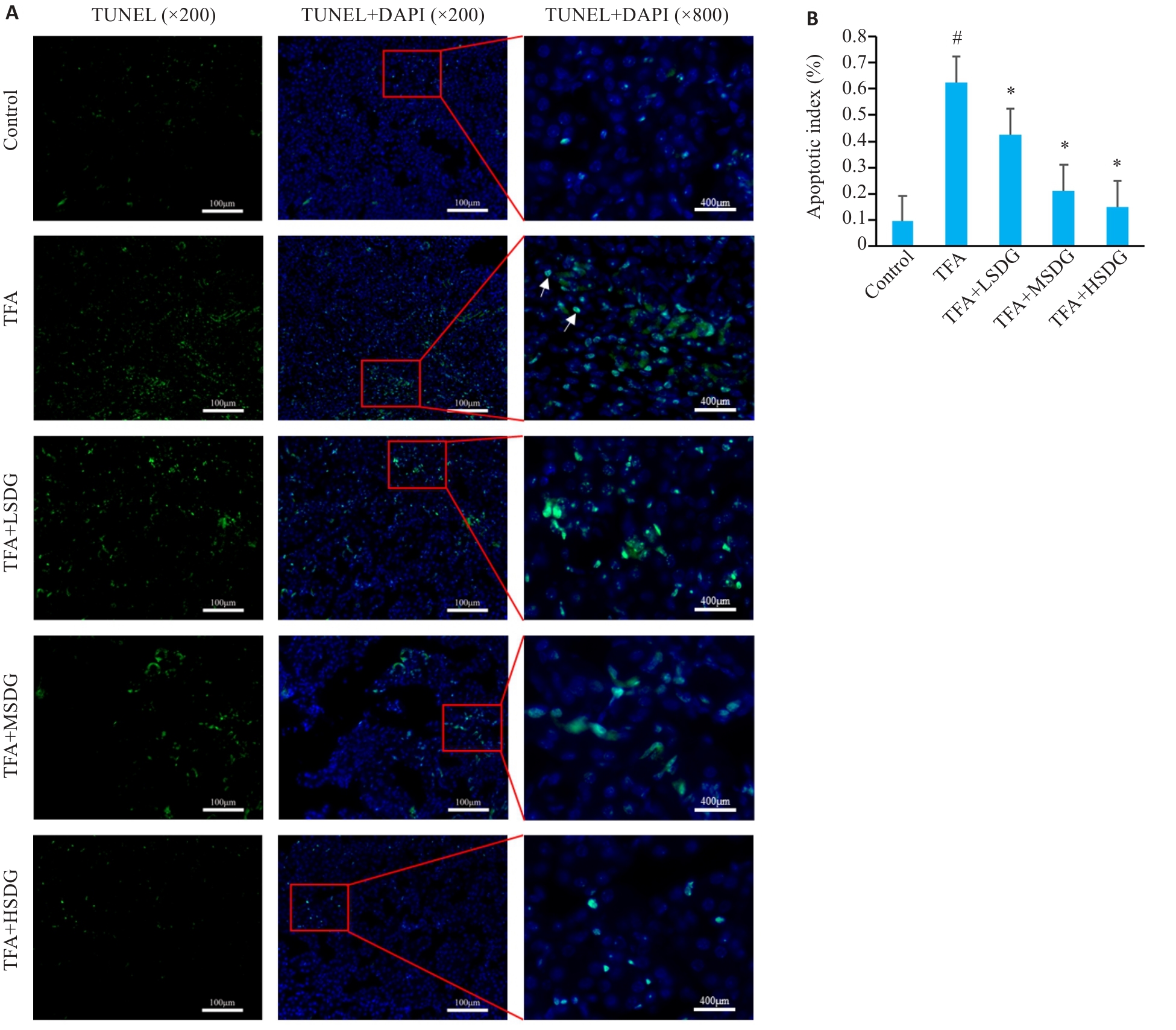
Fig.2 Cell apoptosis in the kidney tissue of the offspring mice in each group. A: TUNEL staining of the kidney tissue (the white arrows indicate apoptotic cells). B: Statistical chart of cell apoptosis in kidney tissue of the offspring mice in each group. #P<0.05 vs control group; *P<0.05 vs TFA group.

Fig.3 Immunohistochemical staining for cleaved caspase-3 in the renal tissues of the offspring mice in each group (scale bar=50 μm). A: Control group. B: TFA group. C: TFA+LSDG group. D: TFA+MSDG group. E: TFA+HSDG group. F: Quantitative statistical chart. #P<0.05 vs Control group; *P<0.05 vs TFA group.
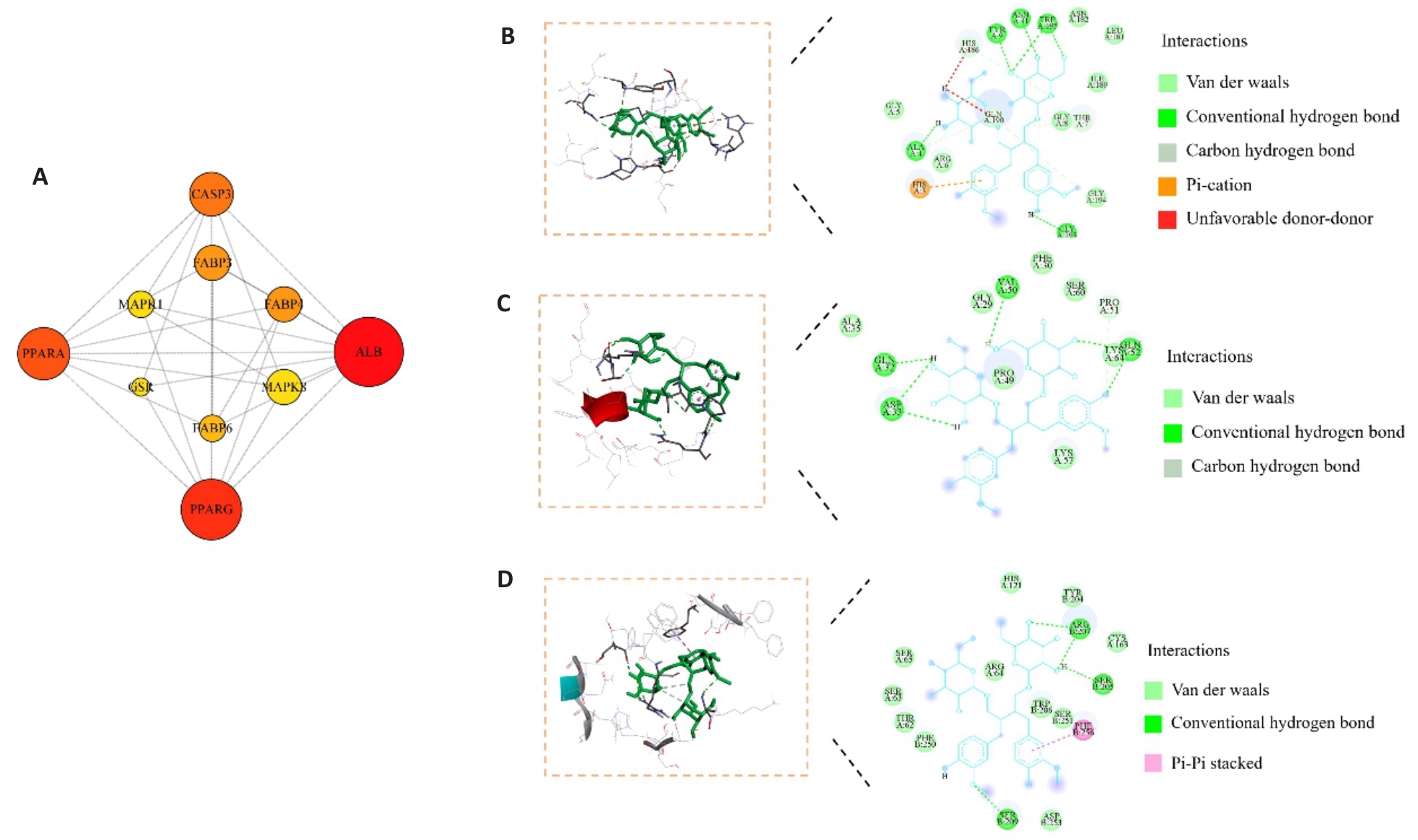
Fig.4 Screening of the key targets of SDG in the treatment of TFA-induced CKD (A) and molecular docking results of Bcl-2, Bax and caspase-3 with SDG (B-D).
| Target | PDB ID |
|---|---|
| Bcl-2 | 1g5m |
| Bax | 4bd6 |
| Caspase-3 | 1gfw |
Tab. 2 The PDB database code names for each protein
| Target | PDB ID |
|---|---|
| Bcl-2 | 1g5m |
| Bax | 4bd6 |
| Caspase-3 | 1gfw |
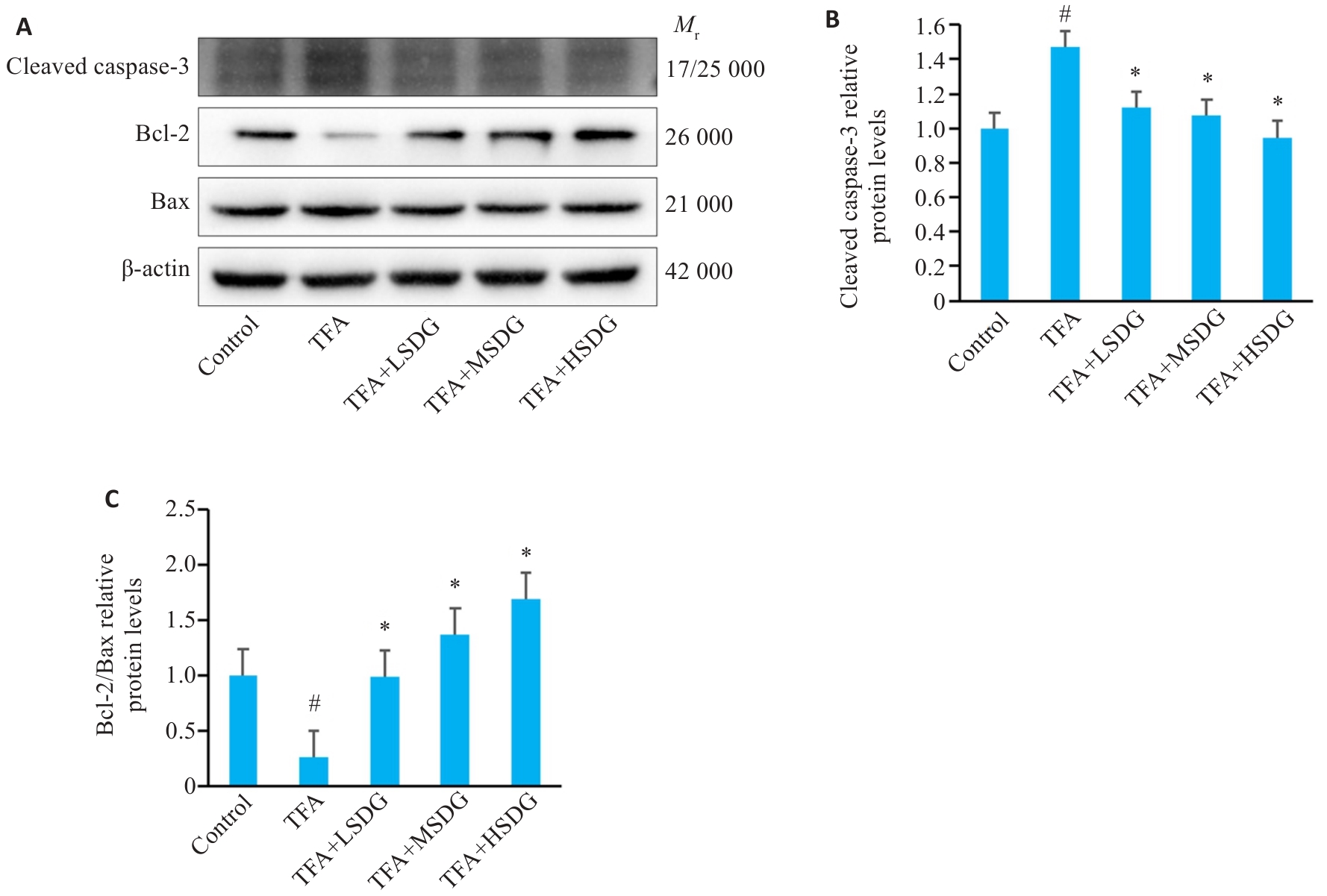
Fig.5 Detection of protein expressions of apoptosis-related proteins in kidney tissue of the offspring mice in each group. A: Protein bands of caspase-3, Bcl-2 and Bax in the kidney tissues of the offspring mice in each group detected with Western blotting. B: Gray value of caspase-3 in each group. C: Gray value ratio of Bcl2/Bax in each group. #P<0.05 vs control group; *P<0.05 vs TFA group.
| [1] | Li CY, Cobb LK, Vesper HW, et al. Global surveillance of trans-fatty acids[J]. Prev Chronic Dis, 2019, 16: E147. doi:10.5888/pcd16.190121 |
| [2] | Hatem O, Kaçar ÖF, Kaçar HK, et al. Trans isomeric fatty acids in human milk and their role in infant health and development[J]. Front Nutr, 2024, 11: 1379772. doi:10.3389/fnut.2024.1379772 |
| [3] | Chandra A, Svensson M, Åsberg A, et al. Trans-fatty acids and survival in renal transplantation[J]. J Ren Nutr, 2019, 29(3): 169-80. doi:10.1053/j.jrn.2018.08.003 |
| [4] | Neuenschwander M, Barbaresko J, Pischke CR, et al. Intake of dietary fats and fatty acids and the incidence of type 2 diabetes: a systematic review and dose-response meta-analysis of prospective observational studies[J]. PLoS Med, 2020, 17(12): e1003347. doi:10.1371/journal.pmed.1003347 |
| [5] | Okamura T, Hashimoto Y, Majima S, et al. Trans fatty acid intake induces intestinal inflammation and impaired glucose tolerance[J]. Front Immunol, 2021, 12: 669672. doi:10.3389/fimmu.2021.669672 |
| [6] | Ren X, Vilhjálmsdóttir BL, Rohde JF, et al. Systematic literature review and meta-analysis of the relationship between polyunsaturated and trans fatty acids during pregnancy and offspring weight development[J]. Front Nutr, 2021, 8: 625596. doi:10.3389/fnut.2021.625596 |
| [7] | Salemi F, Beigrezaei S, Arabi V, et al. Dietary trans fatty acids and risk of colorectal cancer: a systematic review and meta-analysis of observational studies[J]. Eur J Nutr, 2023, 62(2): 563-72. |
| [8] | Michels N, Specht IO, Heitmann BL, et al. Dietary trans-fatty acid intake in relation to cancer risk: a systematic review and meta-analysis[J]. Nutr Rev, 2021, 79(7): 758-76. doi:10.1093/nutrit/nuaa061 |
| [9] | Fan YH, Li ZF, Shi J, et al. The association between prepregnancy dietary fatty acids and risk of gestational diabetes mellitus: a prospective cohort study[J]. Clin Nutr, 2024, 43(2): 484-93. doi:10.1016/j.clnu.2023.12.022 |
| [10] | Friesen R, Innis SM. Trans fatty acids in human milk in Canada declined with the introduction of trans fat food labeling[J]. J Nutr, 2006, 136(10): 2558-61. doi:10.1093/jn/136.10.2558 |
| [11] | Wada Y, Yoshida-Yamamoto S, Wada Y, et al. Trans fatty acid accumulation in the human placenta[J]. J Mass Spectrom, 2017, 52(3): 139-43. doi:10.1002/jms.3910 |
| [12] | Hachul ACL, Mennitti LV, de Oliveira JL, et al. Oligofructose supplementation (10%) during pregnancy and lactation does not change the inflammatory effect of concurrent trans fatty acid ingestion on 21-day-old offspring[J]. Lipids Health Dis, 2013, 12: 59. doi:10.1186/1476-511x-12-59 |
| [13] | Mucci DD, Fernandes FS, Souza AD, et al. Flaxseed mitigates brain mass loss, improving motor hyperactivity and spatial memory, in a rodent model of neonatal hypoxic-ischemic encephalopathy[J]. Prostaglandins Leukot Essent Fatty Acids, 2015, 97: 13-9. doi:10.1016/j.plefa.2015.03.001 |
| [14] | Parikh M, Maddaford TG, Austria JA, et al. Dietary flaxseed as a strategy for improving human health[J]. Nutrients, 2019, 11(5): 1171. doi:10.3390/nu11051171 |
| [15] | 陈美庆, 朱润泽, 吴天宇, 等. 亚麻木酚素对母鼠反式脂肪酸暴露致子代肾氧化损伤的保护作用[J]. 中南大学学报: 医学版, 2023, 48(7): 967-78. |
| [16] | Chen YE, Li CT, Duan SN, et al. Curcumin attenuates potassium oxonate-induced hyperuricemia and kidney inflammation in mice[J]. Biomed Pharmacother, 2019, 118: 109195. doi:10.1016/j.biopha.2019.109195 |
| [17] | 杨少华, 张 昕, 马 雯, 等.肾素拮抗剂SPH3127通过TGF-β/Smads信号通路对高血压肾损伤保护机制的研究[J].川北医学院学报,2025, 40(7): 829-35. |
| [18] | Dhibi M, Brahmi F, Mnari A, et al. The intake of high fat diet with different trans fatty acid levels differentially induces oxidative stress and non alcoholic fatty liver disease (NAFLD) in rats[J]. Nutr Metab (Lond), 2011, 8(1): 65. doi:10.1186/1743-7075-8-65 |
| [19] | 张畔畔, 陈美庆, 朱润泽, 等. 亚麻木酚素抑制反式脂肪酸致小鼠子代脑部氧化应激和炎症反应的作用[J]. 卫生研究, 2024, 53(5): 771-7. |
| [20] | Ge JL, Hao RL, Rong X, et al. Secoisolariciresinol diglucoside mitigates benzo [a] Pyrene-induced liver and kidney toxicity in mice via miR-101a/MKP-1-mediated p38 and ERK pathway[J]. Food Chem Toxicol, 2022, 159: 112733. doi:10.1016/j.fct.2021.112733 |
| [21] | Zhu XF, Hu YQ, Dai ZC, et al. Associations between trans fatty acids and systemic immune-inflammation index: a cross-sectional study[J]. Lipids Health Dis, 2024, 23(1): 122. doi:10.1186/s12944-024-02109-w |
| [22] | Luan M, Tian YP, Yan DD, et al. Association of plasma trans fatty acid concentrations with blood pressure and hypertension in U.S. adults[J]. Front Endocrinol (Lausanne), 2024, 15: 1373095. doi:10.3389/fendo.2024.1373095 |
| [23] | Di Zazzo G, Stringini G, Matteucci MC, et al. Serum creatinine levels are significantly influenced by renal size in the normal pediatric population[J]. Clin J Am Soc Nephrol, 2011, 6(1): 107-13. doi:10.2215/cjn.00580110 |
| [24] | Downer S, Berkowitz SA, Harlan TS, et al. Food is medicine: actions to integrate food and nutrition into healthcare[J]. BMJ, 2020, 369: m2482. doi:10.1136/bmj.m2482 |
| [25] | Hu YX, Tse TJ, Shim YY, et al. A review of flaxseed lignan and the extraction and refinement of secoisolariciresinol diglucoside[J]. Crit Rev Food Sci Nutr, 2024, 64(15): 5057-72. doi:10.1080/10408398.2022.2148627 |
| [26] | Moree SS, Rajesha J. Investigation of in vitro and in vivo antioxidant potential of secoisolariciresinol diglucoside[J]. Mol Cell Biochem, 2013, 373(1/2): 179-87. doi:10.1007/s11010-012-1487-4 |
| [27] | Kagawa T, Zárybnický T, Omi T, et al. A scrutiny of circulating microRNA biomarkers for drug-induced tubular and glomerular injury in rats[J]. Toxicology, 2019, 415: 26-36. doi:10.1016/j.tox.2019.01.011 |
| [28] | Khandouzi N, Zahedmehr A, Mohammadzadeh A, et al. Effect of flaxseed consumption on flow-mediated dilation and inflammatory biomarkers in patients with coronary artery disease: a randomized controlled trial[J]. Eur J Clin Nutr, 2019, 73(2): 258-65. doi:10.1038/s41430-018-0268-x |
| [29] | Spitz AZ, Gavathiotis E. Physiological and pharmacological modulation of BAX[J]. Trends Pharmacol Sci, 2022, 43(3): 206-20. doi:10.1016/j.tips.2021.11.001 |
| [30] | Almeer RS, Albasher G, Alotibi F, et al. Ziziphus spina-christi leaf extract suppressed mercury chloride-induced nephrotoxicity via Nrf2-antioxidant pathway activation and inhibition of inflammatory and apoptotic signaling[J]. Oxid Med Cell Longev, 2019, 2019: 5634685. doi:10.1155/2019/5634685 |
| Viewed | ||||||
|
Full text |
|
|||||
|
Abstract |
|
|||||
