
Journal of Southern Medical University ›› 2026, Vol. 46 ›› Issue (3): 604-614.doi: 10.12122/j.issn.1673-4254.2026.03.14
Tao GUO1,2( ), Bolin CHEN1, Xiao YANG2, Yanli ZHAO1, Xiaomin LI1, Jiahao HE2, Jinsha SHI1, Hanjun ZUO1, Juanjuan LI1()
Received:2025-09-25
Online:2026-03-20
Published:2026-03-26
Contact:
Juanjuan LI
E-mail:475612496@qq.com;lijuanjuan@kmmu.edu.cn
Supported by:Tao GUO, Bolin CHEN, Xiao YANG, Yanli ZHAO, Xiaomin LI, Jiahao HE, Jinsha SHI, Hanjun ZUO, Juanjuan LI. Formononetin downregulates P53/SAT1/ACSL4 pathway-mediated ferroptosis to improve hypoxic-ischemic brain injury in neonatal mice[J]. Journal of Southern Medical University, 2026, 46(3): 604-614.
Add to citation manager EndNote|Ris|BibTeX
URL: https://www.j-smu.com/EN/10.12122/j.issn.1673-4254.2026.03.14
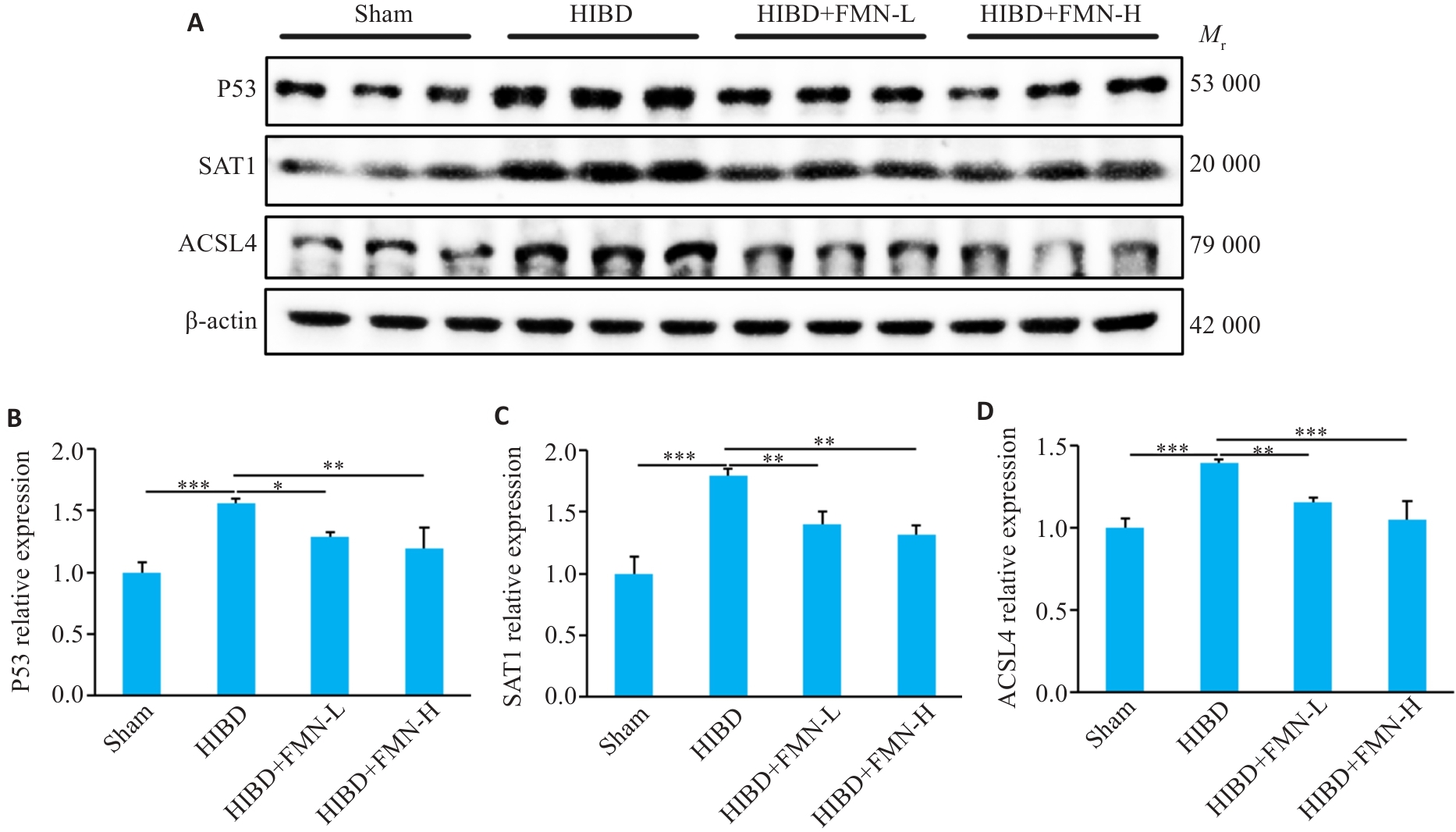
Fig.1 Effects of formononetin (FMN) on ferroptosis-related signaling pathways of P53/SAT1/ACSL4 in neonatal mice with HIBD. A: Western blotting bands of P53, SAT1, ACSL4 and β-actin. B-D: Statistical analysis of relative expressions of P53, SAT1 and ACSL4. *P<0.05, **P<0.01, ***P<0.001 (n=3).
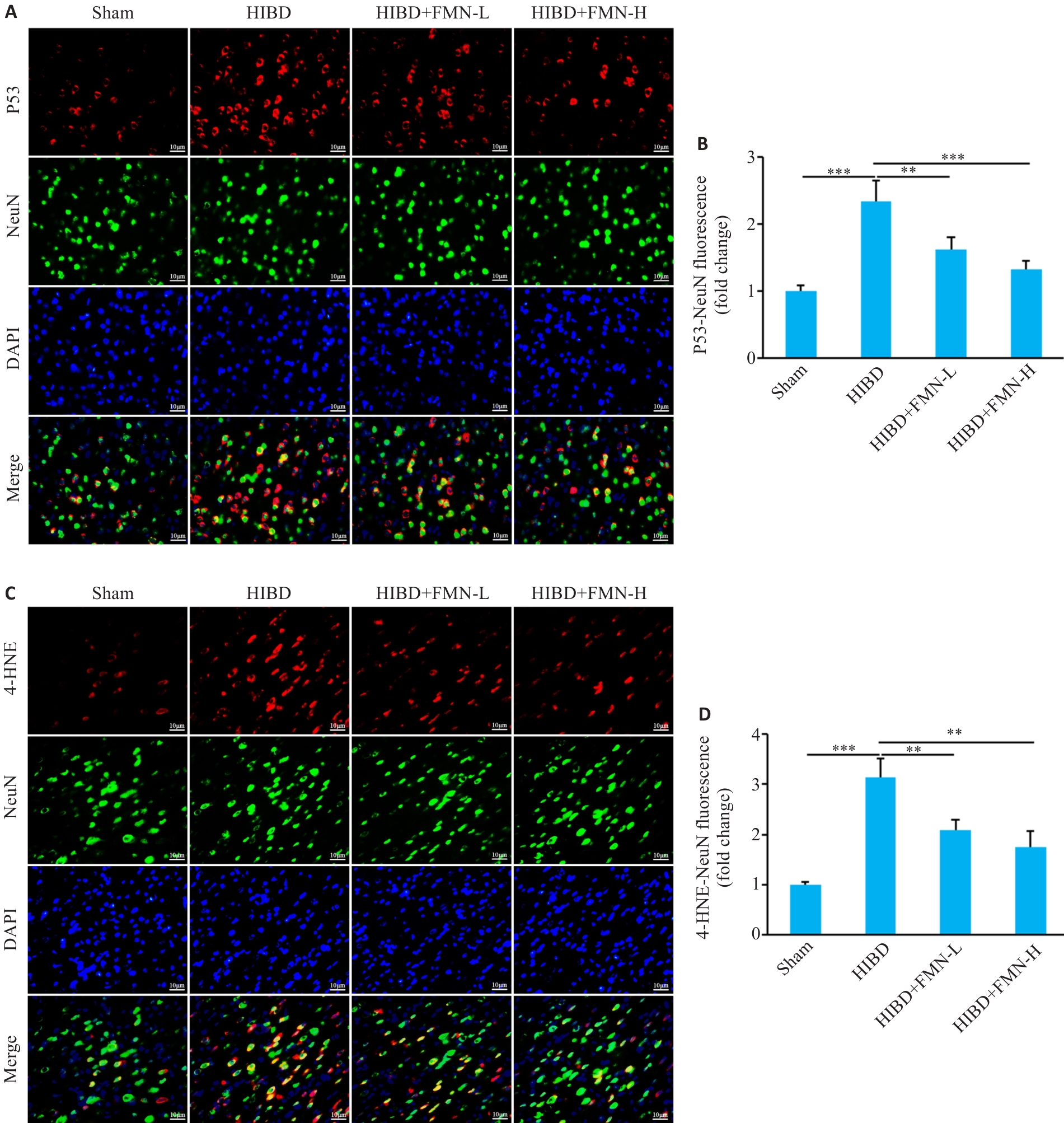
Fig.2 Effect of formononetin on fluorescence intensityof P53 and 4-HNE in the cortical ischemic penumbra of the mice with HIBD. A, B: Results of double immunofluorescence staining for P53 and NeuN (Scale bar=10 μm). C, D: Results of double immunofluorescence staining for 4-HNE and NeuN (Scale bar=10 μm). **P<0.01, ***P<0.001 (n=3).
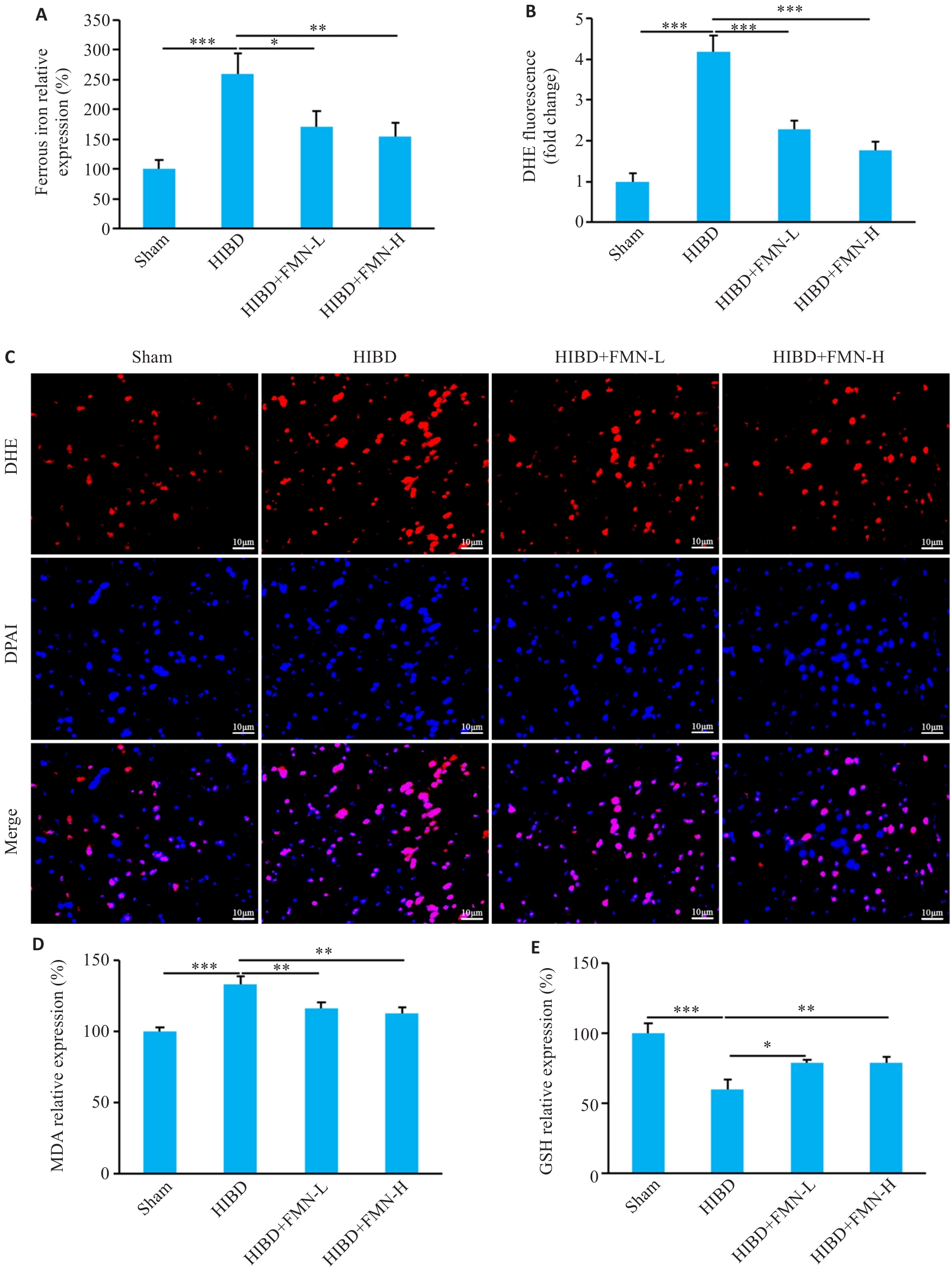
Fig.3 Effects of formononetin on Fe2+, DHE, MDA and GSH levels in the cortical ischemic penumbra of the mice with HIBD. A: Fe2+ levels in the 4 groups. B, C: Results of immunofluorescence staining for DHE (Scale bar=10 μm). D, E: Levels of MDA and GSH in the 4 groups. *P<0.05, **P<0.01, ***P<0.001 (n=3).
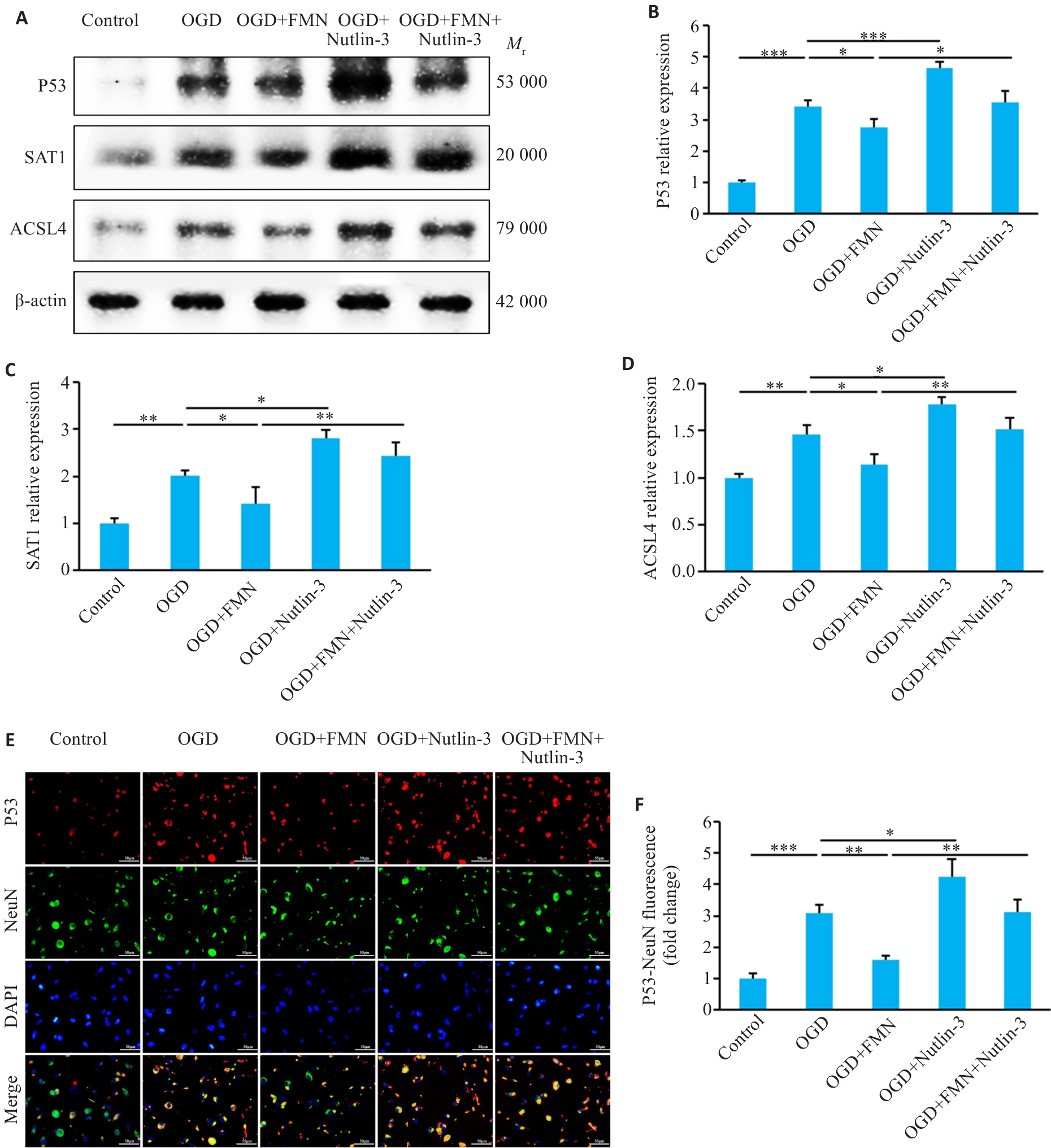
Fig.4 Effects of formononetin on expressions of P53, SAT1 and ACSL4 in HT22 neurons with oxygen-glucose deprivation (OGD). A-D: Western blotting for detecting expression levels of P53, SAT1 and ACSL4. E, F: Results of double immunofluorescence staining for P53 and NeuN (Scale bar=50 μm). *P<0.05, **P<0.01, ***P<0.001 (n=3).
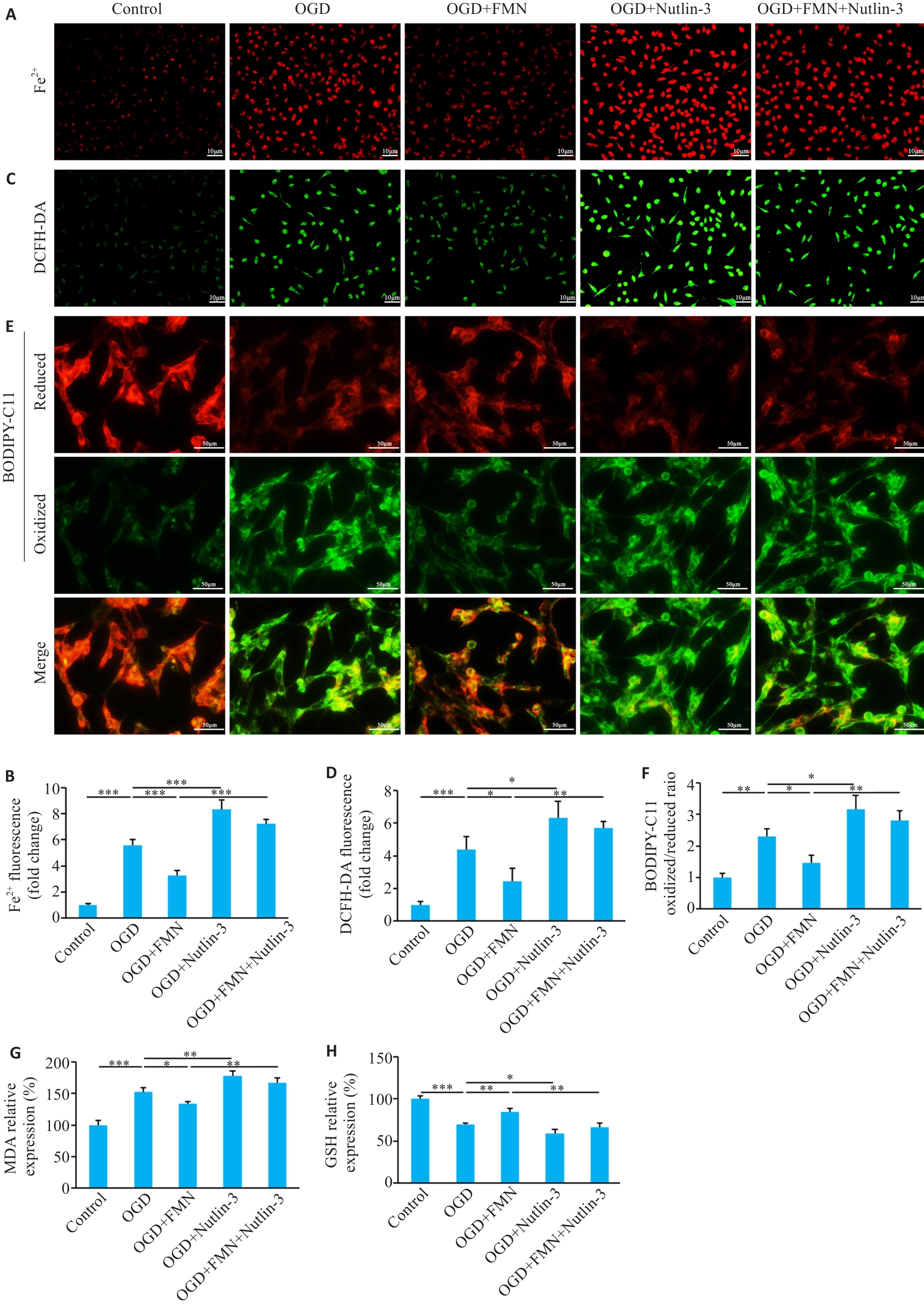
Fig.5 Effects of formononetin on Fe2+, DCFH-DA, BODIPY-C11, MDA and GSH levels in HT22 neurons with OGD. A, B: Detection of Fe²⁺ levels using the FerroOrange fluorescent probe (Scale bar=10 μm). C, D: Detection of ROS levels using the DCFH-DA fluorescent probe (Scale bar=10 μm). E, F: Detection of lipid peroxidation using the BODIPY-C11 fluorescent probe (Scale bar=50 μm). G: Quantification of lipid peroxidation by MDA. H: Quantification of antioxidant products by GSH. *P<0.05, **P<0.01, ***P<0.001 (n=3).
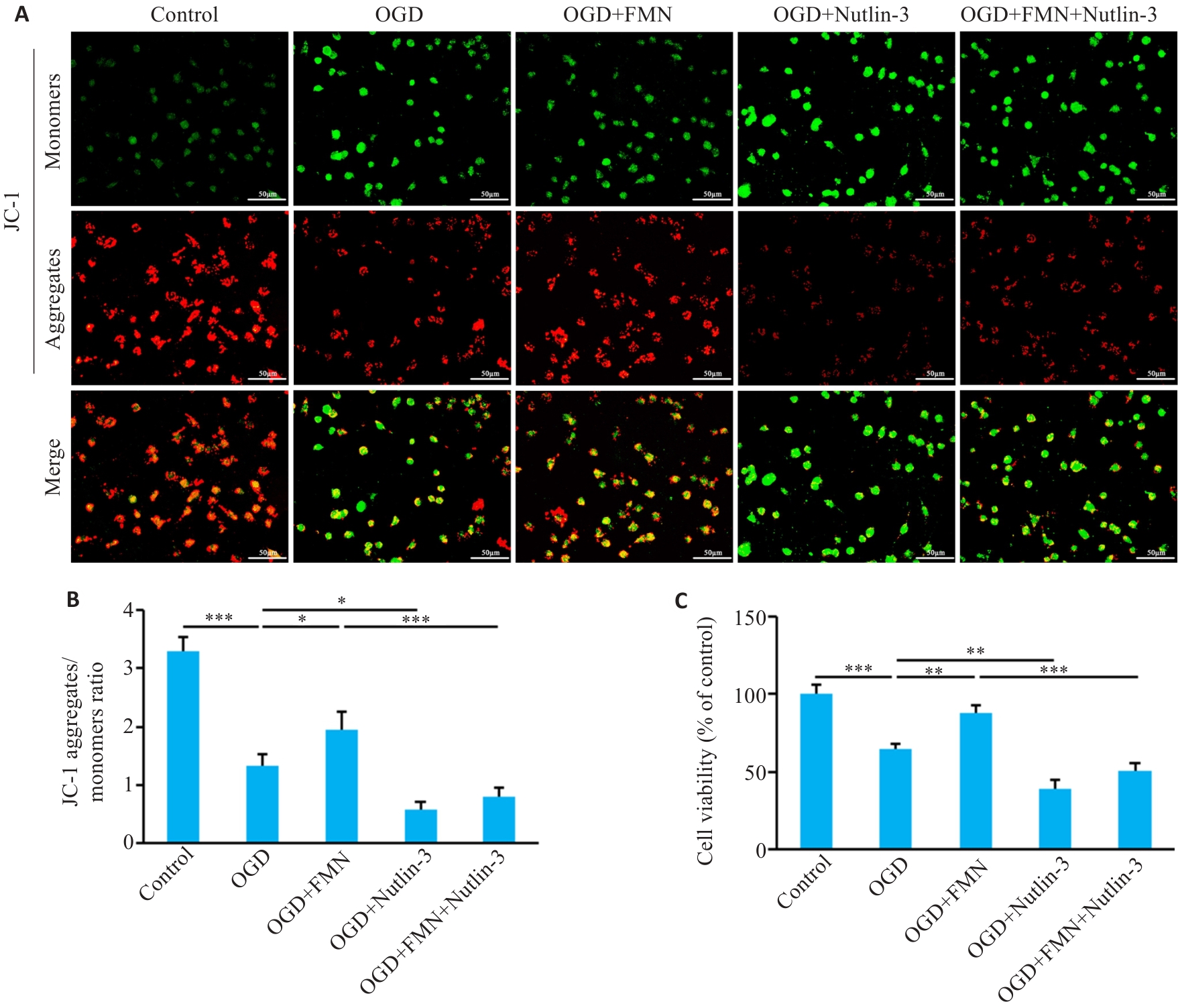
Fig.6 Effects of formononetin on mitochondrial membrane potential and cell viability in HT22 neurons with OGD. A, B: Representative images showing the JC-1 aggregates to monomers ratio for assessing mitochondrial membrane potential (Scale bar=50 μm). C: Assessment of HT22 cell viability by CCK-8 assay. *P<0.05, **P<0.01, ***P<0.001 (n=3).
| [1] | Geisinger R, Rios DR, McNamara PJ, et al. Asphyxia, therapeutic hypothermia, and pulmonary hypertension[J]. Clin Perinatol, 2024, 51(1): 127-49. doi:10.1016/j.clp.2023.11.007 |
| [2] | You Q, Lan XB, Liu N, et al. Neuroprotective strategies for neonatal hypoxic-ischemic brain damage: Current status and challenges[J]. Eur J Pharmacol, 2023, 957: 176003. doi:10.1016/j.ejphar.2023.176003 |
| [3] | Guan Y, Yang L, Cui H. Extracellular vesicles derived from different brain tissue cells: a potential therapeutic measure for hypoxic-ischemic brain injury in immature brains[J]. Histol Histopathol, 2025, 40(11): 1719-32. |
| [4] | Han JN, Xu Y, Zhou Y, et al. Therapeutic hypothermia and recombinant erythropoietin mitigate brain microvascular endothelial cell dysfunction via modulating the pentose phosphate pathway[J]. J Mol Neurosci, 2025, 75(2): 65. doi:10.1007/s12031-025-02356-1 |
| [5] | 霍启晓, 高淑君, 徐 康, 等. 低氧预处理人牙髓干细胞调控铁死亡减轻新生大鼠缺氧缺血性脑损伤[J].中国儿童保健杂志, 2025, 33(9): 976-81. |
| [6] | Hu XD, Bao YT, Li M, et al. The role of ferroptosis and its mechanism in ischemic stroke[J]. Exp Neurol, 2024, 372: 114630. doi:10.1016/j.expneurol.2023.114630 |
| [7] | Huang QY, Tang JH, Xiang Y, et al. 4-Benzyl-2-methyl-1, 2, 4-thiadiazolidine-3, 5-Dione rescues oligodendrocytes ferroptosis leading to myelin loss and ameliorates neuronal injury facilitating memory in neonatal hypoxic-ischemic brain damage[J]. Exp Neurol, 2025, 390: 115262. doi:10.1016/j.expneurol.2025.115262 |
| [8] | 郭 涛, 左涵珺, 匡显锋, 等. 小胶质细胞介导的铁死亡在缺氧缺血性脑损伤中的研究进展[J].细胞与分子免疫学杂志, 2025, 41(6): 552-8. |
| [9] | Lin JJ, Deng L, Qi AL, et al. Catalpol alleviates hypoxia ischemia-induced brain damage by inhibiting ferroptosis through the PI3K/NRF2/system Xc-/ GPX4 axis in neonatal rats[J]. Eur J Pharmacol, 2024, 968: 176406. doi:10.1016/j.ejphar.2024.176406 |
| [10] | Liu Y, Stockwell BR, Jiang X, et al. p53-regulated non-apoptotic cell death pathways and their relevance in cancer and other diseases[J]. Nat Rev Mol Cell Biol, 2025, 26(8): 600-14. doi:10.1038/s41580-025-00842-3 |
| [11] | 邓 伟, 刘喜燕, 郭丽媛, 等. AngⅡ激活p53/SAT1信号通路诱导白色脂肪细胞铁死亡[J]. 中国动脉硬化杂志, 2025, 33(5): 385-94. doi:10.20039/j.cnki.1007-3949.2025.05.003 |
| [12] | Yang TF, Zhang SY, Nie K, et al. WWOX-mediated p53/SAT1 and NRF2/FPN1 axis contribute to toosendanin-induced ferroptosis in hepatocellular carcinoma[J]. Biochem Pharmacol, 2025, 233: 116790. doi:10.1016/j.bcp.2025.116790 |
| [13] | 陈鑫源, 吴成挺, 李瑞迪, 等. 双术汤通过P53/SLC7A11/GPX4通路诱导胃癌细胞铁死亡[J].南方医科大学学报, 2025, 45(7): 1363-71. |
| [14] | Xiao D, Chang W, Ao X, et al. Parkin inhibits iron overload-induced cardiomyocyte ferroptosis by ubiquitinating ACSL4 and modulating PUFA-phospholipids metabolism[J]. Acta Pharm Sin B, 2025, 15(3): 1589-607. doi:10.1016/j.apsb.2024.12.027 |
| [15] | 李友宽, 史 焱, 段琳楠, 等. 刺芒柄花素对脑卒中后自噬、炎症和氧化应激的交互作用[J].中国细胞生物学学报, 2023, 45(10): 1551-7. |
| [16] | 郭 涛, 左涵珺, 石金沙, 等. 刺芒柄花素增强脑缺血半暗带自噬流改善神经损伤[J]. 生物化学与生物物理进展, 2024, 51(12): 3253-65. |
| [17] | Xie D, Jiang Y, Wang H, et al. Formononetin triggers ferroptosis in triple-negative breast cancer cells by regulating the mTORC1/SREBP1/SCD1 pathway[J]. Front Pharmacol, 2024, 15: 1441105. doi:10.3389/fphar.2024.1441105 |
| [18] | 李 恒.豆科植物红三叶草提取物刺芒柄花素联合运动减轻心梗大鼠心肌损伤的研究[J].分子植物育种, 2025, 23(1): 254-63. |
| [19] | Pingale TD, Gupta GL. Acute and sub-acute toxicity study reveals no dentrimental effect of formononetin in mice upon repeatedi.p.dosing[J]. Toxicol Mech Meth, 2023, 33(8): 688-97. doi:10.1080/15376516.2023.2234026 |
| [20] | Xiao QP, Huang JQ, Zhu XY, et al. Formononetin ameliorates dextran sulfate sodium-induced colitis via enhancing antioxidant capacity, promoting tight junction protein expression and reshaping M1/M2 macrophage polarization balance[J]. Int Immuno-pharmacol, 2024, 142: 113174. doi:10.1016/j.intimp.2024.113174 |
| [21] | Ourednik J, Ourednik V, Ghosh N, et al. Protocol to optimize the Rice-Vannucci rat pup model of perinatal asphyxia to ensure predictable hypoxic-ischemic cerebral lesions[J]. STAR Protoc, 2024, 5(2): 103025. doi:10.1016/j.xpro.2024.103025 |
| [22] | Yu LT, Liu SX, Zhou RX, et al. Atorvastatin inhibits neuronal apoptosis via activating cAMP/PKA/p-CREB/BDNF pathway in hypoxic-ischemic neonatal rats[J]. FASEB J, 2022, 36(4): e22263. doi:10.1096/fj.202101654rr |
| [23] | Fang F, Tang JX, Geng JQ, et al. N-acetylserotonin derivative ameliorates hypoxic-ischemic brain damage by promoting PINK1/Parkin-dependent mitophagy to inhibit NLRP3 inflammasome-induced pyroptosis[J]. Int Immunopharmacol, 2025, 153: 114469. doi:10.1016/j.intimp.2025.114469 |
| [24] | Jin N, Sha S, Ruan Y, et al. Identification and analysis of oxidative stress-related genes in hypoxic-ischemic brain damage using bioinformatics and experimental verification[J]. Immun Inflamm Dis, 2024, 12(8): e70000. doi:10.1002/iid3.70000 |
| [25] | 左涵珺, 段兆达, 王 朝, 等. 天麻素经PI3K/AKT通路改善新生大鼠缺氧缺血性脑损伤后小胶质细胞介导的炎症反应[J]. 南方医科大学学报, 2024, 44(9): 1712-9. doi:10.12122/j.issn.1673-4254.2024.09.11 |
| [26] | Wang XX, Li M, Xu XW, et al. BNIP3-mediated mitophagy attenuates hypoxic-ischemic brain damage in neonatal rats by inhibiting ferroptosis through P62-KEAP1-NRF2 pathway activation to maintain iron and redox homeostasis[J]. Acta Pharmacol Sin, 2025, 46(1): 33-51. doi:10.1038/s41401-024-01365-x |
| [27] | Luo L, Deng L, Chen Y, et al. Identification of lipocalin 2 as a ferroptosis-related key gene associated with hypoxic-ischemic brain damage via STAT3/NF‑κB signaling pathway[J]. Antioxidants: Basel, 2023, 12(1): 186. doi:10.3390/antiox12010186 |
| [28] | Zheng JY, Fang Y, Zhang M, et al. Mechanisms of ferroptosis in hypoxic-ischemic brain damage in neonatal rats[J]. Exp Neurol, 2024, 372: 114641. doi:10.1016/j.expneurol.2023.114641 |
| [29] | Temaj G, Chichiarelli S, Telkoparan-Akillilar P, et al. P53: a key player in diverse cellular processes including nuclear stress and ribosome biogenesis, highlighting potential therapeutic compounds[J]. Biochem Pharmacol, 2024, 226: 116332. doi:10.1016/j.bcp.2024.116332 |
| [30] | Zhou C, Xu Z, Ding S, et al. Benzo(a)Pyrene-7, 8-dihydrodiol-9, 10-epoxide (BPDE) Induces Ferroptosis in Rat Cortical Neurons via p53-SLC7A11-ALOX12/p53-SAT1-ALOX15 Pathways[J]. J Appl Toxicol, 2025, 45(8): 1637-48. doi:10.1002/jat.4798 |
| [31] | Liu L, Wen T, Xiao Y, et al. Sea buckthorn extract mitigates chronic obstructive pulmonary disease by suppression of ferroptosis via scavenging ROS and blocking p53/MAPK pathways[J]. J Ethnopharmacol, 2025, 336: 118726. doi:10.1016/j.jep.2024.118726 |
| [32] | Chen F, Su MH, Han D, et al. METTL14 depletion ameliorates ferroptosis in severe acute pancreatitis by increasing the N6-methyladenosine modification of ACSL4 and STA1[J]. Int Immunopharmacol, 2024, 128: 111495. doi:10.1016/j.intimp.2024.111495 |
| [33] | Jia B, Li J, Song Y, et al. ACSL4-mediated ferroptosis and its potential role in central nervous system diseases and injuries[J]. Int J Mol Sci, 2023, 24(12): 10021. doi:10.3390/ijms241210021 |
| [34] | Hou Y, Tang G, Wang Q, et al. Transferrin receptor 1 nuclear translocation facilitates tumor progression via p53-mediated chromatin interactions and genome-wide alterations[J]. Signal Transduct Target Ther, 2025, 10(1): 212. doi:10.1038/s41392-025-02297-6 |
| [35] | Wang X, Shen T, Lian J, et al. Resveratrol reduces ROS-induced ferroptosis by activating SIRT3 and compensating the GSH/GPX4 pathway[J]. Mol Med, 2023, 29(1): 137. doi:10.1186/s10020-023-00730-6 |
| [1] | Qile SONG, Yikai MIAO, Xiaotong FENG, Yifan WANG, Wei LIU, Qi WEI, Xinru YU, Wenwen CHEN, Xiaoyan FU. Selenocystine inhibits colon cancer cell growth by promoting reactive oxygen species generation to trigger oxidative damage [J]. Journal of Southern Medical University, 2026, 46(3): 532-540. |
| [2] | Rongmao HE, Zeyang FANG, Yunyun ZHANG, Youliang WU, Shixiu LIANG, Tao JI, Kequan CHEN, Siqi WANG. Diagnostic and predictive value of ferroptosis-related genes in patients with ulcerative colitis [J]. Journal of Southern Medical University, 2025, 45(9): 1927-1937. |
| [3] | Qi YUN, Ruoli DU, Yuying HE, Yixin ZHANG, Jiahui WANG, Hongwei YE, Zhenghong LI, Qin GAO. Cinnamic acid ameliorates doxorubicin-induced myocardial injury in mice by attenuating cardiomyocyte ferroptosis via inhibiting TLR4 [J]. Journal of Southern Medical University, 2025, 45(9): 1946-1958. |
| [4] | Zejin OU, Ying LI, Shi CHEN, Ziyi WANG, Meiyi HE, Zhicheng CHEN, Shihao TANG, Xiaojing MENG, Zhi WANG. Inhibition of ferroptosis alleviates acute kidney injury caused by diquat in zebrafish [J]. Journal of Southern Medical University, 2025, 45(8): 1743-1750. |
| [5] | Junyi LI, Siyuan CHEN, Liyao XIE, Jin WANG, Ao CHENG, Shaowei ZHANG, Jiyu LIN, Zhihan FANG, Yirui PAN, Chonghe CUI, Gengxin CHEN, Chao ZHANG, Li LI. β-sitosterol, an important component in the fruits of Alpinia oxyphylla Miq., prolongs lifespan of Caenorhabditis elegans by suppressing the ferroptosis pathway [J]. Journal of Southern Medical University, 2025, 45(8): 1751-1757. |
| [6] | Xinyuan CHEN, Chengting WU, Ruidi LI, Xueqin PAN, Yaodan ZHANG, Junyu TAO, Caizhi LIN. Shuangshu Decoction inhibits growth of gastric cancer cell xenografts by promoting cell ferroptosis via the P53/SLC7A11/GPX4 axis [J]. Journal of Southern Medical University, 2025, 45(7): 1363-1371. |
| [7] | Mengying ZHANG, Chenling ZHAO, Liwei TIAN, Guofang YU, Wenming YANG, Ting DONG. Gandou Fumu Decoction improves liver steatosis by inhibiting hepatocyte ferroptosis in mice with Wilson's disease through the GPX4/ACSL4/ALOX15 signaling pathway [J]. Journal of Southern Medical University, 2025, 45(7): 1471-1478. |
| [8] | Anbang ZHANG, Xiuqi SUN, Bo PANG, Yuanhua WU, Jingyu SHI, Ning ZHANG, Tao YE. Electroacupuncture pretreatment alleviates cerebral ischemia-reperfusion injury in rats by inhibiting ferroptosis through the gut-brain axis and the Nrf2/HO-1 signaling pathway [J]. Journal of Southern Medical University, 2025, 45(5): 911-920. |
| [9] | Linluo ZHANG, Changqing LI, Lingling HUANG, Xueping ZHOU, Yuanyuan LOU. Catalpol reduces liver toxicity of triptolide in mice by inhibiting hepatocyte ferroptosis through the SLC7A11/GPX4 pathway: testing the Fuzheng Zhidu theory for detoxification [J]. Journal of Southern Medical University, 2025, 45(4): 810-818. |
| [10] | Yi ZHANG, Yu SHEN, Zhiqiang WAN, Song TAO, Yakui LIU, Shuanhu WANG. High expression of CDKN3 promotes migration and invasion of gastric cancer cells by regulating the p53/NF-κB signaling pathway and inhibiting cell apoptosis [J]. Journal of Southern Medical University, 2025, 45(4): 853-861. |
| [11] | Xue SONG, Yue CHEN, Min ZHANG, Nuo ZHANG, Lugen ZUO, Jing LI, Zhijun GENG, Xiaofeng ZHANG, Yueyue WANG, Lian WANG, Jianguo HU. GPSM2 is highly expressed in gastric cancer to affect patient prognosis by promoting tumor cell proliferation [J]. Journal of Southern Medical University, 2025, 45(2): 229-238. |
| [12] | Junjie GAO, Kai YE, Jing WU. Quercetin inhibits proliferation and migration of clear cell renal cell carcinoma cells by regulating TP53 gene [J]. Journal of Southern Medical University, 2025, 45(2): 313-321. |
| [13] | Danting XIAO, Haijun TANG, Mingxiu YANG, Hongcai TENG, Jiming LIANG, Tianyu XIE, Wenyu FENG, Shangyu LIU, Wei DAI, Hening LI, Yun LIU. Polyphyllin VII inhibits osteosarcoma xenograft growth in mice by inducing ferroptosis via upregulating SOHLH1 [J]. Journal of Southern Medical University, 2025, 45(12): 2726-2737. |
| [14] | Tao GUO, Bolin CHEN, Jinsha SHI, Xianfeng KUANG, Tengyue YU, Song WEI, Xiong LIU, Rong XIAO, Juanjuan LI. Gastrodin inhibits ferroptosis to alleviate hypoxic-ischemic brain damage in neonatal mice by activating GPX4/SLC7A11/FTH1 signaling [J]. Journal of Southern Medical University, 2025, 45(10): 2071-2081. |
| [15] | Siyu ZHANG, Linwu RAN, Jin ZENG, Yujiong WANG. Clostridium perfringens Beta1 toxin induces macrophage pyroptosis and ferroptosis through the purinergic receptor P2X7-Ca2+ axis [J]. Journal of Southern Medical University, 2025, 45(10): 2126-2134. |
| Viewed | ||||||
|
Full text |
|
|||||
|
Abstract |
|
|||||
