
Journal of Southern Medical University ›› 2026, Vol. 46 ›› Issue (9): 2078-2090.doi: 10.12122/j.issn.1673-4254.2026.09.08
Wanting SHEN1( ), Yizhe CHEN1(), Xinyu FU1, Jiatao YUAN1, Jun ZHOU1, Li HUANG2(), Ning WU2()
Received:2026-01-09
Online:2026-09-20
Published:2026-09-30
Contact:
Li HUANG, Ning WU
E-mail:1527214678@qq.com;2322045095@qq.com;12155501@qq.com;1638210715@qq.com
Supported by:Wanting SHEN, Yizhe CHEN, Xinyu FU, Jiatao YUAN, Jun ZHOU, Li HUANG, Ning WU. Miao medicine Sidaxue regulates macrophage polarization and alleviates synovial inflammation in collagen-induced arthritis rats by inhibiting HIF-1α/PDK1-mediated glycolytic reprogramming[J]. Journal of Southern Medical University, 2026, 46(9): 2078-2090.
Add to citation manager EndNote|Ris|BibTeX
URL: https://www.j-smu.com/EN/10.12122/j.issn.1673-4254.2026.09.08
| Primer | Sequences (5' to 3') | |
|---|---|---|
| HK2 | Forward Reverse | GCTGCTGCTGAAGAAGATGG |
| CCAGAGGGAGTCGATGTTGA | ||
| HIF-1α | Forward Reverse | GCTGATTTGTGAGCCTTCTATG |
| TCATCTGTAAGTGGGTCTCGT | ||
| PDK1 | Forward Reverse | ATGGCGTCCGTGGAGAAGTA |
| TCAGTCTTGGCGTAGTCGTT | ||
| GAPDH | Forward Reverse | GAAGCTGGTCATCAACGGGA |
| GGCGGAGATGATGACCCTTT | ||
Tab.1 Primer sequences for RT-qPCR of HK2, HIF-1α, PDK1 and GAPDH
| Primer | Sequences (5' to 3') | |
|---|---|---|
| HK2 | Forward Reverse | GCTGCTGCTGAAGAAGATGG |
| CCAGAGGGAGTCGATGTTGA | ||
| HIF-1α | Forward Reverse | GCTGATTTGTGAGCCTTCTATG |
| TCATCTGTAAGTGGGTCTCGT | ||
| PDK1 | Forward Reverse | ATGGCGTCCGTGGAGAAGTA |
| TCAGTCTTGGCGTAGTCGTT | ||
| GAPDH | Forward Reverse | GAAGCTGGTCATCAACGGGA |
| GGCGGAGATGATGACCCTTT | ||
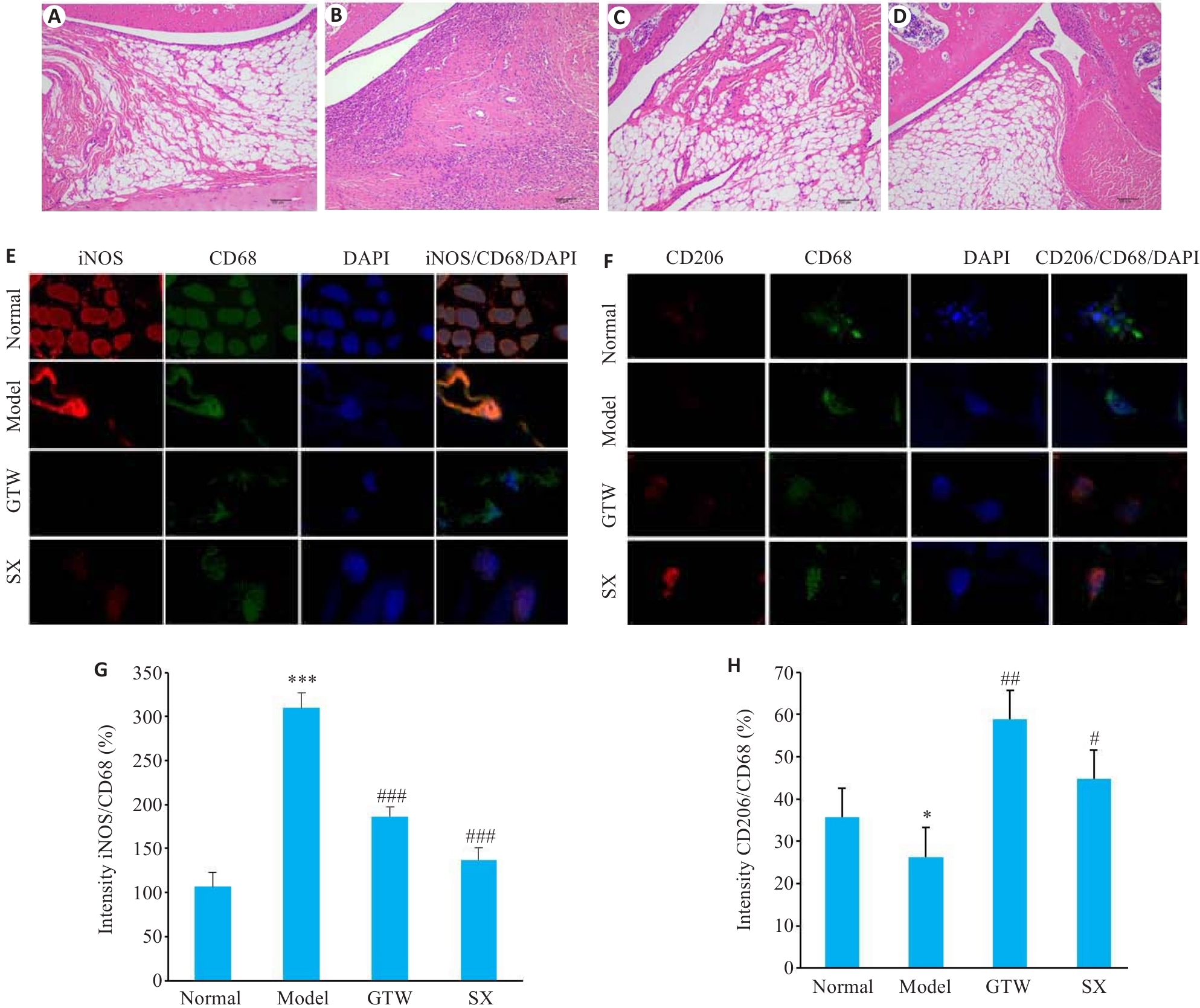
Fig.1 HE and immunofluorescence staining of the synovial tissues of the rats from each group. A-D: HE staining of the synovial tissues in normal control, CIA model, GTW, SX groups, respectively (Original magnification:×100). E, F: Immunofluorescence staining of M1 macrophages (iNOS, red) and M2 macrophages (CD206, red) (Scale bar=10 μm). G, H: Quantitative analysis of fluorescence intensity ratio of iNOS+ or CD206+ to CD68+ (Mean±SD, n=3). *P<0.05, ***P<0.001 vs normal group; #P<0.05, ##P<0.01, ###P<0.001 vs model group.
| Group | TNF-α | IL-1β | IL-6 | |
|---|---|---|---|---|
| Normal | 30.81±4.56 | 12.14±1.85 | 32.79±4.26 | |
| Model | 62.86±5.68** | 54.52±4.51** | 79.78±5.35** | |
| GTW | 39.82±5.88# | 32.36±3.97# | 42.65±6.31# | |
| SX | 32.62±6.43## | 30.89±2.36## | 33.52±4.54## |
Tab.4 Effect of SX on serum levels of TNF-α, IL-1β, and IL-6 in CIA rats (n=8, Mean±SD)
| Group | TNF-α | IL-1β | IL-6 | |
|---|---|---|---|---|
| Normal | 30.81±4.56 | 12.14±1.85 | 32.79±4.26 | |
| Model | 62.86±5.68** | 54.52±4.51** | 79.78±5.35** | |
| GTW | 39.82±5.88# | 32.36±3.97# | 42.65±6.31# | |
| SX | 32.62±6.43## | 30.89±2.36## | 33.52±4.54## |
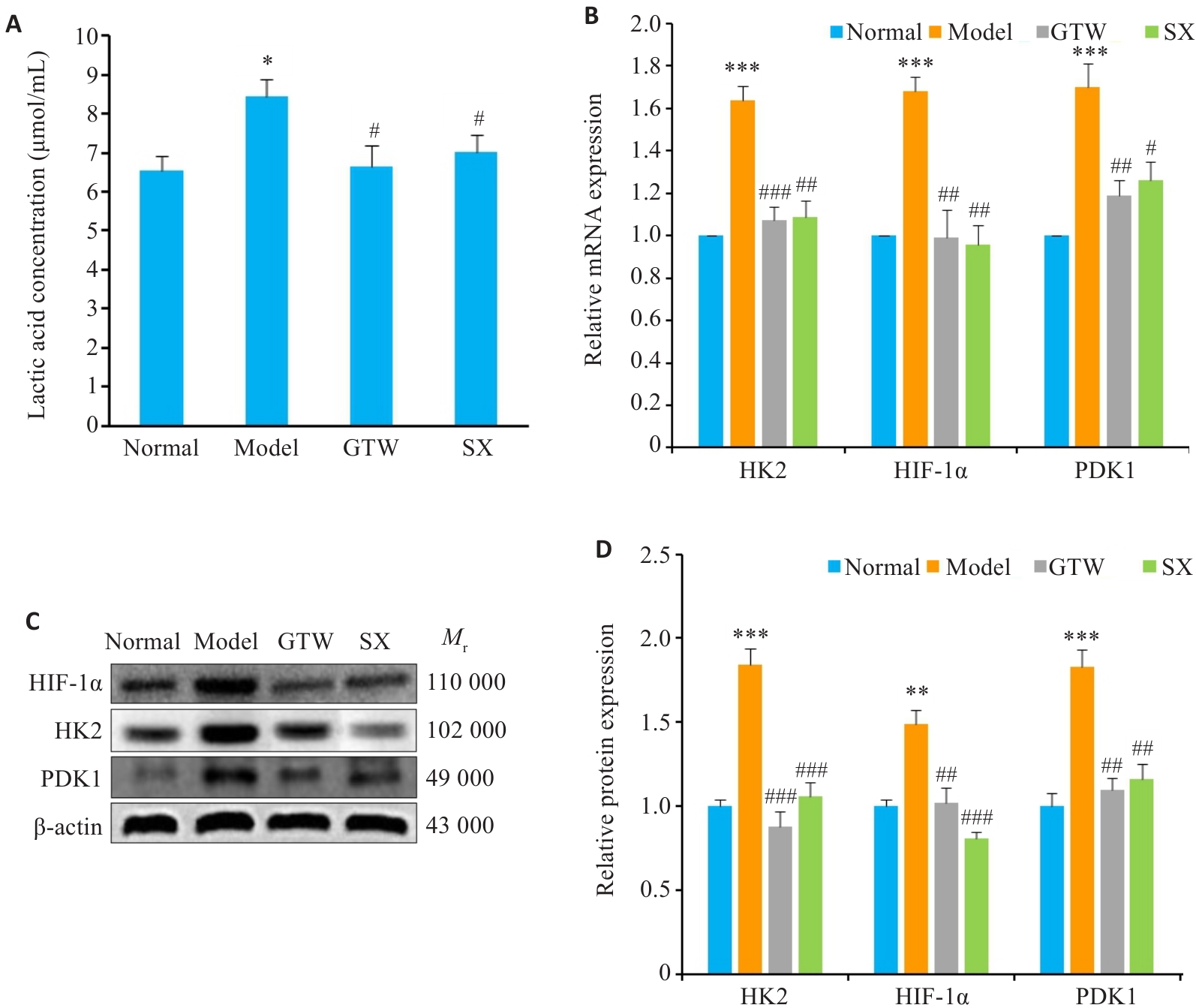
Fig.2 Effects of SX on glycolysis in the synovial tissues of CIA rats. *P<0.05, **P<0.01,***P<0.001 vs the normal group; #P<0.05, ##P<0.01, ###P<0.001 vs the model group.
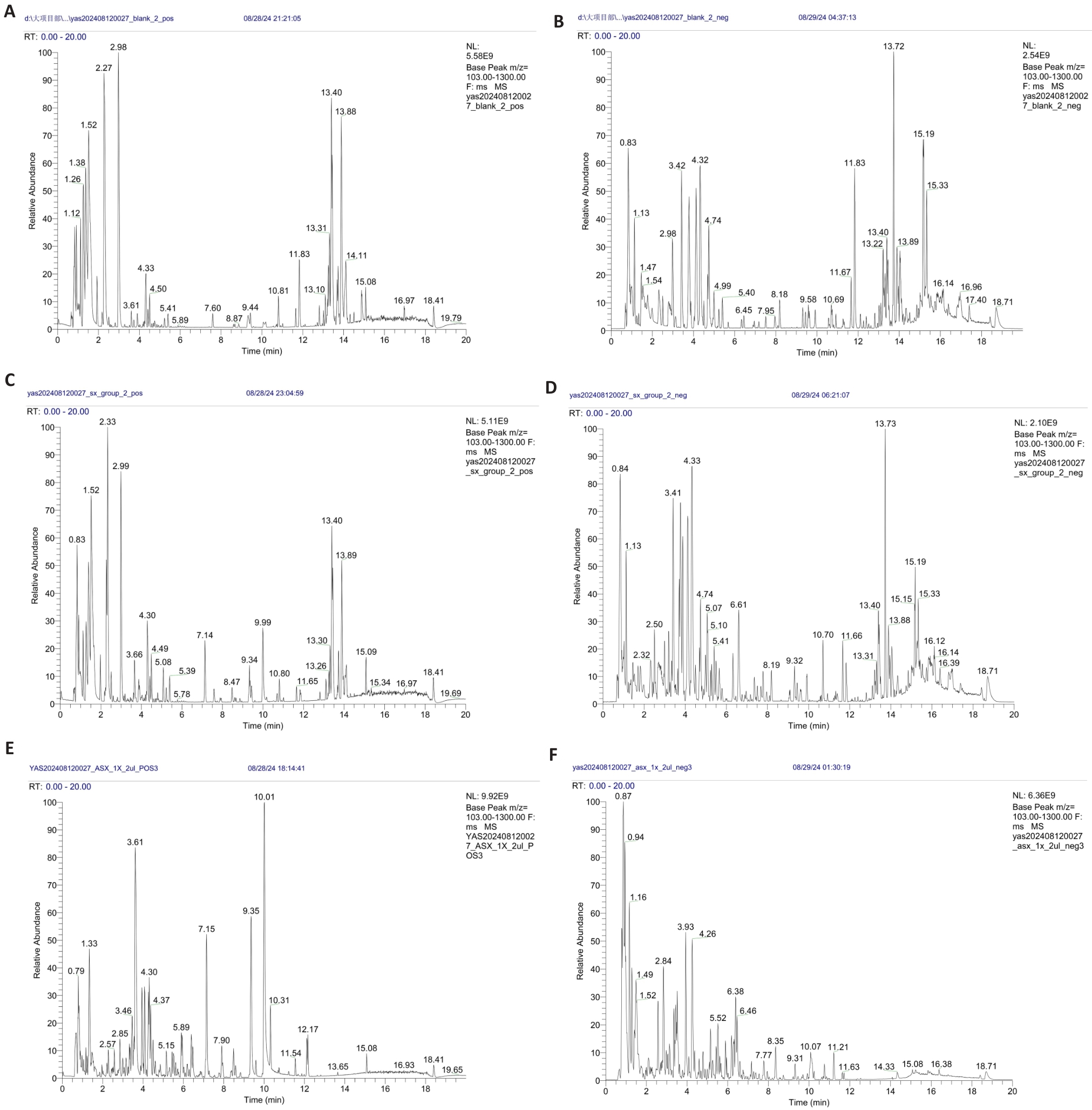
Fig.3 Total ion current chromatograms of blank serum, SX-medicated rat serum, and SX extract in positive ion mode (A, C, E) and negative ion mode (B, D, F).
| Serial number | t (min) | Component | Lon species | Measured value (m/z) | Score |
|---|---|---|---|---|---|
| 1 | 3.32 | Fumaritine | [M+H]+ | 356.15 | 0.99 |
| 2 | 3.46 | Heriguard | [M+H C7H12O6]+ | 163.04 | 0.99 |
| 3 | 3.55 | Procyanidin B2 | [M+H]+ | 579.15 | 0.99 |
| 4 | 3.63 | Magnoflorine | [M]+ | 342.17 | 0.93 |
| 5 | 4.26 | 3-O-Feruloylquinic acid | [M+H]+ | 369.12 | 0.99 |
| 6 | 4.31 | Glu-Thr | [M+H]+ | 249.11 | 0.93 |
| 7 | 5.16 | N-Malonyltryptophan | [M+H]+ | 291.10 | 0.83 |
| 8 | 5.43 | 7-hydroxy-4-(methoxymethyl)coumarin | [M+H]+ | 207.06 | 0.89 |
| 9 | 5.51 | Brutieridin | [M+H C18H28O13]+ | 303.09 | 0.92 |
| 10 | 5.90 | 4-Hydroxy-7-methyl-2-[2-[3,4,5-trihydroxy-6-(hydroxymethyl)oxan-2-yl] oxypropan-2-yl]-2,3-dihydrofuro[3,2-g]chromen-5-one | [M+H]+ | 439.16 | 0.97 |
| 11 | 7.15 | Toddalolactone | [M+H]+ | 309.13 | 1.00 |
| 12 | 7.89 | Visamminol | [M+H]+ | 277.11 | 0.96 |
| 13 | 8.48 | Skimmianine | [M+H]+ | 260.09 | 0.95 |
| 14 | 9.34 | Isopimpinellin | [M+H]+ | 247.06 | 1.00 |
| 15 | 10.01 | Pimpinellin | [M+H]+ | 247.06 | 1.00 |
| 16 | 12.12 | Phellopterin | [M+H]+ | 301.11 | 0.98 |
| 17 | 2.84 | Neochlorogenic acid | [M-H]- | 353.09 | 0.97 |
| 18 | 3.36 | Wikstrol A | [M-H C6H6O3]- | 417.10 | 0.73 |
| 19 | 3.95 | Catechin | [M-H]- | 289.07 | 1.00 |
| 20 | 4.09 | 2-beta-D-Glucopyranosyloxy-4-methoxy-cis-cinnamic acid | [M-H-H2O]- | 337.09 | 0.98 |
| 21 | 4.37 | (-)-Lyoniresinol 9'-O-glucoside | [M-H]- | 581.22 | 0.95 |
| 22 | 4.79 | N-Acetyl-L-phenylalanine | [M-H]- | 206.08 | 0.98 |
| 23 | 5.15 | Asn-Asn | [M-H]- | 245.09 | 0.73 |
| 24 | 5.51 | Hesperidin | [M-H]- | 609.18 | 1.00 |
| 25 | 6.32 | Azelaic acid | [M-H]- | 187.10 | 1.00 |
| 26 | 6.60 | Salicylic acid | [M-H]- | 137.02 | 1.00 |
| 27 | 8.35 | 1-O-[(2beta,3beta,5xi,9xi,18xi)-2,23-Dihydroxy-28,29-dioxo-3- (beta-D-xylopyranosyloxy)olean-12-en-28-yl]-beta-D-glucopyranose | [M-H]- | 825.43 | 0.99 |
| 28 | 10.76 | Mocimycin | [M-H]- | 795.42 | 0.97 |
| 29 | 11.22 | Medicagenic acid 3-O-beta-D-glucoside | [M-H]- | 663.37 | 0.97 |
Tab.5 Results of the analysis of blood-borne components of Sidaxue
| Serial number | t (min) | Component | Lon species | Measured value (m/z) | Score |
|---|---|---|---|---|---|
| 1 | 3.32 | Fumaritine | [M+H]+ | 356.15 | 0.99 |
| 2 | 3.46 | Heriguard | [M+H C7H12O6]+ | 163.04 | 0.99 |
| 3 | 3.55 | Procyanidin B2 | [M+H]+ | 579.15 | 0.99 |
| 4 | 3.63 | Magnoflorine | [M]+ | 342.17 | 0.93 |
| 5 | 4.26 | 3-O-Feruloylquinic acid | [M+H]+ | 369.12 | 0.99 |
| 6 | 4.31 | Glu-Thr | [M+H]+ | 249.11 | 0.93 |
| 7 | 5.16 | N-Malonyltryptophan | [M+H]+ | 291.10 | 0.83 |
| 8 | 5.43 | 7-hydroxy-4-(methoxymethyl)coumarin | [M+H]+ | 207.06 | 0.89 |
| 9 | 5.51 | Brutieridin | [M+H C18H28O13]+ | 303.09 | 0.92 |
| 10 | 5.90 | 4-Hydroxy-7-methyl-2-[2-[3,4,5-trihydroxy-6-(hydroxymethyl)oxan-2-yl] oxypropan-2-yl]-2,3-dihydrofuro[3,2-g]chromen-5-one | [M+H]+ | 439.16 | 0.97 |
| 11 | 7.15 | Toddalolactone | [M+H]+ | 309.13 | 1.00 |
| 12 | 7.89 | Visamminol | [M+H]+ | 277.11 | 0.96 |
| 13 | 8.48 | Skimmianine | [M+H]+ | 260.09 | 0.95 |
| 14 | 9.34 | Isopimpinellin | [M+H]+ | 247.06 | 1.00 |
| 15 | 10.01 | Pimpinellin | [M+H]+ | 247.06 | 1.00 |
| 16 | 12.12 | Phellopterin | [M+H]+ | 301.11 | 0.98 |
| 17 | 2.84 | Neochlorogenic acid | [M-H]- | 353.09 | 0.97 |
| 18 | 3.36 | Wikstrol A | [M-H C6H6O3]- | 417.10 | 0.73 |
| 19 | 3.95 | Catechin | [M-H]- | 289.07 | 1.00 |
| 20 | 4.09 | 2-beta-D-Glucopyranosyloxy-4-methoxy-cis-cinnamic acid | [M-H-H2O]- | 337.09 | 0.98 |
| 21 | 4.37 | (-)-Lyoniresinol 9'-O-glucoside | [M-H]- | 581.22 | 0.95 |
| 22 | 4.79 | N-Acetyl-L-phenylalanine | [M-H]- | 206.08 | 0.98 |
| 23 | 5.15 | Asn-Asn | [M-H]- | 245.09 | 0.73 |
| 24 | 5.51 | Hesperidin | [M-H]- | 609.18 | 1.00 |
| 25 | 6.32 | Azelaic acid | [M-H]- | 187.10 | 1.00 |
| 26 | 6.60 | Salicylic acid | [M-H]- | 137.02 | 1.00 |
| 27 | 8.35 | 1-O-[(2beta,3beta,5xi,9xi,18xi)-2,23-Dihydroxy-28,29-dioxo-3- (beta-D-xylopyranosyloxy)olean-12-en-28-yl]-beta-D-glucopyranose | [M-H]- | 825.43 | 0.99 |
| 28 | 10.76 | Mocimycin | [M-H]- | 795.42 | 0.97 |
| 29 | 11.22 | Medicagenic acid 3-O-beta-D-glucoside | [M-H]- | 663.37 | 0.97 |
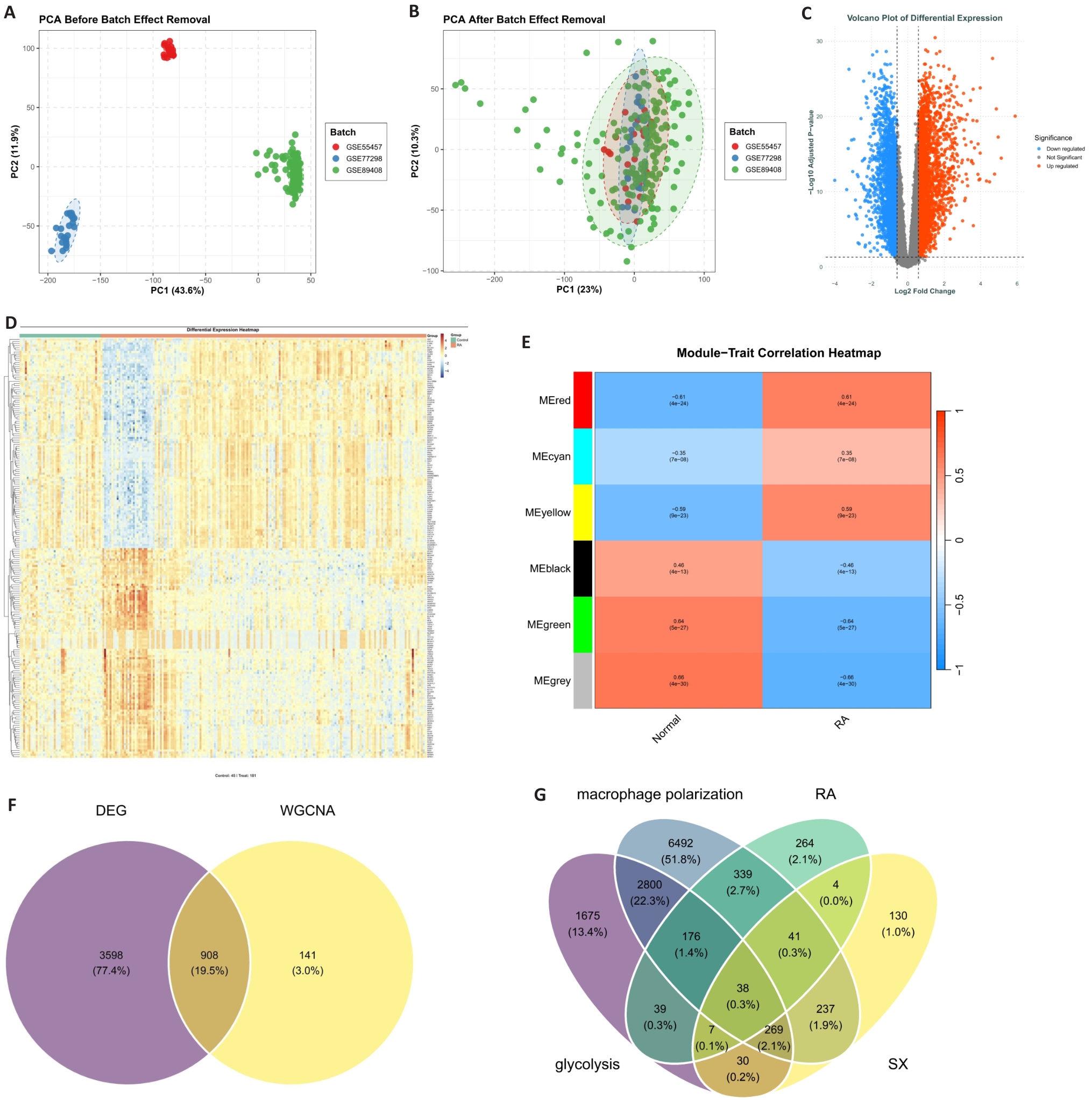
Fig.4 Determination of rheumatoid arthritis (RA)-related target genes. A: Principal component analysis (PCA) of samples before batch effect correction. B: PCA after batch effect correction. C: Volcano plot of differentially expressed genes (DEGs) in RA synovium. D: Heatmap of the DEGs. E: Module-Trait Correlation Heatmap by weighted gene co-expression network analysis (WGCNA). F: Intersection analysis of the DEGs and WGCNA key module genes. G: Intersection analysis of the targerts of the blood-entering components of SX, RA core genes,glycolysis, and macrophage polarization targets.
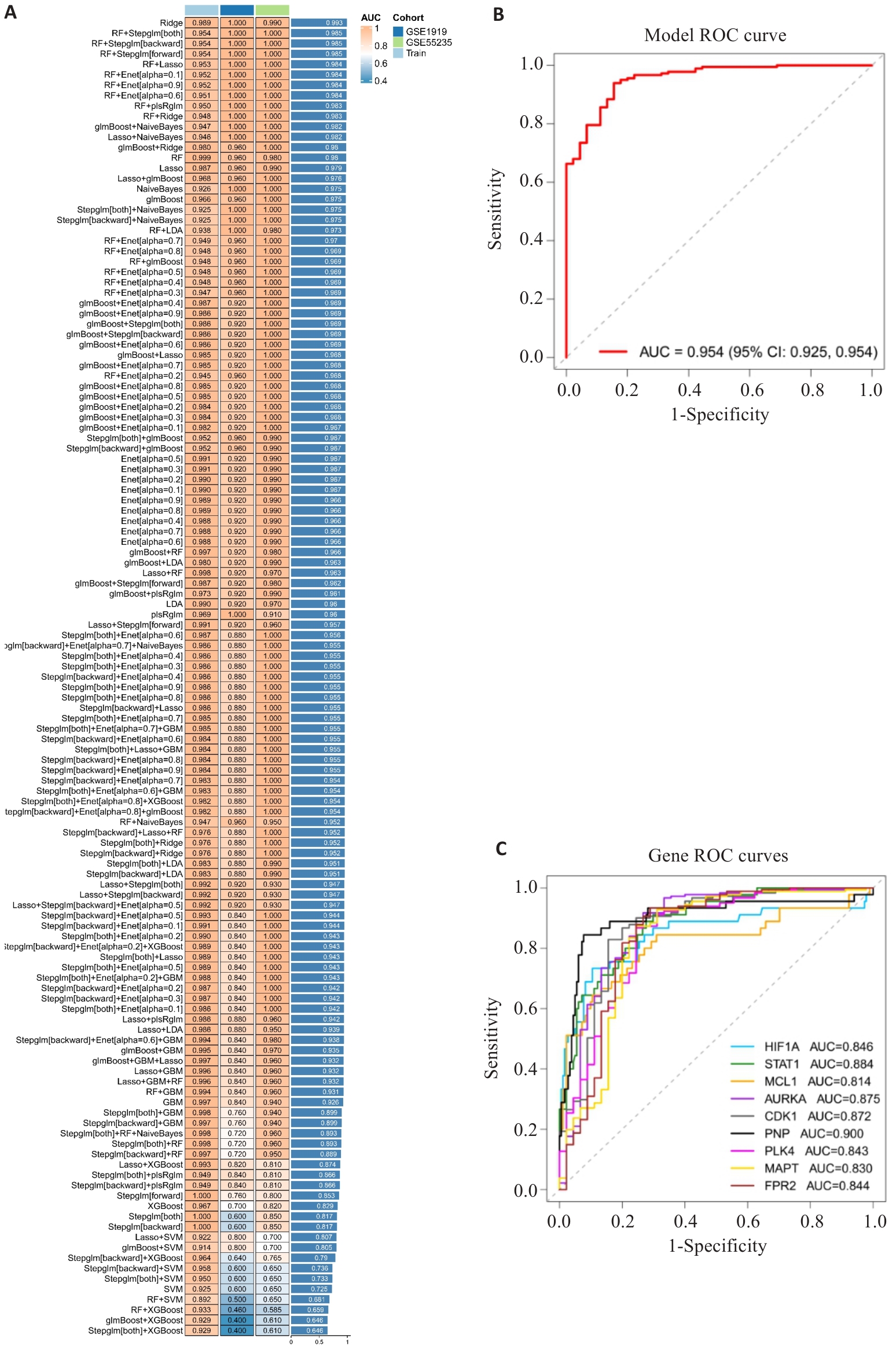
Fig.5 Identification of the core genes associated with RA. A: Performance evaluation of 127 predictive models constructed using 12 classic machine learning algorithms. B: ROC curve of the optimal RF+Stepglm [forward] model. C: Single-gene ROC curve analysis of the 9 core genes.
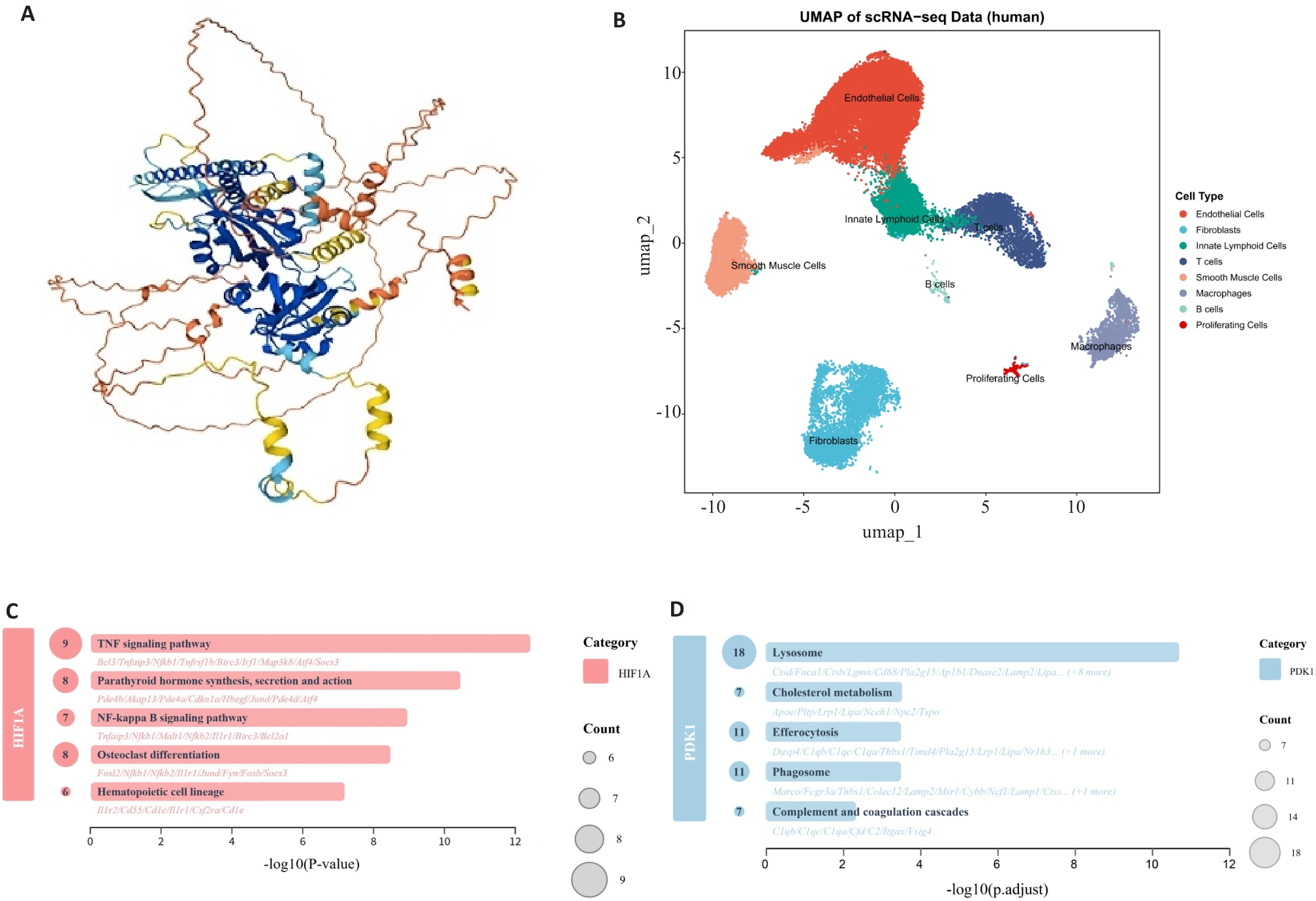
Fig.6 Results of protein-protein interaction and virtual knockout. A: AlphaFold3 predicts the interaction structure between HIF‑1α and PDK1 proteins. B: Single-cell clustering annotation of human synovial tissue. C: Enrichment analysis of the downstream perturbed genes after virtual knockout of HIF1A. D: Enrichment analysis of downstream perturbed genes after virtual knockout of PDK1.
| Blood-entering component | Vina score for HIF1A(kcal/mol) |
|---|---|
| (-)-Lyoniresinol 9'-O-glucoside | -7.70 |
| 2-beta-D-Glucopyranosyloxy-4-methoxy-cis-cinnamic acid | -6.70 |
| 1-O-[(2beta,3beta,5xi,9xi,18xi)-2,23-Dihydroxy-28,29-dioxo-3-(beta-D-xylopyranosyloxy)olean-12-en-28-yl]-beta-D-glucopyranose | -9.00 |
| 3-O-Feruloylquinic acid | -7.70 |
| 2-(4-Hydroxy-7-methyl-5-oxo-2,3-dihydro-5H-furo[3,2-g]chromen-2-yl)propan-2-yl hexopyranoside | -8.70 |
| Wikstrol A | -8.60 |
| 7-hydroxy-4-(methoxymethyl)coumarin | -6.00 |
| Asn-Asn | -6.30 |
| Azelaic acid | -5.30 |
| Brutieridin | -8.70 |
| Catechin | -7.50 |
| Fumaritine | -7.80 |
| Glu-Thr | -5.80 |
| Heriguard | -7.80 |
| Hesperidin | -9.30 |
| Isopimpinellin | -6.60 |
| Magnoflorine | -8.10 |
| Medicagenic acid 3-O-beta-D-glucoside | -10.10 |
| Mocimycin | -8.90 |
| N-Acetyl-L-phenylalanine | -6.40 |
| Neochlorogenic acid | -7.70 |
| N-Malonyltryptophan | -7.30 |
| Phellopterin | -7.30 |
| Pimpinellin | -6.70 |
| Procyanidin B2 | -8.50 |
| Salicylic acid | -6.30 |
| Skimmianine | -6.60 |
| Toddalolactone | -6.70 |
| Visamminol | -7.30 |
Tab.6 Results of molecular docking
| Blood-entering component | Vina score for HIF1A(kcal/mol) |
|---|---|
| (-)-Lyoniresinol 9'-O-glucoside | -7.70 |
| 2-beta-D-Glucopyranosyloxy-4-methoxy-cis-cinnamic acid | -6.70 |
| 1-O-[(2beta,3beta,5xi,9xi,18xi)-2,23-Dihydroxy-28,29-dioxo-3-(beta-D-xylopyranosyloxy)olean-12-en-28-yl]-beta-D-glucopyranose | -9.00 |
| 3-O-Feruloylquinic acid | -7.70 |
| 2-(4-Hydroxy-7-methyl-5-oxo-2,3-dihydro-5H-furo[3,2-g]chromen-2-yl)propan-2-yl hexopyranoside | -8.70 |
| Wikstrol A | -8.60 |
| 7-hydroxy-4-(methoxymethyl)coumarin | -6.00 |
| Asn-Asn | -6.30 |
| Azelaic acid | -5.30 |
| Brutieridin | -8.70 |
| Catechin | -7.50 |
| Fumaritine | -7.80 |
| Glu-Thr | -5.80 |
| Heriguard | -7.80 |
| Hesperidin | -9.30 |
| Isopimpinellin | -6.60 |
| Magnoflorine | -8.10 |
| Medicagenic acid 3-O-beta-D-glucoside | -10.10 |
| Mocimycin | -8.90 |
| N-Acetyl-L-phenylalanine | -6.40 |
| Neochlorogenic acid | -7.70 |
| N-Malonyltryptophan | -7.30 |
| Phellopterin | -7.30 |
| Pimpinellin | -6.70 |
| Procyanidin B2 | -8.50 |
| Salicylic acid | -6.30 |
| Skimmianine | -6.60 |
| Toddalolactone | -6.70 |
| Visamminol | -7.30 |
| [1] | Di Matteo A, Bathon JM, Emery P. Rheumatoid arthritis[J]. Lancet, 2023, 402(10416): 2019-33. doi:10.1016/s0140-6736(23)01525-8 |
| [2] | Parab A, Bhatt LK. T-cell metabolism in rheumatoid arthritis: focus on mitochondrial and lysosomal dysfunction[J]. Immunopharmacol Immunotoxicol, 2024, 46(3): 378-84. doi:10.1080/08923973.2024.2330645 |
| [3] | Xu J, Feng ZT, Chen SX, et al. Taxol alleviates collagen-induced arthritis in mice by inhibiting the formation of microvessels[J]. Clin Rheumatol, 2019, 38(1): 19-27. doi:10.1007/s10067-017-3646-1 |
| [4] | Touhidul Islam SM, Won J, Khan M, et al. Hypoxia-inducible factor-1 drives divergent immunomodulatory functions in the pathogenesis of autoimmune diseases[J]. Immunology, 2021, 164(1): 31-42. doi:10.1111/imm.13335 |
| [5] | Damerau A, Kirchner M, Pfeiffenberger M, et al. Metabolic reprogramming of synovial fibroblasts in osteoarthritis by inhibition of pathologically overexpressed pyruvate dehydrogenase kinases[J]. Metab Eng, 2022, 72: 116-32. doi:10.1016/j.ymben.2022.03.006 |
| [6] | Škorja Milić N, Dolinar K, Miš K, et al. Suppression of pyruvate dehydrogenase kinase by dichloroacetate in cancer and skeletal muscle cells is isoform specific and partially independent of HIF-1α[J]. Int J Mol Sci, 2021, 22(16): 8610. doi:10.3390/ijms22168610 |
| [7] | 雷海桃, 王金海, 高韵奇, 等. 己糖激酶2在类风湿关节炎发病机制中的研究进展[J]. 中国骨质疏松杂志, 2025, 31(1): 90-5. |
| [8] | Chen JX, Li GR, Sun DJ, et al. Research progress of hexokinase 2 in inflammatory-related diseases and its inhibitors[J]. Eur J Med Chem, 2024, 264: 115986. doi:10.1016/j.ejmech.2023.115986 |
| [9] | Su PF, Li O, Ke K, et al. Targeting tumor-associated macrophages: Critical players in tumor progression and therapeutic strategies (Review)[J]. Int J Oncol, 2024, 64(6). doi:10.3892/ijo.2024.5648 |
| [10] | Cersosimo F, Lonardi S, Bernardini G, et al. Tumor-associated macrophages in osteosarcoma: from mechanisms to therapy[J]. Int J Mol Sci, 2020, 21(15): 5207. doi:10.3390/ijms21155207 |
| [11] | Peng Y, Zhou MX, Yang H, et al. Regulatory mechanism of M1/M2 macrophage polarization in the development of autoimmune diseases[J]. Mediat Inflamm, 2023, 2023: 8821610. doi:10.1155/2023/8821610 |
| [12] | Kzhyshkowska J, Shen JX, Larionova I. Targeting of TAMs: can we be more clever than cancer cells?[J]. Cell Mol Immunol, 2024, 21(12): 1376-409. doi:10.1038/s41423-024-01232-z |
| [13] | Siouti E, Andreakos E. The many facets of macrophages in rheumatoid arthritis[J]. Biochem Pharmacol, 2019, 165: 152-69. doi:10.1016/j.bcp.2019.03.029 |
| [14] | 余 芸, 蔡伟伟, 周 静, 等. 代谢重编程调控巨噬细胞极化及其在类风湿关节炎中的作用[J]. 药学学报, 2020, 55(9): 2027-34. doi:10.16438/j.0513-4870.2020-0386 |
| [15] | Kumar V. Inflammation research sails through the sea of im-munology to reach immunometabolism[J]. Int Immunopharmacol, 2019, 73: 128-45. doi:10.1016/j.intimp.2019.05.002 |
| [16] | 欧慧萍, 吴趋荟, 沈 枭, 等. 中医药防治类风湿关节炎的作用机制研究进展[J]. 吉林中医药, 2021, 41(12): 1685-8. |
| [17] | 袁桃花, 黄宇键, 李佳豪, 等. 贵州苗药方“四大血”对CIA大鼠滑膜血管增生的作用机制[J]. 西安交通大学学报: 医学版, 2019, 40(5): 824-9, 843. doi:10.7652/jdyxb201905031 |
| [18] | 吴 宁, 曾 佳, 王时敏, 等. 苗药四大血对大鼠佐剂性关节炎作用的研究[J]. 中国实验方剂学杂志, 2014, 20(2): 120-3. doi:10.11653/syfj2014020120 |
| [19] | 梁 玺, 覃 淇, 张艺馨, 等. 苗药验方“四大血”对类风湿性关节炎大鼠关节炎症的作用及机制[J]. 贵州医科大学学报, 2023, 48(7): 759-66. |
| [20] | 吴 宁, 袁桃花, 姬进忠, 等. 苗药验方四大血对人类风湿性关节炎成纤维样滑膜细胞凋亡和焦亡的影响[J]. 南方医科大学学报, 2021, 41(10): 1473-83. doi:10.12122/j.issn.1673-4254.2021.10.05 |
| [21] | Wu N, Yuan TH, Yin ZX, et al. Network pharmacology and molecular docking study of the Chinese Miao medicine sidaxue in the treatment of rheumatoid arthritis[J]. Drug Des Devel Ther, 2022, 16: 435-66. doi:10.2147/dddt.s330947 |
| [22] | 马麦丽娜, 李喜媛, 马晓飞, 等. 中医药调控M1/M2巨噬细胞极化治疗类风湿关节炎研究进展[J]. 中国医药导刊, 2025, 27(8): 780-5. |
| [23] | 胡白飞, 高倩茹, 胡海明, 等. 中药物质基础研究进展:从化学物质组学到肠道转化物质组学[J]. 中国生物工程杂志, 2026, 46(4): 142-54. |
| [24] | 陈旺宇, 节笑笑, 陈甜甜, 等. 中药血清药物化学研究现状[J]. 中国医药科学, 2023, 13(4): 26-9, 86. |
| [25] | 彭 鹏, 李佳欣, 杨新月, 等. 基于UPLC-Q-Exactive Orbitrap MS分析泻白散在正常和慢性支气管炎小鼠体内的入血成分及其代谢差异[J]. 中国实验方剂学杂志, 2026, 32(1): 219-27. |
| [26] | 郭 帅, 褚小磊, 沈 桐, 等. 两种佐剂制备CIA大鼠模型的效果比较[J]. 蚌埠医学院学报, 2022, 47(3): 281-4. |
| [27] | 王 琎, 尹 葳, 蔡雪阳, 等. 基于SOCS1/STAT3信号通路探究红禾麻乙酸乙酯部位对Ⅱ型胶原诱导关节炎大鼠的影响[J]. 中成药, 2023, 45(7): 2364-7. |
| [28] | 王远迎, 戴兴月, 陈春彦, 等. 苗药验方四大血可减少关节炎大鼠滑膜组织的坏死性凋亡和血管新生: 基于抑制RIPK1/RIPK3/MLKL通路[J]. 南方医科大学学报, 2022, 42(12): 1774-82. doi:10.12122/j.issn.1673-4254.2022.12.04 |
| [29] | Li XJ, Li FX, Jing WY, et al. Effect of heat-reinforcing needling on hypoxia-inducible factor 1α and glycolysis activity in rabbits with cold syndrome of rheumatoid arthritis[J]. Acupunct Res, 2024, 49(6): 585-93. doi:10.13702/j.1000-0607.20230487 |
| [30] | Wu TZ, Hu EQ, Xu SB, et al. clusterProfiler 4.0: a universal enrichment tool for interpreting omics data[J]. Innovation, 2021, 2(3): 100141. doi:10.1016/j.xinn.2021.100141 |
| [31] | Gu ZG, Eils R, Schlesner M. Complex heatmaps reveal patterns and correlations in multidimensional genomic data[J]. Bioinformatics, 2016, 32(18): 2847-9. doi:10.1093/bioinformatics/btw313 |
| [32] | Osorio D, Zhong Y, Li GX, et al. scTenifoldKnk: an efficient virtual knockout tool for gene function predictions via single-cell gene regulatory network perturbation[J]. Patterns, 2022, 3(3): 100434. doi:10.1016/j.patter.2022.100434 |
| [33] | Wang Q, Ren JH, Lin X, et al. Inflammatory stimulus-responsive polymersomes reprogramming glucose metabolism mitigates rheumatoid arthritis[J]. Biomaterials, 2025, 312: 122760. doi:10.1016/j.biomaterials.2024.122760 |
| [34] | 尹煜辉, 李 琰, 齐保玉, 等. 基于有氧糖酵解探究补骨生髓方含药血清通过介导HIF-1α促进MC3T3-E1细胞成骨分化的作用[J].湖南中医药大学学报, 2025, 45(5): 818-24. |
| [35] | Jin ZX, Kho J, Dawson B, et al. Nitric oxide modulates bone anabolism through regulation of osteoblast glycolysis and differentiation[J]. J Clin Invest, 2021, 131(5): e138935. doi:10.1172/jci138935 |
| [36] | Pei XY, Lu LJ, Huang ZQ, et al. Activation of M1 macrophages promotes diabetic kidney disease by modulating glycolysis via HIF-1α‑HK2 signaling pathway[J]. Diabetol Metab Syndr, 2025, 17(1): 362. doi:10.1186/s13098-025-01894-3 |
| [37] | Tardito S, Martinelli G, Soldano S, et al. Macrophage M1/M2 polarization and rheumatoid arthritis: a systematic review[J]. Autoimmun Rev, 2019, 18(11): 102397. doi:10.1016/j.autrev.2019.102397 |
| [38] | Ye L, Wen ZY, Li YQ, et al. Interleukin-10 attenuation of collagen-induced arthritis is associated with suppression of interleukin-17 and retinoid-related orphan receptor γt production in macrophages and repression of classically activated macrophages[J]. Arthritis Res Ther, 2014, 16(2): R96. doi:10.1186/ar4544 |
| [39] | Muraille E, Leo O, Moser M. TH1/TH2 paradigm extended: macrophage polarization as an unappreciated pathogen-driven escape mechanism[J]? Front Immunol, 2014, 5: 603. doi:10.3389/fimmu.2014.00603 |
| [40] | 李 淼, 李 瑞, 杨晓芳, 等. 橙皮苷调控mTOR/HIF-1α通路对高糖诱导的肾小球系膜细胞自噬的影响[J]. 天津中医药, 2025, 42(1): 78-83. |
| [1] | Xiaoli MEI, Silan WU, Jinping LUO, Wentao HUANG, Jianbin SUN, Chonggang HUANG. Songjie Formula alleviates rheumatoid arthritis in rats with wind-cold-dampness syndrome by regulating Th17/Treg immune balance [J]. Journal of Southern Medical University, 2026, 46(8): 1896-1904. |
| [2] | Weili WANG, Yilin GAO, Xin HONG, Yizhen CHEN, Meng CHENG, Lei ZHANG, Rong DAI, Yiping WANG. Qingshen Granules alleviate renal fibrosis in mice with unilateral ureteral obstruction by regulating Akt3-mediated M1 macrophage polarization [J]. Journal of Southern Medical University, 2026, 46(6): 1216-1227. |
| [3] | Yunheng YANG, Yaqing JIA, Gaosheng YIN, Shuangxiu LI, Ping YANG. Lactate induces gastric mucosal injury by promoting M1 polarization of macrophages via the cardio-gastric axis [J]. Journal of Southern Medical University, 2026, 46(6): 1267-1277. |
| [4] | Mengyu SUN, Yuan WANG, Feifei LIU. Huangqin Qingre Chubi Capsule inhibits JAK/STAT-driven synovial angiogenesis in rheumatoid arthritis by suppressing the LncRNA EBLN3P/miR-369-3p/NFIX axis [J]. Journal of Southern Medical University, 2026, 46(3): 675-685. |
| [5] | Nan LI, Liang ZHANG, Qiaofeng GUO, Yue ZHOU, Changjiang LIU. Aerobic exercise regulates macrophage polarization and improves insulin resistance in mice: the mediating role of miR-221-3p [J]. Journal of Southern Medical University, 2026, 46(1): 74-82. |
| [6] | Zhaojun ZHANG, Qiong WU, Miaomiao XIE, Ruyin YE, Chenchen GENG, Jiwen SHI, Qingling YANG, Wenrui WANG, Yurong SHI. Layered double hydroxide-loaded si-NEAT1 regulates paclitaxel resistance and tumor-associated macrophage polarization in breast cancer by targeting miR-133b/PD-L1 [J]. Journal of Southern Medical University, 2025, 45(8): 1718-1731. |
| [7] | Weiyi LI, Lu JIANG, Zongxing ZHANG, Dan CHEN, Zhuoma BAO, Li HUANG, Lin YUAN. Qianggu Kangshu Formula attenuates osteoclast differentiation in rheumatoid arthritis by inhibiting the HIF-1α/BNIP3 autophagy signaling pathway [J]. Journal of Southern Medical University, 2025, 45(7): 1389-1396. |
| [8] | Shuyu TU, Xiangyu CHEN, Chenghui LI, Danping HUANG, Li ZHANG. Buyang Huanwu Decoction delays vascular aging in rats through exosomal miR-590-5p signal-mediated macrophage polarization [J]. Journal of Southern Medical University, 2025, 45(6): 1251-1259. |
| [9] | Minzhu NIU, Lixia YIN, Tong QIAO, Lin YIN, Keni ZHANG, Jianguo HU, Chuanwang SONG, Zhijun GENG, Jing LI. Ecliptasaponin A ameliorates DSS-induced colitis in mice by suppressing M1 macrophage polarization via inhibiting the JAK2/STAT3 pathway [J]. Journal of Southern Medical University, 2025, 45(6): 1297-1306. |
| [10] | Jiawen YU, Yi ZHOU, Chunmei QIAN, Lan MU, Renye QUE. Effects of liver fibrosis induced by iron overload on M2 polarization of macrophages in mice [J]. Journal of Southern Medical University, 2025, 45(4): 684-691. |
| [11] | Zhi GAO, Ao WU, Zhongxiang HU, Peiyang SUN. Bioinformatics analysis of oxidative stress and immune infiltration in rheumatoid arthritis [J]. Journal of Southern Medical University, 2025, 45(4): 862-870. |
| [12] | Zhoufang CAO, Yuan WANG, Mengna WANG, Yue SUN, Feifei LIU. LINC00837/miR-671-5p/SERPINE2 functional axis promotes pathological processes of fibroblast-like synovial cells in rheumatoid arthritis [J]. Journal of Southern Medical University, 2025, 45(2): 371-378. |
| [13] | Qian ZHANG, Bowen LIU, Li LEI, Ye WANG, Xinyue ZHANG, Zhangkun MAO, Peng TANG, Jinmei ZHANG, Jiayi YANG, Yanxi PENG, Ze LIU. SERPINE1 overexpression promotes proliferation and paclitaxel resistance of triple-negative breast cancer cells by inducing M2 macrophage polarization [J]. Journal of Southern Medical University, 2025, 45(12): 2551-2560. |
| [14] | Xinxin LIU, Yingrui XU, Hongna SHENG, Hao LIU. Human umbilical cord mesenchymal stem cell grafting alleviates inflammatory response in type 1 diabetic mice by suppressing M1 macrophage polarization through Chi3l1 [J]. Journal of Southern Medical University, 2025, 45(12): 2738-2746. |
| [15] | Yahui LI, Xin YANG, Xueming YAO, Cong HUANG. Molecular mechanism of Xixian Pills for improving rheumatoid arthritis in rats: a proteomic analysis [J]. Journal of Southern Medical University, 2025, 45(11): 2330-2339. |
| Viewed | ||||||
|
Full text |
|
|||||
|
Abstract |
|
|||||
