
Journal of Southern Medical University ›› 2026, Vol. 46 ›› Issue (9): 2035-2045.doi: 10.12122/j.issn.1673-4254.2026.09.04
Lu XU1( ), Yuanjin PAN1, Yuchen WANG2, Zhenyu CHEN1, Wei JIANG2, Jiangquan YU1,2(), Ruiqiang ZHENG1,2()
Received:2026-02-04
Online:2026-09-20
Published:2026-09-30
Contact:
Jiangquan YU, Ruiqiang ZHENG
E-mail:sxmuxl@163.com;yujiangquan2021@163.com;zhengruiqiang2021@163.com
Supported by:Lu XU, Yuanjin PAN, Yuchen WANG, Zhenyu CHEN, Wei JIANG, Jiangquan YU, Ruiqiang ZHENG. Xuebijing Injection ameliorates sepsis-associated acute respiratory distress syndrome in mice by upregulating phospholipid transfer protein to regulate macrophage JNK/c-JUN pathway[J]. Journal of Southern Medical University, 2026, 46(9): 2035-2045.
Add to citation manager EndNote|Ris|BibTeX
URL: https://www.j-smu.com/EN/10.12122/j.issn.1673-4254.2026.09.04
| siRNA | Sequence (5'-3') |
|---|---|
| siPLTP-sense | GGUUUCAAAUCUACUCAAATTT |
| siPLTP-antisense | UUUGAGUAGAUUUGAAACCTT |
| siNC-sense | UUCUCCGAACGUGUCACGUTT |
| siNC-antisense | ACGUGACACGUUCGGAGAATT |
Tab.1 siRNA sequences
| siRNA | Sequence (5'-3') |
|---|---|
| siPLTP-sense | GGUUUCAAAUCUACUCAAATTT |
| siPLTP-antisense | UUUGAGUAGAUUUGAAACCTT |
| siNC-sense | UUCUCCGAACGUGUCACGUTT |
| siNC-antisense | ACGUGACACGUUCGGAGAATT |
| Primer | Sequence (5'-3') |
|---|---|
| PLTP(mouse)-F | TTCCTCCTCAACCAGCAGATCT |
| PLTP(mouse)-R | CAGGAGGGAGTTGAGCAACAC |
| GAPDH(mouse)-F | TGACGTGCCGCCTGGAGAAA |
| GAPDH(mouse)-R | AGTGTAGCCCAAGATGCCCTTCAG |
Tab.2 qPCR primer sequences
| Primer | Sequence (5'-3') |
|---|---|
| PLTP(mouse)-F | TTCCTCCTCAACCAGCAGATCT |
| PLTP(mouse)-R | CAGGAGGGAGTTGAGCAACAC |
| GAPDH(mouse)-F | TGACGTGCCGCCTGGAGAAA |
| GAPDH(mouse)-R | AGTGTAGCCCAAGATGCCCTTCAG |
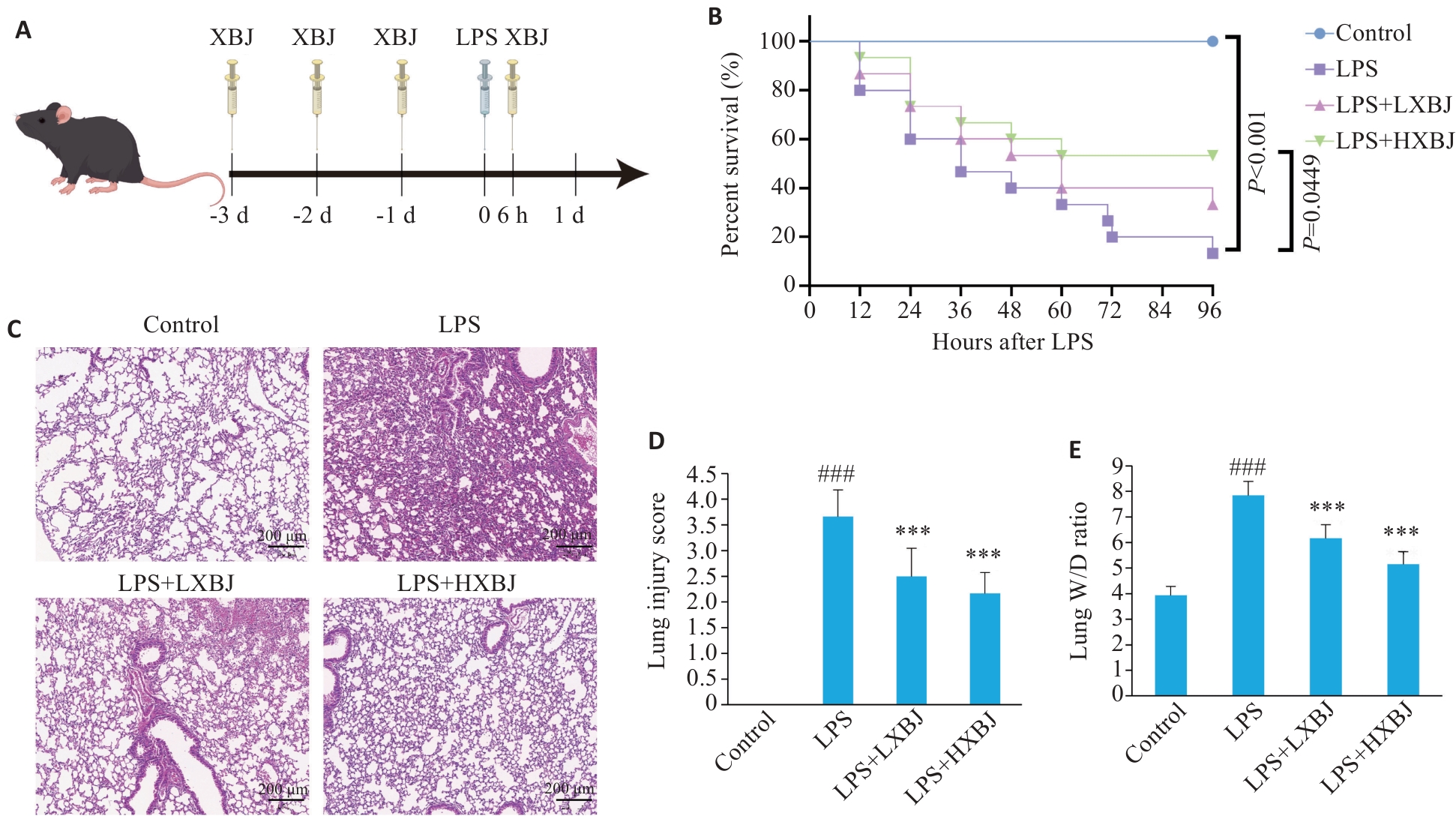
Fig.1 Protective effect of Xuebijing against sepsis-associated ARDS in mice. A: Schematic diagram of the experimental procedure. B: Four-day survival curves of the mice in each group (n=15). C: HE staining of mouse lung tissues. D: Lung injury scores (n=6). E: Lung wet/dry weight (W/D) ratio (n=10). ###P<0.001 vs Control group; ***P<0.001 vs LPS group.
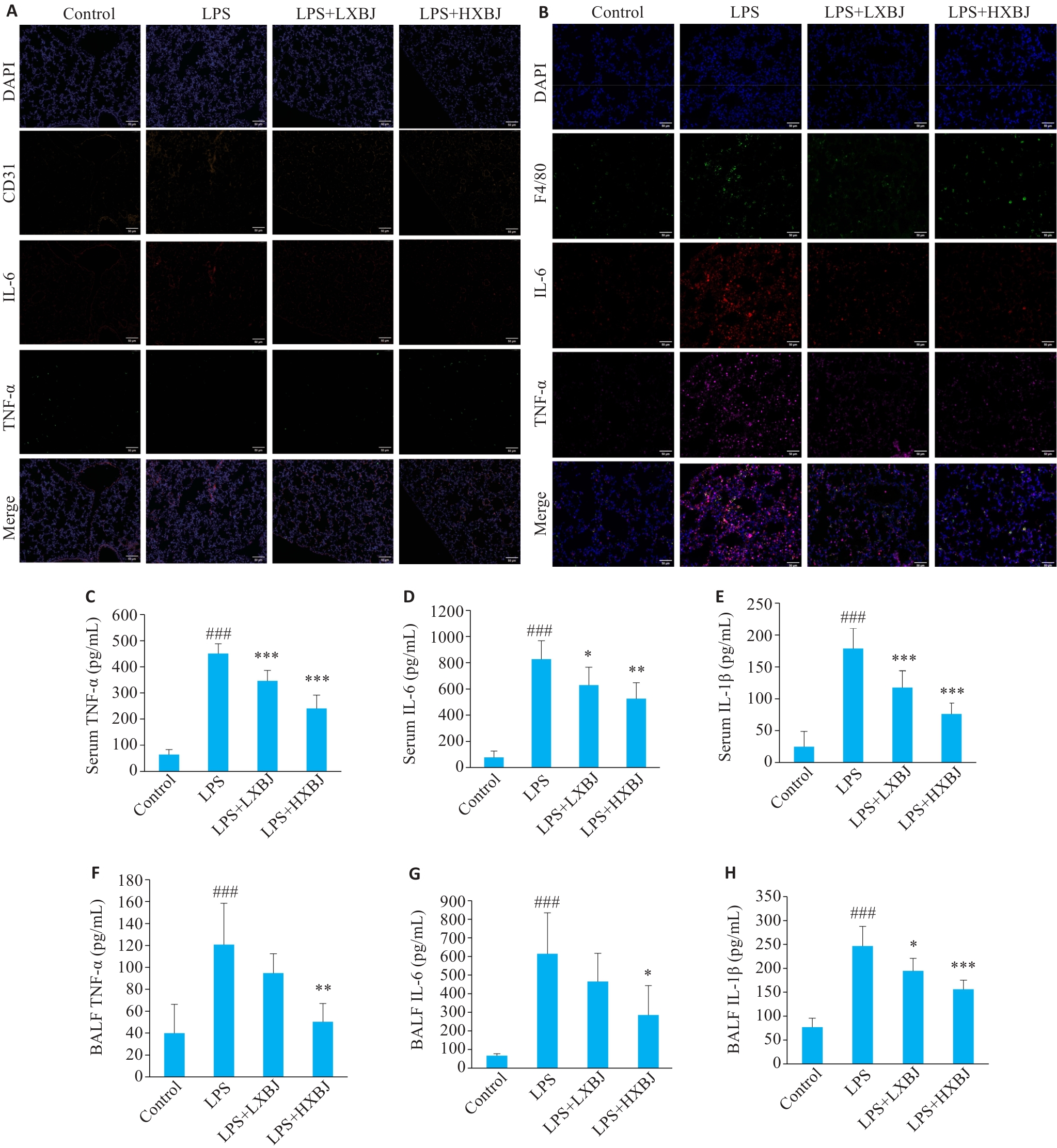
Fig.2 Xuebijing ameliorates inflammatory response in mice with sepsis-associated ARDS. A: Expressions of TNF-α and IL-6 in CD31+ endothelial cells detected by immunofluorescence co-localization (Scale bar=50 μm). B: Expression of TNF‑α and IL-6 in F4/80+ macrophages detected by immunofluorescence co-localization (Scale bar=50 μm). C-H: Results of ELISA for measuring concentrations of TNF-α, IL-6, and IL-1β in serum (C-E) and bronchoalveolar lavage fluid (BALF) (F-H) of the mice (n=6). ###P<0.001 vs Control group; *P<0.05, **P<0.01, ***P<0.001 vs LPS group.
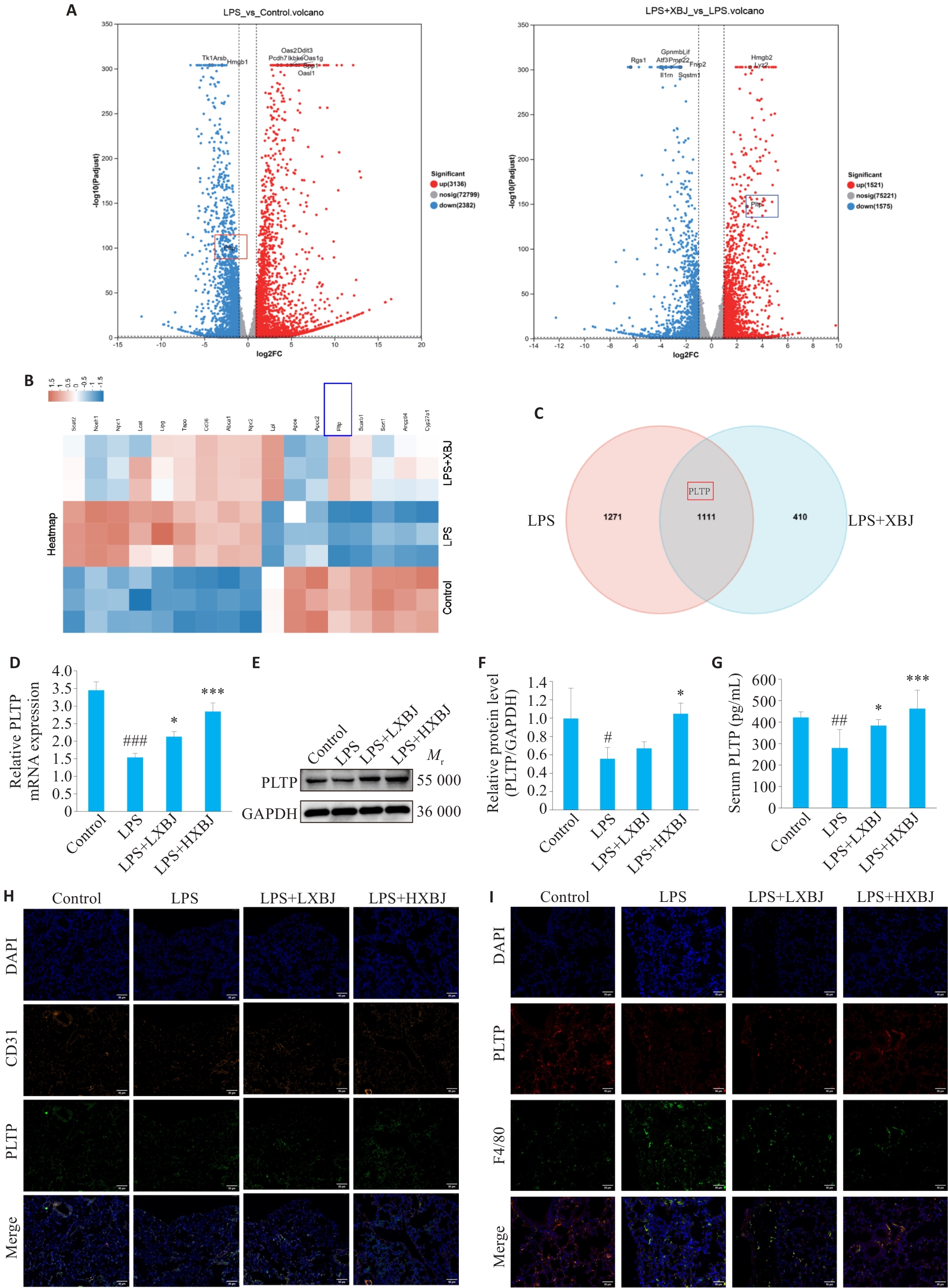
Fig.3 Xuebijing upregulates PLTP expression in sepsis-associated ARDS mice. A: Transcriptomic sequencing analysis showing downregulation of PLTP by LPS and upregulation by Xuebijing. B: Heatmap of PLTP expression in different groups. C: Venn diagram of differentially expressed genes between LPS and XBJ groups (n=3). D: qRT-PCR analysis of PLTP mRNA levels in mouse lung tissue. E, F: Western blotting for detecting PLTP protein expression in mouse lung tissue. G: ELISA measurement of serum PLTP levels. H: Immunofluorescence co-localization analysis of PLTP (green) with CD31+ endothelial cells (orange) in mouse lung tissue (Scale bar=50 μm). I: Immunofluorescence co-localization analysis of PLTP (red) with F4/80+ macrophages (green) in mouse lung tissue (Scale bar=50 μm). #P<0.05, ##P<0.01, ###P<0.001 vs Control group; *P<0.05, ***P<0.001 vs LPS group.
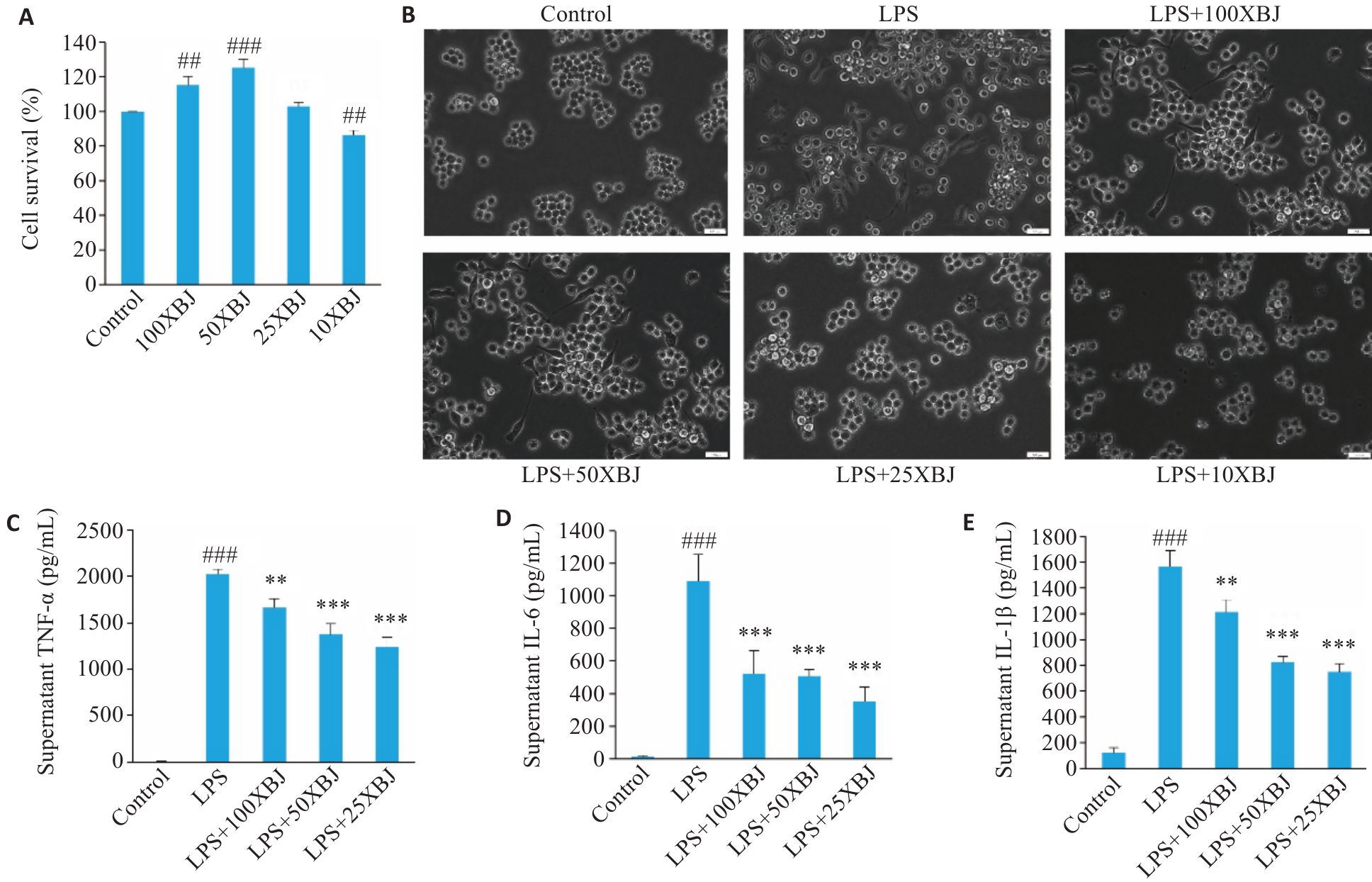
Fig.4 Xuebijing enhances viability and suppresses LPS-induced inflammatory cytokine release in RAW264.7 cells. A: Effect of Xuebijing at different dilutions on RAW264.7 cell viability measured by CCK-8 assay (n=3). B: Morphological changes of RAW264.7 cells induced by LPS and pretreatment with different concentrations of Xuebijing observed under optical microscope (Scale bar=100 μm). C-E: ELISA measurement of TNF-α (C), IL-6 (D), and IL-1β (E) levels in the supernatant of RAW264.7 cells pretreated with different concentrations of Xuebijing and stimulated with LPS (n=3). ###P<0.001 vs Control group; **P<0.01,***P<0.001 vs LPS group.
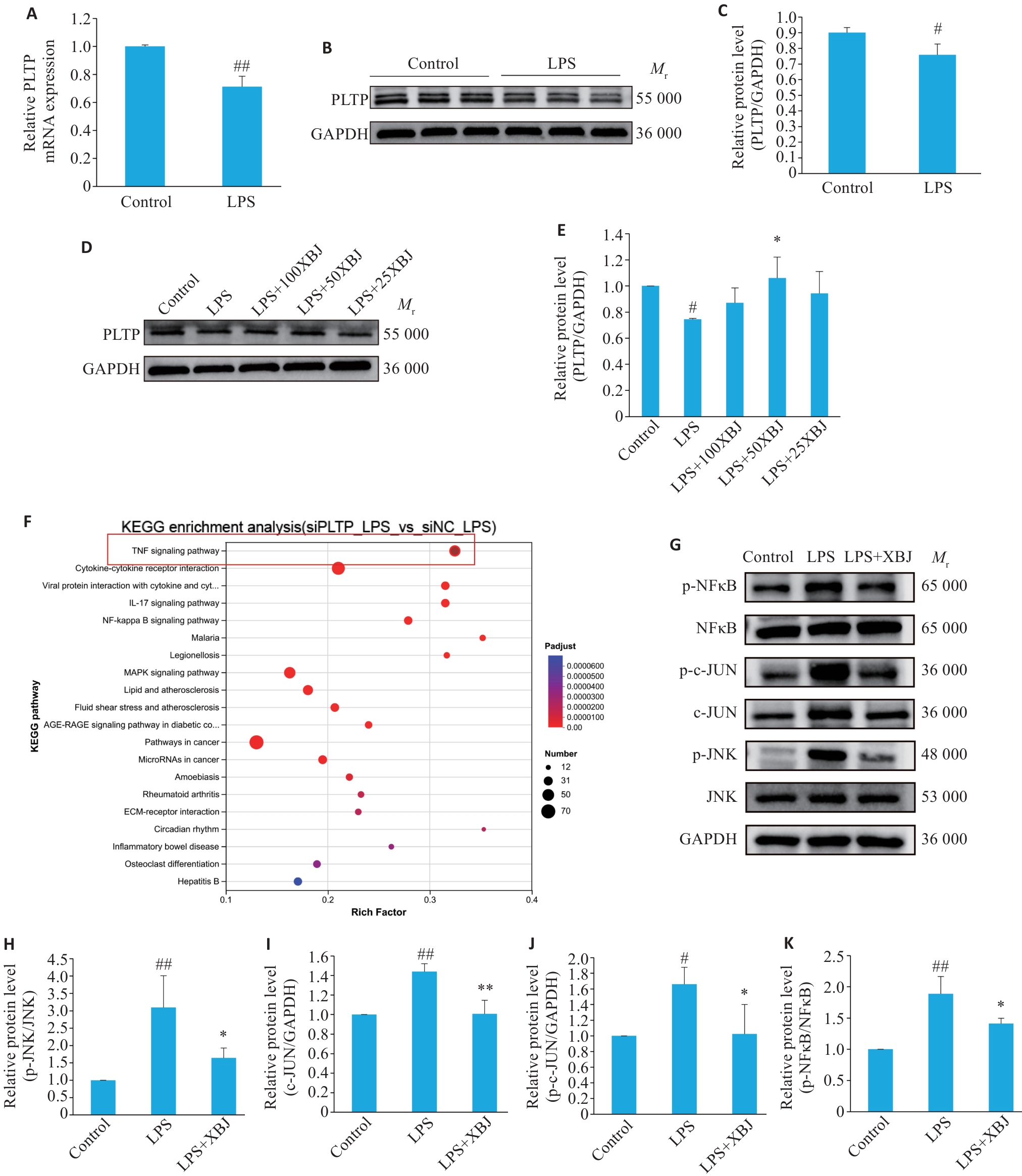
Fig.5 Xuebijing regulates PLTP-mediated activation of JNK/c-JUN and NF-κB pathways. A: qPCR analysis of the effects of LPS and Xuebijing on PLTP mRNA expression in RAW264.7 cells (n=3). B, C: Western blotting for detecting PLTP protein expression in response to LPS stimulation (n=3). D, E: Western blotting for detecting PLTP protein expression following treatment with different concentrations of Xuebijing (n=4). F: KEGG enrichment analysis of differentially expressed genes between PLTP knockdown (siPLTP)+LPS group and control (siNC)+LPS group. G-K: Western blotting for analyzing the effects of LPS and Xuebijing treatment on the expressions of p-JNK, JNK, p-c-JUN, c-JUN, p-NF-κB p65, and NF-κB p65 proteins in RAW264.7 cells (n=3). #P<0.05, ##P<0.01 vs Control group; *P<0.05, **P<0. 01 vs LPS group.
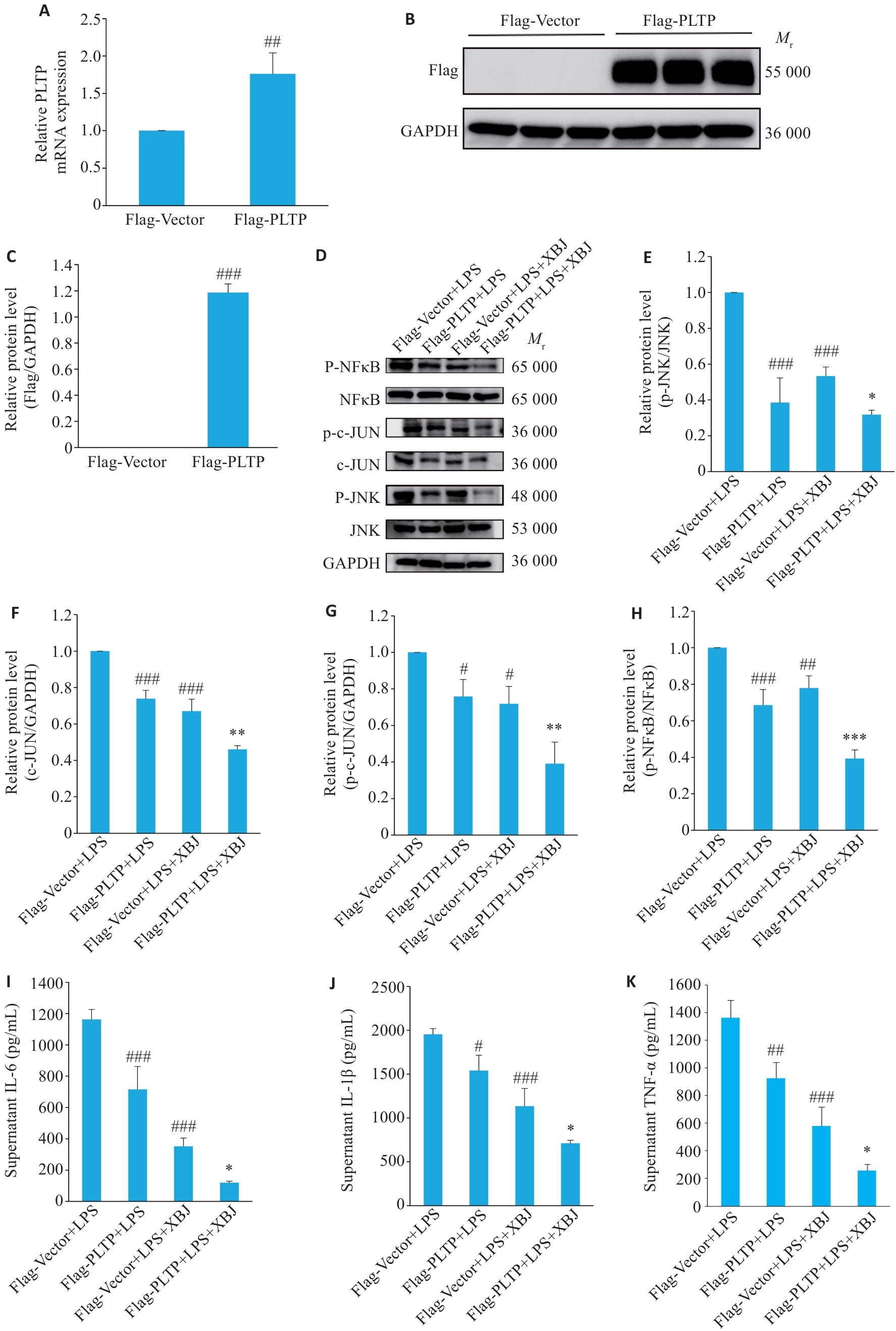
Fig.6 PLTP overexpression enhances the inhibitory effect of Xuebijing on inflammatory pathways and cytokine production. A-C: Validation of PLTP overexpression efficiency in RAW264.7 cells by qPCR (A) and Western blotting (B, C) (n=3; ##P<0.01,###P<0.001 vs Flag-Vector group). D-H: Western blotting for analyzing the effects of PLTP overexpression and Xuebijing treatment on LPS-induced expressions of p-JNK, JNK, p-c-JUN, c-JUN, p-NF-κB p65, and NF-κB p65 proteins (n=3). I-K: Results of ELISA for measurement of the levels of IL-6 (I), IL-1β (J), and TNF‑α (K) in the supernatant of LPS-stimulated RAW264.7 cells with PLTP overexpression and XBJ treatment (n=3). #P<0.05, ##P<0.01, ###P<0.001 vs Flag-Vector+LPS group; *P<0.05, **P<0.01, ***P<0.001 vs Flag-PLTP+LPS group.
| [1] | Abasıyanık MF, Wolfe K, Van Phan H, et al. Ultrasensitive digital quantification of cytokines and bacteria predicts septic shock outcomes[J]. Nat Commun, 2020, 11: 2607. doi:10.1038/s41467-020-16124-9 |
| [2] | Gong HK, Chen Y, Chen ML, et al. Advanced development and mechanism of sepsis-related acute respiratory distress syndrome[J]. Front Med, 2022, 9: 1043859. doi:10.3389/fmed.2022.1043859 |
| [3] | Wick KD, Ware LB, Matthay MA. Acute respiratory distress syndrome[J]. Bmj, 2024, 387: e076612. doi:10.1136/bmj-2023-076612 |
| [4] | Bos LDJ, Ware LB. Acute respiratory distress syndrome: causes, pathophysiology, and phenotypes[J]. Lancet, 2022, 400(10358): 1145-56. doi:10.1016/s0140-6736(22)01485-4 |
| [5] | Flannagan RS, Jaumouillé V, Grinstein S. The cell biology of phagocytosis[J]. Annu Rev Pathol Mech Dis, 2012, 7: 61-98. doi:10.1146/annurev-pathol-011811-132445 |
| [6] | Jones Q, Zheng J, Li ZQ, et al. Effect of phospholipid transfer protein on plasma sphingosine-1-phosphate[J]. J Biol Chem, 2024, 300(11): 107837. doi:10.1016/j.jbc.2024.107837 |
| [7] | Augustin B, Wu DY, Black LP, et al. Multiomic molecular patterns of lipid dysregulation in a subphenotype of sepsis with higher shock incidence and mortality[J]. Crit Care, 2024, 28(1): 431. doi:10.1186/s13054-024-05216-3 |
| [8] | Nguyen M, Alvarez M, Berthoud V, et al. High-density lipoproteins alleviate the endotoxin burden in patients with peritonitis and sepsis: TheLIPSstudy[J]. Eur J Clin Investigation, 2025, 55(12): e70099. doi:10.1111/eci.70099 |
| [9] | Gautier T, Deckert V, Nguyen M, et al. New therapeutic horizons for plasma phospholipid transfer protein (PLTP): Targeting endotoxemia, infection and sepsis[J]. Pharmacol Ther, 2022, 236: 108105. doi:10.1016/j.pharmthera.2021.108105 |
| [10] | Ogier N, Klein A, Deckert V, et al. Cholesterol accumulation is increased in macrophages of phospholipid transfer protein-deficient mice: normalization by dietary alpha-tocopherol supplementation[J]. Arterioscler Thromb Vasc Biol, 2007, 27(11): 2407-12. doi:10.1161/atvbaha.107.151753 |
| [11] | Liao M, Zhang LT, Bai LJ, et al. Xuebijing injection reduces COVID-19 patients' mortality as influenced by the neutrophil to lymphocyte platelet ratio[J]. J Integr Med, 2025, 23(3): 282-8. doi:10.1016/j.joim.2025.04.002 |
| [12] | Li CY, Wang P, Li M, et al. The current evidence for the treatment of sepsis with Xuebijing injection: Bioactive constituents, findings of clinical studies and potential mechanisms[J]. J Ethnopharmacol, 2021, 265: 113301. doi:10.1016/j.jep.2020.113301 |
| [13] | Liu SQ, Yao C, Xie JF, et al. Effect of an herbal-based injection on 28-day mortality in patients with sepsis: the EXIT-SEP randomized clinical trial[J]. JAMA Intern Med, 2023, 183(7): 647. doi:10.1001/jamainternmed.2023.0780 |
| [14] | Kang J, Hu DJ, Li YX, et al. Xuebijing injection reduces 28-day mortality in patients with septic shock[J]. Crit Care, 2025, 29(1): 419. doi:10.1186/s13054-025-05666-3 |
| [15] | Cheng C, Ren C, Li MZ, et al. Pharmacologically significant constituents collectively responsible for anti-sepsis action of XueBiJing, a Chinese herb-based intravenous formulation[J]. Acta Pharmacol Sin, 2024, 45(5): 1077-92. doi:10.1038/s41401-023-01224-1 |
| [16] | Singer M, Deutschman CS, Seymour CW, et al. The third international consensus definitions for sepsis and septic shock (sepsis-3)[J]. Jama, 2016, 315(8): 801. doi:10.1001/jama.2016.0287 |
| [17] | Auriemma CL, Zhuo HJ, Delucchi K, et al. Acute respiratory distress syndrome-attributable mortality in critically ill patients with sepsis[J]. Intensive Care Med, 2020, 46(6): 1222-31. doi:10.1007/s00134-020-06010-9 |
| [18] | Lorencio Cárdenas C, Yébenes JC, Vela E, et al. Trends in mortality in septic patients according to the different organ failure during 15years[J]. Crit Care, 2022, 26(1): 302. doi:10.1186/s13054-022-04176-w |
| [19] | 方邦江, 刘 良. 脓毒症相关急性呼吸窘迫综合征的中西医治疗 [J]. 临床急诊杂志, 2025, 26(01): 79-85. |
| [20] | 丁伟超, 陈 娟, 叶 英, 等. 血必净注射液治疗脓毒症相关急性呼吸窘迫综合征肺热血瘀证患者的临床疗效 [J]. 中草药, 2024, 55(19): 6645-54. |
| [21] | Zhang ZY, Li XY, Zhou JP, et al. Xuebijing injection in the treatment of COVID-19: an update on clinical studies, potentially active metabolites and mechanisms[J]. Front Pharmacol, 2026, 16: 1667022. doi:10.3389/fphar.2025.1667022 |
| [22] | Zhan YX, Wang YB, Zhang BY, et al. Xuebijing injection mitigates instant blood-mediated inflammatory reaction and enhances intrahepatic islet transplantation via target NF-κB pathway[J]. Front Immunol, 2025, 16: 1671966. doi:10.3389/fimmu.2025.1671966 |
| [23] | Ren TY, Chen QH, Xu JZ, et al. Xuebijing alleviates sepsis-induced acute lung injury by inhibiting alveolar epithelial cell apoptosis via cAMP/PKA signaling pathway[J]. J Ethnopharmacol, 2025, 353: 120370. doi:10.1016/j.jep.2025.120370 |
| [24] | Zhang S, Jiang M, Wu C, et al. Modulation of the CEACAM1/TIM3 pathway by traditional Chinese medicine Xuebijing alleviates sepsis-induced acute lung injury through inhibition of NETs formation[J]. J Ethnopharmacol, 2025, 353: 120280. doi:10.1016/j.jep.2025.120280 |
| [25] | Cui JY, Deng YX, Li XC, et al. Herbal-based Xuebijing injection ameliorated vascular endothelial dysfunction via inhibiting ACLY/MYB/RIG-I axis in sepsis-associated lung injury[J]. Phytomedicine, 2025, 140: 156573. doi:10.1016/j.phymed.2025.156573 |
| [26] | Ji HY, Zhang CM, Xu FY, et al. Inhaled pro-efferocytic nanozymes promote resolution of acute lung injury[J]. Adv Sci, 2022, 9(26): 2201696. doi:10.1002/advs.202201696 |
| [27] | Huang WC, Wen LH, Tian H, et al. Self-propelled proteomotors with active cell-free mtDNA clearance for enhanced therapy of sepsis-associated acute lung injury[J]. Adv Sci, 2023, 10(27): 2301635. doi:10.1002/advs.202370184 |
| [28] | Mansuy M, Baille S, Canet G, et al. Deletion of plasmaPhospholipid Transfer Protein (PLTP)increases microglial phagocytosis and reduces cerebral amyloid-β deposition in the J20 mouse model of Alzheimer's disease[J]. Oncotarget, 2018, 9(28): 19688-703. doi:10.18632/oncotarget.24802 |
| [29] | Yazdanyar A, Jiang XC. Liver phospholipid transfer protein (PLTP) expression with a PLTP-null background promotes very low-density lipoprotein production in mice[J]. Hepatology, 2012, 56(2): 576-84. doi:10.1002/hep.25648 |
| [30] | Vergeer M, Boekholdt SM, Sandhu MS, et al. Genetic variation at thePhospholipid transfer ProteinLocus affects its activity and high-density lipoprotein size and is a novel marker of cardiovascular disease susceptibility[J]. Circulation, 2010, 122(5): 470-7. doi:10.1161/circulationaha.109.912519 |
| [31] | Vuletic S, Dong W, Wolfbauer G, et al. PLTP regulates STAT3 and NFκB in differentiated THP1 cells and human monocyte-derived macrophages[J]. Biochim Biophys Acta BBA Mol Cell Res, 2011, 1813(10): 1917-24. doi:10.1016/j.bbamcr.2011.06.013 |
| [32] | Jiang W, Song L, Gong WL, et al. The role of phospholipid transfer protein in sepsis-associated acute kidney injury[J]. Crit Care, 2025, 29(1): 33. doi:10.1186/s13054-025-05253-6 |
| [1] | Mengjie YU, Anbo ZHAO, Yixuan HAO, Yiren WANG, Yuexian LIU, Hongwei YE, Qin GAO. LCN2 knockout protects endothelial barrier function in mice with sepsis-induced acute lung injury by regulating the NF-κB signaling pathway [J]. Journal of Southern Medical University, 2026, 46(8): 1779-1789. |
| [2] | Jianhong GAO, Ce SHI, Weiran LI, Xiang SHANG, Fei WANG, Qiqi YANG, Fei LI. Electroacupuncture ameliorates cognitive impairment and suppresses TLR4/MyD88/NF-κB pathway-mediated astrocyte activation in rats with vascular dementia [J]. Journal of Southern Medical University, 2026, 46(8): 1814-1822. |
| [3] | Ziyu WANG, Jingwen WU, Hanbing WANG, Yan XU, Chunling JIANG, Li ZHOU. Elevation of red blood cell distribution width to hematocrit ratio is associated with increased 28-day all-cause mortality in septic patients [J]. Journal of Southern Medical University, 2026, 46(6): 1256-1266. |
| [4] | Ze'an WANG, Lili LIU, Mei SHI, Yong HOU, Lili DONG, Guoliang ZHANG. Yiqi Jiedu Formula regulates immune microenvironment of liver cancer in mice by inhibiting overactivation of NF-κB signaling pathway [J]. Journal of Southern Medical University, 2026, 46(3): 629-637. |
| [5] | Mengxia YIN, Ruichen LI, Kaibo YANG, Weijie JIAO, Xinguang LIU. Xuebijing Injection in synergy with linezolid alleviates inflammatory injury in mice with MRSA pneumonia by inhibiting the Hla-NLRP3 pathway [J]. Journal of Southern Medical University, 2026, 46(2): 412-422. |
| [6] | Tong SHA, Wenyan WANG, Jiabin XUAN, Jie WU, Nengxian SHI, Jin HE, Hongbin HU, Yaoyuan ZHANG. Identification of immune status subtypes and prognostic analysis of septic patients based on Th1/Th2 cytokine assays [J]. Journal of Southern Medical University, 2026, 46(1): 6-22. |
| [7] | Haimei BO, Xinying CAO, Pingchuan XING, Zhijun WANG. Exosome-derived miR-1275 mediates IL-38 upregulation in lymphocytes to suppress lipopolysaccharide-induced apoptosis of myocardial cells in vitro [J]. Journal of Southern Medical University, 2025, 45(8): 1608-1615. |
| [8] | Zhihua TIAN, Qingqing YANG, Xin CHEN, Fangfang ZHANG, Baimao ZHONG, Hong CAO. Spermine suppresses GBP5-mediated NLRP3 inflammasome activation in macrophages to relieve vital organ injuries in neonatal mice with enterovirus 71 infection [J]. Journal of Southern Medical University, 2025, 45(5): 901-910. |
| [9] | Jinhua ZOU, Hui WANG, Dongyan ZHANG. SLC1A5 overexpression accelerates progression of hepatocellular carcinoma by promoting M2 polarization of macrophages [J]. Journal of Southern Medical University, 2025, 45(2): 269-284. |
| [10] | Keni¹ ZHANG, Tong¹ QIAO, Lin¹ YIN, Ju HUANG, Zhijun GENG, Lugen³ ZUO, Jianguo HU, Jing LI. Pinostrobin targets the PI3K/AKT/CCL2 axis in intestinal epithelial cells to inhibit intestinal macrophage infiltration and alleviate dextran sulfate sodium-induced colitis in mice [J]. Journal of Southern Medical University, 2025, 45(10): 2199-2209. |
| [11] | Wei LUO, Yuhang WANG, Yansong LIU, Yuanyuan WANG, Lei AI. High glucose induces pro-inflammatory polarization of macrophages by inhibiting immune-responsive gene 1 expression [J]. Journal of Southern Medical University, 2025, 45(1): 1-9. |
| [12] | Wenjuan DUO, Yixiang WANG, Jiaxing WANG, Xinlong XU, Linxian LI, Dongchen YANG, Qili SHEN, Lichun YANG, Xiaojing LIU, Qiwang JING, Liang CHU, Xiaodi YANG. Schistosoma japonicum cystatin has protective effects against "two-hit" sepsis in mice by regulating the inflammatory microenvironment [J]. Journal of Southern Medical University, 2025, 45(1): 110-117. |
| [13] | Kai CHEN, Zhaofei MENG, Jingting MIN, Jiahui WANG, Zhenghong LI, Qin GAO, Junfeng HU. Curcumin alleviates septic lung injury in mice by inhibiting TXNIP/TRX-1/GPX4-mediated ferroptosis [J]. Journal of Southern Medical University, 2024, 44(9): 1805-1813. |
| [14] | Pengcheng LIU, Lijuan LOU, Xia LIU, Jian WANG, Ying JIANG. A risk scoring model based on M2 macrophage-related genes for predicting prognosis of HBV-related hepatocellular carcinoma [J]. Journal of Southern Medical University, 2024, 44(5): 827-840. |
| [15] | FANG Shangping, SUN Renke, SU Hui, ZHAI Kecheng, XIANG Yu, GAO Yangmengna, GUO Wenjun. Chlorogenic acid alleviates acute kidney injury in septic mice by inhibiting NLRP3 inflammasomes and the caspase-1 canonical pyroptosis pathway [J]. Journal of Southern Medical University, 2024, 44(2): 317-323. |
| Viewed | ||||||
|
Full text |
|
|||||
|
Abstract |
|
|||||
