
Journal of Southern Medical University ›› 2026, Vol. 46 ›› Issue (2): 353-361.doi: 10.12122/j.issn.1673-4254.2026.02.13
Junyao CHEN1( ), Zeyu CHEN2(), Zhaojie LIN1, Menghao FANG1, Chaoying SHEN3, Qi XU4, Xiaoyi ZHANG5, Lu LU1()
Received:2025-06-26
Online:2026-02-20
Published:2026-03-10
Contact:
Lu LU
E-mail:cjy2300@tju.edu.cn;380893842@qq.com;Lulu_998543@tju.edu.cn
Junyao CHEN, Zeyu CHEN, Zhaojie LIN, Menghao FANG, Chaoying SHEN, Qi XU, Xiaoyi ZHANG, Lu LU. Dual role of tea consumption in gastrointestinal disease risks: analysis using a risk prediction model integrating interpretable machine learning and large language model[J]. Journal of Southern Medical University, 2026, 46(2): 353-361.
Add to citation manager EndNote|Ris|BibTeX
URL: https://www.j-smu.com/EN/10.12122/j.issn.1673-4254.2026.02.13
| Features | Assignment |
|---|---|
| Duration of smoking | <3 years=1,3-5 years=3,5-7 years=5,7-10 years=7,>10 years=10 |
| Duration of tea drinking | <3 years=1,3-5 years=3,5-7 years=5,7-10 years=7,>10 years=10 |
| Frequency of tea drinking | Once a week=1,2-3 times a week=2,4-6 times a week=6,Once a day=7,Several times a day =10 |
Tab.1 Assignment of a part of data preprocessing features
| Features | Assignment |
|---|---|
| Duration of smoking | <3 years=1,3-5 years=3,5-7 years=5,7-10 years=7,>10 years=10 |
| Duration of tea drinking | <3 years=1,3-5 years=3,5-7 years=5,7-10 years=7,>10 years=10 |
| Frequency of tea drinking | Once a week=1,2-3 times a week=2,4-6 times a week=6,Once a day=7,Several times a day =10 |
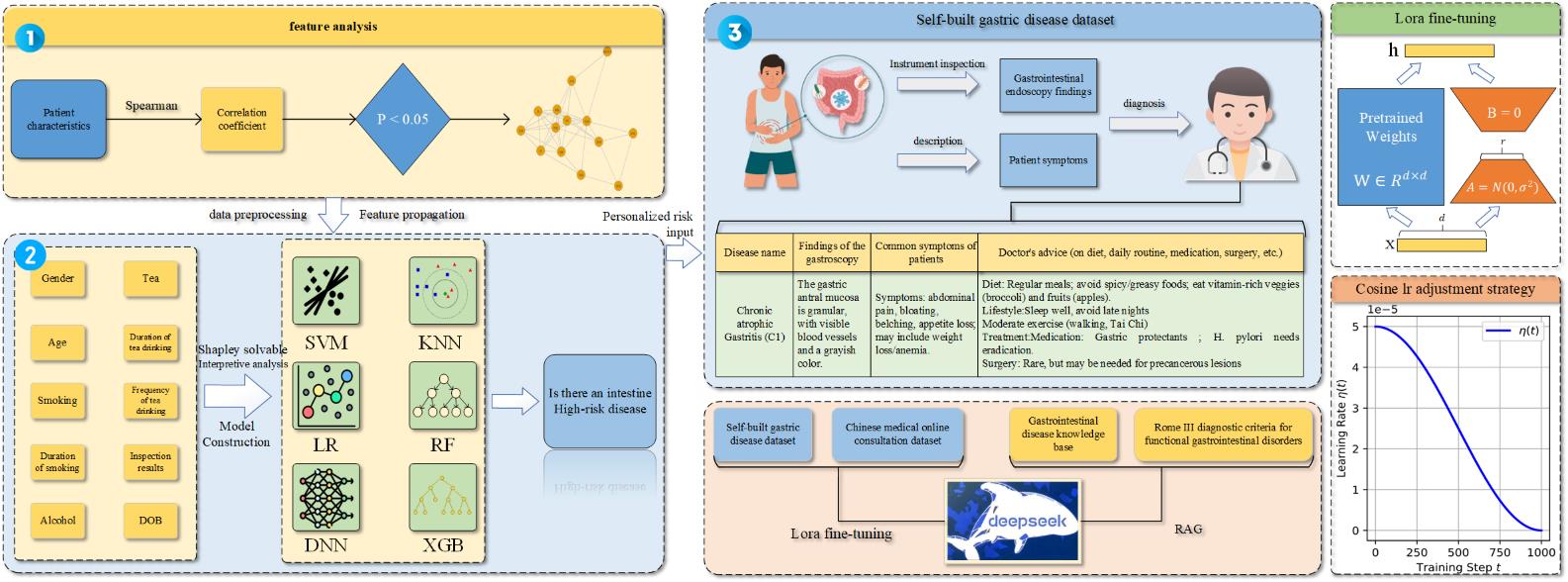
Fig.1 Overall architecture of large model for early risk prediction and assisted questioning of gastrointestinal diseases.
| Disease name | Gastroscopy findings | Common symptoms | Medical recommendations |
|---|---|---|---|
| Gastric antral ulcer (Stage A2) | The gastric antral ulcer shows a thinner coating, with reduced hyperemia and edema in the surrounding mucosa, and clearer margins compared to stage A1. | Postprandial abdominal pain has somewhat subsided,but symptoms of indigestion persist. | Diet and schedule remain the same as in Stage A1; Continue medication therapy, with dosage adjustments as needed; Surgery is generally not required, but the condition should be closely monitored. |
| Gastric antral ulcer (Stage H1) | The gastric antral ulcer has shrunk and become shallower, with a thin coating. Inflammation of the surrounding mucosa has subsided, and regenerative epithelium is present. | Postprandial abdominal pain is significantly reduced, and symptoms of indigestion are improved. | Dietary intake may be appropriately diversified; maintain regular schedule; continue medication as prescribed, with adjustments based on condition; surgery is generally not required. |
| Gastric antral ulcer (Stage S1) | The gastric antral ulcer has healed, leaving a red scar. | No obvious symptoms, with occasional dull pain in the upper abdomen. | Maintain a regular diet and eating schedule; adhere to a consistent sleep routine; medication may be discontinued for observation, with periodic endoscopic follow-ups; surgery is generally not required. |
Tab.2 Self-constructed gastric disease dataset
| Disease name | Gastroscopy findings | Common symptoms | Medical recommendations |
|---|---|---|---|
| Gastric antral ulcer (Stage A2) | The gastric antral ulcer shows a thinner coating, with reduced hyperemia and edema in the surrounding mucosa, and clearer margins compared to stage A1. | Postprandial abdominal pain has somewhat subsided,but symptoms of indigestion persist. | Diet and schedule remain the same as in Stage A1; Continue medication therapy, with dosage adjustments as needed; Surgery is generally not required, but the condition should be closely monitored. |
| Gastric antral ulcer (Stage H1) | The gastric antral ulcer has shrunk and become shallower, with a thin coating. Inflammation of the surrounding mucosa has subsided, and regenerative epithelium is present. | Postprandial abdominal pain is significantly reduced, and symptoms of indigestion are improved. | Dietary intake may be appropriately diversified; maintain regular schedule; continue medication as prescribed, with adjustments based on condition; surgery is generally not required. |
| Gastric antral ulcer (Stage S1) | The gastric antral ulcer has healed, leaving a red scar. | No obvious symptoms, with occasional dull pain in the upper abdomen. | Maintain a regular diet and eating schedule; adhere to a consistent sleep routine; medication may be discontinued for observation, with periodic endoscopic follow-ups; surgery is generally not required. |
| Query | Response |
|---|---|
| My husband has always had a weak stomach and is prone to diarrhea. Lately, he experiences stomach pain within half an hour of eating dinner every night, followed by loose stools. I'd like to ask whether he should get checked at the hospital or if it's okay to just buy some medicine for him to take. | Hello, based on the symptoms you described, your husband may be experiencing gastrointestinal issues. We recommend first observing the duration and severity of the symptoms. If they persist for an extended period or become severe, it is advisable to seek medical attention promptly for relevant examinations to rule out serious conditions. If symptoms are mild, you may try self-care measures such as avoiding spicy or irritating foods, drinking plenty of water, and increasing intake of fruits and vegetables. You may also purchase over-the-counter antacids or anti-inflammatory medications from a pharmacy, but always follow the instructions carefully. If symptoms persist or worsen, please seek medical attention promptly. |
| When I wake up in the morning, I have to cough for a while. Lately, there's been blood in the phlegm I cough up! | Hello, this situation requires prompt medical attention. Coughing up blood-tinged sputum may indicate conditions affecting the respiratory or digestive tracts. It is advisable to seek medical evaluation as soon as possible to determine the cause and receive timely treatment. While awaiting medical care, ensure adequate rest, avoid smoking and exposure to pollutants, maintain clean indoor air, drink plenty of water, and adhere to a healthy diet. |
Tab.3 Open health guidance dataset
| Query | Response |
|---|---|
| My husband has always had a weak stomach and is prone to diarrhea. Lately, he experiences stomach pain within half an hour of eating dinner every night, followed by loose stools. I'd like to ask whether he should get checked at the hospital or if it's okay to just buy some medicine for him to take. | Hello, based on the symptoms you described, your husband may be experiencing gastrointestinal issues. We recommend first observing the duration and severity of the symptoms. If they persist for an extended period or become severe, it is advisable to seek medical attention promptly for relevant examinations to rule out serious conditions. If symptoms are mild, you may try self-care measures such as avoiding spicy or irritating foods, drinking plenty of water, and increasing intake of fruits and vegetables. You may also purchase over-the-counter antacids or anti-inflammatory medications from a pharmacy, but always follow the instructions carefully. If symptoms persist or worsen, please seek medical attention promptly. |
| When I wake up in the morning, I have to cough for a while. Lately, there's been blood in the phlegm I cough up! | Hello, this situation requires prompt medical attention. Coughing up blood-tinged sputum may indicate conditions affecting the respiratory or digestive tracts. It is advisable to seek medical evaluation as soon as possible to determine the cause and receive timely treatment. While awaiting medical care, ensure adequate rest, avoid smoking and exposure to pollutants, maintain clean indoor air, drink plenty of water, and adhere to a healthy diet. |
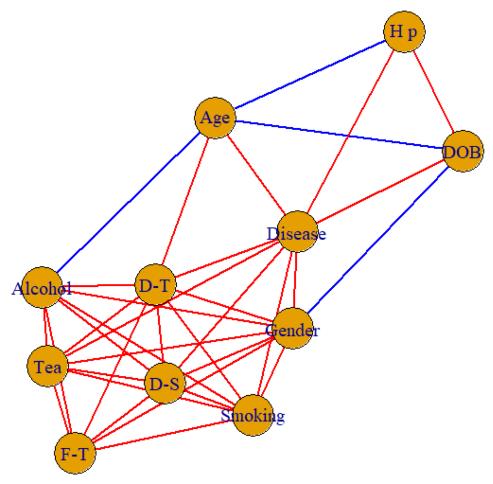
Fig.2 Result of correlation connection. D-S: Duration of smoking; D-T: Duration of tea drinking; F-T: Frequency of tea drinking.Blue edge: Negative correlation; Red edge: Positive correlation.
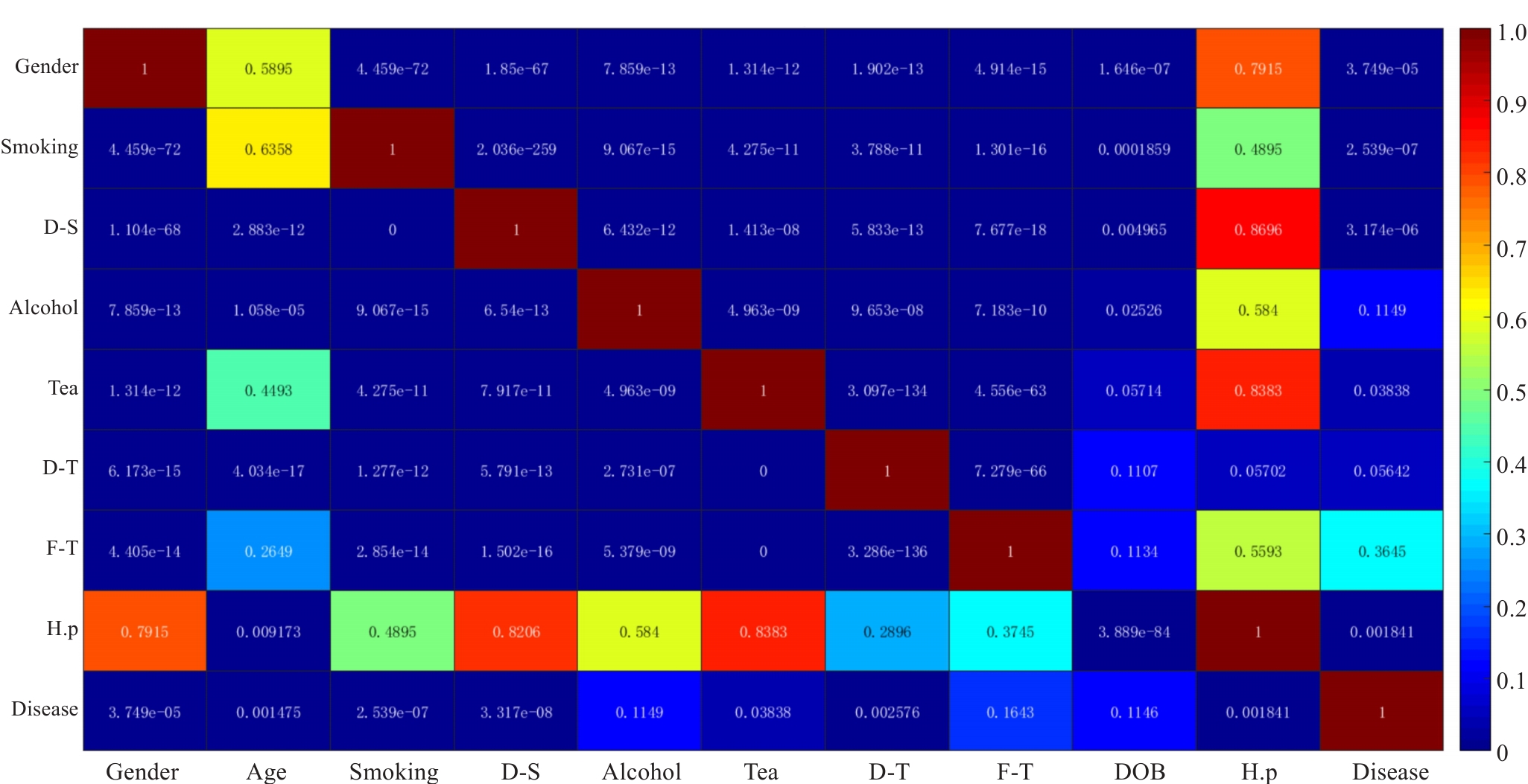
Fig.3 Result of one-way ANOVA.
| Model | Accuracy | Precision | Recall | F1 Score | Brier Score | AUC |
|---|---|---|---|---|---|---|
| SVM | 0.67±0.046 | 0.68±0.058 | 0.80±0.081 | 0.74±0.047 | 0.23±0.011 | 0.68±0.048 |
| KNN | 0.60±0.046 | 0.64±0.030 | 0.69±0.083 | 0.66±0.053 | 0.25±0.020 | 0.66±0.041 |
| LR | 0.69±0.039 | 0.68±0.036 | 0.85±0.061 | 0.76±0.037 | 0.21±0.017 | 0.74±0.063 |
| RF | 0.58±0.033 | 0.61±0.036 | 0.73±0.037 | 0.66±0.027 | 0.25±0.012 | 0.63±0.030 |
| XGB | 0.58±0.030 | 0.63±0.016 | 0.68±0.077 | 0.65±0.044 | 0.24±0.016 | 0.63±0.039 |
| DNN | 0.68±0.047 | 0.68±0.038 | 0.85±0.087 | 0.75±0.052 | 0.21±0.016 | 0.74±0.053 |
Tab.4 Comparison of machine learning model prediction performance
| Model | Accuracy | Precision | Recall | F1 Score | Brier Score | AUC |
|---|---|---|---|---|---|---|
| SVM | 0.67±0.046 | 0.68±0.058 | 0.80±0.081 | 0.74±0.047 | 0.23±0.011 | 0.68±0.048 |
| KNN | 0.60±0.046 | 0.64±0.030 | 0.69±0.083 | 0.66±0.053 | 0.25±0.020 | 0.66±0.041 |
| LR | 0.69±0.039 | 0.68±0.036 | 0.85±0.061 | 0.76±0.037 | 0.21±0.017 | 0.74±0.063 |
| RF | 0.58±0.033 | 0.61±0.036 | 0.73±0.037 | 0.66±0.027 | 0.25±0.012 | 0.63±0.030 |
| XGB | 0.58±0.030 | 0.63±0.016 | 0.68±0.077 | 0.65±0.044 | 0.24±0.016 | 0.63±0.039 |
| DNN | 0.68±0.047 | 0.68±0.038 | 0.85±0.087 | 0.75±0.052 | 0.21±0.016 | 0.74±0.053 |
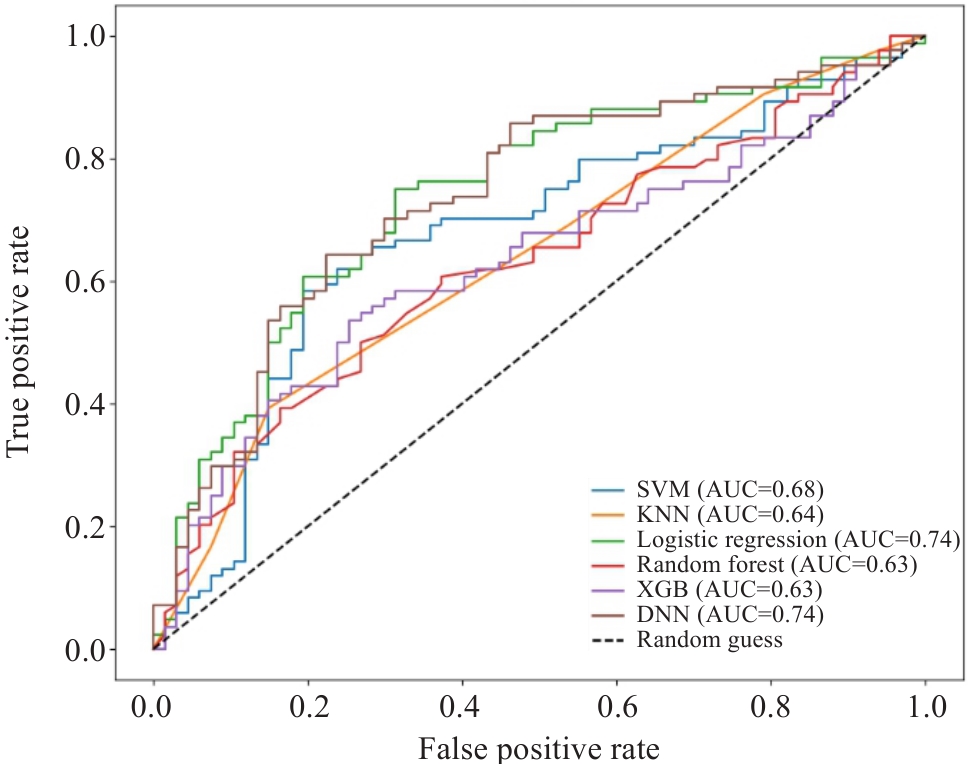
Fig.4 Receiver-operating characteristic curves of the 6 machine learning models.
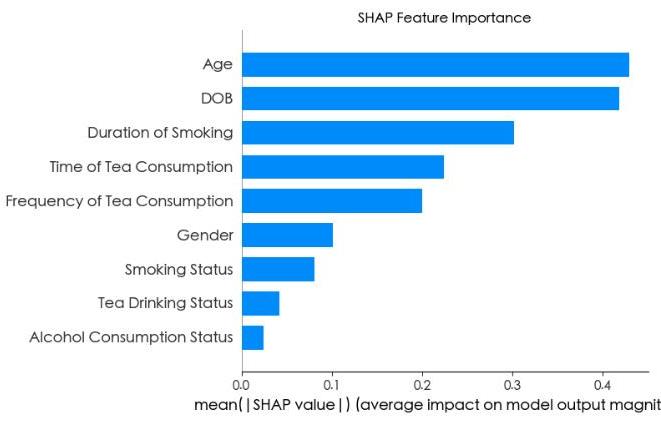
Fig.5 SHAP feature importance matrix.
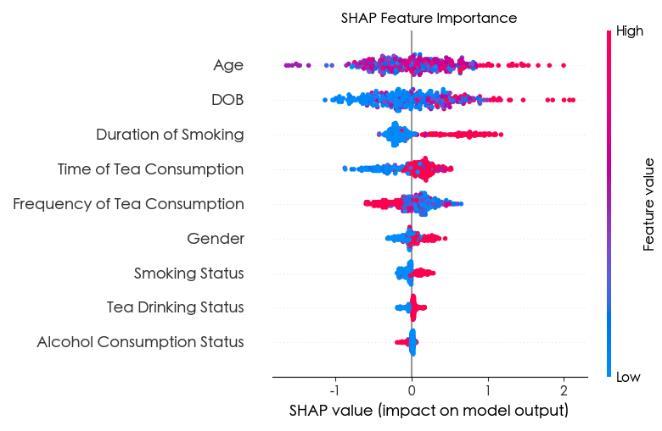
Fig. 6 Shapley addition interpretation diagram.
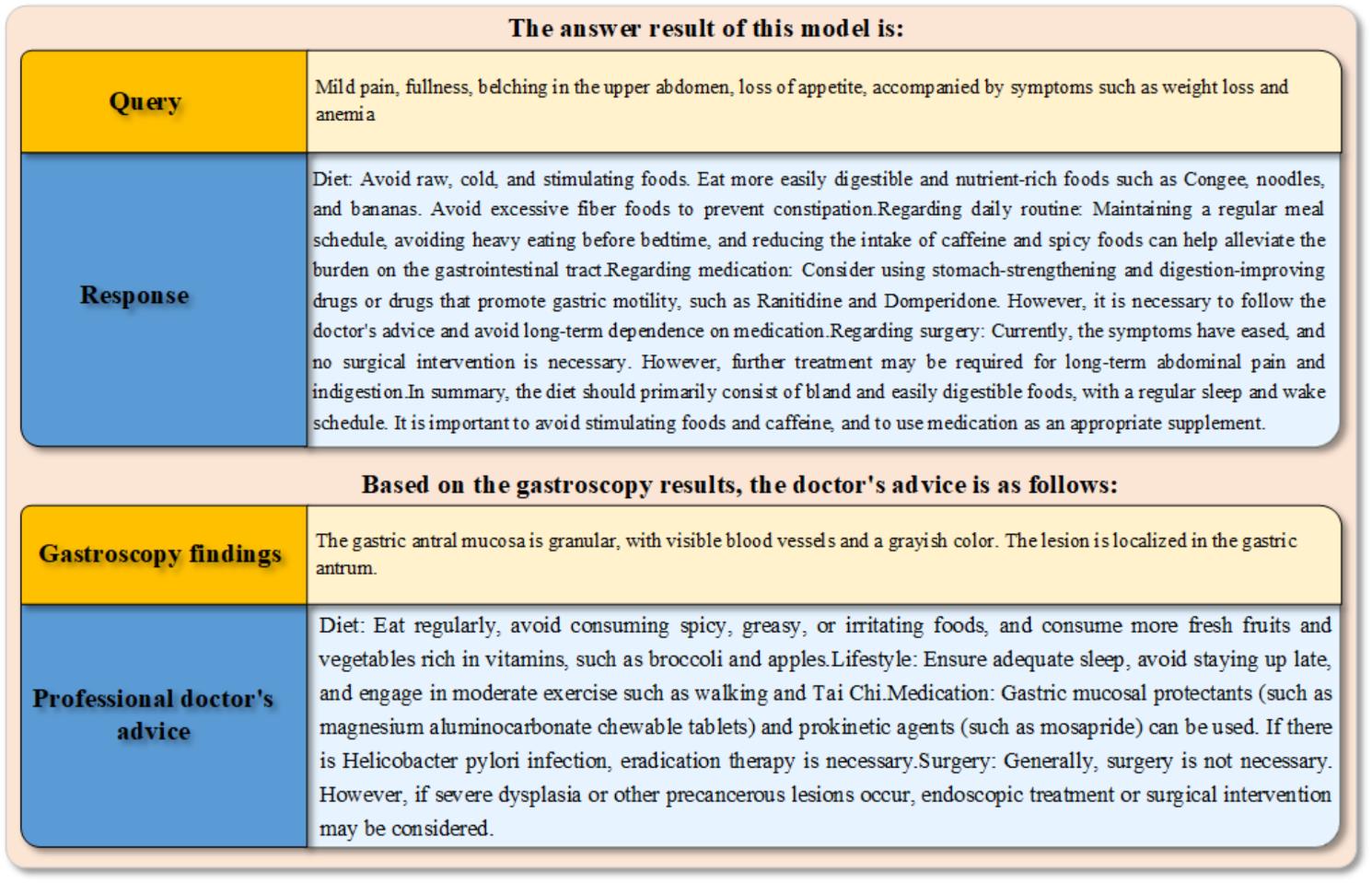
Fig.7 Comparison of Q&A model output results with professional doctor's recommendations.
| [1] | Pellicano R, Ianiro G, Fagoonee S, et al. Review: extragastric diseases and Helicobacter pylori [J]. Helicobacter, 2020, 25(): e12741. doi:10.1111/hel.12741 |
| [2] | Bashir SK, Khan MB. Overview of Helicobacter pylori infection, prevalence, risk factors, and its prevention[J]. Adv Gut Microbiome Res, 2023, 2023: 9747027. doi:10.1155/2023/9747027 |
| [3] | Duan YT, Xu YH, Dou Y, et al. Helicobacter pylori and gastric cancer: mechanisms and new perspectives[J]. J Hematol Oncol, 2025, 18(1): 10. doi:10.1186/s13045-024-01654-2 |
| [4] | Ogihara A, Kikuchi S, Hasegawa A, et al. Relationship between Helicobacter pylori infection and smoking and drinking habits[J]. J Gastroenterol Hepatol, 2000, 15(3): 271-6. doi:10.1046/j.1440-1746.2000.02077.x |
| [5] | Xue F, Xue J, Zhao B, et al. The associations of tobacco, alcohol, and coffee consumption with upper and lower gastrointestinal disease risk: a mendelian randomization study[J]. Gut Liver, 2025, 19(5): 715-24. doi:10.5009/gnl240440 |
| [6] | 储思远, 钱利生, 陈海敏. 茶成分对肠道菌群的调控作用及其健康效应的研究进展 [J]. 天然产物研究与开发, 2024, 36(02): 357-67. |
| [7] | Yu X, Deng H, Xiong Z, et al. A scale to measure the worry level in Gastrointestinal Endoscopy with sedation: Development, reliability, and validity[J]. Int J Clin Health Psychol, 2023, 23(4): 100410. doi:10.1016/j.ijchp.2023.100410 |
| [8] | Cox DR. The regression analysis of binary sequences[J]. J R Stat Soc Ser B Stat Methodol, 1958, 20(2): 215-32. doi:10.1111/j.2517-6161.1958.tb00292.x |
| [9] | Omiye JA, Gui H, Rezaei SJ, et al. Large language models in medicine: the potentials and pitfalls: a narrative review[J]. Ann Intern Med, 2024, 177(2): 210-20. doi:10.7326/m23-2772 |
| [10] | Alberts IL, Mercolli L, Pyka T, et al. Large language models (LLM) and ChatGPT: what will the impact on nuclear medicine be?[J]. Eur J Nucl Med Mol Imag, 2023, 50(6): 1549-52. doi:10.1007/s00259-023-06172-w |
| [11] | Berry P, Dhanakshirur RR, Khanna S. Utilizing large language models for gastroenterology research: a conceptual framework[J]. Therap Adv Gastroenterol, 2025, 18: 17562848251328577. doi:10.1177/17562848251328577 |
| [12] | Guo D, Yang D. DeepSeek-R1: Incentivizing Reasoning Capability in LLMs via Reinforcement Learning [J]. ArXiv, 2025, abs/2501.12948. |
| [13] | Jebb AT, Ng V, Tay L. A review of key likert scale development advances: 1995-2019[J]. Front Psychol, 2021, 12: 637547. doi:10.3389/fpsyg.2021.637547 |
| [14] | 王淑玉, 杜红阳, 赵晨昊, 等. 基于深度学习和机器学习的胃癌预测模型构建及评估 [J]. 青岛大学学报(医学版), 2025, 61(01): 54-8. |
| [15] | 刘界宇, 黄继华, 李泗云, 等. 机器学习预测急性上消化道出血患者干预及再出血的风险价值 [J]. 广西医科大学学报, 2024, 41(05): 748-55. |
| [16] | Park B, Kim CH, Jun JK, et al. A machine learning risk prediction model for gastric cancer with SHapley additive exPlanations[J]. Cancer Res Treat, 2025, 57(3): 821-9. doi:10.4143/crt.2024.843 |
| [17] | Bode C, Bode JC. Alcohol’s role in gastrointestinal tract disorders[J]. Alcohol Health Res World, 1997, 21(1): 76-83. |
| [18] | Franke A, Singer MV. 59 the effect of beer and its non-alcoholic ingredients on secretory and motoric function of the stomach [M]. San Diego, Academic Press:Beer in Health and Disease Prevention, 2009: 581-6. doi:10.1016/b978-0-12-373891-2.00059-6 |
| [19] | Feick P, Gerloff A, Singer MV. The effect of beer and its non-alcoholic constituents on the exocrine and endocrine pancreas as well as on gastrointestinal hormones[M]//Beer in Health and Disease Prevention. Amsterdam: Elsevier, 2009: 587-601. doi:10.1016/b978-0-12-373891-2.00060-2 |
| [20] | Yang H, Zhang M, Li H, et al. Prevalence of common upper gastrointestinal diseases in Chinese adults aged 18–64 years[J]. Sci Bull, 2024, 69(24): 3889-98. doi:10.1016/j.scib.2024.07.048 |
| [21] | Sapkota AR, Berger S, Vogel TM. Human pathogens abundant in the bacterial metagenome of cigarettes[J]. Environ Health Perspect, 2010, 118(3): 351-6. doi:10.1289/ehp.0901201 |
| [22] | Tan R, Zhao D, Zhang X, et al. Gender and age differences in the global burden of peptic ulcers: an analysis based on GBD data from 1990 to 2021[J]. Front Med: Lausanne, 2025, 12: 1586270. doi:10.3389/fmed.2025.1586270 |
| [23] | Martimianaki G, Alicandro G, Pelucchi C, et al. Tea consumption and gastric cancer: a pooled analysis from the stomach cancer pooling (StoP) project consortium[J]. Br J Cancer, 2022, 127(4): 726-34. doi:10.1038/s41416-022-01856-w |
| [24] | Bond T, Derbyshire E. Tea compounds and the gut microbiome: findings from trials and mechanistic studies[J]. Nutrients, 2019, 11(10): E2364. doi:10.3390/nu11102364 |
| [25] | 俞顺章, 张作风, 俞国培, 等. 饮绿茶对胃癌、慢性胃炎发病影响的流行病学调查 [J]. 中国癌症杂志, 2001, (01): 42-6. |
| [26] | Boyanova L, Ilieva J, Gergova G, et al. Honey and green/black tea consumption may reduce the risk of Helicobacter pylori infection[J]. Diagn Microbiol Infect Dis, 2015, 82(1): 85-6.ancer, 2025, 132(7): 652-9. doi:10.1016/j.diagmicrobio.2015.03.001 |
| [27] | Kang H, Zhou H, Ye Y, et al. Tieguanyin oolong tea extracts alleviate behavioral abnormalities by modulating neuroinflammation in APP/PS1 mouse model of Alzheimer’s disease[J]. Foods, 2021, 11(1): 81. doi:10.3390/foods11010081 |
| [28] | Inoue-Choi M, Ramirez Y, O’Connell C, et al. Hot beverage intake and oesophageal cancer in the UK Biobank: prospective cohort study[J]. British J Cancer, 2025, 132(7): 652-9. doi:10.1038/s41416-025-02953-2 |
| [1] | Yunneng CUI, Minqing FENG, Liangfeng YAO, Jiewen YAN, Wenhan LI, Yanping HUANG. Enhancement of radiomics-based machine learning models for predicting efficacy of high-intensity focused ultrasound ablation of uterine fibroids using undersampling methods [J]. Journal of Southern Medical University, 2026, 46(1): 141-149. |
| [2] | Haoran CHENG, Hongbin YAN, Ziyun YUAN, Zehong ZHUANG, Xuegang SUN, Xueqing YAO. Research progress of large language models in tumor diagnosis: applications in textual reports and medical imaging [J]. Journal of Southern Medical University, 2026, 46(1): 231-238. |
| [3] | Qizhi HUANG, Daipeng XIE, Lintong YAO, Qiaxuan LI, Shaowei WU, Haiyu ZHOU. Tumor microenvironment-specific CT radiomics signature for predicting immunotherapy response in non-small cell lung cancer [J]. Journal of Southern Medical University, 2025, 45(9): 1903-1918. |
| [4] | Jun JIANG, Shuo FENG, Yingui SUN, Yan AN. Construction of risk prediction models of hypothermia after transurethral holmium laser enucleation of the prostate based on three machine learning algorithms [J]. Journal of Southern Medical University, 2025, 45(9): 2019-2025. |
| [5] | Meimei CHEN, Yang WANG, Huangwei LEI, Fei ZHANG, Ruina HUANG, Zhaoyang YANG. Construction of recognition models for subthreshold depression based on multiple machine learning algorithms and vocal emotional characteristics [J]. Journal of Southern Medical University, 2025, 45(4): 711-717. |
| [6] | Fei WANG, Weiran LI, Xiang SHANG, Fei LI. Development and validation of a risk prediction model for cognitive impairment in rural elderly Chinese populations: evidence from the CHARLS study [J]. Journal of Southern Medical University, 2025, 45(12): 2639-2645. |
| [7] | Lili CHEN, Tianyu WU, Ming ZHANG, Zixia DING, Yan ZHANG, Yiqing YANG, Jiaqian ZHENG, Xiaonan ZHANG. Identification of potential biomarkers and immunoregulatory mechanisms of rheumatoid arthritis based on multichip co-analysis of GEO database [J]. Journal of Southern Medical University, 2024, 44(6): 1098-1108. |
| [8] | Caiyu SHEN, Shuai WANG, Ruiying ZHOU, Yuhe WANG, Qin GAO, Xingzhi CHEN, Shu YANG. Prediction of risk of in-hospital death in patients with chronic heart failure complicated by lung infections using interpretable machine learning [J]. Journal of Southern Medical University, 2024, 44(6): 1141-1148. |
| [9] | Jinrui NIE, Yahui WU, Xuemei HAN, Yaqi LI, Haikuan WANG, Huitu ZHANG. Preparation of Lactobacillus paracei TK1501 postbiotic and its inhibitory effect against Helicobacter pylori infection in mice [J]. Journal of Southern Medical University, 2024, 44(5): 867-875. |
| [10] | Zhiwei ZUO, Qingliang MENG, Jiakang CUI, Kelei GUO, Hua BIAN. An artificial neural network diagnostic model for scleroderma and immune cell infiltration analysis based on mitochondria-associated genes [J]. Journal of Southern Medical University, 2024, 44(5): 920-929. |
| [11] | Xiaoyin HUANG, Fenglian CHEN, Yu ZHANG, Shujun LIANG. A predictive model for survival outcomes of glioma patients based on multi-parametric, multi-regional MRI radiomics features and clinical features [J]. Journal of Southern Medical University, 2024, 44(10): 2004-2014. |
| [12] | HE Huishan, GUO Erjia, MENG Wenyi, WANG Yu, WANG Wen, HE Wenle, WU Yuankui, YANG Wei. Predicting cerebral glioma enhancement pattern using a machine learning-based magnetic resonance imaging radiomics model [J]. Journal of Southern Medical University, 2024, 44(1): 194-200. |
| [13] | LUO Xiao, CHENG Yi, WU Cheng, HE Jia. An interpretable machine learning-based prediction model for risk of death for patients with ischemic stroke in intensive care unit [J]. Journal of Southern Medical University, 2023, 43(7): 1241-1247. |
| [14] | GAO Kaiji, WANG Yihao, CAO Haikun, JIA Jianguang. Efficacy of machine learning models versus Cox regression model for predicting prognosis of esophagogastric junction adenocarcinoma [J]. Journal of Southern Medical University, 2023, 43(6): 952-963. |
| [15] | SU Xiaofeng, HAN Jiming, GAO Yinghui, FAN Li, HE Zijun, ZHAO Zhe, LIN Junlin, GUO Jingjing, CHEN Kaibing, GAOYan, LIU lin. A long-term ischemic stroke risk score model in patients aged 60 years and older with obstructive sleep apnea: a multicenter prospective cohort study [J]. Journal of Southern Medical University, 2022, 42(3): 338-346. |
| Viewed | ||||||
|
Full text |
|
|||||
|
Abstract |
|
|||||
