
Journal of Southern Medical University ›› 2026, Vol. 46 ›› Issue (9): 2006-2022.doi: 10.12122/j.issn.1673-4254.2026.09.02
Zhanfa XU1, Zhenyue CHEN2,3, Liping XIE4, Xinyi LI5, Genggeng QIN1( ), Jie GAO6()
Received:2026-03-11
Online:2026-09-20
Published:2026-09-30
Contact:
Genggeng QIN, Jie GAO
E-mail:zealotq@smu.edu.cn;gaojie1769@gzucm.edu.cn
Supported by:Zhanfa XU, Zhenyue CHEN, Liping XIE, Xinyi LI, Genggeng QIN, Jie GAO. Jianwei Shoutai Pill reduces spontaneous abortion in mice by inhibiting Exo-miR-410-3p uptake and promoting trophoblast epithelial-mesenchymal transition, migration, and invasion[J]. Journal of Southern Medical University, 2026, 46(9): 2006-2022.
Add to citation manager EndNote|Ris|BibTeX
URL: https://www.j-smu.com/EN/10.12122/j.issn.1673-4254.2026.09.02
| Chinese name | Botanicala name | English name | Genus family | Part uesd | Batch number | Weight (g) |
|---|---|---|---|---|---|---|
| Tusizi | Cuscuta chinensis Lam | Cuscutae semen | Convolvulaceae | Seed | 150701 | 20 |
| Sangjisheng | Taxillus sutchuenensis var.duclouxii (Lecomte) H.S.Kiu | Herba taxilli | Loranthaceae | Stem | 160601 | 15 |
| Xuduan | Dipsacus L. | Dipsaci radix | Caprifoliaceae | Stem | 140705511 | 15 |
Tab.1 Information of 3 constituent herbs in Jianwei Shoutai Pill (JSP)
| Chinese name | Botanicala name | English name | Genus family | Part uesd | Batch number | Weight (g) |
|---|---|---|---|---|---|---|
| Tusizi | Cuscuta chinensis Lam | Cuscutae semen | Convolvulaceae | Seed | 150701 | 20 |
| Sangjisheng | Taxillus sutchuenensis var.duclouxii (Lecomte) H.S.Kiu | Herba taxilli | Loranthaceae | Stem | 160601 | 15 |
| Xuduan | Dipsacus L. | Dipsaci radix | Caprifoliaceae | Stem | 140705511 | 15 |
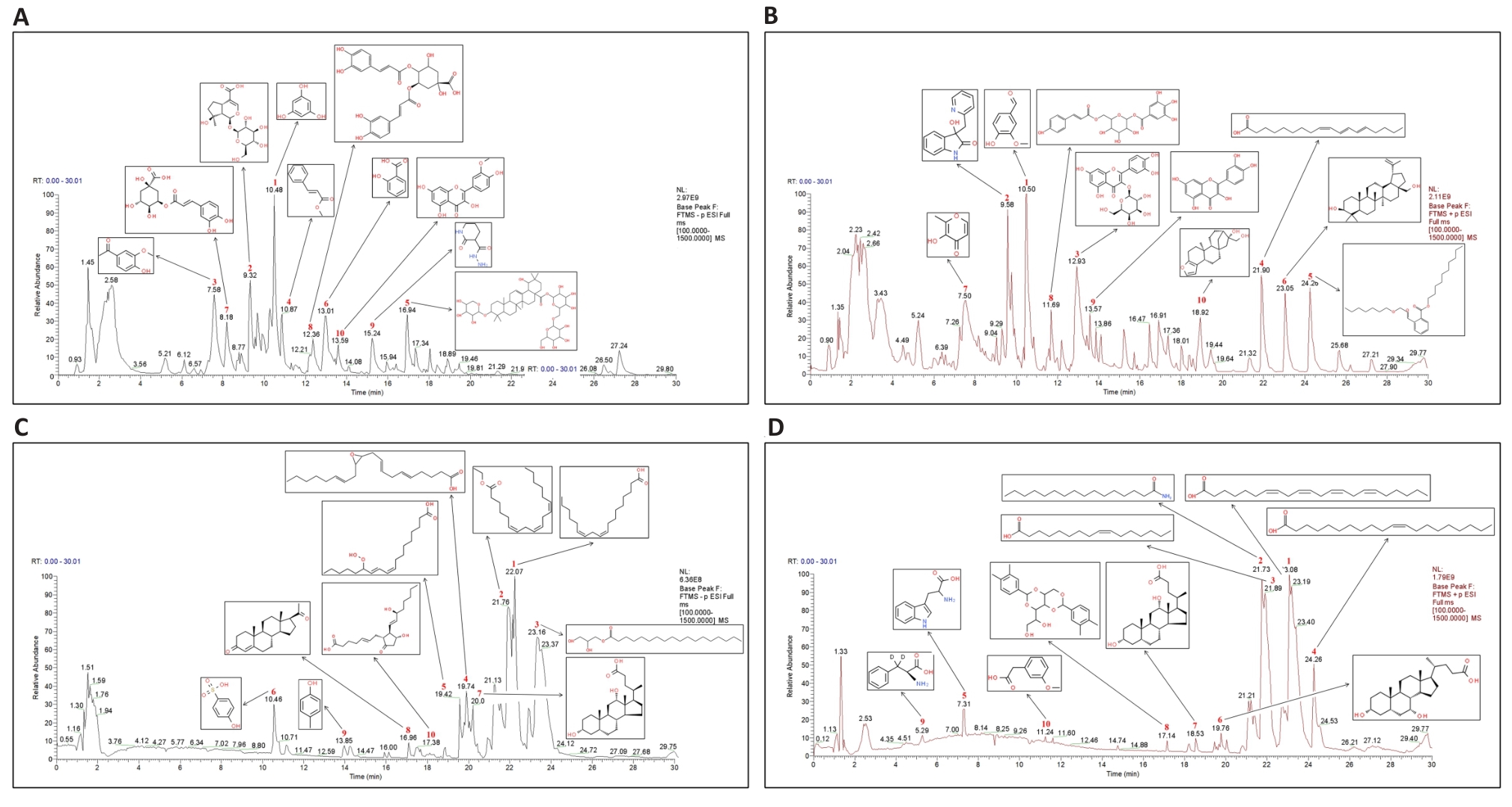
Fig.1 Chemoprofile and material basis of JSP lyophilized powder and JSP-medicated rat serum. A: Peak number and chemical characterization of JSP lyophilized powder in negative ion mode. B: Peak number and chemical characterization of JSP lyophilized powder in positive ion mode. C: Peak number and chemical characterization of JSP-containing serum in negative ion mode. D: Peak number and chemical characterization of JSP-containing serum in positive ion mode.
| No. | Identification | Formula | RT (min) | [M-H]-(m/z) | MS2 | ||
|---|---|---|---|---|---|---|---|
| Measured | Predicted | Δ (ppm) | |||||
| 1 | Phloroglucinol | C6H6O3 | 10.49 | 127.03892 | 126.03166 | -0.304 | 109.02865, 99.04446 |
| 2 | Mussaenosidic acid | C16H24O10 | 9.32 | 375.12921 | 376.13664 | 1.063 | 213.07642, 195.06569 |
| 3 | Apocynin | C9H10O3 | 7.66 | 167.07027 | 166.06299 | -0.025 | 167.07004, 152.04672 |
| 4 | Methyl cinnamate | C10H10O2 | 10.91 | 180.10168 | 179.09449 | -3.573 | 164.04254, 163.11104 |
| 5 | 6-O-Hexopyranosyl-1-O-[19-hydroxy -28-oxo-3-(pentopyranosyloxy)olean-12- | C47H76O18 | 16.94 | 973.5009 | 974.50825 | 0.493 | 928.50079, 927.49738 |
| 6 | Salicylic acid | C7H6O3 | 12.96 | 137.02315 | 138.03042 | -9.200 | 138.02663, 138.01686 |
| 7 | Neochlorogenic acid | C16H18O9 | 8.18 | 353.08746 | 354.09470 | -1.082 | 191.05544, 179.03421 |
| 8 | 4,5-Dicaffeoylquinic acid | C25H24O12 | 12.38 | 515.11902 | 516.12623 | -1.051 | 354.09219, 353.08780 |
| 9 | 2-oxopiperidine-3-carbohydrazide | C6H11N3O2 | 15.25 | 156.08057 | 157.08784 | -0.557 | 155.07317, 128.03448 |
| 10 | Isorhamnetin | C16H12O7 | 13.65 | 317.06503 | 316.05776 | -1.729 | 317.06497, 302.04166 |
Tab.2 Top 10 ingredients of JSP lyophilized powder by HPLC-MS analysis under negative ion mode
| No. | Identification | Formula | RT (min) | [M-H]-(m/z) | MS2 | ||
|---|---|---|---|---|---|---|---|
| Measured | Predicted | Δ (ppm) | |||||
| 1 | Phloroglucinol | C6H6O3 | 10.49 | 127.03892 | 126.03166 | -0.304 | 109.02865, 99.04446 |
| 2 | Mussaenosidic acid | C16H24O10 | 9.32 | 375.12921 | 376.13664 | 1.063 | 213.07642, 195.06569 |
| 3 | Apocynin | C9H10O3 | 7.66 | 167.07027 | 166.06299 | -0.025 | 167.07004, 152.04672 |
| 4 | Methyl cinnamate | C10H10O2 | 10.91 | 180.10168 | 179.09449 | -3.573 | 164.04254, 163.11104 |
| 5 | 6-O-Hexopyranosyl-1-O-[19-hydroxy -28-oxo-3-(pentopyranosyloxy)olean-12- | C47H76O18 | 16.94 | 973.5009 | 974.50825 | 0.493 | 928.50079, 927.49738 |
| 6 | Salicylic acid | C7H6O3 | 12.96 | 137.02315 | 138.03042 | -9.200 | 138.02663, 138.01686 |
| 7 | Neochlorogenic acid | C16H18O9 | 8.18 | 353.08746 | 354.09470 | -1.082 | 191.05544, 179.03421 |
| 8 | 4,5-Dicaffeoylquinic acid | C25H24O12 | 12.38 | 515.11902 | 516.12623 | -1.051 | 354.09219, 353.08780 |
| 9 | 2-oxopiperidine-3-carbohydrazide | C6H11N3O2 | 15.25 | 156.08057 | 157.08784 | -0.557 | 155.07317, 128.03448 |
| 10 | Isorhamnetin | C16H12O7 | 13.65 | 317.06503 | 316.05776 | -1.729 | 317.06497, 302.04166 |
| No. | Identification | Formula | RT (min) | [M-H]-(m/z) | MS2 | ||
|---|---|---|---|---|---|---|---|
| Measured | Predicted | Δ (ppm) | |||||
| 1 | Vanillin | C8H8O3 | 10.57 | 153.05446 | 152.04718 | -1.066 | 136.07547, 135.11678 |
| 2 | 3-hydroxy-3-(2-pyridylmethyl)indolin-2-one | C14H12N2O2 | 9.59 | 241.09671 | 240.08944 | -1.834 | 224.08940, 223.08618 |
| 3 | Hyperoside | C21H20O12 | 12.85 | 465.10165 | 464.09481 | -1.427 | 304.05289, 303.04953 |
| 4 | α-Eleostearic acid | C18H30O2 | 21.85 | 279.23154 | 278.22430 | -1.021 | 279.23132, 279.09326 |
| 5 | Octyl decyl phthalate | C26H42O4 | 24.28 | 441.29675 | 440.28948 | -1.272 | 315.15570, 203.17888 |
| 6 | Betulin | C30H50O2 | 23.05 | 411.36124 | 410.35400 | -1.438 | 397.26166, 359.24600 |
| 7 | Maltol | C6H6O3 | 7.52 | 127.0390 | 126.03172 | 0.244 | 127.03897, 109.02870 |
| 8 | 6-O-[(2E)-3-(4-Hydroxyphenyl)-2-propenoyl]-1 -O-(3,4,5-trihydroxybenzoyl)hexopyranose | C22H22O12 | 11.73 | 477.10422 | 478.11149 | 0.961 | 477.10388, 433.11270 |
| 9 | Quercetin | C15H10O7 | 13.57 | 303.04919 | 302.04192 | -1.854 | 285.03885, 275.05548 |
| 10 | Cafestol | C20H28O3 | 18.92 | 317.20819 | 316.20091 | -1.739 | 299.19794, 271.20505 |
Tab.3 Top 10 ingredients in JSP lyophilized powder by HPLC-MS analysis under positive ion mode
| No. | Identification | Formula | RT (min) | [M-H]-(m/z) | MS2 | ||
|---|---|---|---|---|---|---|---|
| Measured | Predicted | Δ (ppm) | |||||
| 1 | Vanillin | C8H8O3 | 10.57 | 153.05446 | 152.04718 | -1.066 | 136.07547, 135.11678 |
| 2 | 3-hydroxy-3-(2-pyridylmethyl)indolin-2-one | C14H12N2O2 | 9.59 | 241.09671 | 240.08944 | -1.834 | 224.08940, 223.08618 |
| 3 | Hyperoside | C21H20O12 | 12.85 | 465.10165 | 464.09481 | -1.427 | 304.05289, 303.04953 |
| 4 | α-Eleostearic acid | C18H30O2 | 21.85 | 279.23154 | 278.22430 | -1.021 | 279.23132, 279.09326 |
| 5 | Octyl decyl phthalate | C26H42O4 | 24.28 | 441.29675 | 440.28948 | -1.272 | 315.15570, 203.17888 |
| 6 | Betulin | C30H50O2 | 23.05 | 411.36124 | 410.35400 | -1.438 | 397.26166, 359.24600 |
| 7 | Maltol | C6H6O3 | 7.52 | 127.0390 | 126.03172 | 0.244 | 127.03897, 109.02870 |
| 8 | 6-O-[(2E)-3-(4-Hydroxyphenyl)-2-propenoyl]-1 -O-(3,4,5-trihydroxybenzoyl)hexopyranose | C22H22O12 | 11.73 | 477.10422 | 478.11149 | 0.961 | 477.10388, 433.11270 |
| 9 | Quercetin | C15H10O7 | 13.57 | 303.04919 | 302.04192 | -1.854 | 285.03885, 275.05548 |
| 10 | Cafestol | C20H28O3 | 18.92 | 317.20819 | 316.20091 | -1.739 | 299.19794, 271.20505 |
| No. | Identification | Formula | RT(min) | [M-H]-(m/z) | MS2 | ||
|---|---|---|---|---|---|---|---|
| Measured | Predicted | Δ(ppm) | |||||
| 1 | Linoleic acid | C18H32O2 | 22.15 | 325.23828 | 280.24003 | -0.715 | 279.23294, 59.01225 |
| 2 | γ-Linolenic acid ethyl ester | C20H34O2 | 21.68 | 313.27289 | 312.26561 | -1.761 | 257.24731, 239.23659 |
| 3 | 1-Stearoylglycerol | C21H42O4 | 23.04 | 381.29657 | 358.30739 | -2.560 | 341.30453, 285.27875 |
| 4 | (±)11(12)-EET | C20H32O3 | 19.75 | 319.22751 | 320.23479 | 1.717 | 301.21756, 257.22751 |
| 5 | (±)13-HpODE | C18H32O4 | 19.39 | 295.22638 | 294.21925 | -0.816 | 295.22440, 295.18799 |
| 6 | 4-Phenolsulfonic acid | C6H6O4S | 10.45 | 172.99033 | 173.99760 | 3.218 | 93.03314, 79.95588 |
| 7 | Deoxycholic Acid | C24H40O4 | 20.02 | 391.28513 | 392.29241 | -0.648 | 365.30621, 347.29520 |
| 8 | Progesterone | C21H30O2 | 16.98 | 315.23166 | 314.22438 | -0.665 | 315.23148, 297.22113 |
| 9 | 4-Methylphenol | C7H8O | 13.86 | 107.04849 | 108.05577 | 5.090 | 67.50848 |
| 10 | 5-trans-Prostaglandin E2 | C20 H32O5 | 17.37 | 335.22116 | 334.21403 | -2.094 | 335.22006, 317.21027 |
Tab.4 Top 10 ingredients of JSP-medicated rat serum by HPLC-MS analysis under negative ion mode
| No. | Identification | Formula | RT(min) | [M-H]-(m/z) | MS2 | ||
|---|---|---|---|---|---|---|---|
| Measured | Predicted | Δ(ppm) | |||||
| 1 | Linoleic acid | C18H32O2 | 22.15 | 325.23828 | 280.24003 | -0.715 | 279.23294, 59.01225 |
| 2 | γ-Linolenic acid ethyl ester | C20H34O2 | 21.68 | 313.27289 | 312.26561 | -1.761 | 257.24731, 239.23659 |
| 3 | 1-Stearoylglycerol | C21H42O4 | 23.04 | 381.29657 | 358.30739 | -2.560 | 341.30453, 285.27875 |
| 4 | (±)11(12)-EET | C20H32O3 | 19.75 | 319.22751 | 320.23479 | 1.717 | 301.21756, 257.22751 |
| 5 | (±)13-HpODE | C18H32O4 | 19.39 | 295.22638 | 294.21925 | -0.816 | 295.22440, 295.18799 |
| 6 | 4-Phenolsulfonic acid | C6H6O4S | 10.45 | 172.99033 | 173.99760 | 3.218 | 93.03314, 79.95588 |
| 7 | Deoxycholic Acid | C24H40O4 | 20.02 | 391.28513 | 392.29241 | -0.648 | 365.30621, 347.29520 |
| 8 | Progesterone | C21H30O2 | 16.98 | 315.23166 | 314.22438 | -0.665 | 315.23148, 297.22113 |
| 9 | 4-Methylphenol | C7H8O | 13.86 | 107.04849 | 108.05577 | 5.090 | 67.50848 |
| 10 | 5-trans-Prostaglandin E2 | C20 H32O5 | 17.37 | 335.22116 | 334.21403 | -2.094 | 335.22006, 317.21027 |
| No. | Identification | Formula | RT(min) | [M-H]-(m/z) | MS2 | ||
|---|---|---|---|---|---|---|---|
| Measured | Predicted | Δ(ppm) | |||||
| 1 | Adrenic acid | C22H36O2 | 23.00 | 331.26413 | 332.27136 | -0.503 | 71.01227, 59.00959 |
| 2 | Hexadecanamide | C16H3NO | 21.56 | 256.26300 | 255.25574 | -1.879 | 256.26297, 102.09174 |
| 3 | Palmitoleic acid | C16H30O2 | 21.91 | 253.21693 | 254.22421 | -1.453 | 59.01217, 53.94514 |
| 4 | 11(Z)-Eicosenoic acid | C20H38O2 | 24.23 | 309.28006 | 310.28733 | 0.489 | 309.17767, 104.95240 |
| 5 | DL-Tryptophan | C11H12N2O2 | 7.28 | 188.07050 | 204.08978 | -0.469 | 188.07042, 170.05983 |
| 6 | Chenodeoxycholic Acid | C24H40O4 | 19.86 | 437.29034 | 438.29762 | 1.255 | 409.29636, 391.28537 |
| 7 | Deoxycholic Acid | C24H40O4 | 18.52 | 391.28519 | 392.29249 | -0.648 | 347.29453, 343.26413 |
| 8 | Bis(4-ethylbenzylidene)sorbitol | C24H30O6 | 17.13 | 415.21078 | 414.20352 | -1.736 | 135.08035, 119.08560 |
| 9 | L-Phenylalanine | C9H11NO2 | 5.27 | 149.05977 | 148.05242 | -5.921 | 131.04912, 120.08086 |
| 10 | 3-Methoxyphenylacetic acid | C9H10O3 | 11.28 | 165.05475 | 166.06213 | -5.203 | 165.05470, 165.01831 |
Tab.5 TOP 10 ingredients of JSP-medicated rat serum by HPLC-MS analysis under positive ion mode
| No. | Identification | Formula | RT(min) | [M-H]-(m/z) | MS2 | ||
|---|---|---|---|---|---|---|---|
| Measured | Predicted | Δ(ppm) | |||||
| 1 | Adrenic acid | C22H36O2 | 23.00 | 331.26413 | 332.27136 | -0.503 | 71.01227, 59.00959 |
| 2 | Hexadecanamide | C16H3NO | 21.56 | 256.26300 | 255.25574 | -1.879 | 256.26297, 102.09174 |
| 3 | Palmitoleic acid | C16H30O2 | 21.91 | 253.21693 | 254.22421 | -1.453 | 59.01217, 53.94514 |
| 4 | 11(Z)-Eicosenoic acid | C20H38O2 | 24.23 | 309.28006 | 310.28733 | 0.489 | 309.17767, 104.95240 |
| 5 | DL-Tryptophan | C11H12N2O2 | 7.28 | 188.07050 | 204.08978 | -0.469 | 188.07042, 170.05983 |
| 6 | Chenodeoxycholic Acid | C24H40O4 | 19.86 | 437.29034 | 438.29762 | 1.255 | 409.29636, 391.28537 |
| 7 | Deoxycholic Acid | C24H40O4 | 18.52 | 391.28519 | 392.29249 | -0.648 | 347.29453, 343.26413 |
| 8 | Bis(4-ethylbenzylidene)sorbitol | C24H30O6 | 17.13 | 415.21078 | 414.20352 | -1.736 | 135.08035, 119.08560 |
| 9 | L-Phenylalanine | C9H11NO2 | 5.27 | 149.05977 | 148.05242 | -5.921 | 131.04912, 120.08086 |
| 10 | 3-Methoxyphenylacetic acid | C9H10O3 | 11.28 | 165.05475 | 166.06213 | -5.203 | 165.05470, 165.01831 |
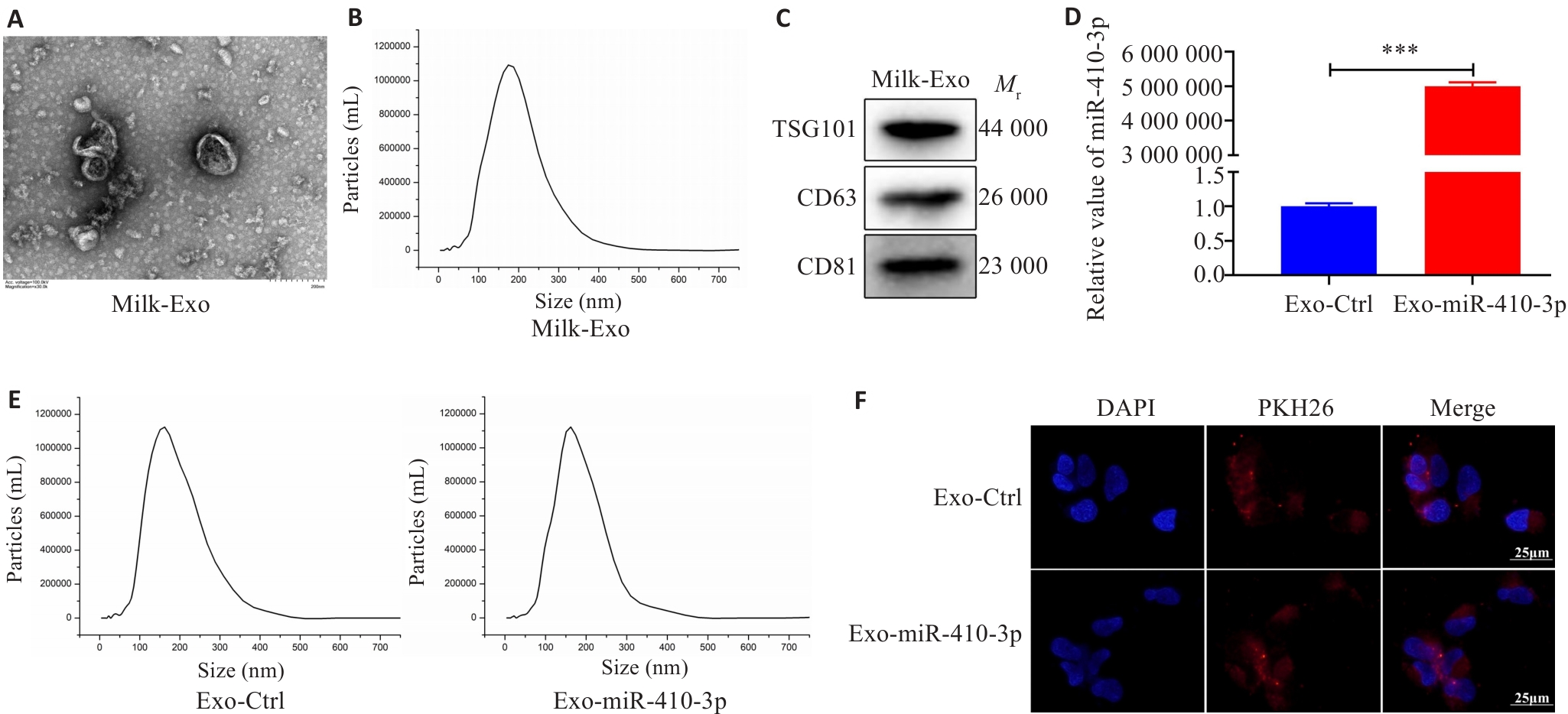
Fig.2 Characterization and identification of Exo-Ctrl and Exo-miR-410-3p. A: TEM image of milk exosomes (Scale bar=200 nm). B: NTA of the size distribution of milk exosomes. C: Protein levels of CD63, CD81, and TSG101 in milk exosomes measured by Western blotting. D: Expression level of miR-410-3p in Exo-Ctrl or Exo-miR-410-3p measured by RT-qPCR. E: NTA of the size distribution of Exo-Ctrl or Exo-miR-410-3p. F: Fluorescence image of HTR-8/Svneo cells incubated with PKH26-labeled Exo-Ctrl or Exo-miR-410-3p (red) (Scale bar=25 µm). (n=3). ***P<0.001.
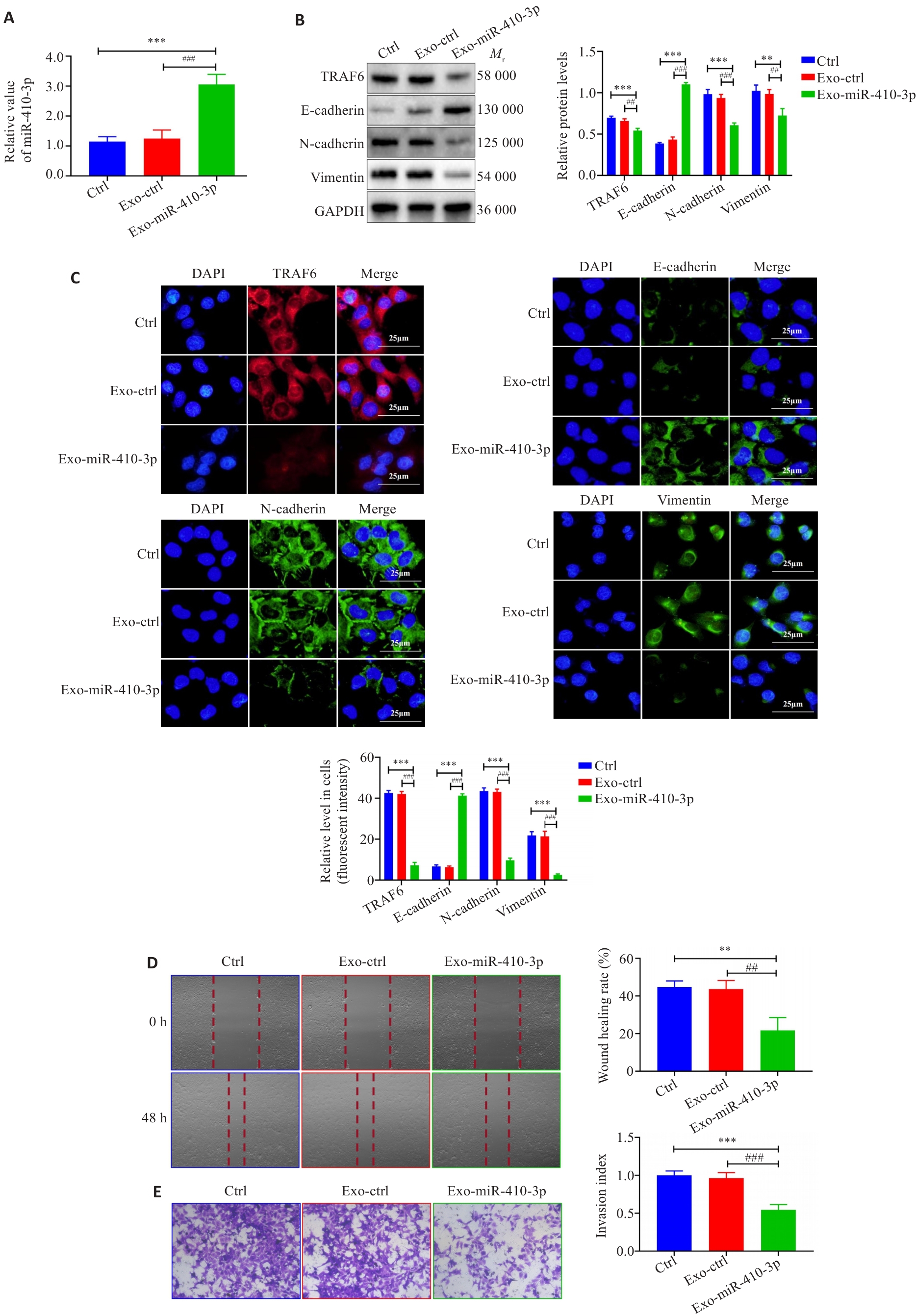
Fig.3 Exo-miR-410-3p suppresses EMT, migration, and invasion of HTR-8/Svneo cells. A: Expression level of miR-410-3p in HTR-8/Svneo cells treated with Exo-Ctrl or Exo-miR-410-3p measured by RT-qPCR. B, C: Protein levels of TRAF6, E-cadherin, N-cadherin, and vimentin in HTR-8/Svneo cells treated with Exo-Ctrl or Exo-miR-410-3p measured by Western blotting and immunofluorescence staining. D, E: Migration and invasion capacities of HTR-8/Svneo cells treated with Exo-Ctrl or Exo-miR-410-3p determined by wound healing and Transwell assays, respectively. Representative images of migrated or invaded cells are shown (Original magnification: ×200). (n=3). **P<0.01, ***P<0.001; ##P<0.01, ###P<0.001.
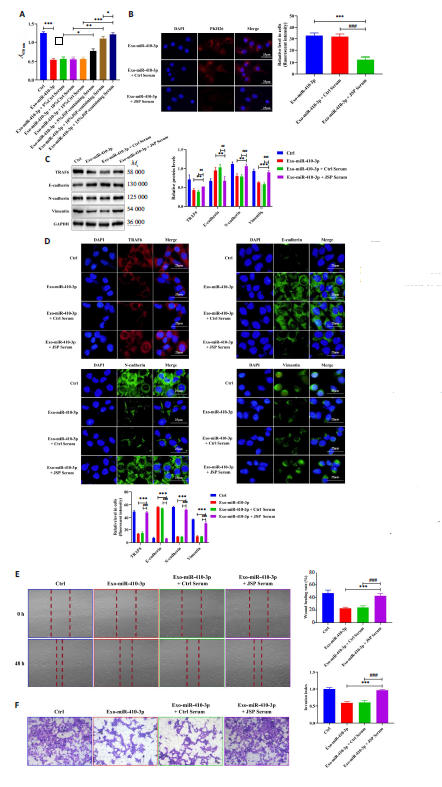
Fig.4 JSP-medicated rat serum reversesinhibitory effects of Exo-miR-410-3p on HTR-8/Svneo cell EMT, migration, and invasion. A:Change of HTR-8/Svneo cell viability treatedwith Exo-miR-410-3p, control or JSPmedicatedserum for 48 h. B: Fluorescenceimage of HTR-8/Svneo cells incubated withPKH26-labeled Exo-miR-410-3p (red) treatedwith control or JSP-medicated serum (scalebar, 25 μm). C, D: Protein levels of TRAF6, Ecadherin,N-cadherin, and Vimentin in HTR-8/Svneo cells treated with control or JSPmedicatedserum under the action of ExomiR-410-3p measured by Western blottingand IF staining. E, F: Migration and invasioncapacities of HTR-8/Svneo cells treated withcontrol or JSP-containing serum under theaction of Exo-miR-410-3p determined bywound healing and Transwell assays,respectively. Representative images ofmigrated or invaded cells are shown (×200).(n=3). *P<0.05,**P<0.01, ***P<0.001, ##P<0.01 ###P<0.001
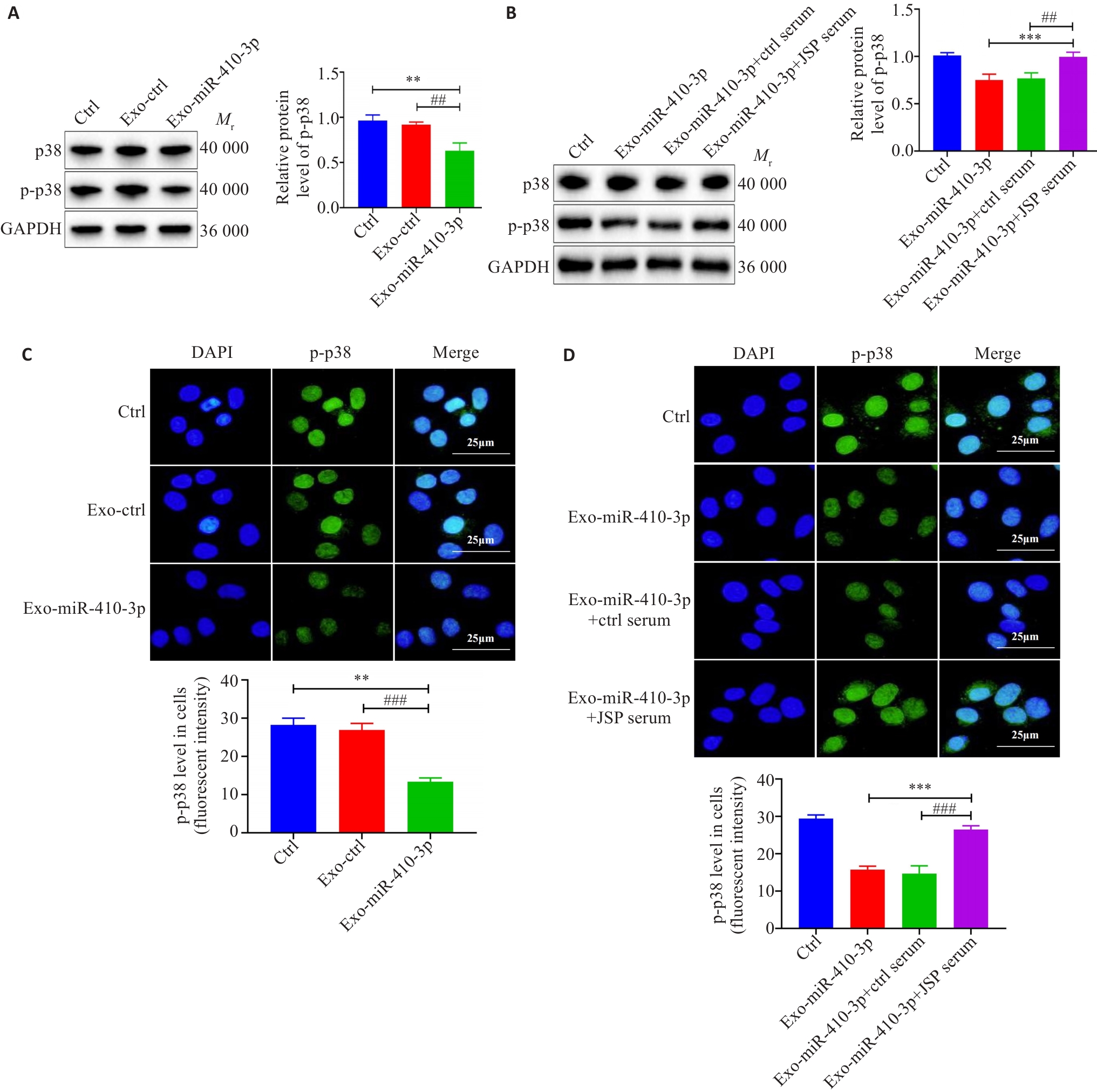
Fig.5 Effect of JSP-medicated serum on the p38 MAPK signaling pathway in HTR-8/Svneo cells. A, C: Protein levels of p38 and p-p38 in HTR-8/Svneo cells treated with Exo-Ctrl or Exo-miR-410-3p measured by Western blotting and IF staining. B, D: Protein levels of p38 and p-p38 in HTR-8/Svneo cells treated with control or JSP-medicated serum under the action of Exo-miR-410-3p measured by Western blotting and IF staining. (n=3). **P<0.01, ***P<0.001, ##P<0.01, ###P<0.001 vs indicated group.
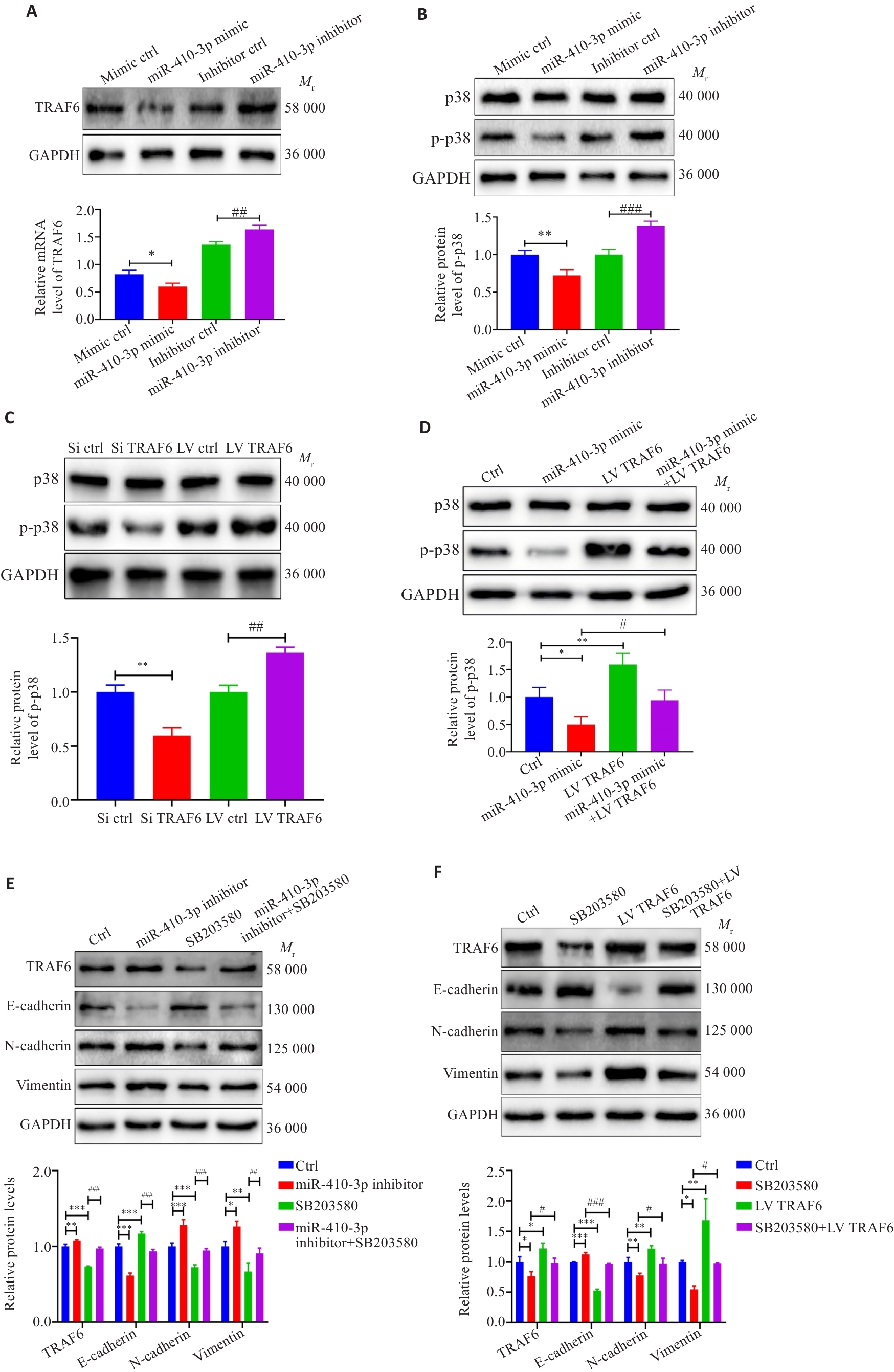
Fig.6 The core role of the miR-410-3p/TRAF6/p38 MAPK pathway in JSP-mediated regulation. A, B: After transfection with miR-410-3p mimic or inhibitor in HTR-8/Svneo cells, the expression of TRAF6 and p-p38 proteins was detected by Western blotting. C: Effect of knocking down TRAF6 (si TRAF6) or overexpressing TRAF6 (LV TRAF6) on p-p38 protein expression. D: Rescue experiment of co transfection of miR-410-3p mimic and LV TRAF6. E, F: The p38 MAPK signaling pathway inhibitor SB203580 blocks the effects of miR-410-3p inhibitor or LV TRAF6. (n=3). *P<0.05, **P<0.01, ***P<0.001, #P<0.05, ##P<0.01, ###P<0.001.
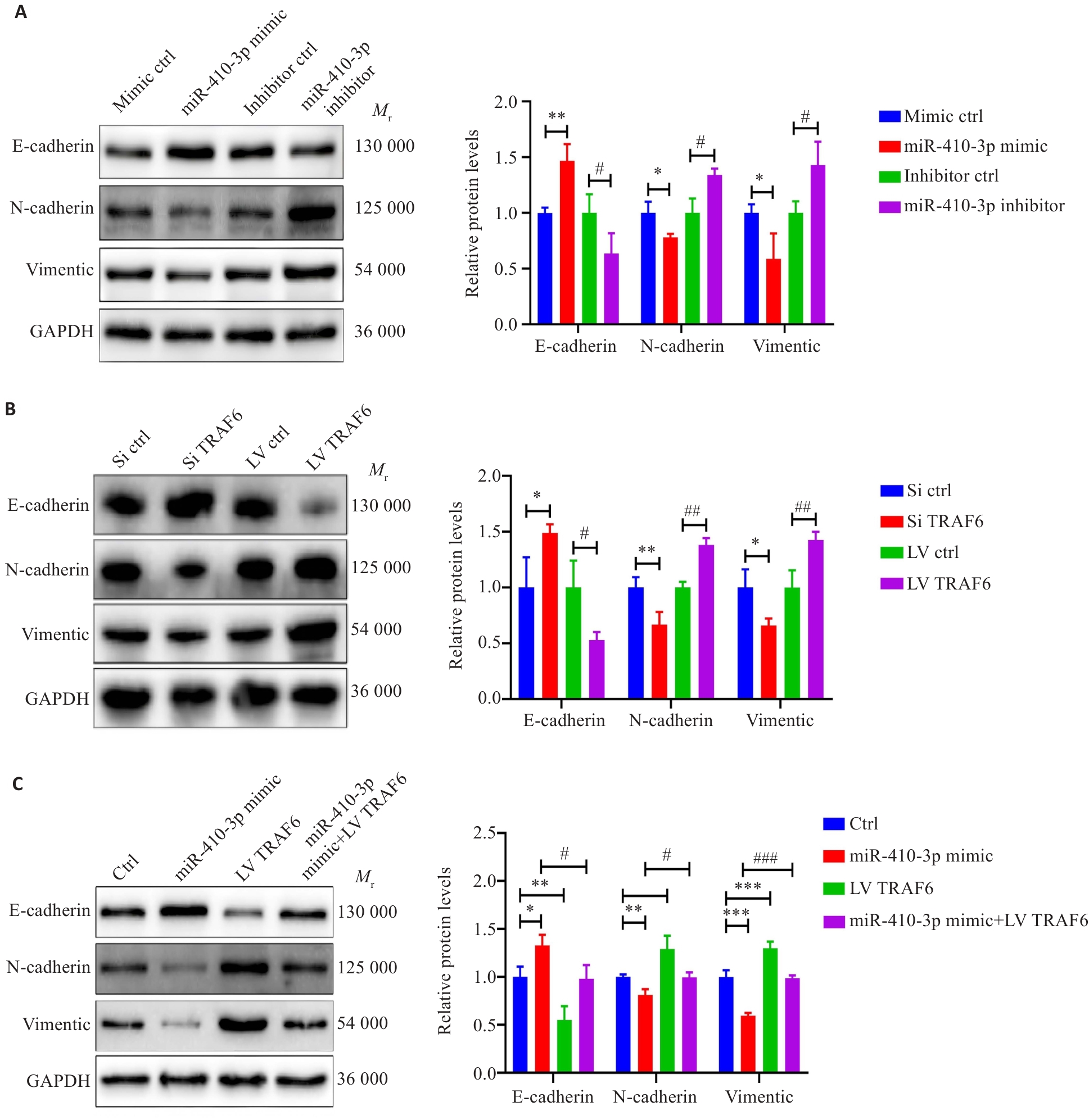
Fig.7 Expression of E-cadherin, N-cadherin, and vimentin proteins under different conditions. A: After transfection of miR-410-3p mimic or inhibitor in HTR-8/Svneo cells, the protein expression of E-cadherin, N-cadherin, and vimentin was detected by Western blotting. B: Effect of knocking down TRAF6 (si TRAF6) or overexpressing TRAF6 (LV TRAF6) on the expression of E-cadherin, N-cadherin, and Vimentin proteins. C: Effect of co transfection of miR-410-3p mimic and LV TRAF6 on the expression of E-cadherin, N-cadherin, and vimentin proteins. (n=3). *P<0.05, **P<0.01, ***P<0.001, #P<0.05, ##P<0.01, ###P<0.001.
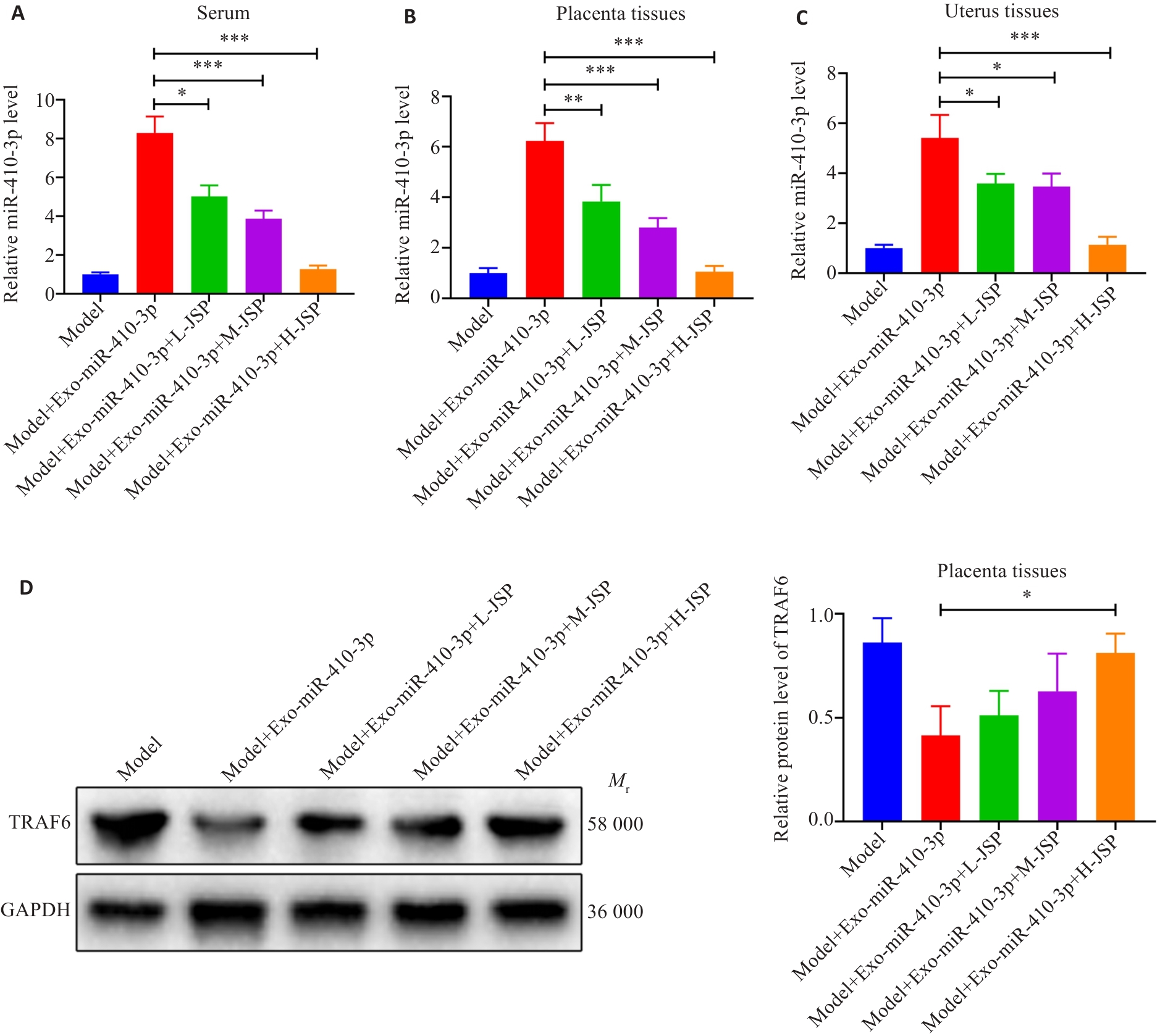
Fig.8 High doses of JSP reduces miR-410-3p in the serum, placenta, and uterus of female mice, but increases TRAF6 expression in the placenta. A-C: Level of miR-410-3p in the serum, placenta, and uterus of female mice treated with low, medium, and high doses of JSP detected by RT-qPCR (n=5). D: Expression level of TRAF6 protein in the placenta of female mice treated with low, medium, and high doses of JSP measured by Western blotting (n=3). *P<0.05, **P<0.01, ***P<0.001.
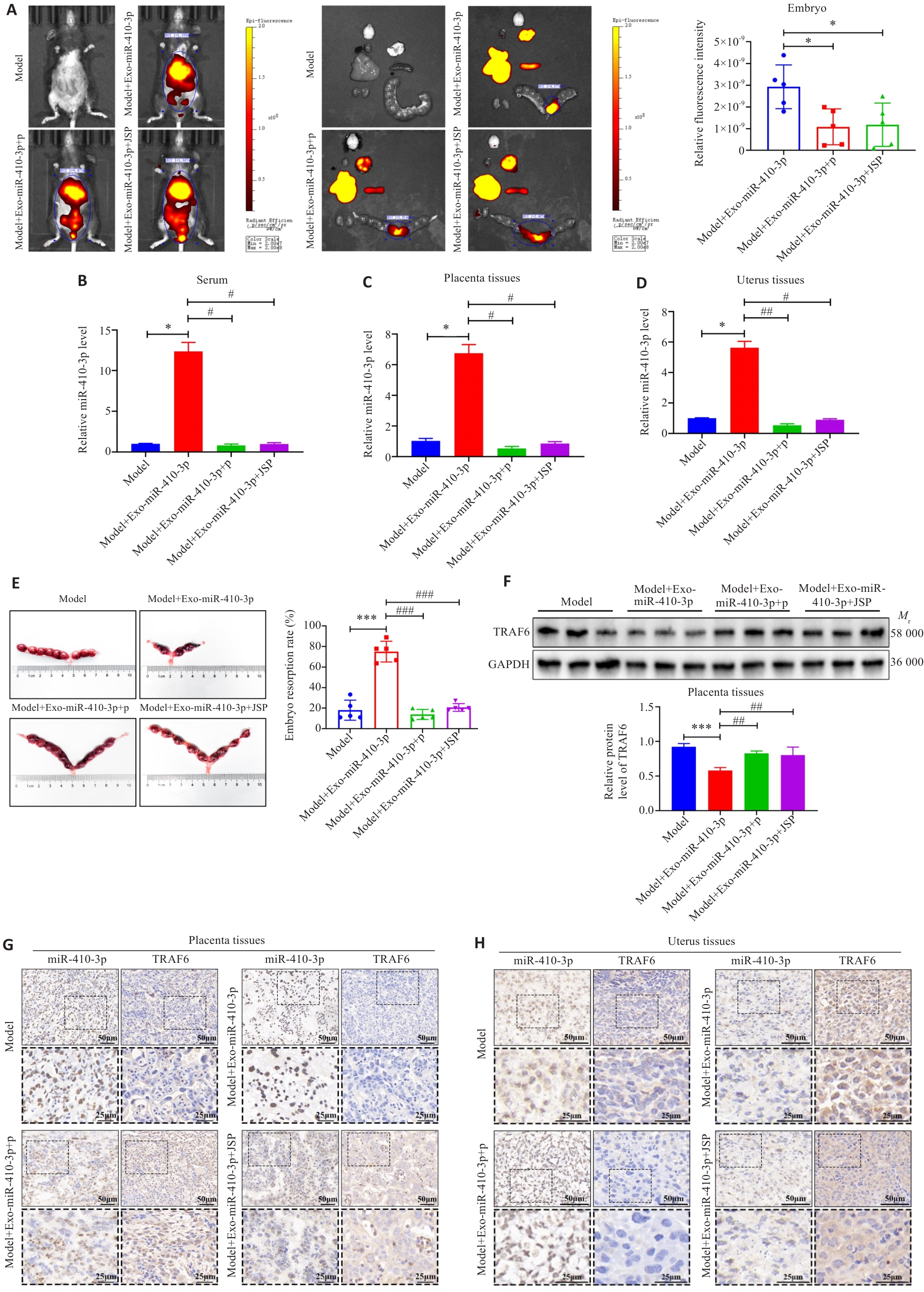
Fig.9 JSP can reduce embryo resorption rate induced by Exo-miR-410-3p. A: In vivo fluorescence images of DiR labeled Exo-miR-410-3p in female mice, representative ex vivo fluorescence images in different organs, and the quantification of ex vivo fluorescence images in embryos (n=5). B-D: Expression level of miR-410-3p in the serum, placenta, and uterus of female mice detected by RT-qPCR (n=5). E: Embryo resorption rate of female mice (n=5). F: Expression level of TRAF6 protein in the placenta of female mice measured by Western blotting (n=3). G, H: Distributions of miR-410-3p and TRAF6 in the placenta and uterus of female mice detected by ISH and IHC, respectively (Scale bars=50 μm, 25 μm). *P<0.05, ***P<0.001, #P<0.05, ##P<0.01, ###P<0.001.
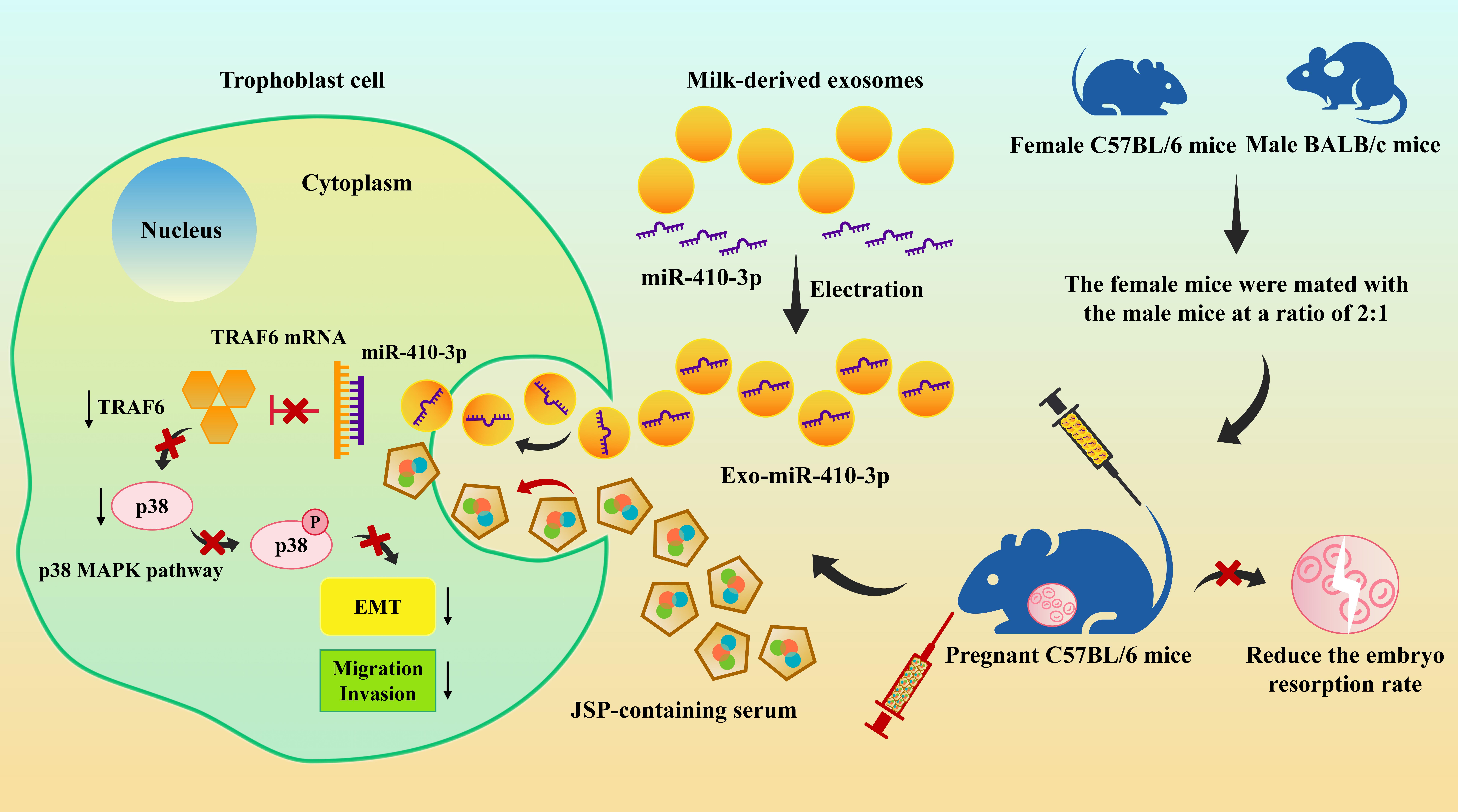
Fig.10 Schematic diagram illustrating the mechanism by which JSP reduces SA by inhibiting Exo-miR-410-3p uptake to regulate trophoblast EMT, migration, and invasion.
| [1] | Warburton D, Fraser FC. Spontaneous abortion risks in man: data from reproductive histories collected in a medical genetics unit[J]. Am J Human Genetics, 1964, 16(1): 1-25. |
| [2] | The ESHRE Guideline Group on Rpl, Bender Atik R, Christiansen OB, et al. ESHRE guideline: recurrent pregnancy loss[J]. Hum Reprod Open, 2018, 2018(2): hoy004. doi:10.1093/hropen/hoy004 |
| [3] | Quenby S, Gallos ID, Dhillon-Smith RK, et al. Miscarriage matters: the epidemiological, physical, psychological, and economic costs of early pregnancy loss[J]. Lancet, 2021, 397(10285): 1658-67. doi:10.1016/s0140-6736(21)00682-6 |
| [4] | Ohno M, Maeda T, Matsunobu A. A cytogenetic study of spontaneous abortions with direct analysis of chorionic villi[J]. Obstet Gynecol, 1991, 77(3): 394-8. |
| [5] | Skinner J, Luettich K, Ring M, et al. Analysis of fetal DNA in the maternal venous blood for abnormalities of chromosomes 13, 16, 18 and 21 in first-trimester spontaneous miscarriage[J]. J Obstet Gynaecol, 2003, 23(3): 228-32. doi:10.1080/0144361031000098307 |
| [6] | van den Berg MMJ, van Maarle MC, van Wely M, et al. Genetics of early miscarriage[J]. Biochim Biophys Acta BBA Mol Basis Dis, 2012, 1822(12): 1951-9. doi:10.1016/j.bbadis.2012.07.001 |
| [7] | Sierra S, Stephenson M. Genetics of recurrent pregnancy loss[J]. Semin Reprod Med, 2006, 24(1): 17-24. doi:10.1055/s-2006-931797 |
| [8] | Empson MB, Lassere M, Craig JC, et al. Prevention of recurrent miscarriage for women with antiphospholipid antibody or lupus anticoagulant[J]. Cochrane Database Syst Rev, 2012, 2012(2): 2859. |
| [9] | Kaandorp S, Di Nisio M, Goddijn M, et al. Aspirin or anticoagulants for treating recurrent miscarriage in women without antiphospholipid syndrome[J]. Cochrane Database Syst Rev, 2009(1): 4734. doi:10.1002/14651858.cd004734.pub3 |
| [10] | Chan YY, Jayaprakasan K, Tan A, et al. Reproductive outcomes in women with congenital uterine anomalies: a systematic review[J]. Ultrasound Obstet & Gyne, 2011, 38(4): 371-82. doi:10.1002/uog.10056 |
| [11] | Wang SW, Zhong SY, Lou LJ, et al. The effect of intravenous immunoglobulin passive immunotherapy on unexplained recurrent spontaneous abortion: a meta-analysis[J]. Reprod BioMedicine Online, 2016, 33(6): 720-36. doi:10.1016/j.rbmo.2016.08.025 |
| [12] | Liu ZL, Xu HJ, Kang XM, et al. Allogenic lymphocyte immunotherapy for unexplained recurrent spontaneous abortion: a meta-analysis[J]. American J Rep Immunol, 2016, 76(6): 443-53. doi:10.1111/aji.12511 |
| [13] | de Jong PG, Goddijn M, Middeldorp S. Antithrombotic therapy for pregnancy loss[J]. Hum Reprod Update, 2013, 19(6): 656-73. doi:10.1093/humupd/dmt019 |
| [14] | Ou H, Yu Q. Efficacy of aspirin, prednisone, and multivitamin triple therapy in treating unexplained recurrent spontaneous abortion: a cohort study[J]. Int J Gynecol Obstet, 2020, 148(1): 21-6. doi:10.1002/ijgo.12972 |
| [15] | Saccone G, Schoen C, Franasiak JM, et al. Supplementation with progestogens in the first trimester of pregnancy to prevent miscarriage in women with unexplained recurrent miscarriage: a systematic review and meta-analysis of randomized, controlled trials[J]. Fertil Steril, 2017, 107(2): 430-8.e3. doi:10.1016/j.fertnstert.2016.10.031 |
| [16] | Tavakoli M, Jeddi-Tehrani M, Salek-Moghaddam A, et al. Effects of 1, 25(OH)2 vitamin D3 on cytokine production by endometrial cells of women with recurrent spontaneous abortion[J]. Fertil Steril, 2011, 96(3): 751-7. doi:10.1016/j.fertnstert.2011.06.075 |
| [17] | Hekmatdoost A, Vahid F, Yari Z, et al. Methyltetrahydrofolate vs folic acid supplementation in idiopathic recurrent miscarriage with respect to methylenetetrahydrofolate reductase C677T and A1298C polymorphisms: a randomized controlled trial[J]. PLoS One, 2015, 10(12): e0143569. doi:10.1371/journal.pone.0143569 |
| [18] | Li TC. Recurrent miscarriage: aetiology, management and prognosis[J]. Hum Reprod Update, 2002, 8(5): 463-81. doi:10.1093/humupd/8.5.463 |
| [19] | Tavoli Z, Mohammadi M, Tavoli A, et al. Quality of life and psychological distress in women with recurrent miscarriage: a comparative study[J]. Health Qual Life Outcomes, 2018, 16(1): 150. doi:10.1186/s12955-018-0982-z |
| [20] | Ji L, Brkić J, Liu M, et al. Placental trophoblast cell differentiation: Physiological regulation and pathological relevance to preeclampsia[J]. Mol Aspects Med, 2013, 34(5): 981-1023. doi:10.1016/j.mam.2012.12.008 |
| [21] | Staun-Ram E, Shalev E. Human trophoblast function during the implantation process[J]. Reprod Biol Endocrinol, 2005, 3(1): 56. doi:10.1186/1477-7827-3-56 |
| [22] | Tian FJ, Qin CM, Li XC, et al. Decreased stathmin-1 expression inhibits trophoblast proliferation and invasion and is associated with recurrent miscarriage[J]. Am J Pathol, 2015, 185(10): 2709-21. doi:10.1016/j.ajpath.2015.06.010 |
| [23] | Ding JL, Cheng YX, Zhang Y, et al. The miR-27a-3p/USP25 axis participates in the pathogenesis of recurrent miscarriage by inhibiting trophoblast migration and invasion[J]. J Cell Physiol, 2019, 234(11): 19951-63. doi:10.1002/jcp.28593 |
| [24] | Jordan NV, Johnson GL, Abell AN. Tracking the intermediate stages of epithelial-mesenchymal transition in epithelial stem cells and cancer[J]. Cell Cycle, 2011, 10(17): 2865-73. doi:10.4161/cc.10.17.17188 |
| [25] | Knöfler M, Pollheimer J. Human placental trophoblast invasion and differentiation: a particular focus on Wnt signaling[J]. Front Genet, 2013, 4: 190. doi:10.3389/fgene.2013.00190 |
| [26] | Kokkinos MI, Murthi P, Wafai R, et al. Cadherins in the human placenta-epithelial-mesenchymal transition (EMT) and placental development[J]. Placenta, 2010, 31(9): 747-55. doi:10.1016/j.placenta.2010.06.017 |
| [27] | Chen ZY, Li Z, Zong Y, et al. Exosome-delivered miR-410-3p reverses epithelial-mesenchymal transition, migration and invasion of trophoblasts in spontaneous abortion[J]. J Cellular Molecular Medi, 2024, 28(3): e18097. doi:10.1111/jcmm.18097 |
| [28] | Yang GY, Luo H, Liao X, et al. Chinese herbal medicine for the treatment of recurrent miscarriage: a systematic review of randomized clinical trials[J]. BMC Complementary Altern Med, 2013, 13(1): 320. doi:10.1186/1472-6882-13-320 |
| [29] | Zhu XH, Zhao L, Fu JH, et al. “Nourishing the kidney” and the treatment of recurrent pregnancy loss using traditional Chinese medicine[J]. Int J Gynecol Obstet, 2014, 127(1): 90-1. doi:10.1016/j.ijgo.2014.06.002 |
| [30] | Piao L, Chen CP, Yeh CC, et al. Chinese herbal medicine for miscarriage affects decidual micro-environment and fetal growth[J]. Placenta, 2015, 36(5): 559-66. doi:10.1016/j.placenta.2015.02.006 |
| [31] | Li L, Dou LX, Leung PC, et al. Chinese herbal medicines for unexplained recurrent miscarriage[J]. Cochrane Database Syst Rev, 2016: 10568. doi:10.1002/14651858.cd010568.pub2 |
| [32] | Yang SL, Niu TT, Li XL, et al. Bu-Shen-Yi-Qi formula impairs cytotoxicity of NK cells by up-regulating IDO expression in trophoblasts[J]. Gynecol Endocrinol, 2018, 34(8): 675-9. doi:10.1080/09513590.2018.1425988 |
| [33] | Sun DQ, Lu SJ, Gan XW, et al. Is there a place for Traditional Chinese Medicine (TCM) in the treatment of recurrent pregnancy loss?[J]. J Reprod Immunol, 2022, 152: 103636. doi:10.1016/j.jri.2022.103636 |
| [34] | Zhou H, Yang Y, Deng LW, et al. A potential mechanism of kidney-tonifying herbs treating unexplained recurrent spontaneous abortion: clinical evidence from the homogeneity of embryo implantation and tumor invasion[J]. Front Pharmacol, 2022, 12: 775245. doi:10.3389/fphar.2021.775245 |
| [35] | Alvarez-Erviti L, Seow Y, Yin HF, et al. Delivery of siRNA to the mouse brain by systemic injection of targeted exosomes[J]. Nat Biotechnol, 2011, 29(4): 341-5. doi:10.1038/nbt.1807 |
| [36] | Kamerkar S, LeBleu VS, Sugimoto H, et al. Exosomes facilitate therapeutic targeting of oncogenic KRAS in pancreatic cancer[J]. Nature, 2017, 546(7659): 498-503. doi:10.1038/nature22341 |
| [37] | Zhang R, Fu YX, Cheng M, et al. sEVsRVG selectively delivers antiviral siRNA to fetus brain, inhibits ZIKV infection and mitigates ZIKV-induced microcephaly in mouse model[J]. Mol Ther, 2022, 30(5): 2078-91. doi:10.1016/j.ymthe.2021.10.009 |
| [38] | Lamouille S, Xu J, Derynck R. Molecular mechanisms of epithelial-mesenchymal transition[J]. Nat Rev Mol Cell Biol, 2014, 15(3): 178-96. doi:10.1038/nrm3758 |
| [39] | Savagner P. Epithelial-mesenchymal transitions[M]//Cellular Adhesion in Development and Disease. Amsterdam: Elsevier, 2015: 273-300. doi:10.1016/bs.ctdb.2014.11.021 |
| [40] | Pei DQ, Shu XD, Gassama-Diagne A, et al. Mesenchymal-epithelial transition in development and reprogramming[J]. Nat Cell Biol, 2019, 21(1): 44-53. doi:10.1038/s41556-018-0195-z |
| [41] | DaSilva-Arnold S, James JL, Al-Khan A, et al. Differentiation of first trimester cytotrophoblast to extravillous trophoblast involves an epithelial-mesenchymal transition[J]. Placenta, 2015, 36(12): 1412-8. doi:10.1016/j.placenta.2015.10.013 |
| [42] | Lee KM, Seo HW, Kwon MS, et al. SIRT1 negatively regulates invasive and angiogenic activities of the extravillous trophoblast[J]. American J Rep Immunol, 2019, 82(4): e13167. doi:10.1111/aji.13167 |
| [43] | Shenoy AK, Jin Y, Luo HC, et al. Epithelial-to-mesenchymal transition confers pericyte properties on cancer cells[J]. J Clin Investig, 2016, 126(11): 4174-86. doi:10.1172/jci86623 |
| [44] | Ding JL, Zhang Y, Cai XP, et al. Extracellular vesicles derived from M1 macrophages deliver miR-146a-5p and miR-146b-5p to suppress trophoblast migration and invasion by targeting TRAF6 in recurrent spontaneous abortion[J]. Theranostics, 2021, 11(12): 5813-30. doi:10.7150/thno.58731 |
| [45] | Lee HJ, Lim SM, Jang HY, et al. miR-373-3p regulates invasion and migration abilities of trophoblast cells via targeted CD44 and radixin[J]. Int J Mol Sci, 2021, 22(12): 6260. doi:10.3390/ijms22126260 |
| [46] | Ben-Shushan D, Markovsky E, Gibori H, et al. Overcoming obstacles in microRNA delivery towards improved cancer therapy[J]. Drug Deliv Transl Res, 2014, 4(1): 38-49. doi:10.1007/s13346-013-0160-0 |
| [47] | Zhou DZ, Cutlar L, Gao YS, et al. The transition from linear to highly branched poly(β-amino ester)s: Branching matters for gene delivery[J]. Sci Adv, 2016, 2(6): e1600102. doi:10.1126/sciadv.1600102 |
| [48] | Liu S, Sun ZB, Zhou DZ, et al. Alkylated branched poly(β-amino esters) demonstrate strong DNA encapsulation, high nanoparticle stability and robust gene transfection efficacy[J]. J Mater Chem B, 2017, 5(27): 5307-10. doi:10.1039/c7tb00996h |
| [49] | Lim EK, Jang E, Lee K, et al. Delivery of cancer therapeutics using nanotechnology[J]. Pharmaceutics, 2013, 5(2): 294-317. doi:10.3390/pharmaceutics5020294 |
| [50] | Feng L, Mumper RJ. A critical review of lipid-based nanoparticles for taxane delivery[J]. Cancer Lett, 2013, 334(2): 157-75. doi:10.1016/j.canlet.2012.07.006 |
| [51] | Sadasivam M, Avci P, Gupta GK, et al. Self-assembled liposomal nanoparticles in photodynamic therapy[J]. ejnm, 2013, 5(3): 115-29. doi:10.1515/ejnm-2013-0010 |
| [52] | Ha D, Yang NN, Nadithe V. Exosomes as therapeutic drug carriers and delivery vehicles across biological membranes: current perspectives and future challenges[J]. Acta Pharm Sin B, 2016, 6(4): 287-96. doi:10.1016/j.apsb.2016.02.001 |
| [53] | Rani S, Ritter T. The exosome-a naturally secreted nanoparticle and its application to wound healing[J]. Adv Mater, 2016, 28(27): 5542-52. doi:10.1002/adma.201504009 |
| [54] | Aqil F, Munagala R, Jeyabalan J, et al. Milk exosomes-Natural nanoparticles for siRNA delivery[J]. Cancer Lett, 2019, 449: 186-95. doi:10.1016/j.canlet.2019.02.011 |
| [55] | Yan CQ, Chen J, Wang C, et al. Milk exosomes-mediated miR-31-5p delivery accelerates diabetic wound healing through promoting angiogenesis[J]. Drug Deliv, 2022, 29(1): 214-28. doi:10.1080/10717544.2021.2023699 |
| [56] | Johnson GL, Lapadat R. Mitogen-activated protein kinase pathways mediated by ERK, JNK, and p38 protein kinases[J]. Science, 2002, 298(5600): 1911-2. doi:10.1126/science.1072682 |
| [57] | Cuenda A, Rousseau S. p38 MAP-Kinases pathway regulation, function and role in human diseases[J]. Biochim Biophys Acta BBA Mol Cell Res, 2007, 1773(8): 1358-75. doi:10.1016/j.bbamcr.2007.03.010 |
| [58] | Cuadrado A, Nebreda AR. Mechanisms and functions of p38 MAPK signalling[J]. Biochem J, 2010, 429(3): 403-17. doi:10.1042/bj20100323 |
| [59] | Takanami-Ohnishi Y, Asada S, Tsunoda H, et al. Possible involvement of p38 mitogen-activated protein kinase in decidual function in parturition[J]. Biochem Biophys Res Commun, 2001, 288(5): 1155-61. doi:10.1006/bbrc.2001.5895 |
| [60] | Chen GL, Ye XY, Zhang JW, et al. Limb remote ischemic postconditioning reduces ischemia-reperfusion injury by inhibiting NADPH oxidase activation and MyD88-TRAF6-P38MAP-kinase pathway of neutrophils[J]. Int J Mol Sci, 2016, 17(12): 1971. doi:10.3390/ijms17121971 |
| [61] | Tang L, Li XD, Bai YH, et al. microRNA-146a negatively regulates the inflammatory response to Porphyromonas gingivalis in human periodontal ligament fibroblasts via TRAF6/p38 pathway[J]. J Periodontol, 2019, 90(4): 391-9. doi:10.1002/jper.18-0190 |
| [62] | Li Y, Liu XY, Wang JL, et al. Effects of shoutai pill containing serum on bioactivity behavior of trophoblast cells of spontaneous abortion patients[J]. Chin J Chinese Materia Med, 2016, 36(5): 586-91. |
| [63] | Lai MH. Effects of Shoutai pills on expression of Th1/Th2 cytokine in maternal-fetal interface and pregnancy outcome[J]. China J Chin Mater Med, 2010: 3065-8. doi:10.4268/cjcmm20102229 |
| [64] | Li HF, Shen QH, Li XQ, et al. The efficacy of traditional Chinese medicine Shoutai pill combined with western medicine in the first trimester of pregnancy in women with unexplained recurrent spontaneous abortion: a systematic review and meta-analysis[J]. BioMed Res Int, 2020, 2020: 7495161. doi:10.1155/2020/7495161 |
| [65] | Lai YL, Zhang Y, Zhang HM, et al. Modified Shoutai Pill inhibited ferroptosis to alleviate recurrent pregnancy loss[J]. J Ethnopharmacol, 2024, 319: 117028. doi:10.1016/j.jep.2023.117028 |
| [1] | Siyuan MA, Bochao ZHANG, Chun PU. Circ_0000437 promotes proliferation, invasion, migration and epithelial-mesenchymal transition of breast cancer cells by targeting the let-7b-5p/CTPS1 axis [J]. Journal of Southern Medical University, 2025, 45(8): 1682-1696. |
| [2] | Ziliang WANG, Xiaohua CHEN, Jingjing YANG, Chen YAN, Zhizhi ZHANG, Bingyi HUANG, Meng ZHAO, Song LIU, Sitang GE, Lugen ZUO, Deli CHEN. High expression of SURF4 promotes migration, invasion and proliferation of gastric cancer cells by inhibiting tight junction proteins [J]. Journal of Southern Medical University, 2025, 45(8): 1732-1742. |
| [3] | Zhennan MA, Fuquan LIU, Xuefeng ZHAO, Xiaowei ZHANG. High expression of DTX2 promotes proliferation, invasion and epithelial-mesenchymal transition of oxaliplatin-resistant colorectal cancer cells [J]. Journal of Southern Medical University, 2025, 45(4): 829-836. |
| [4] | Lu TAO, Zhuoli WEI, Yueyue WANG, Ping XIANG. CEACAM6 inhibits proliferation and migration of nasopharyngeal carcinoma cells by suppressing epithelial-mesenchymal transition [J]. Journal of Southern Medical University, 2025, 45(3): 566-576. |
| [5] | Renjie ZHOU, Jingjing YANG, Bowen SONG, Xiaohua CHEN, Lian WANG, Yueyue WANG, Lugen ZUO, Bing ZHU. PSMD11 overexpression promotes epithelial-mesenchymal transition in gastric cancer and affects patient prognosis [J]. Journal of Southern Medical University, 2025, 45(12): 2747-2755. |
| [6] | Xuening JIANG, Qingqing HUANG, Ying XU, Shunyin² WANG, Xiaofeng² ZHANG, Lian¹ WANG, Yueyue² WANG, Lugen ZUO. High YEATS2 expression promotes epithelial-mesenchymal transition in gastric cancer cells by activating the Wnt/β-catenin signaling pathway [J]. Journal of Southern Medical University, 2025, 45(11): 2416-2426. |
| [7] | ZHANG Wenjing, ZHANG Nuo, YANG Zi, ZHANG Xiaofeng, SUN Aofei, WANG Lian, SONG Xue, GENG Zhijun, LI Jing, HU Jianguo. Overexpression of BZW1 promotes invasion and metastasis of gastric cancer cells by regulating Wnt/β-catenin signaling and promoting epithelial-mesenchymal transition [J]. Journal of Southern Medical University, 2024, 44(2): 354-362. |
| [8] | Fuxing ZHANG, Guoqing LIU, Rui DONG, Lei GAO, Weichen LU, Lianxia GAO, Zhongkuo ZHAO, Fei LU, Mulin LIU. High expression of CRTAC1 promotes proliferation, migration and immune cell infiltration of gastric cancer by regulating the PI3K/AKT signaling pathway [J]. Journal of Southern Medical University, 2024, 44(12): 2421-2433. |
| [9] | ZHANG Xiaolin, WU Haosong, WANG Sheng. SLC12A8 promotes proliferation, invasiveness, migration and epithelial-mesenchymal transition of bladder cancer cells by activating JAK/STAT singaling [J]. Journal of Southern Medical University, 2023, 43(9): 1613-1621. |
| [10] | ZUO Lugen, WANG Lian, YANG Zi, LI Junjie, WANG Wenfeng, LI Jing, WANG Yueyue, SONG Xue, ZHNAG Xiaofeng, GENG Zhijun. High expression of CAMSAP2 promotes invasion and metastasis of gastric cancer cells by upregulating TGF-β signaling [J]. Journal of Southern Medical University, 2023, 43(9): 1460-1468. |
| [11] | GUO Xiaojuan, CHEN Liping, LÜ Qin, DU Ruijuan, LUO Qin, ZHANG Yang, BIAN Hua, HAN Li. Guizhi Fuling Capsule inhibits migration and induces apoptosis of human ovarian cancer cells by regulating the NF-κB signaling pathway [J]. Journal of Southern Medical University, 2023, 43(8): 1315-1321. |
| [12] | XIE Ziping, LIU Liwei, FANG Jincun, ZHONG Xingyi, LIN Junhao, CHEN Fengsheng. ARHGAP21 inhibits epithelial-mesenchymal transition by inactivating the WNT signaling pathway in non-small cell lung cancer [J]. Journal of Southern Medical University, 2023, 43(8): 1322-1332. |
| [13] | ZHAO Jialin, CHEN Ping, XU Guangli, SUN Jianhua, RUAN Yuanyuan, XUE Miaomiao, WU Yueliang. Bushen Huoxue Fang improves recurrent miscarriage in mice by down-regulating the JAK2/STAT3 pathway [J]. Journal of Southern Medical University, 2023, 43(2): 265-270. |
| [14] | LIU Min, JIN Hua, HU Qin, CHEN Nuo, ZHANG Yeqing, WANG Yiping. Qingshen Granules-medicated serum reduces transdifferentiation of NRK-52E cells by miR-23b-5p-mediated activation of the Nrf2 pathway [J]. Journal of Southern Medical University, 2023, 43(12): 2078-2085. |
| [15] | SUN Jianhua, ZHANG Yi, YANG Liping, ZHOU Li, LU Xiyang, LI Jiuxian, CHEN Ping. High expression of long noncoding RNA UCA1 promotes invasion, migration and epithelial-mesenchymal transition of trophoblasts in vitro [J]. Journal of Southern Medical University, 2023, 43(11): 1984-1988. |
| Viewed | ||||||
|
Full text |
|
|||||
|
Abstract |
|
|||||
