
Journal of Southern Medical University ›› 2026, Vol. 46 ›› Issue (9): 2056-2068.doi: 10.12122/j.issn.1673-4254.2026.09.06
Previous Articles Next Articles
Liping HUANG1( ), Yu SHAO3, Wanbing ZHOU3, Jingping HE2()
Received:2026-02-09
Online:2026-09-20
Published:2026-09-30
Contact:
Jingping HE
E-mail:27346945@qq.com;hjp666@smu.edu.cn
Liping HUANG, Yu SHAO, Wanbing ZHOU, Jingping HE. Hepatocellular carcinoma-derived lactate-mediated histone H3K18 lactylation modifies S100A2 transcription to promote proliferation, migration, invasion and epithelial-mesenchymal transition of hepatocellular carcinoma cells[J]. Journal of Southern Medical University, 2026, 46(9): 2056-2068.
Add to citation manager EndNote|Ris|BibTeX
URL: https://www.j-smu.com/EN/10.12122/j.issn.1673-4254.2026.09.06
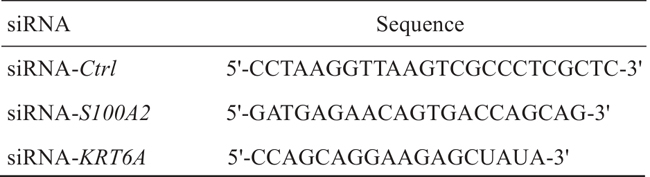 |
Tab.1 Targeted sequences of siRNA
|
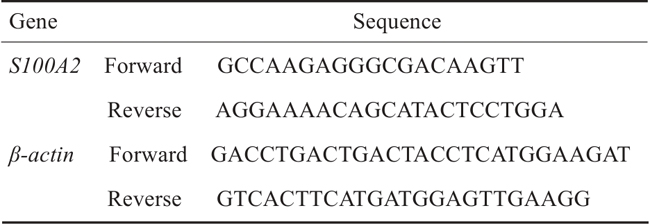 |
Tab.2 Primers for RT-qPCR
|
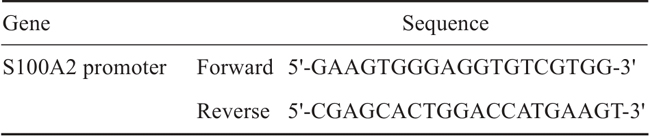 |
Tab 3 Primers for ChIP-qPCR
|
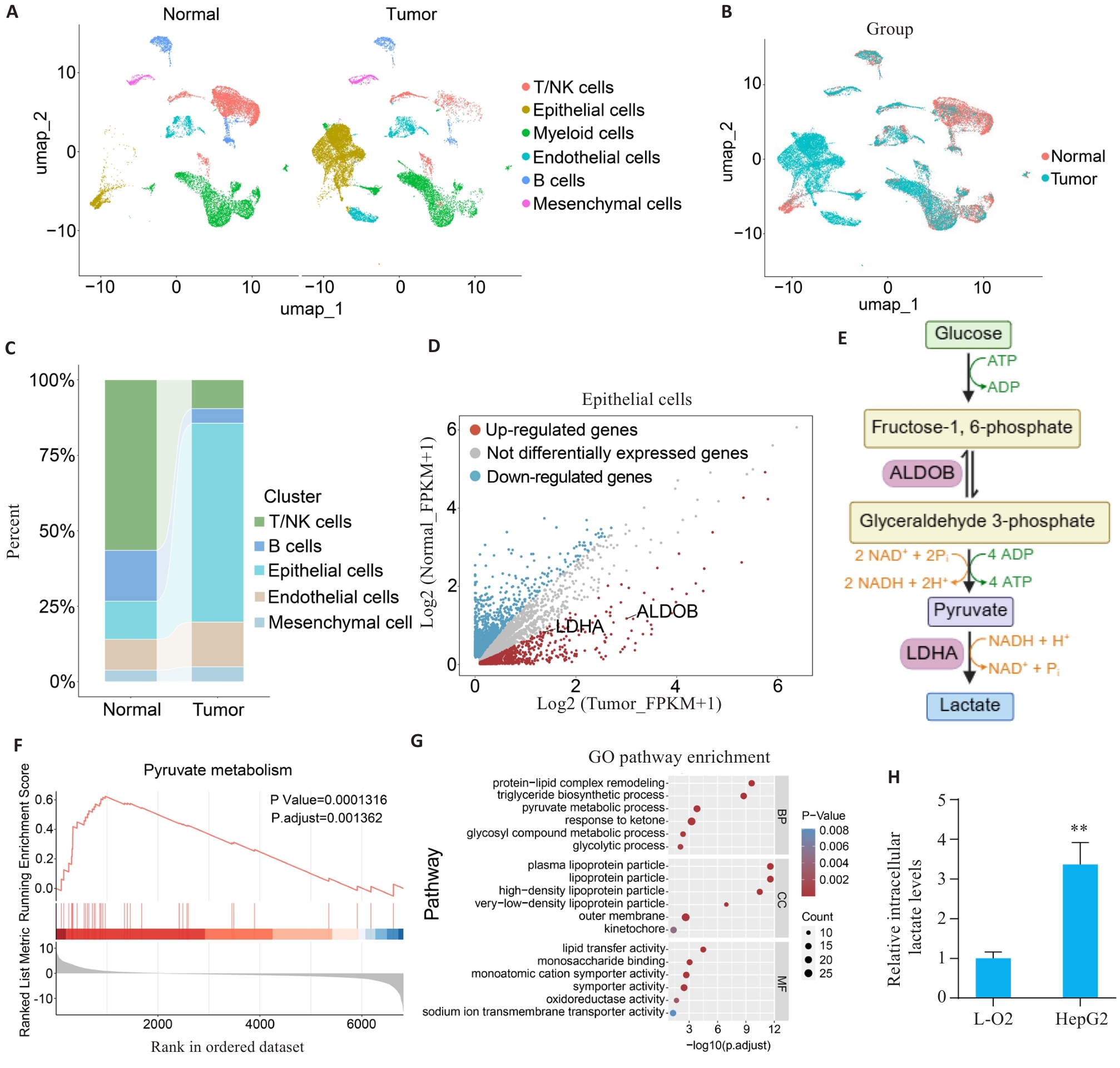
Fig.1 Changes in pyruvate metabolic process and lactate levels in HCC. A-C: ScRNA-seq analysis of HCC tissues and paired adjacent normal liver tissues from 3 patients with primary HCC. D: Scatter plot of DEGs between normal and tumor samples. Red dots, upregulated genes in tumors; blue dots, downregulated genes; gray dots, genes without significant changes. Selection criteria: adjusted P value (Padj)<0.05 and |log2(fold change)|≥1. E: Schematic illustration of the glycolytic pathway. F: GSEA showing enrichment of pyruvate metabolism in HCC. G: GO enrichment analysis of upregulated DEGs in epithelial cells from tumor samples. H: Lactate levels in HCC and normal hepatic cell lines. Data are presented as Mean±SD (n=3). **P<0.01 vs L-O2 group.
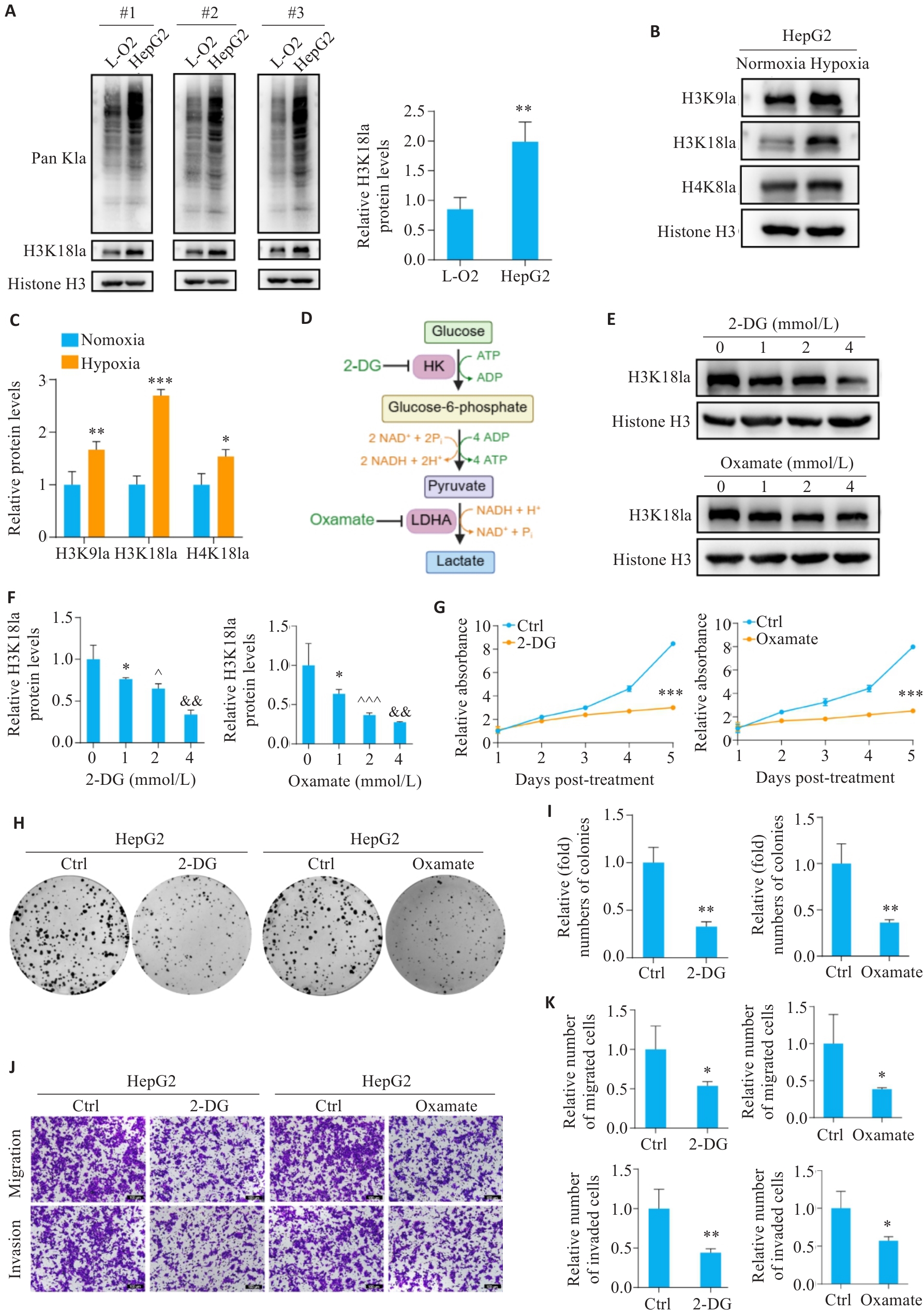
Fig.2 Glycolysis-driven H3K18la promotes HCC progression. A: Western blotting of Pan Kla and H3K18la levels in HCC and normal hepatic cell lines. B, C: Western blotting of H3K9la, H3K18la, and H4K8la levels in HepG2 cells under normoxia and hypoxia. D: Schematic of glycolytic pathway and its inhibitors. E, F: Western blotting and of H3K18la levels following treatment with graded concentrations of 2-DG and oxamate for 24 h in hypoxia (1% oxygen). G: CCK-8 assay for the effect of 2-DG and oxamate for 24 h in hypoxia (1% oxygen) on the proliferation of HepG2 cells. H-I: Colony formation assay of HepG2 cells in different treatment groups with hematoxylin staining. J-K: Transwell migration and invasion assays of HepG2 cells in different treatment groups with crystal violet staining (Scale bar=100 μm). Data are presented as Mean±SD (n=3). *P<0.05, **P<0.01, ***P<0.001 vs Normal, Normoxia or Ctrl group; ^P<0.05, ^^^P<0.001 vs 2-DG (1 mmol/L) or oxamate (1 mmol/L) group; &&P<0.01 vs 2-DG (2 mmol/L) or oxamate (2 mmol/L) group.
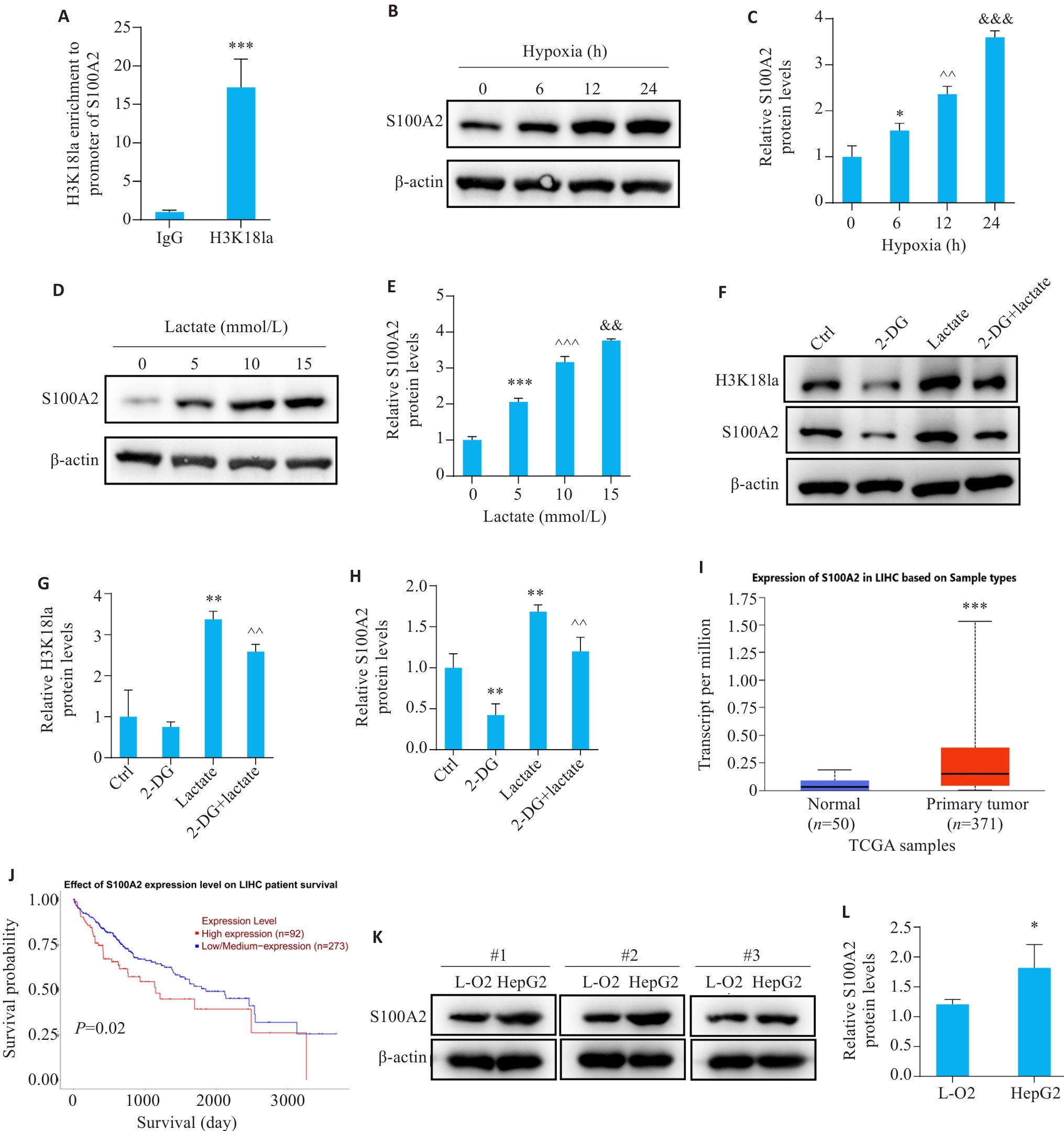
Fig.3 H3K18la-mediated transcriptional activation of S100A2 is associated with poor prognosis in HCC. A: ChIP-qPCR analysis of H3K18la enrichment at the S100A2 promoter. B, C: Western blotting of S100A2 expression in HepG2 cells under hypoxia at indicated time points. D, E: Western blotting of S100A2 expression in HepG2 cells treated with lactate at indicated time points. F-H: Western blotting of H3K18la and S100A2 expression in HepG2 cells treated with 2-DG, lactate or 2-DG with lactate. I: Analysis of S100A2 expression in LIHC using TCGA database. J: Kaplan-Meier analysis of the association between S100A2 expression and prognosis in LIHC patients. K, L: Western blotting of S100A2 expression in HCC and normal hepatic cell lines. Data are presented as Mean±SD (n=3). *P<0.05, **P<0.01, ***P<0.001 vs IgG, Hypoxia (0 h), Lactate (0 mmol/L), Ctrl or L-O2 group; ^^P<0.01, ^^^P<0.001 vs Hypoxia (6 h), Lactate (5 mmol/L) group or Lactate group; &&P<0.01, &&&P<0.001 vs Hypoxia (12 h) or Lactate (10 mmol/L) group.
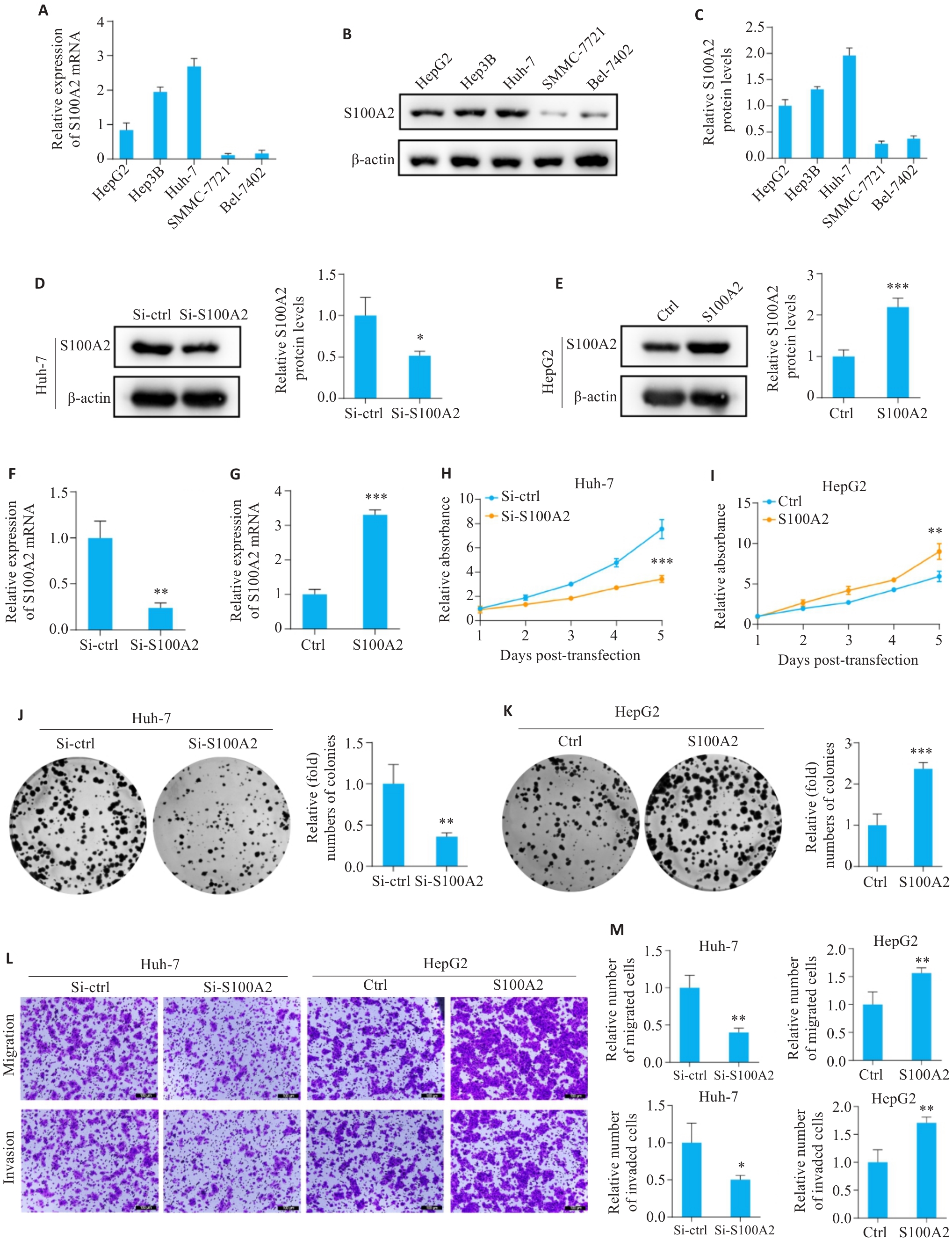
Fig.4 S100A2 promotes proliferation, migration, and invasion of HCC cells. A-C: RT-qPCR and Western blotting of S100A2 mRNA and protein expression in 5 HCC cell lines. D-G: Western blotting and RT-qPCR analysis of S100A2 expression in HCC cells following overexpression or knockdown. H-I: CCK-8 assay for cell proliferation in different treatment groups. J, K: Colony formation assay of the cells with hematoxylin staining. L, M: Transwell migration and invasion assays with crystal violet staining (Scale bar=100 μm). Data are presented as Mean±SD (n=3). *P<0.05, **P<0.01, ***P<0.001 vs si-Ctrl or Ctrl group.
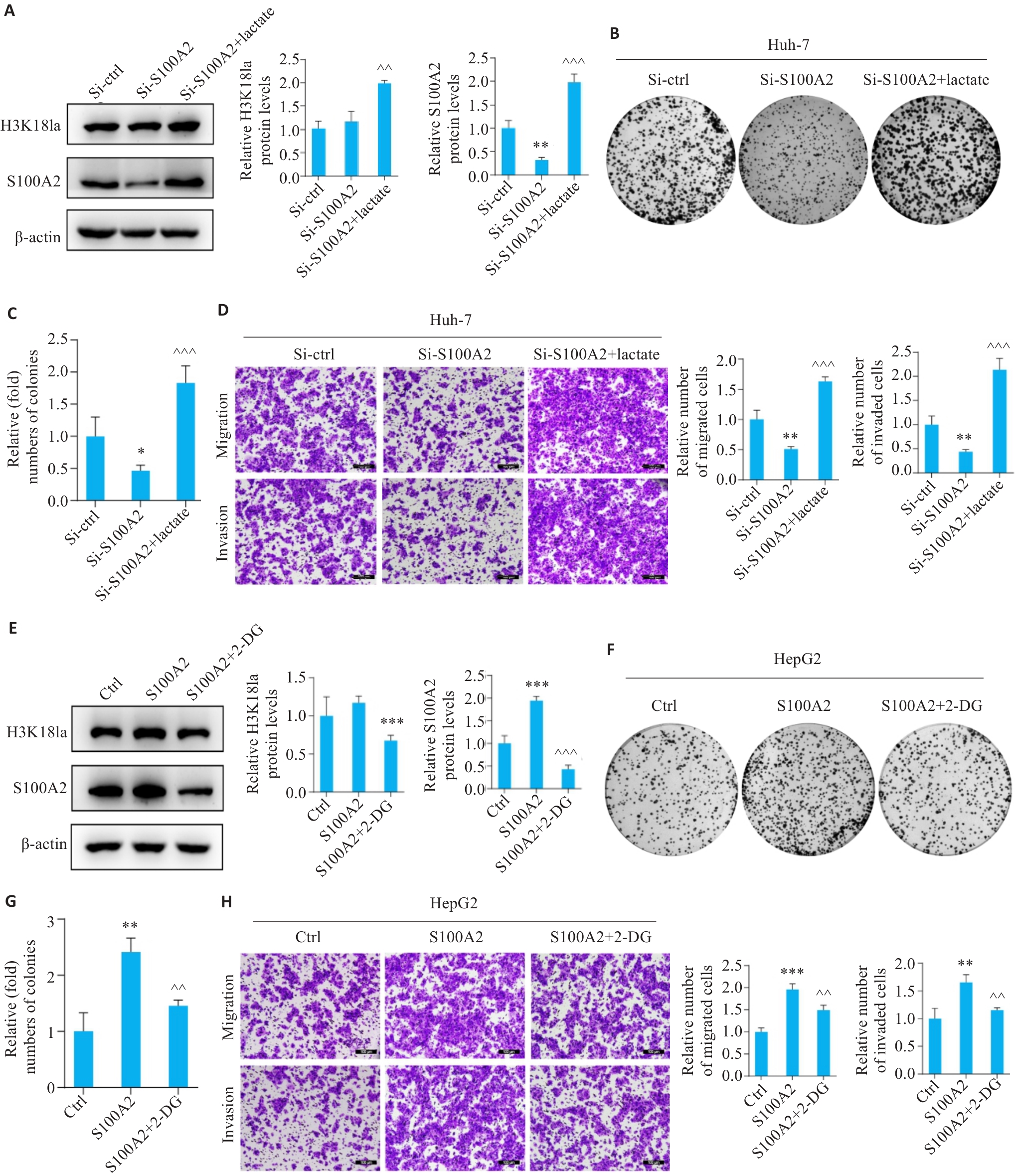
Fig.5 H3K18la modification promotes proliferation, migration, and invasion of HCC cells by regulating S100A2 expression. A: Western blotting of H3K18la and S100A2 expression in HepG2 cells in different treatment groups. B, C: Colony formation assay with hematoxylin staining. D: Transwell migration and invasion assays with crystal violet staining(Scale bar=100 μm). E: Western blotting of H3K18la and S100A2 expression in Huh-7 cells in different treatment groups. F, G: Colony formation assay with hematoxylin staining. H: Transwell migration and invasion assays with crystal violet staining (Scale bar=100 μm). Data are presented as Mean±SD (n=3). *P<0.05, **P<0.01, ***P<0.001 vs si-Ctrl or Ctrl group; ^^P<0.01, ^^^P<0.001 vs si-S100A2 or S100A2 group.
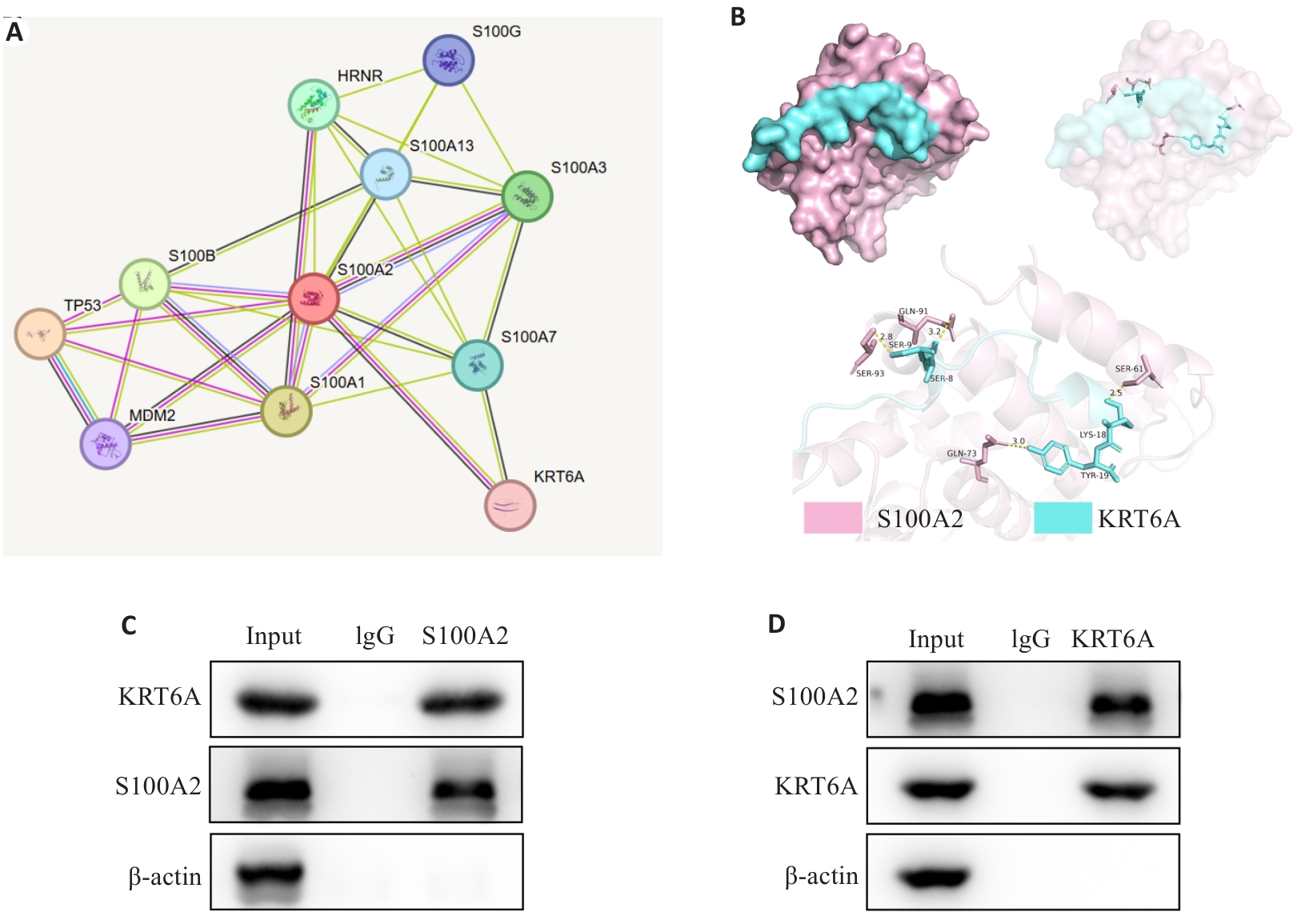
Fig.6 Protein-protein interaction between S100A2 and KRT6A. A: Protein-protein interaction network of S100A2. B: Surface representation of protein docking model between S100A2 (pink) and KRT6A (blue) with docking residues. C, D: Co-IP assay for detecting the interaction between S100A2 and KRT6A.
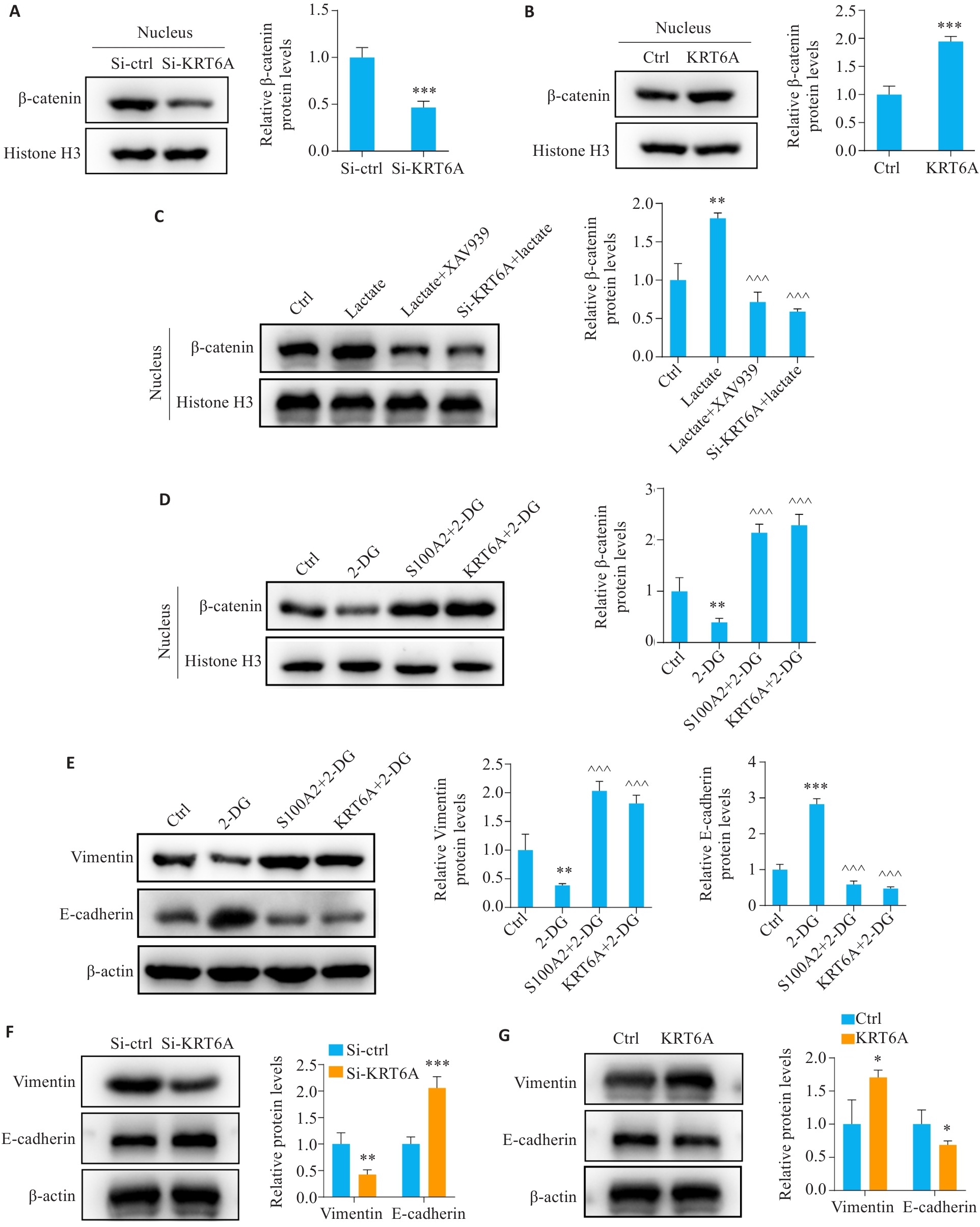
Fig.7 KRT6A promotes HCC progression by regulating the Wnt/β-catenin signaling pathway and EMT. A,B: Western blotting of nuclear β‑catenin protein levels following KRT6A knockdown and overexpression; C: Western blotting of nuclear β-catenin in different treatment groups. D: Western blotting analysis of nuclear β-catenin in different treatment groups. E: Western blotting of vimentin and E-cadherin expression in different treatment groups. F-G: Western blotting analysis of Vimentin and E-cadherin expression following KRT6A knockdown and overexpression. Data are presented as Mean±SD (n=3). *P<0.05, **P<0.01, ***P<0.001 vs si-Ctrl or Ctrl group; ^^^P<0.001 vs Lactate or 2-DG group.
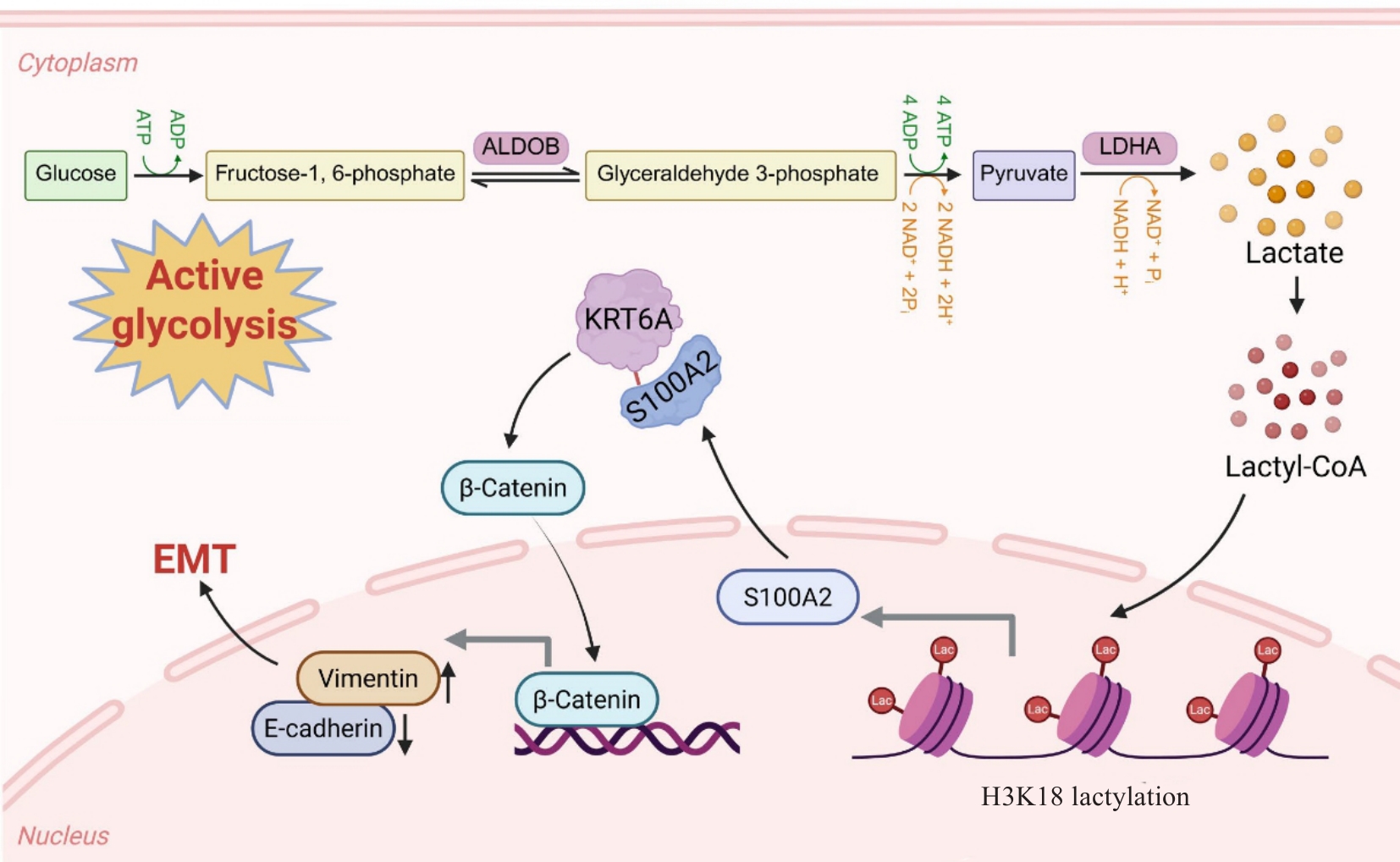
Fig.8 Mechanism of H3K18la for activating the S100A2/KRT6A/β-catenin signaling axis to promote the EMT process in HCC.
| [1] | Bray F, Laversanne M, Sung H, et al. Global cancer statistics 2022: GLOBOCAN estimates of incidence and mortality worldwide for 36 cancers in 185 countries[J]. CA Cancer J Clin, 2024, 74(3): 229-63. doi:10.3322/caac.21834 |
| [2] | Yilma M, Houhong Xu R, Saxena V, et al. Survival outcomes among patients with hepatocellular carcinoma in a large integrated US health system[J]. JAMA Netw Open, 2024, 7(9): e2435066. doi:10.1001/jamanetworkopen.2024.35066 |
| [3] | Wang J, Wang F, Wang N, et al. Diagnostic and prognostic value of protein post-translational modifications in hepatocellular carcinoma[J]. J Clin Transl Hepatol, 2023, 11(5):1192-200. |
| [4] | Yang ZJ, Yan C, Ma JQ, et al. Lactylome analysis suggests lactylation-dependent mechanisms of metabolic adaptation in hepatocellular carcinoma[J]. Nat Metab, 2023, 5(1): 61-79. doi:10.1038/s42255-022-00710-w |
| [5] | Chen LH, Huang LX, Gu Y, et al. Lactate-lactylation hands between metabolic reprogramming and immunosuppression[J]. Int J Mol Sci, 2022, 23(19): 11943. doi:10.3390/ijms231911943 |
| [6] | Yu J, Chai PW, Xie MY, et al. Histone lactylation drives oncogenesis by facilitating m6A reader protein YTHDF2 expression in ocular melanoma[J]. Genome Biol, 2021, 22(1): 85. doi:10.1186/s13059-021-02308-z |
| [7] | Yang JF, Luo L, Zhao CY, et al. A positive feedback loop between inactive VHL-triggered histone lactylation and PDGFRβ signaling drives clear cell renal cell carcinoma progression[J]. Int J Biol Sci, 2022, 18(8): 3470-83. doi:10.7150/ijbs.73398 |
| [8] | Li T, Hu PS, Zuo ZX, et al. METTL3 facilitates tumor progression via an m6A-IGF2BP2-dependent mechanism in colorectal carcinoma[J]. Mol Cancer, 2019, 18(1): 112. doi:10.1186/s12943-019-1038-7 |
| [9] | Xu HY, Li LQ, Wang SS, et al. Royal jelly acid suppresses hepatocellular carcinoma tumorigenicity by inhibiting H3 histone lactylation at H3K9la and H3K14la sites[J]. Phytomedicine, 2023, 118: 154940. doi:10.1016/j.phymed.2023.154940 |
| [10] | Pan LH, Feng F, Wu JQ, et al. Demethylzeylasteral targets lactate by inhibiting histone lactylation to suppress the tumorigenicity of liver cancer stem cells[J]. Pharmacol Res, 2022, 181: 106270. doi:10.1016/j.phrs.2022.106270 |
| [11] | Li WH, Zhou C, Yu L, et al. Tumor-derived lactate promotes resistance to bevacizumab treatment by facilitating autophagy enhancer protein RUBCNL expression through histone H3 lysine 18 lactylation (H3K18la) in colorectal cancer[J]. Autophagy, 2024, 20(1): 114-30. doi:10.1080/15548627.2023.2249762 |
| [12] | Hountis P, Matthaios D, Froudarakis M, et al. S100A2 protein and non-small cell lung cancer. The dual role concept[J]. Tumor Biol, 2014, 35(8): 7327-33. doi:10.1007/s13277-014-2117-4 |
| [13] | Zhang T, Woods TL, Elder JT. Differential responses of S100A2 to oxidative stress and increased intracellular calcium in normal, immortalized, and malignant human keratinocytes[J]. J Investig Dermatol, 2002, 119(5): 1196-201. doi:10.1046/j.1523-1747.2002.19520.x |
| [14] | Huang GC, Zhang J, Qing G, et al. S100A2Silencing relieves epithelial-mesenchymal transition in pulmonary fibrosis by inhibiting the Wnt/β-catenin signaling pathway[J]. DNA Cell Biol, 2021, 40(1): 18-25. doi:10.1089/dna.2020.6030 |
| [15] | Chen QB, Guo HC, Jiang HJ, et al. S100A2 induces epithelial-mesenchymal transition and metastasis in pancreatic cancer by coordinating transforming growth factor β signaling in SMAD4-dependent manner[J]. Cell Death Discov, 2023, 9: 356. doi:10.1038/s41420-023-01661-1 |
| [16] | Winkler J, Tan WL, Diadhiou CMM, et al. Single-cell analysis of breast cancer metastasis reveals epithelial-mesenchymal plasticity signatures associated with poor outcomes[J]. J Clin Investig, 2024, 134(17): e164227. doi:10.1172/jci164227 |
| [17] | Zheng SS, Liu LX, Xue TC, et al. Comprehensive analysis of the prognosis and correlations with immune infiltration of S100 protein family members in hepatocellular carcinoma[J]. Front Genet, 2021, 12: 648156. doi:10.3389/fgene.2021.648156 |
| [18] | Zhang C, Yao RC, Chen J, et al. S100 family members: potential therapeutic target in patients with hepatocellular carcinoma: a STROBE study[J]. Medicine, 2021, 100(3): e24135. doi:10.1097/md.0000000000024135 |
| [19] | Faubert B, Solmonson A, DeBerardinis RJ. Metabolic repro-gramming and cancer progression[J]. Science, 2020, 368(6487): eaaw5473. doi:10.1126/science.aaw5473 |
| [20] | Zhang D, Tang ZY, Huang H, et al. Metabolic regulation of gene expression by histone lactylation[J]. Nature, 2019, 574(7779): 575-80. doi:10.1038/s41586-019-1678-1 |
| [21] | Yoshioka M, Sawada Y, Saito-Sasaki N, et al. High S100A2 expression in keratinocytes in patients with drug eruption[J]. Sci Rep, 2021, 11: 5493. doi:10.1038/s41598-021-85009-8 |
| [22] | Poachanukoon O, Roytrakul S, et al. A shotgun proteomic approach reveals novel potential salivary protein biomarkers for asthma[J]. J Asthma, 2022, 59(2): 243-54. doi:10.1080/02770903.2020.1850773 |
| [23] | Gliga AR, Di Bucchianico S, Åkerlund E, et al. Transcriptome profiling and toxicity following long-term, low dose exposure of human lung cells to Ni and NiO nanoparticles: comparison with NiCl2 [J]. Nanomaterials, 2020, 10(4): 649. doi:10.3390/nano10040649 |
| [24] | Yang B, Zhang W, Zhang MM, et al. KRT6A promotes EMT and cancer stem cell transformation in lung adenocarcinoma[J]. Technol Cancer Res Treat, 2020, 19: 1533033820921248. doi:10.1177/1533033820921248 |
| [25] | Chen CJ, Shan HG. Keratin 6A gene silencing suppresses cell invasion and metastasis of nasopharyngeal carcinoma via the β-catenin cascade[J]. Mol Med Report, 2019,19(5): 3477-84. |
| [26] | Chen HJ, Hsu LS, Shia YT, et al. The β-catenin/TCF complex as a novel target of resveratrol in the Wnt/β-catenin signaling pathway[J]. Biochem Pharmacol, 2012, 84(9): 1143-53. doi:10.1016/j.bcp.2012.08.011 |
| [27] | Thrasivoulou C, Millar M, Ahmed A. Activation of intracellular calcium by multiple Wnt ligands and translocation of β-catenin into the nucleus[J]. J Biol Chem, 2013, 288(50): 35651-9. doi:10.1074/jbc.m112.437913 |
| [28] | Tang Q, Chen JH, Di ZY, et al. TM4SF1 promotes EMT and cancer stemness via the Wnt/β-catenin/SOX2 pathway in colorectal cancer[J]. J Exp Clin Cancer Res, 2020, 39(1): 232. doi:10.1186/s13046-020-01690-z |
| [29] | Monga SP. β-catenin signaling and roles in liver homeostasis, injury, and tumorigenesis[J]. Gastroenterology, 2015, 148(7): 1294-310. doi:10.1053/j.gastro.2015.02.056 |
| [30] | Wang JH, Yu HM, Dong W, et al. N6-methyladenosine-mediated up-regulation of FZD10 regulates liver cancer stem cells' properties and lenvatinib resistance through WNT/β-catenin and hippo signaling pathways[J]. Gastroenterology, 2023, 164(6): 990-1005. doi:10.1053/j.gastro.2023.01.041 |
| [31] | Tsai JH, Yang J. Epithelial-mesenchymal plasticity in carcinoma metastasis[J]. Genes Dev, 2013, 27(20): 2192-206. doi:10.1101/gad.225334.113 |
| [32] | Huang JQ, Wei FK, Xu XL, et al. SOX9 drives the epithelial-mesenchymal transition in non-small-cell lung cancer through the Wnt/β-catenin pathway[J]. J Transl Med, 2019, 17(1): 143. doi:10.1186/s12967-019-1895-2 |
| [33] | Yu P, Xu TT, Ma WM, et al. PRMT6-mediated transcriptional activation of ythdf2 promotes glioblastoma migration, invasion, and emt via the wnt-β-catenin pathway[J]. J Exp Clin Cancer Res, 2024, 43(1): 116. doi:10.1186/s13046-024-03038-3 |
| [34] | Li Y, Liu CY, Zhang X, et al. CCT5 induces epithelial-mesenchymal transition to promote gastric cancer lymph node metastasis by activating the Wnt/β‑catenin signalling pathway[J]. Br J Cancer, 2022, 126(12): 1684-94. doi:10.1038/s41416-022-01747-0 |
| [1] | Zhanfa XU, Zhenyue CHEN, Liping XIE, Xinyi LI, Genggeng QIN, Jie GAO. Jianwei Shoutai Pill reduces spontaneous abortion in mice by inhibiting Exo-miR-410-3p uptake and promoting trophoblast epithelial-mesenchymal transition, migration, and invasion [J]. Journal of Southern Medical University, 2026, 46(9): 2006-2022. |
| [2] | Junying XU, Chenghao LIU, Hao HUANG, Huijiao JIANG, Dan DONG, Xiangwei WU, Xueling CHEN. Hepatocellular carcinoma cells induce M2 macrophage polarization through upregulation of ANXA2 and ANXA5 expression [J]. Journal of Southern Medical University, 2026, 46(9): 2101-2112. |
| [3] | Baofeng ZHAO, Xueying TAN, Xuewen LIANG, Yuyao PAN, Jiangshui YUAN, Weiqing SONG. MIS18BP1 regulates epithelial-mesenchymal transition, proliferation, and migration of renal cancer cells via the PI3K/AKT pathway [J]. Journal of Southern Medical University, 2026, 46(9): 2159-2172. |
| [4] | Baichao LI, Bingzhe WANG, Xianghui MEI, Ye TIAN, Liang HAN, Jiuna ZHANG. Phosphatidylinositol glycan anchor biosynthesis class T promotes malignant phenotype of colon cancer through the NF-κB signaling pathway [J]. Journal of Southern Medical University, 2026, 46(9): 2173-2184. |
| [5] | Xinyue LIU, Keni ZHANG, Tong QIAO, Lin YIN, Longtao ZHANG, Xinke CHENG, Ben WANG, Jinlin CAO, Zhijun GENG, Hao ZHAO. Anwulignan inhibits malignant phenotypes of gastric cancer cells by antagonizing activation of the JAK1/STAT3 signaling pathway [J]. Journal of Southern Medical University, 2026, 46(9): 2242-2257. |
| [6] | Hanxiang ZHONG, Yuanyu ZHAO, Hong FU, Jiayong DONG, Guoshan DING, Yao CHEN, Wenyuan GUO. Causal association between oral microbiota and hepatocellular carcinoma in East Asian populations: a Mendelian randomization study [J]. Journal of Southern Medical University, 2026, 46(7): 1467-1473. |
| [7] | Yizhen CHEN, Weili WANG, Meng CHENG, Wei ZHANG, Yilin GAO, Xin HONG, Lei ZHANG, Rong DAI, Yiping WANG. Qingshen Granules inhibits renal fibrosis in mice by regulating glycolytic reprogramming and H3K18 lactylation [J]. Journal of Southern Medical University, 2026, 46(3): 582-591. |
| [8] | Xinli ZHAO, Haojie WANG, Yinchun SONG, Shuai YUAN, Zhen ZHANG, Xingqi ZHOU, Shanshan LI, Xian LI, Feng LI. ERI3 expression is elevated in hepatocellular carcinoma and correlates with poor patient prognosis [J]. Journal of Southern Medical University, 2026, 46(1): 175-182. |
| [9] | Zhihui FENG, Wenyue LI, Mingxiu ZHANG, Peipei WANG, Yangyang SHUAI, Hong ZHANG. Long noncoding RNA HClnc1 promotes proliferation and migration of liver cancer cells by targeting RBBP5/KAT2B complex to enhance ODC1 transcription [J]. Journal of Southern Medical University, 2025, 45(9): 1919-1926. |
| [10] | Siyuan MA, Bochao ZHANG, Chun PU. Circ_0000437 promotes proliferation, invasion, migration and epithelial-mesenchymal transition of breast cancer cells by targeting the let-7b-5p/CTPS1 axis [J]. Journal of Southern Medical University, 2025, 45(8): 1682-1696. |
| [11] | Ziliang WANG, Xiaohua CHEN, Jingjing YANG, Chen YAN, Zhizhi ZHANG, Bingyi HUANG, Meng ZHAO, Song LIU, Sitang GE, Lugen ZUO, Deli CHEN. High expression of SURF4 promotes migration, invasion and proliferation of gastric cancer cells by inhibiting tight junction proteins [J]. Journal of Southern Medical University, 2025, 45(8): 1732-1742. |
| [12] | Tianli SONG, Yimin WANG, Tong SUN, Xu LIU, Sheng HUANG, Yun RAN. Zheng Gan Decoction inhibits diethylnitrosamine-induced hepatocellular carcinoma in rats by activating the Hippo/YAP signaling pathway [J]. Journal of Southern Medical University, 2025, 45(4): 799-809. |
| [13] | Zhennan MA, Fuquan LIU, Xuefeng ZHAO, Xiaowei ZHANG. High expression of DTX2 promotes proliferation, invasion and epithelial-mesenchymal transition of oxaliplatin-resistant colorectal cancer cells [J]. Journal of Southern Medical University, 2025, 45(4): 829-836. |
| [14] | Lu TAO, Zhuoli WEI, Yueyue WANG, Ping XIANG. CEACAM6 inhibits proliferation and migration of nasopharyngeal carcinoma cells by suppressing epithelial-mesenchymal transition [J]. Journal of Southern Medical University, 2025, 45(3): 566-576. |
| [15] | Jinhua ZOU, Hui WANG, Dongyan ZHANG. SLC1A5 overexpression accelerates progression of hepatocellular carcinoma by promoting M2 polarization of macrophages [J]. Journal of Southern Medical University, 2025, 45(2): 269-284. |
| Viewed | ||||||
|
Full text |
|
|||||
|
Abstract |
|
|||||
