
Journal of Southern Medical University ›› 2026, Vol. 46 ›› Issue (9): 2258-2265.doi: 10.12122/j.issn.1673-4254.2026.09.23
Piaoran LI1,2, Quan TAO1,2, Fusheng OYANG3, Baoliang GUO3, Qiugen HU3, Yanqiu FENG1,2,3( )
)
Received:2026-02-25
Online:2026-09-20
Published:2026-09-30
Contact:
Yanqiu FENG
E-mail:foree@163.com
Piaoran LI, Quan TAO, Fusheng OYANG, Baoliang GUO, Qiugen HU, Yanqiu FENG. Quantitative susceptibility reconstruction guided by a multi-scale T1-weighted image attention mechanism[J]. Journal of Southern Medical University, 2026, 46(9): 2258-2265.
Add to citation manager EndNote|Ris|BibTeX
URL: https://www.j-smu.com/EN/10.12122/j.issn.1673-4254.2026.09.23
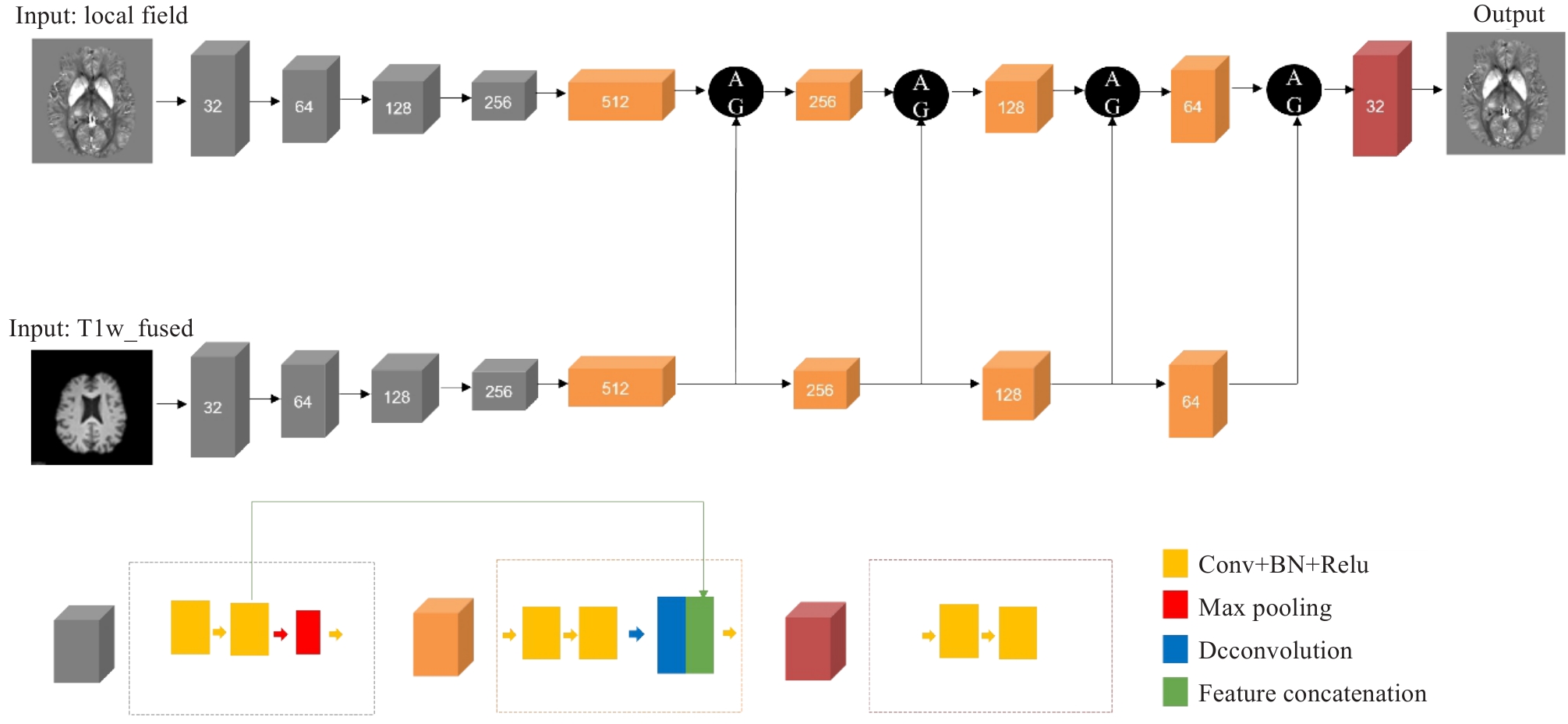
Fig.1 Overview of the proposed T1w-ADQSM method.
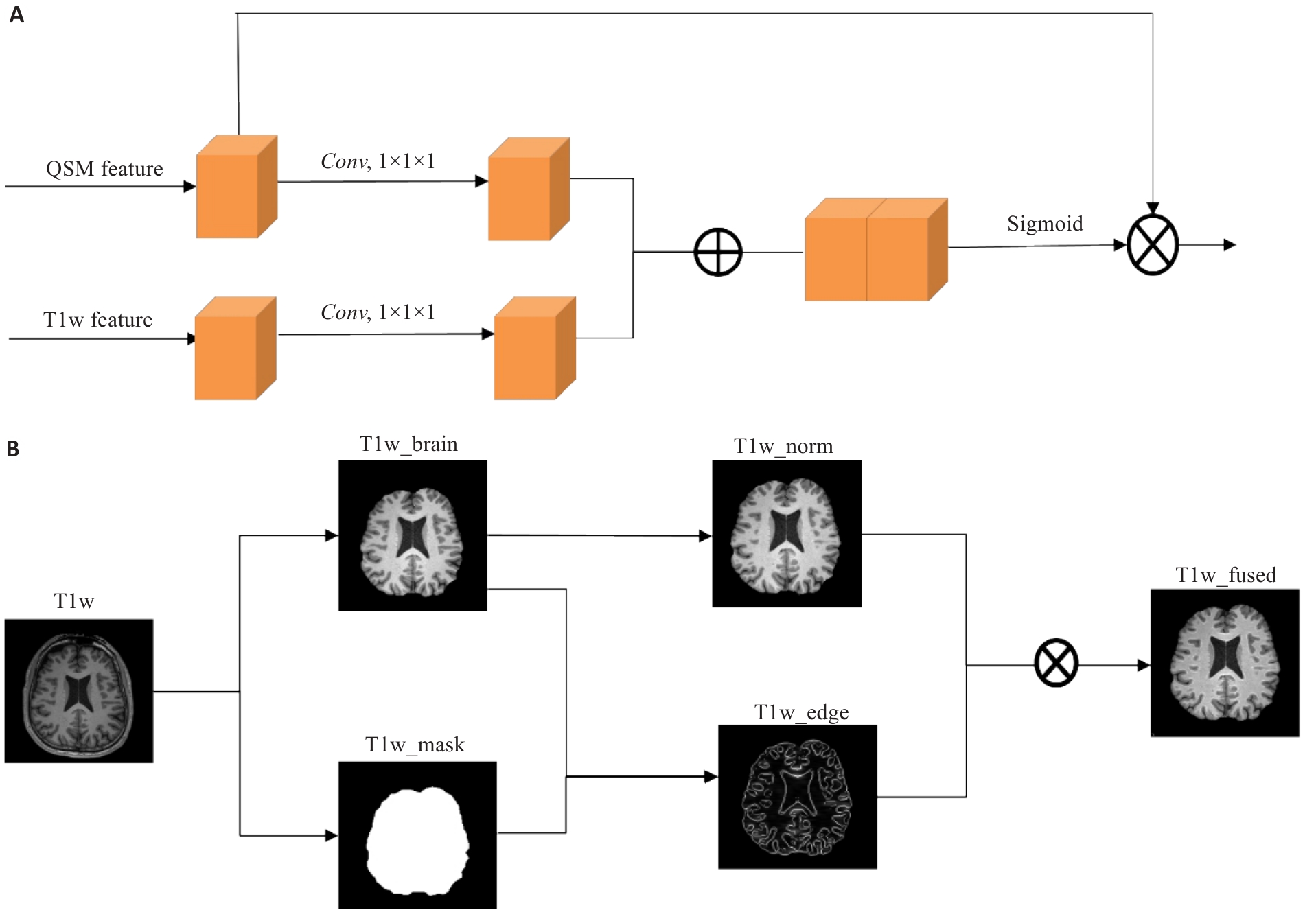
Fig.2 Generation of the attention gate (A) and multi-scale T1-weighted images (B).
| Types | HFEN (%) | NRMSE (%) | PSNR | SSIM |
|---|---|---|---|---|
| T1w_norm | 59.43±3.56 | 58.34±4.28 | 41.56±0.83 | 0.932±0.033 |
| T1w_edge | 58.21±1.67 | 59.31±3.43 | 39.82±1.06 | 0.928±0.024 |
| T1w_fused | 56.69±2.96 | 57.76±3.05 | 42.06±0.94 | 0.936±0.011 |
Tab.1 Means and standard deviation of the quantitative performance metrics for T1w-ADQSM with different T1w data types
| Types | HFEN (%) | NRMSE (%) | PSNR | SSIM |
|---|---|---|---|---|
| T1w_norm | 59.43±3.56 | 58.34±4.28 | 41.56±0.83 | 0.932±0.033 |
| T1w_edge | 58.21±1.67 | 59.31±3.43 | 39.82±1.06 | 0.928±0.024 |
| T1w_fused | 56.69±2.96 | 57.76±3.05 | 42.06±0.94 | 0.936±0.011 |
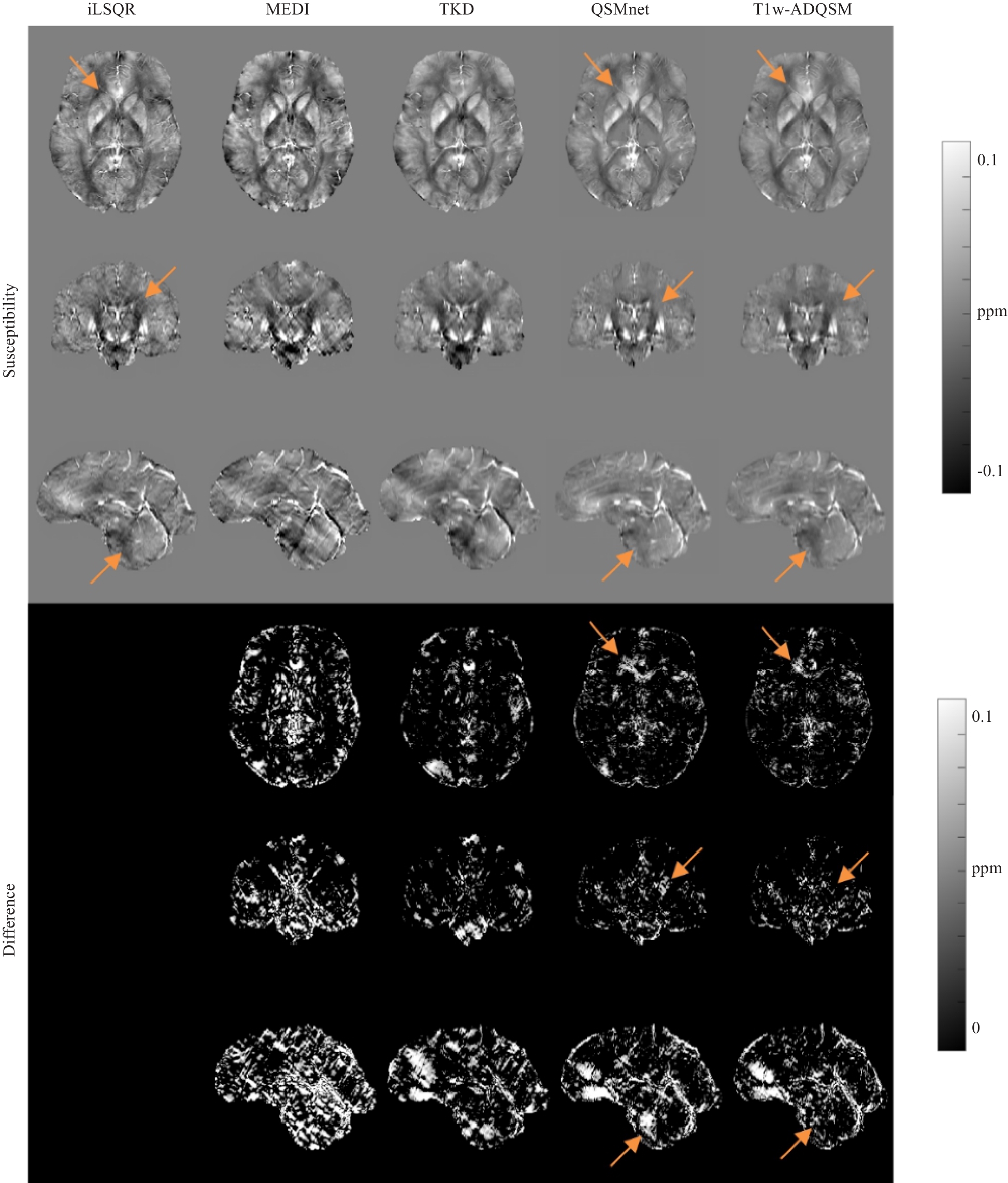
Fig.3 Comparison of single-orientation QSM results from one volunteer using non-deep learning dipole deconvolution methods (TKD and MEDI) and deep learning-based methods (QSMnet and T1w-ADQSM). The yellow arrows in the figure indicate prominent differences between QSMnet and T1w-ADQSM.
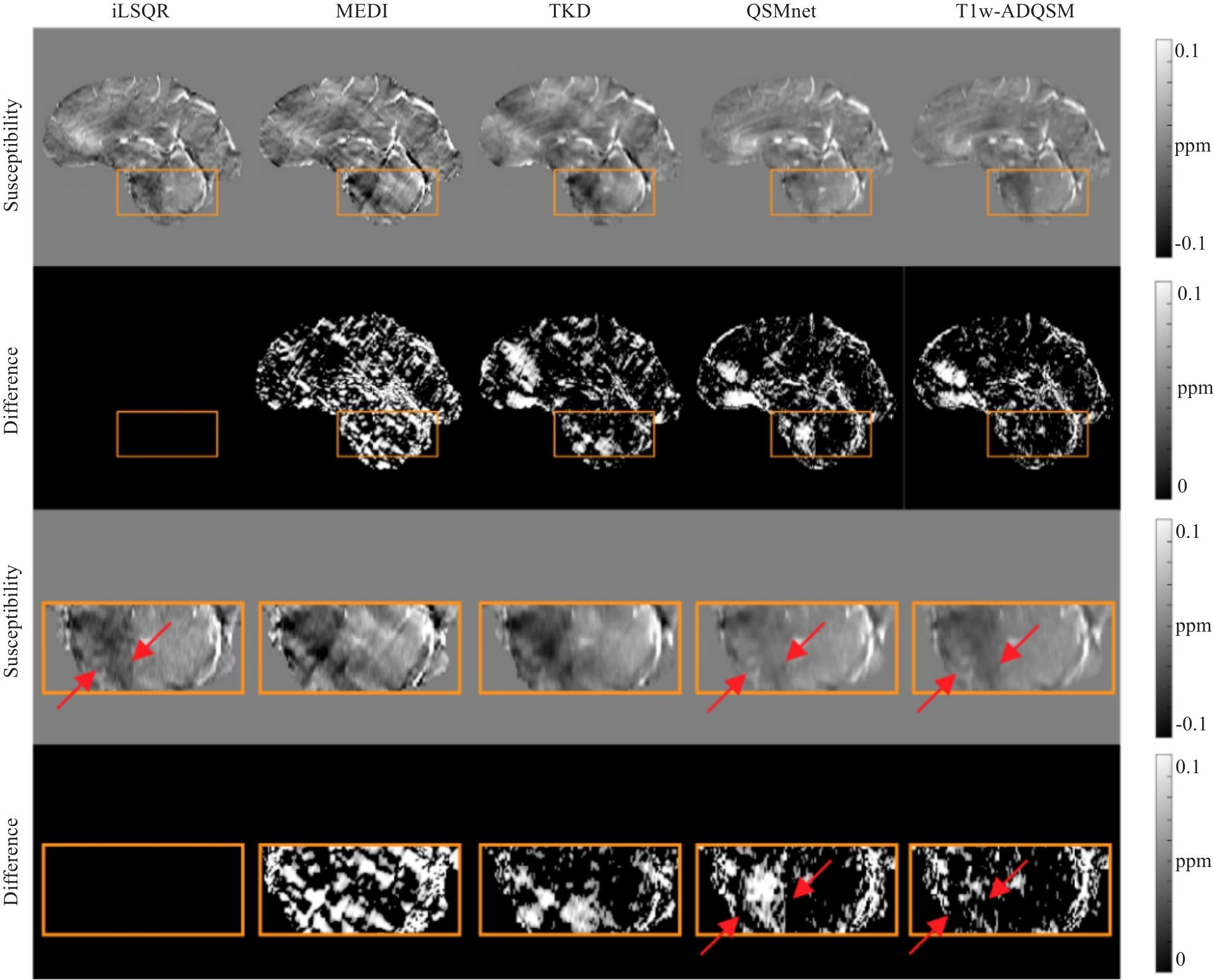
Fig.4 Axial view of the QSM map (first row) and the corresponding difference maps (second row) of the subject in Fig.3. The last two rows show zoomed-in views. The red arrows indicate regions with obvious differences between QSMnet and T1w-ADQSM.
| Methods | HFEN (%) | NRMSE (%) | PSNR | SSIM |
|---|---|---|---|---|
| MEDI | 62.39±4.69 | 79.36±7.03 | 37.16±0.88 | 0.952±0.016 |
| TKD | 59.23±4.18 | 69.49±5.30 | 39.25±0.97 | 0.914±0.023 |
| QSMnet | 57.47±3.28 | 58.89±3.14 | 41.39±1.05 | 0.931±0.008 |
| T1w-ADQSM | 56.69±2.96 | 57.76±3.05 | 42.06±0.94 | 0.936±0.011 |
Tab.2 Means and standard deviation of the quantitative performance metrics
| Methods | HFEN (%) | NRMSE (%) | PSNR | SSIM |
|---|---|---|---|---|
| MEDI | 62.39±4.69 | 79.36±7.03 | 37.16±0.88 | 0.952±0.016 |
| TKD | 59.23±4.18 | 69.49±5.30 | 39.25±0.97 | 0.914±0.023 |
| QSMnet | 57.47±3.28 | 58.89±3.14 | 41.39±1.05 | 0.931±0.008 |
| T1w-ADQSM | 56.69±2.96 | 57.76±3.05 | 42.06±0.94 | 0.936±0.011 |
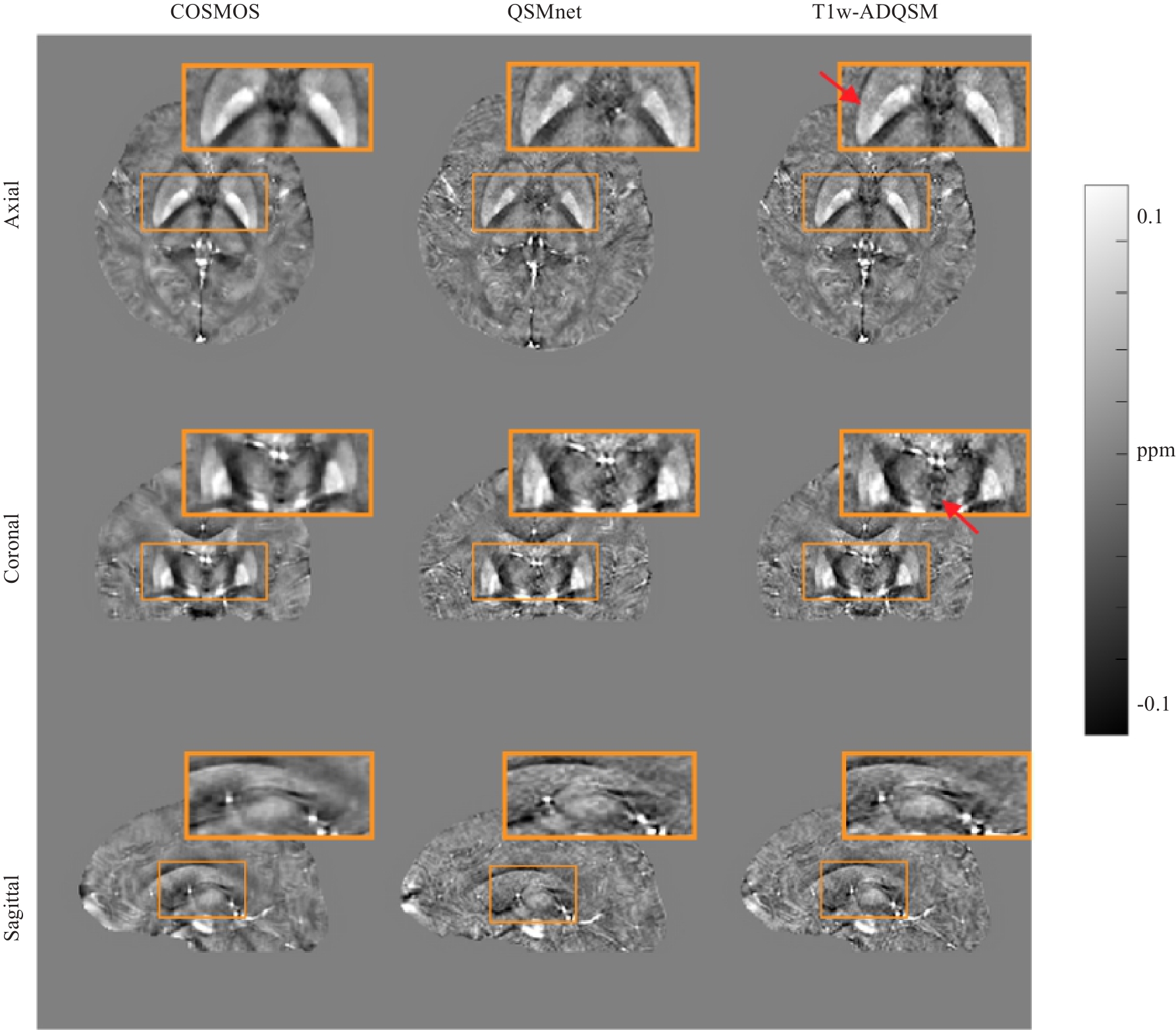
Fig.5 Comparison of single-orientation QSM reconstructions (QSMnet and T1w-ADQSM) with the corresponding COSMOS results. In terms of reconstructed structural fidelity, T1w-ADQSM outperforms the QSMnet method (red arrows).
| [1] | Schweser F, Deistung A, Reichenbach JR. Foundations of MRI phase imaging and processing for Quantitative Susceptibility Mapping (QSM)[J]. Z Für Med Phys, 2016, 26(1): 6-34. doi:10.1016/j.zemedi.2015.10.002 |
| [2] | Wang Y, Liu T. Quantitative susceptibility mapping (QSM): Decoding MRI data for a tissue magnetic biomarker[J]. Magn Reson Med, 2015, 73(1): 82-101. doi:10.1002/mrm.25358 |
| [3] | Buelo CJ, Velikina J, Mao L, et al. Multicenter, multivendor validation of liver quantitative susceptibility mapping in patients with iron overload at 1.5 T and 3 T[J]. Magn Reson Med, 2025, 93(1): 330-40. doi:10.1002/mrm.30251 |
| [4] | 李明月, 高 洁, 袁 毓, 等. 铁代谢异常对高血压性脑出血的老年患者微创血肿清除术后神经功能的影响[J]. 中华老年心脑血管病杂志, 2025, 27(9): 1169-72. doi:10.3969/j.issn.1009-0126.2025.09.008 |
| [5] | Schumacher K, Prince MR, Blumenfeld JD, et al. Quantitative susceptibility mapping for detection of kidney stones, hemorrhage differentiation, and cyst classification in ADPKD[J]. Abdom Radiol, 2024, 49(7): 2285-95. doi:10.1007/s00261-024-04243-6 |
| [6] | Sun HF, Klahr AC, Kate M, et al. Quantitative susceptibility mapping for following intracranial hemorrhage[J]. Radiology, 2018, 288(3): 830-9. doi:10.1148/radiol.2018171918 |
| [7] | Duyn J. MR susceptibility imaging[J]. J Magn Reson, 2013, 229: 198-207. doi:10.1016/j.jmr.2012.11.013 |
| [8] | Kim HG, Park S, Rhee HY, et al. Quantitative susceptibility mapping to evaluate the early stage of Alzheimer's disease[J]. NeuroImage Clin, 2017, 16: 429-38. doi:10.1016/j.nicl.2017.08.019 |
| [9] | Voon CC, Wiltgen T, Wiestler B, et al. Quantitative susceptibility mapping in multiple sclerosis: a systematic review and meta-analysis[J]. NeuroImage Clin, 2024, 42: 103598. doi:10.1016/j.nicl.2024.103598 |
| [10] | Xie Y, Zhang Y, Wu SL, et al. Atrophy-independent and dependent iron and myelin changes in deep gray matter of multiple sclerosis: a longitudinal study using χ‑separation imaging[J]. Acad Radiol, 2025, 32(2): 988-99. doi:10.1016/j.acra.2024.07.031 |
| [11] | 朱立科, 詹逸珺, 裴 建. 定量磁化率成像在阿尔茨海默病脑铁沉积中的应用进展[J]. 放射学实践, 2026, 41(3): 317-22. |
| [12] | Yang YQ, Yuan YT, Ren BX, et al. Deep learning-based diffusion MRI tractography: Integrating spatial and anatomical information[J]. Neuroimage, 2025, 317: 121314. doi:10.1016/j.neuroimage.2025.121314 |
| [13] | QSM Consensus Organization Committee, Bilgic B, Costagli M, et al. Recommended implementation of quantitative susceptibility mapping for clinical research in the brain: a consensus of the ISMRM electro-magnetic tissue properties study group[J]. Magn Reson Med, 2024, 91(5): 1834-62. doi:10.1002/mrm.30006 |
| [14] | Li M, Chen C, Xiong Z, et al. Quantitative susceptibility mapping via deep neural networks with iterative reverse concatenations and recurrent modules[J]. Med Phys, 2025, 52(6): 4341-54. doi:10.1002/mp.17747 |
| [15] | Liu T, Spincemaille P, de Rochefort L, et al. Calculation of susceptibility through multiple orientation sampling (COSMOS): a method for conditioning the inverse problem from measured magnetic field map to susceptibility source image in MRI[J]. Magn Reson Med, 2009, 61(1): 196-204. doi:10.1002/mrm.21828 |
| [16] | Shmueli K, de Zwart JA, van Gelderen P, et al. Magnetic susceptibility mapping of brain tissue in vivo using MRI phase data[J]. Magn Reson Med, 2009, 62(6): 1510-22. doi:10.1002/mrm.22135 |
| [17] | Li W, Wang N, Yu F, et al. A method for estimating and removing streaking artifacts in quantitative susceptibility mapping[J]. Neuroimage, 2015, 108: 111-22. doi:10.1016/j.neuroimage.2014.12.043 |
| [18] | Liu T, Liu J, de Rochefort L, et al. Morphology enabled dipole inversion (MEDI) from a single-angle acquisition: comparison with COSMOS in human brain imaging[J]. Magn Reson Med, 2011, 66(3): 777-83. doi:10.1002/mrm.22816 |
| [19] | de Rochefort L, Liu T, Kressler B, et al. Quantitative susceptibility map reconstruction from MR phase data using Bayesian regularization: Validation and application to brain imaging[J]. Magn Reson Med, 2010, 63(1): 194-206. doi:10.1002/mrm.22187 |
| [20] | Langkammer C, Bredies K, Poser BA, et al. Fast quantitative susceptibility mapping using 3D EPI and total generalized variation[J]. NeuroImage, 2015, 111: 622-30. doi:10.1016/j.neuroimage.2015.02.041 |
| [21] | Liu Z, Spincemaille P, Yao YH, et al. MEDI+0: Morphology enabled dipole inversion with automatic uniform cerebrospinal fluid zero reference for quantitative susceptibility mapping[J]. Magn Reson Med, 2018, 79(5): 2795-803. doi:10.1002/mrm.26946 |
| [22] | Yoon J, Gong EH, Chatnuntawech I, et al. Quantitative susceptibility mapping using deep neural network: QSMnet[J]. Neuroimage, 2018, 179: 199-206. doi:10.1016/j.neuroimage.2018.06.030 |
| [23] | Bollmann S, Rasmussen KGB, Kristensen M, et al. DeepQSM- using deep learning to solve the dipole inversion for quantitative susceptibility mapping[J]. NeuroImage, 2019, 195: 373-83. doi:10.1016/j.neuroimage.2019.03.060 |
| [24] | Jung W, Yoon J, Ji S, et al. Exploring linearity of deep neural network trained QSM: QSMnet+[J]. NeuroImage, 2020, 211: 116619. doi:10.1016/j.neuroimage.2020.116619 |
| [25] | Chen YC, Jakary A, Avadiappan S, et al. QSMGAN: Improved Quantitative Susceptibility Mapping using 3D Generative Adversarial Networks with increased receptive field[J]. NeuroImage, 2020, 207: 116389. doi:10.1016/j.neuroimage.2019.116389 |
| [26] | Wei HJ, Cao S, Zhang YY, et al. Learning-based single-step quantitative susceptibility mapping reconstruction without brain extraction[J]. Neuroimage, 2019, 202: 116064. doi:10.1016/j.neuroimage.2019.116064 |
| [27] | Jung W, Bollmann S, Lee J. Overview of quantitative susceptibility mapping using deep learning: Current status, challenges and opportunities[J]. NMR Biomed, 2022, 35(4): e4292. doi:10.1002/nbm.4292 |
| [28] | Zhang JW, Nguyen TD, Solomon E, et al. mcLARO: Multi-contrast learned acquisition and reconstruction optimization for simultaneous quantitative multi-parametric mapping[J]. Magn Reson Med, 2024, 91(1): 344-56. doi:10.1002/mrm.29854 |
| [29] | Gao Y, Xiong Z, Shan SS, et al. Plug-and-Play latent feature editing for orientation-adaptive quantitative susceptibility mapping neural networks[J]. Med Image Anal, 2024, 94: 103160. doi:10.1016/j.media.2024.103160 |
| [30] | Wang YD, He NY, Zhang CY, et al. An automatic interpretable deep learning pipeline for accurate Parkinson's disease diagnosis using quantitative susceptibility mapping and T1-weighted images[J]. Hum Brain Mapp, 2023, 44(12): 4426-38. doi:10.1002/hbm.26399 |
| [31] | Fiscone C, Sighinolfi G, Manners DN, et al. Multiparametric MRI dataset for susceptibility-based radiomic feature extraction and analysis[J]. Sci Data, 2024, 11: 575. doi:10.1038/s41597-024-03418-6 |
| [32] | Fischl B. FreeSurfer[J]. NeuroImage, 2012, 62(2): 774-81. doi:10.1016/j.neuroimage.2012.01.021 |
| [33] | Chartsias A, Joyce T, Giuffrida MV, et al. Multimodal MR synthesis via modality-invariant latent representation[J]. IEEE Trans Med Imaging, 2018, 37(3): 803-14. doi:10.1109/tmi.2017.2764326 |
| [34] | Brignoni-Pérez E, Dubner SE, Ben-Shachar M, et al. White matter properties underlying reading abilities differ in 8-year-old children born full term and preterm: a multi-modal approach[J]. NeuroImage, 2022, 256: 119240. doi:10.1016/j.neuroimage.2022.119240 |
| [35] | Kingma DP, Ba J. Adam: a method for stochastic optimization[EB/OL]. 2014: arXiv: 1412.6980. |
| [36] | Glorot X, Bordes A, Bengio Y. Deep sparse rectifier neural networks[C]//International Conference on Artificial Intelligence and Statistics., 2011. |
| [37] | Langkammer C, Schweser F, Shmueli K, et al. Quantitative susceptibility mapping: Report from the 2016 reconstruction challenge[J]. Magn Reson Med, 2018, 79(3): 1661-73. doi:10.1002/mrm.26830 |
| [1] | Lingxiao HUANG, Haizhe XU, Lingyan HUANG, Xinbo YAO, Kaiyuan ZHOU, Yongzhan GAO. A semi-supervised MRI image segmentation dual-network model for regions with ambiguous boundaries and heterogeneous regions [J]. Journal of Southern Medical University, 2026, 46(8): 1956-1966. |
| [2] | Jun ZHU, Shunqian TAN, Fangjun HUANG, Guangyao CAI, Xin ZHEN. Medical prior-guided TabMap deep learning model for ovarian cancer prediction and interpretability analysis [J]. Journal of Southern Medical University, 2026, 46(7): 1714-1722. |
| [3] | Boer SU, Ying ZHANG, Zhixian YAN, Ying ZOU, Yufan CHENG, Tianshu LI, Jinming LI, Xiaotong CHEN, Chunqi LIANG, Rong XU, Shengming YANG, Bo PENG, Hao CHEN, Jiang YU, Yanfeng HU. Application of artificial intelligence for surgical skill assessment and quality control in minimally invasive surgery: progress, problems and prospect [J]. Journal of Southern Medical University, 2026, 46(7): 1723-1730. |
| [4] | Mingxu ZHANG, Diheng WU, Jiaze LIN, Yijun LÜ, Linghong ZHOU, Xin ZHEN, Hao ZHOU, Genggeng QIN. A Transformer-based multimodal model for predicting hospital-acquired infections using imaging and clinical laboratory data [J]. Journal of Southern Medical University, 2026, 46(6): 1423-1433. |
| [5] | Jianing XU, Yixiao MAO, Yu ZHANG. Hierarchical attention-driven multiple instance learning for clear cell renal cell carcinoma grading and staging in digital pathology [J]. Journal of Southern Medical University, 2026, 46(5): 1175-1184. |
| [6] | Tong WANG, Caohui DUAN, Xin LOU, Qianjin FENG. A vessel-enhanced consistency-preserving diffusion model for 3T-to-7T susceptibility weighted image generation [J]. Journal of Southern Medical University, 2026, 46(5): 1185-1192. |
| [7] | Boyong CHEN, Xinyi WANG, Xinxin ZHAO, Ting SONG, Yongbao LI. Swin-ResViT network for real-time generation of high-quality localization MR images from low-quality cine-MR [J]. Journal of Southern Medical University, 2026, 46(4): 929-938. |
| [8] | Shunqian TAN, Li ZHUO, Min ZENG, Fangjun HUANG, Jun ZHU, Guangyao CAI, Xin ZHEN. A Transformer-based model using laboratory indicators efficiently differentiates ovarian cancer [J]. Journal of Southern Medical University, 2026, 46(4): 939-945. |
| [9] | Xueqi LU, Huayuan CHEN, Qiucen WU, Yaoqi WEN, Guoguang LIU, Chaomin CHEN. Evaluation of an interpretable 12-lead ECG automatic diagnosis model based on deep feature fusion [J]. Journal of Southern Medical University, 2026, 46(1): 208-218. |
| [10] | Qiucen WU, Xueqi LU, Yaoqi WEN, Yong HONG, Yuliang WU, Chaomin CHEN. A myocardial infarction detection and localization model based on multi-scale field residual blocks fusion with modified channel attention [J]. Journal of Southern Medical University, 2025, 45(8): 1777-1790. |
| [11] | Ziyu ZHENG, Xiaying YANG, Shengjie WU, Shijie ZHANG, Guorong LYU, Peizhong LIU, Jun WANG, Shaozheng HE. A multi-feature fusion-based model for fetal orientation classification from intrapartum ultrasound videos [J]. Journal of Southern Medical University, 2025, 45(7): 1563-1570. |
| [12] | Zhenxiang DONG, Yihao GUO, Qiang LIU, Yizhe ZHANG, Qianyi QIU, Xiaodong ZHANG, Yanqiu FENG. A single repetition time quantitative magnetic susceptibility imaging method for the lumbar spine using bipolar readout gradient [J]. Journal of Southern Medical University, 2025, 45(6): 1336-1342. |
| [13] | Meng QU, Rong FU. ResLSTM-TemporalSE: an automated classification model for multi-lead ECG signals [J]. Journal of Southern Medical University, 2025, 45(12): 2708-2717. |
| [14] | Huirong XIE, Chaobin HU, Guohua LIANG, Hongzhe HAN, Mu HUANG, Qianjin FENG. Design and validation of a multimodal model integrating text and imaging data for intelligent assessment of psychological stress in college students [J]. Journal of Southern Medical University, 2025, 45(11): 2504-2510. |
| [15] | Shizhou TANG, Ruolan SU, Shuting LI, Zhenzhen LAI, Jinhong HUANG, Shanzhou NIU. A low-dose CT reconstruction method using sub-pixel anisotropic diffusion [J]. Journal of Southern Medical University, 2025, 45(1): 162-169. |
| Viewed | ||||||
|
Full text |
|
|||||
|
Abstract |
|
|||||
