Journal of Southern Medical University ›› 2026, Vol. 46 ›› Issue (7): 1723-1730.doi: 10.12122/j.issn.1673-4254.2026.07.25
Application of artificial intelligence for surgical skill assessment and quality control in minimally invasive surgery: progress, problems and prospect
Boer SU1,2( ), Ying ZHANG2, Zhixian YAN2, Ying ZOU2, Yufan CHENG3, Tianshu LI4, Jinming LI2, Xiaotong CHEN2, Chunqi LIANG5, Rong XU2, Shengming YANG6, Bo PENG2, Hao CHEN1(), Jiang YU1(), Yanfeng HU1()
- 1.Department of General Surgery, Guangdong Provincial Key Laboratory of Precision Medicine for Gastrointestinal Tumor, Guangdong Provincial Engineering Technology Research Center of Minimally Invasive Surgery, Nanfang Hospital, Southern Medical University, Guangzhou 510515, China
2.First School of Clinical Medicine, Southern Medical University, Guangzhou 510515, China
4.School of Biomedical Engineering, Southern Medical University, Guangzhou 510515, China
3.Shenzhen School of Clinical Medicine, Southern Medical University, Shenzhen 518100, China
5.Second School of Clinical Medicine, Southern Medical University, Guangzhou 510282, China
6.School of Clinical Medicine, Guangdong Provincial People's Hospital, Southern Medical University, Guangzhou 510080, China
-
Received:2026-04-02Online:2026-07-20Published:2026-07-20 -
Contact:Hao CHEN, Jiang YU, Yanfeng HU E-mail:1424554892@qq.com;chenhao.05@163.com;balbc@163.com;yfenghu@qq.com -
Supported by:National Natural Science Foundation of China(82203712)

Cite this article
Boer SU, Ying ZHANG, Zhixian YAN, Ying ZOU, Yufan CHENG, Tianshu LI, Jinming LI, Xiaotong CHEN, Chunqi LIANG, Rong XU, Shengming YANG, Bo PENG, Hao CHEN, Jiang YU, Yanfeng HU. Application of artificial intelligence for surgical skill assessment and quality control in minimally invasive surgery: progress, problems and prospect[J]. Journal of Southern Medical University, 2026, 46(7): 1723-1730.
share this article
Add to citation manager EndNote|Ris|BibTeX
URL: https://www.j-smu.com/EN/10.12122/j.issn.1673-4254.2026.07.25
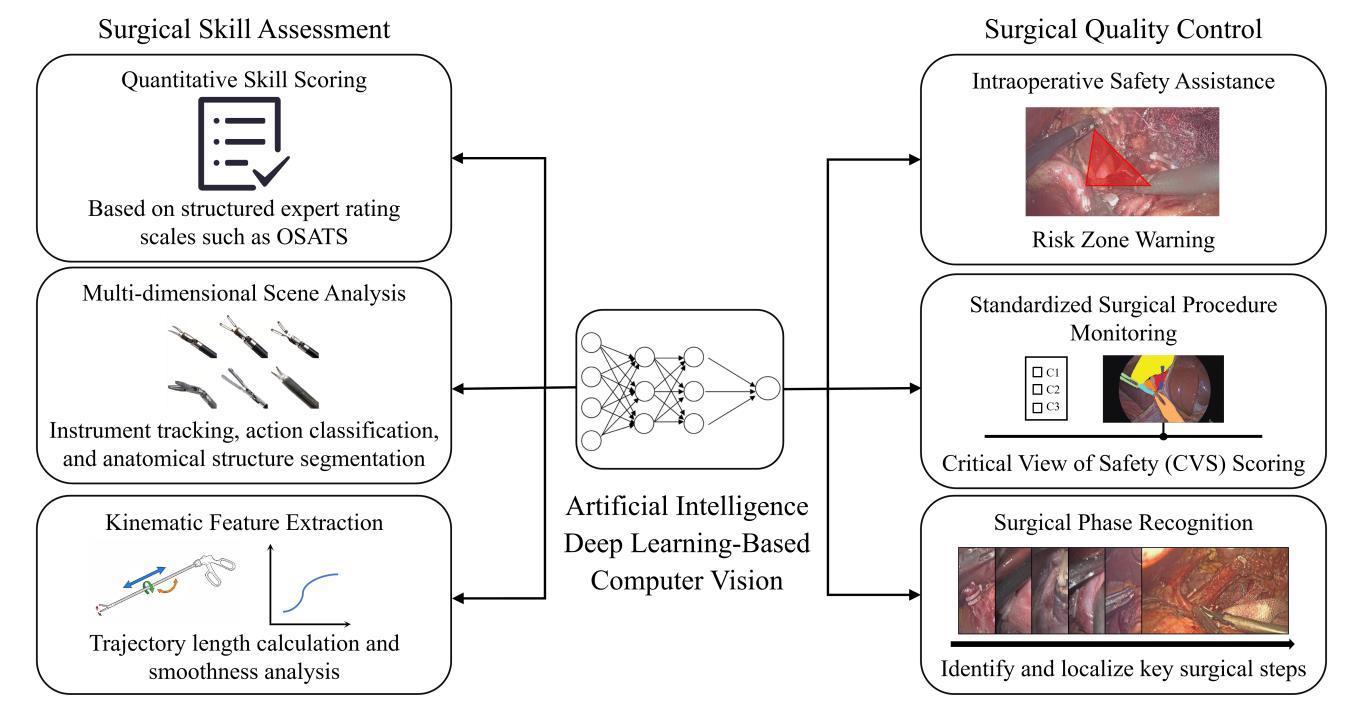
Fig.1 Application of artificial intelligence (AI) in surgical skill assessment and quality control of minimally invasive surgery. OSATS: Objective structured assessment of technical skills; CVS: Critical view of safety.
| [1] | Sullivan R, Alatise OI, Anderson BO, et al. Global cancer surgery: delivering safe, affordable, and timely cancer surgery[J]. Lancet Oncol, 2015, 16(11): 1193-224. doi:10.1016/s1470-2045(15)00223-5 |
| [2] | Meara JG, Greenberg SLM. The Lancet Commission on Global Surgery Global surgery 2030: Evidence and solutions for achieving health, welfare and economic development[J]. Surgery, 2015, 157(5): 834-5. doi:10.1016/j.surg.2015.02.009 |
| [3] | Howard R, Johnson E, Berlin NL, et al. Hospital and surgeon variation in 30-day complication rates after ventral hernia repair[J]. Am J Surg, 2021, 222(2): 417-23. doi:10.1016/j.amjsurg.2020.12.021 |
| [4] | Birkmeyer JD, Stukel TA, Siewers AE, et al. Surgeon volume and operative mortality in the United States[J]. N Engl J Med, 2003, 349(22): 2117-27. doi:10.1016/j.accreview.2003.12.065 |
| [5] | Lau D, Deviren V, Ames CP. The impact of surgeon experience on perioperative complications and operative measures following thoracolumbar 3-column osteotomy for adult spinal deformity: overcoming the learning curve[J]. J Neurosurg Spine, 2020, 32(2): 207-20. doi:10.3171/2019.7.spine19656 |
| [6] | 中国医师协会内镜医师分会腹腔镜外科专业委员会, 中国研究型医院学会机器人与腹腔镜外科专业委员会, 中国腹腔镜胃肠外科研究组. 中国腹腔镜胃癌根治手术质量控制专家共识(2017版)[J]. 中华消化外科杂志, 2017, 16(6): 539-47. |
| [7] | Julià D, Gómez N, Codina-Cazador A. Surgical skill and complication rates after bariatric surgery [J]. N Engl J Med, 2014, 370(3): 285. doi:10.1056/NEJMc1313890#SA3 |
| [8] | Soomro NA, Hashimoto DA, Porteous AJ, et al. Systematic review of learning curves in robot-assisted surgery[J]. BJS Open, 2020, 4(1): 27-44. doi:10.1002/bjs5.50235 |
| [9] | Balvardi S, Kammili A, Hanson M, et al. The association between video-based assessment of intraoperative technical performance and patient outcomes: a systematic review[J]. Surg Endosc, 2022, 36(11): 7938-48. doi:10.1007/s00464-022-09296-6 |
| [10] | Martin JA, Regehr G, Reznick R, et al. Objective structured assessment of technical skill (OSATS) for surgical residents[J]. Br J Surg, 1997, 84(2): 273-8. doi:10.1046/j.1365-2168.1997.02502.x |
| [11] | Dindo D, Demartines N, Clavien PA. Classification of surgical complications: a new proposal with evaluation in a cohort of 6336 patients and results of a survey[J]. Ann Surg, 2004, 240(2): 205-13. doi:10.1097/01.sla.0000133083.54934.ae |
| [12] | Chen C, White L, Kowalewski T, et al. Crowd-Sourced Assessment of Technical Skills: a novel method to evaluate surgical performance[J]. J Surg Res, 2014, 187(1): 65-71. doi:10.1016/j.jss.2013.09.024 |
| [13] | Chen J, Cheng N, Cacciamani G, et al. Objective assessment of robotic surgical technical skill: a systematic review[J]. J Urol, 2019, 201(3): 461-9. doi:10.1016/j.juro.2018.06.078 |
| [14] | Suganyadevi S, Seethalakshmi V, Balasamy K. A review on deep learning in medical image analysis[J]. Int J Multimed Info Retr, 2022, 11(1): 19-38. doi:10.1007/s13735-021-00218-1 |
| [15] | Maier-Hein L, Vedula SS, Speidel S, et al. Surgical data science for next-generation interventions[J]. Nat Biomed Eng, 2017, 1(9): 691-6. doi:10.1038/s41551-017-0132-7 |
| [16] | Varghese C, Harrison EM, O’Grady G, et al. Artificial intelligence in surgery[J]. Nat Med, 2024, 30(5): 1257-68. doi:10.1038/s41591-024-02970-3 |
| [17] | Singh V, Vasisht S, Hashimoto DA. Artificial intelligence in surgery: what is needed for ongoing innovation[J]. Surg Oxf, 2025, 43(3): 129-34. doi:10.1016/j.mpsur.2024.12.005 |
| [18] | Allan M, Shvets A, Kurmann T, et al. 2017 robotic instrument segmentation challenge[EB/OL]. 2019: arXiv: 1902.06426. . doi:10.48550/arXiv.1902.06426 |
| [19] | Baby B, Thapar D, Chasmai M, et al. From Forks to forceps: a new framework for instance segmentation of surgical instruments[C]//2023 IEEE/CVF Winter Conference on Applications of Computer Vision (WACV), Waikoloa, HI, USA. IEEE, 2023: 6180-90. doi:10.1109/wacv56688.2023.00613 |
| [20] | Carstens M, Rinner FM, Bodenstedt S, et al. The Dresden surgical anatomy dataset for abdominal organ segmentation in surgical data science[J]. Sci Data, 2023, 10: 3. doi:10.1038/s41597-022-01719-2 |
| [21] | Kamtam DN, Shrager JB, Malla SD, et al. Deep learning approaches to surgical video segmentation and object detection: a scoping review[J]. Comput Biol Med, 2025, 194: 110482. doi:10.1016/j.compbiomed.2025.110482 |
| [22] | Nema S, Vachhani L. Surgical instrument detection and tracking technologies: Automating dataset labeling for surgical skill assessment[J]. Front Robot AI, 2022, 9: 1030846. doi:10.3389/frobt.2022.1030846 |
| [23] | Hirohata Y, Sogabe M, Miyazaki T, et al. Confidence-aware self-supervised learning for dense monocular depth estimation in dynamic laparoscopic scene[J]. Sci Rep, 2023, 13: 15380. doi:10.1038/s41598-023-42713-x |
| [24] | Mascagni P, Alapatt D, Sestini L, et al. Computer vision in surgery: from potential to clinical value[J]. Npj Digit Med, 2022, 5: 163. doi:10.1038/s41746-022-00707-5 |
| [25] | Selva J, Johansen AS, Escalera S, et al. Video transformers: a survey[J]. IEEE Trans Pattern Anal Mach Intell, 2023, 45(11): 12922-43. doi:10.1109/tpami.2023.3243465 |
| [26] | Funke I, Mees ST, Weitz J, et al. Video-based surgical skill assessment using 3D convolutional neural networks[J]. Int J Comput Assist Radiol Surg, 2019, 14(7): 1217-25. doi:10.1007/s11548-019-01995-1 |
| [27] | Twinanda AP, Shehata S, Mutter D, et al. EndoNet: a deep architecture for recognition tasks on laparoscopic videos[J]. IEEE Trans Med Imaging, 2017, 36(1): 86-97. doi:10.1109/tmi.2016.2593957 |
| [28] | Madani A, Namazi B, Altieri MS, et al. Artificial intelligence for intraoperative guidance: using semantic segmentation to identify surgical anatomy during laparoscopic cholecystectomy[J]. Ann Surg, 2022, 276(2): 363-9. doi:10.1097/sla.0000000000004594 |
| [29] | Zia A, Sharma Y, Bettadapura V, et al. Video and accelerometer-based motion analysis for automated surgical skills assessment[J]. Int J Comput Assist Radiol Surg, 2018, 13(3): 443-55. doi:10.1007/s11548-018-1704-z |
| [30] | Maier-Hein L, Eisenmann M, Sarikaya D, et al. Surgical data science-from concepts toward clinical translation[J]. Med Image Anal, 2022, 76: 102306. doi:10.1016/j.media.2021.102306 |
| [31] | Loftus TJ, Tighe PJ, Filiberto AC, et al. Artificial intelligence and surgical decision-making[J]. JAMA Surg, 2020, 155(2): 148. doi:10.1001/jamasurg.2019.4917 |
| [32] | 苟龙飞, 陈 畅, 苏柏尔, 等. 人工智能在微创外科手术中的应用研究进展[J]. 中华消化外科杂志, 2025, 24(5): 599-608. |
| [33] | Pedrett R, Mascagni P, Beldi G, et al. Technical skill assessment in minimally invasive surgery using artificial intelligence: a systematic review[J]. Surg Endosc, 2023, 37(10): 7412-24. doi:10.1007/s00464-023-10335-z |
| [34] | Vassiliou MC, Feldman LS, Andrew CG, et al. A global assessment tool for evaluation of intraoperative laparoscopic skills[J]. Am J Surg, 2005, 190(1): 107-13. doi:10.1016/j.amjsurg.2005.04.004 |
| [35] | Goh AC, Goldfarb DW, Sander JC, et al. Global evaluative assessment of robotic skills: validation of a clinical assessment tool to measure robotic surgical skills[J]. J Urol, 2012, 187(1): 247-52. doi:10.1016/j.juro.2011.09.032 |
| [36] | Ryan JF, Mador B, Lai K, et al. Validity evidence for procedure-specific competence assessment tools in general surgery: a scoping review[J]. Ann Surg, 2022, 275(3): 482-7. doi:10.1097/sla.0000000000005207 |
| [37] | Kurashima Y, Watanabe Y, Hiki N, et al. Development of a novel tool to assess skills in laparoscopic gastrectomy using the Delphi method: the Japanese operative rating scale for laparoscopic distal gastrectomy (JORS-LDG)[J]. Surg Endosc, 2019, 33(12): 3945-52. doi:10.1007/s00464-019-06681-6 |
| [38] | Haug TR, Miskovic D, Ørntoft MW, et al. Development of a procedure-specific tool for skill assessment in left- and right-sided laparoscopic complete mesocolic excision[J]. Colorectal Dis, 2023, 25(1): 31-43. doi:10.1111/codi.16317 |
| [39] | Haug TR, Ørntoft MW, Miskovic D, et al. Technical assessment in minimally invasive complete mesocolic excision: Is the complete mesocolic excision competency assessment tool valid and reliable?[J]. Colorectal Dis, 2023, 25(11): 2139-46. doi:10.1111/codi.16756 |
| [40] | Crochet P, Netter A, Schmitt A, et al. Performance assessment for total laparoscopic hysterectomy in the operating room: validity evidence of a procedure-specific rating scale[J]. J Minim Invasive Gynecol, 2021, 28(10): 1743-50.e3. doi:10.1016/j.jmig.2021.02.013 |
| [41] | de Montbrun SL, Roberts PL, Lowry AC, et al. A novel approach to assessing technical competence of colorectal surgery residents: the development and evaluation of the colorectal objective structured assessment of technical skill (COSATS)[J]. Ann Surg, 2013, 258(6): 1001-6. doi:10.1097/SLA.0b013e31829b32b8 |
| [42] | de Montbrun S, Roberts PL, Satterthwaite L, et al. Implementing and evaluating a national certification technical skills examination: the colorectal objective structured assessment of technical skill[J]. Ann Surg, 2016, 264(1): 1-6. doi:10.1097/sla.0000000000001620 |
| [43] | Reznick RK, MacRae H. Teaching surgical skills: changes in the wind[J]. N Engl J Med, 2006, 355(25): 2664-9. doi:10.1056/nejmra054785 |
| [44] | Datta V, MacKay S, Mandalia M, et al. The use of electromagnetic motion tracking analysis to objectively measure open surgical skill in the laboratory-based model[J]. J Am Coll Surg, 2001, 193(5): 479-85. doi:10.1016/S1072-7515(01)01041-9 |
| [45] | Lefor AK, Harada K, Dosis A, et al. Motion analysis of the JHU-ISI gesture and skill assessment working set using robotics video and motion assessment software[J]. Int J Comput Assist Radiol Surg, 2020, 15(12): 2017-25. doi:10.1007/s11548-020-02259-z |
| [46] | Ahmidi N, Tao LL, Sefati S, et al. A dataset and benchmarks for segmentation and recognition of gestures in robotic surgery[J]. IEEE Trans Biomed Eng, 2017, 64(9): 2025-41. doi:10.1109/tbme.2016.2647680 |
| [47] | Dosis A. Synchronized video and motion analysis for the assessment of procedures in the operating theater[J]. Arch Surg, 2005, 140(3): 293. doi:10.1001/archsurg.140.3.293 |
| [48] | Ghasemloonia A, Maddahi Y, Zareinia K, et al. Surgical skill assessment using motion quality and smoothness[J]. J Surg Educ, 2017, 74(2): 295-305. doi:10.1016/j.jsurg.2016.10.006 |
| [49] | Oh DS, Ershad M, Wee JO, et al. Comparison of Global Evaluative Assessment of Robotic Surgery with objective performance indicators for the assessment of skill during robotic-assisted thoracic surgery[J]. Surgery, 2023, 174(6): 1349-55. doi:10.1016/j.surg.2023.08.008 |
| [50] | Kil I, Eidt JF, Groff RE, et al. Assessment of open surgery suturing skill: Simulator platform, force-based, and motion-based metrics[J]. Front Med, 2022, 9: 897219. doi:10.3389/fmed.2022.897219 |
| [51] | Viriyasiripong S, Lopez A, Mandava SH, et al. Accelerometer measurement of head movement during laparoscopic surgery as a tool to evaluate skill development of surgeons[J]. J Surg Educ, 2016, 73(4): 589-94. doi:10.1016/j.jsurg.2016.01.008 |
| [52] | Aghazadeh F, Zheng B, Tavakoli M, et al. Assessment of surgical proficiency based on evaluating muscle activity, bimanual muscle coordination, and fatigue susceptibility in simulated laparoscopic tasks[J]. Med Biol Eng Comput, 2026, 64(3): 847-59. doi:10.1007/s11517-025-03484-x |
| [53] | Jun SK, Sathia Narayanan M, Singhal P, et al. Evaluation of robotic minimally invasive surgical skills using motion studies[J]. J Robotic Surg, 2013, 7(3): 241-9. doi:10.1007/s11701-013-0419-y |
| [54] | Kil I, Eidt JF, Singapogu RB, et al. Assessment of open surgery suturing skill: image-based metrics using computer vision[J]. J Surg Educ, 2024, 81(7): 983-93. doi:10.1016/j.jsurg.2024.03.020 |
| [55] | Igaki T, Kitaguchi D, Matsuzaki H, et al. Automatic surgical skill assessment system based on concordance of standardized surgical field development using artificial intelligence[J]. JAMA Surg, 2023, 158(8): e231131. doi:10.1001/jamasurg.2023.1131 |
| [56] | Anastasiou D, Jin YM, Stoyanov D, et al. Keep your eye on the best: contrastive regression transformer for skill assessment in robotic surgery[J]. IEEE Robot Autom Lett, 2023, 8(3): 1755-62. doi:10.1109/lra.2023.3242466 |
| [57] | Khalid S, Rudzicz F. SurGNN: Explainable visual scene understanding and assessment of surgical skill using graph neural networks[EB/OL]. 2023: arXiv: 2308.13073. . |
| [58] | Zhang XM, Liang L, Liu L, et al. Graph neural networks and their current applications in bioinformatics[J]. Front Genet, 2021, 12: 690049. doi:10.3389/fgene.2021.690049 |
| [59] | Ghodoussipour S, Reddy SS, Ma RZ, et al. An objective assessment of performance during robotic partial nephrectomy: validation and correlation of automated performance metrics with intraoperative outcomes[J]. J Urol, 2021, 205(5): 1294-302. doi:10.1097/JU.0000000000001839 |
| [60] | Otiato MX, Ma RZ, Chu TN, et al. Surgical gestures to evaluate apical dissection of robot-assisted radical prostatectomy[J]. J Robot Surg, 2024, 18(1): 245. doi:10.1007/s11701-024-01902-0 |
| [61] | Donabedian A. The quality of care: how can it be assessed?[J]. JAMA, 1988, 260(12): 1743. doi:10.1001/jama.1988.03410120089033 |
| [62] | Japanese Gastric Cancer Association. Japanese gastric cancer treatment guidelines 2025 (7th edition)[J]. Gastric Cancer, 2026, 29(2): 271-99. doi:10.1007/s10120-025-01698-4 |
| [63] | Song JH, Shin HJ, Hyung WJ, et al. Predictive value of KLASS-02-QC assessment score on KLASS-02 surgical outcomes: validation of surgeon quality control and standardization for D2 lympha-denectomy[J]. Ann Surg, 2023, 278(5): e1011-7. doi:10.1097/sla.0000000000005810 |
| [64] | Kim HI, Hur H, Kim YN, et al. Standardization of D2 lymphadenectomy and surgical quality control (KLASS-02-QC): a prospective, observational, multicenter study [NCT01283893][J]. BMC Cancer, 2014, 14: 209. doi:10.1186/1471-2407-14-209 |
| [65] | Kotsis SV, Chung KC. Application of the "see one, do one, teach one" concept in surgical training[J]. Plast Reconstr Surg, 2013, 131(5): 1194-201. doi:10.1097/prs.0b013e318287a0b3 |
| [66] | Solis-Pazmino P, Xu V, Ma R, et al. Laparoscopic vs Robotic surgery for obstructing colon cancer-a National Surgical Quality Impro-vement Program database analysis[J]. J Gastrointest Surg, 2025, 29(11): 102194. doi:10.1016/j.gassur.2025.102194 |
| [67] | Driessen SRC, Van Zwet EW, Haazebroek P, et al. A dynamic quality assessment tool for laparoscopic hysterectomy to measure surgical outcomes[J]. Am J Obstet Gynecol, 2016, 215(6): 754. e1-8. doi:10.1016/j.ajog.2016.07.004 |
| [68] | Wang WP, Liu J, Wang JF, et al. Comparing robot-assisted vs. laparoscopic proctectomy for rectal cancer surgical and oncological outcomes[J]. Front Surg, 2025, 12: 1628649. doi:10.3389/fsurg.2025.1628649 |
| [69] | Claassen YHM, de Steur WO, Hartgrink HH, et al. Surgicopathological quality control and protocol adherence to lymphadenectomy in the CRITICS gastric cancer trial[J]. Ann Surg, 2018, 268(6): 1008-13. doi:10.1097/sla.0000000000002444 |
| [70] | de Jongh C, Triemstra L, van der Veen A, et al. Surgical quality and prospective quality control of the D2-gastrectomy for gastric cancer in the multicenter randomized LOGICA-trial[J]. Eur J Surg Oncol, 2023, 49(10): 107018. doi:10.1016/j.ejso.2023.107018 |
| [71] | Vincent C, Moorthy K, Sarker SK, et al. Systems approaches to surgical quality and safety: from concept to measurement[J]. Ann Surg, 2004, 239(4): 475-82. doi:10.1097/01.sla.0000118753.22830.41 |
| [72] | Meng Y, Donoho DA, Altshuler M, et al. AI-driven evaluation of surgical skill via action recognition[EB/OL]. 2025: arXiv: 2512.24411. . |
| [73] | McLeod M, Leung K, Pramesh CS, et al. Quality indicators in surgical oncology: systematic review of measures used to compare quality across hospitals[J]. BJS Open, 2024, 8(2): zrae009. doi:10.1093/bjsopen/zrae009 |
| [74] | Haynes AB, Weiser TG, Berry WR, et al. A surgical safety checklist to reduce morbidity and mortality in a global population[J]. N Engl J Med, 2009, 360(5): 491-9. doi:10.1056/NEJMsa0810119 |
| [75] | Fudickar A, Hörle K, Wiltfang J, et al. The effect of the WHO Surgical Safety Checklist on complication rate and communication[J]. Dtsch Arztebl Int, 2012, 109(42): 695-701. |
| [76] | Haugen AS, Sevdalis N, Søfteland E. Impact of the World Health Organization surgical safety checklist on patient safety[J]. Anesthesiology, 2019, 131(2): 420-5. doi:10.1097/ALN.0000000000002674 |
| [77] | Adrales G, Ardito F, Chowbey P, et al. Laparoscopic cholecystectomy critical view of safety (LC-CVS): a multi-national validation study of an objective, procedure-specific assessment using video-based assessment (VBA)[J]. Surg Endosc, 2024, 38(2): 922-30. doi:10.1007/s00464-023-10479-y |
| [78] | Grüter AAJ, Daams F, Bonjer HJ, et al. Surgical quality assessment of critical view of safety in 283 laparoscopic cholecystectomy videos by surgical residents and surgeons[J]. Surg Endosc, 2024, 38(7): 3609-14. doi:10.1007/s00464-024-10873-0 |
| [79] | Athanasiadis DI, Makhecha K, Blundell N, et al. How accurate are surgeons at assessing the quality of their critical view of safety during laparoscopic cholecystectomy?[J]. J Surg Res, 2025, 305: 36-40. doi:10.1016/j.jss.2024.10.048 |
| [80] | Liu YZ, Zhao S, Zhang G, et al. Multilevel effective surgical workflow recognition in robotic left lateral sectionectomy with deep learning: experimental research[J]. Int J Surg, 2023, 109(10): 2941-52. doi:10.1097/JS9.0000000000000559 |
| [81] | Kitaguchi D, Takeshita N, Matsuzaki H, et al. Automated laparoscopic colorectal surgery workflow recognition using artificial intelligence: Experimental research[J]. Int J Surg, 2020, 79: 88-94. doi:10.1016/j.ijsu.2020.05.015 |
| [82] | Wu SD, Chen ZX, Liu RW, et al. SurgSmart: an artificial intelligent system for quality control in laparoscopic cholecystectomy: an observational study[J]. Int J Surg, 2023, 109(5): 1105-14. doi:10.1097/js9.0000000000000329 |
| [83] | Peng ZY, Wang ZB, Yan Y, et al. Development of an AI-driven digital assistance system for real-time safety evaluation and quality control in laparoscopic liver surgery[J]. Front Oncol, 2025, 15: 1678525. doi:10.3389/fonc.2025.1678525 |
| [84] | Stefanie S, Lena M, Danail S, et al. Endoscopic Vision Challenge 2023[J]. Zenodo, 2023. 10.5281/zenodo.8315050 . |
| [85] | Mascagni P, Vardazaryan A, Alapatt D, et al. Artificial intelligence for surgical safety: automatic assessment of the critical view of safety in laparoscopic cholecystectomy using deep learning[J]. Ann Surg, 2022, 275(5): 955-61. doi:10.1097/sla.0000000000004351 |
| [86] | Wang CC, Alaya Cheikh F, Kaaniche M, et al. Variational based smoke removal in laparoscopic images[J]. BioMedical Eng Online, 2018, 17(1): 139. doi:10.1186/s12938-018-0590-5 |
| [87] | Münzer B, Schoeffmann K, Böszörmenyi L. Content-based processing and analysis of endoscopic images and videos: a survey[J]. Multimed Tools Appl, 2018, 77(1): 1323-62. doi:10.1007/s11042-016-4219-z |
| [88] | Mountney P, Yang GZ. Context specific descriptors for tracking deforming tissue[J]. Med Image Anal, 2012, 16(3): 550-61. doi:10.1016/j.media.2011.02.010 |
| [89] | Ruskin KJ, Hueske-Kraus D. Alarm fatigue: impacts on patient safety[J]. Curr Opin Anaesthesiol, 2015, 28(6): 685-90. doi:10.1097/ACO.0000000000000260 |
| [90] | Phansalkar S, Edworthy J, Hellier E, et al. A review of human factors principles for the design and implementation of medication safety alerts in clinical information systems[J]. J Am Med Inform Assoc, 2010, 17(5): 493-501. doi:10.1136/jamia.2010.005264 |
| [91] | Amann J, Blasimme A, Vayena E, et al. Explainability for artificial intelligence in healthcare: a multidisciplinary perspective[J]. BMC Med Inform Decis Mak, 2020, 20(1): 310. doi:10.1186/s12911-020-01332-6 |
| [92] | Topol EJ. High-performance medicine: the convergence of human and artificial intelligence[J]. Nat Med, 2019, 25(1): 44-56. doi:10.1038/s41591-018-0300-7 |
| [93] | Hashimoto DA, Rosman G, Rus D, et al. Artificial intelligence in surgery: promises and perils[J]. Ann Surg, 2018, 268(1): 70-6. doi:10.1097/SLA.0000000000002693 |
| [1] | Jun ZHU, Shunqian TAN, Fangjun HUANG, Guangyao CAI, Xin ZHEN. Medical prior-guided TabMap deep learning model for ovarian cancer prediction and interpretability analysis [J]. Journal of Southern Medical University, 2026, 46(7): 1714-1722. |
| [2] | Xixuan WU, Tong SHA, Hongbin HU, Maomao SUN, Jie WU, Zhongqing CHEN. Development and validation of an interpretable machine learning model for predicting reguirement of early invasive mechanical ventilation in patients with acute pancreatitis [J]. Journal of Southern Medical University, 2026, 46(6): 1339-1348. |
| [3] | Mingxu ZHANG, Diheng WU, Jiaze LIN, Yijun LÜ, Linghong ZHOU, Xin ZHEN, Hao ZHOU, Genggeng QIN. A Transformer-based multimodal model for predicting hospital-acquired infections using imaging and clinical laboratory data [J]. Journal of Southern Medical University, 2026, 46(6): 1423-1433. |
| [4] | Jianing XU, Yixiao MAO, Yu ZHANG. Hierarchical attention-driven multiple instance learning for clear cell renal cell carcinoma grading and staging in digital pathology [J]. Journal of Southern Medical University, 2026, 46(5): 1175-1184. |
| [5] | Tong WANG, Caohui DUAN, Xin LOU, Qianjin FENG. A vessel-enhanced consistency-preserving diffusion model for 3T-to-7T susceptibility weighted image generation [J]. Journal of Southern Medical University, 2026, 46(5): 1185-1192. |
| [6] | Boyong CHEN, Xinyi WANG, Xinxin ZHAO, Ting SONG, Yongbao LI. Swin-ResViT network for real-time generation of high-quality localization MR images from low-quality cine-MR [J]. Journal of Southern Medical University, 2026, 46(4): 929-938. |
| [7] | Shunqian TAN, Li ZHUO, Min ZENG, Fangjun HUANG, Jun ZHU, Guangyao CAI, Xin ZHEN. A Transformer-based model using laboratory indicators efficiently differentiates ovarian cancer [J]. Journal of Southern Medical University, 2026, 46(4): 939-945. |
| [8] | Xueqi LU, Huayuan CHEN, Qiucen WU, Yaoqi WEN, Guoguang LIU, Chaomin CHEN. Evaluation of an interpretable 12-lead ECG automatic diagnosis model based on deep feature fusion [J]. Journal of Southern Medical University, 2026, 46(1): 208-218. |
| [9] | Haoran CHENG, Hongbin YAN, Ziyun YUAN, Zehong ZHUANG, Xuegang SUN, Xueqing YAO. Research progress of large language models in tumor diagnosis: applications in textual reports and medical imaging [J]. Journal of Southern Medical University, 2026, 46(1): 231-238. |
| [10] | Qiucen WU, Xueqi LU, Yaoqi WEN, Yong HONG, Yuliang WU, Chaomin CHEN. A myocardial infarction detection and localization model based on multi-scale field residual blocks fusion with modified channel attention [J]. Journal of Southern Medical University, 2025, 45(8): 1777-1790. |
| [11] | Ziyu ZHENG, Xiaying YANG, Shengjie WU, Shijie ZHANG, Guorong LYU, Peizhong LIU, Jun WANG, Shaozheng HE. A multi-feature fusion-based model for fetal orientation classification from intrapartum ultrasound videos [J]. Journal of Southern Medical University, 2025, 45(7): 1563-1570. |
| [12] | Meng QU, Rong FU. ResLSTM-TemporalSE: an automated classification model for multi-lead ECG signals [J]. Journal of Southern Medical University, 2025, 45(12): 2708-2717. |
| [13] | Xinyang LI, Guixiao XU, Jiehong LIU, Yanqiu FENG. Effect of AI-assisted compressed sensing acceleration on MRI radiomic feature extraction and staging model performance for nasopharyngeal carcinoma [J]. Journal of Southern Medical University, 2025, 45(11): 2518-2526. |
| [14] | Huirong XIE, Chaobin HU, Guohua LIANG, Hongzhe HAN, Mu HUANG, Qianjin FENG. Design and validation of a multimodal model integrating text and imaging data for intelligent assessment of psychological stress in college students [J]. Journal of Southern Medical University, 2025, 45(11): 2504-2510. |
| [15] | Yadi HE, Xuanru ZHOU, Jinhui JIN, Ting SONG. PE-CycleGAN network based CBCT-sCT generation for nasopharyngeal carsinoma adaptive radiotherapy [J]. Journal of Southern Medical University, 2025, 45(1): 179-186. |
| Viewed | ||||||
|
Full text |
|
|||||
|
Abstract |
|
|||||