
Journal of Southern Medical University ›› 2026, Vol. 46 ›› Issue (3): 570-581.doi: 10.12122/j.issn.1673-4254.2026.03.11
Ze LIU1( ), Zhangkun MAO2, Da YOU3, Junjie WANG4, Yongmei HE1, Yiwen YU2, Zhiqiang WEN2, Huilong FANG2(), Wenxia HE1()
Received:2025-08-16
Online:2026-03-20
Published:2026-03-26
Contact:
Huilong FANG, Wenxia HE
E-mail:liuze0113@xnu.edu.cn;fanghuilong@xnu.edu.cn;602743915@qq.com
Ze LIU, Zhangkun MAO, Da YOU, Junjie WANG, Yongmei HE, Yiwen YU, Zhiqiang WEN, Huilong FANG, Wenxia HE. Eurycomanone inhibits renal ischemia/reperfusion-induced mitochondrial dysfunction and inflammation in mice by binding to STAT3 to inhibit its phosphorylation[J]. Journal of Southern Medical University, 2026, 46(3): 570-581.
Add to citation manager EndNote|Ris|BibTeX
URL: https://www.j-smu.com/EN/10.12122/j.issn.1673-4254.2026.03.11
| Gene name | Forward (5′-3′) | Reverse (5′-3′) |
|---|---|---|
| NGAL | ATGTCACCTCCATCCTGGTCAG | GCCACTTGCACATTGTAGCTCTG |
| KIM-1 | ACATATCGTGGAATCACAACGAC | ACTGCTCTTCTGATAGGTGACA |
| TNF-α | CAGGCGGTGCCTATGTCTC | CGATCACCCCGAAGTTCAGTAG |
| MCP-1 | TAAAAACCTGGATCGGAACCAAA | GCATTAGCTTCAGATTTACGGGT |
| IL-6 | CTGCAAGAGACTTCCATCCAG | AGTGGTATAGACAGGTCTGTTGG |
| PGC-1α | TGAACGCACCTTAAGTGTGGAA | GGGTTATCTTGGTTGGCTTTATGA |
| TFAM | CACCCAGATGCAAAACTTTCAG | CTGCTCTTTATACTTGCTCACAG |
| Nrf2 | AAAGCACAGCCAGCACATTC | GGGATTCACGCATAGGAGCA |
| GAPDH | GGTGAAGGTCGGTGTGAACG | CTCGCTCCTGGAAGATGGTG |
| ND1 | GGATCCGAGCATCTTATCCA | GGTGGTACTCCCGCTGTAAA |
| S18 | TTCCAGCACATTTTGCGAGTA | CACGCCCTTAATGGCAGTGAT |
Tab.1 Primer sequence for qRT-PCR
| Gene name | Forward (5′-3′) | Reverse (5′-3′) |
|---|---|---|
| NGAL | ATGTCACCTCCATCCTGGTCAG | GCCACTTGCACATTGTAGCTCTG |
| KIM-1 | ACATATCGTGGAATCACAACGAC | ACTGCTCTTCTGATAGGTGACA |
| TNF-α | CAGGCGGTGCCTATGTCTC | CGATCACCCCGAAGTTCAGTAG |
| MCP-1 | TAAAAACCTGGATCGGAACCAAA | GCATTAGCTTCAGATTTACGGGT |
| IL-6 | CTGCAAGAGACTTCCATCCAG | AGTGGTATAGACAGGTCTGTTGG |
| PGC-1α | TGAACGCACCTTAAGTGTGGAA | GGGTTATCTTGGTTGGCTTTATGA |
| TFAM | CACCCAGATGCAAAACTTTCAG | CTGCTCTTTATACTTGCTCACAG |
| Nrf2 | AAAGCACAGCCAGCACATTC | GGGATTCACGCATAGGAGCA |
| GAPDH | GGTGAAGGTCGGTGTGAACG | CTCGCTCCTGGAAGATGGTG |
| ND1 | GGATCCGAGCATCTTATCCA | GGTGGTACTCCCGCTGTAAA |
| S18 | TTCCAGCACATTTTGCGAGTA | CACGCCCTTAATGGCAGTGAT |
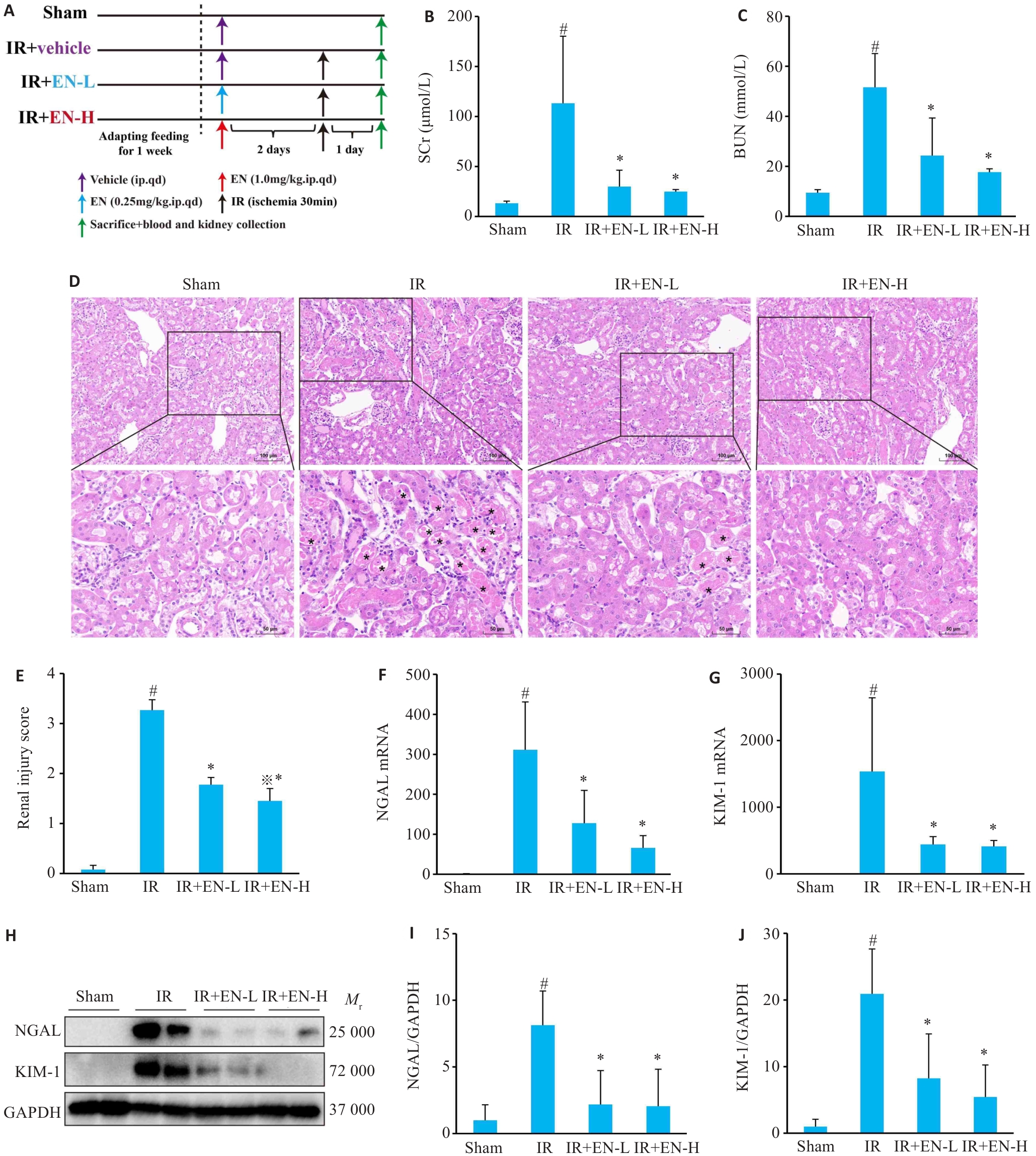
Fig.1 EN pretreatment alleviates ischemia/reperfusion (IR)-induced acute kidney injury (AKI) in mice. A: Schematic diagram of the animal study protocol. B, C: SCr and BUN levels in each group. D: HE staining showing the renal injury in the mice. The lower panels (Scale bar=50 μm) are magnified images of the boxed areas in the upper panels (Scale bar=100 μm). Asterisks indicate damaged tubules. E: Quantitative assessment of renal injury. F, G: qRT-PCR for detecting mRNA levels of KIM-1 and NGAL in the renal tissues. H-J: Western blotting for KIM-1 and NGAL expressions. #P<0.05 vs sham group, *P<0.05 vs IR group, ※P<0.05 vs IR+EN-L group (n=6).
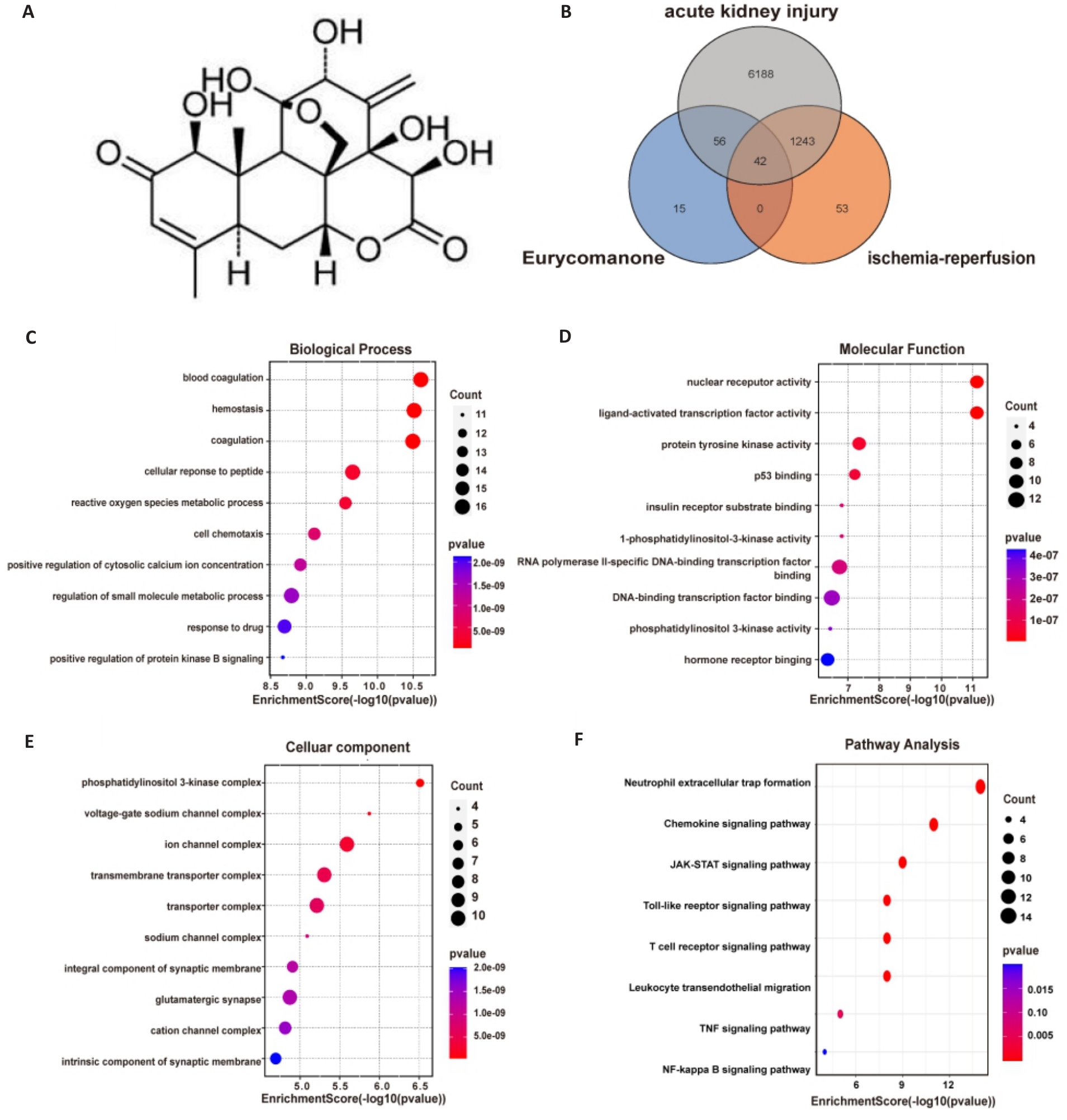
Fig.2 GO and KEGG enrichment analysis of the intersection targets. A: Molecular structure of EN. B: Venn diagram of the EN targets, IR targets and AKI targets. C-E: Top 10 items for the biological process (BP), molecular functional (MF) and cellular component (CC) enrichment analysis in GO enrichment analysis. F: The top 8 inflammatory enrichment signaling pathways from KEGG pathway enrichment analysis.
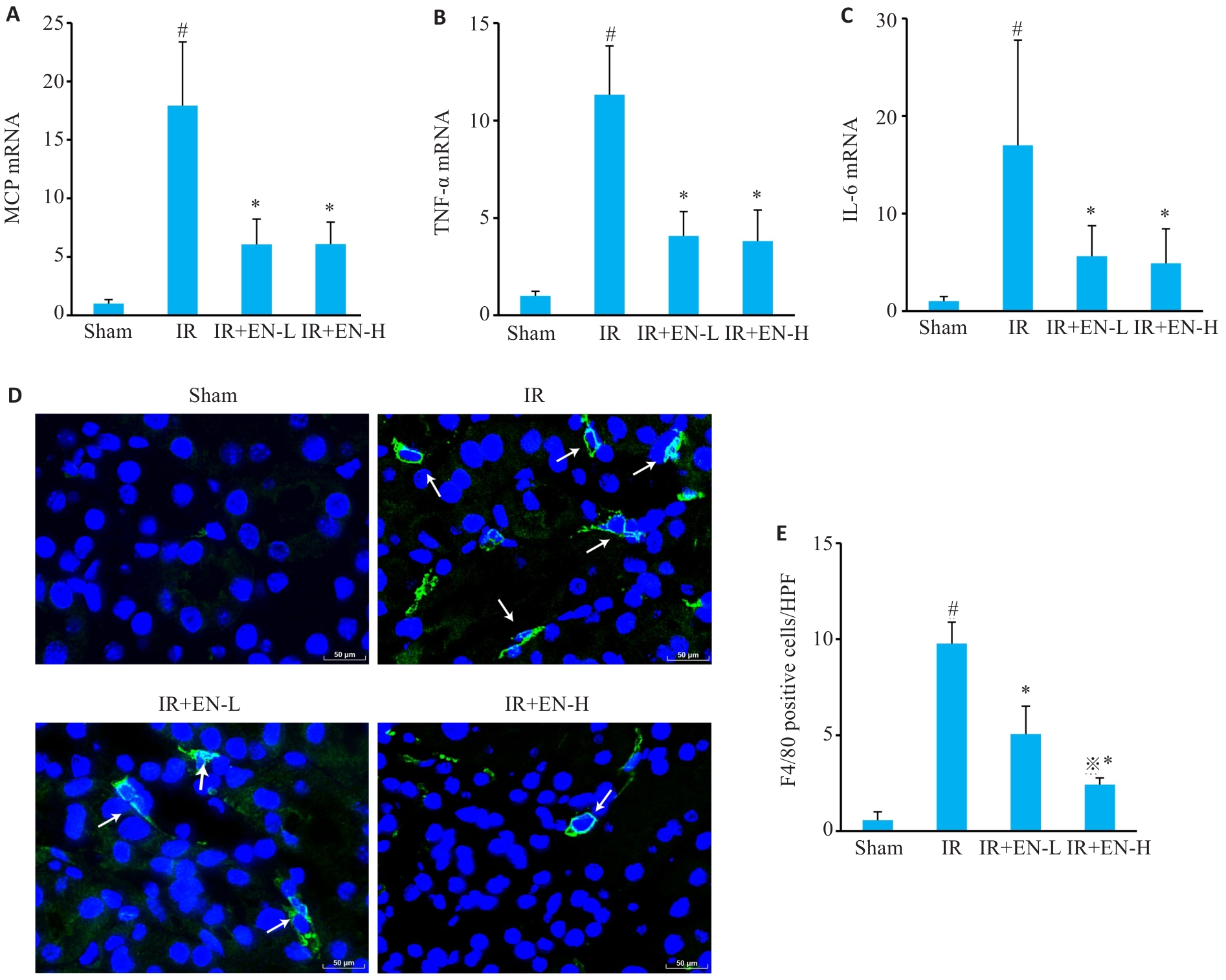
Fig.3 EN suppresses renal inflammation in mice with IR-induced AKI in mice. A-C: qRT-PCR for detecting mRNA levels of MCP-1, TNF‑α and IL-6. D, E: Immunofluorescence staining showed infiltration of F4/80-positvie cells (arrows) in mouse renal tissues (Scale bar=50 μm). #P<0.05 vs sham group, *P<0.05 vs IR group, ※P<0.05 vs IR+EN-L group (n=6).
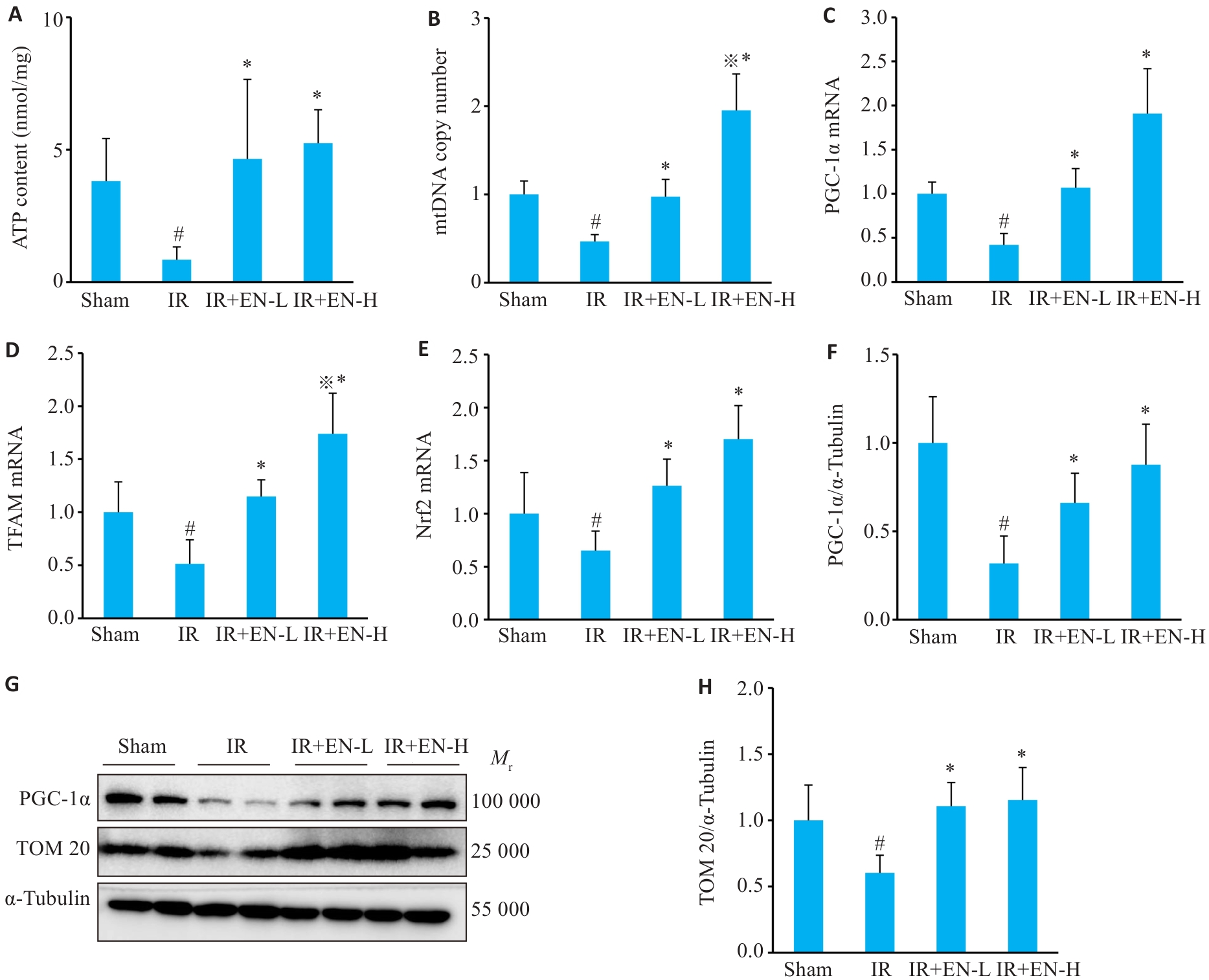
Fig.4 EN rescues renal mitochondrial function by promoting mitochondrial biogenesis in mice with IR-induced AKI. A: Quantification of ATP content. B: Quantification of mtDNA copy number. C-E: qRT-PCR for detecting mRNA level of PGC-1α, TFAM and Nrf2. F-H: Western blotting for PGC-1α and TOM 20 expressions. #P<0.05 vs sham group, *P<0.05 vs IR group, ※P<0.05 vs IR+EN-L group (n=6).
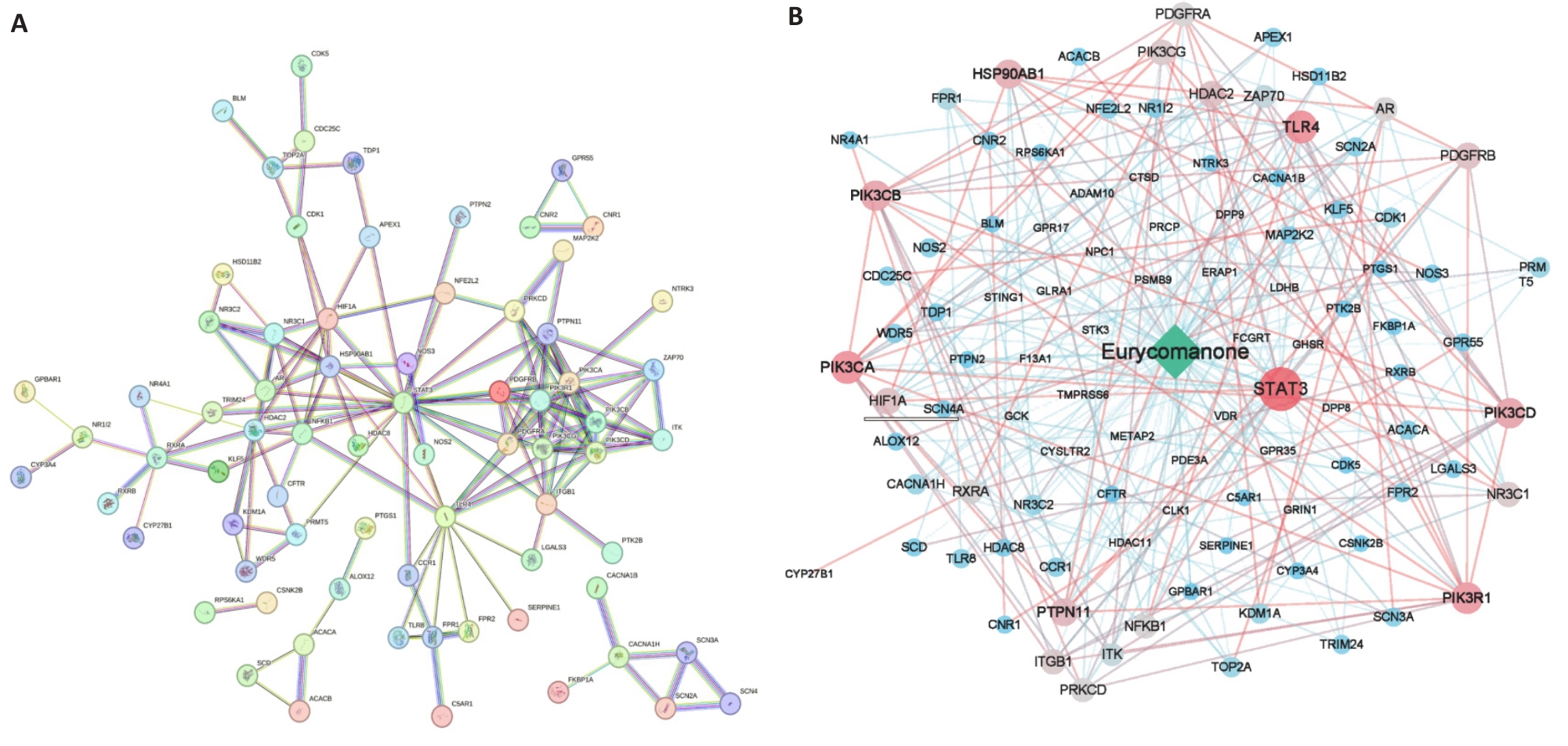
Fig.5 Construction of the protein-protein interaction (PPI) network and compound-target (C-T) network. A: The PPI network among the potential targets of EN against IR-induced AKI. B: The C-T network between EN and the potential targets. Square: EN compound; Circle: Predicted targets.
| Target | Score | Degree | RCSB ID |
|---|---|---|---|
| STAT3 | -7.7 | 24 | 6QHD |
| PIK3CA | -9.1 | 15 | 8BFU |
| TLR4 | -6.7 | 15 | 2Z62 |
| PIK3R1 | -6.8 | 14 | 1PHT |
| PIK3CB | -9.0 | 13 | 2Y2A |
| PIK3CD | -8.2 | 13 | 5IS5 |
| HSP90AB1 | -7.4 | 12 | 2NMQ |
| PTPN11 | -8.7 | 11 | 3O5X |
| HIF1A | -7.9 | 10 | 1H2K |
| HDAC2 | -9.2 | 10 | 4LXZ |
| PDGFRB | -6.7 | 10 | 1H9O |
| ITGB1 | -8.1 | 9 | 4DX9 |
| NR3C1 | -7.4 | 9 | 3BQD |
| PIK3CG | -8.6 | 9 | 2CHW |
| PDGFRA | -7.5 | 8 | 5GRN |
| RXRA | -7.3 | 8 | 4N5G |
| PRKCD | -7.0 | 8 | 1YRK |
| NFKB1 | -7.2 | 8 | 7LEQ |
| AR | -6.6 | 8 | 1E3G |
Tab.2 Molecular docking of EN with the core targets
| Target | Score | Degree | RCSB ID |
|---|---|---|---|
| STAT3 | -7.7 | 24 | 6QHD |
| PIK3CA | -9.1 | 15 | 8BFU |
| TLR4 | -6.7 | 15 | 2Z62 |
| PIK3R1 | -6.8 | 14 | 1PHT |
| PIK3CB | -9.0 | 13 | 2Y2A |
| PIK3CD | -8.2 | 13 | 5IS5 |
| HSP90AB1 | -7.4 | 12 | 2NMQ |
| PTPN11 | -8.7 | 11 | 3O5X |
| HIF1A | -7.9 | 10 | 1H2K |
| HDAC2 | -9.2 | 10 | 4LXZ |
| PDGFRB | -6.7 | 10 | 1H9O |
| ITGB1 | -8.1 | 9 | 4DX9 |
| NR3C1 | -7.4 | 9 | 3BQD |
| PIK3CG | -8.6 | 9 | 2CHW |
| PDGFRA | -7.5 | 8 | 5GRN |
| RXRA | -7.3 | 8 | 4N5G |
| PRKCD | -7.0 | 8 | 1YRK |
| NFKB1 | -7.2 | 8 | 7LEQ |
| AR | -6.6 | 8 | 1E3G |
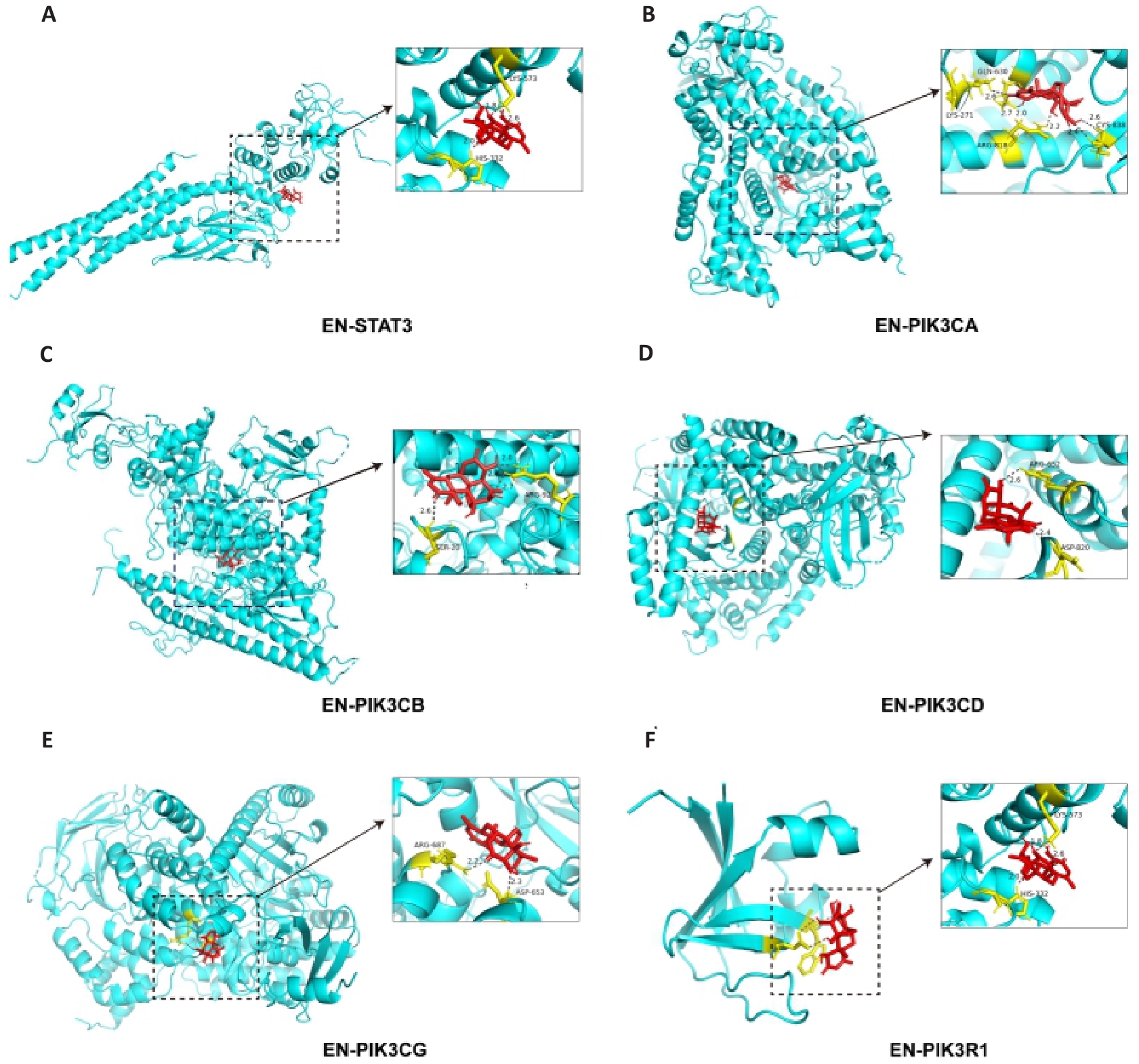
Fig.6 Visualization of molecular docking between the core targets and EN. A: Schematic diagram of molecular docking between EN and STAT3. B-F: Schematic diagram of molecular docking between EN with different subunits of PI3K, including PIK3CA, PIK3CB, PIK3CD, PIK3CG and PIK3R1.
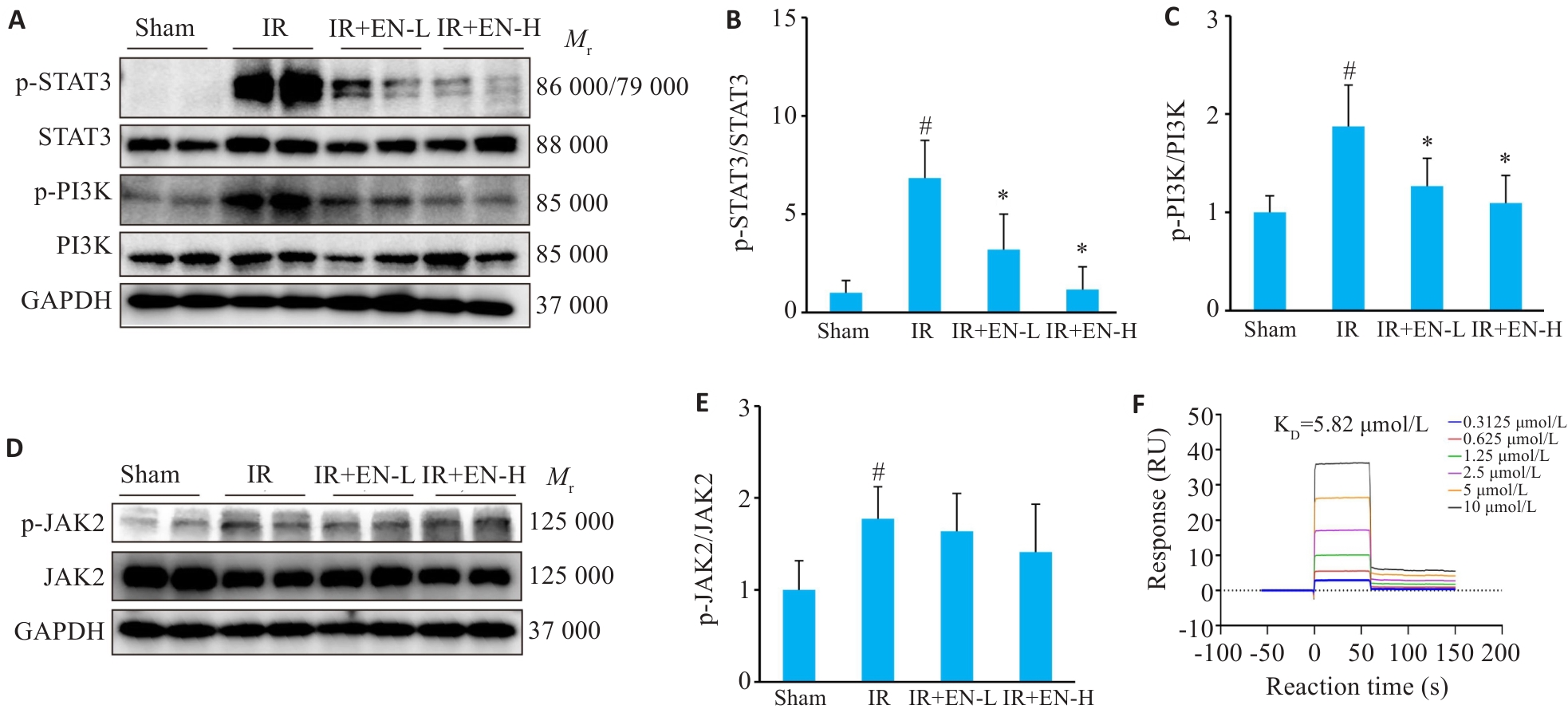
Fig.7 EN suppresses phosphorylation of STAT3 by binding to STAT3. A-C: Western blotting for p-STAT3, STAT3, p-PI3K and PI3K expressions in the renal tissues. D-E: Western blotting for p-JAK2 and JAK2 expressions in the renal tissues. #P<0.05 vs sham group, *P<0.05 vs IR group, ※P<0.05 vs IR+EN-L group (n=6). F: SPR test using Biacore demonstrating the stable fit of the interaction between EN and STAT3.
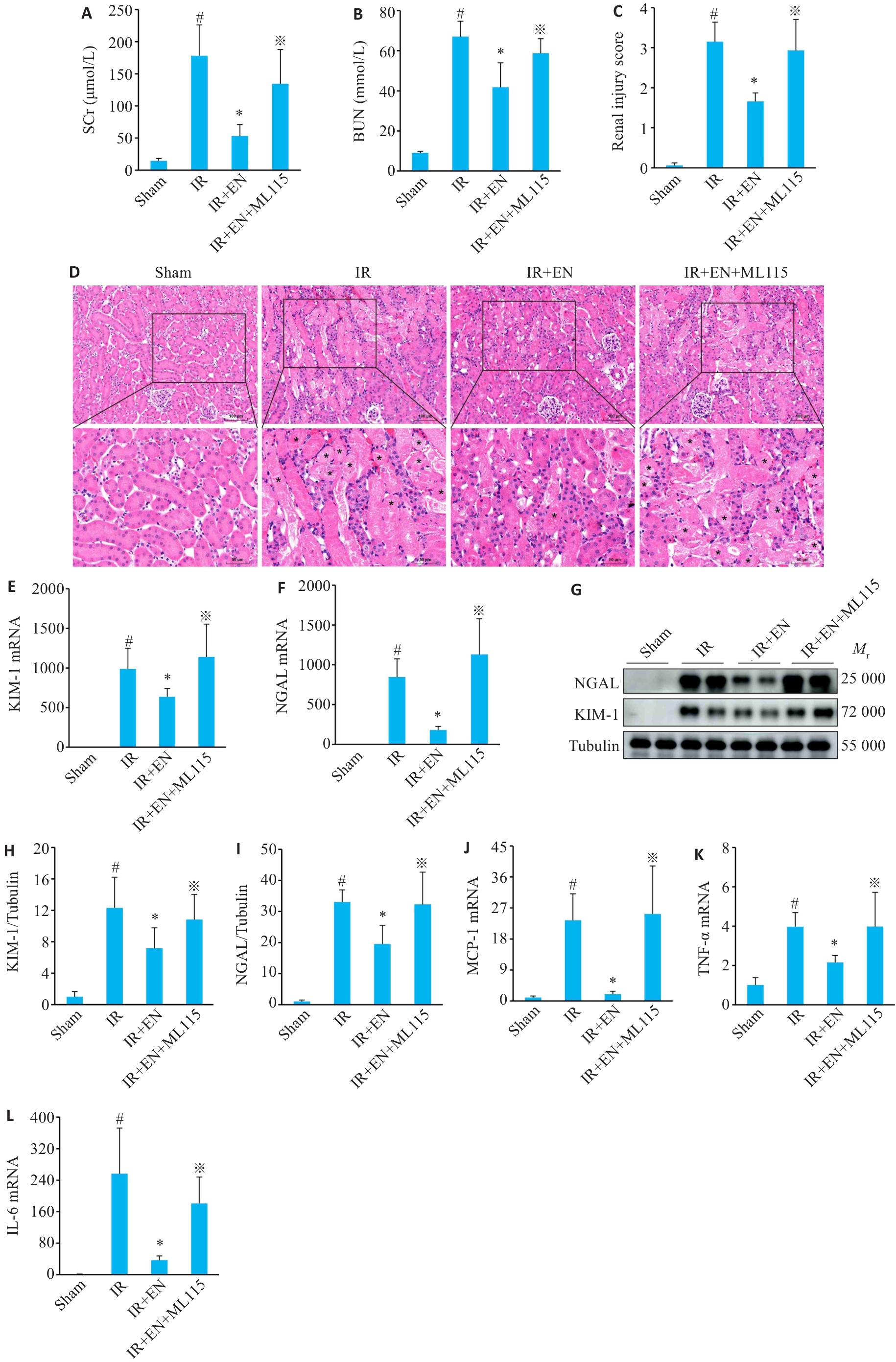
Fig.8 STAT3 agonist ML115 reduces EN-mediated renal and anti-inflammatory protection in IR-AKI mice. A, B: SCr and BUN levels in each group. C: Quantitative assessment of renal injury. D: HE staining show the morphological injury. The lower panels (Scale bar=50 μm) are magnified images of the boxed areas in the upper panels (Scale bar=100 μm). Asterisks indicate damaged tubules. E, F: qRT-PCR for detecting mRNA levels of KIM-1 and NGAL in the renal tissues. G-I: Western blotting for KIM-1 and NGAL expressions. J-L: qRT-PCR for detecting mRNA levels of MCP-1, TNF-α and IL-6. #P<0.05 vs sham group, *P<0.05 vs IR group, ※P<0.05 vs IR+EN group (n=6).
| [1] | Kellum JA, Romagnani P, Ashuntantang G, et al. Acute kidney injury[J]. Nat Rev Dis Primers, 2021, 7(1): 52. doi:10.1038/s41572-021-00284-z |
| [2] | Niculae A, Gherghina ME, Peride I, et al. Pathway from acute kidney injury to chronic kidney disease: molecules involved in renal fibrosis[J]. Int J Mol Sci, 2023, 24(18): 14019. doi:10.3390/ijms241814019 |
| [3] | Chen LC, Yuan JX, Li H, et al. Trans-cinnamaldehyde attenuates renal ischemia/reperfusion injury through suppressing inflammation via JNK/p38 MAPK signaling pathway[J]. Int Immunopharmacol, 2023, 118: 110088. doi:10.1016/j.intimp.2023.110088 |
| [4] | Chen YM, Li ZX, Zhang HY, et al. Mitochondrial metabolism and targeted treatment strategies in ischemic-induced acute kidney injury[J]. Cell Death Discov, 2024, 10(1): 69. doi:10.1038/s41420-024-01843-5 |
| [5] | Ma HJ, Guo XZ, Cui SC, et al. Dephosphorylation of AMP-activated protein kinase exacerbates ischemia/reperfusion-induced acute kidney injury via mitochondrial dysfunction[J]. Kidney Int, 2022, 101(2): 315-30. doi:10.1016/j.kint.2021.10.028 |
| [6] | Vijayan A. Tackling AKI: prevention, timing of dialysis and follow-up[J]. Nat Rev Nephrol, 2021, 17(2): 87-8. doi:10.1038/s41581-020-00390-3 |
| [7] | Huang JW, Liang Y, Zhou LL. Natural products for kidney disease treatment: Focus on targeting mitochondrial dysfunction[J]. Front Pharmacol, 2023, 14: 1142001. doi:10.3389/fphar.2023.1142001 |
| [8] | Ahmad N, Samiulla DS, Teh BP, et al. Bioavailability of eurycomanone in its pure form and in a standardised Eurycoma longifolia water extract[J]. Pharmaceutics, 2018, 10(3): 90. doi:10.3390/pharmaceutics10030090 |
| [9] | Yunos NM, Wahab HA, Al-Thiabat MG, et al. In vitro and in silico analysis of the anticancer effects of eurycomanone and euryco-malactone from Eurycoma longifolia [J]. Plants, 2023, 12(15): 2827. doi:10.3390/plants12152827 |
| [10] | Ye GQ, Xu MT, Shu YH, et al. A quassinoid diterpenoid euryco-manone from Eurycoma longifolia jack exerts anti-cancer effect through autophagy inhibition[J]. Molecules, 2022, 27(14): 4398. doi:10.3390/molecules27144398 |
| [11] | Balan D, Chan KL, Murugan D, et al. Antiadipogenic effects of a standardized quassinoids-enriched fraction and eurycomanone from Eurycoma longifolia [J]. Phytother Res, 2018, 32(7): 1332-45. doi:10.1002/ptr.6065 |
| [12] | Zhong YT, Liao HB, Ye ZQ, et al. Eurycomanone stimulates bone mineralization in zebrafish larvae and promotes osteogenic differentiation of mesenchymal stem cells by upregulating AKT/GSK-3β/β-catenin signaling[J]. J Orthop Translat, 2023, 40: 132-46. doi:10.1016/j.jot.2023.05.006 |
| [13] | Liu Z, Li H, Su JQ, et al. Numb depletion promotes Drp1-mediated mitochondrial fission and exacerbates mitochondrial fragmentation and dysfunction in acute kidney injury[J]. Antioxid Redox Signal, 2019, 30(15): 1797-816. doi:10.1089/ars.2017.7432 |
| [14] | Zhao M, Wang YZ, Li L, et al. Mitochondrial ROS promote mitochondrial dysfunction and inflammation in ischemic acute kidney injury by disrupting TFAM-mediated mtDNA maintenance[J]. Theranostics, 2021, 11(4): 1845-63. doi:10.7150/thno.50905 |
| [15] | Chaudhary S, Kashani KB. Acute kidney injury management strategies peri-cardiovascular interventions[J]. Interv Cardiol Clin, 2023, 12(4): 555-72. doi:10.1016/j.iccl.2023.06.008 |
| [16] | McWilliam SJ, Wright RD, Welsh GI, et al. The complex interplay between kidney injury and inflammation[J]. Clin Kidney J, 2020, 14(3): 780-8. doi:10.1093/ckj/sfaa164 |
| [17] | Trang NTH, Trang TT, Nam NT. Cytokine inhibitory activity of eurycomanone in RAW 264.7 cells stimulated with viral-mimicking poly (I: C)[J]. Vietnam J Biotechnol, 2023, 21(3): 435-41. doi:10.15625/1811-4989/20291 |
| [18] | Hajjouli S, Chateauvieux S, Teiten MH, et al. Eurycomanone and eurycomanol from Eurycoma longifolia jack as regulators of signaling pathways involved in proliferation, cell death and inflammation[J]. Molecules, 2014, 19(9): 14649-66. doi:10.3390/molecules190914649 |
| [19] | Feng YS, Imam Aliagan A, Tombo N, et al. RIP3 translocation into mitochondria promotes mitofilin degradation to increase inflammation and kidney injury after renal ischemia-reperfusion[J]. Cells, 2022, 11(12): 1894. doi:10.3390/cells11121894 |
| [20] | Abu Shelbayeh O, Arroum T, Morris S, et al. PGC-1α is a master regulator of mitochondrial lifecycle and ROS stress response[J]. Antioxidants, 2023, 12(5): 1075. doi:10.3390/antiox12051075 |
| [21] | Ma LY, Hui JL, He GT, et al. DNAJC6 in acute kidney injury: a novel target for protecting renal tubular epithelial cells through PGC-1α-mediated mitochondrial homeostasis[J]. Exp Cell Res, 2025, 450(2): 114682. doi:10.1016/j.yexcr.2025.114682 |
| [22] | Yu JT, Fan S, Li XY, et al. Novel insights into STAT3 in renal diseases[J]. Biomed Pharmacother, 2023, 165: 115166. doi:10.1016/j.biopha.2023.115166 |
| [23] | Zhao XY, Zhang EF, Ren XF, et al. Edaravone alleviates cell apoptosis and mitochondrial injury in ischemia-reperfusion-induced kidney injury via the JAK/STAT pathway[J]. Biol Res, 2020, 53(1): 28. doi:10.1186/s40659-020-00297-0 |
| [24] | Liu Y, Wang L, Du Y, et al. Effects of apigenin pretreatment against renal ischemia/reperfusion injury via activation of the JAK2/STAT3 pathway[J]. Biomed Pharmacother, 2017, 95: 1799-808. doi:10.1016/j.biopha.2017.09.091 |
| [25] | Xu MJ, Feng DC, Wang H, et al. IL-22 ameliorates renal ischemia-reperfusion injury by targeting proximal tubule epithelium[J]. J Am Soc Nephrol, 2014, 25(5): 967-77. doi:10.1681/asn.2013060611 |
| [26] | Bilanges B, Posor Y, Vanhaesebroeck B. PI3K isoforms in cell signalling and vesicle trafficking[J]. Nat Rev Mol Cell Biol, 2019, 20(9): 515-34. doi:10.1038/s41580-019-0129-z |
| [27] | Liu C, Chen K, Wang HX, et al. Gastrin attenuates renal ischemia/reperfusion injury by a PI3K/Akt/bad-mediated anti-apoptosis signaling[J]. Front Pharmacol, 2020, 11: 540479. doi:10.3389/fphar.2020.540479 |
| [28] | Tang Z, Wang Y, Liu Y, et al. Salidroside inhibits renal ischemia/reperfusion injury-induced ferroptosis by the PI3K/AKT signaling pathway[J]. Exp Ther Med, 2023, 26(5): 507. doi:10.3892/etm.2023.12206 |
| [29] | Pace J, Paladugu P, Das B, et al. Targeting STAT3 signaling in kidney disease[J]. Am J Physiol Renal Physiol, 2019, 316(6): F1151-61. doi:10.1152/ajprenal.00034.2019 |
| [30] | Huang F, Wang X, Xiao GF, et al. Loganin exerts a protective effect on ischemia-reperfusion-induced acute kidney injury by regulating JAK2/STAT3 and Nrf2/HO-1 signaling pathways[J]. Drug Dev Res, 2022, 83(1): 150-7. doi:10.1002/ddr.21853 |
| [31] | Park JY, Yoo KD, Bae E, et al. Blockade of STAT3 signaling alleviates the progression of acute kidney injury to chronic kidney disease through antiapoptosis[J]. Am J Physiol Renal Physiol, 2022, 322(5): F553-72. doi:10.1152/ajprenal.00595.2020 |
| [32] | Ogura M, Uchida T, Terui Y, et al. Phase I study of OPB-51602, an oral inhibitor of signal transducer and activator of transcription 3, in patients with relapsed/refractory hematological malignancies[J]. Cancer Sci, 2015, 106(7): 896-901. doi:10.1111/cas.12683 |
| [33] | Okusaka T, Ueno H, Ikeda M, et al. Phase 1 and pharmacological trial of OPB-31121, a signal transducer and activator of transcription-3 inhibitor, in patients with advanced hepatocellular carcinoma[J]. Hepatol Res, 2015, 45(13): 1283-91. doi:10.1111/hepr.12504 |
| [1] | Jianming YANG, Long YANG, Kaiwen HONG, Beibei GENG, Man ZHAO, Yaoguang WANG, Ting XIA, Jinrui DONG. Intraperitoneal administration of Allium macrostemon-derived carbon quantum dots alleviates cisplatin-induced acute kidney injury and restores mitochondrial function in mice [J]. Journal of Southern Medical University, 2026, 46(3): 505-512. |
| [2] | Jiayi XU, Di YANG, Kailai ZANG, Mengen CHU, Qingyao ZHAO, Qing LI, Sen LU, Xiuli CHEN, Ning LI. EVA1A overexpression improves non-alcoholic fatty liver disease in mice by regulating lipid metabolism and promoting lipophagy [J]. Journal of Southern Medical University, 2026, 46(1): 150-158. |
| [3] | Shufen ZHANG, Tianrong HUANG, Canhong YANG, Jiayi CHEN, Tianming LÜ, Jiafa ZHANG. Sulforaphane reduces reactive astrocyte-mediated neuron apoptosis in vitro by inhibiting the MAPK/NF-κB signaling pathway in Aβ42 oligomer-activated astrocytes [J]. Journal of Southern Medical University, 2026, 46(1): 191-199. |
| [4] | Jinyan ZHAO, Jiao PENG, Minghe LIN, Xiaoqin ZHU, Bin HUANG, Jiumao LIN. Qingjie Fuzheng Granules alleviates 5-fluorouracil-induced skeletal muscle injury in tumor-bearing mice by inhibiting mitochondria-dependent apoptosis and activating the AMPK-PGC-1α pathway [J]. Journal of Southern Medical University, 2026, 46(1): 94-103. |
| [5] | Qinjun YANG, Hongyu ZHU, Yuan GAO, Cheng YANG, Tong LIU, Lu ZHANG, Jiabing TONG, Zegeng LI. Sangma Zhike Formula alleviates airway inflammation and hyperresponsiveness in rats with postinfectious cough by inhibiting the TRPV1-SP/CGRP and pyroptosis pathways [J]. Journal of Southern Medical University, 2025, 45(9): 1830-1839. |
| [6] | Zejin OU, Ying LI, Shi CHEN, Ziyi WANG, Meiyi HE, Zhicheng CHEN, Shihao TANG, Xiaojing MENG, Zhi WANG. Inhibition of ferroptosis alleviates acute kidney injury caused by diquat in zebrafish [J]. Journal of Southern Medical University, 2025, 45(8): 1743-1750. |
| [7] | Zhengyuan FAN, Zihan SHEN, Ya LI, Tingting SHEN, Gaofeng LI, Suyun LI. Protective effect of Bufei Yishen Formula against cigarette smoke extract-induced human bronchial epithelial cell damage and its mechanism [J]. Journal of Southern Medical University, 2025, 45(7): 1372-1379. |
| [8] | Liming WANG, Hongrui CHEN, Yan DU, Peng ZHAO, Yujie WANG, Yange TIAN, Xinguang LIU, Jiansheng LI. Yiqi Zishen Formula ameliorates inflammation in mice with chronic obstructive pulmonary disease by inhibiting the PI3K/Akt/NF-κB signaling pathway [J]. Journal of Southern Medical University, 2025, 45(7): 1409-1422. |
| [9] | Xinheng WANG, Xiaohan SHAO, Tongtong LI, Lu ZHANG, Qinjun YANG, Weidong YE, Jiabing TONG, Zegeng LI, Xiangming FANG. Pingchuanning Formula suppresses airway inflammation in a rat model of asthmatic cold syndrome by regulating the HMGB1/Beclin-1 axis-mediated autophagy [J]. Journal of Southern Medical University, 2025, 45(6): 1153-1162. |
| [10] | Minzhu NIU, Lixia YIN, Tong QIAO, Lin YIN, Keni ZHANG, Jianguo HU, Chuanwang SONG, Zhijun GENG, Jing LI. Ecliptasaponin A ameliorates DSS-induced colitis in mice by suppressing M1 macrophage polarization via inhibiting the JAK2/STAT3 pathway [J]. Journal of Southern Medical University, 2025, 45(6): 1297-1306. |
| [11] | Zihao WANG, Lili TAO, Biqing ZOU, Shengli AN. First 24-hour arterial oxygen partial pressure is correlated with mortality in ICU patients with acute kidney injury: an analysis based on MIMIC-IV database [J]. Journal of Southern Medical University, 2025, 45(5): 1056-1062. |
| [12] | Liupan ZHANG, Xiaotong SHI, Lulan LI, Rui SHI, Shengli AN, Zhenhua ZENG. Association between serum albumin levels after albumin infusion and 28-day mortality in critically ill patients with acute kidney injury [J]. Journal of Southern Medical University, 2025, 45(5): 1074-1081. |
| [13] | Anbang ZHANG, Xiuqi SUN, Bo PANG, Yuanhua WU, Jingyu SHI, Ning ZHANG, Tao YE. Electroacupuncture pretreatment alleviates cerebral ischemia-reperfusion injury in rats by inhibiting ferroptosis through the gut-brain axis and the Nrf2/HO-1 signaling pathway [J]. Journal of Southern Medical University, 2025, 45(5): 911-920. |
| [14] | Lu ZHANG, Huanzhang DING, Haoran XU, Ke CHEN, Bowen XU, Qinjun YANG, Di WU, Jiabing TONG, Zegeng LI. Shenqi Buzhong Formula ameliorates mitochondrial dysfunction in a rat model of chronic obstructive pulmonary disease by activating the AMPK/SIRT1/PGC-1α pathway [J]. Journal of Southern Medical University, 2025, 45(5): 969-976. |
| [15] | Fenlan BIAN, Shiyao NI, Peng ZHAO, Maonanxing QI, Bi TANG, Hongju WANG, Pinfang KANG, Jinjun LIU. Asiaticoside alleviates myocardial ischemia-reperfusion injury in rats by inhibiting NLRP3 inflammasome-mediated pyroptosis [J]. Journal of Southern Medical University, 2025, 45(5): 977-985. |
| Viewed | ||||||
|
Full text |
|
|||||
|
Abstract |
|
|||||
