
南方医科大学学报 ›› 2026, Vol. 46 ›› Issue (9): 2206-2221.doi: 10.12122/j.issn.1673-4254.2026.09.19
• • 上一篇
马园园1,3( ), 刘悦1(), 高宁1,2(), 霍宇萌1, 陈美霓1,2, 李佳文1, 刘佳浩1, 张满秋1, 严冰冰1, 许诺1, 赵菊梅1,2()
收稿日期:2025-12-04
出版日期:2026-09-20
发布日期:2026-09-30
通讯作者:
赵菊梅
E-mail:304769958@qq.com;liuyue10222001@163.com;yadxgaoning@163.com;jmz2003.stu@163.com
作者简介:马园园,在读硕士研究生,主治医师,E-mail: 304769958@qq.com基金资助:
Yuanyuan MA1,3(), Yue LIU1(), Ning GAO1,2(), Yumeng HUO1, Meini CHEN1,2, Jiawen LI1, Jiahao LIU1, Manqiu ZHANG1, Bingbing YAN1, Nuo XU1, Jumei ZHAO1,2()
Received:2025-12-04
Online:2026-09-20
Published:2026-09-30
Contact:
Jumei ZHAO
E-mail:304769958@qq.com;liuyue10222001@163.com;yadxgaoning@163.com;jmz2003.stu@163.com
摘要:
目的 预测黄芪注射液在抗宫颈癌中的作用靶标及分子机制。 方法 通过STRING、Cytoscape构建黄芪注射液与宫颈癌的交集靶点网络,筛选关键靶标;DAVID数据库完成靶点GO功能注释与KEGG通路富集分析;分子对接分析药物活性成分与核心靶点的结合能力;通过CCK-8、细胞克隆、划痕、Transwell检测黄芪注射液对人宫颈癌SiHa细胞增殖、迁移、侵袭影响;Western blotting检测核心靶点FOS、PPARG、CXCL8、CCL2,IL-17通路核心分子NF-κB p65、p-p65、STAT3、p-STAT3及细胞凋亡相关蛋白BAX、BCL2、Caspase-3、cleaved-Caspase-3的表达。考马斯亮蓝与鬼笔环肽染色检测细胞骨架微丝变化;JC-10检测线粒体膜电位;AO/EB染色检测细胞凋亡及细胞膜通透性。构建U14宫颈癌荷瘤小鼠模型,8 只荷瘤小鼠随机分为对照组和黄芪注射液处理组,4只/组;测量肿瘤体积生长情况;HE染色分析肿瘤组织病理学;免疫组织化学染色观察CCL2、PPARG、FOS阳性表达率。 结果 确定黄芪注射液中5个活性成分与宫颈癌关键靶点CCL2、CXCL8、FOS、PPARG,且分子对接结合能均小于-5 kJ/mol。细胞实验结果显示黄芪注射液能显著抑制宫颈癌细胞的增殖、迁移和侵袭能力(P<0.05),并引起微丝结构改变,诱导细胞发生凋亡,靶点蛋白FOS、CXCL8、CCL2、PPARG、抗凋亡蛋白 BCL2 及磷酸化的p-p65 (Ser536)、p-STAT3 (Tyr705)蛋白表达水平下调(P<0.01),而促凋亡蛋白BAX、cleaved-Caspase-3表达水平升高(P<0.001)。体内实验结果显示,黄芪注射液可抑制宫颈癌移植瘤增殖,引起肿瘤组织大片坏死,使核心靶点蛋白CCL2、PPARG、FOS阳性表达下调(P<0.001)。 结论 黄芪注射液可通过多个活性成分抑制宫颈癌细胞中多靶点蛋白表达,引起微丝结构损伤,导致癌细胞运动能力减弱及细胞凋亡。深入研究黄芪注射液抗宫颈癌的有效成分和作用机制,为黄芪注射液在宫颈癌治疗领域的研究开辟新视角。
马园园, 刘悦, 高宁, 霍宇萌, 陈美霓, 李佳文, 刘佳浩, 张满秋, 严冰冰, 许诺, 赵菊梅. 黄芪注射液通过多成分靶向CCL2/FOS/PPARG/CXCL8抑制宫颈癌恶性进展[J]. 南方医科大学学报, 2026, 46(9): 2206-2221.
Yuanyuan MA, Yue LIU, Ning GAO, Yumeng HUO, Meini CHEN, Jiawen LI, Jiahao LIU, Manqiu ZHANG, Bingbing YAN, Nuo XU, Jumei ZHAO. Multiple components in Astragalus Injection target CCL2/FOS/PPARG/CXCL8 to suppress cervical cancer progression[J]. Journal of Southern Medical University, 2026, 46(9): 2206-2221.
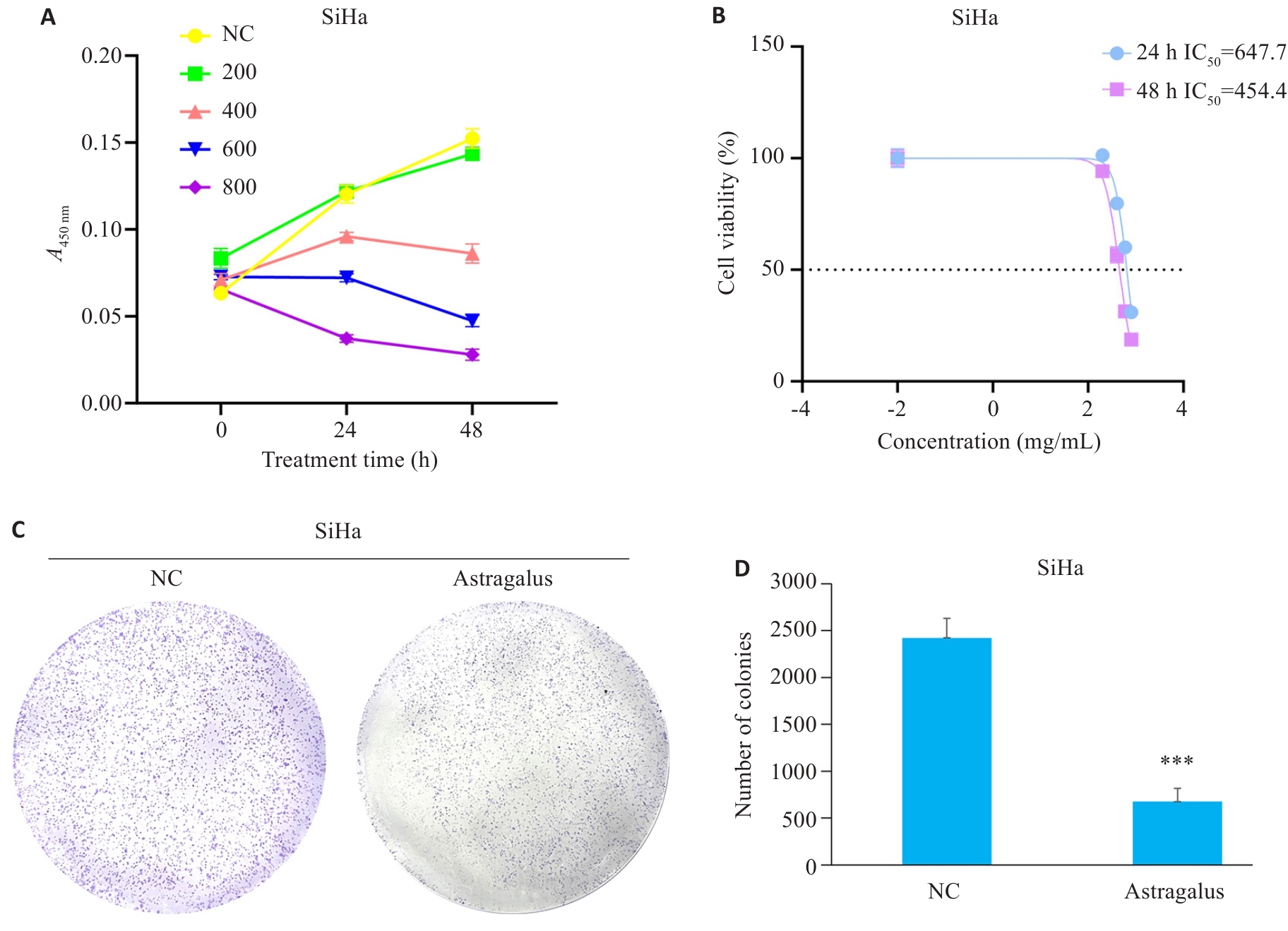
图1 黄芪注射液抑制宫颈癌细胞增殖
Fig.1 Astragalus Injection inhibits the proliferation of cervical cancer cells. A: CCK-8 assay for assessing proliferation of SiHa cells treated with Astragalus Injection for 0, 24, and 48 h. B: SiHa cell viability after intervention with different concentrations of Astragalus Injection for 24 and 48 h. C: Colony formation assay for assessing the effect of Astragalus Injection on proliferation of SiHa cells. D: Quantitative analysis of cell colony formation (n=3). ***P<0.001 vs NC.
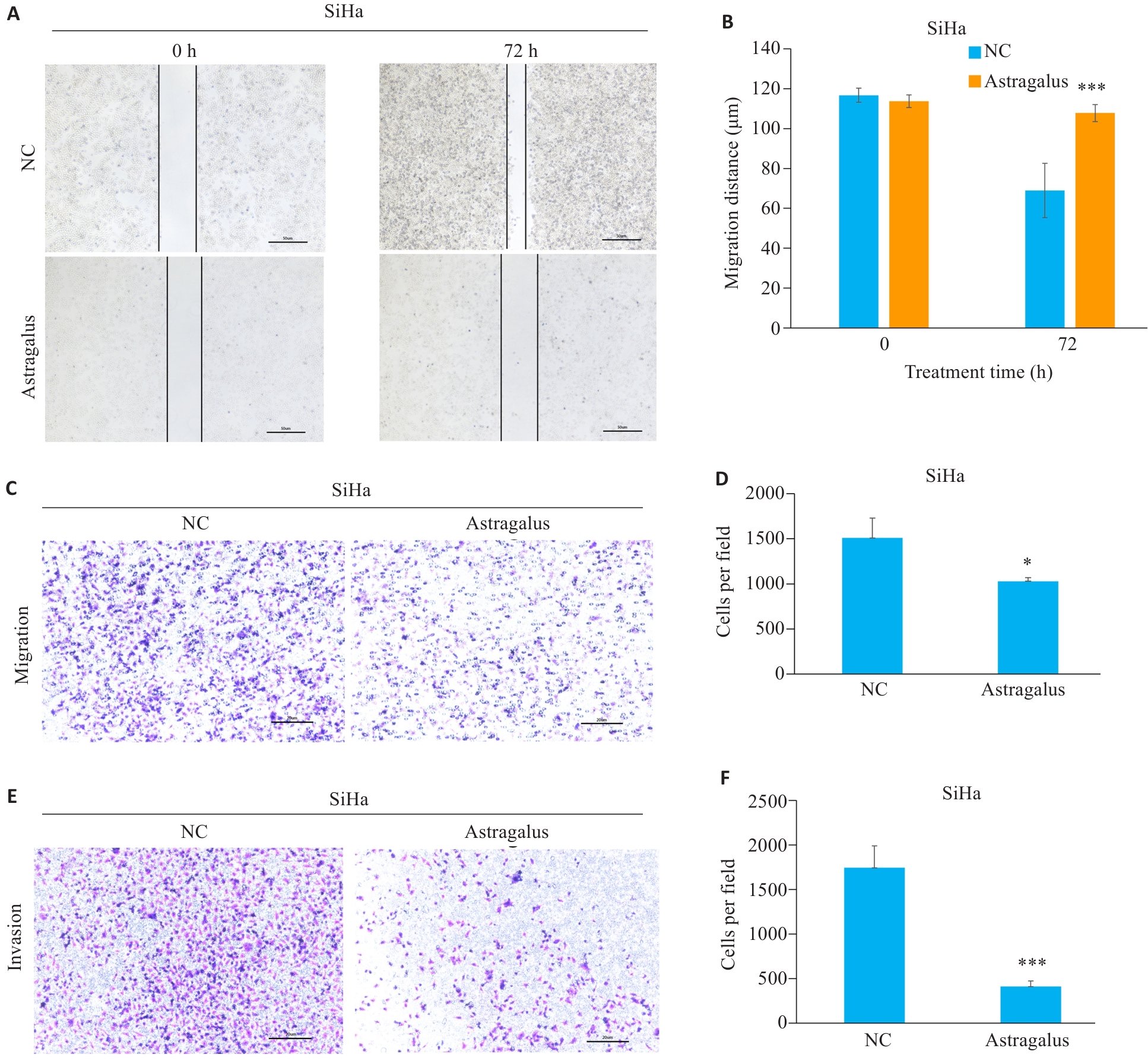
图2 黄芪注射液抑制宫颈癌细胞迁移、侵袭
Fig.2 Astragalus Injection inhibits migration and invasion of cervical cancer cells. A, B: Scratch assay for assessing the effect of Astragalus Injection on migration of cervical cancer cells (Scale bar=50 μm; n=3). C, D: Transwell assay for assessing migratory ability of SiHa cells (Scale bar=20 μm; n=3). E, F: Transwell assay for evaluating invasive ability of SiHa cells (n=3). *P<0.05, ***P<0.001 vs NC.
| Mol ID | Molecule name | OB (%) | DL |
|---|---|---|---|
| MOL000211 | Mairin | 55.38 | 0.78 |
| MOL000239 | Jaranol | 50.83 | 0.29 |
| MOL000296 | hederagenin | 36.91 | 0.75 |
| MOL000033 | (3S,8S,9S,10R,13R,14S,17R)-10,13-dimethyl-17-[(2R,5S)-5-propan-2-yloctan-2-yl]-2,3,4,7, 8,9,11,12,14,15,16,17-dodecahydro-1H-cyclopenta[a]phenanthren-3-ol | 36.23 | 0.78 |
| MOL000354 | isorhamnetin | 49.6 | 0.31 |
| MOL000371 | 3,9-di-O-methylnissolin | 53.74 | 0.48 |
| MOL000374 | 5'-hydroxyiso-muronulatol-2',5'-di-O-glucoside | 41.72 | 0.69 |
| MOL000378 | 7-O-methylisomucronulatol | 74.69 | 0.3 |
| MOL000379 | 9,10-dimethoxypterocarpan-3-O-β-D-glucoside | 36.74 | 0.92 |
| MOL000380 | (6aR,11aR)-9,10-dimethoxy-6a,11a-dihydro-6H-benzofurano[3,2-c]chromen-3-ol | 64.26 | 0.42 |
| MOL000387 | Bifendate | 31.1 | 0.67 |
| MOL000392 | formononetin | 69.67 | 0.21 |
| MOL000398 | isoflavanone | 109.99 | 0.3 |
| MOL000417 | Calycosin | 47.75 | 0.24 |
| MOL000422 | kaempferol | 41.88 | 0.24 |
| MOL000433 | FA | 68.96 | 0.71 |
| MOL000438 | (3R)-3-(2-hydroxy-3,4-dimethoxyphenyl)chroman-7-ol | 67.67 | 0.26 |
| MOL000439 | isomucronulatol-7,2'-di-O-glucosiole | 49.28 | 0.62 |
| MOL000442 | 1,7-Dihydroxy-3,9-dimethoxy pterocarpene | 39.05 | 0.48 |
| MOL000098 | quercetin | 46.43 | 0.28 |
表1 黄芪注射液活性成分信息
Tab.1 Information of active components of Astragalus Injection
| Mol ID | Molecule name | OB (%) | DL |
|---|---|---|---|
| MOL000211 | Mairin | 55.38 | 0.78 |
| MOL000239 | Jaranol | 50.83 | 0.29 |
| MOL000296 | hederagenin | 36.91 | 0.75 |
| MOL000033 | (3S,8S,9S,10R,13R,14S,17R)-10,13-dimethyl-17-[(2R,5S)-5-propan-2-yloctan-2-yl]-2,3,4,7, 8,9,11,12,14,15,16,17-dodecahydro-1H-cyclopenta[a]phenanthren-3-ol | 36.23 | 0.78 |
| MOL000354 | isorhamnetin | 49.6 | 0.31 |
| MOL000371 | 3,9-di-O-methylnissolin | 53.74 | 0.48 |
| MOL000374 | 5'-hydroxyiso-muronulatol-2',5'-di-O-glucoside | 41.72 | 0.69 |
| MOL000378 | 7-O-methylisomucronulatol | 74.69 | 0.3 |
| MOL000379 | 9,10-dimethoxypterocarpan-3-O-β-D-glucoside | 36.74 | 0.92 |
| MOL000380 | (6aR,11aR)-9,10-dimethoxy-6a,11a-dihydro-6H-benzofurano[3,2-c]chromen-3-ol | 64.26 | 0.42 |
| MOL000387 | Bifendate | 31.1 | 0.67 |
| MOL000392 | formononetin | 69.67 | 0.21 |
| MOL000398 | isoflavanone | 109.99 | 0.3 |
| MOL000417 | Calycosin | 47.75 | 0.24 |
| MOL000422 | kaempferol | 41.88 | 0.24 |
| MOL000433 | FA | 68.96 | 0.71 |
| MOL000438 | (3R)-3-(2-hydroxy-3,4-dimethoxyphenyl)chroman-7-ol | 67.67 | 0.26 |
| MOL000439 | isomucronulatol-7,2'-di-O-glucosiole | 49.28 | 0.62 |
| MOL000442 | 1,7-Dihydroxy-3,9-dimethoxy pterocarpene | 39.05 | 0.48 |
| MOL000098 | quercetin | 46.43 | 0.28 |
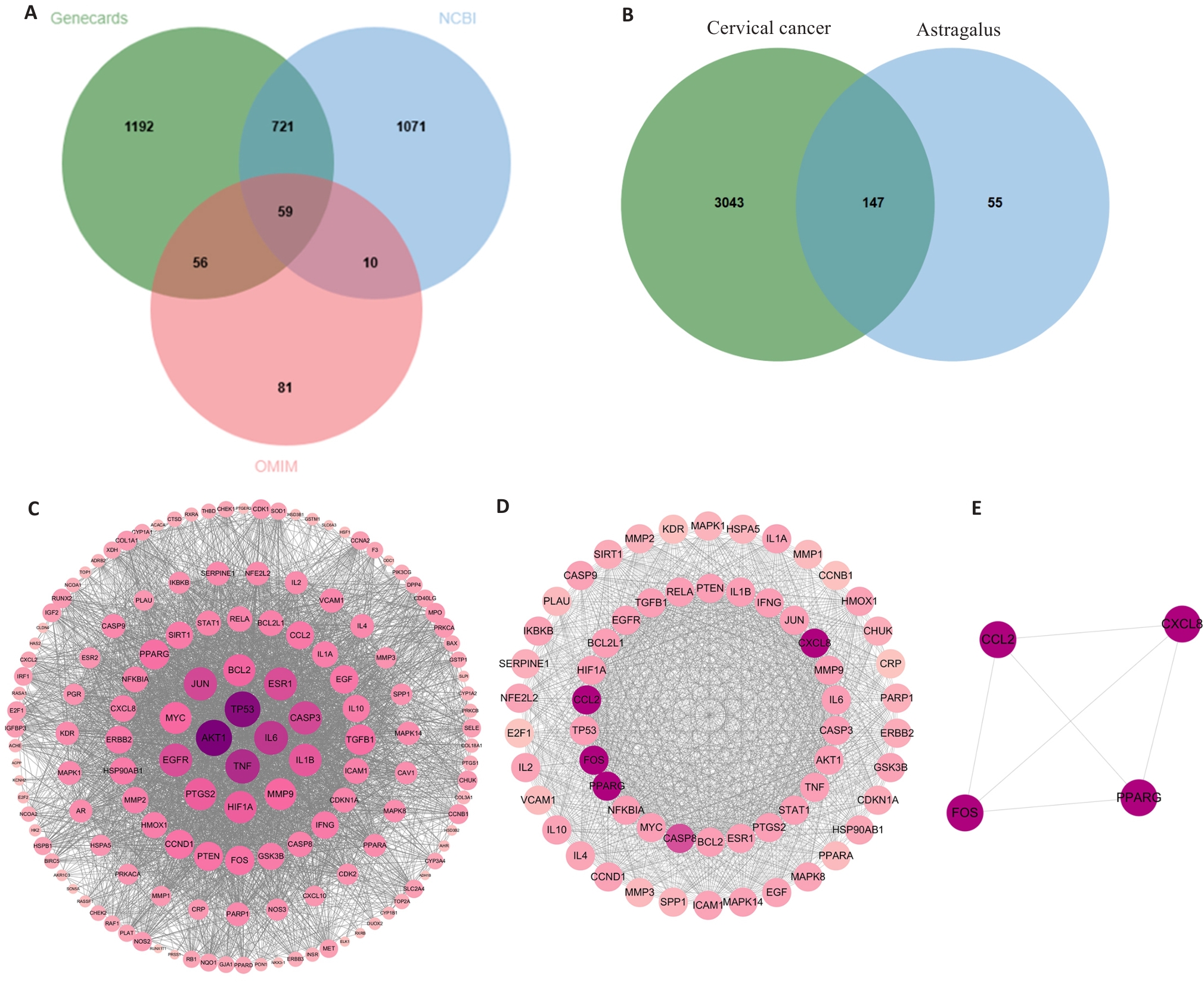
图3 黄芪注射液-宫颈癌靶点筛选
Fig.3 Target screening of Astragalus Injection-cervical cancer interaction. A: Venn diagram of potential targets in cervical cancer. B: Venn diagram of shared targets between astragalus injection and cervical cancer. C: Protein-protein interaction (PPI) network map. D: Subnetwork analysis using MCODE plugin. E: Core targets of Astragalus Injection-cervical cancer interaction.
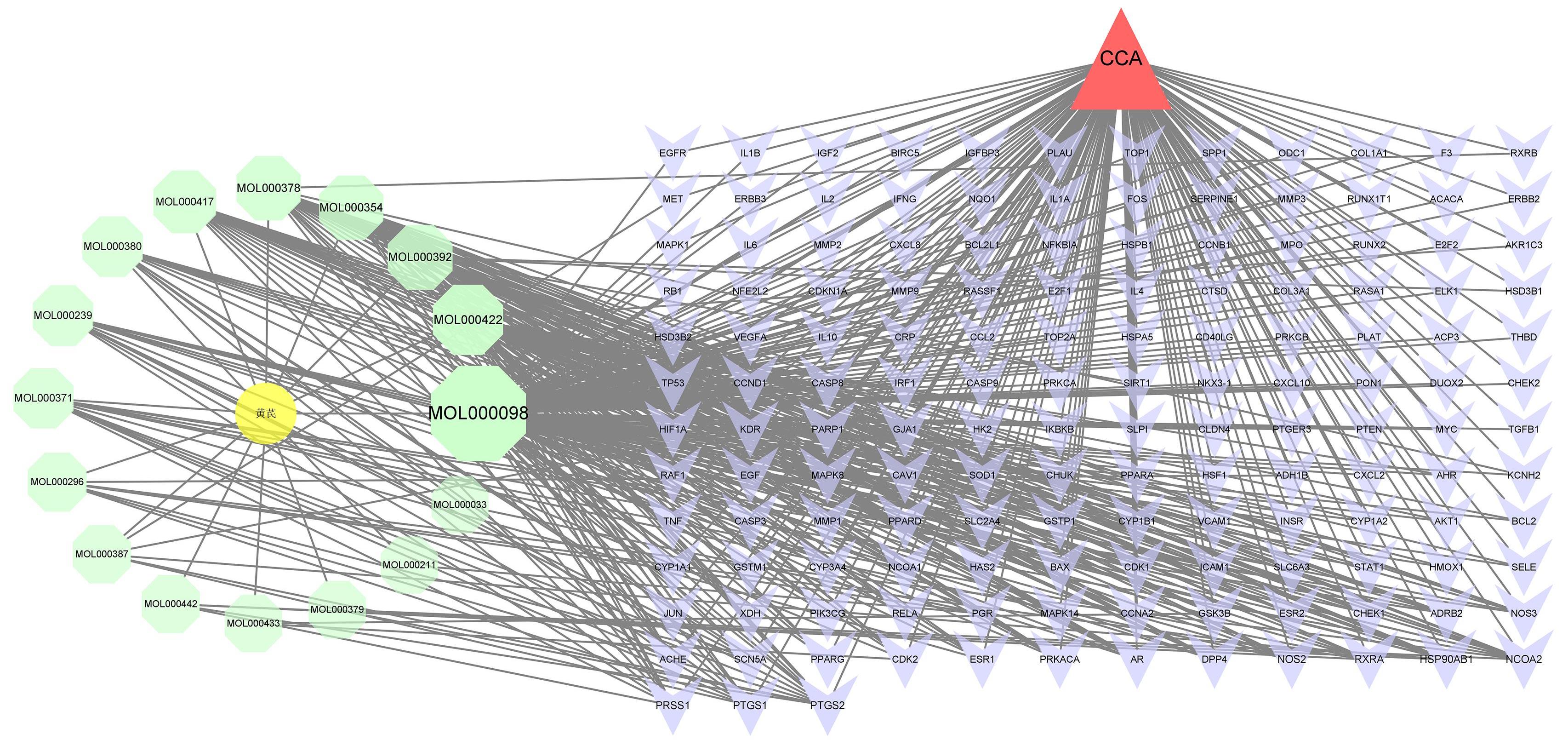
图4 "中药-活性成分-靶点-疾病"网络图
Fig.4 "Traditional Chinese Medicine-Bioactive Compounds -Targets - Diseases" Network Diagram.
| Mol ID | Molecule name | Degree value |
|---|---|---|
| MOL000098 | quercetin | 125 |
| MOL000422 | kaempferol | 44 |
| MOL000392 | formononetin | 27 |
| MOL000354 | isorhamnetin | 25 |
| MOL000378 | 7-O-methylisomucronulatol | 25 |
表2 黄芪注射液度值前5的活性成分
Tab.2 Top 5 active components of Astragalus Injection by degree value
| Mol ID | Molecule name | Degree value |
|---|---|---|
| MOL000098 | quercetin | 125 |
| MOL000422 | kaempferol | 44 |
| MOL000392 | formononetin | 27 |
| MOL000354 | isorhamnetin | 25 |
| MOL000378 | 7-O-methylisomucronulatol | 25 |
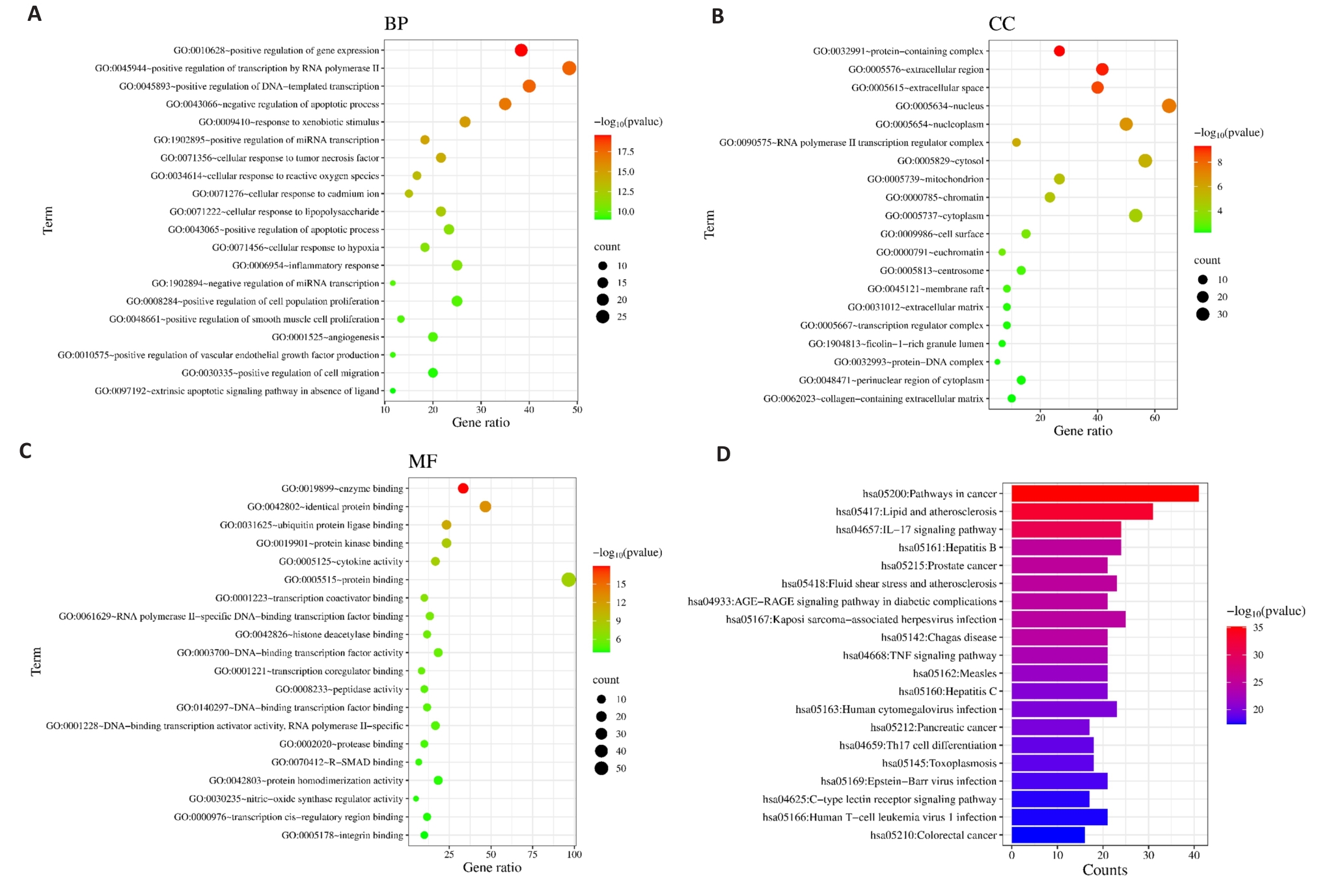
图5 富集分析
Fig.5 Enrichment analysis of biological process (A), cellular component (B), molecular function (C) and KEGG enrichment analysis (D).
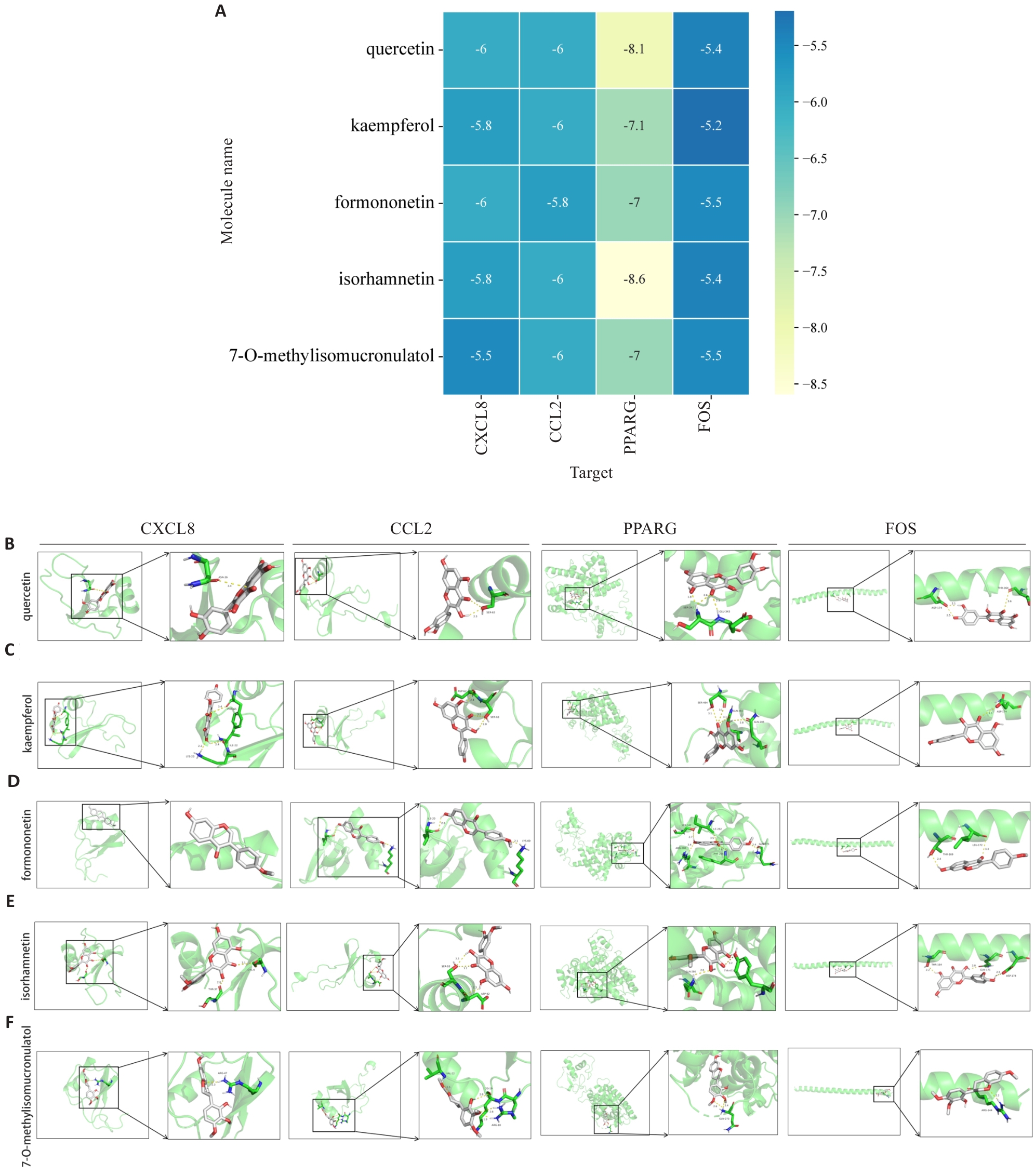
图6 活性成分与靶点蛋白的分子对接
Fig.6 Molecular docking of active components with target proteins. A: Molecular docking binding energy results. B-F: Molecular docking interactions between the active components and CXCL8, CCL2, PPARG, and FOS, respectively.
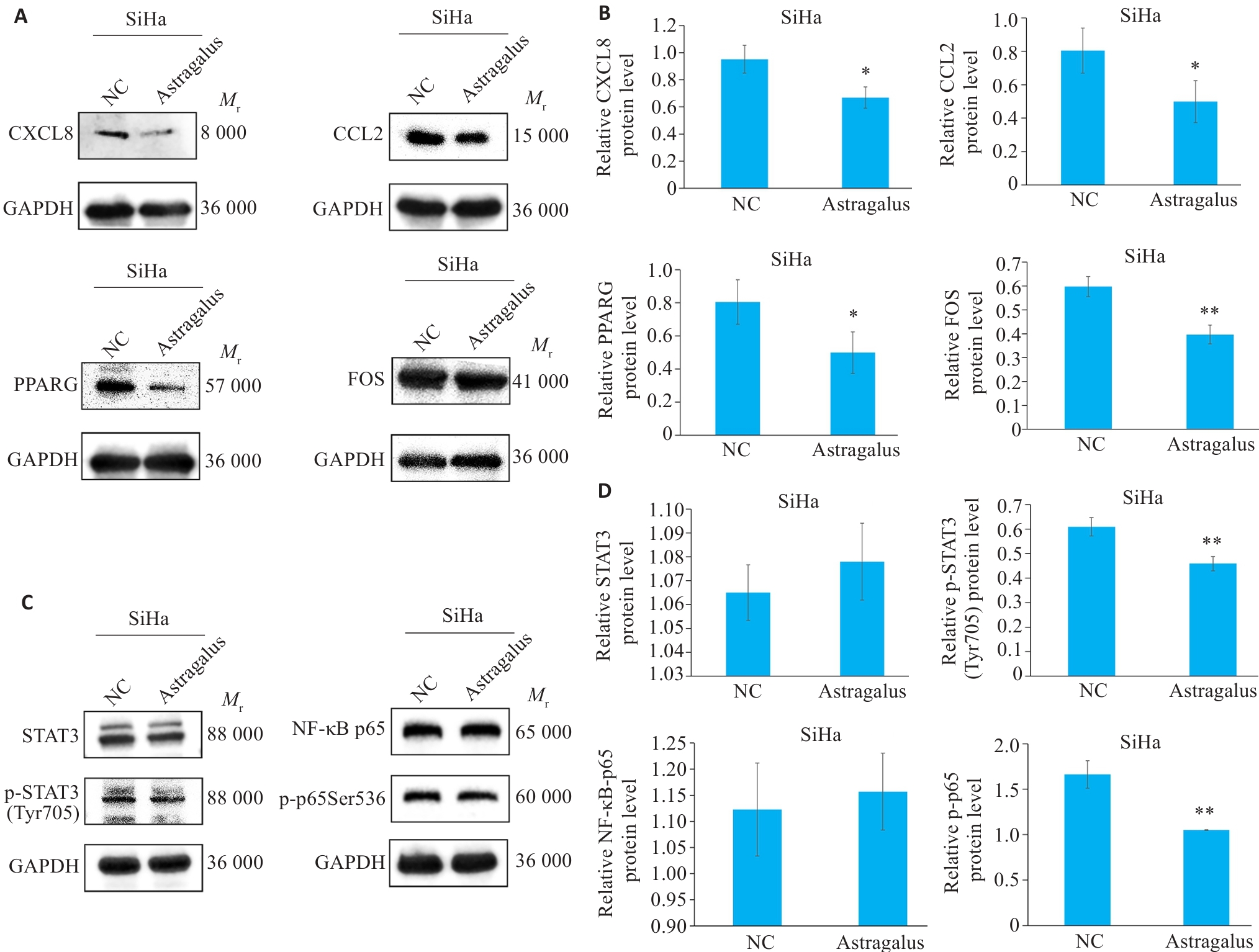
图7 黄芪注射液对 SiHa 细胞中关键通路及靶点蛋白表达的影响
Fig.7 Effect of Astragalus Injection on key pathways and target protein expression in SiHa cells. A, C: Western blotting for assessing alterations in the expression levels of key pathway and target proteins across the experimental groups, with GAPDH serving as the internal reference protein. B, D: Quantitative grayscale analysis of protein expression levels (n=3). *P<0.05, **P<0.01 vs NC.
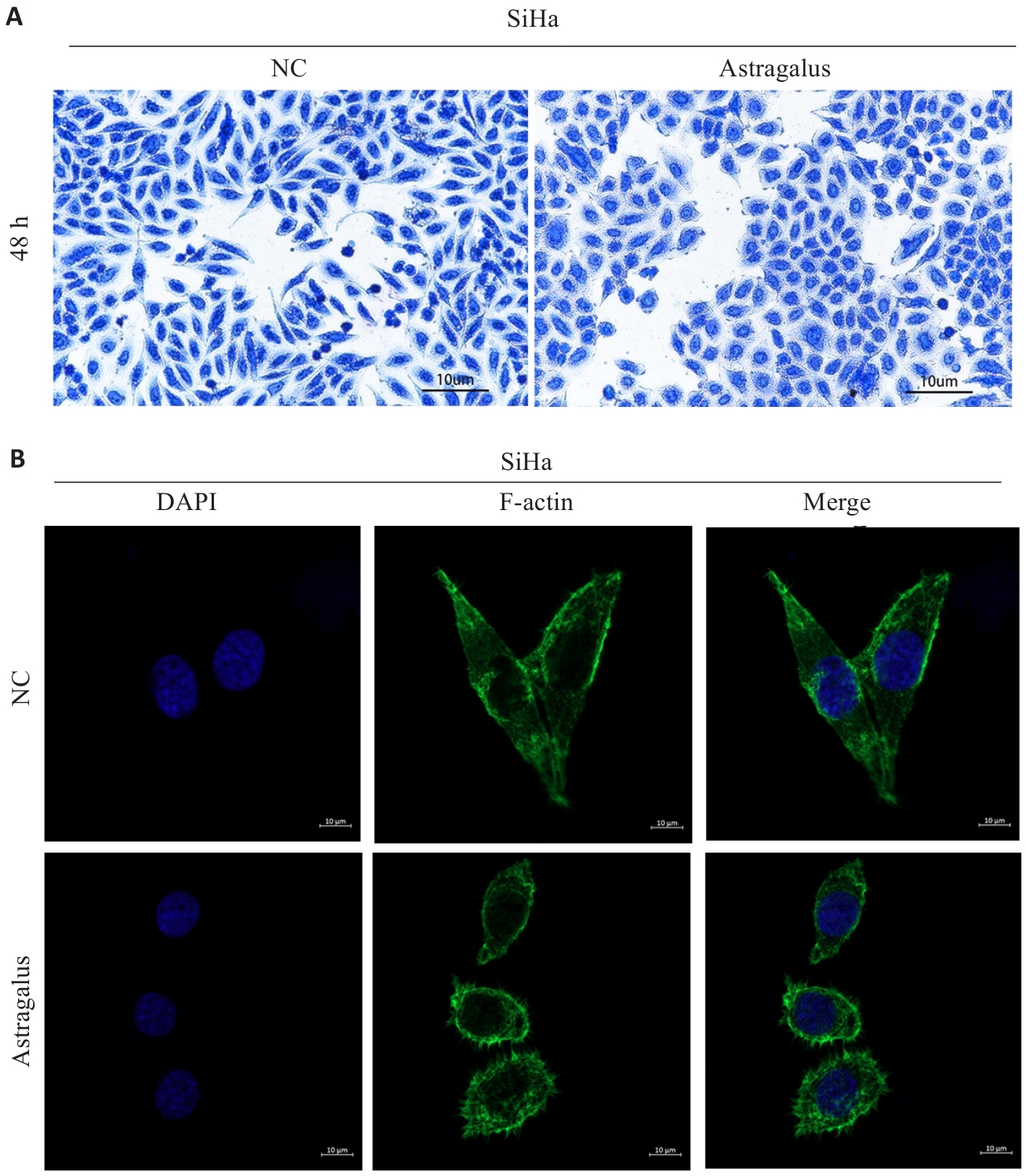
图8 黄芪注射液破坏细胞微丝结构
Fig.8 Astragalus Injection disrupts microfilament structure of SiHa cells. A: Morphology of cervical cancer SiHa cells after Astragalus Injection intervention (Coomassie Brilliant Blue staining, Scale bar=10 μm); B: Phalloidin staining of cervical cancer SiHa cells before and after treatment with Astragalus injection (Scale bar=10 μm).
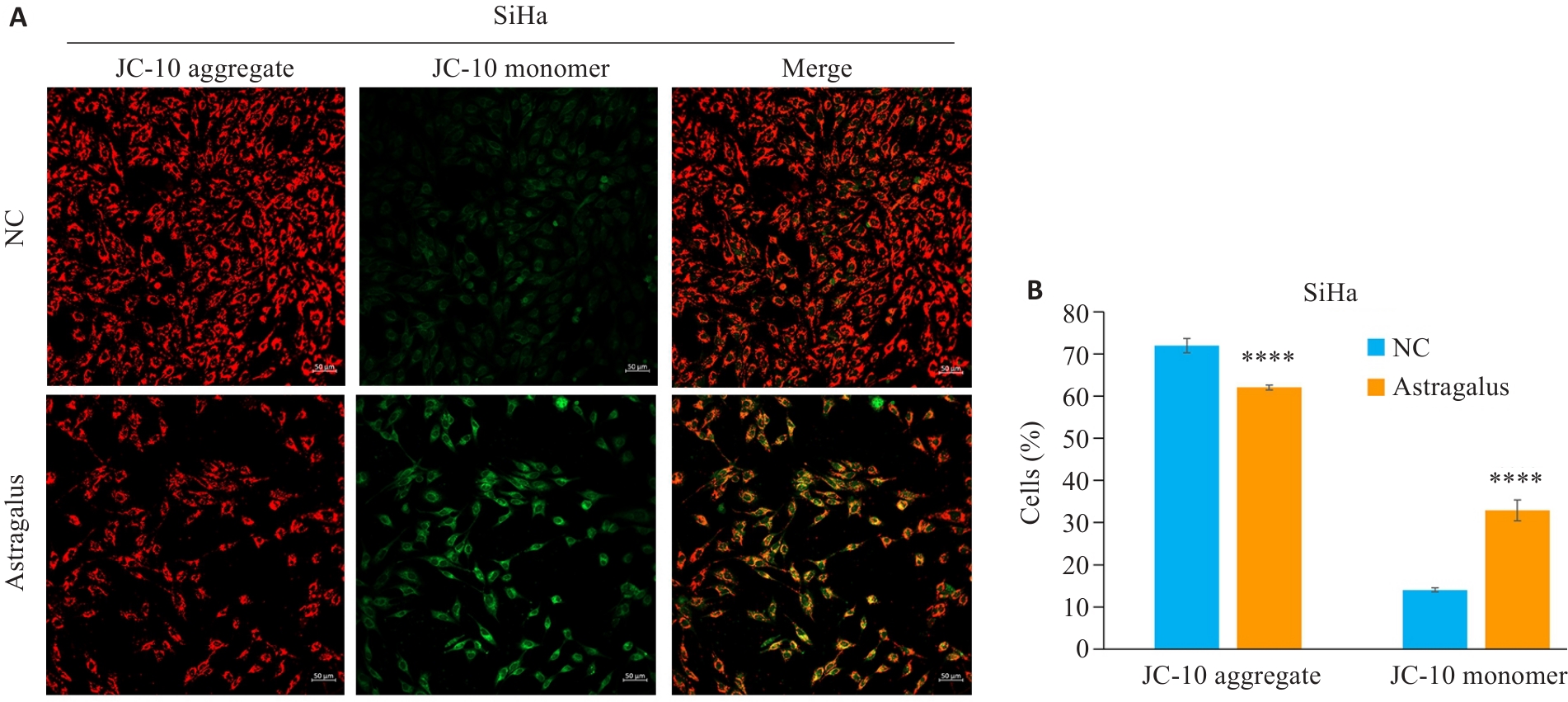
图9 黄芪注射液对SiHa细胞线粒体膜电位的影响
Fig.9 Effectof Astragalus Injection on mitochondrial membrane potential in SiHa Cells. A: JC-10 staining showing normal mitochondrial membrane potential in the control group, exhibiting red fluorescence. In contrast, the Astragalus Injection treatment group showed decreased mitochondrial membrane potential with enhanced green fluorescence (Scale bar=50 μm). B: JC-10 quantitative statistical analysis (n=3). ****P<0.0001 vs NC.
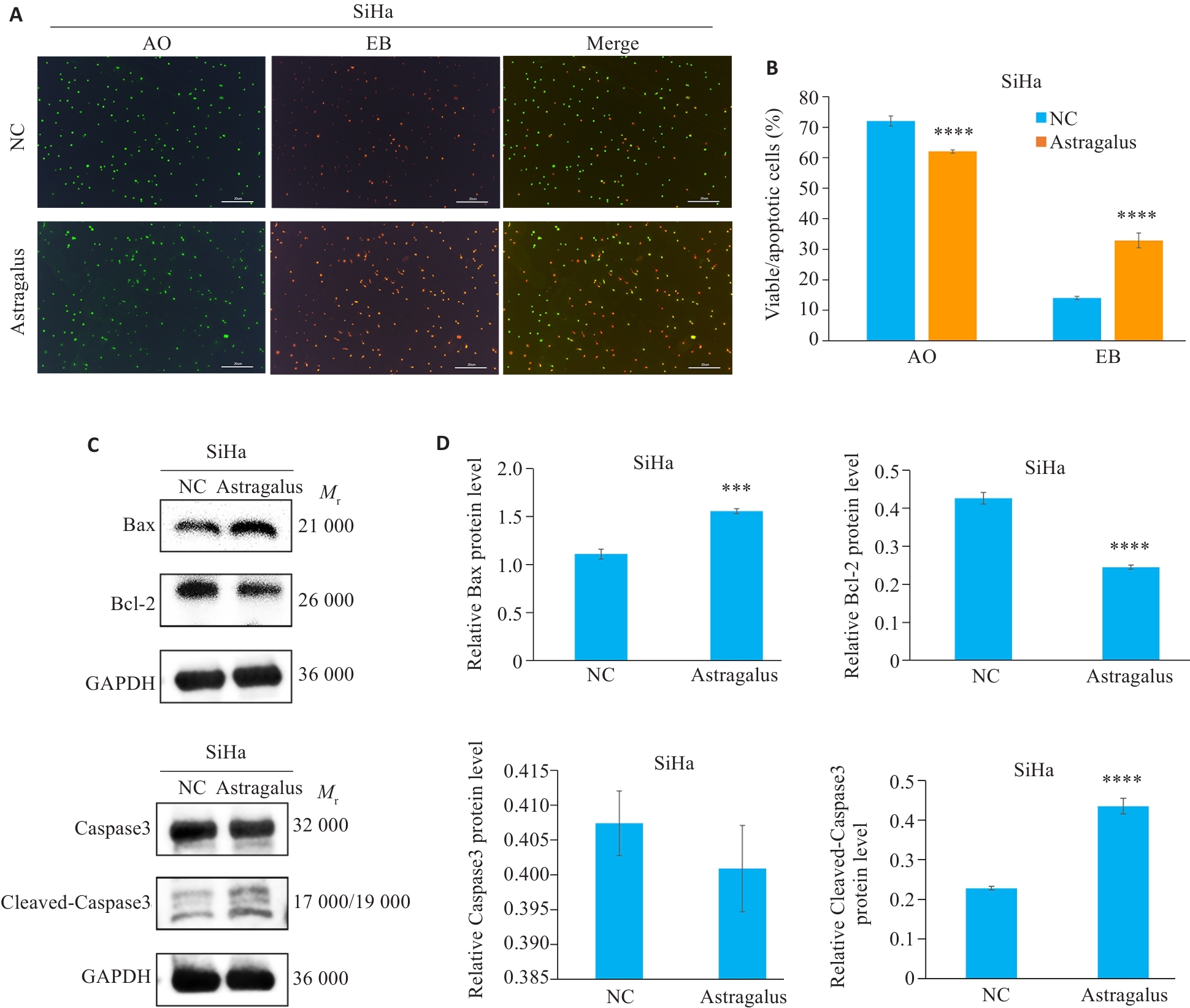
图10 黄芪注射液促进SiHa细胞的凋亡
Fig.10 Astragalus Injection promotes apoptosis in SiHa cells. A: Astragalus Injection induces apoptosis via the mitochondrial pathway, as assessed by AO/EB staining.The nuclei in the control group exhibited uniform green fluorescence; The treated cells displayed characteristic apoptotic features, including chromatin condensation (bright green) and nuclear fragmentation (orange-red) (Scale bar=20 μm). B: AO/EB quantitative statistical analysis (n=3). ****P<0.0001 vs NC; C: Western blotting of expression levels of apoptosis-related protein BAX, BCL2, caspase-3, and cleaved caspase-3, with GAPDH serving as the internal control protein. D: Quantitative grayscale analysis of protein expression levels (n=3). ***P< 0.001, ****P<0.0001 vs NC.
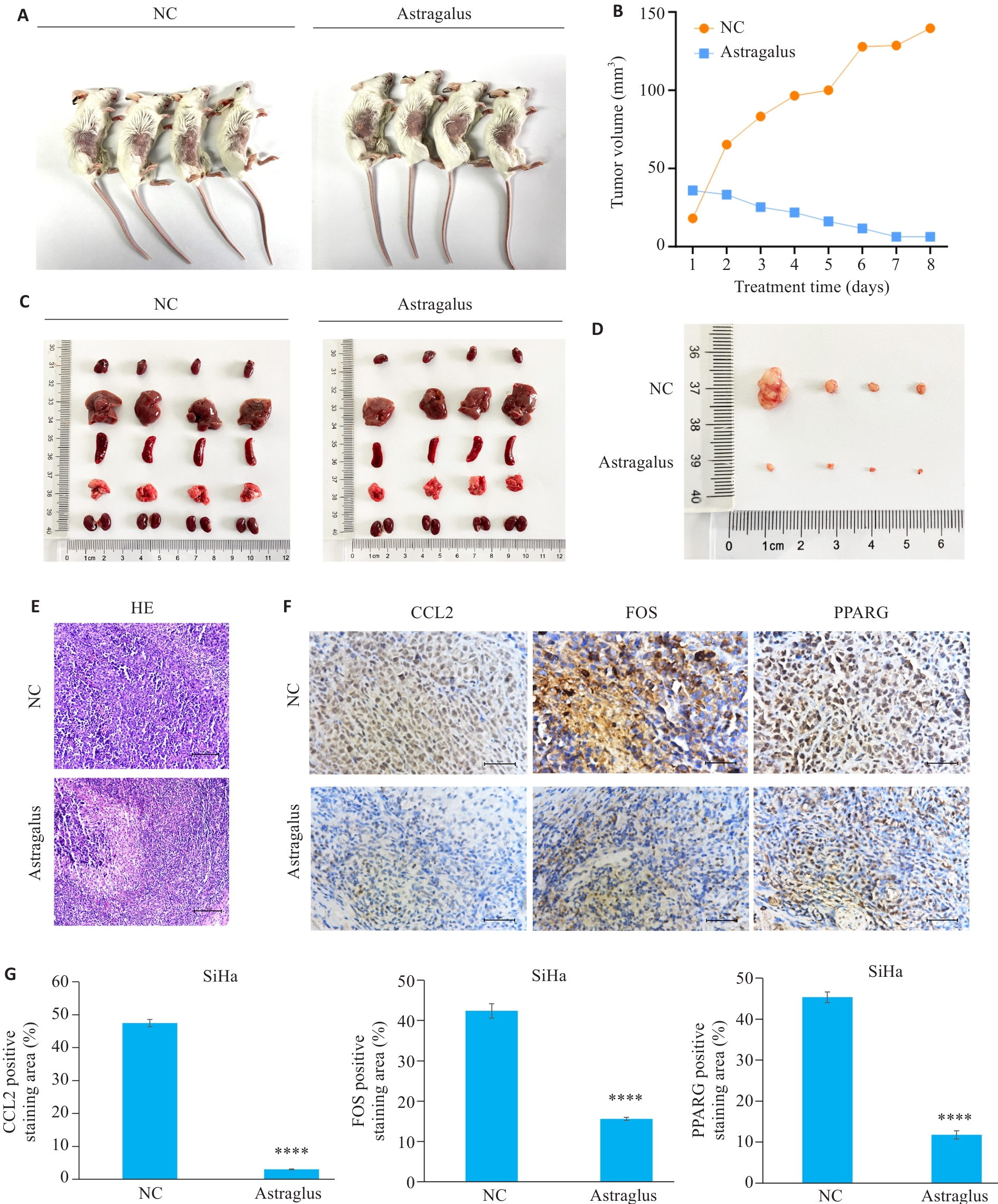
图 11 黄芪注射液对宫颈癌体内成瘤能力的抑制作用
Fig.11 Inhibitory effect of Astragalus injection on cervical cancer xenograft growth in mice. A: Macroscopic observation of subcutaneous tumor-bearing mice in the control group and the Astragalus injection treatment group. B: Tumor volume growth curve (n=4). **P<0.01 vs NC. C: Organ observation of mice in the control group and the Astragalus injection group From top to bottom: heart, liver, spleen, lung, kidney. D: Dissected tumors at the end of treatment. E: Tumor tissue HE staining (Scale bar=10 μm). F: Tumor tissue immunohistochemical staining for CCL2, FOS, and PPARG (Scale bar=5 μm). G: Quantitative analysis of immunohistochemistry results. ****P<0.0001 vs NC.
| [1] | Revathidevi S, Murugan AK, Nakaoka H, et al. APOBEC: a molecular driver in cervical cancer pathogenesis[J]. Cancer Lett, 2021, 496: 104-16. doi:10.1016/j.canlet.2020.10.004 |
| [2] | Duska LR, Podwika SE, Randall LM. Top advances of the year: Cervical cancer[J]. Cancer, 2024, 130(15): 2571-6. doi:10.1002/cncr.35334 |
| [3] | Gopu P, Antony F, Cyriac S, et al. Updates on systemic therapy for cervical cancer[J]. Indian J Med Res, 2021, 154(2): 293-302. doi:10.4103/ijmr.ijmr_4454_20 |
| [4] | Liu YL, Fang C, Luo JJ, et al. Traditional Chinese medicine for cancer treatment[J]. Am J Chin Med, 2024, 52(3): 583-604. doi:10.1142/s0192415x24500253 |
| [5] | 李 倩, 王 璇, 尹东锋. 人宫颈癌紫杉醇耐药细胞株Hela/PTX的建立及其生物特性研究[J]. 中国药师, 2018(5): 787-91. |
| [6] | 张柂儇, 刘海龙, 王瑞琼, 等. 黄芪化学成分和药理作用及Q-marker预测分析[J]. 中国新药杂志, 2023, 32(4): 410-9. |
| [7] | Sheng FY, Yang SY, Li M, et al. Research progress on the anti-cancer effects of Astragalus membranaceus saponins and their mechanisms of action[J]. Molecules, 2024, 29(14): 3388. doi:10.3390/molecules29143388 |
| [8] | Zhao L, Zhang H, Li N, et al. Network pharmacology, a promising approach to reveal the pharmacology mechanism of Chinese medicine formula[J]. J Ethnopharmacol, 2023, 309: 116306. doi:10.1016/j.jep.2023.116306 |
| [9] | Li X, Liu ZQ, Liao J, et al. Network pharmacology approaches for research of Traditional Chinese Medicines[J]. Chin J Nat Med, 2023, 21(5): 323-32. doi:10.1016/s1875-5364(23)60429-7 |
| [10] | Gutiérrez-Hoya A, Ortiz-Garrido I, Salazar-Valencia I, et al. Cervical cancer cells use the CD95 and IL-2 pathways to promote their proliferation and survival[J]. Biomolecules, 2024, 14(12): 1543. doi:10.3390/biom14121543 |
| [11] | Maiques O, Sallan MC, Laddach R, et al. Matrix mechano-sensing at the invasive front induces a cytoskeletal and transcriptional memory supporting metastasis[J]. Nat Commun, 2025, 16(1): 1394. doi:10.1038/s41467-025-56299-7 |
| [12] | McGeachy MJ, Cua DJ, Gaffen SL. The IL-17 family of cytokines in health and disease[J]. Immunity, 2019, 50(4): 892-906. doi:10.1016/j.immuni.2019.03.021 |
| [13] | Bai YF, Li HT, Lv R. Interleukin-17 activates JAK2/STAT3, PI3K/Akt and nuclear factor‑κB signaling pathway to promote the tumorigenesis of cervical cancer[J]. Exp Ther Med, 2021, 22(5): 1291. doi:10.3892/etm.2021.10726 |
| [14] | Moon YM, Lee SY, Kwok SK, et al. The fos-related antigen 1-JUNB/activator protein 1 transcription complex, a downstream target of signal transducer and activator of transcription 3, induces T helper 17 differentiation and promotes experimental autoimmune arthritis[J]. Front Immunol, 2017, 8: 1793. doi:10.3389/fimmu.2017.01793 |
| [15] | Rahman MS, Yang J, Shan LY, et al. IL-17R activation of human airway smooth muscle cells induces CXCL-8 production via a transcriptional-dependent mechanism[J]. Clin Immunol, 2005, 115(3): 268-76. doi:10.1016/j.clim.2005.01.014 |
| [16] | Shahrara S, Pickens SR, Mandelin AM, et al. IL-17-mediated monocyte migration occurs partially through CC chemokine ligand 2/monocyte chemoattractant protein-1 induction[J]. J Immunol, 2010, 184(8): 4479-87. doi:10.4049/jimmunol.0901942 |
| [17] | Liu YH, Tsai YS, Lin SC, et al. Quantitative PPARγ expression affects the balance between tolerance and immunity[J]. Sci Rep, 2016, 6: 26646. doi:10.1038/srep26646 |
| [18] | Zhang JJ, Liu W, Xing GZ, et al. Role of CC-chemokine ligand 2 in gynecological cancer[J]. Cancer Cell Int, 2022, 22(1): 361. doi:10.1186/s12935-022-02763-z |
| [19] | 陆贵伟, 吴 华. CXCL8及其受体在肿瘤细胞中的作用研究进展[J]. 中外医学研究, 2023, 21(26): 177-81. |
| [20] | Thakur K, Janjua D, Aggarwal N, et al. Physical interaction between STAT3 and AP1 in cervical carcinogenesis: Implications in HPV transcription control[J]. Biochim Biophys Acta BBA Mol Basis Dis, 2023, 1869(8): 166817. doi:10.1016/j.bbadis.2023.166817 |
| [21] | Liu X, Zhu YQ, Huang S, et al. Multiomics analysis of metabolic heterogeneity in cervical cancer cell lines with or without HPV[J]. Front Oncol, 2023, 13: 1194462. doi:10.3389/fonc.2023.1194462 |
| [22] | Kim EK, Kwon JE, Lee SY, et al. IL-17-mediated mitochondrial dysfunction impairs apoptosis in rheumatoid arthritis synovial fibroblasts through activation of autophagy[J]. Cell Death Dis, 2017, 8(1): e2565. doi:10.1038/cddis.2016.490 |
| [23] | Das S, Srinivasan S, Srivastava A, et al. Differential influence of IL-9 and IL-17 on actin cytoskeleton regulates the migration potential of human keratinocytes[J]. J Immunol, 2019, 202(7): 1949-61. doi:10.4049/jimmunol.1800823 |
| [24] | Dicu-Andreescu IG, Marincaș AM, Ungureanu VG, et al. Current therapeutic approaches in cervical cancer based on the stage of the disease: is there room for improvement?[J]. Medicina, 2023, 59(7): 1229. doi:10.3390/medicina59071229 |
| [25] | Shoaib S, Islam N, Yusuf N. Phytocompounds from the medicinal and dietary plants: multi-target agents for cervical cancer prevention and therapy[J]. Curr Med Chem, 2022, 29(26): 4481-506. doi:10.2174/0929867329666220301114251 |
| [26] | Xu WB, Xie SD, Chen X, et al. Effects of quercetin on the efficacy of various chemotherapeutic drugs in cervical cancer cells[J]. Drug Des Dev Ther, 2021, 15: 577-88. doi:10.2147/dddt.s291865 |
| [27] | Liao XZ, Gao Y, Zhao HW, et al. Cordycepin reverses cisplatin resistance in non-small cell lung cancer by activating AMPK and inhibiting AKT signaling pathway[J]. Front Cell Dev Biol, 2021, 8: 609285. doi:10.3389/fcell.2020.609285 |
| [28] | Yadav N, Parveen S, Banerjee M. Potential of nano-phytochemicals in cervical cancer therapy[J]. Clin Chim Acta, 2020, 505: 60-72. doi:10.1016/j.cca.2020.01.035 |
| [29] | 杨倩宇, 王 茜, 赵 森, 等. 黄芪-莪术影响HIF-1α/VEGF抑制肺癌血管生成相关信号通路的网络药理学研究[J]. 中华中医药杂志, 2022, 37(1): 425-30. |
| [30] | Almatroodi SA, Almatroudi A, Ali Khan A, et al. Potential therapeutic targets of formononetin, a type of methoxylated isoflavone, and its role in cancer therapy through the modulation of signal transduction pathways[J]. Int J Mol Sci, 2023, 24(11): 9719. doi:10.3390/ijms24119719 |
| [31] | Rajan S, Yoon J, Wu H, et al. Disassembly of bundled F-actin and cellular remodeling via an interplay of Mical, cofilin, and F-actin crosslinkers[J]. Proc Natl Acad Sci USA, 2023, 120(39): e2309955120. doi:10.1073/pnas.2309955120 |
| [32] | Deng S, Leong HC, Datta A, et al. PI3K/AKT signaling tips the balance of cytoskeletal forces for cancer progression[J]. Cancers, 2022, 14(7): 1652. doi:10.3390/cancers14071652 |
| [33] | Ispanovic E, Haas TL. JNK and PI3K differentially regulate MMP-2 and MT1-MMP mRNA and protein in response to actin cytoskeleton reorganization in endothelial cells[J]. Am J Physiol Cell Physiol, 2006, 291(4): C579-88. doi:10.1152/ajpcell.00300.2005 |
| [34] | Mao YJ, Su C, Yang HL, et al. PI3K/AKT/mTORC1 signalling pathway regulates MMP9 gene activation via transcription factor NF-κB in mammary epithelial cells of dairy cows[J]. Anim Biotechnol, 2024, 35(1): 2314100. doi:10.1080/10495398.2024.2314100 |
| [35] | Yu M, Jiang WJ, Yu M, et al. The upregulation of IL-1β induced by cisplatin triggers PI3K/AKT/MMP9 pathway in pericytes mediating the leakage of the blood labyrinth barrier[J]. J Inflamm Res, 2025, 18: 1191-205. doi:10.2147/jir.s492292 |
| [36] | 池 周, 张 豪, 蔡玉节, 等. 槲皮素通过PI3K/AKT信号通路抑制奥沙利铂耐药胃癌细胞迁移[J]. 实用药物与临床, 2024, 27(2): 81-5. doi:10.14053/j.cnki.ppcr.202402001 |
| [37] | Ganbold M, Louphrasitthiphol P, Miyamoto T, et al. Isorhamnetin exerts anti-proliferative effect on cancer-associated fibroblasts by inducing cell cycle arrest[J]. Biomed Pharmacother, 2025, 185: 117954. doi:10.1016/j.biopha.2025.117954 |
| [38] | Muzio G, Barrera G, Pizzimenti S. Peroxisome proliferator-activated receptors (PPARs) and oxidative stress in physiological conditions and in cancer[J]. Antioxidants, 2021, 10(11): 1734. doi:10.3390/antiox10111734 |
| [39] | Cui SN, Wu QQ, Wang J, et al. Quercetin inhibits LPS-induced macrophage migration by suppressing the iNOS/FAK/paxillin pathway and modulating the cytoskeleton[J]. Cell Adhes Migr, 2019, 13(1): 1-12. doi:10.1080/19336918.2018.1486142 |
| [40] | Tsai YC, Tsai SH, Chang EY, et al. Cytoskeletal protein vimentin interacts with and regulates peroxisome proliferator-activated receptor gamma via a proteasomal degradation process[J]. J Cell Biochem, 2013, 114(7): 1559-67. doi:10.1002/jcb.24497 |
| [41] | Huang WW, Chiu YJ, Fan MJ, et al. Kaempferol induced apoptosis via endoplasmic reticulum stress and mitochondria-dependent pathway in human osteosarcoma U-2 OS cells[J]. Molecular Nutrition Food Res, 2010, 54(11): 1585-95. doi:10.1002/mnfr.201000005 |
| [42] | 朱栋良, 尹小平, 王芳元. 异鼠李素对胃癌细胞增殖及凋亡的影响[J]. 中国普外基础与临床杂志, 2018, 25(3): 350-3. |
| [43] | Xu MS, Wang Y, Xia RL, et al. Role of the CCL2-CCR2 signalling axis in cancer: Mechanisms and therapeutic targeting[J]. Cell Prolif, 2021, 54(10): e13115. doi:10.1111/cpr.13115 |
| [44] | Fernandez-Avila L, Castro-Amaya AM, Molina-Pineda A, et al. The value of CXCL1, CXCL2, CXCL3, and CXCL8 as potential prognosis markers in cervical cancer: evidence of E6/E7 from HPV16 and 18 in chemokines regulation[J]. Biomedicines, 2023, 11(10): 2655. doi:10.3390/biomedicines11102655 |
| [45] | Ju PC, Ho YC, Chen PN, et al. Kaempferol inhibits the cell migration of human hepatocellular carcinoma cells by suppressing MMP-9 and Akt signaling[J]. Environ Toxicol, 2021, 36(10): 1981-9. doi:10.1002/tox.23316 |
| [46] | Liu AY, Hao XX, Zhu Y. Progress in the antitumor molecular mechanisms of Isorhamnetin[J]. Discov Oncol, 2025, 17(1): 137. doi:10.1007/s12672-025-03265-w |
| [47] | Petrosiute A, Musvicaitė J, Petroška D, et al. CCL2-CCR2 axis inhibition in osteosarcoma cell model: the impact of oxygen level on cell phenotype[J]. J Cell Physiol, 2025, 240(1): e31489. doi:10.1002/jcp.31489 |
| [48] | Yan ZP, Liu JX, Xie LS, et al. Role of heparan sulfate in mediating CXCL8-induced endothelial cell migration[J]. PeerJ, 2016, 4: e1669. doi:10.7717/peerj.1669 |
| [49] | Antonosante A, Brandolini L, D’Angelo M, et al. Autocrine CXCL8-dependent invasiveness triggers modulation of actin cytoskeletal network and cell dynamics[J]. Aging, 2020, 12(2): 1928-51. doi:10.18632/aging.102733 |
| [50] | 李 昂, 张 芳, 唐爱琼, 等. CXCL10/CCL2信号通路介导肿瘤微环境中宫颈癌的发展[J]. 重庆医科大学学报, 2023, 48(10): 1221-8. |
| [1] | 钱爱, 黄传兵, 朱雅文, 胡可心, 宋昕冉, 许宇翔. 芪黄健脾滋肾颗粒通过调控巨噬细胞免疫代谢重编程改善系统性红斑狼疮患者的肾脏损伤[J]. 南方医科大学学报, 2026, 46(9): 2113-2122. |
| [2] | 张雨, 孙康, 刘举达, 王舒晗, 裴静. 消核冲剂激活ASK1/MKK4/JNK通路促进乳腺上皮细胞凋亡改善大鼠乳腺增生分子机制[J]. 南方医科大学学报, 2026, 46(8): 1936-1946. |
| [3] | 乔通, 张龙涛, 章雨, 黄菊, 李晴晴, 耿志军, 胡建国, 李静. 异香草酸激活PPARγ通路改善线粒体功能缓解葡聚糖硫酸钠诱导的小鼠溃疡性结肠炎[J]. 南方医科大学学报, 2026, 46(7): 1487-1497. |
| [4] | 朱梦欣, 刘晓, 赵珊, 张新, 刘超, 刘献孔, 綦浩辰, 韩铁生, 马冬. 可解释性机器学习模型对宫颈癌周围神经浸润的术前精准预测及临床决策支持:一项多中心回顾性研究[J]. 南方医科大学学报, 2026, 46(7): 1509-1519. |
| [5] | 林灶强, 江梦瑶, 冯流畅, 方坤洋, 方萍君, 谭秦湘. 熟地黄通过多靶点机制治疗慢性肾脏病[J]. 南方医科大学学报, 2026, 46(7): 1611-1621. |
| [6] | 程园园, 黄传兵, 张娟, 朱雅文, 钱爱. 重骨颗粒通过调控Nrf2通路改善膝骨关节炎肝肾亏虚证患者的软骨损伤[J]. 南方医科大学学报, 2026, 46(5): 1028-1038. |
| [7] | 韩亮, 李百超, 王炳哲, 张志伟, 张九娜. 吐根酚碱通过Ras信号通路抑制结直肠癌的恶性生物学行为[J]. 南方医科大学学报, 2026, 46(5): 1121-1130. |
| [8] | 马扬, 郭龙辉, 王锦帼, 肖文萍, 吕运成, 范晓明. 灯盏乙素通过调控MMP7与LCN2改善大鼠代谢功能障碍相关脂肪性肝病[J]. 南方医科大学学报, 2026, 46(4): 907-922. |
| [9] | 李钊泳, 周凤华, 孙晓敏, 赵华杉, 金瑶, 何培坤, 贾钰华. 降脂祛斑方多成分协同调控炎症-代谢网络改善2型糖尿病合并高脂血症:网络药理学与临床验证[J]. 南方医科大学学报, 2026, 46(1): 83-93. |
| [10] | 呼琴, 金华. 清肾颗粒通过调控miR-23b及Nrf2通路改善慢性肾脏病湿热证患者的肾功能:基于网络药理学和临床试验[J]. 南方医科大学学报, 2025, 45(9): 1867-1879. |
| [11] | 杨子为, 吕畅, 董柱, 计书磊, 毕生辉, 张雪花, 王晓武. 金樱子通过调控Src-AKT1轴抑制肺动脉高压平滑肌增殖[J]. 南方医科大学学报, 2025, 45(9): 1889-1902. |
| [12] | 云琦, 杜若丽, 贺玉莹, 张贻欣, 王佳慧, 叶红伟, 李正红, 高琴. 肉桂酸通过抑制TLR4减轻阿霉素诱导的小鼠心肌损伤铁死亡的发生[J]. 南方医科大学学报, 2025, 45(9): 1946-1958. |
| [13] | 饶璐, 丁家和, 魏江平, 阳勇, 张小梅, 王计瑞. 槐花通过抑制PI3K/AKT通路减轻炎症反应治疗银屑病[J]. 南方医科大学学报, 2025, 45(9): 1989-1996. |
| [14] | 常笑语, 张瀚文, 曹红亭, 侯玲, 孟鑫, 陶虹, 罗彦, 李光华. 热应激对大鼠胸主动脉内皮细胞生物钟基因 Bmal1和细胞周期蛋白表达水平的影响[J]. 南方医科大学学报, 2025, 45(7): 1353-1362. |
| [15] | 陈鑫源, 吴成挺, 李瑞迪, 潘雪芹, 张耀丹, 陶俊宇, 林才志. 双术汤通过P53/SLC7A11/GPX4通路诱导胃癌细胞铁死亡[J]. 南方医科大学学报, 2025, 45(7): 1363-1371. |
| 阅读次数 | ||||||
|
全文 |
|
|||||
|
摘要 |
|
|||||
