
Journal of Southern Medical University ›› 2026, Vol. 46 ›› Issue (9): 2185-2195.doi: 10.12122/j.issn.1673-4254.2026.09.17
Yunteng LIANG1( ), Qian GAO2, Yueyi LI1, Jingyu HUANG1, Kailu LIU1, Yanli HONG1, Huifang ZHOU1, Xiaowei NIE1()
Received:2025-12-28
Online:2026-09-20
Published:2026-09-30
Contact:
Xiaowei NIE
E-mail:15269546010@163.com;niexiao5715@163.com
Supported by:Yunteng LIANG, Qian GAO, Yueyi LI, Jingyu HUANG, Kailu LIU, Yanli HONG, Huifang ZHOU, Xiaowei NIE. Wuzi Yanzong Pill ameliorates diminished ovarian reserve in mice by inhibiting granulosa cell apoptosis via the TGF-β1/PI3K/Akt/mTOR pathway[J]. Journal of Southern Medical University, 2026, 46(9): 2185-2195.
Add to citation manager EndNote|Ris|BibTeX
URL: https://www.j-smu.com/EN/10.12122/j.issn.1673-4254.2026.09.17
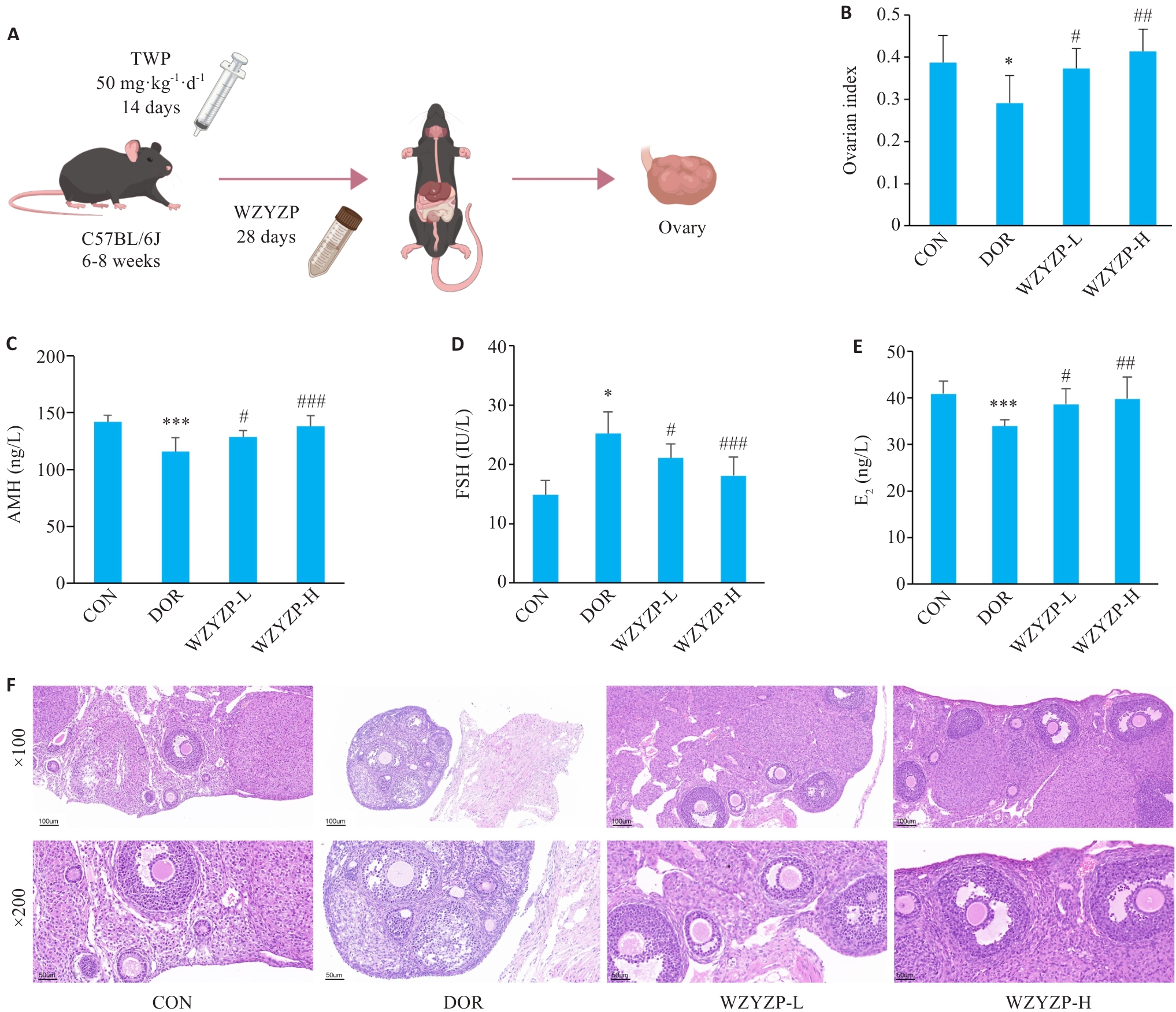
Fig.1 Wuzi Yanzong Pill (WZYZP) alleviates Tripterygium wilfordii polyglycoside-induced ovarian toxicity. A: Animal experimental protocol. B: Comparison of ovarian index among the groups. C-E: ELISA detection of AMH, FSH, and E2 levels in each group. F: HE staining of the ovarian tissues in each group (Scale bar=100 μm or 50 μm). Data are presented as Mean±SD (n=8). DOR: Diminished ovarian reserve; AMH: Anti-Müllerian hormone; E2: Estradiol; FSH:Follicle stimulating hormone. *P<0.05, ***P<0.001 vs CON group, #P<0.05, ##P<0.01, ###P<0.001 vs DOR group.
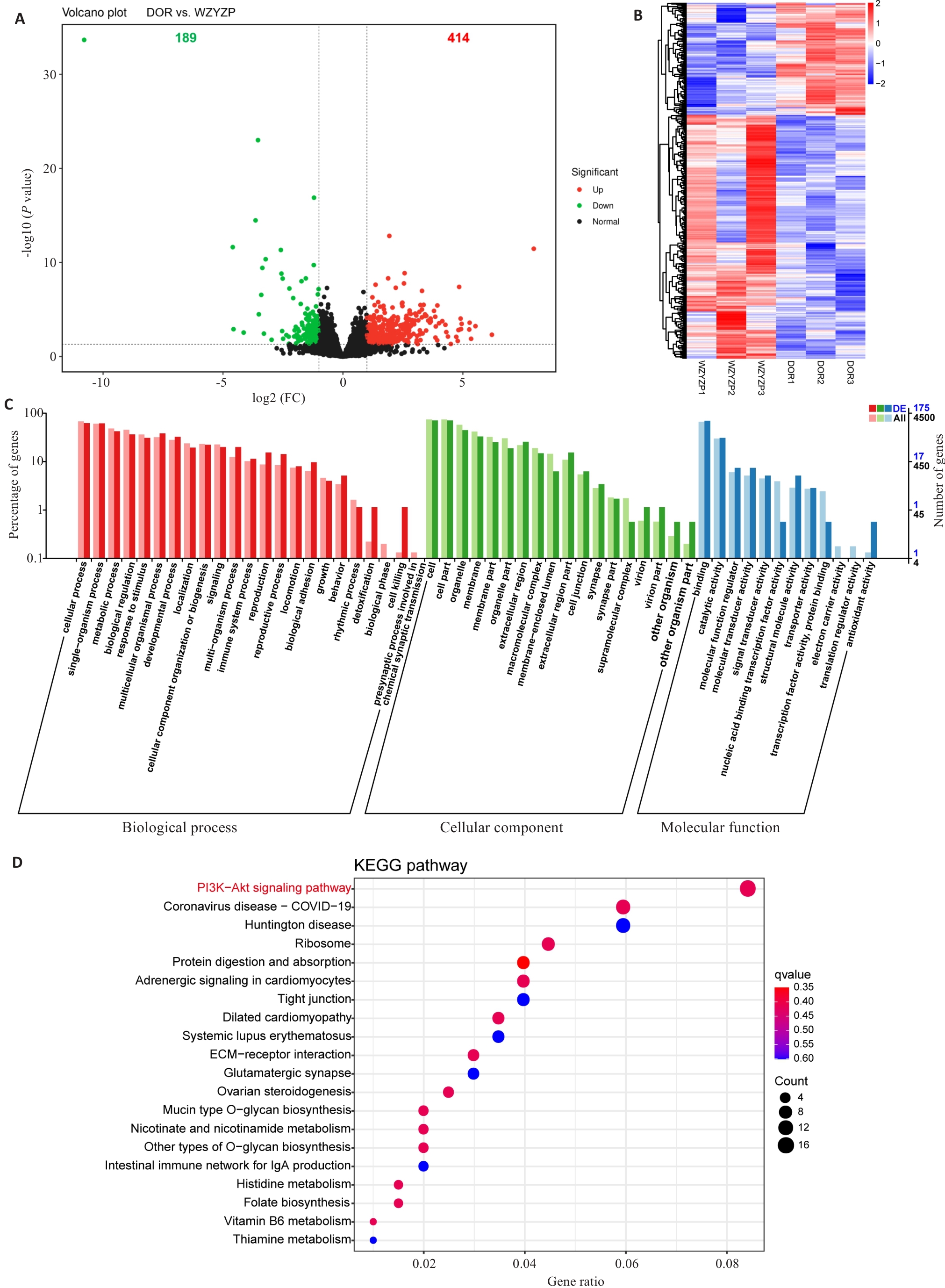
Fig.2 RNA-seq of transcriptional levels in mice granulosa cells (GCs) before and after WZYZP treatment. A: Volcano plot of differentially expressed genes in mice GCs before and after WZYZP treatment (n=3). B: Heatmap of differentially expressed genes in mice GCs before and after WZYZP treatment (n=3). C: GO analysis of differentially expressed genes (n=3). D: Dotplot of KEGG pathway enrichment analysis (n=3).
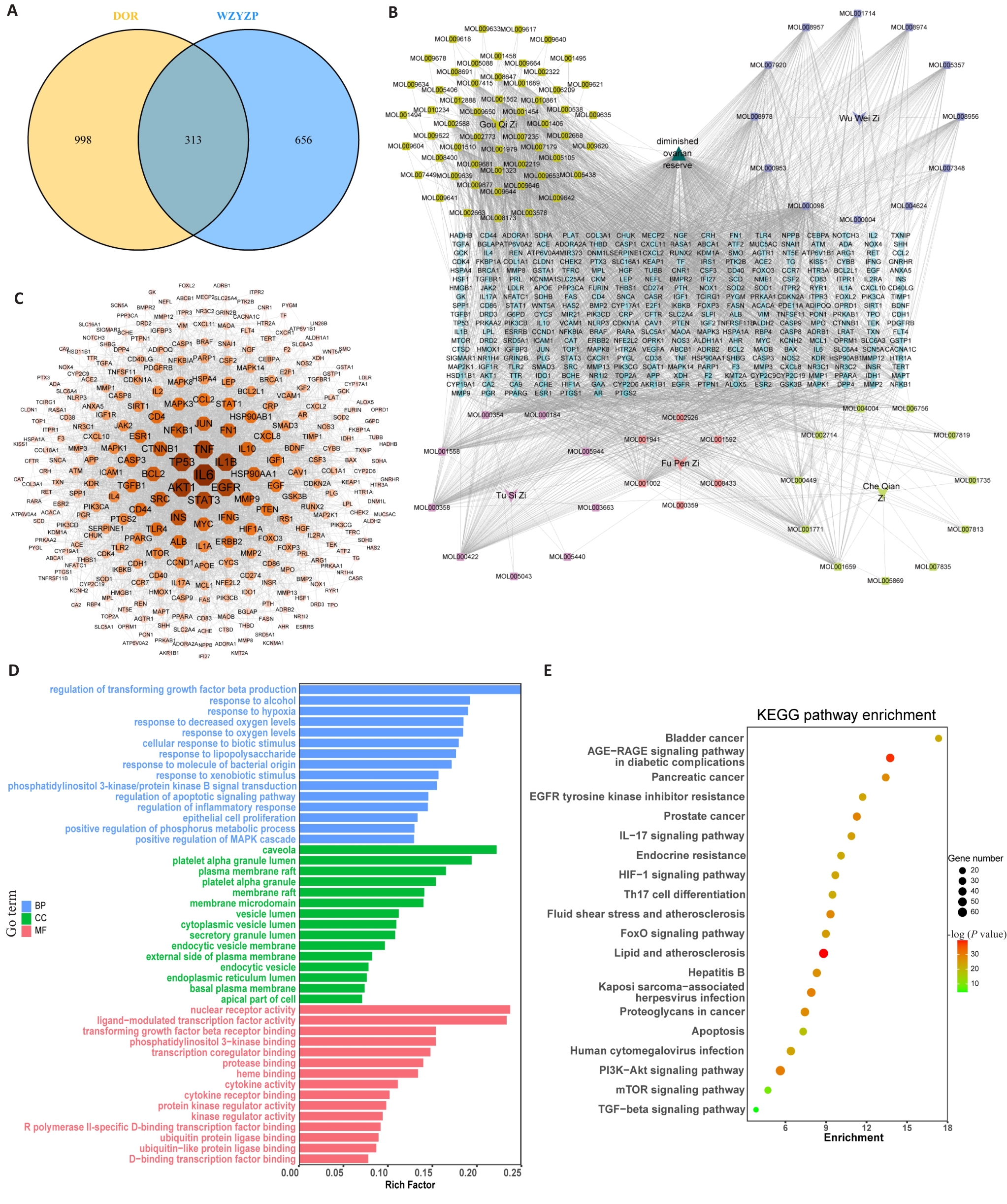
Fig.3 Network pharmacology analysis of the mechanisms of WZYZP for treating diminished ovarian reserve (DOR). A: Venn diagram of shared targets between WZYZP and DOR. B: Medicine-component-target-disease map. C: PPI network diagram. D: GO analysis of the shared targets, categorized into Biological Processes (BP), Cellular Components (CC), and Molecular Functions (MF). E: Dotplot of KEGG pathway enrichment analysis.
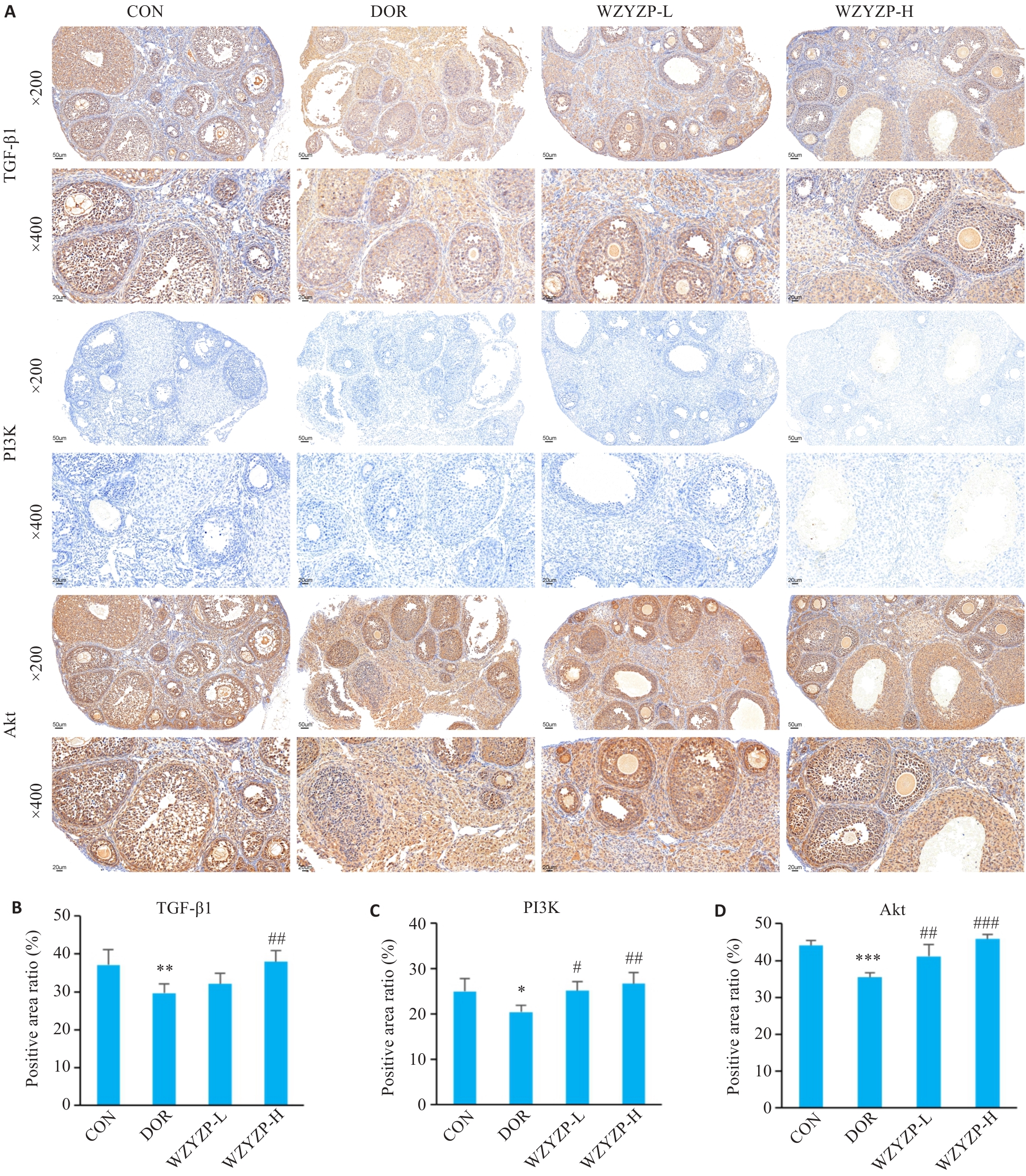
Fig.4 WZYZP upregulates ovarian expressions of TGF-β1, PI3K, and Akt in DOR mice. A: Immunohistochemistry for TGF-β1, PI3K and Akt in mouse ovaries (Scale bar=50 μm or 20 μm). B-D: Expression levels of TGF-β1, PI3K and Akt in mouse ovaries (Mean±SD, n=5). *P<0.05, **P<0.01, ***P<0.001 vs CON group; #P<0.05, ##P<0.01, ###P<0.001 vs DOR group.
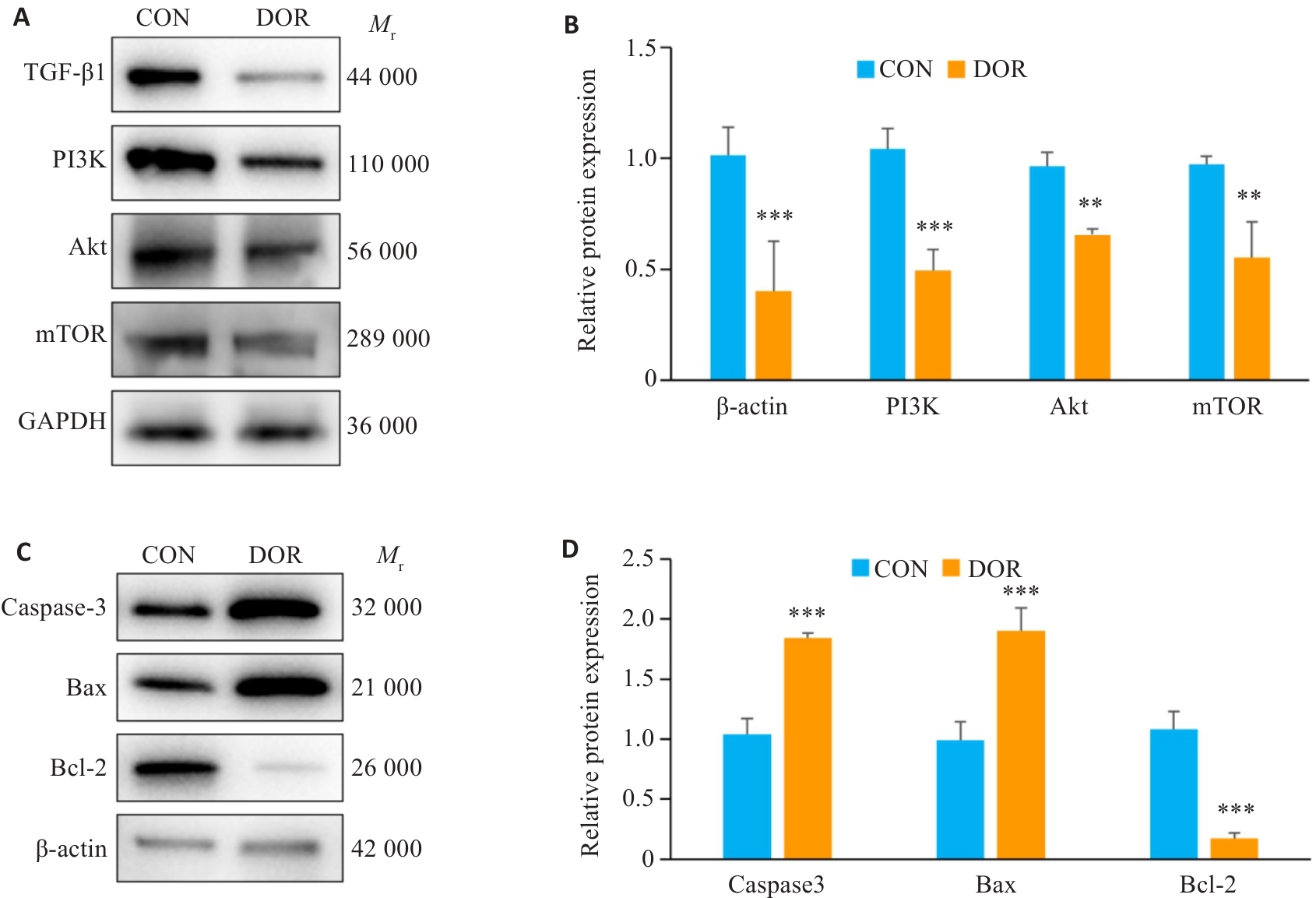
Fig.7 Down-regulation of the TGF-β1/PI3K/Akt/mTOR signaling pathway and up-regulation of apoptosis-related proteins in GCs of DOR patients. A: Protein bands of TGF-β1, PI3K, Akt, and mTOR detected by Western blotting. B: Quantitative analysis of TGF-β1, PI3K, Akt, and mTOR protein expression levels. C: Protein bands of caspase-3, BAX, and Bcl-2 detected by Western blotting. D: Quantitative analysis of caspase3, BAX, and Bcl-2 protein expression levels. Data are presented as Mean±SD (n=3). **P<0.01, ***P<0.001 vs CON group.
| [1] | Li HY, Cai SY, Mu HB, et al. HIGD1A alleviates oxidative stress related ovarian hypofunction by enhancing granulosa cell functions via NF‑κB/SOD2 signaling pathway[J]. Adv Sci, 2025, 12(34): e03828. doi:10.1002/advs.202503828 |
| [2] | Hu NY, Xin N, Wang Y, et al. CTB alleviated premature ovarian insufficiency induced by cigarette smoke exposure in mice through activating CREB1 by P300-mediated histone acetylation modifications[J]. Ecotoxicol Environ Saf, 2025, 302: 118625. doi:10.1016/j.ecoenv.2025.118625 |
| [3] | Zhang QL, Lei YL, Deng Y, et al. Treatment progress in diminished ovarian reserve: western and Chinese medicine[J]. Chin J Integr Med, 2023, 29(4): 361-7. doi:10.1007/s11655-021-3353-2 |
| [4] | Han PN, Xu HS, Yuan YY, et al. The role of growth hormone in assisted reproductive technology for patients with diminished ovarian reserve: from signaling pathways to clinical applications[J]. Front Endocrinol, 2025, 16: 1551126. doi:10.3389/fendo.2025.1551126 |
| [5] | Pastore LM, Christianson MS, Stelling J, et al. Reproductive ovarian testing and the alphabet soup of diagnoses: DOR, POI, POF, POR, and FOR[J]. J Assist Reprod Genet, 2018, 35(1): 17-23. doi:10.1007/s10815-017-1058-4 |
| [6] | Gao F, Yu Y, Wang FW, et al. The altered hypothalamic network functional connectivity in diminished ovarian reserve and regulation effect of acupuncture: a randomized controlled neuroimaging study protocol[J]. Front Endocrinol, 2025, 16: 1598943. doi:10.3389/fendo.2025.1598943 |
| [7] | Armeni E, Paschou SA, Goulis DG, et al. Hormone therapy regimens for managing the menopause and premature ovarian insufficiency[J]. Best Pract Res Clin Endocrinol Metab, 2021, 35(6): 101561. doi:10.1016/j.beem.2021.101561 |
| [8] | Cao WL, Liu SL, Zhang LF, et al. Therapeutic strategies in traditional Chinese medicine for premature ovarian failure: Modulation of oxidative stress and autophagy-apoptosis via the AMPK/mTOR pathway[J]. Biosci Trends, 2025, 19(5): 545-56. doi:10.5582/bst.2025.01193 |
| [9] | Cui FL, Zhang YS, Fan Y. Adjuvant treatment with Wu-Zi-Yan-Zong formula for abnormal sperm parameters associated with male infertility: a meta-analysis of randomized controlled trials[J]. Front Pharmacol, 2025, 16: 1580705. doi:10.3389/fphar.2025.1580705 |
| [10] | Chen ZM, Mingyue AO, Liao YJ, et al. Wuzi Yanzong prescription from Traditional Chinese Medicine for male infertility: a narrative review[J]. J Tradit Chin Med, 2023, 43(2): 416-28. |
| [11] | 朱芳芳, 王焱皙, 郜 洁, 等. 基于自噬研究麒麟丸对环磷酰胺诱导的卵巢储备功能减退模型小鼠卵巢储备功能的影响[J]. 中华中医药杂志, 2021, 36(4): 1989-94. |
| [12] | 纪利娜, 张秀艳, 梁紫影, 等. 加味五子衍宗丸周期分期治疗对卵巢低反应肾虚证患者助孕结局的影响[J]. 中国实验方剂学杂志, 2021, 27(14): 106-10. doi:10.13422/j.cnki.syfjx.20210234 |
| [13] | Dumesic DA, Meldrum DR, Katz-Jaffe MG, et al. Oocyte environment: follicular fluid and cumulus cells are critical for oocyte health[J]. Fertil Steril, 2015, 103(2): 303-16. doi:10.1016/j.fertnstert.2014.11.015 |
| [14] | Shen T, Yu Q, Zhang J, et al. Jiawei Qingxin Zishen Decoction mitigates granulosa cell apoptosis and enhances ovarian reserve through Netrin/UNC5B signaling pathway[J]. J Ethnopharmacol, 2026, 355: 120686. doi:10.1016/j.jep.2025.120686 |
| [15] | Chen W, Dong L, Liang QH, et al. NEAT1 inhibits granulosa cell apoptosis and promotes cell growth and migration through the miR-130a-3p/BMP6 axis[J]. Reprod BioMedicine Online, 2025, 51(6): 104870. doi:10.1016/j.rbmo.2025.104870 |
| [16] | Fan YT, Chang YJ, Wei LN, et al. Apoptosis of mural granulosa cells is increased in women with diminished ovarian reserve[J]. J Assist Reprod Genet, 2019, 36(6): 1225-35. doi:10.1007/s10815-019-01446-5 |
| [17] | Hu LL, Su T, Luo RC, et al. Hippo pathway functions as a downstream effector of AKT signaling to regulate the activation of primordial follicles in mice[J]. J Cell Physiol, 2019, 234(2): 1578-87. doi:10.1002/jcp.27024 |
| [18] | Bindels J, Squatrito M, Bernet L, et al. The mTOR inhibitor rapamycin counteracts follicle activation induced by ovarian cryopreservation in murine transplantation models[J]. Medicina, 2023, 59(8): 1474. doi:10.3390/medicina59081474 |
| [19] | Chen JZ, Wang NN, Peng ZL, et al. Zishen Yutai pill ameliorates ovarian reserve by mediating PI3K-Akt pathway and apoptosis level in ovary[J]. J Ovarian Res, 2025, 18(1): 61. doi:10.1186/s13048-025-01643-0 |
| [20] | Zatalian N, Dalman A, Afsharian P, et al. Metformin protects prepubertal mice ovarian reserve against cyclophosphamide via regulation of the PI3K/Akt/mTOR signaling pathway and Yap-1[J]. J Ovarian Res, 2024, 17(1): 251. doi:10.1186/s13048-024-01572-4 |
| [21] | Wang C, Feng Y, Chen Y, et al. Proximity extension assay revealed novel inflammatory biomarkers for follicular development and ovarian function: a prospective controlled study combining serum and follicular fluid[J]. Front Endocrinol, 2025, 16: 1525392. doi:10.3389/fendo.2025.1525392 |
| [22] | 黄菁宇. 补肾促排卵汤通过表观遗传修饰改善DOR小鼠氧化应激的机制研究[D]. 南京: 南京中医药大学, 2022. |
| [23] | Vidal-Sabanés M, Bonifaci N, Navaridas R, et al. Endometrial cancer progression driven by PTEN-deficiency requires miR-424(322)~503[J]. Cell Death Dis, 2025, 16: 705. doi:10.1038/s41419-025-08022-z |
| [24] | Liu Y, Jiang LJ, Liu HF, et al. Distinct roles of HMOX1 on tumor epithelium and macrophage for regulation of immune microenvironment in ovarian cancer[J]. Int J Surg, 2025, 111(10): 6725-42. doi:10.1097/js9.0000000000002829 |
| [25] | Hu WJ, Xie X, Xu JB. Epimedium-derived exosome-loaded GelMA hydrogel enhances MC3T3-E1 osteogenesis via PI3K/Akt pathway[J]. Cells, 2025, 14(15): 1214. doi:10.3390/cells14151214 |
| [26] | Zhou JJ, Qiao E, He ZY, et al. Fibulin 5 mediates pulmonary artery smooth muscle cell dysfunction and vascular remodelling in congenital heart disease associated pulmonary arterial hypertension via TGF-β1/PI3K/AKT signalling[J]. Respir Res, 2025, 26(1): 276. doi:10.1186/s12931-025-03361-z |
| [27] | 何瑞芬, 杨永秀, 梁晓磊. 卵巢储备功能减退动物模型研究进展[J]. 中国实验动物学报, 2024, 32(2): 254-9. |
| [28] | 林华丹, 王 旭, 陈春宏, 等. 三种卵巢储备功能减退小鼠模型的效果比较[J]. 中国比较医学杂志, 2025, 37(5): 51-9. |
| [29] | Jiang S, Li HQ, Zhang L, et al. Generic Diagramming Platform (GDP): a comprehensive database of high-quality biomedical graphics[J]. Nucleic Acids Res, 2025, 53(D1): D1670-6. doi:10.1093/nar/gkae973 |
| [30] | Monteleone P, Mascagni G, Giannini A, et al. Symptoms of menopause: global prevalence, physiology and implications[J]. Nat Rev Endocrinol, 2018, 14(4): 199-215. doi:10.1038/nrendo.2017.180 |
| [31] | Dong L, Wu HC, Qi FH, et al. LncRNA NEAT1 participates in diminished ovarian reserve by affecting granulosa cell apoptosis and estradiol synthesis via the miR-204-5p/ESR1 axis[J]. J Ovarian Res, 2025, 18(1): 102. doi:10.1186/s13048-025-01683-6 |
| [32] | Zhang XY, Zhang N, Dong ZB, et al. The role of Chinese herbal medicine in diminished ovarian reserve management[J]. J Ovarian Res, 2025, 18(1): 90. doi:10.1186/s13048-025-01669-4 |
| [33] | 陈 瑶, 田赛男, 王彬安, 等. 归肾丸治疗卵巢功能减退性疾病的作用机制研究进展[J]. 中国实验方剂学杂志, 2026, 32(2): 317-24. |
| [34] | 李 瑄, 林 蓉, 苏嘉文, 等. 滋肾安神汤联合生长激素对卵巢储备功能减退患者体外受精-胚胎移植临床结局的影响[J]. 实用医学杂志, 2025, 41(20): 3283-7. doi:10.3969/j.issn.1006-5725.2025.20.019 |
| [35] | 辛喜艳, 鞠瀚儒, 李 东. 补肾调血法改善卵巢储备功能减退患者IVF-ET妊娠结局的中医机理探讨[J]. 中国中医基础医学杂志, 2025, 31(10): 1730-4. |
| [36] | 高语浓. 加减五子衍宗丸干预肾虚肝郁证DOR不孕症IVF-ET临床疗效观察[D]. 沈阳: 辽宁中医药大学, 2025. |
| [37] | 卵巢储备功能减退临床诊治专家共识专家组;中华预防医学会生育力保护分会生殖内分泌生育保护学组.卵巢储备功能减退临床诊治专家共识[J]. 生殖医学杂志, 2022, 31(4): 425-34. |
| [38] | Carson SA, Kallen AN. Diagnosis and management of infertility: a review[J]. JAMA, 2021, 326(1): 65-76. doi:10.1001/jama.2021.4788 |
| [39] | Bai Q, Ban YW, Zhao LF, et al. Mitochondrial protein COX5B orchestrates antiviral autophagy and apoptosis to restrict SRBSDV propagation in Sogatella furcifera [J]. Autophagy, 2026: 22(3): 567-85. doi:10.1080/15548627.2025.2601863 |
| [40] | Andrade GM, da Silveira JC, Perrini C, et al. The role of the PI3K-Akt signaling pathway in the developmental competence of bovine oocytes[J]. PLoS One, 2017, 12(9): e0185045. doi:10.1371/journal.pone.0185045 |
| [41] | He YX, Gan ML, Ma JF, et al. TGF‑β signaling in the ovary: Emerging roles in development and disease[J]. Int J Biol Macromol, 2025, 306(Pt 4): 141455. doi:10.1016/j.ijbiomac.2025.141455 |
| [42] | Luo KX. Signaling cross talk between TGF‑β/smad and other signaling pathways[J]. Cold Spring Harb Perspect Biol, 2017, 9(1): a022137. doi:10.1101/cshperspect.a022137 |
| [43] | Tang QY, Markby GR, MacNair AJ, et al. TGF‑β‑induced PI3K/AKT/mTOR pathway controls myofibroblast differentiation and secretory phenotype of valvular interstitial cells through the modulation of cellular senescence in a naturally occurring in vitro canine model of myxomatous mitral valve disease[J]. Cell Prolif, 2023, 56(6): e13435. doi:10.1111/cpr.13435 |
| [44] | Li MN, Wang LB, Luo YZ, et al. RNA-seq analysis of the biological process and regulatory signal of TGF‑β1-mediated changes in ovarian granulosa cells in small-tail Han sheep[J]. Theriogenology, 2025, 234: 9-18. doi:10.1016/j.theriogenology.2024.12.001 |
| [45] | Jiang LL, Yang SJ, Zhang CL. Sigma-1 receptor-mediated high mobility group A1 silencing alleviates endoplasmic reticulum stress-induced ovarian granulosa cell apoptosis: an in vitro cell experimental study[J]. BJOG, 2025, 132(): 120-31. doi:10.1111/1471-0528.18081 |
| [46] | Yan JM, Zhang XY, Zhu KX, et al. Sleep deprivation causes gut dysbiosis impacting on systemic metabolomics leading to premature ovarian insufficiency in adolescent mice[J]. Theranostics, 2024, 14(9): 3760-76. doi:10.7150/thno.95197 |
| [47] | Xue HW, Zhang SY, Lu J, et al. Pfaffia glomerata ameliorates BPA-induced reproductive impairments in mice by suppressing apoptosis via PI3K/AKT signaling activation[J]. Pharmaceuticals, 2025, 18(11): 1614. doi:10.3390/ph18111614 |
| [48] | Eskandari E, Eaves CJ. Paradoxical roles of caspase-3 in regulating cell survival, proliferation, and tumorigenesis[J]. J Cell Biol, 2022, 221(6): e202201159. doi:10.1083/jcb.202201159 |
| [1] | Chunning LI, Qiqi YANG, Zhenfeng ZHANG, Liang BAO, Tianxin JIANG, Yu ZHANG, Fei LI. Electroacupuncture alleviates articular chondrocyte apoptosis in rats with knee osteoarthritis by regulating the TLR4/MyD88/NF-κB signaling pathway [J]. Journal of Southern Medical University, 2026, 46(8): 1886-1895. |
| [2] | Yu ZHANG, Kang SUN, Juda LIU, Shuhan WANG, Jing PEI. Xiaohe Granule improves breast hyperplasia in rats by promoting mammary epithelial cell apoptosis via activating the ASK1/MKK4/JNK signaling pathway [J]. Journal of Southern Medical University, 2026, 46(8): 1936-1946. |
| [3] | Tong QIAO, Longtao ZHANG, Yu ZHANG, Ju HUANG, Qingqing LI, Zhijun GENG, Jianguo HU, Jing Li. Isovanillic acid alleviates dextran sulfate sodium-induced ulcerative colitis in mice by improving mitochondrial function via activating the PPARγ pathway [J]. Journal of Southern Medical University, 2026, 46(7): 1487-1497. |
| [4] | Longtao ZHANG, Yu ZHANG, Tong QIAO, Keni ZHANG, Lin YIN, Ju HUANG, Jing LI, Zhijun GENG, Jianguo HU. Methyl syringate alleviates DSS-induced colitis in mice by suppressing intestinal epithelial cell apoptosis via inhibiting the MAPK signaling pathway [J]. Journal of Southern Medical University, 2026, 46(7): 1685-1695. |
| [5] | Jin LI, Yijie HE, Fangfang BI, Junxin CHEN, Zhenyan FAN, Yu ZHANG, Enyu CHEN, Hongwen XIAO, Yun WU, Hua TIAN, Yuhong ZHOU. Targeted inhibition of miR-503 upregulates Apelin expression to alleviate myocardial infarction in mice [J]. Journal of Southern Medical University, 2026, 46(6): 1235-1243. |
| [6] | Jing YU, Jijun CHU, Chengcheng LIANG. Chronic iron overload induces diminished ovarian reserve in mice via iron metabolism dysregulation-mediated oxidative stress and endocrine dysfunction [J]. Journal of Southern Medical University, 2026, 46(6): 1313-1322. |
| [7] | Jia WEI, Wei JIANG, Linying XIA, Lü LÜ, Qiang YANG. Growth differentiation factor 11 attenuates hypoxia/reoxygenation injury in rat H9C2 cardiomyocytes in vitro by inhibiting thioredoxin-1 nitrative inactivation [J]. Journal of Southern Medical University, 2026, 46(5): 1075-1083. |
| [8] | Yuxing LIN, Sinan SHI, Jing WANG, Siyue LIN, Jie ZHANG, Shanshan LIN, Yishurong CHEN, Ling ZHANG, Qiaoyan CAI. Qingda Granules inhibit cerebral microvascular endothelial cell apoptosis in hypertensive mice by suppressing the P53 signaling pathway [J]. Journal of Southern Medical University, 2026, 46(5): 1102-1110. |
| [9] | Qile SONG, Yikai MIAO, Xiaotong FENG, Yifan WANG, Wei LIU, Qi WEI, Xinru YU, Wenwen CHEN, Xiaoyan FU. Selenocystine inhibits colon cancer cell growth by promoting reactive oxygen species generation to trigger oxidative damage [J]. Journal of Southern Medical University, 2026, 46(3): 532-540. |
| [10] | Hexin WEN, Jie LIN, Lugen ZUO, Mulin LIU. Niranthin ameliorates Crohn's disease-like colitis in mice via antagonizing intestinal epithelial cell apoptosis and regulating intestinal Th1/Th2 immune homeostasis [J]. Journal of Southern Medical University, 2026, 46(3): 655-665. |
| [11] | Yuyang ZHANG, Ying SHEN, Xinyu TONG, Yukui DUAN, Yunna LUO, Wenqi GUO. Silybin inhibits fibrosis after glaucoma filtration surgery in rabbits by promoting fibroblast autophagy [J]. Journal of Southern Medical University, 2026, 46(3): 666-674. |
| [12] | Tong QIAO, Lin YIN, Keni ZHANG, Minzhu NIU, Ju HUANG, Zhijun Geng, Jing LI, Jianguo HU. Poricoic acid A alleviates dextran sulfate sodium-induced colitis in mice by regulating AMPK/mTOR-mediated autophagy and inhibiting intestinal epithelial cell apoptosis [J]. Journal of Southern Medical University, 2026, 46(1): 131-140. |
| [13] | Shufen ZHANG, Tianrong HUANG, Canhong YANG, Jiayi CHEN, Tianming LÜ, Jiafa ZHANG. Sulforaphane reduces reactive astrocyte-mediated neuron apoptosis in vitro by inhibiting the MAPK/NF-κB signaling pathway in Aβ42 oligomer-activated astrocytes [J]. Journal of Southern Medical University, 2026, 46(1): 191-199. |
| [14] | Jinyan ZHAO, Jiao PENG, Minghe LIN, Xiaoqin ZHU, Bin HUANG, Jiumao LIN. Qingjie Fuzheng Granules alleviates 5-fluorouracil-induced skeletal muscle injury in tumor-bearing mice by inhibiting mitochondria-dependent apoptosis and activating the AMPK-PGC-1α pathway [J]. Journal of Southern Medical University, 2026, 46(1): 94-103. |
| [15] | Xiaoyu CHANG, Hanwen ZHANG, Hongting CAO, Ling HOU, Xin MENG, Hong TAO, Yan LUO, Guanghua LI. Heat stress affects expression levels of circadian clock gene Bmal1 and cyclins in rat thoracic aortic endothelial cells [J]. Journal of Southern Medical University, 2025, 45(7): 1353-1362. |
| Viewed | ||||||
|
Full text |
|
|||||
|
Abstract |
|
|||||
