
Journal of Southern Medical University ›› 2026, Vol. 46 ›› Issue (10): 2548-2557.doi: 10.12122/j.issn.1673-4254.2026.10.22
Zhengying YU1( ), Bingliang ZHOU1, Xiangshun MENG1, Lei WANG2, Shenghe HUANG3(), Hong CAO1()
Received:2026-03-05
Online:2026-10-20
Published:2026-10-26
Contact:
Shenghe HUANG, Hong CAO
E-mail:19568703090@163.com;shhuang35@gmail.com;gzhcao@smu.edu.cn
Zhengying YU, Bingliang ZHOU, Xiangshun MENG, Lei WANG, Shenghe HUANG, Hong CAO. Withaferin A inhibits biofilm formation and adhesion of neonatal meningitis Escherichia coli by downregulating ibeR expression[J]. Journal of Southern Medical University, 2026, 46(10): 2548-2557.
Add to citation manager EndNote|Ris|BibTeX
URL: https://www.j-smu.com/EN/10.12122/j.issn.1673-4254.2026.10.22
| Gene | Primer sequences (5'-3')-F | Primer sequences (5'-3')-R |
|---|---|---|
| ibeA | AGTCGACTTGTACTCGGGTTAGAG | ATAACACCGATGCCAAC |
| ibeR | GATGTCGACGGGCTTTTCGGCGTCA | CGTCTAGATAAGGGCTAAACATATCG |
| ibeT | AATCCCTTATGGCGTAATG | GATCTAGAATGCCCGCAAGGGCG |
| TnaA | TGCAACCATCACCAGTAAC | GTCCATTACCACCGGAATATC |
| RRS | TATTGCACAATGGGCGCAAG | ACTTAACAAACCGCCTGCGT |
Tab.1 Primer sequences used for qPCR
| Gene | Primer sequences (5'-3')-F | Primer sequences (5'-3')-R |
|---|---|---|
| ibeA | AGTCGACTTGTACTCGGGTTAGAG | ATAACACCGATGCCAAC |
| ibeR | GATGTCGACGGGCTTTTCGGCGTCA | CGTCTAGATAAGGGCTAAACATATCG |
| ibeT | AATCCCTTATGGCGTAATG | GATCTAGAATGCCCGCAAGGGCG |
| TnaA | TGCAACCATCACCAGTAAC | GTCCATTACCACCGGAATATC |
| RRS | TATTGCACAATGGGCGCAAG | ACTTAACAAACCGCCTGCGT |
| Test category | Main assessment content | Maximum score |
|---|---|---|
| Motor test | Forelimb/hindlimb flexion when suspended by tail, walking along a straight line, etc. | 6 Points |
| Sensory test | Placing test, proprioceptive test | 2 Points |
| Balance beam test | Ability to maintain balance and walk on a balance beam | 6 Points |
| Reflexes and abnormal movements | Pinna reflex, corneal reflex, startle reflex, and presence of seizures/myoclonus | 4 Points |
Tab.2 Modified neurological severity score
| Test category | Main assessment content | Maximum score |
|---|---|---|
| Motor test | Forelimb/hindlimb flexion when suspended by tail, walking along a straight line, etc. | 6 Points |
| Sensory test | Placing test, proprioceptive test | 2 Points |
| Balance beam test | Ability to maintain balance and walk on a balance beam | 6 Points |
| Reflexes and abnormal movements | Pinna reflex, corneal reflex, startle reflex, and presence of seizures/myoclonus | 4 Points |
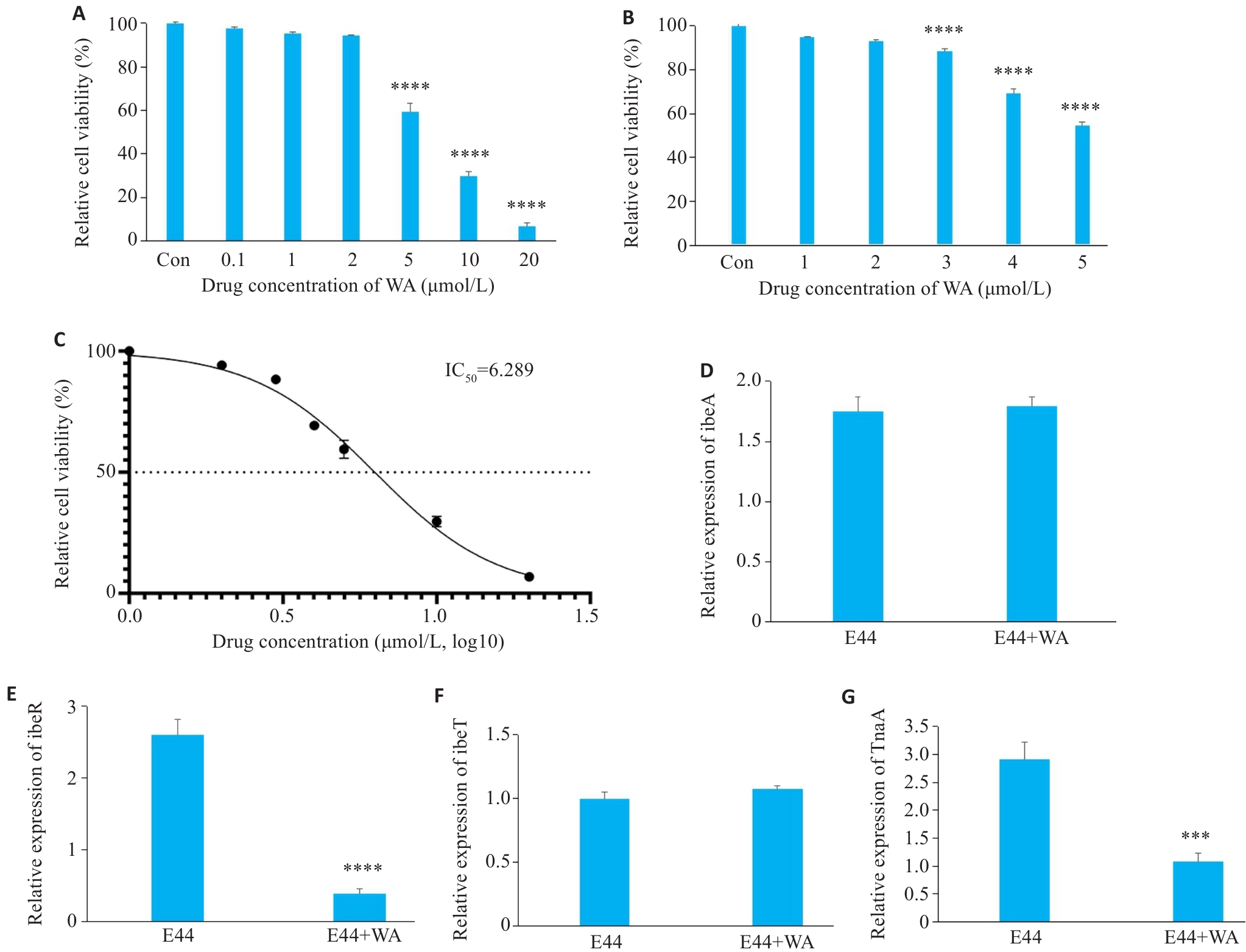
Fig 1 Effect of WA on viability of cultured human brain microvascular endothelial cells (HBMECs) and expression levels of ibeR, ibeA and ibeT in E44 strain. A: Relative viability of HBMECs treated with different concentrations of WA in preliminary experiment (n=6). B: Relative cell viability after WA treatment in formal experiment (n=6). C: Dose-effect curve and calculation of IC50 of WA in HBMECs (n=6). D-G: Expression levels of ibeA, ibeR, ibeT and TnaA in E44 and WA-treated E44 (n=3). ***P<0.001 vs E44 group, ****P<0.0001 vs WA(2 μmol/L) group or E44 group.
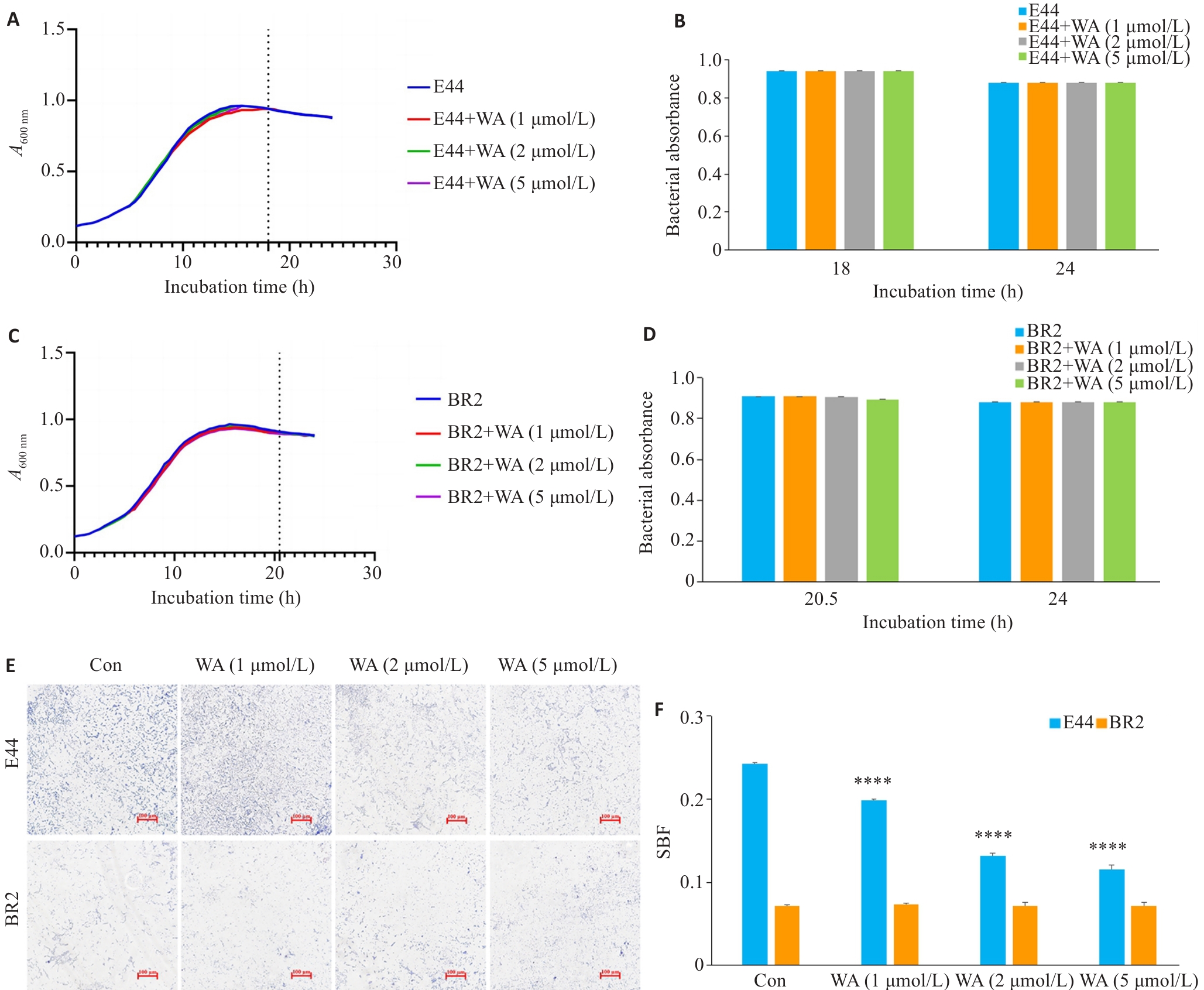
Fig.2 Growth and biofilm content of E44 and BR2 strains with WA treatment. A, C: Growth curves of E44 and BR2 strains treated with different concentrations of WA (n=4). B, D: Absorbance of E44 at 18 and 24 h and of BR2 at 20.5 h and 24 h (n=4). E: Microscopic observation of biofilms formed by the two strains after WA intervention (Crystal violet staining). F: Absorbance of the stained biofilms dissolved in anhydrous ethanol for calculating SBF (n=3). ****P<0.0001 vs control group.
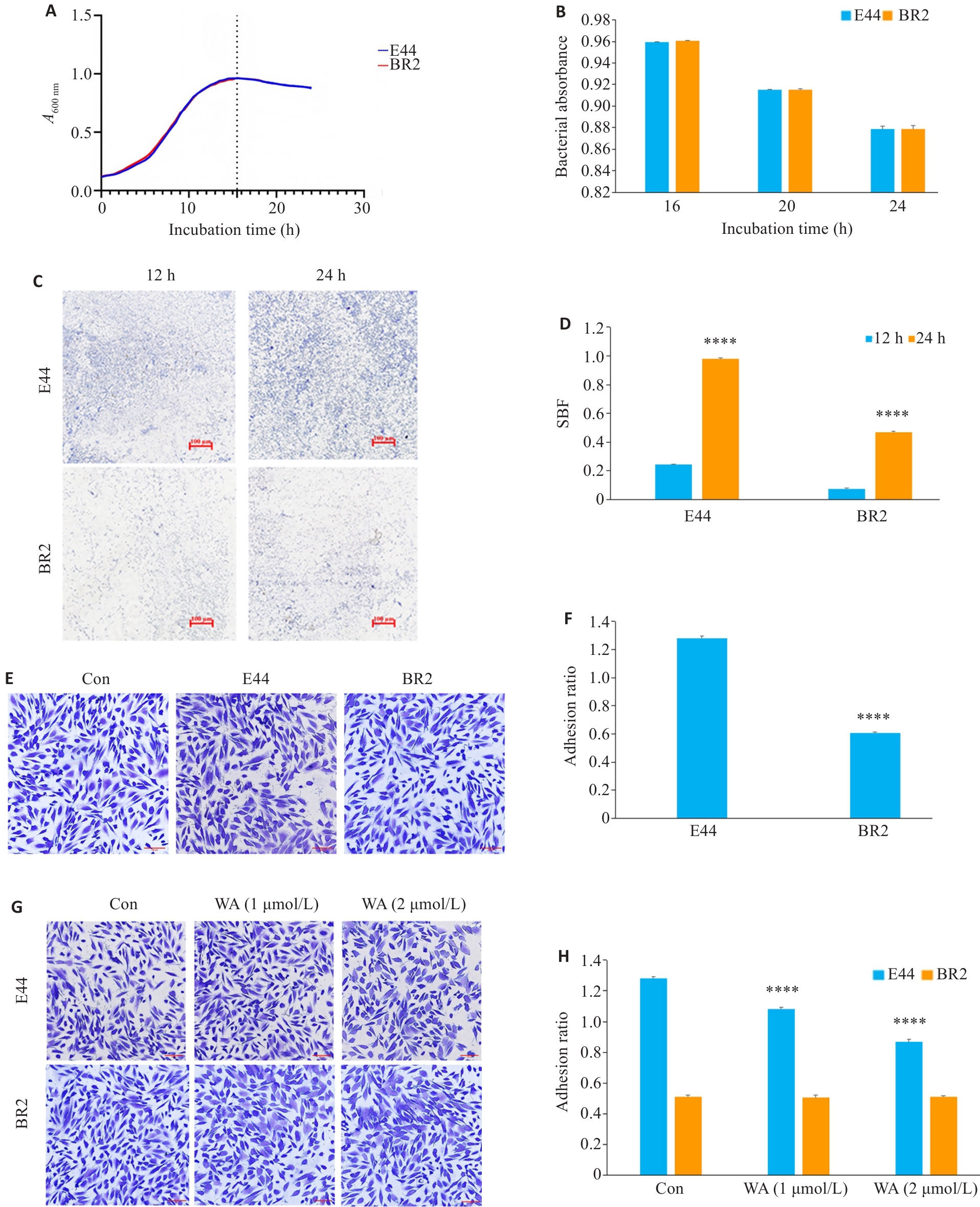
Fig 3 Growth and adhesion rate of E44 and BR2 strains. A: Growth curves of E44 and BR2 strains. B: Absorbance of E44 and BR2 at 16, 20 and 24 h. C: Microscopic observation of biofilms formed by the two strains at 12 and 24 h (Crystal violet staining). D: Absorbance of the stained biofilms dissolved in anhydrous ethanol for calculating SBF. E, G: Observation of bacterial adhesion after staining (×200). F, H: Adhesion ratios of the two strains. ****P<0.0001 vs E44 group or control group.
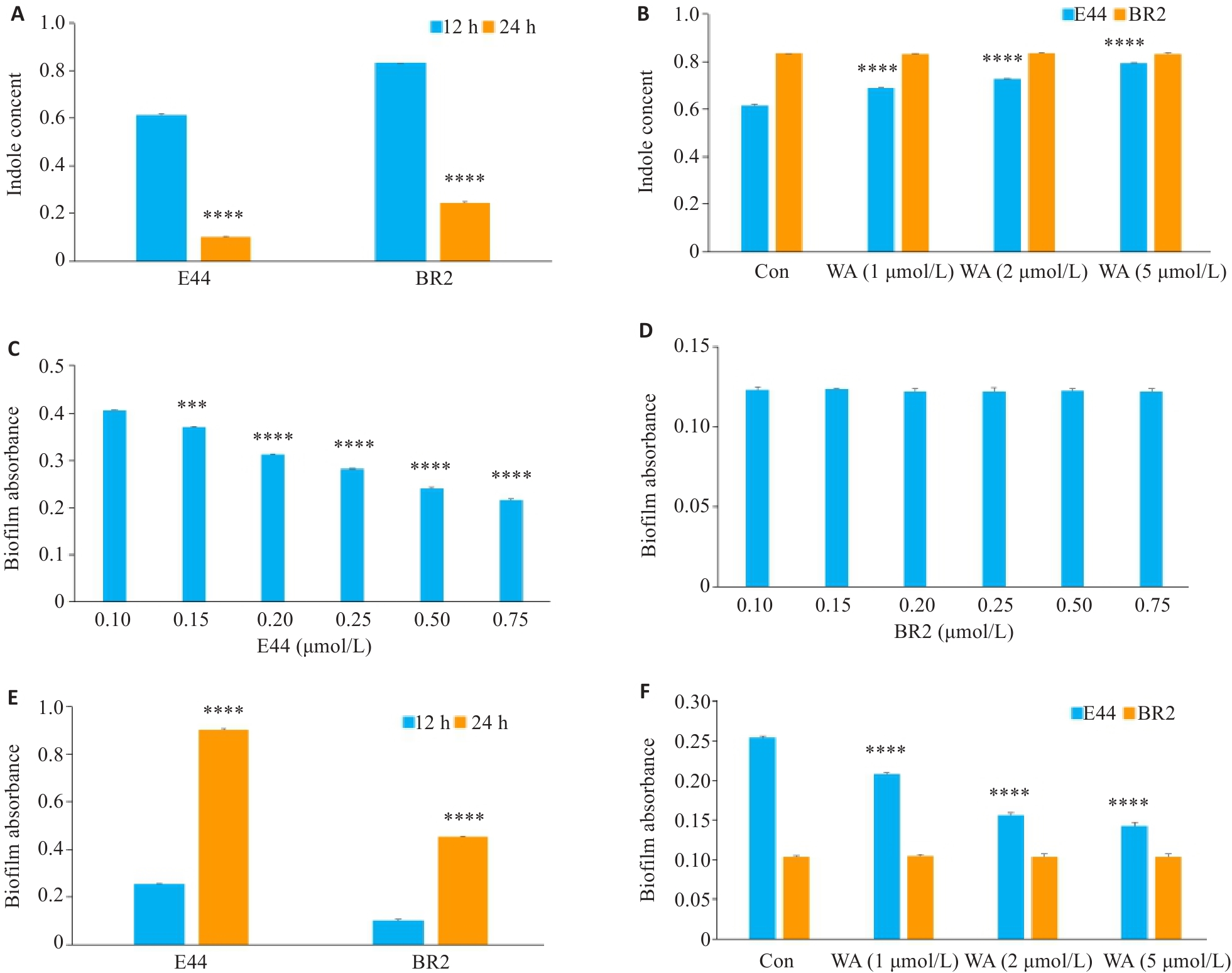
Fig 4 Indole levels in the supernatants of E44 and BR2 strains and mechanism of biofilm formation. A: Indole levels in the supernatants of E44 and BR2 strains collected at 12 and 24 h (n=3). B: Detection of indole levels in the supernatants of the two strains cultured in the presence of different concentrations of WA (n=3). C, D: Detection of biofilms of E44 and BR2 treated with exogenous indole (n=3). E: Detection of biofilm formation of E44 and BR2 strains at 12 and 24 h (n=3). F: Detection of biofilm formation of the two strains cultured in the presence of different concentrations of WA (n=3). ***P<0.001 vs control group, ****P<0.0001 vs E44 group or control group.
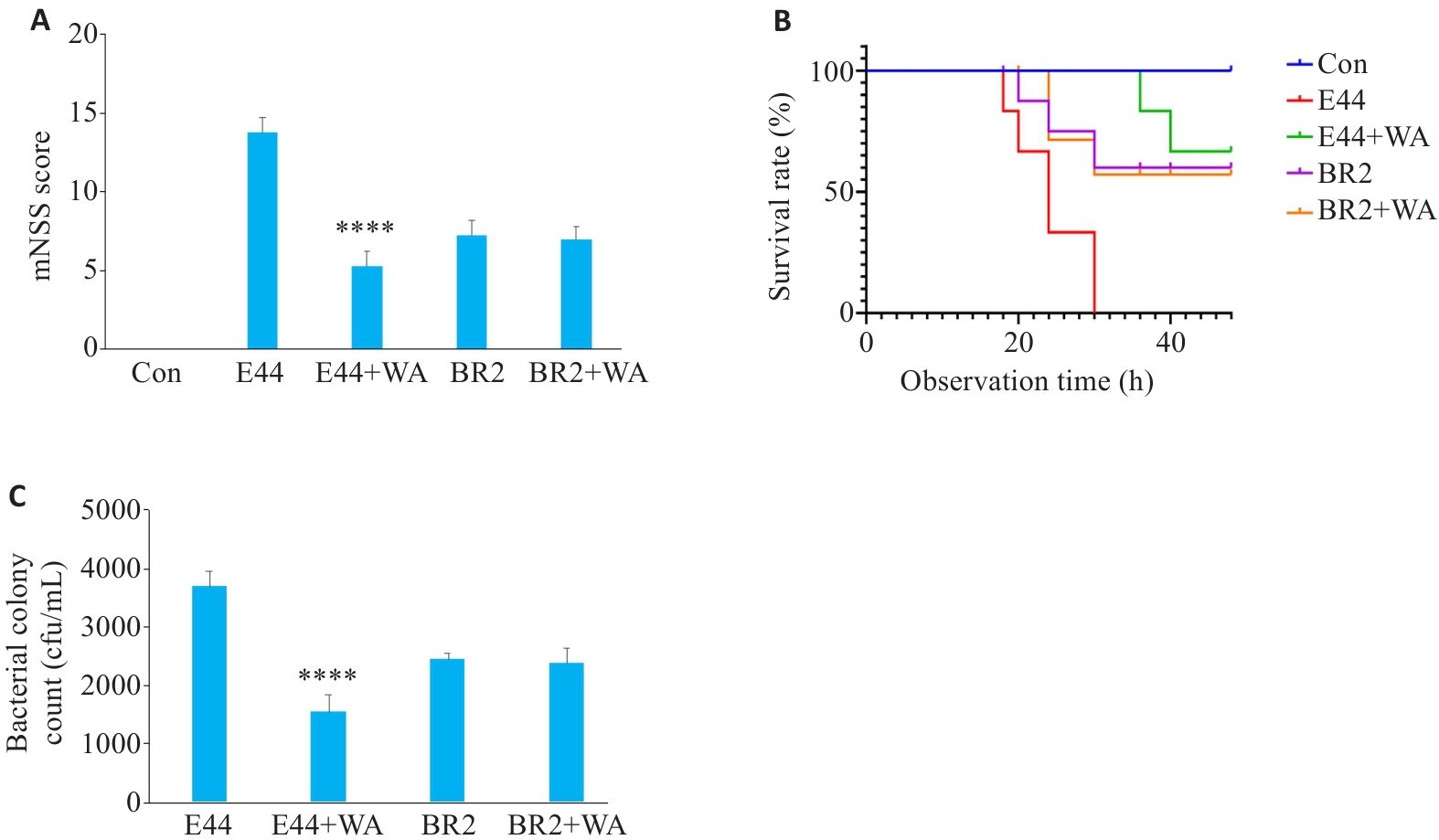
Fig.5 Validation of meningitis modeling in mice and assessment of the therapeutic effect of WA. A: Effects of WA on mNSS scores in mice with meningitis (n=4). B: Kaplan-Meier survival curves of the mice in each group (n=6). C: Bacterial loads in the cerebrospinal fluid (CSF) of the mice (n=3). ****P<0.0001 vs control group or E44 group.
| [1] | Peng XS, Zhu QX, Liu J, et al. Prevalence and antimicrobial resistance patterns of bacteria isolated from cerebrospinal fluid among children with bacterial meningitis in China from 2016 to 2018: a multicenter retrospective study[J]. Antimicrob Resist Infect Control, 2021, 10(1): 24. doi:10.1186/s13756-021-00895-x |
| [2] | Antoine C, Laforêt F, Goya-Jorge E, et al. Phage targeting neonatal meningitis E. coli K1 in vitro in the intestinal microbiota of pregnant donors and impact on bacterial populations[J]. Int J Mol Sci, 2023, 24(13): 10580. doi:10.3390/ijms241310580 |
| [3] | Wang XH, Zhang YH, Chen XR, et al. RIPK1 kinase drove brain microvascular endothelial cells death and blood-brain barrier disruption in neonatal Escherichia coli meningitis[J]. Nat Commun, 2025, 16(1): 7309. doi:10.1038/s41467-025-62760-4 |
| [4] | Yang JH, Ma W, Wu YY, et al. O-Acetylation of capsular polysialic acid enables Escherichia coli K1 escaping from Siglec-mediated innate immunity and lysosomal degradation of E. coli-Containing vacuoles in Macrophage-like cells[J]. Microbiol Spectr, 2021, 9(3): e00399-21. doi:10.1128/spectrum.00399-21 |
| [5] | Fan Y, Sun HM, Yang W, et al. YbdO promotes the pathogenicity of Escherichia coli K1 by regulating capsule synthesis[J]. Int J Mol Sci, 2022, 23(10): 5543. doi:10.3390/ijms23105543 |
| [6] | Venketaraman V, Hajjar K, Sheren N. E. coli meningitis[M]//In Vitro and In Vivo Models to Study Infections of the Central Nervous System. New York, NY: Springer US, 2025: 27-33. doi:10.1007/978-1-0716-4674-8_2 |
| [7] | Liu YL, Zhu ML, Fu XQ, et al. Escherichia coli causing neonatal meningitis during 2001-2020: a study in Eastern China[J]. Int J Gen Med, 2021, 14: 3007-16. doi:10.2147/ijgm.s317299 |
| [8] | Alkeskas A, Ogrodzki P, Saad M, et al. The molecular characterisation of Escherichia coli K1 isolated from neonatal nasogastric feeding tubes[J]. BMC Infect Dis, 2015, 15(1): 449. doi:10.1186/s12879-015-1210-7 |
| [9] | Karygianni L, Ren Z, Koo H, et al. Biofilm matrixome: extracellular components in structured microbial communities[J]. Trends Microbiol, 2020, 28(8): 668-81. doi:10.1016/j.tim.2020.03.016 |
| [10] | Mechmechani S, Gharsallaoui A, Karam L, et al. Pepsin and trypsin treatment combined with carvacrol: an efficient strategy to fight Pseudomonas aeruginosa and Enterococcus faecalis biofilms[J]. Microorganisms, 2023, 11(1): 143. doi:10.3390/microorganisms11010143 |
| [11] | Uruén C, Chopo-Escuin G, Tommassen J, et al. Biofilms as promoters of bacterial antibiotic resistance and tolerance[J]. Antibiotics, 2020, 10(1): 3. doi:10.3390/antibiotics10010003 |
| [12] | Carbone A, Cascioferro S, Parrino B, et al. Thiazole analogues of the marine alkaloid nortopsentin as inhibitors of bacterial biofilm formation[J]. Molecules, 2021, 26(1): 81. doi:10.3390/molecules26010081 |
| [13] | Mohamad F, Alzahrani RR, Alsaadi A, et al. An explorative review on advanced approaches to overcome bacterial resistance by curbing bacterial biofilm formation[J]. Infect Drug Resist, 2023, 16: 19-49. doi:10.2147/idr.s380883 |
| [14] | Huynh BT, Padget M, Garin B, et al. Burden of bacterial resistance among neonatal infections in low income countries: how convincing is the epidemiological evidence[J]? BMC Infect Dis, 2015, 15(1): 127. doi:10.1186/s12879-015-0843-x |
| [15] | Birlutiu V, Birlutiu RM. An overview of the epidemiology of multidrug resistance and bacterial resistance mechanisms: what solutions are available? a comprehensive review[J]. Microorganisms, 2025, 13(9): 2194. doi:10.3390/microorganisms13092194 |
| [16] | Fu P, Xu HM, Jing CM, et al. Bacterial epidemiology and antimicrobial resistance profiles in children reported by the ISPED program in China, 2016 to 2020[J]. Microbiol Spectr, 2021, 9(3): e00283-21. doi:10.1128/spectrum.00283-21 |
| [17] | Beaumont AL, Kermorvant-Duchemin E, Breurec S, et al. Neonatal colonization with antibiotic-resistant pathogens in low- and middle-income countries: a systematic review and meta-analysis[J]. JAMA Netw Open, 2024, 7(11): e2441596. doi:10.1001/jamanetworkopen.2024.41596 |
| [18] | Sora VM, Meroni G, Martino PA, et al. Extraintestinal pathogenic Escherichia coli: virulence factors and antibiotic resistance[J]. Pathogens, 2021, 10(11): 1355. doi:10.3390/pathogens10111355 |
| [19] | Bok E, Mazurek-Popczyk J, Wojciech M, et al. Extraintestinal traits of pathogenicity and sequence type lineages in commensal Escherichia coli from adults and young children: genotypic and phenotypic profiles. Front Microbiol. 2025, 16: 1579685. doi:10.3389/fmicb.2025.1579685 |
| [20] | Edison LK, Kariyawasam S. From the gut to the brain: transcriptomic insights into neonatal meningitis Escherichia coli across diverse host niches[J]. Pathogens, 2025, 14(5): 485. doi:10.3390/pathogens14050485 |
| [21] | Paul S, Chakraborty S, Anand U, et al. Withania somnifera (L.) Dunal (Ashwagandha): a comprehensive review on ethnopharma-cology, pharmacotherapeutics, biomedicinal and toxicological aspects[J]. Biomed Pharmacother, 2021, 143: 112175. doi:10.1016/j.biopha.2021.112175 |
| [22] | Sajida, Prabhu A. Anti-angiogenic, apoptotic and matrix metalloproteinase inhibitory activity of Withania somnifera (ashwagandha) on lung adenocarcinoma cells[J]. Phytomedicine, 2021, 90: 153639. doi:10.1016/j.phymed.2021.153639 |
| [23] | Murugan R, Subramaniyan S, Priya S, et al. Bacterial clearance and anti-inflammatory effect of Withaferin A against human pathogen of Staphylococcus aureus in infected zebrafish[J]. Aquat Toxicol, 2023, 260: 106578. doi:10.1016/j.aquatox.2023.106578 |
| [24] | Wijetunge DSS, Katani R, Kapur V, et al. Complete genome sequence of Escherichia coli strain RS218 (O18: H7: K1), associated with neonatal meningitis[J]. Genome Announc, 2015, 3(4): e00804-15. doi:10.1128/genomea.00804-15 |
| [25] | Paris T, Kiss A, Signor L, et al. The IbeA protein from adherent invasive Escherichia coli is a flavoprotein sharing structural homology with FAD-dependent oxidoreductases[J]. FEBS J, 2024, 291(1): 177-203. doi:10.1111/febs.16969 |
| [26] | Chi F, Wang Y, Gallaher TK, et al. Identification of IbeR as a stationary-phase regulator in meningitic Escherichia coli K1 that carries a loss-of-function mutation in rpoS[J]. J Biomed Biotechnol, 2009, 2009: 520283. doi:10.1155/2009/520283 |
| [27] | Wang SH, Bao YL, Meng QM, et al. IbeR facilitates stress-resistance, invasion and pathogenicity of avian pathogenic Escherichia coli [J]. PLoS One, 2015, 10(3): e0119698. doi:10.1371/journal.pone.0119698 |
| [28] | Razzaq Meo S, Van de Wiele T, Defoirdt T. Indole signaling in Escherichia coli: a target for antivirulence therapy?[J]. Gut Microbes, 2025, 17(1): 2499573. doi:10.1080/19490976.2025.2499573 |
| [29] | Xiroudaki S, Sabbatini S, Pecoraro C, et al. Development of a new indole derivative dry powder for inhalation for the treatment of biofilm-associated lung infections[J]. Int J Pharm, 2023, 631: 122492. doi:10.1016/j.ijpharm.2022.122492 |
| [30] | Wang YS, Bian ZR, Wang Y. Biofilm formation and inhibition mediated by bacterial quorum sensing[J]. Appl Microbiol Biotechnol, 2022, 106(19): 6365-81. doi:10.1007/s00253-022-12150-3 |
| [31] | Martinez-Medina M, Naves P, Blanco J, et al. Biofilm formation as a novel phenotypic feature of adherent-invasive Escherichia coli (AIEC)[J]. BMC Microbiol, 2009, 9: 202. doi:10.1186/1471-2180-9-202 |
| [32] | Bustamante P, Ramos-Corominas MN, Martinez-Medina M. Contribution of toxin-antitoxin systems to adherent-invasive E. coli pathogenesis[J]. Microorganisms, 2024, 12(6): 1158. doi:10.3390/microorganisms12061158 |
| [33] | Fan Y, Bai J, Xi DY, et al. RpoE facilitates stress-resistance, invasion, and pathogenicity of Escherichia coli K1[J]. Microorganisms, 2022, 10(5): 879. doi:10.3390/microorganisms10050879 |
| [34] | Holmes CL, Anderson MT, Mobley HLT, et al. Pathogenesis of gram-negative bacteremia[J]. Clin Microbiol Rev, 2021, 34(2): e00234-20. doi:10.1128/cmr.00234-20 |
| [35] | Lê‑Bury P, Echenique-Rivera H, Pizarro-Cerdá J, et al. Determinants of bacterial survival and proliferation in blood[J]. FEMS Microbiol Rev, 2024, 48(3): fuae013. doi:10.1093/femsre/fuae013 |
| [36] | Kodori M, Nikmanesh B, Hakimi H, et al. Antibiotic susceptibility and biofilm formation of bacterial isolates derived from pediatric patients with cystic fibrosis from Tehran, Iran[J]. Arch Razi Inst, 2021, 76(2): 397-406. |
| [37] | Banerjee D, Shivapriya PM, Gautam PK, et al. A review on basic biology of bacterial biofilm infections and their treatments by nanotechnology-based approaches[J]. Proc Natl Acad Sci Ind Sect B Biol Sci, 2020, 90(2): 243-59. doi:10.1007/s40011-018-01065-7 |
| [38] | Cascioferro S, Carbone D, Parrino B, et al. Therapeutic strategies to counteract antibiotic resistance in MRSA biofilm-associated infections[J]. ChemMedChem, 2021, 16(1): 65-80. doi:10.1002/cmdc.202000677 |
| [39] | Liu JD, Van Treeck KE, Marston WA, et al. Ultrasound-mediated antibiotic delivery to in vivo biofilm infections: a review[J]. Chembiochem, 2024, 25(20): e202400181. doi:10.1002/cbic.202400181 |
| [40] | Mayer C, Borges A, Flament-Simon SC, et al. Quorum sensing architecture network in Escherichia coli virulence and pathogenesis[J]. FEMS Microbiol Rev, 2023, 47(4): fuad031. doi:10.1093/femsre/fuad031 |
| [1] | Jingxian WANG, Zijing REN, Peiyang ZHOU. S1PR5 activation or overexpression enhances barrier function of mouse brain microvascular endothelial cells against OGD/R injury by modulating oxidative stress [J]. Journal of Southern Medical University, 2025, 45(7): 1451-1459. |
| [2] | Zehan LI, Meng LIANG, Gencheng HAN, Xuewu ZHANG. Therapeutic effects of inulin-type oligosaccharides of Morinda officinalis on Streptococcus pneumoniae meningitis in mice [J]. Journal of Southern Medical University, 2025, 45(3): 577-586. |
| [3] | Mengyao XIE, Min YANG, Xin LI, Yonghong DU. Low-intensity pulsed ultrasound combined with nystatin treatment synergistically inhibits vaginal Candida albicans biofilm infection in rabbits [J]. Journal of Southern Medical University, 2025, 45(2): 296-303. |
| [4] | Meng QIN, Siyu SUN, Jiaqi LIU, Yujiao GAO, Hao WANG, Youkun WANG, Ao SUN, Jiachun YAN, Jinbao WANG, Ying YU. Resveratrol protects barrier function of mouse brain microvascular endothelial cell monolayers with oxygen/glucose deprivation and PM2.5 exposure by maintaining mitochondrial dynamics balance [J]. Journal of Southern Medical University, 2025, 45(12): 2690-2698. |
| [5] | Qian ZHAO, Zhen ZHANG, Xingqi ZHOU, Xiangyu RONG, Xuerou LIU, Xinli ZHAO, Haojie WANG, Jinlong PANG, Shanshan LI, Xian LI. Aqueous extract of Chuan Xiong Rhizoma enhances inhibitory effect of temozolomide against brain metastasis of melanoma in mice [J]. Journal of Southern Medical University, 2024, 44(6): 1088-1097. |
| [6] | XU Guangming, GAO Andi, CONG Bin. Restraint stress induces blood-brain barrier injury in rat amygdala by activating the Rho/ROCK signaling pathway [J]. Journal of Southern Medical University, 2024, 44(3): 411-419. |
| [7] | LI Xinyi, LIU Yujie, DENG Kechong, HU Yikui. Modulating gut microbiota improves neurological function and depressive symptoms in rats with post-stroke depression [J]. Journal of Southern Medical University, 2024, 44(2): 405-410. |
| [8] | NIU Wenwen, RONG Xiangyu, ZHAO Qian, LIU Xuerou, XU Liansong, LI Shanshan, LI Xian. Wine-processed Chuanxiong Rhizoma enhances efficacy of aumolertinib against EGFR-mutant non-small cell lung cancer xenografts in nude mouse brain [J]. Journal of Southern Medical University, 2023, 43(3): 375-382. |
| [9] | ZHANG Zhifei, LIAO Hongjian, YANG Min, HU Can, DU Yonghong. Levofloxacin combined with cellulase can eradicate bacille Calmette-Guerin biofilm infection [J]. Journal of Southern Medical University, 2023, 43(2): 257-264. |
| [10] | LI Shai, LI Li, MIN Simin, LIU Saisai, QIN Zhiwen, XIONG Zhishang, XU Jianguo, WANG Bowen, DING Dushan, ZHAO Shidi. Soybean isoflavones alleviate cerebral ischemia/reperfusion injury in rats by inhibiting ferroptosis and inflammatory cascade reaction [J]. Journal of Southern Medical University, 2023, 43(2): 323-330. |
| [11] | LI Fan, ZHU Yanyan, SUN Xiaoming, HU Huijuan, ZHOU Miaomaio, BAI Yixue, HU Hao. Diethylhexyl phthalate induces anxiety-like behavior and learning and memory impairment in mice probably by damaging blood-brain barrier [J]. Journal of Southern Medical University, 2022, 42(8): 1237-1243. |
| [12] | YUAN Qiao, XIE Liying, CHEN Chaojun. Astragalus polysaccharide protects against blood-brain barrier damage in MCAO rats by inhibiting P2X7R channel [J]. Journal of Southern Medical University, 2022, 42(11): 1705-1711. |
| [13] | . Design, screening and antibacterial activity evaluation of the novel antibacterial peptide KR-1 [J]. Journal of Southern Medical University, 2021, 41(6): 923-930. |
| [14] | . Effect of Klebsiella pneumoniae KbvR regulator on bacterial biofilm formation and capsular synthesis [J]. Journal of Southern Medical University, 2016, 36(10): 1435-. |
| [15] | . Effect of DNase I on biofilm formation of Staphylococcus aureus [J]. Journal of Southern Medical University, 2015, 35(09): 1356-. |
| Viewed | ||||||
|
Full text |
|
|||||
|
Abstract |
|
|||||
