
Journal of Southern Medical University ›› 2026, Vol. 46 ›› Issue (9): 2130-2148.doi: 10.12122/j.issn.1673-4254.2026.09.13
Mengjia LI1,2( ), Mengzhe WANG1,2, Yu TAO2,3, Yixuan PANG2,3, Li LI1,2, Xiaonan ZHANG1,2(), Shidi ZHAO1,2()
Received:2026-01-23
Online:2026-09-20
Published:2026-09-30
Contact:
Xiaonan ZHANG, Shidi ZHAO
E-mail:2325510327@qq.com;zhangxn@bbmu.edu.cn;zhsdi@126.com
Mengjia LI, Mengzhe WANG, Yu TAO, Yixuan PANG, Li LI, Xiaonan ZHANG, Shidi ZHAO. Genistein alleviates cerebral ischemia/reperfusion-induced inflammatory injury in rats by regulating microglial polarization via the PI3K/AKT/COX-2 signaling pathway[J]. Journal of Southern Medical University, 2026, 46(9): 2130-2148.
Add to citation manager EndNote|Ris|BibTeX
URL: https://www.j-smu.com/EN/10.12122/j.issn.1673-4254.2026.09.13
| Name | Primer sequence 5'-3' |
|---|---|
| IL-4 | F: GGTCTCAACCCCCAGCTAGT R: GCCGATGATCTCTCTCAAGTGAT |
| IL-6 | F: CTTCTTGGGACTGATGCTGGTGAC R: TCTGTTGGGAGTGGTATCCTCTGTG |
| IL-10 | F: TCCCTGGGTGAGAAGCTGAAGAC R: CACCTGCTCCACTGCCTTGC |
| IL-1β | F: CACTACAGGCTCCGAGATGAACAAC R: TGTCGTTGCTTGGTTCTCCTTGTAC |
| COX-2 | F: TTCAACACACTCTATCACTGGC R: AGAAGCGTTTGCGGTACTCAT |
| PI3K | F: CGAGAAGACGTGGAATGTCG R: GACTTCGCCGTCTACCACTA |
| AKT | F: GCCTCTGCTTTGTCATGGAG R: AGCATGAGGTTCTCCAGCTT |
| β-actin | F: GGCTGTATTCCCCTCCATCG R: CCAGTTGGTAACAATGCCATGT |
| Caspase-3 | F: GTCATCTCGCTCTGGTACGG R: CACACACACAAAGCTGCTCC |
| Bcl-2 | F: CTTCTCTCGTCGCTACCGTC R: CAATCCTCCCCCAGTTCACC |
| Bax | F: CACCTGAGCTGACCTTGGAG R: CAAACATGTCAGCTGCCACC |
| BDNF | F: TACCTGGATGCCGCAAACAT R: CCAGACATGTCCACTGCAGT |
| β-actin | F: TATAAAACCCGGCGGCGCA R: TCATCCATGGCGAACTGGTG |
| TNF-α | F: CGTCAGCCGATTTGCCATTT R: TCCCTCAGGGGTGTCCTTAG |
| IL-1β | F: ACAACTGCACTACAGGCTCC R: GCTTGGGATCCACACTCTCC |
| IL-6 | F: GCAAGAGACTTCCAGCCAGT R: AGTCTCCTCTCCGGACTTGT |
| IL-5 | F: GGATGCTTCTGTGCTTGAACG R: TCAACAGAGCTCGGTGAGTG |
| IL-10 | F: CCCTGTAGCCACCCAACAAA R: GCAAGAGATCTGACTCCGGG |
| IL-8 | F: CTCTGCTCACAAACAGCGTC R: TCTCTGAGTGGCATGGGACA |
| IL-4 | F: GTACCGGGAACGGTATCCAC R: GTGAGTTCAGACCGCTGACA |
| TGF-β | F: AGGGCTACCATGCCAACTTC R: CCACGTAGTAGACGATGGGC |
| PGE2 | F: GCTCCTTGCCTTTCACAATCT R: AGGACCGGTGGCCTAAGTAT |
Tab.1 Primer sequences for RT-qPCR
| Name | Primer sequence 5'-3' |
|---|---|
| IL-4 | F: GGTCTCAACCCCCAGCTAGT R: GCCGATGATCTCTCTCAAGTGAT |
| IL-6 | F: CTTCTTGGGACTGATGCTGGTGAC R: TCTGTTGGGAGTGGTATCCTCTGTG |
| IL-10 | F: TCCCTGGGTGAGAAGCTGAAGAC R: CACCTGCTCCACTGCCTTGC |
| IL-1β | F: CACTACAGGCTCCGAGATGAACAAC R: TGTCGTTGCTTGGTTCTCCTTGTAC |
| COX-2 | F: TTCAACACACTCTATCACTGGC R: AGAAGCGTTTGCGGTACTCAT |
| PI3K | F: CGAGAAGACGTGGAATGTCG R: GACTTCGCCGTCTACCACTA |
| AKT | F: GCCTCTGCTTTGTCATGGAG R: AGCATGAGGTTCTCCAGCTT |
| β-actin | F: GGCTGTATTCCCCTCCATCG R: CCAGTTGGTAACAATGCCATGT |
| Caspase-3 | F: GTCATCTCGCTCTGGTACGG R: CACACACACAAAGCTGCTCC |
| Bcl-2 | F: CTTCTCTCGTCGCTACCGTC R: CAATCCTCCCCCAGTTCACC |
| Bax | F: CACCTGAGCTGACCTTGGAG R: CAAACATGTCAGCTGCCACC |
| BDNF | F: TACCTGGATGCCGCAAACAT R: CCAGACATGTCCACTGCAGT |
| β-actin | F: TATAAAACCCGGCGGCGCA R: TCATCCATGGCGAACTGGTG |
| TNF-α | F: CGTCAGCCGATTTGCCATTT R: TCCCTCAGGGGTGTCCTTAG |
| IL-1β | F: ACAACTGCACTACAGGCTCC R: GCTTGGGATCCACACTCTCC |
| IL-6 | F: GCAAGAGACTTCCAGCCAGT R: AGTCTCCTCTCCGGACTTGT |
| IL-5 | F: GGATGCTTCTGTGCTTGAACG R: TCAACAGAGCTCGGTGAGTG |
| IL-10 | F: CCCTGTAGCCACCCAACAAA R: GCAAGAGATCTGACTCCGGG |
| IL-8 | F: CTCTGCTCACAAACAGCGTC R: TCTCTGAGTGGCATGGGACA |
| IL-4 | F: GTACCGGGAACGGTATCCAC R: GTGAGTTCAGACCGCTGACA |
| TGF-β | F: AGGGCTACCATGCCAACTTC R: CCACGTAGTAGACGATGGGC |
| PGE2 | F: GCTCCTTGCCTTTCACAATCT R: AGGACCGGTGGCCTAAGTAT |

Fig.1 HE staining of brain tissues of rats with sham operation (CON), cerebral ischemia/reperfusion (I/R) injury and genistein (GEN) pretreatment before modeling (Scale bar=20 μm).
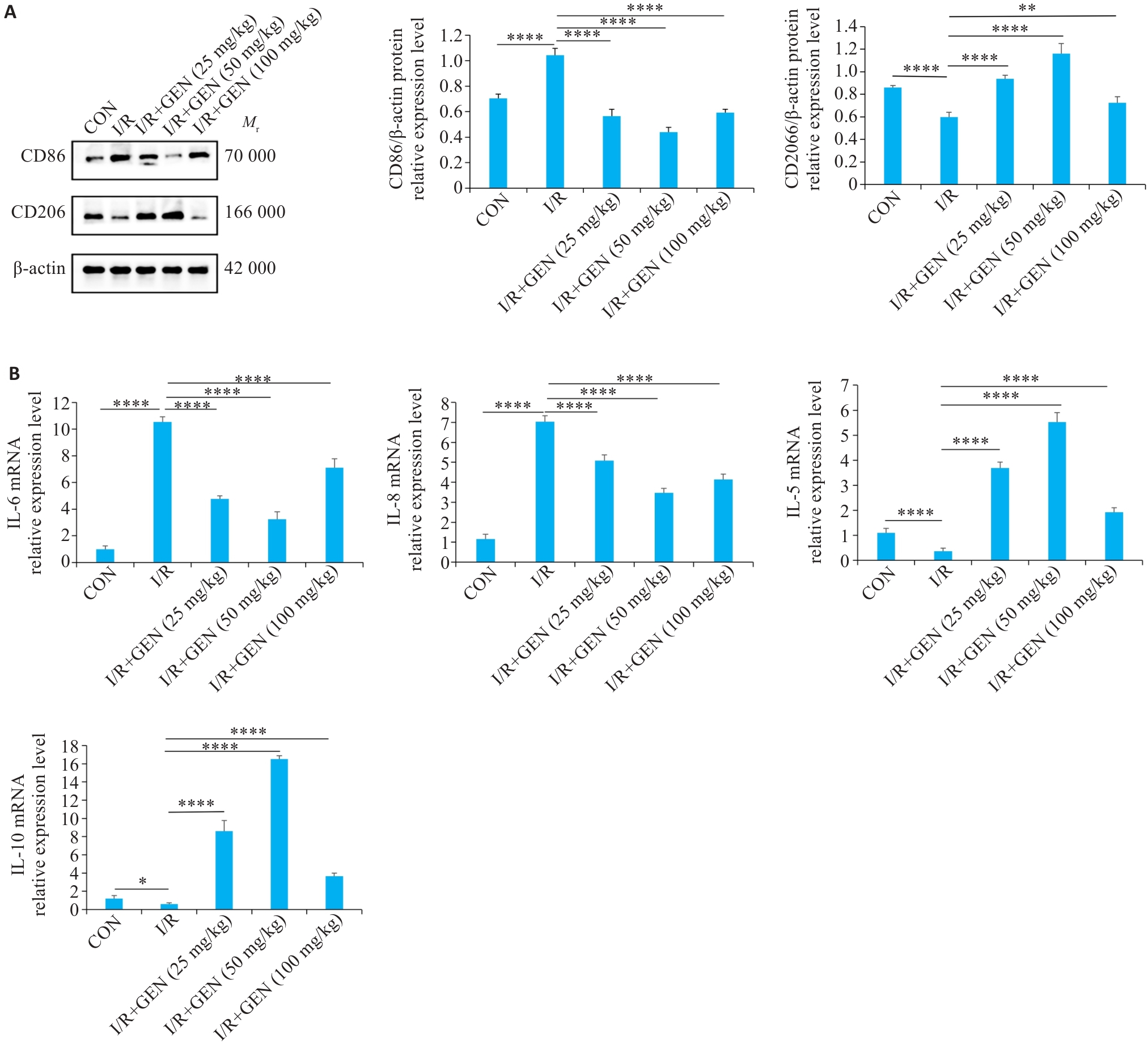
Fig.2 GEN regulates polarization of BV2 cells induced by I/R. A: Expression levels of CD86 and CD206 proteins in brain tissues of rats in different groups analyzed by Western blotting (n=6). B: Detection of mRNA levels of IL-6, IL-8, IL-5, and IL-10 levels by RT-qPCR (n=6). *P<0.05, **P<0.01, ****P<0.0001.
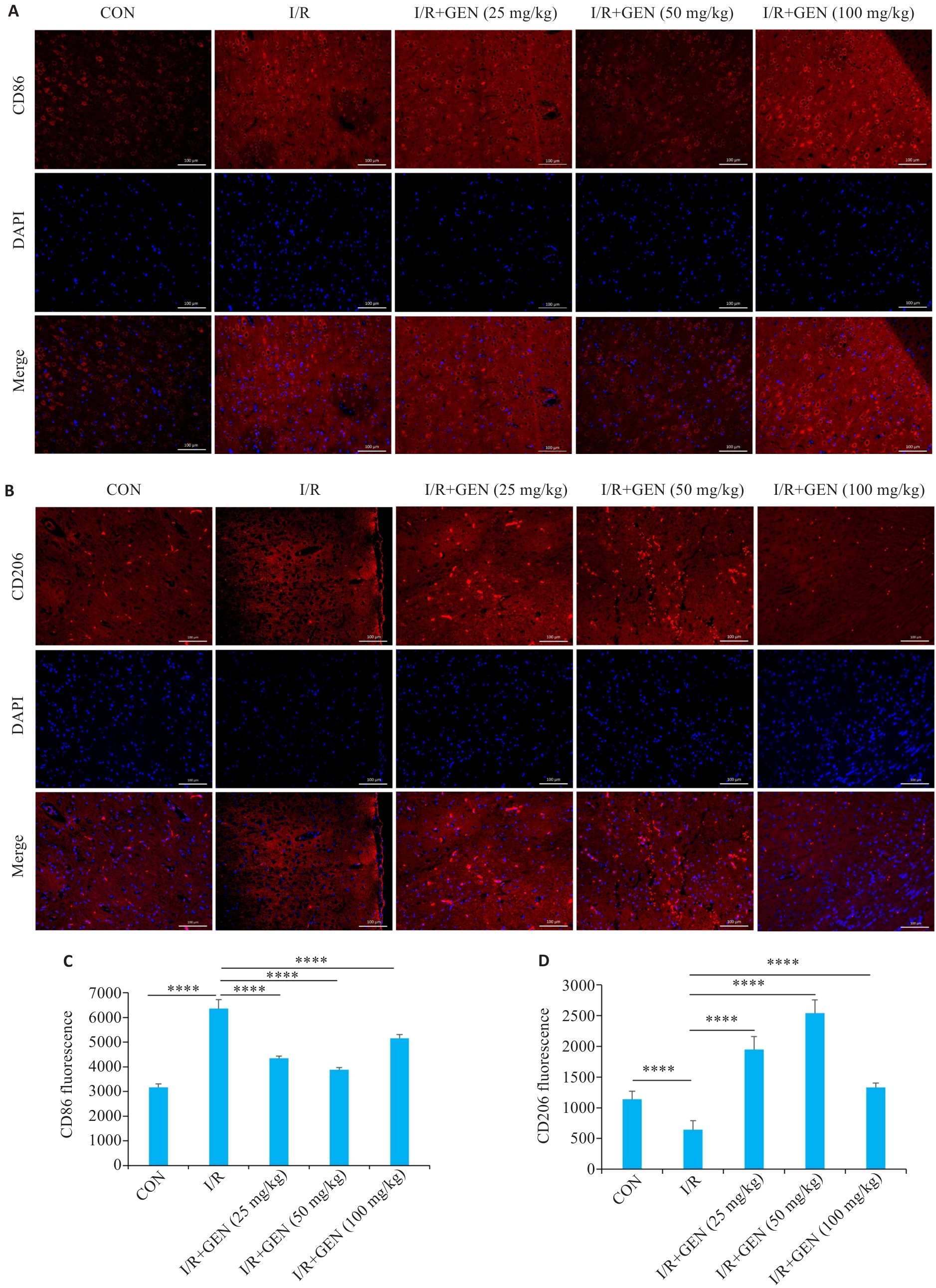
Fig.3 Expression levels of CD86 and CD206 in brain tissues of rats in different groups detected by immunofluorescence staining (n=6). A: CD86 staining (Original magnification: ×200). B: CD206 staining (×200). C: Average fluorescence intensity of CD86. D: Average fluorescence intensity of CD206. ****P<0.0001.
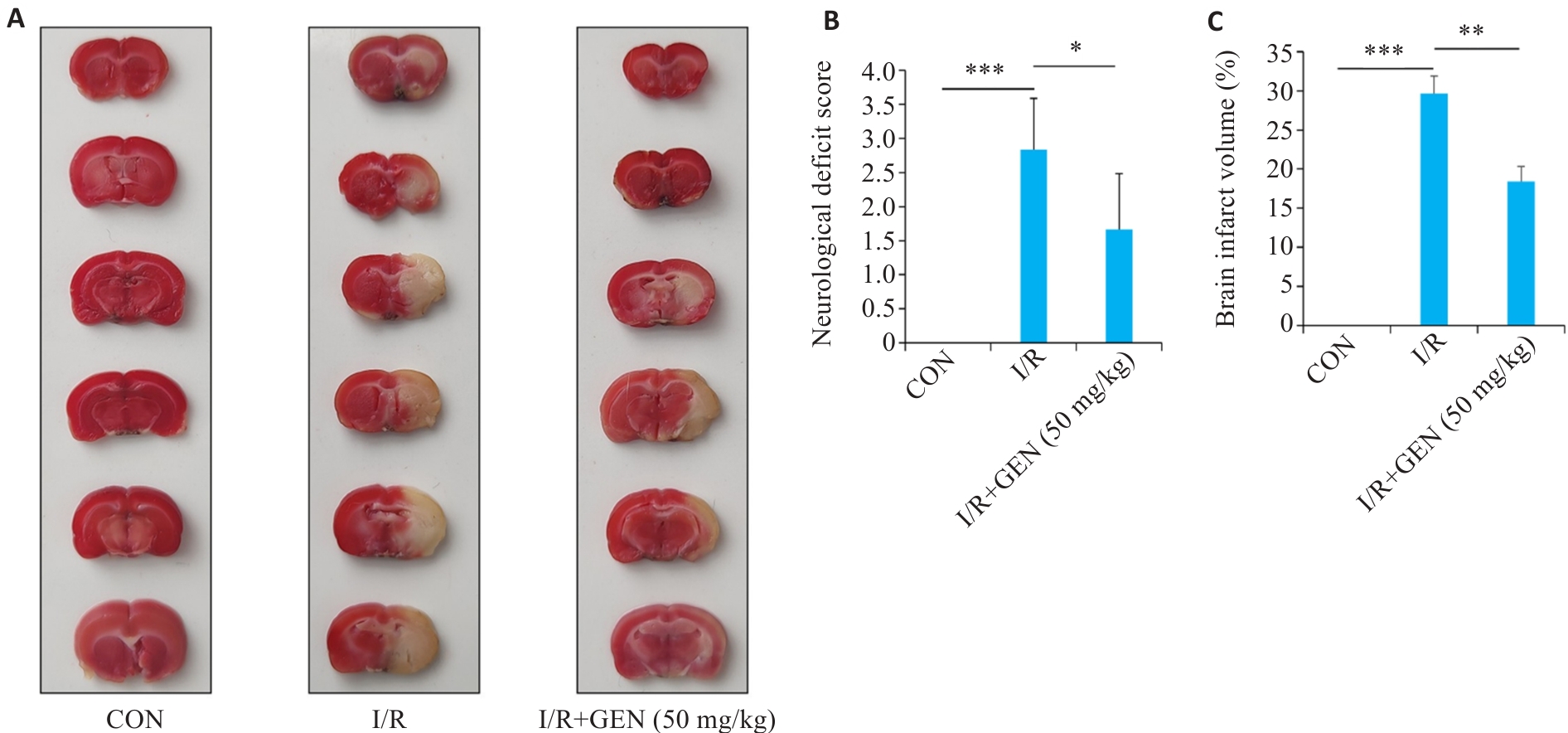
Fig.4 Cerebral infarction volume and neurological deficit score of rats in different groups. A: TTC staining of brain tissue in each group. B: Neurological deficit score (n=6). C: Cerebral infarction volume (n=6). *P<0.05, **P<0.01, ***P<0.001.
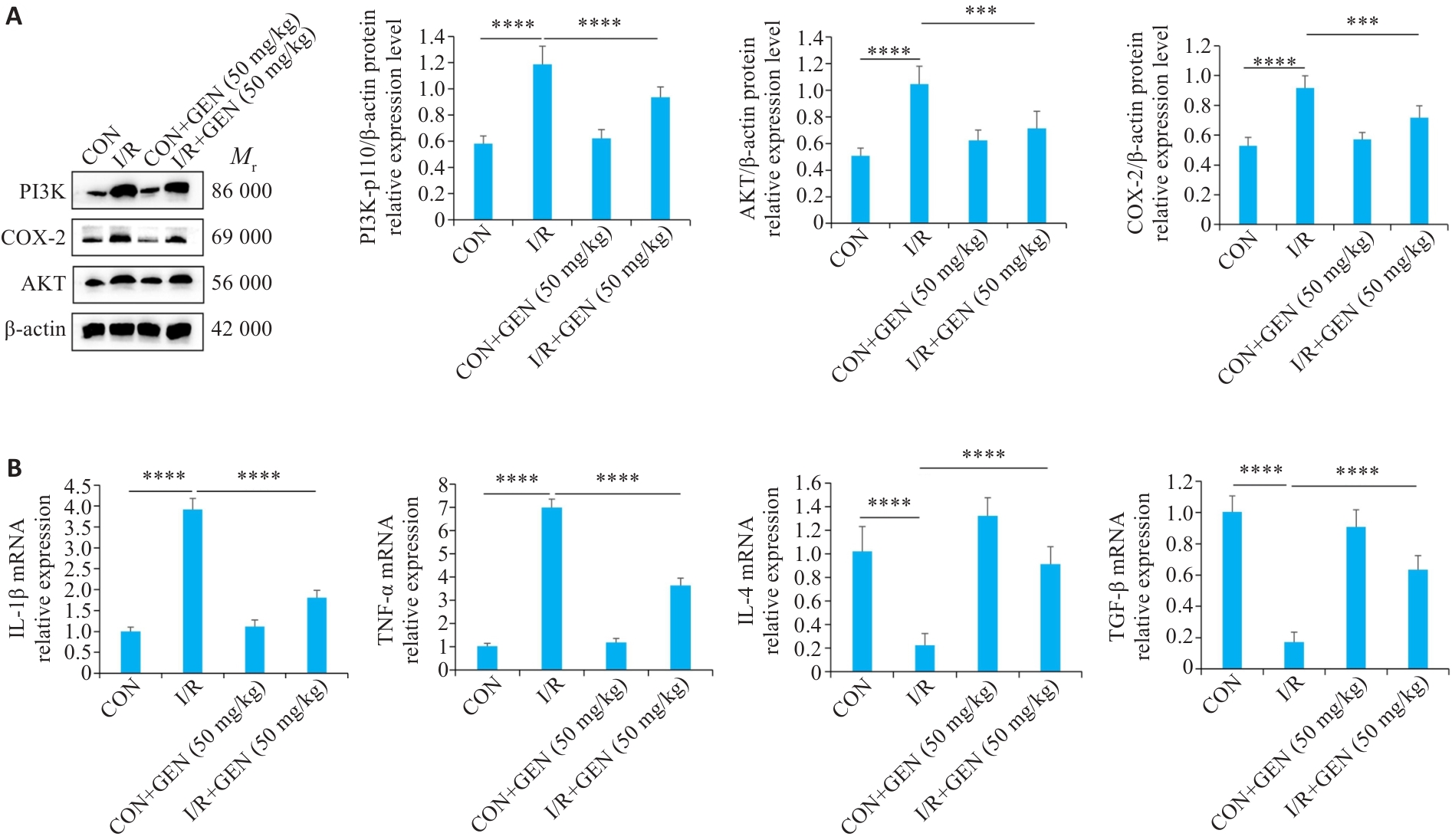
Fig.5 Inhibition of the PI3K/AKT/COX-2 signaling pathway by GEN alleviates neuroinflammation in rats with cerebral I/R injury. A: Analysis of expression levels of PI3K, AKT, and COX-2 proteins in each groups by Western blotting (n=6). B: Detection of mRNA levels of IL-1β, TNF-α, IL-4, and TGF-β by RT-qPCR (n=6). ***P<0.001, ****P<0.0001.
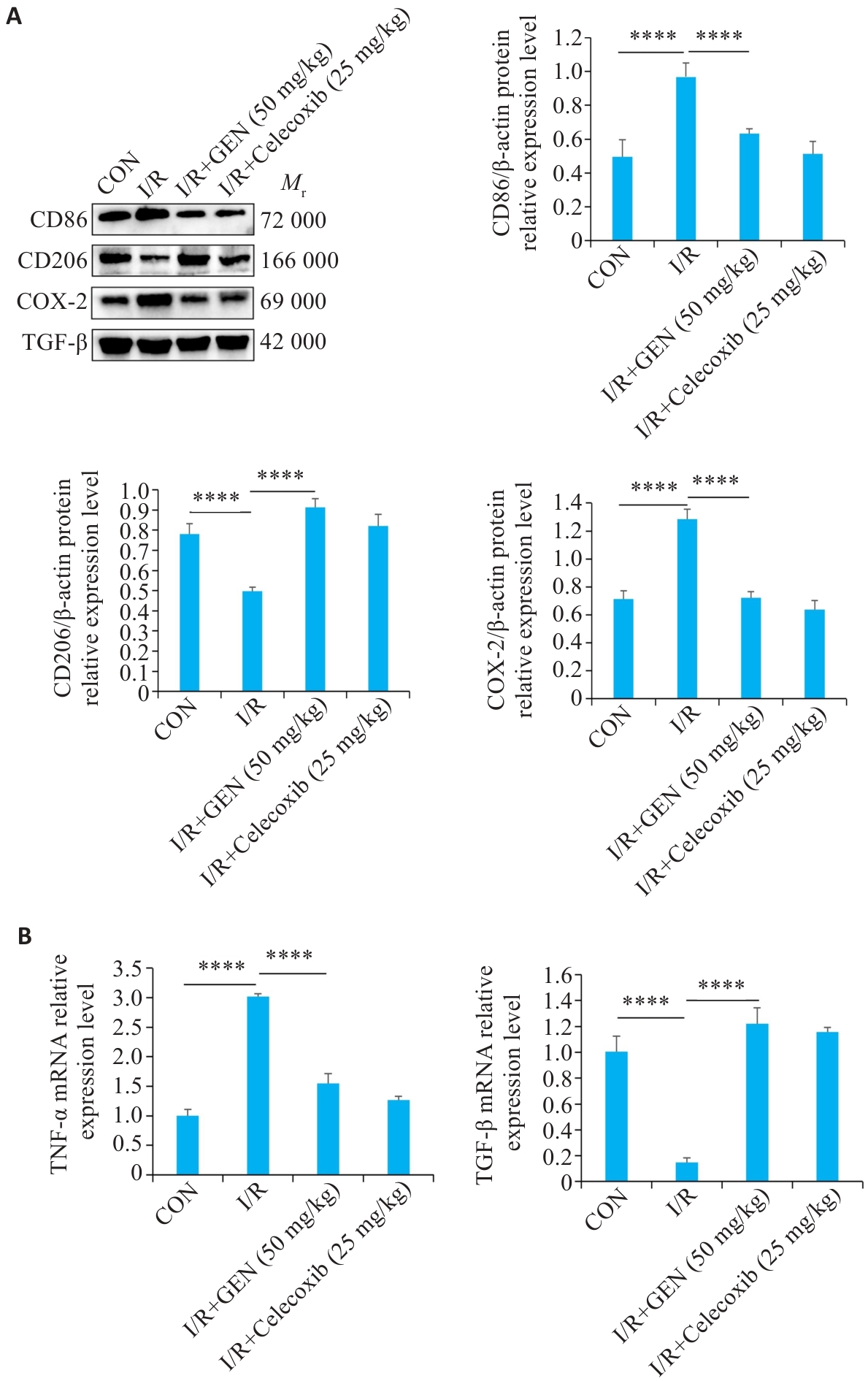
Fig.6 GEN regulates polarization of microglia through the PI3K/AKT/COX-2 signaling pathway. A: Expression levels of CD86, CD206 and COX-2 proteins in the brain tissues of rats in each group detected by Western blotting (n=6). B: RT-qPCR for detecting mRNA expression levels of TNF-α and TGF-β (n=6). ****P<0.0001.
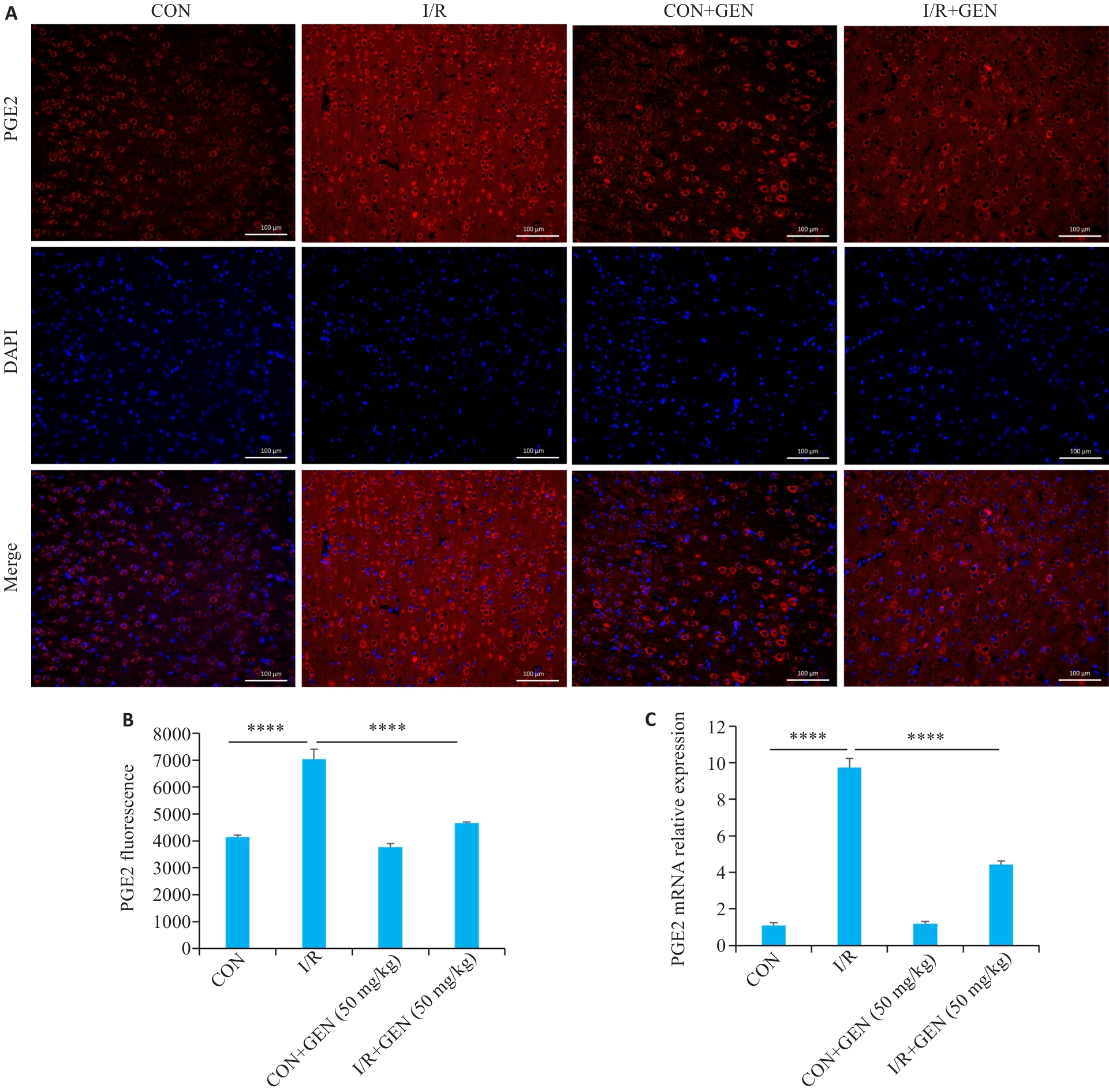
Fig.7 Levels of PGE2 in brain tissues of rats in each group detected by immunofluorescence staining. A: Immunofluorescence staining for PGE2 in each group (×200). B: Quantitative analysis of PGE2 expression level in the brain tissues of the rats. C: Expression levels of PGE2 mRNA (n=6). ****P<0.0001.
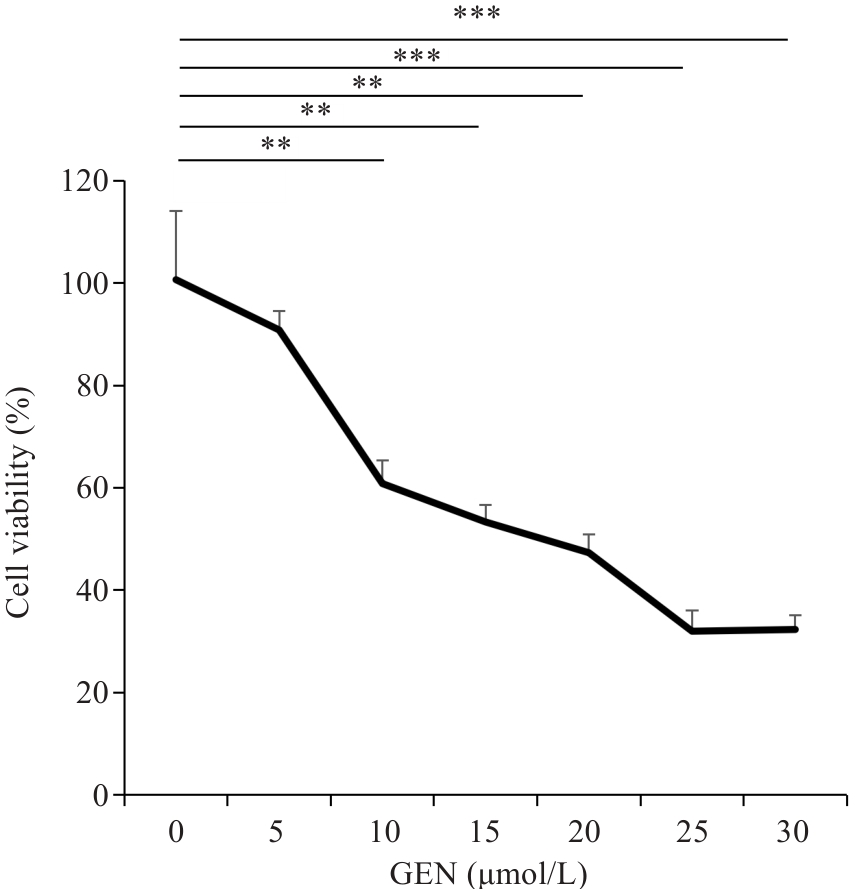
Fig.8 Detection of cytotoxic effects of different concentrations of genistein on microglia. **P<0.01, ***P<0.001.
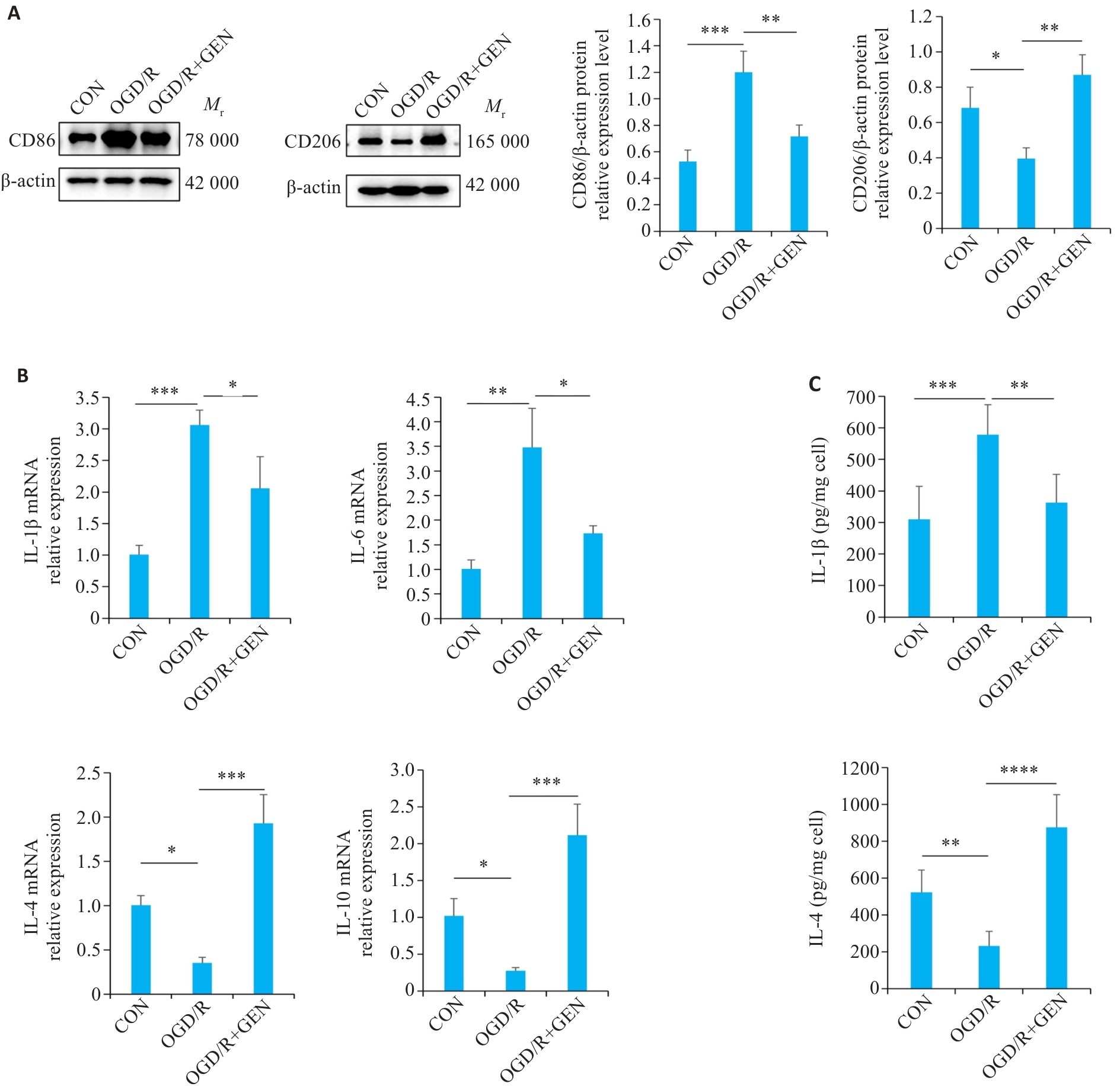
Fig.9 GEN regulates polarization of BV2 cells induced by OGD/R. A: Western blotting of CD86 and CD206 proteins in the microglia in different groups (n=3). B: RT-qPCR for detecting IL-1β, IL-6, IL-4, and IL-10 mRNA levels (n=3). C: Secreted levels of IL-1β and IL-4 in BV2 cell supernatants quantified by ELISA (n=6). *P<0.05, **P<0.01, ***P<0.001, ****P<0.0001.
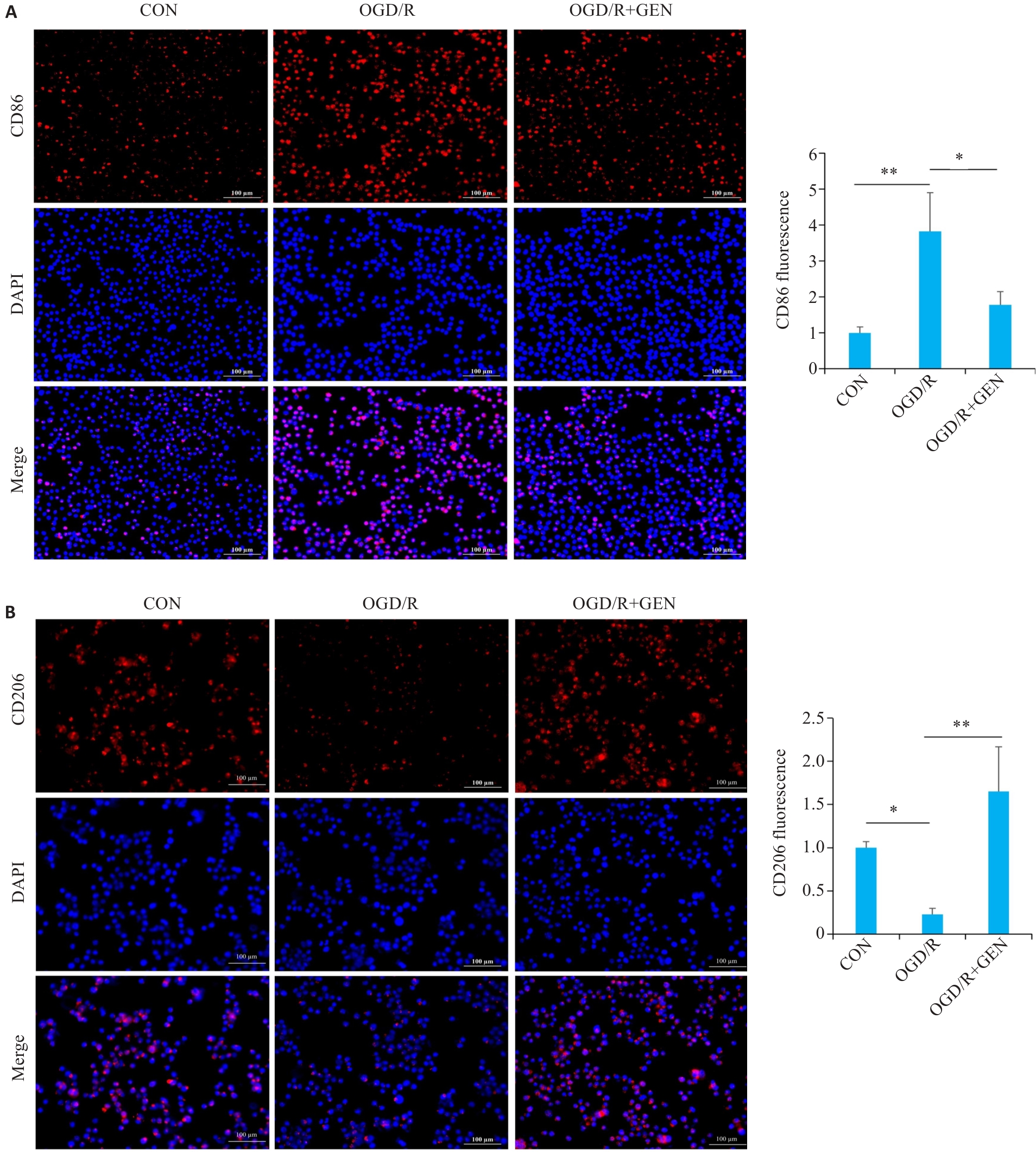
Fig.10 Levels of CD86 and CD206 in BV2 cells in each group. A: Immunofluorescence staining and quantitative analysis of CD86 in each group (×200; n=3). B: Immunofluorescence imaging and quantitative analysis of CD206 in each group (×200; n=3). *P<0.05, **P<0.01.
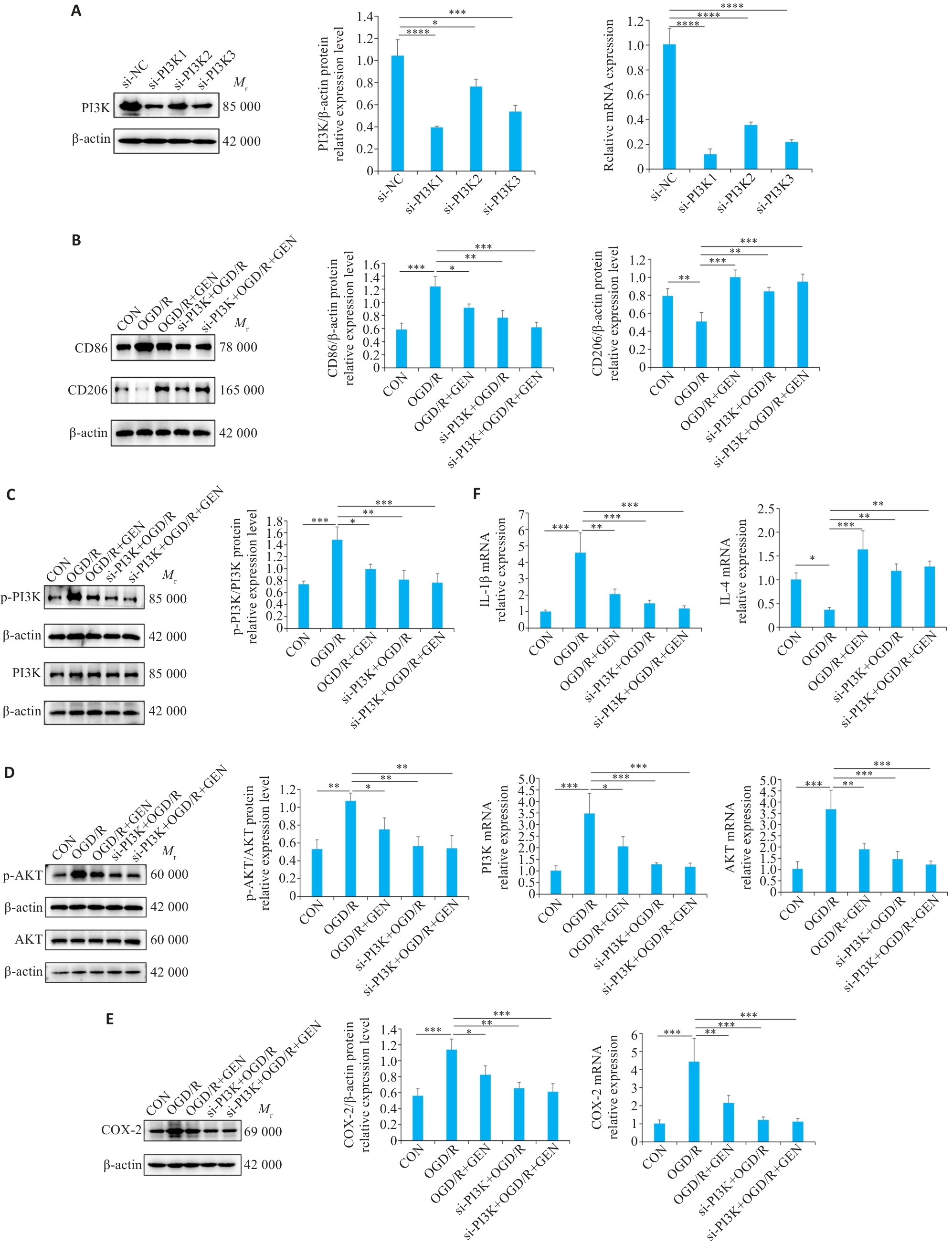
Fig.11 Verification of the role of the PI3K/AKT/COX-2 signaling pathway in mediating the regulatory effect of GEN on microglial polarization. A: Western blotting and RT-qPCR for verifying silencing efficiency of si-PI3K1/2/3 (n=3). B: Western blotting for detecting CD86 and CD206 protein expression in the microglia in different treatment groups (n=3). C: Western blotting for detecting phosphorylation levels of p-PI3K in the microglia in different groups (n=3). D: Western blotting of p-AKT protein in the microglia in different treatment groups (n=3). E: Western blotting analysis of COX-2 protein in the microglia in different treatment groups (n=3). F: Results of RT-qPCR for detecting mRNA expressions of inflammatory cytokines and PI3K/AKT/COX-2 pathway in the microglia (n=3). *P<0.05, **P<0.01, ***P<0.001, ****P<0.0001.
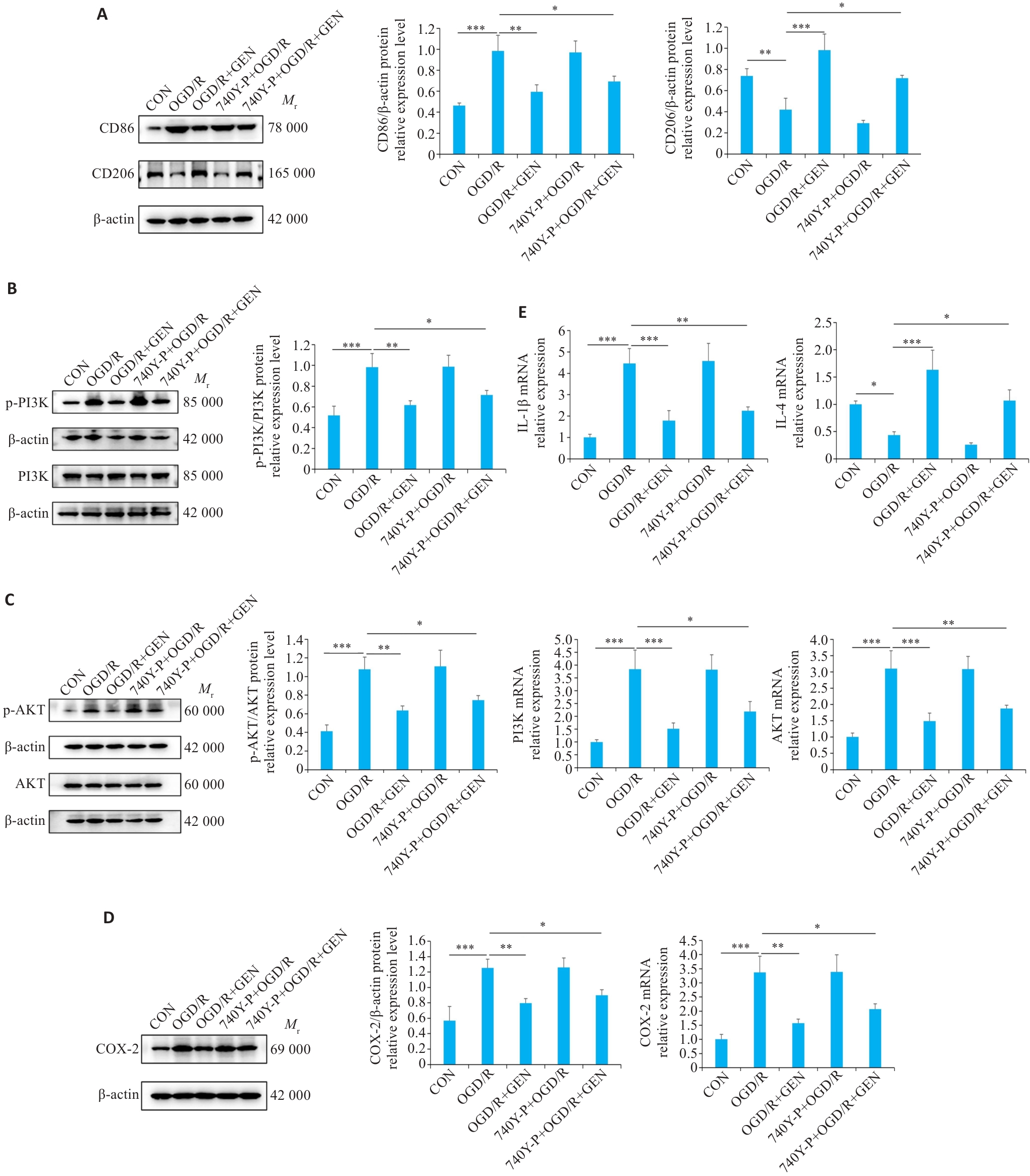
Fig.12 GEN-dependent PI3K/AKT/COX-2 signaling axis enhances M2 polarization in microglia: the synergistic effects of PI3K agonists. A: Western blotting of CD86 and CD206 proteins in the microglia in different groups (n=3). B: Western blotting of p-PI3K/PI3K proteins in the microglia in different groups (n=3). C: Western blotting of p-AKT/AKT protein in the microglia in different groups (n=3). D: Western blotting of COX-2 protein in the microglia in different groups (n=3). E: RT-qPCR for detecting mRNA expressions of inflammatory cytokines and PI3K/AKT/COX-2 pathway in the microglia in different groups (n=3). *P<0.05, **P<0.01, ***P<0.001.
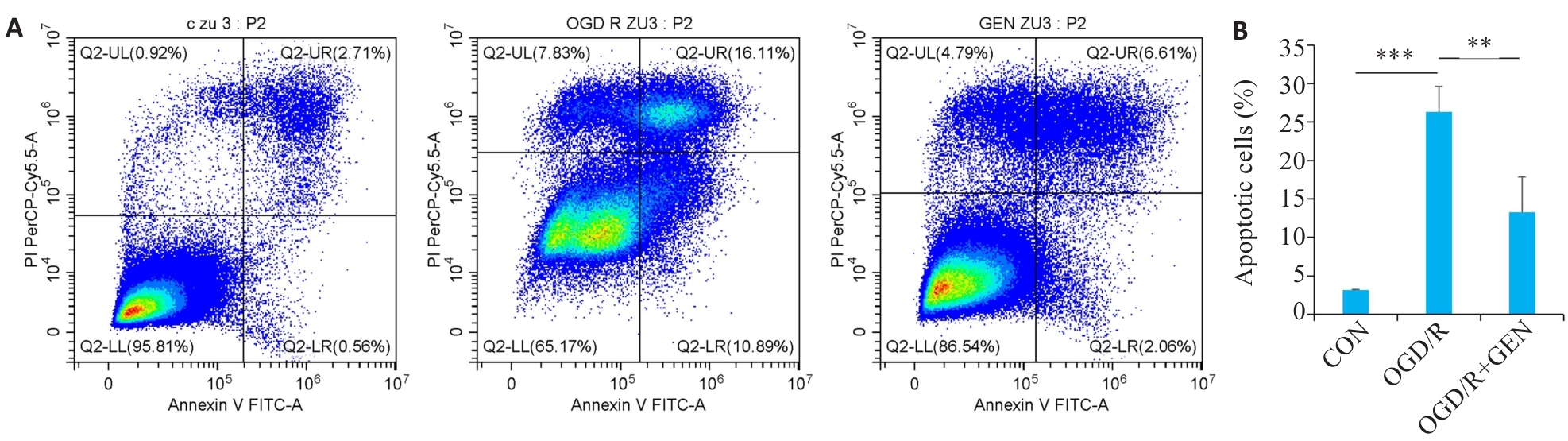
Fig.13 Cell apoptosis of the co-cultured cells assessed by Annexin V-FITC/PI double staining. A: Annexin V-FITC/PI dual staining flow cytometry for detecting cell apoptosis in each group. B: Statistical analysis of cell apoptosis rates in each group (n=3). **P<0.01, ***P<0.001.
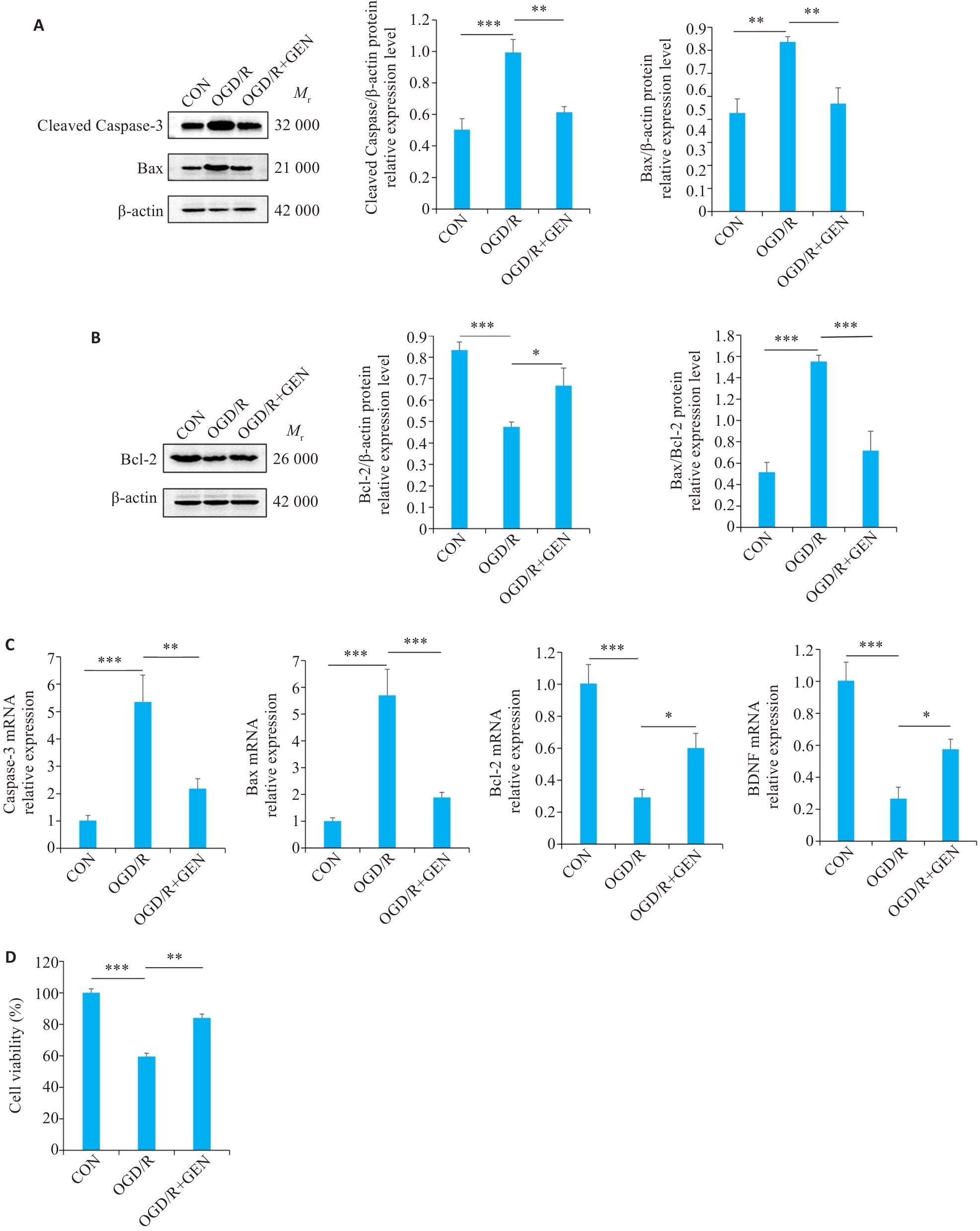
Fig.14 Protective effect of GEN-mediated regulation of microglial polarization on neuronal apoptosis in the BV2-HT22 co-culture system. A: Quantitative analysis of Bax and cleaved caspase-3 by Western blotting (n=3). B: Evaluation of Bcl-2 protein and Bax/Bcl-2 ratio using Western blotting (n=3). C: RT-qPCR analysis of mRNA expressions of HT22 cell apoptosis-related genes (caspase-3, Bax, and Bcl-2) and BDNF (n=3). D: CCK-8 assay for assessing proliferation and viability of HT22 cells in different treatment groups (n=6). *P<0.05, **P<0.01, ***P<0.001.
| [1] | Feske SK. Ischemic stroke[J]. Am J Med, 2021, 134(12): 1457-64. doi:10.1016/j.amjmed.2021.07.027 |
| [2] | Tuo QZ, Zhang ST, Lei P. Mechanisms of neuronal cell death in ischemic stroke and their therapeutic implications[J]. Med Res Rev, 2022, 42(1): 259-305. doi:10.1002/med.21817 |
| [3] | Su ZZ, Ye YZ, Shen CG, et al. Pathophysiology of ischemic stroke: noncoding RNA role in oxidative stress[J]. Oxid Med Cell Longev, 2022, 2022: 5815843. doi:10.1155/2022/5815843 |
| [4] | DeLong JH, Ohashi SN, O'Connor KC, et al. Inflammatory responses after ischemic stroke[J]. Semin Immunopathol, 2022, 44(5): 625-48. doi:10.1007/s00281-022-00943-7 |
| [5] | Lei W, Zhuang H, Huang WY, et al. Neuroinflammation and energy metabolism: a dual perspective on ischemic stroke[J]. J Transl Med, 2025, 23(1): 413. doi:10.1186/s12967-025-06440-3 |
| [6] | Fan PL, Wang SS, Chu SF, et al. Time-dependent dual effect of microglia in ischemic stroke[J]. Neurochem Int, 2023, 169: 105584. doi:10.1016/j.neuint.2023.105584 |
| [7] | Qiu YM, Zhang CL, Chen AQ, et al. Immune cells in the BBB disruption after acute ischemic stroke: targets for immune therapy?[J]. Front Immunol, 2021, 12: 678744. doi:10.3389/fimmu.2021.678744 |
| [8] | Xu SB, Lu JN, Shao AW, et al. Glial cells: role of the immune response in ischemic stroke[J]. Front Immunol, 2020, 11: 294. doi:10.3389/fimmu.2020.00294 |
| [9] | Yu T, Wang P, Wu YX, et al. miR-26a reduces inflammatory responses via inhibition of PGE2 production by targeting COX-2[J]. Inflammation, 2022, 45(4): 1484-95. doi:10.1007/s10753-022-01631-2 |
| [10] | Schlachetzki JC, Fiebich BL, Haake E, et al. Norepinephrine enhances the LPS-induced expression of COX-2 and secretion of PGE2 in primary rat microglia[J]. J Neuroinflammation, 2010, 7(1): 2. doi:10.1186/1742-2094-7-2 |
| [11] | Ding WH, Chen XY, Li W, et al. Genistein protects genioglossus myoblast against hypoxia-induced injury through PI3K-Akt and ERK MAPK pathways[J]. Sci Rep, 2017, 7: 5085. doi:10.1038/s41598-017-03484-4 |
| [12] | Li XY, Ding L, Li ZR, et al. Yangke powder alleviates OVA-induced allergic asthma by inhibiting the PI3K/AKT/NF‑κB signaling pathway[J]. Chin Med, 2025, 20(1): 69. doi:10.1186/s13020-025-01125-x |
| [13] | Yoo MJ, Jang YJ, Park SY, et al. Synergistic anti-cancer effects of ERB-041 and genistein through estrogen receptor suppression-mediated PI3K/AKT pathway downregulation in canine mammary gland tumor cells[J]. Int J Mol Sci, 2024, 25(5): 2466. doi:10.3390/ijms25052466 |
| [14] | Kim BH, Cho JY. Anti-inflammatory effect of honokiol is mediated by PI3K/Akt pathway suppression[J]. Acta Pharmacol Sin, 2008, 29(1): 113-22. doi:10.1111/j.1745-7254.2008.00725.x |
| [15] | Jayasooriya RGPT, Lee KT, Kang CH, et al. Isobutyrylshikonin inhibits lipopolysaccharide-induced nitric oxide and prostaglandin E2 production in BV2 microglial cells by suppressing the PI3K/Akt-mediated nuclear transcription factor‑κB pathway[J]. Nutr Res, 2014, 34(12): 1111-9. doi:10.1016/j.nutres.2014.10.002 |
| [16] | Zhou JM, Gu SS, Mei WH, et al. Ginkgolides and bilobalide protect BV2 microglia cells against OGD/reoxygenation injury by inhibiting TLR2/4 signaling pathways[J]. Cell Stress Chaperones, 2016, 21(6): 1037-53. doi:10.1007/s12192-016-0728-y |
| [17] | Yu H, Xu ZH, Qu GJ, et al. Hypoxic preconditioning enhances the efficacy of mesenchymal stem cells-derived conditioned medium in switching microglia toward anti-inflammatory polarization in ischemia/reperfusion[J]. Cell Mol Neurobiol, 2021, 41(3): 505-24. doi:10.1007/s10571-020-00868-5 |
| [18] | Guo LZ, Tripathi H, Gao EH, et al. Autotaxin inhibition reduces post‐ischemic myocardial inflammation via epigenetic gene modifications[J]. Stem Cell Rev Rep, 2024, 20(7): 1971-80. doi:10.1007/s12015-024-10759-7 |
| [19] | Orihuela R, McPherson CA, Harry GJ. Microglial M1/M2 polarization and metabolic states[J]. Br J Pharmacol, 2016, 173(4): 649-65. doi:10.1111/bph.13139 |
| [20] | Wang ML, Pan W, Xu Y, et al. Microglia-mediated neuroinflammation: a potential target for the treatment of cardiovascular diseases[J]. J Inflamm Res, 2022, 15: 3083-94. doi:10.2147/jir.s350109 |
| [21] | Zhou HJ, Yan LL, Huang HZ, et al. Tat-NTS peptide protects neurons against cerebral ischemia-reperfusion injury via ANXA1 SUMOylation in microglia[J]. Theranostics, 2023, 13(15): 5561-83. doi:10.7150/thno.85390 |
| [22] | Gong P, Jia HY, Li R, et al. Downregulation of Nogo-B ameliorates cerebral ischemia/reperfusion injury in mice through regulating microglia polarization via TLR4/NF-kappaB pathway[J]. Neurochem Int, 2023, 167: 105553. doi:10.1016/j.neuint.2023.105553 |
| [23] | Jaiswal KS, Malka O, Shauloff N, et al. Genistein carbon dots exhibit antioxidant and anti-inflammatory effects in vitro [J]. Colloids Surf B Biointerfaces, 2023, 223: 113173. doi:10.1016/j.colsurfb.2023.113173 |
| [24] | 李 晒, 李 丽, 闵思敏, 等. 大豆异黄酮可减轻大鼠脑缺血/再灌注损伤: 基于抑制铁死亡及炎症级联反应[J]. 南方医科大学学报, 2023, 43(2): 323-31. |
| [25] | Li L, Jiang WF, Yu BJ, et al. Quercetin improves cerebral ischemia/reperfusion injury by promoting microglia/macrophages M2 polarization via regulating PI3K/Akt/NF-κB signaling pathway[J]. Biomed Pharmacother, 2023, 168: 115653. doi:10.1016/j.biopha.2023.115653 |
| [26] | Zhao Q, Chen L, Zhang X, et al. β-elemene promotes microglial M2-like polarization against ischemic stroke via AKT/mTOR signaling axis-mediated autophagy[J]. Chin Med, 2024, 19(1): 86. doi:10.1186/s13020-024-00946-6 |
| [27] | Duan ZD, Chen HL, Miao W, et al. Scutellarin alleviates microglia-mediated neuroinflammation and apoptosis after ischemic stroke through the PI3K/AKT/GSK3β signaling pathway[J]. J Cell Commun Signal, 2024, 18(2): e12023. doi:10.1002/ccs3.12023 |
| [28] | Cui LL, Zhao SY, Liu H. SRSF3 alleviates ischemic cerebral infarction damage by activating the PI3K/AKT pathway[J]. Dev Neurosci, 2024, 46(5): 308-18. doi:10.1159/000535690 |
| [29] | Chu E, Mychasiuk R, Hibbs ML, et al. Dysregulated phosphoinositide 3-kinase signaling in microglia: shaping chronic neuroinflammation[J]. J Neuroinflammation, 2021, 18(1): 276. doi:10.1186/s12974-021-02325-6 |
| [30] | Yang GZ, Hu Y, Qin XY, et al. Micheliolide attenuates neuroinflammation to improve cognitive impairment of Alzheimer's disease by inhibiting NF-κB and PI3K/Akt signaling pathways[J]. Heliyon, 2023, 9(7): e17848. doi:10.1016/j.heliyon.2023.e17848 |
| [31] | Cianciulli A, Porro C, Calvello R, et al. Microglia mediated neuroinflammation: focus on PI3K modulation[J]. Biomolecules, 2020, 10(1): 137. doi:10.3390/biom10010137 |
| [32] | Qin GW, Lu P, Peng L, et al. Ginsenoside Rb1 inhibits cardiomyocyte autophagy via PI3K/Akt/mTOR signaling pathway and reduces myocardial ischemia/reperfusion injury[J]. Am J Chin Med, 2021, 49(8): 1913-27. doi:10.1142/s0192415x21500907 |
| [33] | Li JH, Dong SZ, Quan SL, et al. Nuciferine reduces inflammation induced by cerebral ischemia-reperfusion injury through the PI3K/Akt/NF-κB pathway[J]. Phytomedicine, 2024, 125: 155312. doi:10.1016/j.phymed.2023.155312 |
| [34] | Fattahi S, Amjadi-Moheb F, Tabaripour R, et al. PI3K/AKT/mTOR signaling in gastric cancer: Epigenetics and beyond[J]. Life Sci, 2020, 262: 118513. doi:10.1016/j.lfs.2020.118513 |
| [35] | Maharati A, Moghbeli M. PI3K/AKT signaling pathway as a critical regulator of epithelial-mesenchymal transition in colorectal tumor cells[J]. Cell Commun Signal, 2023, 21(1): 201. doi:10.1186/s12964-023-01225-x |
| [36] | Chen JL, Liu S, Zhang X, et al. Bondarzewia dickinsii against colitis-associated cancer through the suppression of the PI3K/AKT/COX-2 pathway and inhibition of PGE2 production in mice[J]. Nutrients, 2024, 16(23): 4048. doi:10.3390/nu16234048 |
| [37] | Neill NE, Mauro LA, Pennisi A. Novel estrogen receptor–targeted therapies in hormone-receptor positive breast cancer[J]. Curr Treat Options Oncol, 2025, 26(4): 302-12. doi:10.1007/s11864-025-01310-y |
| [38] | Chen LP, Xing J, Lv JP, et al. Corynoxine suppresses lung adenocarcinoma proliferation and metastasis via inhibiting PI3K/AKT pathway and suppressing Cyclooxygenase-2 expression[J]. Hereditas, 2024, 161(1): 41. doi:10.1186/s41065-024-00343-x |
| [39] | Zhu HR, Guo Y, Huang AL, et al. HDAC3-regulated PGE2 production by microglia induces phobic anxiety susceptibility after stroke and pointedly exploiting a signal-targeted gamma visual stimulation new therapy[J]. Front Immunol, 2022, 13: 845678. doi:10.3389/fimmu.2022.845678 |
| [40] | Yan WJ, Ren DQ, Feng XX, et al. Neuroprotective and anti-inflammatory effect of pterostilbene against cerebral ischemia/reperfusion injury via suppression of COX-2[J]. Front Pharmacol, 2021, 12: 770329. doi:10.3389/fphar.2021.770329 |
| [41] | Gong YH, Qiu JX, Jiang T, et al. Maltol ameliorates intervertebral disc degeneration through inhibiting PI3K/AKT/NF‑κB pathway and regulating NLRP3 inflammasome-mediated pyroptosis[J]. Inflammopharmacology, 2023, 31(1): 369-84. doi:10.1007/s10787-022-01098-5 |
| [42] | You ZJ, Yang ZZ, Cao S, et al. The novel KLF4/BIG1 regulates LPS-mediated neuro-inflammation and migration in BV2 cells via PI3K/Akt/NF-kB signaling pathway[J]. Neuroscience, 2022, 488: 102-11. doi:10.1016/j.neuroscience.2022.01.014 |
| [43] | Uddin S, Ahmed M, Hussain A, et al. Cyclooxygenase-2 inhibition inhibits PI3K/AKT kinase activity in epithelial ovarian cancer[J]. Int J Cancer, 2010, 126(2): 382-94. doi:10.1002/ijc.24757 |
| [44] | Lu EM, Wang Q, Li SC, et al. Profilin 1 knockdown prevents ischemic brain damage by promoting M2 microglial polarization associated with the RhoA/ROCK pathway[J]. J Neurosci Res, 2020, 98(6): 1198-212. doi:10.1002/jnr.24607 |
| [45] | He TT, Li WL, Song YY, et al. Sestrin2 regulates microglia polarization through mTOR-mediated autophagic flux to attenuate inflammation during experimental brain ischemia[J]. J Neuroinflammation, 2020, 17(1): 329. doi:10.1186/s12974-020-01987-y |
| [46] | Xu X, Gao WW, Li L, et al. Annexin A1 protects against cerebral ischemia-reperfusion injury by modulating microglia/macrophage polarization via FPR2/ALX-dependent AMPK-mTOR pathway[J]. J Neuroinflammation, 2021, 18(1): 119. doi:10.1186/s12974-021-02174-3 |
| [47] | Liu XR, Wen SH, Yan F, et al. Salidroside provides neuroprotection by modulating microglial polarization after cerebral ischemia[J]. J Neuroinflammation, 2018, 15(1): 39. doi:10.1186/s12974-018-1081-0 |
| [1] | Tengteng MA, Jianyu YANG, Yun YUAN, Haiyun LUO, Yubin WEI, Jingyuan MENG, Xingping WANG, Jianping XIE, Ying GUO. Tetrahydrocurcumin ameliorates depression-like behaviors in chronic restraint stress mice by modulating neuroinflammation and neurotrophic balance via the SIRT1/NF-κB pathway [J]. Journal of Southern Medical University, 2026, 46(8): 1719-1729. |
| [2] | Jianhong GAO, Ce SHI, Weiran LI, Xiang SHANG, Fei WANG, Qiqi YANG, Fei LI. Electroacupuncture ameliorates cognitive impairment and suppresses TLR4/MyD88/NF-κB pathway-mediated astrocyte activation in rats with vascular dementia [J]. Journal of Southern Medical University, 2026, 46(8): 1814-1822. |
| [3] | Kelin SHI, Xiaochuan QI, Shixiang XU, Yuanyuan GAO, Mingzhe FANG, Juncheng HU, Chunjing WANG, Changqing LIU, Yu GUO. CHIR99021 alleviates neuroinflammation in a mouse model of Parkinson's disease by inhibiting the GSK-3β/NF-κB pathway [J]. Journal of Southern Medical University, 2026, 46(7): 1593-1600. |
| [4] | Yixin LIN, Jinzhong YAO, Yeming CHEN, Zaisheng Qin. miR-143-3p alleviates neuropathic pain in mice with spared nerve injury by targeting the KRAS/RalA pathway and inhibiting astrocyte activation [J]. Journal of Southern Medical University, 2026, 46(5): 1018-1027. |
| [5] | Shufen ZHANG, Tianrong HUANG, Canhong YANG, Jiayi CHEN, Tianming LÜ, Jiafa ZHANG. Sulforaphane reduces reactive astrocyte-mediated neuron apoptosis in vitro by inhibiting the MAPK/NF-κB signaling pathway in Aβ42 oligomer-activated astrocytes [J]. Journal of Southern Medical University, 2026, 46(1): 191-199. |
| [6] | Anbang ZHANG, Xiuqi SUN, Bo PANG, Yuanhua WU, Jingyu SHI, Ning ZHANG, Tao YE. Electroacupuncture pretreatment alleviates cerebral ischemia-reperfusion injury in rats by inhibiting ferroptosis through the gut-brain axis and the Nrf2/HO-1 signaling pathway [J]. Journal of Southern Medical University, 2025, 45(5): 911-920. |
| [7] | Yang YANG, Kai WANG, Jianxiu LIU, Zhimo ZHOU, Wen JIA, Simou WU, Jinxing LI, Fang HE, Ruyue CHENG. Early life Bifidobacterium bifidum BD-1 intervention alleviates hyperactivity of juvenile female rats with attention deficit hyperactivity disorder [J]. Journal of Southern Medical University, 2025, 45(4): 702-710. |
| [8] | Meng QIN, Siyu SUN, Jiaqi LIU, Yujiao GAO, Hao WANG, Youkun WANG, Ao SUN, Jiachun YAN, Jinbao WANG, Ying YU. Resveratrol protects barrier function of mouse brain microvascular endothelial cell monolayers with oxygen/glucose deprivation and PM2.5 exposure by maintaining mitochondrial dynamics balance [J]. Journal of Southern Medical University, 2025, 45(12): 2690-2698. |
| [9] | Linyu XIAO, Ting DUAN, Yongsheng XIA, Yue CHEN, Yang SUN, Yibo XU, Lei XU, Xingzhou YAN, Jianguo HU. Linarin inhibits microglia activation-mediated neuroinflammation and neuronal apoptosis in mouse spinal cord injury by inhibiting the TLR4/NF-κB pathway [J]. Journal of Southern Medical University, 2024, 44(8): 1589-1598. |
| [10] | Jie CHEN, Chenxu LIU, Chun WANG, Li LI, Weiting TAO, Jingru XUN, Honghui TANG, Li HUANG. Exogenous leptin improves cerebral ischemia-reperfusion-induced glutamate excitotoxic injury in mice by up-regulating GLT-1 and GLAST expression in astrocytes [J]. Journal of Southern Medical University, 2024, 44(6): 1079-1087. |
| [11] | Li LI, Mengzhe WANG, Saisai LIU, Xiaonan ZHANG, Jie CHEN, Weiting TAO, Shai LI, Zhiwen QING, Quanfang TAO, Yi LIU, Li Huang, Shidi ZHAO. Soy isoflavones alleviates calcium overload in rats with cerebral ischemia-reperfusion by inhibiting the Wnt/Ca2+ signaling pathway [J]. Journal of Southern Medical University, 2024, 44(6): 1048-1058. |
| [12] | Chengcheng JIANG, Yangyang LI, Kexin DUAN, Tingting ZHAN, Zilong CHEN, Yongxue WANG, Rui ZHAO, Caiyun MA, Yu GUO, Changqing LIU. Parkin deletion affects PINK1/Parkin-mediated mitochondrial autophagy to exacerbate neuroinflammation and accelerate progression of Parkinson's disease in mice [J]. Journal of Southern Medical University, 2024, 44(12): 2359-2366. |
| [13] | Ruhui LIN, Jinyan XIA, Xiaohan MA, Zuanfang LI. Electroacupuncture improves learning and memory function and promotes hippocampal synaptic regeneration in rats with cerebral ischemia-reperfusion injury [J]. Journal of Southern Medical University, 2024, 44(12): 2317-2326. |
| [14] | ZHANG Meng, ZHANG Yuanyuan, NIU Mengzhu, ZHU Yue, TONG Shiyi, KOU Xianjuan. Dihydromyricetin alleviates pyroptosis and necroptosis in mice with MPTP-induced chronic Parkinson's disease by inducing autophagy [J]. Journal of Southern Medical University, 2023, 43(8): 1268-1278. |
| [15] | SUN Wei, CHEN Ping, TANG Xiaohang, GU Yingmin, TIAN Xuesong. An improved 4-vessel intermittent occlusion method for establishing rat models of global cerebral ischemia-reperfusion injury [J]. Journal of Southern Medical University, 2023, 43(7): 1194-1203. |
| Viewed | ||||||
|
Full text |
|
|||||
|
Abstract |
|
|||||
