Journal of Southern Medical University ›› 2026, Vol. 46 ›› Issue (8): 1870-1877.doi: 10.12122/j.issn.1673-4254.2026.08.14
Everolimus inhibits malignant phenotype of erdafitinib-resistant bladder cancer cells through the p70S6K/PI3K/MAPK signaling pathway
Haosong WU1( ), Yi JIANG1, Xiaolin ZHANG2, Sheng WANG1()
- 1.Department of Urology, First Affiliated Hospital of Bengbu Medical University, Bengbu 233000, China
2.Department of Urology, Shuyang County Traditional Chinese Medicine Hospital, Suqian 223800, China
-
Received:2025-10-21Online:2026-08-20Published:2026-08-01 -
Contact:Sheng WANG E-mail:whs06052024@163.com;bydoctorw@163.com

Cite this article
Haosong WU, Yi JIANG, Xiaolin ZHANG, Sheng WANG. Everolimus inhibits malignant phenotype of erdafitinib-resistant bladder cancer cells through the p70S6K/PI3K/MAPK signaling pathway[J]. Journal of Southern Medical University, 2026, 46(8): 1870-1877.
share this article
Add to citation manager EndNote|Ris|BibTeX
URL: https://www.j-smu.com/EN/10.12122/j.issn.1673-4254.2026.08.14
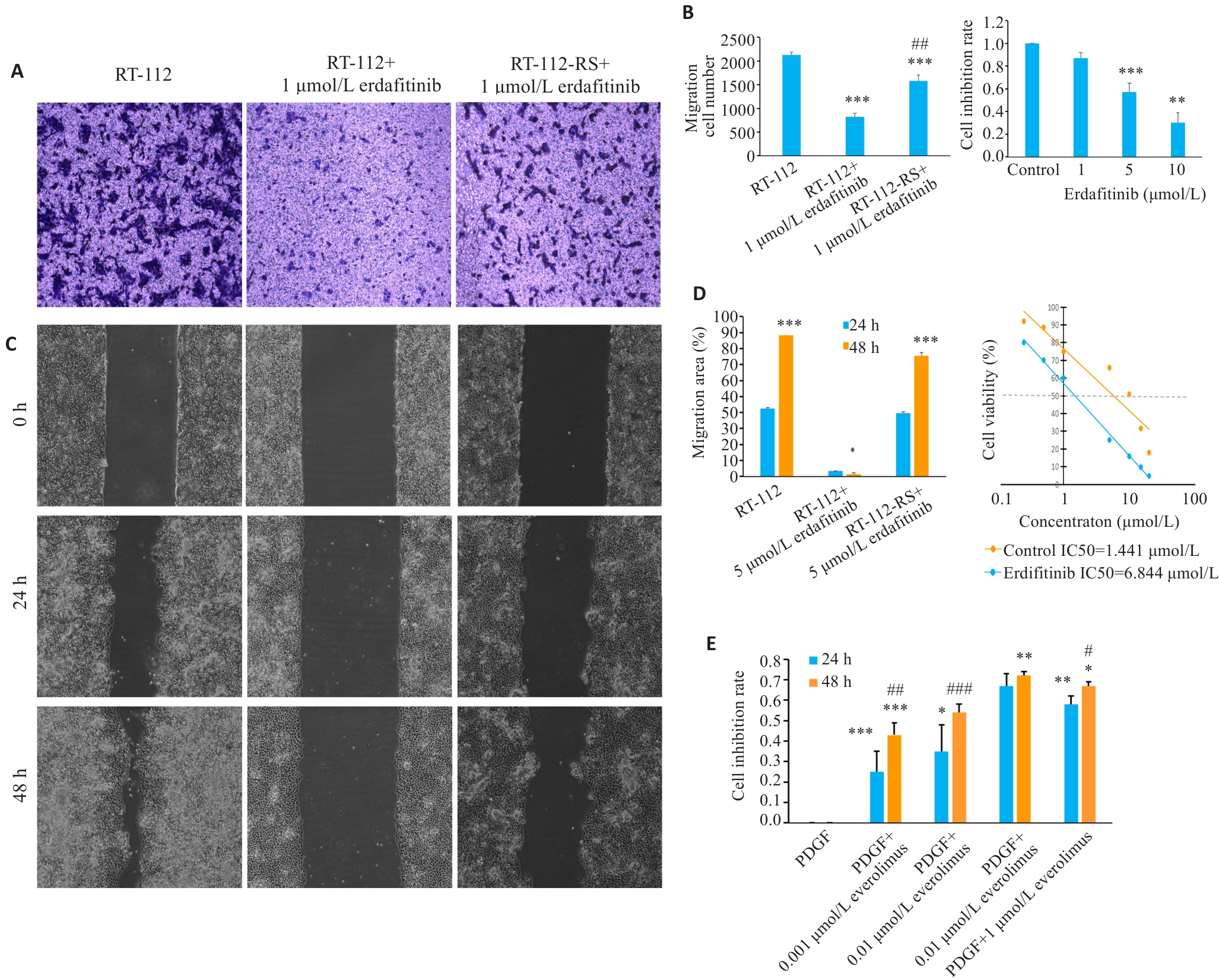
Fig.1 Migration and invasion abilities of RT-112 and erdafitinib-resistant RT-112-RS cells in the medium containing erdafitinib. A: Migration ability of RT-112 and RT-112-RS cells determined by Transwell assay. B: Migration ability of RT-112 cells treated with erdafitinib. C: Migration ability of RT-112 and RT-112-RS cells determined by scratch assay. D: IC50 values of erdafitinib in RT-112 and RT-112-RS cells determined by CCK-8 assay. E: CCK-8 assay for assessing cell proliferation (Original magnification: ×40). *P<0.05, **P<0.01, ***P<0.001 vs RT-112; #P<0.05, ##P<0.01, ###P<0.001 vs RT-112+1 μmol/L erdafitinib (Mean±SD, n=6).
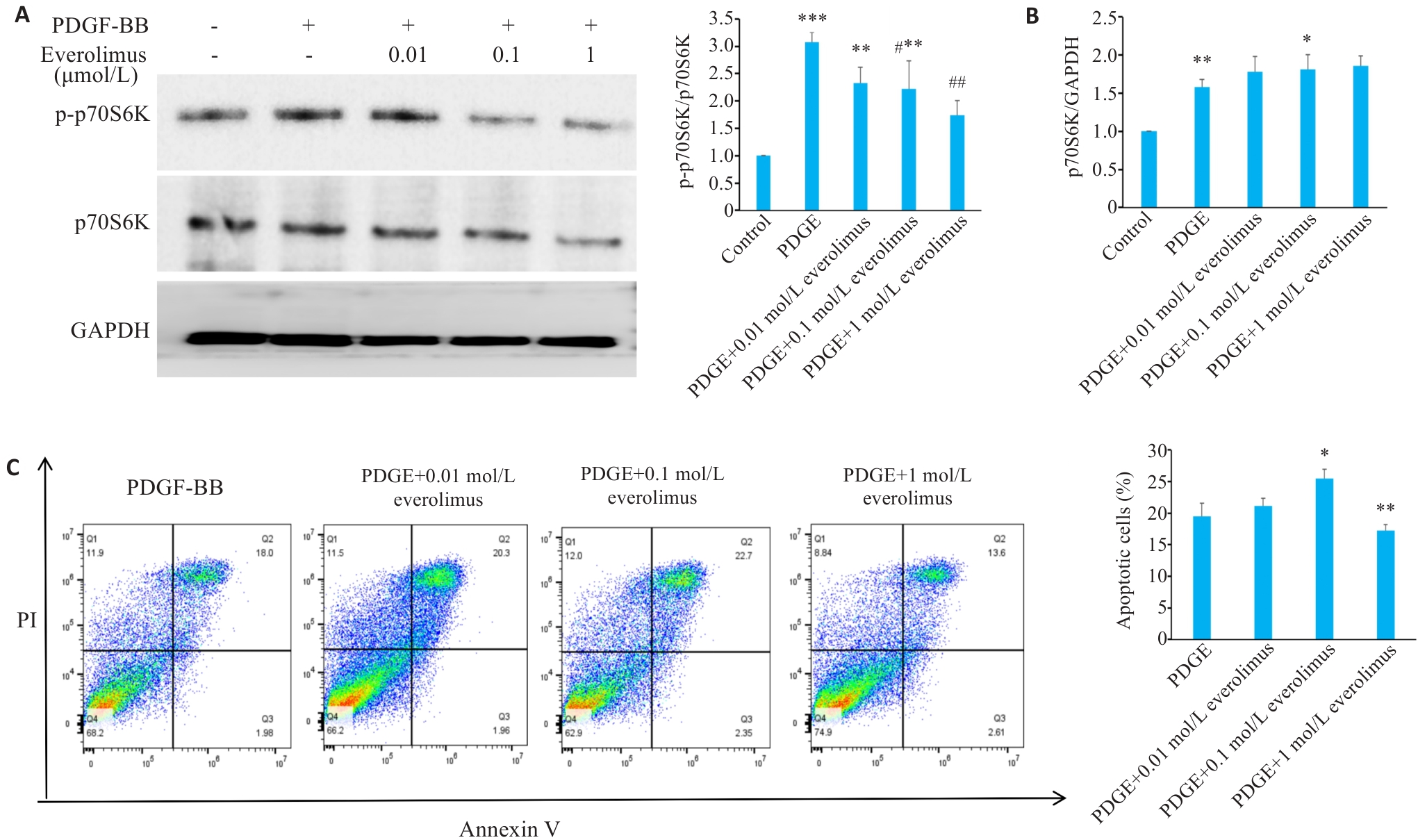
Fig.2 Effect of PDGF-BB alone or in combination with everolimus on p-p70S6K expression and apoptosis in RT-112-RS cells. A: Everolimus significantly inhibits phosphorylation of p70S6K detected by Western blotting. B: Detection of p70S6k mRNA. C: Analysis of apoptosis of RT-112-RS cells following treatment. *P<0.05, **P<0.01, ***P<0.001 vs control; #P<0.05, ##P<0.01 vs PDGF-BB (Mean±SD, n=3).
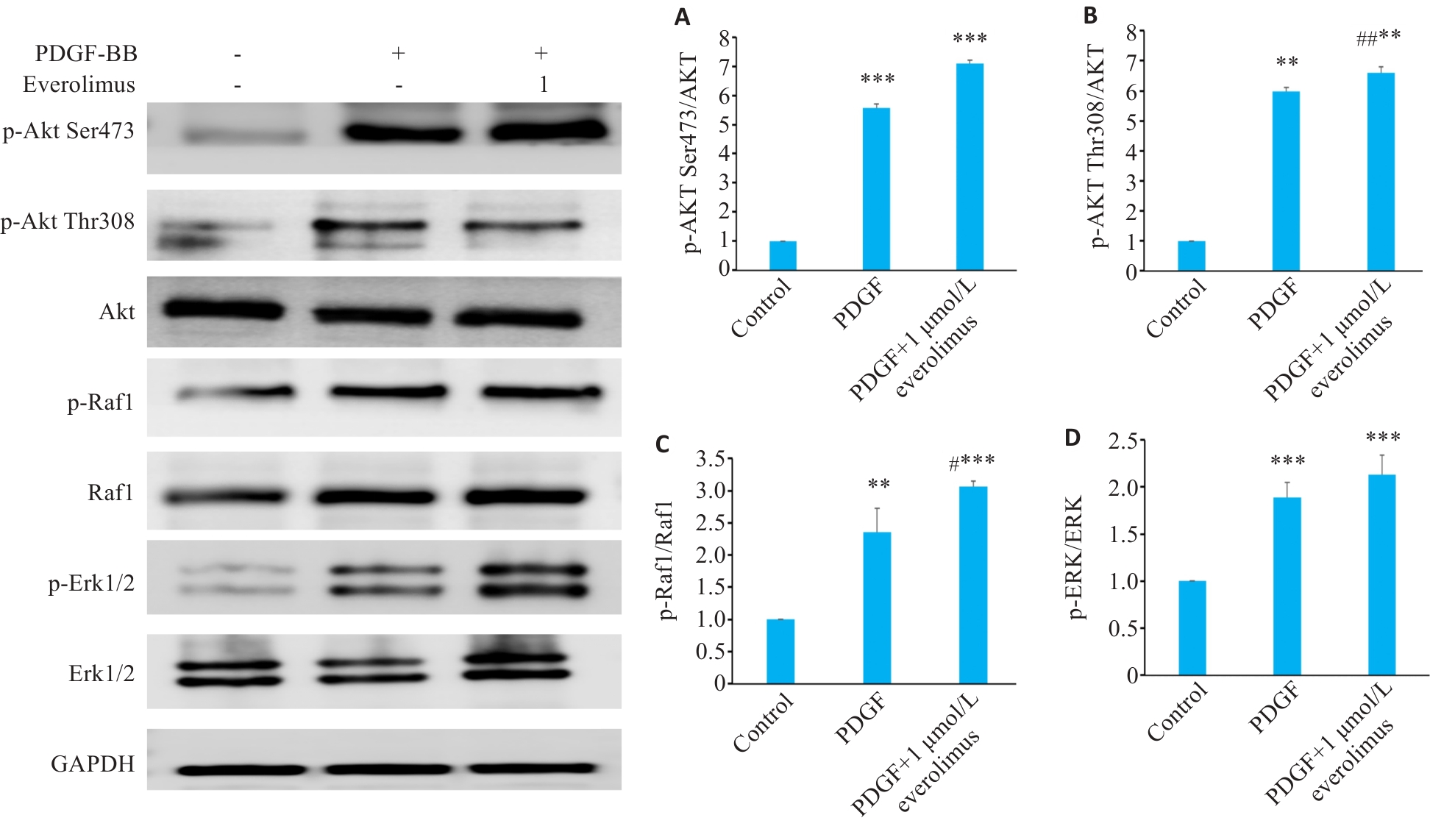
Fig.3 Analysis of expressions of Raf1-MEK-ERK pathway proteins using Western blotting in RT-112-RS cells following treatment with PDGF-BB alone or in combination with everolimus. A: p-Akt (Ser473)/Akt expressions. B: p-Akt (Thr308)/Akt expressions. C: p-Raf1/Raf1 expressions. D: p-ERK1/2/ERK1/2 expressions. **P<0.01, ***P<0.001 vs control; #P<0.05, ##P<0.01 vs PDGF-BB (Mean±SD, n=3).
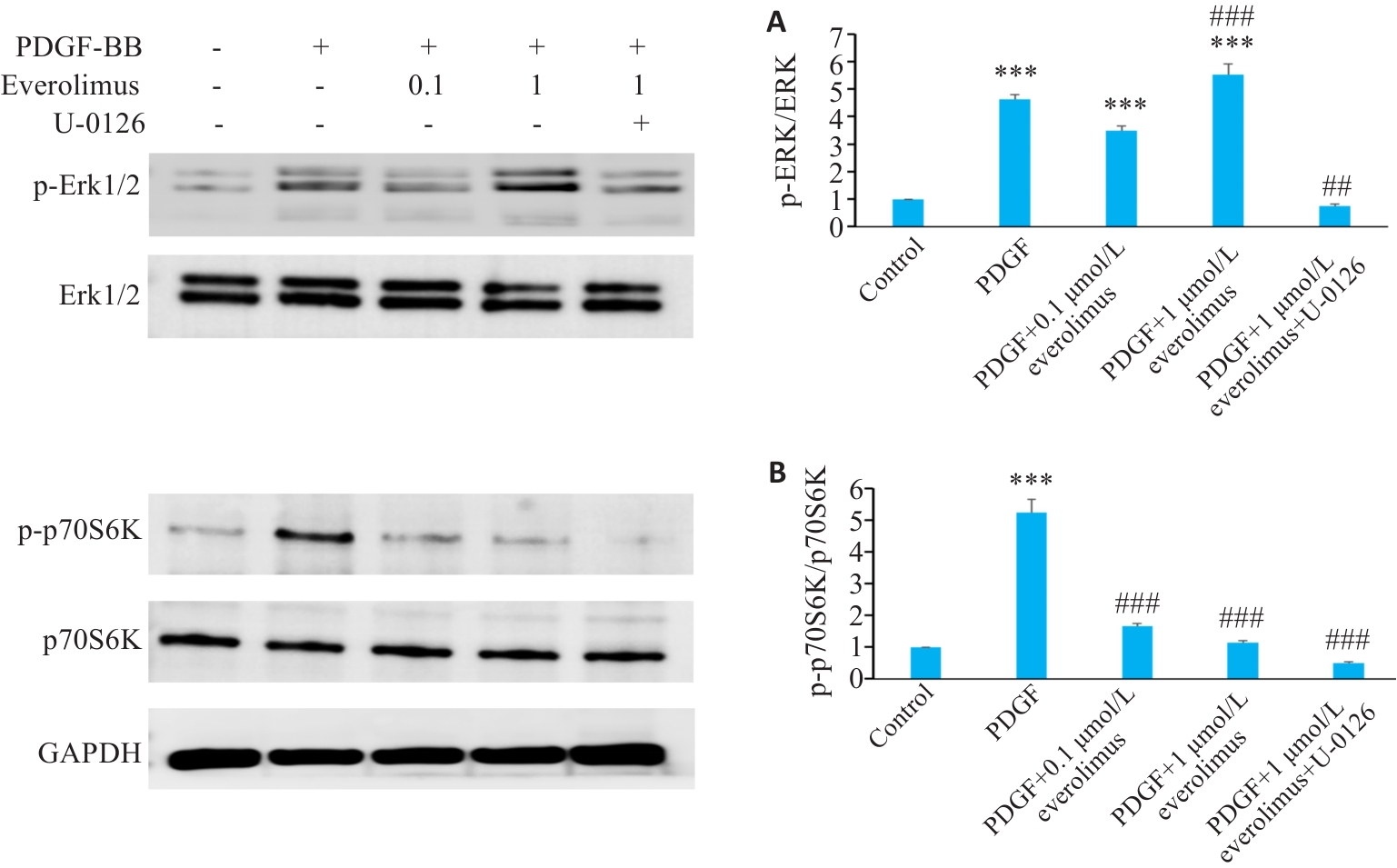
Fig.4 Effects of PDGF-BB, everolimus and U-0126 on phosphorylation of ERK and p70S6K in RT-112-RS cells. A: p-ERK1/2/ERK1/2. B: p-p70S6K/p70S6K. ***P<0.001 vs control; ##P<0.01, ###P<0.001 vs PDGF-BB (Mean±SD, n=3).
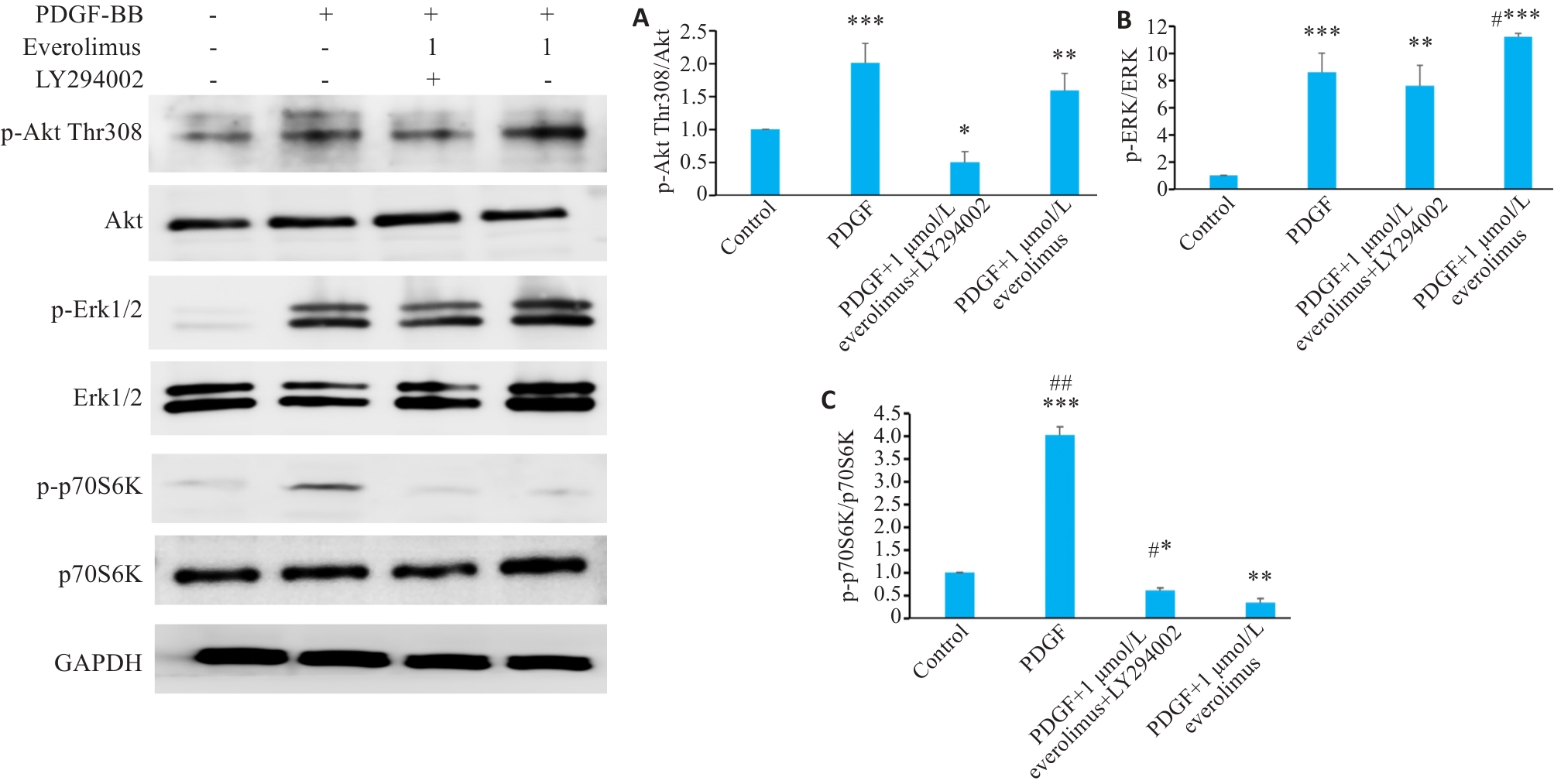
Fig.5 Effects of everolimus and LY294002 on phosphorylation of p70S6K/PI3K/ERK in RT-112-RS cells. A: p-AKT (Thr308)/AKT expressions. B: p-ERK1/2/ERK1/2 expressions. C: p-p70S6K/p70S6K expressions. *P<0.05, **P<0.01, ***P<0.001 vs control; #P<0.05, ##P<0.01 vs PDGF-BB (Mean±SD, n=3).
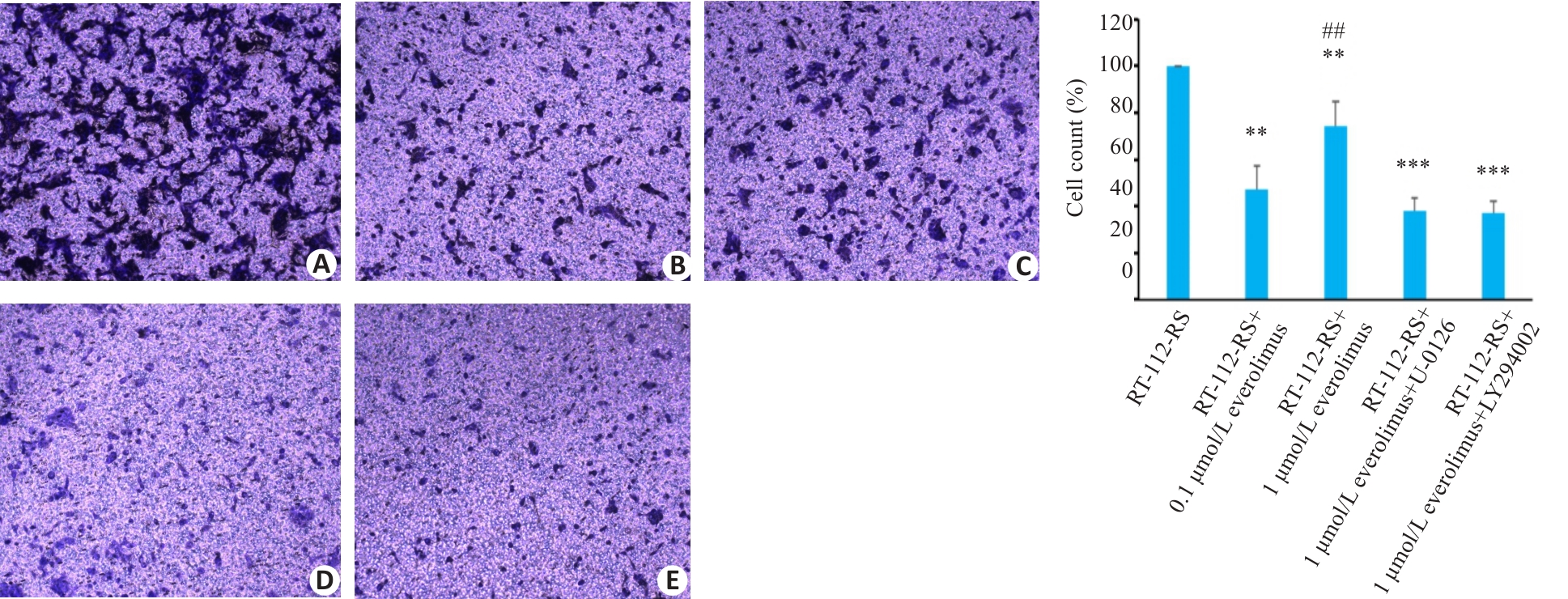
Fig.6 Effects of U-0126 and LY294002 on migration and invasion capabilities of RT-112-RS cells treated with everolimus ( ×40). A: RT-112-RS group. B: RT-112-RS+0. 1 μmol/L everolimus group. C: RT-112-RS+1 μmol/L everolimus group. D: RT-112-RS+0.1 μmol/L everolimus+U-0126 group. E: RT-112-RS+0.1 μmol/L everolimus+LY294002 group. **P<0.01, ***P<0.001 vs RT-112-RS; ##P<0.01 vs RT-112-RS+PDGF (Mean±SD, n=3).
| [1] | Sung H, Ferlay J, Siegel RL, et al. Global cancer statistics 2020: GLOBOCAN estimates of incidence and mortality worldwide for 36 cancers in 185 countries[J]. CA Cancer J Clin, 2021, 71(3): 209-49. doi:10.3322/caac.21660 |
| [2] | Paner GP, Kamat A, Netto GJ, et al. International society of urological pathology (ISUP) consensus conference on current issues in bladder cancer. working group 2: grading of mixed grade, invasive urothelial carcinoma including histologic subtypes and divergent differentiations, and non-urothelial carcinomas[J]. Am J Surg Pathol, 2024, 48(1): e11-23. doi:10.1097/pas.0000000000002077 |
| [3] | Cathomas R, Lorch A, Bruins HM, et al. The 2021 updated European association of urology guidelines on metastatic urothelial carcinoma[J]. Eur Urol, 2022, 81(1): 95-103. doi:10.1016/j.eururo.2021.09.026 |
| [4] | Pan ZR, Zhang HX, Dokudovskaya S. The role of mTORC1 pathway and autophagy in resistance to platinum-based chemotherapeutics[J]. Int J Mol Sci, 2023, 24(13): 10651. doi:10.3390/ijms241310651 |
| [5] | Singh A, Osbourne AS, Koshkin VS. Perioperative immunotherapy in muscle-invasive bladder cancer[J]. Curr Treat Options Oncol, 2023, 24(9): 1213-30. doi:10.1007/s11864-023-01113-z |
| [6] | Wu QS, Wong JPC, Kwok HF. Putting the brakes on tumorigenesis with natural products of plant origin: insights into the molecular mechanisms of actions and immune targets for bladder cancer treatment[J]. Cells, 2020, 9(5): 1213. doi:10.3390/cells9051213 |
| [7] | Hao XP, Fan HX, Yang J, et al. Network pharmacology research and dual-omic analyses reveal the molecular mechanism of natural product nodosin inhibiting muscle-invasive bladder cancer in vitro and in vivo [J]. J Nat Prod, 2022, 85(8): 2006-17. doi:10.1021/acs.jnatprod.2c00400 |
| [8] | Su QL, Tao T, Tang L, et al. Down-regulation of PKM2 enhances anticancer efficiency of THP on bladder cancer[J]. J Cell Mol Med, 2018, 22(5): 2774-90. doi:10.1111/jcmm.13571 |
| [9] | Tate T, Xiang TN, Wobker SE, et al. Pparg signaling controls bladder cancer subtype and immune exclusion[J]. Nat Commun, 2021, 12: 6160. doi:10.1038/s41467-021-26421-6 |
| [10] | Guo CC, Lee S, Lee JG, et al. Molecular profile of bladder cancer progression to clinically aggressive subtypes[J]. Nat Rev Urol, 2024, 21(7): 391-405. doi:10.1038/s41585-023-00847-7 |
| [11] | Eisner JR, de Jong FC, Shibata Y, et al. Characterization of FGFR alterations and activation in patients with high-risk non–muscle-invasive bladder cancer[J]. Clin Cancer Res, 2024, 30(23): 5374-84. doi:10.1158/1078-0432.ccr-24-2015 |
| [12] | Komori T. Regulation of proliferation, differentiation and functions of osteoblasts by Runx2[J]. Int J Mol Sci, 2019, 20(7): 1694. doi:10.3390/ijms20071694 |
| [13] | Zhang Y, Ling L, Ajay D/O Ajayakumar A, et al. FGFR2 accommodates osteogenic cell fate determination in human mesenchymal stem cells[J]. Gene, 2022, 818: 146199. doi:10.1016/j.gene.2022.146199 |
| [14] | Robertson AG, Kim J, Al-Ahmadie H, et al. Comprehensive molecular characterization of muscle-invasive bladder cancer[J]. Cell, 2018, 174(4): 1033. |
| [15] | Hou CY, Lei YJ, Li N, et al. Collagen from Iris squid grafted with polyethylene glycol and collagen peptides promote the proliferation of fibroblast through PI3K/AKT and Ras/RAF/MAPK signaling pathways[J]. Int J Biol Macromol, 2023, 247: 125772. doi:10.1016/j.ijbiomac.2023.125772 |
| [16] | Casadei C, Dizman N, Schepisi G, et al. Targeted therapies for advanced bladder cancer: new strategies with FGFR inhibitors[J]. Ther Adv Med Oncol, 2019, 11: 1758835919890285. doi:10.1177/1758835919890285 |
| [17] | Peng Y, Wang YY, Zhou C, et al. PI3K/Akt/mTOR pathway and its role in cancer therapeutics: are we making headway [J]. Front Oncol, 2022, 12: 819128. doi:10.3389/fonc.2022.819128 |
| [18] | Loriot Y, Matsubara N, Park SH, et al. Erdafitinib or chemotherapy in advanced or metastatic urothelial carcinoma[J]. N Engl J Med, 2023, 389(21): 1961-71. doi:10.1056/nejmoa2308849 |
| [19] | Franza A, Pirovano M, Giannatempo P, et al. Erdafitinib in locally advanced/metastatic urothelial carcinoma with certain FGFR genetic alterations[J]. Future Oncol, 2022, 18(19): 2455-64. doi:10.2217/fon-2021-1151 |
| [20] | Nishina T, Takahashi S, Iwasawa R, et al. Safety, pharmacokinetic, and pharmacodynamics of erdafitinib, a pan-fibroblast growth factor receptor (FGFR) tyrosine kinase inhibitor, in patients with advanced or refractory solid tumors[J]. Investig New Drugs, 2018, 36(3): 424-34. doi:10.1007/s10637-017-0514-4 |
| [21] | Szwed A, Kim E, Jacinto E. Regulation and metabolic functions of mTORC1 and mTORC2[J]. Physiol Rev, 2021, 101(3): 1371-426. doi:10.1152/physrev.00026.2020 |
| [22] | Yang K, Tang xiang-jun, Xu feng-fei, et al. PI3K/mTORC1/2 inhibitor PQR309 inhibits proliferation and induces apoptosis in human glioblastoma cells[J]. Oncol Rep, 2020,43(3):773-82. |
| [23] | Tian JH, Wang YH, Zhou XS, et al. Rapamycin slows IgA nephropathy progression in the rat[J]. Am J Nephrol, 2014, 39(3): 218-29. doi:10.1159/000358844 |
| [24] | Zeng QY, Zhou ZH, Qin SS, et al. Rapamycin inhibits B-cell activating factor (BAFF)-stimulated cell proliferation and survival by suppressing Ca2+-CaMKII-dependent PTEN/Akt-Erk1/2 signaling pathway in normal and neoplastic B-lymphoid cells[J]. Cell Calcium, 2020, 87: 102171. doi:10.1016/j.ceca.2020.102171 |
| [25] | Morris MB, Ozsoy S, Zada M, et al. Selected amino acids promote mouse pre-implantation embryo development in a growth factor-like manner[J]. Front Physiol, 2020, 11: 140. doi:10.3389/fphys.2020.00140 |
| [26] | Tian JH, Chang SJ, Ji H, et al. The p70S6K/PI3K/MAPK feedback loop releases the inhibition effect of high-dose rapamycin on rat mesangial cell proliferation[J]. Int J Immunopathol Pharmacol, 2021, 35: 20587384211000544. doi:10.1177/20587384211000544 |
| [27] | Wang KJ, Wang C, Dai LH, et al. Targeting an autocrine regulatory loop in cancer stem-like cells impairs the progression and chemotherapy resistance of bladder cancer[J]. Clin Cancer Res,2019,25(3):1070-86. doi:10.1158/1078-0432.ccr-18-0586 |
| [28] | Sun YH, Sedgwick AJ, Khan MA, et al. A transcriptional signature of IL-2 expanded natural killer cells predicts more favorable prognosis in bladder cancer[J]. Front Immunol, 2021, 12: 724107. doi:10.3389/fimmu.2021.724107 |
| [29] | Ando K, Kurashina R, Motoi N, et al. Positive regulatory loop of platelet-derived growth factor DD-induced STAT3 activation is associated with poor prognosis in advanced urothelial carcinoma[J]. Biochem Biophys Res Commun,2023,676:165-70. doi:10.1016/j.bbrc.2023.07.054 |
| [30] | Yu JJ, Zhang LJ, Peng J, et al. Dictamnine, a novel c-Met inhibitor, suppresses the proliferation of lung cancer cells by downregulating the PI3K/AKT/mTOR and MAPK signaling pathways[J]. Biochem Pharmacol, 2022, 195: 114864. doi:10.1016/j.bcp.2021.114864 |
| [31] | Buddham R, Chauhan S, Narad P, et al. Reconstruction and exploratory analysis of mTORC1 signaling pathway and its applications to various diseases using network-based approach[J]. J Microbiol Biotechnol, 2022, 32(3): 365-77. doi:10.4014/jmb.2108.08007 |
| [32] | Kale R, Samant C, Bokare A, et al. Inhibition of SGK1 potentiates the anticancer activity of PI3K inhibitor in NSCLC cells through modulation of mTORC1, p-ERK and β‑catenin signaling[J]. Biomed Rep, 2023, 19(6): 94. doi:10.3892/br.2023.1676 |
| [33] | Xiao J, Wang S, Chen LL, et al. 25-Hydroxycholesterol regulates lysosome AMP kinase activation and metabolic reprogramming to educate immunosuppressive macrophages[J]. Immunity, 2024, 57(5): 1087-104.e7. doi:10.1016/j.immuni.2024.03.021 |
| [34] | O’Leary EM, Tian YF, Nigdelioglu R, et al. TGF‑β promotes metabolic reprogramming in lung fibroblasts via mTORC1-dependent ATF4 activation[J]. Am J Respir Cell Mol Biol, 2020, 63(5): 601-12. doi:10.1165/rcmb.2020-0143oc |
| [35] | Liang X, Yao JP, Cui DR, et al. The TRAF2-p62 axis promotes proliferation and survival of liver cancer by activating mTORC1 pathway[J]. Cell Death Differ, 2023, 30(6): 1550-62. doi:10.1038/s41418-023-01164-7 |
| [36] | Huang MY, Hu SY, Dong J, et al. The DRAP1/DR1 repressor complex increases mTOR activity to promote progression and confer everolimus sensitivity in triple-negative breast cancer[J]. Cancer Res, 2024, 84(16): 2660-73. doi:10.1158/0008-5472.can-23-2781 |
| [37] | Ye QW, Zhou W, Xu SJ, et al. Ubiquitin-specific protease 22 promotes tumorigenesis and progression by an FKBP12/mTORC1/autophagy positive feedback loop in hepatocellular carcinoma[J]. MedComm, 2023, 4(6): e439. doi:10.1002/mco2.439 |
| [38] | Liu JZ, Jiang BL, Xu WC, et al. Targeted inhibition of CHKα and mTOR in models of pancreatic ductal adenocarcinoma: a novel regimen for metastasis[J]. Cancer Lett, 2024, 605: 217280. doi:10.1016/j.canlet.2024.217280 |
| [39] | Niu YJ, Fu XZ, Lin Q, et al. Epidermal growth factor receptor promotes infectious spleen and kidney necrosis virus invasion via PI3K-Akt signaling pathway[J]. J Gen Virol, 2023, 104(8). DOI:10.1099/jgv.0.001882 . |
| [40] | Moein A, Jin JY, Wright MR, et al. Quantitative assessment of drug efficacy and emergence of resistance in patients with metastatic renal cell carcinoma using a longitudinal exposure-tumor growth inhibition model: apitolisib (dual PI3K/mTORC1/2 inhibitor) versus everolimus (mTORC1 inhibitor)[J]. J Clin Pharmacol, 2024, 64(9): 1101-11. doi:10.1002/jcph.2444 |
| [41] | Machl A, Wilker EW, Tian H, et al. M2698 is a potent dual-inhibitor of p70S6K and Akt that affects tumor growth in mouse models of cancer and crosses the blood-brain barrier[J]. Am J Cancer Res, 2016, 6(4): 806-18. |
| [42] | Chen M, Choi S, Wen TM, et al. A p53-phosphoinositide signalosome regulates nuclear AKT activation[J]. Nat Cell Biol, 2022, 24(7): 1099-113. doi:10.1038/s41556-022-00949-1 |
| [43] | Rajdev L, Lee JW, Libutti SK, et al. A phase II study of sapanisertib (TAK-228) a mTORC1/2 inhibitor in rapalog-resistant advanced pancreatic neuroendocrine tumors (PNET): ECOG-ACRIN EA2161[J]. Investig New Drugs, 2022, 40(6): 1306-14. doi:10.1007/s10637-022-01311-w |
| [44] | Iskandar K, Foo J, Liew AQX, et al. A novel MTORC2-AKT-ROS axis triggers mitofission and mitophagy-associated execution of colorectal cancer cells upon drug-induced activation of mutant KRAS[J]. Autophagy, 2024, 20(6): 1418-41. doi:10.1080/15548627.2024.2307224 |
| [45] | Martin JK II, Sheehan JP, Bratton BP, et al. A dual-mechanism antibiotic kills gram-negative bacteria and avoids drug resistance[J]. Cell, 2020, 181(7): 1518-32.e14. doi:10.1016/j.cell.2020.05.005 |
| [46] | Al Shihabi A, Tebon PJ, Nguyen HTL, et al. The landscape of drug sensitivity and resistance in sarcoma[J]. Cell Stem Cell, 2024, 31(10): 1524-42.e4. doi:10.1016/j.stem.2024.08.010 |
| [1] | Ruixu SUN, Yutong LI, Ling ZUO, Jiahua TAO, Xuan DONG, Hongwei LIU. Myricetin inhibits proliferation and migration of bladder cancer cells by inhibiting HSP90AA1-mediated AKT phosphorylation [J]. Journal of Southern Medical University, 2026, 46(5): 1039-1052. |
| [2] | Hongbo ZHANG, Mengyu YAN, Jiandong ZHANG, Peiwang SUN, Rui WANG, Yuanyuan GUO. Pirfenidone inhibits bladder cancer xenograft growth in mice by regulating regulatory T cells [J]. Journal of Southern Medical University, 2025, 45(7): 1513-1518. |
| [3] | Yujia YANG, Lifang YANG, Yaling WU, Zhaoda DUAN, Chunze YU, Chunyun WU, Jianyun YU, Li YANG. Cannabidiol inhibits neuronal endoplasmic reticulum stress and apoptosis in rats with multiple concussions by regulating the PERK-eIF2α-ATF4-CHOP pathway [J]. Journal of Southern Medical University, 2025, 45(6): 1240-1250. |
| [4] | Wei SU, Houhua LAI, Xin TANG, Qun ZHOU, Yachun TANG, Hao FU, Xuancai CHEN. Apelin promotes proliferation, migration, and angiogenesis in bladder cancer by activating the FGF2/FGFR1 pathway [J]. Journal of Southern Medical University, 2025, 45(6): 1289-1296. |
| [5] | Yutong LI, Xingyu SONG, Ruixu SUN, Xuan DONG, Hongwei LIU. A pan-cancer analysis of PYCR1 and its predictive value for chemotherapy and immunotherapy responses in bladder cancer [J]. Journal of Southern Medical University, 2025, 45(4): 880-892. |
| [6] | Yanyan DONG, Kejing ZHANG, Jun CHU, Quangen CHU. Didang Decoction-medicated serum enhances autophagy in high glucose-induced rat glomerular endothelial cells via the PI3K/Akt/mTOR signaling pathway [J]. Journal of Southern Medical University, 2025, 45(3): 461-469. |
| [7] | CHEN Shoufeng, ZHANG Shuchao, FAN Weilin, SUN Wei, LIU Beibei, LIU Jianmin, GUO Yuanyuan. Efficacy of combined treatment with pirfenidone and PD-L1 inhibitor in mice bearing ectopic bladder cancer xenograft [J]. Journal of Southern Medical University, 2024, 44(2): 210-216. |
| [8] | Yunfei LI, Lijun PANG, Longwu SHU, Ming LI, Chuanbing HUANG. Qihuang Jianpi Zishen Granules improves thrombocytopenia in mice with systemic lupus erythematosus by suppressing platelet autophagy via the Ca2+/CaMKK2/AMPK/mTOR signaling pathway [J]. Journal of Southern Medical University, 2024, 44(12): 2327-2334. |
| [9] | Huan LI, Zixin QIU, Wenjie XU, Xue CHEN, Diandian WEI, Yun WANG. Luteolin inhibits proliferation of lung cancer A549 cells by increasing ROS production and inhibiting the AKT/mTOR signaling pathway and HO-1 expression [J]. Journal of Southern Medical University, 2024, 44(12): 2367-2374. |
| [10] | Miaozhu YIN, Kuiyu CHEN, Limin WU, Pengyu JIANG, Zhihui JI, Nian ZHANG, Huan ZHOU, Hui HAN. Gandou Bushen Decoction improves spermatogenesis and promotes spermatogenic cell proliferation in Wilson disease TX mice by activating testicular ERK signaling pathway [J]. Journal of Southern Medical University, 2024, 44(11): 2063-2073. |
| [11] | Liqiang LI, Yuanyuan GUO, Chengyong WANG, Rui CHANG, Wei SUN, Wuyue GAO, Chao WANG, Beibei LIU. High expression of miR-204-5p promotes malignant behaviors of bladder cancer cells by negatively regulating RAB22A [J]. Journal of Southern Medical University, 2024, 44(11): 2235-2242. |
| [12] | Yonghua LI, Xinran XI, Meng ZHANG, Xun WU, Xianghai WANG. High expression of LINC00467 promotes proliferation and metastasis of lung adenocarcinoma cells by suppressing autophagy via inhibiting the AMPK/mTOR pathway [J]. Journal of Southern Medical University, 2024, 44(10): 1898-1909. |
| [13] | YAN Qiuxia, ZENG Peng, HUANG Shuqiang, TAN Cuiyu, ZHOU Xiuqin, QIAO Jing, ZHAO Xiaoying, FENG Ling, ZHU Zhenjie, ZHANG Guozhi, HU Hong, CHEN Cairong. RBMX overexpression inhibits proliferation, migration, invasion and glycolysis of human bladder cancer cells by downregulating PKM2 [J]. Journal of Southern Medical University, 2024, 44(1): 9-16. |
| [14] | ZHANG Xiaolin, WU Haosong, WANG Sheng. SLC12A8 promotes proliferation, invasiveness, migration and epithelial-mesenchymal transition of bladder cancer cells by activating JAK/STAT singaling [J]. Journal of Southern Medical University, 2023, 43(9): 1613-1621. |
| [15] | CAI Taonong, LU Jiangli, LIN Zhijun, LUP Mingrui, LIANG Haitao, QIN Zike, YE Yunlin. Intravesical instillation of bacillus Calmette-Guerin for non-muscle invasive bladder cancer: outcomes of 421 patients in a single center [J]. Journal of Southern Medical University, 2023, 43(3): 488-494. |
| Viewed | ||||||
|
Full text |
|
|||||
|
Abstract |
|
|||||