
南方医科大学学报 ›› 2026, Vol. 46 ›› Issue (7): 1685-1695.doi: 10.12122/j.issn.1673-4254.2026.07.21
• • 上一篇
张龙涛1,3( ), 章雨1, 乔通3, 张可妮1, 尹林1, 黄菊2, 李静1,2, 耿志军2, 胡建国1,2()
收稿日期:2026-01-30
出版日期:2026-07-20
发布日期:2026-07-20
通讯作者:
胡建国
E-mail:15055561902@163.com;jghu9200@bbmu.edu.cn
作者简介:张龙涛,在读硕士研究生,E-mail:15055561902@163.com
基金资助:
Longtao ZHANG1,3(), Yu ZHANG1, Tong QIAO3, Keni ZHANG1, Lin YIN1, Ju HUANG2, Jing LI1,2, Zhijun GENG2, Jianguo HU1,2()
Received:2026-01-30
Online:2026-07-20
Published:2026-07-20
Contact:
Jianguo HU
E-mail:15055561902@163.com;jghu9200@bbmu.edu.cn
摘要:
目的 探讨丁香酸甲酯(MS)对葡聚糖硫酸钠(DSS)诱导小鼠结肠炎的保护作用及机制。 方法 将24只C57BL/6小鼠随机分为对照组(Con组)、造模组(DSS组)、药物处理组(MS组,100 mg/kg),8只/组。通过检测小鼠体质量、疾病活动度(DAI)评分、结肠长度、HE与AB-PAS染色及组织学评分,评估MS对结肠炎的治疗效果。采用ELISA和RT-qPCR检测结肠炎症因子IL-6、TNF-α和IL-10的表达,免疫组化检测髓过氧化物酶(MPO)在结肠组织中的表达,免疫荧光和Western blotting检测紧密连接蛋白ZO-1、Claudin-1的表达与分布,TUNEL染色检测结肠凋亡细胞。体外采用1% DSS诱导NCM460细胞构建凋亡模型,给予MS(50 μmol/L)干预后,通过流式细胞术检测细胞凋亡。采用网络药理学预测和Western blotting检测分析MS的作用机制。 结果 MS处理改善了DSS引起的小鼠体质量下降、结肠缩短、DAI评分和组织学评分升高,减轻肠绒毛结构损伤,增加杯状细胞数量(P<0.05)。同时MS可下调小鼠肠黏膜组织中IL-6、TNF-α和MPO的表达,并上调IL-10的表达(P<0.05)。免疫荧光与Western blotting表明MS可恢复紧密连接蛋白ZO-1、Claudin-1的表达与分布。TUNEL、流式细胞术及Western blotting结果一致表明,MS在体内外均能显著降低肠上皮细胞的凋亡比例,上调抗凋亡蛋白Bcl-2和XIAP,下调促凋亡蛋白C-Caspase3(P<0.05)。KEGG富集分析提示MAPK通路可能与MS疗效相关。Western blotting进一步证实MS能抑制体内外模型中p-JNK、p-ERK、p-p38的磷酸化水平(P<0.05)。 结论 MS通过减少肠上皮细胞凋亡和改善肠屏障损伤来缓解DSS诱导的小鼠结肠炎,其机制可能与抑制MAPK信号通路的表达有关。
张龙涛, 章雨, 乔通, 张可妮, 尹林, 黄菊, 李静, 耿志军, 胡建国. 丁香酸甲酯通过抑制MAPK通路调控肠上皮细胞凋亡减轻葡聚糖硫酸钠诱导的小鼠结肠炎[J]. 南方医科大学学报, 2026, 46(7): 1685-1695.
Longtao ZHANG, Yu ZHANG, Tong QIAO, Keni ZHANG, Lin YIN, Ju HUANG, Jing LI, Zhijun GENG, Jianguo HU. Methyl syringate alleviates DSS-induced colitis in mice by suppressing intestinal epithelial cell apoptosis via inhibiting the MAPK signaling pathway[J]. Journal of Southern Medical University, 2026, 46(7): 1685-1695.
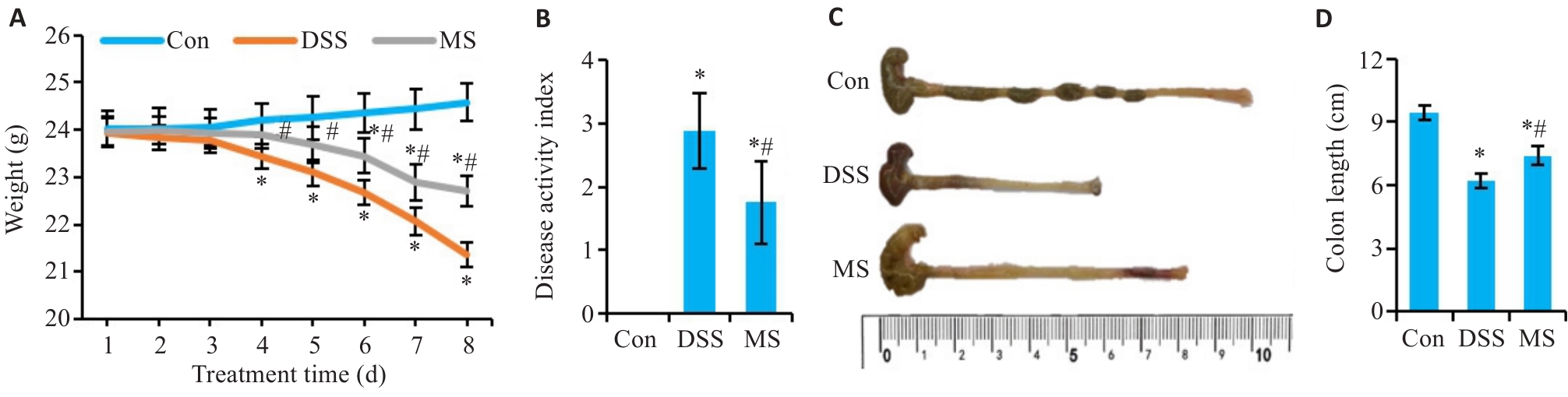
图1 MS处理对DSS诱导的小鼠结肠炎疾病状态的影响
Fig.1 Effect of methyl syringate (MS) treatment on disease status in dextran sodium sulfate (DSS)-induced colitis in mice. A, B: Changes in body weight and DAI scores of the mice. C, D: Comparison of colon lengths among the groups. Data are presented as Mean±SD (n=8). *P<0.05 vs Con group; #P<0.05 vs DSS group.
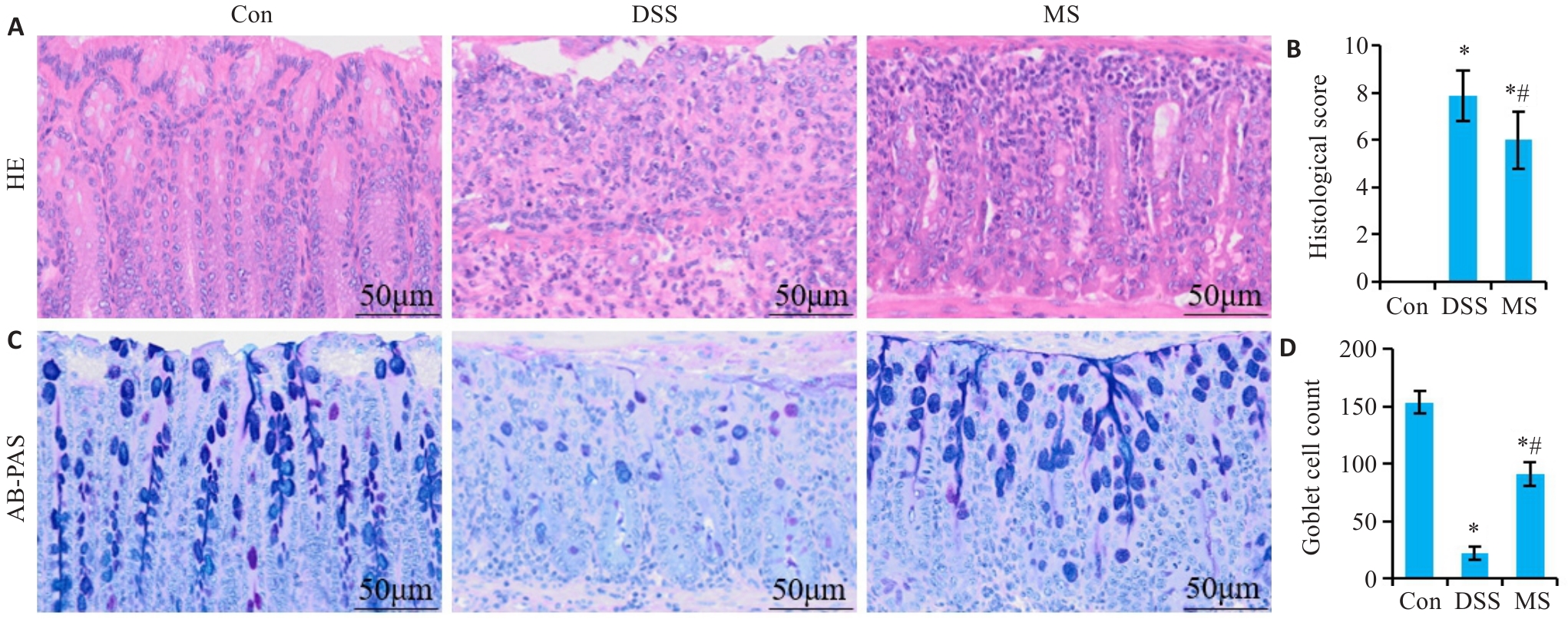
图2 MS处理对DSS诱导的小鼠结肠组织的影响
Fig.2 Effect of MS treatment on colonic pathology in mice with DSS-induced colitis. A: HE staining of colon tissue in different groups. B: Changes in histological scores (Mean±SD, n=8). C: AB-PAS staining of colon tissue in different groups. D: Goblet cell count (Mean±SD, n=3). *P<0.05 vs Con group; #P<0.05 vs DSS group.
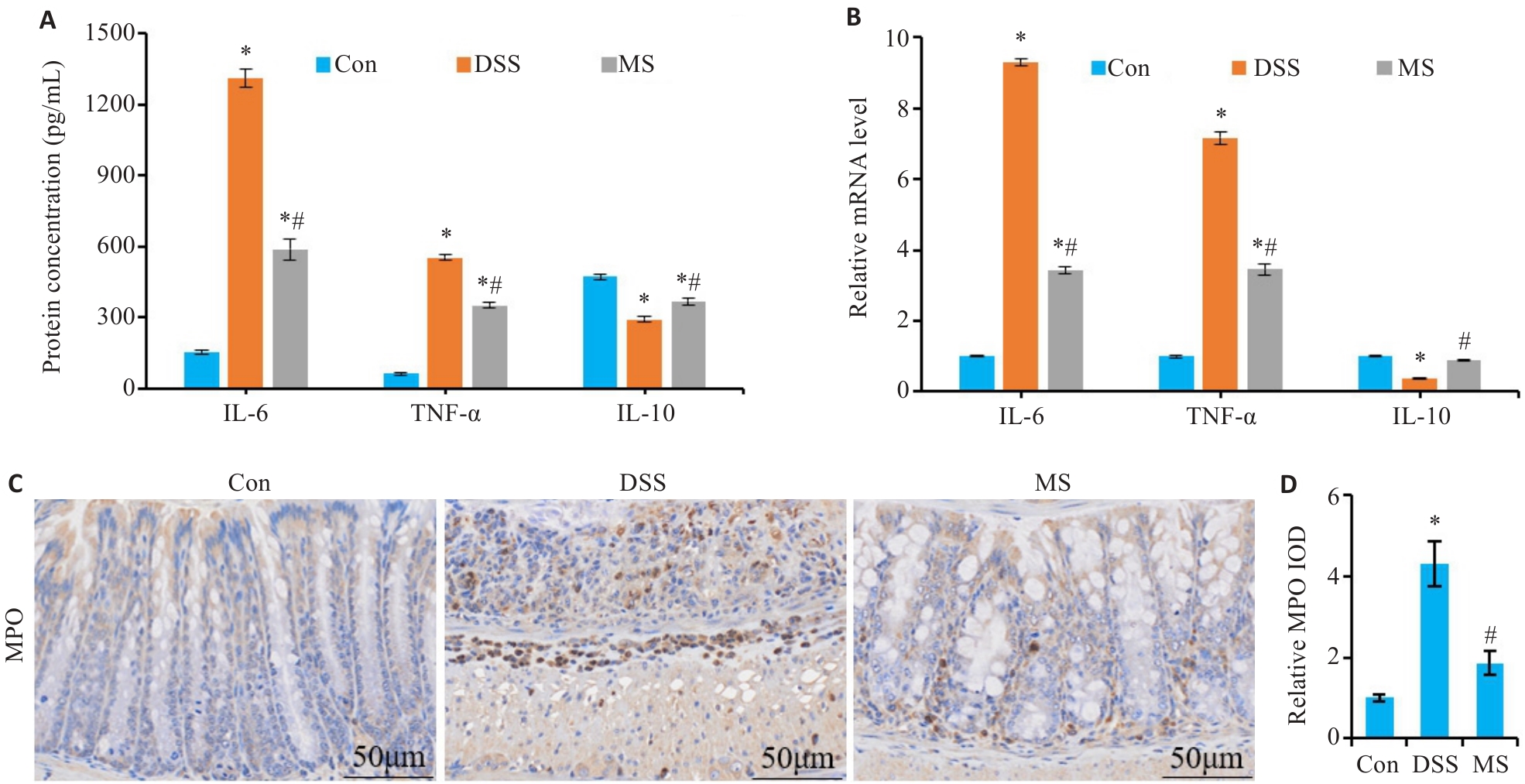
图3 MS处理对DSS模型小鼠肠道炎症因子水平的影响
Fig.3 Effect of MS treatment on intestinal inflammatory cytokines in the colon tissues of mice with DSS-induced colitis. A: ELISA results of IL-6, TNF-α and IL-10 in the intestinal mucosa of the mice. B: RT-qPCR results of IL-6, TNF-α and IL-10 in the intestinal mucosa of the mice. C: MPO immunohistochemical staining results. D: Relative integrated optical density value of MPO. Data are presented as Mean±SD (n=3). *P<0.05 vs Con group; #P<0.05 vs DSS group.
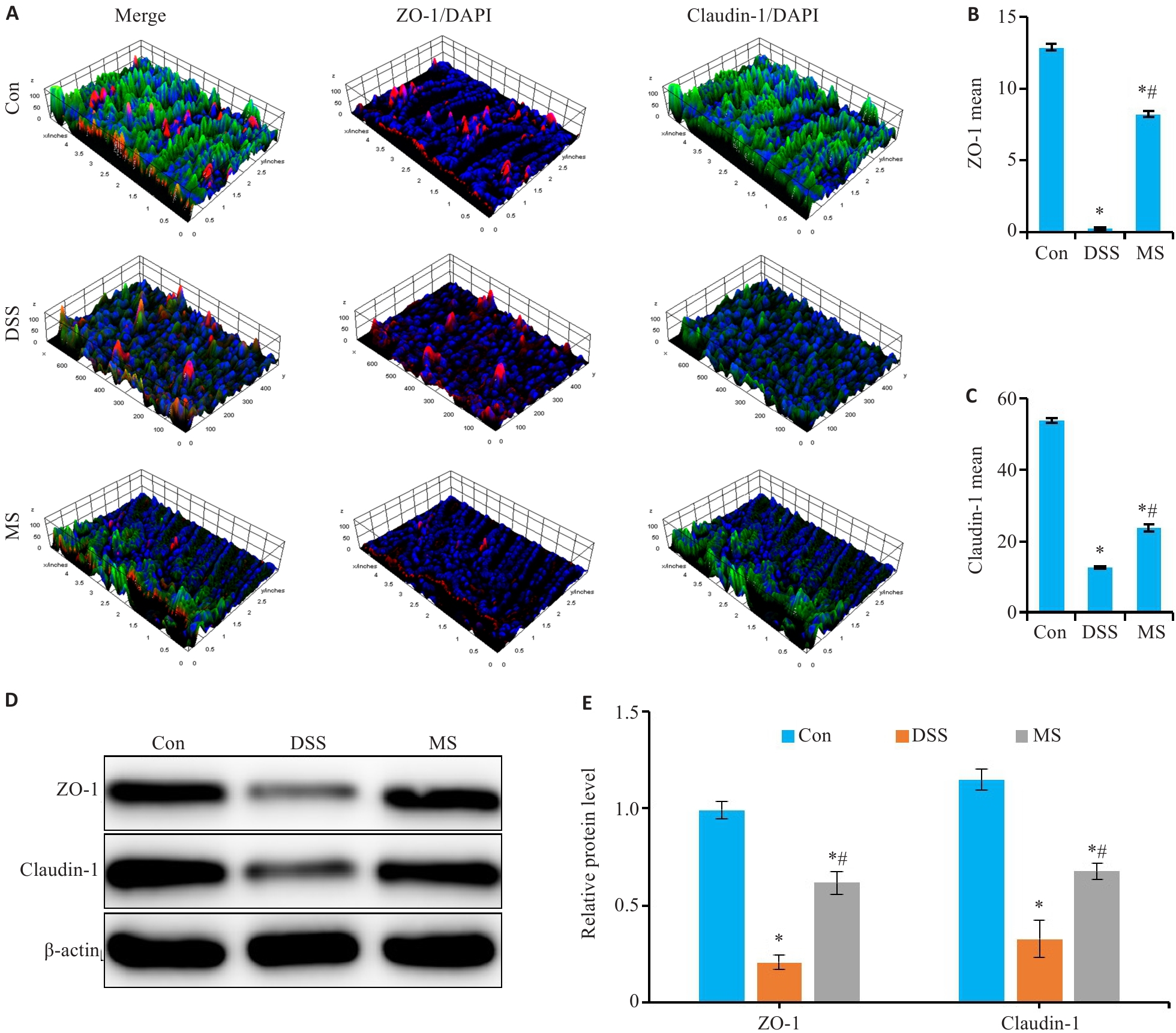
图4 MS处理对DSS模型小鼠结肠炎肠屏障的影响
Fig.4 Effect of MS treatment on intestinal barrier function of the mice with DSS-induced colitis. A-C: 3D immunofluorescence staining and the mean fluorescence intensities for ZO-1 and claudin-1. D: Protein levels of ZO-1 and claudin-1 detected by Western blotting. E: Relative protein expression levels of ZO-1 and claudin-1. Data are presented as Mean±SD (n=3). *P<0.05 vs Con group. #P<0.05 vs DSS group.
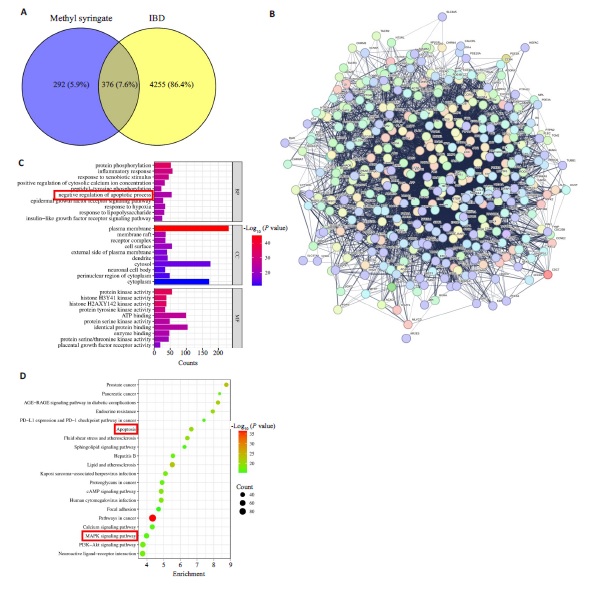
图5 网络药理学分析结果
Fig.5 Results of network pharmacology analysis. A: Venn diagram of MS and IBD. B: PPI network of intersecting targets between MS and IBD. C: Bar chart of GO enrichment analysis for MS and IBD. D: Bubble plot of KEGG pathway enrichment analysis for MS and IBD.
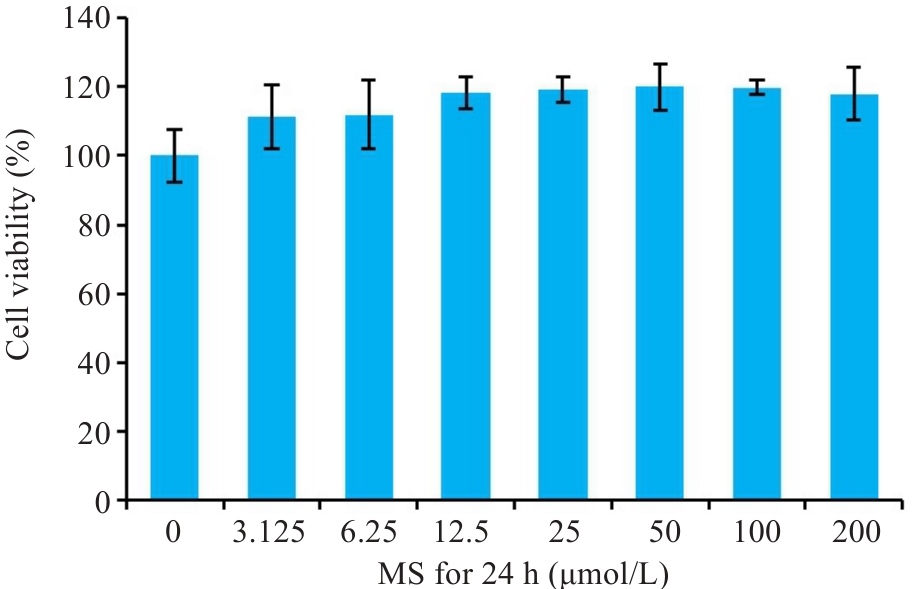
图6 不同浓度的MS处理24 h对NCM460细胞活性的影响
Fig.6 Effect of treatments with different concentrations of MS for 24 h on viability of NCM460 cells (Mean±SD, n=5).
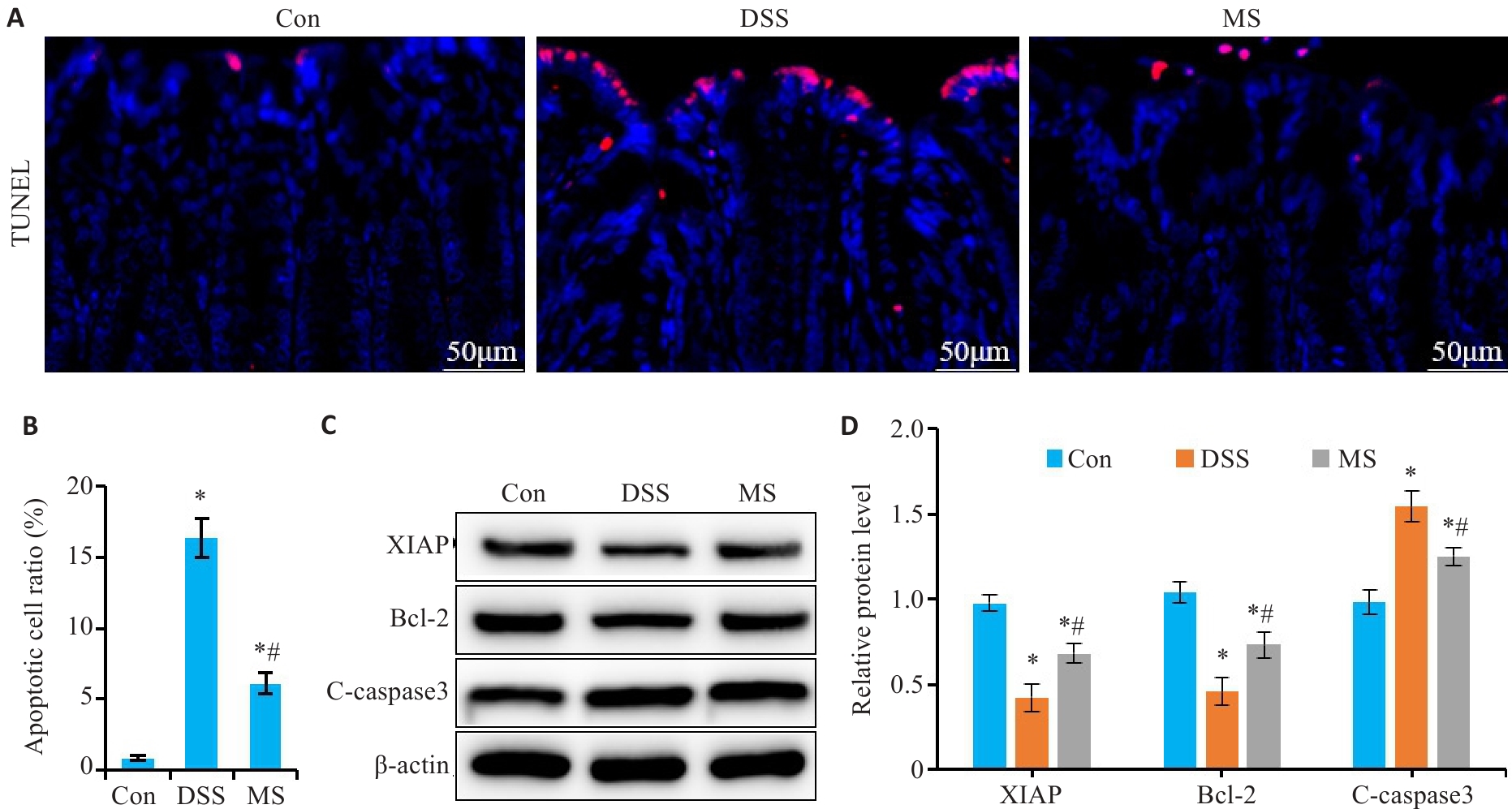
图7 MS处理对DSS模型小鼠结肠上皮细胞凋亡的影响
Fig.7 Effect of MS treatment on apoptosis of colon epithelial cells in DSS-treated mice. A: TUNEL staining for detecting apoptosis in intestinal epithelial cells. B: Apoptosis cell ratio of intestinal epithelial cells. C: Protein expression levels of XIAP, Bcl-2, and cleaved caspase-3 in mouse colon tissues detected by Western blotting. D: Relative protein expression levels of XIAP, Bcl-2, and cleaved caspase-3 in mouse colon tissue. Data are presented as Mean±SD (n=3). *P<0.05 vs Con group; #P<0.05 vs DSS group.
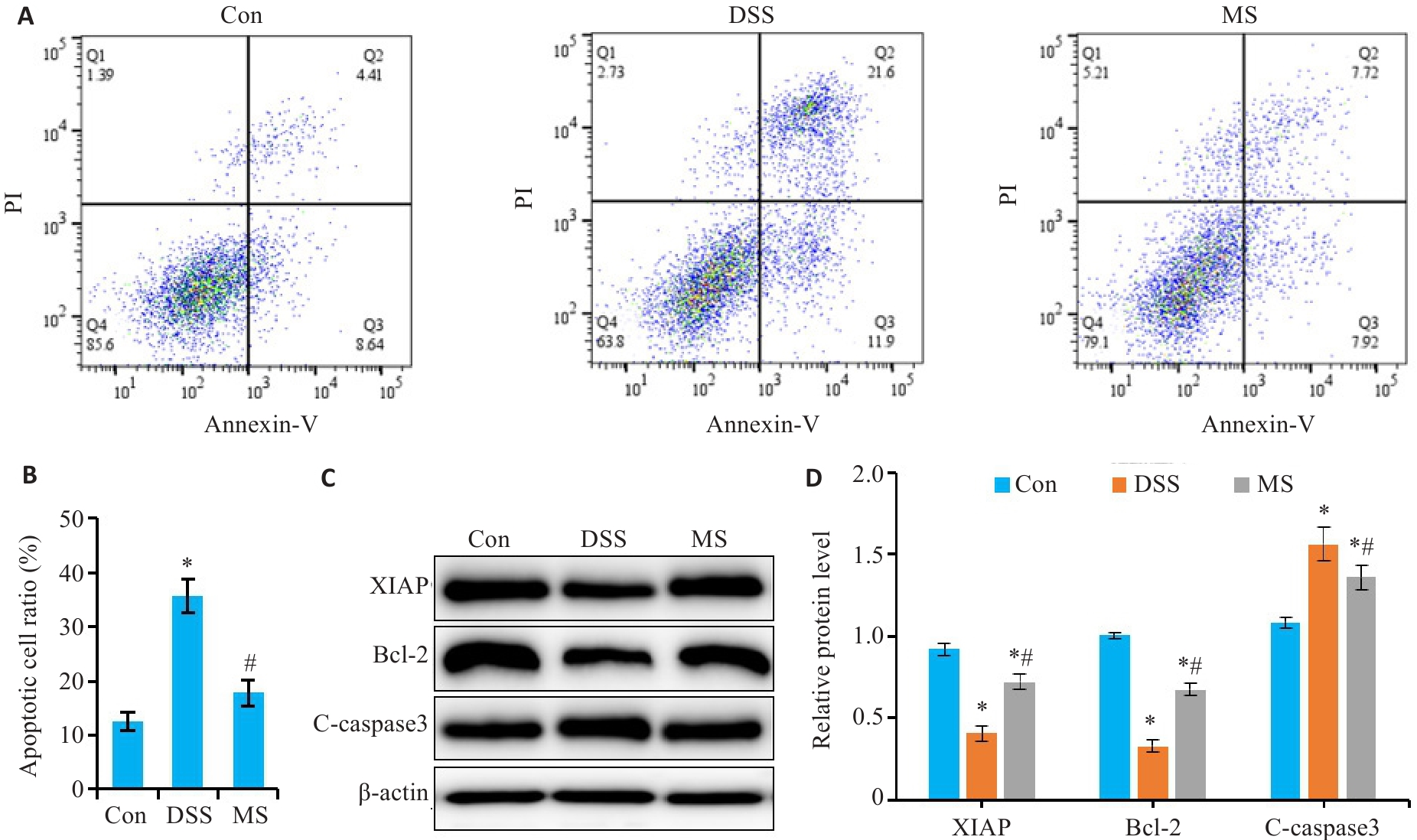
图8 MS处理对DSS诱导的NCM460细胞凋亡的影响
Fig.8 Effect of MS treatment on DSS-induced apoptosis in NCM460 cells. A: Apoptosis of NCM460 cells detected by flow cytometry. B: Apoptosis cell ratio of NCM460 cells. C: Protein expression levels of XIAP, Bcl-2, and cleaved caspase-3 in NCM460 cells detected by Western blotting. D: Relative protein expression levels of XIAP, Bcl-2, and cleaved caspase-3 in NCM460 cells. Data are presented as Mean±SD (n=3). *P<0.05 vs Con group; #P<0.05 vs DSS group.
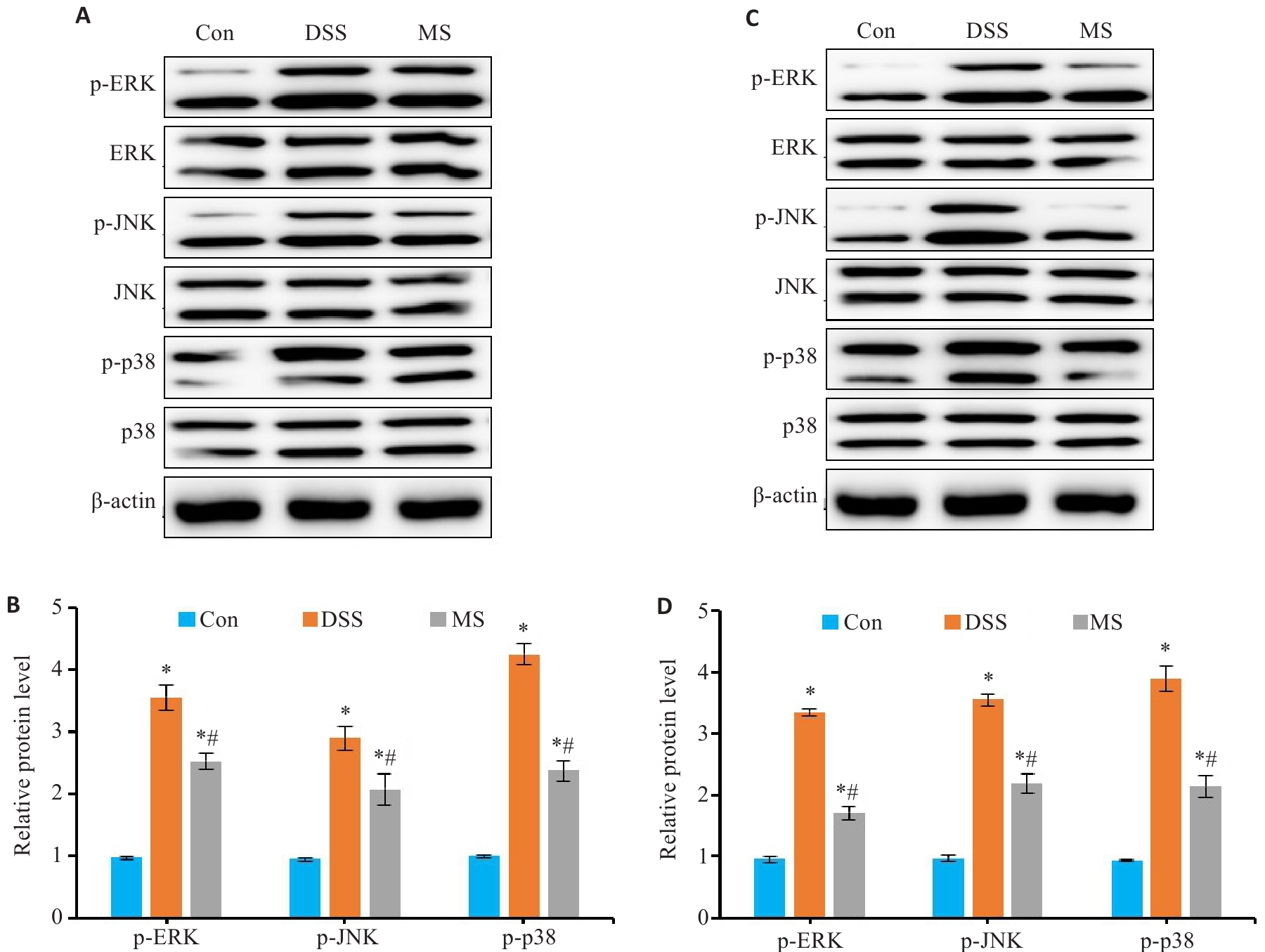
图9 MS处理对MAPK通路活化的影响
Fig.9 Effect of MS treatment on MAPK pathway activation. A: Protein expression levels of p-ERK, ERK, p-JNK, JNK, p-p38, and p38 in mouse colon mucosal tissues detected by Western blotting. B: Relative protein expression levels of p-ERK, p-JNK, and p-p38 in mouse colon mucosal tissues. C: Protein expression levels of p-ERK, ERK, p-JNK, JNK, p-p38, and p38 in NCM460 cells detected by Western blotting. D: Relative protein expression levels of p-ERK, p-JNK, and p-p38 in NCM460 cells. Data are presented as Mean±SD (n=3). *P<0.05 vs Con group; #P<0.05 vs DSS group.
| [1] | 杨翠萍, 陈 平. 全球炎症性肠病的流行趋势分析及诊治现状[J]. 诊断学理论与实践, 2025, 24(4): 373-82. doi:10.16150/j.1671-2870.2025.04.003 |
| [2] | Hracs L, Windsor JW, Gorospe J, et al. Global evolution of inflammatory bowel disease across epidemiologic stages[J]. Nature, 2025, 642(8067): 458-66. |
| [3] | Kaplan GG. The global burden of inflammatory bowel disease: from 2025 to 2045[J]. Nat Rev Gastroenterol Hepatol, 2025, 22(10): 708-20. doi:10.1038/s41575-025-01097-1 |
| [4] | Kaplan GG, Windsor JW. The four epidemiological stages in the global evolution of inflammatory bowel disease[J]. Nat Rev Gastroenterol Hepatol, 2021, 18(1): 56-66. doi:10.1038/s41575-020-00360-x |
| [5] | Wan J, Zhou JM, Wang Z, et al. Epidemiology, pathogenesis, diagnosis, and treatment of inflammatory bowel disease: Insights from the past two years[J]. Chin Med J, 2025, 138(7): 763-76. doi:10.1097/cm9.0000000000003542 |
| [6] | Nicolò S, Faggiani I, Errico C, et al. Translational characterization of immune pathways in inflammatory bowel disease: insights for targeted treatments[J]. Expert Rev Clin Immunol, 2025, 21(1): 55-72. doi:10.1080/1744666x.2024.2400300 |
| [7] | Lamb CA, Kennedy NA, Raine T, et al. British Society of Gastroenterology consensus guidelines on the management of inflammatory bowel disease in adults[J]. Gut, 2019, 68(): s1-s106. doi:10.1136/gutjnl-2019-318484 |
| [8] | Greuter T, Rieder F, Kucharzik T, et al. Emerging treatment options for extraintestinal manifestations in IBD[J]. Gut, 2021, 70(4): 796-802. doi:10.1136/gutjnl-2020-322129 |
| [9] | Di Rienzo A, Marinelli L, Dimmito MP, et al. Advancements in inflammatory bowel disease management: from traditional treatments to monoclonal antibodies and future drug delivery systems[J]. Pharmaceutics, 2024, 16(9): 1185. doi:10.3390/pharmaceutics16091185 |
| [10] | Zhao CX, Lin S. PANoptosis in intestinal epithelium: its significance in inflammatory bowel disease and a potential novel therapeutic target for natural products[J]. Front Immunol, 2025, 15: 1507065. doi:10.3389/fimmu.2024.1507065 |
| [11] | Abraham C, Abreu MT, Turner JR. Pattern recognition receptor signaling and cytokine networks in microbial defenses and regulation of intestinal barriers: implications for inflammatory bowel disease[J]. Gastroenterology, 2022, 162(6): 1602-16.e6. doi:10.1053/j.gastro.2021.12.288 |
| [12] | Xu JQ, Li SH, Jin W, et al. Epithelial Gab1 calibrates RIPK3-dependent necroptosis to prevent intestinal inflammation[J]. JCI Insight, 2023, 8(6): e162701. doi:10.1172/jci.insight.162701 |
| [13] | Broom OJ, Widjaya B, Troelsen J, et al. Mitogen activated protein kinases: a role in inflammatory bowel disease[J]? Clin Exp Immunol, 2009, 158(3): 272-80. doi:10.1111/j.1365-2249.2009.04033.x |
| [14] | Meng TT, Liu CM, Chen YL, et al. Dietary Chito-oligosaccharide attenuates LPS-challenged intestinal inflammation via regulating mitochondrial apoptotic and MAPK signaling pathway[J]. Int Immunopharmacol, 2024, 126: 111153. doi:10.1016/j.intimp.2023.111153 |
| [15] | Jiang KX, Bai YN, Hou RY, et al. Advances in dietary polyphenols: Regulation of inflammatory bowel disease (IBD) via bile acid metabolism and the gut-brain axis[J]. Food Chem, 2025, 472: 142932. doi:10.1016/j.foodchem.2025.142932 |
| [16] | Tian YW, Jian T, Li J, et al. Phenolic acids from Chicory roots ameliorate dextran sulfate sodium-induced colitis in mice by targeting TRP signaling pathways and the gut microbiota[J]. Phytomedicine, 2024, 128: 155378. doi:10.1016/j.phymed.2024.155378 |
| [17] | Zhou P, Lai J, Li YY, et al. Methyl gallate alleviates acute ulcerative colitis by modulating gut microbiota and inhibiting TLR4/NF-κB pathway[J]. Int J Mol Sci, 2022, 23(22): 14024. doi:10.3390/ijms232214024 |
| [18] | 胡 疆, 张卫东, 柳润辉, 等. 两面针的化学成分研究[J]. 中国中药杂志, 2006, 31(20): 1689-91. |
| [19] | Gargiulo E, Roscetto E, Galdiero U, et al. Antibacterial metabolites produced by Limonium lopadusanum, an endemic plant of Lampedusa Island[J]. Biomolecules, 2024, 14(1): 134. doi:10.3390/biom14010134 |
| [20] | Elamine Y, Lyoussi B, Miguel MG, et al. Physicochemical characteristics and antiproliferative and antioxidant activities of Moroccan Zantaz honey rich in methyl syringate[J]. Food Chem, 2021, 339: 128098. doi:10.1016/j.foodchem.2020.128098 |
| [21] | Zhang HH, Gu HJ, Jia QH, et al. Syringin protects against colitis by ameliorating inflammation[J]. Arch Biochem Biophys, 2020, 680: 108242. doi:10.1016/j.abb.2019.108242 |
| [22] | Bai J, Deng SW, Zhang XY, et al. Cinnamaldehyde alleviates Zearalenone-induced LS174T cell apoptosis, barrier dysfunction and mucin reduction through JNK/NF-κB signaling pathway[J]. Ecotoxicol Environ Saf, 2023, 263: 115276. doi:10.1016/j.ecoenv.2023.115276 |
| [23] | Hu QC, Chen J, Zhang YH, et al. Natural molecule paeoniflorin acts as a gastric mucosal repair agent by targeting PTEN[J]. Phytomedicine, 2025, 148: 157443. doi:10.1016/j.phymed.2025.157443 |
| [24] | Dai YX, Lu QL, Li PY, et al. Xianglian Pill attenuates ulcerative colitis through TLR4/MyD88/NF‑κB signaling pathway[J]. J Ethnopharmacol, 2023, 300: 115690. doi:10.1016/j.jep.2022.115690 |
| [25] | Cooper HS, Murthy SN, Shah RS, et al. Clinicopathologic study of dextran sulfate sodium experimental murine colitis[J]. Lab Invest, 1993, 69(2): 238-49. |
| [26] | Araruna ME, Serafim C, Alves Júnior E, et al. Intestinal anti-inflammatory activity of terpenes in experimental models (2010-2020): a review[J]. Molecules, 2020, 25(22): 5430. doi:10.3390/molecules25225430 |
| [27] | 赫俊杰, 吴晓燕, 阎星旭, 等. 基于功效的两面针药理作用研究进展及临床应用分析[J]. 辽宁中医药大学学报, 2023, 25(5): 93-7. |
| [28] | Qin X, Xin YZ, Zou JH, et al. Efficient degradation of aflatoxin B(1) and Zearalenone by laccase-like multicopper oxidase from Streptomyces thermocarboxydus in the presence of mediators[J]. Toxins, 2021, 13(11): 754. doi:10.3390/toxins13110754 |
| [29] | Liu J, Niu DY, Tang Y, et al. Beta-hydroxy-beta-methylbutyrate (HMB) ameliorates DSS-induced colitis by inhibiting ERK/NF-κB activation in macrophages[J]. Phytomedicine, 2025, 139: 156492. doi:10.1016/j.phymed.2025.156492 |
| [30] | Liu YH, Wu JZ, Tan LY, et al. (-)‑Syringaresinol attenuates ulcerative colitis by improving intestinal epithelial barrier function and inhibiting inflammatory responses[J]. Phytomedicine, 2024, 124: 155292. doi:10.1016/j.phymed.2023.155292 |
| [31] | Huang J, Li J, Geng ZJ, et al. Cynaroside ameliorates TNBS-induced colitis by inhibiting intestinal epithelial cell apoptosis via the PI3K/AKT signalling pathway[J]. Front Pharmacol, 2025, 15: 1496068. doi:10.3389/fphar.2024.1496068 |
| [32] | Peng SY, Zhao Y, Jiang W, et al. MAPK signaling mediated intestinal inflammation induced by endoplasmic reticulum stress and NOD2[J]. Mol Cell Biochem, 2025, 480(6): 3709-17. doi:10.1007/s11010-025-05212-3 |
| [33] | Coskun M, Olsen J, Seidelin JB, et al. MAP kinases in inflammatory bowel disease[J]. Clin Chim Acta, 2011, 412(7/8): 513-20. doi:10.1016/j.cca.2010.12.020 |
| [34] | Waetzig GH, Seegert D, Rosenstiel P, et al. p38 mitogen-activated protein kinase is activated and linked to TNF-alpha signaling in inflammatory bowel disease[J]. J Immunol, 2002, 168(10): 5342-51. doi:10.4049/jimmunol.168.10.5342 |
| [1] | 乔通, 张龙涛, 章雨, 黄菊, 李晴晴, 耿志军, 胡建国, 李静. 异香草酸激活PPARγ通路改善线粒体功能缓解葡聚糖硫酸钠诱导的小鼠溃疡性结肠炎[J]. 南方医科大学学报, 2026, 46(7): 1487-1497. |
| [2] | 李瑾, 贺一杰, 毕芳芳, 陈浚鑫, 范桢颜, 张宇, 陈恩宇, 肖鸿文, 吴云, 田华, 周宇宏. 靶向抑制miR-503可通过上调Apelin表达减轻小鼠心肌梗死损伤[J]. 南方医科大学学报, 2026, 46(6): 1235-1243. |
| [3] | 尹林, 章雨, 张可妮, 乔通, 张龙涛, 黄菊, 李静, 胡建国, 耿志军. 1,3-二咖啡酰奎宁酸通过抑制PI3K/Akt通路减轻氧化应激缓解葡聚糖硫酸钠诱导的小鼠结肠炎[J]. 南方医科大学学报, 2026, 46(6): 1244-1255. |
| [4] | 魏佳, 蒋伟, 夏林莺, 吕侣, 杨强. GDF11通过抑制硫氧还蛋白1硝基化失活减轻心肌缺血/再灌注损伤[J]. 南方医科大学学报, 2026, 46(5): 1075-1083. |
| [5] | 林雨星, 石思楠, 汪婧, 林思悦, 张杰, 林珊珊, 陈伊舒榕, 张铃, 蔡巧燕. 清达颗粒下调P53信号通路抑制高血压小鼠脑微血管内皮细胞凋亡[J]. 南方医科大学学报, 2026, 46(5): 1102-1110. |
| [6] | 马丹, 曹书源, 姜毅, 彭煜策, 何岸, 罗明昊, 罗素新. 褪黑素通过抑制STING信号通路减轻糖尿病小鼠心肌细胞坏死性凋亡[J]. 南方医科大学学报, 2026, 46(5): 1157-1166. |
| [7] | 宋淇乐, 苗益恺, 冯小桐, 王一凡, 刘伟, 魏琪, 于新汝, 陈文文, 付晓艳. 硒代胱氨酸通过诱导活性氧产生启动氧化应激损伤抑制结肠癌细胞生长[J]. 南方医科大学学报, 2026, 46(3): 532-540. |
| [8] | 温贺新, 林洁, 左芦根, 刘牧林. 珠子草素通过拮抗肠上皮细胞凋亡与调控肠道Th1/Th2免疫平衡改善克罗恩病样小鼠结肠炎[J]. 南方医科大学学报, 2026, 46(3): 655-665. |
| [9] | 张语洋, 申颖, 佟欣雨, 段宇魁, 罗云娜, 郭文奇. 水飞蓟宾通过诱导细胞自噬及凋亡双重机制抑制兔青光眼术后纤维化[J]. 南方医科大学学报, 2026, 46(3): 666-674. |
| [10] | 李斌杰, 周晓芳, 朗晓猛, 康欣, 刘建平. 泄浊解毒方通过调节Th17/Treg免疫平衡改善大鼠溃疡性结肠炎[J]. 南方医科大学学报, 2026, 46(2): 335-344. |
| [11] | 尹林, 张可妮, 乔通, 牛民主, 殷丽霞, 刘馨悦, 耿志军, 李静, 胡建国. 藜芦酸通过激活Nrf2/HO-1信号通路减轻氧化应激缓解葡聚糖硫酸钠诱导的小鼠实验性结肠炎[J]. 南方医科大学学报, 2026, 46(2): 403-411. |
| [12] | 黄林林, 郑旺, 胡建国, 宋雪, 陶露, 耿志军, 李静, 左芦根, 葛思堂. 马鞭草苷通过抑制PI3K-AKT通路减轻肠上皮炎症改善小鼠克罗恩病样结肠炎[J]. 南方医科大学学报, 2026, 46(2): 423-433. |
| [13] | 乔通, 尹林, 张可妮, 牛民主, 黄菊, 耿志军, 李静, 胡建国. 茯苓新酸A通过调节AMPK/mTOR介导的自噬来减轻葡聚糖硫酸钠诱导的小鼠结肠炎[J]. 南方医科大学学报, 2026, 46(1): 131-140. |
| [14] | 张淑芬, 黄添容, 杨灿洪, 陈家镒, 吕田明, 张嘉发. 莱菔硫烷通过抑制Aβ42寡聚体激活的U87细胞中MAPK/NF-κB信号通路降低反应性星形胶质细胞介导的SH-SY5Y凋亡[J]. 南方医科大学学报, 2026, 46(1): 191-199. |
| [15] | 赵锦燕, 彭娇, 林明和, 朱晓勤, 黄彬, 林久茂. 清解扶正颗粒通过抑制线粒体依赖的凋亡、激活AMPK-PGC-1α通路缓解5-氟尿嘧啶引起的骨骼肌损伤[J]. 南方医科大学学报, 2026, 46(1): 94-103. |
| 阅读次数 | ||||||
|
全文 |
|
|||||
|
摘要 |
|
|||||
