
南方医科大学学报 ›› 2026, Vol. 46 ›› Issue (6): 1349-1364.doi: 10.12122/j.issn.1673-4254.2026.06.15
• • 上一篇
王淼1,2( ), 卢必超1,2(), 孟昊阳1,2, 周姝含1,2, 毛宁峰1,2, 张洋1,2, 吕文亮1,2()
收稿日期:2026-02-12
出版日期:2026-06-20
发布日期:2026-06-24
通讯作者:
吕文亮
E-mail:935663120@qq.com;715546405@qq.com;lvwenliang66@ 126.com
作者简介:王 淼,在读博士研究生,E-mail: 935663120@qq.com基金资助:
Miao WANG1,2(), Bichao LU1,2(), Haoyang MENG1,2, Shuhan ZHOU1,2, Ningfeng MAO1,2, Yang ZHANG1,2, Wenliang LÜ1,2()
Received:2026-02-12
Online:2026-06-20
Published:2026-06-24
Contact:
Wenliang Lü
E-mail:935663120@qq.com;715546405@qq.com;lvwenliang66@ 126.com
摘要:
目的 基于生物信息学方法筛选慢性阻塞性肺疾病(COPD)中与B细胞相关的生物标志物,并探究其诊断和治疗价值。 方法 基于基因表达综合数据库(GEO),通过差异表达分析、加权基因共表达网络分析(WGCNA)、单细胞RNA测序(scRNA-seq)、受试者工作特征曲线(ROC)分析及孟德尔随机化(MR)研究,鉴定COPD中B细胞相关生物标志物,构建诊断列线图并进行富集分析,运用伪时间分析和细胞通讯分析探索B细胞在COPD中的潜在作用。将20只ICR小鼠分为对照组与COPD组,每组10只,采用脂多糖(LPS)联合香烟烟雾诱导法构建COPD小鼠模型并验证生物标志物表达;其中COPD组经三溴乙醇麻醉后,于第1、14天气管滴注含20 μg LPS的30 μL生理盐水,直立静置15 s,其余时间每日置于密闭烟箱内进行香烟烟雾熏吸造模,测量相关指标。 结果 鉴定出两种COPD保护因子NDUFA13[优势比(OR)=0.2598,95%置信区间(CI):0.2048~0.3297,P<0.0001]和CRIP1(OR=0.2690,95% CI:0.1460~0.4970,P<0.0001)作为生物标志物。这两种基因在COPD样本中均显著下调(P<0.05),且均参与氧化磷酸化通路;在COPD诊断中表现出良好效能,基于二者构建的诊断列线图的曲线下面积(AUC)为0.79。在单细胞水平上,B细胞表现出异质性;在COPD环境中,B细胞在发育初始及终末阶段的密度均升高(P<0.05)。在COPD背景下,B细胞与其他细胞(尤其是肺泡细胞)之间的相互作用及受体-配体配对显著增强(P<0.05)。基础实验结果显示,生物标志物在COPD样本的转录组和蛋白水平均下调(P<0.05),与公共数据库中的表达趋势一致。 结论 本研究证实NDUFA13和CRIP1可作为COPD中与B细胞相关的生物标志物,表明二者具备诊断潜力及降低COPD风险的能力。
王淼, 卢必超, 孟昊阳, 周姝含, 毛宁峰, 张洋, 吕文亮. NDUFA13与CRIP1调控慢阻肺B细胞损伤并具备潜在诊断价值[J]. 南方医科大学学报, 2026, 46(6): 1349-1364.
Miao WANG, Bichao LU, Haoyang MENG, Shuhan ZHOU, Ningfeng MAO, Yang ZHANG, Wenliang LÜ. Overexpressing NDUFA13 and CRIP1 improves B cell injury and lung Lesions in COPD mouse models[J]. Journal of Southern Medical University, 2026, 46(6): 1349-1364.
表1 RT-PCR引物序列
Tab.1 Primer sequences for RT-PCR
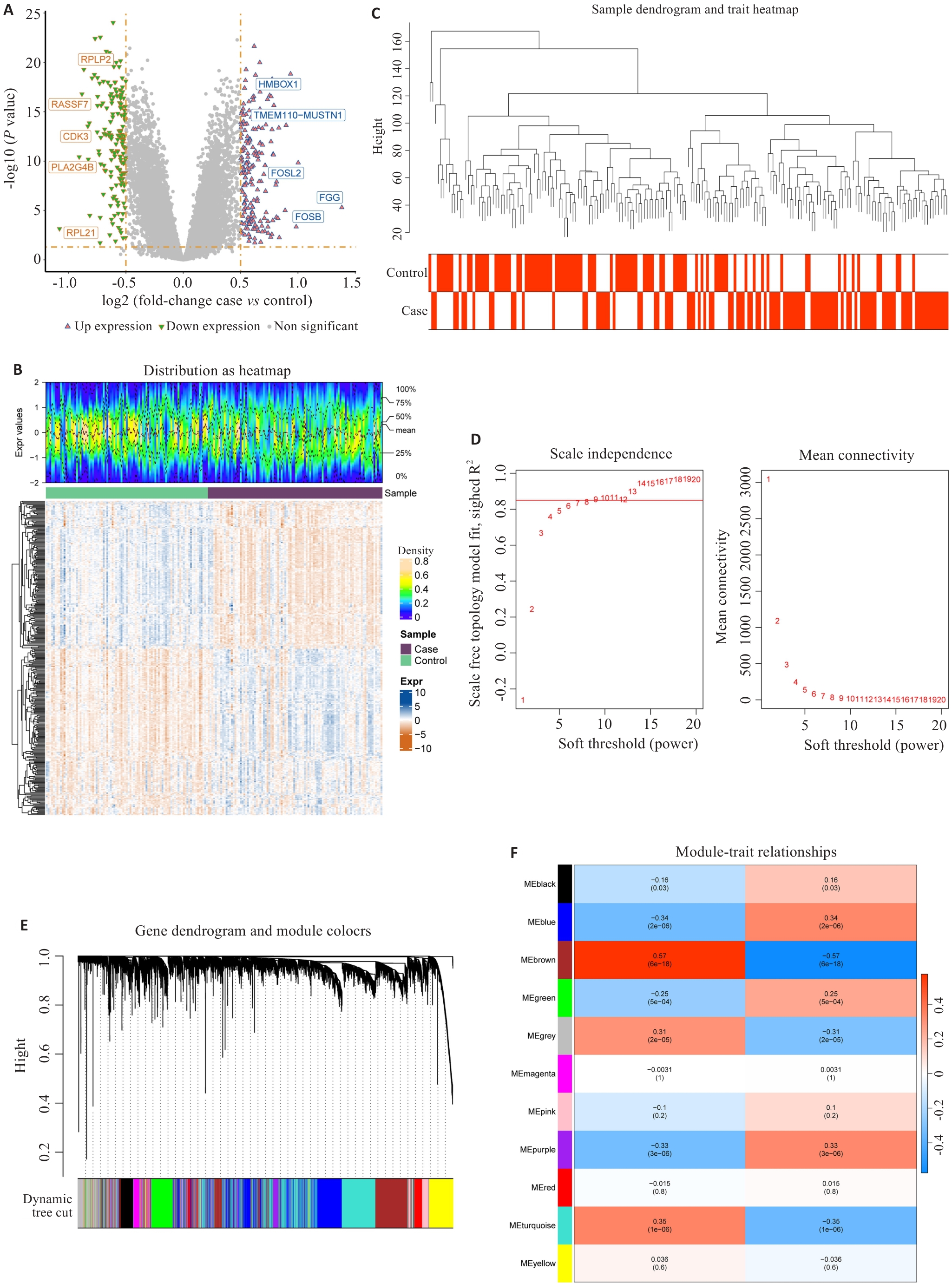
图 1 差异表达及加权基因共表达网络分析
Fig.1 Differential expression and weighted gene co-expression network analyses. A, B: Volcano plot and heatmap of the differentially expressed genes (DEGs) in COPD relative to control samples. C: Hierarchical clustering dendrogram used in WGCNA. D: Determination of the optimal soft-thresholding power (β) to ensure the network conforms to a scale-free topology. E: Dendrogram of different gene modules. F: Heatmap showing the correlation between modules and COPD/control samples.
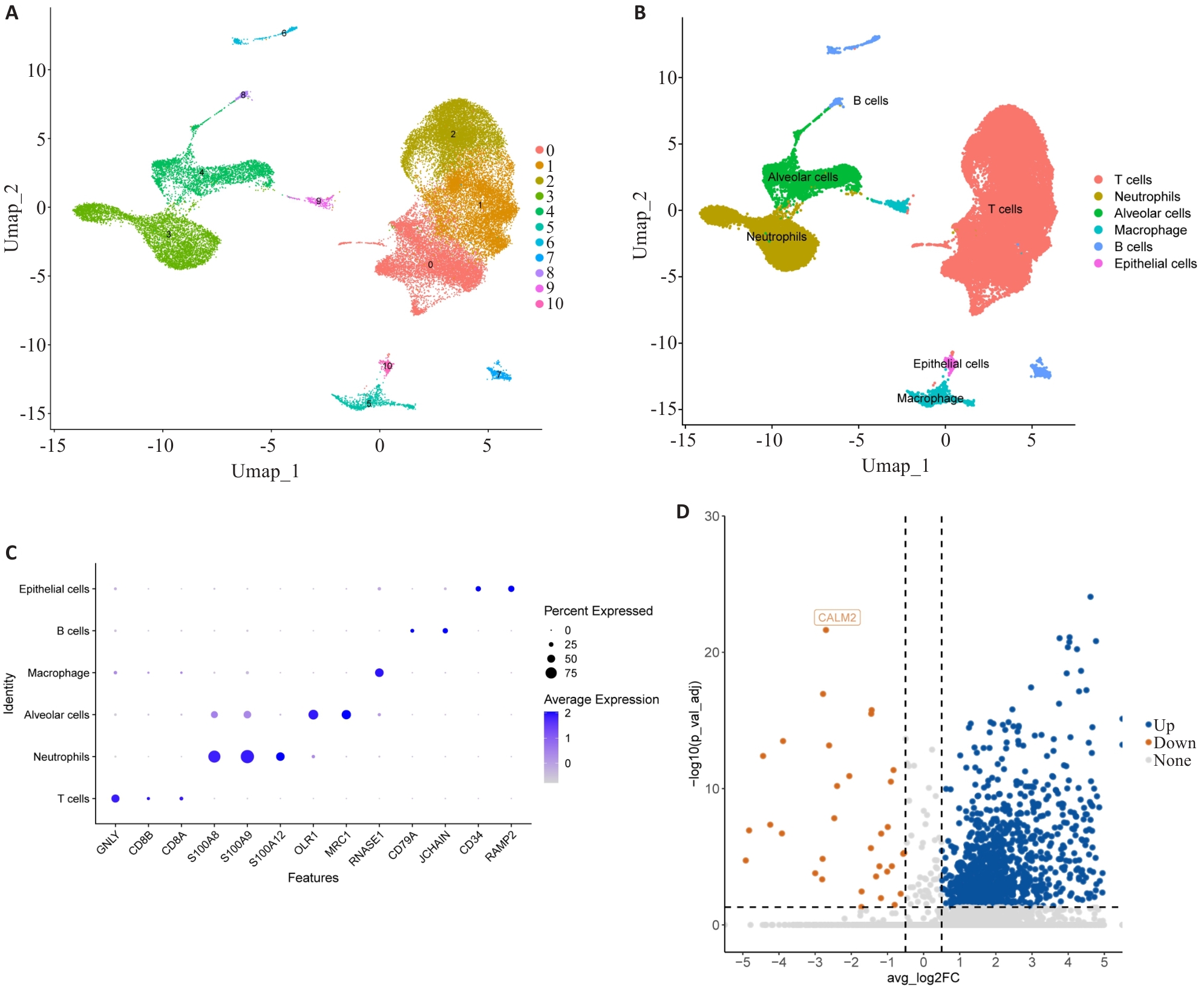
图 2 细胞类型注释及B细胞相关DEGs筛选
Fig.2 Cell type annotation and B cell-related DEG screening. A: UMAP visualization of 11 cell clusters derived from clustering analysis. B: UMAP visualization depicting 6 annotated cell types. C: Bubble plot displaying marker genes associated with the annotated cell types. D: Volcano plot illustrating DEGs within B cells between COPD patients and controls.
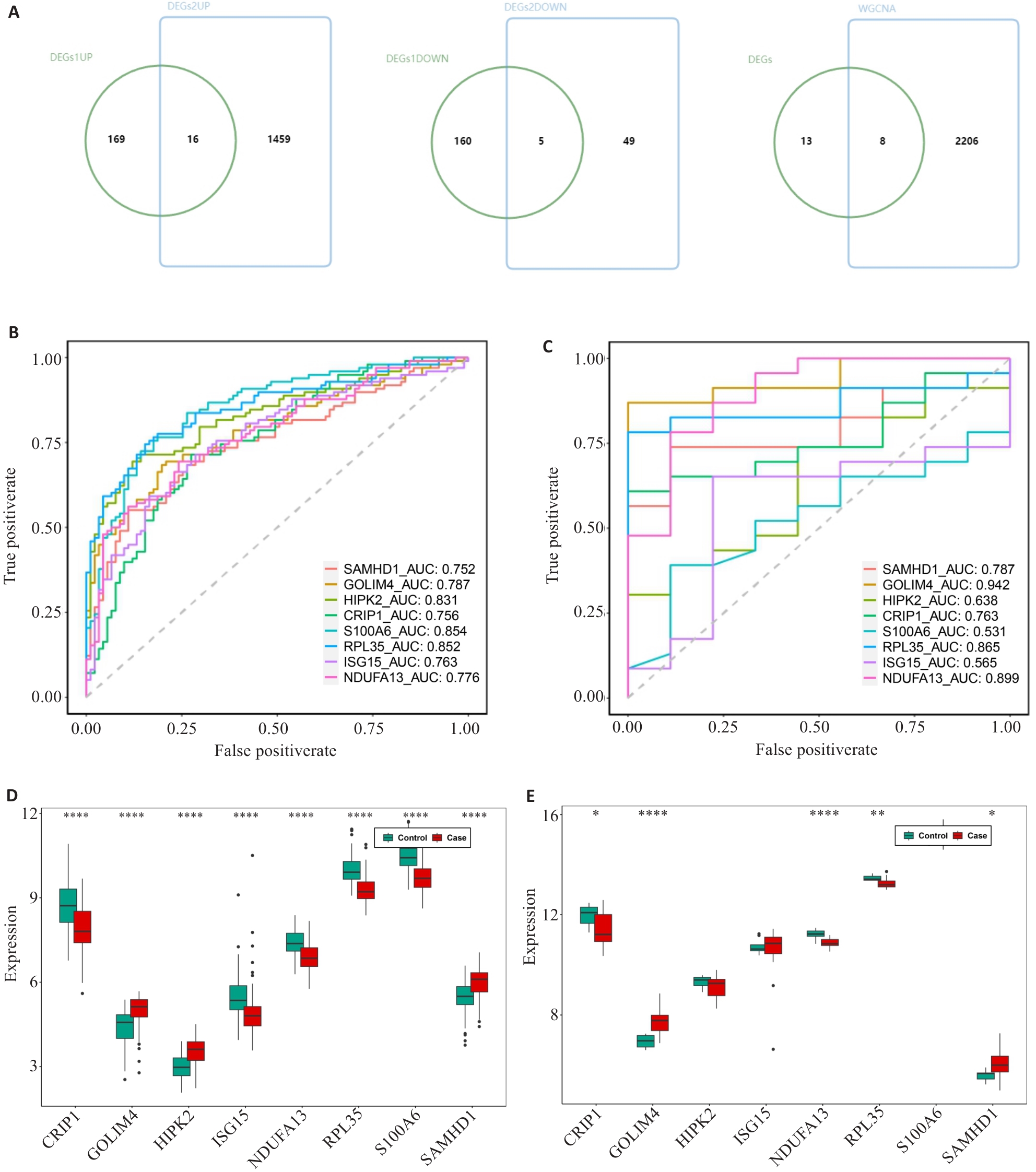
图 3 COPD候选B细胞相关生物标志物的筛选
Fig.3 Screening of candidate B cell-related biomarkers in COPD. A: Venn diagram showing the process of filtering for B-cell associated DEGs in COPD. B, C: Receiver operating characteristic (ROC) curves for B-cell specific DEGs in the training cohort and GSE38974 (validation cohort). D, E: Expression analysis of B-cell specific DEGs between COPD patients and controls in the training and the validation cohorts. *P<0.05, **P<0.01, ****P<0.0001.
| Outcome | Exposure | Gene | Method | SNP | P | OR | OR_LCI95 | OR_UCI95 |
|---|---|---|---|---|---|---|---|---|
Chronic obstructive pulmonary disease (finn-b-COPD_ OPPORTUNIST_INFECTIONS) | eqtl-a-ENSG00000186010 | NDUFA13 | MR Egger | 44 | 0.0011 | 0.2876 | 0.1430 | 0.5783 |
| Weighted median | 44 | 0.0000 | 0.3021 | 0.2183 | 0.4181 | |||
Inverse variance weighted (fixed effects) | 44 | 0.0000 | 0.2598 | 0.2048 | 0.3297 | |||
| Simple mode | 44 | 0.0000 | 0.2903 | 0.1737 | 0.4854 | |||
| Weighted mode | 44 | 0.0000 | 0.3012 | 0.1942 | 0.467 | |||
| eqtl-a-ENSG00000213145 | CRIP1 | MR Egger | 16 | 0.0460 | 0.0350 | 0.0020 | 0.7030 | |
| Weighted median | 16 | 0.0000 | 0.2170 | 0.0940 | 0.5010 | |||
Inverse variance weighted (fixed effects) | 16 | 0.0000 | 0.2690 | 0.1460 | 0.4970 | |||
| Simple mode | 16 | 0.0200 | 0.1890 | 0.0540 | 0.6640 | |||
| Weighted mode | 16 | 0.0080 | 0.1970 | 0.0690 | 0.5630 |
表2 NDUFA13和CRIP1与COPD间的潜在关联
Tab.2 Association of NDUFA13 and CRIP1 with COPD
| Outcome | Exposure | Gene | Method | SNP | P | OR | OR_LCI95 | OR_UCI95 |
|---|---|---|---|---|---|---|---|---|
Chronic obstructive pulmonary disease (finn-b-COPD_ OPPORTUNIST_INFECTIONS) | eqtl-a-ENSG00000186010 | NDUFA13 | MR Egger | 44 | 0.0011 | 0.2876 | 0.1430 | 0.5783 |
| Weighted median | 44 | 0.0000 | 0.3021 | 0.2183 | 0.4181 | |||
Inverse variance weighted (fixed effects) | 44 | 0.0000 | 0.2598 | 0.2048 | 0.3297 | |||
| Simple mode | 44 | 0.0000 | 0.2903 | 0.1737 | 0.4854 | |||
| Weighted mode | 44 | 0.0000 | 0.3012 | 0.1942 | 0.467 | |||
| eqtl-a-ENSG00000213145 | CRIP1 | MR Egger | 16 | 0.0460 | 0.0350 | 0.0020 | 0.7030 | |
| Weighted median | 16 | 0.0000 | 0.2170 | 0.0940 | 0.5010 | |||
Inverse variance weighted (fixed effects) | 16 | 0.0000 | 0.2690 | 0.1460 | 0.4970 | |||
| Simple mode | 16 | 0.0200 | 0.1890 | 0.0540 | 0.6640 | |||
| Weighted mode | 16 | 0.0080 | 0.1970 | 0.0690 | 0.5630 |
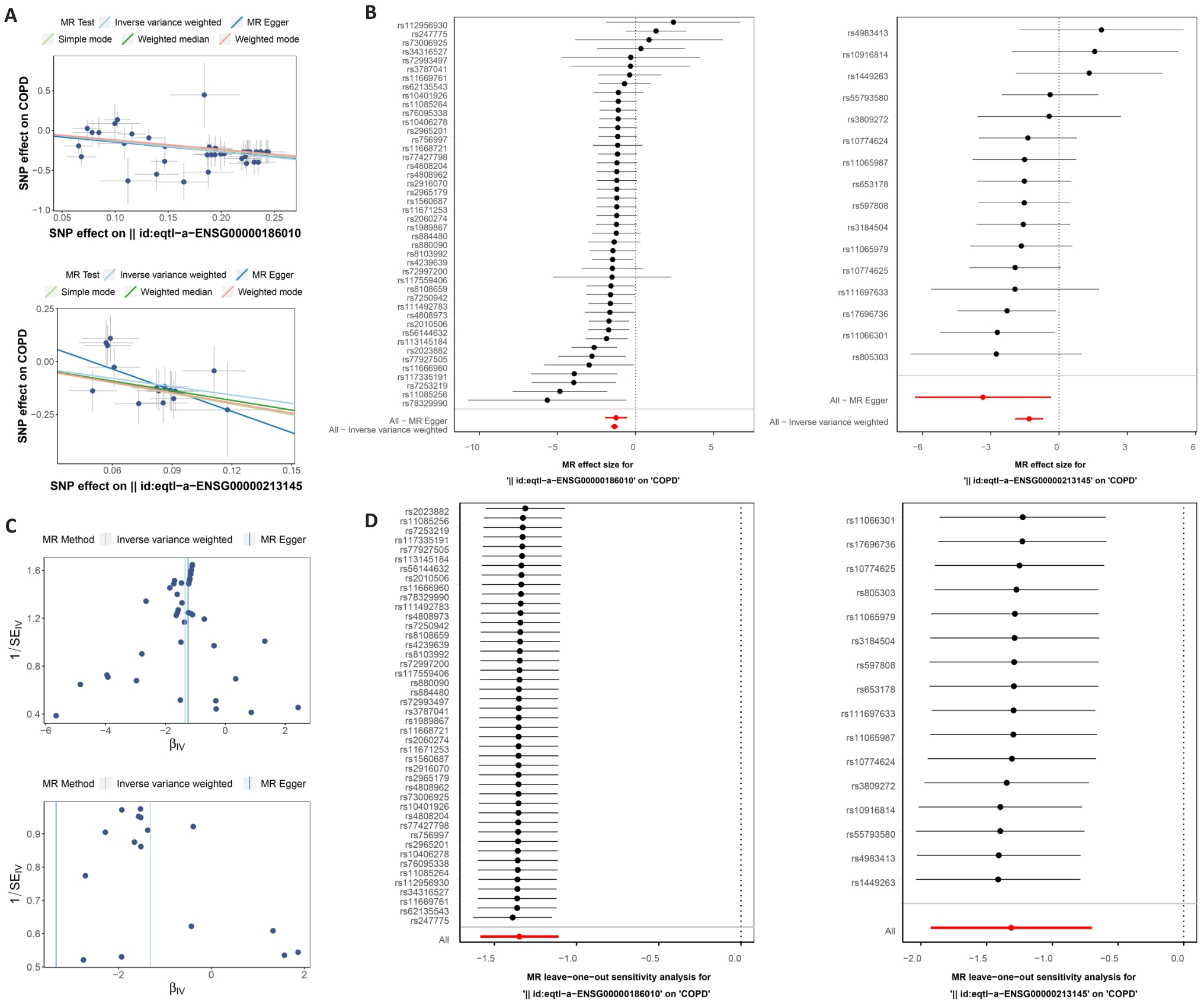
图4 孟德尔随机化(MR)分析
Fig.4 Results of Mendelian randomization (MR) analysis. A-D: Scatter plots, forest plots, funnel plots, and Leave-One-Out (LOO) test in MR analysis.
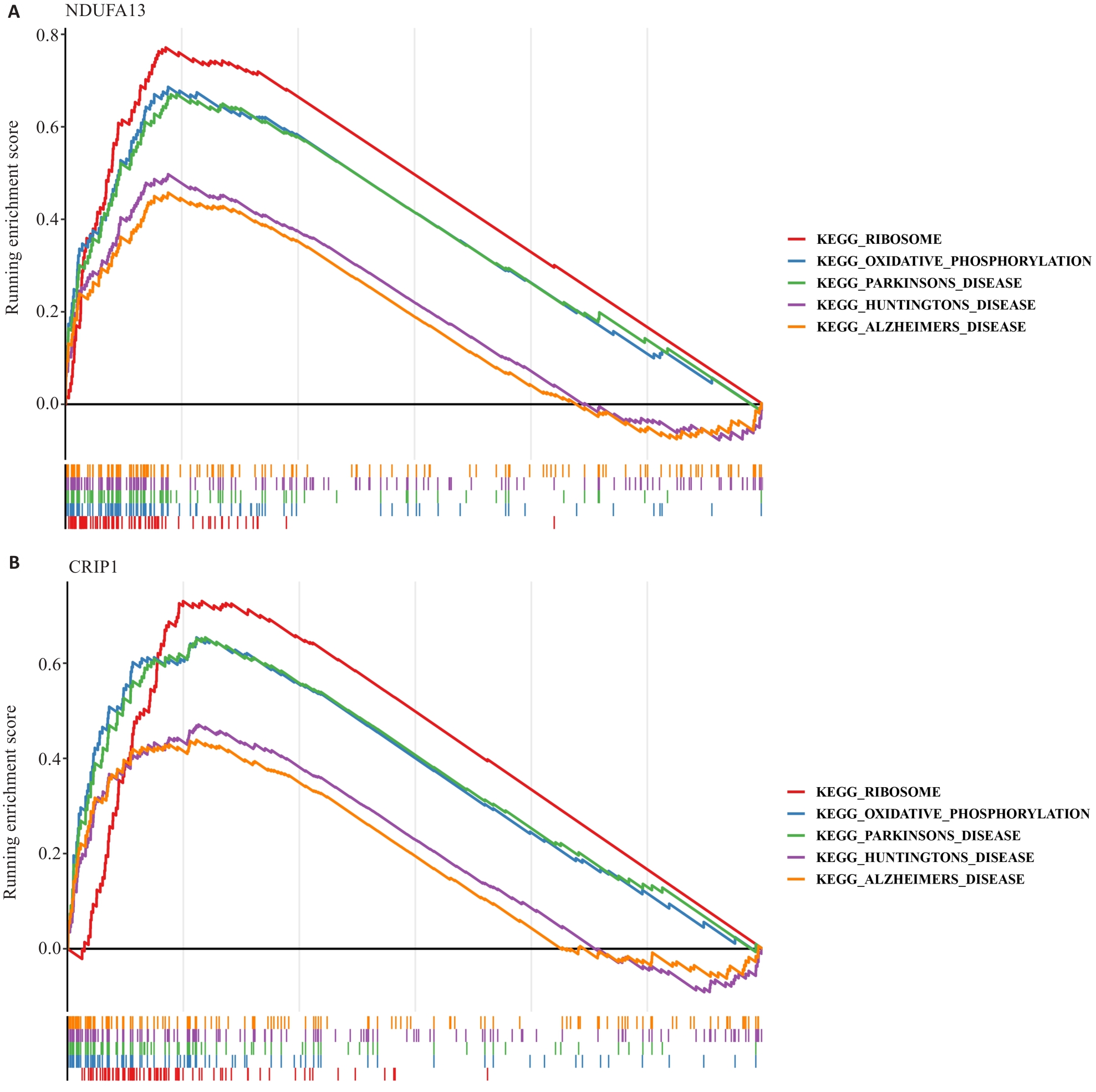
图 5 NDUFA13和CRIP1在COPD中通路富集分析
Fig.5 Gene set enrichment analysis (GSEA) of NDUFA13 and CRIP1. A, B: Top 5 enriched KEGG pathways for NDUFA13 and CRIP1.
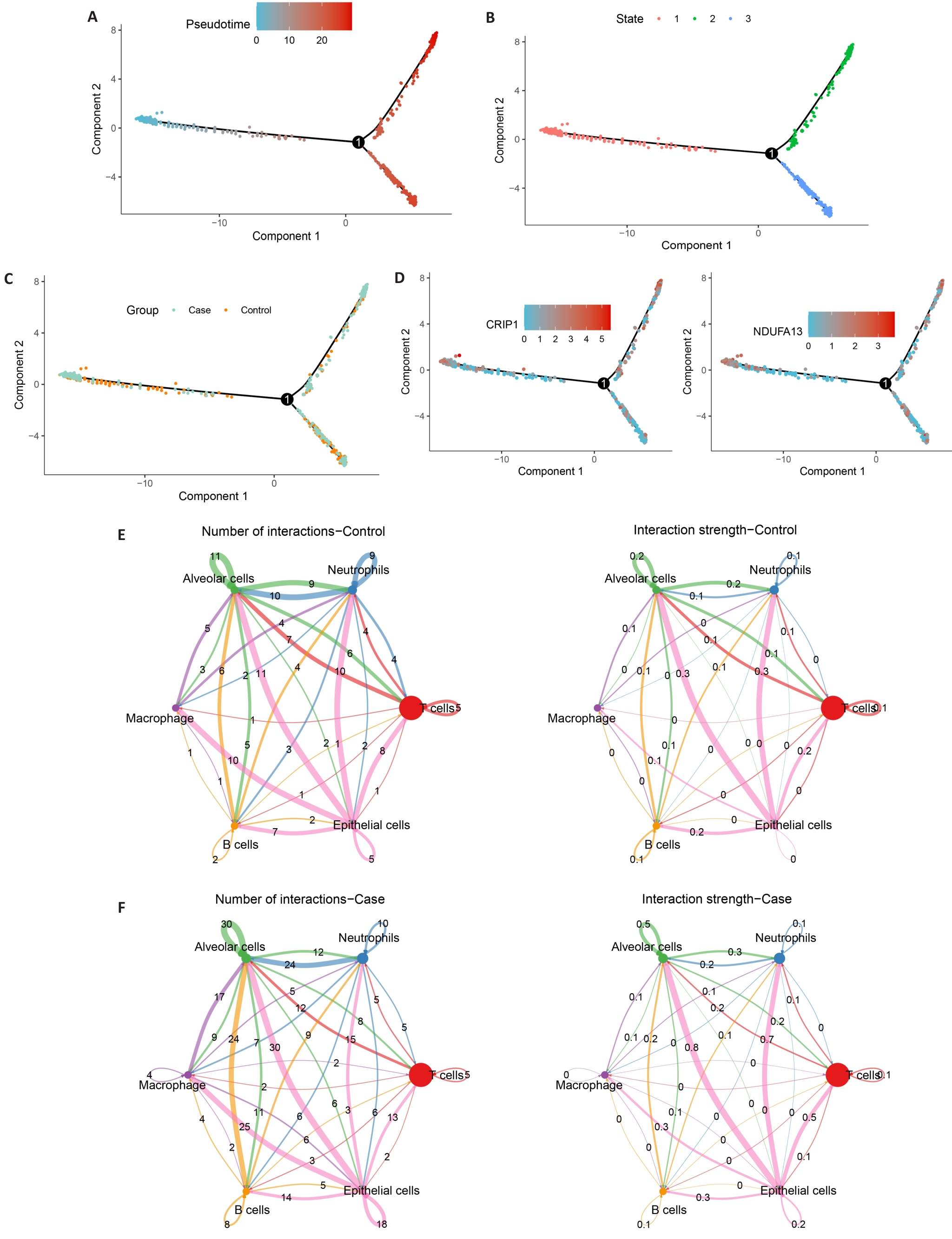
图 6 COPD环境中B细胞的发育轨迹和细胞通讯分析
Fig.6 Developmental trajectory and cell communication analyses of B cells in the COPD microenvironment. A, B: Pseudo-time trajectory analysis of B cells. C: Cell trajectories of B cells in COPD and controls. D: Distribution of biomarker expression levels along the developmental trajectory in B cells. E, F: Annotated cellular communication network illustrating the number and strength of interactions in controls (E) and COPD (F). G: Receptor-ligand pair interactions mediated by B cells in controls. H: Receptor-ligand pair interactions mediated by B cells in COPD.
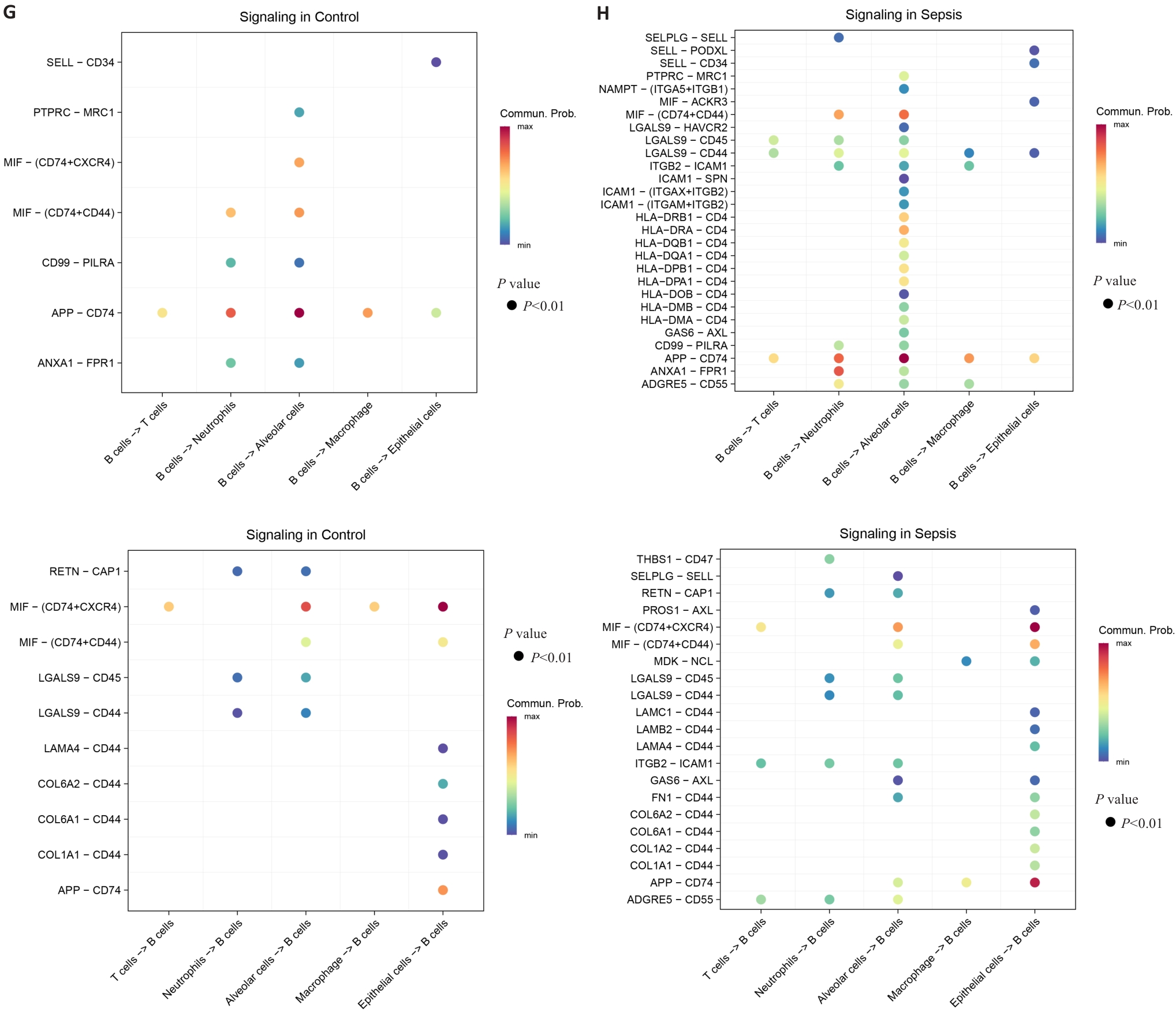
图 6 COPD环境中B细胞的发育轨迹和细胞通讯分析
Fig.6 Developmental trajectory and cell communication analyses of B cells in the COPD microenvironment. A, B: Pseudo-time trajectory analysis of B cells. C: Cell trajectories of B cells in COPD and controls. D: Distribution of biomarker expression levels along the developmental trajectory in B cells. E, F: Annotated cellular communication network illustrating the number and strength of interactions in controls (E) and COPD (F). G: Receptor-ligand pair interactions mediated by B cells in controls. H: Receptor-ligand pair interactions mediated by B cells in COPD.
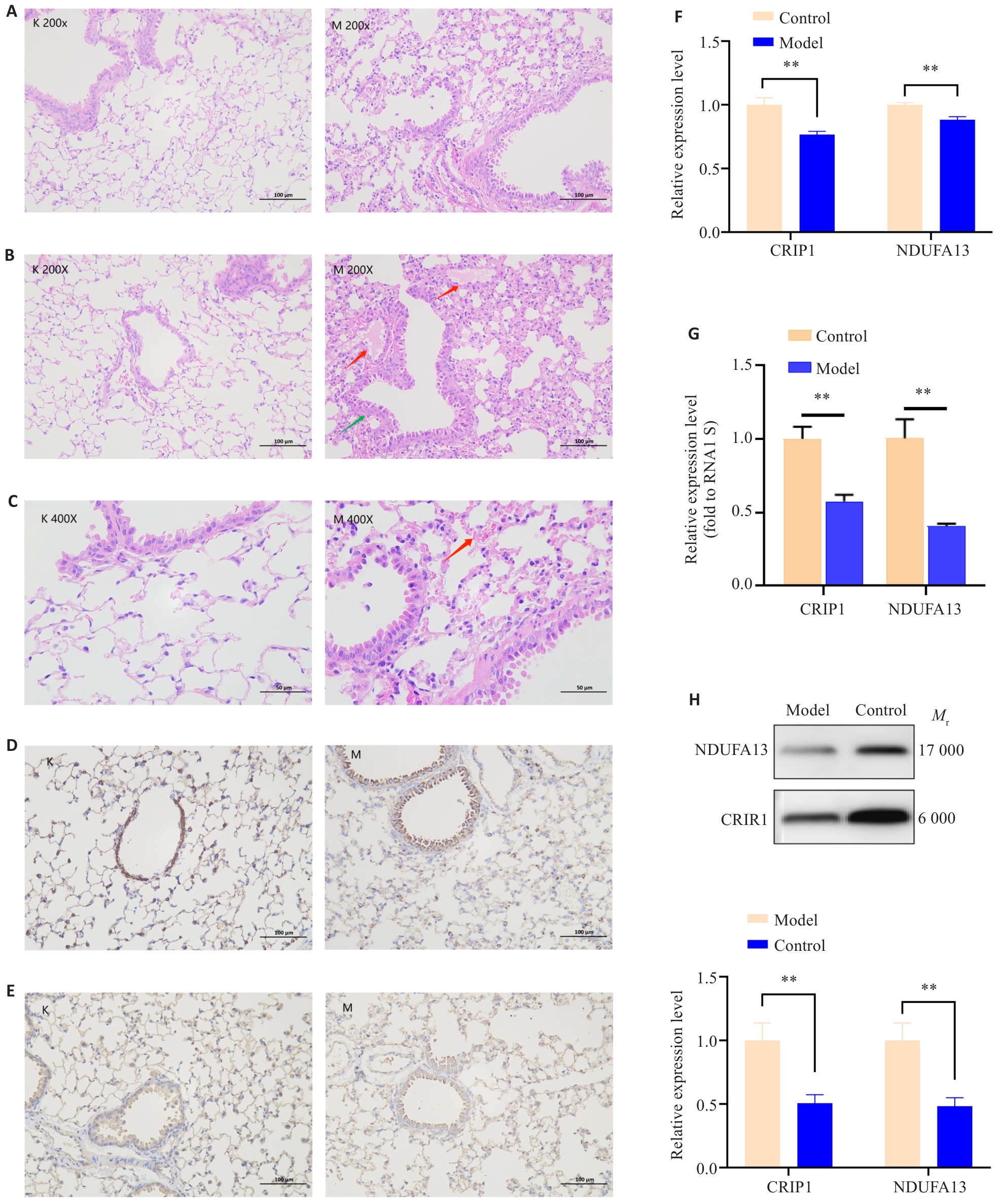
图 7 COPD小鼠模型中B细胞相关生物标志物的表达验证
Fig.7 Expression validation of B cell-related biomarkers in the COPD mouse model. A-C: Representative histopathological sections of mouse lungs showing infiltrating inflammatory cells (A), fluid infiltration within the alveolar cavity (red arrow) and sunken bronchial walls (green arrow) (B), structural destruction of the alveoli, and bleeding (C). D, E: Immunohistochemical analysis of CRIP1 (D) and NDUFA13 (E). F: Quantitative results of CRIP1 and NDUFA13 expressions in immunohistochemical analysis. **P<0.01. G, H: Relative expression levels of biomarkers in RT-PCR (G) and Western blotting (H). **P<0.01.
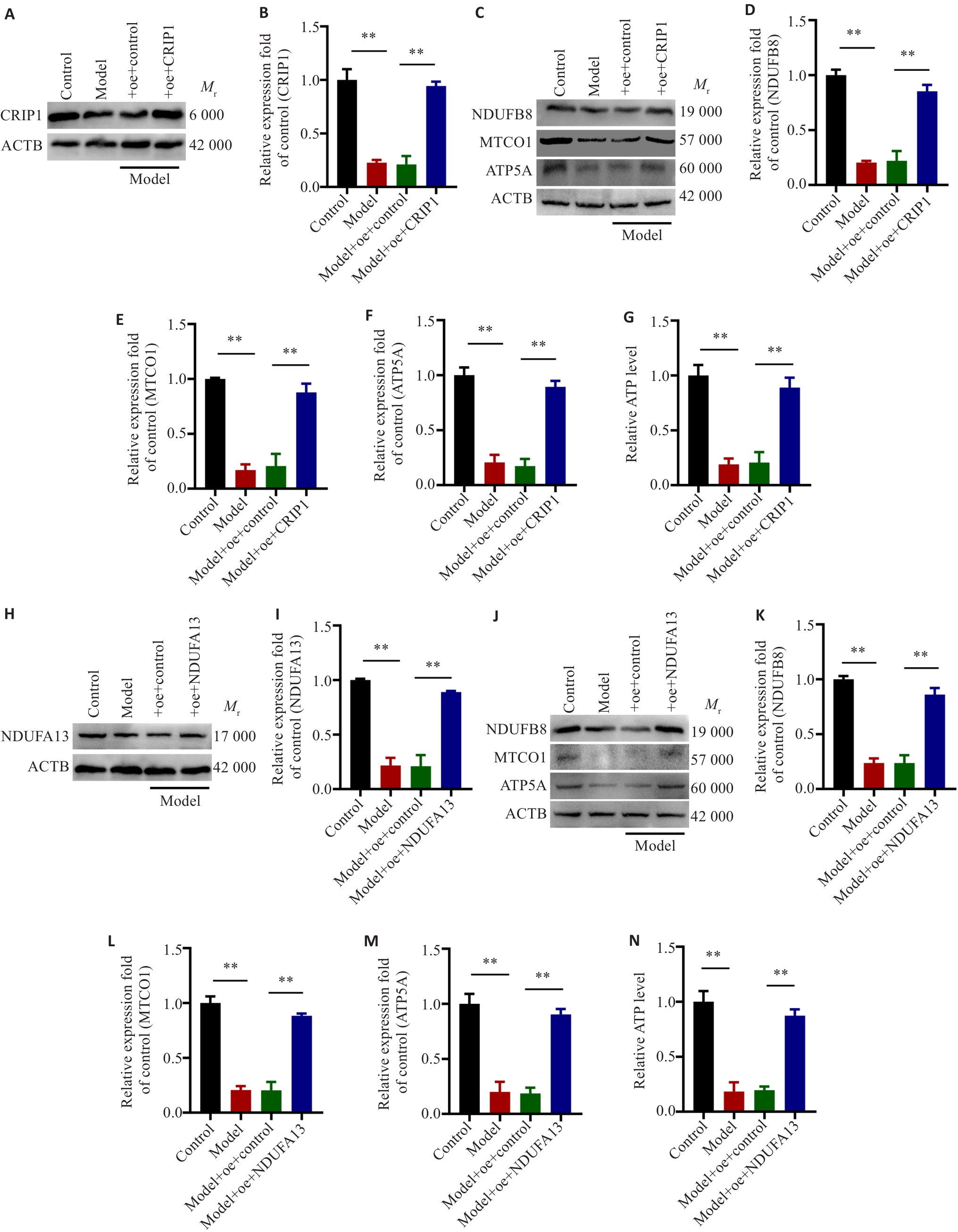
图8 过表达CRIP1和NDUFA13改善模型诱导的B细胞氧化磷酸化损伤
Fig.8 CRIP1 and NDUFA13 overexpression alleviates LPS-induced oxidative phosphorylation dysfunction in cultured murine B cells (n=3). A, B, H, I: Western blotting and quantitative detection of CRIP1 (A, B) and NDUFA13 (H, I) protein levels in B cells of each group. **P<0.01. C-F, J-M: Western blotting and quantitative determination of the expression levels of oxidative phosphorylation-related proteins NDUFB8, MTCO1 and ATP5A in B cells of each group. **P<0.01. G, N: Detection of ATP production in B cells of each group. **P<0.01.
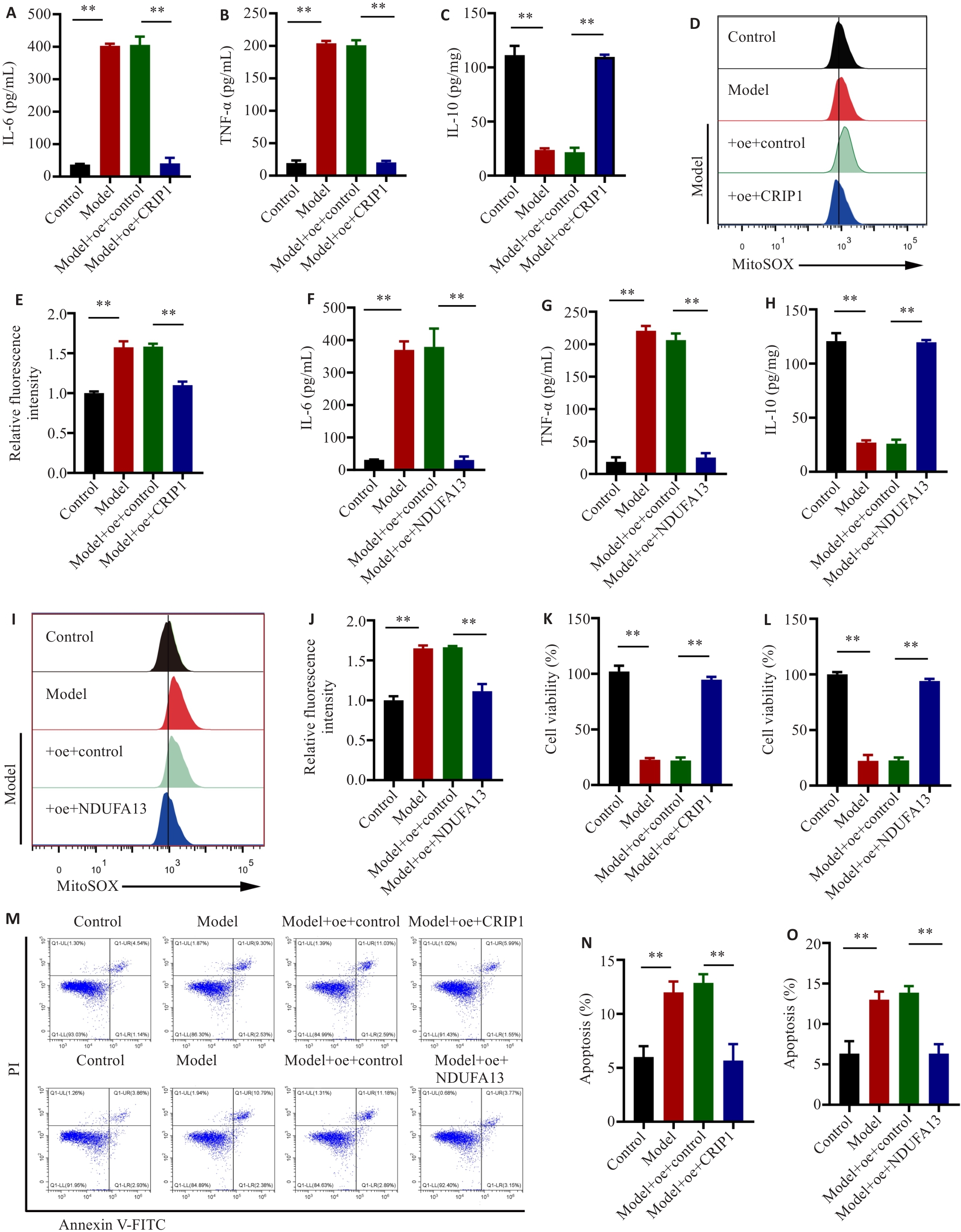
图9 CRIP1和NDUFA13过表达抑制B细胞炎症及氧化应激,并减轻其对肺上皮细胞的损伤
Fig.9 Overexpression of CRIP1 and NDUFA13 suppresses inflammation and oxidative stress in B cells and attenuates their damaging effects on lung epithelial cells (n=3). A-C: Expression levels of IL-6, TNF-α and IL-10 in B cells of each group. **P<0.01. F-H: Secretion levels of IL-6, TNF-α and IL-10 in B cells of each group. **P<0.01. D, E, I, J: Mitochondrial ROS levels (MitoSOX fluorescence intensity) in B cells measured by flow cytometry with MitoSOX staining. **P<0.01. K, L: Cell viability of lung epithelial cells co-cultured with B cells from different treatment groups. **P<0.01. M-O: Apoptosis of lung epithelial cells co-cultured with B cells detected with flow cytometry using Annexin V-FITC/PI double staining. **P<0.01.
| [1] | Xie ZF, Xia TT, Wu DX, et al. Identification of the key genes in chronic obstructive pulmonary disease by weighted gene co-expression network analysis[J]. Ann Transl Med, 2022, 10(12): 665. doi:10.21037/atm-22-2523 |
| [2] | Chen Z, Chen P, Wu H, et al. Evaluation of naringenin as a promising treatment option for COPD based on literature review and network pharmacology[J]. Biomolecules, 2020, 10(12): 1644. doi:10.3390/biom10121644 |
| [3] | Nie H, Wang F, Zeng XL, et al. Analysis of communal molecular mechanism between chronic obstructive pulmonary disease and osteoporosis[J]. Int J Chron Obstruct Pulmon Dis, 2023, 18: 259-71. doi:10.2147/copd.s395492 |
| [4] | Belchamber KBR, Donnelly LE. Targeting defective pulmonary innate immunity-A new therapeutic option[J]? Pharmacol Ther, 2020, 209: 107500. doi:10.1016/j.pharmthera.2020.107500 |
| [5] | Cancro MP, Tomayko MM. Memory B cells and plasma cells: The differentiative continuum of humoral immunity[J]. Immunol Rev, 2021, 303(1): 72-82. doi:10.1111/imr.13016 |
| [6] | Rastogi I, Jeon D, Moseman JE, et al. Role of B cells as antigen presenting cells[J]. Front Immunol, 2022, 13: 954936. doi:10.3389/fimmu.2022.954936 |
| [7] | Lam JH, Smith FL, Baumgarth N. B cell activation and response regulation during viral infections[J]. Viral Immunol, 2020, 33(4): 294-306. doi:10.1089/vim.2019.0207 |
| [8] | Kunz M, Ibrahim SM. Cytokines and cytokine profiles in human autoimmune diseases and animal models of autoimmunity[J]. Mediators Inflamm, 2009, 2009: 979258. doi:10.1155/2009/979258 |
| [9] | Jacobs M, Verschraegen S, Salhi B, et al. IL-10 producing regulatory B cells are decreased in blood from smokers and COPD patients[J]. Respir Res, 2022, 23(1): 287. doi:10.1186/s12931-022-02208-1 |
| [10] | Núñez B, Sauleda J, Antó JM, et al. Anti-tissue antibodies are related to lung function in chronic obstructive pulmonary disease[J]. Am J Respir Crit Care Med, 2011, 183(8): 1025-31. doi:10.1164/rccm.201001-0029oc |
| [11] | de Fays C, Geudens V, Gyselinck I, et al. Mucosal immune alterations at the early onset of tissue destruction in chronic obstructive pulmonary disease[J]. Front Immunol, 2023, 14: 1275845. doi:10.3389/fimmu.2023.1275845 |
| [12] | Ritchie ME, Phipson B, Wu D, et al. Limma powers differential expression analyses for RNA-sequencing and microarray studies[J]. Nucleic Acids Res, 2015, 43(7): e47. doi:10.1093/nar/gkv007 |
| [13] | Langfelder P, Horvath S. WGCNA: an R package for weighted correlation network analysis[J]. BMC Bioinform, 2008, 9(1): 559. doi:10.1186/1471-2105-9-559 |
| [14] | Robin X, Turck N, Hainard A, et al. pROC: an open-source package for R and S+ to analyze and compare ROC curves[J]. BMC Bioinform, 2011, 12(1): 77. doi:10.1186/1471-2105-12-77 |
| [15] | Skrivankova VW, Richmond RC, Woolf BAR, et al. Strengthening the reporting of observational studies in epidemiology using Mendelian randomization: the STROBE-MR statement[J]. JAMA, 2021, 326(16): 1614-21. doi:10.1001/jama.2021.18236 |
| [16] | Hemani G, Zheng J, Elsworth B, et al. The MR-Base platform supports systematic causal inference across the human phenome[J]. eLife, 2018, 7: e34408. doi:10.7554/elife.34408 |
| [17] | Bowden J, Smith GD, Burgess S. Mendelian randomization with invalid instruments: effect estimation and bias detection through Egger regression[J]. Int J Epidemiol, 2015, 44(2): 512-25. doi:10.1093/ije/dyv080 |
| [18] | Bowden J, Davey Smith G, Haycock PC, et al. Consistent estimation in Mendelian randomization with some invalid instruments using a weighted Median estimator[J]. Genet Epidemiol, 2016, 40(4): 304-14. doi:10.1002/gepi.21965 |
| [19] | Burgess S, Scott RA, Timpson NJ, et al. Using published data in Mendelian randomization: a blueprint for efficient identification of causal risk factors[J]. Eur J Epidemiol, 2015, 30(7): 543-52. doi:10.1007/s10654-015-0011-z |
| [20] | Hartwig FP, Davey Smith G, Bowden J. Robust inference in summary data Mendelian randomization via the zero modal pleiotropy assumption[J]. Int J Epidemiol, 2017, 46(6): 1985-98. doi:10.1093/ije/dyx102 |
| [21] | Qin Q, Zhao L, Ren A, et al. Systemic lupus erythematosus is causally associated with hypothyroidism, but not hyperthyroidism: a Mendelian randomization study[J]. Front Immunol, 2023, 14: 1125415. doi:10.3389/fimmu.2023.1125415 |
| [22] | Davey Smith G, Hemani G. Mendelian randomization: genetic anchors for causal inference in epidemiological studies[J]. Hum Mol Genet, 2014, 23(R1): R89-98. doi:10.1093/hmg/ddu328 |
| [23] | Trapnell C, Cacchiarelli D, Grimsby J, et al. The dynamics and regulators of cell fate decisions are revealed by pseudotemporal ordering of single cells[J]. Nat Biotechnol, 2014, 32(4): 381-6. doi:10.1038/nbt.2859 |
| [24] | Jin SQ, Guerrero-Juarez CF, Zhang LH, et al. Inference and analysis of cell-cell communication using CellChat[J]. Nat Commun, 2021, 12: 1088. doi:10.1038/s41467-021-21246-9 |
| [25] | Ghorani V, Boskabady MH, Khazdair MR, et al. Experimental animal models for COPD: a methodological review[J]. Tob Induc Dis, 2017, 15(1): 25. doi:10.1186/s12971-017-0130-2 |
| [26] | 符秀曼, 张美萃, 范 良, 等. 基于NF-κB通路和COX-2水平探讨小青龙汤加减方对LPS联合香烟烟雾诱导的COPD小鼠气道炎症和气道重塑的影响[J]. 中药材, 2021, 44(11): 2692-6. |
| [27] | 谢圆媛, 杨丹芬, 王 莉. 藏红花素通过PGC-1α/SIRT3信号通路抑制慢性阻塞性肺疾病模型大鼠的气道炎症[J]. 临床肺科杂志, 2020, 25(11): 1648-54. |
| [28] | Pera T, Gosens R, Lesterhuis AH, et al. Cigarette smoke and lipopolysaccharide induce a proliferative airway smooth muscle phenotype[J]. Respir Res, 2010, 11(1): 48. doi:10.1186/1465-9921-11-48 |
| [29] | Kaiyrzhanov R, Thompson K, Efthymiou S, et al. Biallelic NDUFA13 variants lead to a neurodevelopmental phenotype with gradual neurological impairment[J]. Brain Commun, 2024, 7: fcae453. doi:10.1093/braincomms/fcae453 |
| [30] | Deng XL, Zeng YM, Qiu XF, et al. CRIP1 supports the growth and migration of AML-M5 subtype cells by activating Wnt/β-catenin pathway[J]. Leuk Res, 2023, 130: 107312. doi:10.1016/j.leukres.2023.107312 |
| [31] | Jiang Y, Wang XQ, Hu DD. Mitochondrial alterations during oxidative stress in chronic obstructive pulmonary disease[J]. Int J Chronic Obstr Pulm Dis, 2017, 12: 1153-62. doi:10.2147/copd.s130168 |
| [32] | Zhang RQ, Yuan JB, Wang CY, et al. Soyasaponin I alleviates inflammation and oxidative stress in chronic obstructive pulmonary disease through inhibiting the mitogen-activated protein kinase (MAPK) signaling pathway[J]. Exp Anim, 2025, 74(4): 407-18. doi:10.1538/expanim.25-0007 |
| [33] | Hao DP, Han GC, Sinjab A, et al. The single-cell immunogenomic landscape of B and plasma cells in early-stage lung adenocarcinoma[J]. Cancer Discov, 2022, 12(11): 2626-45. doi:10.1158/2159-8290.cd-21-1658 |
| [34] | Polverino F, Seys LJM, Bracke KR, et al. B cells in chronic obstructive pulmonary disease: moving to center stage[J]. Am J Physiol Lung Cell Mol Physiol, 2016, 311(4): L687-95. doi:10.1152/ajplung.00304.2016 |
| [1] | 陈浩, 李振汉, 纪梦佳, 汪鑫诚, 陈博峰, 管谦, 武嫚, 卢林明. 全球非酒精性脂肪性肝病负担的关键决定因素:基于GBD数据的机器学习联合孟德尔随机化验证[J]. 南方医科大学学报, 2026, 46(4): 770-784. |
| [2] | 陈梅妹, 黄睿娜, 杨朝阳. 血浆代谢物介导炎症蛋白对阿尔茨海默病的因果效应:一项孟德尔随机化分析研究[J]. 南方医科大学学报, 2026, 46(2): 278-285. |
| [3] | 陈子贤, 周家伟, 谭磊, 黄志鹏, 薛康颐, 陈明坤. 基于免疫抑制性Neu_2中性粒细胞亚群模型精准预测前列腺癌生存预后及免疫治疗应答[J]. 南方医科大学学报, 2025, 45(8): 1643-1653. |
| [4] | 王立明, 陈宏睿, 杜燕, 赵鹏, 王玉洁, 田燕歌, 刘新光, 李建生. 益气滋肾方通过抑制PI3K/Akt/NF-κB通路改善小鼠慢性阻塞性肺疾病的炎症反应[J]. 南方医科大学学报, 2025, 45(7): 1409-1422. |
| [5] | 张璐, 丁焕章, 许浩燃, 陈珂, 许博文, 杨勤军, 吴迪, 童佳兵, 李泽庚. 参芪补中方通过激活AMPK/SIRT1/PGC-1α改善COPD肺脾气虚证大鼠线粒体功能障碍[J]. 南方医科大学学报, 2025, 45(5): 969-976. |
| [6] | 高志, 吴傲, 胡仲翔, 孙培养. 类风湿性关节炎中氧化应激与免疫浸润的生物信息学分析[J]. 南方医科大学学报, 2025, 45(4): 862-870. |
| [7] | 李文婕, 洪耀南, 黄蕊, 李煜宸, 张莹, 张蕴, 吴迪炯. 自身免疫性疾病是再生障碍性贫血的危险因素:一项孟德尔随机化分析[J]. 南方医科大学学报, 2025, 45(4): 871-879. |
| [8] | 高俊杰, 叶开, 吴竞. 槲皮素通过调控TP53基因抑制肾透明细胞癌的增殖和迁移[J]. 南方医科大学学报, 2025, 45(2): 313-321. |
| [9] | 喻珍妮, 高竟哲, 孙惠, 冯芹, 那效旗, 张宁, 沈昆双, 王媛媛, 王喜军. 肠道菌群、T细胞在结直肠癌发病中的因果关联:孟德尔随机化分析[J]. 南方医科大学学报, 2025, 45(12): 2756-2766. |
| [10] | 程丽丽, 汤忠富, 李明, 陈君洁, 尚双双, 刘思娣, 黄传兵. 芪黄健脾滋肾颗粒通过AIM2/Blimp-1/Bcl-6轴抑制B细胞分化改善MRL/lpr小鼠肾损害[J]. 南方医科大学学报, 2025, 45(11): 2297-2308. |
| [11] | 潘兴旭, 张秉祺, 张智华, 曹秋实. 戈登杆菌属丰度降低与肾结石风险增加相关:一项孟德尔随机化分析与动物实验研究[J]. 南方医科大学学报, 2025, 45(11): 2405-2415. |
| [12] | 缪祥卓, 朱鹏宇, 区活辉, 朱庆, 于林源, 郭柏棠, 廖渭, 黄毓, 相乐阳, 杨定华. 高表达甲状旁腺激素样激素促进肝细胞癌的进展并与患者预后不良相关[J]. 南方医科大学学报, 2025, 45(10): 2135-2145. |
| [13] | 马会华, 闫奎坡, 刘刚, 徐亚洲, 张磊, 李一卓. 1990~2021年心房颤动/扑动流行病学及其危险因素分析:基于2021年中国全球疾病负担研究与孟德尔随机化研究的系统分析[J]. 南方医科大学学报, 2025, 45(10): 2182-2190. |
| [14] | 王锦帼, 马扬, 李赵鑫, 何丽妃, 黄英泽, 范晓明. PDZ结合激酶作为胰腺癌潜在预后标志物:从泛癌分析到胰腺癌验证[J]. 南方医科大学学报, 2025, 45(10): 2210-2222. |
| [15] | 许怀文, 翁丽, 薛鸿. CXCL12可作为2型糖尿病合并慢性阻塞性肺疾病的潜在治疗靶点[J]. 南方医科大学学报, 2025, 45(1): 100-109. |
| 阅读次数 | ||||||
|
全文 |
|
|||||
|
摘要 |
|
|||||
