
南方医科大学学报 ›› 2026, Vol. 46 ›› Issue (6): 1339-1348.doi: 10.12122/j.issn.1673-4254.2026.06.14
• • 上一篇
吴细旋( ), 沙桐(), 胡鸿彬, 孙毛毛, 吴洁(), 陈仲清()
收稿日期:2026-02-05
出版日期:2026-06-20
发布日期:2026-06-24
通讯作者:
吴洁,陈仲清
E-mail:48164849@qq.com;shatong_smu@163.com;wujie11@smu.edu.cn;zhongqingchen2008@163.com
作者简介:吴细旋,在读硕士研究生,E-mail: 48164849@qq.com基金资助:
Xixuan WU(), Tong SHA(), Hongbin HU, Maomao SUN, Jie WU(), Zhongqing CHEN()
Received:2026-02-05
Online:2026-06-20
Published:2026-06-24
Contact:
Jie WU, Zhongqing CHEN
E-mail:48164849@qq.com;shatong_smu@163.com;wujie11@smu.edu.cn;zhongqingchen2008@163.com
Supported by:摘要:
目的 探讨急性胰腺炎患者早期呼吸衰竭的风险预测因子,并利用可解释的机器学习模型,预测ICU入院后72 h内是否需要启动有创机械通气。 方法 基于MIMIC-IV数据库纳入急性胰腺炎成人患者进行回顾性队列研究。排除入ICU时已接受有创机械通气者,主要结局为入院后72 h内启动有创机械通气。构建多种机器学习模型并进行内部验证,选取表现最佳模型进行外部验证(eICU-CRD数据库)。采用SHapley 加法解释(SHAP)方法评估模型可解释性。 结果 纳入MIMIC-IV数据库517例急性胰腺炎患者,其中361例患者用于训练队列,156例患者用于内部测试队列。纳入eICU-CRD 269例急性胰腺炎患者作为外部验证队列。早期呼吸衰竭的患者在ICU入院时即表现出更显著的器官功能衰竭,且随机森林模型在训练集的AUC为0.908,在验证集的AUC为0.733,在外部验证集的AUC为0.681。序贯器官衰竭评分、血管活性药物使用及急性肾损伤是预测早期呼吸衰竭的关键因素。 结论 本研究构建的可解释机器学习模型在内外部验证中均显示出一定的预测效能,可用于评估急性胰腺炎患者早期有创机械通气风险。模型关键变量主要反映多器官功能衰竭状态,与疾病病理生理过程一致。
吴细旋, 沙桐, 胡鸿彬, 孙毛毛, 吴洁, 陈仲清. 急性胰腺炎患者早期有创机械通气需求模型的构建与验证:基于可解释机器学习[J]. 南方医科大学学报, 2026, 46(6): 1339-1348.
Xixuan WU, Tong SHA, Hongbin HU, Maomao SUN, Jie WU, Zhongqing CHEN. Development and validation of an interpretable machine learning model for predicting reguirement of early invasive mechanical ventilation in patients with acute pancreatitis[J]. Journal of Southern Medical University, 2026, 46(6): 1339-1348.
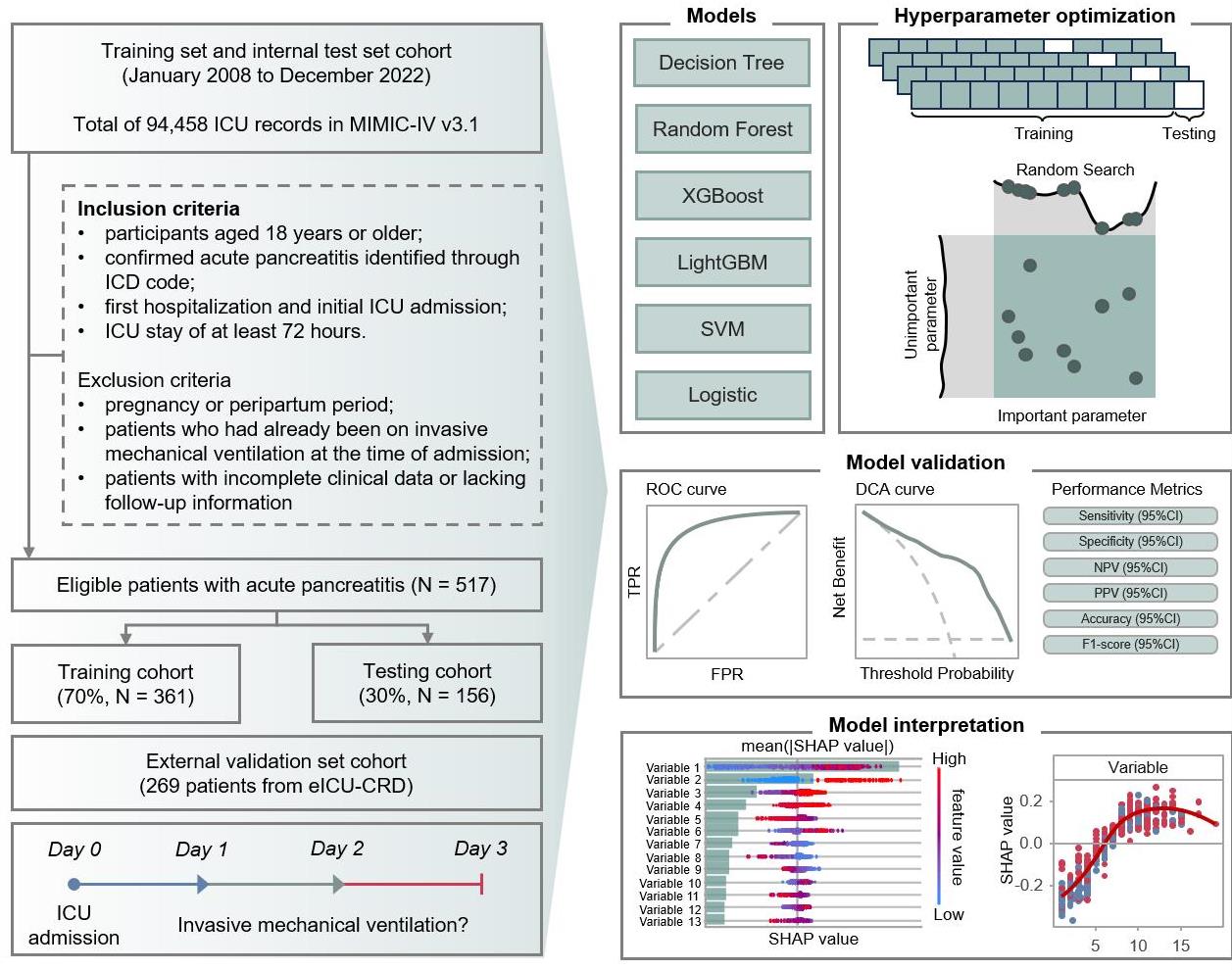
图1 主要分析的研究人群
Fig.1 Study population for the main analysis.
| Characteristic | Overall (n=517) | Invasive mechanical ventilation (n=298) | No invasive mechanical ventilation (n=219) | P |
|---|---|---|---|---|
| Age (year) | 57.0 [45.0, 71.0] | 57.0 [45.0, 69.0] | 55.0 [44.0, 72.0] | 0.982 |
| Gender [n (%)] | 0.367 | |||
| Female | 216 (41.8) | 130 (43.6) | 86 (39.3) | |
| Male | 301 (58.2) | 168 (56.4) | 133 (60.7) | |
| Race or ethnic group [n (%)] | 0.081 | |||
| White | 320 (61.9) | 173 (58.1) | 147 (67.1) | |
| Others | 102 (19.7) | 62 (20.8) | 40 (18.3) | |
| Not reported | 95 (18.4) | 63 (21.1) | 32 (14.6) | |
| Body‐mass index | 29.5 [25.9, 34.8] | 29.8 [25.8, 34.9] | 29.2 [26.0, 34.4] | 0.492 |
| Respiratory rate (bpm) | 22.0 [18.0, 26.0] | 22.0 [18.0, 26.0] | 21.0 [17.0, 27.0] | 0.436 |
| Heart rate (bpm) | 103.0 [87.0, 119.0] | 104.5 [87.3, 119.8] | 102.0 [87.0, 117.5] | 0.737 |
| Temperature (℃) | 36.9 [36.5, 37.4] | 36.8 [36.4, 37.4] | 36.9 [36.6, 37.3] | 0.831 |
| Oxygen saturation (%) | 96.0 [94.0, 99.0] | 97.0 [94.0, 99.0] | 96.0 [94.0, 98.0] | 0.163 |
| Mean arterial pressure (mmHg) | 84.0 [71.0, 97.0] | 82.5 [69.0, 95.0] | 86.00 [73.0, 101.0] | 0.034 |
| SOFA score | 3.0 [3.0, 4.0] | 3.0 [3.0, 4.0] | 3.0 [3.0, 4.0] | 0.002 |
| SIRS score | 7.0 [4.0, 10.0] | 8.0 [5.0, 11.0] | 5.0 [3.0, 8.0] | <0.001 |
| Charlson comorbidity index | 4.0 [2.0, 6.0] | 4.0 [2.0, 6.0] | 4.0 [2.0, 6.0] | 0.754 |
| Comorbidity [n (%)] | ||||
| Diabetes | 163 (31.5) | 92 (30.9) | 71 (32.4) | 0.781 |
| Renal disease | 90 (17.4) | 62 (20.8) | 28 (12.8) | 0.024 |
| Malignant cancer | 39 (7.5) | 24 (8.1) | 15 (6.8) | 0.731 |
| Severe liver disease | 71 (13.7) | 40 (13.4) | 31 (14.2) | 0.913 |
| Myocardial infarct | 47 (9.1) | 29 (9.7) | 18 (8.2) | 0.663 |
| Congestive heart failure | 98 (19.0) | 55 (18.5) | 43 (19.6) | 0.823 |
| Cerebrovascular disease | 46 (8.9) | 25 (8.4) | 21 (9.6) | 0.751 |
| Chronic pulmonary disease | 99 (19.1) | 56 (18.8) | 43 (19.6) | 0.899 |
| AKI stage [n (%)] | <0.001 | |||
| Stage 0 | 57 (11.0) | 21 (7.0) | 36 (16.4) | |
| Stage 1 | 72 (13.9) | 28 (9.4) | 44 (20.1) | |
| Stage 2 | 157 (30.4) | 91 (30.5) | 66 (30.1) | |
| Stage 3 | 231 (44.7) | 158 (53.0) | 73 (33.3) | |
| Laboratory indicators | ||||
| INR | 1.3 [1.2, 1.6] | 1.4 [1.2, 1.6] | 1.3 [1.2, 1.6] | 0.722 |
| APTT (seconds) | 32.0 [27.8, 40.1] | 32.1 [27.6, 40.7] | 31.4 [27.9, 39.3] | 0.535 |
| Calcium (mg/dL) | 7.8 [7.2, 8.4] | 7.9 [7.3, 8.5] | 7.8 [7.1, 8.4] | 0.279 |
| Potassium (mmol/L) | 4.1 [3.6, 4.6] | 4.1 [3.7, 4.6] | 4.1 [3.6, 4.5] | 0.218 |
| Sodium (mmol/L) | 138.0 [134.0, 141.0] | 138.0 [135.0, 142.0] | 138.0 [134.0, 141.0] | 0.37 |
| Glucose (mg/dL) | 137.0 [107.0, 189.0] | 138.5 [108.0, 188.8] | 134.0 [106.5, 188.5] | 0.395 |
| Albumin (g/dL) | 2.9 [2.6, 3.1] | 2.80[2.6, 3.0] | 2.9 [2.6, 3.2] | 0.025 |
| BUN (mg/dL) | 22.0 [13.0, 39.0] | 23.0 [15.0, 39.0] | 19.0 [11.0, 38.5] | 0.045 |
| Total bilirubin (mg/dL) | 1.3 [0.6, 3.5] | 1.3 [0.6, 3.4] | 1.2 [0.6, 3.7] | 0.707 |
| ALT (U/L) | 54.0 [25.0, 157.8] | 60.5 [26.0, 177.8] | 44.0 [24.0, 133.9] | 0.09 |
表1 基线时接受与未接受有创机械通气的急性胰腺炎患者的人口统计学和临床特征
Tab.1 Demographic and baseline clinical characteristics of the patients with acute pancreatitis with and without invasive mechanical ventilation
| Characteristic | Overall (n=517) | Invasive mechanical ventilation (n=298) | No invasive mechanical ventilation (n=219) | P |
|---|---|---|---|---|
| Age (year) | 57.0 [45.0, 71.0] | 57.0 [45.0, 69.0] | 55.0 [44.0, 72.0] | 0.982 |
| Gender [n (%)] | 0.367 | |||
| Female | 216 (41.8) | 130 (43.6) | 86 (39.3) | |
| Male | 301 (58.2) | 168 (56.4) | 133 (60.7) | |
| Race or ethnic group [n (%)] | 0.081 | |||
| White | 320 (61.9) | 173 (58.1) | 147 (67.1) | |
| Others | 102 (19.7) | 62 (20.8) | 40 (18.3) | |
| Not reported | 95 (18.4) | 63 (21.1) | 32 (14.6) | |
| Body‐mass index | 29.5 [25.9, 34.8] | 29.8 [25.8, 34.9] | 29.2 [26.0, 34.4] | 0.492 |
| Respiratory rate (bpm) | 22.0 [18.0, 26.0] | 22.0 [18.0, 26.0] | 21.0 [17.0, 27.0] | 0.436 |
| Heart rate (bpm) | 103.0 [87.0, 119.0] | 104.5 [87.3, 119.8] | 102.0 [87.0, 117.5] | 0.737 |
| Temperature (℃) | 36.9 [36.5, 37.4] | 36.8 [36.4, 37.4] | 36.9 [36.6, 37.3] | 0.831 |
| Oxygen saturation (%) | 96.0 [94.0, 99.0] | 97.0 [94.0, 99.0] | 96.0 [94.0, 98.0] | 0.163 |
| Mean arterial pressure (mmHg) | 84.0 [71.0, 97.0] | 82.5 [69.0, 95.0] | 86.00 [73.0, 101.0] | 0.034 |
| SOFA score | 3.0 [3.0, 4.0] | 3.0 [3.0, 4.0] | 3.0 [3.0, 4.0] | 0.002 |
| SIRS score | 7.0 [4.0, 10.0] | 8.0 [5.0, 11.0] | 5.0 [3.0, 8.0] | <0.001 |
| Charlson comorbidity index | 4.0 [2.0, 6.0] | 4.0 [2.0, 6.0] | 4.0 [2.0, 6.0] | 0.754 |
| Comorbidity [n (%)] | ||||
| Diabetes | 163 (31.5) | 92 (30.9) | 71 (32.4) | 0.781 |
| Renal disease | 90 (17.4) | 62 (20.8) | 28 (12.8) | 0.024 |
| Malignant cancer | 39 (7.5) | 24 (8.1) | 15 (6.8) | 0.731 |
| Severe liver disease | 71 (13.7) | 40 (13.4) | 31 (14.2) | 0.913 |
| Myocardial infarct | 47 (9.1) | 29 (9.7) | 18 (8.2) | 0.663 |
| Congestive heart failure | 98 (19.0) | 55 (18.5) | 43 (19.6) | 0.823 |
| Cerebrovascular disease | 46 (8.9) | 25 (8.4) | 21 (9.6) | 0.751 |
| Chronic pulmonary disease | 99 (19.1) | 56 (18.8) | 43 (19.6) | 0.899 |
| AKI stage [n (%)] | <0.001 | |||
| Stage 0 | 57 (11.0) | 21 (7.0) | 36 (16.4) | |
| Stage 1 | 72 (13.9) | 28 (9.4) | 44 (20.1) | |
| Stage 2 | 157 (30.4) | 91 (30.5) | 66 (30.1) | |
| Stage 3 | 231 (44.7) | 158 (53.0) | 73 (33.3) | |
| Laboratory indicators | ||||
| INR | 1.3 [1.2, 1.6] | 1.4 [1.2, 1.6] | 1.3 [1.2, 1.6] | 0.722 |
| APTT (seconds) | 32.0 [27.8, 40.1] | 32.1 [27.6, 40.7] | 31.4 [27.9, 39.3] | 0.535 |
| Calcium (mg/dL) | 7.8 [7.2, 8.4] | 7.9 [7.3, 8.5] | 7.8 [7.1, 8.4] | 0.279 |
| Potassium (mmol/L) | 4.1 [3.6, 4.6] | 4.1 [3.7, 4.6] | 4.1 [3.6, 4.5] | 0.218 |
| Sodium (mmol/L) | 138.0 [134.0, 141.0] | 138.0 [135.0, 142.0] | 138.0 [134.0, 141.0] | 0.37 |
| Glucose (mg/dL) | 137.0 [107.0, 189.0] | 138.5 [108.0, 188.8] | 134.0 [106.5, 188.5] | 0.395 |
| Albumin (g/dL) | 2.9 [2.6, 3.1] | 2.80[2.6, 3.0] | 2.9 [2.6, 3.2] | 0.025 |
| BUN (mg/dL) | 22.0 [13.0, 39.0] | 23.0 [15.0, 39.0] | 19.0 [11.0, 38.5] | 0.045 |
| Total bilirubin (mg/dL) | 1.3 [0.6, 3.5] | 1.3 [0.6, 3.4] | 1.2 [0.6, 3.7] | 0.707 |
| ALT (U/L) | 54.0 [25.0, 157.8] | 60.5 [26.0, 177.8] | 44.0 [24.0, 133.9] | 0.09 |
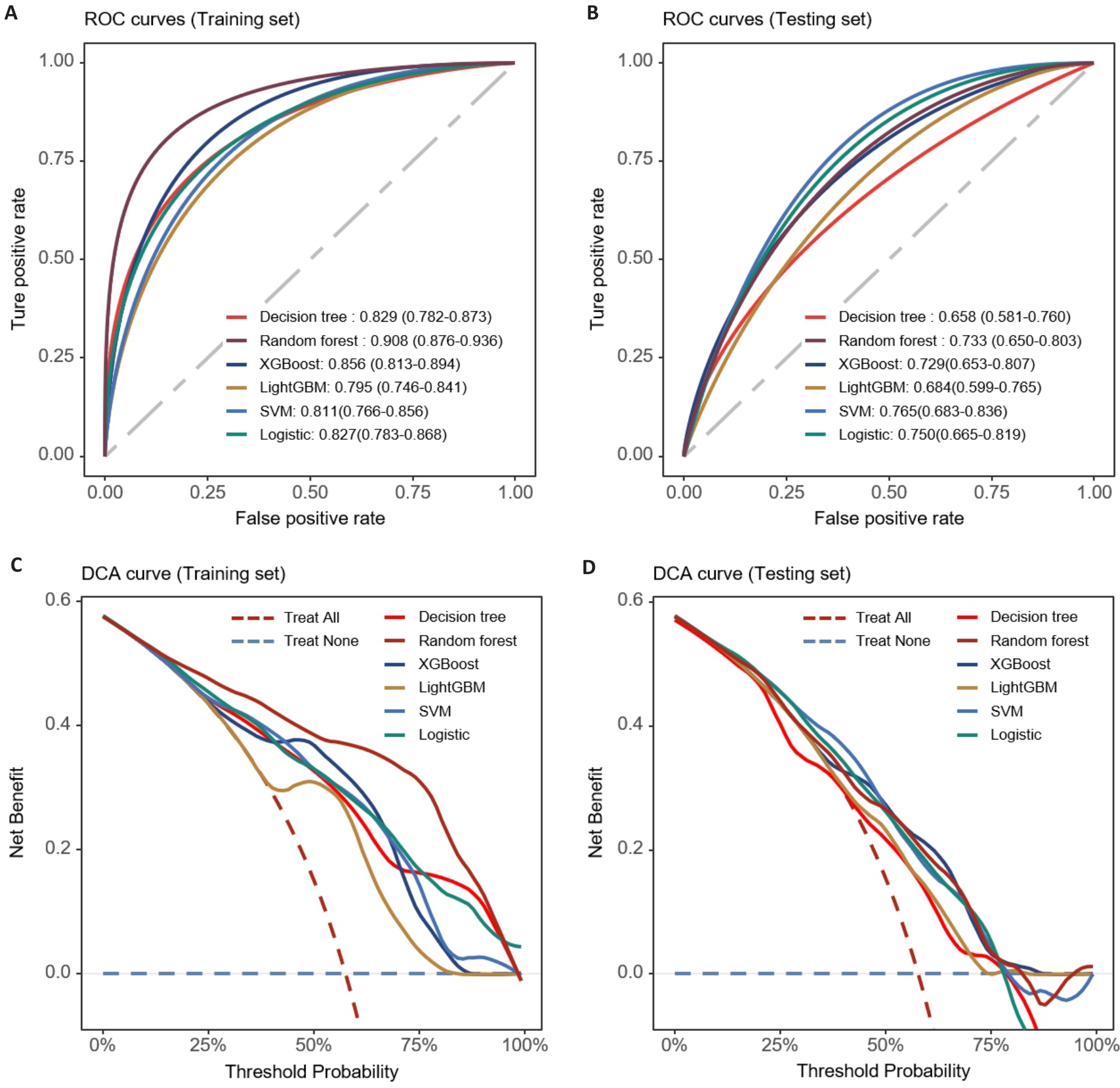
图2 训练集和内部测试集中所有模型的ROC曲线和DCA曲线
Fig.2 ROC curves and DCA curves of all the models in the training set and internal testing set.
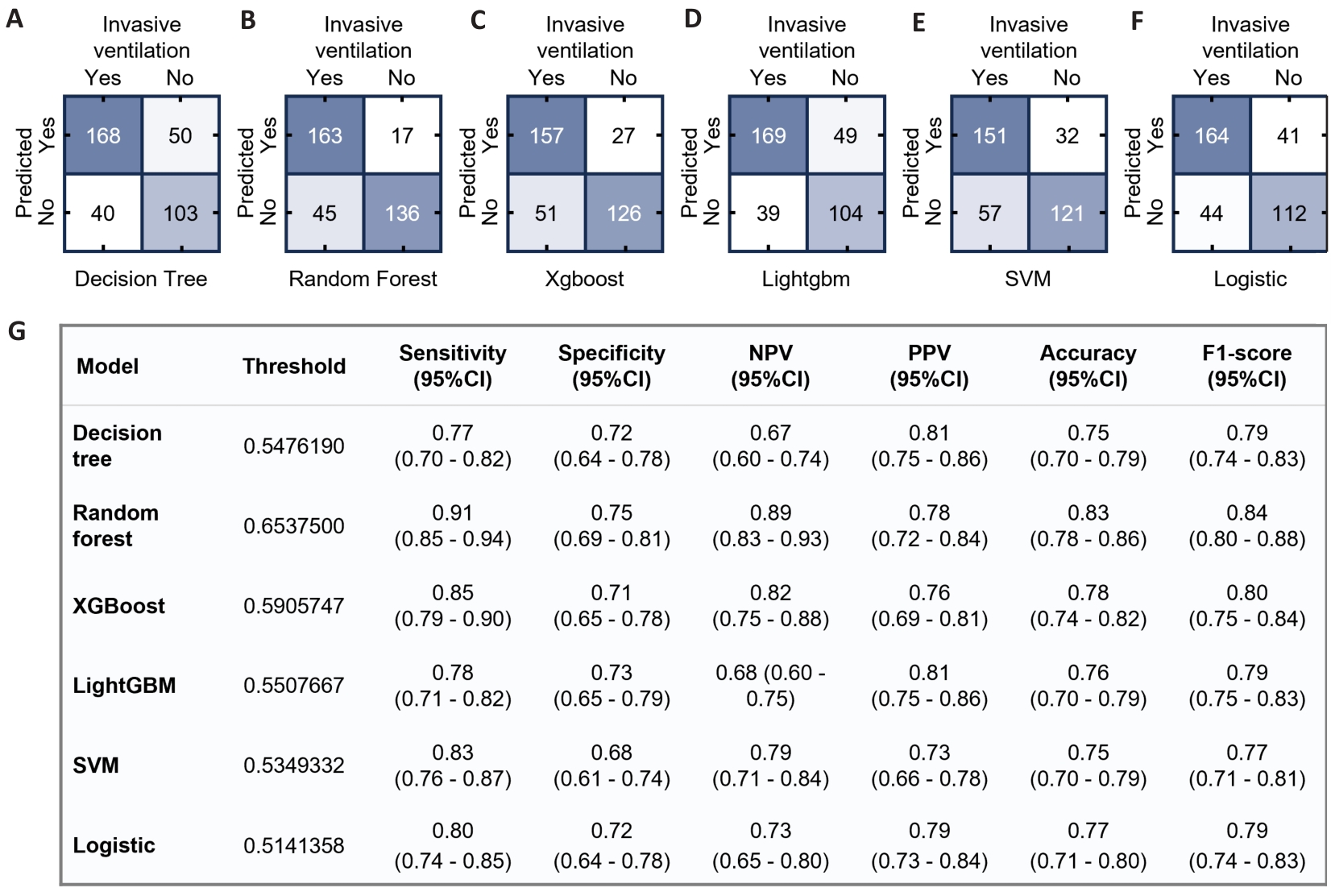
图3 训练集中每个模型的混淆矩阵和性能指标
Fig.3 Confusion matrices of each model in the training set (A-F) and their performance metrics (G).
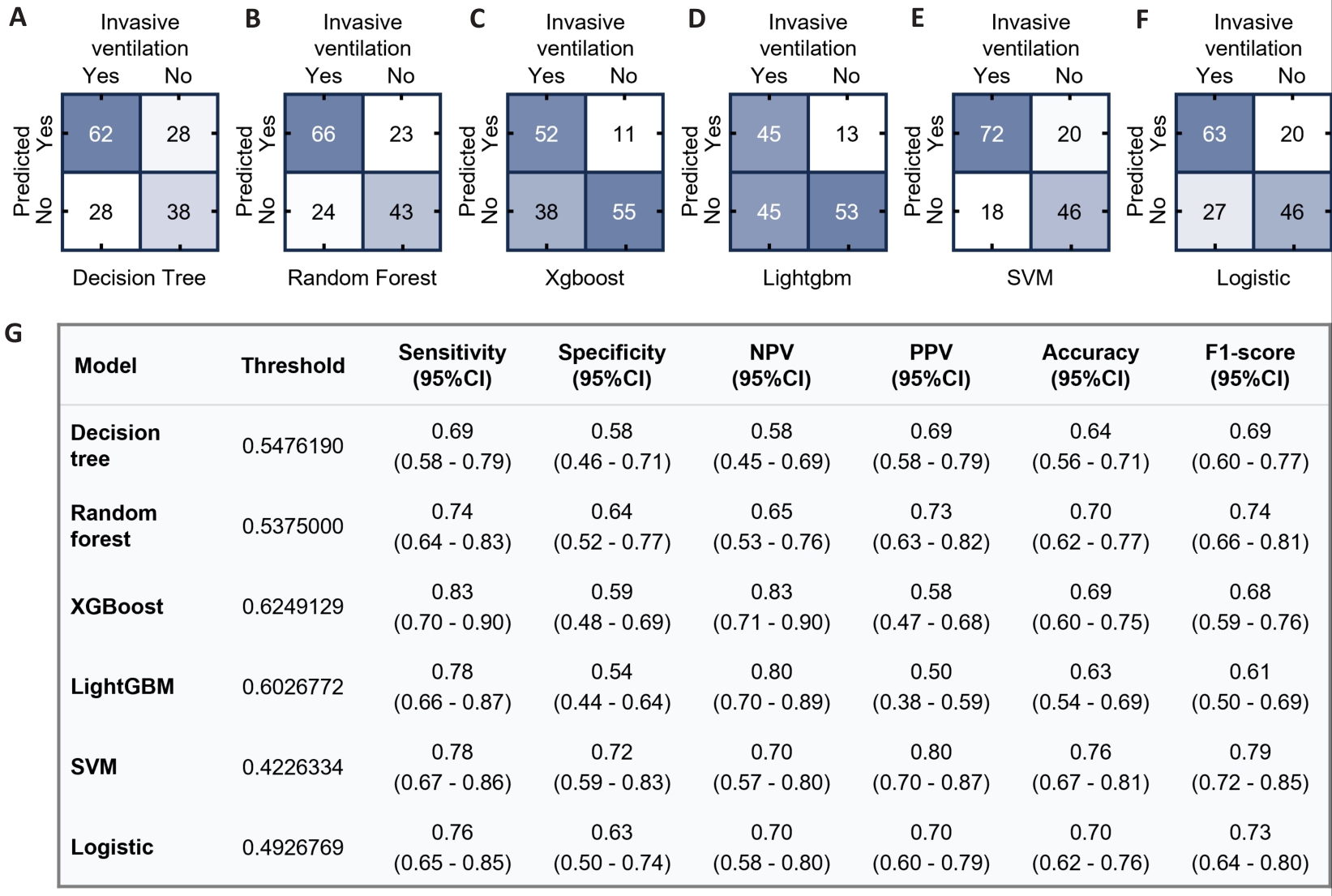
图4 内部测试集中每个模型的混淆矩阵和性能指标
Fig.4 Confusion matrices of each model in the internal testing set (A-F) and their performance metrics (G).
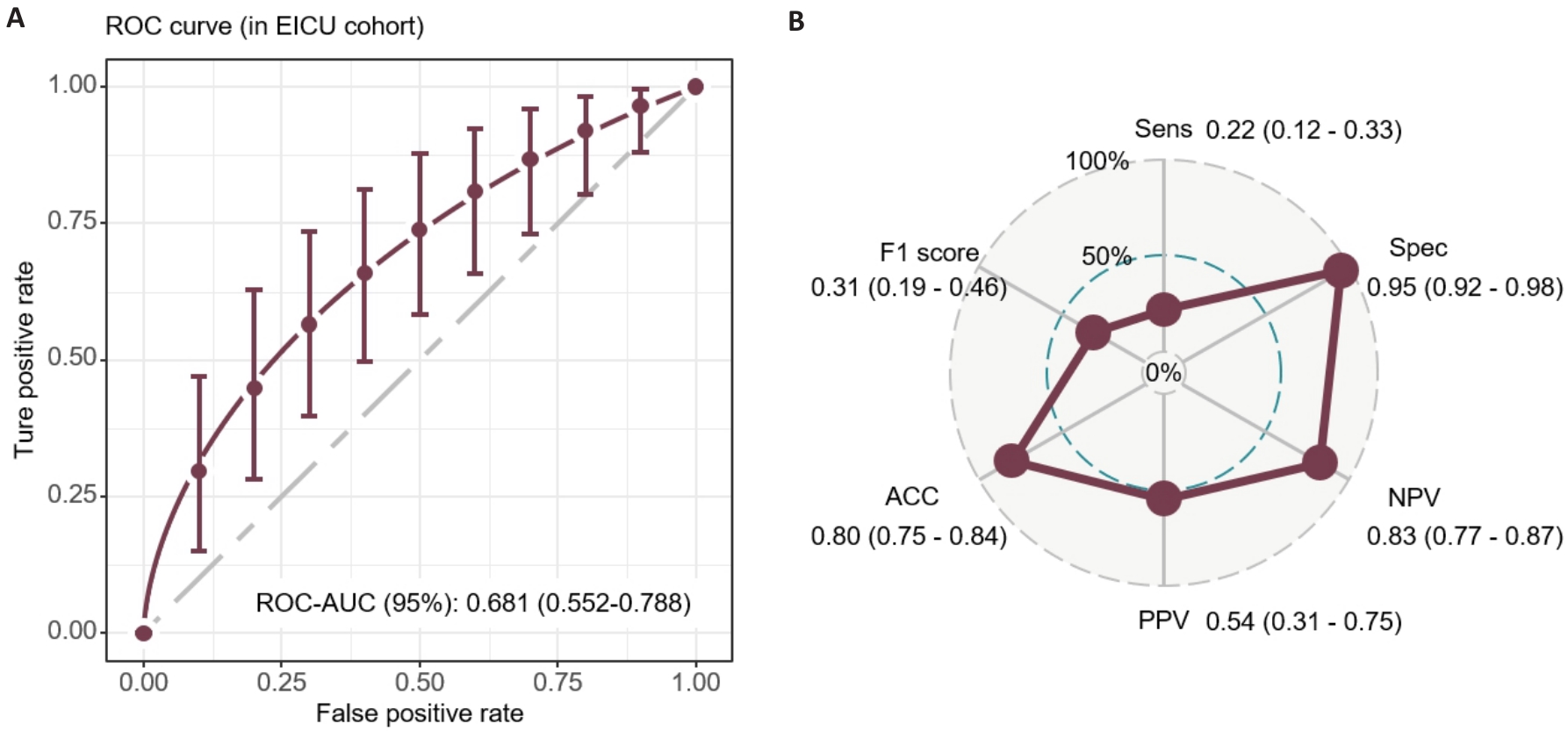
图5 外部验证集的ROC曲线和性能指标
Fig.5 ROC curve (A) and performance metrics (B) of the random forest model for the external validation set.
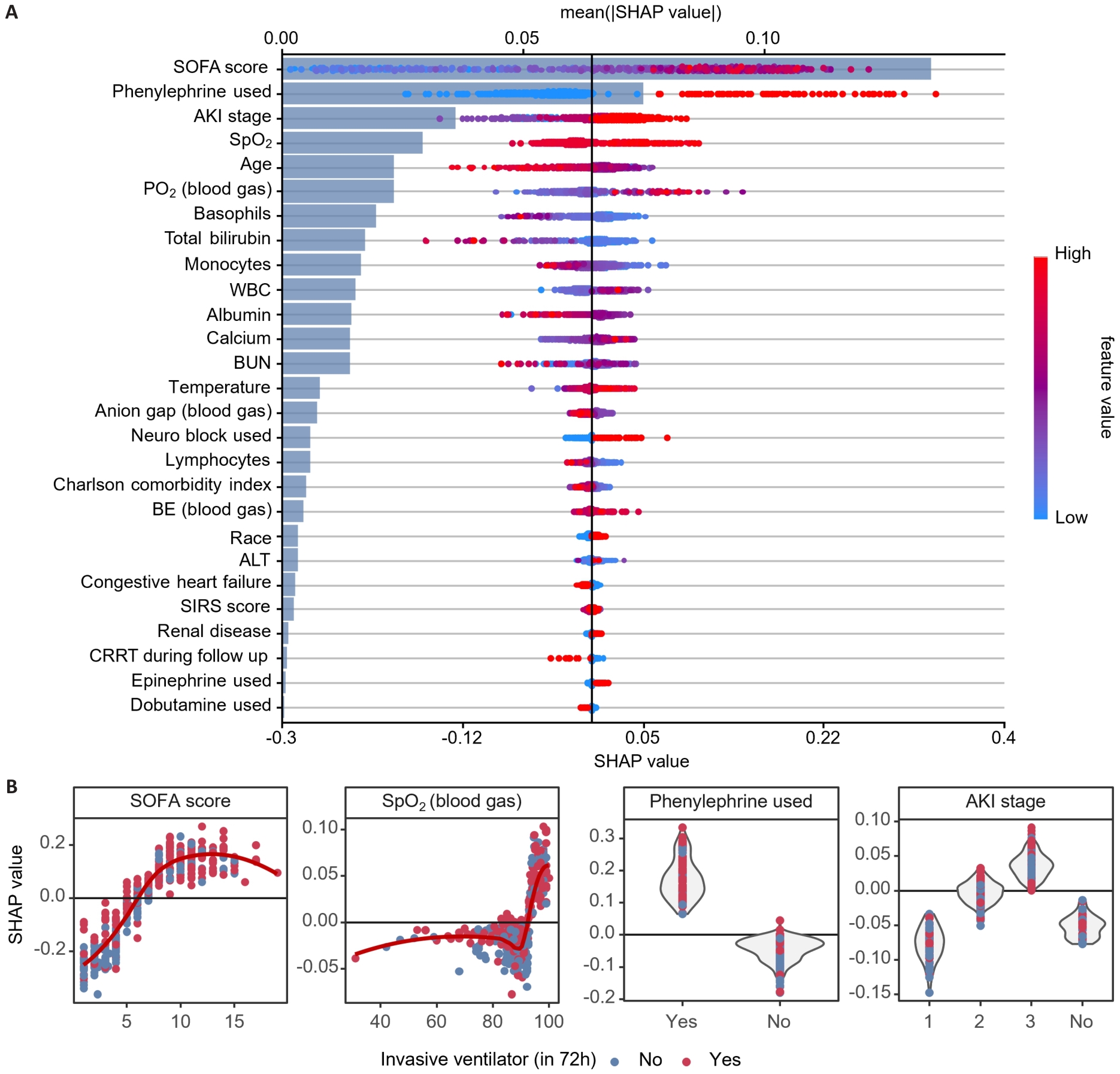
图6 模型可解释性分析
Fig.6 Model interpretability analysis. A: SHAP swarm plot and distribution histogram of the feature variables for predicting requirement of invasive mechanical ventilation within 72 h after ICU admission. B: SHAP dependence plot of the top 4 features.
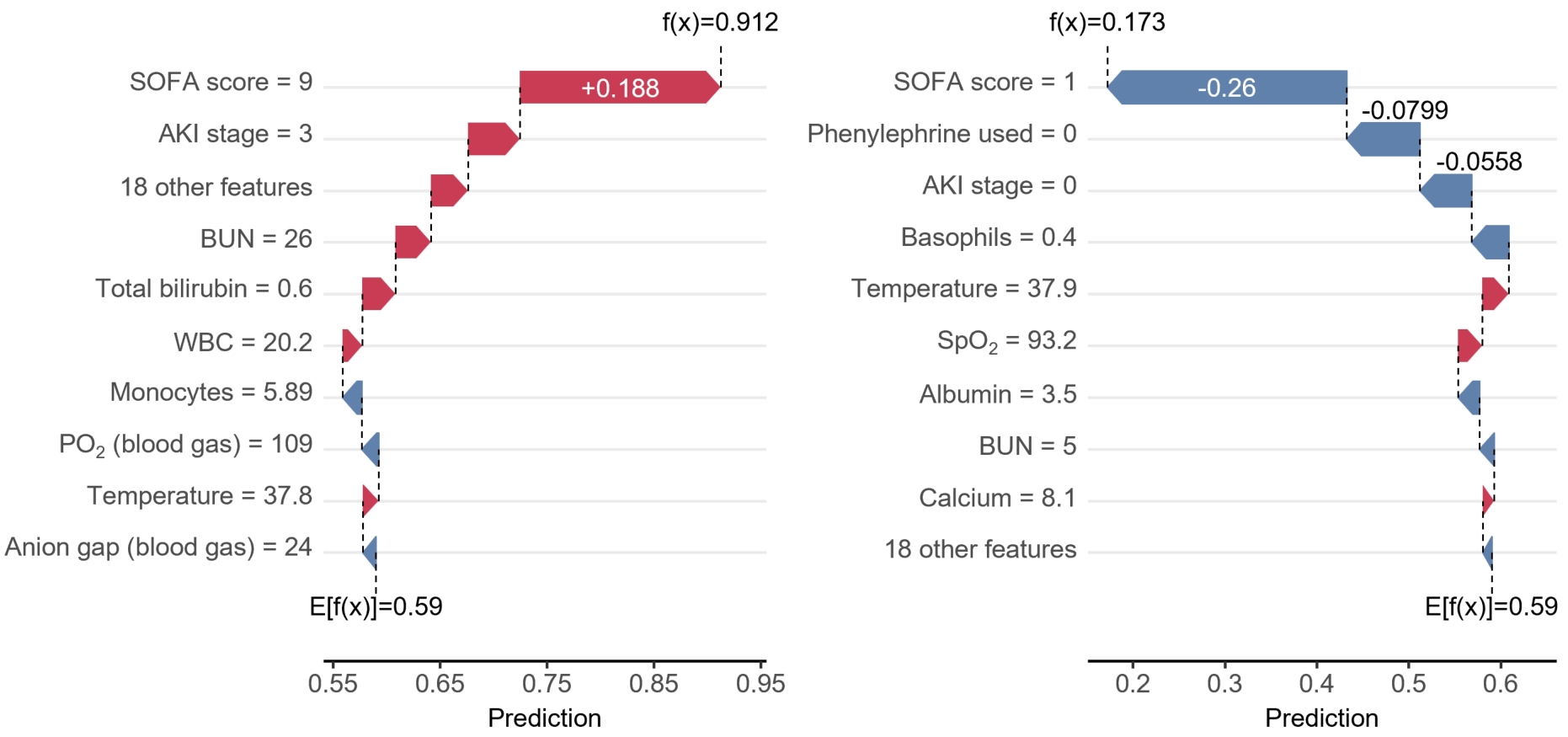
图7 ICU入院后72 h内预测需要启动有创机械通气事件的瀑布图
Fig.7 Waterfall plot of predicted probability of invasive mechanical ventilation events within 72 h after ICU admission.
| [1] | Wiley MB, Mehrotra K, Bauer J, et al. Acute pancreatitis: current clinical approaches, molecular pathophysiology, and potential therapeutics[J]. Pancreas, 2023, 52(6): e335-43. doi:10.1097/MPA.0000000000002259 |
| [2] | Zhao XL, Huang W, Li J, et al. Noninvasive positive-pressure ventilation in acute respiratory distress syndrome in patients with acute pancreatitis: a retrospective cohort study[J]. Pancreas, 2016, 45(1): 58-63. doi:10.1097/mpa.0000000000000377 |
| [3] | Liu Q, Zhu XM, Guo SB. From pancreas to lungs: The role of immune cells in severe acute pancreatitis and acute lung injury[J]. Immunity Inflam & Disease, 2024, 12(7): e1351. doi:10.1002/iid3.1351 |
| [4] | Lin FY, Lu RL, Han DD, et al. A prediction model for acute respiratory distress syndrome among patients with severe acute pancreatitis: a retrospective analysis[J]. Ther Adv Respir Dis, 2022, 16: 17534666221122592. doi:10.1177/17534666221122592 |
| [5] | Kollef MH. Prevention of hospital-associated pneumonia and ventilator-associated pneumonia[J]. Crit Care Med, 2004, 32(6): 1396-405. doi:10.1097/01.ccm.0000128569.09113.fb |
| [6] | Rohrs E, Bassi T, Nicholas M, et al. Risk factors for ventilator-induced-lung injury develop three to five times faster after a single episode of lung injury[J]. Can J Respir Ther, 2023, 59: 103-10. doi:10.1164/ajrccm-conference.2023.207.1_meetingabstracts.a1694 |
| [7] | Papachristou GI, Muddana V, Yadav D, et al. Comparison of BISAP, ranson’s, APACHE-II, and CTSI scores in predicting organ failure, complications, and mortality in acute pancreatitis[J]. Am J Gastroenterol, 2010, 105(2): 435-41. doi:10.1038/ajg.2009.622 |
| [8] | Pensier J, Touaibia M, Meerun MA, et al. Morphological subphenotypes of acute pancreatitis-related acute respiratory distress syndrome[J]. Crit Care, 2026, 30(1): 65. doi:10.1186/s13054-026-05837-w |
| [9] | Song BL, Liu P, Fu KR, et al. Developing a predictive model for septic shock risk in acute pancreatitis patients using interpretable machine learning algorithms[J]. Digit Health, 2025, 11: 20552076251346361. doi:10.1177/20552076251346361 |
| [10] | Shashikumar SP, Wardi G, Paul P, et al. Development and prospective validation of a deep learning algorithm for predicting need for mechanical ventilation[J]. Chest, 2021, 159(6): 2264-73. doi:10.1016/j.chest.2020.12.009 |
| [11] | Sendak M, Elish MC, Gao M, et al. “The human body is a black box”: supporting clinical decision-making with deep learning[C]//Proceedings of the 2020 Conference on Fairness, Accountability, and Transparency. Barcelona Spain. ACM, 2020: 99-109. DOI:10.1145/3351095.3372827 . |
| [12] | London AJ. Artificial intelligence and black-box medical decisions: Accuracy versus explainability [J]. Hast Cent Rep, 2019, 49(1): 15-21. doi:10.1002/hast.973 |
| [13] | Johnson AEW, Bulgarelli L, Shen L, et al. MIMIC-IV, a freely accessible electronic health record dataset[J]. Sci Data, 2023, 10: 1. doi:10.1038/s41597-022-01899-x |
| [14] | Nohara Y, Matsumoto K, Soejima H, et al. Explanation of machine learning models using shapley additive explanation and application for real data in hospital[J]. Comput Meth Programs Biomed, 2022, 214: 106584. doi:10.1016/j.cmpb.2021.106584 |
| [15] | Louhichi M, Nesmaoui R, Lazaar M. Game theory meets explainable AI: an enhanced approach to understanding black box models through shapley values[J]. Ijacsa, 2025, 16(7): 1335. doi:10.14569/ijacsa.2025.0160770 |
| [16] | Li M, Sun HY, Huang YJ, et al. Shapley value: from cooperative game to explainable artificial intelligence[J]. Auton Intell Syst, 2024, 4(1): 2. doi:10.1007/s43684-023-00060-8 |
| [17] | Gao NN, Rezaee F. Airway epithelial cell junctions as targets for pathogens and antimicrobial therapy[J]. Pharmaceutics, 2022, 14(12): 2619. doi:10.3390/pharmaceutics14122619 |
| [18] | Li J, Qi ZJ, Li DX, et al. Alveolar epithelial glycocalyx shedding aggravates the epithelial barrier and disrupts epithelial tight junctions in acute respiratory distress syndrome[J]. Biomed Pharmacother, 2021, 133: 111026. doi:10.1016/j.biopha.2020.111026 |
| [19] | MacGoey P, Dickson EJ, Puxty K. Management of the patient with acute pancreatitis[J]. BJA Educ, 2019, 19(8): 240-5. doi:10.1016/j.bjae.2019.03.008 |
| [20] | Lakananurak N, Gramlich L. Nutrition management in acute pancreatitis: Clinical practice consideration[J]. World J Clin Cases, 2020, 8(9): 1561-73. doi:10.12998/wjcc.v8.i9.1561 |
| [21] | Johnson AEW, Bulgarelli L, Shen L, et al. MIMIC-IV, a freely accessible electronic health record dataset[J]. Sci Data, 2023, 10: 1. doi:10.1038/s41597-022-01899-x |
| [22] | Wang HJ, Liang QX, Hancock JT, et al. Feature selection strategies: a comparative analysis of SHAP-value and importance-based methods[J]. J Big Data, 2024, 11(1): 44. doi:10.1186/s40537-024-00905-w |
| [23] | Lundberg SM, Nair B, Vavilala MS, et al. Explainable machine-learning predictions for the prevention of hypoxaemia during surgery[J]. Nat Biomed Eng, 2018, 2(10): 749-60. doi:10.1038/s41551-018-0304-0 |
| [24] | Iyer H, Elhence A, Mittal S, et al. Pulmonary complications of acute pancreatitis[J]. Expert Rev Respir Med, 2020, 14(2): 209-17. doi:10.1080/17476348.2020.1698951 |
| [25] | Song BL, Liu P, Liu C, et al. Development and validation of a predictive model for continuous renal replacement therapy in sepsis patients using the MIMIC-IV database[J]. Sci Rep, 2025, 15: 21559. doi:10.1038/s41598-025-07647-6 |
| [26] | Wang ZC, Zhang LM, Huang T, et al. Developing an explainable machine learning model to predict the mechanical ventilation duration of patients with ARDS in intensive care units[J]. Heart Lung, 2023, 58: 74-81. doi:10.1016/j.hrtlng.2022.11.005 |
| [27] | Collin CB, Gebhardt T, Golebiewski M, et al. Computational models for clinical applications in personalized medicine: guidelines and recommendations for data integration and model validation[J]. J Pers Med, 2022, 12(2): 166. doi:10.3390/jpm12020166 |
| [28] | Knevel R, Liao KP. From real-world electronic health record data to real-world results using artificial intelligence[J]. Ann Rheum Dis, 2023, 82(3): 306-11. doi:10.1136/ard-2022-222626 |
| [1] | 李宁,陈红武,周新华,梁莉. 呼吸衰竭死亡新生儿肺血管疾病的临床病理分析:附38例报告[J]. 南方医科大学学报, 2017, 37(04): 528-. |
| [2] | 李涛平;. 睡眠呼吸暂停综合征简介[J]. 南方医科大学学报, 2006, 26(04): 405-405. |
| [3] | 盛学梅. 鼻塞持续气道正压治疗婴幼儿肺炎合并心力衰竭、呼吸衰竭的疗效观察[J]. 南方医科大学学报, 2005, 25(11): 1446-1447. |
| [4] | 董秋兰, 魏长春, 郭红革, 吴东玲, 刘彦彦, 李佩珠. 50例重症肺结核合并呼吸衰竭动脉血气及电解质临床分析[J]. 南方医科大学学报, 2004, 24(12): 1385-1387. |
| 阅读次数 | ||||||
|
全文 |
|
|||||
|
摘要 |
|
|||||
