
Journal of Southern Medical University ›› 2026, Vol. 46 ›› Issue (9): 2101-2112.doi: 10.12122/j.issn.1673-4254.2026.09.10
Junying XU1,2( ), Chenghao LIU2,3, Hao HUANG1,2, Huijiao JIANG1,2, Dan DONG1,2, Xiangwei WU1,2,3, Xueling CHEN1,2()
Received:2026-01-20
Online:2026-09-20
Published:2026-09-30
Contact:
Xueling CHEN
E-mail:sophiaxu4504@foxmail.com;chenxueling@shzu.edu.cn
Supported by:Junying XU, Chenghao LIU, Hao HUANG, Huijiao JIANG, Dan DONG, Xiangwei WU, Xueling CHEN. Hepatocellular carcinoma cells induce M2 macrophage polarization through upregulation of ANXA2 and ANXA5 expression[J]. Journal of Southern Medical University, 2026, 46(9): 2101-2112.
Add to citation manager EndNote|Ris|BibTeX
URL: https://www.j-smu.com/EN/10.12122/j.issn.1673-4254.2026.09.10
| Gene | Primer (5'-3') |
|---|---|
| ANXA2 | F: ATATTGCCTTCGCCTACCAGAG R: GCGTCATACTGAGCAGGTGTCTT |
| ANXA5 | F: GACTTCCCTGGATTTGATGAGC R: GAGGGTTTCATCAGAGCCACAA |
| ANXA11 | F: AAAGGCTTCGGGACGGAT R: AGCCGTCTTGAAGGAAAGTAGGAT |
| IL-10 | F: CTCCGAGATGCCTTCAGCAG R: TCACATGCGCCTTGATGTCT |
| β-actin | F: CACCCAGCACAATGAAGATCAAGAT R: CCAGTTTTTAAATCCTGAGTCAAGC |
Tab.1 Primer sequence for qRT-PCR
| Gene | Primer (5'-3') |
|---|---|
| ANXA2 | F: ATATTGCCTTCGCCTACCAGAG R: GCGTCATACTGAGCAGGTGTCTT |
| ANXA5 | F: GACTTCCCTGGATTTGATGAGC R: GAGGGTTTCATCAGAGCCACAA |
| ANXA11 | F: AAAGGCTTCGGGACGGAT R: AGCCGTCTTGAAGGAAAGTAGGAT |
| IL-10 | F: CTCCGAGATGCCTTCAGCAG R: TCACATGCGCCTTGATGTCT |
| β-actin | F: CACCCAGCACAATGAAGATCAAGAT R: CCAGTTTTTAAATCCTGAGTCAAGC |
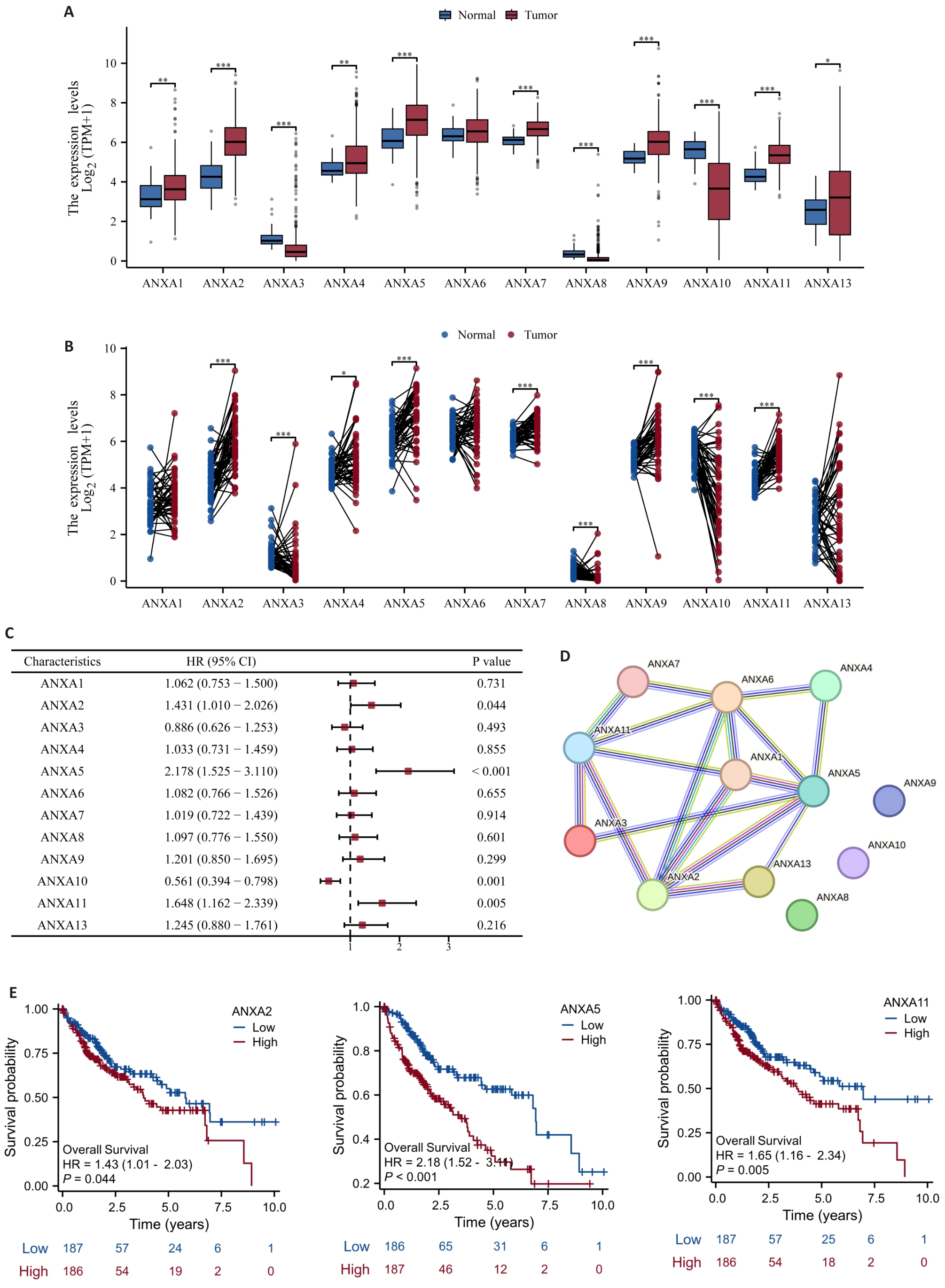
Fig.1 Expression of ANXA2, ANXA5, and ANXA11 in hepatocellular carcinoma (HCC) and their association with prognosis. A, B: ANXA family expression in HCC. C, E: Analysis of the association between the ANXA family and prognosis of HCC. D: PPI network analysis of molecular functional relationships within the ANXA family. *P<0.05, **P<0.01, ***P<0.001
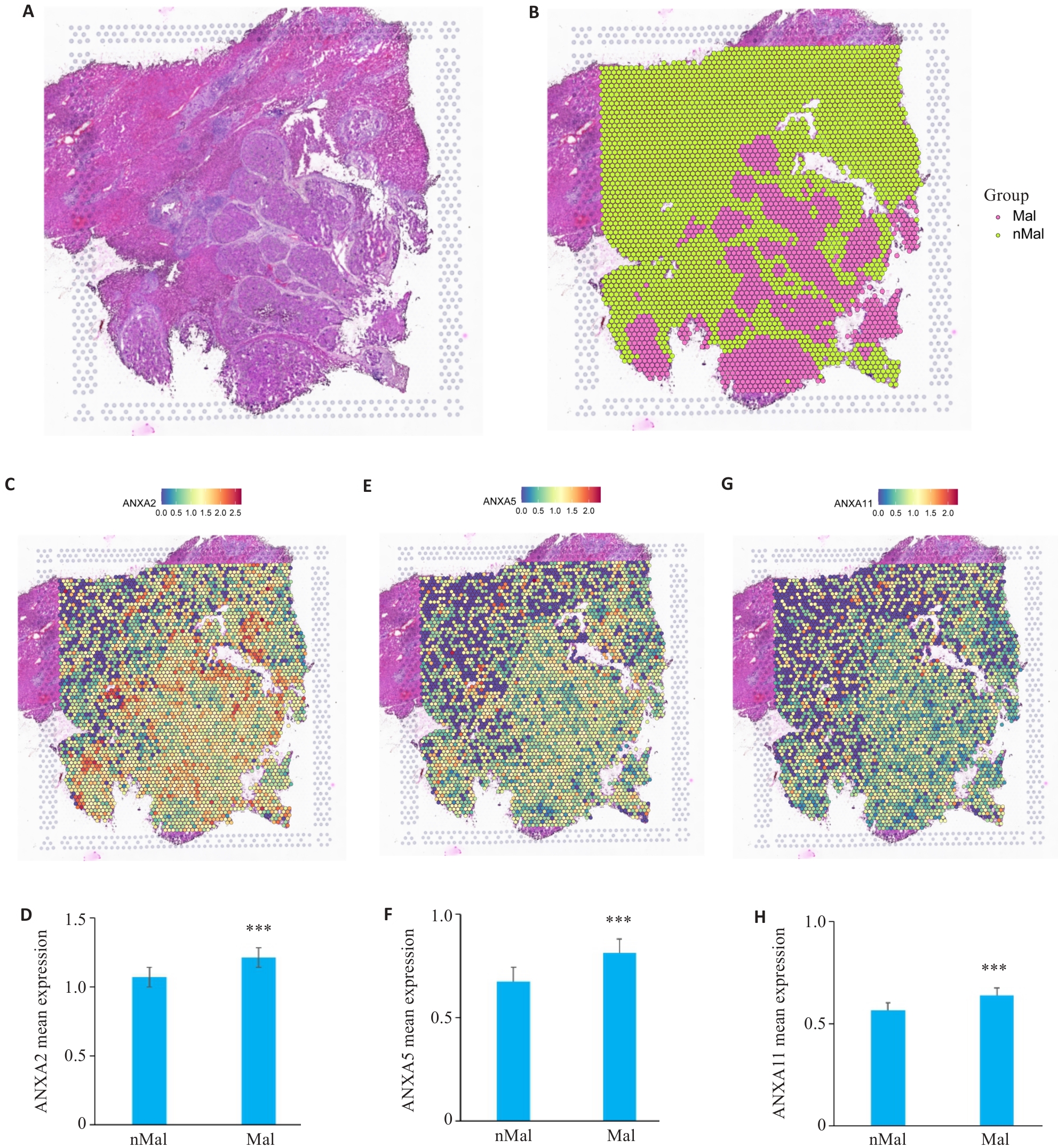
Fig.2 Spatial transcriptomic analysis of ANXA2, ANXA5, and ANXA11 mRNA levels in HCC. A-H: Spatial transcriptomic analysis of ANXA2, ANXA5, and ANXA11 mRNA levels in non-malignant (nMal) and malignant (Mal) regions of HCC tissue. ***P<0.001 vs nMal.
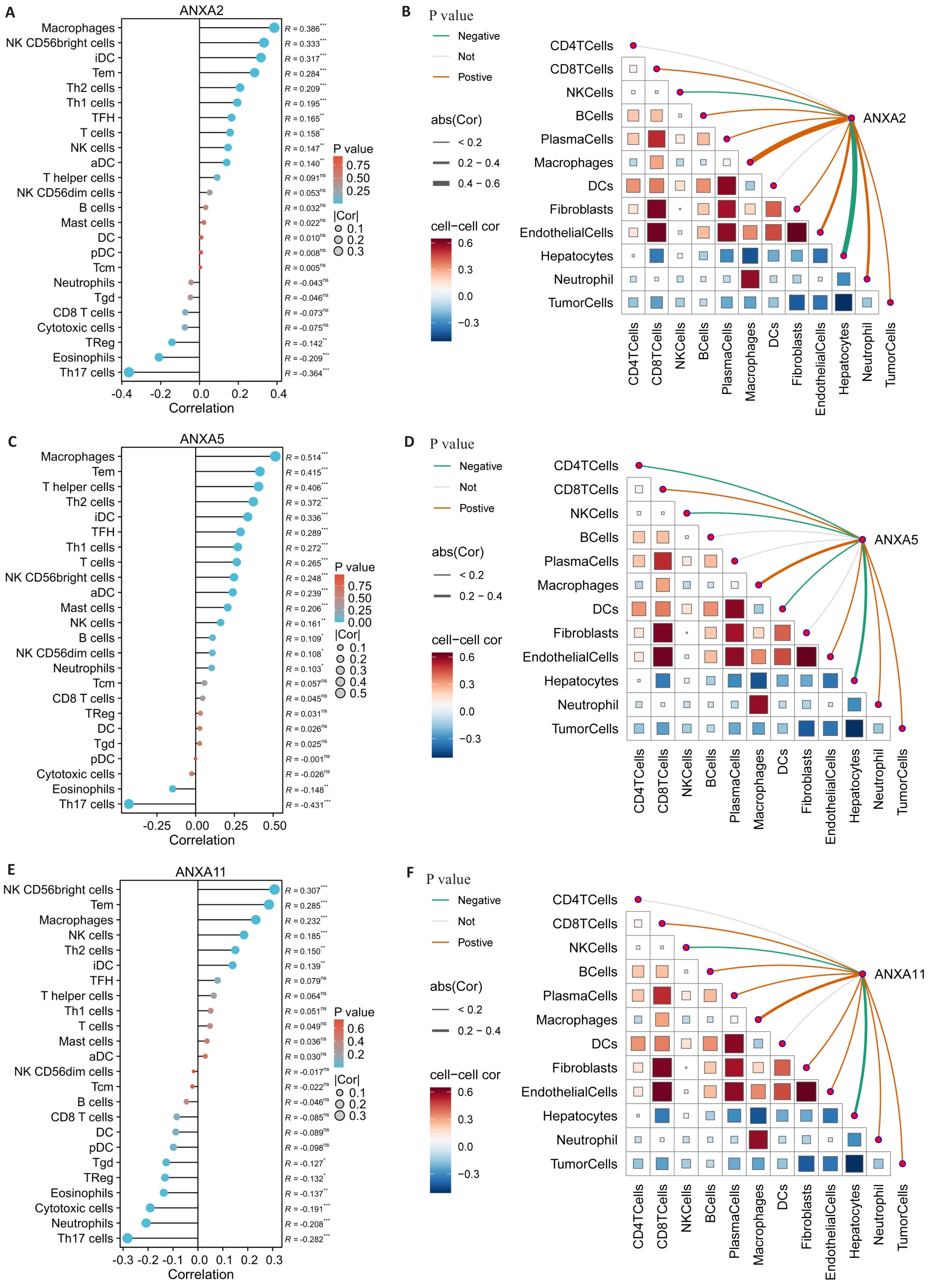
Fig.3 Correlation between expression levels of ANXA2, ANXA5, and ANXA11 and immune cell infiltration. A, C, E: ssGSEA analysis of ANXA2, ANXA5 and ANXA11 mRNA levels in relation to immune-cell infiltration. B, D, F: Spatial transcriptomic analysis of ANXA2, ANXA5 and ANXA11 mRNA levels in relation to immune-cell infiltration.
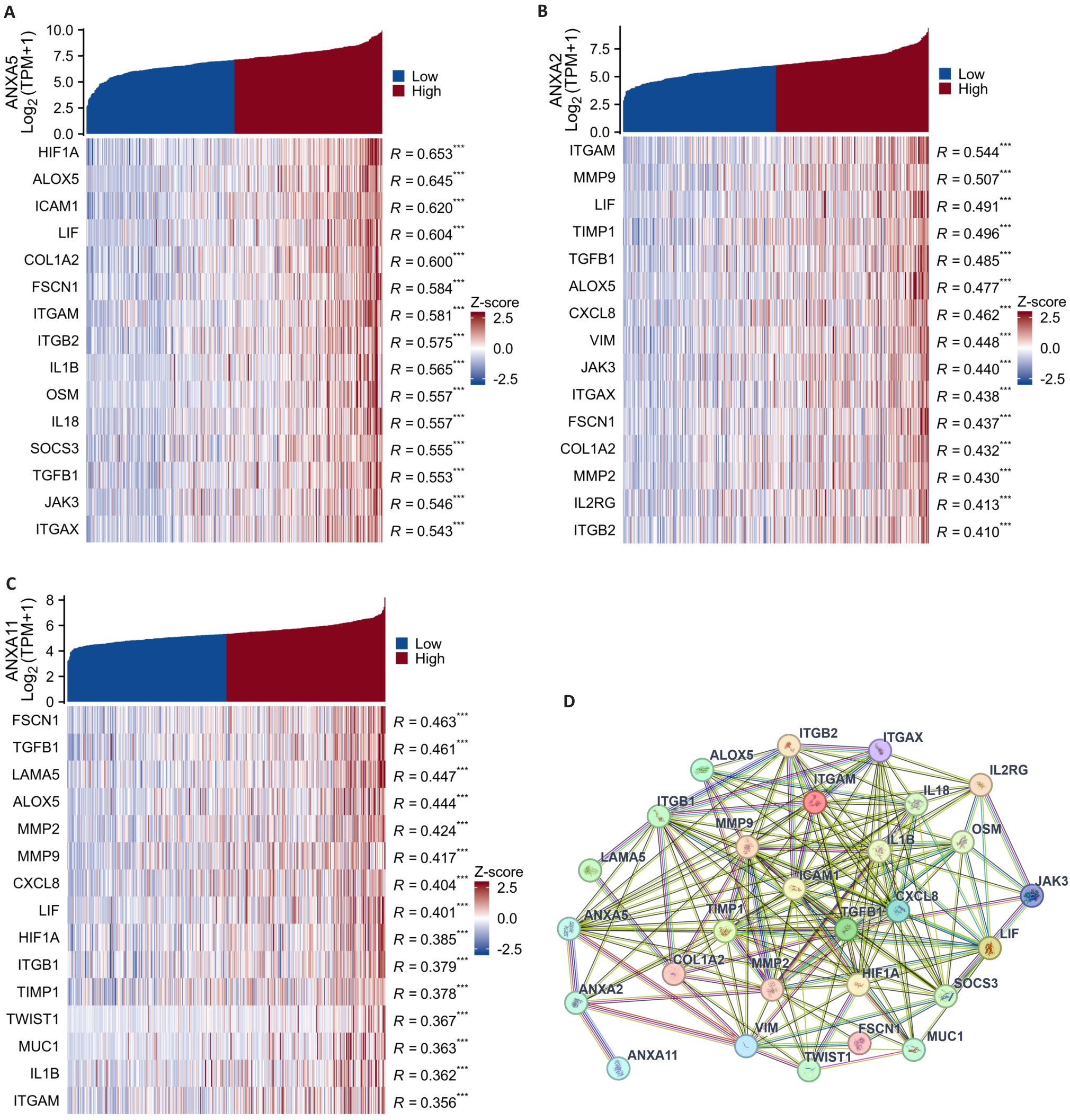
Fig.4 Correlation of ANXA2, ANXA5, and ANXA11 with immunosuppressive and adhesion gene expression. A-C: Top 30 co-expressed gene profiling analysis of ANXA2, ANXA5, and ANXA11. D: PPI-based interactome analysis of ANXA2, ANXA5, and ANXA11 together with their top 30 co-expressed genes.
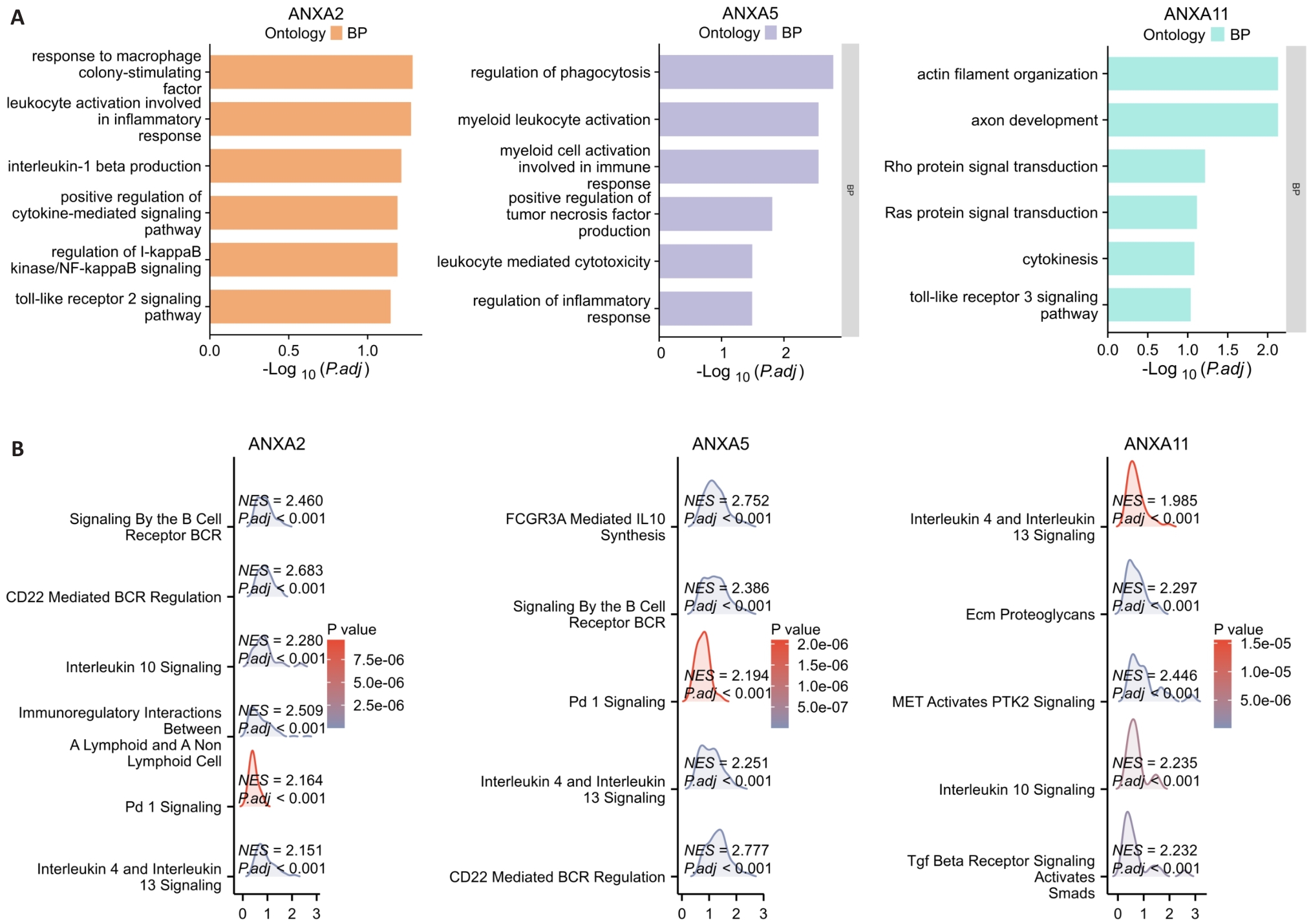
Fig.5 ANXA2, ANXA5, and ANXA11 are associated with IL-4/IL-13 and PD-1 signaling pathways. A, B: GO functional annotation and GSEA enrichment analysis of ANXA2, ANXA5, and ANXA11.
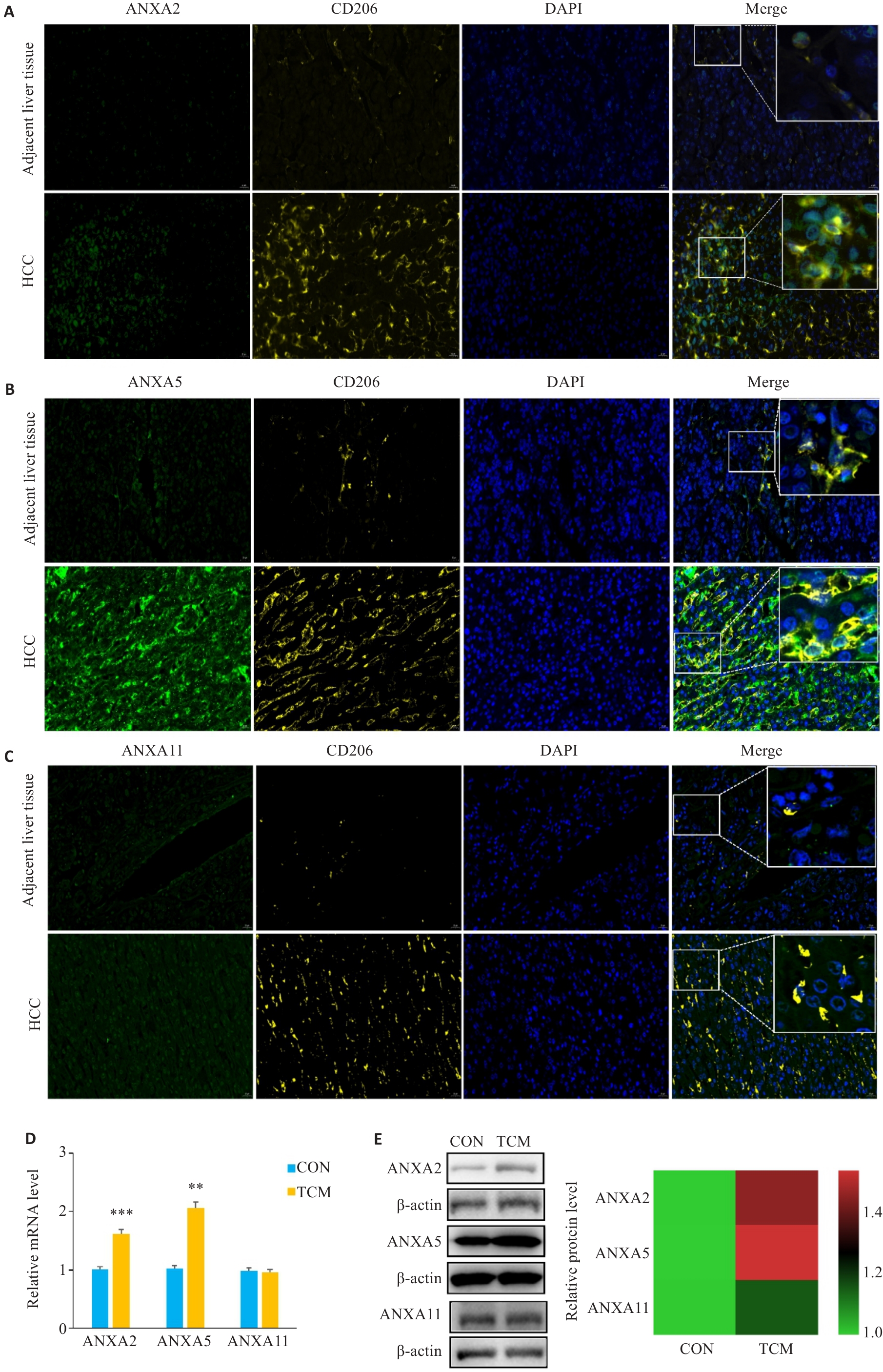
Fig.6 Expression of ANXA2, ANXA5, and ANXA11 in HCC tissues. A-C: Immunofluorescence staining of the co-expression of ANXA2, ANXA5, and ANXA11 with CD206 in HCC tissues. D, E: mRNA and protein levels of ANXA2, ANXA5, and ANXA11 (n=3). CON: Control; TCM: Tumor conditioned medium. **P<0.01, ***P<0.001 vs CON group.
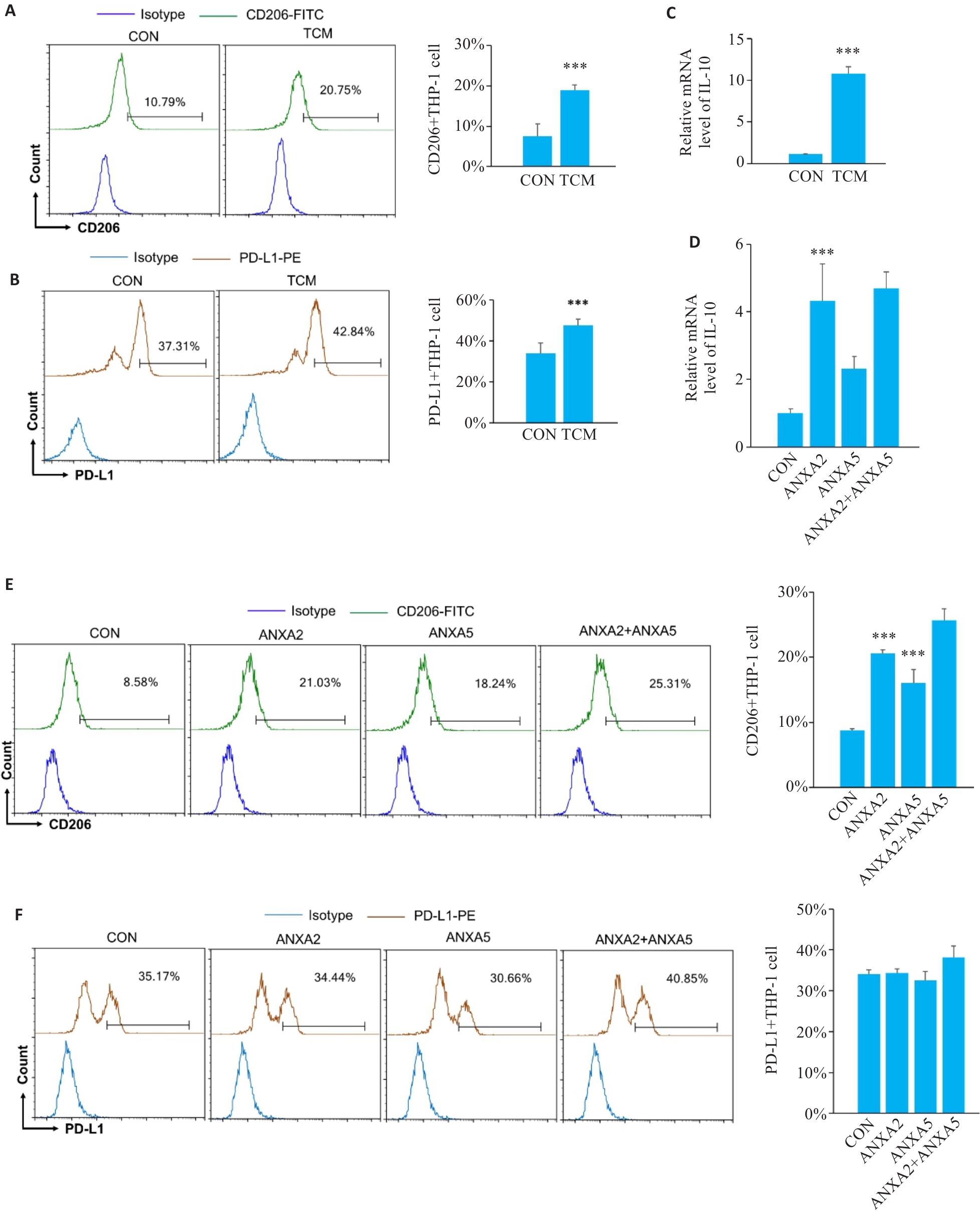
Fig.7 ANXA2 and ANXA5 induce the expression of the M2 macrophage marker CD206. A-C: flow cytometric analysis of CD206 (n=5), PD-L1 (n=5) expression and IL-10 (n=3) mRNA levels in THP-1 cells after treatment with tumor-conditioned medium (TCM). D-F: CD206, PD-L1 expression and IL-10 mRNA level in THP-1 cells induced by ANXA2 and ANXA5 (n=3). ***P<0.001 vs CON group.
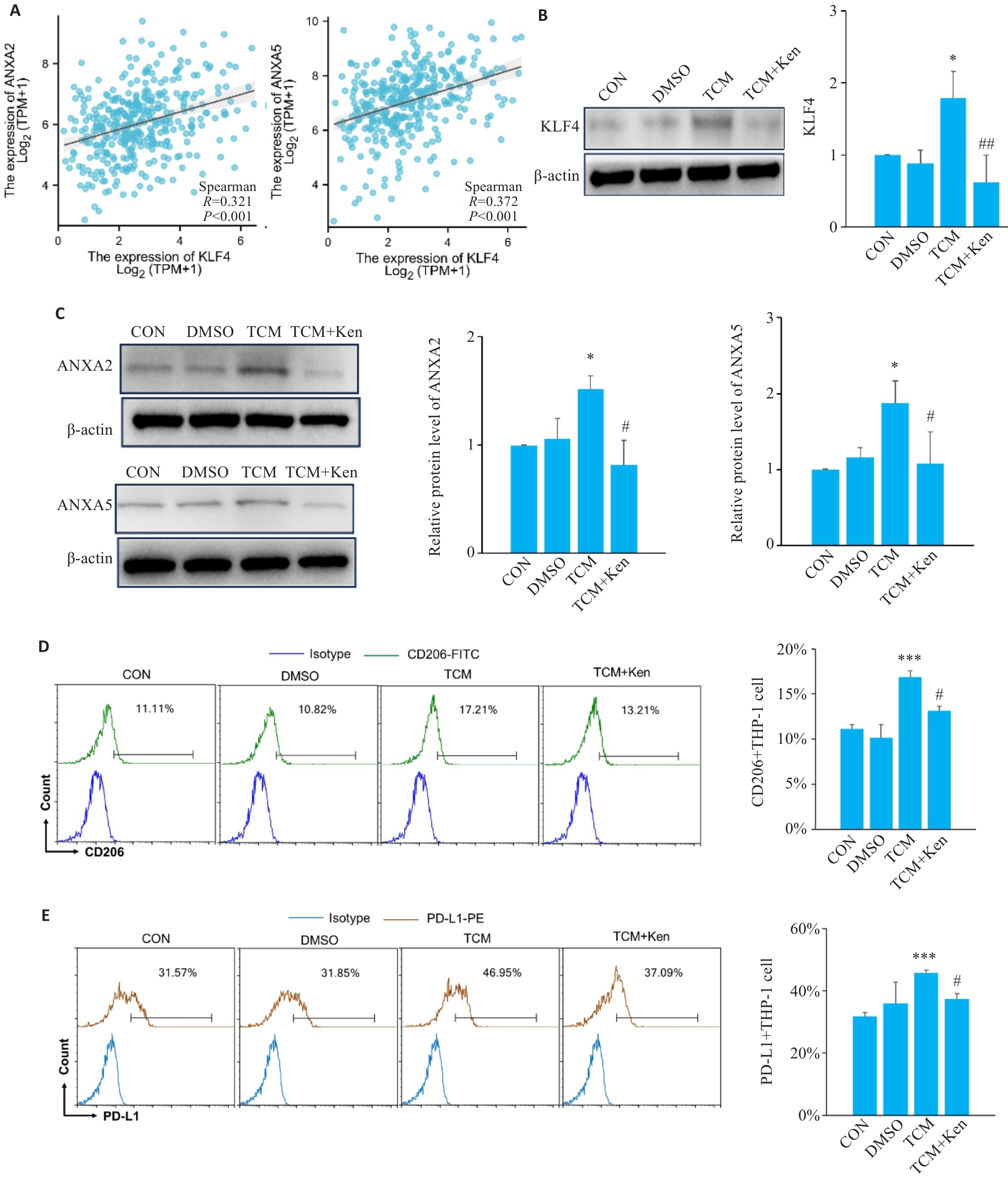
Fig.8 TCM of MHCC-97H cells promotes ANXA2 and ANXA5 expression in THP-1 cells by upregulating KLF4. A: Correlation analysis of ANXA2, ANXA5, and KLF4 mRNA levels using TCGA-LIHC transcriptome data (n=3). B, C: Protein levels of KLF4, ANXA2, and ANXA5 of THP-1 cells treated by TCM and Kenpaullone (n=3). D, E: Flow cytometric analysis of CD206 and PD-L1 expression in THP-1 cells (n=4). Ken: Kenpaullone. *P<0.05, ***P<0.001 vs CON group; ##P<0.01, #P<0.05 vs TCM group.
| [1] | Bray F, Laversanne M, Sung H, et al. Global cancer statistics 2022: GLOBOCAN estimates of incidence and mortality worldwide for 36 cancers in 185 countries[J]. CA A Cancer J Clin, 2024, 74(3): 229-63. doi:10.3322/caac.21834 |
| [2] | Vogel A, Meyer T, Sapisochin G, et al. Hepatocellular carcinoma[J]. Lancet, 2022, 400(10360): 1345-62. doi:10.1016/s0140-6736(22)01200-4 |
| [3] | Danpanichkul P, Duangsonk K, Chen VL, et al. Global burden of HBV-related liver disease: Primary liver cancer due to chronic HBV infection increased in over one-third of countries globally from 2000 to 2021[J]. Hepatology, 2025, 82(5): 1274-86. doi:10.1097/hep.0000000000001260 |
| [4] | Khatun M, Ray R, Ray RB. Hepatitis C virus associated hepatocellular carcinoma[J]. Adv Cancer Res, 2021, 149: 103-42. doi:10.1016/bs.acr.2020.10.003 |
| [5] | Vitellius C, Desjonqueres E, Lequoy M, et al. MASLD-related HCC: Multicenter study comparing patients with and without cirrhosis[J]. JHEP Rep, 2024, 6(10): 101160. doi:10.1016/j.jhepr.2024.101160 |
| [6] | Wang WY, Wei C. Advances in the early diagnosis of hepatocellular carcinoma[J]. Genes Dis, 2020, 7(3): 308-19. doi:10.1016/j.gendis.2020.01.014 |
| [7] | Singal AG, Zhang E, Narasimman M, et al. HCC surveillance improves early detection, curative treatment receipt, and survival in patients with cirrhosis: a meta-analysis[J]. J Hepatol, 2022, 77(1): 128-39. doi:10.1016/j.jhep.2022.01.023 |
| [8] | Xu WQ, Cheng YL, Guo YH, et al. Targeting tumor associated macrophages in hepatocellular carcinoma[J]. Biochem Pharmacol, 2022, 199: 114990. doi:10.1016/j.bcp.2022.114990 |
| [9] | Li DM, Zhang T, Guo Y, et al. Biological impact and therapeutic implication of tumor-associated macrophages in hepatocellular carcinoma[J]. Cell Death Dis, 2024, 15: 498. doi:10.1038/s41419-024-06888-z |
| [10] | Singer M, Zhang ZL, Dayyani F, et al. Modulation of tumor-associated macrophages to overcome immune suppression in the hepatocellular carcinoma microenvironment[J]. Cancers, 2024, 17(1): 66. doi:10.3390/cancers17010066 |
| [11] | Chu XY, Tian Y, Lv C. Decoding the spatiotemporal heterogeneity of tumor-associated macrophages[J]. Mol Cancer, 2024, 23(1): 150. doi:10.1186/s12943-024-02064-1 |
| [12] | Nosaka T, Murata Y, Takahashi K, et al. Hepatocellular carcinoma progression promoted by 5-lipoxygenase activity in CD163+ tumor-associated macrophages[J]. Biomed Pharmacother, 2023, 162: 114592. doi:10.1016/j.biopha.2023.114592 |
| [13] | Wu QC, Zhou WH, Yin SY, et al. Blocking triggering receptor expressed on myeloid cells-1-positive tumor-associated macrophages induced by hypoxia reverses immunosuppression and anti-programmed cell death ligand 1 resistance in liver cancer[J]. Hepatology, 2019, 70(1): 198-214. doi:10.1002/hep.30593 |
| [14] | Waki Y, Morine Y, Saito Y, et al. Lenvatinib-resistant hepatocellular carcinoma promotes malignant potential of tumor-associated macrophages via exosomal miR-301a-3p[J]. Ann Gastroenterol Surg, 2024, 8(6): 1084-95. doi:10.1002/ags3.12814 |
| [15] | Song ZH, Wang X, Liu XH, et al. Targeting of Annexin A1 in Tumor-associated Macrophages as a therapeutic strategy for hepatocellular carcinoma[J]. Biochem Pharmacol, 2023, 213: 115612. doi:10.1016/j.bcp.2023.115612 |
| [16] | Wen YJ, Zhou WH, Zhao ZZ, et al. Annexin A’s life in pan-cancer: especially in glioma immune cells[J]. NeuroMolecular Med, 2025, 27(1): 17. doi:10.1007/s12017-024-08827-9 |
| [17] | Xu F, Guo MM, Huang W, et al. Annexin A5 regulates hepatic macrophage polarization via directly targeting PKM2 and ameliorates NASH[J]. Redox Biol, 2020, 36: 101634. doi:10.1016/j.redox.2020.101634 |
| [18] | Shao X, Xu PC, Ji LL, et al. Low-dose decitabine promotes M2 macrophage polarization in patients with primary immune thrombocytopenia via enhancing KLF4 binding to PPARγ promoter[J]. Clin Transl Med, 2023, 13(7): e1344. doi:10.1002/ctm2.1344 |
| [19] | Pan Y, Hui XY, Hoo RLC, et al. Adipocyte-secreted exosomal microRNA-34a inhibits M2 macrophage polarization to promote obesity-induced adipose inflammation[J]. J Clin Investig, 2019, 129(2): 834-49. doi:10.1172/jci123069 |
| [20] | Dong S, Li X, Chen Z, et al. MMP28 recruits M2-type tumor-associated macrophages through MAPK/JNK signaling pathway-dependent cytokine secretion to promote the malignant progression of pancreatic cancer[J]. J Exp Clin Cancer Res, 2025, 44(1): 60. doi:10.1186/s13046-025-03321-x |
| [21] | Kang BJ, Jia ZX, Dong YS, et al. Recombinant human annexin A5 accelerates diabetic wounds healing by regulating skin inflammation[J]. Regen Ther, 2024, 27: 342-53. doi:10.1016/j.reth.2024.03.013 |
| [22] | Ma YZ, Wu L, Liu XW, et al. KLF4 inhibits colorectal cancer cell proliferation dependent on NDRG2 signaling[J]. Oncol Rep, 2017, 38(2): 975-84. doi:10.3892/or.2017.5736 |
| [23] | Li Y, Feng RY, Yu X, et al. SLC35E2 promoter mutation as a prognostic marker of esophageal squamous cell carcinoma[J]. Life Sci, 2022, 296: 120447. doi:10.1016/j.lfs.2022.120447 |
| [24] | Wu DH, Liang H, Wang H, et al. Hepatitis B virus-X protein regulates high mobility group box 1 to promote the formation of hepatocellular carcinoma[J]. Oncol Lett, 2018, 16(4): 4418-26. |
| [25] | Peng X, Zhu YY, Han YQ, et al. Enhancing anti-tumor immunity by targeting BATF and the STAT1/PD-L1 pathway in cervical carcinoma[J]. Cell Mol Life Sci, 2025, 82(1): 353. doi:10.1007/s00018-025-05792-9 |
| [26] | van Duijn A, Willemsen KJ, van Uden NOP, et al. A secondary role for hypoxia and HIF1 in the regulation of (IFNγ-induced) PD-L1 expression in melanoma[J]. Cancer Immunol Immunother, 2022, 71(3): 529-40. doi:10.1007/s00262-021-03007-1 |
| [1] | Liping HUANG, Yu SHAO, Wanbing ZHOU, Jingping HE. Hepatocellular carcinoma-derived lactate-mediated histone H3K18 lactylation modifies S100A2 transcription to promote proliferation, migration, invasion and epithelial-mesenchymal transition of hepatocellular carcinoma cells [J]. Journal of Southern Medical University, 2026, 46(9): 2056-2068. |
| [2] | Hanxiang ZHONG, Yuanyu ZHAO, Hong FU, Jiayong DONG, Guoshan DING, Yao CHEN, Wenyuan GUO. Causal association between oral microbiota and hepatocellular carcinoma in East Asian populations: a Mendelian randomization study [J]. Journal of Southern Medical University, 2026, 46(7): 1467-1473. |
| [3] | Xinli ZHAO, Haojie WANG, Yinchun SONG, Shuai YUAN, Zhen ZHANG, Xingqi ZHOU, Shanshan LI, Xian LI, Feng LI. ERI3 expression is elevated in hepatocellular carcinoma and correlates with poor patient prognosis [J]. Journal of Southern Medical University, 2026, 46(1): 175-182. |
| [4] | Zhihui FENG, Wenyue LI, Mingxiu ZHANG, Peipei WANG, Yangyang SHUAI, Hong ZHANG. Long noncoding RNA HClnc1 promotes proliferation and migration of liver cancer cells by targeting RBBP5/KAT2B complex to enhance ODC1 transcription [J]. Journal of Southern Medical University, 2025, 45(9): 1919-1926. |
| [5] | Tianli SONG, Yimin WANG, Tong SUN, Xu LIU, Sheng HUANG, Yun RAN. Zheng Gan Decoction inhibits diethylnitrosamine-induced hepatocellular carcinoma in rats by activating the Hippo/YAP signaling pathway [J]. Journal of Southern Medical University, 2025, 45(4): 799-809. |
| [6] | Jinhua ZOU, Hui WANG, Dongyan ZHANG. SLC1A5 overexpression accelerates progression of hepatocellular carcinoma by promoting M2 polarization of macrophages [J]. Journal of Southern Medical University, 2025, 45(2): 269-284. |
| [7] | Chao LI, Guozhi YIN, Xiao CHENG, Yezhen JIANG. Angio-associated migratory cell protein is highly expressed in hepatocellular carcinoma and promotes tumor cell invasion and metastasis [J]. Journal of Southern Medical University, 2025, 45(12): 2628-2638. |
| [8] | Xiangzhuo MIAO, Pengyu ZHU, Huohui OU, Qing ZHU, Linyuan YU, Baitang GUO, Wei LIAO, Yu HUANG, Leyang XIANG, Dinghua YANG. Overexpression of parathyroid hormone-like hormone facilitates hepatocellular carcinoma progression and correlates with adverse outcomes [J]. Journal of Southern Medical University, 2025, 45(10): 2135-2145. |
| [9] | Meng XU, Lina CHEN, Jinyu WU, Lili LIU, Mei SHI, Hao ZHOU, Guoliang ZHANG. Mechanism of Hedyotis diffusa-Scutellaria barbata D. Don for treatment of primary liver cancer: analysis with network pharmacology, molecular docking and in vitro validation [J]. Journal of Southern Medical University, 2025, 45(1): 80-89. |
| [10] | Liping ZHANG, Xijuan LIU, Xiao HU, Jiali WANG, Xihe YU, Guoliang LI, Haimin YOU, Qizhou ZHANG, Haibo ZHANG. Efficacy and safety of transcatheter arterial chemoembolization followed by hepatic arterial infusion chemotherapy combined with TKI and PD-1 inhibitors as first-line treatment for advanced hepatocellular carcinoma [J]. Journal of Southern Medical University, 2024, 44(9): 1831-1838. |
| [11] | Qianyi CHEN, Shuhan SHANG, Huan LU, Sisi LI, Zhimian SUN, Xirui FAN, Zhilin QI. Calenduloside E inhibits hepatocellular carcinoma cell proliferation and migration by down-regulating GPX4 and SLC7A11 expression through the autophagy pathway [J]. Journal of Southern Medical University, 2024, 44(7): 1327-1335. |
| [12] | Huaxing HE, Lulin LIU, Yingyin LIU, Nachuan CHEN, Suxia SUN. Sodium butyrate and sorafenib synergistically inhibit hepatocellular carcinoma cells possibly by inducing ferroptosis through inhibiting YAP [J]. Journal of Southern Medical University, 2024, 44(7): 1425-1430. |
| [13] | Pengcheng LIU, Lijuan LOU, Xia LIU, Jian WANG, Ying JIANG. A risk scoring model based on M2 macrophage-related genes for predicting prognosis of HBV-related hepatocellular carcinoma [J]. Journal of Southern Medical University, 2024, 44(5): 827-840. |
| [14] | CHEN Hao, LI Zhenhan, WANG Mingting, LU Linming, TANG Qianli, LUO Liangping. High expression of UBE2S promotes progression of hepatocellular carcinoma by increasing cancer cell stemness [J]. Journal of Southern Medical University, 2024, 44(3): 455-464. |
| [15] | ZHONG Weixiong, LIANG Fangrong, YANG Ruimeng, ZHEN Xin. Prediction of microvascular invasion in hepatocellular carcinoma based on multi-phase dynamic enhanced CT radiomics feature and multi-classifier hierarchical fusion model [J]. Journal of Southern Medical University, 2024, 44(2): 260-269. |
| Viewed | ||||||
|
Full text |
|
|||||
|
Abstract |
|
|||||
