
Journal of Southern Medical University ›› 2026, Vol. 46 ›› Issue (3): 646-654.doi: 10.12122/j.issn.1673-4254.2026.03.18
Peng FENG1,2( ), Jie WANG1, Jiangwei CHU1, helin WANG1, Yongyan TIAN1,2, Jiechang ZHANG1, Minglu WANG1, Yutong WANG1
Received:2025-08-05
Online:2026-03-20
Published:2026-03-26
Contact:
Peng FENG
E-mail:sanzhichan@163.com
Peng FENG, Jie WANG, Jiangwei CHU, helin WANG, Yongyan TIAN, Jiechang ZHANG, Minglu WANG, Yutong WANG. Volatile oil from Acorus tatarinowii Schott ameliorates tic disorder in rats by inhibiting TLR4/MyD88/NF-κB-mediated microglial polarization[J]. Journal of Southern Medical University, 2026, 46(3): 646-654.
Add to citation manager EndNote|Ris|BibTeX
URL: https://www.j-smu.com/EN/10.12122/j.issn.1673-4254.2026.03.18
| Degree rating | Stereotypic behavior | Motor behavior |
|---|---|---|
| 0 | No stereotyped behavior | Quiet or normal activity |
| 1 | Rotation behavior (clockwise or counterclockwise rotation motion) | Be overexcited |
| 2 | Excessive head and neck movement | Exploring behavior increases |
| 3 | Excessive vertical movement of the head and neck combined with rotational behavior | Keep running |
| 4 | Head to side swing, combined with excessive vertical movement of the head and neck | Constantly jumping and startled jumping |
Tab.1 Behavioral assessment form
| Degree rating | Stereotypic behavior | Motor behavior |
|---|---|---|
| 0 | No stereotyped behavior | Quiet or normal activity |
| 1 | Rotation behavior (clockwise or counterclockwise rotation motion) | Be overexcited |
| 2 | Excessive head and neck movement | Exploring behavior increases |
| 3 | Excessive vertical movement of the head and neck combined with rotational behavior | Keep running |
| 4 | Head to side swing, combined with excessive vertical movement of the head and neck | Constantly jumping and startled jumping |
| Primer | Forward | Reverse | Extension length (bp) |
|---|---|---|---|
| TLR4 | TATCGGTGGTCAGTGTGCTT | CTCGTTTCTCACCCAGTCCT | 167 |
| MyD88 | CCTGGGCACACATCTCAGTT | CTGGGGGCGGAATGTTTTTG | 220 |
| P65 | TGGATGAGTAATGCGTCCAGG | GGACTGGCGGTGGAGAATAA | 91 |
| GAPDH | TGATGGGTGTGAACCACGAG | AGTGATGGCATGGACTGTGG | 152 |
Tab.2 Primer sequences for RT-PCR
| Primer | Forward | Reverse | Extension length (bp) |
|---|---|---|---|
| TLR4 | TATCGGTGGTCAGTGTGCTT | CTCGTTTCTCACCCAGTCCT | 167 |
| MyD88 | CCTGGGCACACATCTCAGTT | CTGGGGGCGGAATGTTTTTG | 220 |
| P65 | TGGATGAGTAATGCGTCCAGG | GGACTGGCGGTGGAGAATAA | 91 |
| GAPDH | TGATGGGTGTGAACCACGAG | AGTGATGGCATGGACTGTGG | 152 |
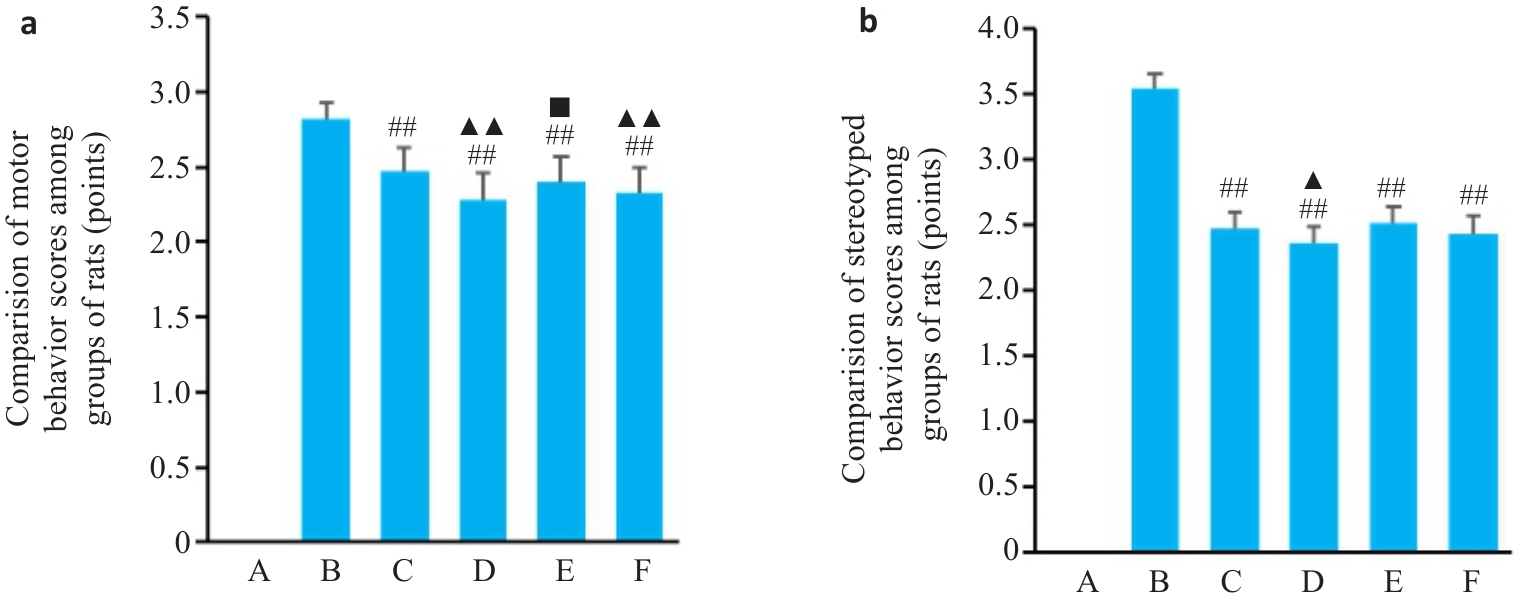
Fig1 Tic behavior scores of the rats in each group on day 28 (Mean±SD, n=8). a: motor behavior scores on day 28. b: Stereotyped behavior scores on day 28. A: Blank group; B: Model group; C: Tiapride group; D: VOA group; E: TAK-242 group; F: VOA+TAK-242 group. ##P<0.01 vs B group, ▲P<0.05, ▲▲P<0.01 vs C group, ■P<0.05 vs D group.
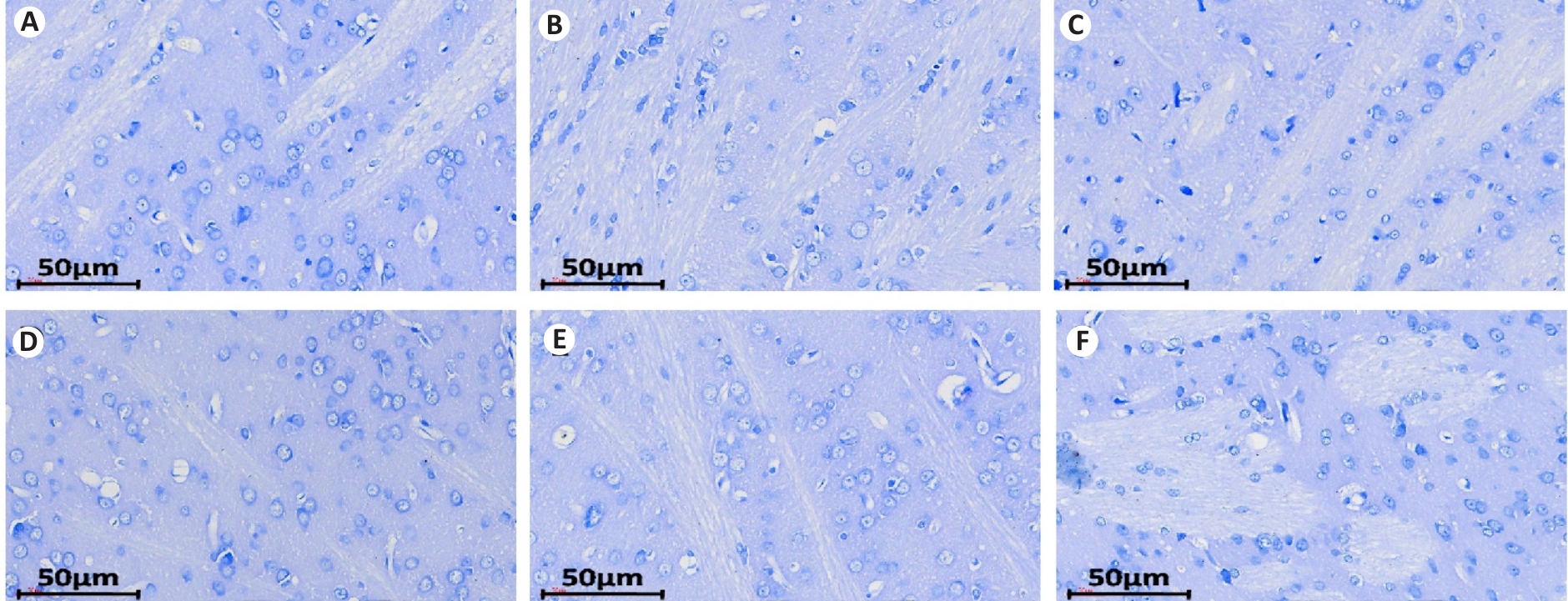
Fig.2 Nissl staining of the striatum of the rats in each group (Original magnification: ×200). A: Blank group; B: Model group; C: Tiapride group; D: VOA group; E: TAK-242 group; F: VOA+TAK-242 group.
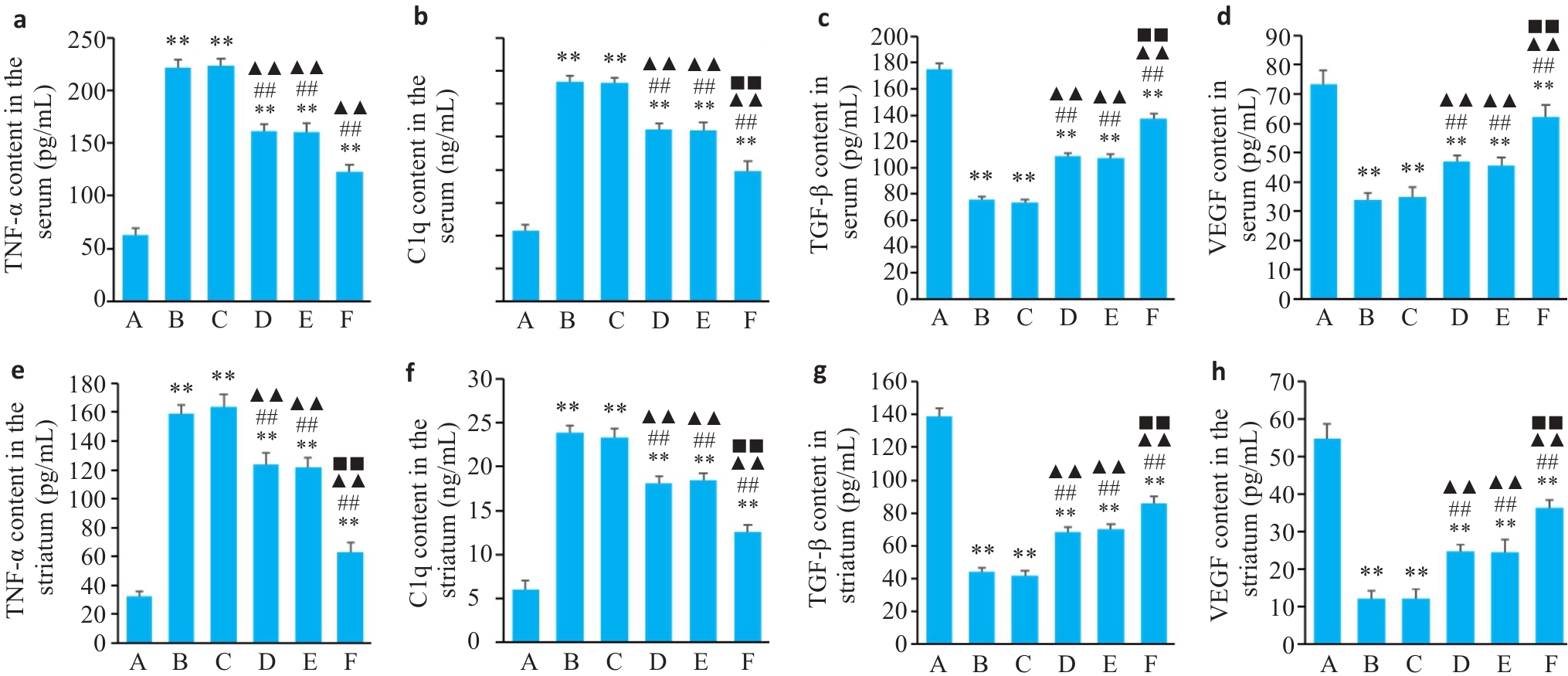
Fig.3 Levels of TNF-α (a, e), C1q (b, f), TGF-β (c, g) and VEGF (d, h) in the serum and striatum of the rats in different groups (Mean±SD, n=3). A: Blank group; B: Model group; C: Tiapride group; D: VOA group; E: TAK-242 group; F: VOA+TAK-242 group. **P<0.01 vs A group; ##P<0.01 vs B group; ▲▲P<0.01 vs C group; ■■P<0.01 vs D group.
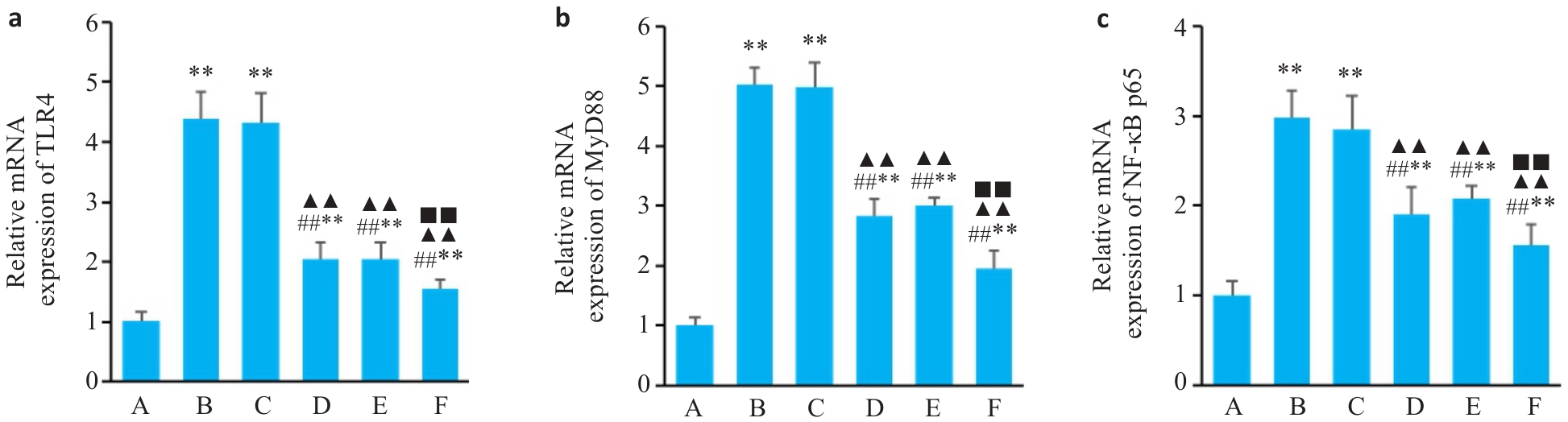
Fig.4 Relative expressions of TLR4 (a), NF-κB p65 (b) and MyD88 (c) mRNA in the striatum of the rats in each group. A: Blank group; B: Model group; C: Tiapride group; D: VOA group; E: TAK-242 group; F: VOA+TAK-242 group. n=3.**P<0.01 vs A group; ##P<0.01 vs B group; ▲▲P<0.01 vs C group; ■■P<0.01 vs D group.
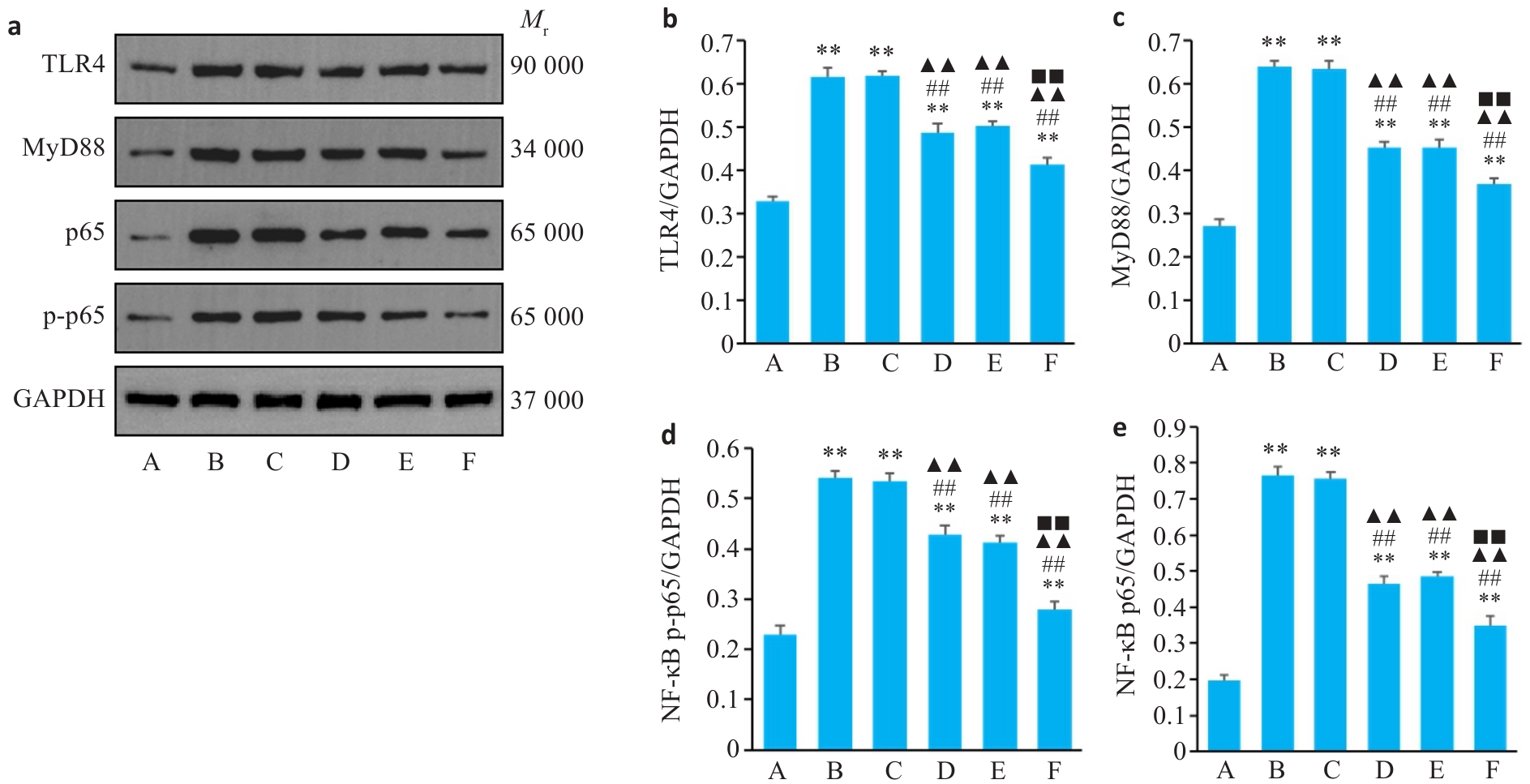
Fig.5 Relative expression of TLR4, MyD88, NF-κB p65 and p-NF-κB p65 proteins in the striatum of the rats in each group detected by Western blotting. a: Results of Western blotting of the proteins. b-e: Relative expressions of TLR4, MyD88, NF-κB p65 and p-NF-κB p65 proteins. A: Blank group; B: Model group; C: Tiapride group; D: VOA group; E: TAK-242 group; F: VOA+TAK-242 group. n=3. **P<0.01 vs A group; ##P<0.01 vs B group; ▲▲P<0.01 vs C group; ■■P<0.01 vs D group.
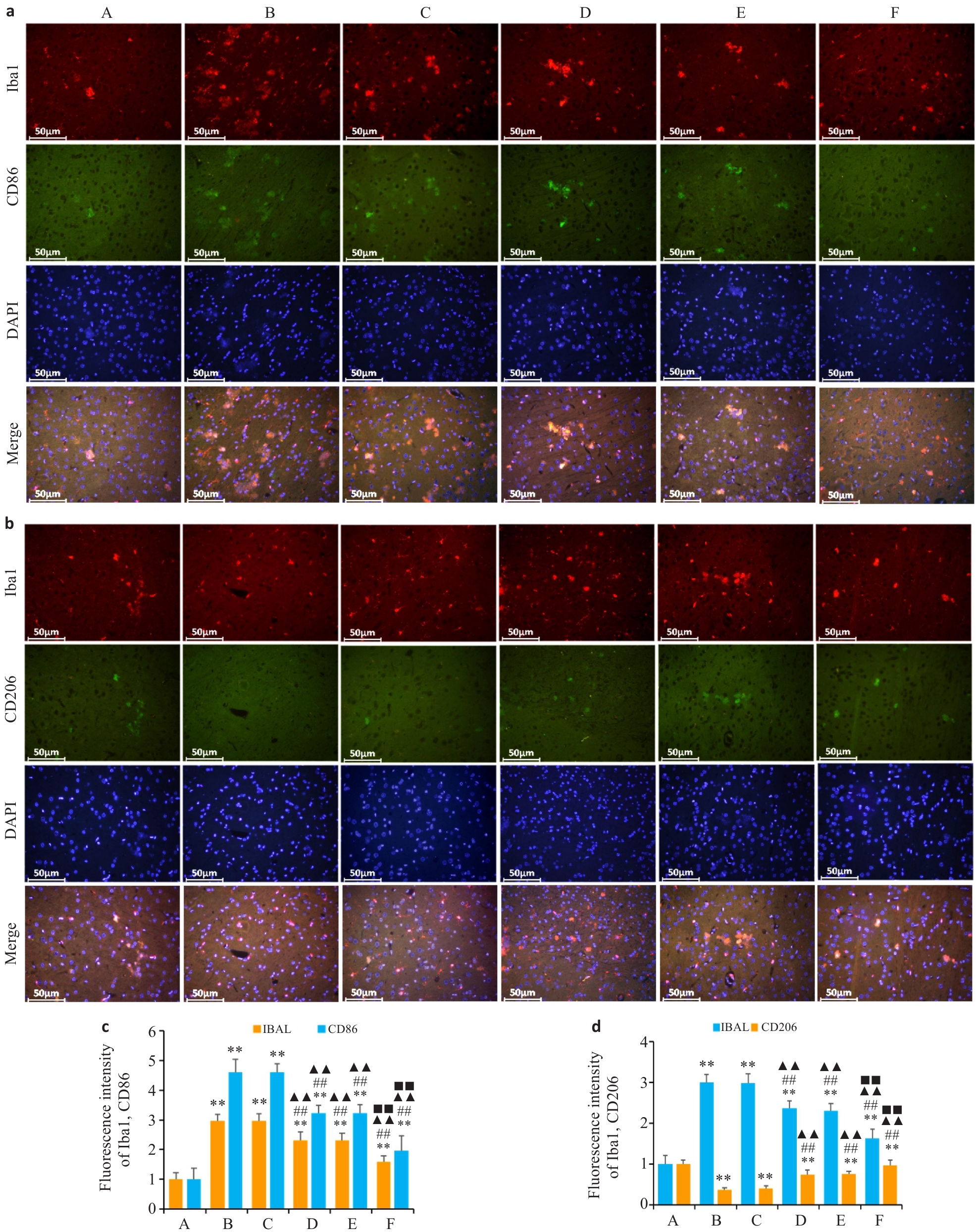
Fig.7 Expression of microglial activation and polarization markers in the striatum in each group. a: Immuneofluorescence staining for Iba-1 (red), CD86 (green) and DAPI (blue). b: Immuneofluorescence staining for Iba-1 (red), CD206 (green) and DAPI (blue). c, d: Fluorescence intensity of Iba-1 and CD86. d: Fluorescence intensity of Iba-1 and CD206. n=3. **P<0.01 vs A group,##P<0.01 vs B group, ▲▲P<0.01 vs C group, ■■P<0.01 vs D group.
| [1] | Halvorsen MW. Tourette syndrome and chronic tic disorders[J]. Psychiatr Clin North Am, 2025, 48(2): 281-92. doi:10.1016/j.psc.2025.01.006 |
| [2] | Bai L, Jin M, Zhang Q, et al. Progress in research on nutrition, neuroinflammation and dopaminergic alterations in Tic disorders[J]. Front Pediatr, 2025, 13: 1526117. doi:10.3389/fped.2025.1526117 |
| [3] | Wu XN, Hao JJ, Jiang KY, et al. Neuroinflammation and pathways that contribute to Tourette syndrome[J]. Ital J Pediatr, 2025, 51(1): 63. doi:10.1186/s13052-025-01874-3 |
| [4] | Wang YF, Fasching L, Wu FN, et al. Interneuron loss and microglia activation by transcriptome analyses in the basal Ganglia of tourette disorder[J]. Biol Psychiatry, 2025, 98(3): 260-70. doi:10.1016/j.biopsych.2024.12.022 |
| [5] | Fang Q, Cai YH, Yang YT, et al. Curcumin attenuated neuroinflammation via the TLR4/MyD88/NF‑κB signaling way in the juvenile rat hippocampus following kainic acid-induced epileptic seizures[J]. Metab Brain Dis, 2024, 39(7): 1387-403. doi:10.1007/s11011-024-01401-z |
| [6] | 栾文燕. 菖蒲郁金汤加减治疗痰火扰神型儿童抽动障碍的临床观察[D]. 兰州: 甘肃中医药大学, 2024. |
| [7] | Chen L, Li JX, Zhang WH, et al. Antiepileptic effects of Acorus tatarinowii schott in a rat model of epilepsy: regulation of metabolic axes and gut microbiota[J]. Biology (Basel), 2025, 14(5): 488. doi:10.3390/biology14050488 |
| [8] | Huang JH, Xu ZW, Yu CS, et al. The volatile oil of Acorus tatarinowii Schott ameliorates Alzheimer's disease through improving insulin resistance via activating the PI3K/AKT pathway[J]. Phytomedicine, 2024, 135: 156168. doi:10.1016/j.phymed.2024.156168 |
| [9] | Feng P, Chen YH, Sun KX, et al. Volatile oil from Acori graminei Rhizoma affected the synaptic plasticity of rats with tic disorders by modulating dopaminergic and glutamatergic systems[J]. J Ethnopharmacol, 2024, 335: 118676. doi:10.1016/j.jep.2024.118676 |
| [10] | 丁艳琴, 冯 鹏, 王明露, 等. 石菖蒲挥发油对抽动障碍大鼠CX3CL1/CX3CR1信号轴及神经炎症的影响[J]. 中成药, 2025, 47(6): 1825-33. |
| [11] | 中华人民共和国药典:四部 [S]. 2020: 233. |
| [12] | Al Kadasah S, Al Mutairy A, Siddiquei M, et al. Pentoxifylline attenuates iminodipropionitrile-induced behavioral abnormalities in rats[J]. Behav Pharmacol, 2009, 20(4): 356-60. doi:10.1097/fbp.0b013e32832ec5ea |
| [13] | Dong JB, Liao Y, Wu BH. TAK-242 ameliorates epileptic symptoms in mice by inhibiting the TLR4/NF‑κB signaling pathway[J]. Ann Transl Med, 2022, 10(14): 795. doi:10.21037/atm-22-2707 |
| [14] | Johnson KA, Worbe Y, Foote KD, et al. Tourette syndrome: clinical features, pathophysiology, and treatment[J]. Lancet Neurol, 2023, 22(2): 147-58. doi:10.1016/s1474-4422(22)00303-9 |
| [15] | Chi S, Mok YE, Kang JE, et al. Cytokine levels reflect tic symptoms more prominently during mild phases[J]. BMC Neurosci, 2023, 24(1): 57. doi:10.1186/s12868-023-00830-3 |
| [16] | You HZ, Zhang J, Du YN, et al. Association of elevated plasma CCL5 levels with high risk for tic disorders in children[J]. Front Pediatr, 2023, 11: 1126839. doi:10.3389/fped.2023.1126839 |
| [17] | Wang YF, Fasching L, Wu FN, et al. Interneuron loss and microglia activation by transcriptome analyses in the basal Ganglia of tourette disorder[J]. Biol Psychiatry, 2025, 98(3): 260-70. doi:10.1016/j.biopsych.2024.12.022 |
| [18] | Takahashi N, Kato H, Nawa Y, et al. The role of inflammation in the development of tic symptoms in subjects with ADHD[J]. Brain Behav Immun Health, 2025, 45: 100981. doi:10.1016/j.bbih.2025.100981 |
| [19] | Tsetsos F, Yu DM, Sul JH, et al. Synaptic processes and immune-related pathways implicated in Tourette syndrome[J]. Transl Psychiatry, 2021, 11(1): 56. |
| [20] | Matuleviciute R, Akinluyi ET, TAOMuntslag, et al. Microglial contribution to the pathology of neurodevelopmental disorders in humans[J]. Acta Neuropathol, 2023, 146(5): 663-83. doi:10.1007/s00401-023-02629-2 |
| [21] | Lukens JR, Eyo UB. Microglia and neurodevelopmental disorders[J]. Annu Rev Neurosci, 2022, 45: 425-45. doi:10.1146/annurev-neuro-110920-023056 |
| [22] | Guo SR, Wang H, Yin YF. Microglia polarization from M1 to M2 in neurodegenerative diseases[J]. Front Aging Neurosci, 2022, 14: 815347. doi:10.3389/fnagi.2022.815347 |
| [23] | Wang XM, Liu XM, Chen LL, et al. The inflammatory injury in the striatal microglia-dopaminergic-neuron crosstalk involved in Tourette syndrome development[J]. Front Immunol, 2023, 14: 1178113. doi:10.3389/fimmu.2023.1178113 |
| [24] | Wang XM, Liu XM, Chen LL, et al. The inflammatory injury in the striatal microglia-dopaminergic-neuron crosstalk involved in Tourette syndrome development[J]. Front Immunol, 2023, 14: 1178113. doi:10.3389/fimmu.2023.1178113 |
| [25] | Sun JF, Lu LP, Lian YT, et al. Sodium butyrate attenuates microglia-mediated neuroinflammation by modulating the TLR4/MyD88/NF-κB pathway and microbiome-gut-brain axis in cardiac arrest mice[J]. Mol Brain, 2025, 18(1): 13. doi:10.1186/s13041-025-01179-w |
| [26] | Liu XM, Wang XM, Cao AH, et al. Immune function changes of the IDPN-induced Tourette syndrome rat model[J]. Int J Dev Neurosci, 2021, 81(2): 159-66. doi:10.1002/jdn.10085 |
| [27] | Tian MY, Huang JY, Xiao HR, et al. Characterization of 3, 3'-iminodipropionitrile (IDPN) damaged utricle transcriptome in the adult mouse utricle[J]. Front Mol Neurosci, 2024, 17: 1487364. doi:10.3389/fnmol.2024.1487364 |
| [28] | Huang JH, Xu ZW, Yu CS, et al. The volatile oil of Acorus tatarinowii Schott ameliorates Alzheimer's disease through improving insulin resistance via activating the PI3K/AKT pathway[J]. Phytomedicine, 2024, 135: 156168. doi:10.1016/j.phymed.2024.156168 |
| [29] | Chen L, Li JX, Zhang WH, et al. Antiepileptic effects of Acorus tatarinowii schott in a rat model of epilepsy: regulation of metabolic axes and gut microbiota[J]. Biology (Basel), 2025, 14(5): 488. doi:10.3390/biology14050488 |
| [30] | Liu XM, Wang XM, Cao AH, et al. Immune function changes of the IDPN-induced Tourette syndrome rat model[J]. Int J Dev Neurosci, 2021, 81(2): 159-66. doi:10.1002/jdn.10085 |
| [31] | Yin C, Zhang MY, Cheng L, et al. Melatonin modulates TLR4/MyD88/NF‑κB signaling pathway to ameliorate cognitive impairment in sleep-deprived rats[J]. Front Pharmacol, 2024, 15: 1430599. doi:10.3389/fphar.2024.1430599 |
| [32] | Borst K, Dumas AA, Prinz M. Microglia: immune and non-immune functions[J]. Immunity, 2021, 54(10): 2194-208. doi:10.1016/j.immuni.2021.09.014 |
| [33] | 桂建军, 孙晓东, 温 舒, 等. 白藜芦醇对帕金森病模型小鼠多巴胺能神经元的保护作用: 基于抑制TLR4/MyD88/NF-κB通路[J]. 南方医科大学学报, 2024, 44(2): 270-9. doi:10.12122/j.issn.1673-4254.2024.02.09 |
| [34] | 赵梦洁, 赵 琼, 杨翠玲, 等. 加味泻黄散对抽动障碍大鼠小胶质细胞极化及TLR4/MyD88/NF-κB通路的影响[J]. 中国实验方剂学杂志, 2025, 31(4): 10-8. |
| [1] | Jinzhi XIA, Yue CHEN, Lü REN, Jing LI, Xue SONG, Lu TAO, Jianguo HU. Kahweol improves motor function of mice with spinal cord injury by inhibiting microglial activation via regulating the IκBα/NF-κB pathway [J]. Journal of Southern Medical University, 2025, 45(12): 2561-2572. |
| [2] | Yiming SUN, Xinran XU, Xuerui ZHUO, Hui CAI, Yan WANG. C1q-neutralizing antibodies improves postpartum depressive-like behaviors in mice by regulating the C1q/C3 pathway [J]. Journal of Southern Medical University, 2025, 45(10): 2111-2117. |
| [3] | Hanjun ZUO, Zhaoda DUAN, Zhao WANG, Tao GUO, Jinsha SHI, Haolong SHI, Juanjuan LI. Gastrodin improves microglia-mediated inflammatory response after hypoxic-ischemic brain damage in neonatal rats via PI3K/AKT pathway [J]. Journal of Southern Medical University, 2024, 44(9): 1712-1719. |
| [4] | Jinsha SHI, Haonan ZHANG, Xinglin ZHANG, Haolong SHI, Hanjun ZUO, Tao GUO, Zhao WANG, Hang YU, Juanjuan LI. Gastrodin alleviates microglia-mediated inflammatory responses in neonatal mice with hypoxic-ischemic brain damage by regulating CCR5/AKT signaling [J]. Journal of Southern Medical University, 2024, 44(10): 1850-1857. |
| [5] | SUN Xiaopeng, SHI Hang, ZHANG Lei, LIU Zhong, LI Kewei, QIAN Lingling, ZHU Xingyu, YANG Kangjia, FU Qiang, DING Hua. Exosomes from ectoderm mesenchymal stem cells inhibits lipopolysaccharide-induced microglial M1 polarization and promotes survival of H2O2-exposed PC12 cells by suppressing inflammatory response and oxidative stress [J]. Journal of Southern Medical University, 2024, 44(1): 119-128. |
| [6] | SUN Yang, XU Yibo, XIAO Linyu, ZHU Guoqing, LI Jing, SONG Xue, XU Lei, HU Jianguo. Acetylcorynoline inhibits microglia activation by regulating EGFR/MAPK signaling to promote functional recovery of injured mouse spinal cord [J]. Journal of Southern Medical University, 2023, 43(6): 915-923. |
| [7] | ZHANG Jiafa, YANG Canhong, ZHANG Shufen, CAO Tingting, PENG Rui, GUO Weihong, YAN Yuping, XIE Shuting, PENG Xiaojia, LÜ Tianming, HUANG Tianrong. Sulforaphane reverses Aβ fiber-mediated M1 type microglia polarization and neuroinflammation-mediated necroptosis of neural stem cells by downregulating the MAPK/NF-κB signaling pathways [J]. Journal of Southern Medical University, 2023, 43(12): 2132-2138. |
| [8] | CHEN Lixuan, HUANG Dingbang, ZHENG Gang, MENG Xiaojing. Lead exposure aggravates Aβ1-42-induced microglial activation and copper ion accumulation in microglial cells [J]. Journal of Southern Medical University, 2023, 43(10): 1752-1760. |
| [9] | ZHAO Jiajia, YANG Heyu, WANG Zhaodi, ZHU Haili, XIE Min. ANA- 12 inhibits spinal inflammation and alleviates acute and chronic pain in rats by targeted blocking of BDNF/TrkB signaling [J]. Journal of Southern Medical University, 2022, 42(2): 232-237. |
| [10] | . Macrophage migration inhibitory factor meditates MPP+/MPTP-induced NLRP3 inflammasome activation in microglia cells [J]. Journal of Southern Medical University, 2021, 41(7): 972-979. |
| [11] | . Lipopolysaccharide sensitizes neonatal mice to hyperoxia-induced immature brain injury [J]. Journal of Southern Medical University, 2014, 34(02): 214-. |
| [12] | . [J]. Journal of Southern Medical University, 2013, 33(04): 463-. |
| [13] | LI Rui, PENG Ning, DU Fang, LI Xu-ping, LE Wei-dong Department of Neurology, People’s Hospital of Shaanxi Province, Xi’an 710068, China; Health Science Center, Shanghai Institute for Biological Science, Chinese Academy of Science, Shanghai 200025, China. Epigallocatechin gallate protects dopaminergic neurons against 1-methyl-4-phenyl-1,2,3,6-tetrahydropyridine-induced neurotoxicity by inhibiting microglial cell activation [J]. Journal of Southern Medical University, 2006, 26(04): 376-380. |
| [14] | ZOU Xi-feng1, ZHANG Hai-yan2, ZHAO Chun-li2, LI Tie-lin1, XU Qun-yuan2. Differentiation of bone marrow-derived stem cells in injured rat brain tissue [J]. Journal of Southern Medical University, 2004, 24(10): 1102-1106. |
| Viewed | ||||||
|
Full text |
|
|||||
|
Abstract |
|
|||||
