
Journal of Southern Medical University ›› 2026, Vol. 46 ›› Issue (3): 523-531.doi: 10.12122/j.issn.1673-4254.2026.03.06
Zhiqing LIANG1,3( ), Fuzhen PAN2,4, Liqiang DENG4, Zhefen MAI4, Yun MA2, Chuanjian SHI2,4(), Weiming FU1,3()
Received:2025-09-11
Online:2026-03-20
Published:2026-03-26
Contact:
Chuanjian SHI, Weiming FU
E-mail:liangzqing2025@163.com;shichuanjian2018@163.com;fuweiming76@smu.edu.cn
Supported by:Zhiqing LIANG, Fuzhen PAN, Liqiang DENG, Zhefen MAI, Yun MA, Chuanjian SHI, Weiming FU. Shengmai San improves osimertinib resistance of non-small cell lung cancer cells by regulating the lactate/Wnt/β-catenin/LDHA pathway[J]. Journal of Southern Medical University, 2026, 46(3): 523-531.
Add to citation manager EndNote|Ris|BibTeX
URL: https://www.j-smu.com/EN/10.12122/j.issn.1673-4254.2026.03.06
| Gene name | Sequence (5' to 3') | |
|---|---|---|
| β-actin | Forward | GTCATTCCAAATATGAGATGCGT |
| Reverse | GCTATCACCTCCCCTGTGTG | |
| c-Myc | Forward | TTCGGGTAGTGGAAAACCAG |
| Reverse | CAGCAGCTCGAATTTCTTCC | |
| CD44 | Forward | TCAGAGGAGTAGGAGAGAGGAAAC |
| Reverse | GAAAAGTCAAAGTAACAATAACAGTGG | |
| Axin-2 | Forward | GGATCGCTCCTCTTGAAGGA |
| Reverse | CTTTCGCCAACCGTGGTT | |
| Survivin | Forward | CCACCGCATCTCTACATTCAAG |
| Reverse | CAAGTCTGGCTCGTTCTCAGTG | |
| Oct3/4 | Forward | TCGAGAACCGAGTGAGAGGC |
| Reverse | CACACTCGGACCACATCCTTC | |
| Cyclin D1 | Forward | CTGGAGGTCTGCGAGGAACA |
| Reverse | CCTTCATCTTAGAGGCCACGAA | |
| LDHA | Forward | ATGGCAACTCTAAAGGATCAGC |
| Reverse | CCAACCCCAACAACTGTAATCT |
Tab.1 Primer sequence for RT-qPCR
| Gene name | Sequence (5' to 3') | |
|---|---|---|
| β-actin | Forward | GTCATTCCAAATATGAGATGCGT |
| Reverse | GCTATCACCTCCCCTGTGTG | |
| c-Myc | Forward | TTCGGGTAGTGGAAAACCAG |
| Reverse | CAGCAGCTCGAATTTCTTCC | |
| CD44 | Forward | TCAGAGGAGTAGGAGAGAGGAAAC |
| Reverse | GAAAAGTCAAAGTAACAATAACAGTGG | |
| Axin-2 | Forward | GGATCGCTCCTCTTGAAGGA |
| Reverse | CTTTCGCCAACCGTGGTT | |
| Survivin | Forward | CCACCGCATCTCTACATTCAAG |
| Reverse | CAAGTCTGGCTCGTTCTCAGTG | |
| Oct3/4 | Forward | TCGAGAACCGAGTGAGAGGC |
| Reverse | CACACTCGGACCACATCCTTC | |
| Cyclin D1 | Forward | CTGGAGGTCTGCGAGGAACA |
| Reverse | CCTTCATCTTAGAGGCCACGAA | |
| LDHA | Forward | ATGGCAACTCTAAAGGATCAGC |
| Reverse | CCAACCCCAACAACTGTAATCT |
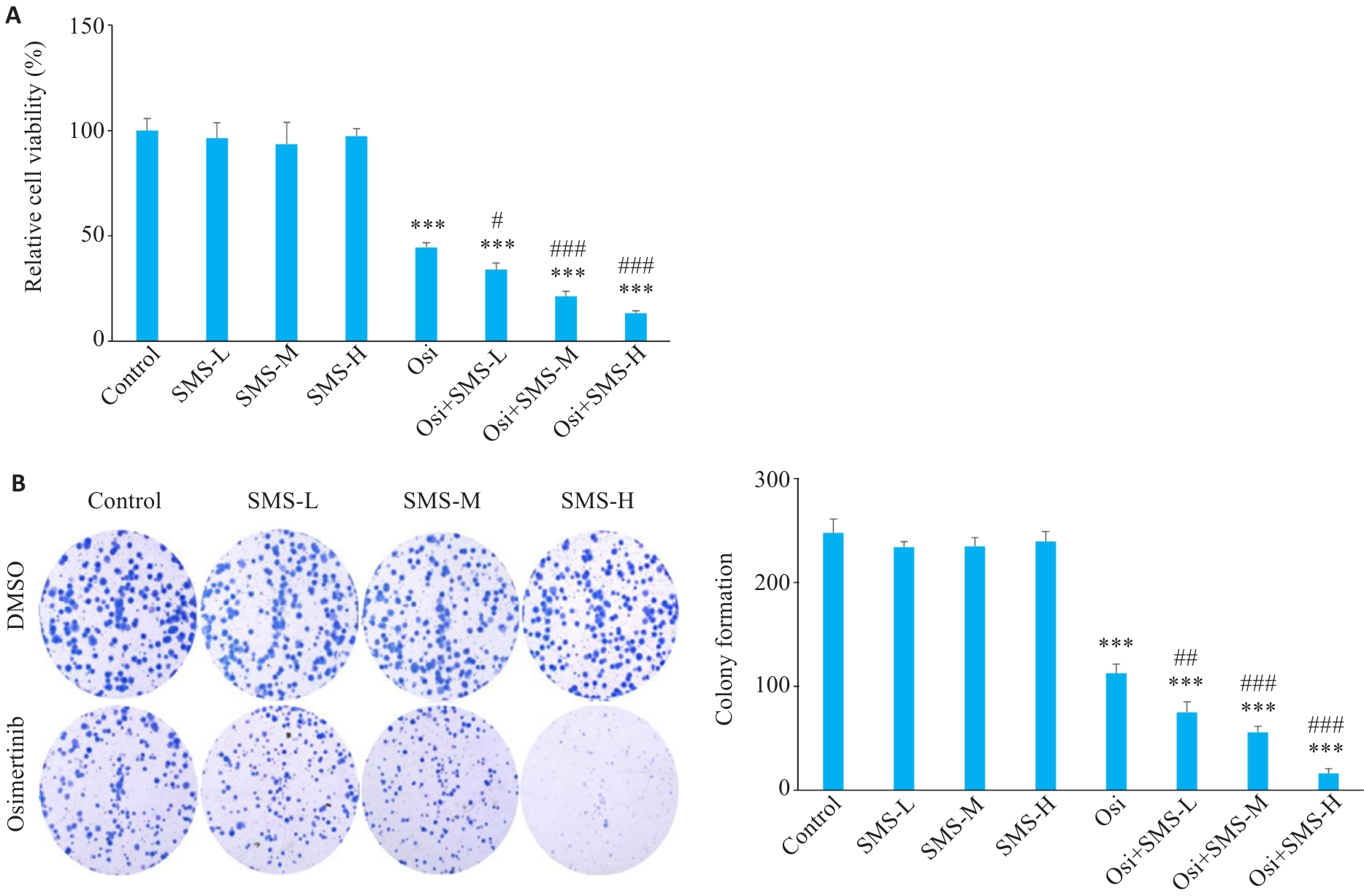
Fig.1 Viability and colony-forming ability of A549 cells with different treatments (Mean±SD, n=3). A: Viability of A549 cells treated with SMS, osimertinib, or osimertinib combined with various concentrations of SMS. B: Colony formation of A549 cells and quantitative analysis. ***P<0.001 vs Control group; #P<0.05, ##P<0.01, ###P<0.001 vs Osi group. SMS-L: SMS low-dose group; SMS-M: SMS medium-dose group; SMS-H: SMS high-dose group; Osi: Osimertinib group.
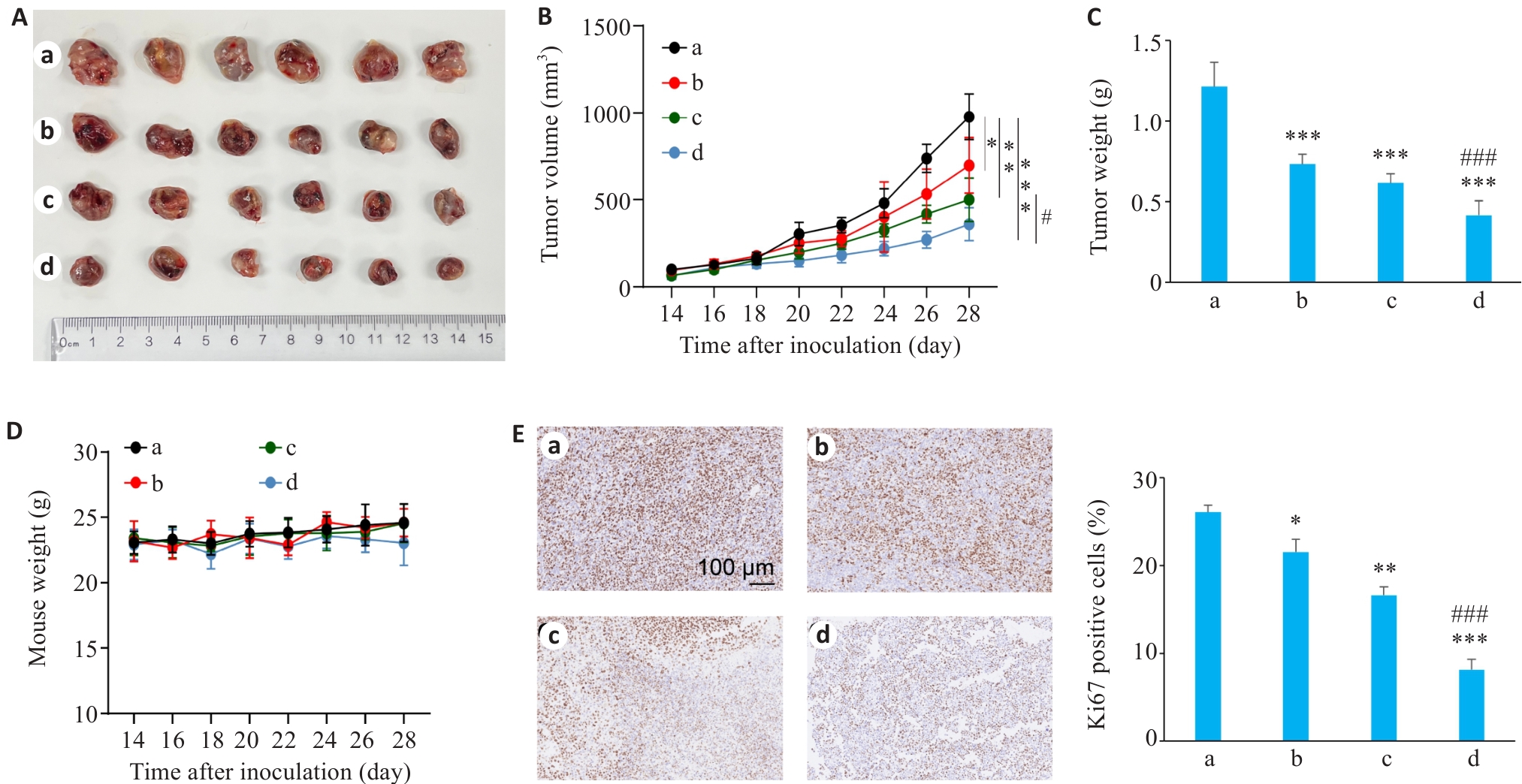
Fig.2 Assessment of xenograft growth in nude mice (Mean±SD, n=3). A-C: Representative images of xenograft tumors, growth curve and tumor weight in the tumor-bearing C57BL/6 mice in the 4 treatment groups. D: Changes in body weight of the mice in the 4 treatment groups. E: Immunohistochemistry for Ki67 in the tumor tissues in the 4 groups. *P<0.05, **P<0.01, ***P<0.001 vs Control group; #P<0.05, ###P<0.001 vs Osi group. a: Control group; b: SMS Medium-dose group; c: Osimertinib monotherapy group; d: SMS medium-dose combined with osimertinib group.
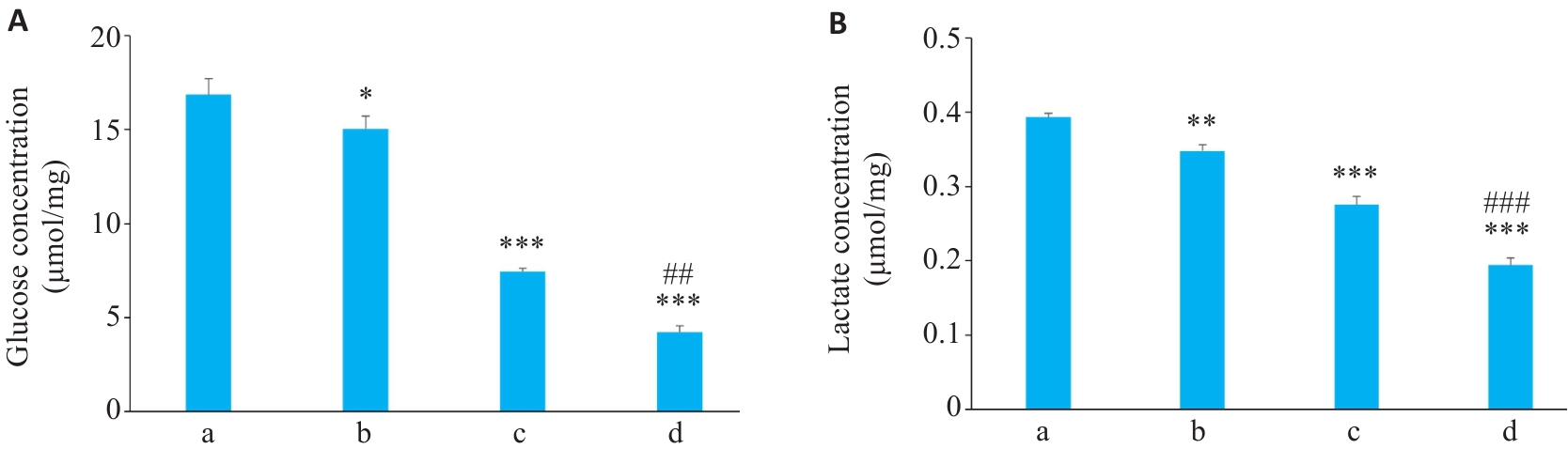
Fig.3 Glucose (A) and lactate (B) concentrations A549 cells in each group (Mean±SD, n=3). *P<0.05, **P<0.01, ***P<0.001 vs Control group; ##P<0.01, ###P<0.001 vs Osi group. a: Control group; b: SMS Medium-dose group; c: Osimertinib monotherapy group; d: SMS medium-dose combined with osimertinib group.
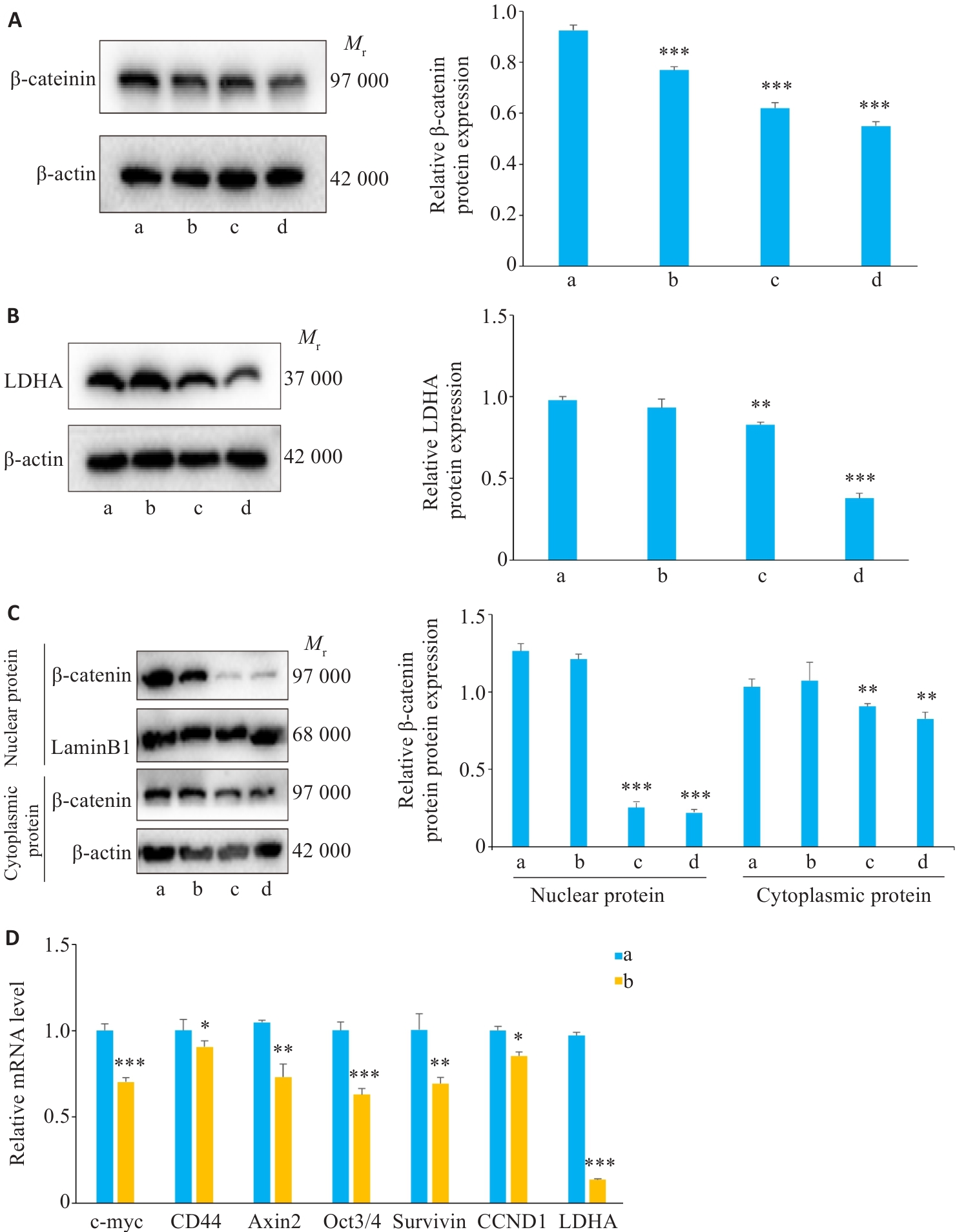
Fig.4 Protein and mRNA expressions of the Wnt/β-catenin/LDHA signaling pathway in A549 cells in different groups (Mean±SD, n=3). A, B: Western blotting of β-catenin and LDHA expression levels in A549 cells. C: Western blotting of β-catenin expression and quantitative analysis its cytoplasmic and nuclear fractions. D: mRNA expressions of Wnt/β-catenin pathway genes detected by by RT-qPCR. *P<0.05, **P<0.01,***P<0.001 vs Control group. a: Control group; b: SMS Medium-dose group; c: Osimertinib monotherapy group; d: SMS medium-dose combined with osimertinib group.
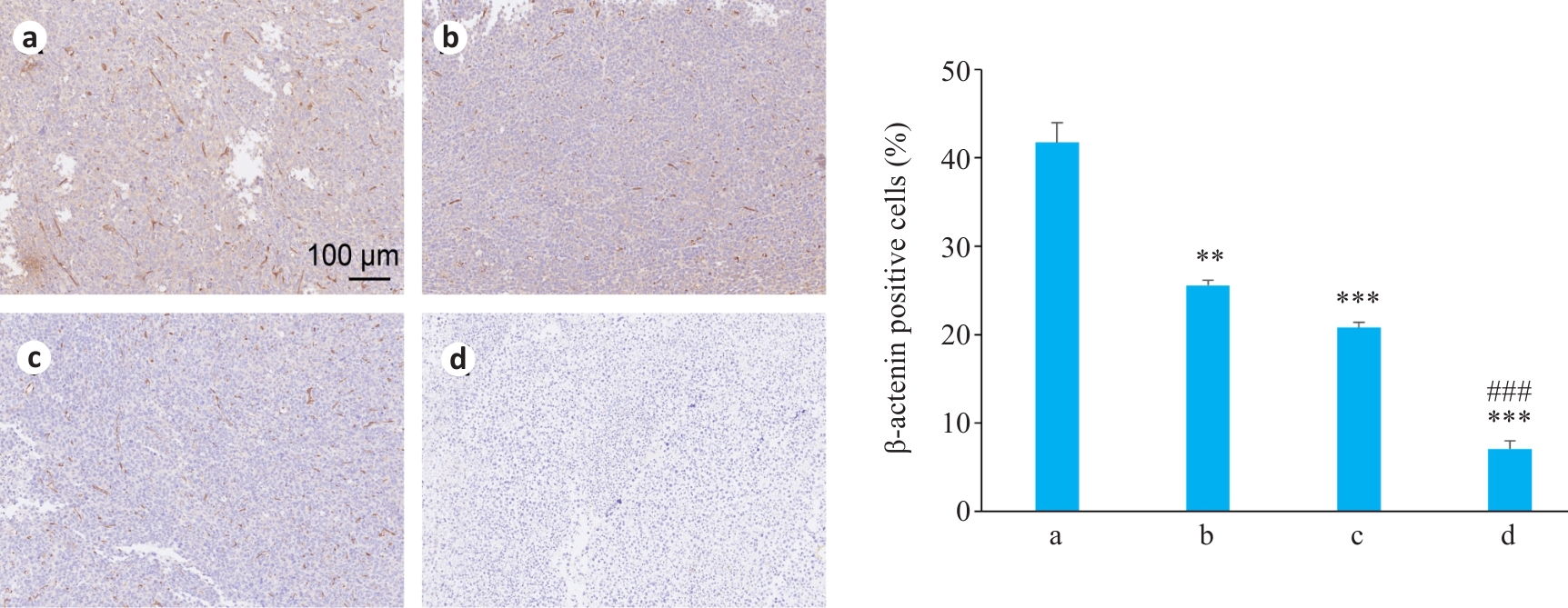
Fig.5 Immunohistochemistry of β-catenin protein expression in the tumor tissues in different groups (Mean±SD, n=3). **P<0.01, ***P<0.001 vs Control group;###P<0.001 vs Osimertinib group. a: Control group; b: SMS Medium-dose group; c: Osimertinib monotherapy group; d: SMS medium-dose combined with osimertinib group.
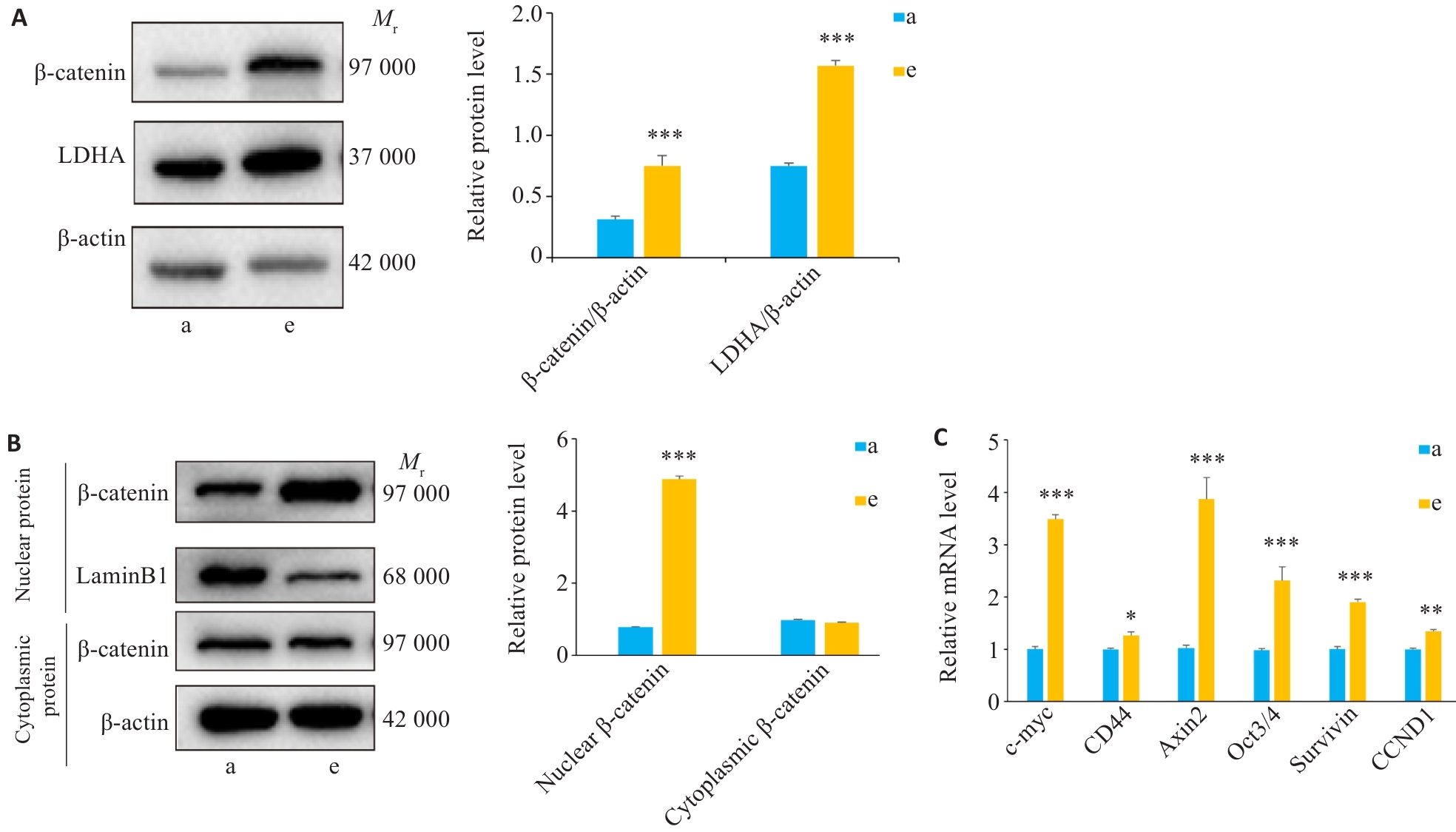
Fig.6 Expression of Wnt/β-catenin/LDHA pathway components in A549 cells with different treatments (Mean±SD, n=3). A: Western blotting of β‑catenin and LDHA expression in control and 10 mmol/L lactate-treated cells. B: Western blotting of cytoplasmic and nuclear fractions of β‑catenin in control and 10 mmol/L lactate-treated cells. C: mRNA expression of Wnt/β-catenin downstream targets detected by RT-qPCR. *P<0.05, **P<0.01, ***P<0.001 vs Control group. a: Control group; e: 10 mmol/L lactate treatment group.
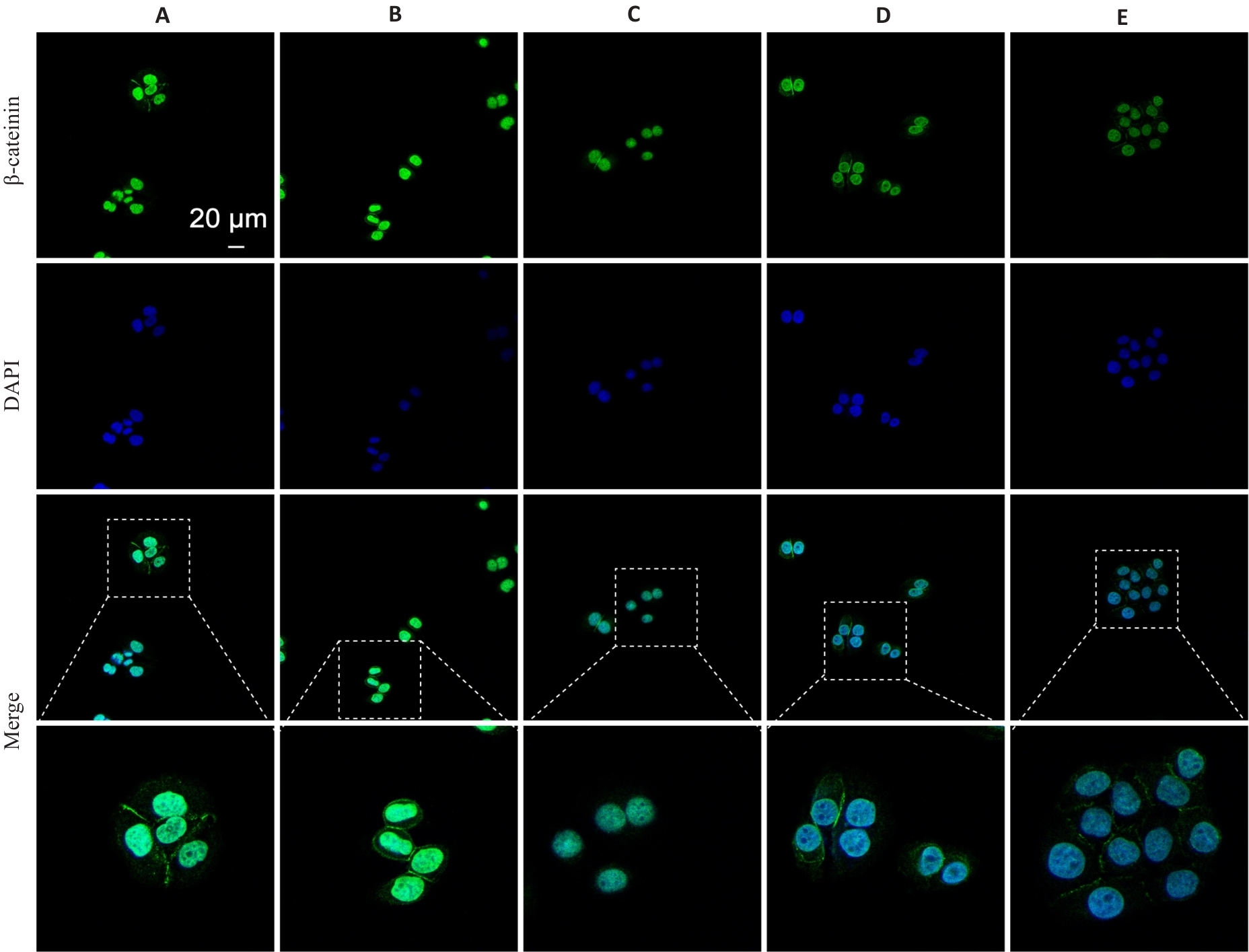
Fig.7 Immunofluorescence staining for detecting β-catenin expression in A549 cells. A: Control group; B: SMS-Medium-dose group; C: Osimertinib monotherapy group; D: SMS medium-dose combined with osimertinib group; E: 10 mmol/L lactate treatment group.
| [1] | Zhao DF, Li WZ, Li WY. Screening for lung cancer, overdiagnosis, and health care utilization: a nationwide population-based study[J]. J Thorac Oncol, 2025, 20(10): e114-5. doi:10.1016/j.jtho.2025.06.003 |
| [2] | Huang JL, Zhang XK, Zhang H, et al. Addressing clinical limitations of glutaminase inhibitors: novel strategies for osimertinib-resistant lung cancer by exploiting glutamine metabolic dependency[J]. Adv Sci (Weinh), 2025, 12(6): e2411479. doi:10.1002/advs.202411479 |
| [3] | Blaquier JB, Ortiz-Cuaran S, Ricciuti B, et al. Tackling osimertinib resistance in EGFR-mutant non-small cell lung cancer[J]. Clin Cancer Res, 2023, 29(18): 3579-91. doi:10.1158/1078-0432.ccr-22-1912 |
| [4] | Zhou Y, Huang SQ, Guo YZ, et al. Epigallocatechin gallate circumvents drug-induced resistance in non-small-cell lung cancer by modulating glucose metabolism and AMPK/AKT/MAPK axis[J]. Phytother Res, 2023, 37(12): 5837-53. doi:10.1002/ptr.7990 |
| [5] | Vallée A, Lecarpentier Y, Vallée JN. The key role of the WNT/ β‑catenin pathway in metabolic reprogramming in cancers under normoxic conditions[J]. Cancers (Basel), 2021, 13(21): 5557. doi:10.3390/cancers13215557 |
| [6] | Miao Z, Zhao XM, Liu X. Hypoxia induced β‑catenin lactylation promotes the cell proliferation and stemness of colorectal cancer through the Wnt signaling pathway[J]. Exp Cell Res, 2023, 422(1): 113439. doi:10.1016/j.yexcr.2022.113439 |
| [7] | 磨 炼, 慕晓艳, 李和根. 中药改善非小细胞肺癌患者EGFR-TKIs获得性耐药研究现状及其中医病机探析[J]. 上海中医药杂志, 2023, 57(4): 24-8. doi:10.16305/j.1007-1334.2023.2204044 |
| [8] | 郭禹航, 陈 虎, 苏 钊, 等. 肺癌的中医病机、防治及治法探析: 从六经辨证角度[J]. 亚太传统医药, 2024, 20(11): 199-203. doi:10.11954/ytctyy.202411039 |
| [9] | 吕承启, 牛蔚露, 刘学伟,等. 经典名方生脉散的古籍文献考证与现代临床应用[J].中国实验方剂学杂志,2025,31(22):223-34. |
| [10] | 孙永康,高宏,郑凯.基于“气血津液”理论探讨生脉散在治疗肺癌化疗后气阴两虚证中的作用[J].实用中医内科杂志,2025,39(07):112-5. |
| [11] | Fu K, Xie FC, Wang F, et al. Therapeutic strategies for EGFR-mutated non-small cell lung cancer patients with osimertinib resistance[J]. J Hematol Oncol, 2022, 15(1): 173. doi:10.1186/s13045-022-01391-4 |
| [12] | 赵齐林, 王 楠, 李亚霁, 等. Lnc-TMEM132D-AS1高表达明显降低非小细胞肺癌对奥希替尼的敏感性[J]. 南方医科大学学报, 2023, 43(2): 242-50. doi:10.12122/j.issn.1673-4254.2023.02.12 |
| [13] | 桑舒柳, 姜靖洁, 龚亚斌. 中医药联合EGFR-TKIs治疗NSCLC耐药的分子机制及研究进展[J]. 江西中医药, 2023, 54(11): 80-4. |
| [14] | 李 焕, 贾 妮. 论生脉散研究进展[J]. 辽宁中医药大学学报, 2020, 22(10): 190-3. |
| [15] | Sun MM, Li LL, Niu YJ, et al. PRMT6 promotes tumorigenicity and cisplatin response of lung cancer through triggering 6PGD/ENO1 mediated cell metabolism[J]. Acta Pharm Sin B, 2023, 13(1): 157-73. doi:10.1016/j.apsb.2022.05.019 |
| [16] | Wang S, Zhou LY, Ji N, et al. Targeting ACYP1-mediated glycolysis reverses lenvatinib resistance and restricts hepatocellular carcinoma progression[J]. Drug Resist Updat, 2023, 69: 100976. doi:10.1016/j.drup.2023.100976 |
| [17] | Cang S, Liu R, Jin W, et al. Integrated DIA proteomics and lipidomics analysis on non-small cell lung cancer patients with TCM syndromes[J]. Chin Med, 2021, 16(1): 126. doi:10.1186/s13020-021-00535-x |
| [18] | 王 敏, 王 媛, 孙 静, 等. 人参养荣汤对Lewis肺癌糖酵解途径相关酶LDH-A、HK2基因表达的影响[J]. 辽宁中医杂志, 2022, 49(1): 180-4. doi:10.13192/j.issn.1000-1719.2022.01.051 |
| [19] | 文艳萍, 姜 怡, 沈丽萍, 等. 基于有氧糖酵解探讨加味四君子汤合沙参麦冬汤提高EGFR-TKI耐药肺腺癌细胞顺铂敏感性的作用机制[J]. 中国实验方剂学杂志, 2025, 31(1): 39-46. |
| [20] | 余 功, 陈江涛, 胡 桥, 等. 清燥救肺汤对荷Lewis小鼠肺癌细胞糖酵解关键限速酶HK2, PFK2, PKM2的影响[J]. 中国实验方剂学杂志, 2020, 26(4): 54-8. doi:10.13422/j.cnki.syfjx.20191325 |
| [21] | Pachimatla AG, Fenstermaker R, Ciesielski M, et al. Survivin in lung cancer: a potential target for therapy and prevention-a narrative review[J]. Transl Lung Cancer Res, 2024, 13(2): 362-74. doi:10.21037/tlcr-23-621 |
| [22] | Ando T, Yamasaki J, Saya H, et al. CD44: a key regulator of iron metabolism, redox balance, and therapeutic resistance in cancer stem cells[J]. Stem Cells, 2025, 43(6): sxaf024. doi:10.1093/stmcls/sxaf024 |
| [23] | Lee H, Kim B, Park J, et al. Cancer stem cells: landscape, challenges and emerging therapeutic innovations[J]. Signal Transduct Target Ther, 2025, 10(1): 248. doi:10.1038/s41392-025-02360-2 |
| [24] | Zhang ZX, Westover D, Tang ZT, et al. Wnt/β‑catenin signaling in the development and therapeutic resistance of non-small cell lung cancer[J]. J Transl Med, 2024, 22(1): 565. doi:10.1186/s12967-024-05380-8 |
| [25] | Liu JQ, Xiao Q, Xiao JN, et al. Wnt/β-catenin signalling: function, biological mechanisms, and therapeutic opportunities[J]. Signal Transduct Target Ther, 2022, 7(1): 3. doi:10.1038/s41392-021-00762-6 |
| [26] | Wang MY, Zhou QL, Cao TP, et al. Lactate dehydrogenase A: a potential new target for tumor drug resistance intervention[J]. J Transl Med, 2025, 23(1): 713. doi:10.1186/s12967-025-06773-z |
| [27] | Chen ZZ, He QK, Lu TK, et al. mcPGK1-dependent mitochondrial import of PGK1 promotes metabolic reprogramming and self-renewal of liver TICs[J]. Nat Commun, 2023, 14(1): 1121. doi:10.1038/s41467-023-36651-5 |
| [28] | Li XL, Yang YY, Zhang B, et al. Lactate metabolism in human health and disease[J]. Signal Transduct Target Ther, 2022, 7(1): 305. doi:10.1038/s41392-022-01151-3 |
| [29] | Wu H, Yang JJ, Yang ZX, et al. Targeting the BCKDK/BCLAF1/MYC/HK2 axis to alter aerobic glycolysis and overcome Trametinib resistance in lung cancer[J]. Cell Death Differ, 2025, 32(12): 2210-24. doi:10.1038/s41418-025-01531-6 |
| [30] | Li J, Liu T, Zhao L, et al. Ginsenoside 20(S)‑Rg3 inhibits the Warburg effect through STAT3 pathways in ovarian cancer cells[J]. Int J Oncol, 2015, 46(2): 775-81. doi:10.3892/ijo.2014.2767 |
| [31] | He BC, Gao JL, Luo XJ, et al. Ginsenoside Rg3 inhibits colorectal tumor growth through the down-regulation of Wnt/ß-catenin signaling[J]. Int J Oncol, 2011, 38(2): 437-45. doi:10.3892/ijo.2010.858 |
| [32] | 白 晶. 麦冬皂苷B对人非小细胞肺癌A549裸鼠移植瘤糖酵解的抑制作用及机制研究[D]. 长春: 吉林大学, 2021. |
| [33] | Zhang SP, Li HX, Li LQ, et al. Ophiopogonin B inhibits migration and invasion in non-small cell lung cancer cells through enhancing the interaction between Axin and β‑catenin[J]. J Cancer, 2021, 12(20): 6274-84. doi:10.7150/jca.60066 |
| [34] | 王首星, 刘院刚, 温进平, 等. 五味子甲素调控miR-873-5p/G6PD轴对胃癌SGC-7901细胞活力、凋亡及有氧糖酵解的影响[J]. 中国中西医结合消化杂志, 2024, 32(7): 575-80, 585. |
| [1] | Qizhi HUANG, Daipeng XIE, Lintong YAO, Qiaxuan LI, Shaowei WU, Haiyu ZHOU. Tumor microenvironment-specific CT radiomics signature for predicting immunotherapy response in non-small cell lung cancer [J]. Journal of Southern Medical University, 2025, 45(9): 1903-1918. |
| [2] | Lijun HE, Xiaofei CHEN, Chenxin YAN, Lin SHI. Inhibitory effect of Fuzheng Huaji Decoction against non-small cell lung cancer cells in vitro and the possible molecular mechanism [J]. Journal of Southern Medical University, 2025, 45(6): 1143-1152. |
| [3] | Dandan LI, Jiaxin CHU, Yan YAN, Wenjun XU, Xingchun ZHU, Yun SUN, Haofeng DING, Li REN, Bo ZHU. Curcumin inhibits lipid metabolism in non-small cell lung cancer by downregulating the HIF-1α pathway [J]. Journal of Southern Medical University, 2025, 45(5): 1039-1046. |
| [4] | Changlong FU, Ruolan CHEN, Shiqi XU, Jinxin YOU, Qing LIN, Yanfeng HUANG. Morinda officinalis polysaccharide delays osteoarthritis mouse chondrocyte degeneration by modulating the glycolysis-pyroptosis axis via targeting the lncRNA XIST [J]. Journal of Southern Medical University, 2025, 45(12): 2541-2550. |
| [5] | Junjie CUI, Ruiyin LAI, Suheng CHEN, Shanshan QU, Yue LIAO, Xue MA, Yulan LI. Overwork damages myocardial energy metabolism homeostasis in mice [J]. Journal of Southern Medical University, 2025, 45(12): 2598-2606. |
| [6] | Hui LU, Bowen SONG, Jinran SHI, Shunyin WANG, Xiaohua CHEN, Jingjing YANG, Sitang GE, Lugen ZUO. SF3B3 overexpression promotes proliferation of gastric cancer cells and correlates with poor patient prognosis [J]. Journal of Southern Medical University, 2025, 45(10): 2240-2249. |
| [7] | Songqi HE, Yang LIU, Mengchen QIN, Chunyu HE, Wentao JIANG, Yiqin WANG, Sirui TAN, Haiyan SUN, Haitao SUN. Traditional Chinese medicine for regulating glycolysis to remodel the tumor immune microenvironment: research progress and future prospects [J]. Journal of Southern Medical University, 2025, 45(10): 2277-2284. |
| [8] | Na ZHONG, Huijie WANG, Wenying ZHAO, Zhengui SUN, Biao GENG. High RNF7 expression enhances PD-1 resistance of non-small cell lung cancer cells by promoting CXCL1 expression and myeloid-derived suppressor cell recruitment via activating NF-κB signaling [J]. Journal of Southern Medical University, 2024, 44(9): 1704-1711. |
| [9] | Xiaohui WEN, Shiya HUANG, Xuehong LIU, Kunyin LI, Yongge GUAN. Role of Notch 1 signaling and glycolysis in the pathogenic mechanism of adenomyosis [J]. Journal of Southern Medical University, 2024, 44(8): 1599-1604. |
| [10] | Mengdong ZHENG, Yan LIU, Jiaojiao LIU, Qiaozhen KANG, Ting WANG. Effect of deletion of protein 4.1R on proliferation, apoptosis and glycolysis of hepatocyte HL-7702 cells [J]. Journal of Southern Medical University, 2024, 44(7): 1355-1360. |
| [11] | Feifan LI, Junxin XIANG, Jiahui LIU, Xiaojing WANG, Hao JIANG. Overexpression of lncRNA FEZF1-AS1 promotes progression of non-small cell lung cancer via the miR-130a-5p/CCND1 axis [J]. Journal of Southern Medical University, 2024, 44(5): 841-850. |
| [12] | MAN Hao, WANG Jianwei, WU Mao, SHAO Yang, YANG Junfeng, LI Shaoshuo, LÜ Jinye, ZHOU Yue. Jisuikang formula promotes spinal cord injury repair in rats by activating the YAP/PKM2 signaling axis in astrocytes [J]. Journal of Southern Medical University, 2024, 44(4): 636-643. |
| [13] | WANG Zining, YANG Ming, LI Shuanglei, CHI Haitao, WANG Junhui, XIAO Cangsong. A transcriptomic analysis of correlation between mitochondrial function and energy metabolism remodeling in mice with myocardial fibrosis following myocardial infarction [J]. Journal of Southern Medical University, 2024, 44(4): 666-674. |
| [14] | HAN Qiqi, YE Mengran, JIN Qili. Demethylzeylasteral inhibits proliferation, migration and invasion and promotes apoptosis of non-small cell lung cancer cells by inhibiting the AKT/CREB signaling pathway [J]. Journal of Southern Medical University, 2024, 44(2): 280-288. |
| [15] | Xuerou LIU, Yumei YANG, Wei LIU, Zhen ZHANG, Xingqi ZHOU, Wenyu XIE, Lin SHEN, Mengxiao ZHANG, Xian LI, Jialan ZANG, Shanshan LI. Euphorbia helioscopia inhibits proliferation, invasion, and migration and promotes apoptosis of non-small cell lung cancer cells [J]. Journal of Southern Medical University, 2024, 44(10): 1918-1925. |
| Viewed | ||||||
|
Full text |
|
|||||
|
Abstract |
|
|||||
