
Journal of Southern Medical University ›› 2026, Vol. 46 ›› Issue (10): 2415-2423.doi: 10.12122/j.issn.1673-4254.2026.10.11
Leiying ZHANG1( ), Liyang ZOU1(), Lingling ZHOU2(), Xin MA3, Xiaomin LIU1, Huan YAO1, Yuan ZHUANG1(), Yang YU1()
Received:2026-01-04
Online:2026-10-20
Published:2026-10-26
Contact:
Yuan ZHUANG, Yang YU
E-mail:zhangleiying0312@163.com;zouliyang823@163.com;lingling19870702@163.com;zhuangyuan0215@126.com;yuyangpla301@163.com
Leiying ZHANG, Liyang ZOU, Lingling ZHOU, Xin MA, Xiaomin LIU, Huan YAO, Yuan ZHUANG, Yang YU. CEBPA promotes hepatic steatosis in metabolic dysfunction-associated fatty liver disease in mice via the SREBP-1c/FASN/ACC axis[J]. Journal of Southern Medical University, 2026, 46(10): 2415-2423.
Add to citation manager EndNote|Ris|BibTeX
URL: https://www.j-smu.com/EN/10.12122/j.issn.1673-4254.2026.10.11
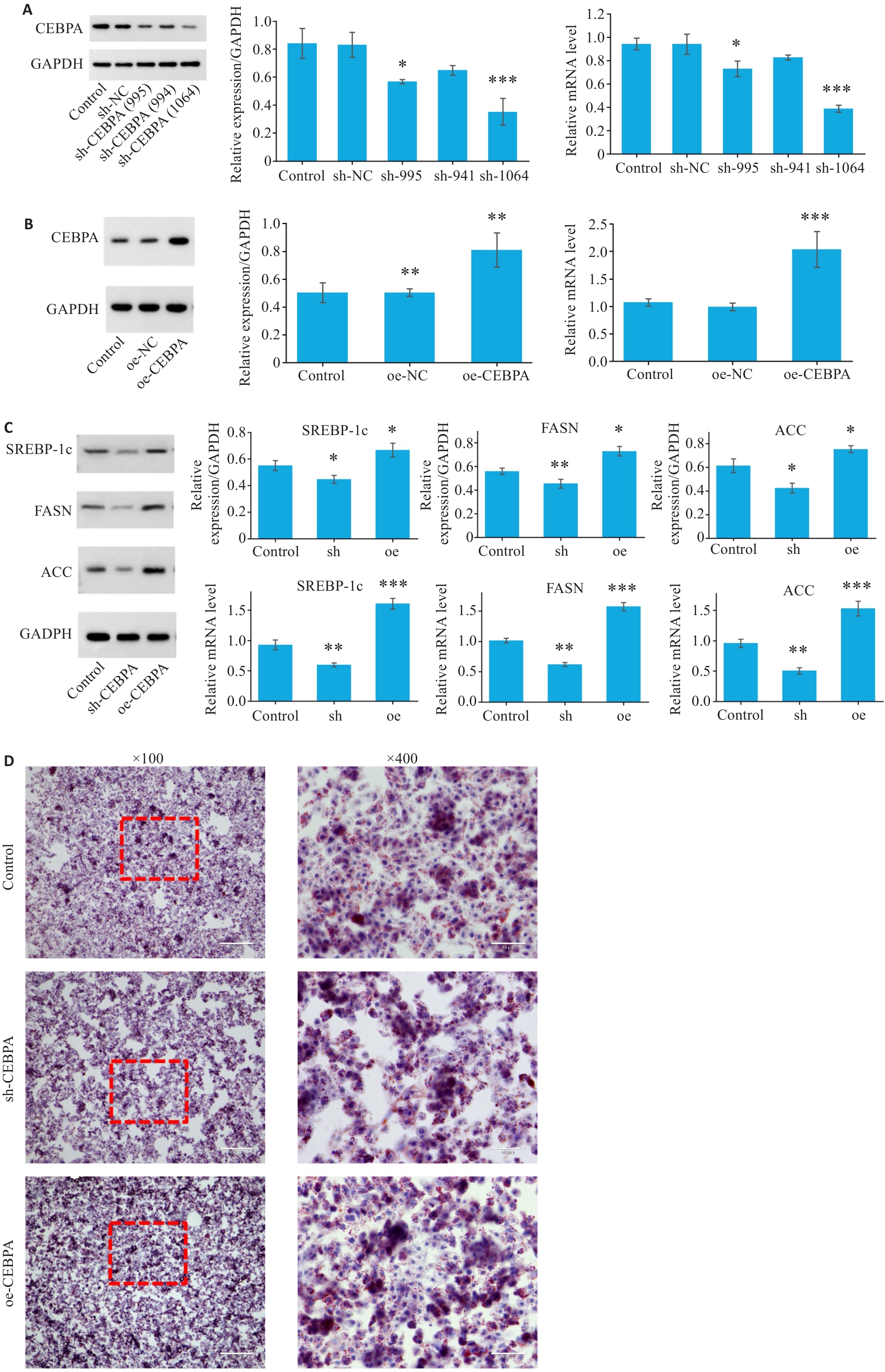
Fig.1 Effects of CEBPA on SREBP-1c, FASN, and ACC expression and intracellular lipid accumulation in HepG2 cells. A, B: Efficiency of CEBPA knockdown and detected by qPCR and Western blotting. C: Expression levels of SREBP-1c, FASN and ACC after CEBPA knockdown or overexpression detected by qPCR and Western blotting. D: Intracellular lipid accumulation observed using Oil Red O staining. The right panels show enlarged views (Original magnification: ×400) of the red dashed boxes in the left panels (×100). Data are presented as Mean±SD (n=3). *P<0.05, **P<0.01, ***P<0.001 vs control group.
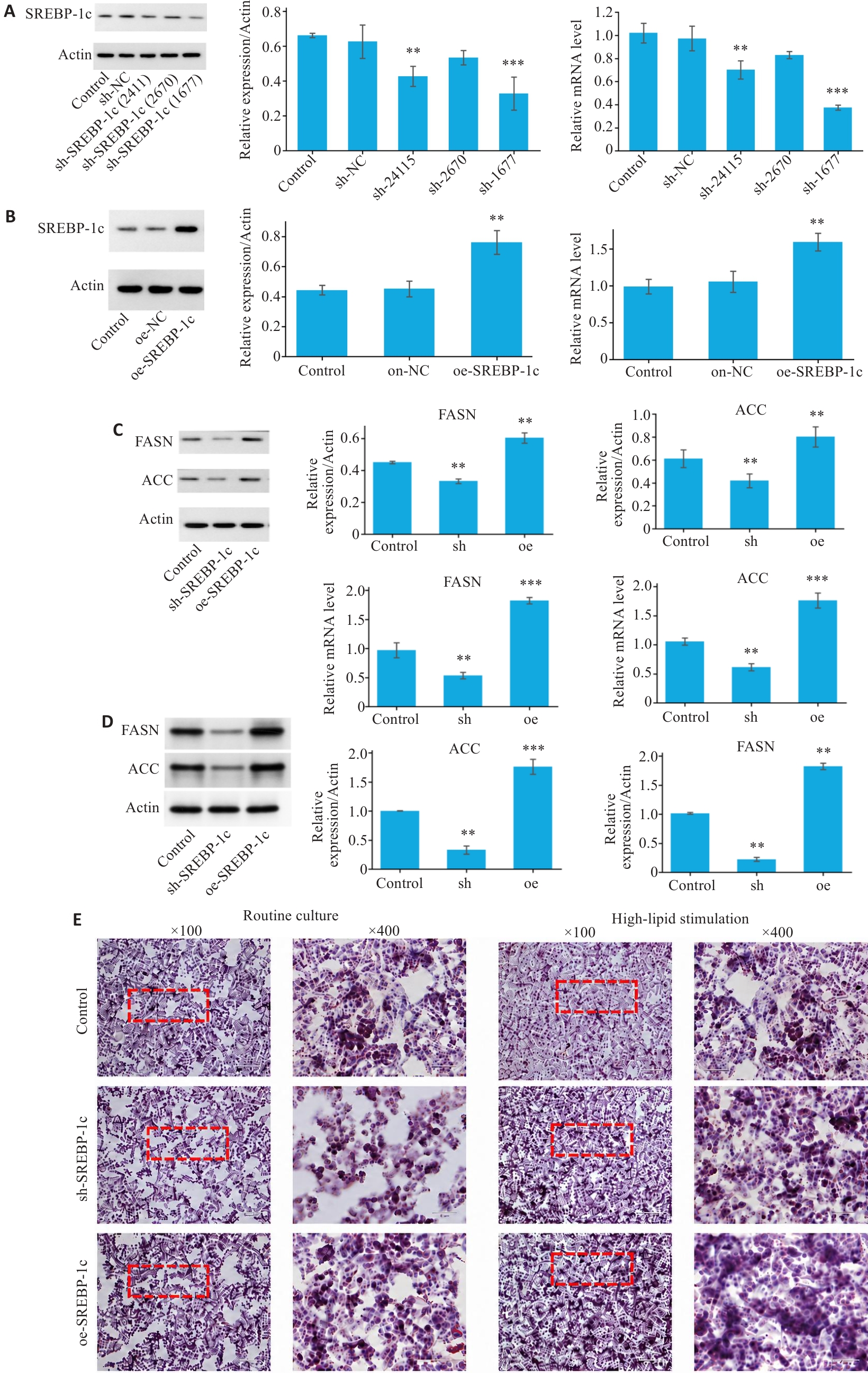
Fig.2 Effects of SREBP-1c on FASN, ACC expression and intracellular lipid accumulation in HepG2 cells. A, B: Knockdown and overexpression efficiency of SREBP-1c detected by qPCR and Western blotting. C: Expression levels of FASN and ACC in HepG2 cells in routine culture conditions detected by qPCR and Western blotting. D: FASN and ACC protein expression in HepG2 cells with high-lipid stimulation detected by Western blotting. E: Intracellular lipid accumulation in HepG2 cells in routine culture and high-lipid conditions observed by Oil Red O staining. The right panels show enlarged views (×400; Scale bar=50 μm) of the red dashed boxes in the left panels (×100; Scale bars=100 μm). Data are presented as Mean±SD (n=3). **P<0.01, ***P<0.001 vs control group.
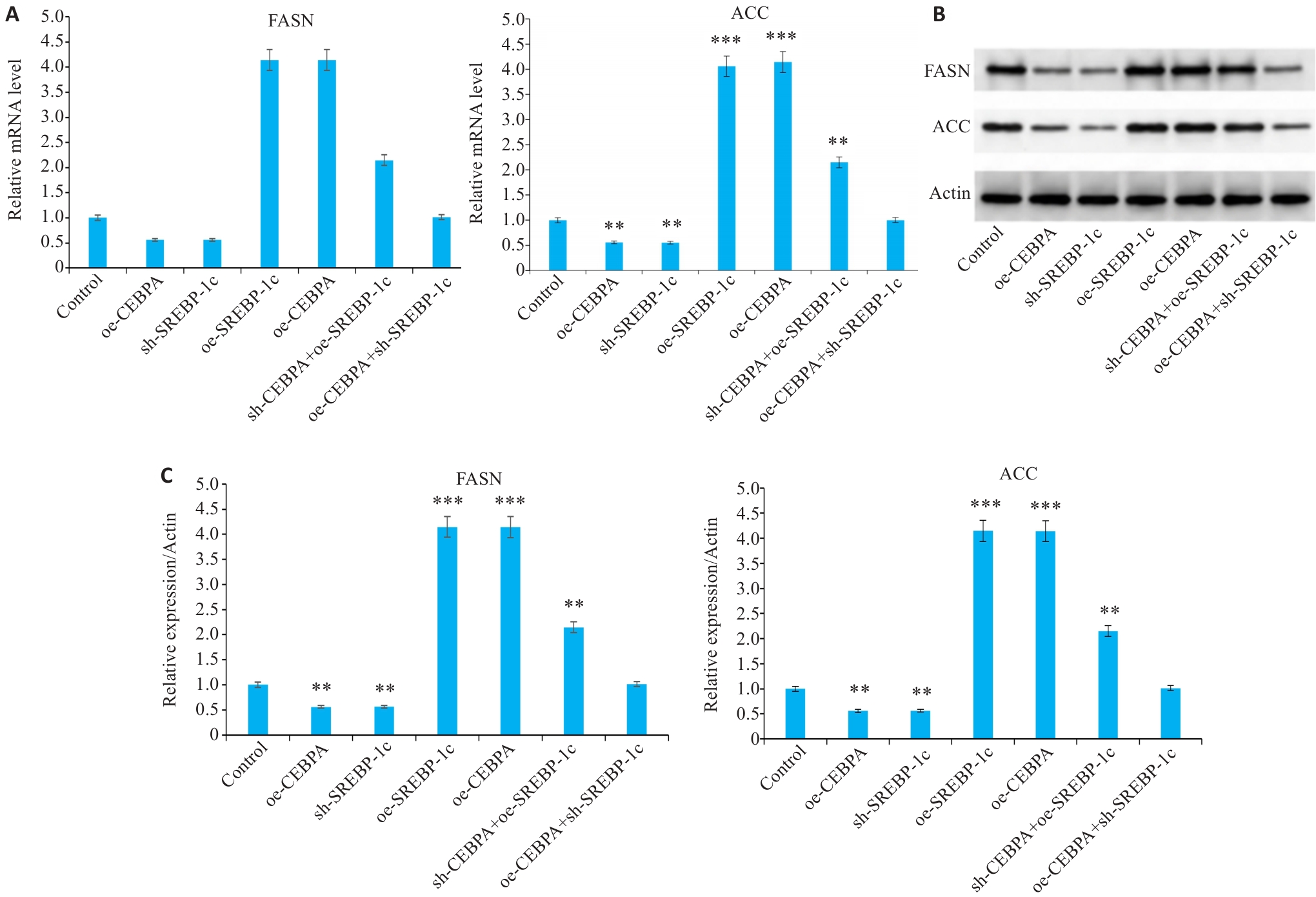
Fig.3 CEBPA regulates FASN and ACC expression through SREBP-1c. A: FASN and ACC mRNA levels in different treatment groups detected by qPCR. B: FASN and ACC protein levels detected by Western blotting. C: Densitometric analysis of Western blot bands. Data are presented as Mean±SD (n=3). **P<0.01, ***P<0.001 vs control group.
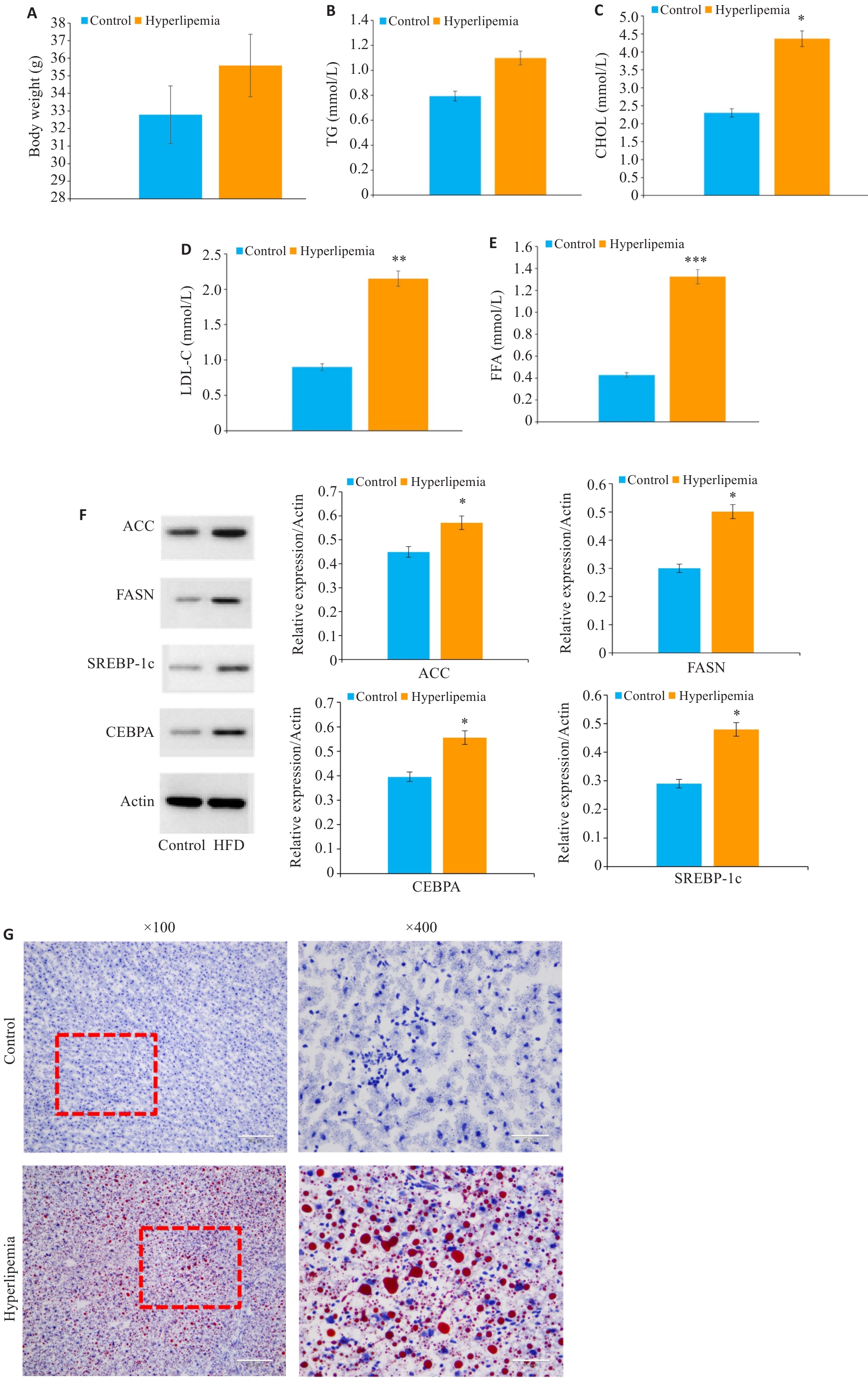
Fig.4 High-fat diet induces dyslipidemia, hepatic lipid accumulation and related protein expression changes in MAFLD mice. A: Changes in mouse body weight. B-E: Serum levels of TC, TG, LDL-C and FFA. F: Hepatic protein expression of CEBPA, SREBP-1c, FASN and ACC detected by Western blotting. G: Hepatic lipid accumulation observed by Oil Red O staining. The right panels show enlarged views (×400; Scale bar=50 μm) of the red dashed boxes in the left panels (×100; Scale bars=100 μm). Data are presented as Mean±SD (n=6). *P<0.05, **P<0.01, ***P<0.001 vs control group.
| [1] | Le MH, Le DM, Baez TC, et al. Global incidence of non-alcoholic fatty liver disease: a systematic review and meta-analysis of 63 studies and 1, 201, 807 persons[J]. J Hepatol, 2023, 79(2): 287-95. doi:10.1016/j.jhep.2023.03.040 |
| [2] | 中华医学会肝病学分会, 范建高, 南月敏, 等. 代谢相关(非酒精性)脂肪性肝病防治指南(2024年版)[J]. 实用肝脏病杂志, 2024, 27(4): 494-510. |
| [3] | Cotter TG, Rinella M. Nonalcoholic fatty liver disease 2020: the state of the disease[J]. Gastroenterology, 2020, 158(7): 1851-64. doi:10.1053/j.gastro.2020.01.052 |
| [4] | Gofton C, Upendran Y, Zheng MH, et al. MAFLD: how is it different from NAFLD?[J]. Clin Mol Hepatol, 2023, 29: S17-31. doi:10.3350/cmh.2022.0367 |
| [5] | Badmus OO, Hillhouse SA, Anderson CD, et al. Molecular mechanisms of metabolic associated fatty liver disease (MAFLD): functional analysis of lipid metabolism pathways[J]. Clin Sci, 2022, 136(18): 1347-66. doi:10.1042/cs20220572 |
| [6] | Kim W, Li MZ, Jin H, et al. Characterization of an in vitro steatosis model simulating activated de novo lipogenesis in MAFLD patients[J]. iScience, 2023, 26(10): 107727. doi:10.1016/j.isci.2023.107727 |
| [7] | Barbhuiya PA, Yoshitomi R, Pathak MP. Understanding the link between sterol regulatory element binding protein (SREBPs) and metabolic dysfunction associated steatotic liver disease (MASLD)[J]. Curr Obes Rep, 2025, 14(1): 36. doi:10.1007/s13679-025-00626-y |
| [8] | Ferré P, Phan F, Foufelle F. SREBP-1c and lipogenesis in the liver: an update1[J]. Biochem J, 2021, 478(20): 3723-39. doi:10.1042/bcj20210071 |
| [9] | Yuan YM, Xu JT, Jiang QX, et al. Ficolin 3 promotes ferroptosis in HCC by downregulating IR/SREBP axis-mediated MUFA synthesis[J]. J Exp Clin Cancer Res, 2024, 43(1): 133. doi:10.1186/s13046-024-03047-2 |
| [10] | Fang CQ, Pan JH, Qu N, et al. The AMPK pathway in fatty liver disease[J]. Front Physiol, 2022, 13: 970292. doi:10.3389/fphys.2022.970292 |
| [11] | Chandrasekaran P, Weiskirchen R. The role of SCAP/SREBP as central regulators of lipid metabolism in hepatic steatosis[J]. Int J Mol Sci, 2024, 25(2): 1109. doi:10.3390/ijms25021109 |
| [12] | Chen J, Zhou YB, Liu ZH, et al. Hepatic glycogenesis antagonizes lipogenesis by blocking S1P via UDPG[J]. Science, 2024, 383(6684): eadi3332. doi:10.1126/science.adi3332 |
| [13] | 黄尹滢, 迪娜·塔吾列, 卢伟炽. 基于AMPK/SREBP-1c通路探讨降糖三黄片防治2型糖尿病合并非酒精性脂肪肝的作用机制[J]. 广州中医药大学学报, 2023, 40(9): 2281-90. |
| [14] | Lei JM, Wang XH, Su Z, et al. Baicalin ameliorates high-fat diet induced MAFLD by inhibiting ERK/PPARγ/CD36 pathway[J]. Phytomedicine, 2025, 147: 157197. doi:10.1016/j.phymed.2025.157197 |
| [15] | Lourenço AR, Coffer PJ. A tumor suppressor role for C/EBPα in solid tumors: more than fat and blood[J]. Oncogene, 2017, 36(37): 5221-30. doi:10.1038/onc.2017.151 |
| [16] | Bechara R, Amatya N, Bailey RD, et al. The m(6)a reader IMP2 directs autoimmune inflammation through an IL-17- and TNFα-dependent C/EBP transcription factor axis[J]. Sci Immunol, 2021, 6(61): eabd1287. doi:10.1126/sciimmunol.abd1287 |
| [17] | Yan TT, Yan NN, Xia YL, et al. Hepatocyte-specific CCAAT/enhancer binding protein α restricts liver fibrosis progression[J]. J Clin Investig, 2024, 134(7): e166731. doi:10.1172/jci166731 |
| [18] | Cai YS, Lyu T, Li H, et al. LncRNA CEBPA-DT promotes liver cancer metastasis through DDR2/β-catenin activation via interacting with hnRNPC[J]. J Exp Clin Cancer Res, 2022, 41(1): 335. doi:10.1186/s13046-022-02544-6 |
| [19] | Zhao JJ, Chu FY, Xu HL, et al. C/EBPα/miR-7 controls CD4+ T-cell activation and function and orchestrates experimental autoimmune hepatitis in mice[J]. Hepatology, 2021, 74(1): 379-96. doi:10.1002/hep.31607 |
| [20] | Wu YY, Sun Y, Song YQ, et al. PPA1 promotes adipogenesis by regulating the stability of C/EBPs[J]. Cell Death Differ, 2024, 31(8): 1044-56. doi:10.1038/s41418-024-01309-2 |
| [21] | Pang B, Zhang JJ, Zhang X, et al. Inhibition of lipogenesis and induction of apoptosis by valproic acid in prostate cancer cells via the C/EBPα/SREBP-1 pathway[J]. Acta Biochim Biophys Sin, 2021, 53(3): 354-64. |
| [22] | Li ZY, Tian Z, Shi XL, et al. Adipose tissue-derived PRXL2A suppresses hepatic lipogenesis in a study with male mice[J]. Nat Commun, 2025, 16: 6567. doi:10.1038/s41467-025-61963-z |
| [23] | Nguyen TTP, Kim DY, Lee YG, et al. SREBP-1c impairs ULK1 sulfhydration-mediated autophagic flux to promote hepatic steatosis in high-fat-diet-fed mice[J]. Mol Cell, 2021, 81(18): 3820-32.e7. doi:10.1016/j.molcel.2021.06.003 |
| [24] | Cheng CM, Geng F, Li Z, et al. Ammonia stimulates SCAP/Insig dissociation and SREBP-1 activation to promote lipogenesis and tumour growth[J]. Nat Metab, 2022, 4(5): 575-88. doi:10.1038/s42255-022-00568-y |
| [25] | Ke CL, Xiao CC, Li JM, et al. FMO2 ameliorates nonalcoholic fatty liver disease by suppressing ER-to-Golgi transport of SREBP1[J]. Hepatology, 2025, 81(1): 181-97. doi:10.1097/hep.0000000000000643 |
| [26] | Kim HJ, Jeon HJ, Kim DG, et al. Lacticaseibacillus paracsei HY7207 alleviates hepatic steatosis, inflammation, and liver fibrosis in mice with non-alcoholic fatty liver disease[J]. Int J Mol Sci, 2024, 25(18): 9870. doi:10.3390/ijms25189870 |
| [27] | 曹后康, 杨超越, 张志远, 等. 龙胆总苷调控SREBP-1C/ACC1/FASN信号通路缓解酒精性肝病[J]. 中药药理与临床, 2025, 41(1): 85-9. |
| [28] | Lu YZ, Zhang C, Song YY, et al. Gallic acid impairs fructose-driven de novo lipogenesis and ameliorates hepatic steatosis via AMPK-dependent suppression of SREBP-1/ACC/FASN cascade[J]. Eur J Pharmacol, 2023, 940: 175457. doi:10.1016/j.ejphar.2022.175457 |
| [29] | Li ZW, Zhang C, Huang GX, et al. Deletion of Tfap2a in hepatocytes and macrophages promotes the progression of hepatocellular carcinoma by regulating SREBP1/FASN/ACC pathway and anti-inflammatory effect of IL10[J]. Cell Death Dis, 2025, 16: 245. doi:10.1038/s41419-025-07500-8 |
| [30] | 张 欣, 张 玺, 张娟娟, 等. HBx蛋白通过C/EBPα/SREBP-1通路调节脂代谢促进肝癌细胞增殖[J]. 中华肝脏病杂志, 2020, 28(12): 1036-41. |
| [31] | 吴海俊, 程国平, 李辉华, 等. 乙型肝炎病毒X蛋白过表达对肝癌细胞脂代谢及CCAAT增强子结合蛋白α/固醇调节元件结合蛋白-1通路的影响[J]. 中华实验外科杂志, 2023, 40(7): 1312-4. |
| [32] | Bullinger L. CEBPA mutations in AML: site matters[J]. Blood, 2022, 139(1): 6-7. doi:10.1182/blood.2021013557 |
| [33] | Heyes E, Wilhelmson AS, Wenzel A, et al. TET2 lesions enhance the aggressiveness of CEBPA-mutant acute myeloid leukemia by rebalancing GATA2 expression[J]. Nat Commun, 2023, 14: 6185. doi:10.1038/s41467-023-41927-x |
| [1] | Bingyi HUANG, Yujie GAO, Jingyi XIE, Chen YAN, Mengru GU, Zhizhi ZHANG, Jintao GUO, Song LIU, Ziliang WANG, Yuping YANG, Lugen ZUO, Deli CHEN. Prognostic value of palmitoyl-protein thioesterase-1 in gastric cancer and its regulatory role in tumor cell lipid metabolism [J]. Journal of Southern Medical University, 2026, 46(8): 1915-1925. |
| [2] | Zhenlin CHEN, Peng CHAI, Yangqi MAO, Ranxin LIU, Ye SONG. ZEB2 promotes glioblastoma progression by reprogramming lipid metabolism through the CYLD/FASN axis [J]. Journal of Southern Medical University, 2026, 46(6): 1290-1300. |
| [3] | Kun LIU, Xiaoying LI, Yugang ZHANG, Jia SUN, Wenzhen LIAO. Research progress in mechanisms of dietary resistant starch for regulating glucose and lipid metabolism [J]. Journal of Southern Medical University, 2026, 46(4): 956-966. |
| [4] | Jiayi XU, Di YANG, Kailai ZANG, Mengen CHU, Qingyao ZHAO, Qing LI, Sen LU, Xiuli CHEN, Ning LI. EVA1A overexpression improves non-alcoholic fatty liver disease in mice by regulating lipid metabolism and promoting lipophagy [J]. Journal of Southern Medical University, 2026, 46(1): 150-158. |
| [5] | Biyun LUO, Xin YI, Yijing CAI, Shiqing ZHANG, Peng WANG, Tong LI, Ken Kin Lam YUNG, Pingzheng ZHOU. Ching Shum Pills alleviates non-alcoholic fatty liver disease in mice by ameliorating lipid metabolism disorders [J]. Journal of Southern Medical University, 2025, 45(9): 1840-1849. |
| [6] | Jingjing ZHANG, Song FENG, Dali ZHANG, Jian XUE, Chao ZHOU, Pengcheng LIU, Shuangnan FU, Man GONG, Hui FENG, Ning ZHANG. Altered oral microbiome and metabolites are associated with improved lipid metabolism in HBV-infected patients with metabolic dysfunction-associated fatty liver disease [J]. Journal of Southern Medical University, 2025, 45(9): 2034-2045. |
| [7] | Ruimin HAN, Manke ZHAO, Junfang YUAN, Zhenhong SHI, Zhen WANG, Defeng WANG. Live combined Bacillus subtilis and Enterococcus faecium improves glucose and lipid metabolism in type 2 diabetic mice with circadian rhythm disruption via the SCFAs/GPR43/GLP-1 pathway [J]. Journal of Southern Medical University, 2025, 45(7): 1490-1497. |
| [8] | Dandan LI, Jiaxin CHU, Yan YAN, Wenjun XU, Xingchun ZHU, Yun SUN, Haofeng DING, Li REN, Bo ZHU. Curcumin inhibits lipid metabolism in non-small cell lung cancer by downregulating the HIF-1α pathway [J]. Journal of Southern Medical University, 2025, 45(5): 1039-1046. |
| [9] | Du SHANG, Wen LI, Lihua CUI, Ming CHEN. Hugan Decoction alleviates non-alcoholic fatty liver disease in rats by activating the AMPK/m-TOR signaling pathway and reducing lipid synthesis [J]. Journal of Southern Medical University, 2025, 45(12): 2667-2678. |
| [10] | Xianheng ZHANG, Jian LIU, Qi HAN, Yiming CHEN, Xiang DING, Xiaolu CHEN. Huangqin Qingrechubi Capsule alleviates inflammation and uric acid and lipid metabolism imbalance in rats with gouty arthritis by inhibiting the PTEN/PI3K/AKT signaling pathway [J]. Journal of Southern Medical University, 2024, 44(8): 1450-1458. |
| [11] | Chengling CUI, Yuzhen XU, Chaoqun TANG, Jiaying JIANG, Ying HU, Jie SHUANG. Molecular mechanism of high-altitude hypoxia-induced lipid metabolism disorder in mouse spleen tissue [J]. Journal of Southern Medical University, 2024, 44(10): 2024-2032. |
| [12] | XU Longfei, HAN Jing, YANG Zhe, YANG Yanping, CHEN Jinhui, WU Xijun, WANG Qi, HONG Yan. LRG1 inhibits hepatic macrophage activation by enhancing TGF-β1 signaling to alleviate MAFLD in mice [J]. Journal of Southern Medical University, 2023, 43(7): 1164-1171. |
| [13] | GONG Shunhang, YANG Jie, ZHANG Jintao, WU Xinglin, JIANG Shan, ZHANG Yulin, GONG Guangbin, WU Ning, SUN Jianfei, WU Zunqiu. Yacon root extract improves lipid metabolism in hyperlipidemic rats by inhibiting HMGCR expression and activating the PPARα/CYP7A1/CPT-1 pathway [J]. Journal of Southern Medical University, 2023, 43(11): 1977-1983. |
| [14] | GAO Yinan, WANG Peijun, LU Sumei, MA Wanshan. METTL3 inhibitor STM2457 improves metabolic dysfunction-associated fatty liver disease by regulating mitochondrial function in mice [J]. Journal of Southern Medical University, 2023, 43(10): 1689-1696. |
| [15] | SHI Hao, ZHANG Chao, ZHAO Jiamin, LI Yiwen, LI Yunjia, LI Junjie, ZENG Zhiyun, GAO Lei. Cold stress reduces lifespan and mobility of C. elegans by mediating lipid metabolism disorder and abnormal stress response [J]. Journal of Southern Medical University, 2022, 42(8): 1159-1165. |
| Viewed | ||||||
|
Full text |
|
|||||
|
Abstract |
|
|||||
