
Journal of Southern Medical University ›› 2026, Vol. 46 ›› Issue (2): 385-393.doi: 10.12122/j.issn.1673-4254.2026.02.16
Qiuli WANG1( ), Weihua XU1, Fangqiu GU2, Siqin WANG3, Shaoheng HE2, Junling WANG2,3()
Received:2025-08-03
Online:2026-02-20
Published:2026-03-10
Contact:
Junling WANG
E-mail:18841609323@163.com;wangjuneling@163.com
Supported by:Qiuli WANG, Weihua XU, Fangqiu GU, Siqin WANG, Shaoheng HE, Junling WANG. Allergens induce activation of blood CCR3+ granulocyte subsets in patients with perennial allergic rhinitis[J]. Journal of Southern Medical University, 2026, 46(2): 385-393.
Add to citation manager EndNote|Ris|BibTeX
URL: https://www.j-smu.com/EN/10.12122/j.issn.1673-4254.2026.02.16
| Population | Positive allergen | Sample size (n) | Age (year) | Medical history (year) | Onset age (year) |
|---|---|---|---|---|---|
| HC | —— | 30 | 34.5 (23.8-42.0) | —— | —— |
| nAR | —— | 14 | 35.5 (18.0-42.3) | 3.0 (2.0-6.3) | 30.5 (15.3-34.5) |
| sAR | ASE | 16 | 32.0 (24.5-39.8) | 4.0 (3.0-10.0) | 26.5 (13.3-30.8) |
| pAR | ASE+DPE+Others | 24 | 26.0 (19-44.5) | 3.5 (2.0-10.0) | 19.0 (14.0-38.8) |
| DPE+Cockroach+Others | 1 | 9.0 (9.0-9.0) | 6.0 (6.0-6.0) | 3.0 (3.0-3.0) | |
| Cockroach+Others | 4 | 38.5 (14.0-48.0) | 4.0 (1.3-12.8) | 34.0 (12.8-35.8) | |
| In total | 29 | 28.0 (18.5-44.0) | 4.0 (2.0-10.0) | 20.0 (11.5-35.5) | |
| ——: not applicable; Age, medical history and onset age were expressed as Median (P25-P75). HC: Healthy control; nAR: AR with negative skin prick test; sAR: Seasonal AR with positive skin prick test; pAR: Perennial AR with positive skin prick test. | |||||
Tab.1 Basic information of volunteers
| Population | Positive allergen | Sample size (n) | Age (year) | Medical history (year) | Onset age (year) |
|---|---|---|---|---|---|
| HC | —— | 30 | 34.5 (23.8-42.0) | —— | —— |
| nAR | —— | 14 | 35.5 (18.0-42.3) | 3.0 (2.0-6.3) | 30.5 (15.3-34.5) |
| sAR | ASE | 16 | 32.0 (24.5-39.8) | 4.0 (3.0-10.0) | 26.5 (13.3-30.8) |
| pAR | ASE+DPE+Others | 24 | 26.0 (19-44.5) | 3.5 (2.0-10.0) | 19.0 (14.0-38.8) |
| DPE+Cockroach+Others | 1 | 9.0 (9.0-9.0) | 6.0 (6.0-6.0) | 3.0 (3.0-3.0) | |
| Cockroach+Others | 4 | 38.5 (14.0-48.0) | 4.0 (1.3-12.8) | 34.0 (12.8-35.8) | |
| In total | 29 | 28.0 (18.5-44.0) | 4.0 (2.0-10.0) | 20.0 (11.5-35.5) | |
| ——: not applicable; Age, medical history and onset age were expressed as Median (P25-P75). HC: Healthy control; nAR: AR with negative skin prick test; sAR: Seasonal AR with positive skin prick test; pAR: Perennial AR with positive skin prick test. | |||||
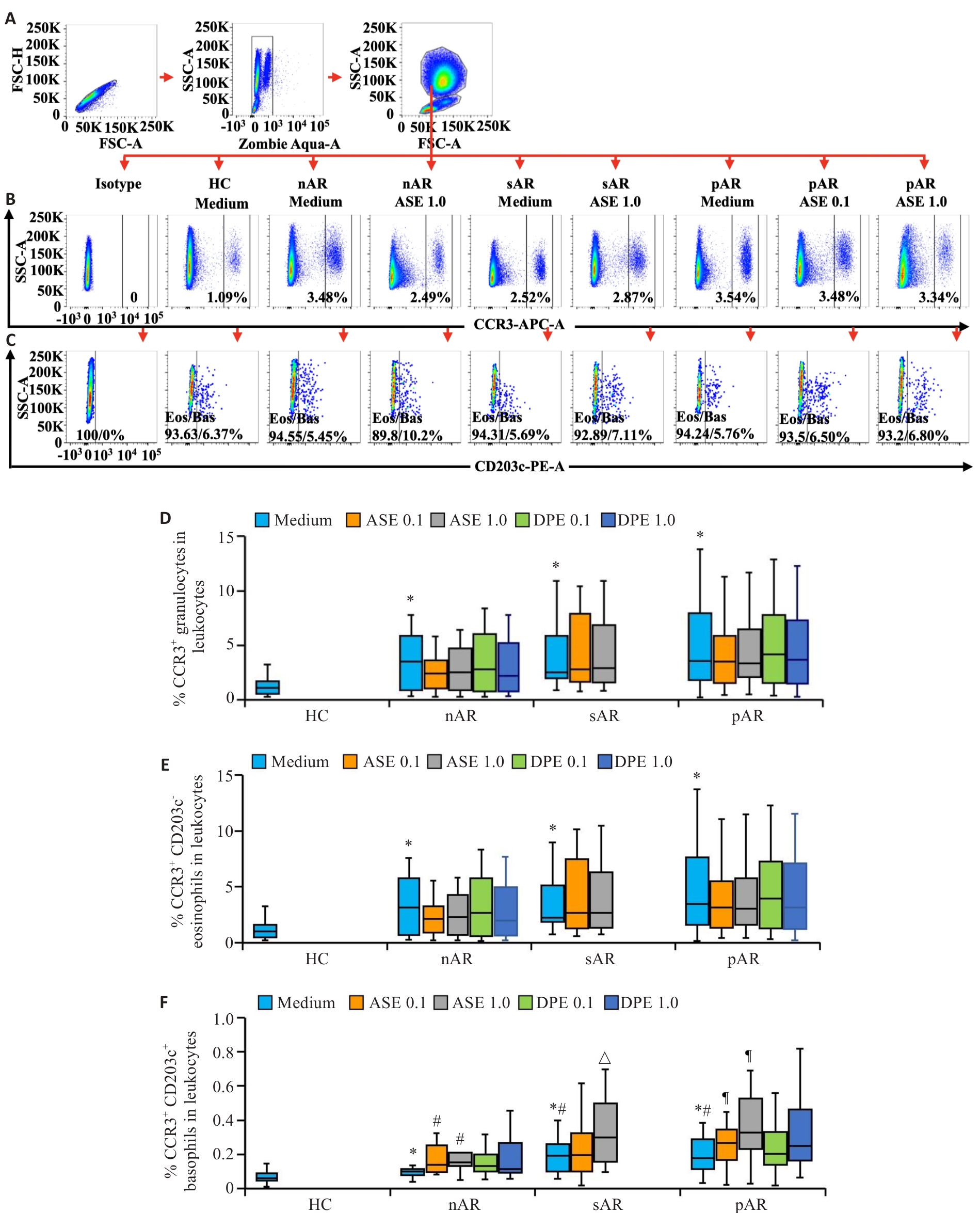
Fig.1 Ratios of eosinophils and basophils in blood granulocytes of AR patients. A: Flow cytometry gating strategy for human blood granulocytes. B, C: Representative flow cytometry graphs of CCR3+ cells (B), CCR3+CD203c- eosinophils and CCR3+CD203c+ basophils (C) in granulocytes. D-F: Statistical graphs of the expression ratios of CCR3+ cells (D), eosinophils (E), basophils (F) in granulocytes. *P<0.05 vs HC, #P<0.05 vs nAR Medium, △P<0.05 vs sAR Medium, ¶P<0.05 vs pAR Medium.
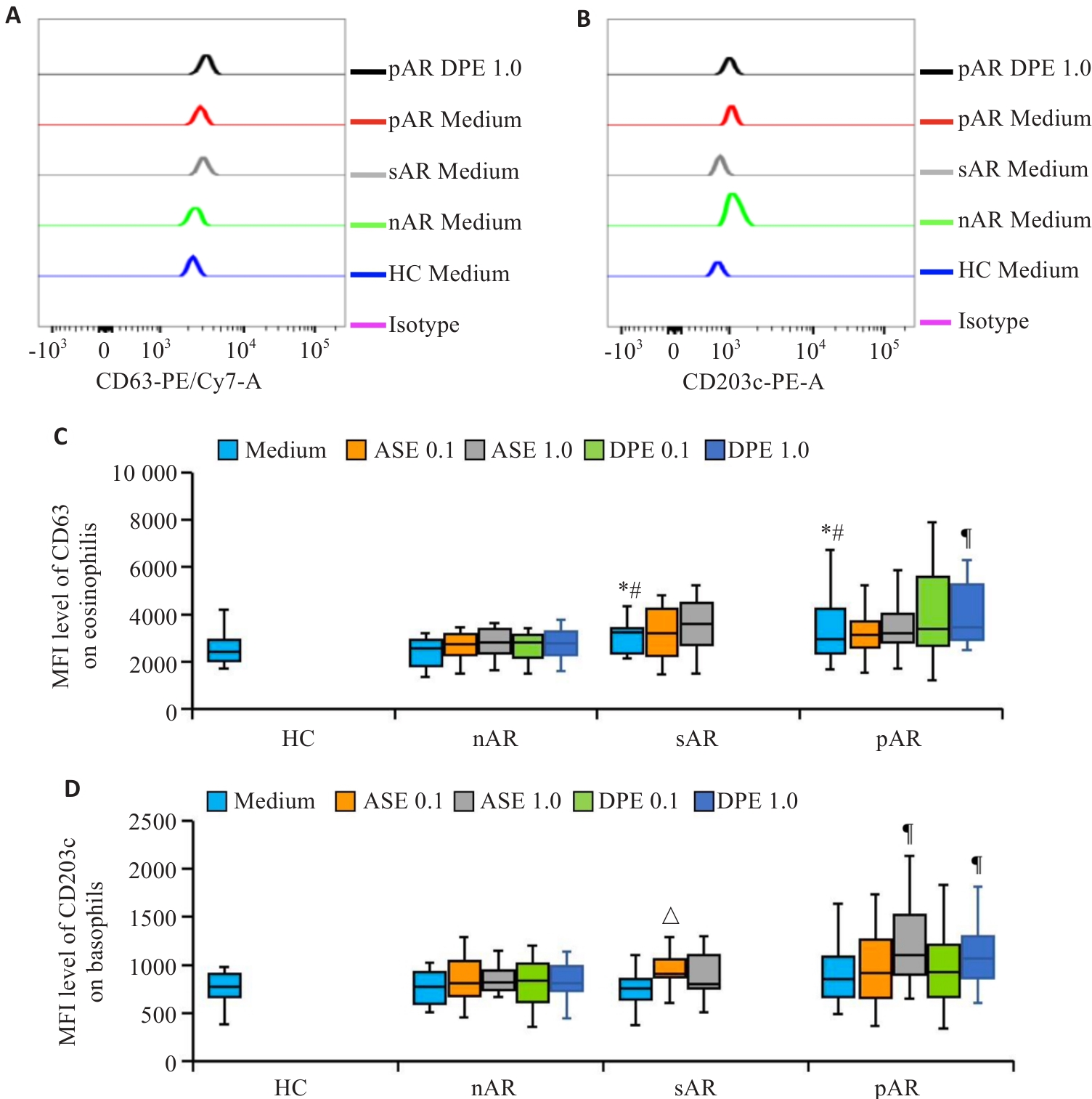
Fig.2 Effects of allergens on MFI expression levels of CD63 on eosinophils and CD203c on basophils in blood granulocytes of AR patients. A, B: Flow cytometry for analyzing MFI expression levels of CD63 on eosinophils (A) and CD203c on basophils (B) in granulocytes. C, D: Statistical graph of the MFI expression levels of CD63on eosinophils (C) and CD203c on basophils (D). *P<0.05 vs HC, #P<0.05 vs nAR Medium, △P<0.05 vs sAR Medium, ¶P<0.05 vs pAR Medium.
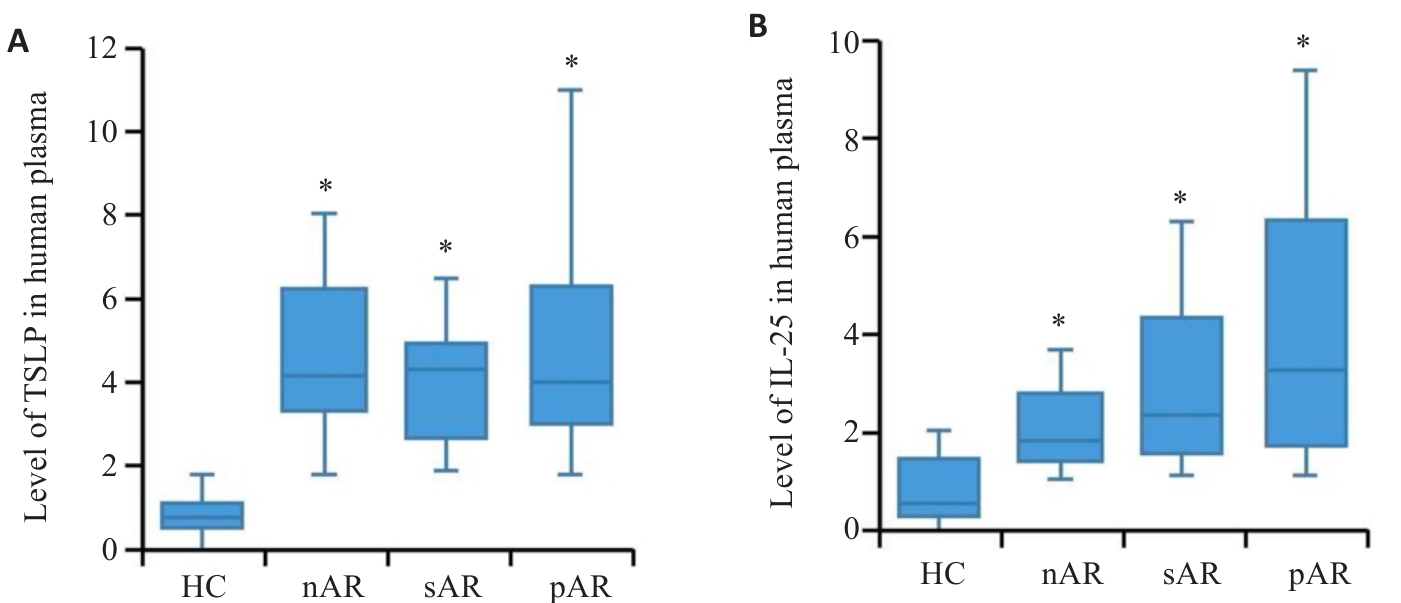
Fig.3 Plasma levels of IL-25 (A) and TSLP (B) in AR patients. *P<0.05 vs HC.
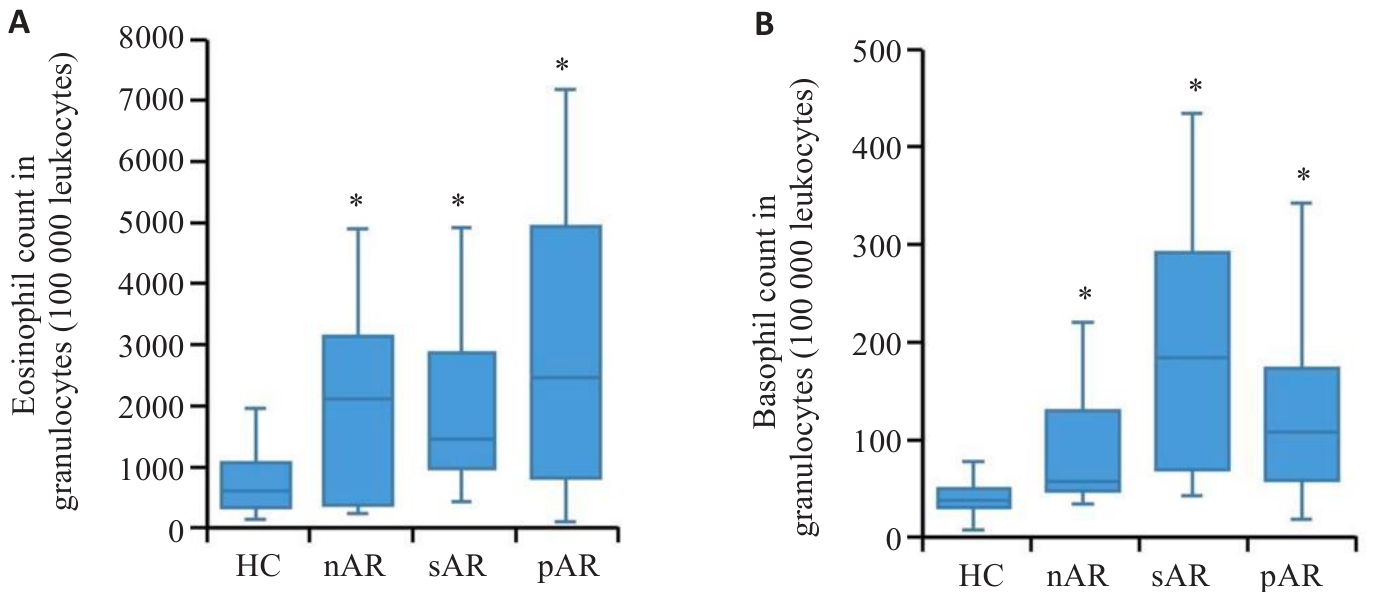
Fig.4 Eosinophil (A) and basophil (B) counts in blood granulocytes of AR patients. *P<0.05 vs HC.
| Group | Compound | IL-25 | TSLP | Eosinophil | Basophil |
|---|---|---|---|---|---|
| HC | IL-25 | —— | -0.343 | 0.165 | -0.056 |
| TSLP | -0.343 | —— | -0.401 | -0.231 | |
| nAR | IL-25 | —— | 0.741⁋ | 0.587⁋ | 0.630⁋ |
| TSLP | 0.741⁋ | —— | 0.582⁋ | 0.669⁋ | |
| sAR | IL-25 | —— | 0.577⁋ | 0.802⁋ | 0.895⁋ |
| TSLP | 0.577⁋ | —— | 0.590⁋ | 0.537⁋ | |
| pAR | IL-25 | —— | 0.772⁋ | 0.880⁋ | 0.601⁋ |
| TSLP | 0.772⁋ | —— | 0.666⁋ | 0.429⁋ | |
| ——: not applicable;⁋P<0.05. | |||||
Tab.2 Spearman's rank correlation coefficient (R) between cytokine levels and eosinophil and basophil counts in granulocytes
| Group | Compound | IL-25 | TSLP | Eosinophil | Basophil |
|---|---|---|---|---|---|
| HC | IL-25 | —— | -0.343 | 0.165 | -0.056 |
| TSLP | -0.343 | —— | -0.401 | -0.231 | |
| nAR | IL-25 | —— | 0.741⁋ | 0.587⁋ | 0.630⁋ |
| TSLP | 0.741⁋ | —— | 0.582⁋ | 0.669⁋ | |
| sAR | IL-25 | —— | 0.577⁋ | 0.802⁋ | 0.895⁋ |
| TSLP | 0.577⁋ | —— | 0.590⁋ | 0.537⁋ | |
| pAR | IL-25 | —— | 0.772⁋ | 0.880⁋ | 0.601⁋ |
| TSLP | 0.772⁋ | —— | 0.666⁋ | 0.429⁋ | |
| ——: not applicable;⁋P<0.05. | |||||
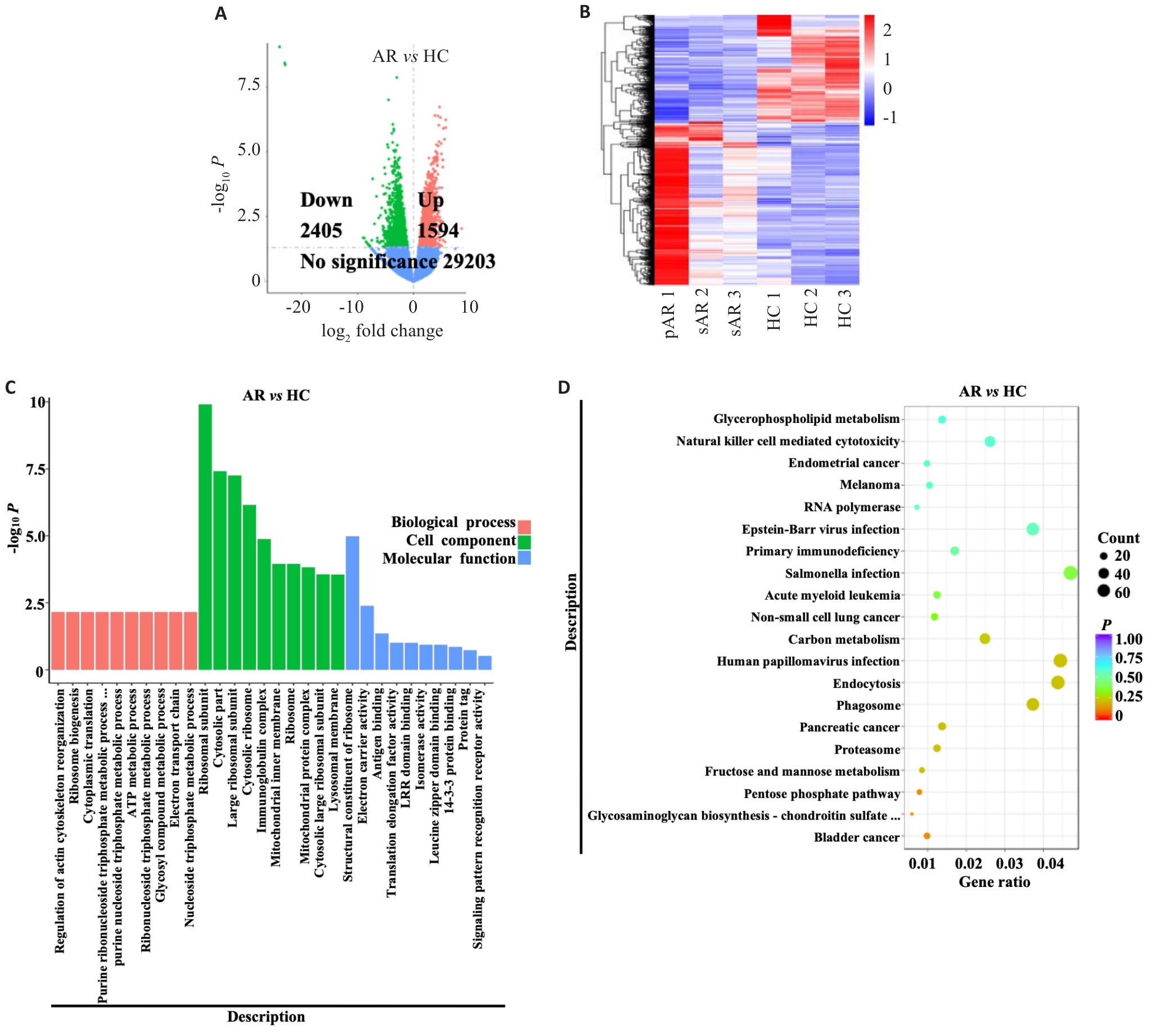
Fig.5 RNA-seq analysis of blood CD16- granulocytes of AR patients. A, B: Volcano plot (A) and cluster heatmap (B) of differential expression genes. C, D: GO (C) and KEGG (D) enrichment diagramsof differential expression genes.
| Protein name | Gene number | Gene name | log2 fold change (AR vs HC) |
|---|---|---|---|
| CCR3 | ENSG00000183625 | CCR3 | 2.55** |
| CD203c | ENSG00000154269 | ENPP3 | -0.44 |
| CD63 | ENSG00000135404 | CD63 | 2.34** |
| **P<0.01vs HC. | |||
Tab.3 RNA-seq analysis of the expression levels of CCR3, ENPP3 and CD63 mRNA in CD16- granulocytes
| Protein name | Gene number | Gene name | log2 fold change (AR vs HC) |
|---|---|---|---|
| CCR3 | ENSG00000183625 | CCR3 | 2.55** |
| CD203c | ENSG00000154269 | ENPP3 | -0.44 |
| CD63 | ENSG00000135404 | CD63 | 2.34** |
| **P<0.01vs HC. | |||
| [1] | Wise SK, Damask C, Roland LT, et al. International consensus statement on allergy and rhinology: Allergic rhinitis-2023[J]. Int Forum Allergy Rhinol, 2023, 13(4): 293-859. |
| [2] | Milanese M, Ricca V, Canonica GW, et al. Eosinophils, specific hyperreactivity and occurrence of late phase reaction in allergic rhinitis[J]. Eur Ann Allergy Clin Immunol, 2005, 37(1): 7-10. |
| [3] | Xie H, Zhang HY, Chen D, et al. Increased CD123 + HLA-DR- granulocytes in allergic rhinitis and influence of allergens on expression of cell membrane markers[J]. Am J Rhinol Allergy, 2024, 38(5): 294-305. doi:10.1177/19458924241252456 |
| [4] | Xie H, Chen LP, Zhang HY, et al. Increased expressions of CD123, CD63, CD203c, and Fc Epsilon receptor I on blood leukocytes of allergic asthma[J]. Front Mol Biosci, 2022, 9: 907092. doi:10.3389/fmolb.2022.907092 |
| [5] | De Lucca GV. Recent developments in CCR3 antagonists[J]. Curr Opin Drug Discov Devel, 2006, 9(4): 516-24. |
| [6] | Ziegler SF, Roan F, Bell BD, et al. The biology of thymic stromal lymphopoietin (TSLP)[J]. Adv Pharmacol, 2013, 66: 129-55. doi:10.1016/b978-0-12-404717-4.00004-4 |
| [7] | Uguccioni M, MacKay CR, Ochensberger B, et al. High expression of the chemokine receptor CCR3 in human blood basophils. Role in activation by eotaxin, MCP-4, and other chemokines[J]. J Clin Invest, 1997, 100(5): 1137-43. doi:10.1172/jci119624 |
| [8] | Sénéchal S, Fahy O, Gentina T, et al. CCR3-blocking antibody inhibits allergen-induced eosinophil recruitment in human skin xenografts from allergic patients[J]. Lab Invest, 2002, 82(7): 929-39. doi:10.1097/01.lab.0000020417.13757.05 |
| [9] | Carmo LAS, Bonjour K, Ueki S, et al. CD63 is tightly associated with intracellular, secretory events chaperoning piecemeal degranulation and compound exocytosis in human eosinophils[J]. J Leukoc Biol, 2016, 100(2): 391-401. doi:10.1189/jlb.3a1015-480r |
| [10] | De Week AL, Sanz ML, Gamboa PM, et al. Diagnostic tests based on human basophils: more potentials and perspectives than pitfalls. II. technical issues[J]. J Investig Allergol Clin Immunol, 2008, 18(3): 143-55. doi:10.1159/000115885 |
| [11] | Celik GE, Guloglu Karatas D, Aydin O, et al. Diagnostic utility of basophil CD203c expression in β-lactam allergy[J]. Allergy Asthma Proc, 2023, 44(3): 200-7. doi:10.2500/aap.2023.44.230013 |
| [12] | Nakajima S, Kabata H, Kabashima K, et al. Anti-TSLP antibodies: Targeting a master regulator of type 2 immune responses[J]. Allergol Int, 2020, 69(2): 197-203. doi:10.1016/j.alit.2020.01.001 |
| [13] | Hong HY, Liao SM, Chen FH, et al. Role of IL-25, IL-33, and TSLP in triggering united airway diseases toward type 2 inflammation[J]. Allergy, 2020, 75(11): 2794-804. doi:10.1111/all.14526 |
| [14] | Wang YH, Angkasekwinai P, Lu N, et al. IL-25 augments type 2 immune responses by enhancing the expansion and functions of TSLP-DC-activated Th2 memory cells[J]. J Exp Med, 2007, 204(8): 1837-47. doi:10.1084/jem.20070406 |
| [15] | Sokol CL, Barton GM, Farr AG, et al. A mechanism for the initiation of allergen-induced T helper type 2 responses[J]. Nat Immunol, 2008, 9(3): 310-8. doi:10.1038/ni1558 |
| [16] | Bernstein DI, Schwartz G, Bernstein JA. Allergic rhinitis: mechanisms and treatment[J]. Immunol Allergy Clin North Am, 2016, 36(2): 261-78. doi:10.1016/j.iac.2015.12.004 |
| [17] | Eifan AO, Durham SR. Pathogenesis of rhinitis[J]. Clin Exp Allergy, 2016, 46(9): 1139-51. doi:10.1111/cea.12780 |
| [18] | 中华耳鼻咽喉头颈外科杂志编辑委员会鼻科组, 中华医学会耳鼻咽喉头颈外科学分会鼻科学组.中国变应性鼻炎诊断和治疗指南(2022年, 修订版)[J].中华耳鼻咽喉头颈外科杂志, 2022, 57(2): 106-29. |
| [19] | Jeffery PK, Haahtela T. Allergic rhinitis and asthma: inflammation in a one-airway condition[J]. BMC Pulm Med, 2006, 6(): S5. doi:10.1186/1471-2466-6-s1-s5 |
| [20] | Choi EA, Nah G, Chang WS, et al. Blood eosinophil related to maternal allergic rhinitis is associated with the incidence of allergic rhinitis in offspring: COCOA study[J]. BMC Pediatr, 2023, 23(1): 343. doi:10.1186/s12887-023-04156-1 |
| [21] | Linden M, Svensson C, Andersson M, et al. Circulating eosinophil/basophil progenitors and nasal mucosal cytokines in seasonal allergic rhinitis[J]. Allergy, 1999, 54(3): 212-9. doi:10.1034/j.1398-9995.1999.00756.x |
| [22] | Broide DH. Allergic rhinitis: pathophysiology[J]. Allergy Asthma Proc, 2010, 31(5): 370-4. doi:10.2500/aap.2010.31.3388 |
| [23] | Saito H, Howie K, Wattie J, et al. Allergen-induced murine upper airway inflammation: local and systemic changes in murine experimental allergic rhinitis[J]. Immunology, 2001, 104(2): 226-34. doi:10.1046/j.1365-2567.2001.01253.x |
| [24] | Shamji MH, Bellido V, Scadding GW, et al. Effector cell signature in peripheral blood following nasal allergen challenge in grass pollen allergic individuals[J]. Allergy, 2015, 70(2): 171-9. doi:10.1111/all.12543 |
| [25] | Wilson AM, Duong M, Crawford L, et al. An evaluation of peripheral blood eosinophil/basophil progenitors following nasal allergen challenge in patients with allergic rhinitis[J]. Clin Exp Allergy, 2005, 35(1): 39-44. doi:10.1111/j.1365-2222.2004.02072.x |
| [26] | Stone KD, Prussin C, Metcalfe DD. IgE, mast cells, basophils, and eosinophils[J]. J Allergy Clin Immunol, 2010, 125(2 ): S73-80. doi:10.1016/j.jaci.2009.11.017 |
| [27] | Gao YQ, Zhou JN, Wang ML, et al. Characteristics of upper respiratory tract rhinovirus in children with allergic rhinitis and its role in disease severity[J]. Microbiol Spectr, 2024, 12(7): e0385323. doi:10.1128/spectrum.03853-23 |
| [28] | Tyurin YA, Lissovskaya SA, Fassahov RS, et al. Cytokine profile of patients with allergic rhinitis caused by pollen, mite, and microbial allergen sensitization[J]. J Immunol Res, 2017, 2017: 3054217. doi:10.1155/2017/3054217 |
| [29] | Eggel A, Pennington LF, Jardetzky TS. Therapeutic monoclonal antibodies in allergy: targeting IgE, cytokine, and alarmin pathways[J]. Immunol Rev, 2024, 328(1): 387-411. doi:10.1111/imr.13380 |
| [30] | Andreasson LM, Dyhre-Petersen N, Hvidtfeldt M, et al. Airway hyperresponsiveness correlates with airway TSLP in asthma independent of eosinophilic inflammation[J]. J Allergy Clin Immunol, 2024, 153(4): 988-97. e11. doi:10.1016/j.jaci.2023.11.915 |
| [31] | Wang JL, Zhan MM, Gu FQ, et al. Diagnostic use of CCR3, CD63, CD203c and FcεRIα on blood leukocytes of allergic asthma and combined allergic rhinitis and asthma syndrome[J]. J Cell Mol Med, 2025, 29(12): e70594. doi:10.1111/jcmm.70594 |
| [32] | Thurau AM, Schylz U, Wolf V, et al. Identification of eosinophils by flow cytometry[J]. Cytometry, 1996, 23(2): 150-8. doi:10.1002/(sici)1097-0320(19960201)23:2<150::aid-cyto8>3.0.co;2-o |
| [33] | Isogai S, Hayashi M, Yamamoto N, et al. Upregulation of CD11b on eosinophils in aspirin induced asthma[J]. Allergol Int, 2013, 62(3): 367-73. doi:10.2332/allergolint.12-oa-0499 |
| [34] | Agis H, Füreder W, Bankl HC, et al. Comparative immuno-phenotypic analysis of human mast cells, blood basophils and monocytes[J]. Immunology, 1996, 87(4): 535-43. doi:10.1046/j.1365-2567.1996.493578.x |
| [35] | Papavasileiou S, Mo J, Boey D, et al. Single-cell omics-based characterization of human basophils reveals two transcriptionally distinct populations [J]. bioRxiv, 2025, 2025: 639059. doi:10.1111/all.70209 |
| [36] | Gibbs BF, Papenfuss K, Falcone FH. A rapid two-step procedure for the purification of human peripheral blood basophils to near homogeneity[J]. Clin Exp Allergy, 2008, 38(3): 480-5. doi:10.1111/j.1365-2222.2007.02919.x |
| [37] | 王君灵, 张慧云, 何韶衡. 人嗜碱性粒细胞胞膜蛋白在过敏诊断中的研究进展[J]. 中华临床免疫和变态反应杂志, 2024, 18(1): 88-95. |
| [38] | Gray N, Limberg MM, Wiebe D, et al. Differential upregulation and functional activity of S1PR1 in human peripheral blood basophils of atopic patients[J]. Int J Mol Sci, 2022, 23(24): 16117. doi:10.3390/ijms232416117 |
| [39] | Tsai SH, Takeda K. Regulation of allergic inflammation by the ectoenzyme E-NPP3 (CD203c) on basophils and mast cells[J]. Semin Immunopathol, 2016, 38(5): 571-9. doi:10.1007/s00281-016-0564-2 |
| [40] | Gachanja NN, Dorward DA, Rossi AG, et al. Assays of eosinophil apoptosis and phagocytic uptake[J]. Methods Mol Biol, 2021, 2241: 113-32. doi:10.1007/978-1-0716-1095-4_10 |
| [41] | Davies LC, Rice CM, McVicar DW, et al. Diversity and environmental adaptation of phagocytic cell metabolism[J]. J Leukoc Biol, 2019, 105(1): 37-48. doi:10.1002/jlb.4ri0518-195r |
| [42] | Schuijs MJ, Hammad H, Lambrecht BN. Professional and 'amateur' antigen-presenting cells in type 2 immunity[J]. Trends Immunol, 2019, 40(1): 22-34. doi:10.1016/j.it.2018.11.001 |
| [43] | Wu ZK, Liang XQ, Li MK, et al. Advances in the optimization of central carbon metabolism in metabolic engineering[J]. Microb Cell Fact, 2023, 22(1): 76. doi:10.1186/s12934-023-02090-6 |
| Viewed | ||||||
|
Full text |
|
|||||
|
Abstract |
|
|||||
