
南方医科大学学报 ›› 2026, Vol. 46 ›› Issue (3): 666-674.doi: 10.12122/j.issn.1673-4254.2026.03.20
• 基础研究 • 上一篇
张语洋1( ), 申颖2(), 佟欣雨2, 段宇魁2, 罗云娜3, 郭文奇4
收稿日期:2025-07-17
出版日期:2026-03-20
发布日期:2026-03-26
通讯作者:
申颖
E-mail:943304172@qq.com;shenying_abc@sohu.com
作者简介:张语洋,在读硕士研究生,E-mail:943304172@qq.com
基金资助:
Yuyang ZHANG1(), Ying SHEN2(), Xinyu TONG2, Yukui DUAN2, Yunna LUO3, Wenqi GUO4
Received:2025-07-17
Online:2026-03-20
Published:2026-03-26
Contact:
Ying SHEN
E-mail:943304172@qq.com;shenying_abc@sohu.com
摘要:
目的 探讨水飞蓟宾在抑制青光眼术后纤维化的作用及其分子机制。 方法 体内动物实验:将25只健康新西兰兔随机分为对照组及不同浓度水飞蓟宾实验组(50、100、200、250 μmol/L),5只/组,左眼行小梁切除术后连续7 d进行结膜下注射。术后动态监测眼压和滤过泡形态(Krofeld分型),第28天取术眼组织进行HE、Masson染色,Fibronectin和Collagen I免疫荧光检测。体外实验:通过TGF-β1诱导兔Tenon囊成纤维细胞纤维化模型,结合Western blotting及流式细胞术分析水飞蓟宾对自噬(LC3II/LC3I、p62)与凋亡的调控作用。 结果 术后7~21 d,不同浓度水飞蓟宾实验组兔眼压均低于对照组(P<0.05)。200 μmol/L、250 μmol/L实验组兔眼压降低可维持至术后28 d(P<0.05)。术后14~21 d,随着水飞蓟宾浓度升高,功能性滤过泡数形成率升高(P<0.05),200、250 μmol/L水飞蓟宾组在术后28 d仍保持40%以上的功能性滤过泡(P<0.05)。HE和Masson染色显示,各实验组炎性细胞浸润程度和纤维细胞数量较对照组降低、胶原沉积呈浓度依赖性减少。免疫荧光实验显示,水飞蓟宾呈剂量依赖性减少Fibronectin与Collagen I阳性细胞数量(P<0.001)。体外实验显示,水飞蓟宾逆转TGF-β1诱导的成纤维细胞纤维化表型(P<0.01),上调LC3II/LC3I比值(P<0.0001),降低p62表达(P<0.0001),并促进细胞凋亡(P<0.0001)。 结论 水飞蓟宾可明显抑制青光眼术后纤维化,可能是通过激活细胞自噬及诱导细胞凋亡双重机制减少成纤维细胞活化。
张语洋, 申颖, 佟欣雨, 段宇魁, 罗云娜, 郭文奇. 水飞蓟宾通过诱导细胞自噬及凋亡双重机制抑制兔青光眼术后纤维化[J]. 南方医科大学学报, 2026, 46(3): 666-674.
Yuyang ZHANG, Ying SHEN, Xinyu TONG, Yukui DUAN, Yunna LUO, Wenqi GUO. Silybin inhibits fibrosis after glaucoma filtration surgery in rabbits by promoting fibroblast autophagy[J]. Journal of Southern Medical University, 2026, 46(3): 666-674.
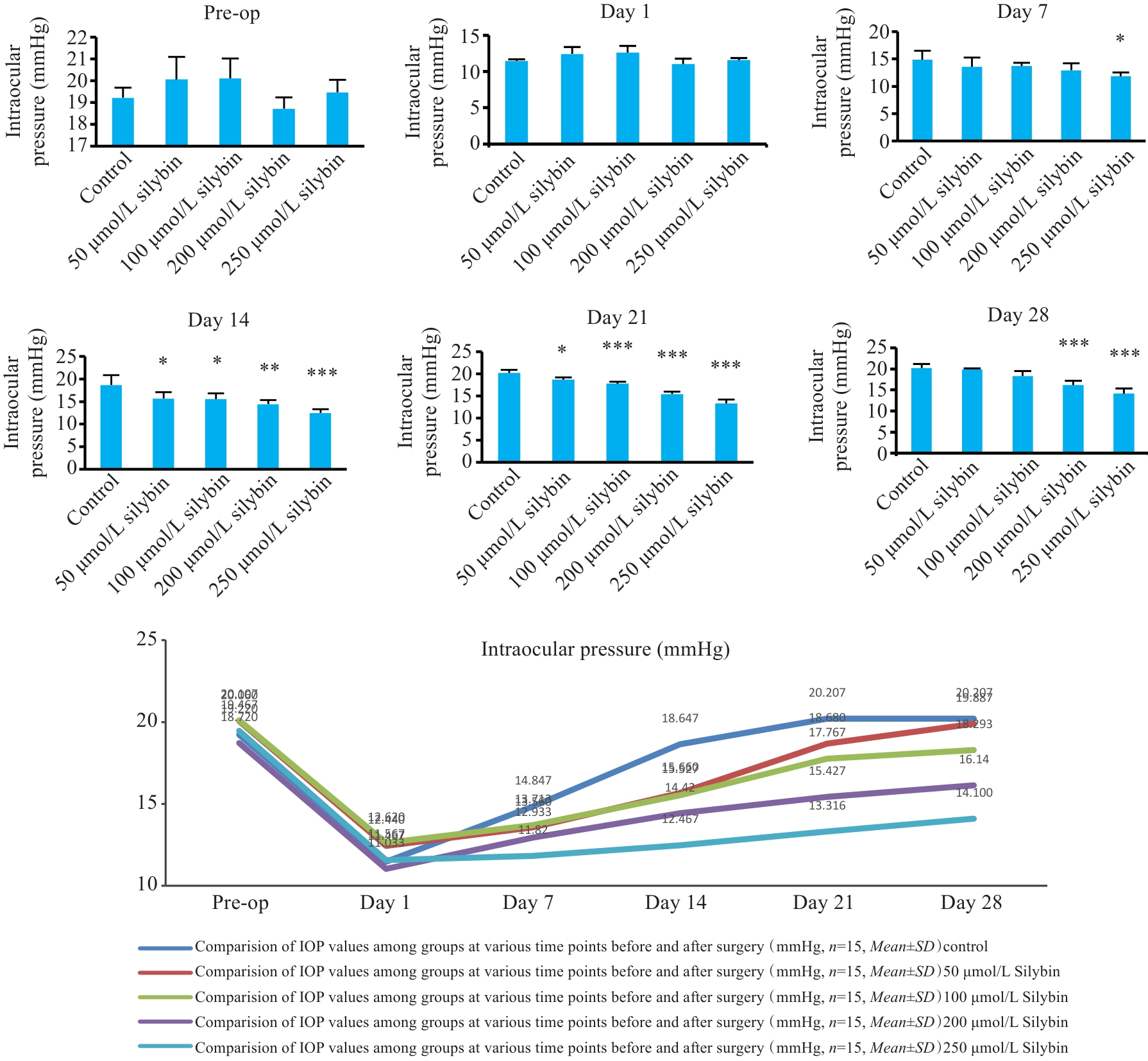
图1 各实验组与对照组兔眼压比较结果
Fig.1 Test results of intraocular pressure of the rabbits in the experimental groups and control group. *P<0.05, **P<0.01, ***P<0.001 vs Control group (n=15).
| Surgery time (day) | Control | Silybin (μmol/L) | |||
|---|---|---|---|---|---|
| 50 | 100 | 200 | 250 | ||
| 1 | 5 (100%) | 5 (100%) | 5 (100%) | 5 (100%) | 5 (100%) |
| 7 | 5 (100%) | 5 (100%) | 5 (100%) | 5 (100%) | 5 (100%) |
| 14 | 0 (0%) | 1 (20%) | 3 (60%)* | 5 (100%)*** | 5 (100%)*** |
| 21 | 0 (0%) | 1 (20%) | 2 (40%) | 4 (80%)*** | 5 (100%)*** |
| 28 | 0 (0%) | 0 (0%) | 0 (0%) | 2 (40%) | 4 (80%)*** |
表2 各实验与对照组功能性滤过泡计数比较
Tab.2 Comparison of the number of functional filtration blebs between experimental groups and control group (n, %)
| Surgery time (day) | Control | Silybin (μmol/L) | |||
|---|---|---|---|---|---|
| 50 | 100 | 200 | 250 | ||
| 1 | 5 (100%) | 5 (100%) | 5 (100%) | 5 (100%) | 5 (100%) |
| 7 | 5 (100%) | 5 (100%) | 5 (100%) | 5 (100%) | 5 (100%) |
| 14 | 0 (0%) | 1 (20%) | 3 (60%)* | 5 (100%)*** | 5 (100%)*** |
| 21 | 0 (0%) | 1 (20%) | 2 (40%) | 4 (80%)*** | 5 (100%)*** |
| 28 | 0 (0%) | 0 (0%) | 0 (0%) | 2 (40%) | 4 (80%)*** |
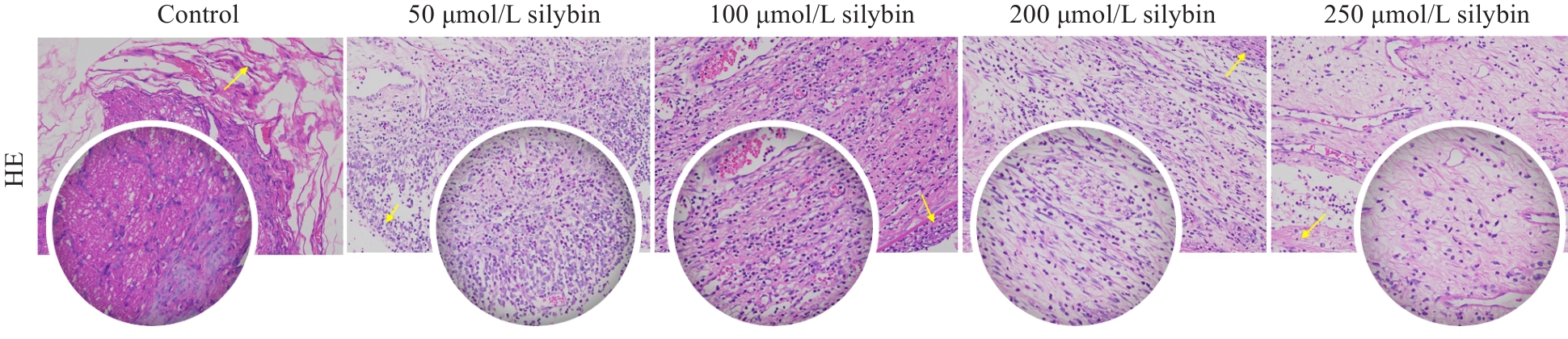
图2 各实验组与对照组HE染色结果
Fig.2 HE staining results in the experimental groups and control group (Original magnification: ×40). The yellow arrow indicates the scleral side.
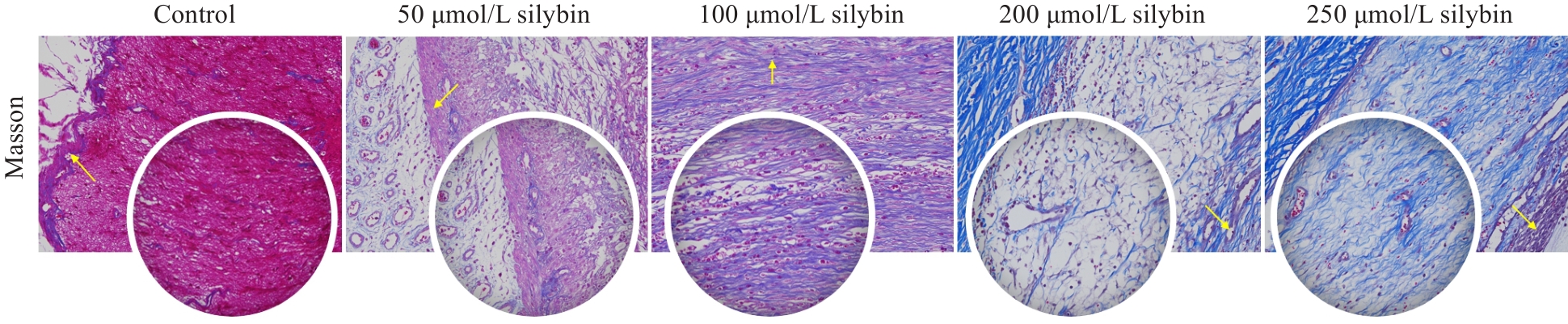
图3 实验组与对照组Masson染色结果
Fig.3 Masson staining results in the experimental groups and control group (×40). The yellow arrow points to the scleral side.
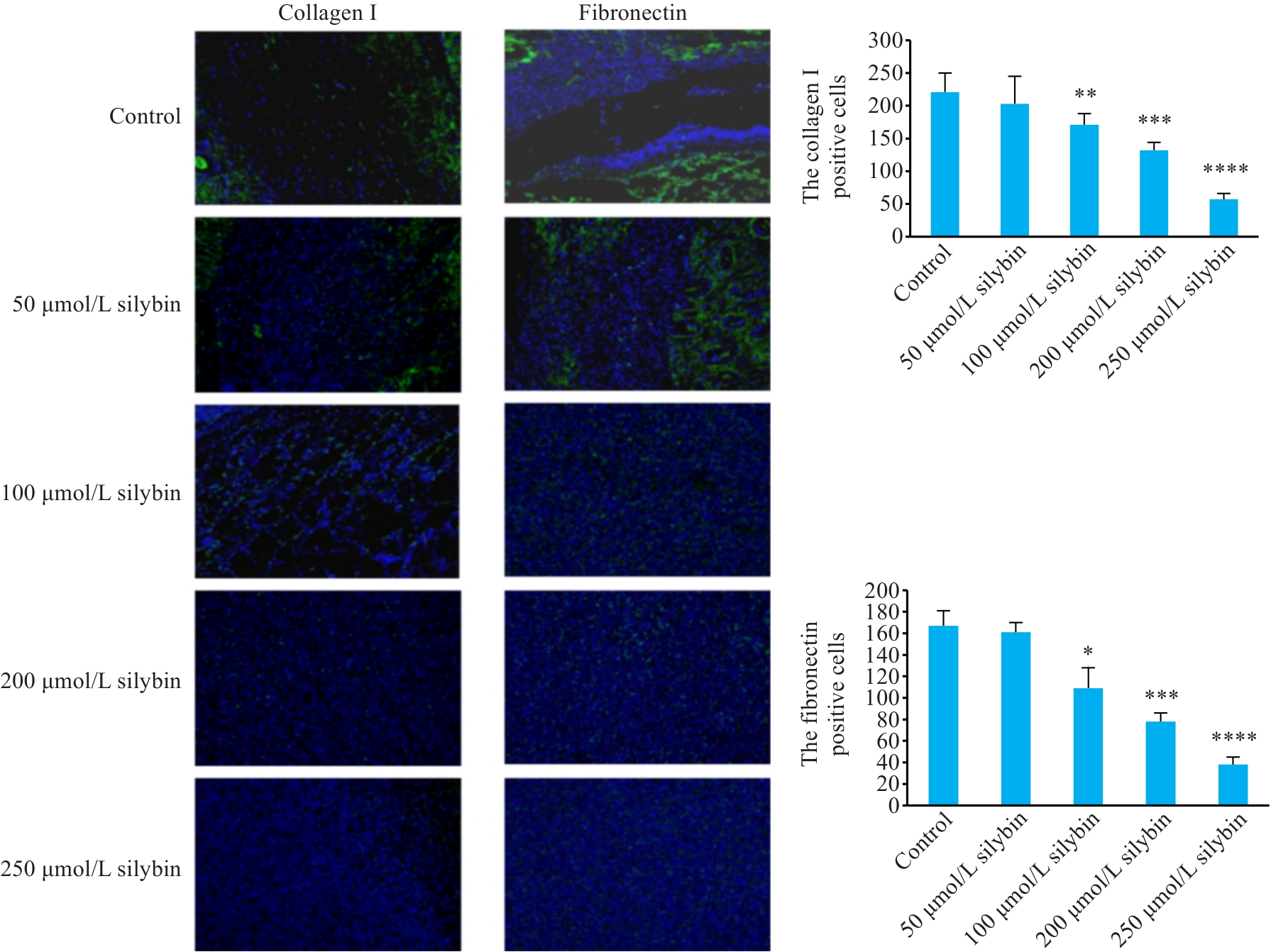
图4 实验组与对照组Fibronectin和Collagen I免疫荧光染色结果
Fig.4 Immunofluorescence staining for fibronectin and collagen I in each group (×40). The nuclei were stained by DAPI (blue under ultraviolet excitation), and green fluorescence indicates positive expression. *P <0.05, **P <0.01, ***P <0.001, ****P <0.0001 vs Control group.
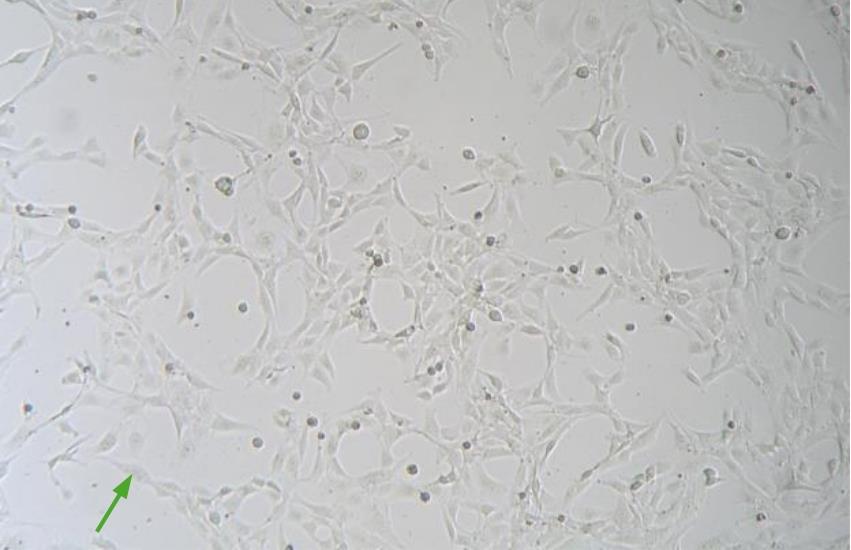
图5 显微镜下体外培养RYTF
Fig.5 Morphology of cultured rabbit Tenons capsule fibroblasts (RYTF). Green arrow indicates significant fibrosis characteristics of rabbit Tenon's capsule cells (×40).
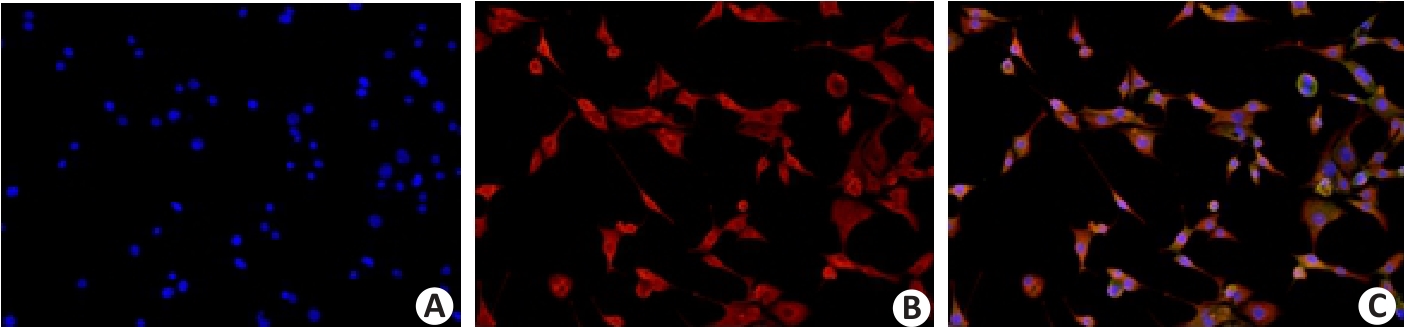
图6 兔Tenons囊成纤维细胞的免疫荧光鉴定
Fig.6 Immunofluorescence identification of RYTF (×400). Cell nuclei were stained blue with DAPI (A). RYTF showed a positive reaction for vimentin with red staining labeled with CY3 (B), while negative staining for keratin with green staining labeled with 488 (C).
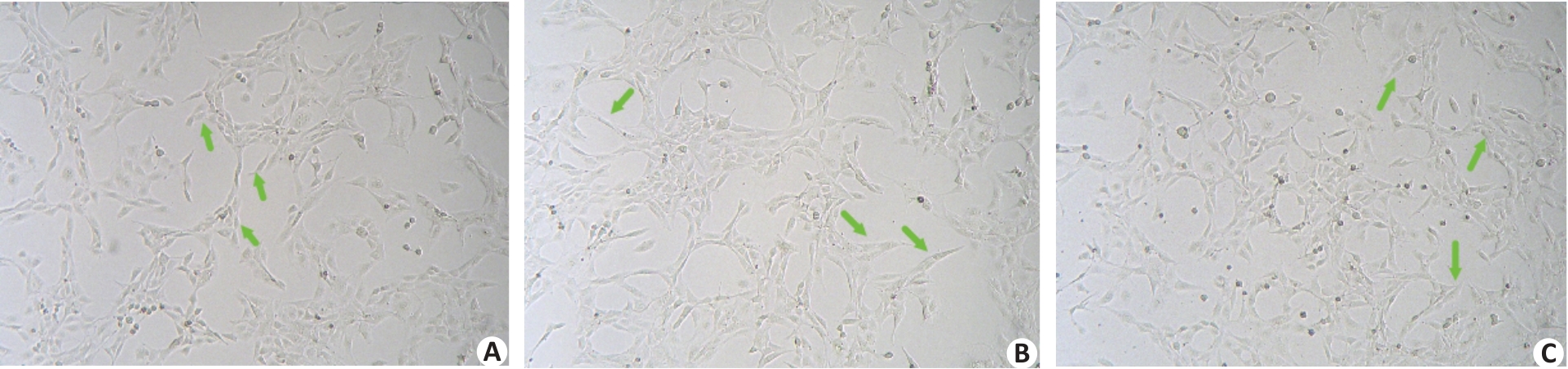
图7 水飞蓟宾对TGF-β1诱导的RYTF纤维化形态的影响
Fig.7 Morphological observation of TGF-β1-induced rabbit Tenons capsular fibroblasts treated with silybin (×40). A: Control group. B: TGF-β1 treatment group. C: TGF-β1 and 200 μmol/L silybin treatment group. Green arrows indicate significant fibrosis characteristics of rabbit Tenon's capsule cells.
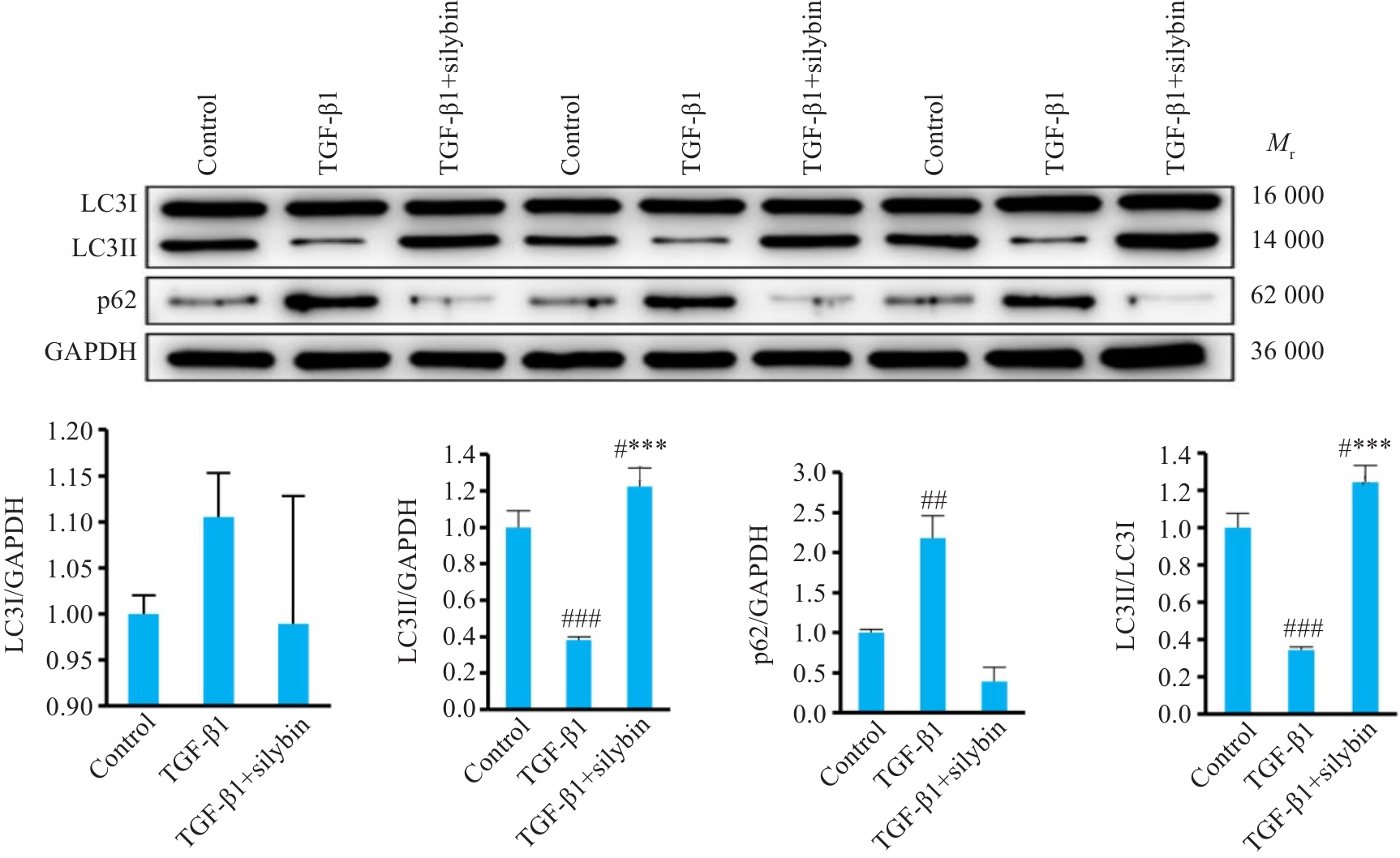
图8 Western blotting检测各组细胞自噬标记物的表达结果
Fig.8 Western blotting for detecting autophagy markers in each group. ***P<0.001 vs Control; #P<0.05, ##P<0.01,###P<0.001vs Control.
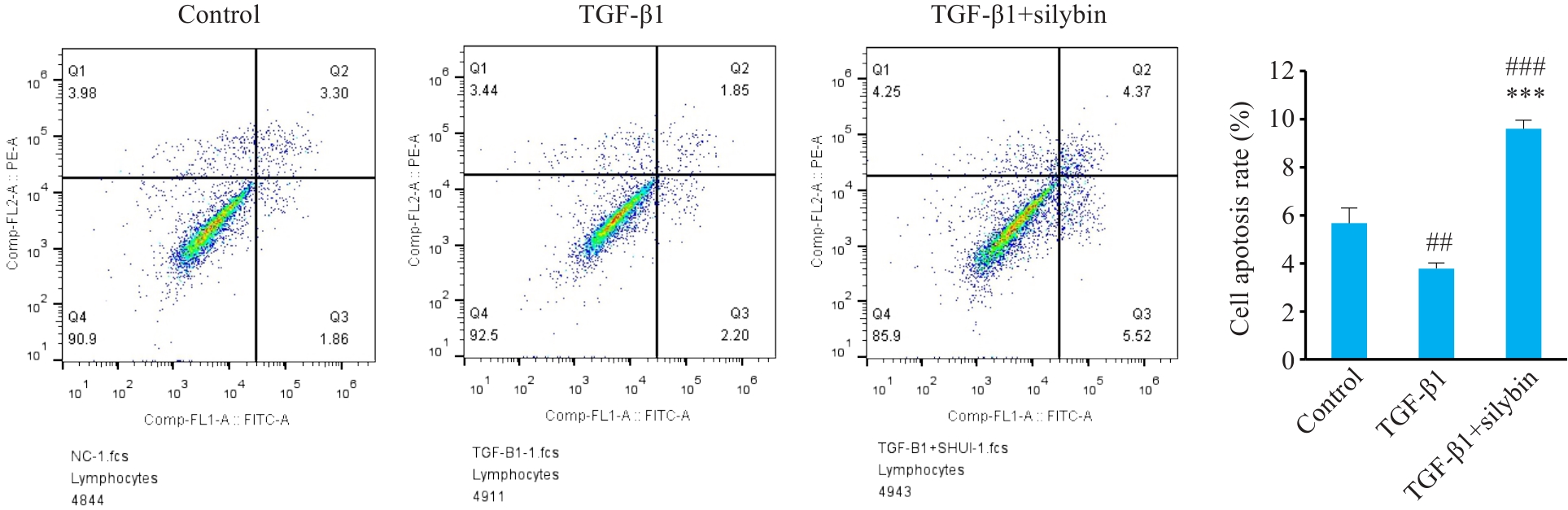
图9 流式细胞术检测各组细胞凋亡结果
Fig.9 Cell apoptosis detected by flow cytometry. ***P<0.001 vs Control; ##P<0.01, ###P<0.001 vs Control.
| [1] | Guo L, Wang N, Chen J, et al. Cellular senescence and glaucoma[J]. Exp Gerontol, 2025, 202: 112718. doi:10.1016/j.exger.2025.112718 |
| [2] | Tham Y, Li X, Wong TY, et al. Global prevalence of glaucoma and projections of glaucoma burden through 2040: a systematic review and meta-analysis[J]. Ophthalmology, 2014,121(11):2081-90. doi:10.1016/j.ophtha.2014.05.013 |
| [3] | Boland MV, Ervin AM, Friedman DS, et al. Comparative effectiveness of treatments for open-angle glaucoma: a systematic review for the U.S. preventive services task force[J]. Ann Intern Med, 2013, 158(4): 271-9. doi:10.7326/0003-4819-158-4-201302190-00008 |
| [4] | Gedde SJ, Schiffman JC, Feuer WJ, et al. Treatment outcomes in the tube versus trabeculectomy (TVT) study after five years of follow-up[J]. Am J Ophthalmol, 2012, 153(5): 789-803.e2. doi:10.1016/j.ajo.2011.10.026 |
| [5] | Lai C, Shao SC, Chen YH, et al. Trabeculectomy with antimetabolite agents for normal tension glaucoma: a systematic review and meta-analysis[J]. Front Med, 2022, 9: 932232. doi:10.3389/fmed.2022.932232 |
| [6] | 苗晓晴, 黄祖烽, 陈玄之, 等. 两种质量浓度丝裂霉素C应用于青光眼手术中的效果比较[J]. 广东医学院学报, 2016, 34(4): 419-21. doi:10.3969/j.issn.1005-4057.2016.04.024 |
| [7] | Li WB, Qu XN, Kang XP, et al. Silibinin eliminates mitochondrial ROS and restores autophagy through IL6ST/JAK2/STAT3 signaling pathway to protect cardiomyocytes from doxorubicin-induced injury[J]. Eur J Pharmacol, 2022, 929: 175153. doi:10.1016/j.ejphar.2022.175153 |
| [8] | Chen HQ, Wang XJ, Wang MH, et al. Behavioral and neurochemical deficits in aging rats with increased neonatal iron intake: silibinin's neuroprotection by maintaining redox balance[J]. Front Aging Neurosci, 2015, 7: 206. doi:10.3389/fnagi.2015.00206 |
| [9] | Liu B, Liu WW, Liu PW, et al. Silibinin alleviates the learning and memory defects in overtrained rats accompanying reduced neuronal apoptosis and senescence[J]. Neurochem Res, 2019, 44(8): 1818-29. doi:10.1007/s11064-019-02816-2 |
| [10] | Gillessen A, Schmidt HHJ. Silymarin as supportive treatment in liver diseases: a narrative review[J]. Adv Ther, 2020, 37(4): 1279-301. doi:10.1007/s12325-020-01251-y |
| [11] | Ma ZC, Zang WW, Wang HG, et al. Silibinin enhances anti-renal fibrosis effect of MK-521 via downregulation of TGF-β signaling pathway[J]. Hum Cell, 2020, 33(2): 330-6. doi:10.1007/s13577-019-00314-9 |
| [12] | Liu K, Zhou SJ, Liu JY, et al. Silibinin attenuates high-fat diet-induced renal fibrosis of diabetic nephropathy[J]. Drug Des Dev Ther, 2019, 13: 3117-26. doi:10.2147/dddt.s209981 |
| [13] | Shen Y, Zhao HX, Wang ZG, et al. Silibinin declines blue light-induced apoptosis and inflammation through MEK/ERK/CREB of retinal ganglion cells[J]. Artif Cells Nanomed Biotechnol, 2019, 47(1): 4059-65. doi:10.1080/21691401.2019.1671430 |
| [14] | 邰 雪, 申 颖, 赵海霞, 等. 雷帕霉素在兔眼滤过性手术后的抗瘢痕作用[J]. 南方医科大学学报, 2020, 40(9): 1346-52. doi:10.12122/j.issn.1673-4254.2020.09.19 |
| [15] | Wotke J, Homolka P, Vasku J, et al. Histopathology image analysis in two long-term animal experiments with helical flow total artificial heart[J]. Artif Organs, 2016, 40(12): 1137-45. doi:10.1111/aor.12689 |
| [16] | Kim JS, Han NK, Kim SH, et al. Silibinin attenuates radiation-induced intestinal fibrosis and reverses epithelial-to-mesenchymal transition[J]. Oncotarget, 2017, 8(41): 69386-97. doi:10.18632/oncotarget.20624 |
| [17] | Ali SA, Saifi MA, Godugu C, et al. Silibinin alleviates silica-induced pulmonary fibrosis: Potential role in modulating inflam-mation and epithelial-mesenchymal transition[J]. Phytother Res, 2021, 35(9): 5290-304. doi:10.1002/ptr.7210 |
| [18] | Zhang F, Liu K, Cao MD, et al. Rosiglitazone treatment prevents postoperative fibrosis in a rabbit model of glaucoma filtration surgery[J]. Invest Ophthalmol Vis Sci, 2019, 60(7): 2743. doi:10.1167/iovs.18-26526 |
| [19] | Hu R, Wang XJ, Chen S, et al. Qingguang'an-induced autophagy in TFs inhibits scar formation: a follow-up in vivo mechanistic investigation[J]. J Tradit Complementary Med, 2024, 14(2): 173-81. doi:10.1016/j.jtcme.2023.10.002 |
| [20] | Chen YH, Liang CM, Chen CL, et al. Silibinin inhibits myofibroblast transdifferentiation in human tenon fibroblasts and reduces fibrosis in a rabbit trabeculectomy model[J]. Acta Ophthalmol, 2013, 91(7): e506-15. doi:10.1111/aos.12160 |
| [21] | Wang XH, Chen KP, Yao YH, et al. TGFβ1-induced fibrotic responses of conjunctival fibroblasts through the Wnt/β‑catenin/CRYAB signaling pathway[J]. Am J Pathol, 2024, 194(9): 1764-79. doi:10.1016/j.ajpath.2024.05.002 |
| [22] | Chen YY, Chen YR, Li CM, et al. Transcription factor SP1 drives TGF‑β1-induced transformation of human tenon's capsule fibro-blasts by transcription activation-mediated SNAI2 upregulation[J]. Int Ophthalmol, 2025, 45(1): 243. doi:10.1007/s10792-025-03581-8 |
| [23] | Wu XP, Liang J, Liu JF, et al. Silibinin attenuates TGF-β2-induced fibrogenic changes in human trabecular meshwork cells by targeting JAK2/STAT3 and PI3K/AKT signaling pathways[J]. Exp Eye Res, 2024, 244: 109939. doi:10.1016/j.exer.2024.109939 |
| [24] | Gupta A, Kafetzis KN, Tagalakis AD, et al. RNA therapeutics in ophthalmology-translation to clinical trials[J]. Exp Eye Res, 2021, 205: 108482. doi:10.1016/j.exer.2021.108482 |
| [25] | Cao JJ, Han FF, Kou ZY, et al. Effect of SB431542 on autophagy and epithelial mesenchymal transition in retinal pigment epithelial cells induced by high glucose[J]. Chin J Ophthalmol, 2025,61(3):202-10. |
| [26] | Yamoto M, Alganabi M, Chusilp S, et al. Lysosomal overloading and necrotizing enterocolitis[J]. Pediatr Surg Int, 2020, 36(10): 1157-65. doi:10.1007/s00383-020-04724-x |
| [27] | Shang JN, Yu CG, Li R, et al. The nonautophagic functions of autophagy-related proteins[J]. Autophagy, 2024, 20(4): 720-34. doi:10.1080/15548627.2023.2254664 |
| [28] | Wu NX, Chen LB, Yan D, et al. Trehalose attenuates TGF‑β1-induced fibrosis of hSCFs by activating autophagy[J]. Mol Cell Biochem, 2020, 470(1): 175-88. doi:10.1007/s11010-020-03760-4 |
| [29] | Zhang YL, Zhang YQ, Lin HL, et al. Epigallocatechin-3-gallate increases autophagic activity attenuating TGF‑β1-induced transfo-rmation of human Tenon's fibroblasts[J]. Exp Eye Res, 2021, 204: 108447. doi:10.1016/j.exer.2021.108447 |
| [30] | Huang X, Zhang JP, Yao J, et al. Phase separation of p62: roles and regulations in autophagy[J]. Trends Cell Biol, 2025, 35(10): 854-65. doi:10.1016/j.tcb.2025.01.010 |
| [31] | Aredia F, Guamán Ortiz LM, Giansanti V, et al. Autophagy and cancer[J]. Cells, 2012, 1(3): 520-34. doi:10.3390/cells1030520 |
| [32] | Ji Y, Li L, Ma YX, et al. Quercetin inhibits growth of hepatocellular carcinoma by apoptosis induction in part via autophagy stimulation in mice[J]. J Nutr Biochem, 2019, 69: 108-19. doi:10.1016/j.jnutbio.2019.03.018 |
| [33] | 朱晓敏, 钟 颖, 黄娜娜, 等. 基于Akt/mTOR通路研究地榆皂苷Ⅱ诱导肝癌细胞凋亡和自噬作用机制[J]. 中草药, 2024, 55(11): 3726-34. doi:10.7501/j.issn.0253-2670.2024.11.015 |
| [1] | 李彩霞, 崔立华, 曹婕, 樊宇星, 周雪颖, 张淑坤, 左艳洁. 活血清解灵通过调控Sirt1-自噬信号通路减轻胆管结扎诱导的大鼠肝纤维化[J]. 南方医科大学学报, 2026, 46(3): 513-522. |
| [2] | 宋淇乐, 苗益恺, 冯小桐, 王一凡, 刘伟, 魏琪, 于新汝, 陈文文, 付晓艳. 硒代胱氨酸通过诱导活性氧产生启动氧化应激损伤抑制结肠癌细胞生长[J]. 南方医科大学学报, 2026, 46(3): 532-540. |
| [3] | 陈义珍, 王伟丽, 程梦, 张威, 高怡琳, 洪馨, 张磊, 戴荣, 王亿平. 清肾颗粒通过调控糖酵解重编程及组蛋白 H3K18 乳酸化减轻小鼠肾纤维化[J]. 南方医科大学学报, 2026, 46(3): 582-591. |
| [4] | 温贺新, 林洁, 左芦根, 刘牧林. 珠子草素通过拮抗肠上皮细胞凋亡与调控肠道Th1/Th2免疫平衡改善克罗恩病样小鼠结肠炎[J]. 南方医科大学学报, 2026, 46(3): 655-665. |
| [5] | 乔通, 尹林, 张可妮, 牛民主, 黄菊, 耿志军, 李静, 胡建国. 茯苓新酸A通过调节AMPK/mTOR介导的自噬来减轻葡聚糖硫酸钠诱导的小鼠结肠炎[J]. 南方医科大学学报, 2026, 46(1): 131-140. |
| [6] | 徐嘉艺, 杨迪, 臧开来, 褚孟恩, 赵庆瑶, 李晴, 鲁森, 陈修丽, 李宁. EVA1A过表达通过调节脂质代谢和促进脂滴自噬改善非酒精性脂肪肝[J]. 南方医科大学学报, 2026, 46(1): 150-158. |
| [7] | 张淑芬, 黄添容, 杨灿洪, 陈家镒, 吕田明, 张嘉发. 莱菔硫烷通过抑制Aβ42寡聚体激活的U87细胞中MAPK/NF-κB信号通路降低反应性星形胶质细胞介导的SH-SY5Y凋亡[J]. 南方医科大学学报, 2026, 46(1): 191-199. |
| [8] | 林心君, 何昱霖, 施红, 刘佳绣, 胡海霞. 石斛合剂通过调控Sirt3介导的线粒体自噬通路缓解大鼠糖尿病心肌病[J]. 南方医科大学学报, 2026, 46(1): 47-54. |
| [9] | 赵锦燕, 彭娇, 林明和, 朱晓勤, 黄彬, 林久茂. 清解扶正颗粒通过抑制线粒体依赖的凋亡、激活AMPK-PGC-1α通路缓解5-氟尿嘧啶引起的骨骼肌损伤[J]. 南方医科大学学报, 2026, 46(1): 94-103. |
| [10] | 王莹, 李静, 王伊迪, 华明钰, 胡玮彬, 张晓智. 原发性肝癌患者的临床结局与治疗反应预测模型:基于失巢凋亡和免疫基因[J]. 南方医科大学学报, 2025, 45(9): 1967-1979. |
| [11] | 陈丹丹, 任乾千, 吕梦林, 张宝文, 刘醒然, 张蒙, 王阳, 寇现娟. 天麻钩藤饮通过抑制坏死性凋亡通路改善帕金森病小鼠的运动功能障碍[J]. 南方医科大学学报, 2025, 45(8): 1571-1580. |
| [12] | 张潇, 满景洲, 张勇, 郑云剑, 王和平, 袁怡君, 谢曦. 雨生红球藻抑制肺成纤维细胞向肌成纤维细胞转化改善博来霉素诱导的小鼠肺纤维化[J]. 南方医科大学学报, 2025, 45(8): 1672-1681. |
| [13] | 常笑语, 张瀚文, 曹红亭, 侯玲, 孟鑫, 陶虹, 罗彦, 李光华. 热应激对大鼠胸主动脉内皮细胞生物钟基因 Bmal1和细胞周期蛋白表达水平的影响[J]. 南方医科大学学报, 2025, 45(7): 1353-1362. |
| [14] | 李玮怡, 江露, 张宗星, 陈丹, 包卓玛, 黄丽, 袁林. 强骨康疏方通过抑制HIF-1α/BNIP3自噬信号通路减少类风湿性关节炎大鼠的破骨细胞分化[J]. 南方医科大学学报, 2025, 45(7): 1389-1396. |
| [15] | 阳亭亭, 赵丽. 维生素A缺乏联合CCl4诱导制备稳定的小鼠慢性肝纤维化模型[J]. 南方医科大学学报, 2025, 45(7): 1527-1534. |
| 阅读次数 | ||||||
|
全文 |
|
|||||
|
摘要 |
|
|||||
