
南方医科大学学报 ›› 2026, Vol. 46 ›› Issue (9): 2149-2158.doi: 10.12122/j.issn.1673-4254.2026.09.14
• • 上一篇
自胤余( ), 刘子淼, 邓镇()
收稿日期:2025-12-20
出版日期:2026-09-20
发布日期:2026-09-30
通讯作者:
邓镇
E-mail:yinyuzi_cn@163.com;dengzhencn83@ smu.edu.cn
作者简介:自胤余,硕士,E-mail: yinyuzi_cn@163.com
基金资助:
Yinyu ZI(), Zimiao LIU, Zhen DENG()
Received:2025-12-20
Online:2026-09-20
Published:2026-09-30
Contact:
Zhen DENG
E-mail:yinyuzi_cn@163.com;dengzhencn83@ smu.edu.cn
Supported by:摘要:
目的 分析缺血性卒中不同亚型之间血浆代谢特征的差异,并通过10种机器学习算法构建识别缺血性脑卒中不同亚型的模型,为隐源性卒中的辨识提供客观化依据,以提高临床诊断率。 方法 本研究共招募了来自3家医院的277例急性缺血性脑卒中(AIS)患者作为研究对象,并根据TOAST分型对患者进行分组。所有患者采集静脉血样并进行1H-NMR代谢组检测,比较分析并鉴定了46种代谢物。采用代谢组学和孟德尔随机化分析来识别潜在的生物标志物, PyCaret 用于开发和优化机器学习(ML)模型。开发血浆代谢物机器学习 (PMML) 模型用以区分缺血性卒中的不同亚型,并将隐源性卒中(SUE)队列用以外部验证模型效能。 结果 在大动脉动脉粥样硬化 (LAA)、小动脉闭塞 (SVO) 和心源性栓塞 (CE)之间观察到代谢物谱的显著差异。孟德尔随机化分析表明,葡萄糖和脯氨酸可能作为 SVO 和 LAA的潜在生物标志物。基于3种诊断良好的亚型(LAA、SVO 和 CE)的代谢谱,本研究开发了血浆代谢物机器学习(PMML) 模型,该模型在区分上述缺血性卒中亚型方面表现出较高的预测准确性(准确率:0.8630;ROC曲线下面积:0.9586)。SUE患者被用作验证队列,其中,被预测为 LAA 的患者,23.9%出现易损斑块;而被预测为SVO或CE的患者有10.9%出现易损斑块。此外,5名被预测患有 CE 的患者通过长程心电图监测被诊断为阵发性心房颤动。 结论 不同的血浆代谢特征与不同的缺血性卒中亚型相关。本研究的 PMML 模型基于诊断良好的卒中亚型的血浆代谢特征,在识别这些亚型方面表现出较高的准确率,并且在预测隐源性卒中的病因学方面具有巨大潜力。
自胤余, 刘子淼, 邓镇. 基于血浆代谢组学与机器学习的缺血性卒中亚型判别及隐源性卒中病因预测[J]. 南方医科大学学报, 2026, 46(9): 2149-2158.
Yinyu ZI, Zimiao LIU, Zhen DENG. Plasma metabolomics combined with machine learning for classifying ischemic stroke subtypes and predicting the etiology of cryptogenic stroke[J]. Journal of Southern Medical University, 2026, 46(9): 2149-2158.
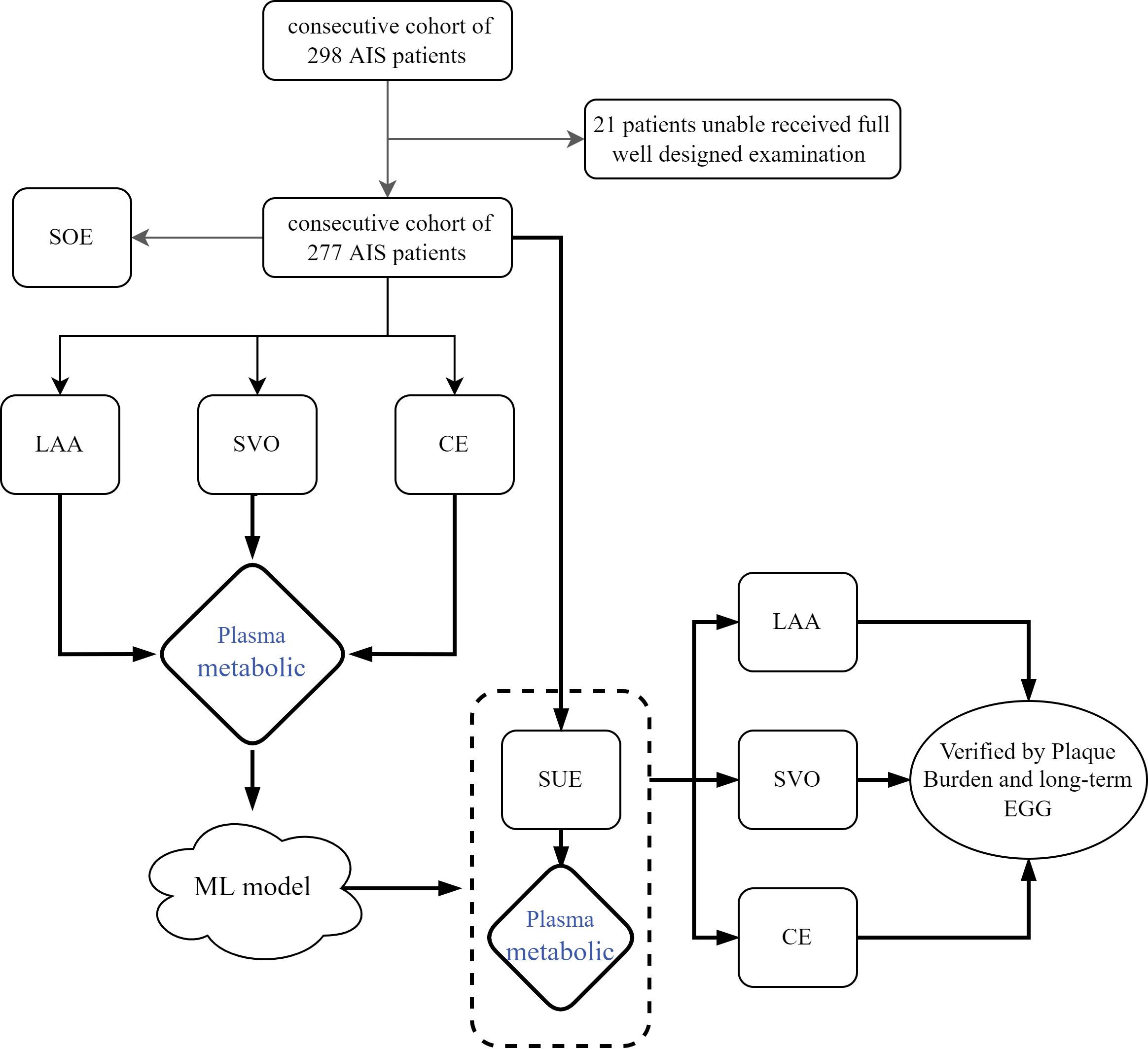
图1 本研究的流程图
Fig.1 Flowchart of the trial. AIS: Acute ischemic stroke; LAA: Large artery atherosclerosis; SVO: Small vessel occlusion; CE: Cardioembolism; ML: Machine learning.
| Characteristic | LAA (142) | SVO (76) | SUE (27) | CE (22) | SOE (10) | Total (277) | P |
|---|---|---|---|---|---|---|---|
| Age (year) | 64.32±13.55 | 62.39±12.31 | 65.00±14.29 | 70.74±19.79 | 59.19±20.11 | 64.27±14.22 | NS |
| Gender | |||||||
| Male | 112 (78.87%) | 66 (86.84%) | 22 (81.48%) | 8 (36.36%) | 8 (80.00%) | 216 (77.98%) | <0.001 |
| Female | 30 (21.13%) | 10 (13.16%) | 5 (18.52%) | 14 (63.64%) | 2 (20.00%) | 61 (22.02%) | <0.001 |
| NIHSS | 5.22 (3.31-8.34) | 5.06 (4.00-8.00) | 5.00 (3.82-7.95) | 10.50 (5.00-17.58) | 6.28 (1.50-8.00) | 5.46 (3.72-8.59) | <0.001 |
| Medical history | |||||||
| Current smoker | 70 (49.30%) | 32 (42.11%) | 14 (51.85%) | 6 (27.27%) | 4 (40.00%) | 126 (45.49%) | NS |
| Former smoker | 6 (4.23%) | 4 (5.26%) | 0 (0.00%) | 0 | 0 (0.00%) | 10 (3.61%) | NS |
| Current drinker | 42 (29.58%) | 26 (34.21%) | 4 (14.81%) | 0 | 2 (20.00%) | 74 (26.71%) | <0.001 |
| Former drinker | 8 (5.63%) | 4 (5.26%) | 0 | 0 | 0 | 12 (4.33%) | NS |
| Stroke | 18 (12.68%) | 10 (13.16%) | 2 (7.41%) | 12 (54.55%) | 0 | 42 (15.16%) | <0.001 |
| Hypertension | 84 (59.15%) | 42 (55.26%) | 10 (37.04%) | 6 (27.27%) | 0 | 142 (51.26%) | <0.001 |
| Diabetes | 48 (33.80%) | 12 (15.79%) | 4 (14.81%) | 0 | 2 (20.00%) | 66 (23.83%) | <0.001 |
| Coronary Heart Disease (CHD) | 6 (4.23%) | 6 (7.89%) | 0 | 2 (9.09%) | 0 | 14 (5.05%) | NS |
表1 患者基线资料
Tab.1 Baseline characteristics of the patients
| Characteristic | LAA (142) | SVO (76) | SUE (27) | CE (22) | SOE (10) | Total (277) | P |
|---|---|---|---|---|---|---|---|
| Age (year) | 64.32±13.55 | 62.39±12.31 | 65.00±14.29 | 70.74±19.79 | 59.19±20.11 | 64.27±14.22 | NS |
| Gender | |||||||
| Male | 112 (78.87%) | 66 (86.84%) | 22 (81.48%) | 8 (36.36%) | 8 (80.00%) | 216 (77.98%) | <0.001 |
| Female | 30 (21.13%) | 10 (13.16%) | 5 (18.52%) | 14 (63.64%) | 2 (20.00%) | 61 (22.02%) | <0.001 |
| NIHSS | 5.22 (3.31-8.34) | 5.06 (4.00-8.00) | 5.00 (3.82-7.95) | 10.50 (5.00-17.58) | 6.28 (1.50-8.00) | 5.46 (3.72-8.59) | <0.001 |
| Medical history | |||||||
| Current smoker | 70 (49.30%) | 32 (42.11%) | 14 (51.85%) | 6 (27.27%) | 4 (40.00%) | 126 (45.49%) | NS |
| Former smoker | 6 (4.23%) | 4 (5.26%) | 0 (0.00%) | 0 | 0 (0.00%) | 10 (3.61%) | NS |
| Current drinker | 42 (29.58%) | 26 (34.21%) | 4 (14.81%) | 0 | 2 (20.00%) | 74 (26.71%) | <0.001 |
| Former drinker | 8 (5.63%) | 4 (5.26%) | 0 | 0 | 0 | 12 (4.33%) | NS |
| Stroke | 18 (12.68%) | 10 (13.16%) | 2 (7.41%) | 12 (54.55%) | 0 | 42 (15.16%) | <0.001 |
| Hypertension | 84 (59.15%) | 42 (55.26%) | 10 (37.04%) | 6 (27.27%) | 0 | 142 (51.26%) | <0.001 |
| Diabetes | 48 (33.80%) | 12 (15.79%) | 4 (14.81%) | 0 | 2 (20.00%) | 66 (23.83%) | <0.001 |
| Coronary Heart Disease (CHD) | 6 (4.23%) | 6 (7.89%) | 0 | 2 (9.09%) | 0 | 14 (5.05%) | NS |
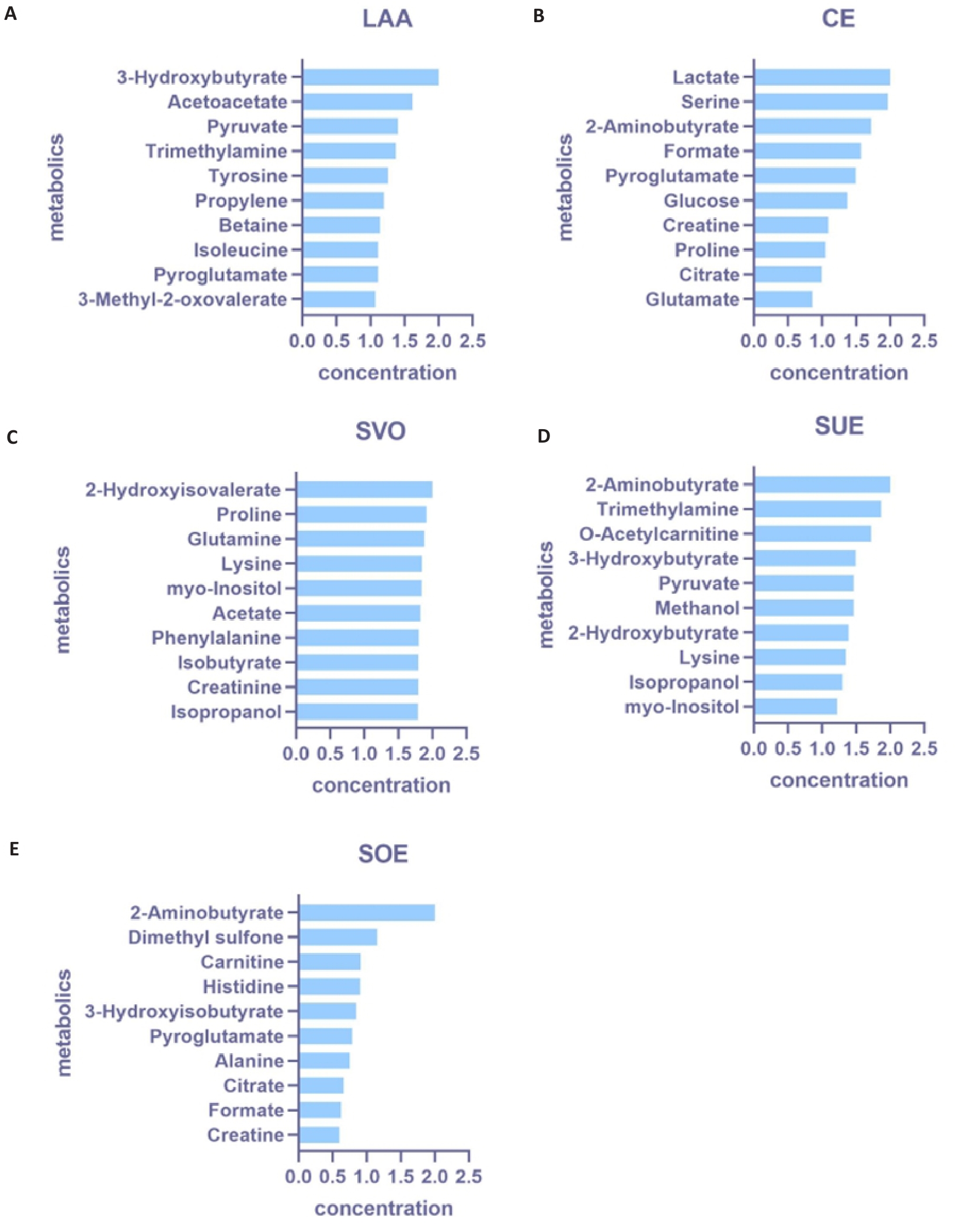
图2 在5种不同IS亚型患者血浆代谢特征中排名前10的代谢物及其相对浓度
Fig.2 The top 10 plasma metabolites in the plasma metabolic profiles of 5 different stroke subtypes and their relative concentrations. A: 3-hydroxybutyrate, acetoacetate, and pyruvate show the highest plasma concentrations in LAA subtype. B: Lactate, serine, and 2-aminobutyrate show the highest plasma concentrations in CE subtype. C: 2-hydroxyisovalerate, proline, and glutamine show the highest plasma concentrations in SVO subtype. D: 2-aminobutyrate, trimethylamine, and O-acetylcarnitine show the highest plasma concentrations in SUE subtype. E: 2-aminobutyrate, dimethyl sulfone, and carnitine show the highest plasma concentrations in SOE subtype.
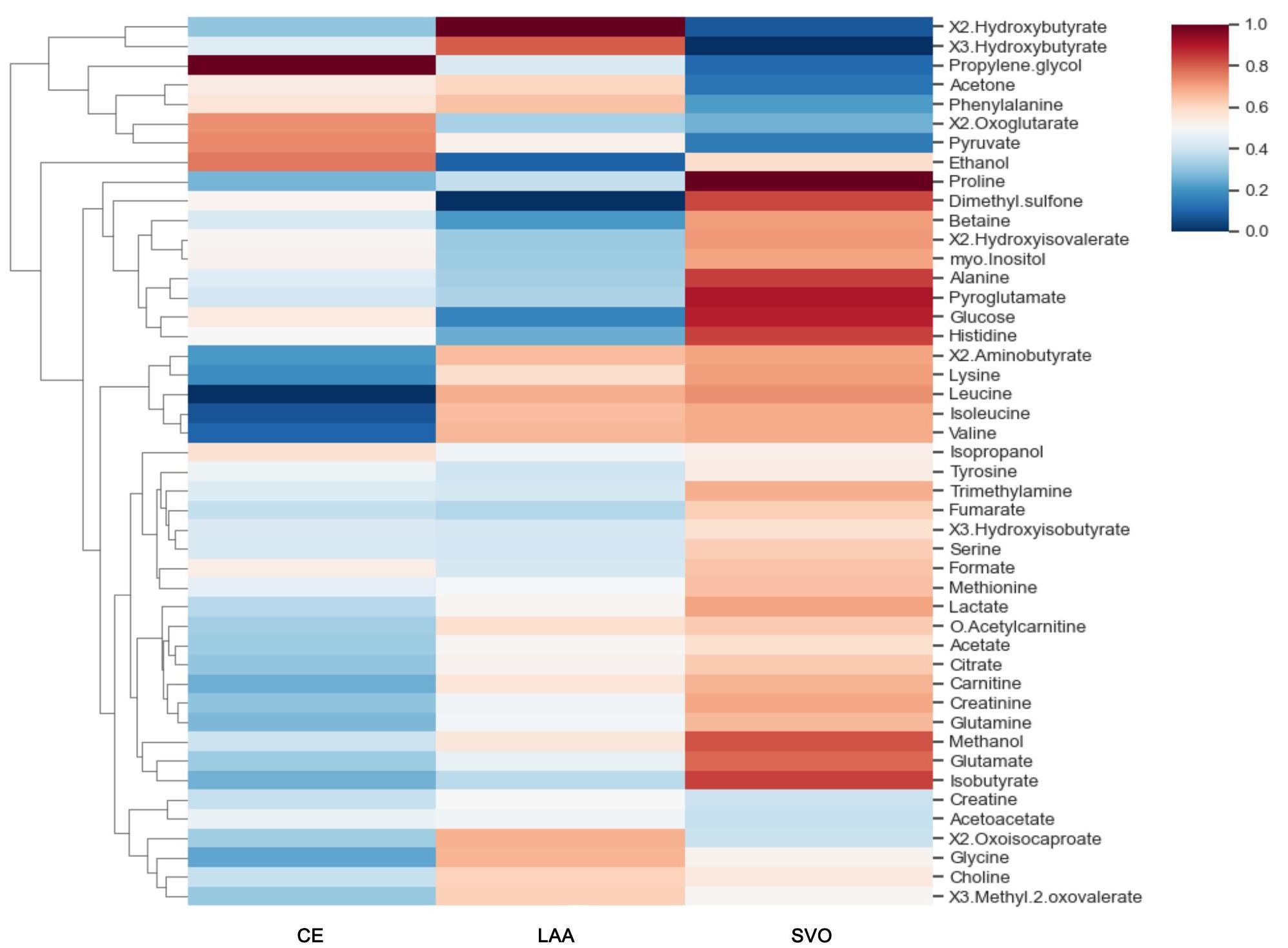
图3 CE、LAA、SVO患者的代谢物热图提示不同IS亚型患者的血浆代谢谱存在明显差异
Fig.3 Distinct metabolic profiles of CE, LAA and SVO patients.
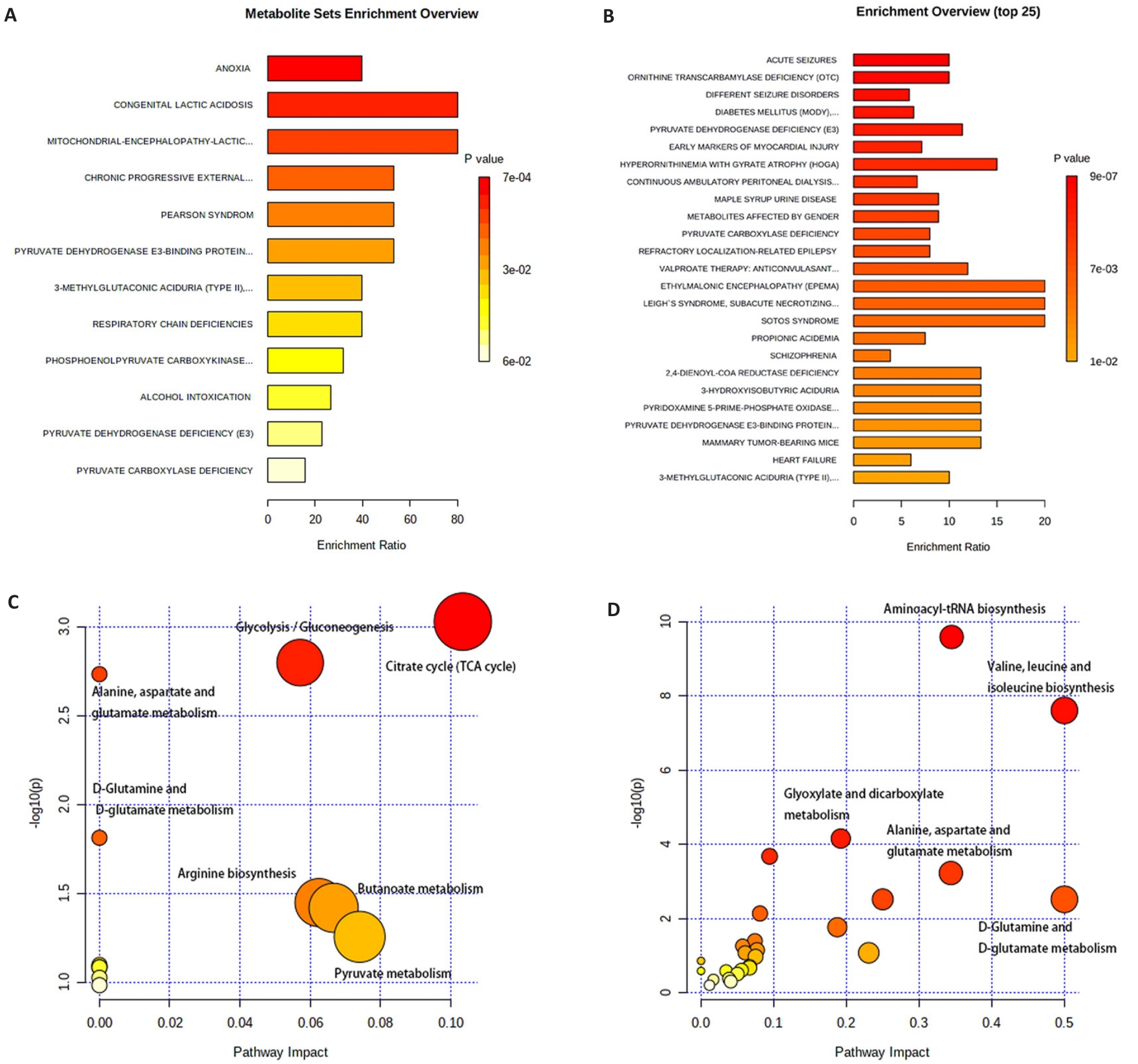
图4 CE患者和NCE患者的富集和通路分析差异
Fig.4 Differential enrichment and pathway analysis between CE and NCE patients. A, C: Metabolites with an upregulation trend in the CE group are primarily enriched in the Krebs cycle, glycolysis, and dysplasia-related metabolic pathways. B, D: Metabolites enriched in the NCE group are primarily involved in aminoacyl-tRNA biosynthesis, the glyoxylate pathway, and the dicarboxylate pathway. NCE=LAA+SVO.
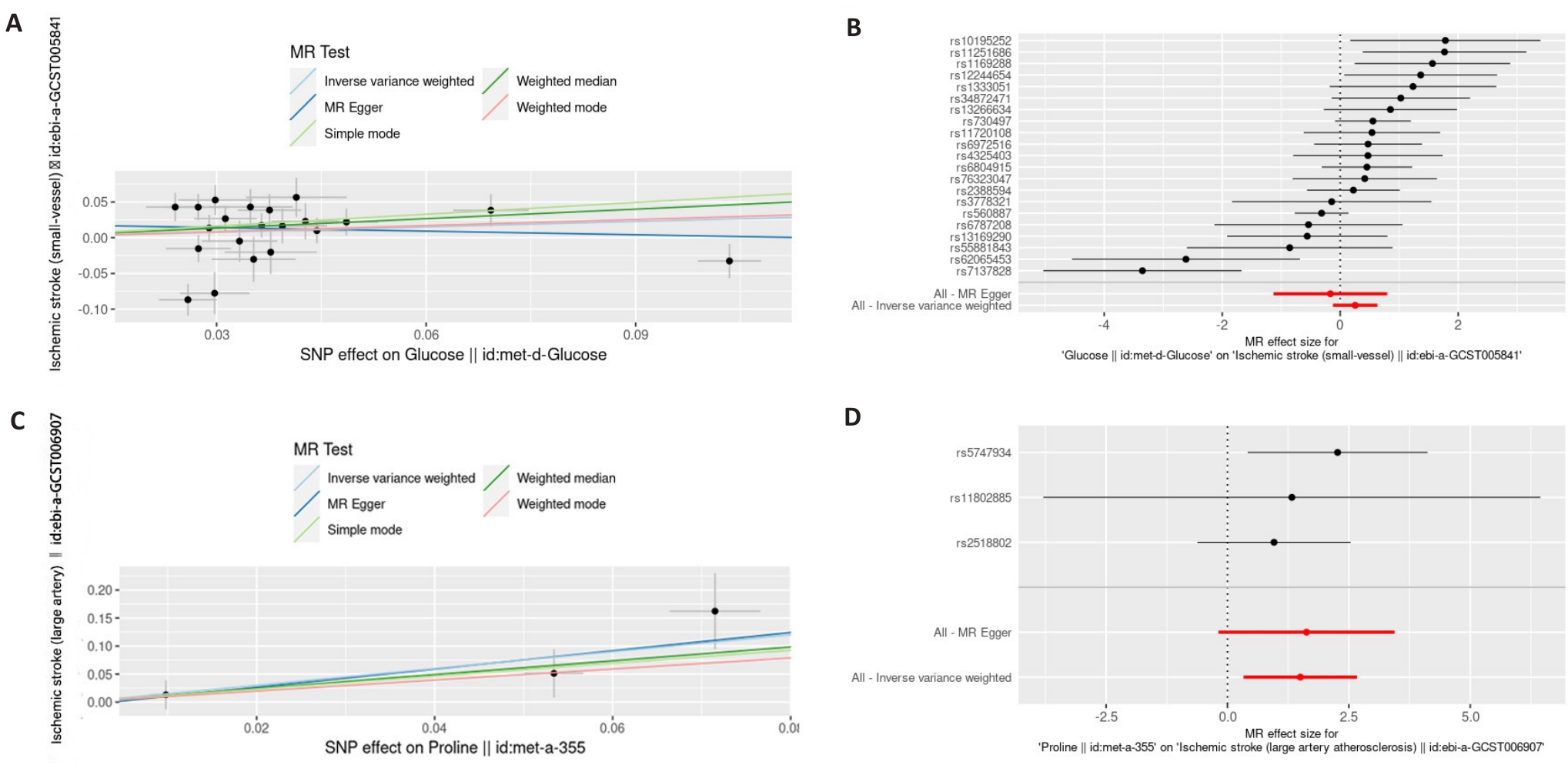
图5 孟德尔随机化揭示了葡萄糖对 SVO和脯氨酸对LAA 的影响
Fig.5 Mendelian randomization analysis of the effects of glucose on SVO and proline on LAA. A, B: Mendelian randomization analysis of glucose and SVO: regression lines and forest plots showing weighted median. C, D: Mendelian randomization analysis of proline and LAA: regression lines and forest plots showing weighted median.
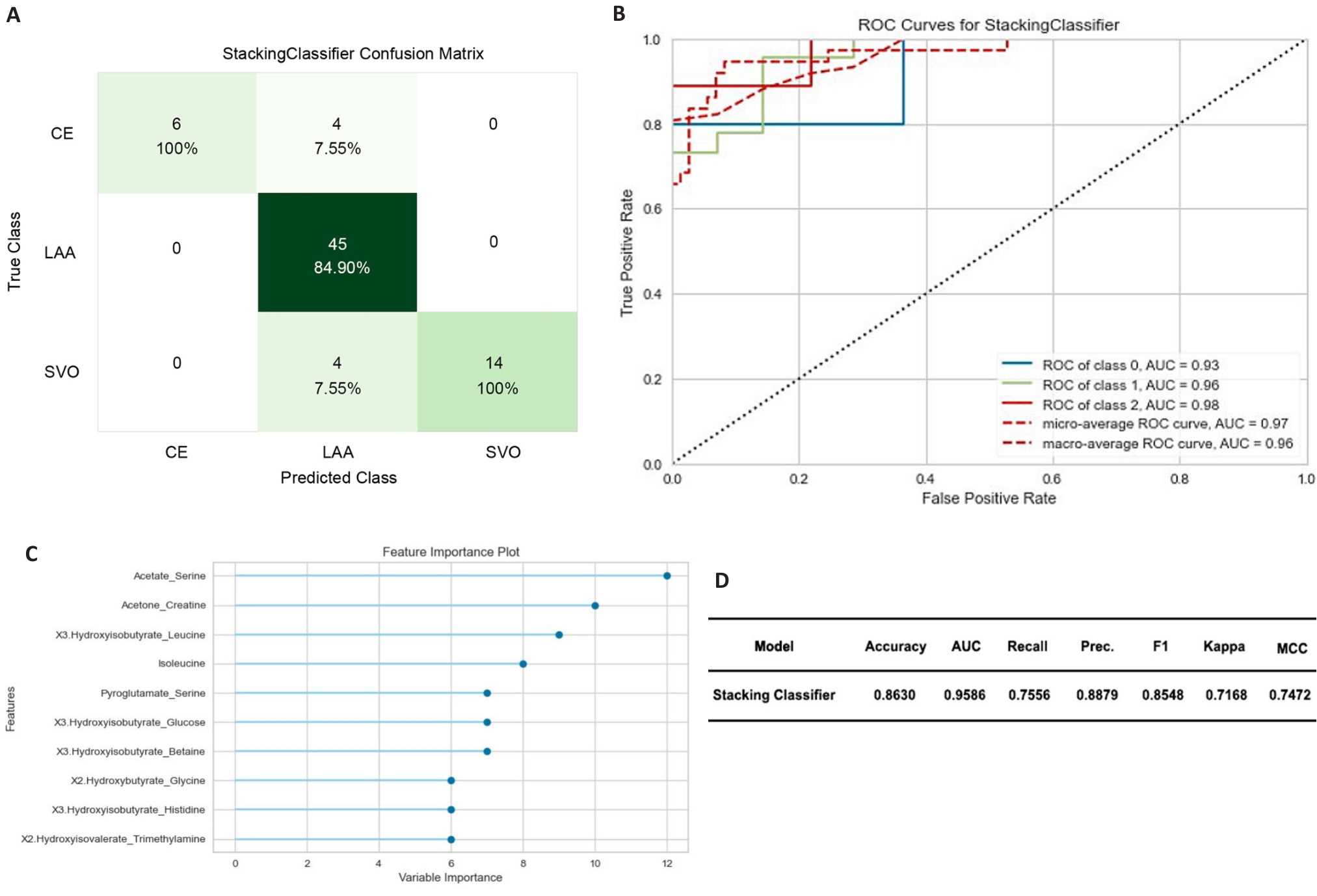
图6 血浆代谢物机器学习(PMML)模型及其表现
Fig. 6 The Plasma Metabolite Machine Learning (PMML) model and its predictive performance. A: Confusion matrix of the Stacking Classifier model. B: ROC curve of the Stacking Classifier model. C: Top 10 factors ranked based on their impact on the Stacking Classifier. D: Parameters indicating the prediction accuracy of the Stacking Classifier model.
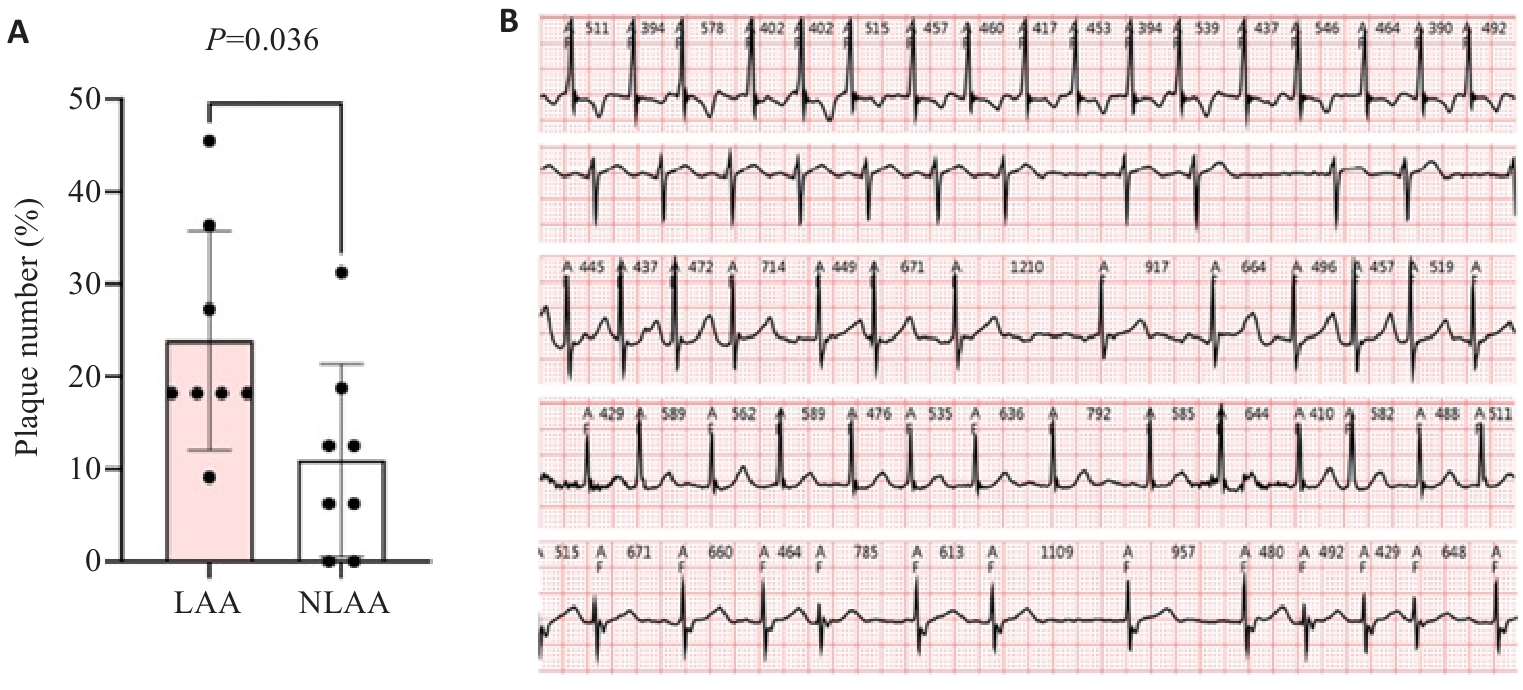
图7 ML 模型用于预测 SUE 患者的表现
Fig.7 Validation of the PMML Model in SUE patients. A: A significantly higher plaque burden was observed in patients predicted to have LAA than in the non-LAA group. B: Five patients predicted to have CE had paroxysmal atrial fibrillation episodes captured by long-range ECG.
| [1] | Wang HD, Liddell CA, Coates MM, et al. Global, regional, and national levels of neonatal, infant, and under-5 mortality during 1990-2013: a systematic analysis for the Global Burden of Disease Study 2013[J]. Lancet, 2014, 384(9947): 957-79. |
| [2] | Campbell BCV, De Silva DA, MacLeod MR, et al. Ischaemic stroke[J]. Nat Rev Dis Primers, 2019, 5: 70. doi:10.1038/s41572-019-0118-8 |
| [3] | Adams HP Jr, Bendixen BH, Kappelle LJ, et al. Classification of subtype of acute ischemic stroke. Definitions for use in a multicenter clinical trial. TOAST. Trial of Org 10172 in Acute Stroke Treatment[J]. Stroke, 1993, 24(1): 35-41. doi:10.1161/01.str.24.1.35 |
| [4] | Powers WJ, Rabinstein AA, Ackerson T, et al. Guidelines for the early management of patients with acute ischemic stroke: 2019 update to the 2018 guidelines for the early management of acute ischemic stroke: a guideline for healthcare professionals from the American heart association/American stroke association[J]. Stroke, 2019, 50(12): e344-418. doi:10.1161/str.0000000000000215 |
| [5] | Kamarova M, Baig S, Patel H, et al. Antiplatelet use in ischemic stroke[J]. Ann Pharmacother, 2022, 56(10): 1159-73. doi:10.1177/10600280211073009 |
| [6] | Diener HC, Hankey GJ. Primary and secondary prevention of ischemic stroke and cerebral hemorrhage JACC focus seminar[J]. J Am Coll Cardiol, 2020, 75(15): 1804-18. doi:10.1016/j.jacc.2019.12.072 |
| [7] | Benz AP, Hohnloser SH, Eikelboom JW, et al. Outcomes of patients with atrial fibrillation and ischemic stroke while on oral anticoagulation[J]. Eur Heart J, 2023, 44(20): 1807-14. doi:10.1093/eurheartj/ehad200 |
| [8] | Kolmos M, Christoffersen L, Kruuse C. Recurrent ischemic stroke-a systematic review and meta-analysis[J]. J Stroke Cerebrovasc Dis, 2021, 30(8): 105935. doi:10.1016/j.jstrokecerebrovasdis.2021.105935 |
| [9] | Ritter MA, Kochhäuser S, Duning T, et al. Occult atrial fibrillation in cryptogenic stroke: detection by 7-day electrocardiogram versus implantable cardiac monitors[J]. Stroke, 2013, 44(5): 1449-52. doi:10.1161/strokeaha.111.676189 |
| [10] | Seet RCS, Friedman PA, Rabinstein AA. Prolonged rhythm monitoring for the detection of occult paroxysmal atrial fibrillation in ischemic stroke of unknown cause[J]. Circulation, 2011, 124(4): 477-86. doi:10.1161/circulationaha.111.029801 |
| [11] | Mendelson SJ, Prabhakaran S. Diagnosis and management of transient ischemic attack and acute ischemic stroke: a review[J]. JAMA, 2021, 325(11): 1088-98. doi:10.1001/jama.2020.26867 |
| [12] | Li WT, Shao CY, Li C, et al. Metabolomics: a useful tool for ischemic stroke research[J]. J Pharm Anal, 2023, 13(9): 968-83. doi:10.1016/j.jpha.2023.05.015 |
| [13] | German JB, Hammock BD, Watkins SM. Metabolomics: building on a century of biochemistry to guide human health[J]. Metabolomics, 2005, 1(1): 3-9. doi:10.1007/s11306-005-1102-8 |
| [14] | Jové M, Mauri-Capdevila G, Suárez I, et al. Metabolomics predicts stroke recurrence after transient ischemic attack[J]. Neurology, 2015, 84(1): 36-45. doi:10.1212/wnl.0000000000001093 |
| [15] | Sun JX, Xiao CX, Zhang JY, et al. Advances in metabolomics of biomarkers for ischemic stroke: From bench to clinic[J]. Neural Regen Res, 2026, 21(8): 3588-97. doi:10.4103/nrr.nrr-d-24-01384 |
| [16] | Sun DK, Tiedt S, Yu B, et al. A prospective study of serum metabolites and risk of ischemic stroke[J]. Neurology, 2019, 92(16): e1890-8. doi:10.1212/wnl.0000000000007279 |
| [17] | Isenegger J, Meier N, Lämmle B, et al. D-dimers predict stroke subtype when assessed early[J]. Cerebrovasc Dis, 2009, 29(1): 82-6. doi:10.1159/000256652 |
| [18] | Gąsiorek P, Sakowicz A, Banach M, et al. Arterial stiffness and indices of left ventricular diastolic dysfunction in patients with embolic stroke of undetermined etiology[J]. Dis Markers, 2019, 2019: 9636197. doi:10.1155/2019/9636197 |
| [19] | Guo MN, Hao XY, Tian J, et al. Human blood metabolites and lacunar stroke: a Mendelian randomization study[J]. Int J Stroke, 2023, 18(1): 109-16. doi:10.1177/17474930221140792 |
| [20] | Kumar P, Swarnkar P, Misra S, et al. Lipoprotein (a) level as a risk factor for stroke and its subtype: a systematic review and meta-analysis[J]. Sci Rep, 2021, 11: 15660. doi:10.1038/s41598-021-95141-0 |
| [21] | Arnold M, Schweizer J, Nakas CT, et al. Lipoprotein(a) is associated with large artery atherosclerosis stroke aetiology and stroke recurrence among patients below the age of 60 years: results from the BIOSIGNAL study[J]. Eur Heart J, 2021, 42(22): 2186-96. doi:10.1093/eurheartj/ehab081 |
| [22] | Baranovicova E, Kalenska D, Kaplan P, et al. Blood and brain metabolites after cerebral ischemia[J]. Int J Mol Sci, 2023, 24(24): 17302. doi:10.3390/ijms242417302 |
| [23] | Heo J, Yoon JG, Park H, et al. Machine learning-based model for prediction of outcomes in acute stroke[J]. Stroke, 2019, 50(5): 1263-5. doi:10.1161/strokeaha.118.024293 |
| [24] | Wang JN, Gong XX, Chen HF, et al. Causative classification of ischemic stroke by the machine learning algorithm random forests[J]. Front Aging Neurosci, 2022, 14: 788637. doi:10.3389/fnagi.2022.788637 |
| [25] | Kamel H, Navi BB, Parikh NS, et al. Machine learning prediction of stroke mechanism in embolic strokes of undetermined source[J]. Stroke, 2020, 51(9): e203-10. doi:10.1161/strokeaha.120.029305 |
| [26] | Pereira S, Kildegaard HF, Andersen MR. Impact of CHO metabolism on cell growth and protein production: an overview of toxic and inhibiting metabolites and nutrients[J]. Biotechnol J, 2018, 13(3): 1700499. doi:10.1002/biot.201700499 |
| [27] | Kolb H, Kempf K, Röhling M, et al. Ketone bodies: from enemy to friend and guardian angel[J]. BMC Med, 2021, 19(1): 313. doi:10.1186/s12916-021-02185-0 |
| [28] | Balestrino M, Sarocchi M, Adriano E, et al. Potential of creatine or phosphocreatine supplementation in cerebrovascular disease and in ischemic heart disease[J]. Amino Acids, 2016, 48(8): 1955-67. doi:10.1007/s00726-016-2173-8 |
| [29] | You R, McNeil JJ, O'Malley HM, et al. Risk factors for lacunar infarction syndromes[J]. Neurology, 1995, 45(8): 1483-7. doi:10.1212/wnl.45.8.1483 |
| [30] | Horowitz DR, Tuhrim S, Weinberger JM, et al. Mechanisms in lacunar infarction[J]. Stroke, 1992, 23(3): 325-7. doi:10.1161/01.str.23.3.325 |
| [31] | Caplan LR. Lacunar infarction and small vessel disease: pathology and pathophysiology[J]. J Stroke, 2015, 17(1): 2-6. doi:10.5853/jos.2015.17.1.2 |
| [32] | Kim MS, Krawczyk SA, Doridot L, et al. ChREBP regulates fructose-induced glucose production independently of insulin signaling[J]. J Clin Investig, 2016, 126(11): 4372-86. doi:10.1172/jci81993 |
| [33] | Goulart VAM, Sena MM, Mendes TO, et al. Amino acid biosignature in plasma among ischemic stroke subtypes[J]. BioMed Res Int, 2019, 2019(1): 8480468. doi:10.1155/2019/8480468 |
| [34] | Hermann DM, Matter CM. Tissue plasminogen activator–induced reperfusion injury after stroke revisited[J]. Circulation, 2007, 116(4): 363-5. doi:10.1161/circulationaha.107.712380 |
| [35] | Garg R, Oh E, Naidech A, et al. Automating ischemic stroke subtype classification using machine learning and natural language processing[J]. J Stroke Cerebrovasc Dis, 2019, 28(7): 2045-51. doi:10.1016/j.jstrokecerebrovasdis.2019.02.004 |
| [1] | 陈翠妍, 张文娴, 蔡依琳, 欧阳媚, 梁叶, 梁铭标, 梁会营. 基于机器学习算法构建老年患者肺功能智能评估模型[J]. 南方医科大学学报, 2026, 46(9): 2091-2100. |
| [2] | 李壮, 石欢, 陈洁婷, 梁欲琪, 吴迎朝, 左谦, 陈前军. 芍药苷靶向EZH2/CCNE1调控细胞周期与炎症微环境改善乳腺癌化疗期癌因性疲乏[J]. 南方医科大学学报, 2026, 46(8): 1835-1849. |
| [3] | 史士恒, 花代平, 项尚, 孙兰婷, 宣巧玉, 杨文明, 汪瀚. 基于机器学习的Wilson病脂肪肝预测模型的开发与验证[J]. 南方医科大学学报, 2026, 46(8): 1861-1869. |
| [4] | 李德臣, 李彦杰, 杨新宇, 王亚文, 渠燕飞. 473种肠道菌群与阿尔茨海默症:基于233种循环代谢物的孟德尔随机化中介分析[J]. 南方医科大学学报, 2026, 46(8): 1926-1935. |
| [5] | 钟瀚翔, 赵渊宇, 傅宏, 董家勇, 丁国善, 陈瑶, 郭闻渊. 东亚人群口腔微生物群与肝细胞癌的因果关系:一项孟德尔随机化研究[J]. 南方医科大学学报, 2026, 46(7): 1467-1473. |
| [6] | 朱梦欣, 刘晓, 赵珊, 张新, 刘超, 刘献孔, 綦浩辰, 韩铁生, 马冬. 可解释性机器学习模型对宫颈癌周围神经浸润的术前精准预测及临床决策支持:一项多中心回顾性研究[J]. 南方医科大学学报, 2026, 46(7): 1509-1519. |
| [7] | 陈萌萌, 郭润芳, 赵文洁, 王咏琪, 左芦根, 刘牧林, 李彬. 多维特征下的消化道恶性肿瘤患者焦虑情绪识别模型构建:基于多种可解释性机器学习算法[J]. 南方医科大学学报, 2026, 46(7): 1660-1670. |
| [8] | 杨琳, 于嘉祥, 韩磊, 戴俭宇. 免疫细胞表型与梅尼埃病的因果关联:一项双向双样本孟德尔随机化分析与动物实验研究[J]. 南方医科大学学报, 2026, 46(7): 1671-1684. |
| [9] | 王淼, 卢必超, 孟昊阳, 周姝含, 毛宁峰, 张洋, 吕文亮. NDUFA13与CRIP1调控慢阻肺B细胞损伤并具备潜在诊断价值[J]. 南方医科大学学报, 2026, 46(6): 1349-1364. |
| [10] | 陈浩, 李振汉, 纪梦佳, 汪鑫诚, 陈博峰, 管谦, 武嫚, 卢林明. 全球非酒精性脂肪性肝病负担的关键决定因素:基于GBD数据的机器学习联合孟德尔随机化验证[J]. 南方医科大学学报, 2026, 46(4): 770-784. |
| [11] | 陶红成, 梁富凯, 黄文波, 范思奇, 曾平. 酒精暴露与股骨头坏死的潜在关联:基于机器学习构建诊断模型[J]. 南方医科大学学报, 2026, 46(3): 559-569. |
| [12] | 向科霖, 章晓云, 黎征鹏, 徐志为, 刘素杰, 柴源. 胞葬相关基因UCP2、EGLN3、IL1B对骨关节炎的诊断价值及中药治疗预测:基于生物信息学及机器学习[J]. 南方医科大学学报, 2026, 46(3): 693-706. |
| [13] | 陈梅妹, 黄睿娜, 杨朝阳. 血浆代谢物介导炎症蛋白对阿尔茨海默病的因果效应:一项孟德尔随机化分析研究[J]. 南方医科大学学报, 2026, 46(2): 278-285. |
| [14] | 陈君尧, 陈泽宇, 林钊杰, 方梦浩, 沈超英, 许琦, 张晓怡, 卢鲁. 饮茶对胃肠道疾病风险的双重作用:基于可解释机器学习与大语言模型的联合预测辅助模型[J]. 南方医科大学学报, 2026, 46(2): 353-361. |
| [15] | 崔运能, 冯敏清, 姚亮凤, 严杰文, 李闻瀚, 黄燕平. 基于欠采样的影像组学机器学习模型术前预测子宫肌瘤高强度聚焦超声消融效果[J]. 南方医科大学学报, 2026, 46(1): 141-149. |
| 阅读次数 | ||||||
|
全文 |
|
|||||
|
摘要 |
|
|||||
