
南方医科大学学报 ›› 2026, Vol. 46 ›› Issue (8): 1850-1860.doi: 10.12122/j.issn.1673-4254.2026.08.12
• • 上一篇
杨丽婷1( ), 钟锋2,3(), 张静怡1, 叶颖娴2,3, 季文进3, 舒海华2,3, 柳艳丽4, 梁杰贤1,2,3()
收稿日期:2025-10-15
出版日期:2026-08-20
发布日期:2026-08-01
通讯作者:
梁杰贤
E-mail:yangliiiting@qq.com;zhongfeng@gdph.org.cn;lijessy@msn.com
作者简介:杨丽婷,在读硕士研究生,E-mail: yangliiiting@qq.com基金资助:
Liting YANG1(), Feng ZHONG2,3(), Jingyi ZHANG1, Yingxian YE2,3, Wenjin JI3, Haihua SHU2,3, Yanli LIU4, Jiexian LIANG1,2,3()
Received:2025-10-15
Online:2026-08-20
Published:2026-08-01
Contact:
Jiexian LIANG
E-mail:yangliiiting@qq.com;zhongfeng@gdph.org.cn;lijessy@msn.com
Supported by:摘要:
目的 分析妊娠合并肺动脉高压患者终止妊娠的结局,重点探讨不同麻醉管理策略和术中血压变异性与术后不良事件的相关性。 方法 选取广东省人民医院于2019年6月至2024年12月收治的62例妊娠合并肺动脉高压行终止妊娠的患者,根据肺动脉高压严重程度分为轻中度组(24例)和重度组(38例),收集并回顾性分析两组患者的围术期资料及术后结局。 结果 妊娠合并肺动脉高压最常见的分型为动脉性肺动脉高压(82.3%),主要病因是先天性心脏病,其中房间隔缺损或室间隔缺损最为常见。患者更多在全身麻醉下(P=0.002)经刮宫术(P=0.02)终止妊娠。总体发生5例术后不良事件(8.1%),其中3例肺高压危象、1例需干预的心律失常、1例肺栓塞。经多变量校正后,肺动脉高压的严重程度与术后转入ICU及术后住院时间延长存在显著关联性(P<0.05)。在行刮宫术的患者中,椎管内麻醉组术后不良事件发生率更高(P=0.014)。术中血压波动较大与术后不良事件发生率更高相关(P<0.05),且术中血压波动在变异系数上三分位阈值以下的患者,表现为更低的术后不良事件发生率(OR=10.25,95% CI=1.06-98.84,P=0.034)。 结论 妊娠合并肺动脉高压患者的终止妊娠术后恢复进程与肺动脉高压程度相关。终止妊娠的麻醉方式选择应遵循个体化的麻醉管理策略。术中血压变异性高与术后不良事件风险增加有关。一氧化氮吸入疗法是术中降低肺动脉压力的重要治疗方式。
杨丽婷, 钟锋, 张静怡, 叶颖娴, 季文进, 舒海华, 柳艳丽, 梁杰贤. 妊娠合并肺动脉高压患者终止妊娠的围术期结局和麻醉管理[J]. 南方医科大学学报, 2026, 46(8): 1850-1860.
Liting YANG, Feng ZHONG, Jingyi ZHANG, Yingxian YE, Wenjin JI, Haihua SHU, Yanli LIU, Jiexian LIANG. Perioperative outcomes and anesthetic management of pregnancy termination in patients with pulmonary hypertension[J]. Journal of Southern Medical University, 2026, 46(8): 1850-1860.
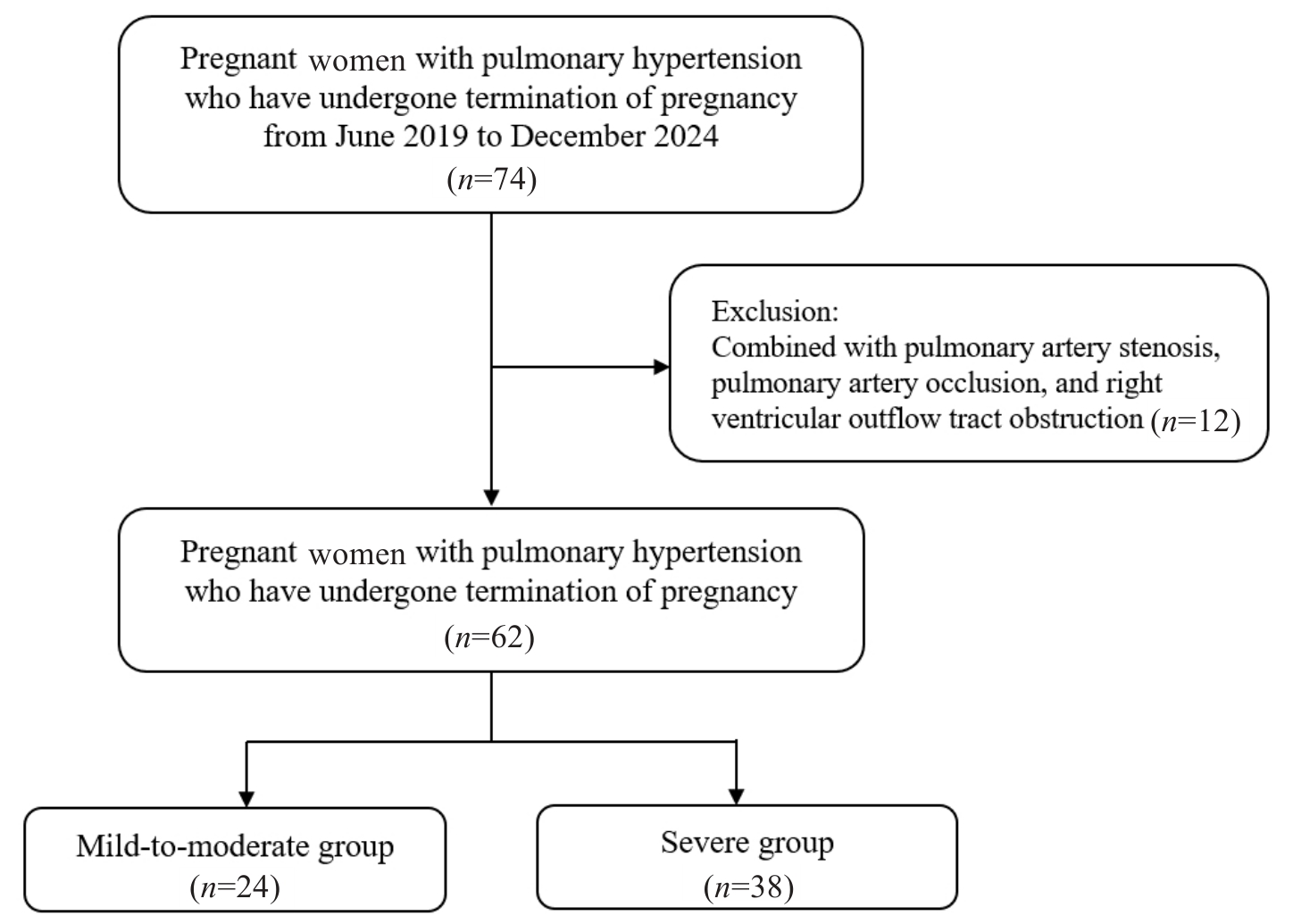
图1 患者筛选流程图
Fig.1 Flowchart of patient enrollment.
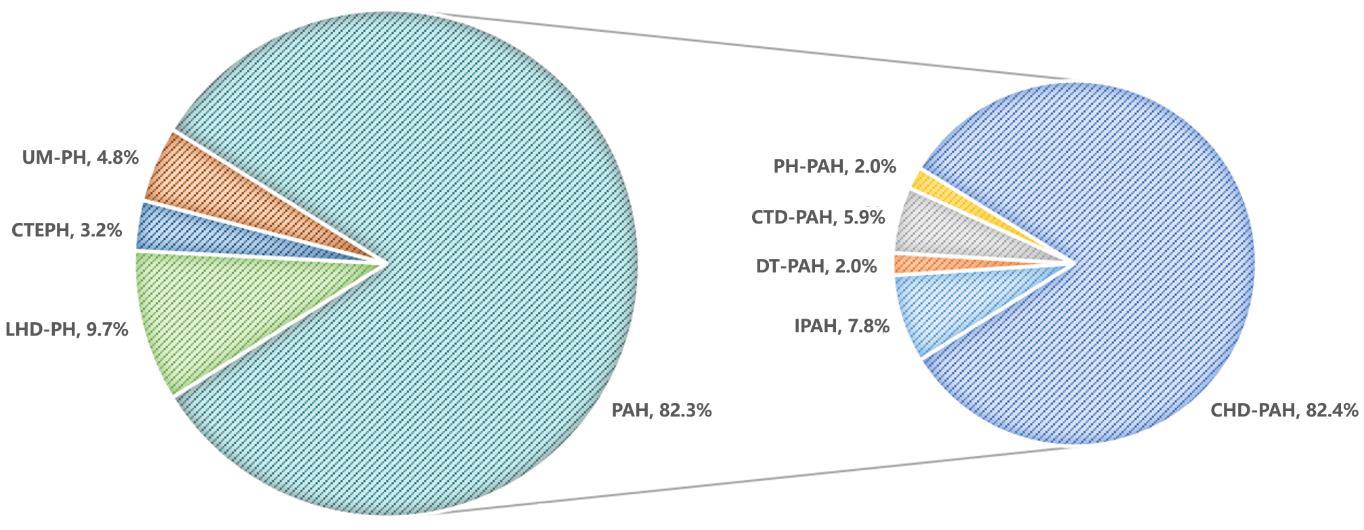
图2 肺动脉高压的分类
Fig.2 Classification of pulmonary hypertension in the enrolled patients. PAH: Pulmonary arterial hypertension; LHD-PH: Pulmonary hypertension associated with left heart disease; CTEPH: Chronic thrombo-embolic pulmonary hypertension; UM-PH: Pulmonary hypertension with unclear and/or multifactorial mechanisms; CHD-PAH: PAH associated with congenital heart disease; IPAH: Idiopathic pulmonary arterial hypertension; DT-PAH: PAH associated with drugs and toxins; CTD-PAH: PAH associated with connective tissue disease; PH-PAH: PAH associated with portal hypertension.
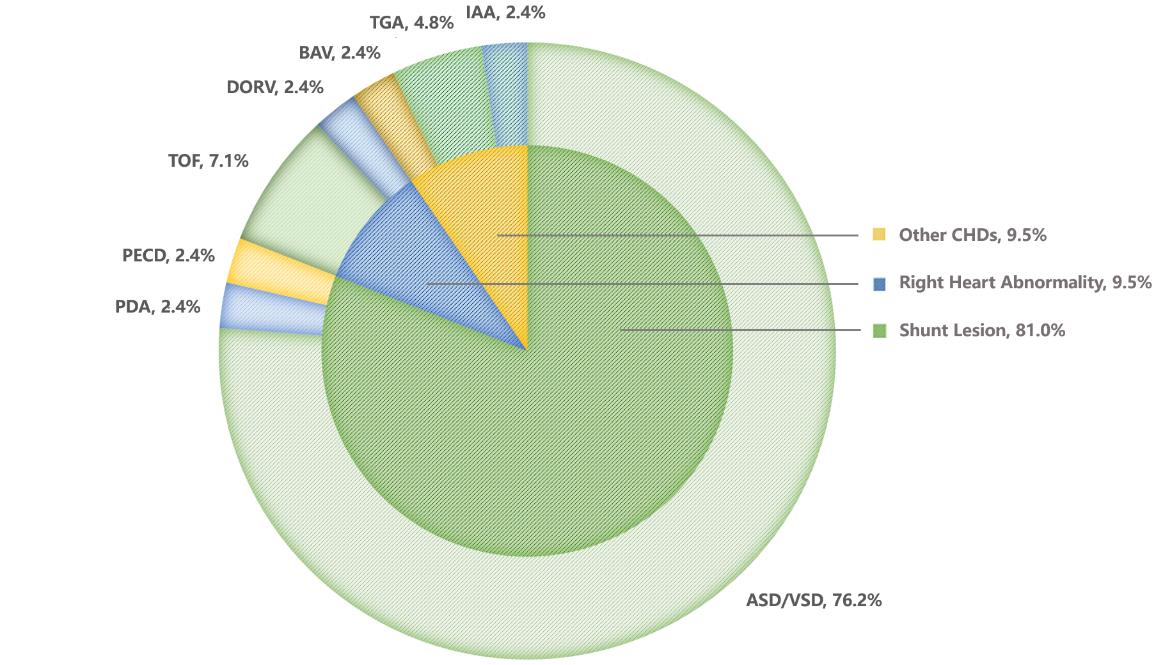
图3 先天性心脏病相关肺动脉高压的病因
Fig.3 Etiology of pulmonary arterial hypertension associated with congenital heart diseases. ASD: Atrial septal defect; VSD: Ventricular septal defect; PDA: Patent ductus arteriosus; PECD: Partial endocardial cushion defect; TOF: Tetralogy of Fallot; DORV: Double outlet of right ventricle; BAV: Bicuspid aortic valve; TGA: Transposition of great arteries; IAA: Interruption of aortic arch; CHD: Congenital heart disease.
| Characteristics | Mild-to-moderate (n=24) | Severe (n=38) | t/Z/χ² | P |
|---|---|---|---|---|
| Age (year) | 31.2±5.1 | 30.8±4.9 | 0.281 | 0.780 |
| BMI (kg/m2) | 21.2±4.0 | 19.0 (17.6, 21.5) | -1.612 | 0.107 |
| Gestational Weeks (week) | 9 (7, 11) | 11 (7, 16) | -1.496 | 0.135 |
| Trimester | 5.371 | 0.020 | ||
| First trimester | 22 (91.7%) | 25 (65.8%) | ||
| Second trimester | 2 (8.3%) | 13 (34.2%) | ||
| Gravidity | 0.972 | 0.324 | ||
| 1-3 | 17 (70.8%) | 31 (81.6%) | ||
| >3 | 7 (29.2%) | 7 (18.4%) | ||
| Parity | 0.029 | 0.864 | ||
| 0 | 10 (41.7%) | 15 (39.5%) | ||
| ≥1 | 14 (58.3%) | 23 (60.5%) | ||
| History of miscarriage | 10 (41.7%) | 21 (55.3%) | 1.088 | 0.297 |
| Classification of PH | ||||
| PAH | 17 (70.83%) | 34 (89.5%) | 3.502 | 0.126 |
| LHD-PH | 6 (25.00%) | 0 | 7.852 | 0.005 |
| CTEPH | 1 (4.17%) | 1 (2.6%) | 0.000 | >0.99 |
| UM-PH | 0 | 3 (7.9%) | 0.646 | 0.422 |
| History of PH | 13 (54.2%) | 28 (73.7%) | 2.502 | 0.114 |
| History of PH medication | 5 (20.8%) | 21 (55.3%) | 7.161 | 0.007 |
| History of cardiac surgery | 5 (20.8%) | 5 (13.2%) | 0.119 | 0.656 |
| Bi-directional diversion | 0 | 17 (44.7%) | 14.793 | <0.001 |
| Eisenmenger syndrome | 0 | 6 (15.8%) | 2.584 | 0.108 |
| Arrhythmia | 5 (20.8%) | 14 (36.8%) | 1.774 | 0.183 |
| Hyperthyroidism | 2 (8.3%) | 4 (10.5%) | 0.000 | >0.99 |
| NYHA | 21.022 | <0.001 | ||
| I-II | 20 (83.3%) | 9 (23.7%) | ||
| III-IV | 4 (16.7%) | 29 (76.3%) | ||
| NT-ProBNP (pg/mL) | 220.4 (114.3, 468.0) | 307.2 (119.2, 790.7) | -0.766 | 0.444 |
| LVEF (%) | 65 (60, 72) | 65±5.3 | -0.232 | 0.816 |
| RVFAC (%) | 40 (40, 48) | 39 (30, 40) | -2.997 | 0.003 |
| TAPSE (mm) | 18.68±4.2 | 17.0 (15.93, 18.78) | -0.783 | 0.434 |
| PASP (mmHg) | 49±7.9 | 104±24.1 | -6.593 | <0.001 |
| TAPSE/PASP (mm/mmHg) | 37.356 | <0.001 | ||
| >0.32 | 20 (83.3%) | 3 (7.9%) | ||
| 0.19-0.32 | 4 (16.7%) | 17 (44.7%) | ||
| <0.19 | 0 | 18 (47.4%) | ||
| Emergency | 5 (20.8%) | 10 (26.3%) | 0.241 | 0.623 |
| Surgical procedure | 5.371 | 0.020 | ||
| D&C | 22 (91.7%) | 25 (65.8%) | ||
| Hysterotomy | 2 (8.3%) | 13 (34.2%) | ||
| Tubal ligation | 1 (4.2%) | 7 (18.4%) | 1.542 | 0.214 |
| Anesthesia method | 9.172 | 0.002 | ||
| General anesthesia | 22 (91.7%) | 21 (55.3%) | ||
| Intrathecal anesthesia | 2 (8.3%) | 17 (44.7%) | ||
| Use of oxytocin | 9 (37.5%) | 18 (47.4%) | 0.583 | 0.445 |
| Use of vasoactive drugs | 2 (8.3%) | 16 (42.1%) | 8.143 | 0.004 |
表 1 妊娠合并肺动脉高压患者的基线资料
Tab.1 Characteristics of pregnant women with pulmonary hypertension
| Characteristics | Mild-to-moderate (n=24) | Severe (n=38) | t/Z/χ² | P |
|---|---|---|---|---|
| Age (year) | 31.2±5.1 | 30.8±4.9 | 0.281 | 0.780 |
| BMI (kg/m2) | 21.2±4.0 | 19.0 (17.6, 21.5) | -1.612 | 0.107 |
| Gestational Weeks (week) | 9 (7, 11) | 11 (7, 16) | -1.496 | 0.135 |
| Trimester | 5.371 | 0.020 | ||
| First trimester | 22 (91.7%) | 25 (65.8%) | ||
| Second trimester | 2 (8.3%) | 13 (34.2%) | ||
| Gravidity | 0.972 | 0.324 | ||
| 1-3 | 17 (70.8%) | 31 (81.6%) | ||
| >3 | 7 (29.2%) | 7 (18.4%) | ||
| Parity | 0.029 | 0.864 | ||
| 0 | 10 (41.7%) | 15 (39.5%) | ||
| ≥1 | 14 (58.3%) | 23 (60.5%) | ||
| History of miscarriage | 10 (41.7%) | 21 (55.3%) | 1.088 | 0.297 |
| Classification of PH | ||||
| PAH | 17 (70.83%) | 34 (89.5%) | 3.502 | 0.126 |
| LHD-PH | 6 (25.00%) | 0 | 7.852 | 0.005 |
| CTEPH | 1 (4.17%) | 1 (2.6%) | 0.000 | >0.99 |
| UM-PH | 0 | 3 (7.9%) | 0.646 | 0.422 |
| History of PH | 13 (54.2%) | 28 (73.7%) | 2.502 | 0.114 |
| History of PH medication | 5 (20.8%) | 21 (55.3%) | 7.161 | 0.007 |
| History of cardiac surgery | 5 (20.8%) | 5 (13.2%) | 0.119 | 0.656 |
| Bi-directional diversion | 0 | 17 (44.7%) | 14.793 | <0.001 |
| Eisenmenger syndrome | 0 | 6 (15.8%) | 2.584 | 0.108 |
| Arrhythmia | 5 (20.8%) | 14 (36.8%) | 1.774 | 0.183 |
| Hyperthyroidism | 2 (8.3%) | 4 (10.5%) | 0.000 | >0.99 |
| NYHA | 21.022 | <0.001 | ||
| I-II | 20 (83.3%) | 9 (23.7%) | ||
| III-IV | 4 (16.7%) | 29 (76.3%) | ||
| NT-ProBNP (pg/mL) | 220.4 (114.3, 468.0) | 307.2 (119.2, 790.7) | -0.766 | 0.444 |
| LVEF (%) | 65 (60, 72) | 65±5.3 | -0.232 | 0.816 |
| RVFAC (%) | 40 (40, 48) | 39 (30, 40) | -2.997 | 0.003 |
| TAPSE (mm) | 18.68±4.2 | 17.0 (15.93, 18.78) | -0.783 | 0.434 |
| PASP (mmHg) | 49±7.9 | 104±24.1 | -6.593 | <0.001 |
| TAPSE/PASP (mm/mmHg) | 37.356 | <0.001 | ||
| >0.32 | 20 (83.3%) | 3 (7.9%) | ||
| 0.19-0.32 | 4 (16.7%) | 17 (44.7%) | ||
| <0.19 | 0 | 18 (47.4%) | ||
| Emergency | 5 (20.8%) | 10 (26.3%) | 0.241 | 0.623 |
| Surgical procedure | 5.371 | 0.020 | ||
| D&C | 22 (91.7%) | 25 (65.8%) | ||
| Hysterotomy | 2 (8.3%) | 13 (34.2%) | ||
| Tubal ligation | 1 (4.2%) | 7 (18.4%) | 1.542 | 0.214 |
| Anesthesia method | 9.172 | 0.002 | ||
| General anesthesia | 22 (91.7%) | 21 (55.3%) | ||
| Intrathecal anesthesia | 2 (8.3%) | 17 (44.7%) | ||
| Use of oxytocin | 9 (37.5%) | 18 (47.4%) | 0.583 | 0.445 |
| Use of vasoactive drugs | 2 (8.3%) | 16 (42.1%) | 8.143 | 0.004 |
| Postoperative data | Mild-to-moderate (n=24) | Severe (n=38) | t/Z/χ² | P |
|---|---|---|---|---|
| ICU after surgery | 3 (12.5%) | 29 (76.3%) | 23.987 | <0.001 |
| Postoperative ICU LOS ( days) | 1.5±1.0 | 2.9 (1.6, 3.6) | -0.436 | 0.666 |
| Postoperative LOS (day) | 1.5 (1.0, 3.7) | 7.0 (2.7, 11.0) | -3.834 | <0.001 |
| Prolonged postoperative LOS | 4 (16.7%) | 23 (60.5%) | 11.510 | <0.001 |
表2 妊娠合并肺动脉高压患者的术后资料
Tab.2 Postoperative data of pregnant women with pulmonary hypertension
| Postoperative data | Mild-to-moderate (n=24) | Severe (n=38) | t/Z/χ² | P |
|---|---|---|---|---|
| ICU after surgery | 3 (12.5%) | 29 (76.3%) | 23.987 | <0.001 |
| Postoperative ICU LOS ( days) | 1.5±1.0 | 2.9 (1.6, 3.6) | -0.436 | 0.666 |
| Postoperative LOS (day) | 1.5 (1.0, 3.7) | 7.0 (2.7, 11.0) | -3.834 | <0.001 |
| Prolonged postoperative LOS | 4 (16.7%) | 23 (60.5%) | 11.510 | <0.001 |
| Age (year) | Gestational weeks (week) | Diagnosis | PASP (mmHg) | NYHA | NT-ProBNP (pg/mL) | RVFAC (%) | TAPSE/PASP (mm/mmHg) | Surgical Procedure | Anesthesia Method | PHC Time |
|---|---|---|---|---|---|---|---|---|---|---|
| 31 | 16 | CHD-PAH | 94 | III | 348.2 | 40 | 0.17 | Hysterotomy | IA | 1 day after surgery |
| 33 | 11 | DT-PAH | 124 | IV | 1175.0 | 30 | 0.20 | D&C | IA | intraoperatively |
| 19 | 18 | CTEPH | 77 | II | 647.1 | - | 0.23 | Hysterotomy | IA | 3 days after surgery |
表3 发生肺高压危象的病例
Tab.3 Cases experiencing pulmonary hypertension crisis
| Age (year) | Gestational weeks (week) | Diagnosis | PASP (mmHg) | NYHA | NT-ProBNP (pg/mL) | RVFAC (%) | TAPSE/PASP (mm/mmHg) | Surgical Procedure | Anesthesia Method | PHC Time |
|---|---|---|---|---|---|---|---|---|---|---|
| 31 | 16 | CHD-PAH | 94 | III | 348.2 | 40 | 0.17 | Hysterotomy | IA | 1 day after surgery |
| 33 | 11 | DT-PAH | 124 | IV | 1175.0 | 30 | 0.20 | D&C | IA | intraoperatively |
| 19 | 18 | CTEPH | 77 | II | 647.1 | - | 0.23 | Hysterotomy | IA | 3 days after surgery |
| Item | Adverse events (n=5) | ICU after surgery (n=32) | pPLOS (n=27) | P1 | P2 |
|---|---|---|---|---|---|
| Trimester | <0.001 | 0.029 | |||
| First trimester (n=47) | 2/47 (4.3%) | 17/47 (36.2%)** | 13/47 (27.7%)* | ||
| Second trimester (n=15) | 3/15 (20.0%) | 15/15 (100.0%) | 14/15 (93.3%) | ||
| NYHA | 0.035 | - | |||
| I-II (n=29) | 1/29 (3.4%) | 3/29 (10.3%)* | 2/29 (6.9%) | ||
| III-IV (n=33) | 4/33 (12.2%) | 29/33 (87.9%) | 25/33 (75.8%) | ||
| TAPSE/PASP (mm/mmHg) | - | - | |||
| >0.32 (n=23) | 0 | 2/23 (8.7%) | 4/23 (17.4%) | ||
| 0.19-0.32 (n=21) | 2/21 (9.5%) | 12/21 (57.1%) | 9/21 (42.9%) | ||
| <0.19 (n=18) | 3/18 (16.7%) | 18/18 (100.0%) | 14/18 (77.8%) | ||
| Surgical procedure | <0.001 | 0.029 | |||
| D&C (n=47) | 2/47 (4.3%) | 17/47 (36.2%)** | 13/47 (27.7%)* | ||
| Hysterotomy (n=15) | 3/15 (20.0%) | 15/15 (100.0%) | 14/15 (93.3%) | ||
| Anesthesia method | <0.001 | 0.066 | |||
| General anesthesia (n=43) | 0 | 13/43 (30.2%)** | 11/43 (25.6%)* | ||
| Intrathecal anesthesia (n=19) | 5/19 (26.3%) | 19/19 (100.0%) | 16/19 (84.2%) | ||
| Use of vasoactive drugs | <0.001 | 0.019 | |||
| Yes (n=18) | 3/18 (16.7%) | 15/18 (83.3%) | 13/18 (72.2%) | ||
| No (n=44) | 2/44 (4.5%) | 17/44 (38.6%)** | 14/44 (31.8%)* |
表 4 妊娠合并肺动脉高压患者结局指标的亚组分析
Tab.4 Subgroup analysis of outcomes of the pregnant women with pulmonary hypertension [n (%)]
| Item | Adverse events (n=5) | ICU after surgery (n=32) | pPLOS (n=27) | P1 | P2 |
|---|---|---|---|---|---|
| Trimester | <0.001 | 0.029 | |||
| First trimester (n=47) | 2/47 (4.3%) | 17/47 (36.2%)** | 13/47 (27.7%)* | ||
| Second trimester (n=15) | 3/15 (20.0%) | 15/15 (100.0%) | 14/15 (93.3%) | ||
| NYHA | 0.035 | - | |||
| I-II (n=29) | 1/29 (3.4%) | 3/29 (10.3%)* | 2/29 (6.9%) | ||
| III-IV (n=33) | 4/33 (12.2%) | 29/33 (87.9%) | 25/33 (75.8%) | ||
| TAPSE/PASP (mm/mmHg) | - | - | |||
| >0.32 (n=23) | 0 | 2/23 (8.7%) | 4/23 (17.4%) | ||
| 0.19-0.32 (n=21) | 2/21 (9.5%) | 12/21 (57.1%) | 9/21 (42.9%) | ||
| <0.19 (n=18) | 3/18 (16.7%) | 18/18 (100.0%) | 14/18 (77.8%) | ||
| Surgical procedure | <0.001 | 0.029 | |||
| D&C (n=47) | 2/47 (4.3%) | 17/47 (36.2%)** | 13/47 (27.7%)* | ||
| Hysterotomy (n=15) | 3/15 (20.0%) | 15/15 (100.0%) | 14/15 (93.3%) | ||
| Anesthesia method | <0.001 | 0.066 | |||
| General anesthesia (n=43) | 0 | 13/43 (30.2%)** | 11/43 (25.6%)* | ||
| Intrathecal anesthesia (n=19) | 5/19 (26.3%) | 19/19 (100.0%) | 16/19 (84.2%) | ||
| Use of vasoactive drugs | <0.001 | 0.019 | |||
| Yes (n=18) | 3/18 (16.7%) | 15/18 (83.3%) | 13/18 (72.2%) | ||
| No (n=44) | 2/44 (4.5%) | 17/44 (38.6%)** | 14/44 (31.8%)* |
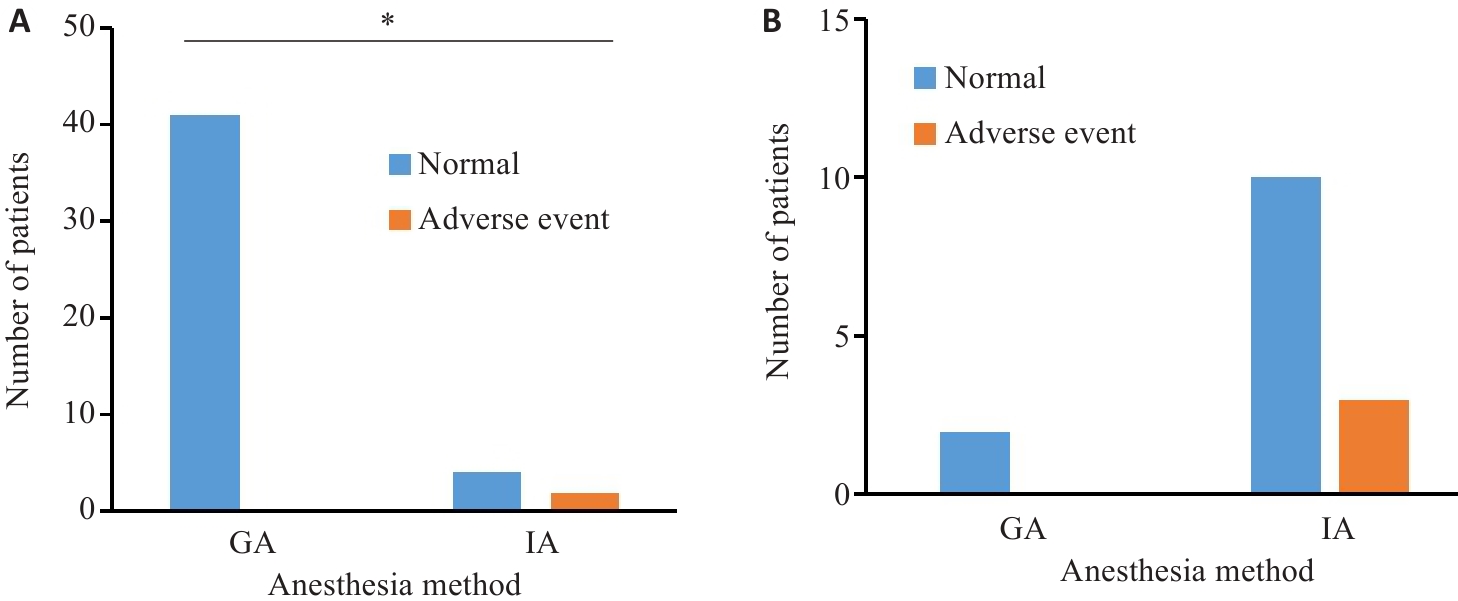
图4 麻醉方式对术后不良事件的影响
Fig.4 Effect of anesthesia methods on postoperative adverse event. A: Patients receiving dilatation and curettage. B: Patients receiving hysterotomy. GA: General anesthesia; IA: Intrathecal anesthesia. *P<0.05.
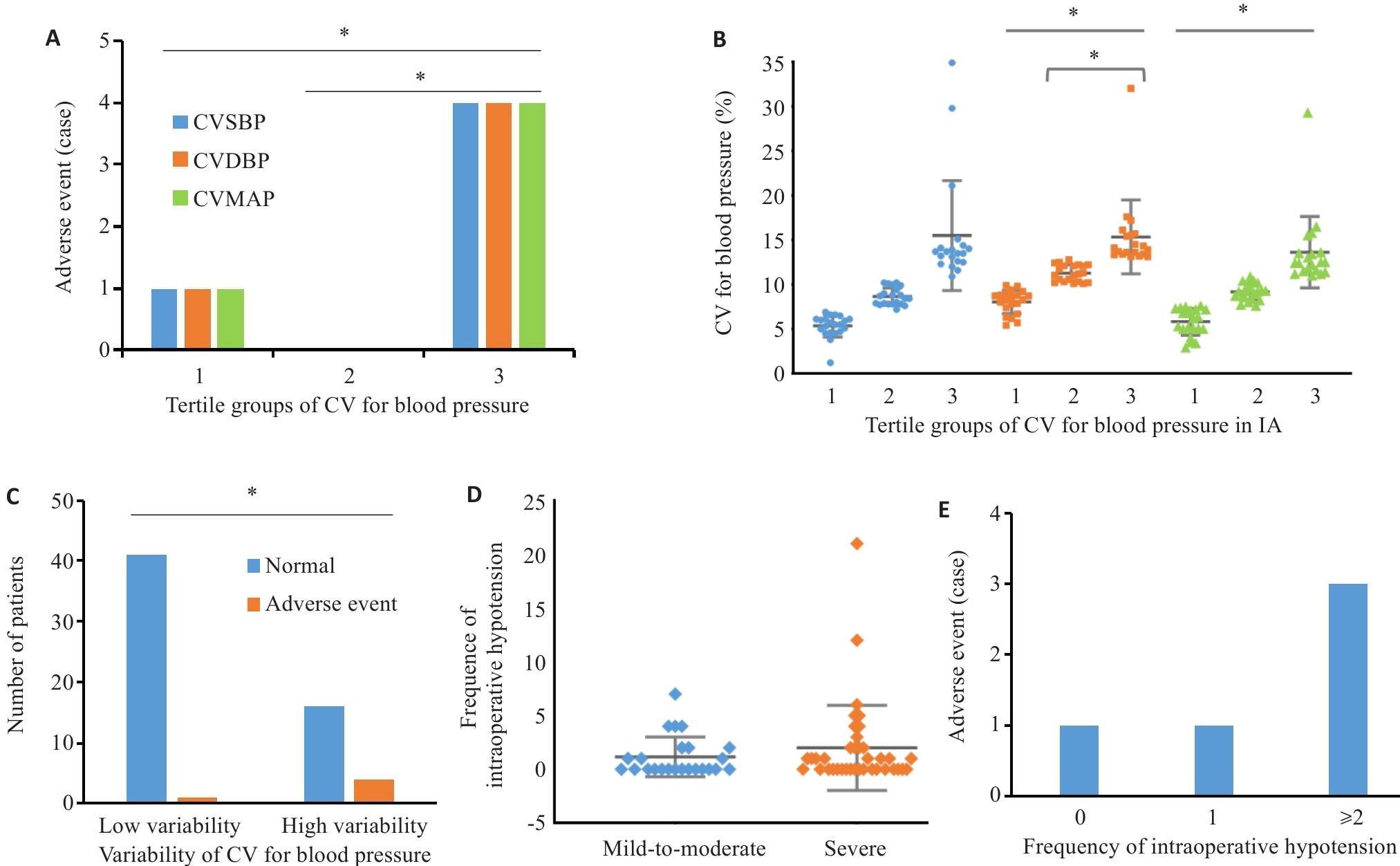
图5 术中血压波动对不良事件的影响
Fig.5 Effect of intraoperative blood pressure variability on outcomes of the patients. CV: Coefficient of variation; CVSBP: CV of systolic blood pressure; CVDBP: CV of diastolic blood pressure; CVMAP: CV of mean arterial pressure. *P<0.05 in intergroup comparison.
| [1] | Ramlakhan KP, Johnson MR, Roos-Hesselink JW. Pregnancy and cardiovascular disease[J]. Nat Rev Cardiol, 2020, 17(11): 718-31. doi:10.1038/s41569-020-0390-z |
| [2] | Lv CT, Huang YW, Liao GY, et al. Pregnancy outcomes in women with pulmonary hypertension: a retrospective study in China[J]. BMC Pregnancy Childbirth, 2023, 23(1): 16. doi:10.1186/s12884-023-05353-7 |
| [3] | 中华医学会呼吸病学分会肺栓塞与肺血管病学组, 中国医师协会呼吸医师分会肺栓塞与肺血管病工作委员会, 全国肺栓塞与肺血管病防治协作组, 等. 中国肺动脉高压诊断与治疗指南(2021版)[J]. 中华医学杂志, 2021, 101(1): 11-51. |
| [4] | Martin SR, Edwards A. Pulmonary hypertension and pregnancy[J]. Obstet Gynecol, 2019, 134(5): 974-87. doi:10.1097/aog.0000000000003549 |
| [5] | Hemnes AR, Kiely DG, Cockrill BA, et al. Statement on pregnancy in pulmonary hypertension from the pulmonary vascular research institute[J]. Pulm Circ, 2015, 5(3): 435-65. doi:10.1086/682230 |
| [6] | European Society of Gynecology (ESG), Association for European Paediatric Cardiology (AEPC), German Society for Gender Medicine (DGesGM), et al. ESC Guidelines on the management of cardiovascular diseases during pregnancy:the Task Force for the Management of Cardiovascular Diseases during Pregnancy of the European Society of Cardiology (ESC)[J]. Eur Heart J, 2011, 32(24): 3147-97. |
| [7] | Pan JR, Wu QS, Chen SX, et al. Clinical outcomes of pregnancy in patients with pulmonary hypertension: a single center observational study[J]. J Cardiothorac Surg, 2025, 20(1): 199. doi:10.1186/s13019-025-03435-5 |
| [8] | Liu Y, Li YN, Zhang J, et al. Maternal and fetal outcomes of pregnant women with pulmonary arterial hypertension associated with congenital heart disease in Beijing, China: a retrospective study[J]. Pulm Circ, 2022, 12(2): e12079. doi:10.1002/pul2.12079 |
| [9] | Fan C, Liu XY, Liu RY, et al. Pregnancy conditions and outcomes of Chinese women with mild, moderate and severe pulmonary arterial hypertension[J]. Hypertens Res, 2024, 47(9): 2561-73. doi:10.1038/s41440-024-01795-4 |
| [10] | Humbert M, Kovacs G, Hoeper MM, et al. 2022 ESC/ERS Guidelines for the diagnosis and treatment of pulmonary hypertension[J]. Eur Heart J, 2022, 43(38): 3618-731. |
| [11] | Olsson KM, Fuge J, Park DH, et al. Right heart function during and after pregnancy in women with pulmonary arterial hypertension[J]. Eur Respir J, 2024, 64(1): 2400179. doi:10.1183/13993003.00179-2024 |
| [12] | 曾俐琴, 吴歆怡, 林建华, 等. 心血管疾病患者终止早中期妊娠管理专家共识(2024年版)[J]. 中国实用妇科与产科杂志, 2024, 40(10): 1020-5. |
| [13] | 中华医学会心血管病学分会, 中华心血管病杂志编辑委员会. 肺动脉高压筛查诊断与治疗专家共识[J]. 中华心血管病杂志, 2007, 35(11): 979-87. doi:10.3760/j.issn:0253-3758.2007.11.002 |
| [14] | Zhao BC, Zhang JQ, Xie YS, et al. Intensive vs conventional intraoperative blood pressure management on cardiovascular events after major abdominal surgery[J]. Jacc, 2025, 86(12): 892-906. doi:10.1016/j.jacc.2025.07.027 |
| [15] | 中华医学会呼吸病学分会呼吸治疗学组, 中国医师协会呼吸医师分会呼吸职业发展委员会呼吸治疗师工作组. 一氧化氮吸入疗法临床应用专家共识(2024版)[J]. 中华医学杂志, 2024, 104(26): 2386-400. |
| [16] | Jha N, Jha AK, Mishra SK, et al. Pulmonary hypertension and pregnancy outcomes: Systematic Review and Meta-analysis[J]. Eur J Obstet Gynecol Reprod Biol, 2020, 253: 108-16. doi:10.1016/j.ejogrb.2020.08.028 |
| [17] | van der Linde D, Konings EEM, Slager MA, et al. Birth prevalence of congenital heart disease worldwide[J]. J Am Coll Cardiol, 2011, 58(21): 2241-7. doi:10.1016/j.jacc.2011.08.025 |
| [18] | Zaleski KL, Blazey MH, Carabuena JM, et al. Perioperative anesthetic management of the pregnant patient with congenital heart disease undergoing cardiac intervention: a systematic review[J]. J Cardiothorac Vasc Anesth, 2022, 36(12): 4483-95. doi:10.1053/j.jvca.2022.09.001 |
| [19] | Labrada L, Vaidy A, Vaidya A. Right ventricular assessment in pulmonary hypertension[J]. Curr Opin Pulm Med, 2023, 29(5): 348-54. doi:10.1097/mcp.0000000000000980 |
| [20] | 段朦朦, 刘 琳, 王 森, 等. 肺动脉高压患者右心室-肺动脉失耦联与心肺运动试验评估通气效率和运动耐力降低的关系[J]. 岭南心血管病杂志, 2025, 31(1): 63-8. |
| [21] | Zhang Q, Zhu F, Shi GC, et al. Maternal outcomes among pregnant women with congenital heart disease-associated pulmonary hypertension[J]. Circulation, 2023, 147(7): 549-61. doi:10.1161/circulationaha.122.057987 |
| [22] | Koutrolou-Sotiropoulou P, Parikh PB, Miller C, et al. Impact of heart disease on maternal and fetal outcomes in pregnant women[J]. Am J Cardiol, 2015, 116(3): 474-80. doi:10.1016/j.amjcard.2015.04.063 |
| [23] | Duvekot JJ, Peeters LLH. Maternal cardiovascular hemodynamic adaptation to pregnancy[J]. Obstet Gynecol Surv, 1994, 49: S1. doi:10.1097/00006254-199412011-00001 |
| [24] | Guo JJ, He J, Wang JQ, et al. A novel nurse-led, multidisciplinary, and guideline-directed disease intensive management program improves long-term survival of pulmonary hypertension patients[J]. Heart Lung, 2025, 73: 190-6. doi:10.1016/j.hrtlng.2025.05.011 |
| [25] | Bedard E, Dimopoulos K, Gatzoulis MA. Has there been any progress made on pregnancy outcomes among women with pulmonary arterial hypertension[J]? Eur Heart J, 2008, 30(3): 256-65. doi:10.1093/eurheartj/ehn597 |
| [26] | Vaillancourt M, Chia P, Sarji S, et al. Autonomic nervous system involvement in pulmonary arterial hypertension[J]. Respir Res, 2017, 18(1): 201. doi:10.1186/s12931-017-0679-6 |
| [27] | Cheng X, Song C, Ouyang FY,et al. Systolic blood pressure variability: risk of cardiovascular events, chronic kidney disease, dementia, and death[J].Eur Heart J, 2025, 46(27): 2673-87. doi:10.1093/eurheartj/ehaf256 |
| [28] | 刘 旭, 米卫东, 张昌盛. 吸入一氧化氮在麻醉与重症医学领域应用的研究进展[J]. 北京医学, 2024, 46(11): 991-4, 998. |
| [29] | Ichinose F, Roberts JD Jr, Zapol WM. Inhaled nitric oxide: a selective pulmonary vasodilator: current uses and therapeutic potential[J]. Circulation, 2004, 109(25): 3106-11. doi:10.1161/01.cir.0000134595.80170.62 |
| [30] | 中华医学会心血管病学分会肺血管病学组, 中华心血管病杂志编辑委员会. 中国肺高血压诊断和治疗指南2018[J]. 中华心血管病杂志, 2018, 46(12): 933-64. doi:10.3760/cma.j.issn.0253-3758.2018.12.006 |
| [1] | 刘星扬, 吴静涵, 叶春艳, 王锷, 胡浩. 老年患者全麻期间颈总动脉血流的动态变化及其生理调控机制:一项前瞻性研究[J]. 南方医科大学学报, 2026, 46(4): 761-769. |
| [2] | 杨子为, 吕畅, 董柱, 计书磊, 毕生辉, 张雪花, 王晓武. 金樱子通过调控Src-AKT1轴抑制肺动脉高压平滑肌增殖[J]. 南方医科大学学报, 2025, 45(9): 1889-1902. |
| [3] | 郭舒婷, 曹福羊, 郭永馨, 李言响, 郝新宇, 张倬宁, 周志康, 仝黎, 曹江北. 激活下丘脑背内侧核区星形胶质细胞可加速七氟醚麻醉小鼠觉醒[J]. 南方医科大学学报, 2025, 45(4): 751-759. |
| [4] | 邓湘湘, 王嘉, 熊迷, 王挺, 杨永健, 李德, 孙雄山. 沉默DDX17通过降低mTORC1活性抑制肺动脉平滑肌细胞的增殖和迁移[J]. 南方医科大学学报, 2025, 45(11): 2475-2482. |
| [5] | 潘甚豪, 李炎坤, 伍哲维, 毛玉玲, 王春艳. 子宫内膜异位症患者新鲜胚胎移植临床妊娠率预测模型的建立与验证[J]. 南方医科大学学报, 2024, 44(7): 1407-1415. |
| [6] | 胡家祺, 张建杏. 高流量鼻导管吸氧在妊娠合并心脏病患者剖宫产中的随机对照研究[J]. 南方医科大学学报, 2024, 44(6): 1040-1047. |
| [7] | 王磊, 卞芬兰, 马飞扬, 方舒, 凌梓涵, 刘梦然, 孙红燕, 付程文, 倪诗垚, 赵晓阳, 冯心茹, 孙正宇, 卢国庆, 康品方, 吴士礼. 激活ALDH2通过上调SIRT1/PGC-1α信号通路减轻小鼠缺氧性肺动脉高压[J]. 南方医科大学学报, 2024, 44(10): 1955-1964. |
| [8] | 张宁宁, 邱 奇, 陈永锋, 孙正宇, 卢国庆, 王 磊, 康品方, 王洪巨. 槲皮素可改善大鼠肺动脉高压:基于调控 HMGB1/RAGE/NF-κB通路[J]. 南方医科大学学报, 2023, 43(9): 1606-1612. |
| [9] | 冯青波, 骆春梅, 刘向红, 许 婷, 杜 芹. 全麻与深度镇静下的儿童口腔治疗:家长接受度、口腔健康相关生活质量及疗效是否有差异?[J]. 南方医科大学学报, 2023, 43(4): 604-610. |
| [10] | 孙建华, 张 逸, 杨丽萍, 周 立, 卢喜洋, 李久现, 陈 萍. 尿路上皮癌抗原1促进滋养细胞功能及对上皮-间质转化转化的调控作用[J]. 南方医科大学学报, 2023, 43(11): 1984-1988. |
| [11] | 朱思颖, 魏大源, 张 丹, 贾 飞, 刘 波, 张 健. 硬膜外分娩镇痛时间对分娩镇痛中转剖宫产麻醉方式的影响[J]. 南方医科大学学报, 2022, 42(8): 1244-1249. |
| [12] | 张喜民, 刘思佳, 孙亚彬, 李国锋. 丹参酮IIA通过介导PI3K/Akt-eNOS信号通路改善野百合碱所致大鼠肺动脉高压[J]. 南方医科大学学报, 2022, 42(5): 718-723. |
| [13] | 邱 嫔, 林欣仪, 邓高丕. Talin1在输卵管妊娠患者的输卵管和绒毛中高表达并促进妊娠滋养细胞的侵袭[J]. 南方医科大学学报, 2022, 42(4): 610-617. |
| [14] | 于晓萌, 郭 英, 公茂伟, 王苗苗, 闫志风, 孙 立, 娄景盛. 经阴道分娩史对静脉全麻下宫腔镜手术患者麻醉管理的影响——99例前瞻性临床试验[J]. 南方医科大学学报, 2022, 42(4): 591-597. |
| [15] | 陈启忠, 廖艺聪, 李志勤. 小剂量艾司氯胺酮在小儿外科全麻术中的应用[J]. 南方医科大学学报, 2022, 42(10): 1584-1586. |
| 阅读次数 | ||||||
|
全文 |
|
|||||
|
摘要 |
|
|||||
