Journal of Southern Medical University ›› 2026, Vol. 46 ›› Issue (5): 1066-1074.doi: 10.12122/j.issn.1673-4254.2026.05.10
Previous Articles Next Articles
Ethanol promotes oxaliplatin resistance in colorectal cancer by activating the TGF‑β/Smad/P21 signaling axis
Bin TAN( ), Nuozhou WENG, Wentao ZENG, Jiayu GU, Lianji WENG, Huilin WEN, Haocheng XIAO, Kehong ZHENG()
- Gepartment of General Surgery, Zhujiang Hospital, Southern Medical University, Guangzhou 510280, China
-
Received:2026-02-07Online:2026-05-20Published:2026-05-27 -
Contact:Kehong ZHENG E-mail:tanbin0217@126.com;779498458@qq.com -
Supported by:Natural Science Foundation for the Youth (NSFY) of China(82103399)

Cite this article
Bin TAN, Nuozhou WENG, Wentao ZENG, Jiayu GU, Lianji WENG, Huilin WEN, Haocheng XIAO, Kehong ZHENG. Ethanol promotes oxaliplatin resistance in colorectal cancer by activating the TGF‑β/Smad/P21 signaling axis[J]. Journal of Southern Medical University, 2026, 46(5): 1066-1074.
share this article
Add to citation manager EndNote|Ris|BibTeX
URL: https://www.j-smu.com/EN/10.12122/j.issn.1673-4254.2026.05.10
| Gene | Forward primer | Reverse primer | Product length |
|---|---|---|---|
| ADH1C | CCTGCTTCGCTCTGGAAAGA | TTTGCTTGACAAATAATTTCCCATC | 219 bp |
| ADH1B | TCGCCAATTAAGAAGGGCCA | CACCCAGCAACAGGTAGTGT | 456 bp |
| ALDH2 | GGTGTGGTCAACATTGTGCC | TTCCCCGTGTTGATGTAGCC | 437 bp |
| ALDH1A1 | CTGTGTTCCAGGAGCCGAAT | AGCATCCATAGTACGCCACG | 271 bp |
| ALDH1B1 | CAGAACCCAAGCGTGATCCT | GCCAAGTAGACTCGATCCCG | 413 bp |
| GAPDH | GGAGCGAGATCCCTCCAAAAT | GGCTGTTGTCATACTTCTCATGG | 197 bp |
Tab.1 RT-PCR primer sequences for human genes
| Gene | Forward primer | Reverse primer | Product length |
|---|---|---|---|
| ADH1C | CCTGCTTCGCTCTGGAAAGA | TTTGCTTGACAAATAATTTCCCATC | 219 bp |
| ADH1B | TCGCCAATTAAGAAGGGCCA | CACCCAGCAACAGGTAGTGT | 456 bp |
| ALDH2 | GGTGTGGTCAACATTGTGCC | TTCCCCGTGTTGATGTAGCC | 437 bp |
| ALDH1A1 | CTGTGTTCCAGGAGCCGAAT | AGCATCCATAGTACGCCACG | 271 bp |
| ALDH1B1 | CAGAACCCAAGCGTGATCCT | GCCAAGTAGACTCGATCCCG | 413 bp |
| GAPDH | GGAGCGAGATCCCTCCAAAAT | GGCTGTTGTCATACTTCTCATGG | 197 bp |
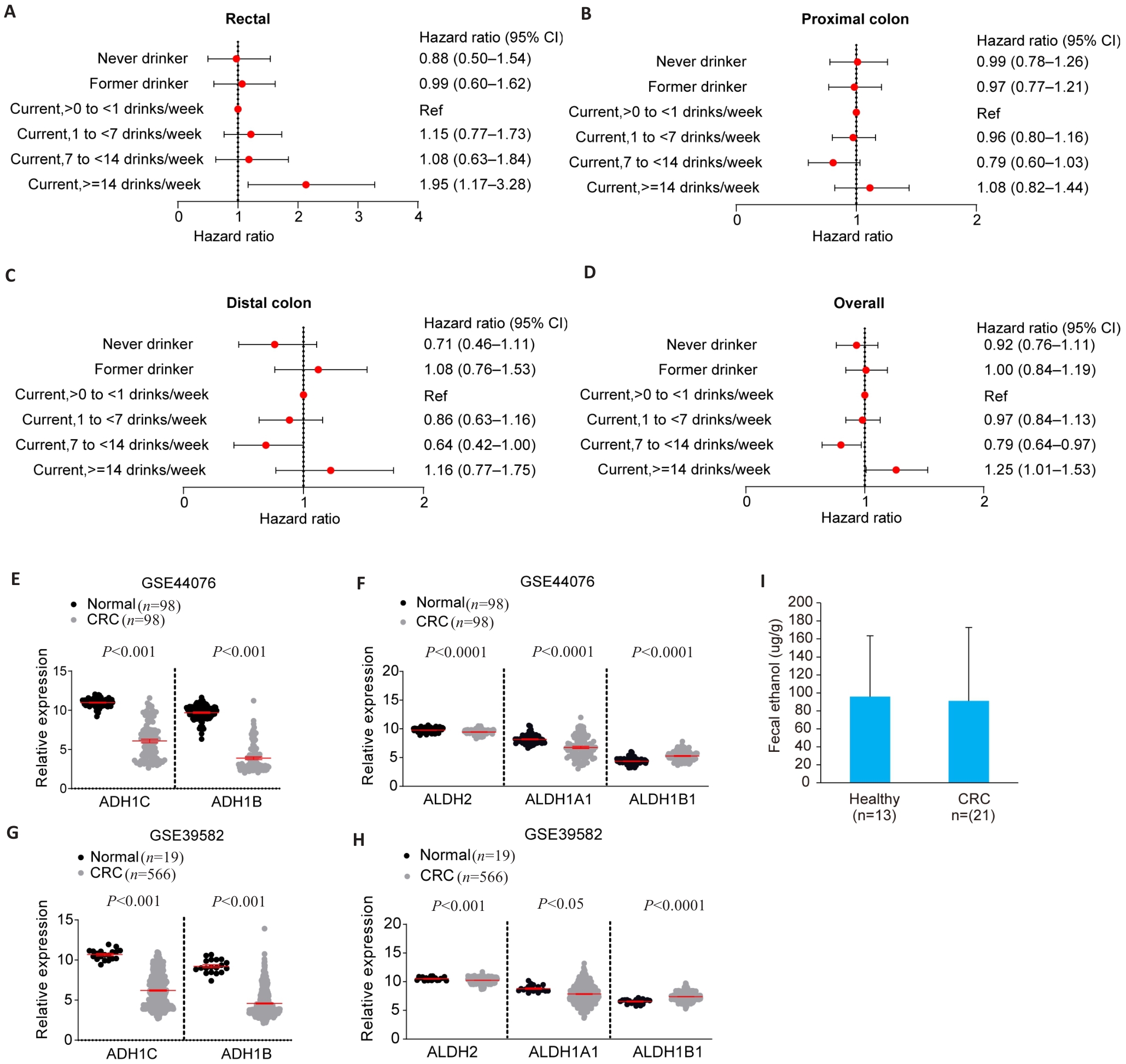
Fig.1 Alcohol-related colorectal cancer (CRC) is characterized by impaired ethanol oxidation and increased intratumoral ethanol accumulation. A-D: Forest plots re-visualized from a published PLCO Cancer Screening Trial study showing multivariable-adjusted HRs (95% CIs) for lifetime alcohol intake and CRC risk, including rectal cancer (A), proximal colon cancer (B), distal colon cancer (C), and overall CRC (D). Current light drinkers (0-1 drink/week) were used as the reference group. E, F: Relative expressions of ADH1C and ADH1B (E), and ALDH2, ALDH1A1 and ALDH1B1 (F) in CRC versus normal tissues in GEO dataset GSE44076. G, H: Relative expressions of ADH1C and ADH1B (G), and ALDH2, ALDH1A1 and ALDH1B1 (H) in CRC versus normal tissues in GEO dataset GSE39582. I: Fecal ethanol levels determined by GC-MS in never-drinking healthy individuals (n=13) and CRC patients (n=21). Each dot represents one sample; median is shown. P values were calculated using Wilcoxon rank-sum tests.
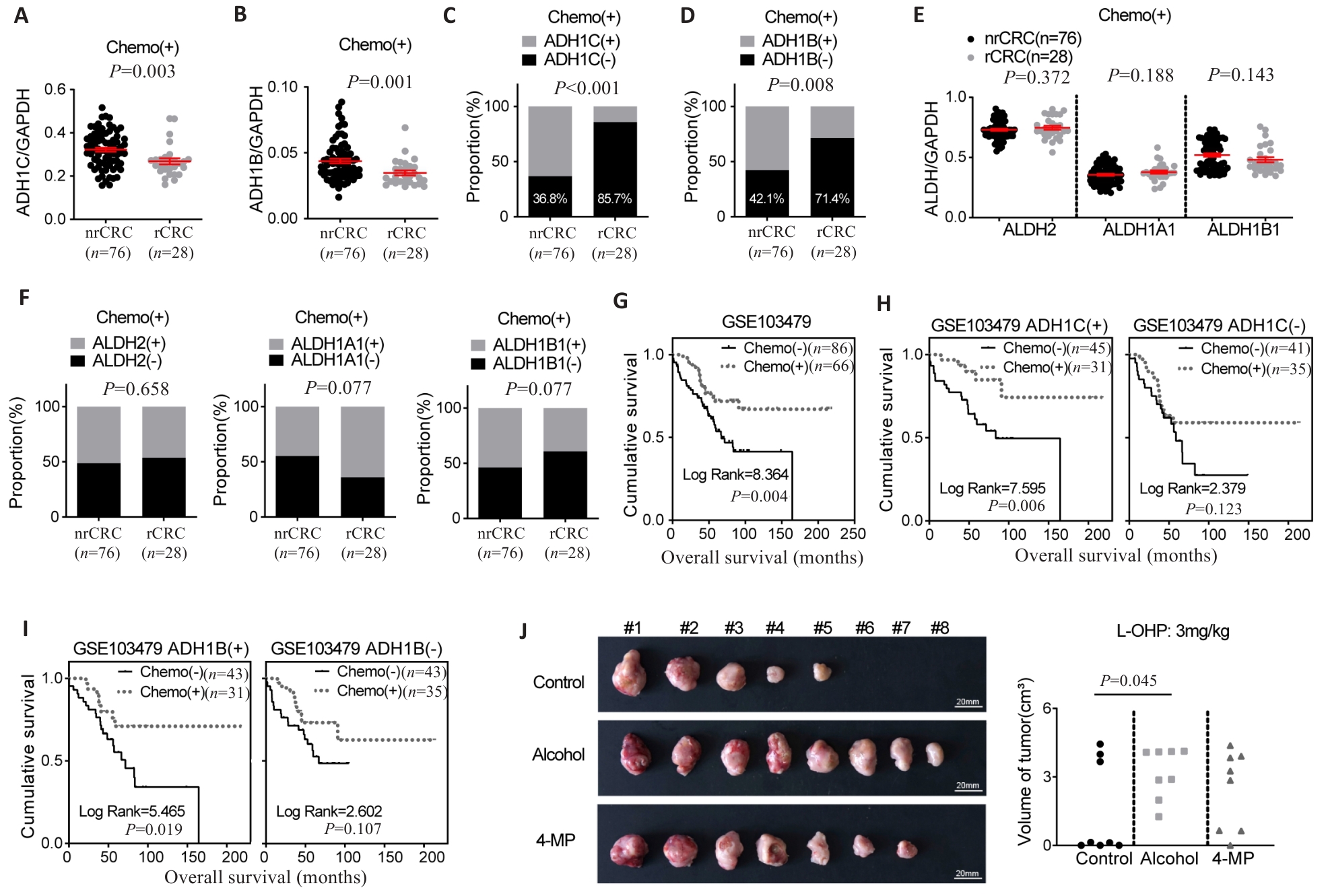
Fig.2 Chronic ethanol exposure attenuates CRC responsiveness to oxaliplatin. A, B: Relative expressions of ADH1C (A) and ADH1B (B) in non-recurrent CRC (nrCRC, n=76) vs recurrent CRC (rCRC, n=28) in chemotherapy-treated CRC patients (Chemo+), normalized to GAPDH. C, D: Proportions of ADH1C+/ADH1C- (C) and ADH1B+/ADH1B- (D) in nrCRC vs rCRC within the Chemo+ cohort. E, F: Relative expression (E) and proportions of positive/negative status (F) for ALDH2, ALDH1A1 and ALDH1B1 in nrCRC vs rCRC within the Chemo+ cohort. G: Kaplan-Meier overall survival analysis in GSE103479 stratified by chemotherapy (Chemo-vs Chemo+). H-I: Kaplan-Meier overall survival analysis in GSE103479 further stratified by ADH1C status (H) or ADH1B status (I), comparing Chemo-vs Chemo+ within each subgroup. J: Subcutaneous CRC mouse model treated with oxaliplatin (L-OHP, 3 mg/kg) under indicated conditions (Control, Alcohol, and 4-MP); representative tumors and tumor-volume quantification are shown. #1-#8 indicate individual mouse IDs in each group; positions without tumors represent mice without detectable tumor formation at the endpoint. Continuous variables were compared using Wilcoxon/Mann-Whitney tests; categorical variables using chi-square tests; survival differences using log-rank tests.
| Indicator | Exp (B)1 | 95.0% CI | P | |
|---|---|---|---|---|
| Lower | Upper | |||
| Age | 1.061 | 1.034 | 1.089 | <0.001 |
| Gender | 0.974 | 0.586 | 1.620 | 0.919 |
| Stage | 2.181 | 1.296 | 3.670 | 0.003 |
| Recurrence | 5.519 | 3.260 | 9.342 | <0.001 |
| Chemotherapy | 0.448 | 0.257 | 0.783 | 0.005 |
| Differentiation | 1.251 | 0.717 | 2.184 | 0.430 |
| ADH1C | 0.588 | 0.351 | 0.985 | 0.044 |
| ADH1B | 1.080 | 0.651 | 1.792 | 0.766 |
| ALDH1A1 | 0.952 | 0.573 | 1.580 | 0.848 |
| ALDH1B1 | 1.150 | 0.691 | 1.914 | 0.591 |
| ALDH2 | 0.785 | 0.471 | 1.309 | 0.353 |
Tab.2 Univariate cox regression analysis of factors associated with overall survival in colorectal cancer patients from GEO GSE103479 dataset
| Indicator | Exp (B)1 | 95.0% CI | P | |
|---|---|---|---|---|
| Lower | Upper | |||
| Age | 1.061 | 1.034 | 1.089 | <0.001 |
| Gender | 0.974 | 0.586 | 1.620 | 0.919 |
| Stage | 2.181 | 1.296 | 3.670 | 0.003 |
| Recurrence | 5.519 | 3.260 | 9.342 | <0.001 |
| Chemotherapy | 0.448 | 0.257 | 0.783 | 0.005 |
| Differentiation | 1.251 | 0.717 | 2.184 | 0.430 |
| ADH1C | 0.588 | 0.351 | 0.985 | 0.044 |
| ADH1B | 1.080 | 0.651 | 1.792 | 0.766 |
| ALDH1A1 | 0.952 | 0.573 | 1.580 | 0.848 |
| ALDH1B1 | 1.150 | 0.691 | 1.914 | 0.591 |
| ALDH2 | 0.785 | 0.471 | 1.309 | 0.353 |
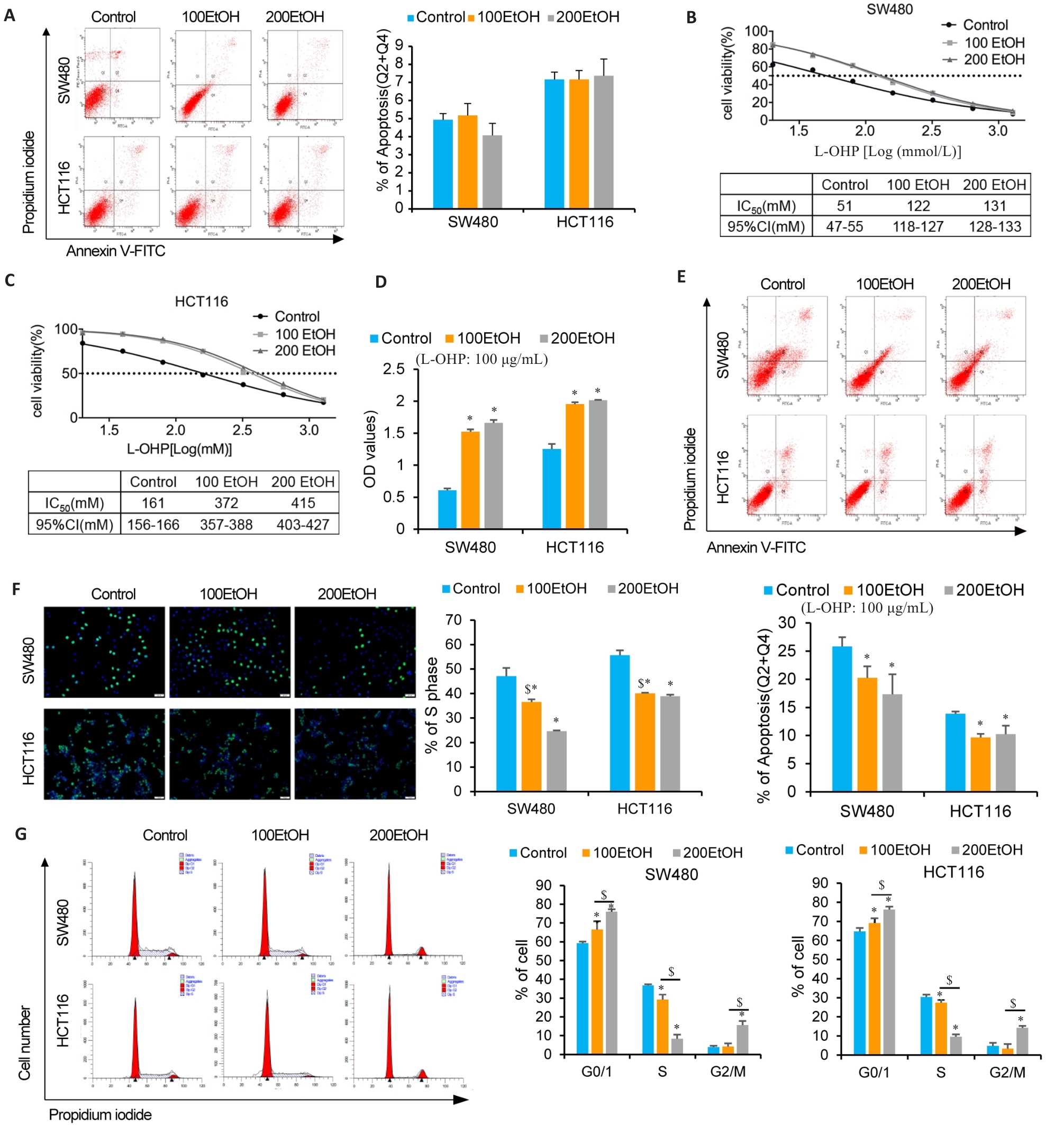
Fig.3 Ethanol enhances oxaliplatin resistance of CRC cells by inducing cell-cycle arrest. A: Annexin V/PI flow cytometry for analyzing apoptosis in SW480 and HCT116 cells treated with ethanol (100 or 200 mg/dL). B, C:CCK-8 assay for investigating the half maximal inhibitory concentration of CRC cells to oxaliplatin. D: CCK-8 assay for assessing cell viability. E: Annexin V/PI flow cytometry for analyzing apoptosis in cells treated with L-OHP with or without ethanol. F: EdU incorporation assay showing changes in the percentage of S-phase cells (Original magnification: ×20). G: Flow cytometry analysis of cell-cycle distribution. *P<0.05 vs Control; $P<0.05 vs 200 mg/dL ethanol.
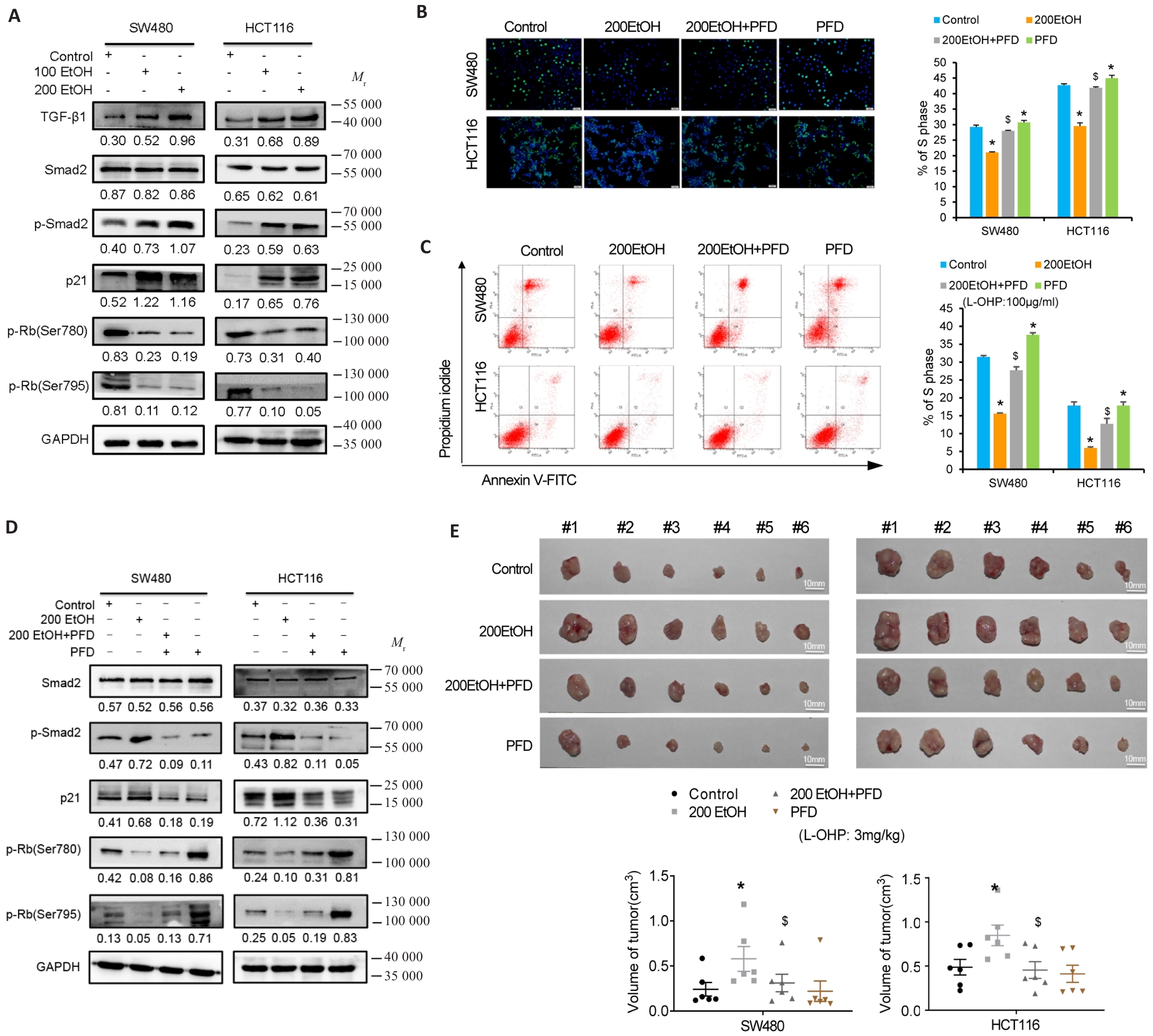
Fig.4 Ethanol activates the TGF-β/Smad/P21 axis to promote oxaliplatin resistance, which is reversed by PFD. A: Western blot analysis of TGF-β/Smad signaling and cell-cycle regulators (*P<0.05 vs Control; $P<0.05 vs 200 EtOH). B: EdU incorporation assay for assessing S-phase cell percentage under the indicated treatments (×20). C: Annexin V/PI flow cytometry analysis of apoptosis under the indicated treatments. D: Western blot analysis of TGF-β pathway activity and cell-cycle regulators. E: Tumor-volume curves (or endpoint volumes) in the subcutaneous CRC xenograft models with the indicated treatments. *P<0.05 vs Control; $P<0.05 vs 200 EtOH+PFD.
| [1] | Bray F, Laversanne M, Sung H, et al. Global cancer statistics 2022: GLOBOCAN estimates of incidence and mortality worldwide for 36 cancers in 185 countries[J]. CA Cancer J Clin, 2024, 74(3): 229-63. doi:10.3322/caac.21834 |
| [2] | Morgan E, Arnold M, Gini A, et al. Global burden of colorectal cancer in 2020 and 2040: incidence and mortality estimates from GLOBOCAN[J]. Gut, 2023, 72(2): 338-44. doi:10.1136/gutjnl-2022-327736 |
| [3] | Cervantes A, Adam R, Roselló S, et al. Metastatic colorectal cancer: ESMO Clinical Practice Guideline for diagnosis, treatment and follow-up[J]. Ann Oncol, 2023, 34(1): 10-32. doi:10.1016/j.annonc.2022.10.003 |
| [4] | Morris VK, Kennedy EB, Baxter NN, et al. Treatment of metastatic colorectal cancer: ASCO guideline[J]. J Clin Oncol, 2023, 41(3): 678-700. doi:10.1200/jco.22.01690 |
| [5] | Benson AB, Venook AP, Adam M, et al. Colon cancer, version 3.2024, NCCN clinical practice guidelines in oncology[J]. J Natl Compr Canc Netw, 2024, 22(2 D): e240029. |
| [6] | Martinez-Balibrea E, Martínez-Cardús A, Ginés A, et al. Tumor-related molecular mechanisms of oxaliplatin resistance[J]. Mol Cancer Ther, 2015, 14(8): 1767-76. doi:10.1158/1535-7163.mct-14-0636 |
| [7] | Ma SC, Zhang JQ, Yan TH, et al. Novel strategies to reverse chemoresistance in colorectal cancer[J]. Cancer Med, 2023, 12(10): 11073-96. doi:10.1002/cam4.5594 |
| [8] | Chen L, Yang FN, Chen S, et al. Mechanisms on chemotherapy resistance of colorectal cancer stem cells and research progress of reverse transformation: a mini-review[J]. Front Med, 2022, 9: 995882. doi:10.3389/fmed.2022.995882 |
| [9] | Luo ZD, Wang YF, Zhao YX, et al. Emerging roles of non-coding RNAs in colorectal cancer oxaliplatin resistance and liquid biopsy potential[J]. World J Gastroenterol, 2023, 29(1): 1-18. doi:10.3748/wjg.v29.i1.1 |
| [10] | Hashemi M, Esbati N, Rashidi M, et al. Biological landscape and nanostructural view in development and reversal of oxaliplatin resistance in colorectal cancer[J]. Transl Oncol, 2024, 40: 101846. doi:10.1016/j.tranon.2023.101846 |
| [11] | Courneya KS, Vardy JL, O'Callaghan CJ, et al. Structured exercise after adjuvant chemotherapy for colon cancer[J]. N Engl J Med, 2025, 393(1): 13-25. doi:10.1056/NEJMoa2502760 |
| [12] | Sadeghloo Z, Sadeghi A. Gut microbiota as a hidden modulator of chemotherapy: implications for colorectal cancer treatment[J]. Discov Oncol, 2025, 16(1): 1717. doi:10.1007/s12672-025-03574-0 |
| [13] | Gapstur SM, Bouvard V, Nethan ST, et al. The IARC perspective on alcohol reduction or cessation and cancer risk[J]. N Engl J Med, 2023, 389(26): 2486-94. doi:10.1056/nejmsr2306723 |
| [14] | Roshandel G, Ghasemi-Kebria F, Malekzadeh R. Colorectal cancer: epidemiology, risk factors, and prevention[J]. Cancers, 2024, 16(8): 1530. doi:10.3390/cancers16081530 |
| [15] | Huang SY, Yu LL, Xiong FC, et al. Alcohol consumption and risk of early onset colorectal cancer: a systematic review and meta-analysis[J]. Colorectal Dis, 2025, 27(3): e70046. doi:10.1111/codi.70046 |
| [16] | Zhou X, Wang LJ, Xiao JR, et al. Alcohol consumption, DNA methylation and colorectal cancer risk: Results from pooled cohort studies and Mendelian randomization analysis[J]. Int J Cancer, 2022, 151(1): 83-94. doi:10.1002/ijc.33945 |
| [17] | Phipps AI, Shi Q, Limburg PJ, et al. Alcohol consumption and colon cancer prognosis among participants in north central cancer treatment group phase III trial N0147[J]. Int J Cancer, 2016, 139(5): 986-95. doi:10.1002/ijc.30135 |
| [18] | Loroña NC, Himbert C, Ose J, et al. Alcohol consumption and smoking history at the time of diagnosis and the risk of colorectal cancer recurrence and mortality: results from the ColoCare study[J]. Cancer Epidemiol Biomarkers Prev, 2025, 34(1): 59-66. doi:10.1158/1055-9965.epi-24-0834 |
| [19] | Brooks PJ, Zakhari S. Acetaldehyde and the genome: beyond nuclear DNA adducts and carcinogenesis[J]. Environ Mol Mutagen, 2014, 55(2): 77-91. doi:10.1002/em.21824 |
| [20] | Elshaghabee FMF, Bockelmann W, Meske D, et al. Ethanol production by selected intestinal microorganisms and lactic acid bacteria growing under different nutritional conditions[J]. Front Microbiol, 2016, 7: 47. doi:10.3389/fmicb.2016.00047 |
| [21] | Yuan J, Chen C, Cui JH, et al. Fatty liver disease caused by high-alcohol-producing Klebsiella pneumoniae [J]. Cell Metab, 2019, 30(6): 1172. doi:10.1016/j.cmet.2019.11.006 |
| [22] | Chen X, Zhang Z, Li H, et al. Endogenous ethanol produced by intestinal bacteria induces mitochondrial dysfunction in non-alcoholic fatty liver disease[J]. J Gastroenterol Hepatol, 2020, 35(11): 2009-19. doi:10.1111/jgh.15027 |
| [23] | Bakrim S, El Hachlafi N, Khalid A, et al. Recent advances and molecular mechanisms of TGF-β signaling in colorectal cancer, with focus on bioactive compounds targeting[J]. Biomed Pharmacother, 2024, 177: 116886. doi:10.1016/j.biopha.2024.116886 |
| [24] | Bhowmick S, Alikunju S, Abdul Muneer PM. NADPH oxidase-induced activation of transforming growth factor-beta-1 causes neuropathy by suppressing antioxidant signaling pathways in alcohol use disorder[J]. Neuropharmacology, 2022, 213: 109136. doi:10.1016/j.neuropharm.2022.109136 |
| [25] | Zou HH, Wang S, Huang CJ, et al. Transforming growth factor-β signaling in alcohol-associated liver disease: a multicellular perspective[J]. Am J Pathol, 2026, 196(1): 50-67. doi:10.1016/j.ajpath.2025.09.017 |
| [26] | Itatani Y, Kawada K, Sakai Y. Transforming growth factor‑β signaling pathway in colorectal cancer and its tumor microenvironment[J]. Int J Mol Sci, 2019, 20(23): 5822. doi:10.3390/ijms20235822 |
| [27] | Waldner MJ, Neurath MF. TGFβ and the tumor microenvironment in colorectal cancer[J]. Cells, 2023, 12(8): 1139. doi:10.3390/cells12081139 |
| [28] | Zhang MD, Zhang YY, Chen YZ, et al. TGF‑β signaling and resistance to cancer therapy[J]. Front Cell Dev Biol, 2021, 9: 786728. doi:10.3389/fcell.2021.786728 |
| [29] | Liu SJ, Ren J, Ten Dijke P. Targeting TGFβ signal transduction for cancer therapy[J]. Signal Transduct Target Ther, 2021, 6(1): 8. doi:10.1038/s41392-020-00436-9 |
| [30] | Peng DD, Fu MY, Wang MN, et al. Targeting TGF‑β signal transduction for fibrosis and cancer therapy[J]. Mol Cancer, 2022, 21(1): 104. doi:10.1186/s12943-022-01569-x |
| [31] | O’Connell CP, Berndt SI, Chudy-Onwugaje K, et al. Association of alcohol intake over the lifetime with colorectal adenoma and colorectal cancer risk in the Prostate, Lung, Colorectal, and Ovarian Cancer Screening Trial[J]. Cancer, 2026, 132(3): e70201. doi:10.1002/cncr.70201 |
| [32] | McNabb S, Harrison TA, Albanes D, et al. Meta-analysis of 16 studies of the association of alcohol with colorectal cancer[J]. Int J Cancer, 2020, 146(3): 861-73. doi:10.1002/ijc.32377 |
| [33] | Chan DSM, Cariolou M, Markozannes G, et al. Post-diagnosis dietary factors, supplement use and colorectal cancer prognosis: a Global Cancer Update Programme (CUP Global) systematic literature review and meta-analysis[J]. Int J Cancer, 2024, 155(3): 445-70. doi:10.1002/ijc.34906 |
| [34] | Mao L, Li Y, Zhao JP, et al. Transforming growth factor‑β1 contributes to oxaliplatin resistance in colorectal cancer via epithelial to mesenchymal transition[J]. Oncol Lett, 2017, 14(1): 647-54. doi:10.3892/ol.2017.6209 |
| [35] | Yin JH, Wang L, Wang Y, et al. Curcumin reverses oxaliplatin resistance in human colorectal cancer via regulation of TGF‑β/Smad2/3 signaling pathway[J]. OncoTargets Ther, 2019, 12: 3893-903. doi:10.2147/ott.s199601 |
| [36] | Aimo A, Spitaleri G, Nieri D, et al. Pirfenidone for idiopathic pulmonary fibrosis and beyond[J]. Card Fail Rev, 2022, 8: e12. doi:10.15420/cfr.2021.30 |
| [37] | Paik SS, Lee JM, Ko IG, et al. Pirfenidone alleviates inflammation and fibrosis of acute respiratory distress syndrome by modulating the transforming growth factor‑β/smad signaling pathway[J]. Int J Mol Sci, 2024, 25(15): 8014. doi:10.3390/ijms25158014 |
| [1] | Liang HAN, Baichao LI, Bingzhe WANG, Zhiwei ZHANG, Jiuna ZHANG. Cephaeline attenuates malignant biological behaviors of colorectal cancer by regulating the Ras signaling pathway [J]. Journal of Southern Medical University, 2026, 46(5): 1121-1130. |
| [2] | Ning DING, Tianshu PENG, Li MO, Xiangdang HU, Zongliang YANG, You XIAO, Xiaobing FU, Jianzheng ZHAO, Leilei LI, Yingjie ZHANG. Multi-omics integration deciphers immune-metabolic heterogeneity in colorectal cancer: a prognostic model and therapeutic strategies targeting ANGPTL4/FABP4/RBP7 [J]. Journal of Southern Medical University, 2026, 46(5): 977-993. |
| [3] | Chenghuan JIN, Zongchao HONG, Xueyun DUAN, Heng FAN, Jingxing YANG, Jiamei QIN, Liyan ZOU, Mengyuan QIN. Ursolic acid in Huajie Xiaoliu Formula inhibits colorectal cancer cell growth by inducing cuproptosis [J]. Journal of Southern Medical University, 2026, 46(4): 825-837. |
| [4] | Chaoqun LIU, Ziyan NING, Jianghua WU, Weiwei LIU, Chuang LIN, Jiawei XU, Rui ZHOU, Liang ZHAO. Tumor-secreted dentin sialophosphoprotein induces oxaliplatin resistance in colorectal cancer through an integrin αvβ3-dependent pathway [J]. Journal of Southern Medical University, 2026, 46(3): 479-488. |
| [5] | Hongbo ZHANG, Mengyu YAN, Jiandong ZHANG, Peiwang SUN, Rui WANG, Yuanyuan GUO. Pirfenidone inhibits bladder cancer xenograft growth in mice by regulating regulatory T cells [J]. Journal of Southern Medical University, 2025, 45(7): 1513-1518. |
| [6] | Kang WANG, Haibin LI, Jing YU, Yuan MENG, Hongli ZHANG. High expression of ELFN1 is a prognostic biomarker and promotes proliferation and metastasis of colorectal cancer cells [J]. Journal of Southern Medical University, 2025, 45(7): 1543-1553. |
| [7] | Nuozhou WENG, Bin TAN, Wentao ZENG, Jiayu GU, Lianji WENG, Kehong ZHENG. RGL1 overexpression promotes metastasis of colorectal cancer by upregulating motile focal adhesion assembly via activating the CDC42/RAC1 complex [J]. Journal of Southern Medical University, 2025, 45(5): 1031-1038. |
| [8] | Zhennan MA, Fuquan LIU, Xuefeng ZHAO, Xiaowei ZHANG. High expression of DTX2 promotes proliferation, invasion and epithelial-mesenchymal transition of oxaliplatin-resistant colorectal cancer cells [J]. Journal of Southern Medical University, 2025, 45(4): 829-836. |
| [9] | Shunjie QING, Zhiyong SHEN. High expression of hexokinase 2 promotes proliferation, migration and invasion of colorectal cancer cells by activating the JAK/STAT pathway and regulating tumor immune microenvironment [J]. Journal of Southern Medical University, 2025, 45(3): 542-553. |
| [10] | Zhenni YU, Jingzhe GAO, Hui SUN, Qin Feng, Xiaoqi NA, Ning ZHANG, Kungshuang SHEN, Yuanyuan WANG, Xijun WANG. Causal relationship between gut microbiota and T cell subsets in the development of colorectal cancer: a Mendelian randomization analysis [J]. Journal of Southern Medical University, 2025, 45(12): 2756-2766. |
| [11] | Kai JI, Guanyu YU, Leqi ZHOU, Tianshuai ZHANG, Qianlong LING, Wenjiang MAN, Bing ZHU, Wei ZHANG. HNRNPA1 gene is highly expressed in colorectal cancer: its prognostic implications and potential as a therapeutic target [J]. Journal of Southern Medical University, 2024, 44(9): 1685-1695. |
| [12] | Yinliang ZHANG, Zetan LUO, Rui ZHAO, Na ZHAO, Zhidong XU, Di AO, Guyi CONG, Xinyu LIU, Hailun ZHENG. Sanguinarine induces ferroptosis of colorectal cancer cells by upregulating STUB1 and downregulating GPX4 [J]. Journal of Southern Medical University, 2024, 44(8): 1537-1544. |
| [13] | Heping LI, Gaohua LI, Xuehua ZHANG, Yanan WANG. Genetic drivers for inflammatory protein markers in colorectal cancer: a Mendelian randomization approach to clinical prognosis study [J]. Journal of Southern Medical University, 2024, 44(7): 1361-1370. |
| [14] | Nan WANG, Bin SHI, Xiaolan MAN, Weichao WU, Jia CAO. High expression of fragile X mental retardation protein inhibits ferroptosis of colorectal tumor cells by activating the RAS/MAPK signaling pathway [J]. Journal of Southern Medical University, 2024, 44(5): 885-893. |
| [15] | CHEN Shoufeng, ZHANG Shuchao, FAN Weilin, SUN Wei, LIU Beibei, LIU Jianmin, GUO Yuanyuan. Efficacy of combined treatment with pirfenidone and PD-L1 inhibitor in mice bearing ectopic bladder cancer xenograft [J]. Journal of Southern Medical University, 2024, 44(2): 210-216. |
| Viewed | ||||||
|
Full text |
|
|||||
|
Abstract |
|
|||||