Journal of Southern Medical University ›› 2026, Vol. 46 ›› Issue (8): 1956-1966.doi: 10.12122/j.issn.1673-4254.2026.08.23
A semi-supervised MRI image segmentation dual-network model for regions with ambiguous boundaries and heterogeneous regions
Lingxiao HUANG1,4,5( ), Haizhe XU1,4,5(), Lingyan HUANG2,3, Xinbo YAO1,4,5, Kaiyuan ZHOU1,4,5, Yongzhan GAO1,4,5
- 1.School of Information Engineering, Ningxia University, Yinchuan 750021, China
2.Department of Pathology, General Hospital of Ningxia Medical University, Yinchuan 750021, China
3.Department of Pathology, Second Affiliated Hospital of Hainan Medical University, Haikou 570000, China
4.Ningxia Key Laboratory of Artificial Intelligence and Information Security for Channeling Computing Resources from the East to the West, Yinchuan 750021, China
5.Collaborative Innovation Center for Ningxia Big Data and Artificial Intelligence Co-founded by Ningxia Municipality and Ministry of Education, Yinchuan 750021, China
-
Received:2025-12-27Online:2026-08-20Published:2026-08-01 -
Contact:Haizhe XU E-mail:huanglx@nxu.edu.cn;xhz246824@163.com -
Supported by:National Natural Science Foundation of China(12462027)

Cite this article
Lingxiao HUANG, Haizhe XU, Lingyan HUANG, Xinbo YAO, Kaiyuan ZHOU, Yongzhan GAO. A semi-supervised MRI image segmentation dual-network model for regions with ambiguous boundaries and heterogeneous regions[J]. Journal of Southern Medical University, 2026, 46(8): 1956-1966.
share this article
Add to citation manager EndNote|Ris|BibTeX
URL: https://www.j-smu.com/EN/10.12122/j.issn.1673-4254.2026.08.23
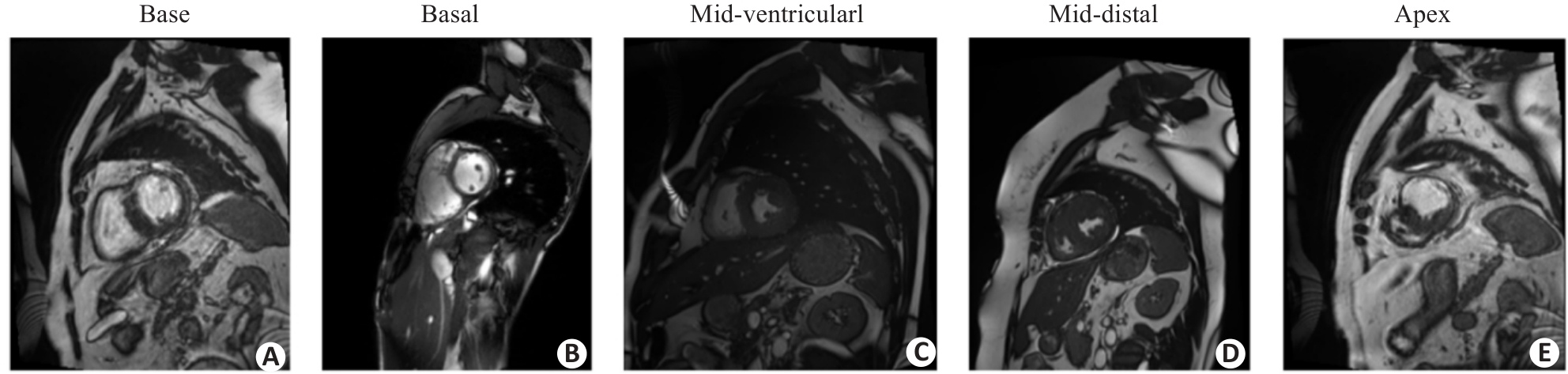
Fig.1 Sample two-dimensional slice images of the ACDC dataset. A: Transverse section slice of the base of the heart. B: Transverse section tissue slice of the middle part of the heart. C: Transverse section tissue slice of the middle part of the ventricular wall of the heart. D: Transverse section tissue slice of the distal part of the heart. E: Transverse section tissue slice of the apex of the heart.
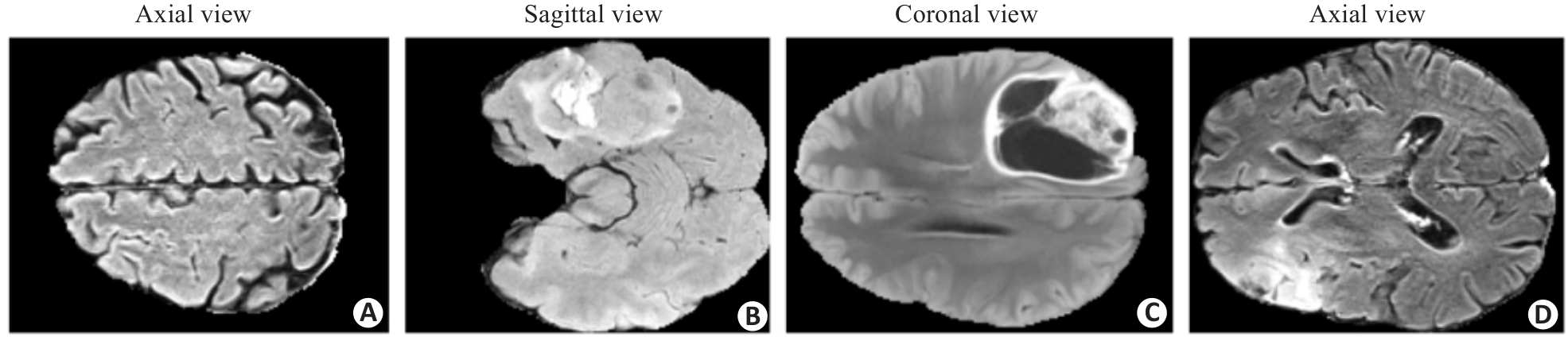
Fig.2 Sample 2D slice images of the BraTS2019 dataset. A: Axial horizontal cross-section of the brain. B: Parasagittal sagittal section of the brain. C: Coronal section of the brain. D: Axial horizontal cross-section of the brain.
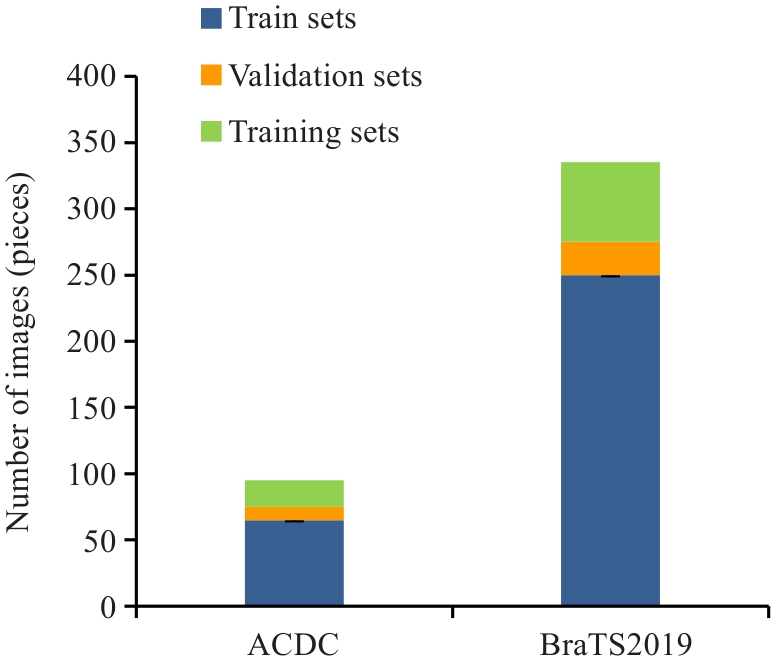
Fig.3 Distribution of image samples in ACDC and BraTS2019 datasets.
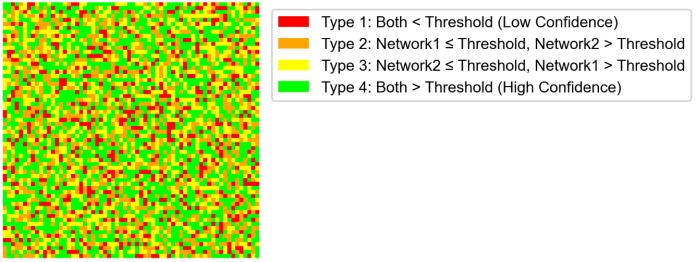
Fig.4 Heatmap of double-network pixel-level confidence type spatial distribution.
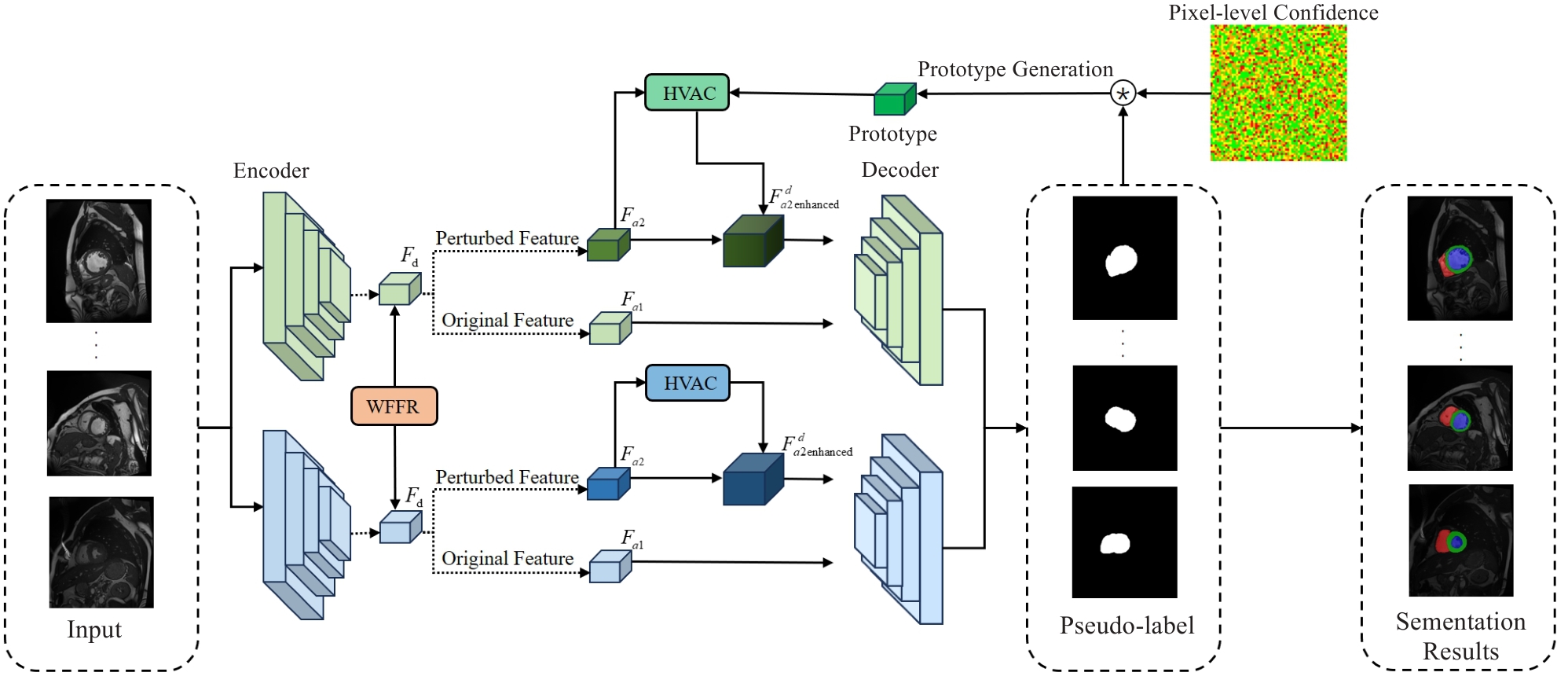
Fig.5 HVASS model network architecture.
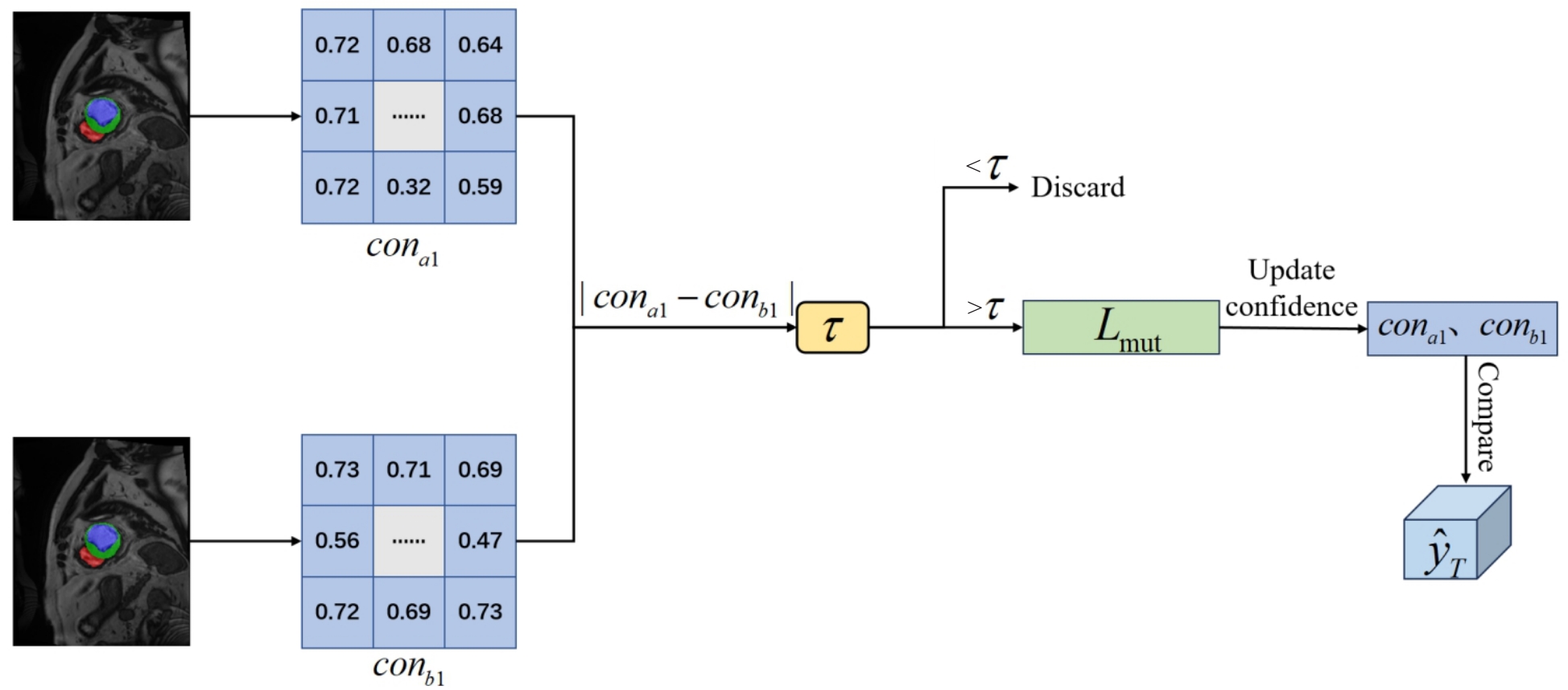
Fig.6 ADTMG module structure diagram.
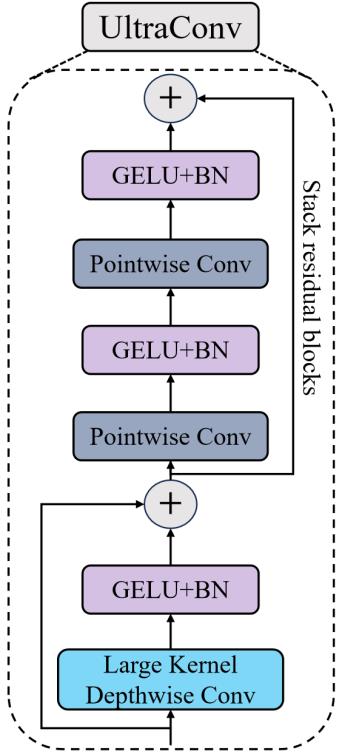
Fig.7 HVAC module structure diagram.
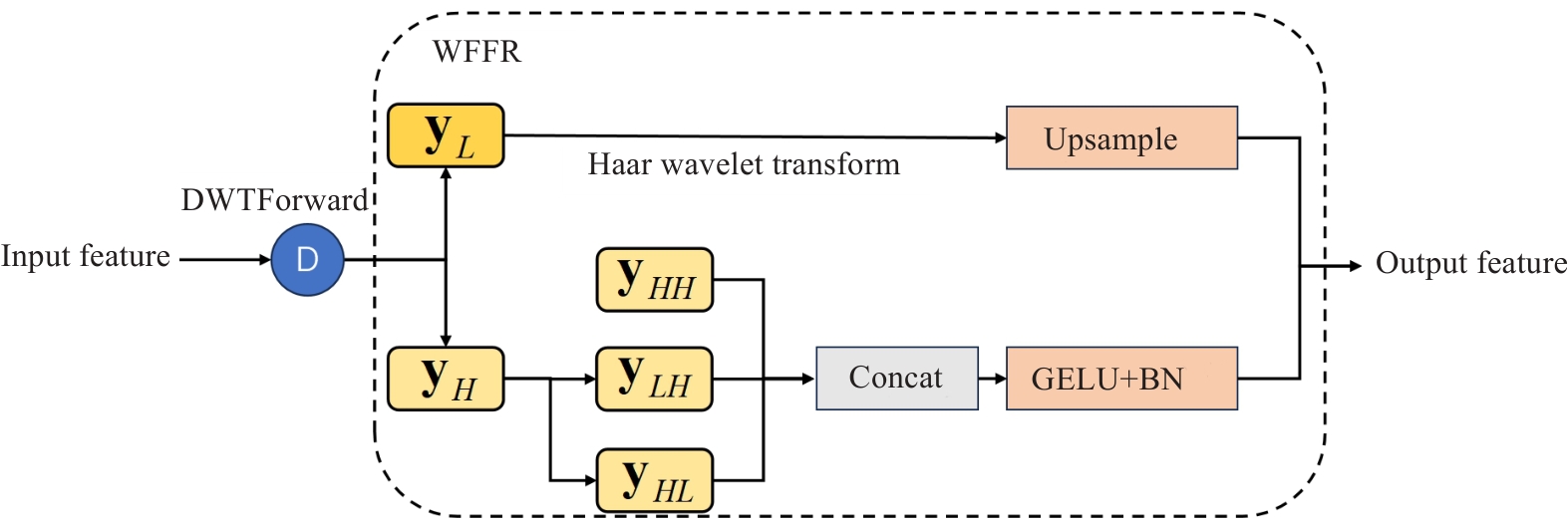
Fig.8 WFFR module structure diagram.
| Configuration name | Model version |
|---|---|
| System environment | Ubuntu20.04 |
| Central processing unit | Intel(R) Xeon(R) Gold 5418Y |
| Graphics processing unit | NVIDIA GeForce RTX 3090 24GB |
| Graphics processing unit acceleration library | CUDA 12.2 |
| Random access memory | 32 GB |
| Deep learning framework | Pytorch 2.0.0 |
Tab.1 Experimental environment configuration
| Configuration name | Model version |
|---|---|
| System environment | Ubuntu20.04 |
| Central processing unit | Intel(R) Xeon(R) Gold 5418Y |
| Graphics processing unit | NVIDIA GeForce RTX 3090 24GB |
| Graphics processing unit acceleration library | CUDA 12.2 |
| Random access memory | 32 GB |
| Deep learning framework | Pytorch 2.0.0 |
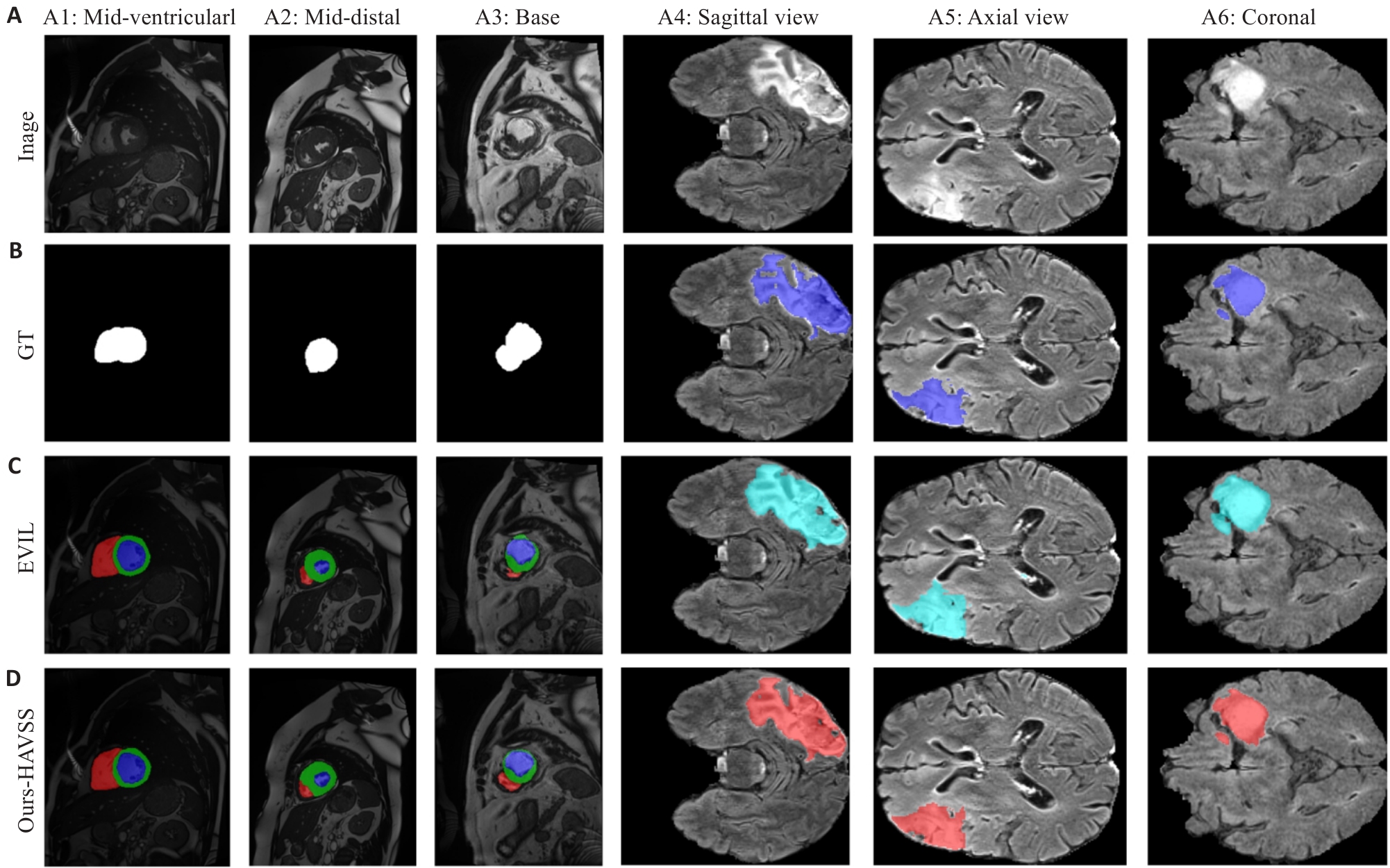
Fig.9 Visualization results of segmentation by different algorithms. A: Original 2D axial MRI image (A1: Two-dimensional transverse section tissue slice of the middle part of the ventricular wall of the heart. A2: Two-dimensional transverse section tissue slice of the distal part of the heart. A3: Two-dimensional transverse section slice of the base of the heart. A4: Parasagittal sagittal section of the brain. A5: Axial horizontal cross-section of the brain. A6: Coronal section of the brain.). B: Ground truth annotation map. C: Lesion localization heatmap generated by the EVIL method. D: Lesion localization heatmap generated by the HAVSS method proposed in this study.
| Method | Labeled | Unlabeled | Dice | IoU | 95HD | ASD |
|---|---|---|---|---|---|---|
| MTNIPS'2017 | 7 (10%) | 63 (90%) | 83.65 | 73.15 | 13.45 | 3.61 |
| MCFCVPR'2023 | 85.18 | 75.22 | 10.73 | 2.78 | ||
| CPSCVPR'2021 | 85.34 | 75.50 | 8.78 | 2.37 | ||
| MC-NetMICCAI'2021 | 86.07 | 76.58 | 11.48 | 3.37 | ||
| AC-MTMIA'2023 | 86.36 | 76.86 | 9.64 | 2.59 | ||
| AAUMIA'2024 | 86.46 | 76.99 | 8.00 | 2.06 | ||
| UG-MCLAIIM'2023 | 86.84 | 77.60 | 7.77 | 1.94 | ||
| MLRPMIA'2024 | 87.10 | 78.16 | 4.91 | 1.30 | ||
| EVILCBM'2024 | 87.25 | 78.18 | 5.31 | 1.35 | ||
| Ours-HVASS | 90.34 | 83.13 | 2.46 | 0.79 | ||
| MTNIPS'2017 | 14 (20%) | 56 (80%) | 86.55 | 77.49 | 6.86 | 2.15 |
| MC-NetMICCAI'2021 | 86.58 | 77.68 | 15.99 | 4.93 | ||
| CPSCVPR'2021 | 87.03 | 78.13 | 6.66 | 2.12 | ||
| MCFCVPR'2023 | 87.32 | 78.43 | 6.53 | 2.00 | ||
| AAUMIA'2024 | 87.71 | 78.92 | 8.51 | 2.14 | ||
| AC-MTMIA'2023 | 87.99 | 79.34 | 7.85 | 2.14 | ||
| MLRPMIA'2024 | 88.00 | 79.54 | 5.41 | 1.58 | ||
| EVILCBM'2024 | 88.34 | 79.90 | 6.46 | 1.68 | ||
| UG-MCLAIIM'2023 | 88.40 | 79.86 | 9.12 | 2.44 | ||
| Ours-HVASS | 91.02 | 83.65 | 2.74 | 0.78 |
Tab.2 Comparison results of HVASS on the ACDC dataset
| Method | Labeled | Unlabeled | Dice | IoU | 95HD | ASD |
|---|---|---|---|---|---|---|
| MTNIPS'2017 | 7 (10%) | 63 (90%) | 83.65 | 73.15 | 13.45 | 3.61 |
| MCFCVPR'2023 | 85.18 | 75.22 | 10.73 | 2.78 | ||
| CPSCVPR'2021 | 85.34 | 75.50 | 8.78 | 2.37 | ||
| MC-NetMICCAI'2021 | 86.07 | 76.58 | 11.48 | 3.37 | ||
| AC-MTMIA'2023 | 86.36 | 76.86 | 9.64 | 2.59 | ||
| AAUMIA'2024 | 86.46 | 76.99 | 8.00 | 2.06 | ||
| UG-MCLAIIM'2023 | 86.84 | 77.60 | 7.77 | 1.94 | ||
| MLRPMIA'2024 | 87.10 | 78.16 | 4.91 | 1.30 | ||
| EVILCBM'2024 | 87.25 | 78.18 | 5.31 | 1.35 | ||
| Ours-HVASS | 90.34 | 83.13 | 2.46 | 0.79 | ||
| MTNIPS'2017 | 14 (20%) | 56 (80%) | 86.55 | 77.49 | 6.86 | 2.15 |
| MC-NetMICCAI'2021 | 86.58 | 77.68 | 15.99 | 4.93 | ||
| CPSCVPR'2021 | 87.03 | 78.13 | 6.66 | 2.12 | ||
| MCFCVPR'2023 | 87.32 | 78.43 | 6.53 | 2.00 | ||
| AAUMIA'2024 | 87.71 | 78.92 | 8.51 | 2.14 | ||
| AC-MTMIA'2023 | 87.99 | 79.34 | 7.85 | 2.14 | ||
| MLRPMIA'2024 | 88.00 | 79.54 | 5.41 | 1.58 | ||
| EVILCBM'2024 | 88.34 | 79.90 | 6.46 | 1.68 | ||
| UG-MCLAIIM'2023 | 88.40 | 79.86 | 9.12 | 2.44 | ||
| Ours-HVASS | 91.02 | 83.65 | 2.74 | 0.78 |
| Method | Labeled | Unlabeled | Dice | IoU | 95HD | ASD |
|---|---|---|---|---|---|---|
| MTNIPS'2017 | 50 (20%) | 200 (80%) | 80.49 | 69.99 | 11.71 | 3.46 |
| MCFCVPR'2023 | 81.96 | 71.76 | 13.96 | 3.99 | ||
| AC-MTMIA'2023 | 82.09 | 71.65 | 15.91 | 4.81 | ||
| AAUMIA'2024 | 82.43 | 72.33 | 13.83 | 4.18 | ||
| MC-NetMICCAI'2021 | 82.51 | 72.98 | 14.57 | 3.78 | ||
| EVILCBM'2024 | 82.60 | 72.46 | 11.44 | 2.76 | ||
| CPSCVPR'2021 | 82.70 | 72.30 | 12.99 | 3.46 | ||
| UG-MCLAIIM'2023 | 82.85 | 72.69 | 11.12 | 2.28 | ||
| MLRPMIA'2024 | 83.96 | 74.00 | 15.16 | 4.21 | ||
| Ours-HVASS | 85.07 | 75.80 | 7.68 | 2.03 |
Tab.3 Comparison results of HVASS on the BraTS2019 dataset
| Method | Labeled | Unlabeled | Dice | IoU | 95HD | ASD |
|---|---|---|---|---|---|---|
| MTNIPS'2017 | 50 (20%) | 200 (80%) | 80.49 | 69.99 | 11.71 | 3.46 |
| MCFCVPR'2023 | 81.96 | 71.76 | 13.96 | 3.99 | ||
| AC-MTMIA'2023 | 82.09 | 71.65 | 15.91 | 4.81 | ||
| AAUMIA'2024 | 82.43 | 72.33 | 13.83 | 4.18 | ||
| MC-NetMICCAI'2021 | 82.51 | 72.98 | 14.57 | 3.78 | ||
| EVILCBM'2024 | 82.60 | 72.46 | 11.44 | 2.76 | ||
| CPSCVPR'2021 | 82.70 | 72.30 | 12.99 | 3.46 | ||
| UG-MCLAIIM'2023 | 82.85 | 72.69 | 11.12 | 2.28 | ||
| MLRPMIA'2024 | 83.96 | 74.00 | 15.16 | 4.21 | ||
| Ours-HVASS | 85.07 | 75.80 | 7.68 | 2.03 |
| Datasets | ADTMG | HVAC | WFFR | Dice | IoU | 95HD | ASD |
|---|---|---|---|---|---|---|---|
| ACDC | 84.38 | 71.45 | 18.23 | 4.61 | |||
| √ | 87.23 | 80.30 | 8.78 | 1.87 | |||
| √ | 86.97 | 79.28 | 11.48 | 3.37 | |||
| √ | 85.56 | 79.42 | 10.73 | 3.97 | |||
| √ | √ | 88.78 | 80.22 | 3.86 | 0.98 | ||
| √ | √ | 89.08 | 82.59 | 3.79 | 1.23 | ||
| √ | √ | 88.89 | 81.43 | 5.31 | 1.58 | ||
| √ | √ | √ | 90.34 | 83.13 | 2.46 | 0.79 |
Tab.4 Ablation experiment results of HVASS on the ACDC and BraTS2019 datasets under 10% annotation
| Datasets | ADTMG | HVAC | WFFR | Dice | IoU | 95HD | ASD |
|---|---|---|---|---|---|---|---|
| ACDC | 84.38 | 71.45 | 18.23 | 4.61 | |||
| √ | 87.23 | 80.30 | 8.78 | 1.87 | |||
| √ | 86.97 | 79.28 | 11.48 | 3.37 | |||
| √ | 85.56 | 79.42 | 10.73 | 3.97 | |||
| √ | √ | 88.78 | 80.22 | 3.86 | 0.98 | ||
| √ | √ | 89.08 | 82.59 | 3.79 | 1.23 | ||
| √ | √ | 88.89 | 81.43 | 5.31 | 1.58 | ||
| √ | √ | √ | 90.34 | 83.13 | 2.46 | 0.79 |
| [1] | Litjens G, Ciompi F, Wolterink JM, et al. State-of-the-art deep learning in cardiovascular image analysis[J]. JACC Cardiovasc Imaging, 2019, 12(8 Pt 1): 1549-65. doi:10.1016/j.jcmg.2019.06.009 |
| [2] | Bai WJ, Sinclair M, Tarroni G, et al. Automated cardiovascular magnetic resonance image analysis with fully convolutional networks[J]. J Cardiovasc Magn Reson, 2018, 20(1): 65. doi:10.1186/s12968-018-0471-x |
| [3] | 周 昊, 曾 栋, 边兆英, 等. 基于半监督网络的组织感知CT图像对比度的增强方法[J]. 南方医科大学学报, 2023, 43(6): 985-93. |
| [4] | 丁家满, 刘 楠, 周蜀杰, 等. 基于正则化的半监督弱标签分类方法[J]. 计算机学报, 2022, 45(1): 69-81 |
| [5] | 翟德明, 沈斯娴, 周 雄, 等. 基于最优传输理论的深度半监督学习伪标签生成算法[J]. 软件学报, 2024, 35(11): 5196-209. |
| [6] | Li CC, Zhang JS, Niu DM, et al. Boundary-aware uncertainty suppression for semi-supervised medical image segmentation[J]. IEEE Trans Artif Intell, 2024, 5(8): 4074-86. doi:10.1109/tai.2024.3359576 |
| [7] | 姚宗亮, 黄 荣, 董爱华, 等. 基于多模态融合和自适应剪枝Transformer的脑肿瘤图像分割算法[J]. 宁夏大学学报: 自然科学版, 2024, 45(1): 16-24. |
| [8] | 徐晗晗, 张印辉, 何自芬, 等. 伪标签置信度调控结直肠癌病理图像半监督语义分割[J]. 光学精密工程, 2025, 33(4): 591-609. |
| [9] | Chen XK, Yuan YH, Zeng G, et al. Semi-supervised semantic segmentation with cross pseudo supervision[C]//2021 IEEE/CVF Conference on Computer Vision and Pattern Recognition (CVPR). June 20-25, 2021. Nashville, TN, USA. IEEE, 2021: 2613-22. doi:10.1109/cvpr46437.2021.00264 |
| [10] | Wu YC, Xu MF, Ge ZY, et al. Semi-supervised left atrium segmentation with mutual ConsistencyTraining[C]//Medical Image Computing and Computer Assisted Intervention-MICCAI 2021. Cham: Springer, 2021: 297-306. doi:10.1007/978-3-030-87196-3_28 |
| [11] | Adiga V S, Dolz J, Lombaert H. Anatomically-aware uncertainty for semi-supervised image segmentation[J]. Med Image Anal, 2024, 91: 103011. doi:10.1016/j.media.2023.103011 |
| [12] | Bernard O, Lalande A, Zotti C, et al. Deep learning techniques for automatic MRI cardiac multi-structures segmentation and diagnosis: is the problem solved?[J]. IEEE Trans Med Imaging, 2018, 37(11): 2514-25. doi:10.1109/tmi.2018.2837502 |
| [13] | Bakas S, Akbari H, Sotiras A, et al. Advancing The Cancer Genome Atlas glioma MRI collections with expert segmentation labels and radiomic features[J]. Sci Data, 2017, 4: 170117. doi:10.1038/sdata.2017.117 |
| [14] | 权 笑, 戴鹏程, 辛 潮, 等. LTE网络高价值区域识别与分析方法研究[J].电信工程技术与标准化, 2018, 31(5):18-21. |
| [15] | Zhou ZW, Rahman Siddiquee MM, Tajbakhsh N, et al. UNet++: a nested U-Net architecture for medical image segmentation[C]//Deep Learning in Medical Image Analysis and Multimodal Learning for Clinical Decision Support. Cham: Springer, 2018: 3-11. doi:10.1007/978-3-030-00889-5_1 |
| [16] | Zhao CJ, Xiang S, Wang YQ, et al. Context-aware network fusing transformer and V-Net for semi-supervised segmentation of 3D left atrium[J]. Expert Syst Appl, 2023, 214: 119105. doi:10.1016/j.eswa.2022.119105 |
| [17] | Topol EJ. High-performance medicine: the convergence of human and artificial intelligence[J]. Nat Med, 2019, 25(1): 44-56. doi:10.1038/s41591-018-0300-7 |
| [18] | Tarvainen A, Valpola H. Mean teachers are better role models: Weight-averaged consistency targets improve semi-supervised deep learning results[C]//Neural Information Processing Systems., 2017 |
| [19] | Xu Z, Wang YX, Lu DH, et al. Ambiguity-selective consistency regularization for mean-teacher semi-supervised medical image segmentation[J]. Med Image Anal, 2023, 88: 102880. doi:10.1016/j.media.2023.102880 |
| [20] | Zhang YC, Jiao RS, Liao QC, et al. Uncertainty-guided mutual consistency learning for semi-supervised medical image segmentation[J]. Artif Intell Med, 2023, 138: 102476. doi:10.1016/j.artmed.2022.102476 |
| [21] | Wang YC, Xiao B, Bi XL, et al. MCF: mutual correction framework for semi-supervised medical image segmentation[C]//2023 IEEE/CVF Conference on Computer Vision and Pattern Recognition (CVPR). June 17-24, 2023, Vancouver, BC, Canada. IEEE, 2023: 15651-60. doi:10.1109/cvpr52729.2023.01502 |
| [22] | Chen YY, Yang ZY, Shen CY, et al. Evidence-based uncertainty-aware semi-supervised medical image segmentation[J]. Comput Biol Med, 2024, 170: 108004. doi:10.1016/j.compbiomed.2024.108004 |
| [23] | 郑孙易, 刘佳鑫, 崔效楠, 等. 人工智能在肿瘤影像学中的应用进展[J]. 放射学实践, 2025, 40(9): 1093-7. |
| [24] | Menze BH, Jakab A, Bauer S, et al. The multimodal brain tumor image segmentation benchmark (BRATS)[J]. IEEE Trans Med Imaging, 2015, 34(10): 1993-2024. |
| [25] | Bauer S, Wiest R, Nolte LP, et al. A survey of MRI-based medical image analysis for brain tumor studies[J]. Phys Med Biol, 2013, 58(13): R97-R129. doi:10.1088/0031-9155/58/13/r97 |
| [26] | Salvador A, Bellver M, Campos V, et al. Recurrent neural networks for semantic instance segmentation[J]. arXiv preprint arXiv:, 2017. |
| [27] | Taha AA, Hanbury A. Metrics for evaluating 3D medical image segmentation: analysis, selection, and tool[J]. BMC Med Imaging, 2015, 15: 29. doi:10.1186/s12880-015-0068-x |
| [28] | Petitjean C, Dacher JN. A review of segmentation methods in short axis cardiac MR images[J]. Med Image Anal, 2011, 15(2): 169-84. doi:10.1016/j.media.2010.12.004 |
| [29] | Zhuang XH, Shen J. Multi-scale patch and multi-modality atlases for whole heart segmentation of MRI[J]. Med Image Anal, 2016, 31: 77-87. doi:10.1016/j.media.2016.02.006 |
| [30] | Isensee F, Jaeger PF, Kohl SAA, et al. nnU-Net: a self-configuring method for deep learning-based biomedical image segmentation[J]. Nat Methods, 2021, 18(2): 203-11. doi:10.1038/s41592-020-01008-z |
| [31] | Esteva A, Robicquet A, Ramsundar B, et al. A guide to deep learning in healthcare[J]. Nat Med, 2019, 25(1): 24-9. doi:10.1038/s41591-018-0316-z |
| [1] | Chenxi HU, Xi GU, Pengcheng NIU, Yiting WANG, Liaoqiong FANG, Zhibiao WANG, Jin BAI. Escherichia coli outer membrane vesicles inhibit rat glioma proliferation through cell endocytosis [J]. Journal of Southern Medical University, 2026, 46(8): 1730-1742. |
| [2] | Jun ZHU, Shunqian TAN, Fangjun HUANG, Guangyao CAI, Xin ZHEN. Medical prior-guided TabMap deep learning model for ovarian cancer prediction and interpretability analysis [J]. Journal of Southern Medical University, 2026, 46(7): 1714-1722. |
| [3] | Boer SU, Ying ZHANG, Zhixian YAN, Ying ZOU, Yufan CHENG, Tianshu LI, Jinming LI, Xiaotong CHEN, Chunqi LIANG, Rong XU, Shengming YANG, Bo PENG, Hao CHEN, Jiang YU, Yanfeng HU. Application of artificial intelligence for surgical skill assessment and quality control in minimally invasive surgery: progress, problems and prospect [J]. Journal of Southern Medical University, 2026, 46(7): 1723-1730. |
| [4] | Mingxu ZHANG, Diheng WU, Jiaze LIN, Yijun LÜ, Linghong ZHOU, Xin ZHEN, Hao ZHOU, Genggeng QIN. A Transformer-based multimodal model for predicting hospital-acquired infections using imaging and clinical laboratory data [J]. Journal of Southern Medical University, 2026, 46(6): 1423-1433. |
| [5] | Jianing XU, Yixiao MAO, Yu ZHANG. Hierarchical attention-driven multiple instance learning for clear cell renal cell carcinoma grading and staging in digital pathology [J]. Journal of Southern Medical University, 2026, 46(5): 1175-1184. |
| [6] | Tong WANG, Caohui DUAN, Xin LOU, Qianjin FENG. A vessel-enhanced consistency-preserving diffusion model for 3T-to-7T susceptibility weighted image generation [J]. Journal of Southern Medical University, 2026, 46(5): 1185-1192. |
| [7] | Boyong CHEN, Xinyi WANG, Xinxin ZHAO, Ting SONG, Yongbao LI. Swin-ResViT network for real-time generation of high-quality localization MR images from low-quality cine-MR [J]. Journal of Southern Medical University, 2026, 46(4): 929-938. |
| [8] | Shunqian TAN, Li ZHUO, Min ZENG, Fangjun HUANG, Jun ZHU, Guangyao CAI, Xin ZHEN. A Transformer-based model using laboratory indicators efficiently differentiates ovarian cancer [J]. Journal of Southern Medical University, 2026, 46(4): 939-945. |
| [9] | Xueqi LU, Huayuan CHEN, Qiucen WU, Yaoqi WEN, Guoguang LIU, Chaomin CHEN. Evaluation of an interpretable 12-lead ECG automatic diagnosis model based on deep feature fusion [J]. Journal of Southern Medical University, 2026, 46(1): 208-218. |
| [10] | Li ZHUO, Min ZENG, Shunqian TAN, Tao LIANG, Weiwei XIAO, Xin ZHEN. Diffusion cycle-consistent generative adversarial networks for pelvic active bone marrow segmentation [J]. Journal of Southern Medical University, 2026, 46(1): 219-230. |
| [11] | Qiucen WU, Xueqi LU, Yaoqi WEN, Yong HONG, Yuliang WU, Chaomin CHEN. A myocardial infarction detection and localization model based on multi-scale field residual blocks fusion with modified channel attention [J]. Journal of Southern Medical University, 2025, 45(8): 1777-1790. |
| [12] | Ziyu ZHENG, Xiaying YANG, Shengjie WU, Shijie ZHANG, Guorong LYU, Peizhong LIU, Jun WANG, Shaozheng HE. A multi-feature fusion-based model for fetal orientation classification from intrapartum ultrasound videos [J]. Journal of Southern Medical University, 2025, 45(7): 1563-1570. |
| [13] | Huanyu JI, Rui WANG, Shengxiang GAO, Wengang CHE. SG-UNet: a melanoma segmentation model enhanced with global attention and self-calibrated convolution [J]. Journal of Southern Medical University, 2025, 45(6): 1317-1326. |
| [14] | Yuxiang LIAO, Jingping LIU, Bo LIU, Xiyun FEI, Chen JIN. Circ_EPHB4 regulates temozolomide sensitivity in glioma cells through the miR-424-5p/Wnt3 axis [J]. Journal of Southern Medical University, 2025, 45(5): 942-953. |
| [15] | Meng QU, Rong FU. ResLSTM-TemporalSE: an automated classification model for multi-lead ECG signals [J]. Journal of Southern Medical University, 2025, 45(12): 2708-2717. |
| Viewed | ||||||
|
Full text |
|
|||||
|
Abstract |
|
|||||