
Journal of Southern Medical University ›› 2026, Vol. 46 ›› Issue (10): 2296-2308.doi: 10.12122/j.issn.1673-4254.2026.10.02
Mengdi YANG1( ), Hongtao YIN2, Hongli LI2, Qiong LI2, Xiao JI2, Donghu ZHEN2()
Received:2026-04-28
Online:2026-10-20
Published:2026-10-26
Contact:
Donghu ZHEN
E-mail:di17865202884@163.com;zhdh8279@163.com
Mengdi YANG, Hongtao YIN, Hongli LI, Qiong LI, Xiao JI, Donghu ZHEN. Association between depressive symptoms and renal hyperfiltration in middle-aged and older adults[J]. Journal of Southern Medical University, 2026, 46(10): 2296-2308.
Add to citation manager EndNote|Ris|BibTeX
URL: https://www.j-smu.com/EN/10.12122/j.issn.1673-4254.2026.10.02
| Characteristics | Depressive Symptoms | Depressive Episode | ||||||
|---|---|---|---|---|---|---|---|---|
| PHQ<5 | 5≤PHQ<10 | PHQ≥10 | P | No | Mild | Severe | P | |
| Case (n) | 8075 (85.3) | 1160 (12.3) | 234 (2.5) | 8196 (86.6) | 681 (7.2) | 592 (6.3) | ||
| Age (year) | 57.34±8.41 | 56.97±8.37 | 56.21±8.42 | 0.054 | 57.40±8.39 | 56.24±8.28a | 56.64±8.64a | <0.001 |
| Gender | <0.001 | <0.001 | ||||||
| Men | 2462 (30.5) | 231 (19.9)a | 45 (19.2)a | 2469 (30.1) | 152 (22.3)a | 117 (19.8)a | ||
| Women | 5613 (69.5) | 929 (80.1)a | 189 (80.8)a | 5757 (69.9) | 529 (77.7) a | 475 (80.2)a | ||
| Height | 162.17±7.61 | 160.83±7.33a | 160.88±7.42a | <0.001 | 162.11±7.60 | 161.47±7.55a | 160.65±7.36a | <0.001 |
| Weight | 63.91±10.49 | 61.70±9.70a | 61.26±10.28a | <0.001 | 63.86±10.49 | 62.49±9.67a | 61.20±9.93ab | <0.001 |
| BMI | 24.26±3.32 | 23.82±3.19a | 23.61±3.20a | <0.001 | 24.25±3.33 | 23.94±3.10a | 23.66±3.14a | <0.001 |
| No single* | 7094 (87.9) | 972 (83.8)a | 180 (76.9)ab | <0.001 | 7200 (87.8) | 569 (83.6)a | 477 (80.6)a | <0.001 |
| High school level | 4486 (55.6) | 613 (52.8) | 132 (56.4) | 0.208 | 4541 (55.4) | 367 (53.9) | 323 (54.6) | 0.704 |
| Sleep quality | 0.048 | 0.588 | ||||||
| Good | 6396 (79.2) | 955 (82.3)a | 186 (79.5) | 6510 (79.4) | 550 (80.8) | 477 (80.6) | ||
| Poor | 1679 (20.8) | 205 (17.7)a | 48 (20.5) | 1686 (20.6) | 131 (19.2) | 115 (19.4) | ||
| SBP | 128.60±19.17 | 125.94±18.73a | 124.04±17.01a | 128.44±19.14 | 127.37±19.07 | 125.23±18.15ab | <0.001 | |
| DBP | 76.65±10.64 | 75.27±10.38a | 74.04±10.28a | <0.001 | 76.53±10.62 | 76.36±10.63 | 74.89±10.48ab | 0.001 |
| FPG | 5.60 (5.10, 6.26) | 5.50 (5.03, 6.14)a | 5.46 (5.08, 6.20) | 0.013 | 5.60 (5.10, 6.27) | 5.50 (5.03, 6.20) | 5.48 (5.01, 6.02)a | 0.001 |
| 2hPG | 7.52 (6.10, 9.81) | 7.35 (5.99, 9.50) | 7.40 (6.04, 10.00) | 0.158 | 7.52 (6.10, 9.80) | 7.34 (5.90, 9.72) | 7.39 (5.95, 9.40) | 0.047 |
| HDL | 1.22±0.30 | 1.25±0.31a | 1.24±0.31 | 0.005 | 1.22±0.30 | 1.23±0.30 | 1.23±0.32 | 0.712 |
| Low HDL | 2298 (24.3) | 290 (25.0)a | 52 (22.2) | 0.007 | 2295 (28.0) | 190 (27.9) | 155 (26.2) | 0.635 |
| LDL | 2.55±0.77 | 2.60±0.76a | 2.52±0.79 | 0.116 | 2.56±0.77 | 2.48±0.76a | 2.55±0.77 | 0.033 |
| High LDL | 216 (2.7) | 31 (2.7) | 5 (2.1) | 0.880 | 222 (2.7) | 17 (2.5) | 13 (2.2) | 0.727 |
| TC | 4.53±1.03 | 4.62±1.05a | 4.52±1.11 | 0.036 | 4.55±1.03 | 4.45±1.03a | 4.56±1.08 | 0.059 |
| High TC | 418 (5.2) | 60 (5.2) | 16 (6.8) | 0.529 | 436 (5.3) | 28 (4.1) | 30 (5.1) | 0.39 |
| TG | 1.49 (1.07, 2.11) | 1.46 (1.06, 2.06) | 1.45 (1.00, 2.17) | 0.523 | 1.49 (1.07, 2.11) | 1.44 (1.04, 2.05) | 1.47 (1.03, 2.07) | 0.145 |
| High TG | 1697 (21.0) | 224 (19.3) | 56 (23.9) | 0.208 | 1727 (21.1) | 130 (19.1) | 120 (20.3) | 0.441 |
| SCr | 0.76±0.14 | 0.74±0.13a | 0.73±0.12a | <0.001 | 0.76±0.13 | 0.74±0.14a | 0.74±0.13a | <0.001 |
| eGFR | 92.47±12.30 | 92.63±12.34 | 94.02±13.05 | 0.161 | 92.40±12.27 | 93.42±12.48a | 93.36±12.88 | 0.028 |
| UACR | 2.15 (1.38, 3.33) | 2.24 (1.37, 3.40) | 2.16 (1.29, 3.25) | 0.547 | 2.16 (1.38, 3.33) | 2.21 (1.37, 3.30) | 2.12 (1.33, 3.35) | 0.770 |
| Smoking | 0.001 | 0.079 | ||||||
| Now not | 6760 (83.7) | 1024 (88.3)a | 202 (86.3) | 6882 (84.0) | 588 (86.3) | 516 (87.2) | ||
| Occasionally | 232 (2.9) | 19 (1.6)a | 6 (2.6) | 233 (2.8) | 11 (1.6) | 13 (2.2) | ||
| Often | 1083 (13.4) | 117 (10.1)a | 26 (11.1) | 1081 (13.2) | 82 (12.0) | 63 (10.6) | ||
| Drinking | 0.052 | 0.240 | ||||||
| Now not | 5846 (72.4) | 864 (74.5) | 172 (73.5) | 5968 (72.8) | 487 (71.5) | 427 (72.1) | ||
| Occasionally | 1791 (22.2) | 255 (22.0) | 46 (19.7) | 1787 (21.8) | 163 (23.9) | 142 (24.0) | ||
| Often | 438 (5.4) | 41 (3.5) | 16 (6.8) | 441 (5.4) | 31 (4.6) | 23 (3.9) | ||
| Regular exercise | 1778 (22.0) | 240 (20.7) | 53 (22.6) | 0.567 | 1818 (22.2) | 139 (20.4) | 114 (19.3) | 0.159 |
| DM | 1929 (23.9) | 270 (23.3) | 62 (26.5) | 0.573 | 1977 (24.1) | 153 (22.5) | 131 (22.1) | 0.366 |
| HT | 2956 (36.9) | 387 (33.4) | 63 (26.9)a | 0.001 | 2983 (36.4) | 242 (35.5) | 181 (30.6)a | 0.017 |
| CCVD | 349 (4.3) | 75 (6.5)a | 12 (5.1) | 0.005 | 368 (4.5) | 34 (5.0) | 34 (5.7) | 0.329 |
| RHF | 403 (5.0) | 53 (4.6) | 17 (7.3) | 0.225 | 403 (4.9) | 29 (4.3) | 41 (6.9) | 0.063 |
Tab.1 General characteristics of subjects grouped by depressive symptoms and depressive episodes
| Characteristics | Depressive Symptoms | Depressive Episode | ||||||
|---|---|---|---|---|---|---|---|---|
| PHQ<5 | 5≤PHQ<10 | PHQ≥10 | P | No | Mild | Severe | P | |
| Case (n) | 8075 (85.3) | 1160 (12.3) | 234 (2.5) | 8196 (86.6) | 681 (7.2) | 592 (6.3) | ||
| Age (year) | 57.34±8.41 | 56.97±8.37 | 56.21±8.42 | 0.054 | 57.40±8.39 | 56.24±8.28a | 56.64±8.64a | <0.001 |
| Gender | <0.001 | <0.001 | ||||||
| Men | 2462 (30.5) | 231 (19.9)a | 45 (19.2)a | 2469 (30.1) | 152 (22.3)a | 117 (19.8)a | ||
| Women | 5613 (69.5) | 929 (80.1)a | 189 (80.8)a | 5757 (69.9) | 529 (77.7) a | 475 (80.2)a | ||
| Height | 162.17±7.61 | 160.83±7.33a | 160.88±7.42a | <0.001 | 162.11±7.60 | 161.47±7.55a | 160.65±7.36a | <0.001 |
| Weight | 63.91±10.49 | 61.70±9.70a | 61.26±10.28a | <0.001 | 63.86±10.49 | 62.49±9.67a | 61.20±9.93ab | <0.001 |
| BMI | 24.26±3.32 | 23.82±3.19a | 23.61±3.20a | <0.001 | 24.25±3.33 | 23.94±3.10a | 23.66±3.14a | <0.001 |
| No single* | 7094 (87.9) | 972 (83.8)a | 180 (76.9)ab | <0.001 | 7200 (87.8) | 569 (83.6)a | 477 (80.6)a | <0.001 |
| High school level | 4486 (55.6) | 613 (52.8) | 132 (56.4) | 0.208 | 4541 (55.4) | 367 (53.9) | 323 (54.6) | 0.704 |
| Sleep quality | 0.048 | 0.588 | ||||||
| Good | 6396 (79.2) | 955 (82.3)a | 186 (79.5) | 6510 (79.4) | 550 (80.8) | 477 (80.6) | ||
| Poor | 1679 (20.8) | 205 (17.7)a | 48 (20.5) | 1686 (20.6) | 131 (19.2) | 115 (19.4) | ||
| SBP | 128.60±19.17 | 125.94±18.73a | 124.04±17.01a | 128.44±19.14 | 127.37±19.07 | 125.23±18.15ab | <0.001 | |
| DBP | 76.65±10.64 | 75.27±10.38a | 74.04±10.28a | <0.001 | 76.53±10.62 | 76.36±10.63 | 74.89±10.48ab | 0.001 |
| FPG | 5.60 (5.10, 6.26) | 5.50 (5.03, 6.14)a | 5.46 (5.08, 6.20) | 0.013 | 5.60 (5.10, 6.27) | 5.50 (5.03, 6.20) | 5.48 (5.01, 6.02)a | 0.001 |
| 2hPG | 7.52 (6.10, 9.81) | 7.35 (5.99, 9.50) | 7.40 (6.04, 10.00) | 0.158 | 7.52 (6.10, 9.80) | 7.34 (5.90, 9.72) | 7.39 (5.95, 9.40) | 0.047 |
| HDL | 1.22±0.30 | 1.25±0.31a | 1.24±0.31 | 0.005 | 1.22±0.30 | 1.23±0.30 | 1.23±0.32 | 0.712 |
| Low HDL | 2298 (24.3) | 290 (25.0)a | 52 (22.2) | 0.007 | 2295 (28.0) | 190 (27.9) | 155 (26.2) | 0.635 |
| LDL | 2.55±0.77 | 2.60±0.76a | 2.52±0.79 | 0.116 | 2.56±0.77 | 2.48±0.76a | 2.55±0.77 | 0.033 |
| High LDL | 216 (2.7) | 31 (2.7) | 5 (2.1) | 0.880 | 222 (2.7) | 17 (2.5) | 13 (2.2) | 0.727 |
| TC | 4.53±1.03 | 4.62±1.05a | 4.52±1.11 | 0.036 | 4.55±1.03 | 4.45±1.03a | 4.56±1.08 | 0.059 |
| High TC | 418 (5.2) | 60 (5.2) | 16 (6.8) | 0.529 | 436 (5.3) | 28 (4.1) | 30 (5.1) | 0.39 |
| TG | 1.49 (1.07, 2.11) | 1.46 (1.06, 2.06) | 1.45 (1.00, 2.17) | 0.523 | 1.49 (1.07, 2.11) | 1.44 (1.04, 2.05) | 1.47 (1.03, 2.07) | 0.145 |
| High TG | 1697 (21.0) | 224 (19.3) | 56 (23.9) | 0.208 | 1727 (21.1) | 130 (19.1) | 120 (20.3) | 0.441 |
| SCr | 0.76±0.14 | 0.74±0.13a | 0.73±0.12a | <0.001 | 0.76±0.13 | 0.74±0.14a | 0.74±0.13a | <0.001 |
| eGFR | 92.47±12.30 | 92.63±12.34 | 94.02±13.05 | 0.161 | 92.40±12.27 | 93.42±12.48a | 93.36±12.88 | 0.028 |
| UACR | 2.15 (1.38, 3.33) | 2.24 (1.37, 3.40) | 2.16 (1.29, 3.25) | 0.547 | 2.16 (1.38, 3.33) | 2.21 (1.37, 3.30) | 2.12 (1.33, 3.35) | 0.770 |
| Smoking | 0.001 | 0.079 | ||||||
| Now not | 6760 (83.7) | 1024 (88.3)a | 202 (86.3) | 6882 (84.0) | 588 (86.3) | 516 (87.2) | ||
| Occasionally | 232 (2.9) | 19 (1.6)a | 6 (2.6) | 233 (2.8) | 11 (1.6) | 13 (2.2) | ||
| Often | 1083 (13.4) | 117 (10.1)a | 26 (11.1) | 1081 (13.2) | 82 (12.0) | 63 (10.6) | ||
| Drinking | 0.052 | 0.240 | ||||||
| Now not | 5846 (72.4) | 864 (74.5) | 172 (73.5) | 5968 (72.8) | 487 (71.5) | 427 (72.1) | ||
| Occasionally | 1791 (22.2) | 255 (22.0) | 46 (19.7) | 1787 (21.8) | 163 (23.9) | 142 (24.0) | ||
| Often | 438 (5.4) | 41 (3.5) | 16 (6.8) | 441 (5.4) | 31 (4.6) | 23 (3.9) | ||
| Regular exercise | 1778 (22.0) | 240 (20.7) | 53 (22.6) | 0.567 | 1818 (22.2) | 139 (20.4) | 114 (19.3) | 0.159 |
| DM | 1929 (23.9) | 270 (23.3) | 62 (26.5) | 0.573 | 1977 (24.1) | 153 (22.5) | 131 (22.1) | 0.366 |
| HT | 2956 (36.9) | 387 (33.4) | 63 (26.9)a | 0.001 | 2983 (36.4) | 242 (35.5) | 181 (30.6)a | 0.017 |
| CCVD | 349 (4.3) | 75 (6.5)a | 12 (5.1) | 0.005 | 368 (4.5) | 34 (5.0) | 34 (5.7) | 0.329 |
| RHF | 403 (5.0) | 53 (4.6) | 17 (7.3) | 0.225 | 403 (4.9) | 29 (4.3) | 41 (6.9) | 0.063 |
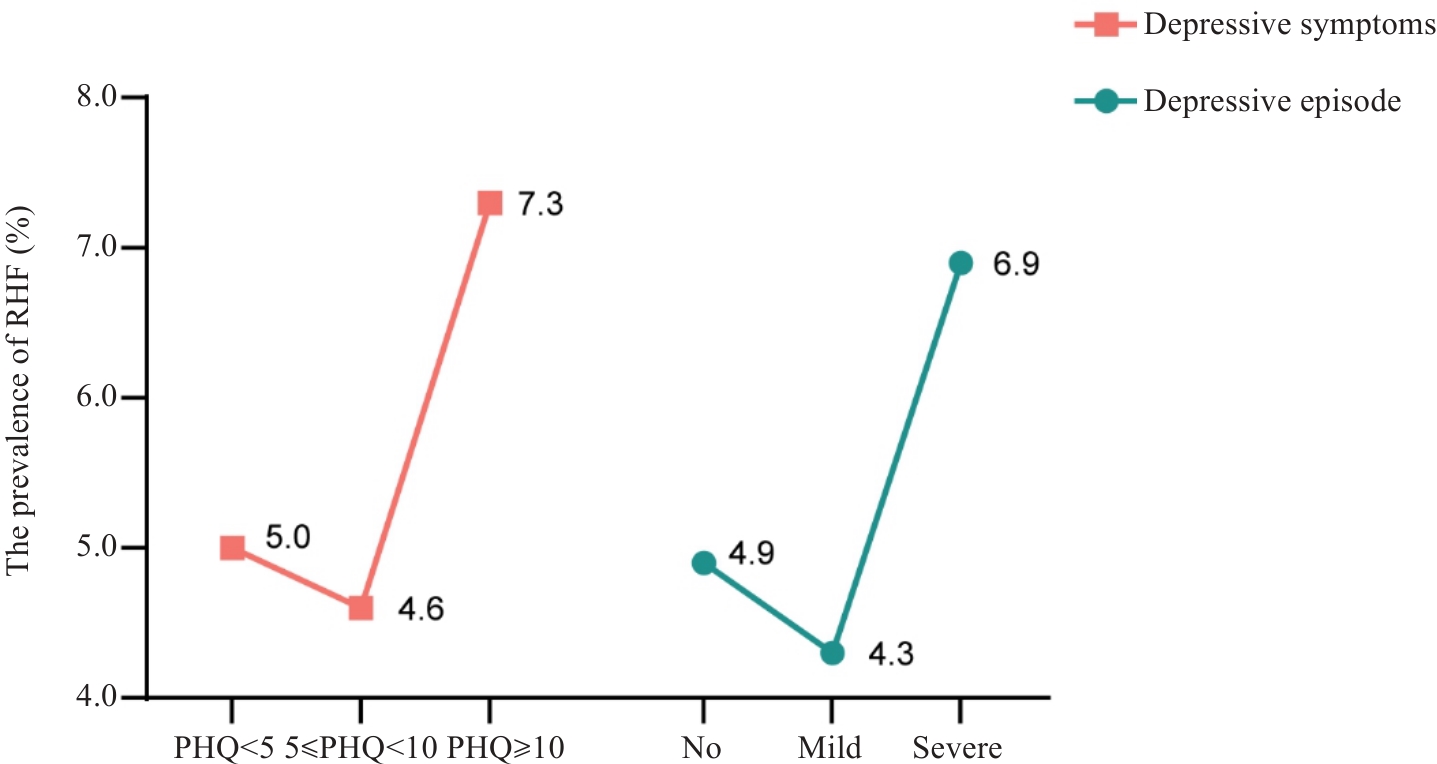
Fig.1 Prevalence of renal hyperfiltration (RHF) in different depressive subgroups.
| Characteristics | Non-RHF | RHF | P |
|---|---|---|---|
| Case [n (%)] | 8996 (95) | 473 (5.0) | |
| Age (year) | 57.19±8.44 | 58.74±7.61 | <0.001 |
| Gender | 0.101 | ||
| Men | 2617 (29.1) | 121 (25.6) | |
| Women | 6379 (70.9) | 352 (74.4) | |
| Height | 161.95±7.59 | 162.30±7.58 | 0.335 |
| Weight | 63.47±10.39 | 65.55±10.90 | <0.001 |
| BMI | 24.15±3.28 | 24.86±3.65 | <0.001 |
| Sleep quality | 0.040 | ||
| Good | 7143 (79.4) | 394 (83.3) | |
| Poor | 1853 (20.6) | 79 (16.7) | |
| No single* | 7840 (87.1) | 406 (85.8) | 0.406 |
| High school level | 4986 (55.4) | 245 (51.8) | 0.122 |
| HDL | 1.25±0.29 | 0.84±0.25 | <0.001 |
| Low HDL | 2262 (25.1) | 378 (79.9) | <0.001 |
| LDL | 2.60±0.75 | 1.74±0.62 | <0.001 |
| High LDL | 251 (2.8) | 1 (0.2) | 0.001 |
| TC | 4.62±0.99 | 3.11±0.90 | <0.001 |
| High TC | 493 (5.5) | 1 (0.2) | <0.001 |
| TG | 1.52 (1.09, 2.14) | 0.99 (0.70, 1.40) | <0.001 |
| High TG | 1954 (21.7) | 23 (4.9) | <0.001 |
| SBP | 127.86±18.99 | 133.89±20.12 | <0.001 |
| DBP | 76.41±10.61 | 76.54±10.78 | 0.790 |
| FPG | 5.56 (5.06, 6.20) | 5.87 (5.46, 6.58) | <0.001 |
| 2hPG | 7.50 (6.09, 9.72) | 7.50 (6.12, 10.42) | 0.283 |
| SCr | 0.77±0.12 | 0.51±0.08 | <0.001 |
| eGFR | 91.65±11.82 | 109.35±9.29 | <0.001 |
| UACR | 2.14 (1.37, 3.33) | 2.42 (1.53, 3.64) | <0.001 |
| Smoking | 0.303 | ||
| Now not | 7581 (84.3) | 405 (85.6) | |
| Occasionally | 241 (2.7) | 16 (3.4) | |
| Often | 1174 (13.1) | 52 (11.0) | |
| Drinking | 0.015 | ||
| Now not | 6511 (72.4) | 371 (78.4) | |
| Occasionally | 2011 (22.4) | 81 (17.1) | |
| Often | 474 (5.3) | 21 (4.4) | |
| Regular exercise | 1990 (22.1) | 81 (17.1) | 0.010 |
| Depressive Symptoms | 0.225 | ||
| PHQ<5 | 7672 (85.3) | 403 (85.2) | |
| 5≤PHQ<10 | 1107 (12.3) | 53 (11.2) | |
| PHQ≥10 | 217 (2.4) | 17 (3.6) | |
| Depressive Episode | 0.063 | ||
| No | 7793 (86.6) | 403 (85.2) | |
| Mild | 652 (7.2) | 29 (6.1) | |
| Severe | 551 (6.1) | 41 (8.7) | |
| DM | 2123 (23.6) | 138 (29.2) | 0.006 |
| HT | 3190 (35.5) | 216 (45.7) | <0.001 |
| CCVD | 401 (4.5) | 35 (7.4) | 0.003 |
Tab.2 General characteristics of subjects with different RHF statuses
| Characteristics | Non-RHF | RHF | P |
|---|---|---|---|
| Case [n (%)] | 8996 (95) | 473 (5.0) | |
| Age (year) | 57.19±8.44 | 58.74±7.61 | <0.001 |
| Gender | 0.101 | ||
| Men | 2617 (29.1) | 121 (25.6) | |
| Women | 6379 (70.9) | 352 (74.4) | |
| Height | 161.95±7.59 | 162.30±7.58 | 0.335 |
| Weight | 63.47±10.39 | 65.55±10.90 | <0.001 |
| BMI | 24.15±3.28 | 24.86±3.65 | <0.001 |
| Sleep quality | 0.040 | ||
| Good | 7143 (79.4) | 394 (83.3) | |
| Poor | 1853 (20.6) | 79 (16.7) | |
| No single* | 7840 (87.1) | 406 (85.8) | 0.406 |
| High school level | 4986 (55.4) | 245 (51.8) | 0.122 |
| HDL | 1.25±0.29 | 0.84±0.25 | <0.001 |
| Low HDL | 2262 (25.1) | 378 (79.9) | <0.001 |
| LDL | 2.60±0.75 | 1.74±0.62 | <0.001 |
| High LDL | 251 (2.8) | 1 (0.2) | 0.001 |
| TC | 4.62±0.99 | 3.11±0.90 | <0.001 |
| High TC | 493 (5.5) | 1 (0.2) | <0.001 |
| TG | 1.52 (1.09, 2.14) | 0.99 (0.70, 1.40) | <0.001 |
| High TG | 1954 (21.7) | 23 (4.9) | <0.001 |
| SBP | 127.86±18.99 | 133.89±20.12 | <0.001 |
| DBP | 76.41±10.61 | 76.54±10.78 | 0.790 |
| FPG | 5.56 (5.06, 6.20) | 5.87 (5.46, 6.58) | <0.001 |
| 2hPG | 7.50 (6.09, 9.72) | 7.50 (6.12, 10.42) | 0.283 |
| SCr | 0.77±0.12 | 0.51±0.08 | <0.001 |
| eGFR | 91.65±11.82 | 109.35±9.29 | <0.001 |
| UACR | 2.14 (1.37, 3.33) | 2.42 (1.53, 3.64) | <0.001 |
| Smoking | 0.303 | ||
| Now not | 7581 (84.3) | 405 (85.6) | |
| Occasionally | 241 (2.7) | 16 (3.4) | |
| Often | 1174 (13.1) | 52 (11.0) | |
| Drinking | 0.015 | ||
| Now not | 6511 (72.4) | 371 (78.4) | |
| Occasionally | 2011 (22.4) | 81 (17.1) | |
| Often | 474 (5.3) | 21 (4.4) | |
| Regular exercise | 1990 (22.1) | 81 (17.1) | 0.010 |
| Depressive Symptoms | 0.225 | ||
| PHQ<5 | 7672 (85.3) | 403 (85.2) | |
| 5≤PHQ<10 | 1107 (12.3) | 53 (11.2) | |
| PHQ≥10 | 217 (2.4) | 17 (3.6) | |
| Depressive Episode | 0.063 | ||
| No | 7793 (86.6) | 403 (85.2) | |
| Mild | 652 (7.2) | 29 (6.1) | |
| Severe | 551 (6.1) | 41 (8.7) | |
| DM | 2123 (23.6) | 138 (29.2) | 0.006 |
| HT | 3190 (35.5) | 216 (45.7) | <0.001 |
| CCVD | 401 (4.5) | 35 (7.4) | 0.003 |
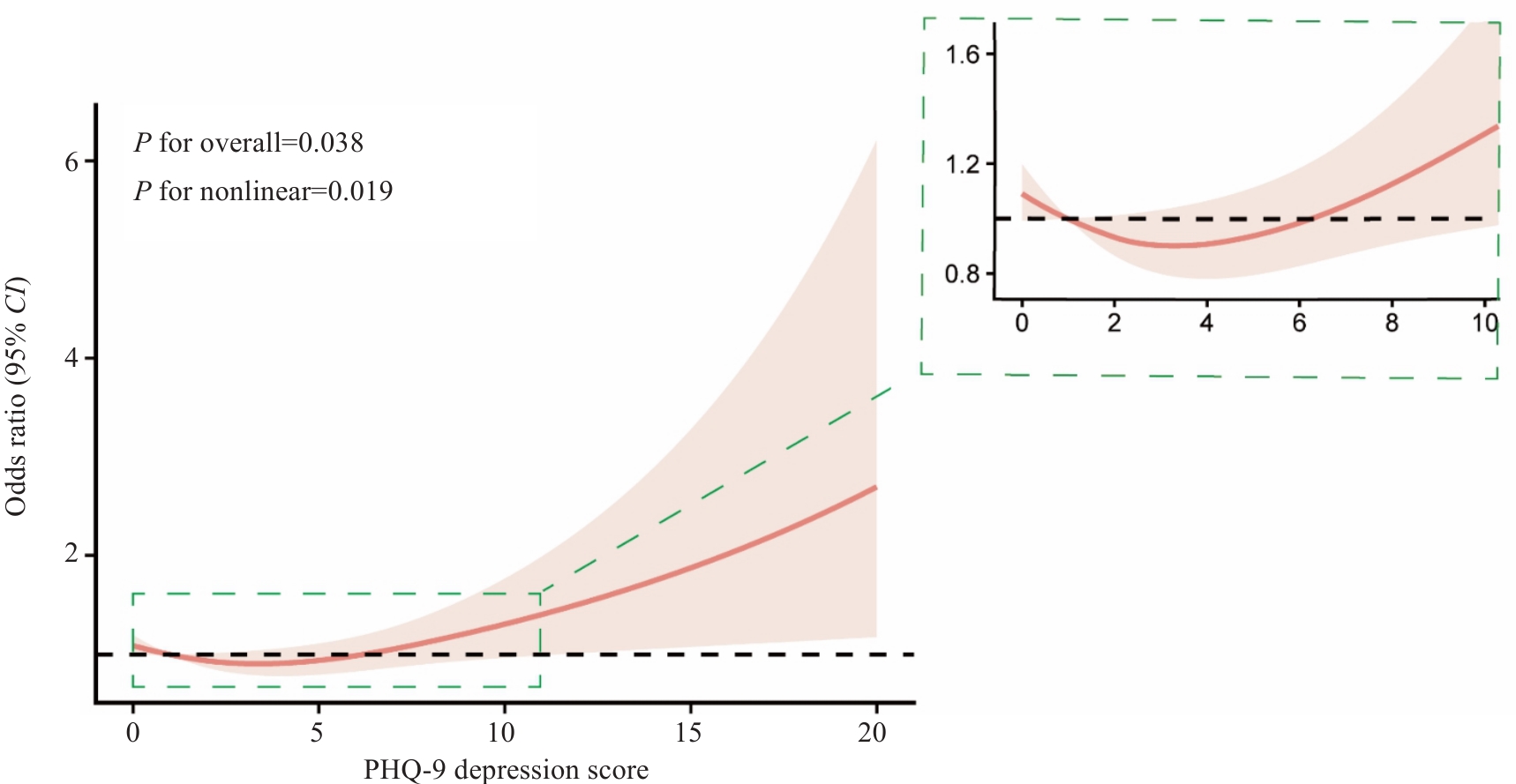
Fig.2 Restricted cubic spline analysis of depressive symptoms and RHF.
| Variable | Model1 | Model2 | Model3 | Model4 | ||||
|---|---|---|---|---|---|---|---|---|
| OR (95% CI) | P | OR (95% CI) | P | OR (95% CI) | P | OR (95% CI) P | ||
| Depressive symptoms | ||||||||
| PHQ<5 | Ref. | Ref. | Ref. | Ref. | ||||
| 5≤PHQ<10 | 0.911 (0.680, 1.222) | 0.535 | 0.918 (0.684, 1.233) | 0.571 | 0.912 (0.679, 1.226) | 0.543 | 0.969 (0.711, 1.320) | 0.841 |
| PHQ≥10 | 1.491 (0.901, 2.468) | 0.120 | 1.548 (0.933, 2.567) | 0.091 | 1.556 (0.935, 2.587) | 0.089 | 1.854 (1.074, 3.201) | 0.027 |
| Depressive episode | ||||||||
| No | Ref. | Ref. | Ref. | Ref. | ||||
| Mild | 0.860 (0.585, 1.264) | 0.443 | 0.882 (0.599, 1.298) | 0.523 | 0.875 (0.594, 1.298) | 0.500 | 0.869 (0.576, 1.311) | 0.503 |
| Severe | 1.439 (1.032, 2.007) | 0.032 | 1.480 (1.059, 2.068) | 0.022 | 1.481 (1.059, 2.073) | 0.022 | 1.547 (1.082, 2.212) | 0.017 |
| Sensitivity analysis | ||||||||
| PHQ-9<10 | Ref. | Ref. | Ref. | Ref. | ||||
| PHQ-9≥10 | 1.508 (0.912, 2.493) | 0.109 | 1.565 (0.945, 2.592) | 0.082 | 1.575 (0.948, 2.615) | 0.079 | 1.864 (1.080, 3.210) | 0.025 |
Tab.3 Logistic regression analysis of correlation of depressive symptoms and depressive episodes with RHF
| Variable | Model1 | Model2 | Model3 | Model4 | ||||
|---|---|---|---|---|---|---|---|---|
| OR (95% CI) | P | OR (95% CI) | P | OR (95% CI) | P | OR (95% CI) P | ||
| Depressive symptoms | ||||||||
| PHQ<5 | Ref. | Ref. | Ref. | Ref. | ||||
| 5≤PHQ<10 | 0.911 (0.680, 1.222) | 0.535 | 0.918 (0.684, 1.233) | 0.571 | 0.912 (0.679, 1.226) | 0.543 | 0.969 (0.711, 1.320) | 0.841 |
| PHQ≥10 | 1.491 (0.901, 2.468) | 0.120 | 1.548 (0.933, 2.567) | 0.091 | 1.556 (0.935, 2.587) | 0.089 | 1.854 (1.074, 3.201) | 0.027 |
| Depressive episode | ||||||||
| No | Ref. | Ref. | Ref. | Ref. | ||||
| Mild | 0.860 (0.585, 1.264) | 0.443 | 0.882 (0.599, 1.298) | 0.523 | 0.875 (0.594, 1.298) | 0.500 | 0.869 (0.576, 1.311) | 0.503 |
| Severe | 1.439 (1.032, 2.007) | 0.032 | 1.480 (1.059, 2.068) | 0.022 | 1.481 (1.059, 2.073) | 0.022 | 1.547 (1.082, 2.212) | 0.017 |
| Sensitivity analysis | ||||||||
| PHQ-9<10 | Ref. | Ref. | Ref. | Ref. | ||||
| PHQ-9≥10 | 1.508 (0.912, 2.493) | 0.109 | 1.565 (0.945, 2.592) | 0.082 | 1.575 (0.948, 2.615) | 0.079 | 1.864 (1.080, 3.210) | 0.025 |
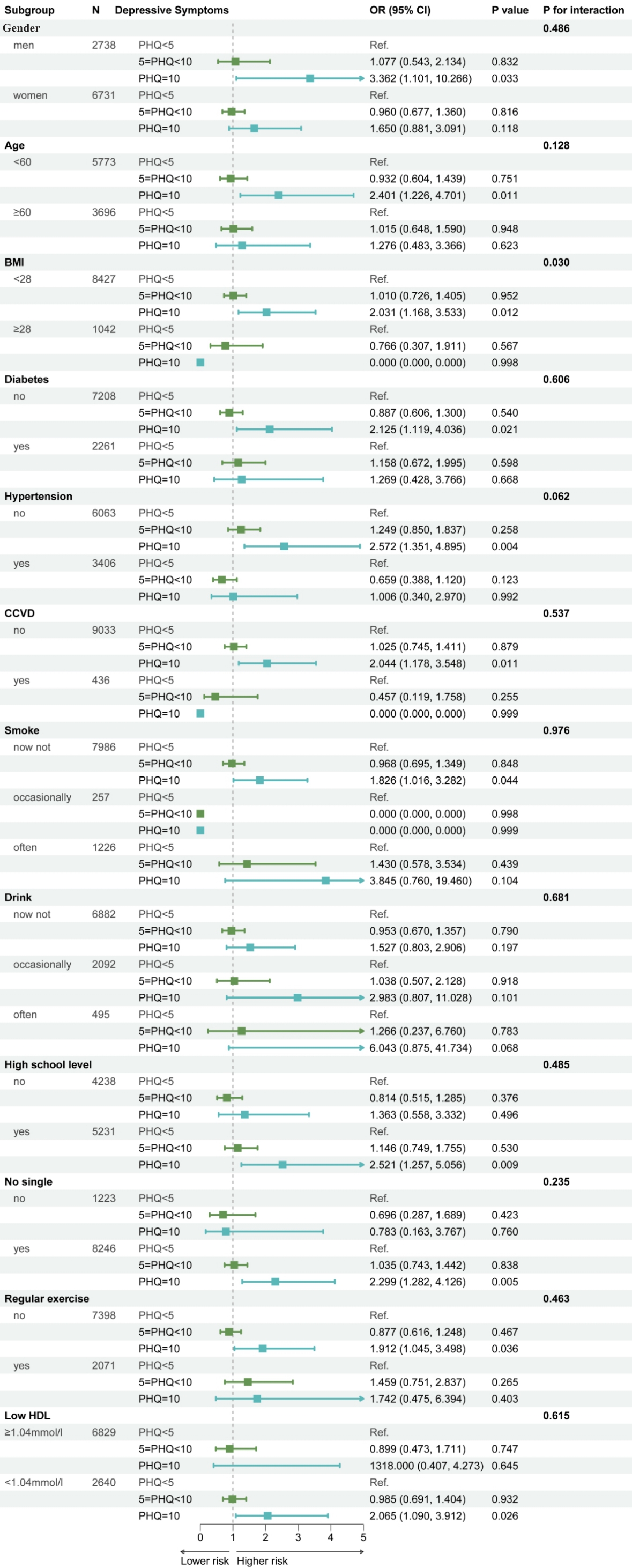
Fig.3 Subgroup analysis of depressive symptoms.
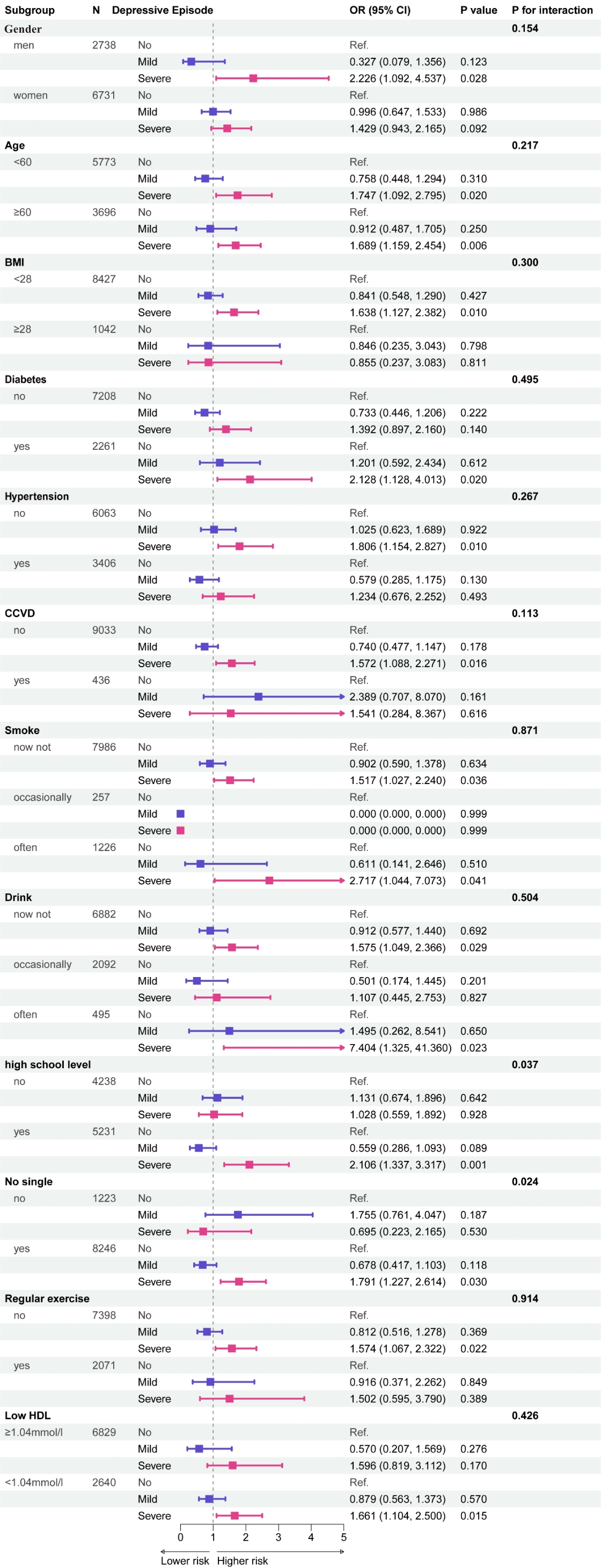
Fig.4 Subgroup analysis of depressive episodes.
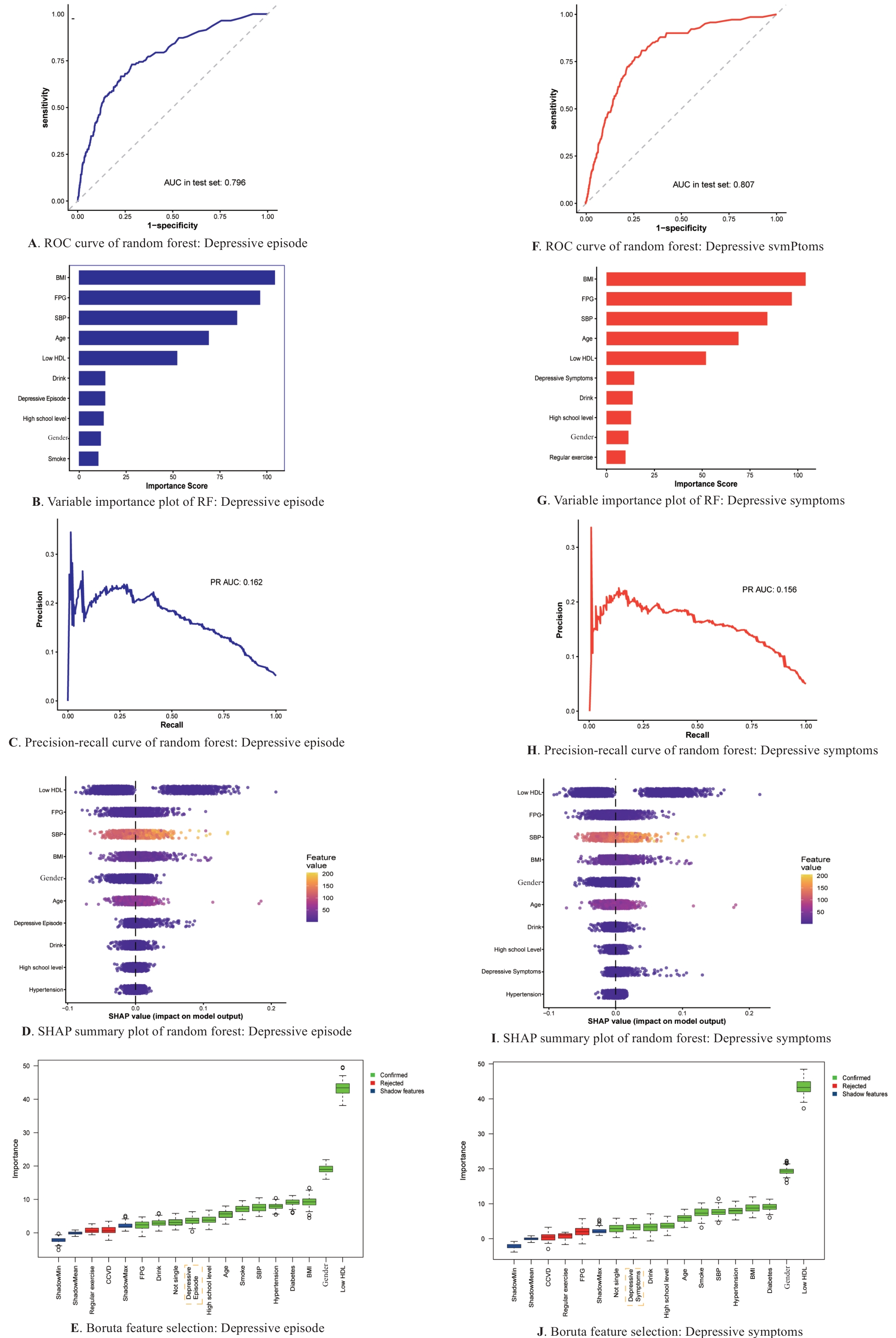
Fig.5 Identification of key predictive factors for RHF based on machine learning models.
| [1] | Zenebe Y, Akele B, W/Selassie M, et al. Prevalence and determinants of depression among old age: a systematic review and meta-analysis[J]. Ann Gen Psychiatry, 2021, 20(1): 55. doi:10.1186/s12991-021-00375-x |
| [2] | Fan XW, Guo X, Ren Z, et al. The prevalence of depressive symptoms and associated factors in middle-aged and elderly Chinese people[J]. J Affect Disord, 2021, 293: 222-8. doi:10.1016/j.jad.2021.06.044 |
| [3] | Zhang XQ, Li ZY, Yu QQ, et al. Depressive trajectories and their associations with chronic diseases among older adults: a national longitudinal cohort study from China[J]. BMC Geriatr, 2025, 26(1): 72. doi:10.1186/s12877-025-06860-2 |
| [4] | Tian W, Yan GC, Xiong SZ, et al. Burden of depressive and anxiety disorders in China and its provinces, 1990–2021: findings from the Global Burden of Disease Study 2021[J]. Br J Psychiatry, 2026, 228(1): 18-28. doi:10.1192/bjp.2024.267 |
| [5] | Adejumo OA, Edeki IR, Sunday Oyedepo D, et al. Global prevalence of depression in chronic kidney disease: a systematic review and meta-analysis[J]. J Nephrol, 2024, 37(9): 2455-72. doi:10.1007/s40620-024-01998-5 |
| [6] | Cui XP, Zhang YS, Jin YJ, et al. Association of cardiometabolic index and depressive symptoms with cardiovascular and cerebrovascular diseases in middle-aged and older adults: a national prospective cohort study[J]. J Affect Disord, 2025, 391: 119940. doi:10.1016/j.jad.2025.119940 |
| [7] | Zeng J, Qiu YT, Yang CY, et al. Cardiovascular diseases and depression: a meta-analysis and Mendelian randomization analysis[J]. Mol Psychiatry, 2025, 30(9): 4234-46. doi:10.1038/s41380-025-03003-2 |
| [8] | Martens RJH, Kooman JP, Stehouwer CDA, et al. Albuminuria is associated with a higher prevalence of depression in a population-based cohort study: the Maastricht Study[J]. Nephrol Dial Transplant, 2018, 33(1): 128-38. doi:10.1093/ndt/gfw377 |
| [9] | Cortinovis M, Perico N, Ruggenenti P, et al. Glomerular hyperfiltration[J]. Nat Rev Nephrol, 2022, 18(7): 435-51. doi:10.1038/s41581-022-00559-y |
| [10] | Reboldi G, Verdecchia P, Fiorucci G, et al. Glomerular hyperfiltration is a predictor of adverse cardiovascular outcomes[J]. Kidney Int, 2018, 93(1): 195-203. doi:10.1016/j.kint.2017.07.013 |
| [11] | Lee SM, Park JY, Park MS, et al. Association of renal hyperfiltration with incident proteinuria-A nationwide registry study[J]. PLoS One, 2018, 13(4): e0195784. doi:10.1371/journal.pone.0195784 |
| [12] | Lin M, Huang HB, Yao J, et al. Association between depression and renal hyperfiltration in a general Chinese population[J]. Kidney Blood Press Res, 2019, 44(6): 1441-52. doi:10.1159/000503922 |
| [13] | 李亚茹, 丁钢强. 中老年人群中抑郁症患病率的地区差异性: 基于中国健康与养老追踪调查2011年基线数据的分析[C]//中国营养学会第十三届全国营养科学大会暨全球华人营养科学家大会论文汇编. 北京, 2017: 233. |
| [14] | 海志琴, 胡乃范, 李江平, 等. 2018年我国不同地区老年抑郁患病情况及影响因素分析[J]. 宁夏医科大学学报, 2023, 45(4): 412-7. |
| [15] | Ning G, Bloomgarden Z. Diabetes and cancer: findings from the REACTION study: REACTION[J]. J Diabetes, 2015, 7(2): 143-4. doi:10.1111/1753-0407.12240 |
| [16] | Levey AS, Stevens LA, Schmid CH, et al. A new equation to estimate glomerular filtration rate[J]. Ann Intern Med, 2009, 150(9): 604-12. doi:10.7326/0003-4819-150-9-200905050-00006 |
| [17] | Jhee JH, Kee YK, Park S, et al. High-protein diet with renal hyperfiltration is associated with rapid decline rate of renal function: a community-based prospective cohort study[J]. Nephrol Dial Transplant, 2020, 35(1): 98-106. doi:10.1093/ndt/gfz115 |
| [18] | Lin M, Su Q, Huang H, et al. Alcohol consumption and the risk for renal hyperfiltration in the general Chinese population[J]. Eur J Clin Nutr, 2017, 71(4): 500-5. doi:10.1038/ejcn.2016.168 |
| [19] | Lin M, Su Q, Wen JP, et al. Self-reported sleep duration and daytime napping are associated with renal hyperfiltration in general population[J]. Sleep Breath, 2018, 22(1): 223-32. doi:10.1007/s11325-017-1470-0 |
| [20] | Kroenke K, Spitzer RL, Williams JB. The PHQ-9: validity of a brief depression severity measure[J]. J Gen Intern Med, 2001, 16(9): 606-13. doi:10.1046/j.1525-1497.2001.016009606.x |
| [21] | Sheehan DV, Lecrubier Y, Sheehan KH, et al. The Mini-International Neuropsychiatric Interview (M.I.N.I.): the development and validation of a structured diagnostic psychiatric interview for DSM-IV and ICD-10[J]. J Clin Psychiatry, 1998, 59(): 22-33;quiz34-57. doi:10.1016/s0924-9338(99)80239-9 |
| [22] | Hernandez R, Xie DW, Wang X, et al. Depressive symptoms, antidepressants, and clinical outcomes in chronic kidney disease: findings from the CRIC study[J]. Kidney Med, 2024, 6(4): 100790. doi:10.1016/j.xkme.2024.100790 |
| [23] | Zhang F, Bai Y, Zhou R, et al. Association of depressive symptoms and incident chronic kidney disease in middle-aged and older adults[J]. Gen Hosp Psychiatry, 2024, 91: 122-9. doi:10.1016/j.genhosppsych.2024.10.012 |
| [24] | Han LY, Li YQ, Jiang ML, et al. Association of depressive symptom trajectories with chronic kidney disease in middle-aged and older adults[J]. J Psychosom Res, 2025, 189: 112036. doi:10.1016/j.jpsychores.2024.112036 |
| [25] | Liu MY, Zhang YJ, Yang SS, et al. Bidirectional relations between depression symptoms and chronic kidney disease[J]. J Affect Disord, 2022, 311: 224-30. doi:10.1016/j.jad.2022.05.104 |
| [26] | Korhonen PE, Ekblad MO, Kautiainen H, et al. Renal hyperfiltration revisited: Role of the individual body surface area on mortality[J]. Eur J Intern Med, 2023, 114: 101-7. doi:10.1016/j.ejim.2023.04.032 |
| [27] | Keller J, Gomez R, Williams G, et al. HPA axis in major depression: Cortisol, clinical symptomatology and genetic variation predict cognition[J]. Mol Psychiatry, 2017, 22(4): 527-36. doi:10.1038/mp.2016.120 |
| [28] | Schumann A, Andrack C, Bär KJ. Differences of sympathetic and parasympathetic modulation in major depression[J]. Prog Neuro Psychopharmacol Biol Psychiatry, 2017, 79: 324-31. doi:10.1016/j.pnpbp.2017.07.009 |
| [29] | Heigwer J, Steenbergen PJ, Gehrig J, et al. Corticosteroids alter kidney development and increase glomerular filtration rate in larval zebrafish (Danio rerio)[J]. Toxicol Sci, 2024, 201(2): 216-25. doi:10.1093/toxsci/kfae085 |
| [30] | Kurtz A. Renin release: sites, mechanisms, and control[J]. Annu Rev Physiol, 2011, 73: 377-99. doi:10.1146/annurev-physiol-012110-142238 |
| [31] | Mehdi S, Wani SUD, Krishna KL, et al. A review on linking stress, depression, and insulin resistance via low-grade chronic inflammation[J]. Biochem Biophys Rep, 2023, 36: 101571. doi:10.1016/j.bbrep.2023.101571 |
| [32] | van Agtmaal MJM, Houben AJHM, Pouwer F, et al. Association of microvascular dysfunction with late-life depression: a systematic review and meta-analysis[J]. JAMA Psychiatry, 2017, 74(7): 729. doi:10.1001/jamapsychiatry.2017.0984 |
| [33] | Seliger SL, Salimi S, Pierre V, et al. Microvascular endothelial dysfunction is associated with albuminuria and CKD in older adults[J]. BMC Nephrol, 2016, 17(1): 82. doi:10.1186/s12882-016-0303-x |
| [34] | Mas-Fontao S, Civantos E, Boukichou-Abdelkader N, et al. Oxidative stress and inflammation on metabolic abnormalities and renal involvement in prediabetic subjects across Europe[J]. Nefrología Engl Ed, 2025, 45(3): 238-48. doi:10.1016/j.nefro.2024.10.003 |
| [35] | Kanbay M, Copur S, Bakir CN, et al. Glomerular hyperfiltration as a therapeutic target for CKD[J]. Nephrol Dial Transplant, 2024, 39(8): 1228-38. doi:10.1093/ndt/gfae027 |
| [36] | Zheng XW, Wu WY, Shen SW. Prospective bidirectional associations between depression and chronic kidney diseases[J]. Sci Rep, 2022, 12: 10903. doi:10.1038/s41598-022-15212-8 |
| [37] | Zafrani L, Ince C. Microcirculation in acute and chronic kidney diseases[J]. Am J Kidney Dis, 2015, 66(6): 1083-94. doi:10.1053/j.ajkd.2015.06.019 |
| [38] | Marini S, Georgakis MK, Anderson CD. Interactions between kidney function and cerebrovascular disease: vessel pathology that fires together wires together[J]. Front Neurol, 2021, 12: 785273. doi:10.3389/fneur.2021.785273 |
| [39] | Kim DS, Kim SW, Gil HW. Emotional and cognitive changes in chronic kidney disease[J]. Korean J Intern Med, 2022, 37(3): 489-501. doi:10.3904/kjim.2021.492 |
| [40] | Gornostaeva E, Novikova M S, Beloborodova A V, et al. Autonomic imbalance in patients with metabolic syndrome: role in the development of hyperfiltration--an early marker of renal lesions[J]. Ter Arkh, 2010, 82(6):49-53. |
| [41] | Kim KY, Kim E. A troubled mind troubles the kidney: a brain-to-kidney axis[J]? Kidney Res Clin Pract, 2022, 41(6): 637-9. doi:10.23876/j.krcp.22.234 |
| [42] | Vitolo E, Santini E, Salvati A, et al. Metabolic and hormonal determinants of glomerular filtration rate and renal hemodynamics in severely obese individuals[J]. Obes Facts, 2016, 9(5): 310-20. doi:10.1159/000446965 |
| [43] | Kim CW, Chang Y, Sung E, et al. Sleep duration and quality in relation to chronic kidney disease and glomerular hyperfiltration in healthy men and women[J]. PLoS One, 2017, 12(4): e0175298. doi:10.1371/journal.pone.0175298 |
| [44] | Ho YF, Hsu PT, Yang KL. The mediating effect of sleep quality and fatigue between depression and renal function in nondialysis chronic kidney disease: a cross-sectional study[J]. BMC Nephrol, 2022, 23(1): 126. doi:10.1186/s12882-022-02757-z |
| [45] | Zha DQ, Gao P, Wu XY. Role of metabolic abnormalities during the progression of chronic kidney disease and preventive strategies[J]. Int J Med Sci, 2025, 22(14): 3543-55. doi:10.7150/ijms.114382 |
| [46] | Park H, Kang MK, Song TJ. Association of renal hyperfiltration with incidence of dyslipidemia: a nationwide retrospective longitudinal cohort study[J]. PLoS One, 2025, 20(6): e0324710. doi:10.1371/journal.pone.0324710 |
| [47] | Hu WW, Mao HP, et al. Systematic review and meta-analysis of the association between malnutrition and risk of depression in the elderly[J]. Alpha Psychiatry, 2024, 25(2): 183-9. doi:10.5152/alphapsychiatry.2024.231336 |
| [48] | Zhang JG, Wang ZH, Wang HJ, et al. Association between dietary patterns and blood lipid profiles among Chinese women[J]. Public Health Nutr, 2016, 19(18): 3361-8. doi:10.1017/s136898001600197x |
| [49] | Levis B, Benedetti A, Thombs BD. Accuracy of Patient Health Questionnaire-9 (PHQ-9) for screening to detect major depression: individual participant data meta-analysis[J]. Bmj, 2019: l1476. doi:10.1136/bmj.l1476 |
| [1] | YANG Mengdi, YIN Hongtao, ZHEN Jieyu, DING Yulu, WANG Yujie, SUN Linnan, HE Fengying, ZHEN Donghu. Depressive symptoms are not associated with risks of rapid renal function decline or chronic kidney disease in middle-aged and elderly with normal kidney function: a longitudinal investigation [J]. Journal of Southern Medical University, 2023, 43(2): 225-231. |
| Viewed | ||||||
|
Full text |
|
|||||
|
Abstract |
|
|||||
