
Journal of Southern Medical University ›› 2026, Vol. 46 ›› Issue (1): 23-33.doi: 10.12122/j.issn.1673-4254.2026.01.03
Previous Articles Next Articles
Bei ZHAO1( ), Zhengyi LÜ2(), Dingru JI1, Shuxin TIAN1, Yuxin WU1, Xingzhen LI1, Jie ZHOU1, Jianqiao FANG1, Yi LIANG1()
Received:2025-05-26
Online:2026-01-20
Published:2026-01-16
Contact:
Yi LIANG
E-mail:984722585@qq.com;aprilv_kuco@icloud.com;liangyiwww@126.com
Supported by:Bei ZHAO, Zhengyi LÜ, Dingru JI, Shuxin TIAN, Yuxin WU, Xingzhen LI, Jie ZHOU, Jianqiao FANG, Yi LIANG. Temporal changes of chronic postsurgical pain in mice: the regulatory role of CX3CL1 in the dorsal root ganglion[J]. Journal of Southern Medical University, 2026, 46(1): 23-33.
Add to citation manager EndNote|Ris|BibTeX
URL: https://www.j-smu.com/EN/10.12122/j.issn.1673-4254.2026.01.03
| Gene | Sequence (5′-3′) |
|---|---|
| Cx3cl1 forward | CAGAGGAGCAGGCAGGACAG |
| Cx3cl1 reverse | CTTCAGAGCAGGAGAGACCCATC |
| Cxcl14 forward | TCCGGTCAGCATGAGGCTCC |
| Cxcl14 reverse | CACCCTATTCTTCGTAGACC |
| Ccr5 forward | GTTGTTTTGGAGAACGCCCC |
| Ccr5 reverse | CAACACTGCTCCGAAACTGC |
| Il7 forward | CTAGCAACTGGCAAGGAGGAC |
| Il7 reverse | CCTGTAAGTGGAAGCATGGC |
| β-actin forward | ACTGGAACGGTGAAGGTGAC |
| β-actin reverse | AGAGAAGTGGGGTGGCTTTT |
Tab.1 Primer sequences for RT-qPCR
| Gene | Sequence (5′-3′) |
|---|---|
| Cx3cl1 forward | CAGAGGAGCAGGCAGGACAG |
| Cx3cl1 reverse | CTTCAGAGCAGGAGAGACCCATC |
| Cxcl14 forward | TCCGGTCAGCATGAGGCTCC |
| Cxcl14 reverse | CACCCTATTCTTCGTAGACC |
| Ccr5 forward | GTTGTTTTGGAGAACGCCCC |
| Ccr5 reverse | CAACACTGCTCCGAAACTGC |
| Il7 forward | CTAGCAACTGGCAAGGAGGAC |
| Il7 reverse | CCTGTAAGTGGAAGCATGGC |
| β-actin forward | ACTGGAACGGTGAAGGTGAC |
| β-actin reverse | AGAGAAGTGGGGTGGCTTTT |
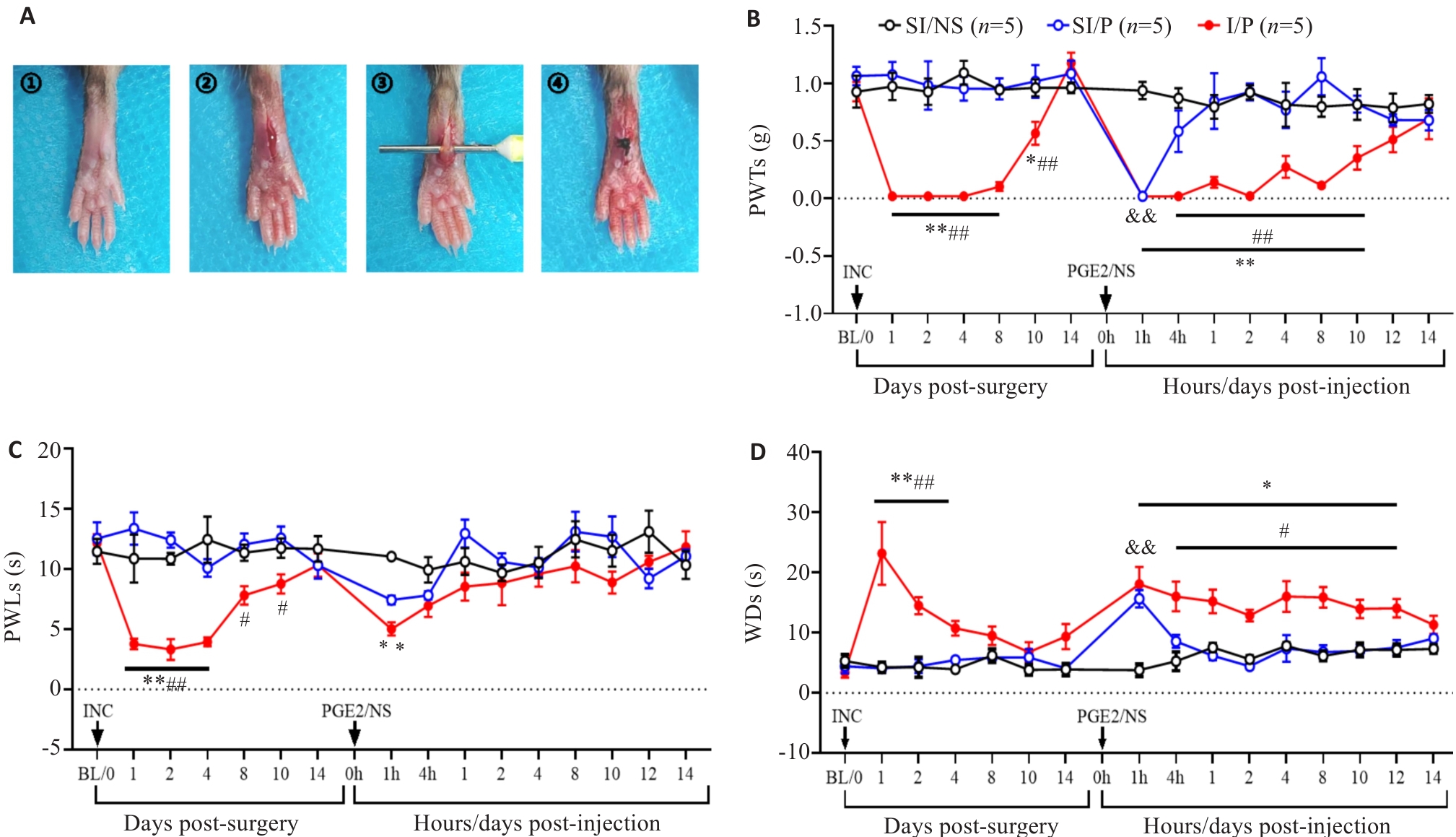
Fig.1 Temporal changes of pain-related behaviors in the mouse models of chronic postsurgical pain (CPSP). A: Schematic diagram of plantar incision for inducing CPSP in mice. B: Changes in mechanical paw withdrawal thresholds (PWTs) after plantar incision and after PGE2 injection in each group. C: Changes in thermal paw withdrawal latencies (PWLs) after plantar incision and after PGE2 injection in each group. D: Changes in cold withdrawal durations (WDs) of the mice after plantar incision and after PGE2 injection. INC: Incision. *P<0.05, **P<0.01 I/P vs SI/NS; #P<0.05, ##P<0.01 I/P vs SI/P; &&P<0.01 SI/P vs SI/NS.
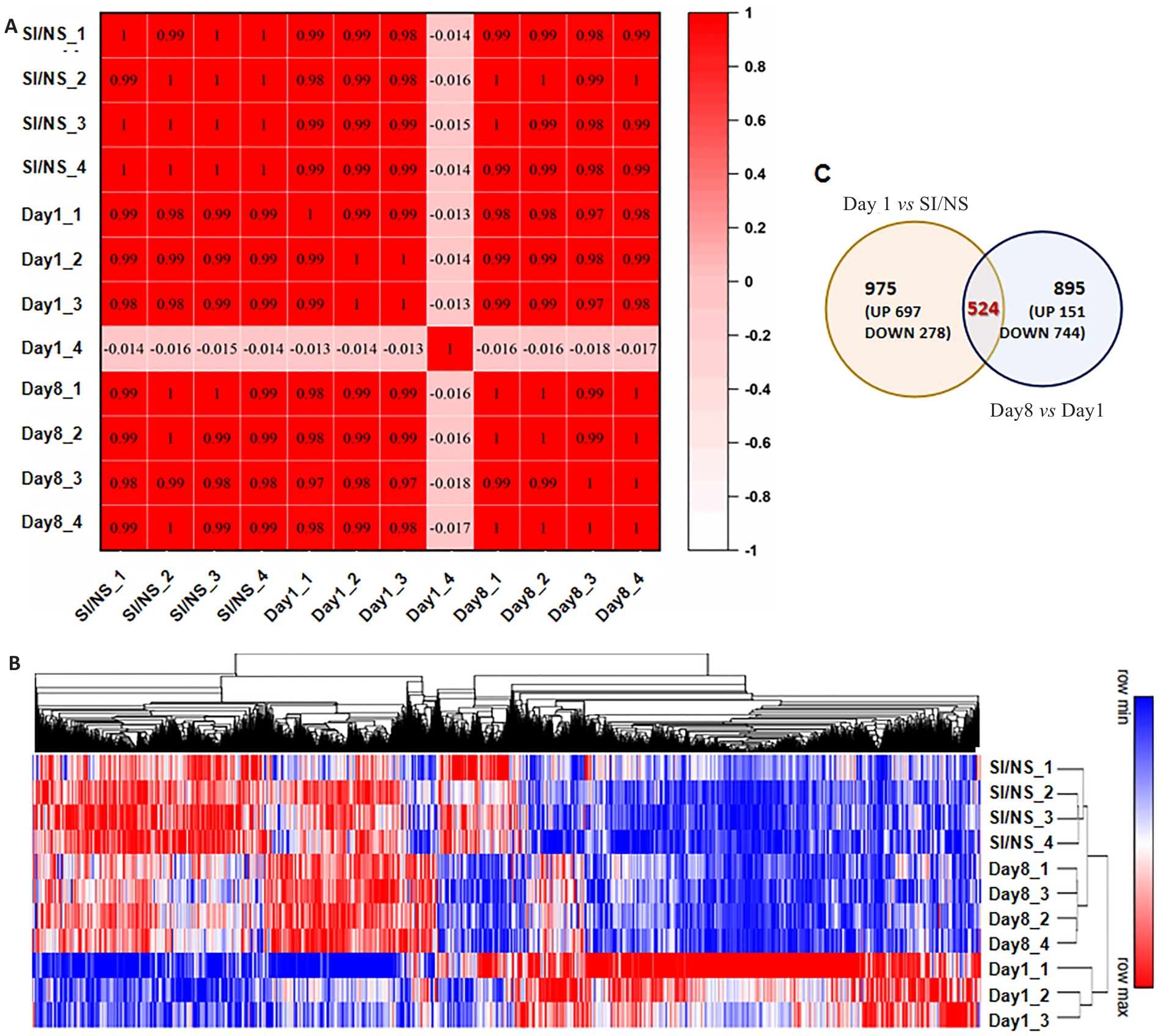
Fig.2 Gene expression profile in dorsal root ganglion (DRGs) of the mice with CPSP at different time points. A: Heat map of correlation coefficient of each sample (Numbers in the box are Pearson correlation coefficients between the corresponding two samples). B: Heat map and hierarchical clustering of differential gene expression in each sample (P<0.05 and |log2FC|>0.3 were the threshold criteria for differentially expressed genes). C: Venn diagram of DEGs between groups.
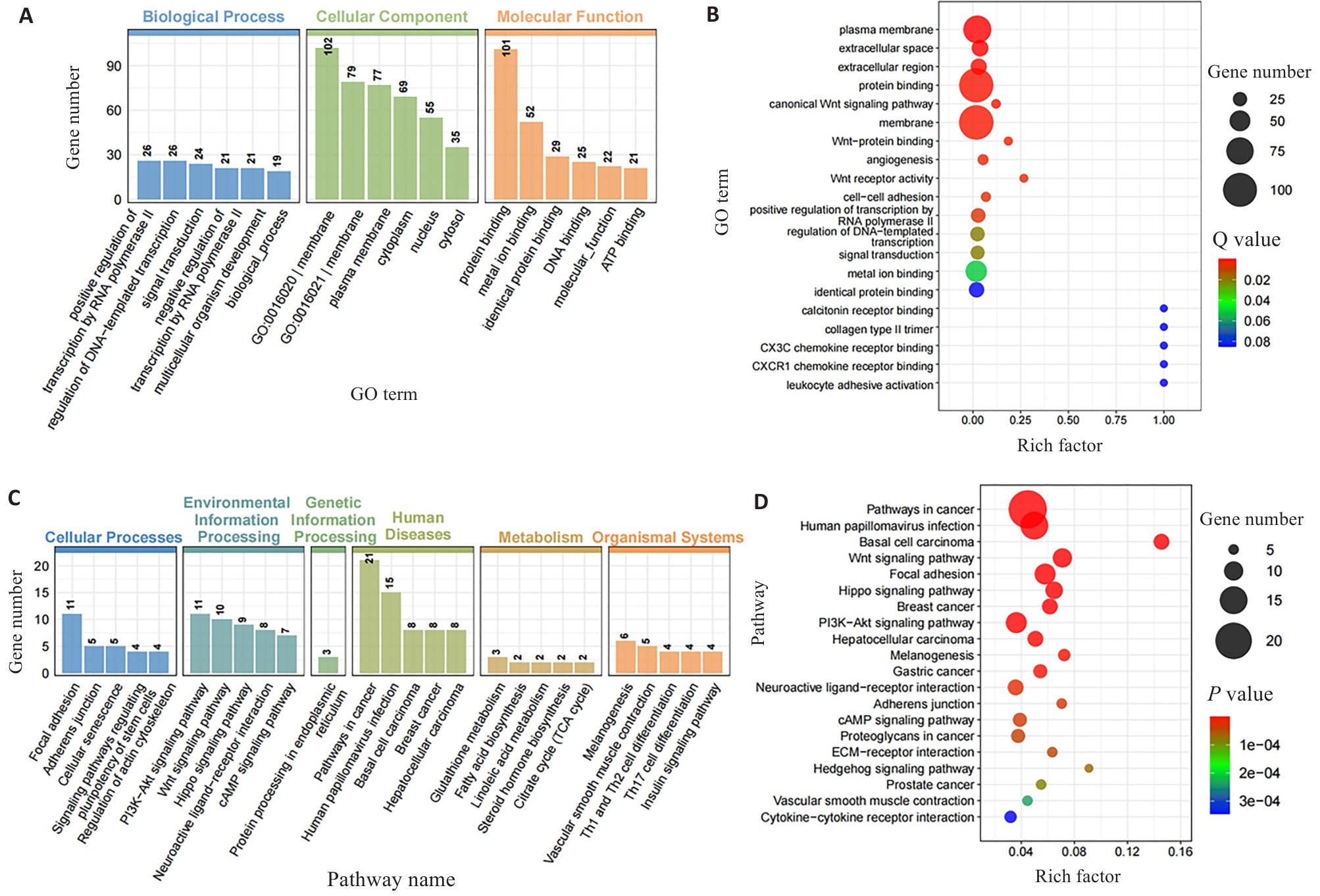
Fig.3 GO and KEGG enrichment analysis of differentially expressed genes at the intersection DEGs in CPSP mice. A: GO enrichment bar chart of the intersection DEGs between Day1vs. SI/NS and Day8 vs. Day1 (Ranked by the number of significantly enriched genes). B: GO enrichment scatter plot of intersection DEGs. C: KEGG enrichment bar chart of intersection DEGs. D: KEGG enrichment scatter plot of intersection DEGs.
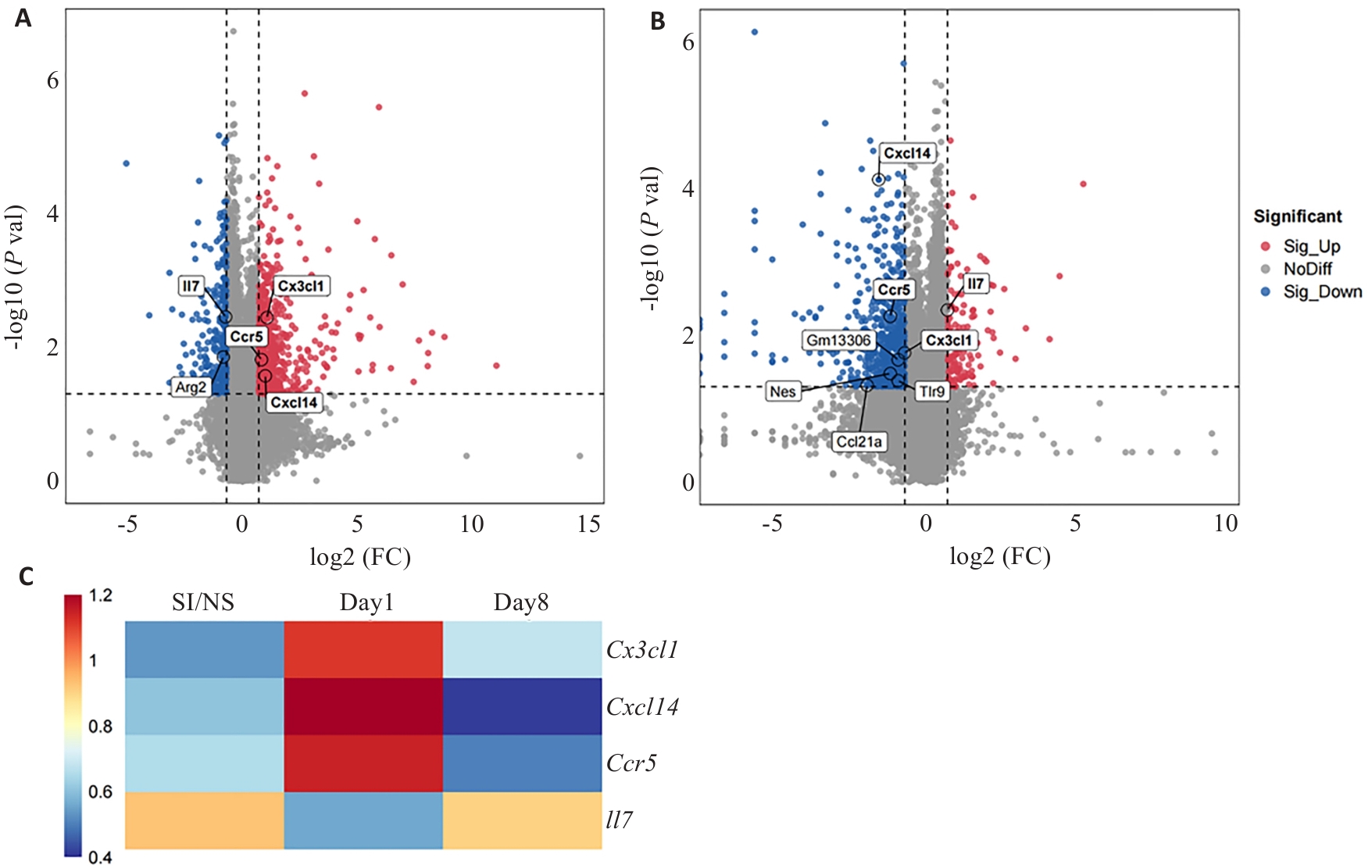
Fig.4 Expression of chemokine-related genes in DRGs of mice with CPSP at different time points. A: Volcano plot of differentially expressed genes in day 1 and SI/NS groups (Chemokine-related genes are marked). B: Volcano plot of differentially expressed genes in day 8 and day 1 groups. C: Table of differential genes associated with chemokines between the groups. All chemokine-related genes are extracted using GO terms.
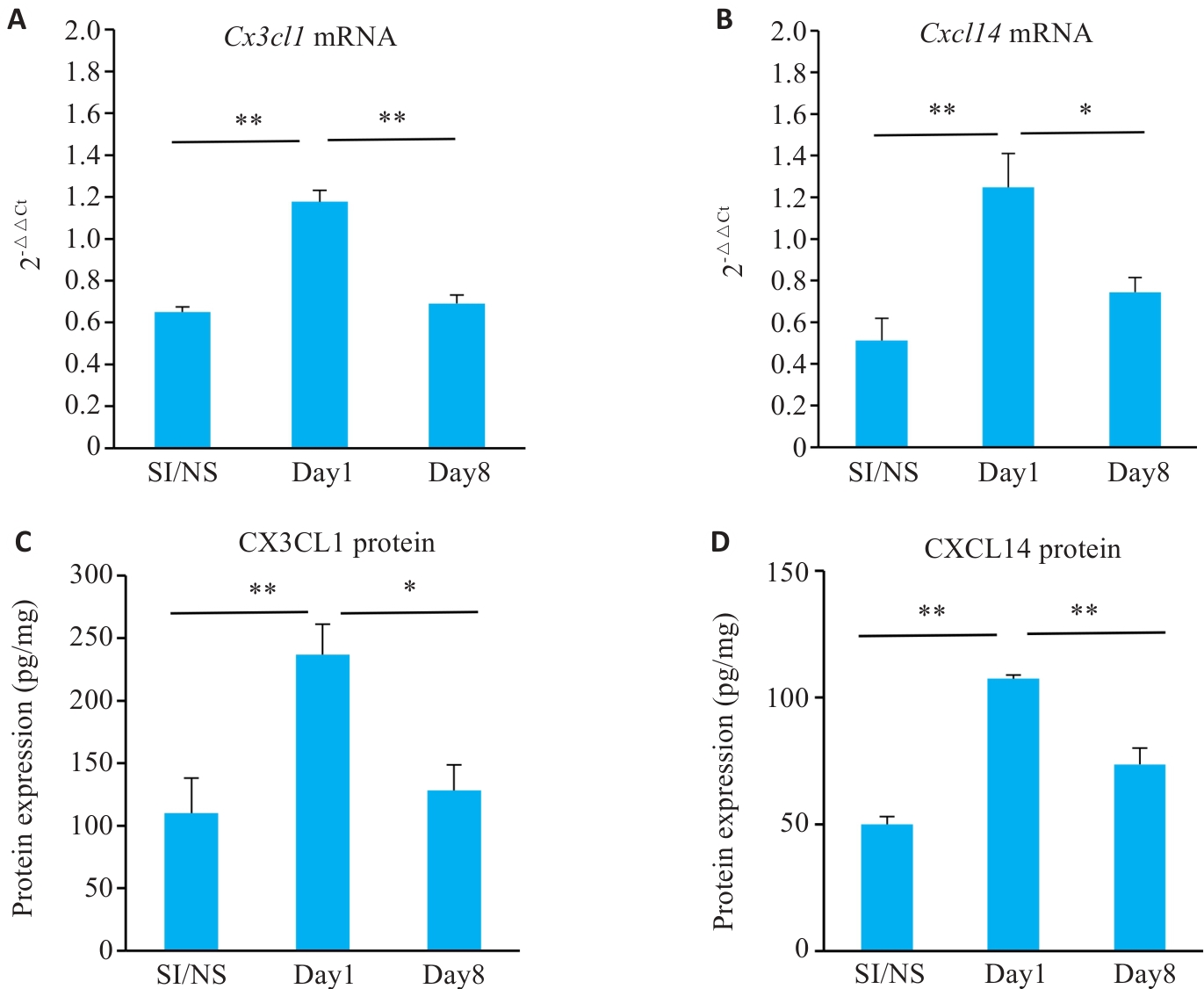
Fig.5 Gene and protein expression of Cx3c11 and Cxc114 in different stages of CPSP. A: Cx3cl1 mRNA expression levels in ipsilateral DRGs of the mice at each time point. B: Cxcl14 mRNA expression levels in ipsilateral DRGs of the mice at each time point. C: CX3CL1 protein expression in ipsilateral DRGs of the mice at each time point. D: CXCL14 protein expression in ipsilateral DRGs of the mice at each time point. *P<0.05, **P<0.01.
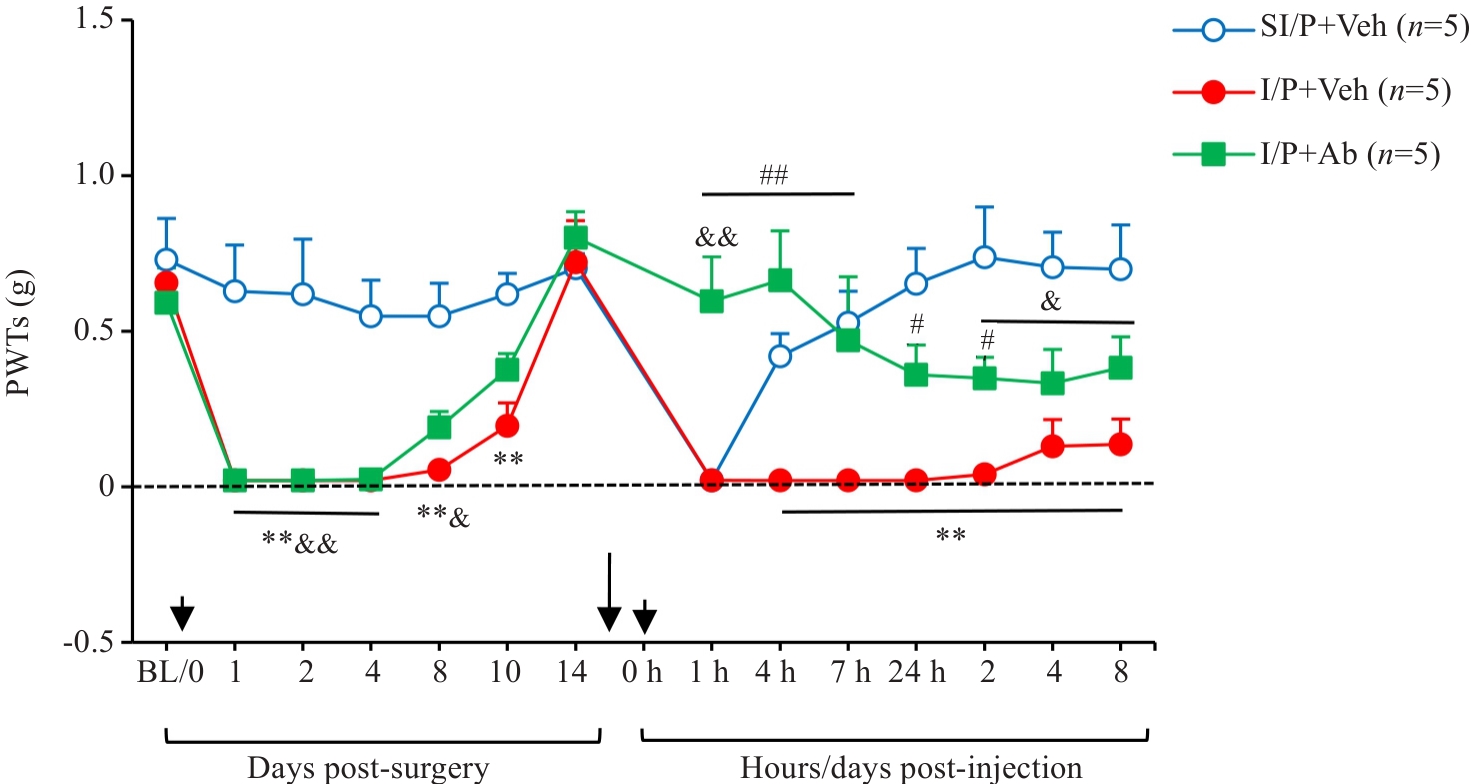
Fig.6 Intrathecal injection of CX3CL1 neutralizing antibody (5 µg/10 µL) 10 min prior to PGE2 injection significantly modulates mechanical PWTs in INC/PGE2 mice. **P<0.01 I/P+Veh vs SI/P+Veh group; #P<0.05, ##P<0.01 I/P+Ab vs I/P+Veh group; &P<0.05, &&P<0.01 I/P+Ab vs SI/P+Veh group. Ab: CX3CL1-neutralizing antibody; Veh: Vehicle, goat IgG control (1 µL/10 µL).
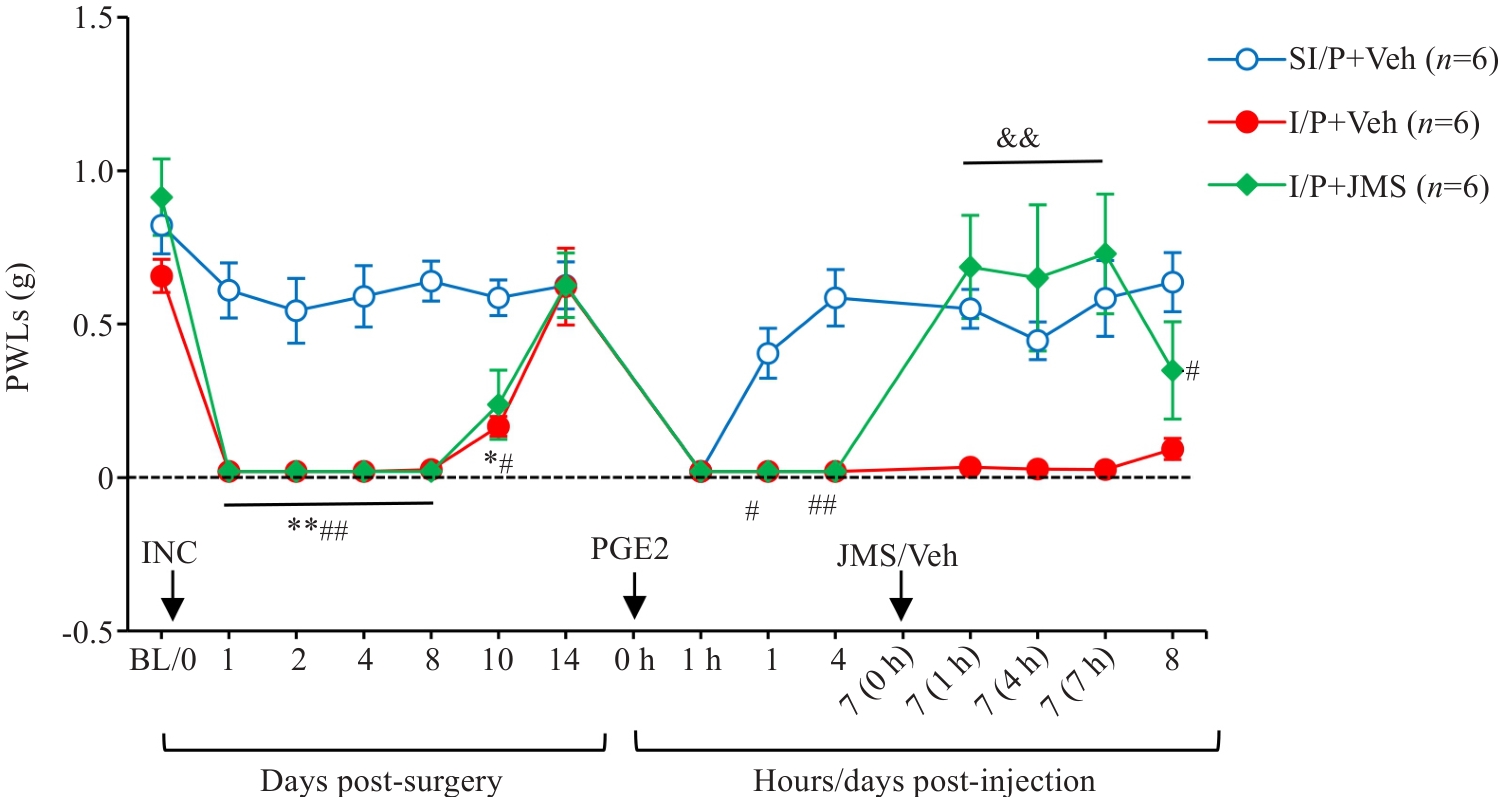
Fig.7 Effects of intrathecal injection of JMS17-2 (75 µg/10 µL), a selective CX3CR1 antagonist, on Day 7 post-PGE2 injection, on PWTs in CPSP mice. *P<0.05, **P<0.01 I/P+Veh vs SI/P+Veh; #P<0.05, ##P<0.01 I/P+JMS vs SI/P+Veh; &&P<0.01 I/P+JMS vs I/P+Veh. I/P: INC/PGE2; SI/P: Sham INC/PGE2; JMS: CX3CR1-selective antagonist JMS17-2; Veh: Corn oil vehicle.
| [1] | 冯 艺, 许军军, 林夏清, 等. 慢性术后或创伤后疼痛[J]. 中国疼痛医学杂志, 2021, 27(4): 241-5. |
| [2] | Fletcher D, Stamer UM, Pogatzki-Zahn E, et al. Chronic postsurgical pain in Europe: an observational study[J]. Eur J Anaesthesiol, 2015, 32(10): 725-34. doi:10.1097/eja.0000000000000319 |
| [3] | 金菊英, 彭丽桦, 杜洵松, 等. 手术后慢性疼痛的流行病学调查和危险因素分析[J]. 中国疼痛医学杂志, 2015, 21(7): 505-12. |
| [4] | 韩 琦, 冯 艺. 术后急、慢性疼痛危险因素研究进展[J]. 中国疼痛医学杂志, 2020, 26(11): 849-53. |
| [5] | Richebé P, Capdevila X, Rivat C. Persistent postsurgical pain: pathophysiology and preventative pharmacologic considerations[J]. Anesthesiology, 2018, 129(3): 590-607. doi:10.1097/aln.0000000000002238 |
| [6] | Inyang KE, Burton MD, Szabo-Pardi T, et al. Indirect AMP-activated protein kinase activators prevent incision-induced hyperalgesia and block hyperalgesic priming, whereas positive allosteric modulators block only priming in mice[J]. J Pharmacol Exp Ther, 2019, 371(1): 138-50. doi:10.1124/jpet.119.258400 |
| [7] | Pogatzki EM, Raja SN. A mouse model of incisional pain[J]. Anesthesiology, 2003, 99(4): 1023-7. doi:10.1097/00000542-200310000-00041 |
| [8] | Xu JJ, Gao P, Wu Y, et al. G protein-coupled estrogen receptor in the rostral ventromedial medulla contributes to the chronification of postoperative pain[J]. CNS Neurosci Ther, 2021, 27(11): 1313-26. doi:10.1111/cns.13704 |
| [9] | Kehlet H, Jensen TS, Woolf CJ. Persistent postsurgical pain: risk factors and prevention[J]. Lancet, 2006, 367(9522): 1618-25. doi:10.1016/s0140-6736(06)68700-x |
| [10] | Tillu DV, Melemedjian OK, Asiedu MN, et al. Resveratrol engages AMPK to attenuate ERK and mTOR signaling in sensory neurons and inhibits incision-induced acute and chronic pain[J]. Mol Pain, 2012, 8: 5. doi:10.1186/1744-8069-8-5 |
| [11] | 甄思佳, 赵 贝, 郑博习, 等. 背根神经节嘌呤受体亚型P2X3R介导小鼠术后急—慢痛转化[J]. 中国药理学通报, 2023, 39(7): 1282-8. |
| [12] | Baptista-de-Souza D, Tavares-Ferreira D, Megat S, et al. Sex differences in the role of atypical PKC within the basolateral nucleus of the amygdala in a mouse hyperalgesic priming model[J]. Neurobiol Pain, 2020, 8: 100049. doi:10.1016/j.ynpai.2020.100049 |
| [13] | Guo ZB, Tang L, Wang LP, et al. The analgesic effects of ulinastatin either as a single agent or in combination with sufentanil: a novel therapeutic potential for postoperative pain[J]. Eur J Pharmacol, 2021, 907: 174267. doi:10.1016/j.ejphar.2021.174267 |
| [14] | Pak DJ, Yong RJ, Kaye AD, et al. Chronification of pain: mechanisms, current understanding, and clinical implications[J]. Curr Pain Headache Rep, 2018, 22(2): 9. doi:10.1007/s11916-018-0666-8 |
| [15] | Li CS, Yang Y, Liu SF, et al. Stress induces pain transition by potentiation of AMPA receptor phosphorylation[J]. J Neurosci, 2014, 34(41): 13737-46. doi:10.1523/jneurosci.2130-14.2014 |
| [16] | Banik RK, Woo YC, Park SS, et al. Strain and sex influence on pain sensitivity after plantar incision in the mouse[J]. Anesthesiology, 2006, 105(6): 1246-53. doi:10.1097/00000542-200612000-00025 |
| [17] | Chaplan SR, Bach FW, Pogrel JW, et al. Quantitative assessment of tactile allodynia in the rat paw[J]. J Neurosci Methods, 1994, 53(1): 55-63. doi:10.1016/0165-0270(94)90144-9 |
| [18] | Hargreaves K, Dubner R, Brown F, et al. A new and sensitive method for measuring thermal nociception in cutaneous hyperalgesia[J]. Pain, 1988, 32(1): 77-88. doi:10.1016/0304-3959(88)90026-7 |
| [19] | Yoon C, Wook YY, Sik NH, et al. Behavioral signs of ongoing pain and cold allodynia in a rat model of neuropathic pain[J]. Pain, 1994, 59(3): 369-76. doi:10.1016/0304-3959(94)90023-x |
| [20] | 张晓光, 郄文斌, 屠伟峰, 等. 围术期目标导向全程镇痛管理中国专家共识(2021版)[J]. 中华疼痛学杂志, 2021, 17(2): 119-25. |
| [21] | Brennan TJ, Vandermeulen EP, Gebhart GF. Characterization of a rat model of incisional pain[J]. Pain, 1996, 64(3): 493-502. doi:10.1016/0304-3959(95)01441-1 |
| [22] | Reichling DB, Levine JD. Critical role of nociceptor plasticity in chronic pain[J]. Trends Neurosci, 2009, 32(12): 611-8. doi:10.1016/j.tins.2009.07.007 |
| [23] | Sun Y, Sahbaie P, Liang DY, et al. Epigenetic regulation of spinal CXCR2 signaling in incisional hypersensitivity in mice[J]. Anesthesiology, 2013, 119(5): 1198-208. doi:10.1097/aln.0b013e31829ce340 |
| [24] | Sahbaie P, Sun Y, Liang DY, et al. Curcumin treatment attenuates pain and enhances functional recovery after incision[J]. Anesth Analg, 2014, 118(6): 1336-44. doi:10.1213/ane.0000000000000189 |
| [25] | Matsuda M, Oh-Hashi K, Yokota I, et al. Acquired exchange protein directly activated by cyclic adenosine monophosphate activity induced by p38 mitogen-activated protein kinase in primary afferent neurons contributes to sustaining postincisional nociception[J]. Anesthesiology, 2017, 126(1): 150-62. doi:10.1097/aln.0000000000001401 |
| [26] | 胡海宇, 丁家威, 吴叶琪, 等. 电针对痛觉敏化大鼠背根神经节蛋白酶激活受体2的影响[J]. 针刺研究, 2018, 43(1): 14-9. |
| [27] | Jiang BC, Liu T, Gao YJ. Chemokines in chronic pain: cellular and molecular mechanisms and therapeutic potential[J]. Pharmacol Ther, 2020, 212: 107581. doi:10.1016/j.pharmthera.2020.107581 |
| [28] | Subbarayan MS, Joly-Amado A, Bickford PC, et al. CX3CL1/CX3CR1 signaling targets for the treatment of neurodegenerative diseases[J]. Pharmacol Ther, 2022, 231: 107989. doi:10.1016/j.pharmthera.2021.107989 |
| [29] | Holmes FE, Arnott N, Vanderplank P, et al. Intra-neural administration of fractalkine attenuates neuropathic pain-related behaviour[J]. J Neurochem, 2008, 106(2): 640-9. doi:10.1111/j.1471-4159.2008.05419.x |
| [30] | Bian C, Wang ZC, Yang JL, et al. Up-regulation of interleukin-23 induces persistent allodynia via CX3CL1 and interleukin-18 signaling in the rat spinal cord after tetanic sciatic stimulation[J]. Brain Behav Immun, 2014, 37: 220-30. doi:10.1016/j.bbi.2013.12.011 |
| [31] | Souza GR, Talbot J, Lotufo CM, et al. Fractalkine mediates inflammatory pain through activation of satellite glial cells[J]. Proc Natl Acad Sci USA, 2013, 110(27): 11193-8. doi:10.1073/pnas.1307445110 |
| [32] | Gowhari Shabgah A, Haleem Al-Qaim Z, Markov A, et al. Chemokine CXCL14; a double-edged sword in cancer development[J]. Int Immunopharmacol, 2021, 97: 107681. doi:10.1016/j.intimp.2021.107681 |
| [33] | Westrich JA, Vermeer DW, Colbert PL, et al. The multifarious roles of the chemokine CXCL14 in cancer progression and immune responses[J]. Mol Carcinog, 2020, 59(7): 794-806. doi:10.1002/mc.23188 |
| [34] | Liu M, Zhang SB, Luo YX, et al. NFATc2-dependent epigenetic upregulation of CXCL14 is involved in the development of neuropathic pain induced by paclitaxel[J]. J Neuroinflammation, 2020, 17(1): 310. doi:10.1186/s12974-020-01992-1 |
| [35] | Wang YY, Weng XL, Wang LY, et al. HIC1 deletion promotes breast cancer progression by activating tumor cell/fibroblast crosstalk[J]. J Clin Invest, 2018, 128(12): 5235-50. doi:10.1172/jci99974 |
| [36] | Witte A, Rohlfing AK, Dannenmann B, et al. The chemokine CXCL14 mediates platelet function and migration via direct interaction with CXCR4[J]. Cardiovasc Res, 2021, 117(3): 903-17. doi:10.1093/cvr/cvaa080 |
| [37] | Chang TM, Chiang YC, Lee CW, et al. CXCL14 promotes metastasis of non-small cell lung cancer through ACKR2-depended signaling pathway[J]. Int J Biol Sci, 2023, 19(5): 1455-70. doi:10.7150/ijbs.79438 |
| [38] | Xu YY, Deng CZ, Chen HM, et al. Osteosarcoma cells secrete CXCL14 that activates integrin α11β1 on fibroblasts to form a lung metastatic niche[J]. Cancer Res, 2024, 84(7): 994-1012. doi:10.1158/0008-5472.can-23-1307 |
| [39] | Lu Y, Jiang BC, Cao DL, et al. Chemokine CCL8 and its receptor CCR5 in the spinal cord are involved in visceral pain induced by experimental colitis in mice[J]. Brain Res Bull, 2017, 135: 170-8. doi:10.1016/j.brainresbull.2017.10.009 |
| [40] | Zhong SS, Liu FX, Giniatullin R, et al. Blockade of CCR5 suppresses paclitaxel-induced peripheral neuropathic pain caused by increased deoxycholic acid[J]. Cell Rep, 2023, 42(11): 113386. doi:10.1016/j.celrep.2023.113386 |
| [41] | Jonsjö MA, Olsson GL, Wicksell RK, et al. The role of low-grade inflammation in ME/CFS (Myalgic Encephalomyelitis/Chronic Fatigue Syndrome)-associations with symptoms[J]. Psychoneuro-endocrinology, 2020, 113: 104578. doi:10.1016/j.psyneuen.2019.104578 |
| [1] | WU Ruojie, LIU Rui, ZHANG Yisu, LI Xiaohong. Parecoxib sodium down-regulates CXCL8-CXCR1/2 to improve inflammatory microenvironment and promote patient recovery following laparoscopic radical resection of rectal cancer [J]. Journal of Southern Medical University, 2024, 44(2): 363-369. |
| [2] | LAN Yu, WANG Kaifeng, LAN Zhixian, ZHOU Heqi, SUN Jian. Dealcoholized red wine inhibits occurrence and progression of hepatocellular carcinoma possibly by inducing cell cycle arrest and apoptosis [J]. Journal of Southern Medical University, 2023, 43(8): 1297-1305. |
| [3] | . Di (2-ethylhexyl) phthalate-induced hypospadias in SD rats is related with Mafb expression: a transcriptome profiling-based study [J]. Journal of Southern Medical University, 2019, 39(04): 456-. |
| [4] | . Dexmedetomidine alleviates cognitive dysfunction induced by tibial fracture in rats [J]. Journal of Southern Medical University, 2019, 39(03): 292-. |
| [5] | . Role of stromal cell-derived factor-1 and CXC chemokine receptor 4 in corneal graft rejection in rats [J]. Journal of Southern Medical University, 2016, 36(12): 1677-. |
| [6] | . Expression of chemokine receptor CXCR7 in gastric cancer tissues and cell lines [J]. Journal of Southern Medical University, 2014, 34(12): 1780-. |
| [7] | . Oleanolic acid synergizes with cyclosporine A to prolong renal allograft survival in rats [J]. Journal of Southern Medical University, 2014, 34(06): 843-. |
| [8] | . Expression of chemokine CXCL14 in primary osteosarcoma and its association with prognosis [J]. Journal of Southern Medical University, 2013, 33(06): 798-. |
| [9] | ZHNA Jin-hong1,WANG Jian1,JIANG Shui-qing2,XIANG Gui-ju2 1Department of Etiology and Immunology,Medical College of Anhui University of Science and Technology,Huainan 232001,China;2Department of Infectious Diseases,Second Worker’s Hospital of Huainan,Huainan 232057,China. Expression of chemokine monokine induced by interferon-γ in patients with chronic hepatitis B [J]. Journal of Southern Medical University, 2006, 26(11): 1589-1592. |
| Viewed | ||||||
|
Full text |
|
|||||
|
Abstract |
|
|||||
