Journal of Southern Medical University ›› 2026, Vol. 46 ›› Issue (7): 1533-1542.doi: 10.12122/j.issn.1673-4254.2026.07.07
High expression of CFL1 and phospho-CFL1 predicts poor prognosis and promotes migration of colon cancer cells in vitro
Linyu WANG1,2( ), Xiaoyan WANG1,2,4, Jijun ZHU1,2, Bo JIANG1,2, Jie XU1,2,4, Caiyue GAO2,3,4, Dongdong LI2,3,4, Yu WANG2,3,4, Xiaomin LI1,2,4()
- 1.Department of Gastroenterology, Suqian Hospital of Jiangsu Provincial People's Hospital, Suqian 223800, China
2.Suqian Key Laboratory of Basic and Clinical Translation for Colorectal Cancer and Inflammatory Bowel Disease, Suqian Hospital of Jiangsu Provincial People's Hospital, Suqian 223800, China
3.Clinical Medical Research Center, Suqian Hospital of Jiangsu Provincial People's Hospital, Suqian 223800, China
4.State Key Laboratory of Neurology and Oncology Drug Development, Suqian Hospital of Jiangsu Provincial People's Hospital, Suqian 223800, China
-
Received:2026-01-26Online:2026-07-20Published:2026-07-20 -
Contact:Xiaomin LI E-mail:1007080916@qq.com;lxm1980326@sina.com -
Supported by:National Natural Science Foundation of China(82573244)

Cite this article
Linyu WANG, Xiaoyan WANG, Jijun ZHU, Bo JIANG, Jie XU, Caiyue GAO, Dongdong LI, Yu WANG, Xiaomin LI. High expression of CFL1 and phospho-CFL1 predicts poor prognosis and promotes migration of colon cancer cells in vitro[J]. Journal of Southern Medical University, 2026, 46(7): 1533-1542.
share this article
Add to citation manager EndNote|Ris|BibTeX
URL: https://www.j-smu.com/EN/10.12122/j.issn.1673-4254.2026.07.07
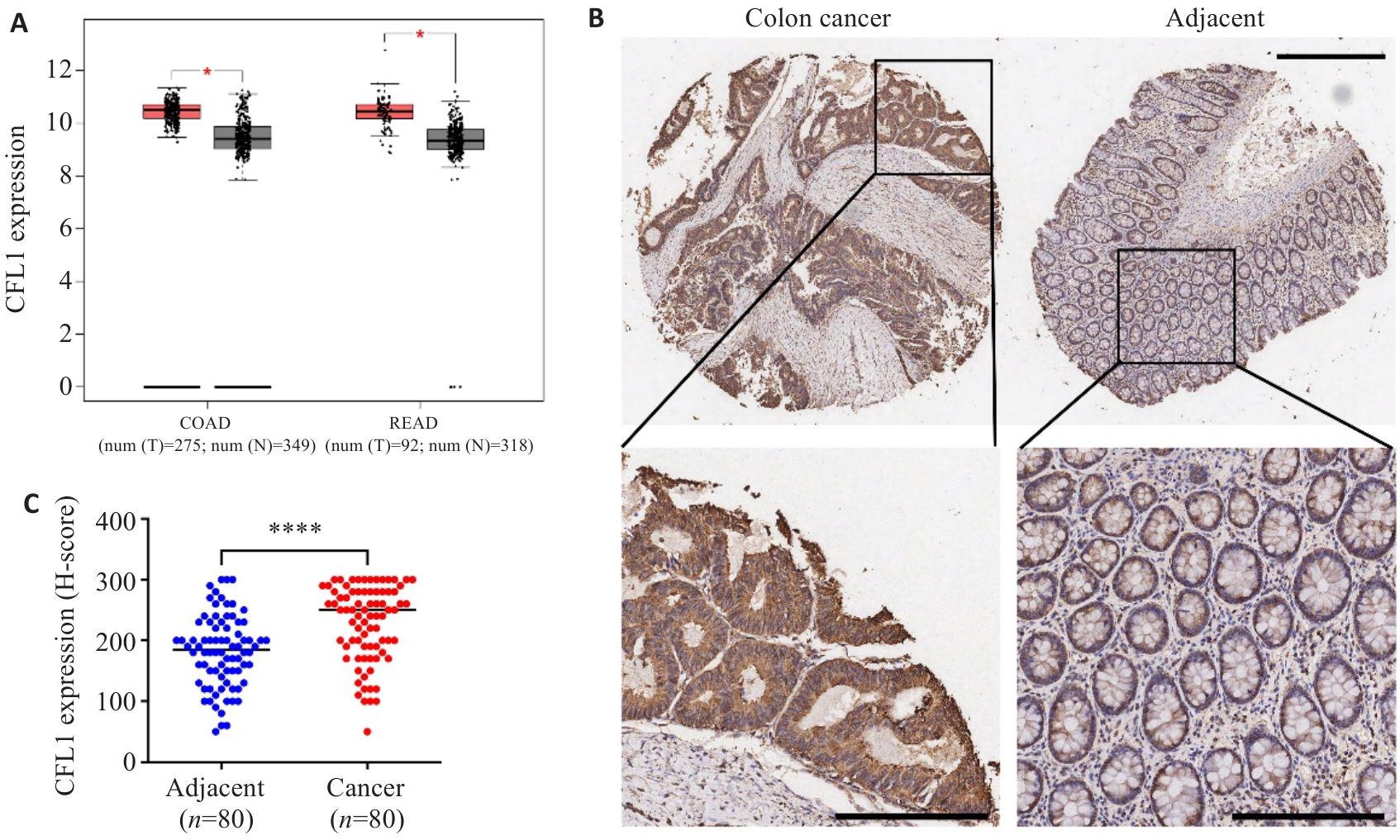
Fig.1 CFL1 is highly expressed in colon cancer tissues. A: Expression levels of CFL1 in colon adenocarcinoma (COAD) and rectal adenocarcinoma (READ) from the TCGA database. B, C: Representative immunohistochemical staining and the corresponding H-score analysis of CFL1 in colon cancer tissues and paired adjacent normal tissues (n=80). Scale bar=500 µm (upper panel); Scale bar=200 µm (lower panel). *P<0.05, ****P<0.0001.
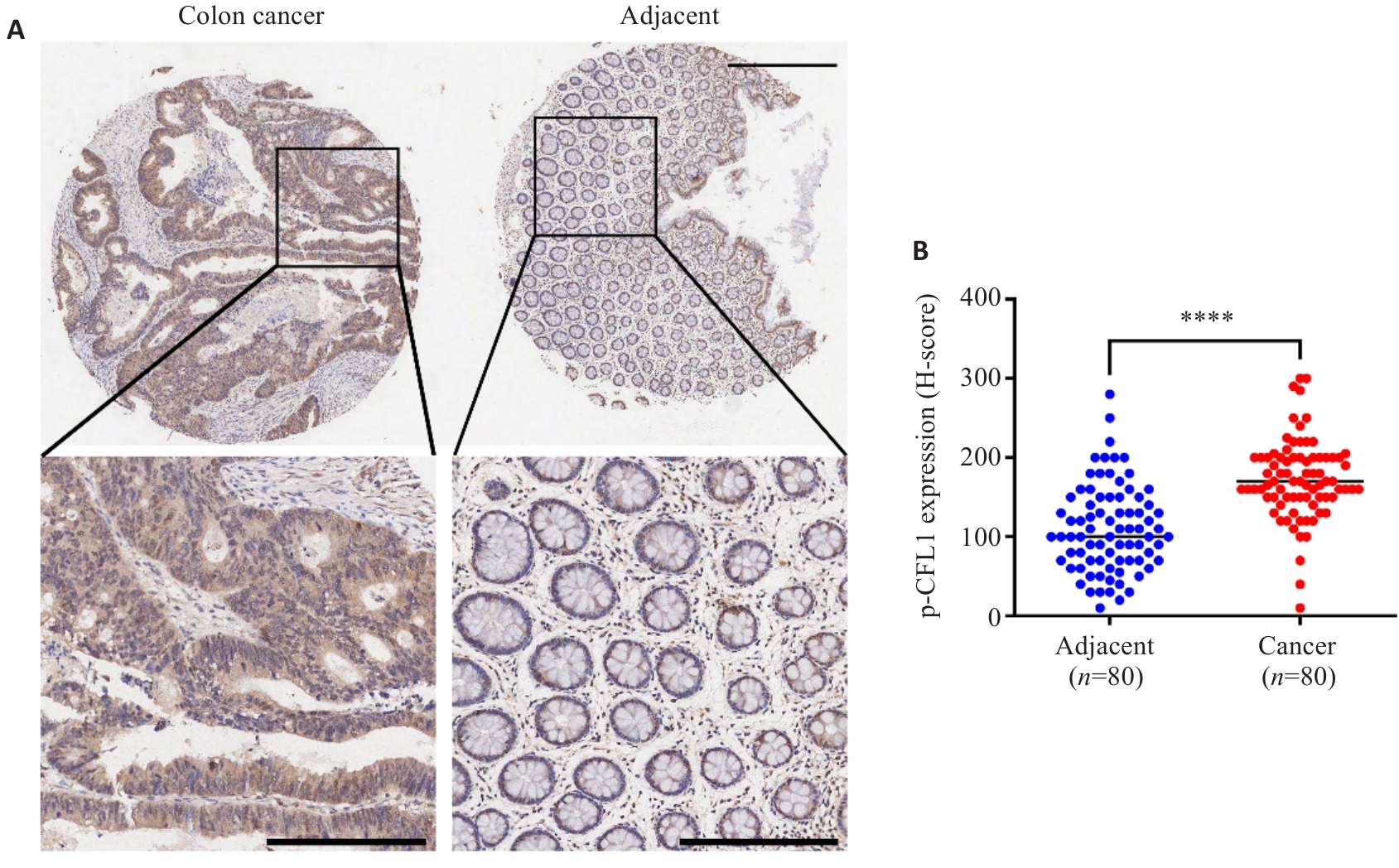
Fig.2 p-CFL1 is highly expressed in colon cancer tissues. A, B: Representative immunohistochemical staining and the corresponding H-score analysis of p-CFL1 in colon cancer tissues and paired adjacent normal tissues (n=80). Scale bar=500 µm (upper panel); Scale bar=200 µm (lower panel). ****P<0.0001.
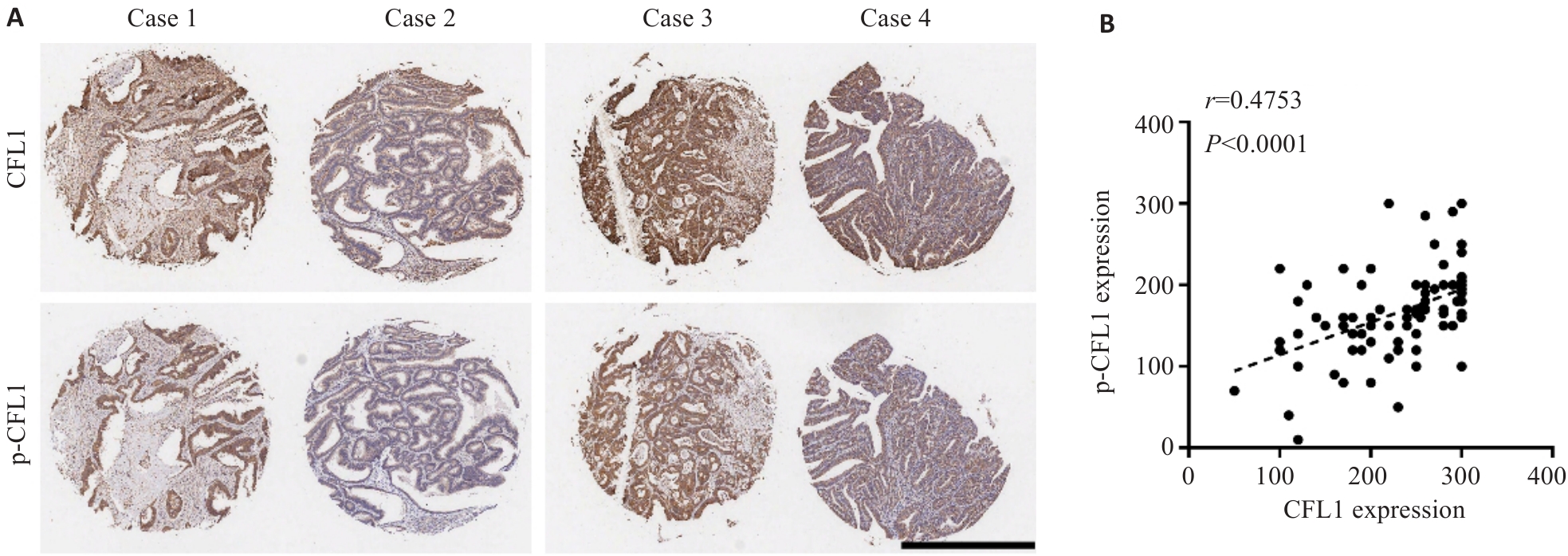
Fig.3 Positive correlation between expressions of CFL1 and p-CFL1 in colon cancer tissues. A: Representative images showing consistent expression trends of CFL1 and p-CFL1 in the same colon cancer tissue samples (Scale bar=100 μm). B: Pearson correlation analysis between CFL1 and p-CFL1 expression levels in colon cancer tissues (n=96).
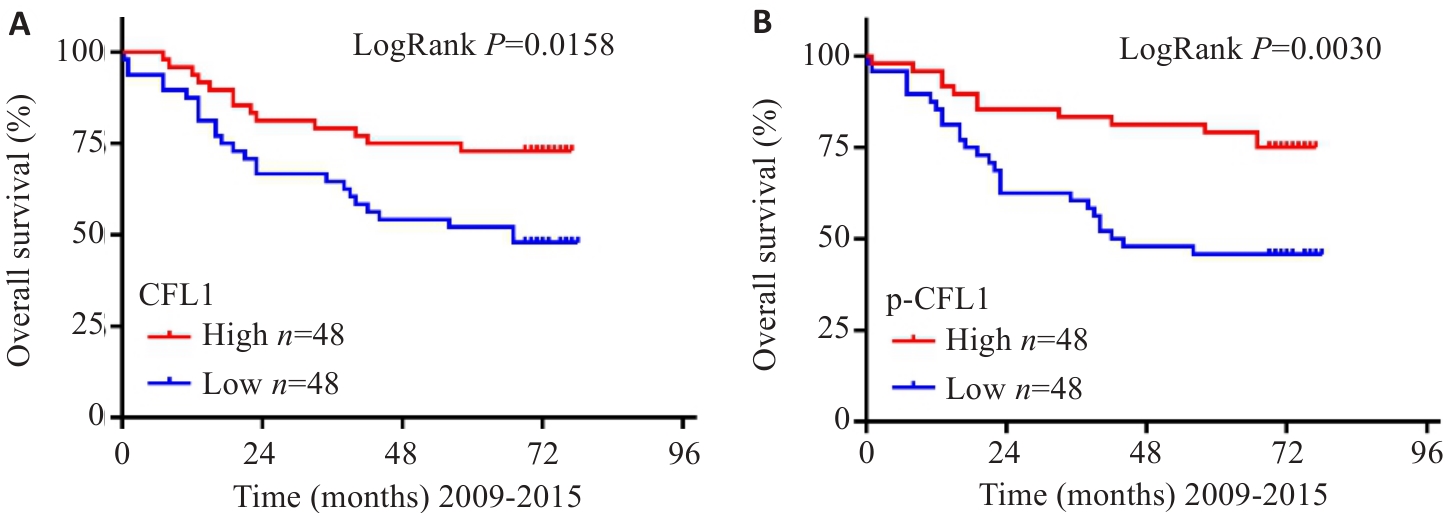
Fig.4 Impact of high expression of CFL1 and p-CFL1 on overall survival of patients with colon cancer. A: Kaplan-Meier survival curves comparing overall survival between patients with high and low expression of CFL1 (P=0.0158). B: Kaplan-Meier survival curves comparing overall survival between patients with high and low expression of p-CFL1 (P=0.0030).
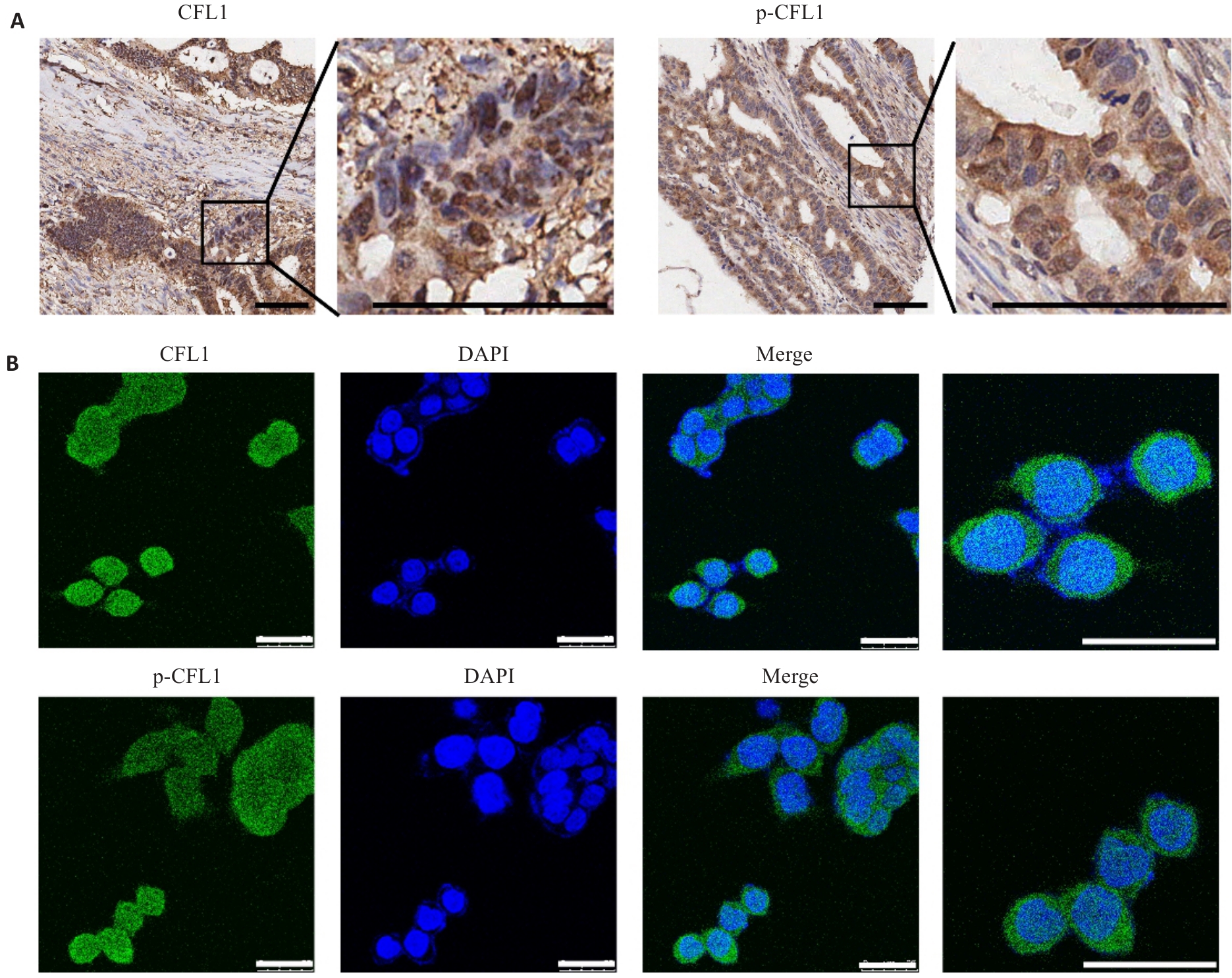
Fig.5 Nuclear localization of CFL1 and p-CFL1 in a subset of colon cancer cases. A: Representative immunohistochemical images showing nuclear and cytoplasmic staining of CFL1 and p-CFL1 in colon cancer tissues (Scale bar=100 μm). B: Immunofluorescence analysis confirms the localization of CFL1 and p-CFL1 in both the nucleus and cytoplasm of HCT116 cells (Scale bar=25 μm).
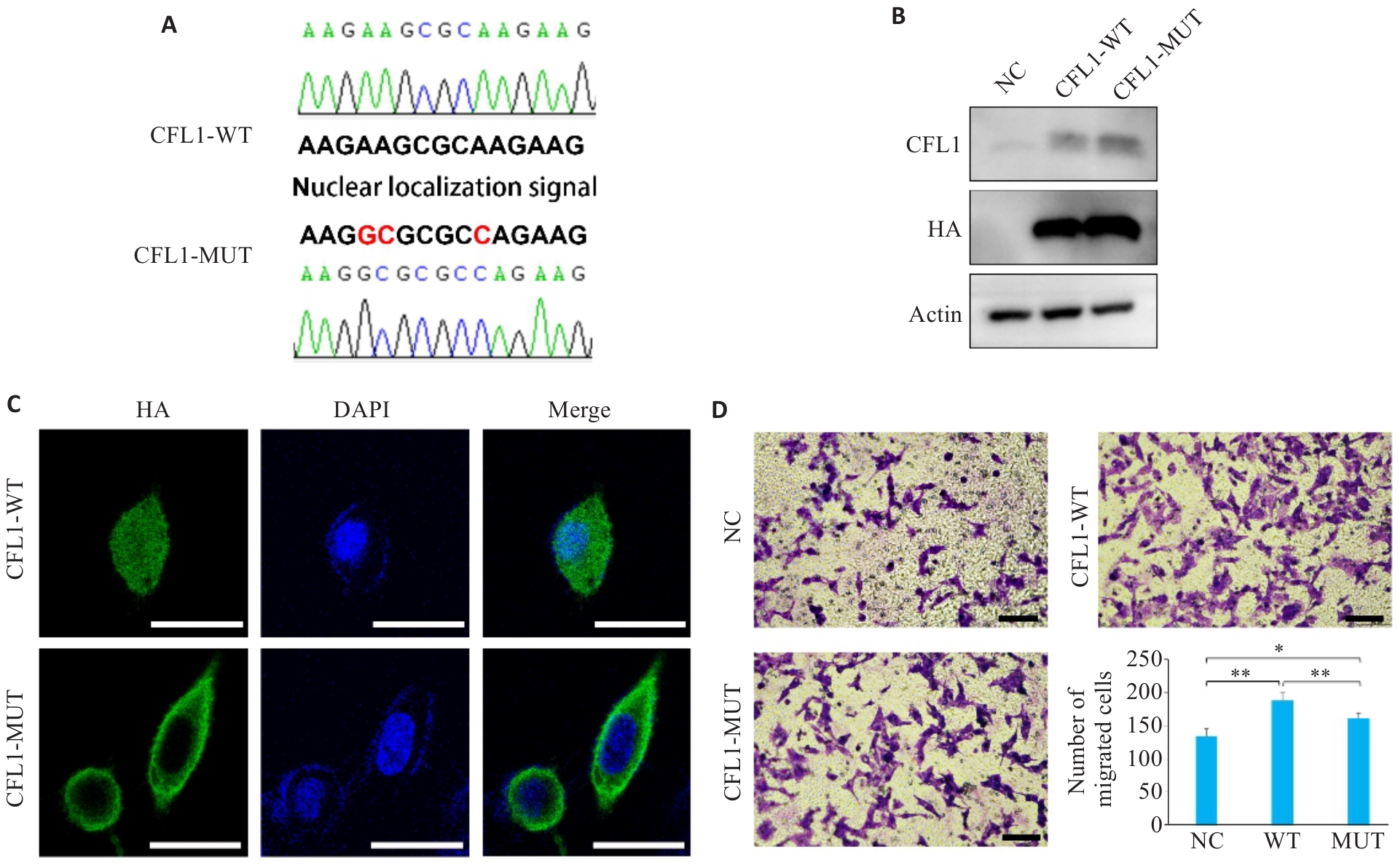
Fig.6 Overexpression of wild-type and NLS-mutant CFL1 promotes migration of colon cancer cells. A: Sanger sequencing verification showing the presence of the NLS in the CFL1-WT vector and its mutation in the CFL1-MUT vector. B: Western blotting confirms overexpression of CFL1 in HCT116 cells transfected with CFL1-WT and CFL1-MUT vectors. C: Immunofluorescence staining showing that wild-type CFL1 overexpression leads to both nuclear and cytoplasmic distribution, while the NLS-mutant confines CFL1 to the cytoplasm (Scale bar=20 μm). D: Transwell migration assays demonstrating that both CFL1-WT and CFL1-MUT enhancemigration of colon cancer cells (Scale bar=100 μm; n=5). *P<0.05, **P<0.01.
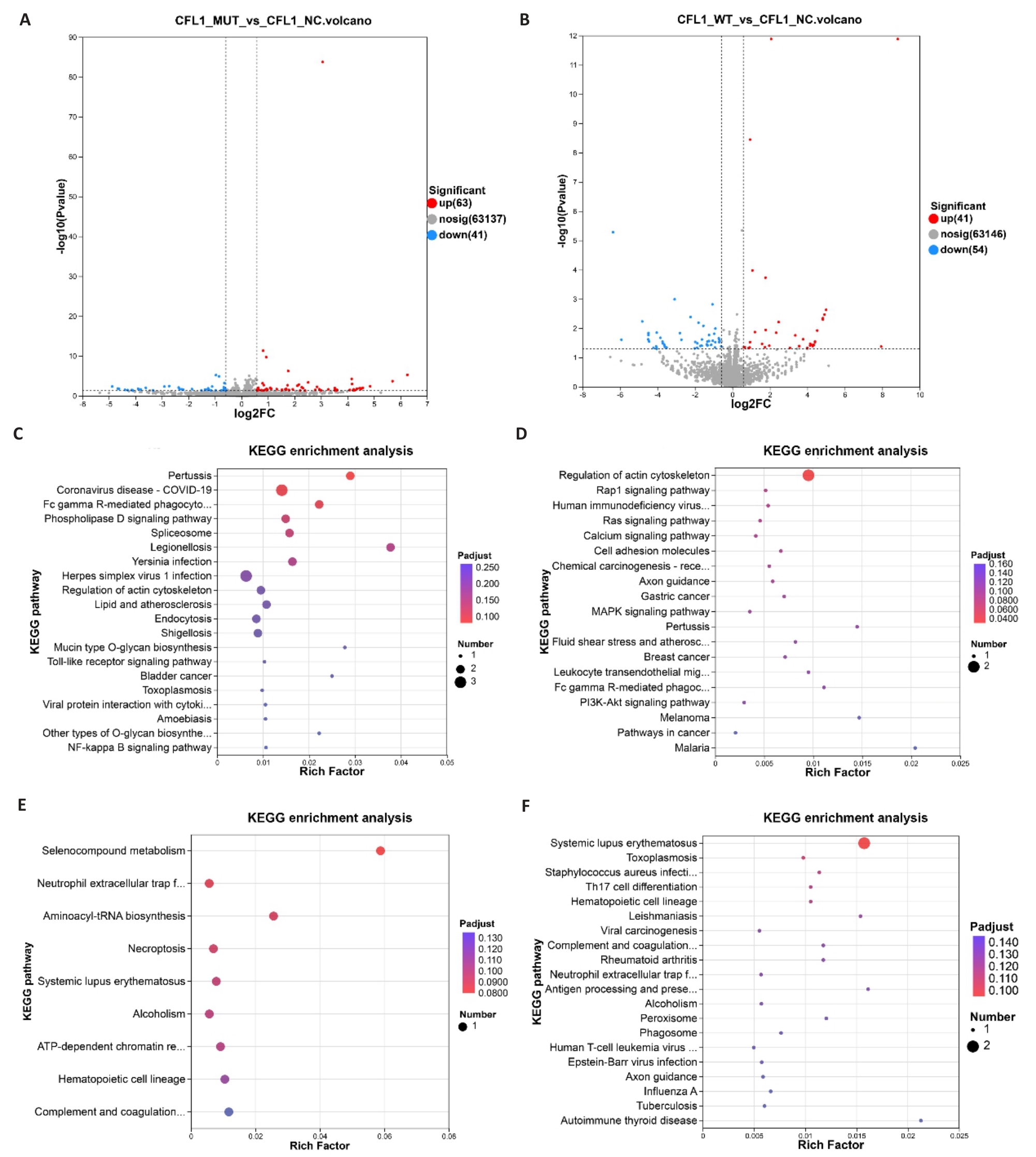
Fig.7 KEGG enrichment analysis of wild-type and NLS-mutant CFL1. A, B: Volcano plots displaying the numbers of differentially expressed genes (DEGs) identified by RNA-seq in HCT116 cells transfected with CFL1-MUT, CFL1-WT, or control vectors. C, D: Bubble plots of KEGG pathway enrichment analysis for up-regulated DEGs (MUT vs NC: 63, WT vs NC: 41) in the CFL1-MUT and CFL1-WT groups, respectively. E, F: Bubble plots of KEGG pathway enrichment analysis for down-regulated DEGs (MUT vs NC: 41, WT vs NC: 54) in the CFL1-MUT and CFL1-WT groups, respectively.
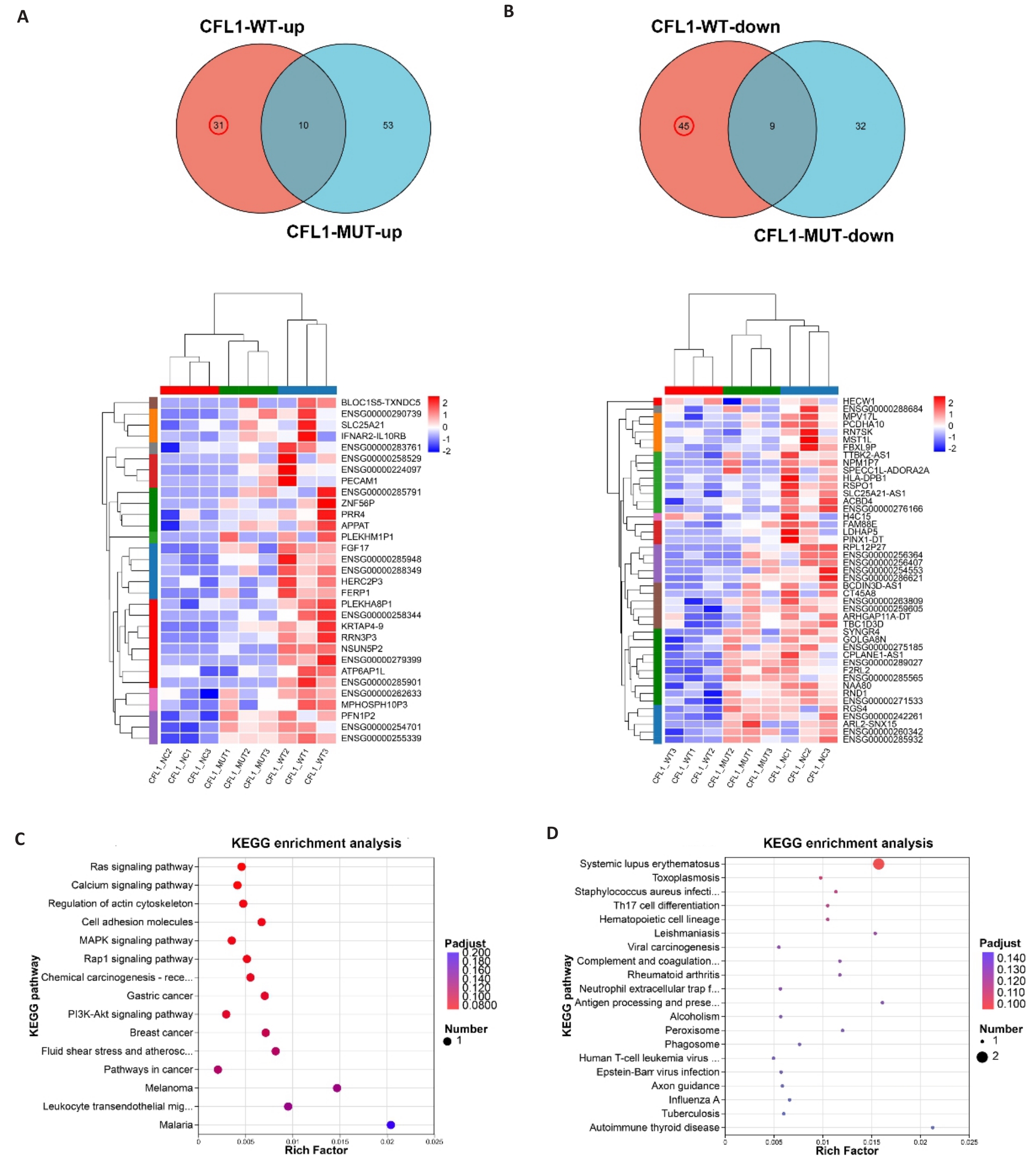
Fig.8 KEGG enrichment analysis of nuclear-localized CFL1. A, B: Venn diagram and heatmaps showing the 31 up-regulated and 45 down-regulated differentially expressed genes in CFL1-WT group compared to the control. C, D: KEGG enrichment analysis of the 31 up-regulated and 45 down-regulated DEGs.
| [1] | Sung H, Ferlay J, Siegel RL, et al. Global cancer statistics 2020: GLOBOCAN estimates of incidence and mortality worldwide for 36 cancers in 185 countries[J]. CA Cancer J Clin, 2021, 71(3): 209-49. doi:10.3322/caac.21660 |
| [2] | Zheng RS, Chen R, Han BF, et al. Cancer incidence and mortality in China, 2022[J]. Zhonghua Zhong Liu Za Zhi, 2024, 46(3): 221-31. |
| [3] | Mizuno K. Signaling mechanisms and functional roles of cofilin phosphorylation and dephosphorylation[J]. Cell Signal, 2013, 25(2): 457-69. doi:10.1016/j.cellsig.2012.11.001 |
| [4] | Daryabari SS, Fathi M, Mahdavi M, et al. Overexpression of CFL1 in gastric cancer and the effects of its silencing by siRNA with a nanoparticle delivery system in the gastric cancer cell line[J]. J Cell Physiol, 2020, 235(10): 6660-72. doi:10.1002/jcp.29562 |
| [5] | Castro MAA, Dal-Pizzol F, Zdanov S, et al. CFL1 expression levels as a prognostic and drug resistance marker in nonsmall cell lung cancer[J]. Cancer, 2010, 116(15): 3645-55. doi:10.1002/cncr.25125 |
| [6] | Branco MA, Kunst BM, Neto BS, et al. Progress and challenges in the use of Cofilin-1 as a prognostic and predictive biomarker for cancer management[J]. Gene, 2025, 968: 149746. doi:10.1016/j.gene.2025.149746 |
| [7] | Werle SD, Schwab JD, Tatura M, et al. Unraveling the molecular tumor-promoting regulation of cofilin-1 in pancreatic cancer[J]. Cancers, 2021, 13(4): 725. doi:10.3390/cancers13040725 |
| [8] | Chen LK, Cai JL, Huang YS, et al. Identification of cofilin-1 as a novel mediator for the metastatic potentials and chemoresistance of the prostate cancer cells[J]. Eur J Pharmacol, 2020, 880: 173100. doi:10.1016/j.ejphar.2020.173100 |
| [9] | Howard J, Goh CY, Gorzel KW, et al. The potential role of cofilin-1 in promoting triple negative breast cancer (TNBC) metastasis via the extracellular vesicles (EVs)[J]. Transl Oncol, 2022, 15(1): 101247. doi:10.1016/j.tranon.2021.101247 |
| [10] | Wang LX, Xiong L, Wu ZC, et al. Expression of UGP2 and CFL1 expression levels in benign and malignant pancreatic lesions and their clinicopathological significance[J]. World J Surg Oncol, 2018, 16(1): 11. doi:10.1186/s12957-018-1316-7 |
| [11] | Lu LI, Fu NI, Luo XU, et al. Overexpression of cofilin 1 in prostate cancer and the corresponding clinical implications[J]. Oncol Lett, 2015, 9(6): 2757-61. doi:10.3892/ol.2015.3133 |
| [12] | Yao BW, Li YZ, Chen TX, et al. Hypoxia-induced cofilin 1 promotes hepatocellular carcinoma progression by regulating the PLD1/AKT pathway[J]. Clin Transl Med, 2021, 11(3): e366. doi:10.1002/ctm2.366 |
| [13] | Mousavi S, Safaralizadeh R, Hosseinpour-Feizi M, et al. Study of cofilin 1 gene expression in colorectal cancer[J]. J Gastrointest Oncol, 2018, 9(5): 791-6. doi:10.21037/jgo.2018.05.17 |
| [14] | Kang X, Zhao CF, Liu YP, et al. The phosphorylation level of Cofilin-1 is related to the pathological subtypes of gastric cancer[J]. Medicine, 2022, 101(43): e31309. doi:10.1097/md.0000000000031309 |
| [15] | Qin YJ, Li WX, Long YL, et al. Relationship between p-cofilin and cisplatin resistance in patients with ovarian cancer and the role of p-cofilin in prognosis[J]. Cancer Biomark, 2019, 24(4): 469-75. doi:10.3233/cbm-182209 |
| [16] | Luo YY, Lu B, Hu YQ, et al. Triptonoterpene promotes the mitochondrial translocation of cofilin-1 to induce apoptosis in gastric cancer cells by regulating actin dynamics[J]. Biochem Pharmacol, 2025, 241: 117173. doi:10.1016/j.bcp.2025.117173 |
| [17] | Wang WS, Zhong HJ, Xiao DW, et al. The expression of CFL1 and N-WASP in esophageal squamous cell carcinoma and its correlation with clinicopathological features[J]. Dis Esophagus, 2010, 23(6): 512-21. doi:10.1111/j.1442-2050.2009.01035.x |
| [18] | Li XM, Wang JJ, Zhang C, et al. Circular RNA circITGA7 inhibits colorectal cancer growth and metastasis by modulating the Ras pathway and upregulating transcription of its host gene ITGA7 [J]. J Pathol, 2018, 246(2): 166-79. doi:10.1002/path.5125 |
| [19] | Li XM, Chen T, Cai YJ, et al. CircSETD3 interrupts the bidirectional positive feedback of ErbB3 and Akt by sponging miR-4667-5p to inhibit colorectal cancer progression and cetuximab resistance[J]. Int J Biol Macromol, 2025, 318(Pt 4): 145352. doi:10.1016/j.ijbiomac.2025.145352 |
| [20] | Li XM, Wang JJ, Lin WH, et al. circEXOC6B interacting with RRAGB, an mTORC1 activator, inhibits the progression of colorectal cancer by antagonizing the HIF1A-RRAGB-mTORC1 positive feedback loop[J]. Mol Cancer, 2022, 21(1): 135. doi:10.1186/s12943-022-01600-1 |
| [21] | Sousa-Squiavinato ACM, Rocha MR, Barcellos-de-Souza P, et al. Cofilin-1 signaling mediates epithelial-mesenchymal transition by promoting actin cytoskeleton reorganization and cell-cell adhesion regulation in colorectal cancer cells[J]. Biochim Biophys Acta Mol Cell Res, 2019, 1866(3): 418-29. doi:10.1016/j.bbamcr.2018.10.003 |
| [22] | Hensley PJ, Zetter D, Horbinski CM, et al. Association of epithelial-mesenchymal transition and nuclear cofilin with advanced urothelial cancer[J]. Hum Pathol, 2016, 57: 68-77. doi:10.1016/j.humpath.2016.06.020 |
| [23] | Madak-Erdogan Z, Ventrella R, Petry L, et al. Novel roles for ERK5 and cofilin as critical mediators linking ERα-driven transcription, actin reorganization, and invasiveness in breast cancer[J]. Mol Cancer Res, 2014, 12(5): 714-27. doi:10.1158/1541-7786.mcr-13-0588 |
| [24] | Domingues C, Geraldo AM, Anjo SI, et al. Cofilin-1 is a mechanosensitive regulator of transcription[J]. Front Cell Dev Biol, 2020, 8: 678. doi:10.3389/fcell.2020.00678 |
| [25] | Liu Z, Liu J, Dong XC, et al. Tn antigen promotes human colorectal cancer metastasis via H-Ras mediated epithelial-mesenchymal transition activation[J]. J Cell Mol Med, 2019, 23(3): 2083-92. doi:10.1111/jcmm.14117 |
| [26] | Abd Rahman NI, Tham CL, Abd Hamid R. Inhibition of angiogenesis and metastasis in colorectal cancer cell lines through KRAS-associated signaling pathways by 2-methoxy-6-undecyl-1, 4-benzoquinone[J]. Chem Biol Interact, 2024, 399: 111151. doi:10.1016/j.cbi.2024.111151 |
| [27] | Dai SP, Zhuang HW, Li ZZ, et al. miR-122/NEGR1 axis contributes colorectal cancer liver metastasis by PI3K/AKT pathway and macrophage modulation[J]. J Transl Med, 2024, 22(1): 1060. doi:10.1186/s12967-024-05901-5 |
| [28] | Shin AE, Sugiura K, Kariuki SW, et al. LIN28B-mediated PI3K/AKT pathway activation promotes metastasis in colorectal cancer models[J]. J Clin Invest, 2025, 135(8): e186035. doi:10.1172/jci186035 |
| [29] | Sun XJ, Zhang JL, Dong BQ, et al. Targeting SLITRK4 restrains proliferation and liver metastasis in colorectal cancer via regulating PI3K/AKT/NFκB pathway and tumor-associated macrophage[J]. Adv Sci, 2025, 12(1): 2400367. doi:10.1002/advs.202400367 |
| [30] | Paschos KA, Canovas D, Bird NC. The role of cell adhesion molecules in the progression of colorectal cancer and the development of liver metastasis[J]. Cell Signal, 2009, 21(5): 665-74. doi:10.1016/j.cellsig.2009.01.006 |
| [31] | Arabzadeh A, Chan C, Nouvion AL, et al. Host-related carcinoembryonic antigen cell adhesion molecule 1 promotes metastasis of colorectal cancer[J]. Oncogene, 2013, 32(7): 849-60. doi:10.1038/onc.2012.112 |
| [1] | Qile SONG, Yikai MIAO, Xiaotong FENG, Yifan WANG, Wei LIU, Qi WEI, Xinru YU, Wenwen CHEN, Xiaoyan FU. Selenocystine inhibits colon cancer cell growth by promoting reactive oxygen species generation to trigger oxidative damage [J]. Journal of Southern Medical University, 2026, 46(3): 532-540. |
| [2] | Xiaoxiao LIANG, Huilin LUAN, Pengzhen MA, Wenzhu DENG, Jiaxin JIN, Chenyang QUAN, Tingting CHEN, Youcai YANG, Yingzhen XIE. Correlation between cardiovascular health score based on eight life factors and prognosis of ischemic stroke and mediating effect of clinical test indicators: a multicenter prospective cohort study [J]. Journal of Southern Medical University, 2026, 46(2): 239-246. |
| [3] | Huihao YU, Yu SHAO, Qianqian CHENG, Xinrui ZHOU, Haiping GENG, Yan YANG. High expression of MPP6 predicts poor patient prognosis and promotes malignant biological behaviors of hepatocellular carcinoma cells [J]. Journal of Southern Medical University, 2026, 46(2): 394-402. |
| [4] | Xinli ZHAO, Haojie WANG, Yinchun SONG, Shuai YUAN, Zhen ZHANG, Xingqi ZHOU, Shanshan LI, Xian LI, Feng LI. ERI3 expression is elevated in hepatocellular carcinoma and correlates with poor patient prognosis [J]. Journal of Southern Medical University, 2026, 46(1): 175-182. |
| [5] | Tong SHA, Wenyan WANG, Jiabin XUAN, Jie WU, Nengxian SHI, Jin HE, Hongbin HU, Yaoyuan ZHANG. Identification of immune status subtypes and prognostic analysis of septic patients based on Th1/Th2 cytokine assays [J]. Journal of Southern Medical University, 2026, 46(1): 6-22. |
| [6] | Ying WANG, Jing LI, Yidi WANG, Mingyu HUA, Weibin HU, Xiaozhi ZHANG. Construction and verification of a prognostic model combining anoikis and immune prognostic signatures for primary liver cancer [J]. Journal of Southern Medical University, 2025, 45(9): 1967-1979. |
| [7] | Yu ZHANG, Haitao LI, Yuqing PAN, Jiexian CAO, Li ZHAI, Xi ZHANG. Pan-cancer analysis of MZB1 expression and its association with immune infiltration and clinical prognosis [J]. Journal of Southern Medical University, 2025, 45(9): 2006-2018. |
| [8] | Ziliang WANG, Xiaohua CHEN, Jingjing YANG, Chen YAN, Zhizhi ZHANG, Bingyi HUANG, Meng ZHAO, Song LIU, Sitang GE, Lugen ZUO, Deli CHEN. High expression of SURF4 promotes migration, invasion and proliferation of gastric cancer cells by inhibiting tight junction proteins [J]. Journal of Southern Medical University, 2025, 45(8): 1732-1742. |
| [9] | Jinlong PANG, Xinli ZHAO, Zhen ZHANG, Haojie WANG, Xingqi ZHOU, Yumei YANG, Shanshan LI, Xiaoqiang CHANG, Feng LI, Xian LI. Overexpression of multimerin-2 promotes cutaneous melanoma cell invasion and migration and is associated with poor prognosis [J]. Journal of Southern Medical University, 2025, 45(7): 1479-1489. |
| [10] | Xuan WU, Jiamin FANG, Weiwei HAN, Lin CHEN, Jing SUN, Qili JIN. High PRELID1 expression promotes epithelial-mesenchymal transition in gastric cancer cells and is associated with poor prognosis [J]. Journal of Southern Medical University, 2025, 45(7): 1535-1542. |
| [11] | Kang WANG, Haibin LI, Jing YU, Yuan MENG, Hongli ZHANG. High expression of ELFN1 is a prognostic biomarker and promotes proliferation and metastasis of colorectal cancer cells [J]. Journal of Southern Medical University, 2025, 45(7): 1543-1553. |
| [12] | Yi ZHANG, Yu SHEN, Zhiqiang WAN, Song TAO, Yakui LIU, Shuanhu WANG. High expression of CDKN3 promotes migration and invasion of gastric cancer cells by regulating the p53/NF-κB signaling pathway and inhibiting cell apoptosis [J]. Journal of Southern Medical University, 2025, 45(4): 853-861. |
| [13] | Qingqing HUANG, Wenjing ZHANG, Xiaofeng ZHANG, Lian WANG, Xue SONG, Zhijun GENG, Lugen ZUO, Yueyue WANG, Jing LI, Jianguo HU. High MYO1B expression promotes proliferation, migration and invasion of gastric cancer cells and is associated with poor patient prognosis [J]. Journal of Southern Medical University, 2025, 45(3): 622-631. |
| [14] | Huali LI, Ting SONG, Jiawen LIU, Yongbao LI, Zhaojing JIANG, Wen DOU, Linghong ZHOU. Prognosis-guided optimization of intensity-modulated radiation therapy plans for lung cancer [J]. Journal of Southern Medical University, 2025, 45(3): 643-649. |
| [15] | Xue SONG, Yue CHEN, Min ZHANG, Nuo ZHANG, Lugen ZUO, Jing LI, Zhijun GENG, Xiaofeng ZHANG, Yueyue WANG, Lian WANG, Jianguo HU. GPSM2 is highly expressed in gastric cancer to affect patient prognosis by promoting tumor cell proliferation [J]. Journal of Southern Medical University, 2025, 45(2): 229-238. |
| Viewed | ||||||
|
Full text |
|
|||||
|
Abstract |
|
|||||