
南方医科大学学报 ›› 2025, Vol. 45 ›› Issue (11): 2330-2339.doi: 10.12122/j.issn.1673-4254.2025.11.05
李亚辉1( ), 杨欣2,4(), 姚血明3, 黄聪2,3
收稿日期:2025-03-05
出版日期:2025-11-20
发布日期:2025-11-28
通讯作者:
杨欣
E-mail:3844639309@qq.com;25066640@qq.com
作者简介:李亚辉,博士,讲师,E-mail: 3844639309@qq.com
基金资助:
Yahui LI1(), Xin YANG2,4(), Xueming YAO3, Cong HUANG2,3
Received:2025-03-05
Online:2025-11-20
Published:2025-11-28
Contact:
Xin YANG
E-mail:3844639309@qq.com;25066640@qq.com
摘要:
目的 基于蛋白质组学分析豨莶丸(XXW)治疗类风湿关节炎(RA)的分子机制。 方法 复制大鼠胶原诱导关节炎模型,48只大鼠适应环境后随机分为6组(8只/组),造模成功2周后灌胃豨莶丸进行干预,豨莶丸低、中、高剂量换算后灌胃给药分别为200、400、800 mg/kg,雷公藤多苷片(LGTDGP)9 mg/kg,1次/d。正常对照组和模型对照组灌胃等体积 1% 羧甲基纤维素钠,连续灌胃给药3周。采用ELISA试剂盒测定大鼠血清中IL-10、IL-6、TNF-α 的含量。基于串联质谱标签(TMT)技术筛选豨莶丸高剂量组与模型组间的差异表达蛋白,通过R软件分析核心靶标及信号通路。基于ggplot2、tidyverse 等数据处理与可视化包,对免疫细胞浸润数据及相关基因表达数据进行整合处理,计算核心靶点与各类免疫细胞(如 T 细胞、B 细胞、巨噬细胞等)的相关性。采用免疫组化和免疫荧光验证核心靶点的表达情况。 结果 与正常对照组比较,模型组大鼠血清中TNF-α、IL-6的含量明显升高(P<0.01),IL-10含量降低(P<0.01);与模型组比较,雷公藤多苷片、豨莶丸高剂量、中剂量组大鼠血清中TNF-α、IL-6的含量降低(P<0.01,P<0.05),IL-10含量增加(P<0.05,P<0.01)。蛋白质组学分析发现模型组和豨莶丸高剂量组交集出160个差异蛋白,趋化因子(CCL5),信号转导与转录激活因子1(STAT1),颗粒酶 B (GZMB)和白介素7受体(IL7R)为核心靶点。CCL5、STAT1的ROC曲线下面积大于0.9。4个核心靶点(CCL5,STAT1、GZMB、IL7R)与中央记忆 CD4 T细胞、效应记忆CD4 T细胞、骨髓源性抑制细胞等呈正相关(P<0.05)。免疫组化及免疫荧光分析发现,与空白对照组比较,模型组大鼠踝关节中CCL5、STAT1蛋白表达水平升高(P<0.01);与模型组比较,经豨莶丸治疗后CCL5、STAT1蛋白表达水平降低(P<0.01)。 结论 豨莶丸对CIA大鼠具有关节保护作用,通过降低血清中促炎因子IL-6、TNF-α的含量,同时升高抗炎因子IL-10的水平,减轻炎症反应,其机制与调控CCL5,STAT1等蛋白的表达相关。
李亚辉, 杨欣, 姚血明, 黄聪. 豨莶丸治疗类风湿关节炎的分子机制:基于蛋白质组学[J]. 南方医科大学学报, 2025, 45(11): 2330-2339.
Yahui LI, Xin YANG, Xueming YAO, Cong HUANG. Molecular mechanism of Xixian Pills for improving rheumatoid arthritis in rats: a proteomic analysis[J]. Journal of Southern Medical University, 2025, 45(11): 2330-2339.
| Experimental equipment | Model | Company |
|---|---|---|
| Nanoscale liquid chromatography instrument | EASY-nLC | Thermo fisher scientific |
| Ultrasonic disrupter | JY96-IIN | Ningbo xinzhi |
| Low-temperature high-speed centrifuge | 5430R | Eppendorf |
| Vortex oscillator | G-560E | Scientific industries |
| Thermostatic incubator | GNP-9080 | Shanghai jinghong |
| Mass spectrometer | Orbitrap Exploris 480 | Thermo fisher scientific |
| Vacuum centrifuge concentrator | LNG-T98 | Taicang huamei |
| Ultraviolet spectrophotometer | 260 Bio | Thermo fisher scientific |
| High-performance liquid chromatography | 1260 infinity II | Agilent technologies, inc. |
| Nano Drop | ND3000 | Thermo fisher scientific |
表1 实验仪器设备及其来源
Tab.1 Experimental instruments and equipment and their sources
| Experimental equipment | Model | Company |
|---|---|---|
| Nanoscale liquid chromatography instrument | EASY-nLC | Thermo fisher scientific |
| Ultrasonic disrupter | JY96-IIN | Ningbo xinzhi |
| Low-temperature high-speed centrifuge | 5430R | Eppendorf |
| Vortex oscillator | G-560E | Scientific industries |
| Thermostatic incubator | GNP-9080 | Shanghai jinghong |
| Mass spectrometer | Orbitrap Exploris 480 | Thermo fisher scientific |
| Vacuum centrifuge concentrator | LNG-T98 | Taicang huamei |
| Ultraviolet spectrophotometer | 260 Bio | Thermo fisher scientific |
| High-performance liquid chromatography | 1260 infinity II | Agilent technologies, inc. |
| Nano Drop | ND3000 | Thermo fisher scientific |
| Group | Ankle joint swelling degree | TNF-α (pg/L) | IL-6 (pg/L) | IL-10 (pg/L) |
|---|---|---|---|---|
| Control | 0.229±0.016 | 54.86±7.4 | 38.94±8.6 | 55.32±3.6 |
| Model | 0.364±0.012** | 144.68±10.2** | 77.34±12.4** | 22.62±6.1** |
| LGTDGP | 0.243±0.015## | 62.32±10.3## | 45.63±11.3## | 46.24±7.6# |
| XXW-H | 0.268±0.017## | 70.24±9.6## | 55.24±7.7## | 47.35±5.8## |
| XXW-M | 0.291±0.016# | 98.63±12.4# | 59.24±14.3# | 38.36±8.7# |
| XXW-L | 0.324±0.021 | 125.34±18.9 | 69.34±9.7 | 30.24±9.6 |
表2 踝关节肿胀度、炎性因子水平
Tab.2 Ankle joint swelling degree and inflammatory factor levels in the rats in different groups
| Group | Ankle joint swelling degree | TNF-α (pg/L) | IL-6 (pg/L) | IL-10 (pg/L) |
|---|---|---|---|---|
| Control | 0.229±0.016 | 54.86±7.4 | 38.94±8.6 | 55.32±3.6 |
| Model | 0.364±0.012** | 144.68±10.2** | 77.34±12.4** | 22.62±6.1** |
| LGTDGP | 0.243±0.015## | 62.32±10.3## | 45.63±11.3## | 46.24±7.6# |
| XXW-H | 0.268±0.017## | 70.24±9.6## | 55.24±7.7## | 47.35±5.8## |
| XXW-M | 0.291±0.016# | 98.63±12.4# | 59.24±14.3# | 38.36±8.7# |
| XXW-L | 0.324±0.021 | 125.34±18.9 | 69.34±9.7 | 30.24±9.6 |
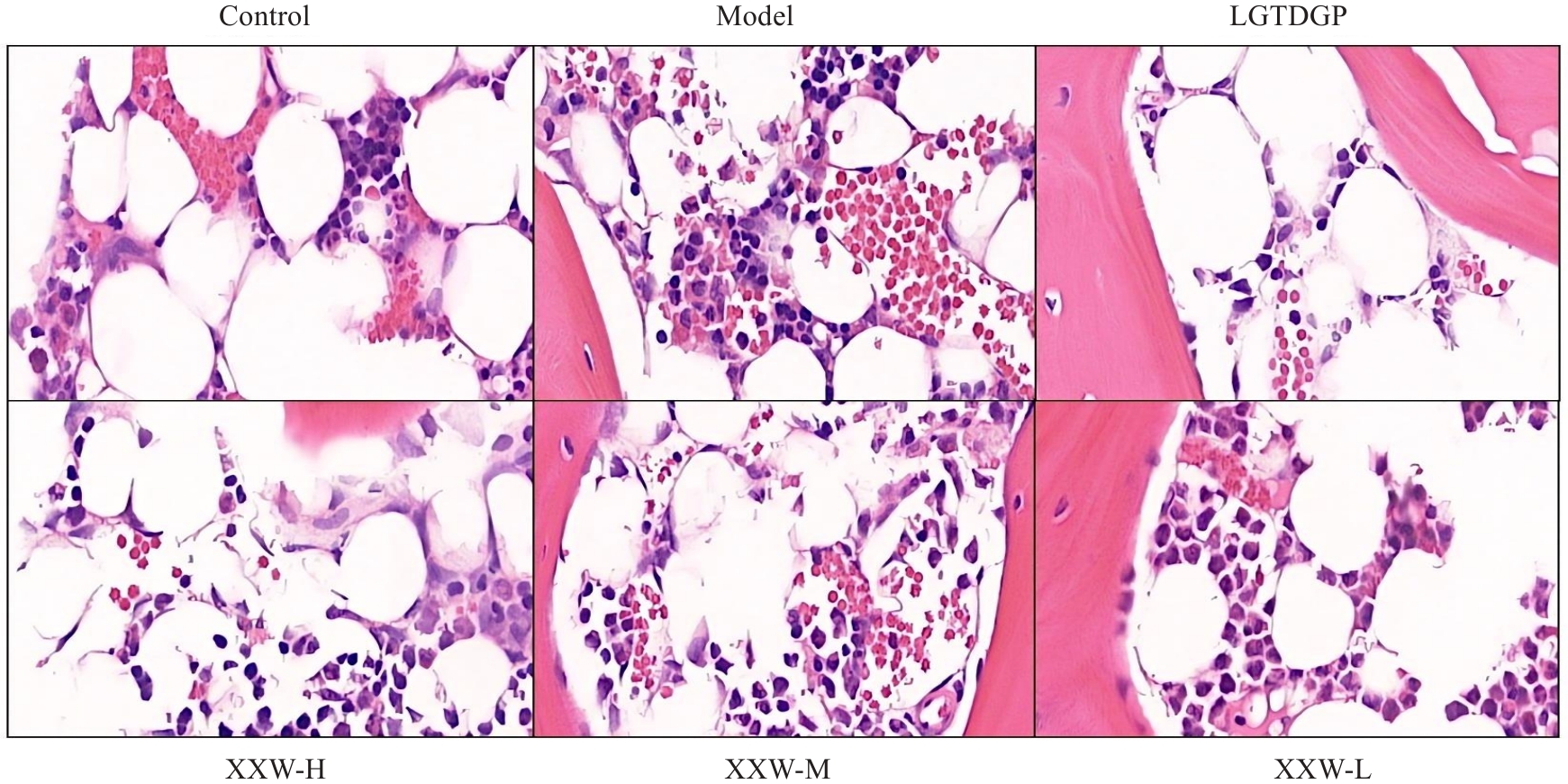
图1 HE染色观察各大鼠踝关节组织病理学变化
Fig.1 Histopathological changes of the ankle joint tissues of the rats (HE staining, original magnification: ×100).
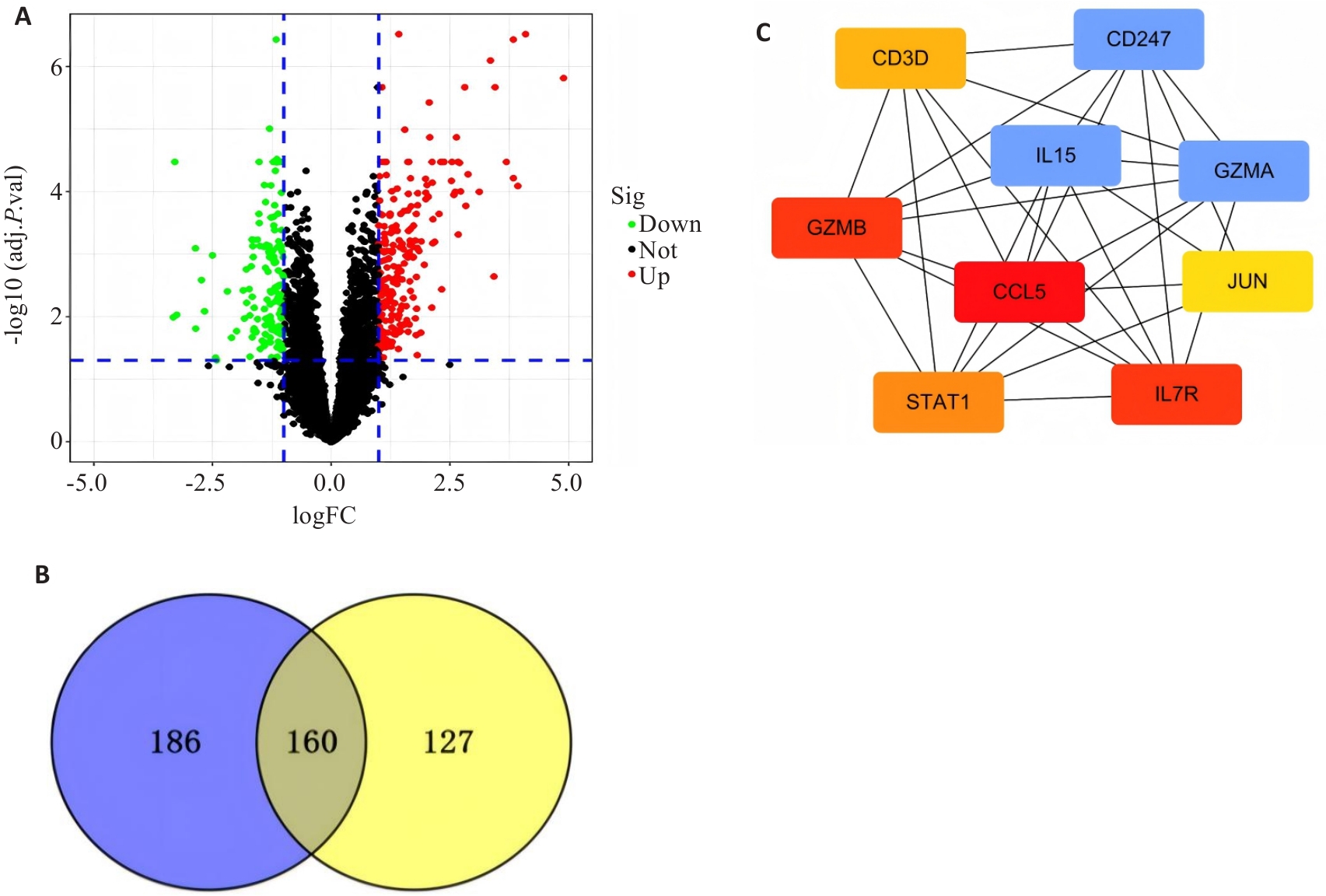
图2 差异表达蛋白及核心靶点分析
Fig.2 Analysis of differentially expressed proteins and core targets in rats with collagen-induced arthritis (CIA) and Xinxian Pills-treated rats. A: Volcano plot of the differential proteins. B: Intersection of the differential proteins between the CIA model group and the high-dose Xixian Pills group. C: Interaction analysis of the differential proteins.
| NO. Path name | Gene count P | FDR | ||
|---|---|---|---|---|
1 2 3 4 5 6 7 8 9 10 | Primary immunodeficiency Hematopoietic cell lineage Cytokine-cytokine receptor interaction Th17 cell differentiation Epstein-Barr virus infection Osteoclast differentiation Th1 and Th2 cell differentiation Human T-cell leukemia virus 1 infection Viral protein interaction with cytokine and cytokine receptor Breast cancer | 9 11 17 11 14 11 9 13 8 9 | 2.57E-10 1.34E-08 3.06E-08 3.33E-08 5.84E-08 5.47E-07 9.08E-07 1.24E-06 1.57E-05 6.57E-05 | 3.62E-08 9.43E-07 1.18E-06 1.18E-06 1.65E-06 1.29E-05 1.83E-05 2.19E-05 0.0002 0.0005 |
表3 差异基因通路分析
Tab.3 Differential gene pathway analysis
| NO. Path name | Gene count P | FDR | ||
|---|---|---|---|---|
1 2 3 4 5 6 7 8 9 10 | Primary immunodeficiency Hematopoietic cell lineage Cytokine-cytokine receptor interaction Th17 cell differentiation Epstein-Barr virus infection Osteoclast differentiation Th1 and Th2 cell differentiation Human T-cell leukemia virus 1 infection Viral protein interaction with cytokine and cytokine receptor Breast cancer | 9 11 17 11 14 11 9 13 8 9 | 2.57E-10 1.34E-08 3.06E-08 3.33E-08 5.84E-08 5.47E-07 9.08E-07 1.24E-06 1.57E-05 6.57E-05 | 3.62E-08 9.43E-07 1.18E-06 1.18E-06 1.65E-06 1.29E-05 1.83E-05 2.19E-05 0.0002 0.0005 |
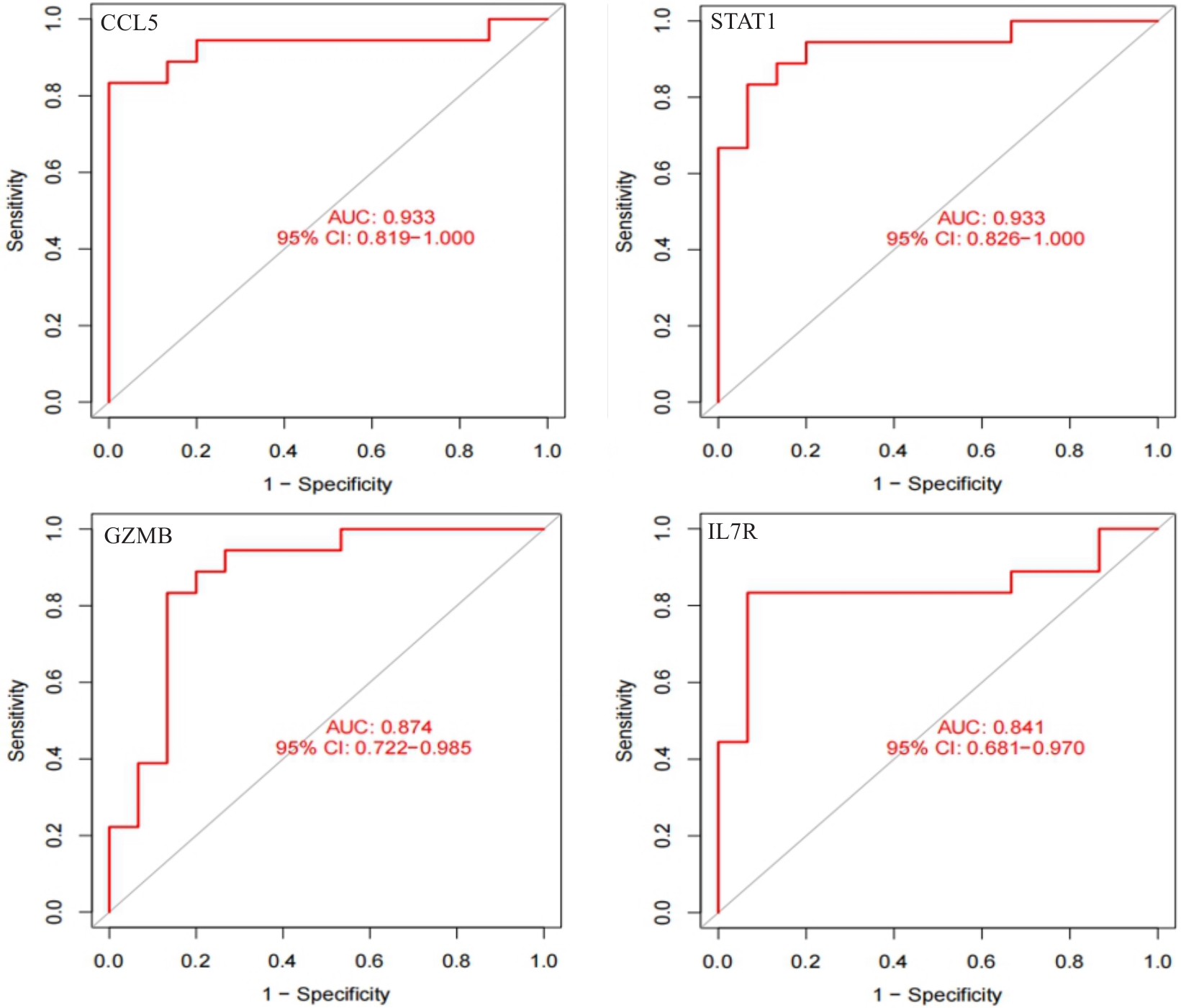
图3 CCL5、STAT1、GZMB和IL7R差异表达基因ROC分析
Fig.3 ROC analysis of the differentially expressed genes CCL5, STAT1, GZMB, and IL7R.
| Group | CCL5(%) | CCL5 B | STAT1(%) | STAT1 B |
|---|---|---|---|---|
| Control | 12±3.1 | 1 | 13±3.2 | 1 |
| Model | 50±2.5** | 3 | 49±2.5** | 3 |
| LGTDGP | 23±2.5## | 2 | 22±2.0## | 2 |
| XXW-H | 30±2.5## | 2 | 33±2.5## | 2 |
表4 CCL5、STAT1阳性细胞记数及免疫组化评分(5个视野)
Tab.4 Counts of CCL5- and STAT1-positive cells in rat ankle joint tissues and immunohistochemical scores (5 fields)
| Group | CCL5(%) | CCL5 B | STAT1(%) | STAT1 B |
|---|---|---|---|---|
| Control | 12±3.1 | 1 | 13±3.2 | 1 |
| Model | 50±2.5** | 3 | 49±2.5** | 3 |
| LGTDGP | 23±2.5## | 2 | 22±2.0## | 2 |
| XXW-H | 30±2.5## | 2 | 33±2.5## | 2 |
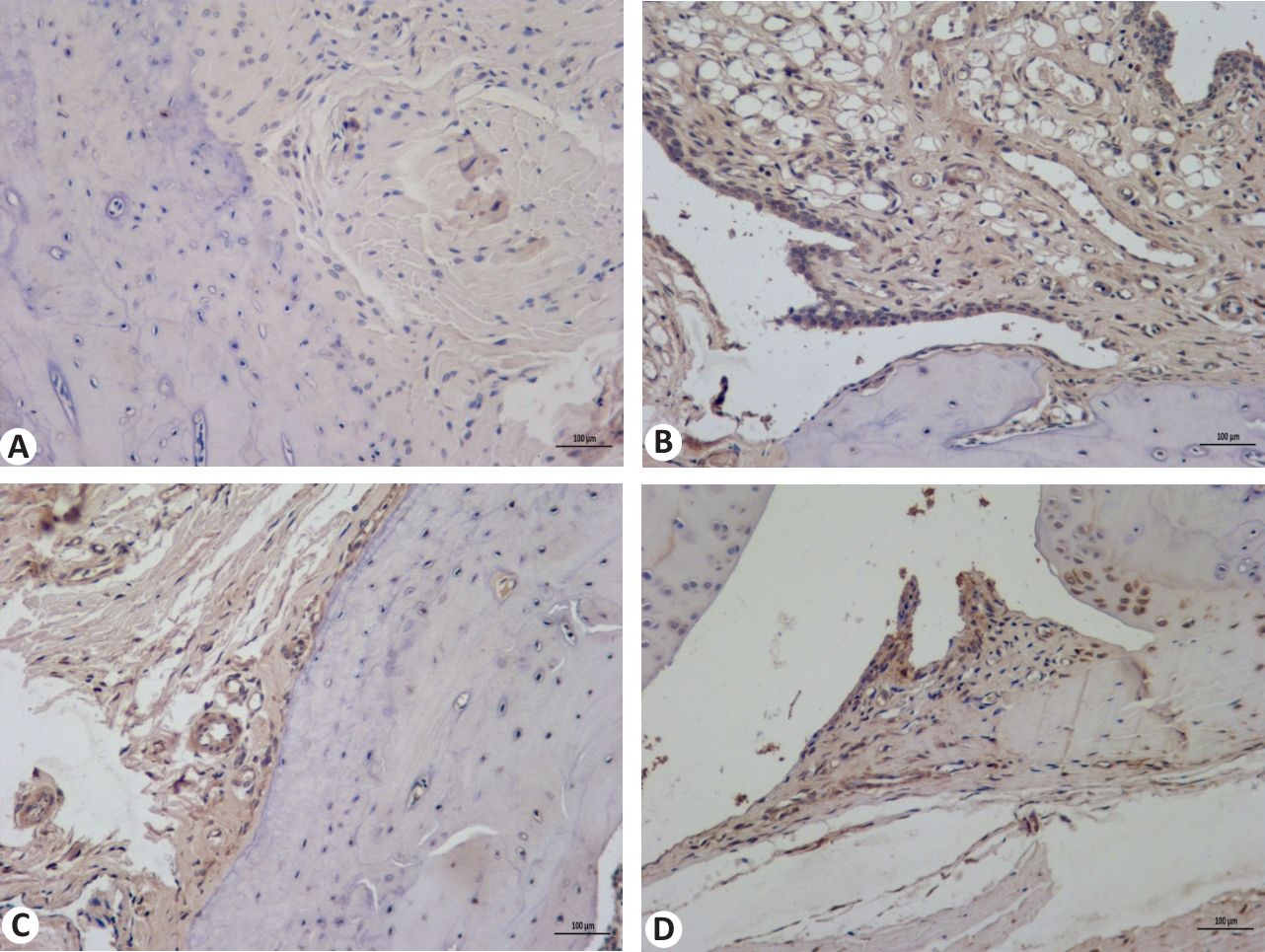
图4 各组大鼠踝关节中CCL5的表达
Fig.4 Expression of CCL5 in the ankle joints of the rats in each group (×200). A: Normal control group. B: Model group. C: Tripterygium glycosides tablet group. D: High-dose Xixian pill group.

图5 各组大鼠踝关节中STAT1的表达
Fig.5 Expression of STAT1 in the ankle joints of the rats in each group (×200). A: Normal control group. B: Model group. C: Tripterygium glycosides tablet group. D: High-dose Xixian pill group.
| Group | CCL5 (IOD) | CCL5(AOD) | STAT1 (IOD) | STAT1(AOD) |
|---|---|---|---|---|
| Control | 2804.89±222.73 | 0.22±0.02 | 2097.43±403.42 | 0.17±0.03 |
| Model | 13661.38±145.47** | 0.82±0.01** | 12904.86±720.16** | 0.78±0.05** |
| LGTDGP | 6487.84±228.86## | 0.42±0.01## | 6693.79±120.62## | 0.43±0.04## |
| XXW-H | 9687.52±253.10## | 0.60±0.02## | 9398.39±624.72## | 0.59±0.03## |
表5 CCL5、STAT1免疫荧光图像光密度分析(5个视野)
Tab.5 Optical density analysis of CCL5 and STAT1 on immunofluorescence staining images (5 fields)
| Group | CCL5 (IOD) | CCL5(AOD) | STAT1 (IOD) | STAT1(AOD) |
|---|---|---|---|---|
| Control | 2804.89±222.73 | 0.22±0.02 | 2097.43±403.42 | 0.17±0.03 |
| Model | 13661.38±145.47** | 0.82±0.01** | 12904.86±720.16** | 0.78±0.05** |
| LGTDGP | 6487.84±228.86## | 0.42±0.01## | 6693.79±120.62## | 0.43±0.04## |
| XXW-H | 9687.52±253.10## | 0.60±0.02## | 9398.39±624.72## | 0.59±0.03## |
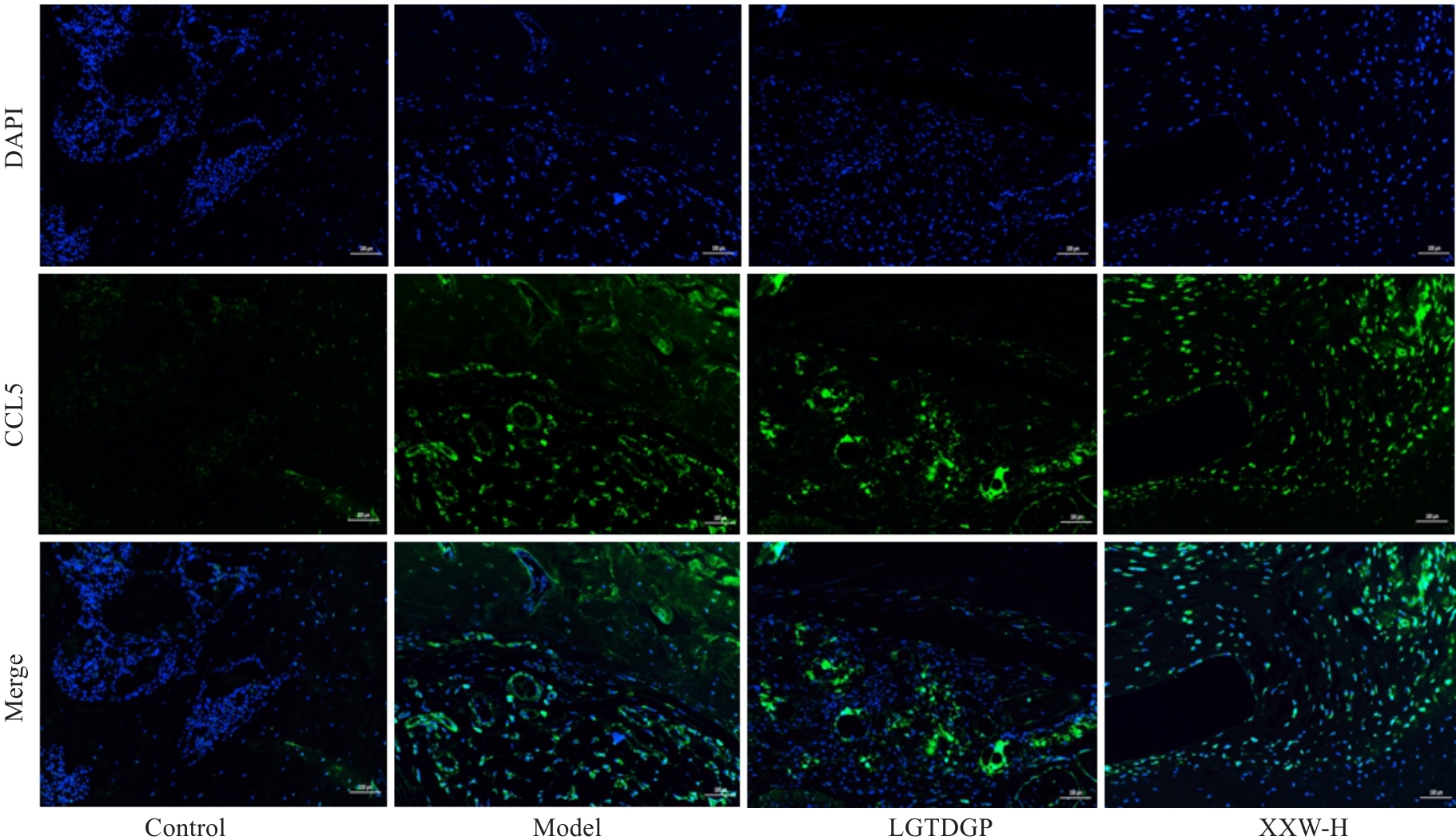
图6 免疫荧光检测大鼠踝关节组织中CCL5的表达
Fig.6 Immunofluorescence detection of CCL5 expression in rat ankle joint tissue (×200). Green fluorescence indicates CCL5, while blue fluorescence indicates the cell nucleus (Scale bar=50 μm).
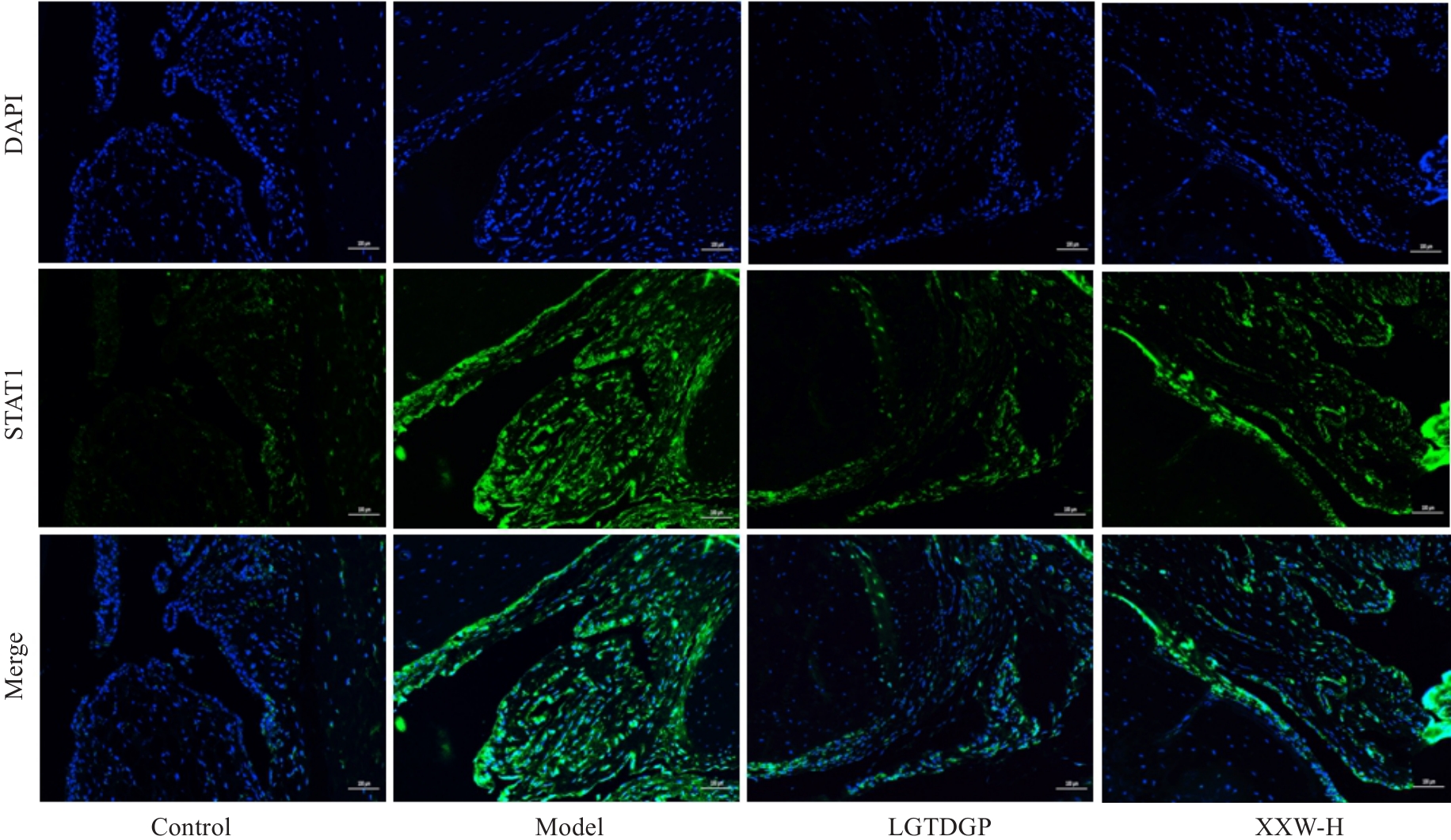
图7 免疫荧光检测大鼠踝关节组织中STAT1的表达
Fig.7 Immunofluorescence detection of STAT1 expression in rat ankle joint tissue (×200). Green fluorescence indicates STAT1, and blue fluorescence indicates the cell nucleus (Scale bar=50 μm).
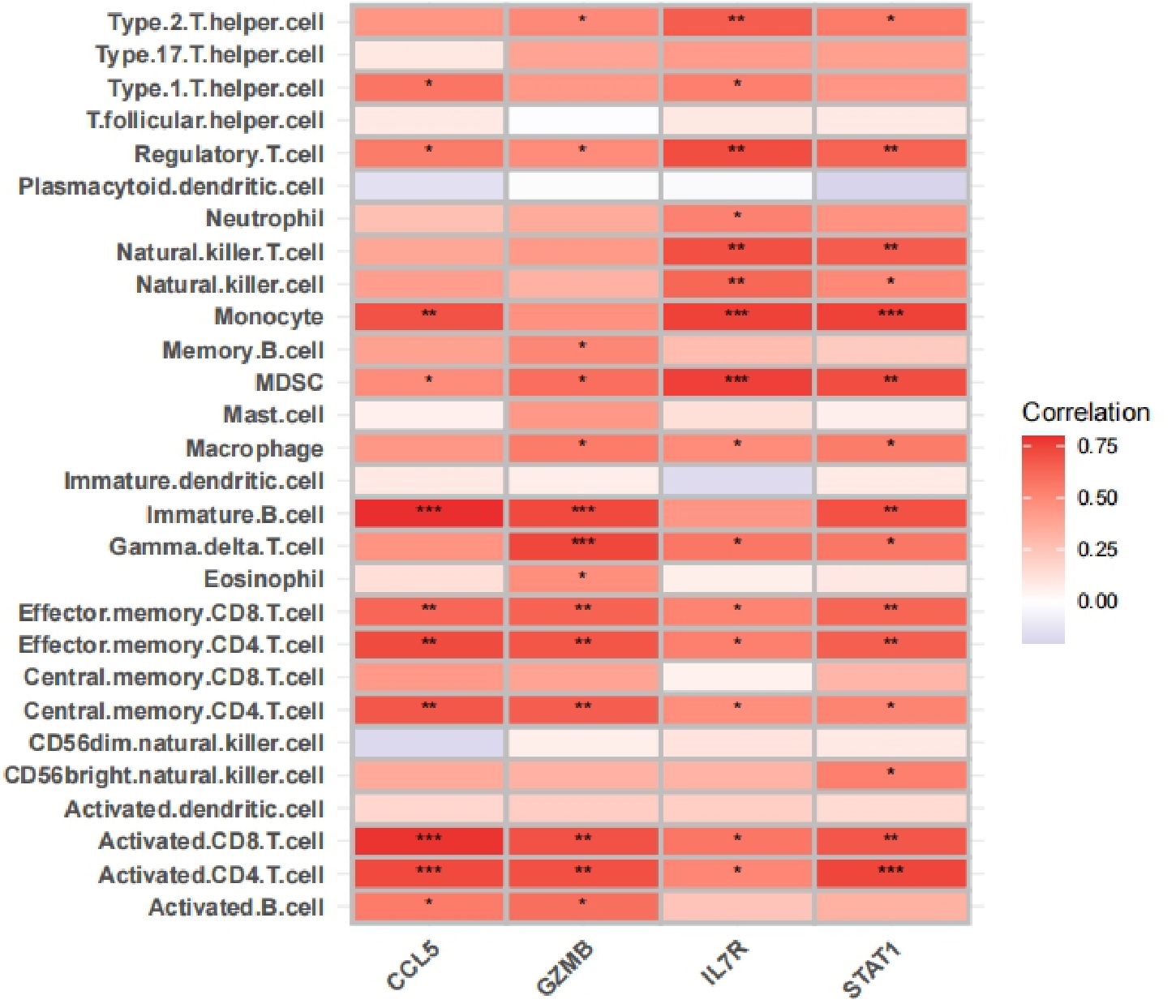
图8 核心靶点与免疫细胞浸润之间的关系
Fig.8 Relationship between the core targets and immune cell infiltration. *P<0.05, **P<0.01, ***P<0.001.
| [1] | Wang GY, Zhang SL, Wang XR, et al. Remission of rheumatoid arthritis and potential determinants: a national multi-center cross-sectional survey[J]. Clin Rheumatol, 2015, 34(2): 221-30. doi:10.1007/s10067-014-2828-3 |
| [2] | Jin SY, Li MT, Fang YF, et al. Chinese registry of rheumatoid arthritis (CREDIT): II.prevalence and risk factors of major comorbidities in Chinese patients with rheumatoid arthritis[J]. Arthritis Res Ther, 2017, 19(1): 251. doi:10.1186/s13075-017-1457-z |
| [3] | Safiri S, Kolahi AA, Hoy D, et al. Global, regional and national burden of rheumatoid arthritis 1990-2017: a systematic analysis of the Global Burden of Disease study 2017[J]. Ann Rheum Dis, 2019, 78(11): 1463-71. doi:10.1136/annrheumdis-2019-215920 |
| [4] | Rudan I, Sidhu S, Papana A, et al. Prevalence of rheumatoid arthritis in low- and middle-income countries: a systematic review and analysis[J]. J Glob Health, 2015, 5(1): 010409. |
| [5] | Tsai SW, Hsieh MC, Li S, et al. Therapeutic potential of sclareol in experimental models of rheumatoid arthritis[J]. Int J Mol Sci, 2018, 19(5): E1351. doi:10.3390/ijms19051351 |
| [6] | Liu XY, Dawson SL, et al. Isobaric tagging and data independent acquisition as complementary strategies for proteome profiling on an orbitrap astral mass spectrometer[J]. J Proteome Res, 2025, 24(3): 1414-24. doi:10.1021/acs.jproteome.4c01107 |
| [7] | Burton NR, Backus KM. Functionalizing tandem mass tags for streamlining click-based quantitative chemoproteomics[J]. Commun Chem, 2024, 7(1): 80. doi:10.1038/s42004-024-01162-x |
| [8] | Huang LX, Liang L, Ji ZY, et al. Proteomics profiling of CD4+T-cell-derived exosomes from patients with rheumatoid arthritis[J]. Int Immunopharmacol, 2023, 122: 110560. doi:10.1016/j.intimp.2023.110560 |
| [9] | Wang Q, Liang YY, Li KW, et al. Herba Siegesbeckiae: a review on its traditional uses, chemical constituents, pharmacological activities and clinical studies[J]. J Ethnopharmacol, 2021, 275: 114117. doi:10.1016/j.jep.2021.114117 |
| [10] | 胡慧华. 豨莶丸的配方优化及对实验性膝骨关节炎的药效及作用机理探讨[D]. 北京: 北京中医药大学, 2005. |
| [11] | 向 珊, 张宗星, 江 露, 等. 三百棒通过调控PI3K/Akt信号通路改善胶原诱导性类风湿性关节炎大鼠的血管翳[J].南方医科大学学报,2024, 44(8): 1582-8. |
| [12] | 夏俊锋, 杨全伟, 刘新国, 等. 豨莶草对大鼠佐剂型关节炎的治疗作用及机制研究[J]. 中国药师, 2021, 24(2): 242-6. |
| [13] | Xiao B, Li J, Qiao Z, et al. Therapeutic effects of Siegesbeckia orientalis L. and its active compound luteolin in rheumatoid arthritis: network pharmacology, molecular docking and experim-ental validation[J]. J Ethnopharmacol, 2023, 317: 116852. doi:10.1016/j.jep.2023.116852 |
| [14] | 郑梓桐, 王美娟, 冯育林, 等. 基于蛋白质组学筛选关节炎相关生物标志物的研究进展[J]. 中草药, 2024, 55(18): 6383-92. |
| [15] | Hsiao Y, Zhang HJ, Li GX, et al. Analysis and visualization of quantitative proteomics data using FragPipe-analyst[J]. J Proteome Res, 2024, 23(10): 4303-15. doi:10.1021/acs.jproteome.4c00294 |
| [16] | Hou YW, Yang ZC, Ma JS, et al. Identification of PTPRC as a potential serum biomarker in rheumatoid arthritis using bioinfo-rmatics analysis and molecular docking[J]. Int Immunopharmacol, 2025, 152: 114393. doi:10.1016/j.intimp.2025.114393 |
| [17] | Hu HH, Tang LX, Li XM. Experimental research of effect of crude and processed Herba Siegesbeckiae on anti-inflammation and anti-rheumatism[J]. Zhongguo Zhong Yao Za Zhi, 2004, 29(6): 542-5. |
| [18] | Wang J, Cai Y, Wu Y. Antiinflammatory and analgesic activity of topical administration of Siegesbeckia pubescens [J]. Pak J Pharm Sci, 2008, 21(2): 89-91. |
| [19] | Liu JH, Qu B, Wang S, et al. Fengshi gutong capsules attenuates CIA-induced RA bone destruction in rats by targeting TNF‑α inhibition: Integration and experimental validation of network pharmacology and proteomics[J]. J Ethnopharmacol, 2025, 344: 119535. doi:10.1016/j.jep.2025.119535 |
| [20] | Suda Y, Ikuta K, Hayashi S, et al. Comparison of anti-inflammatory and anti-angiogenic effects of JAK inhibitors in IL-6 and TNF-α-stimulated fibroblast-like synoviocytes derived from patients with RA[J]. Sci Rep, 2025, 15(1): 9736. doi:10.1038/s41598-025-94894-2 |
| [21] | Peilin Z, Wenqiang W, Yongzhen L, et al. Inflammatory cytokines, metabolites, and rheumatoid arthritis[J]. Postgrad Med J, 2025, 101(1194): 313-20. doi:10.1093/postmj/qgae146 |
| [22] | Liu Y, Li L, Sun Y, et al. Dictamnus dasycarpus Turcz. Attenuates collagen-induced rheumatoid arthritis in DBA/1J mice through inhibiting IL-17 signaling pathway[J]. J Ethnopharmacol, 2025, 343: 119458. doi:10.1016/j.jep.2025.119458 |
| [23] | Hinrichs AC, Blokland SLM, Kruize AA, et al. CCL5 release by CCR9+ CD8 T cells: a potential contributor to immunopathology of primary sjögren's syndrome[J]. Front Immunol, 2022, 13: 887972. doi:10.3389/fimmu.2022.887972 |
| [24] | Alturaiki W, Alhamad A, Alturaiqy M, et al. Assessment of IL-1β, IL-6, TNF-α, IL-8, and CCL 5 levels in newly diagnosed Saudi patients with rheumatoid arthritis[J]. Int J Rheum Dis, 2022, 25(9): 1013-9. doi:10.1111/1756-185x.14373 |
| [25] | Liang Q, He L, Wang JW, et al. Targeting IL-17 and its receptors: a feasible way for natural herbal medicines to modulate fibroblast-like synoviocytes in rheumatoid arthritis[J]. Biochem Pharmacol, 2024, 230: 116598. doi:10.1016/j.bcp.2024.116598 |
| [26] | Cacciapaglia F, Perniola S, Stano S, et al. Modulation of IL-6 receptor/STAT3 downstream signaling in rheumatoid arthritis patients[J]. Exp Mol Pathol, 2025, 141: 104951. doi:10.1016/j.yexmp.2024.104951 |
| [27] | Aubert A, Liu A, Kao M, et al. Granzyme B cleaves tenascin-C to release its C-terminal domain in rheumatoid arthritis[J]. JCI Insight, 2024, 9(23): e181935. doi:10.1172/jci.insight.181935 |
| [28] | Zhang Y, Cai X, Wang B, et al. Exploring the molecular mechanisms of the involvement of GZMB-Caspase-3-GSDME pathway in the progression of rheumatoid arthritis[J]. Mol Immunol, 2023, 161: 82-90. doi:10.1016/j.molimm.2023.07.013 |
| [29] | Jonsson AH, Zhang F, Dunlap G, et al. Granzyme K+ CD8 T cells form a core population in inflamed human tissue[J]. Sci Transl Med, 2022, 14(649): eabo0686. doi:10.1126/scitranslmed.abo0686 |
| [30] | Durham LE, Humby FC, Ng N, et al. Substantive similarities between synovial fluid and synovial tissue T cells in inflammatory arthritis via single-cell RNA and T cell receptor sequencing[J]. Arthritis Rheumatol, 2024, 76(11): 1594-601. doi:10.1002/art.42949 |
| [1] | 李玮怡, 江露, 张宗星, 陈丹, 包卓玛, 黄丽, 袁林. 强骨康疏方通过抑制HIF-1α/BNIP3自噬信号通路减少类风湿性关节炎大鼠的破骨细胞分化[J]. 南方医科大学学报, 2025, 45(7): 1389-1396. |
| [2] | 赵华轩, 张桂潮, 刘家荣, 莫富添, 李韬恩, 类成勇, 吕世栋. 肾透明细胞癌患者的免疫细胞浸润特征与临床病理参数具有相关性[J]. 南方医科大学学报, 2025, 45(6): 1280-1288. |
| [3] | 高志, 吴傲, 胡仲翔, 孙培养. 类风湿性关节炎中氧化应激与免疫浸润的生物信息学分析[J]. 南方医科大学学报, 2025, 45(4): 862-870. |
| [4] | 曹周芳, 汪元, 王梦娜, 孙玥, 刘菲菲. LINC00837/miR-671-5p/SERPINE2功能轴促进类风湿关节炎成纤维细胞样滑膜细胞的恶性病理学过程[J]. 南方医科大学学报, 2025, 45(2): 371-378. |
| [5] | 徐买元, 李妮, 李嘉懿, 张涛, 马俐文, 林涛, 余浩楠, 吴宁, 吴遵秋, 黄丽. 葛根素通过调控TAK1介导的TLR4/NF-κB信号通路减轻大鼠类风湿关节炎症状[J]. 南方医科大学学报, 2025, 45(10): 2231-2239. |
| [6] | 展俊平, 黄硕, 孟庆良, 范围, 谷慧敏, 崔家康, 王慧莲. 缺氧微环境下补阳还五汤通过抑制BNIP3-PI3K/Akt通路抑制类风湿关节炎滑膜成纤维细胞的线粒体自噬[J]. 南方医科大学学报, 2025, 45(1): 35-42. |
| [7] | 杨锐, 舒翊秦, 文晖杰, 蔡熹, 王震, 张棽, 向阳, 吴昊. 枫杨总黄酮通过抑制中性粒细胞胞外陷阱网的释放减轻大鼠类风湿关节炎[J]. 南方医科大学学报, 2024, 44(9): 1645-1652. |
| [8] | 陈莉莉, 吴天宇, 张铭, 丁子夏, 张妍, 杨依清, 郑佳倩, 张小楠. 类风湿关节炎的潜在生物标志物及其免疫调控机制:基于GEO数据库[J]. 南方医科大学学报, 2024, 44(6): 1098-1108. |
| [9] | 左志威, 孟庆良, 崔家康, 郭克磊, 卞华. 基于硬皮病线粒体相关基因的人工神经网络模型的构建[J]. 南方医科大学学报, 2024, 44(5): 920-929. |
| [10] | 王帆帆, 刘 健, 方妍妍, 文建庭, 贺明玉, 韩 琦, 李 旭. 中医药治疗可降低类风湿关节炎合并血小板升高患者再入院的风险:一项匹配队列研究[J]. 南方医科大学学报, 2023, 43(9): 1548-1557. |
| [11] | 宗世烨, 周 静, 蔡伟伟, 余 芸, 王 颖, 宋宜宁, 程静文, 李宇会, 高 艺, 吴百海, 咸 郝, 魏 芳. 小檗碱抑制类风湿关节炎患者的成纤维样滑膜细胞的自噬并促进其凋亡:基于下调ROS/mTOR信号通路[J]. 南方医科大学学报, 2023, 43(4): 552-559. |
| [12] | 刘天阳, 周学平, 黄传兵, 周玲玲, 谌 曦, 万 磊, 纵瑞凯, 范海霞, 孙 玥, 俞志超, 汤忠富, 徐耿瑞, 周子译. 清络通痹方调控类风湿关节炎“免疫-骨侵蚀”的机制[J]. 南方医科大学学报, 2023, 43(10): 1706-1714. |
| [13] | 唐 娟, 陈 娟, 林国新, 张 浩, 桂 明, 李楠楠, 谷依红, 罗林娟, 孙 剑. 中性粒细胞/淋巴细胞、血小板/淋巴细胞比值是评价托法替尼治疗后类风湿关节炎活动性的有效指标[J]. 南方医科大学学报, 2023, 43(10): 1651-1656. |
| [14] | 周思聪, 杨 威, 曾 丽, 曹春浩, 袁 速, 荣晓凤. 大黄素对胶原诱导性关节炎大鼠的骨保护作用:基于抑制铁死亡和降解基质金属蛋白酶[J]. 南方医科大学学报, 2023, 43(10): 1776-1781. |
| [15] | 曹春浩, 曾 丽, 荣晓凤. 大黄素治疗类风湿关节炎的作用机制:基于网络药理学方法[J]. 南方医科大学学报, 2022, 42(6): 913-921. |
| 阅读次数 | ||||||
|
全文 |
|
|||||
|
摘要 |
|
|||||
