
南方医科大学学报 ›› 2026, Vol. 46 ›› Issue (9): 2196-2205.doi: 10.12122/j.issn.1673-4254.2026.09.18
• • 上一篇
张可妮1( ), 张龙涛1, 章雨1, 黄菊2, 李晴晴1, 耿志军2, 胡建国1,2, 李静1,2()
收稿日期:2026-01-22
出版日期:2026-09-20
发布日期:2026-09-30
通讯作者:
李静
E-mail:kenizhang0906@163.com;lijingbyfy@bbmu.edu.cn
作者简介:张可妮,在读硕士研究生,E-mail: kenizhang0906@163.com
基金资助:
Keni ZHANG1(), Longtao ZHANG1, Yu ZHANG1, Ju HUANG2, Qingqing LI1, Zhijun GENG2, Jianguo HU1,2, Jing LI1,2()
Received:2026-01-22
Online:2026-09-20
Published:2026-09-30
Contact:
Jing LI
E-mail:kenizhang0906@163.com;lijingbyfy@bbmu.edu.cn
摘要:
目的 探讨咖啡酸乙酯(EC)调控肠屏障对葡聚糖硫酸钠(DSS)诱导小鼠结肠炎的作用和机制。 方法 将40只SPF级C57BL/6雄性小鼠随机分为对照组、DSS模型组(DSS)及3个不同剂量的EC干预组(5、10、20 mg/kg),共5组,8只/组。通过自由饮用2.5% DSS构建结肠炎模型,造模同时每日灌胃给予相应剂量EC,持续干预7 d。通过体质量变化、疾病活动指数(DAI)、结肠长度及组织病理学评分结果,系统评估结肠炎表型;免疫荧光检测紧密连接蛋白ZO-1、Claudin-1的表达与定位;AB-PAS染色评估杯状细胞数量;ELISA、RT-qPCR及免疫组化检测炎症水平;采用网络药理学预测EC调控的关键信号通路并采用Western blotting和信号通路抑制剂分析其作用机制。 结果 EC(10 mg/kg)可显著缓解DSS诱导的结肠炎症状:与DSS组相比,EC组体质量下降减少,DAI评分降低,结肠长度恢复,结肠组织病理损伤减轻(均P<0.05)。进一步检测发现EC显著下调肠黏膜组织中炎症因子TNF-α、IL-6的mRNA及蛋白表达,降低肠黏膜MPO阳性水平(P<0.05);EC对DSS诱导肠屏障损伤亦有显著的改善作用,不仅可恢复杯状细胞数量,还可上调紧密连接蛋白ZO-1/Claudin-1的表达并恢复其细胞膜定位(P<0.05)。网络药理学筛选出350个EC与炎症性肠病(IBD)的交集基因,KEGG富集分析发现Wnt/β-catenin及紧密连接为EC的核心作用通路。Western blotting检测结果显示,EC可激活DSS诱导的肠上皮细胞中Wnt/β-catenin通路,上调WNT3A及β-catenin表达(P<0.05);采用Wnt通路抑制剂IWR-1干预可阻断EC对紧密连接蛋白及Wnt/β-catenin通路的上调和激活作用。 结论 咖啡酸乙酯通过激活Wnt/β-catenin信号通路,促进肠上皮紧密连接蛋白的表达,改善肠黏膜屏障功能并缓解DSS诱导的小鼠结肠炎,为炎症性肠病的天然化合物干预提供新的候选药物及作用靶点。
张可妮, 张龙涛, 章雨, 黄菊, 李晴晴, 耿志军, 胡建国, 李静. 咖啡酸乙酯通过激活Wnt/β-Catenin通路恢复肠上皮紧密连接缓解小鼠结肠炎[J]. 南方医科大学学报, 2026, 46(9): 2196-2205.
Keni ZHANG, Longtao ZHANG, Yu ZHANG, Ju HUANG, Qingqing LI, Zhijun GENG, Jianguo HU, Jing LI. Ethyl caffeate alleviates dextran sulfate sodium-induced colitis in mice by restoring intestinal epithelial tight junctions via activating the Wnt/β-Catenin pathway[J]. Journal of Southern Medical University, 2026, 46(9): 2196-2205.
| Gene name | Gene ID | Primer sequences (5'-3') |
|---|---|---|
| IL-6 | 16193 | F:TCTATACCACTTCACAAGTCGGA |
| R:GAATTGCCATTGCACAACTCTTT | ||
| TNF-α | 21926 | F:CAGGCGGTGCCTATGTCTC |
| R:CGATCACCCCGAAGTTCAGTAG | ||
| ZO-1 | 21872 | F: TTCACAGAGCAGCGACAACT |
| R: TCTGCTGGAGTAGGCTACGA | ||
| Claudin-1 | 100771737 | F: AAAGCACCGGGCAGATACAA |
| R: TCATGCCAATGGTGGACACA | ||
| GAPDH | 14433 | F:TGGCCTTCCGTGTTCCTAC |
| R:GAGTTGCTGTTGAAGTCGCA |
表1 引物序列
Tab.1 Primer sequences for RT-qPCR
| Gene name | Gene ID | Primer sequences (5'-3') |
|---|---|---|
| IL-6 | 16193 | F:TCTATACCACTTCACAAGTCGGA |
| R:GAATTGCCATTGCACAACTCTTT | ||
| TNF-α | 21926 | F:CAGGCGGTGCCTATGTCTC |
| R:CGATCACCCCGAAGTTCAGTAG | ||
| ZO-1 | 21872 | F: TTCACAGAGCAGCGACAACT |
| R: TCTGCTGGAGTAGGCTACGA | ||
| Claudin-1 | 100771737 | F: AAAGCACCGGGCAGATACAA |
| R: TCATGCCAATGGTGGACACA | ||
| GAPDH | 14433 | F:TGGCCTTCCGTGTTCCTAC |
| R:GAGTTGCTGTTGAAGTCGCA |
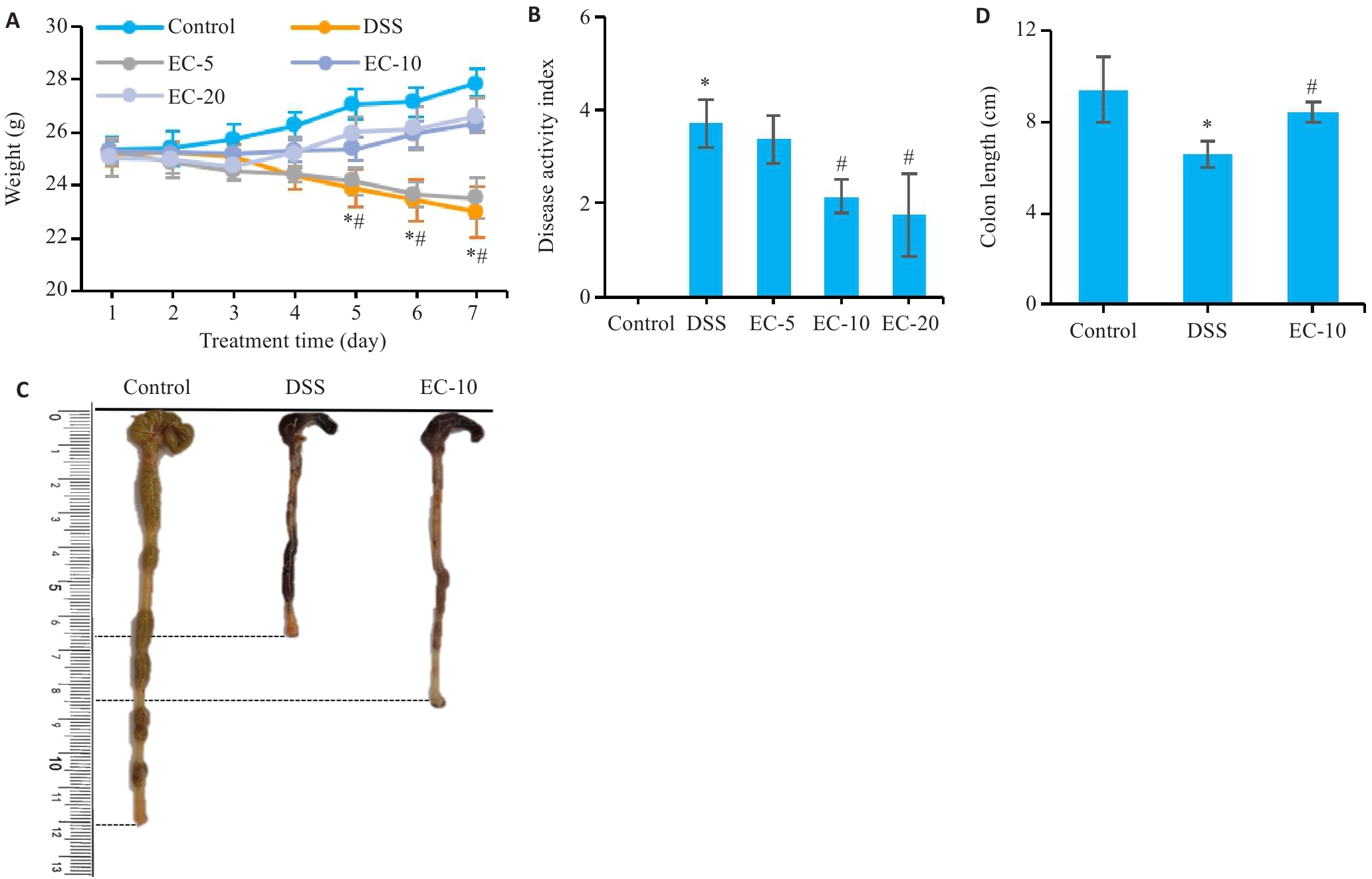
图1 EC干预可减轻DSS诱导的小鼠结肠炎症状
Fig.1 Ethyl caffeate (EC) alleviates dextran sulfate sodium (DSS)-induced colitis symptoms in mice. A: Body weight alterations in mice from the Control, DSS model, EC-5 mg/kg, EC-10 mg/kg, and EC-20 mg/kg groups. B: Disease activity index (DAI) scores of the 5 groups. C: Representative colonic images of the mice. D: Mouse colon length measurements (cm). *P<0.05 vs Control; #P<0.05 vs DSS.
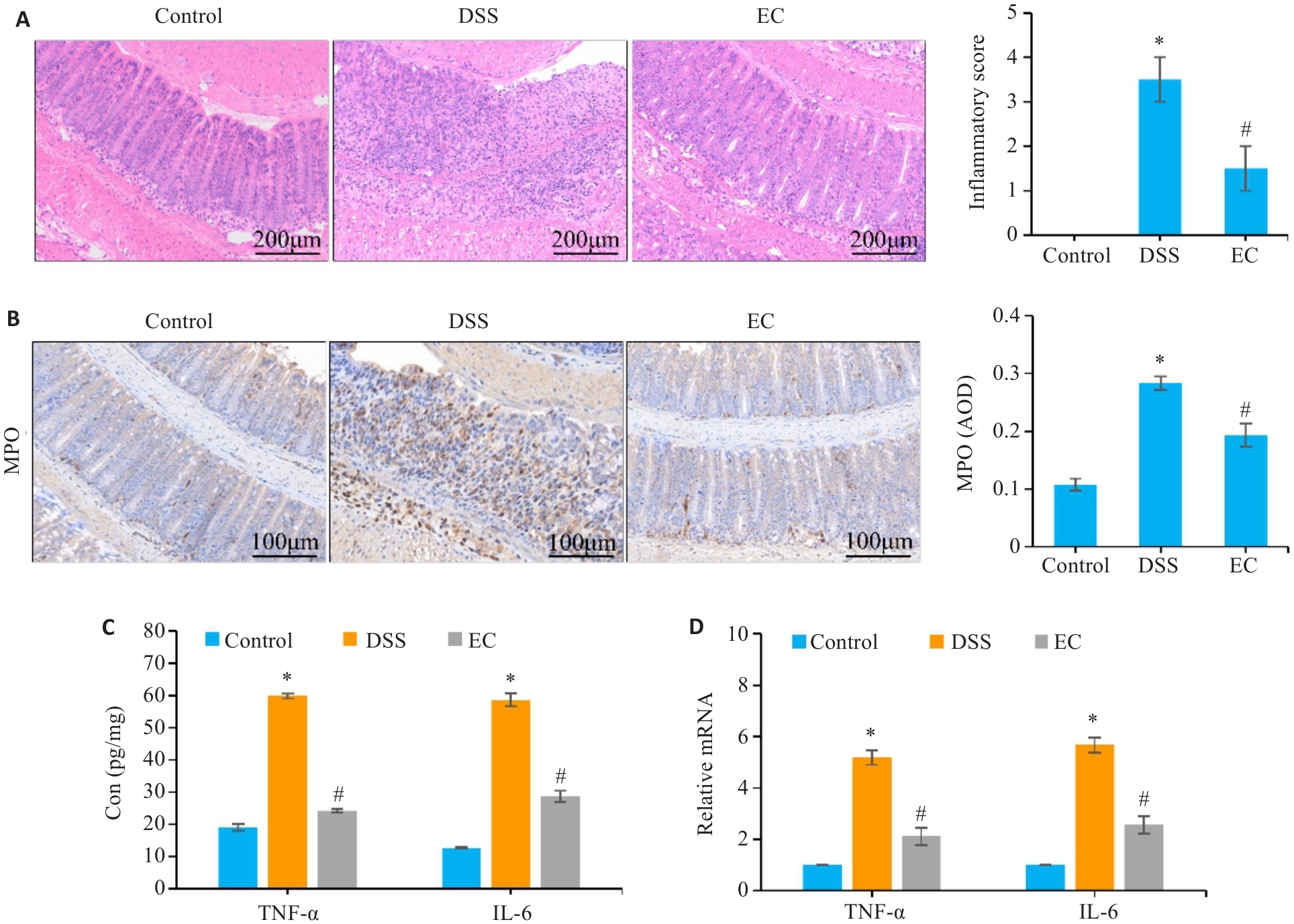
图2 EC减轻结肠组织病理损伤并抑制炎症水平
Fig.2 EC attenuates colonic pathology and inflammation in mice with DSS-induced colitis. A: Histological analysis and inflammation scoring of mouse colons using HE staining. B: MPO immunohistochemistry and the average optical density (AOD) in the 3 groups. C: TNF‑α and IL‑6 protein concentrations in colonic mucosa quantified using ELISA. D: Relative mRNA expression of TNF‑α and IL‑6 in colonic mucosa measured by RT‑qPCR. *P<0.05 vs Control; #P<0.05 vs DSS.
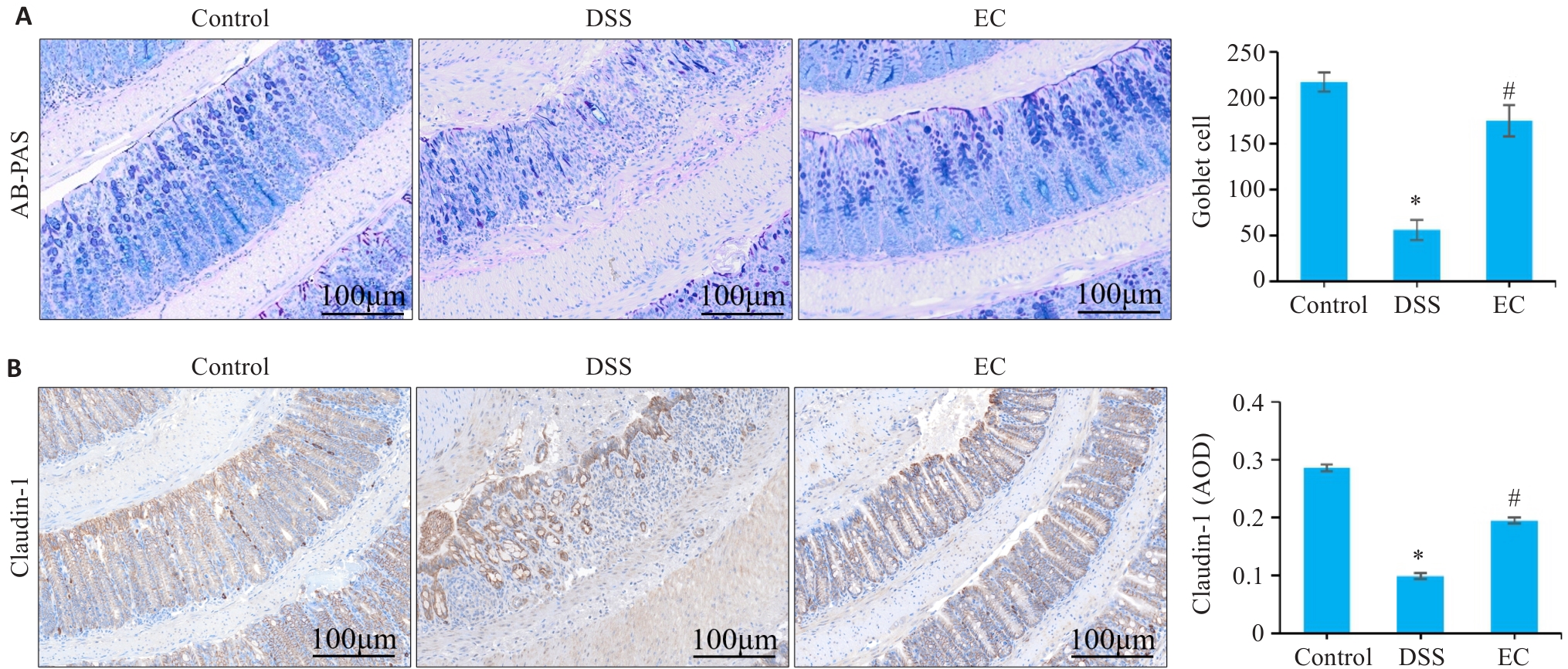
图3 EC改善DSS诱导小鼠肠屏障损伤
Fig.3 EC improves DSS-induced intestinal barrier dysfunction. A: AB-PAS staining of mouse colon and goblet cell counts. B: Claudin-1 expression (immunohistochemical staining) and the average optical density (AOD). *P<0.05 vs Control; #P<0.05 vs DSS.
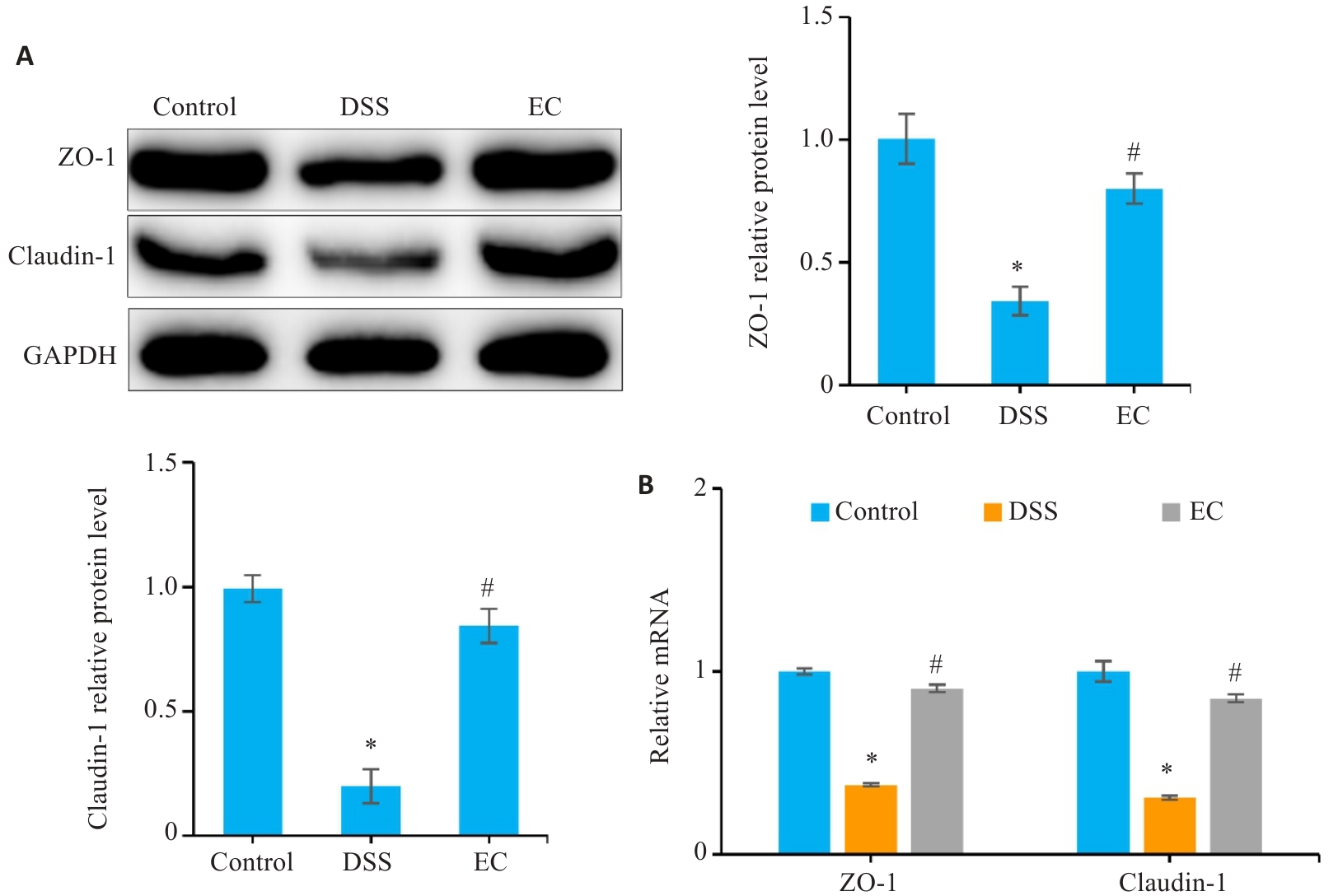
图4 EC上调肠黏膜紧密连接分子表达
Fig.4 EC upregulates expression of intestinal mucosal tight junction proteins. A: Western blotting of ZO-1 and claudin-1 expression in colonic mucosal tissues. B: Relative mRNA expression levels of ZO-1 and claudin-1 in colonic mucosa determined by RT-qPCR. *P<0.05 vs Control; #P<0.05 vs DSS.
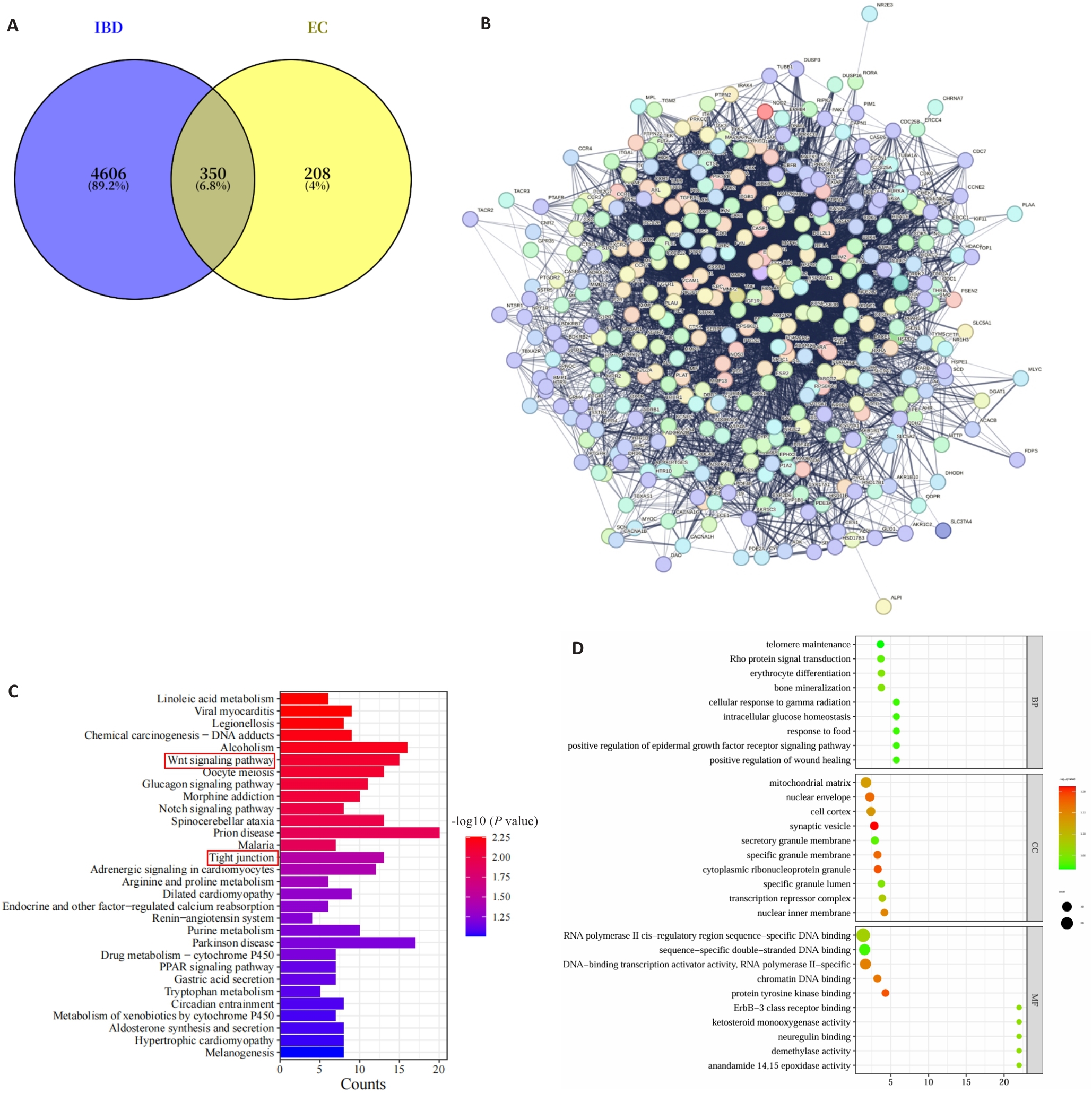
图5 网络药理学筛选
Fig.5 Network pharmacology of EC. A: Venn map. B: PPI network C: KEGG pathway enrichment. D: GO functional annotation (BP, CC, MF).
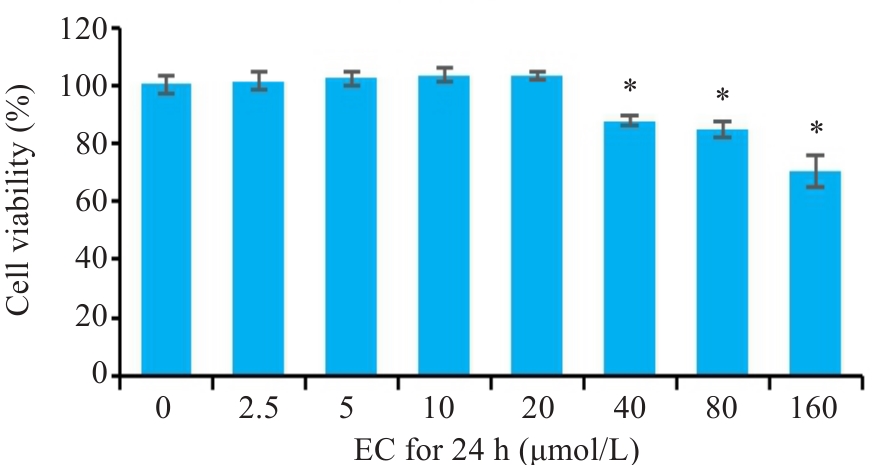
图6 EC对Caco-2细胞无明显毒性
Fig.6 EC exhibits no obvious cytotoxicity in Caco-2 cells. *P<0.05 vs EC=0 μmol/L.
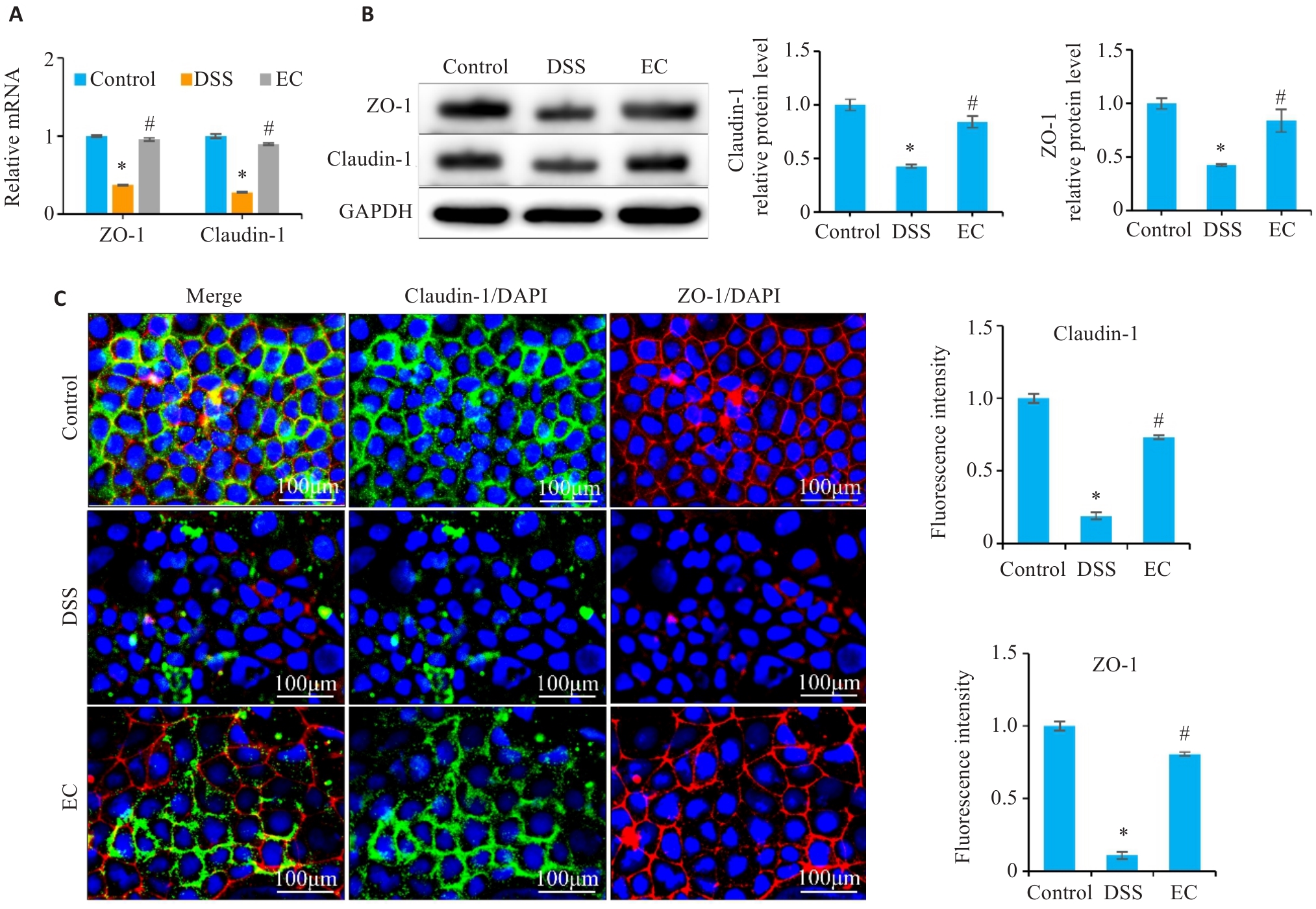
图7 EC改善DSS诱导的Caco-2细胞屏障结构紊乱
Fig.7 EC improves DSS-induced barrier structure disorder in Caco-2 cells. A: Relative mRNA expression levels of ZO-1 and claudin-1 in Caco-2 cells detected by RT-qPCR. B: Western blotting of ZO-1 and claudin-1 protein expressions in Caco-2 cells. C: Immunofluorescence staining of ZO-1 (red) and claudin-1 (green) localization and fluorescence intensity in Caco-2 cells. *P<0.05 vs Control; #P<0.05 vs DSS.
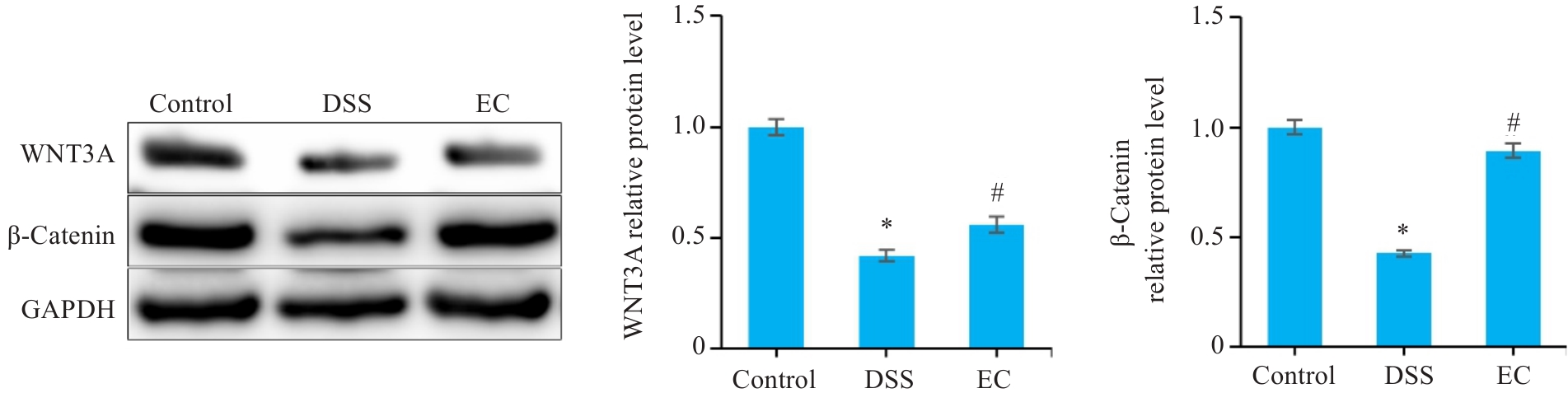
图8 EC可激活Wnt/β-catenin通路
Fig.8 EC activates the Wnt/β-catenin signaling pathway in DSS-induced Caco-2 cells. *P<0.05 vs Control; #P<0.05 vs DSS.
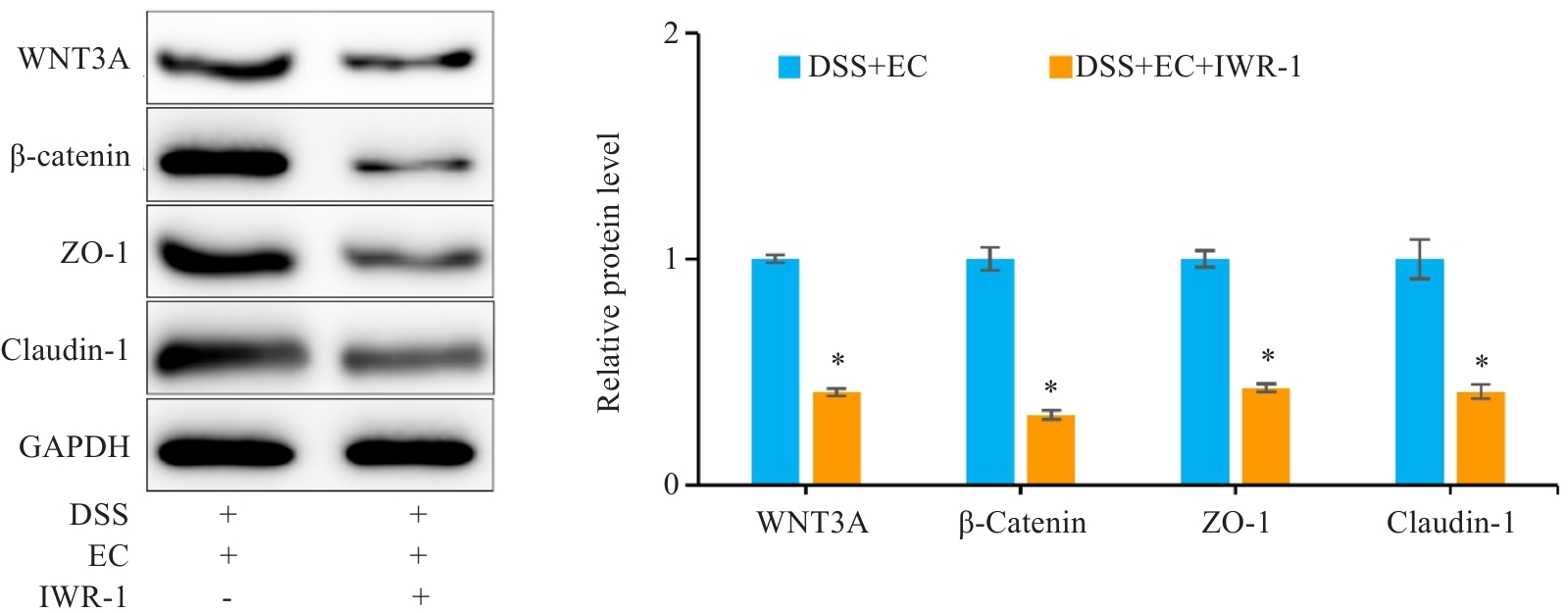
图9 EC修复肠上皮屏障的效应依赖Wnt/β-catenin通路
Fig.9 EC depend on the Wnt/β-catenin pathway to promote repair of intestinal epithelial barrier function. *P<0.05 vs DSS+EC.
| [1] | Kaplan GG. The global burden of IBD: from 2015 to 2025[J]. Nat Rev Gastroenterol Hepatol, 2015, 12(12): 720-7. doi:10.1038/nrgastro.2015.150 |
| [2] | Xavier RJ, Podolsky DK. Unravelling the pathogenesis of inflammatory bowel disease[J]. Nature, 2007, 448(7152): 427-34. doi:10.1038/nature06005 |
| [3] | McLemore LJ. Inflammatory bowel disease[J]. Radiol Technol, 2007, 78(4): 291-305;quiz306-8. |
| [4] | Sairenji T, Collins KL, Evans DV. An update on inflammatory bowel disease[J]. Prim Care Clin Off Pract, 2017, 44(4): 673-92. doi:10.1016/j.pop.2017.07.010 |
| [5] | Geremia A, Biancheri P, Allan P, et al. Innate and adaptive immunity in inflammatory bowel disease[J]. Autoimmun Rev, 2014, 13(1): 3-10. doi:10.1016/j.autrev.2013.06.004 |
| [6] | Graham DB, Xavier RJ. Pathway paradigms revealed from the genetics of inflammatory bowel disease[J]. Nature, 2020, 578(7796): 527-39. doi:10.1038/s41586-020-2025-2 |
| [7] | Söderholm JD, Olaison G, Peterson KH, et al. Augmented increase in tight junction permeability by luminal stimuli in the non-inflamed ileum of Crohn's disease[J]. Gut, 2002, 50(3): 307-13. doi:10.1136/gut.50.3.307 |
| [8] | Martel J, Chang SH, Ko YF, et al. Gut barrier disruption and chronic disease[J]. Trends Endocrinol Metab, 2022, 33(4): 247-65. doi:10.1016/j.tem.2022.01.002 |
| [9] | Li LL, Cheng R, Wu YS, et al. Diagnosis and management of inflammatory bowel disease[J]. J Evid Based Med, 2024, 17(2): 409-33. doi:10.1111/jebm.12626 |
| [10] | Peng X, Zhong R, Dong S, et al. 18β‑Glycyrrhetinic acid from Glycyrrhiza Uralensis protects colonic epithelium in ulcerative colitis by activating Wnt/β-catenin pathway to restore tight junction[J]. Phytomedicine, 2025, 143: 156830. doi:10.1016/j.phymed.2025.156830 |
| [11] | Degirmenci B, Valenta T, Dimitrieva S, et al. GLI1-expressing mesenchymal cells form the essential Wnt-secreting niche for colon stem cells[J]. Nature, 2018, 558(7710): 449-53. doi:10.1038/s41586-018-0190-3 |
| [12] | Kuo WT, Zuo L, Odenwald MA, et al. The tight junction protein ZO-1 is dispensable for barrier function but critical for effective mucosal repair[J]. Gastroenterology, 2021, 161(6): 1924-39. doi:10.1053/j.gastro.2021.08.047 |
| [13] | Chen C, Lin XH, Xie YM, et al. Shengjiang Xiexin Decoction ameliorates DSS-induced ulcerative colitis via activating Wnt/ β‑catenin signaling to enhance epithelium renovation and modulating intestinal flora[J]. Phytomedicine, 2025, 139: 156456. doi:10.1016/j.phymed.2025.156456 |
| [14] | Zheng MY, Han R, Yuan YL, et al. The role of Akkermansia muciniphila in inflammatory bowel disease: Current knowledge and perspectives[J]. Front Immunol, 2023, 13: 1089600. doi:10.3389/fimmu.2022.1089600 |
| [15] | 高中良, 张丽英, 李梦青, 等. 牵牛子中咖啡酸和咖啡酸乙酯的提取研究[J]. 安徽农业科学, 2009, 37(7): 3049-50. doi:10.3969/j.issn.0517-6611.2009.07.088 |
| [16] | Chiang YM, Chuang DY, Wang SY, et al. Metabolite profiling and chemopreventive bioactivity of plant extracts from Bidens pilosa [J]. J Ethnopharmacol, 2004, 95(2/3): 409-19. doi:10.1016/j.jep.2004.08.010 |
| [17] | Chiang YM, Lo CP, Chen YP, et al. Ethyl caffeate suppresses NF-κB activation and its downstream inflammatory mediators, iNOS, COX-2, and PGE2in vitro or in mouse skin[J]. Br J Pharmacol, 2005, 146(3): 352-63. doi:10.1038/sj.bjp.0706343 |
| [18] | 廖余琼, 张 妮, 刘翰飞, 等. 黔产硬毛夏枯草中1个新的松香烷型二萜化合物及其抗神经炎活性研究[J]. 中草药, 2025, 56(16): 5723-30. |
| [19] | Widodo A, Huang HT, Dewi NR, et al. Ethyl caffeate modulates systemic and mucosal immune responses, growth performance, and disease resistance against Vibrio parahaemolyticus in hybrid grouper (Epinephelus fuscoguttatus ♀ × E. lanceolatus ♂)[J]. Fish Shellfish Immunol, 2025, 158: 110163. doi:10.1016/j.fsi.2025.110163 |
| [20] | Nguyen PT, Nakamura Y, Tran NQV, et al. Ethyl caffeate can inhibit aryl hydrocarbon receptor (AhR) signaling and AhR-mediated potentiation of mast cell activation[J]. Int J Mol Sci, 2023, 24(12): 9997. doi:10.3390/ijms24129997 |
| [21] | Wang H, Song DZ, Wei LH, et al. Ethyl caffeate inhibits macrophage polarization via SIRT1/NF‑κB to attenuate traumatic heterotopic ossification in mice[J]. Biomed Pharmacother, 2023, 161: 114508. doi:10.1016/j.biopha.2023.114508 |
| [22] | Shen JN, Xu LX, Shan L, et al. Neuroprotection of (+)-2-(1-hydroxyl-4-oxocyclohexyl) ethyl caffeate against hydrogen peroxide and lipopolysaccharide induced injury via modulating arachidonic acid network and p38-MAPK signaling[J]. Curr Alzheimer Res, 2015, 12(9): 892-902. doi:10.2174/156720501209151019111244 |
| [23] | Huang YL, Li G, Li D, et al. Ethyl caffeate alleviates inflammatory response and promotes recovery in septic-acute lung injury via the TNF-α/NF-κB/MMP9 Axis[J]. Phytomedicine, 2025, 141: 156700. doi:10.1016/j.phymed.2025.156700 |
| [24] | Mi YH, Zhong L, Lu SJ, et al. Quercetin promotes cutaneous wound healing in mice through Wnt/β‑catenin signaling pathway[J]. J Ethnopharmacol, 2022, 290: 115066. doi:10.1016/j.jep.2022.115066 |
| [25] | Murthy SN, Cooper HS, Shim H, et al. Treatment of dextran sulfate sodium-induced murine colitis by intracolonic cyclosporin[J]. Dig Dis Sci, 1993, 38(9): 1722-34. doi:10.1007/bf01303184 |
| [26] | 张 敏, 刘生宝, 张 诺, 等. 改进型“瑞士卷”法在小鼠肠道组织切片中的应用[J]. 中华病理学杂志, 2024, 53(4): 393-7. doi:10.3760/cma.j.cn112151-20231016-00270 |
| [27] | Schultz M, Tonkonogy SL, Sellon RK, et al. IL-2-deficient mice raised under germfree conditions develop delayed mild focal intestinal inflammation[J]. Am J Physiol, 1999, 276(6): G1461-72. doi:10.1152/ajpgi.1999.276.6.g1461 |
| [28] | Xu CX, Huang XL, Deng ZC, et al. Dendrobium Officinale-derived carbon dots nanozymes alleviate colitis by orchestrating intestinal mucus-epithelium-immune barriers[J]. Adv Sci, 2025, 12(44): e12567. doi:10.1002/advs.202512567 |
| [29] | Ye M, Fan MH, Zhao Y, et al. Low molecular weight Astragalus membranaceus polysaccharides alleviates dextran sulfate sodium-induced colitis in mice[J]. Carbohydr Polym, 2025, 367: 124050. doi:10.1016/j.carbpol.2025.124050 |
| [30] | Le DD, Dang T, Truong V, et al. Integrative discovery through network pharmacology and molecular docking approaches of phenolic compounds isolated from Torreya nucifera to treat rheumatoid arthritis[J]. Int J Mol Sci, 2025, 26(23): 11629. doi:10.3390/ijms262311629 |
| [31] | Ge ST, Yang YT, Zuo LG, et al. Sotetsuflavone ameliorates Crohn's disease-like colitis by inhibiting M1 macrophage-induced intestinal barrier damage via JNK and MAPK signalling[J]. Eur J Pharmacol, 2023, 940: 175464. doi:10.1016/j.ejphar.2022.175464 |
| [32] | Oka A, Sartor RB. Microbial-based and microbial-targeted therapies for inflammatory bowel diseases[J]. Dig Dis Sci, 2020, 65(3): 757-88. doi:10.1007/s10620-020-06090-z |
| [33] | Li JW, Niu CX, Ai HH, et al. TSP50 attenuates DSS-induced colitis by regulating TGF‑β signaling mediated maintenance of intestinal mucosal barrier integrity[J]. Adv Sci, 2024, 11(11): 2305893. doi:10.1002/advs.202305893 |
| [34] | Bland J. The gut mucosal firewall and functional medicine[J]. Integr Med, 2016, 15(4): 19-22. |
| [35] | Wei QZ, Jiang HX, Zeng J, et al. Quercetin protected the gut barrier in ulcerative colitis by activating aryl hydrocarbon receptor[J]. Phytomedicine, 2025, 140: 156633. doi:10.1016/j.phymed.2025.156633 |
| [36] | Liang J, Dai WG, Liu CH, et al. Gingerenone a attenuates ulcerative colitis via targeting IL-17RA to inhibit inflammation and restore intestinal barrier function[J]. Adv Sci, 2024, 11(28): 2400206. doi:10.1002/advs.202400206 |
| [1] | 张龙涛, 章雨, 乔通, 张可妮, 尹林, 黄菊, 李静, 耿志军, 胡建国. 丁香酸甲酯通过抑制MAPK通路调控肠上皮细胞凋亡减轻葡聚糖硫酸钠诱导的小鼠结肠炎[J]. 南方医科大学学报, 2026, 46(7): 1685-1695. |
| [2] | 尹林, 章雨, 张可妮, 乔通, 张龙涛, 黄菊, 李静, 胡建国, 耿志军. 1,3-二咖啡酰奎宁酸通过抑制PI3K/Akt通路减轻氧化应激缓解葡聚糖硫酸钠诱导的小鼠结肠炎[J]. 南方医科大学学报, 2026, 46(6): 1244-1255. |
| [3] | 黄林林, 郑旺, 胡建国, 宋雪, 陶露, 耿志军, 李静, 左芦根, 葛思堂. 马鞭草苷通过抑制PI3K-AKT通路减轻肠上皮炎症改善小鼠克罗恩病样结肠炎[J]. 南方医科大学学报, 2026, 46(2): 423-433. |
| [4] | 尹林, 张可妮, 乔通, 牛民主, 殷丽霞, 刘馨悦, 耿志军, 李静, 胡建国. 藜芦酸通过激活Nrf2/HO-1信号通路减轻氧化应激缓解葡聚糖硫酸钠诱导的小鼠实验性结肠炎[J]. 南方医科大学学报, 2026, 46(2): 403-411. |
| [5] | 牛民主, 殷丽霞, 乔通, 尹林, 张可妮, 胡建国, 宋传旺, 耿志军, 李静. 旱莲苷A通过调控JAK2/STAT3通路抑制M1型巨噬细胞极化改善葡聚糖硫酸钠诱导的小鼠结肠炎[J]. 南方医科大学学报, 2025, 45(6): 1297-1306. |
| [6] | 储菲, 陈孝华, 宋博文, 杨晶晶, 左芦根. 苏荠宁黄酮通过抑制PI3K/AKT信号通路拮抗肠上皮细胞凋亡改善小鼠实验性结肠炎[J]. 南方医科大学学报, 2025, 45(4): 819-828. |
| [7] | 陶露, 陈悦, 黄林林, 郑旺, 宋雪, 项平, 胡建国. 珠子草素通过调控p38/JNK信号通路抑制肠上皮细胞凋亡保护肠屏障改善克罗恩病样肠炎[J]. 南方医科大学学报, 2025, 45(11): 2483-2495. |
| [8] | 邵荣瑢, 杨 子, 张文静, 张 诺, 赵雅静, 张小凤, 左芦根, 葛思堂. 茯苓酸缓解小鼠克罗恩病:基于抑制PI3K/AKT信号通路拮抗肠上皮细胞凋亡[J]. 南方医科大学学报, 2023, 43(6): 935-942. |
| [9] | 肖姝喆, 成燕玲, 朱 云, 唐 芮, 古建标, 兰 林, 何志华, 刘丹琼, 耿岚岚, 程 旸, 龚四堂. WNT2b高表达的成纤维细胞破坏肠道黏膜屏障[J]. 南方医科大学学报, 2023, 43(2): 206-212. |
| [10] | 戴世学,顾红祥,武钢,钟涛,菅洪健,湛永乐,张旻海,高勇,徐俊,陈东升,廖广捷,封艳玲,刘洪波, 邹颖,迟宏罡. CD8+CD28+/CD8+CD28- T细胞平衡预测炎症性肠病患者并发消化道出血的价值[J]. 南方医科大学学报, 2016, 36(12): 1609-. |
| [11] | 周有连,陈烨. 英夫利昔单抗治疗炎症性肠病的疗效及影响因素分析[J]. 南方医科大学学报, 2013, 33(12): 1833-. |
| [12] | 张婷,陈烨,王中秋,周有连,张绍衡,王浦,谢珊,姜泊. 炎症性肠病患者肠道菌群结构的变化及其与炎性指标的关系[J]. 南方医科大学学报, 2013, 33(10): 1474-. |
| [13] | 张朝霞,赵芯梅,吕超蓝,李晨,智发朝. 膜联蛋白A2在炎症性肠病肠粘膜中的表达及临床意义[J]. 南方医科大学学报, 2012, 32(11): 1548-. |
| [14] | 简燕婷1, 王继德1, 麦国丰2, 张亚历1, 赖卓胜1. 姜黄素对模型大鼠肠粘膜炎症因子的调控[J]. 南方医科大学学报, 2004, 24(12): 1353-1358. |
| 阅读次数 | ||||||
|
全文 |
|
|||||
|
摘要 |
|
|||||
