
南方医科大学学报 ›› 2026, Vol. 46 ›› Issue (8): 1967-1980.doi: 10.12122/j.issn.1673-4254.2026.08.24
• • 上一篇
江浩涛1( ), 王永波2, 边兆英1()
收稿日期:2025-12-02
出版日期:2026-08-20
发布日期:2026-08-01
通讯作者:
边兆英
E-mail:3198010108@smu.edu.cn;zybian@smu.edu.cn
作者简介:江浩涛,在读硕士研究生,E-mail: 3198010108@smu.edu.cn
基金资助:
Haotao JIANG1(), Yongbo WANG2, Zhaoying BIAN1()
Received:2025-12-02
Online:2026-08-20
Published:2026-08-01
Contact:
Zhaoying BIAN
E-mail:3198010108@smu.edu.cn;zybian@smu.edu.cn
Supported by:摘要:
目的 为了解决锥形束计算机断层扫描(CBCT)长时间扫描过程中因患者运动和机架抖动导致的刚性运动伪影问题,我们提出一种基于运动参数解耦与运动约束驱动的CBCT刚性运动校正方法。 方法 采用基于3D-2D刚性配准的运动估计框架,将刚性运动参数划分为层间运动和层内运动,并设计分步优化顺序解耦参数间的相互干扰。针对迭代过程中伪影表征由多轮廓重叠向边缘模糊的动态演变,构建渐进式代价函数,实现优化目标从投影数据一致性约束向结构细节恢复的适应性过渡。为解决3D-2D配准的多解性问题及迭代过程中可能引入的图像空间位置偏移,引入运动估计约束机制消除全局偏差,从而增强算法收敛性。 结果 所提算法能够准确估计刚性运动轨迹并运动补偿修复CBCT图像。在头部仿真数据中,本文方法在3种运动程度下均取得最优量化指标。相较于次优方法,峰值信噪比(PSNR)平均提升约2.1%,结构相似性(SSIM)平均提升约2.9%,均方根误差(RMSE)平均降低约6.5%。在膝关节仿真与真实猪肢干数据上的实验结果进一步验证了算法的有效性与泛化能力。 结论 本文提出的刚性运动伪影校正算法在估计运动轨迹与抑制图像伪影方面具有良好性能,为临床CBCT成像中刚性运动伪影的抑制提供了一种可行且稳定的解决方案。
江浩涛, 王永波, 边兆英. 基于运动参数解耦与运动约束驱动的锥形束计算机断层扫描刚性运动伪影校正方法[J]. 南方医科大学学报, 2026, 46(8): 1967-1980.
Haotao JIANG, Yongbo WANG, Zhaoying BIAN. Motion parameter decoupling and motion constraint-driven optimization for correcting rigid motion artifacts in cone-beam computed tomography[J]. Journal of Southern Medical University, 2026, 46(8): 1967-1980.
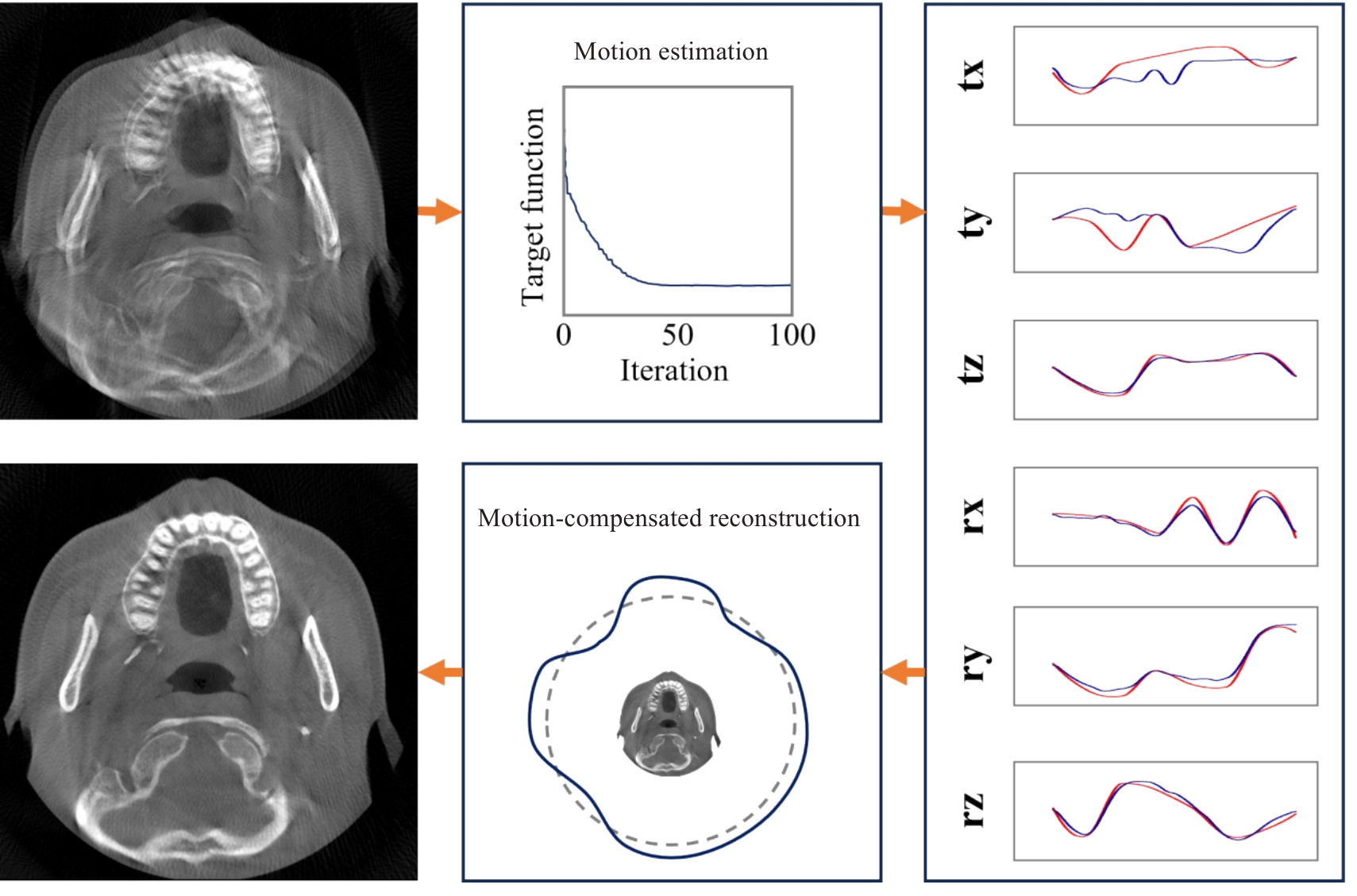
图1 运动估计方法处理流程图
Fig.1 Flow chart of the motion estimation method.
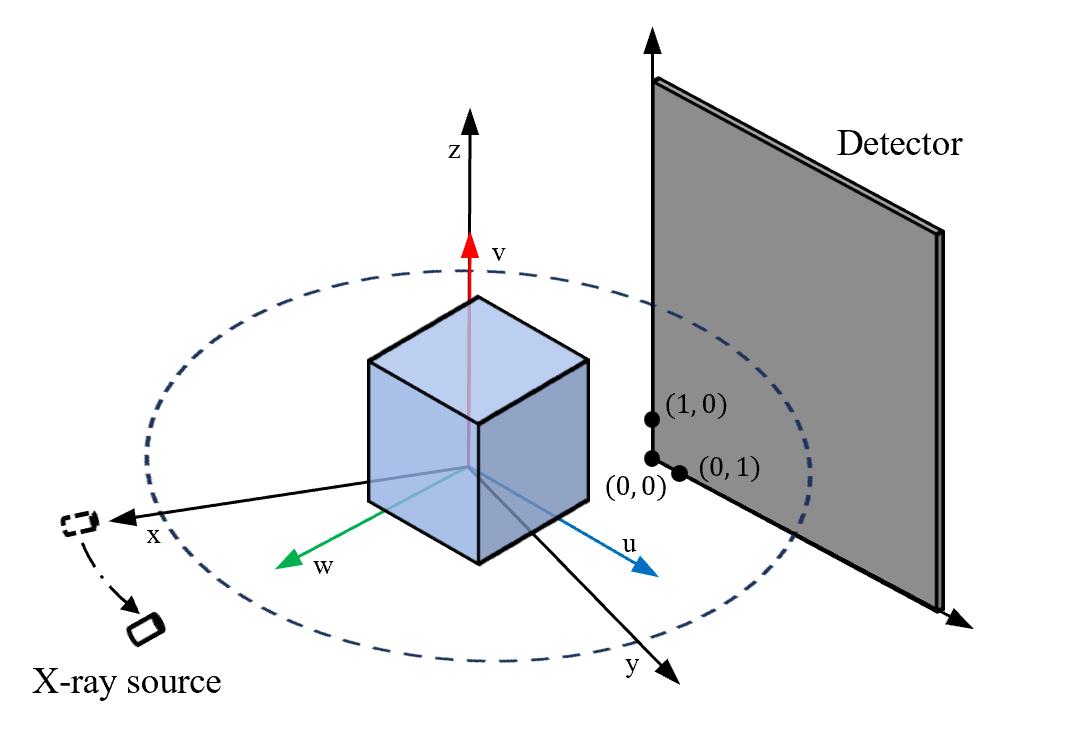
图2 实验中采用的坐标系的示意图
Fig.2 Schematic diagram of the coordinate system used in the experiment.
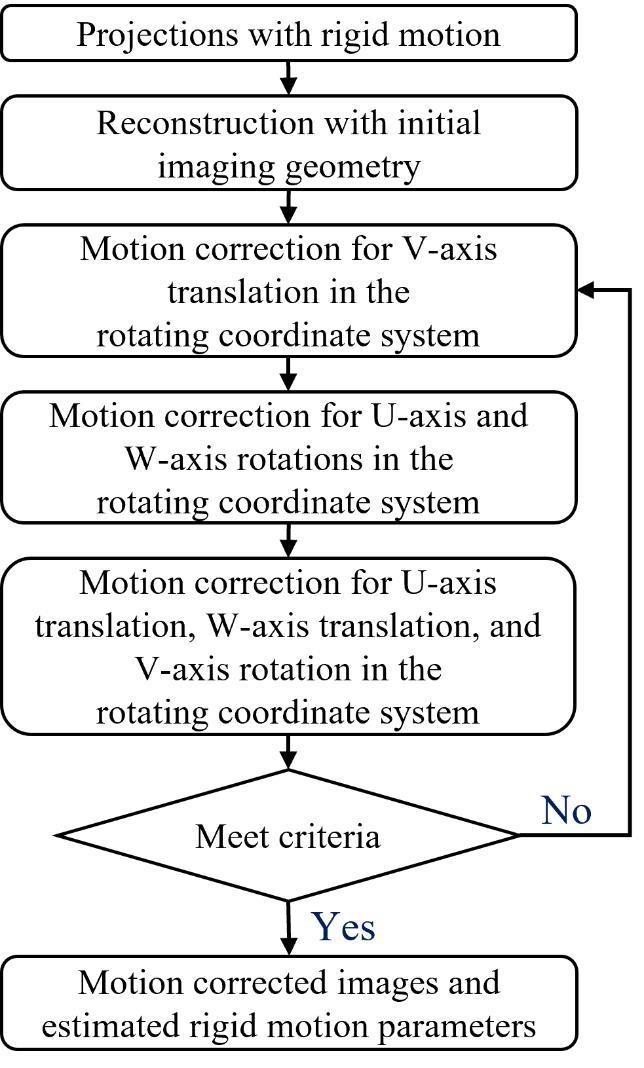
图3 所提CBCT刚性运动伪影校正方法的流程框图
Fig.3 Flow chart of the proposed CBCT rigid motion artifact correction method.
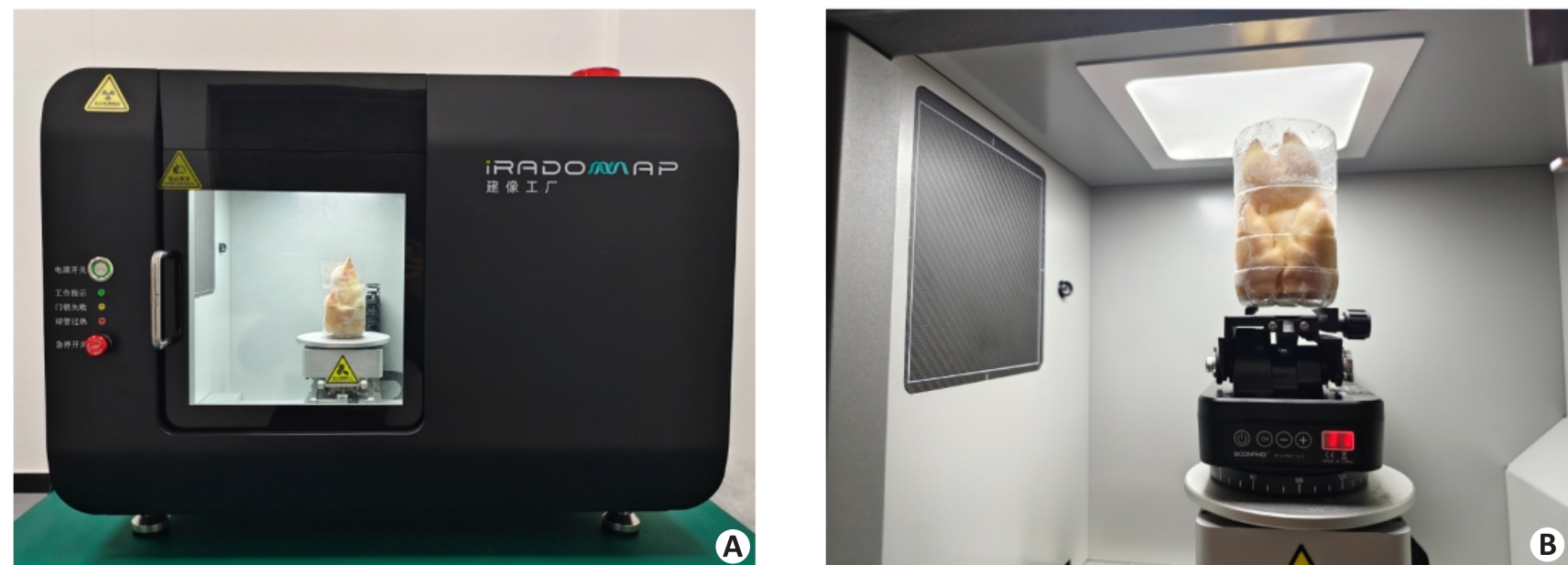
图4 实验平台及样本设置
Fig.4 Experimental setup. A: Xi'an Jiaotong University CBCT experimental platform. B: Porcine limb sample with controlled gimbal on CBCT rotating table.
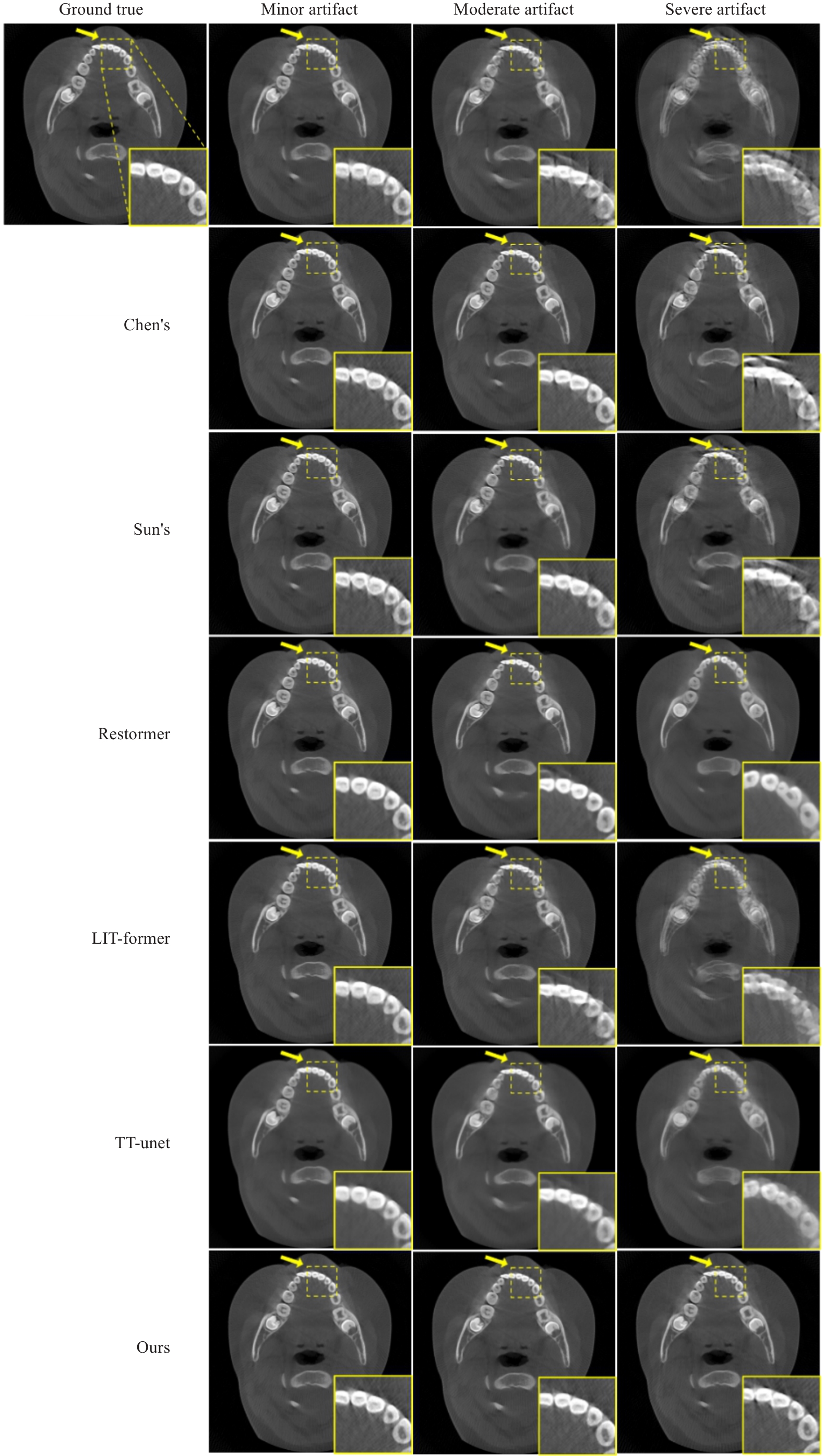
图5 不同伪影校正方法在头部仿真数据上的横断面结果
Fig.5 Transverse-view results of different artifact-correction methods on head simulation data.
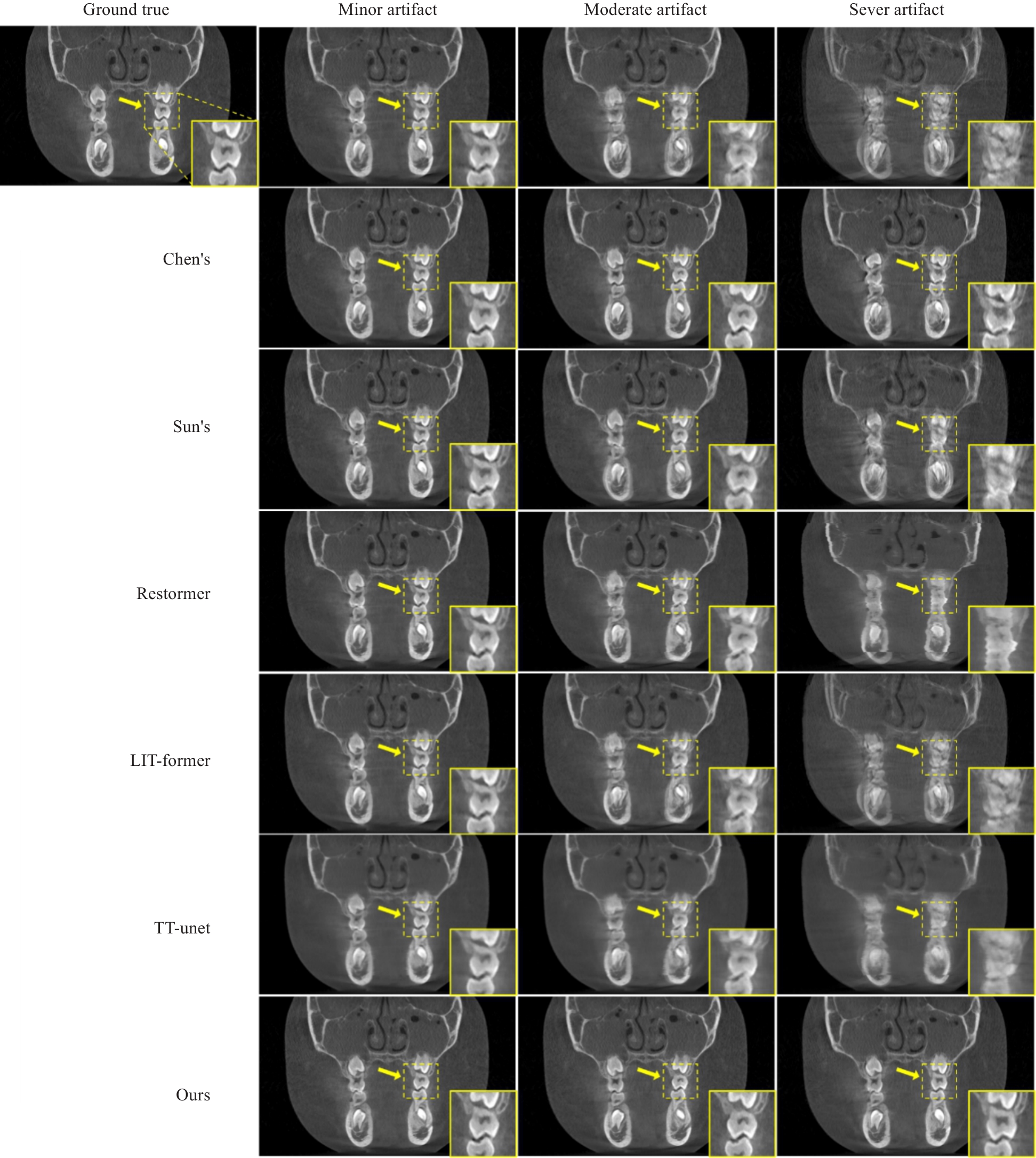
图6 不同伪影校正方法在头部仿真数据上的冠状面结果
Fig.6 Coronal-view results of different artifact-correction methods on head simulation data.
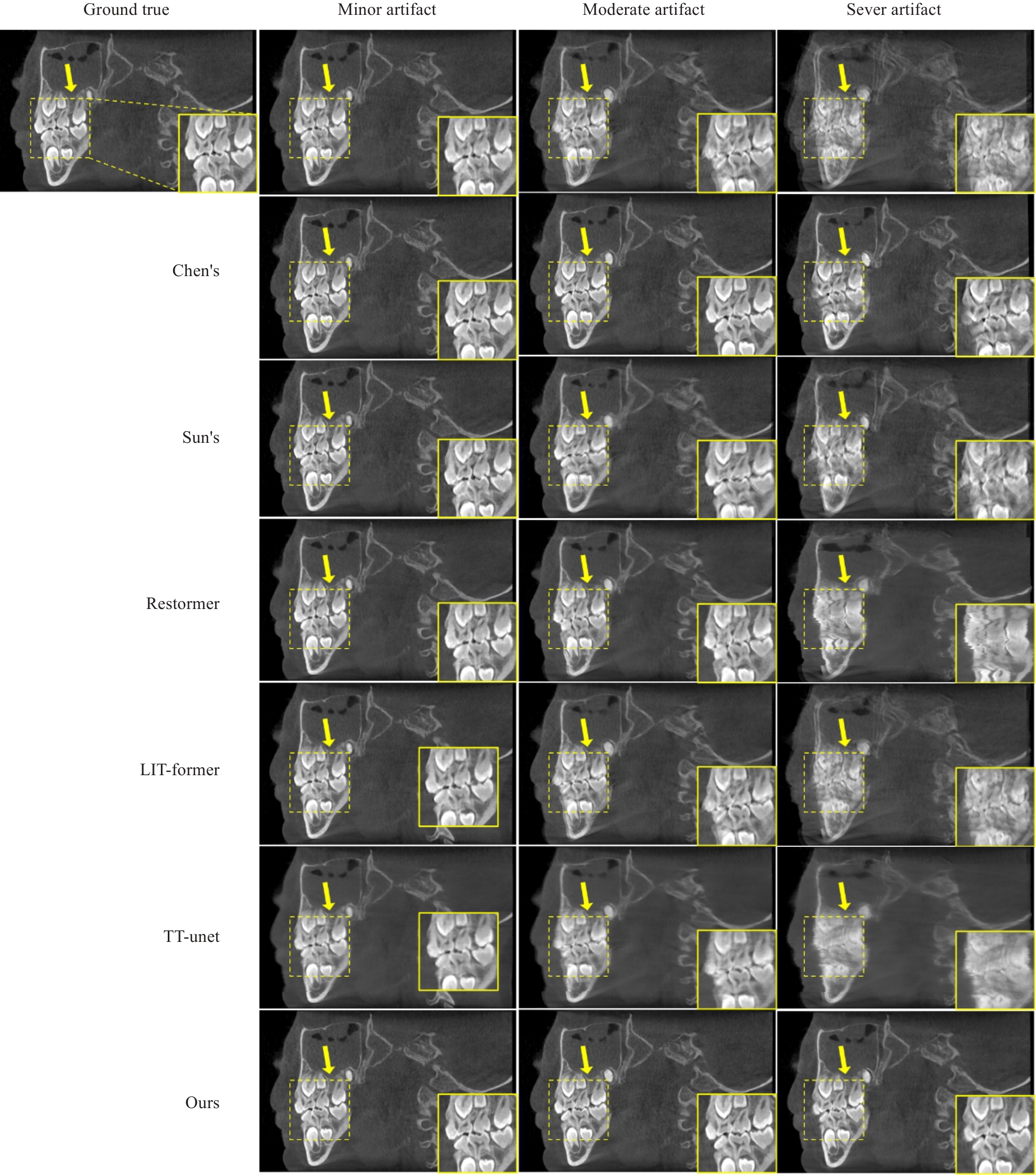
图7 不同伪影校正方法在头部仿真数据上的矢状面结果
Fig.7 Sagittal-view results of different artifact-correction methods on head simulation data.
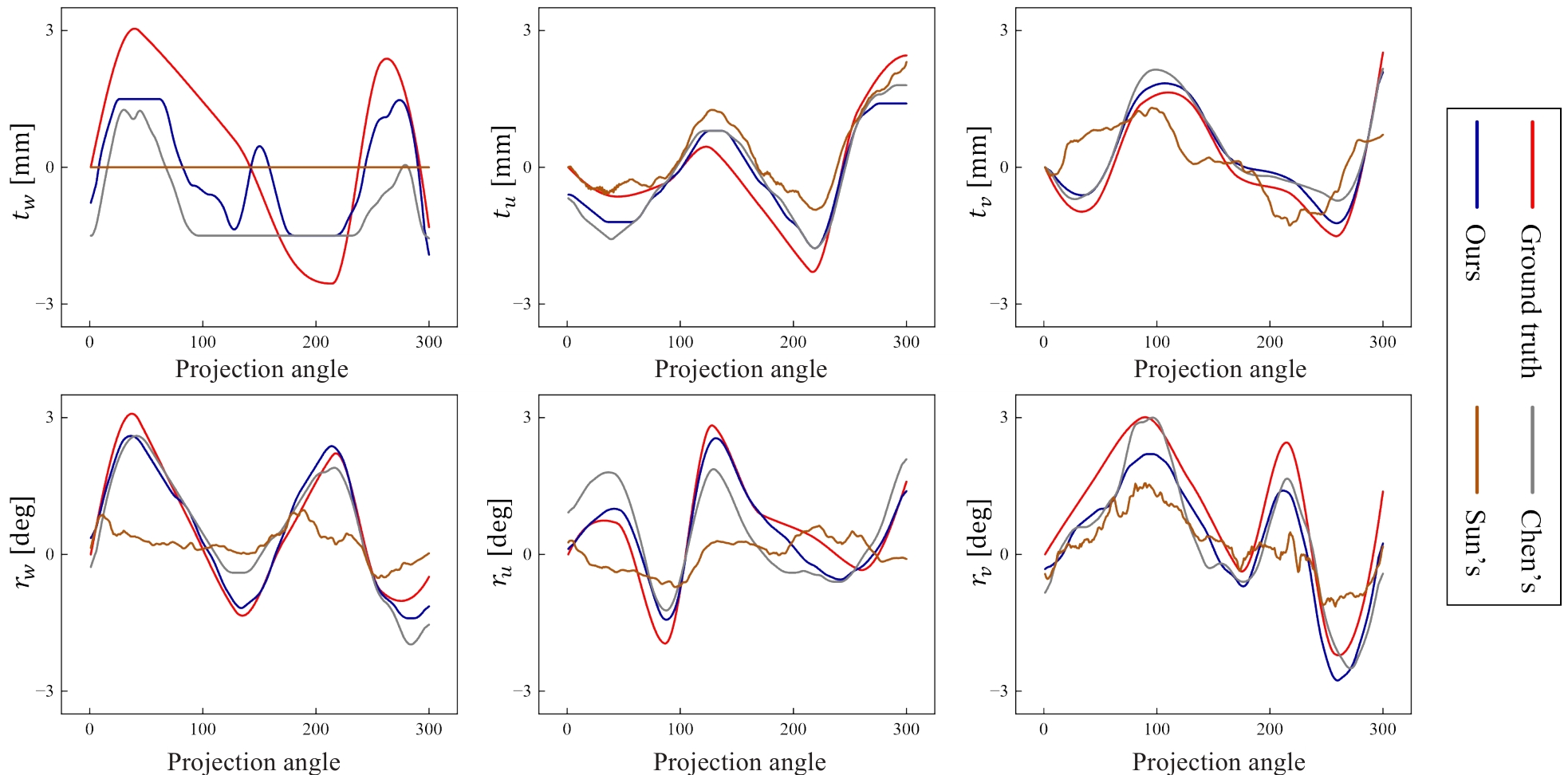
图8 不同运动估计方法在头部仿真数据上的刚性运动估计结果
Fig.8 Rigid motion estimation results of different motion estimation methods on head simulation data.
| Method | Minor artifact | Moderate artifact | Severe artifact | ||||||
|---|---|---|---|---|---|---|---|---|---|
| PSNR | RMSE | SSIM | PSNR | RMSE | SSIM | PSNR | RMSE | SSIM | |
| Chen et al. | 34.25 | 4.94 | 0.8709 | 31.20 | 7.02 | 0.8235 | 28.84 | 9.05 | 0.7800 |
| Sun et al. | 33.45 | 5.32 | 0.8517 | 29.98 | 7.53 | 0.7873 | 28.85 | 9.04 | 0.7575 |
| LIT-Former | 34.57 | 4.70 | 0.8613 | 29.54 | 7.98 | 0.7660 | 26.99 | 11.25 | 0.7037 |
| Restormer | 34.79 | 4.64 | 0.8670 | 30.69 | 7.20 | 0.8014 | 28.01 | 10.02 | 0.7359 |
| TT-Unet | 34.11 | 5.12 | 0.8565 | 30.09 | 7.41 | 0.7716 | 27.48 | 10.58 | 0.7134 |
| Proposed | 35.40 | 4.33 | 0.8934 | 31.49 | 6.78 | 0.8264 | 30.57 | 7.55 | 0.8018 |
表1 不同运动伪影校正算法在头部仿真数据上的量化指标
Tab.1 Quantitative indicators of different motion artifact correction algorithms on head simulation data
| Method | Minor artifact | Moderate artifact | Severe artifact | ||||||
|---|---|---|---|---|---|---|---|---|---|
| PSNR | RMSE | SSIM | PSNR | RMSE | SSIM | PSNR | RMSE | SSIM | |
| Chen et al. | 34.25 | 4.94 | 0.8709 | 31.20 | 7.02 | 0.8235 | 28.84 | 9.05 | 0.7800 |
| Sun et al. | 33.45 | 5.32 | 0.8517 | 29.98 | 7.53 | 0.7873 | 28.85 | 9.04 | 0.7575 |
| LIT-Former | 34.57 | 4.70 | 0.8613 | 29.54 | 7.98 | 0.7660 | 26.99 | 11.25 | 0.7037 |
| Restormer | 34.79 | 4.64 | 0.8670 | 30.69 | 7.20 | 0.8014 | 28.01 | 10.02 | 0.7359 |
| TT-Unet | 34.11 | 5.12 | 0.8565 | 30.09 | 7.41 | 0.7716 | 27.48 | 10.58 | 0.7134 |
| Proposed | 35.40 | 4.33 | 0.8934 | 31.49 | 6.78 | 0.8264 | 30.57 | 7.55 | 0.8018 |
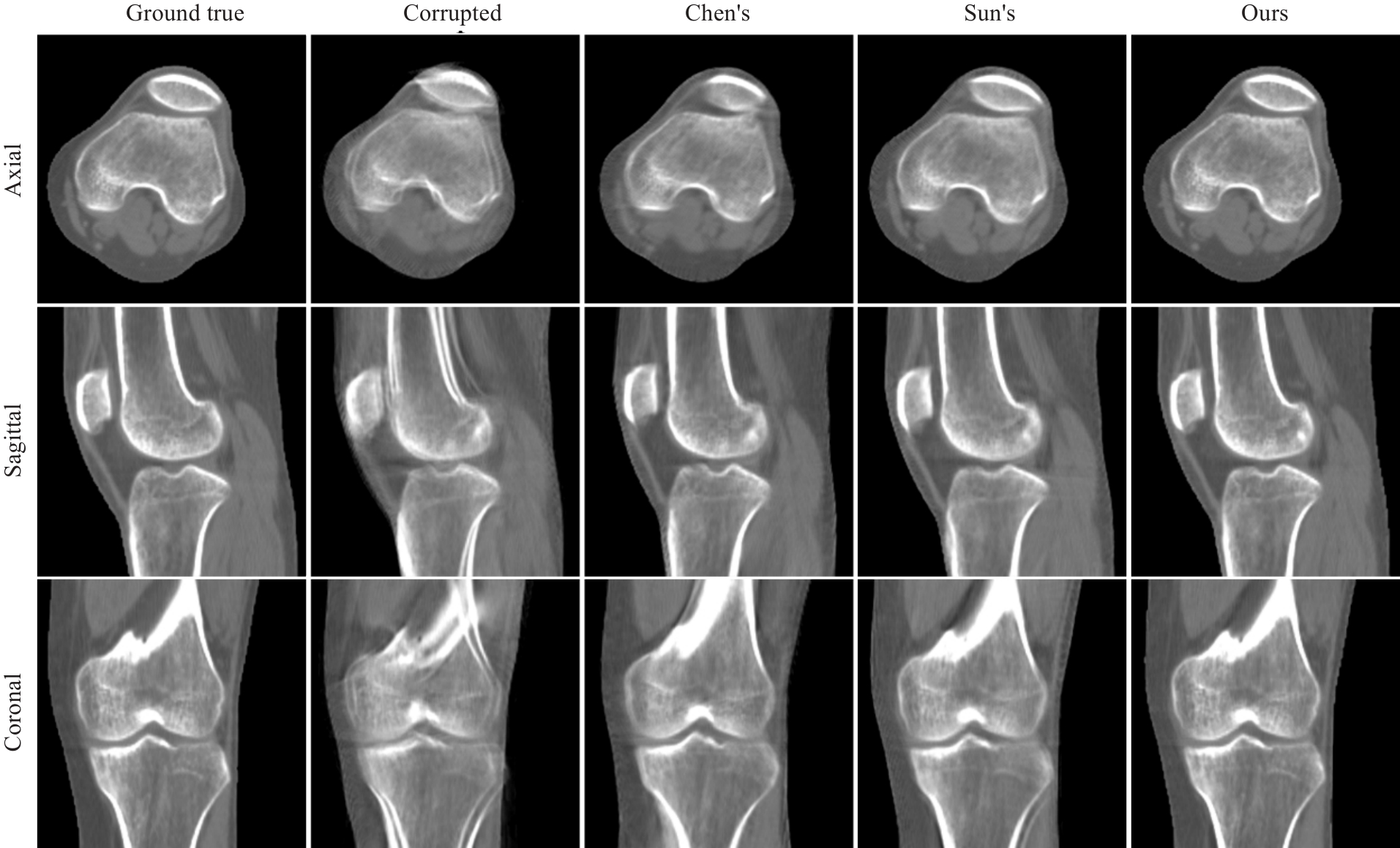
图9 运动估计方法在膝关节仿真数据上的结果
Fig.9 Results of motion-estimation methods on knee simulation data.
| Methods | PSNR | RMSE | SSIM |
|---|---|---|---|
| Chen et al. | 31.8366 | 6.5270 | 0.8881 |
| Sun et al. | 33.9899 | 5.1114 | 0.9174 |
| Proposed | 35.7197 | 4.1740 | 0.9531 |
表2 不同运动估计方法在膝关节仿真数据上的量化指标
Tab.2 Quantitative metrics of different motion estimation methods on knee simulation data
| Methods | PSNR | RMSE | SSIM |
|---|---|---|---|
| Chen et al. | 31.8366 | 6.5270 | 0.8881 |
| Sun et al. | 33.9899 | 5.1114 | 0.9174 |
| Proposed | 35.7197 | 4.1740 | 0.9531 |
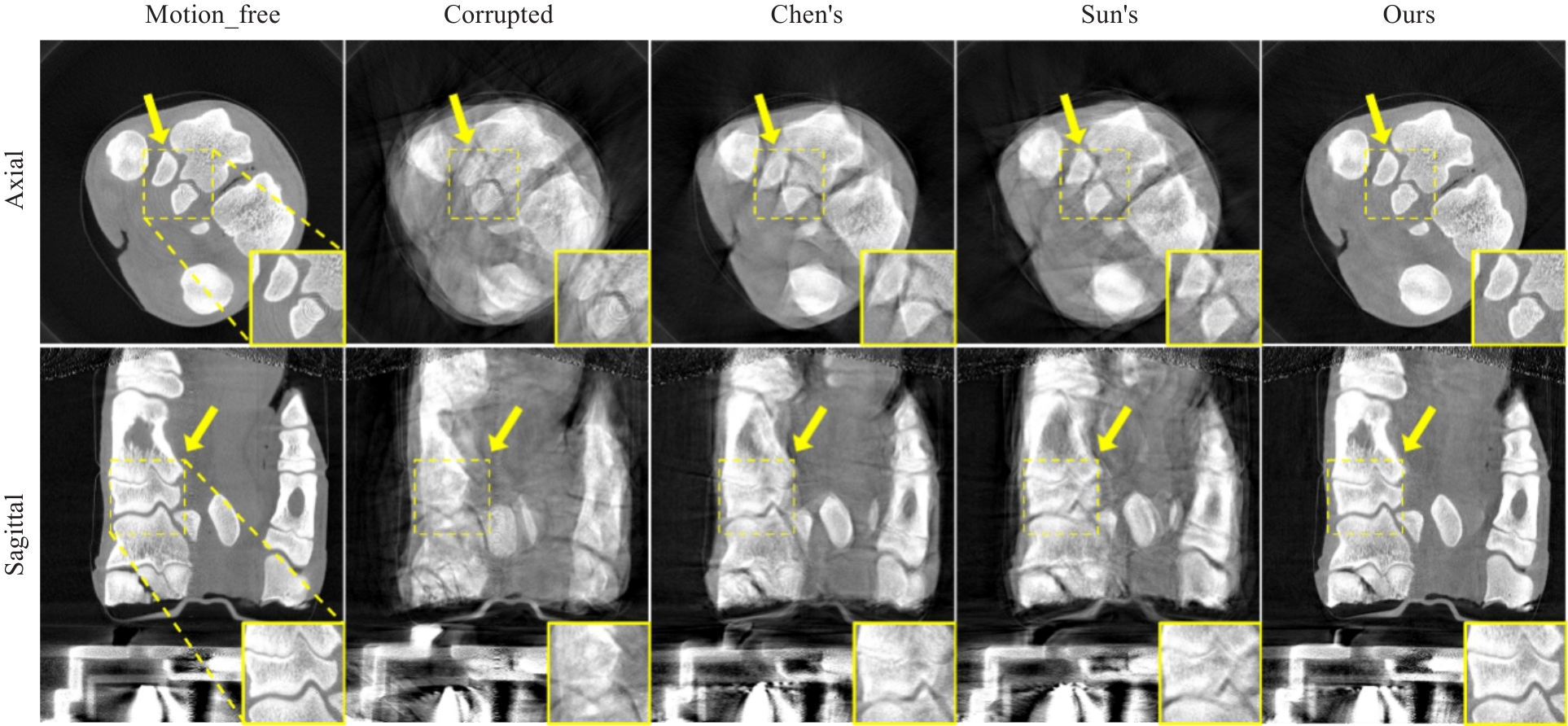
图10 不同运动估计方法在真实数据上的恢复结果对比(横截面与矢状面)
Fig.10 Comparative results of different artifact correction methods on real data (axial and sagittal views).
| Methods | PSNR | RMSE | SSIM |
|---|---|---|---|
| Chen et al. | 33.0498 | 5.5761 | 0.8662 |
| Sun et al. | 31.7047 | 6.6268 | 0.8496 |
| Proposed | 35.5427 | 4.2599 | 0.8949 |
表3 不同运动估计方法在真实猪肢干数据上的量化指标
Tab.3 Quantitative metrics of different motion estimation methods on real porcine data
| Methods | PSNR | RMSE | SSIM |
|---|---|---|---|
| Chen et al. | 33.0498 | 5.5761 | 0.8662 |
| Sun et al. | 31.7047 | 6.6268 | 0.8496 |
| Proposed | 35.5427 | 4.2599 | 0.8949 |
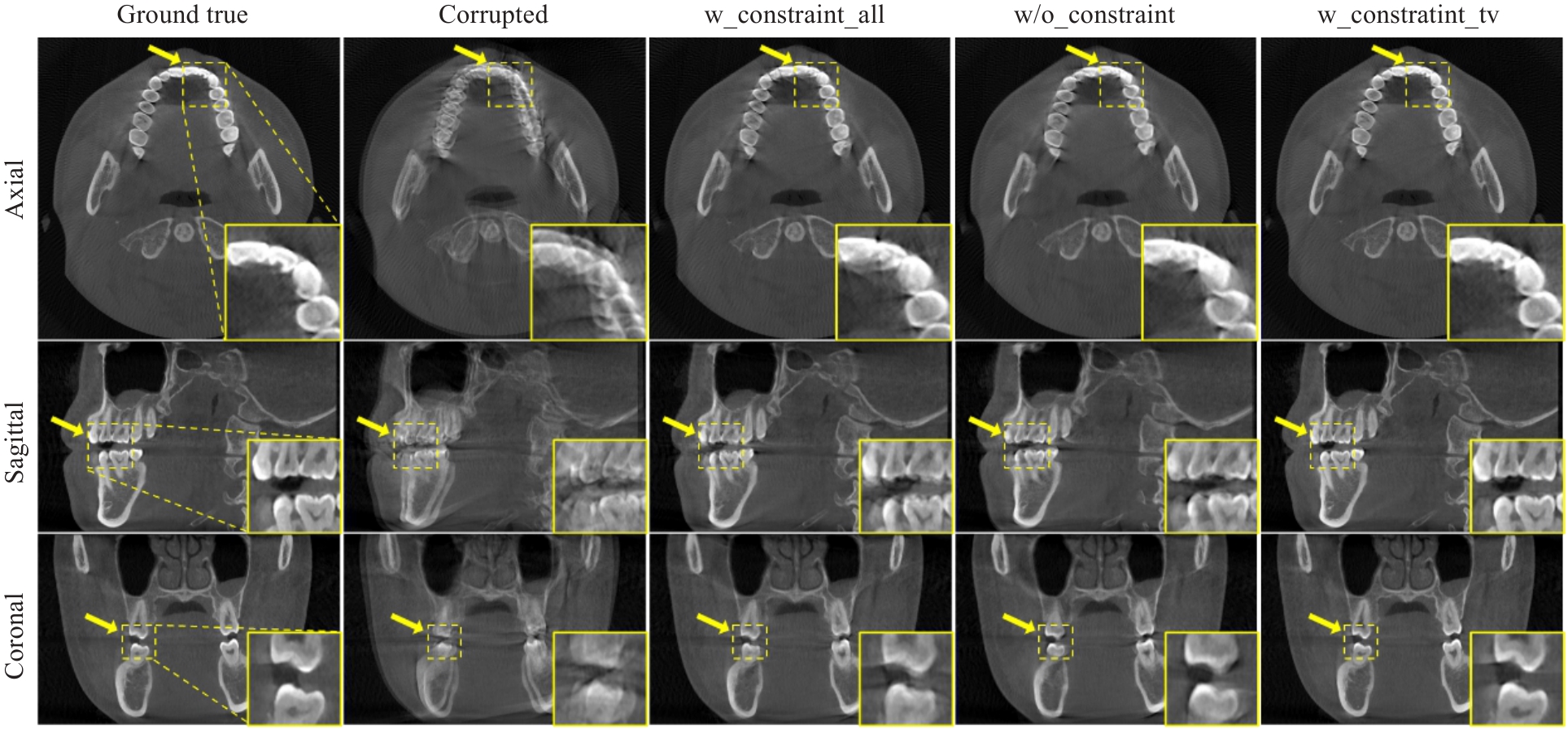
图11 运动估计约束有效性验证图像复原结果对比
Fig.11 Comparative results of image restoration for motion estimation constraint validation.
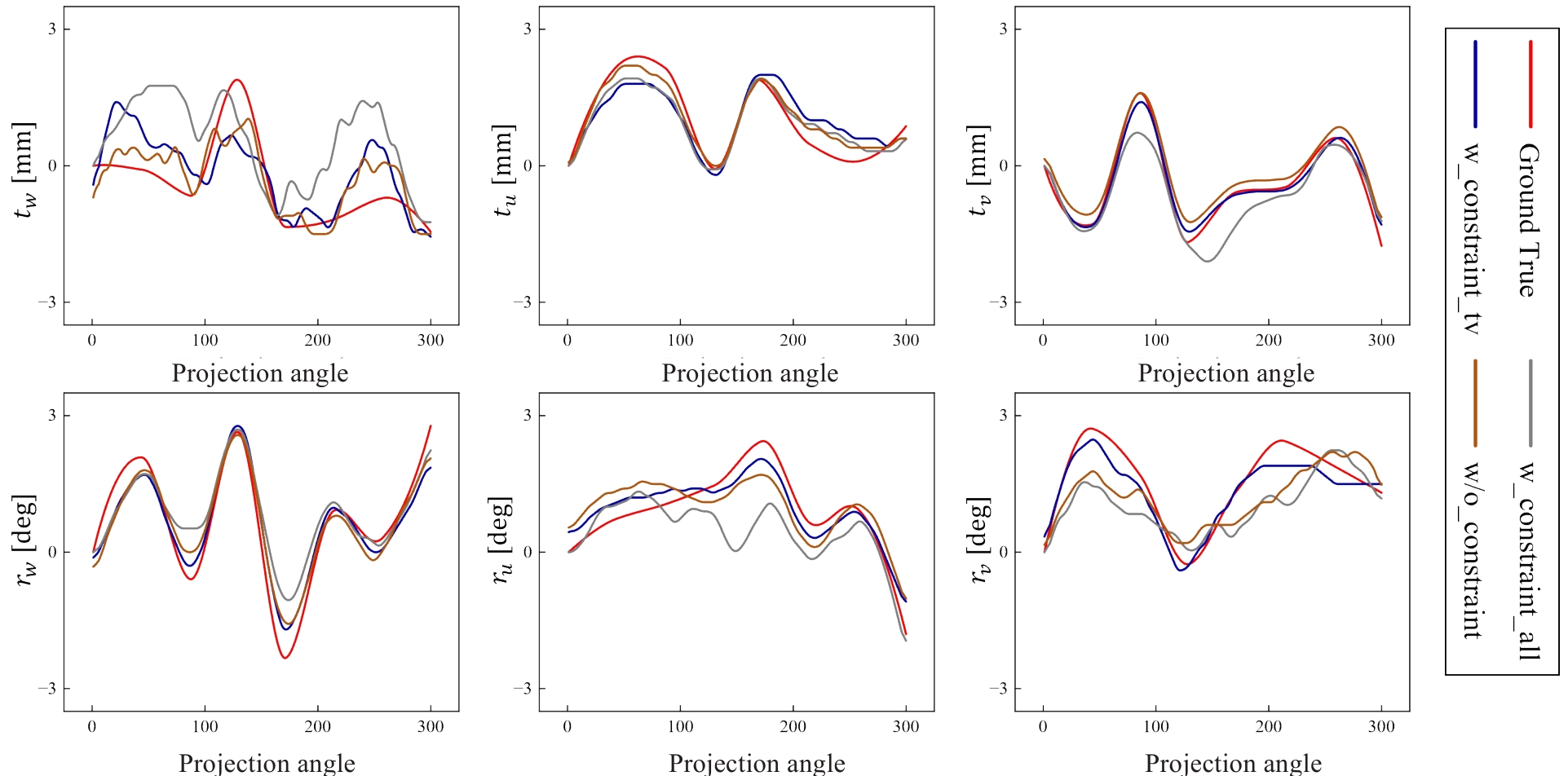
图12 运动估计约束有效性验证刚性运动轨迹估计结果对比
Fig.12 Comparative results of rigid motion trajectory estimation for motion estimation constraint validation.
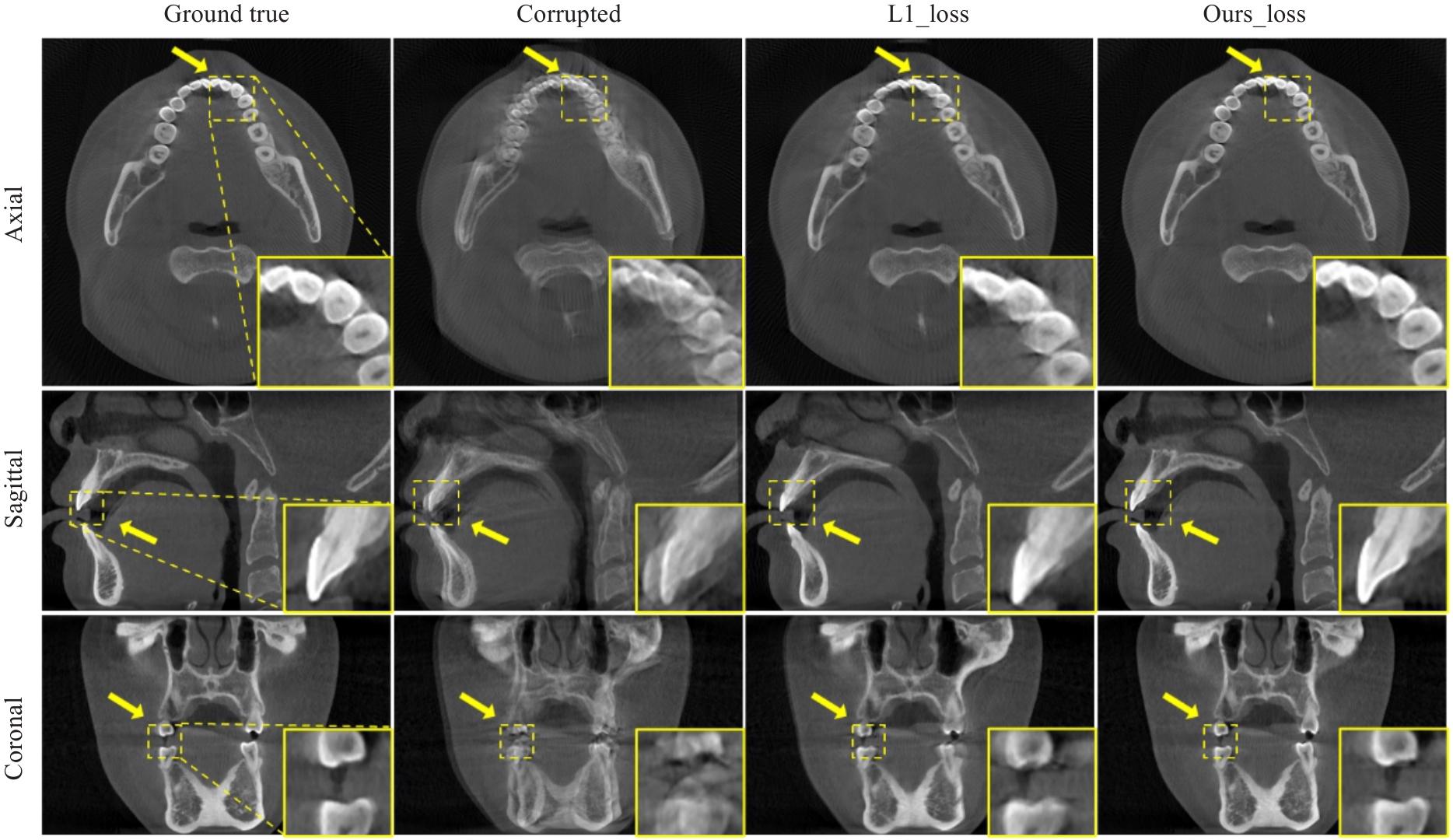
图13 渐进式代价函数有效性验证图像复原结果对比
Fig.13 Comparative results of image restoration for staged cost function validation.
| [1] | Spin-Neto R, Wenzel A. Patient movement and motion artefacts in cone beam computed tomography of the dentomaxillofacial region: a systematic literature review[J]. Oral Surg Oral Med Oral Pathol Oral Radiol, 2016, 121(4): 425-33. doi:10.1016/j.oooo.2015.11.019 |
| [2] | Loubele M, Bogaerts R, Van Dijck E, et al. Comparison between effective radiation dose of CBCT and MSCT scanners for dento-maxillofacial applications[J]. Eur J Radiol, 2009, 71(3): 461-8. doi:10.1016/j.ejrad.2008.06.002 |
| [3] | Nemtoi A, Czink C, Haba D, et al. Cone beam CT: a current overview of devices[J]. Dentomaxillofac Radiol, 2013, 42(8): 20120443. doi:10.1259/dmfr.20120443 |
| [4] | Spin-Neto R, Costa C, Salgado DM, et al. Patient movement characteristics and the impact on CBCT image quality and interpretability[J]. Dentomaxillofac Radiol, 2018, 47(1): 20170216. doi:10.1259/dmfr.20170216 |
| [5] | Nardi C, Taliani GG, Castellani A, et al. Repetition of examination due to motion artifacts in horizontal cone beam CT: comparison among three different kinds of head support[J]. J Int Soc Prev Community Dent, 2017, 7(4): 208-13. doi:10.4103/jispcd.jispcd_17_17 |
| [6] | Hanzelka T, Dusek J, Ocasek F, et al. Movement of the patient and the cone beam computed tomography scanner: objectives and possible solutions[J]. Oral Surg Oral Med Oral Pathol Oral Radiol, 2013, 116(6): 769-73. doi:10.1016/j.oooo.2013.08.010 |
| [7] | Malviya S, Voepel-Lewis T, Eldevik OP, et al. Sedation and general anaesthesia in children undergoing MRI and CT: adverse events and outcomes[J]. Br J Anaesth, 2000, 84(6): 743-8. doi:10.1093/oxfordjournals.bja.a013586 |
| [8] | Beeres M, Wichmann JL, Paul J, et al. CT chest and gantry rotation time: does the rotation time influence image quality?[J]. Acta Radiol, 2015, 56(8): 950-4. doi:10.1177/0284185114544242 |
| [9] | Berland LL, Smith JK. Multidetector-array CT: once again, technology creates new opportunities[J]. Radiology, 1998, 209(2): 327-9. doi:10.1148/radiology.209.2.9807555 |
| [10] | Hernandez D, Eldib ME, Hegazy MAA, et al. A head motion estimation algorithm for motion artifact correction in dental CT imaging[J]. Phys Med Biol, 2018, 63(6): 065014. doi:10.1088/1361-6560/aab17e |
| [11] | Berger M, Maier A, Xia Y, et al. Motion compensated fan-beam CT by enforcing fourier properties of the sinogram[C]//2014 Third International Conference on Image Formation in X-ray Computed Tomography. Salt Lake City, Utah, USA. 2014: 329-32. |
| [12] | Zhang Y, Zhang LY. A rigid motion artifact reduction method for CT based on blind deconvolution[J]. Algorithms, 2019, 12(8): 155. doi:10.3390/a12080155 |
| [13] | Hu ZL, Jiang CH, Zhang QY, et al. Wasserstein generative adversarial networks for motion artifact removal in dental CT imaging[C]//Medical Imaging 2019: Physics of Medical Imaging. February 16-21, 2019. San Diego, USA. SPIE, 2019: 113. doi:10.1117/12.2511818 |
| [14] | Ali ASRA, Fusiello A, Landi C, et al. Motion artifacts detection in short-scan dental CBCT reconstructions[EB/OL]. 2023: arXiv: 2304.10154. . doi:10.1109/nssmicrtsd49126.2023.10337961 |
| [15] | Weisenberger AG, Gleason SS, Goddard J, et al. A restraint-free small animal SPECT imaging system with motion tracking[J]. IEEE Trans Nucl Sci, 2005, 52(3): 638-44. doi:10.1109/tns.2005.851399 |
| [16] | Herzog H, Tellmann L, Fulton R, et al. Motion artifact reduction on parametric PET images of neuroreceptor binding[J]. J Nucl Med, 2005, 46(6): 1059-65. |
| [17] | Kim JH, Nuyts J, Kyme A, et al. A rigid motion correction method for helical computed tomography (CT)[J]. Phys Med Biol, 2015, 60(5): 2047-73. doi:10.1088/0031-9155/60/5/2047 |
| [18] | Kyme AZ, Se S, Meikle SR, et al. Markerless motion estimation for motion-compensated clinical brain imaging[J]. Phys Med Biol, 2018, 63(10): 105018. doi:10.1088/1361-6560/aabd48 |
| [19] | Reaungamornrat S, Otake Y, Uneri A, et al. Tracker-on-C for cone-beam CT-guided surgery: evaluation of geometric accuracy and clinical applications[J]. Med Imag 2012 Image Guid Proced Rob Interv Model, 2012, 8316: 831609. doi:10.1117/12.911454 |
| [20] | Ouadah S, Jacobson M, Stayman JW, et al. Correction of patient motion in cone-beam CT using 3D-2D registration[J]. Phys Med Biol, 2017, 62(23): 8813-31. doi:10.1088/1361-6560/aa9254 |
| [21] | Yu HY, Wang G. Data consistency based rigid motion artifact reduction in fan-beam CT[J]. IEEE Trans Med Imaging, 2007, 26(2): 249-60. doi:10.1109/tmi.2006.889717 |
| [22] | Berger M, Xia Y, Aichinger W, et al. Motion compensation for cone-beam CT using Fourier consistency conditions[J]. Phys Med Biol, 2017, 62(17): 7181-215. doi:10.1088/1361-6560/aa8129 |
| [23] | Aichert A, Berger M, Wang J, et al. Epipolar consistency in transmission imaging[J]. IEEE Trans Med Imaging, 2015, 34(11): 2205-19. doi:10.1109/tmi.2015.2426417 |
| [24] | Preuhs A, Maier A, Manhart M, et al. Double your views–exploiting symmetry in transmission imaging[M]//Medical Image Computing and Computer Assisted Intervention – MICCAI 2018. Cham: Springer International Publishing, 2018: 356-64. doi:10.1007/978-3-030-00928-1_41 |
| [25] | Sun T, Kim JH, Fulton R, et al. An iterative projection-based motion estimation and compensation scheme for head X-ray CT[J]. Med Phys, 2016, 43(10): 5705. doi:10.1118/1.4963218 |
| [26] | Berger M, Müller K, Aichert A, et al. Marker-free motion correction in weight-bearing cone-beam CT of the knee joint[J]. Med Phys, 2016, 43(3): 1235-48. doi:10.1118/1.4941012 |
| [27] | Chen MY, He P, Feng P, et al. General rigid motion correction for computed tomography imaging based on locally linear embedding[J]. Opt Eng, 2018, 57(2): 1. doi:10.1117/1.oe.57.2.023102 |
| [28] | Huang H, Siewerdsen JH, Zbijewski W, et al. Reference-free learning-based similarity metric for motion compensation in cone-beam CT[J]. Phys Med Biol, 2022, 67(12): 125020. doi:10.1088/1361-6560/ac749a |
| [29] | Sisniega A, Stayman JW, Yorkston J, et al. Motion compensation in extremity cone-beam CT using a penalized image sharpness criterion[J]. Phys Med Biol, 2017, 62(9): 3712-34. doi:10.1088/1361-6560/aa6869 |
| [30] | Kingston A, Sakellariou A, Varslot T, et al. Reliable automatic alignment of tomographic projection data by passive auto-focus[J]. Med Phys, 2011, 38(9): 4934-45. doi:10.1118/1.3609096 |
| [31] | Maur S, Stsepankou D, Hesser J. Auto-calibration by locally consistent contours for dental CBCT[J]. Phys Med Biol, 2018, 63(21): 215018. doi:10.1088/1361-6560/aae66d |
| [32] | Zamir SW, Arora A, Khan S, et al. Restormer: efficient transformer for high-resolution image restoration[C]//2022 IEEE/CVF Conference on Computer Vision and Pattern Recognition (CVPR). June 18-24, 2022, New Orleans, LA, USA. IEEE, 2022: 5718-29. doi:10.1109/cvpr52688.2022.00564 |
| [33] | Chen ZH, Niu C, Gao Q, et al. LIT-former: linking in-plane and through-plane transformers for simultaneous CT image denoising and deblurring[J]. IEEE Trans Med Imaging, 2024, 43(5): 1880-94. doi:10.1109/tmi.2024.3351723 |
| [34] | Deng ZH, Zhang WK, Chen KL, et al. TT U-Net: temporal transformer U-Net for motion artifact reduction using PAD (pseudo all-phase clinical-dataset) in cardiac CT[J]. IEEE Trans Med Imaging, 2023, 42(12): 3805-16. doi:10.1109/tmi.2023.3310933 |
| [1] | 林宗悦, 王永波, 边兆英, 马建华. 基于深度模糊学习的牙科CBCT运动伪影校正算法[J]. 南方医科大学学报, 2024, 44(6): 1198-1208. |
| [2] | 彭声旺, 王永波, 边兆英, 马建华, 黄静. 基于改进可微分域转换的双域锥束计算机断层扫描重建网络用于锥角伪影校正[J]. 南方医科大学学报, 2024, 44(6): 1188-1197. |
| [3] | 廖静怡, 彭声旺, 王永波, 边兆英. 基于生成式投影插值的双域CBCT稀疏角度重建方法[J]. 南方医科大学学报, 2024, 44(10): 2044-2054. |
| 阅读次数 | ||||||
|
全文 |
|
|||||
|
摘要 |
|
|||||
