
南方医科大学学报 ›› 2026, Vol. 46 ›› Issue (9): 2130-2148.doi: 10.12122/j.issn.1673-4254.2026.09.13
• • 上一篇
李梦佳1,2( ), 汪梦哲1,2, 陶宇2,3, 庞懿轩2,3, 李丽1,2, 张小楠1,2(), 赵士弟1,2()
收稿日期:2026-01-23
出版日期:2026-09-20
发布日期:2026-09-30
通讯作者:
张小楠,赵士弟
E-mail:2325510327@qq.com;zhangxn@bbmu.edu.cn;zhsdi@126.com
作者简介:李梦佳,在读硕士研究生,E-mail: 2325510327@qq.com
基金资助:
Mengjia LI1,2(), Mengzhe WANG1,2, Yu TAO2,3, Yixuan PANG2,3, Li LI1,2, Xiaonan ZHANG1,2(), Shidi ZHAO1,2()
Received:2026-01-23
Online:2026-09-20
Published:2026-09-30
Contact:
Xiaonan ZHANG, Shidi ZHAO
E-mail:2325510327@qq.com;zhangxn@bbmu.edu.cn;zhsdi@126.com
摘要:
目的 探讨金雀异黄酮(GEN)通过PI3K/AKT/COX-2信号通路减轻脑缺血/再灌注诱导的小胶质细胞神经炎症反应,并阐明其对共培养神经元的保护作用。 方法 在体实验采用 SD大鼠构建I/R模型,分为对照组(CON组)、缺血/再灌注组(I/R组)、不同剂量GEN预处理组(I/R+GEN25/50/100 mg/kg),10只/组,检测小胶质细胞极化标志物(CD86、CD206)、炎症因子及PI3K、AKT、COX-2表达。离体实验选用BV2细胞建立OGD/R模型,筛选GEN无毒性浓度,实验分为正常培养组(CON组)、氧糖剥夺/复氧模型组(OGD/R组)、GEN干预组(OGD/R+GEN组)、PI3K敲低模型组(si-PI3K+OGD/R组)、PI3K敲低联合GEN干预组(si-PI3K+OGD/R+GEN组)、PI3K激动剂模型组(740Y-P+OGD/R组)以及PI3K激动剂联合GEN干预组(740Y-P+OGD/R+GEN组),检测小胶质细胞极化表型变化、炎症因子与PI3K、AKT、COX-2表达。神经元-小胶质细胞共培养体系检测神经元凋亡率、细胞活性以及相关凋亡蛋白的表达变化。 结果 与CON组比,I/R组小胶质细胞呈M1型极化(CD86、IL-6、IL-8、IL-1β、TNF-α、PI3K、AKT、COX-2上调,IL-4、TGF-β下调,P<0.0001)。GEN干预可逆转此现象,抑制M1极化、促炎因子及PI3K/AKT/COX-2通路,促进M2极化(CD206、IL-5、IL-10、IL-4、TGF-β上调,P<0.01)。COX-2抑制剂(Celecoxib)效果与GEN类似,均能下调M1标志物及TNF-α、PI3K、AKT、COX-2,上调M2标志物与TGF-β(P<0.0001)。OGD/R诱导的小胶质细胞M1极化与促炎反应同样被GEN抑制,表现为CD86、IL-1β、IL-6下调,CD206、IL-4、IL-10上调(P<0.01)。敲低PI3K模拟了GEN的保护效应(M1/促炎因子下调,M2/抗炎因子上调,P<0.05),而激活PI3K(740Y-P)则抵消了GEN的部分效果。在神经元-小胶质细胞共培养体系中,GEN处理降低OGD/R诱导的神经元凋亡率,恢复细胞活力,并伴随Cleaved Caspase-3、Bax下调及Bcl-2、BDNF上调(P<0.05)。 结论 GEN下调PI3K/AKT/COX-2通路调控小胶质细胞向M2型极化,减轻脑缺血/再灌注诱导的神经炎症损伤。
李梦佳, 汪梦哲, 陶宇, 庞懿轩, 李丽, 张小楠, 赵士弟. 金雀异黄酮通过PI3K/AKT/COX-2信号通路调控小胶质细胞极化减轻大鼠脑缺血/再灌注诱导的炎性损伤[J]. 南方医科大学学报, 2026, 46(9): 2130-2148.
Mengjia LI, Mengzhe WANG, Yu TAO, Yixuan PANG, Li LI, Xiaonan ZHANG, Shidi ZHAO. Genistein alleviates cerebral ischemia/reperfusion-induced inflammatory injury in rats by regulating microglial polarization via the PI3K/AKT/COX-2 signaling pathway[J]. Journal of Southern Medical University, 2026, 46(9): 2130-2148.
| Name | Primer sequence 5'-3' |
|---|---|
| IL-4 | F: GGTCTCAACCCCCAGCTAGT R: GCCGATGATCTCTCTCAAGTGAT |
| IL-6 | F: CTTCTTGGGACTGATGCTGGTGAC R: TCTGTTGGGAGTGGTATCCTCTGTG |
| IL-10 | F: TCCCTGGGTGAGAAGCTGAAGAC R: CACCTGCTCCACTGCCTTGC |
| IL-1β | F: CACTACAGGCTCCGAGATGAACAAC R: TGTCGTTGCTTGGTTCTCCTTGTAC |
| COX-2 | F: TTCAACACACTCTATCACTGGC R: AGAAGCGTTTGCGGTACTCAT |
| PI3K | F: CGAGAAGACGTGGAATGTCG R: GACTTCGCCGTCTACCACTA |
| AKT | F: GCCTCTGCTTTGTCATGGAG R: AGCATGAGGTTCTCCAGCTT |
| β-actin | F: GGCTGTATTCCCCTCCATCG R: CCAGTTGGTAACAATGCCATGT |
| Caspase-3 | F: GTCATCTCGCTCTGGTACGG R: CACACACACAAAGCTGCTCC |
| Bcl-2 | F: CTTCTCTCGTCGCTACCGTC R: CAATCCTCCCCCAGTTCACC |
| Bax | F: CACCTGAGCTGACCTTGGAG R: CAAACATGTCAGCTGCCACC |
| BDNF | F: TACCTGGATGCCGCAAACAT R: CCAGACATGTCCACTGCAGT |
| β-actin | F: TATAAAACCCGGCGGCGCA R: TCATCCATGGCGAACTGGTG |
| TNF-α | F: CGTCAGCCGATTTGCCATTT R: TCCCTCAGGGGTGTCCTTAG |
| IL-1β | F: ACAACTGCACTACAGGCTCC R: GCTTGGGATCCACACTCTCC |
| IL-6 | F: GCAAGAGACTTCCAGCCAGT R: AGTCTCCTCTCCGGACTTGT |
| IL-5 | F: GGATGCTTCTGTGCTTGAACG R: TCAACAGAGCTCGGTGAGTG |
| IL-10 | F: CCCTGTAGCCACCCAACAAA R: GCAAGAGATCTGACTCCGGG |
| IL-8 | F: CTCTGCTCACAAACAGCGTC R: TCTCTGAGTGGCATGGGACA |
| IL-4 | F: GTACCGGGAACGGTATCCAC R: GTGAGTTCAGACCGCTGACA |
| TGF-β | F: AGGGCTACCATGCCAACTTC R: CCACGTAGTAGACGATGGGC |
| PGE2 | F: GCTCCTTGCCTTTCACAATCT R: AGGACCGGTGGCCTAAGTAT |
表1 引物合成序列信息
Tab.1 Primer sequences for RT-qPCR
| Name | Primer sequence 5'-3' |
|---|---|
| IL-4 | F: GGTCTCAACCCCCAGCTAGT R: GCCGATGATCTCTCTCAAGTGAT |
| IL-6 | F: CTTCTTGGGACTGATGCTGGTGAC R: TCTGTTGGGAGTGGTATCCTCTGTG |
| IL-10 | F: TCCCTGGGTGAGAAGCTGAAGAC R: CACCTGCTCCACTGCCTTGC |
| IL-1β | F: CACTACAGGCTCCGAGATGAACAAC R: TGTCGTTGCTTGGTTCTCCTTGTAC |
| COX-2 | F: TTCAACACACTCTATCACTGGC R: AGAAGCGTTTGCGGTACTCAT |
| PI3K | F: CGAGAAGACGTGGAATGTCG R: GACTTCGCCGTCTACCACTA |
| AKT | F: GCCTCTGCTTTGTCATGGAG R: AGCATGAGGTTCTCCAGCTT |
| β-actin | F: GGCTGTATTCCCCTCCATCG R: CCAGTTGGTAACAATGCCATGT |
| Caspase-3 | F: GTCATCTCGCTCTGGTACGG R: CACACACACAAAGCTGCTCC |
| Bcl-2 | F: CTTCTCTCGTCGCTACCGTC R: CAATCCTCCCCCAGTTCACC |
| Bax | F: CACCTGAGCTGACCTTGGAG R: CAAACATGTCAGCTGCCACC |
| BDNF | F: TACCTGGATGCCGCAAACAT R: CCAGACATGTCCACTGCAGT |
| β-actin | F: TATAAAACCCGGCGGCGCA R: TCATCCATGGCGAACTGGTG |
| TNF-α | F: CGTCAGCCGATTTGCCATTT R: TCCCTCAGGGGTGTCCTTAG |
| IL-1β | F: ACAACTGCACTACAGGCTCC R: GCTTGGGATCCACACTCTCC |
| IL-6 | F: GCAAGAGACTTCCAGCCAGT R: AGTCTCCTCTCCGGACTTGT |
| IL-5 | F: GGATGCTTCTGTGCTTGAACG R: TCAACAGAGCTCGGTGAGTG |
| IL-10 | F: CCCTGTAGCCACCCAACAAA R: GCAAGAGATCTGACTCCGGG |
| IL-8 | F: CTCTGCTCACAAACAGCGTC R: TCTCTGAGTGGCATGGGACA |
| IL-4 | F: GTACCGGGAACGGTATCCAC R: GTGAGTTCAGACCGCTGACA |
| TGF-β | F: AGGGCTACCATGCCAACTTC R: CCACGTAGTAGACGATGGGC |
| PGE2 | F: GCTCCTTGCCTTTCACAATCT R: AGGACCGGTGGCCTAAGTAT |

图1 各组大鼠脑组织染色结果
Fig.1 HE staining of brain tissues of rats with sham operation (CON), cerebral ischemia/reperfusion (I/R) injury and genistein (GEN) pretreatment before modeling (Scale bar=20 μm).
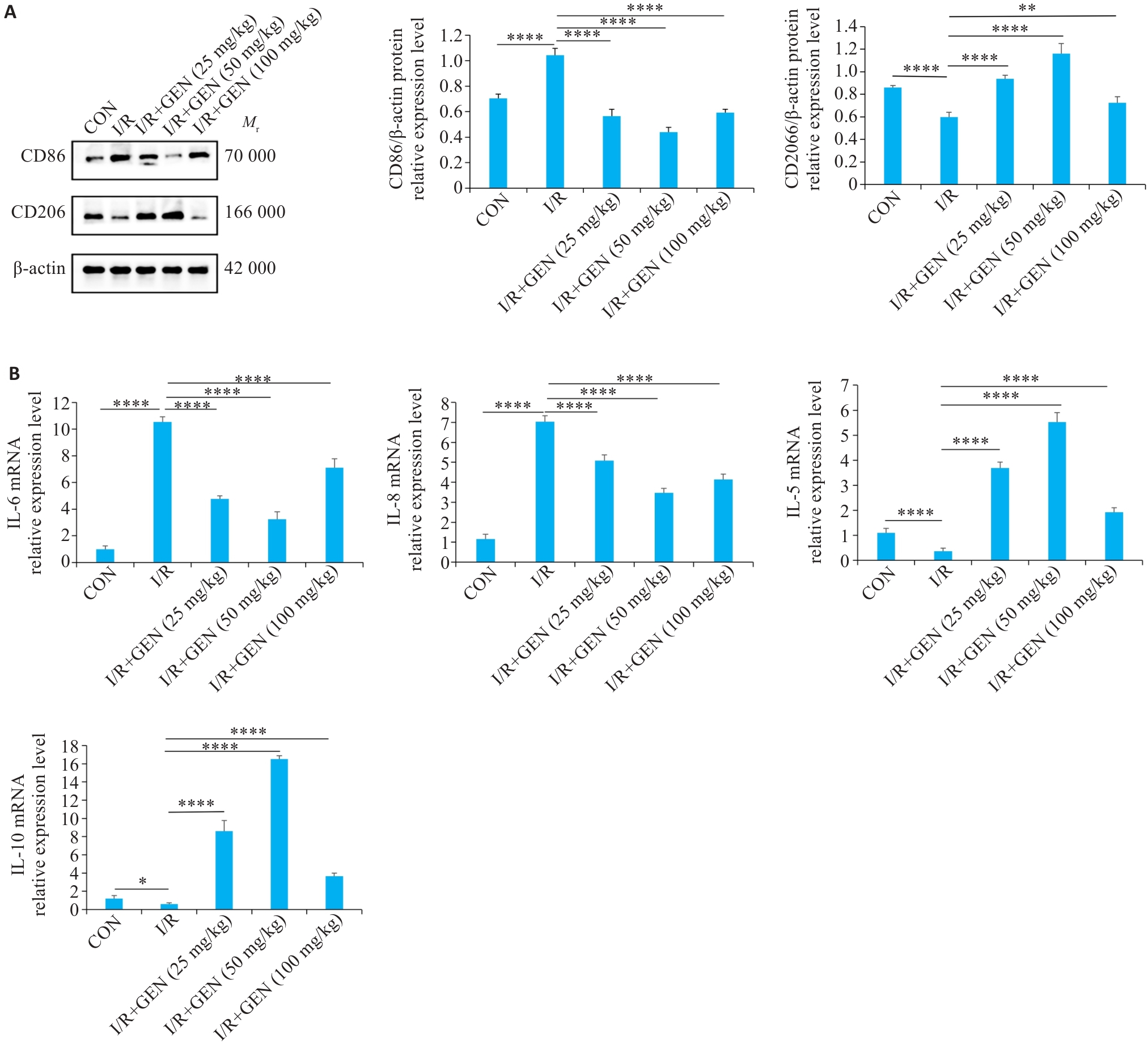
图2 GEN处理调控I/R诱导的BV2细胞极化状态
Fig.2 GEN regulates polarization of BV2 cells induced by I/R. A: Expression levels of CD86 and CD206 proteins in brain tissues of rats in different groups analyzed by Western blotting (n=6). B: Detection of mRNA levels of IL-6, IL-8, IL-5, and IL-10 levels by RT-qPCR (n=6). *P<0.05, **P<0.01, ****P<0.0001.
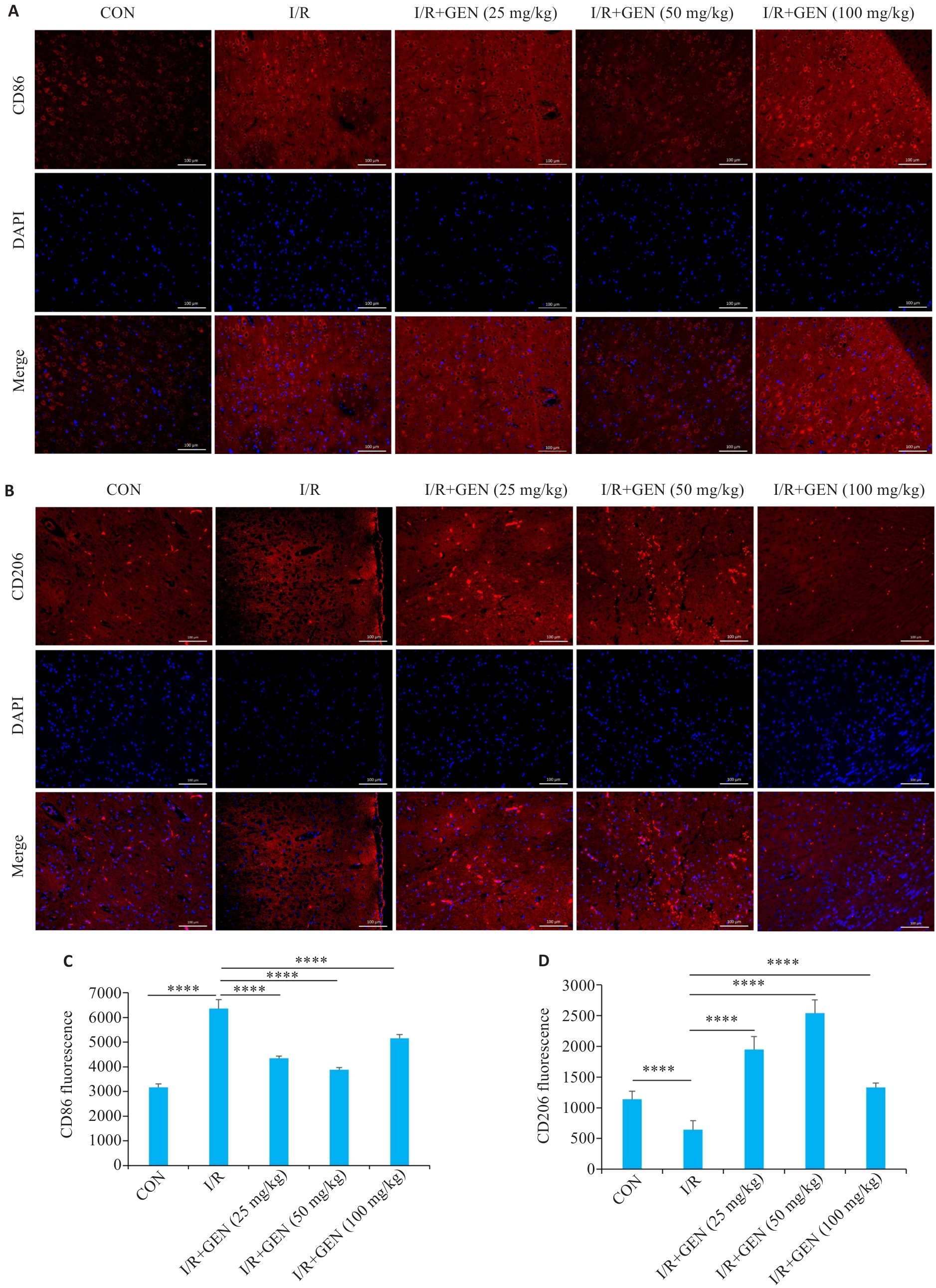
图3 各组大鼠脑组织中 CD86 和 CD206 的水平
Fig.3 Expression levels of CD86 and CD206 in brain tissues of rats in different groups detected by immunofluorescence staining (n=6). A: CD86 staining (Original magnification: ×200). B: CD206 staining (×200). C: Average fluorescence intensity of CD86. D: Average fluorescence intensity of CD206. ****P<0.0001.
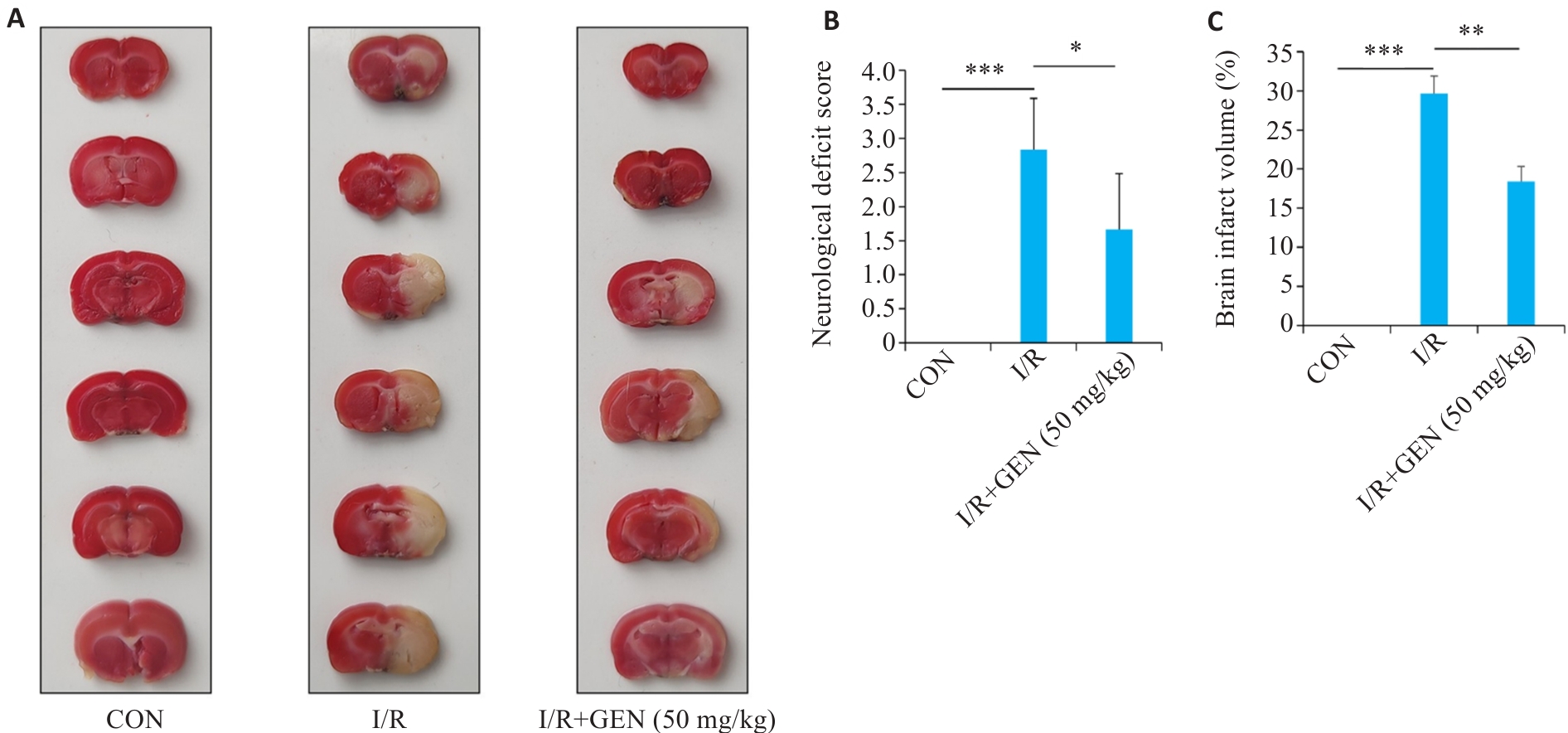
图4 脑梗死体积的变化以及神经功能评分
Fig.4 Cerebral infarction volume and neurological deficit score of rats in different groups. A: TTC staining of brain tissue in each group. B: Neurological deficit score (n=6). C: Cerebral infarction volume (n=6). *P<0.05, **P<0.01, ***P<0.001.
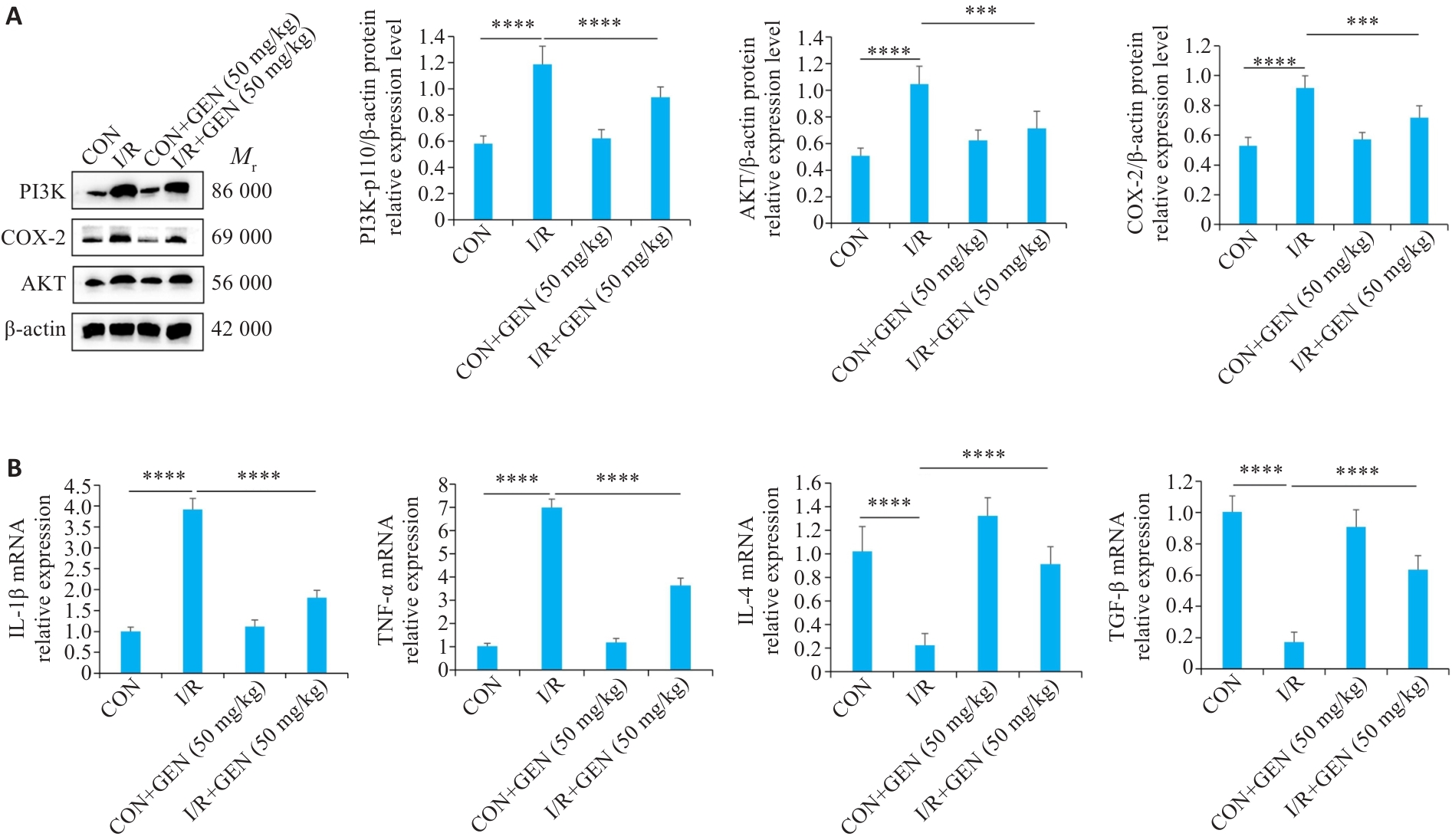
图5 GEN抑制PI3K/AKT/COX-2信号通路减轻神经炎症
Fig.5 Inhibition of the PI3K/AKT/COX-2 signaling pathway by GEN alleviates neuroinflammation in rats with cerebral I/R injury. A: Analysis of expression levels of PI3K, AKT, and COX-2 proteins in each groups by Western blotting (n=6). B: Detection of mRNA levels of IL-1β, TNF-α, IL-4, and TGF-β by RT-qPCR (n=6). ***P<0.001, ****P<0.0001.
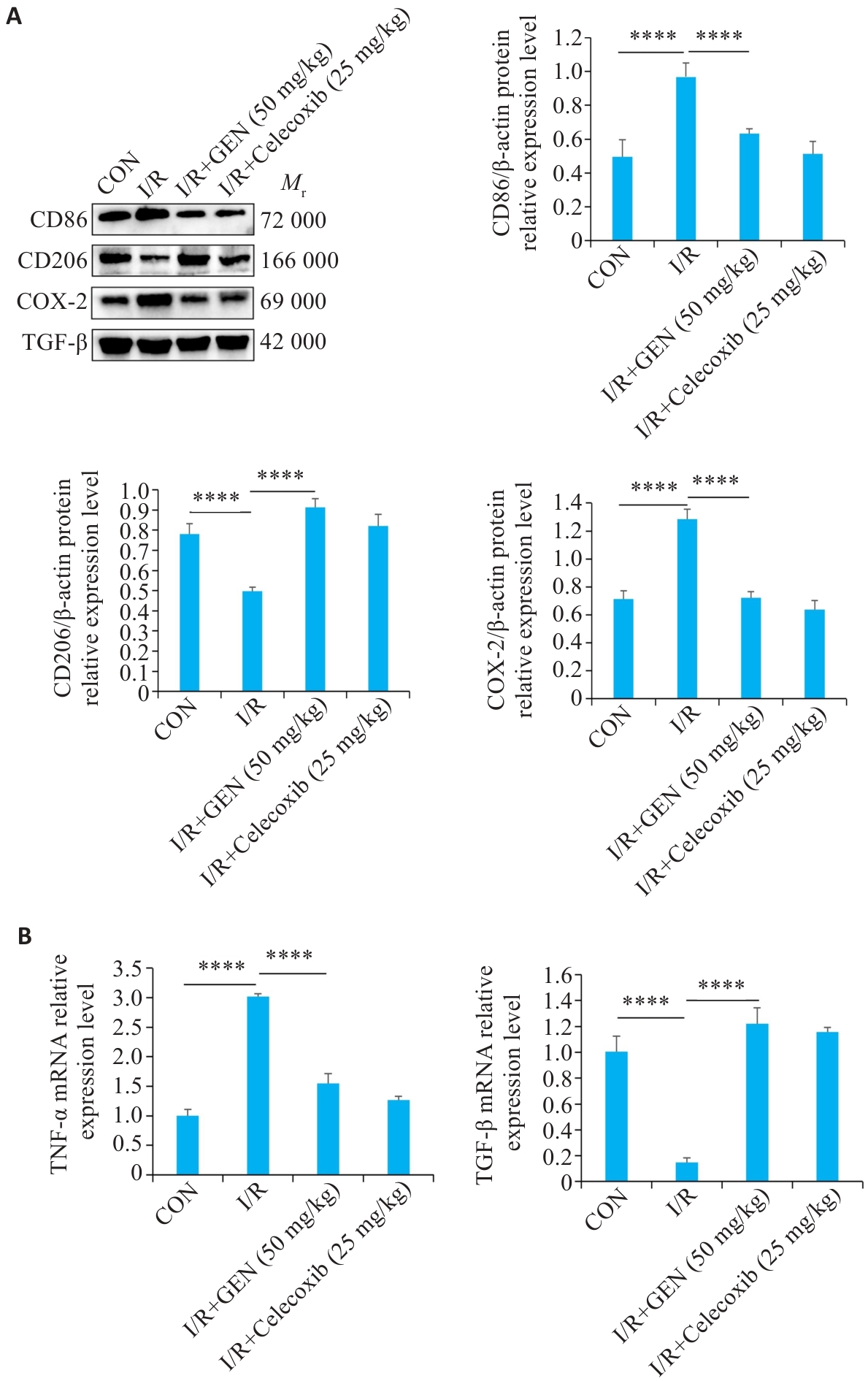
图6 GEN通过PI3K/AKT/COX-2信号通路调控小胶质细胞的极化
Fig.6 GEN regulates polarization of microglia through the PI3K/AKT/COX-2 signaling pathway. A: Expression levels of CD86, CD206 and COX-2 proteins in the brain tissues of rats in each group detected by Western blotting (n=6). B: RT-qPCR for detecting mRNA expression levels of TNF-α and TGF-β (n=6). ****P<0.0001.
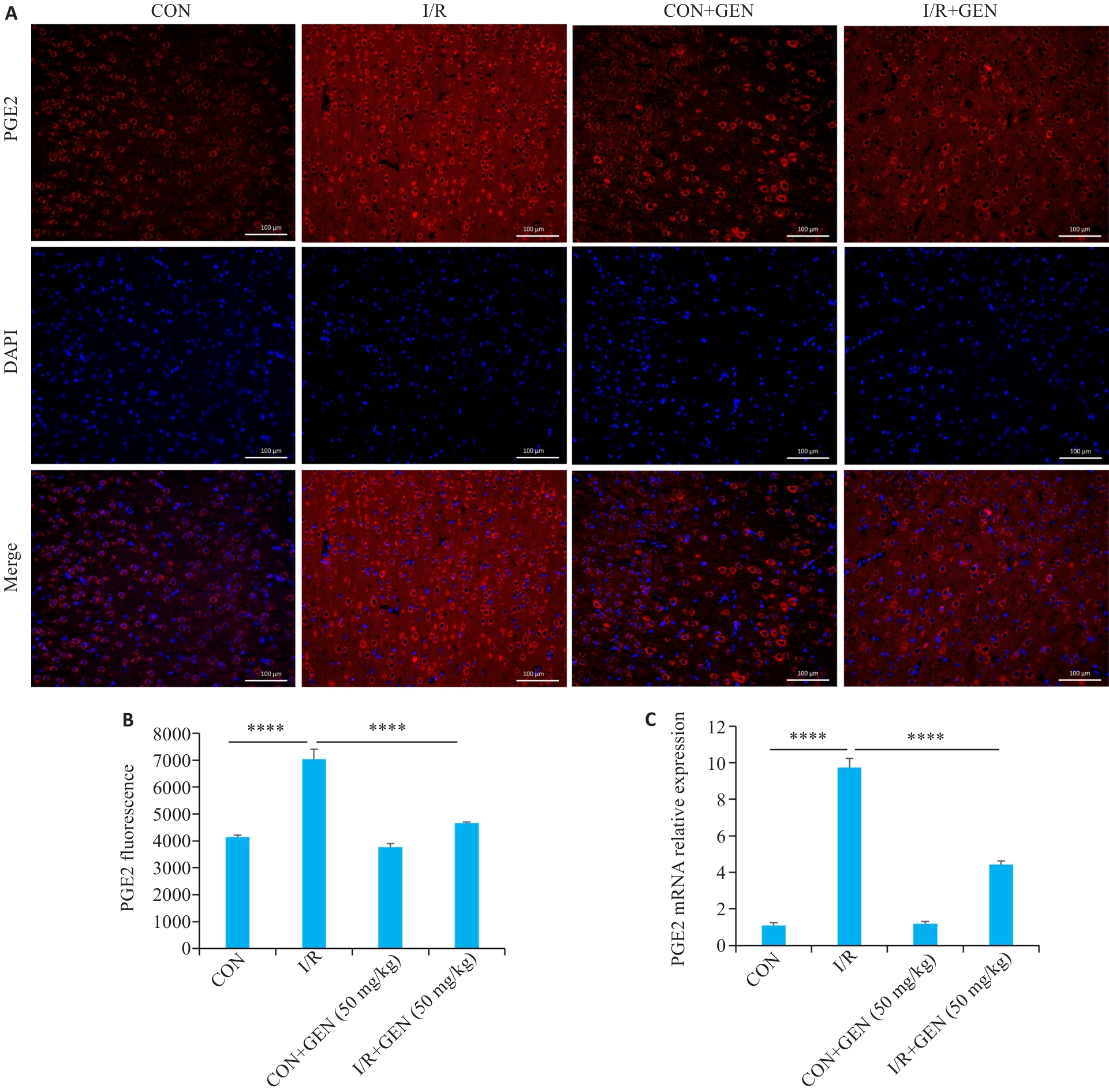
图7 各组大鼠脑组织中前列腺素的表达水平
Fig.7 Levels of PGE2 in brain tissues of rats in each group detected by immunofluorescence staining. A: Immunofluorescence staining for PGE2 in each group (×200). B: Quantitative analysis of PGE2 expression level in the brain tissues of the rats. C: Expression levels of PGE2 mRNA (n=6). ****P<0.0001.
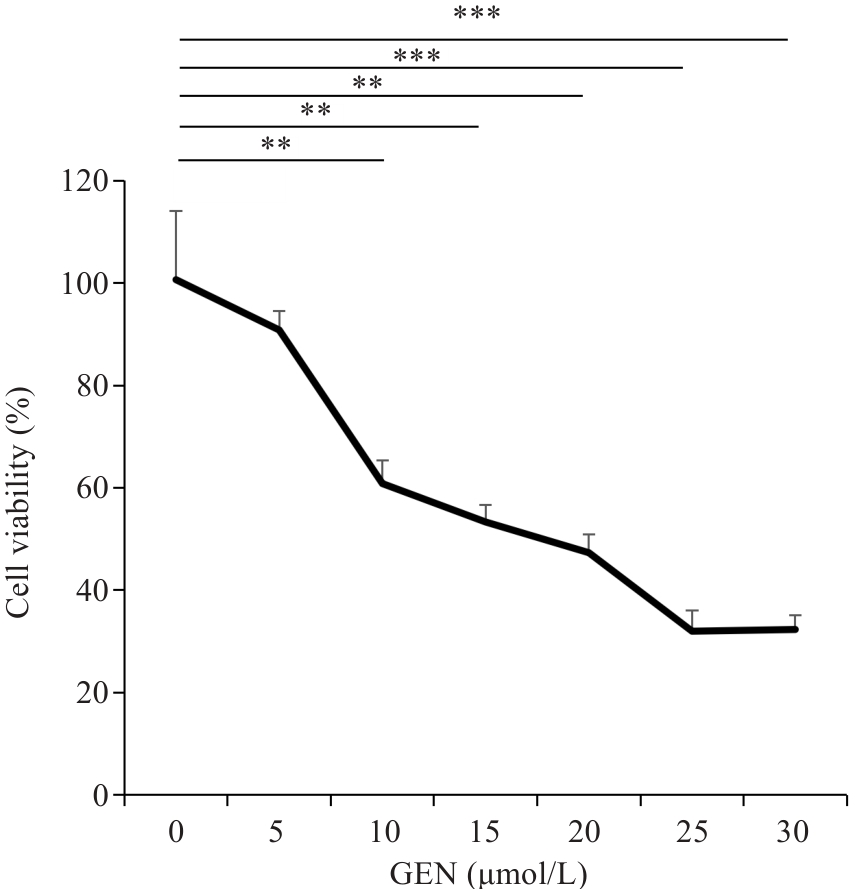
图8 检测不同浓度的GEN对BV2的毒性作用
Fig.8 Detection of cytotoxic effects of different concentrations of genistein on microglia. **P<0.01, ***P<0.001.
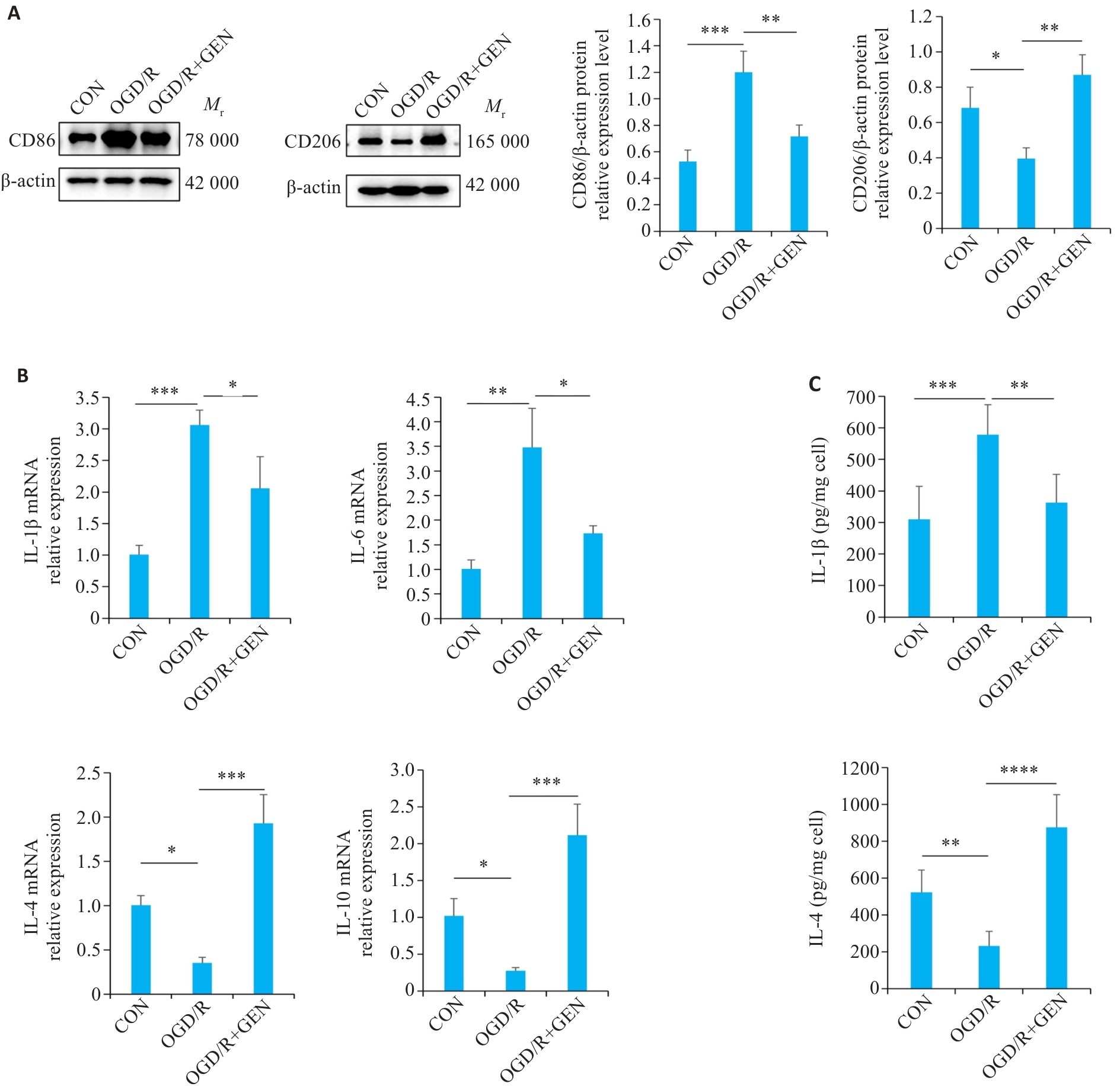
图9 GEN处理调控OGD/R诱导的BV2细胞极化状态
Fig.9 GEN regulates polarization of BV2 cells induced by OGD/R. A: Western blotting of CD86 and CD206 proteins in the microglia in different groups (n=3). B: RT-qPCR for detecting IL-1β, IL-6, IL-4, and IL-10 mRNA levels (n=3). C: Secreted levels of IL-1β and IL-4 in BV2 cell supernatants quantified by ELISA (n=6). *P<0.05, **P<0.01, ***P<0.001, ****P<0.0001.
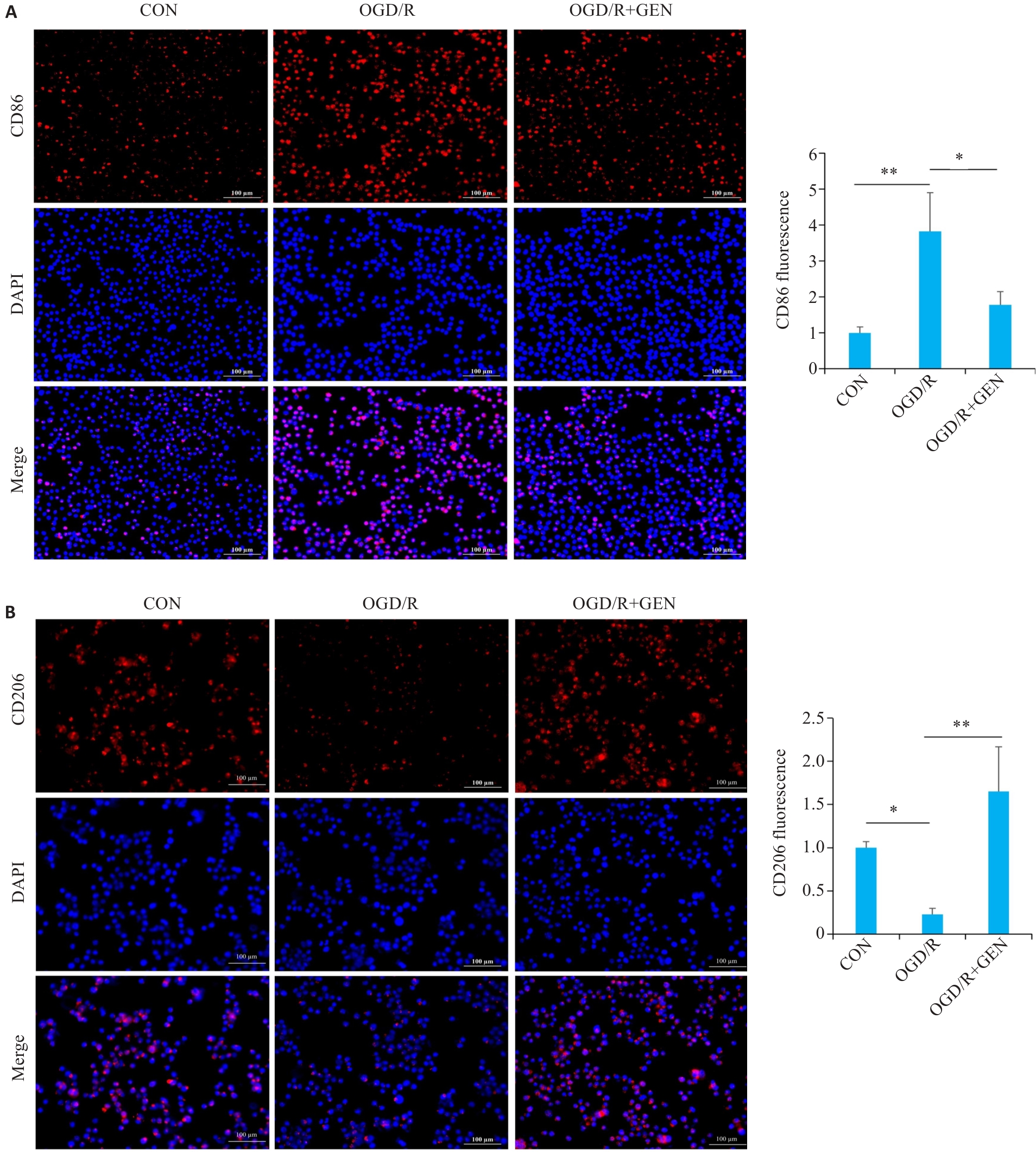
图10 各组BV2细胞CD86和CD206的水平。
Fig.10 Levels of CD86 and CD206 in BV2 cells in each group. A: Immunofluorescence staining and quantitative analysis of CD86 in each group (×200; n=3). B: Immunofluorescence imaging and quantitative analysis of CD206 in each group (×200; n=3). *P<0.05, **P<0.01.
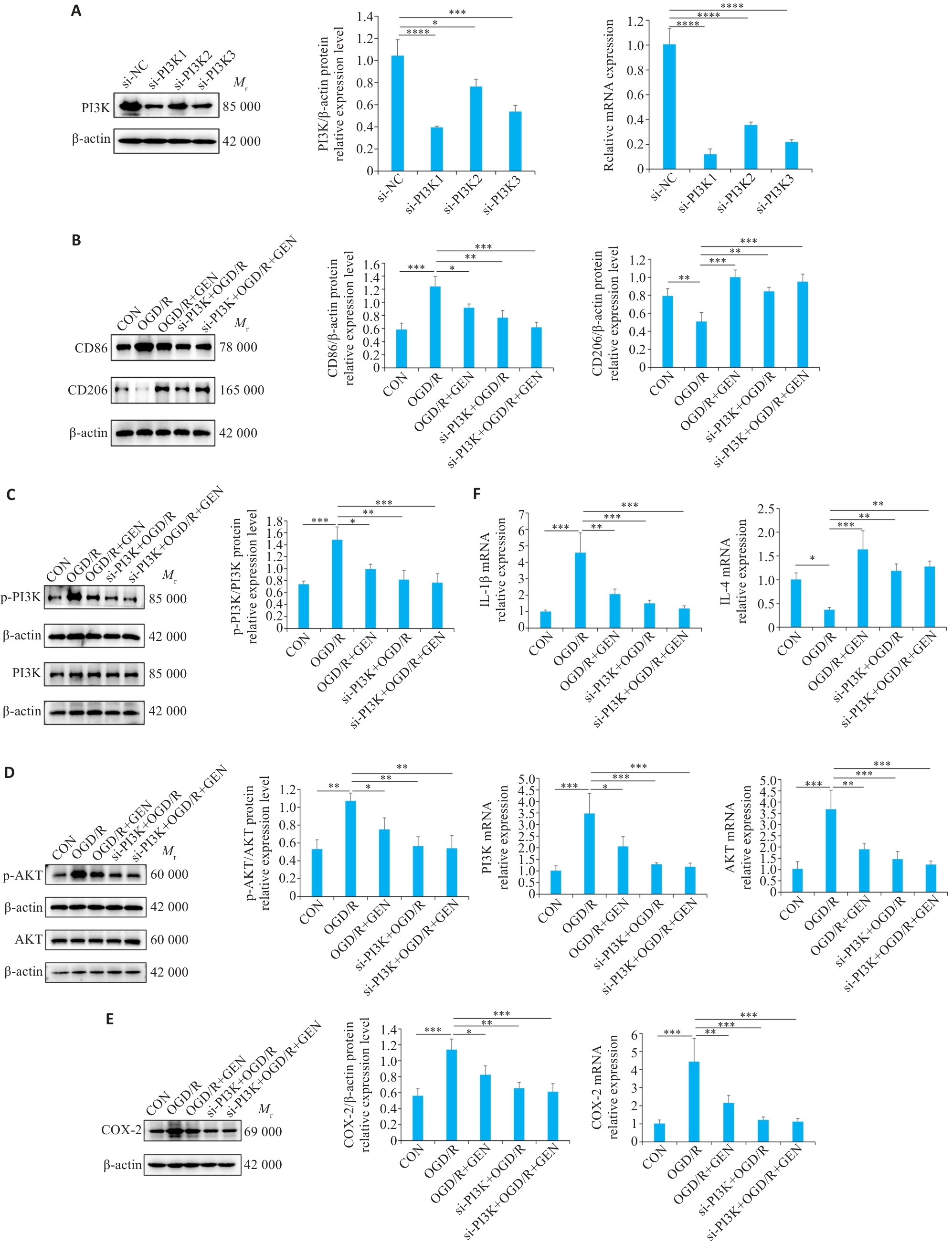
图11 GEN经PI3K/AKT/COX-2信号轴调控小胶质细胞极化的机制验证
Fig.11 Verification of the role of the PI3K/AKT/COX-2 signaling pathway in mediating the regulatory effect of GEN on microglial polarization. A: Western blotting and RT-qPCR for verifying silencing efficiency of si-PI3K1/2/3 (n=3). B: Western blotting for detecting CD86 and CD206 protein expression in the microglia in different treatment groups (n=3). C: Western blotting for detecting phosphorylation levels of p-PI3K in the microglia in different groups (n=3). D: Western blotting of p-AKT protein in the microglia in different treatment groups (n=3). E: Western blotting analysis of COX-2 protein in the microglia in different treatment groups (n=3). F: Results of RT-qPCR for detecting mRNA expressions of inflammatory cytokines and PI3K/AKT/COX-2 pathway in the microglia (n=3). *P<0.05, **P<0.01, ***P<0.001, ****P<0.0001.
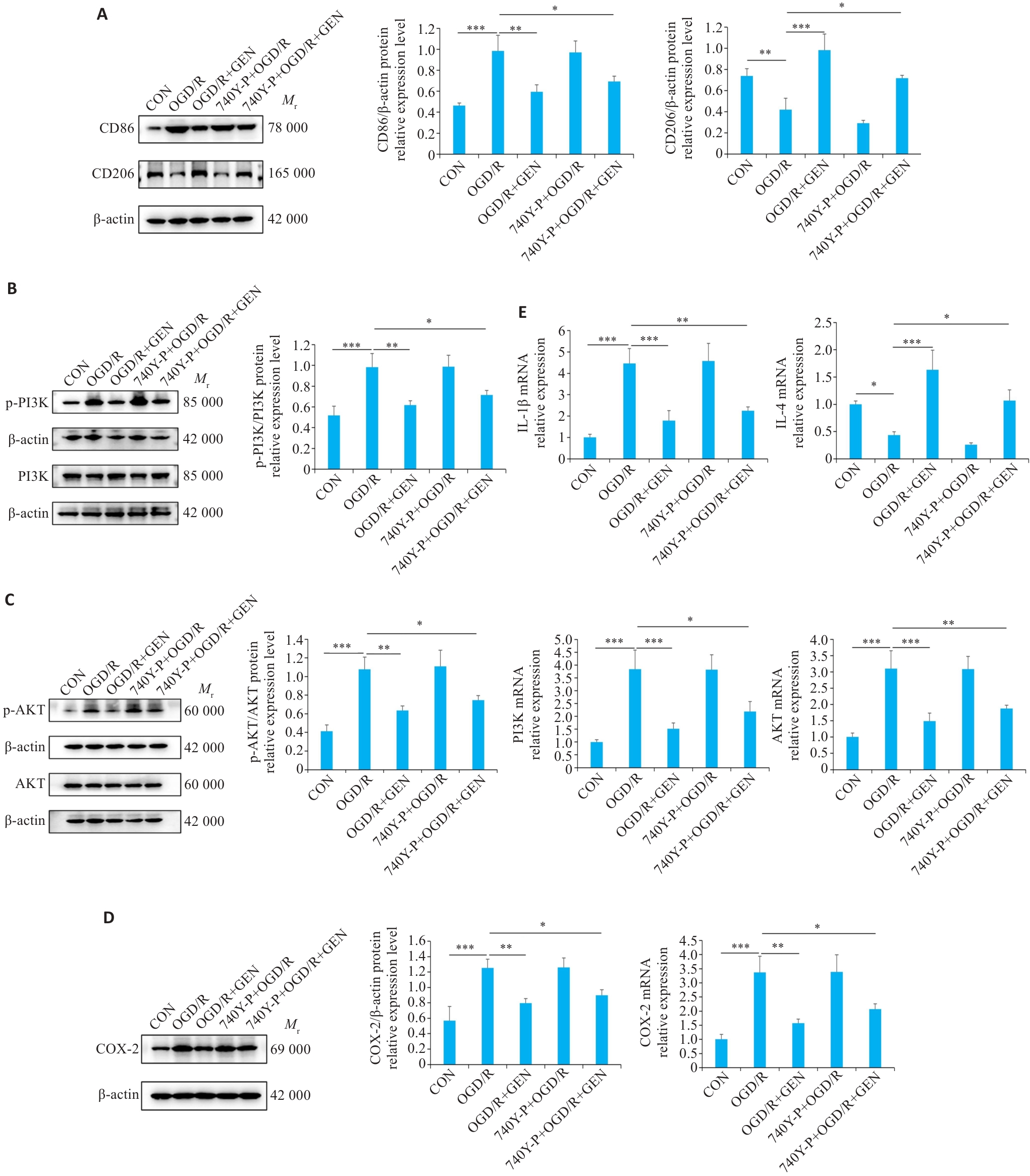
图12 GEN依赖PI3K/AKT/COX-2信号轴促进BV2向M2极化:PI3K激动剂的协同效应
Fig.12 GEN-dependent PI3K/AKT/COX-2 signaling axis enhances M2 polarization in microglia: the synergistic effects of PI3K agonists. A: Western blotting of CD86 and CD206 proteins in the microglia in different groups (n=3). B: Western blotting of p-PI3K/PI3K proteins in the microglia in different groups (n=3). C: Western blotting of p-AKT/AKT protein in the microglia in different groups (n=3). D: Western blotting of COX-2 protein in the microglia in different groups (n=3). E: RT-qPCR for detecting mRNA expressions of inflammatory cytokines and PI3K/AKT/COX-2 pathway in the microglia in different groups (n=3). *P<0.05, **P<0.01, ***P<0.001.
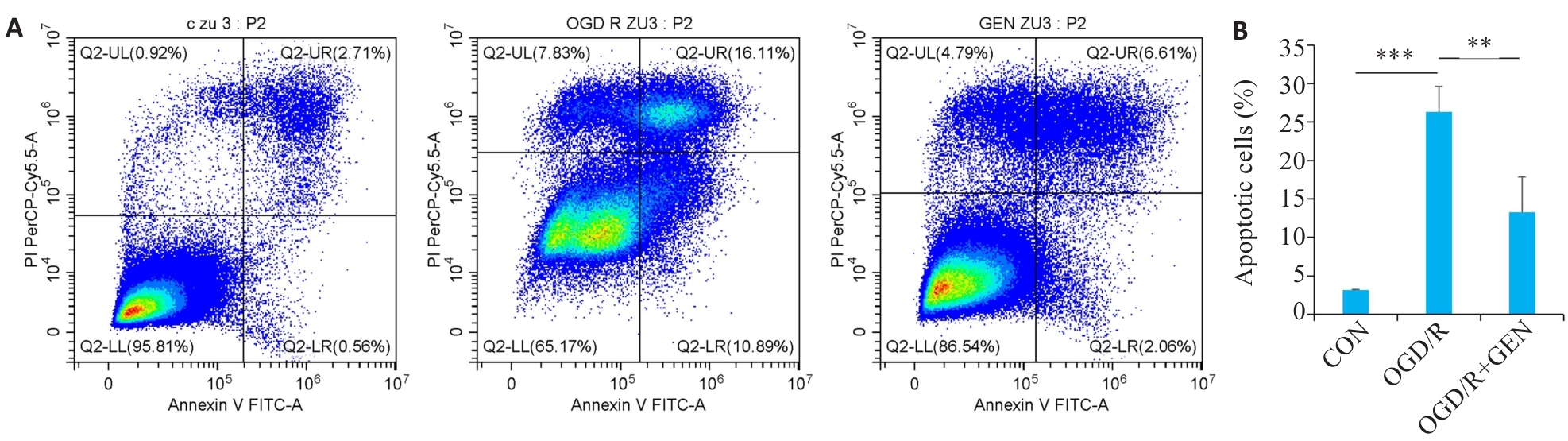
图13 Annexin V-FITC/PI双染法评估共培养体系细胞凋亡状态
Fig.13 Cell apoptosis of the co-cultured cells assessed by Annexin V-FITC/PI double staining. A: Annexin V-FITC/PI dual staining flow cytometry for detecting cell apoptosis in each group. B: Statistical analysis of cell apoptosis rates in each group (n=3). **P<0.01, ***P<0.001.
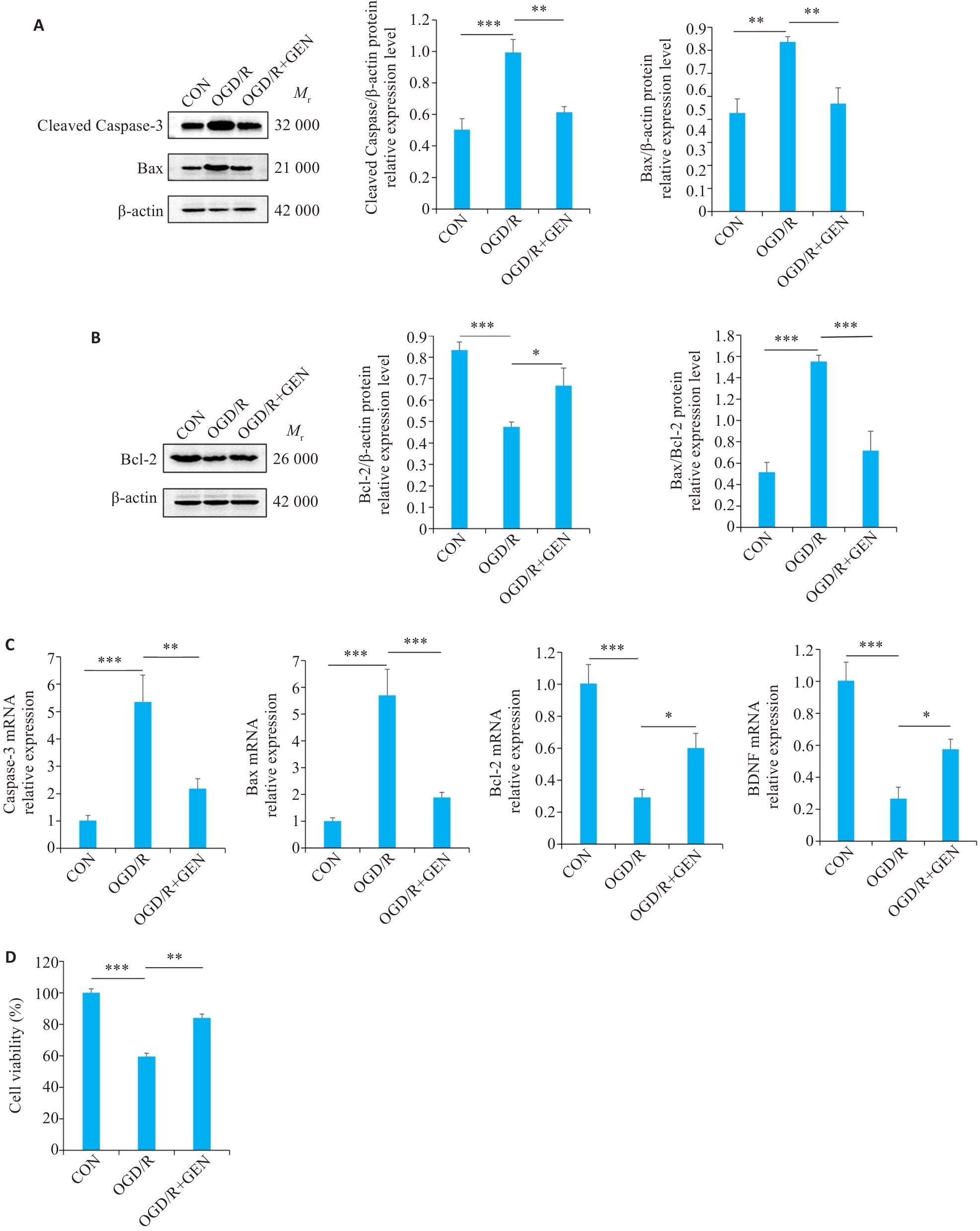
图14 BV2-HT22共培养体系中GEN调控小胶质细胞极化对神经元凋亡的保护作用
Fig.14 Protective effect of GEN-mediated regulation of microglial polarization on neuronal apoptosis in the BV2-HT22 co-culture system. A: Quantitative analysis of Bax and cleaved caspase-3 by Western blotting (n=3). B: Evaluation of Bcl-2 protein and Bax/Bcl-2 ratio using Western blotting (n=3). C: RT-qPCR analysis of mRNA expressions of HT22 cell apoptosis-related genes (caspase-3, Bax, and Bcl-2) and BDNF (n=3). D: CCK-8 assay for assessing proliferation and viability of HT22 cells in different treatment groups (n=6). *P<0.05, **P<0.01, ***P<0.001.
| [1] | Feske SK. Ischemic stroke[J]. Am J Med, 2021, 134(12): 1457-64. doi:10.1016/j.amjmed.2021.07.027 |
| [2] | Tuo QZ, Zhang ST, Lei P. Mechanisms of neuronal cell death in ischemic stroke and their therapeutic implications[J]. Med Res Rev, 2022, 42(1): 259-305. doi:10.1002/med.21817 |
| [3] | Su ZZ, Ye YZ, Shen CG, et al. Pathophysiology of ischemic stroke: noncoding RNA role in oxidative stress[J]. Oxid Med Cell Longev, 2022, 2022: 5815843. doi:10.1155/2022/5815843 |
| [4] | DeLong JH, Ohashi SN, O'Connor KC, et al. Inflammatory responses after ischemic stroke[J]. Semin Immunopathol, 2022, 44(5): 625-48. doi:10.1007/s00281-022-00943-7 |
| [5] | Lei W, Zhuang H, Huang WY, et al. Neuroinflammation and energy metabolism: a dual perspective on ischemic stroke[J]. J Transl Med, 2025, 23(1): 413. doi:10.1186/s12967-025-06440-3 |
| [6] | Fan PL, Wang SS, Chu SF, et al. Time-dependent dual effect of microglia in ischemic stroke[J]. Neurochem Int, 2023, 169: 105584. doi:10.1016/j.neuint.2023.105584 |
| [7] | Qiu YM, Zhang CL, Chen AQ, et al. Immune cells in the BBB disruption after acute ischemic stroke: targets for immune therapy?[J]. Front Immunol, 2021, 12: 678744. doi:10.3389/fimmu.2021.678744 |
| [8] | Xu SB, Lu JN, Shao AW, et al. Glial cells: role of the immune response in ischemic stroke[J]. Front Immunol, 2020, 11: 294. doi:10.3389/fimmu.2020.00294 |
| [9] | Yu T, Wang P, Wu YX, et al. miR-26a reduces inflammatory responses via inhibition of PGE2 production by targeting COX-2[J]. Inflammation, 2022, 45(4): 1484-95. doi:10.1007/s10753-022-01631-2 |
| [10] | Schlachetzki JC, Fiebich BL, Haake E, et al. Norepinephrine enhances the LPS-induced expression of COX-2 and secretion of PGE2 in primary rat microglia[J]. J Neuroinflammation, 2010, 7(1): 2. doi:10.1186/1742-2094-7-2 |
| [11] | Ding WH, Chen XY, Li W, et al. Genistein protects genioglossus myoblast against hypoxia-induced injury through PI3K-Akt and ERK MAPK pathways[J]. Sci Rep, 2017, 7: 5085. doi:10.1038/s41598-017-03484-4 |
| [12] | Li XY, Ding L, Li ZR, et al. Yangke powder alleviates OVA-induced allergic asthma by inhibiting the PI3K/AKT/NF‑κB signaling pathway[J]. Chin Med, 2025, 20(1): 69. doi:10.1186/s13020-025-01125-x |
| [13] | Yoo MJ, Jang YJ, Park SY, et al. Synergistic anti-cancer effects of ERB-041 and genistein through estrogen receptor suppression-mediated PI3K/AKT pathway downregulation in canine mammary gland tumor cells[J]. Int J Mol Sci, 2024, 25(5): 2466. doi:10.3390/ijms25052466 |
| [14] | Kim BH, Cho JY. Anti-inflammatory effect of honokiol is mediated by PI3K/Akt pathway suppression[J]. Acta Pharmacol Sin, 2008, 29(1): 113-22. doi:10.1111/j.1745-7254.2008.00725.x |
| [15] | Jayasooriya RGPT, Lee KT, Kang CH, et al. Isobutyrylshikonin inhibits lipopolysaccharide-induced nitric oxide and prostaglandin E2 production in BV2 microglial cells by suppressing the PI3K/Akt-mediated nuclear transcription factor‑κB pathway[J]. Nutr Res, 2014, 34(12): 1111-9. doi:10.1016/j.nutres.2014.10.002 |
| [16] | Zhou JM, Gu SS, Mei WH, et al. Ginkgolides and bilobalide protect BV2 microglia cells against OGD/reoxygenation injury by inhibiting TLR2/4 signaling pathways[J]. Cell Stress Chaperones, 2016, 21(6): 1037-53. doi:10.1007/s12192-016-0728-y |
| [17] | Yu H, Xu ZH, Qu GJ, et al. Hypoxic preconditioning enhances the efficacy of mesenchymal stem cells-derived conditioned medium in switching microglia toward anti-inflammatory polarization in ischemia/reperfusion[J]. Cell Mol Neurobiol, 2021, 41(3): 505-24. doi:10.1007/s10571-020-00868-5 |
| [18] | Guo LZ, Tripathi H, Gao EH, et al. Autotaxin inhibition reduces post‐ischemic myocardial inflammation via epigenetic gene modifications[J]. Stem Cell Rev Rep, 2024, 20(7): 1971-80. doi:10.1007/s12015-024-10759-7 |
| [19] | Orihuela R, McPherson CA, Harry GJ. Microglial M1/M2 polarization and metabolic states[J]. Br J Pharmacol, 2016, 173(4): 649-65. doi:10.1111/bph.13139 |
| [20] | Wang ML, Pan W, Xu Y, et al. Microglia-mediated neuroinflammation: a potential target for the treatment of cardiovascular diseases[J]. J Inflamm Res, 2022, 15: 3083-94. doi:10.2147/jir.s350109 |
| [21] | Zhou HJ, Yan LL, Huang HZ, et al. Tat-NTS peptide protects neurons against cerebral ischemia-reperfusion injury via ANXA1 SUMOylation in microglia[J]. Theranostics, 2023, 13(15): 5561-83. doi:10.7150/thno.85390 |
| [22] | Gong P, Jia HY, Li R, et al. Downregulation of Nogo-B ameliorates cerebral ischemia/reperfusion injury in mice through regulating microglia polarization via TLR4/NF-kappaB pathway[J]. Neurochem Int, 2023, 167: 105553. doi:10.1016/j.neuint.2023.105553 |
| [23] | Jaiswal KS, Malka O, Shauloff N, et al. Genistein carbon dots exhibit antioxidant and anti-inflammatory effects in vitro [J]. Colloids Surf B Biointerfaces, 2023, 223: 113173. doi:10.1016/j.colsurfb.2023.113173 |
| [24] | 李 晒, 李 丽, 闵思敏, 等. 大豆异黄酮可减轻大鼠脑缺血/再灌注损伤: 基于抑制铁死亡及炎症级联反应[J]. 南方医科大学学报, 2023, 43(2): 323-31. |
| [25] | Li L, Jiang WF, Yu BJ, et al. Quercetin improves cerebral ischemia/reperfusion injury by promoting microglia/macrophages M2 polarization via regulating PI3K/Akt/NF-κB signaling pathway[J]. Biomed Pharmacother, 2023, 168: 115653. doi:10.1016/j.biopha.2023.115653 |
| [26] | Zhao Q, Chen L, Zhang X, et al. β-elemene promotes microglial M2-like polarization against ischemic stroke via AKT/mTOR signaling axis-mediated autophagy[J]. Chin Med, 2024, 19(1): 86. doi:10.1186/s13020-024-00946-6 |
| [27] | Duan ZD, Chen HL, Miao W, et al. Scutellarin alleviates microglia-mediated neuroinflammation and apoptosis after ischemic stroke through the PI3K/AKT/GSK3β signaling pathway[J]. J Cell Commun Signal, 2024, 18(2): e12023. doi:10.1002/ccs3.12023 |
| [28] | Cui LL, Zhao SY, Liu H. SRSF3 alleviates ischemic cerebral infarction damage by activating the PI3K/AKT pathway[J]. Dev Neurosci, 2024, 46(5): 308-18. doi:10.1159/000535690 |
| [29] | Chu E, Mychasiuk R, Hibbs ML, et al. Dysregulated phosphoinositide 3-kinase signaling in microglia: shaping chronic neuroinflammation[J]. J Neuroinflammation, 2021, 18(1): 276. doi:10.1186/s12974-021-02325-6 |
| [30] | Yang GZ, Hu Y, Qin XY, et al. Micheliolide attenuates neuroinflammation to improve cognitive impairment of Alzheimer's disease by inhibiting NF-κB and PI3K/Akt signaling pathways[J]. Heliyon, 2023, 9(7): e17848. doi:10.1016/j.heliyon.2023.e17848 |
| [31] | Cianciulli A, Porro C, Calvello R, et al. Microglia mediated neuroinflammation: focus on PI3K modulation[J]. Biomolecules, 2020, 10(1): 137. doi:10.3390/biom10010137 |
| [32] | Qin GW, Lu P, Peng L, et al. Ginsenoside Rb1 inhibits cardiomyocyte autophagy via PI3K/Akt/mTOR signaling pathway and reduces myocardial ischemia/reperfusion injury[J]. Am J Chin Med, 2021, 49(8): 1913-27. doi:10.1142/s0192415x21500907 |
| [33] | Li JH, Dong SZ, Quan SL, et al. Nuciferine reduces inflammation induced by cerebral ischemia-reperfusion injury through the PI3K/Akt/NF-κB pathway[J]. Phytomedicine, 2024, 125: 155312. doi:10.1016/j.phymed.2023.155312 |
| [34] | Fattahi S, Amjadi-Moheb F, Tabaripour R, et al. PI3K/AKT/mTOR signaling in gastric cancer: Epigenetics and beyond[J]. Life Sci, 2020, 262: 118513. doi:10.1016/j.lfs.2020.118513 |
| [35] | Maharati A, Moghbeli M. PI3K/AKT signaling pathway as a critical regulator of epithelial-mesenchymal transition in colorectal tumor cells[J]. Cell Commun Signal, 2023, 21(1): 201. doi:10.1186/s12964-023-01225-x |
| [36] | Chen JL, Liu S, Zhang X, et al. Bondarzewia dickinsii against colitis-associated cancer through the suppression of the PI3K/AKT/COX-2 pathway and inhibition of PGE2 production in mice[J]. Nutrients, 2024, 16(23): 4048. doi:10.3390/nu16234048 |
| [37] | Neill NE, Mauro LA, Pennisi A. Novel estrogen receptor–targeted therapies in hormone-receptor positive breast cancer[J]. Curr Treat Options Oncol, 2025, 26(4): 302-12. doi:10.1007/s11864-025-01310-y |
| [38] | Chen LP, Xing J, Lv JP, et al. Corynoxine suppresses lung adenocarcinoma proliferation and metastasis via inhibiting PI3K/AKT pathway and suppressing Cyclooxygenase-2 expression[J]. Hereditas, 2024, 161(1): 41. doi:10.1186/s41065-024-00343-x |
| [39] | Zhu HR, Guo Y, Huang AL, et al. HDAC3-regulated PGE2 production by microglia induces phobic anxiety susceptibility after stroke and pointedly exploiting a signal-targeted gamma visual stimulation new therapy[J]. Front Immunol, 2022, 13: 845678. doi:10.3389/fimmu.2022.845678 |
| [40] | Yan WJ, Ren DQ, Feng XX, et al. Neuroprotective and anti-inflammatory effect of pterostilbene against cerebral ischemia/reperfusion injury via suppression of COX-2[J]. Front Pharmacol, 2021, 12: 770329. doi:10.3389/fphar.2021.770329 |
| [41] | Gong YH, Qiu JX, Jiang T, et al. Maltol ameliorates intervertebral disc degeneration through inhibiting PI3K/AKT/NF‑κB pathway and regulating NLRP3 inflammasome-mediated pyroptosis[J]. Inflammopharmacology, 2023, 31(1): 369-84. doi:10.1007/s10787-022-01098-5 |
| [42] | You ZJ, Yang ZZ, Cao S, et al. The novel KLF4/BIG1 regulates LPS-mediated neuro-inflammation and migration in BV2 cells via PI3K/Akt/NF-kB signaling pathway[J]. Neuroscience, 2022, 488: 102-11. doi:10.1016/j.neuroscience.2022.01.014 |
| [43] | Uddin S, Ahmed M, Hussain A, et al. Cyclooxygenase-2 inhibition inhibits PI3K/AKT kinase activity in epithelial ovarian cancer[J]. Int J Cancer, 2010, 126(2): 382-94. doi:10.1002/ijc.24757 |
| [44] | Lu EM, Wang Q, Li SC, et al. Profilin 1 knockdown prevents ischemic brain damage by promoting M2 microglial polarization associated with the RhoA/ROCK pathway[J]. J Neurosci Res, 2020, 98(6): 1198-212. doi:10.1002/jnr.24607 |
| [45] | He TT, Li WL, Song YY, et al. Sestrin2 regulates microglia polarization through mTOR-mediated autophagic flux to attenuate inflammation during experimental brain ischemia[J]. J Neuroinflammation, 2020, 17(1): 329. doi:10.1186/s12974-020-01987-y |
| [46] | Xu X, Gao WW, Li L, et al. Annexin A1 protects against cerebral ischemia-reperfusion injury by modulating microglia/macrophage polarization via FPR2/ALX-dependent AMPK-mTOR pathway[J]. J Neuroinflammation, 2021, 18(1): 119. doi:10.1186/s12974-021-02174-3 |
| [47] | Liu XR, Wen SH, Yan F, et al. Salidroside provides neuroprotection by modulating microglial polarization after cerebral ischemia[J]. J Neuroinflammation, 2018, 15(1): 39. doi:10.1186/s12974-018-1081-0 |
| [1] | 高建红, 史册, 李蔚然, 尚祥, 王飞, 杨琪琪, 李飞. 电针改善血管性痴呆大鼠认知障碍并抑制TLR4/MyD88/NF-κB通路介导的星形胶质细胞活化[J]. 南方医科大学学报, 2026, 46(8): 1814-1822. |
| [2] | 马滕滕, 杨建宇, 袁云, 罗海芸, 魏玉彬, 孟靖源, 王兴坪, 谢建平, 郭英. 四氢姜黄素通过调控SIRT1/NF-κB通路改善神经炎症与神经营养平衡缓解慢性束缚应激小鼠的抑郁样行为[J]. 南方医科大学学报, 2026, 46(8): 1719-1729. |
| [3] | 石科林, 齐霄川, 徐世祥, 高缘圆, 房明哲, 胡俊诚, 王春景, 刘长青, 郭俣. CHIR99021通过抑制GSK-3β/NF-κB信号通路减轻帕金森病小鼠的神经炎症[J]. 南方医科大学学报, 2026, 46(7): 1593-1600. |
| [4] | 刘安澜, 过伟峰, 李建香, 张天鸽, 徐丹. KLF10通过下调NF-κB/NLRP3通路改善大鼠焦虑性抑郁行为及神经炎症[J]. 南方医科大学学报, 2026, 46(5): 994-1005. |
| [5] | 林奕歆, 姚锦忠, 陈晔明, 秦再生. miR-143-3p通过靶向KRAS/RalA通路抑制星形胶质细胞活化并缓解坐骨神经分支选择性损伤小鼠神经病理性疼痛[J]. 南方医科大学学报, 2026, 46(5): 1018-1027. |
| [6] | 张淑芬, 黄添容, 杨灿洪, 陈家镒, 吕田明, 张嘉发. 莱菔硫烷通过抑制Aβ42寡聚体激活的U87细胞中MAPK/NF-κB信号通路降低反应性星形胶质细胞介导的SH-SY5Y凋亡[J]. 南方医科大学学报, 2026, 46(1): 191-199. |
| [7] | 杨洋, 王凯, 柳鉴修, 周志谟, 贾雯, 吴思谋, 李金星, 何方, 程如越. 生命早期两歧双歧杆菌BD-1干预可缓解注意缺陷多动障碍雌性大鼠幼年期的多动行为[J]. 南方医科大学学报, 2025, 45(4): 702-710. |
| [8] | 肖林雨, 段婷, 夏勇生, 陈悦, 孙洋, 许轶博, 徐磊, 闫兴洲, 胡建国. 蒙花苷通过抑制TLR4/NF-κB通路抑制小鼠脊髓损伤后小胶质细胞活化介导的神经炎症和神经元凋亡[J]. 南方医科大学学报, 2024, 44(8): 1589-1598. |
| [9] | 姜诚诚, 李洋洋, 段可欣, 詹婷婷, 陈子龙, 王永雪, 赵蕊, 马彩云, 郭俣, 刘长青. Parkin通过介导PINK 1/Parkin线粒体自噬信号通路加速小鼠帕金森病发展及加剧神经炎症发生[J]. 南方医科大学学报, 2024, 44(12): 2359-2366. |
| [10] | 张 蒙, 张源源, 牛梦竹, 朱 悦, 童诗逸, 寇现娟. 双氢杨梅素通过诱导自噬减轻慢性帕金森病小鼠的细胞焦亡和坏死性凋亡[J]. 南方医科大学学报, 2023, 43(8): 1268-1278. |
| [11] | 李 晒, 李 丽, 闵思敏, 刘赛赛, 秦志文, 熊志尚, 徐建国, 王博文, 丁渡山, 赵士弟. 大豆异黄酮可减轻大鼠脑缺血/再灌注损伤:基于抑制铁死亡及炎症级联反应[J]. 南方医科大学学报, 2023, 43(2): 323-330. |
| [12] | 陈 兴, 王开万, 储德海, 朱 羽, 张文兵, 曹慧萍, 谢文宇, 鲁传豪, 李 侠. 连翘酯苷B抑制小鼠脑缺血/再灌注引起的氧化应激损伤:基于激活AMPK/DAF-16/FOXO3通路[J]. 南方医科大学学报, 2023, 43(2): 199-205. |
| [13] | 张嘉发, 杨灿洪, 张淑芬, 曹婷婷, 彭 瑞, 郭蔚泓, 严予苹, 谢淑婷, 彭晓佳, 吕田明, 黄添容. 莱菔硫烷通过下调MAPK/NF-κB信号通路逆转Aβ纤维介导的M1型小胶质细胞极化和神经炎症介导的神经干细胞程序性坏死[J]. 南方医科大学学报, 2023, 43(12): 2132-2138. |
| [14] | 王 静, 陈雪祎, 孙 丽, 陈雪梅, 李 慧, 熊彬睿, 王海华. 长链非编码RNA ZEB1-AS1通过HMGB1/TLR-4信号轴加剧大鼠脑缺血/再灌注损伤[J]. 南方医科大学学报, 2022, 42(8): 1134-1142. |
| [15] | 黄河灵, 高玉元, 聂 坤, 王丽娟. 巨噬细胞移动抑制因子介导MPP+/MPTP诱导的小胶质细胞NLRP3炎症小体的激活[J]. 南方医科大学学报, 2021, 41(7): 972-979. |
| 阅读次数 | ||||||
|
全文 |
|
|||||
|
摘要 |
|
|||||
