
南方医科大学学报 ›› 2026, Vol. 46 ›› Issue (8): 1719-1729.doi: 10.12122/j.issn.1673-4254.2026.08.01
• •
马滕滕1( ), 杨建宇1(), 袁云1, 罗海芸1, 魏玉彬1, 孟靖源1, 王兴坪1, 谢建平2(), 郭英1()
收稿日期:2026-01-05
接受日期:2026-05-13
出版日期:2026-08-20
发布日期:2026-08-01
通讯作者:
谢建平,郭英
E-mail:2390484784@qq.com;yangjianyu@kmmu.edu.cn;26328188@qq.com;guoying@kmmu.edu.cn
作者简介:马滕滕,硕士,E-mail:2390484784@qq.com
Tengteng MA1(), Jianyu YANG1(), Yun YUAN1, Haiyun LUO1, Yubin WEI1, Jingyuan MENG1, Xingping WANG1, Jianping XIE2(), Ying GUO1()
Received:2026-01-05
Accepted:2026-05-13
Online:2026-08-20
Published:2026-08-01
Contact:
Jianping XIE, Ying GUO
E-mail:2390484784@qq.com;yangjianyu@kmmu.edu.cn;26328188@qq.com;guoying@kmmu.edu.cn
About author:First author contact:(马滕滕、杨建宇并列第一作者)
Supported by:摘要:
目的 探讨四氢姜黄素(THC)是否通过调控SIRT1/NF-κB通路改善神经炎症和神经营养平衡,从而缓解小鼠抑郁样行为。 方法 采用慢性束缚应激(CRS)建立小鼠抑郁模型。小鼠接受THC(2.5、5、10 mg·kg-1·d-1)或舍曲林(10 mg·kg-1·d-1)治疗21 d。通过旷场实验、高架十字迷宫、悬尾实验和强迫游泳实验评小鼠估焦虑和抑郁样行为。采用ELISA、Western blotting和免疫组化检测小鼠血清和海马组织中SIRT1、p-NF-κB/NF-κB、炎症因子(TNF-α、iNOS)和神经营养因子(BDNF、GDNF、TGF-β1)水平。通过免疫荧光分析海马CA3区小胶质细胞激活标志物(Iba1)和SIRT1表达。体外实验中,使用脂多糖(LPS)刺激BV2小胶质细胞,THC单独或联合SIRT1抑制剂EX-527对细胞进行预处理,以验证通路机制。 结果 THC治疗显著缓解了CRS诱导的小鼠焦虑和抑郁样行为,促进小鼠体质量增长。THC降低了CRS小鼠血清和海马中TNF-α与iNOS水平,同时提升SIRT1、BDNF、GDNF和TGF-β1表达。THC抑制了CRS小鼠海马组织中NF-κB活化, 减少海马CA3区中Iba1的表达和 Iba1+/SIRT1+细胞比例,增加SIRT1表达。体外实验显示,THC减轻LPS诱导的BV2细胞NF-κB活化,降低TNF-α和iNOS表达,促进SIRT1、BDNF、GDNF和TGF-β1表达,这些效应可被EX-527有效阻断。 结论 THC在CRS小鼠中发挥显著的抗抑郁样作用,其机制可能是通过激活SIRT1以抑制NF-κB介导的神经炎症并恢复神经营养因子表达,提示SIRT1/NF-κB通路是THC发挥抗抑郁作用的关键机制。
马滕滕, 杨建宇, 袁云, 罗海芸, 魏玉彬, 孟靖源, 王兴坪, 谢建平, 郭英. 四氢姜黄素通过调控SIRT1/NF-κB通路改善神经炎症与神经营养平衡缓解慢性束缚应激小鼠的抑郁样行为[J]. 南方医科大学学报, 2026, 46(8): 1719-1729.
Tengteng MA, Jianyu YANG, Yun YUAN, Haiyun LUO, Yubin WEI, Jingyuan MENG, Xingping WANG, Jianping XIE, Ying GUO. Tetrahydrocurcumin ameliorates depression-like behaviors in chronic restraint stress mice by modulating neuroinflammation and neurotrophic balance via the SIRT1/NF-κB pathway[J]. Journal of Southern Medical University, 2026, 46(8): 1719-1729.
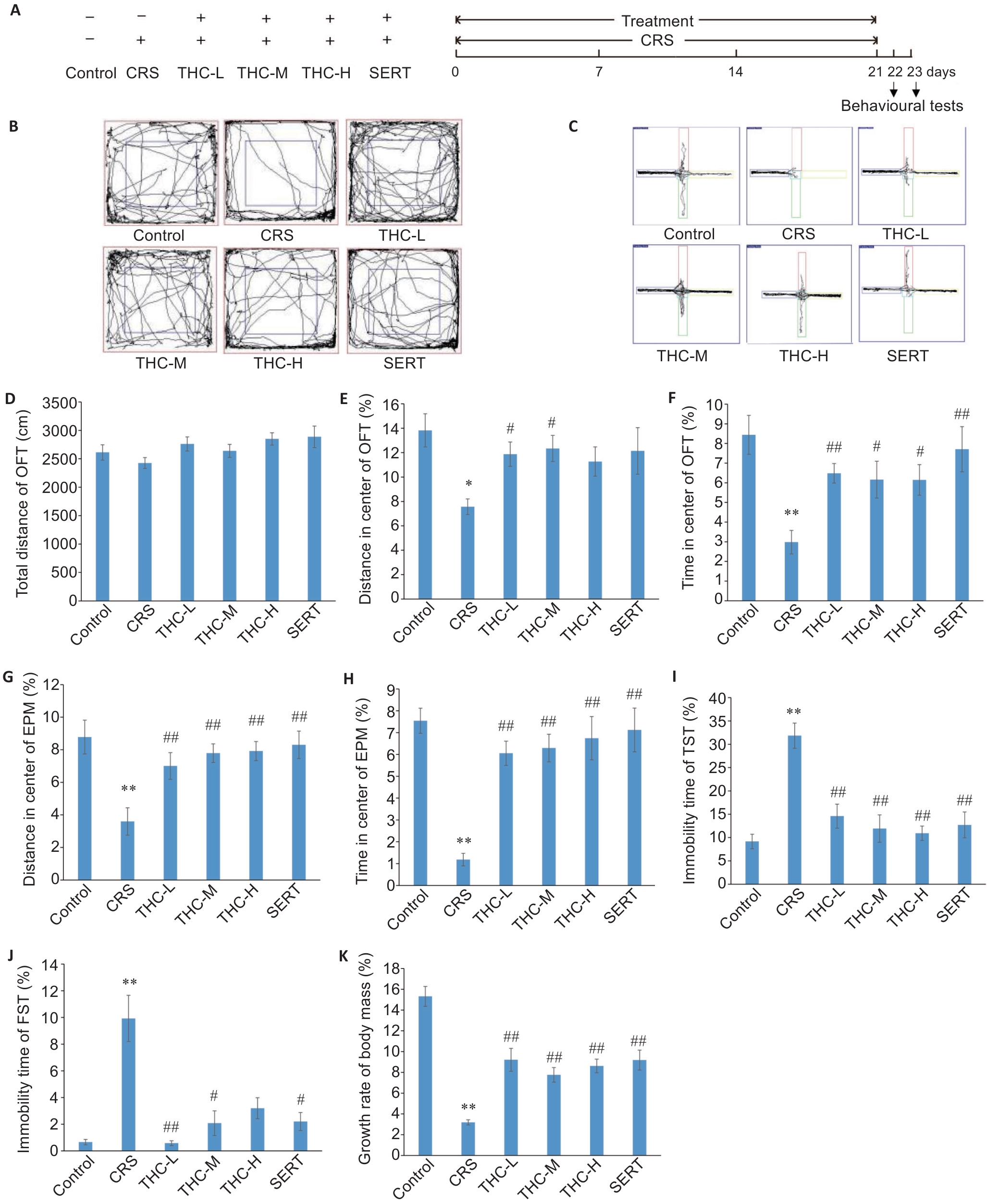
Fig.1 Effects of tetrahydrocurcumin (THC) on depression-like behaviors in mice with chronic restraint stress (CRS). A: Flowchart of the experiment protocol. B: Trajectory diagram of the mice in open field test (OFT). C: Trajectory diagram of the mice in elevated plus maze (EPM) test. D: Total distance traveled of the mice in OFT. E: Percentage of distance traveled in center in OFT. F: Percentage of time in the center in OFT. G: Percentage of distance in the center in EPM test. H: Percentage of time in the center in EPM test. I: Percentage of immobility time in tail suspension test. J: Percentage of immobility time in forced swimming test. K: Growth rate of body mass. Data are presented as Mean±SE (n=10). *P<0.05, **P<0.01 vs control; #P<0.05, ##P<0.01 vs CRS.
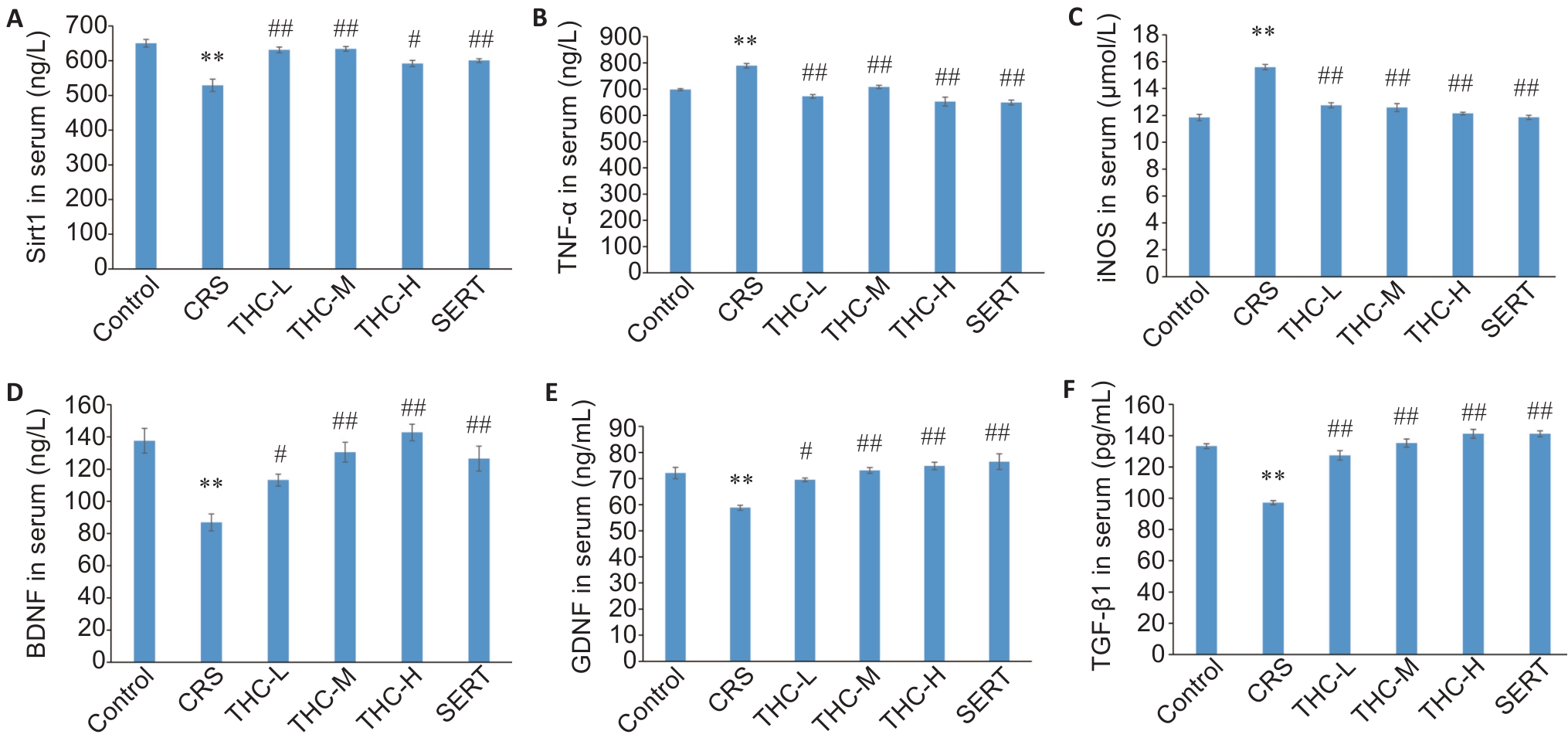
Fig.2 Serum levels of SIRT1, TNF-α, iNOS, BDNF, GDNF and TGF-β1 in CRS mice receiving treatment with low, medium, and high doses of THC (THC-L, THC-M and THC-H groups, respectively). A: Serum levels of SIRT1. B: Serum levels of TNF-α. C: Serum levels of iNOS. D: Serum levels of BDNF. E: Serum levels of GDNF. F: Serum levels of TGF-β1. Data are presented as Mean±SE (n=4). **P<0.01 vs control group; #P<0.05, ##P<0.01 vs CRS group.
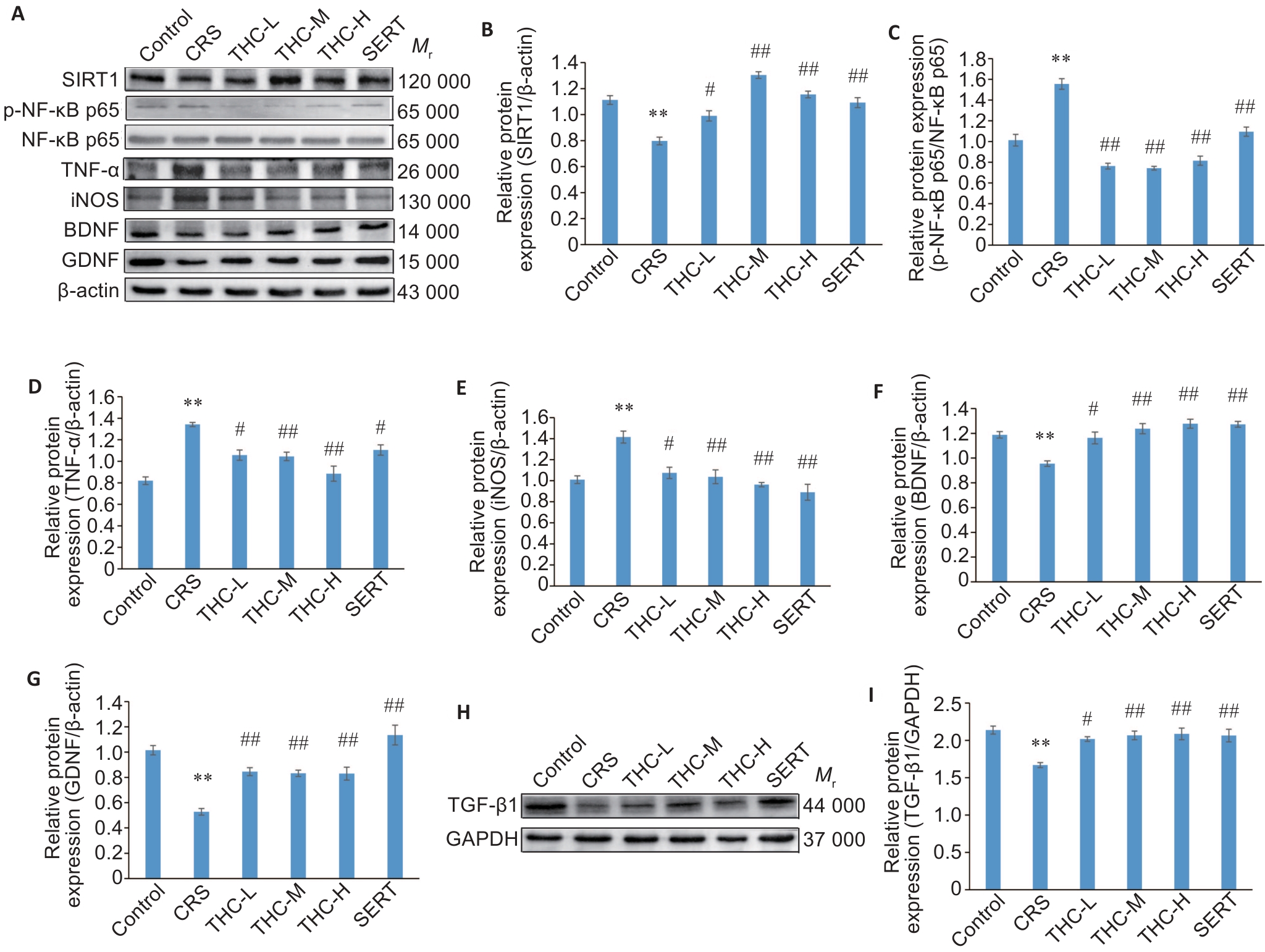
Fig.3 Effects of different doses of THC on protein expressions of SIRT1, p-NFκB/NFκB, TNF-α, iNOS, BDNF, GDNF and TGF-β1 in the hippocampus of CRS mice detected by Western blotting. A-G: Western blotting for detecting the expression levels of SIRT1, p-NFκB/NFκB, TNF-α, iNOS, BDNF and GDNF. H-I: Western blotting for detecting the expression levels of TGF-β1. Data are presented as Mean±SE (n=4). **P<0.01 vs control group; #P<0.05, ##P<0.01 vs CRS group.

Fig.4 Effects of THC on protein expressions of SIRT1, TNF-α, iNOS, BDNF, GDNF and TGF-β1 in the CA1, CA2, CA3, and DG regions of the hippocampus in CRS mice detected by immunohistochemical staining (Original magnification: ×400). A-E: Expression levels of SIRT1 in the CA1, CA2, CA3, and DG regions. F-J: Expression levels of TNF-α in the CA1, CA2, CA3, and DG regions. K-O: Expression levels of iNOS in the CA1, CA2, CA3, and DG regions. P-T: Expression levels of BDNF in the CA1, CA2, CA3, and DG regions. U-Y: Expression levels of GDNF in the CA1, CA2, CA3, and DG regions. Z-AD: Expression levels of TGF-β1 in the CA1, CA2, CA3, and DG regions. Data are presented as Mean±SE (n=3). **P<0.01 vs control group; ##P<0.01 vs CRS group.
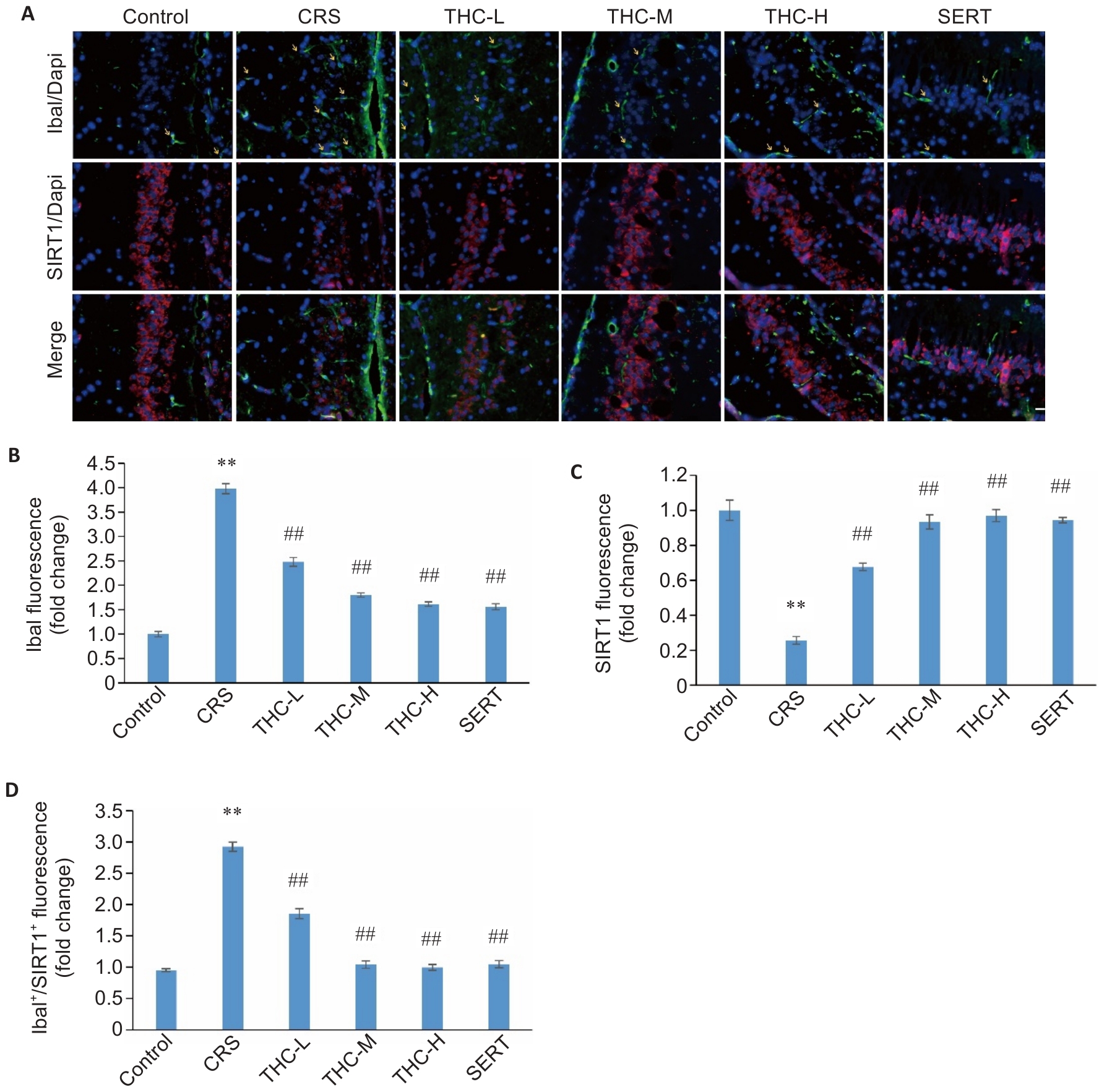
Fig.5 Effects of THC on protein expressions of Iba1, SIRT1, and Iba1+/SIRT1+ in the CA3 region of the hippocampus in CRS mice detected by immunofluorescence staining (×400). A: Immunofluorescence staining images of the CA3 region for detecting expressions of Iba1, SIRT1, and Iba1+/SIRT1+ in different groups. B-D: Quantitative analysis of Iba1, SIRT1, and Iba1+/SIRT1+expressions (Mean±SE, n=3). **P<0.01 vs control group; ##P<0.01 vs CRS group.
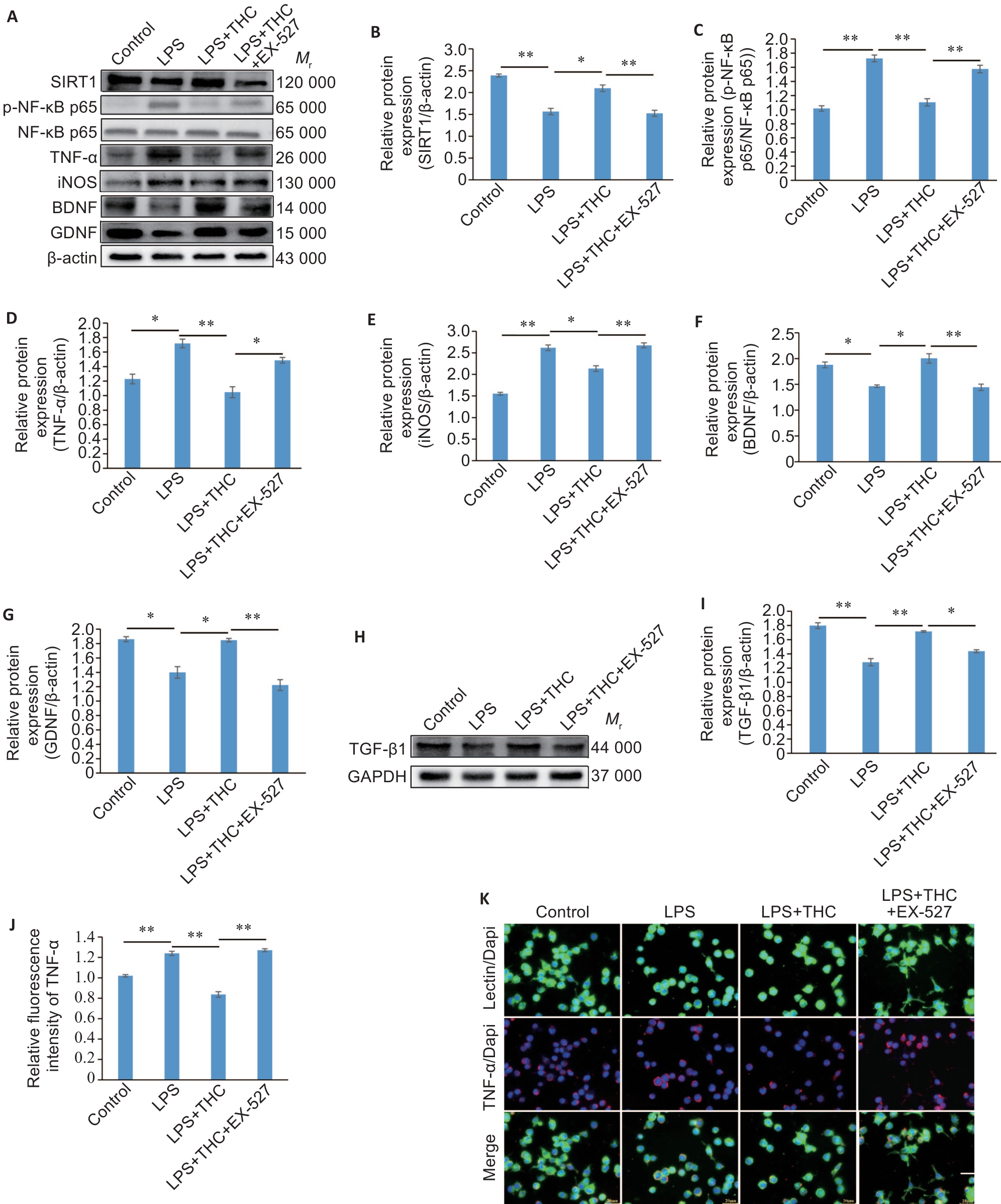
Fig.6 Effects of THC on protein expressions of SIRT1, p-NFκB/NFκB, TNF-α, iNOS, BDNF, GDNF and TGF-β1 in BV2 microgliall cells induced by LPS. A-G: Western blotting for detecting the expression levels of SIRT1, p-NFκB/NFκB, TNF-α, iNOS, BDNF and GDNF. H-I: Western blotting for detecting the expression levels of TGF-β1. J-K: Immunofluorescence staining for detecting the expression levels of TNF-α (×400). Data are presented as Mean±SE (n=3). *P<0.05, **P<0.01.
| [1] | Smith K. Mental health: a world of depression[J]. Nature, 2014, 515(7526): 181. doi:10.1038/515180a |
| [2] | Wang JF, Zhao ZP, Yang J, et al. Preplanned studies: the association between depression and all-cause, cause-specific mortality in the Chinese population-China, 2010-2022[J]. China CDC Weekly. 2024, 6(40): 1022-7. |
| [3] | Ślifirski G, Król M, Turło J. 5-HT receptors and the development of new antidepressants[J]. Int J Mol Sci, 2021, 22(16): 9015. doi:10.3390/ijms22169015 |
| [4] | Wareham LK, Calkins DJ. Making tracks: microglia and the extracellular matrix[J]. Mol Neurodegener, 2025, 20(1): 101. doi:10.1186/s13024-025-00898-x |
| [5] | Verduzco Espinoza AP, Na N, Campanati L, et al. Microglia-to-neuron signaling links APOE4 and inflammation to enhanced neuronal lipid metabolism and network activity[J]. Proc Natl Acad Sci U S A, 2025, 122(37): e2516103122. doi:10.1073/pnas.2516103122 |
| [6] | Sun Y, Zhang R, Meng Y, et al. Coenzyme Q10 alleviates depression-like behaviors in mice with chronic restraint stress by down-regulating the pyroptosis signaling pathway[J]. Nan Fang Yi Ke Da Xue Xue Bao, 2024, 44(5): 810-7. |
| [7] | Réus GZ, Manosso LM, Quevedo J, et al. Major depressive disorder as a neuro-immune disorder: origin, mechanisms, and therapeutic opportunities[J]. Neurosci Biobehav Rev, 2023, 155: 105425. doi:10.1016/j.neubiorev.2023.105425 |
| [8] | Foley É M, Parkinson JT, Mitchell RE, et al. Peripheral blood cellular immunophenotype in depression: a systematic review and meta-analysis[J]. Mol Psychiatry, 2023, 28(3): 1004-19. doi:10.1038/s41380-022-01919-7 |
| [9] | Bilal H, McDonald SJ, Stout JC, et al. Associations of inflammatory cytokines and cortisol with nonmotor features of Huntington's disease[J]. Ann Clin Transl Neurol, 2024, 11(4): 989-99. doi:10.1002/acn3.52016 |
| [10] | Chen BL, Chen YQ, Ma BH, et al. Tetrahydrocurcumin, a major metabolite of curcumin, ameliorates allergic airway inflammation by attenuating Th2 response and suppressing the IL-4Ralpha-Jak1-STAT6 and Jagged1/Jagged2 -Notch1/Notch2 pathways in asthmatic mice[J]. Clin Exp Allergy, 2018, 48(11): 1494-508. doi:10.1111/cea.13258 |
| [11] | Yang Y, Yang J, Ma T, et al. The role and mechanism of TGF-β1 in the antidepressant-like effects of tetrahydrocurcumin[J]. Eur J Pharmacol, 2023, 959: 176075. doi:10.1016/j.ejphar.2023.176075 |
| [12] | Guo Y, Xie J, Luo H, et al. Tetrahydrocurcumin for major depressive disorder with therapeutic potential and mechanistic insights from clinical and preclinical studies[J]. Mol Neurobiol, 2025, 63(1): 323. doi:10.1007/s12035-025-05627-5 |
| [13] | Budala DG, Luchian I, Virvescu DI, et al. Salivary biomarkers as a predictive factor in anxiety, depression, and stress[J]. Curr Issues Mol Biol, 2025, 47(7): 488. doi:10.3390/cimb47070488 |
| [14] | Cao LH, Wang ZZ, Zhao H, et al. The microglial state transition as a novel mechanism by which fresh Baihe Dihuang decoction prevents depression by regulating SIRT1/HMGB1 signaling[J]. Phyto-medicine, 2025, 141: 156718. doi:10.1016/j.phymed.2025.156718 |
| [15] | Qnais E, Gammoh O, Alqudah M, et al. Isorhamnetin alleviates early-life stress-induced anxiety and depression in male mice: neuroinflammatory modulation and Sirt1/NF-κB signaling insights[J]. Mol Neurobiol, 2025, 63(1): 216. doi:10.1007/s12035-025-05483-3 |
| [16] | Gao Y, Wang H, Ma P, et al. Jiao-tai-wan and its bioactive constituent jatrorrhizine exert antidepressant effects via the STING pathway[J]. J Ethnopharmacol, 2025, 354: 120547. doi:10.1016/j.jep.2025.120547 |
| [17] | Zhao XJ, Zhao Z, Yang DD, et al. Activation of ATP-sensitive potassium channel by iptakalim normalizes stress-induced HPA axis disorder and depressive behaviour by alleviating inflammation and oxidative stress in mouse hypothalamus[J]. Brain Res Bull, 2017, 130: 146-55. doi:10.1016/j.brainresbull.2017.01.026 |
| [18] | Chandra JJ, Zhu Y, Petty A, et al. Transcriptional evidence of reduced BDNF trophic capacity in the post-mortem human midbrain of schizophrenia cases with high inflammation[J]. Transl Psychiatry, 2025, 15(1): 162. doi:10.1038/s41398-025-03359-7 |
| [19] | Zhang JB, Lu GD, Sun DN, et al. Pellitorine protects chronic restraint stress-induced cognitive deficits via inhibiting neural inflammation and ferroptosis[J]. Int Immunopharmacol, 2025, 162: 115166. doi:10.1016/j.intimp.2025.115166 |
| [20] | Yan W, Gao Q, Zhou Y, et al. Human stem cell-derived A10 dopaminergic neurons specifically integrate into mouse circuits and improve depression-like behaviors[J]. Cell Stem Cell, 2025, 32(9): 1457-74. e7. doi:10.1016/j.stem.2025.07.007 |
| [21] | Cai L, Brophy RH, Tycksen ED, et al. Transcript profiling reveals IL-1β and TGF‑β1 regulation of chemokine expression in fibroblast-like synoviocytes[J]. Osteoarthritis Cartilage, 2025, 19: S1063-4584. doi:10.1016/j.joca.2025.09.011 |
| [22] | de Sousa JAC, Azul F, de Araújo AB, et al. Epiisopiloturine, an alkaloid from pilocarpus microphyllus, attenuates LPS-induced neuroinflammation by interfering in the TLR4/NF‑κB-MAPK signaling pathway in microglial cells[J]. Oxid Med Cell Longev, 2023, 2023: 4752502. doi:10.1155/2023/4752502 |
| [23] | Li B, Wang M, Chen S, et al. Baicalin mitigates the neuroinflammation through the TLR4/MyD88/NF‑κB and MAPK pathways in LPS-stimulated BV-2 microglia[J]. Biomed Res Int, 2022, 2022: 3263446. doi:10.1155/2022/3263446 |
| [24] | Nguyen TM, Agbohessou PS, Nguyen TH, et al. Immune responses and acute inflammation in common carp Cyprinus carpio injected by E.coli lipopolysaccharide (LPS) as affected by dietary oils[J]. Fish Shellfish Immunol, 2022, 122: 1-12. doi:10.1016/j.fsi.2022.01.006 |
| [25] | Lu Q, Jiao Y, Wu Z, et al. Zanthoxylum nitidum ameliorates intestinal barrier dysfunction and inflammation in TNBS-induced colitis rats and LPS-stimulated Caco-2 cells[J]. Faseb j, 2025, 39(19): e71099. doi:10.1096/fj.202501303RRRR |
| [26] | Wei YF, Zhang HL, Li LZ, et al. Sirt1 blocks nucleus pulposus and macrophages crosstalk by inhibiting RelA/Lipocalin 2 axis[J]. J Orthop Translat, 2025, 50: 30-43. doi:10.1016/j.jot.2024.11.008 |
| [27] | Cai L, Liu Y, Tang S, et al. Irisin inhibits dopaminergic neuron lactate metabolism and repairs mitochondrial function to alleviate Parkinson's disease by activating SIRT1 signaling pathway[J]. Commun Biol, 2025, 8(1): 1516. doi:10.1038/s42003-025-08850-x |
| [28] | Ran R, Wang Y, Liu Y, et al. Carnosine protects against cerebral ischemia/reperfusion injury through promoting microglial M2 polarization via SIRT1/NF‑κB signaling pathway[J]. Eur J Pharmacol, 2025, 1007: 178191. doi:10.1016/j.ejphar.2025.178191 |
| [29] | Saberi-Hasanabadi P, Ghalhenoi H, Jahani R, et al. The synergistic renoprotective effects of valproate sodium and metformin in a diabetic nephropathy mouse model: attenuation of pro-inflammatory markers and enhancement of Sirt1 and Bcl-2 expression[J]. Ren Fail, 2025, 47(1): 2579211. doi:10.1080/0886022x.2025.2579211 |
| [30] | Tong Y, Fu H, Xia C, et al. Astragalin exerted antidepressant-like action through SIRT1 signaling modulated NLRP3 inflammasome deactivation[J]. ACS Chem Neurosci, 2020, 11(10): 1495-503. doi:10.1021/acschemneuro.0c00156 |
| [31] | Xia Y, Luo Q, Gao Q, et al. SIRT1 activation ameliorates rhesus monkey liver fibrosis by inhibiting the TGF‑β/smad signaling pathway[J]. Chem Biol Interact, 2024, 394: 110979. doi:10.1016/j.cbi.2024.110979 |
| [32] | Zhu L, Lu F, Zhang X, et al. SIRT1 is involved in the neuroprotection of pterostilbene against amyloid β 25-35-induced cognitive deficits in mice[J]. Front Pharmacol, 2022, 13: 877098. doi:10.3389/fphar.2022.877098 |
| [33] | Zhuang H, Lei W, Huang W, et al. Melatonin attenuates the inflammatory response of astrocyte following ischemia stroke through SIRT1/NF-κΒ signaling pathway[J]. Mol Neurobiol, 2025, 63(1): 79. doi:10.1007/s12035-025-05426-y |
| [1] | 石科林, 齐霄川, 徐世祥, 高缘圆, 房明哲, 胡俊诚, 王春景, 刘长青, 郭俣. CHIR99021通过抑制GSK-3β/NF-κB信号通路减轻帕金森病小鼠的神经炎症[J]. 南方医科大学学报, 2026, 46(7): 1593-1600. |
| [2] | 林奕歆, 姚锦忠, 陈晔明, 秦再生. miR-143-3p通过靶向KRAS/RalA通路抑制星形胶质细胞活化并缓解坐骨神经分支选择性损伤小鼠神经病理性疼痛[J]. 南方医科大学学报, 2026, 46(5): 1018-1027. |
| [3] | 刘安澜, 过伟峰, 李建香, 张天鸽, 徐丹. KLF10通过下调NF-κB/NLRP3通路改善大鼠焦虑性抑郁行为及神经炎症[J]. 南方医科大学学报, 2026, 46(5): 994-1005. |
| [4] | 孟拓, 秦铭骏, 夏永刚. 栀子豉汤通过调节色氨酸代谢及脑源性神经营养因子信号改善大鼠抑郁样行为[J]. 南方医科大学学报, 2026, 46(4): 890-898. |
| [5] | 张淑芬, 黄添容, 杨灿洪, 陈家镒, 吕田明, 张嘉发. 莱菔硫烷通过抑制Aβ42寡聚体激活的U87细胞中MAPK/NF-κB信号通路降低反应性星形胶质细胞介导的SH-SY5Y凋亡[J]. 南方医科大学学报, 2026, 46(1): 191-199. |
| [6] | 杨洋, 王凯, 柳鉴修, 周志谟, 贾雯, 吴思谋, 李金星, 何方, 程如越. 生命早期两歧双歧杆菌BD-1干预可缓解注意缺陷多动障碍雌性大鼠幼年期的多动行为[J]. 南方医科大学学报, 2025, 45(4): 702-710. |
| [7] | 徐买元, 李妮, 李嘉懿, 张涛, 马俐文, 林涛, 余浩楠, 吴宁, 吴遵秋, 黄丽. 葛根素通过调控TAK1介导的TLR4/NF-κB信号通路减轻大鼠类风湿关节炎症状[J]. 南方医科大学学报, 2025, 45(10): 2231-2239. |
| [8] | 肖林雨, 段婷, 夏勇生, 陈悦, 孙洋, 许轶博, 徐磊, 闫兴洲, 胡建国. 蒙花苷通过抑制TLR4/NF-κB通路抑制小鼠脊髓损伤后小胶质细胞活化介导的神经炎症和神经元凋亡[J]. 南方医科大学学报, 2024, 44(8): 1589-1598. |
| [9] | 张叶明, 张袁祥, 沈学彬, 王国栋, 朱磊. 在抑郁症大鼠模型中MiRNA-103-3p调控Rab10促进神经细胞自噬[J]. 南方医科大学学报, 2024, 44(7): 1315-1326. |
| [10] | 孙一鸣, 张荣, 孟莹, 朱磊, 李明强, 刘哲. 辅酶Q10通过下调焦亡信号通路缓解抑郁小鼠的抑郁样行为[J]. 南方医科大学学报, 2024, 44(5): 810-817. |
| [11] | 姜诚诚, 李洋洋, 段可欣, 詹婷婷, 陈子龙, 王永雪, 赵蕊, 马彩云, 郭俣, 刘长青. Parkin通过介导PINK 1/Parkin线粒体自噬信号通路加速小鼠帕金森病发展及加剧神经炎症发生[J]. 南方医科大学学报, 2024, 44(12): 2359-2366. |
| [12] | 郭晓娟, 陈丽平, 吕 芹, 杜瑞娟, 罗 琴, 张 阳, 卞 华, 韩 立. 桂枝茯苓胶囊通过调控NF-κB通路抑制卵巢癌细胞的迁移和诱导卵巢癌细胞的凋亡[J]. 南方医科大学学报, 2023, 43(8): 1315-1321. |
| [13] | 张 蒙, 张源源, 牛梦竹, 朱 悦, 童诗逸, 寇现娟. 双氢杨梅素通过诱导自噬减轻慢性帕金森病小鼠的细胞焦亡和坏死性凋亡[J]. 南方医科大学学报, 2023, 43(8): 1268-1278. |
| [14] | 崔维维, 龚莉雅, 陈纯辉, 唐佳渝, 金 欣, 李紫欣, 靖林林, 文 戈. 抑郁样小鼠额叶体积的减少与脑源性神经营养因子表达的下降有关[J]. 南方医科大学学报, 2023, 43(6): 1041-1046. |
| [15] | 杨 蕙, 王 华, 李成龙, 何 雄, 雷诗卉, 李 薇, 孟 盼, 王瑾茜, 刘 检, 王宇红. 左归降糖解郁方促进糖尿病并发抑郁症大鼠的海马齿状回神经干细胞的自我更新并激活Shh信号通路[J]. 南方医科大学学报, 2023, 43(5): 694-701. |
| 阅读次数 | ||||||
|
全文 |
|
|||||
|
摘要 |
|
|||||
