
南方医科大学学报 ›› 2026, Vol. 46 ›› Issue (6): 1278-1289.doi: 10.12122/j.issn.1673-4254.2026.06.08
• • 上一篇
董俊余1( ), 郭佳俊1, 李岱容2, 杜永洪1()
收稿日期:2025-10-20
出版日期:2026-06-20
发布日期:2026-06-24
通讯作者:
杜永洪
E-mail:2869981957@qq.com;duyonghong@cqmu.edu.cn
作者简介:董俊余,在读硕士研究生,E-mail: 2869981957@qq.com
基金资助:
Junyu DONG1(), Jiajun GUO1, Dairong LI2, Yonghong DU1()
Received:2025-10-20
Online:2026-06-20
Published:2026-06-24
Contact:
Yonghong DU
E-mail:2869981957@qq.com;duyonghong@cqmu.edu.cn
Supported by:摘要:
目的 针对肿瘤微环境构建一种能同时负载阿霉素(DOX)与过氧化氢酶(CAT)的AS1411适配体修饰的介孔聚多巴胺纳米颗粒(AS1411-D/C-MPDA),并探讨其联合超声对Lewis肺癌(LLC)细胞的协同治疗效果。 方法 通过一步组装法合成负载DOX和CAT并经AS1411适配体修饰的AS1411-D/C-MPDA,检测其物理特性;在细胞水平,将LLC细胞分为游离DOX组、DOX-MPDA组及AS1411-D/C-MPDA组及对应的超声组进行处理。超声参数设置为:频率1.0 MHz,强度1.0 W/cm²,持续时间3 min。通过CCK-8法检测细胞活性,流式细胞术(Annexin V-FITC/PI染色)分析细胞凋亡,划痕实验评估细胞迁移能力,以及Transwell实验评估细胞侵袭能力。 结果 成功制备AS1411-D/C-MPDA纳米材料,其呈大小均匀的球形颗粒,粒径为183.36±15.99 nm、包封率DOX(91.17±0.08)%,CAT(29.59±0.2)%,具有pH响应性,能裂解并促进药物释放,DOX释药率为(81.25±1.61)%,该纳米材料有较强的产氧能力,缓解了缺氧状态。AS1411修饰的纳米材料对LLC细胞的摄取显著增强。与游离DOX和DOX-MPDA联合超声相比,AS1411-D/C-MPDA联合超声能诱导LLC细胞产生更多的活性氧,从而诱导细胞凋亡,细胞活性明显降低、划痕愈合面积减小(0.097±0.010 mm2vs 0.278±0.001 mm2,P<0.01)及侵袭细胞数量减少(24.33±12.01个vs 352±4.36个,P<0.001)。 结论 AS1411-D/C-MPDA联合超声通过靶向递送抗癌药物,有望成为物理声学、药物化学、微环境调控协同治疗肺癌的新策略。
董俊余, 郭佳俊, 李岱容, 杜永洪. 超声协同靶向纳米粒抑制乏氧肺癌细胞增殖、迁移及侵袭[J]. 南方医科大学学报, 2026, 46(6): 1278-1289.
Junyu DONG, Jiajun GUO, Dairong LI, Yonghong DU. Ultrasound-synergized targeted nanoparticles suppress proliferation, migration and invasion of hypoxic lung cancer cells in vitro[J]. Journal of Southern Medical University, 2026, 46(6): 1278-1289.
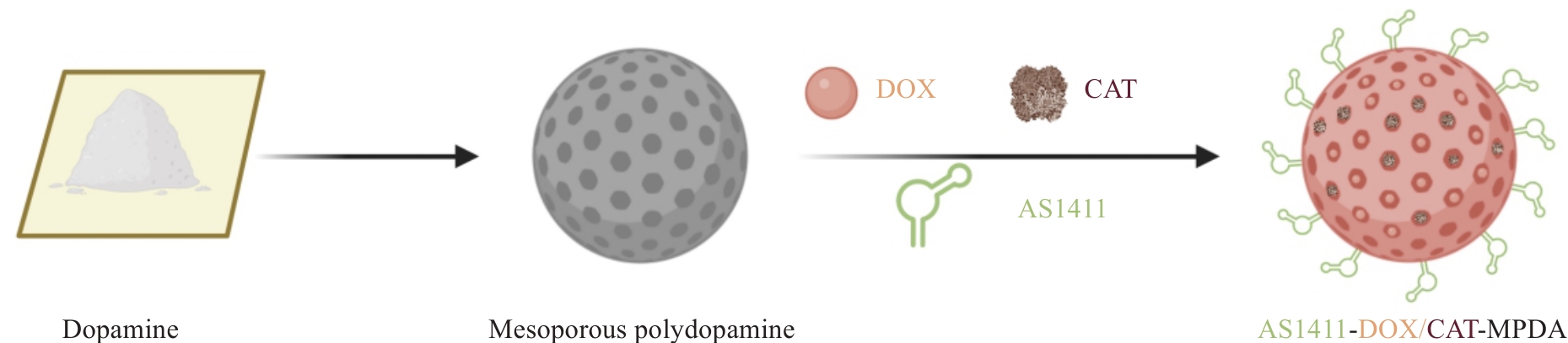
图1 AS1411-DOX/CAT-MPDA的制备示意图
Fig.1 Schematic diagram of the preparation of AS1411-DOX/CAT-MPDA nanoparticles.
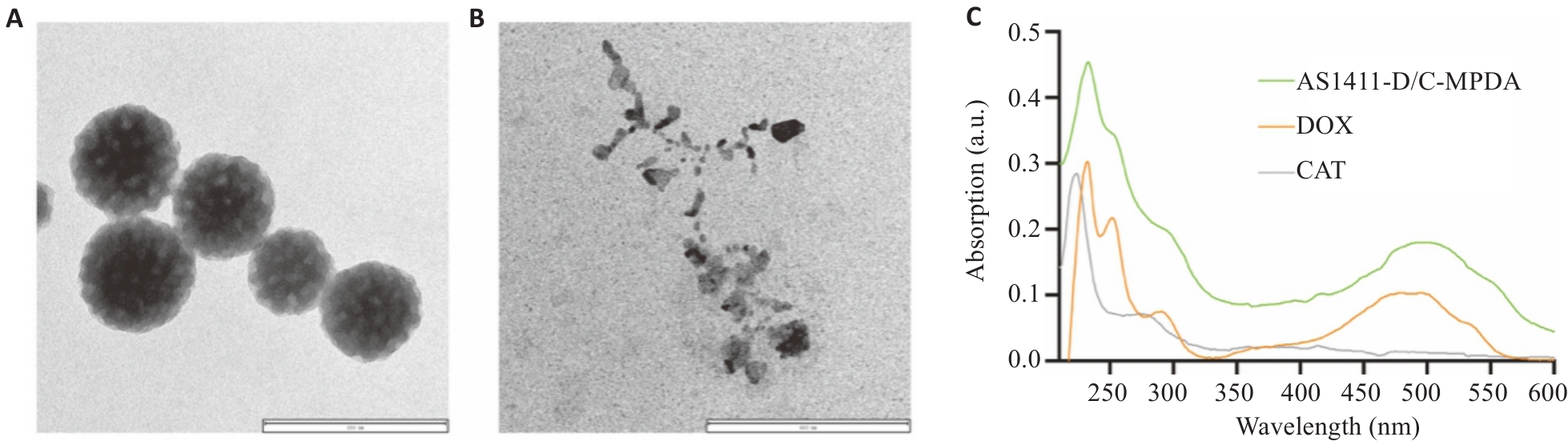
图2 透射电镜图及DOX、CAT和AS1411-D/C-MPDA的紫外光谱图
Fig.2 Transmission electron microscopy and UV-Vis spectra of DOX, CAT, and AS1411-D/C-MPDA. A: Transmission electron microscopy of AS1411-D/C-MPDA nanoparticles (Original magnification: ×18 500, scale bar=200 nm). B: Transmission electron microscopy of AS1411-D/C-MPDA nanoparticles at pH5.5 (×6800, scale bar=600 nm). C: UV-Vis spectra of DOX, CAT, and AS1411-D/C-MPDA nanoparticles (n=3).
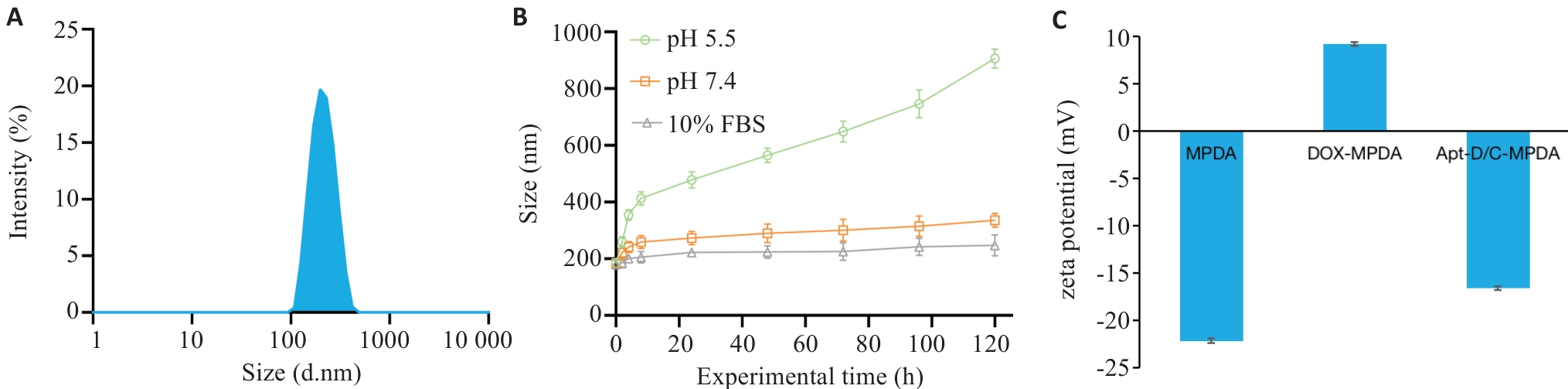
图3 AS1411-D/C-MPDA具有良好稳定性和pH响应性
Fig.3 AS1411-D/C-MPDA exhibits excellent stability and pH responsiveness. A: Average hydrodynamic size of AS1411-D/C-MPDA nanoparticles. B: Size changes of AS1411-D/C-MPDA nanoparticles after treatment with PBS (pH7.4), PBS (pH5.5), or 10% FBS. C: Average zeta potential of AS1411-D/C-MPDA nanoparticles (n=3).
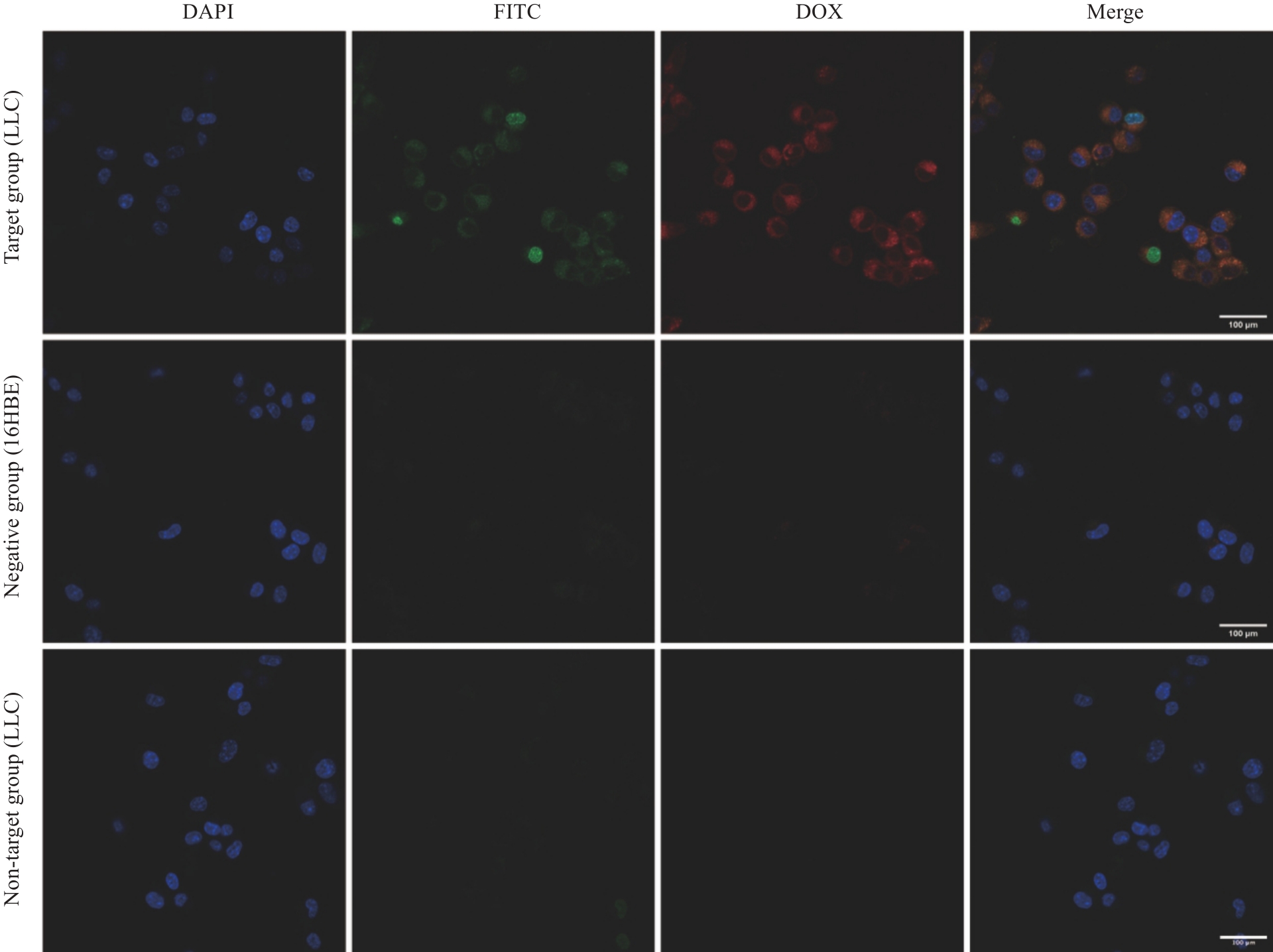
图5 CLSM显示AS1411-D/C-MPDA的体外肿瘤靶向性
Fig.5 CLSM images showing in vitro tumor-targeting capability of AS1411-D/C-MPDA nanoparticles (×60).
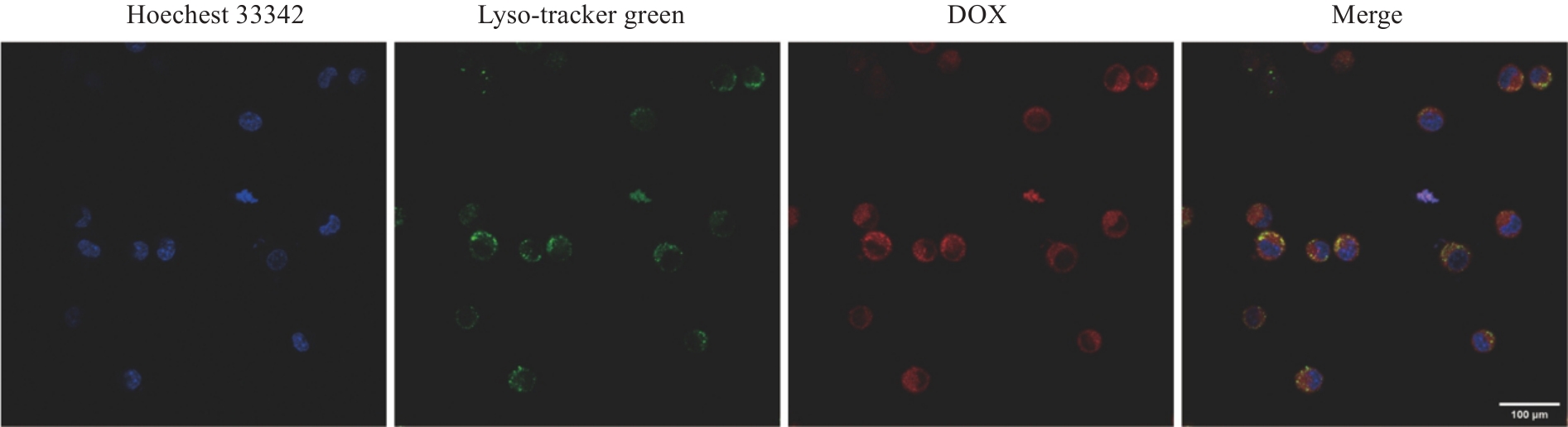
图6 CLSM显示LLC细胞摄取AS1411-D/C-MPDA
Fig.6 CLSM images showing the cellular uptake of AS1411-D/C-MPDA nanoparticles by LLC cells (×60).
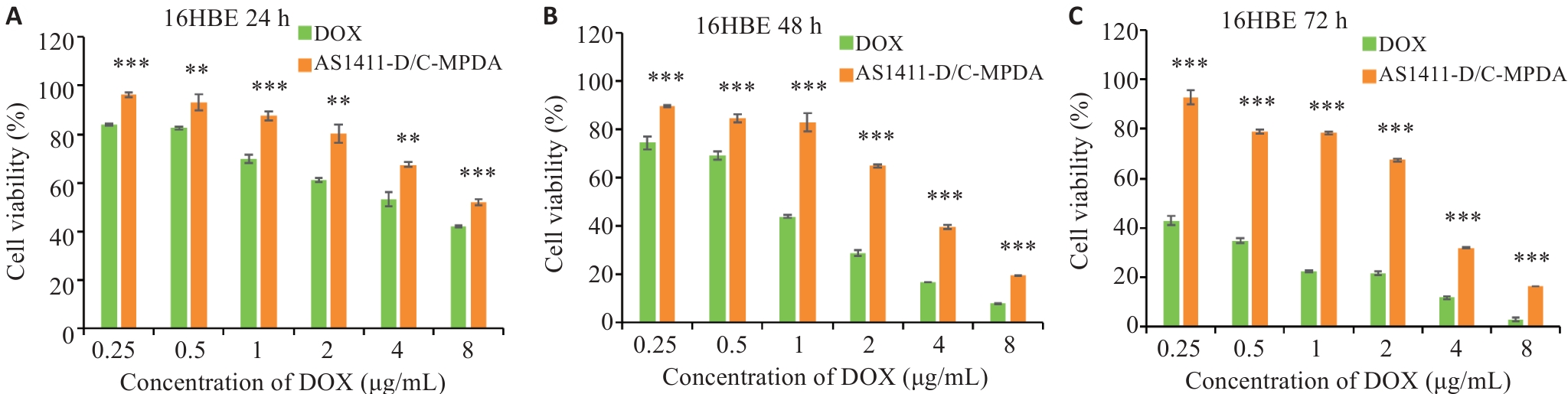
图7 不同方式处理24、48、72 h后16HBE的相对细胞活性
Fig.7 Relative viability of 16HBE cells after treatment with different formulations for 24, 48 and 72 h (n=3). **P<0.01, ***P<0.001.
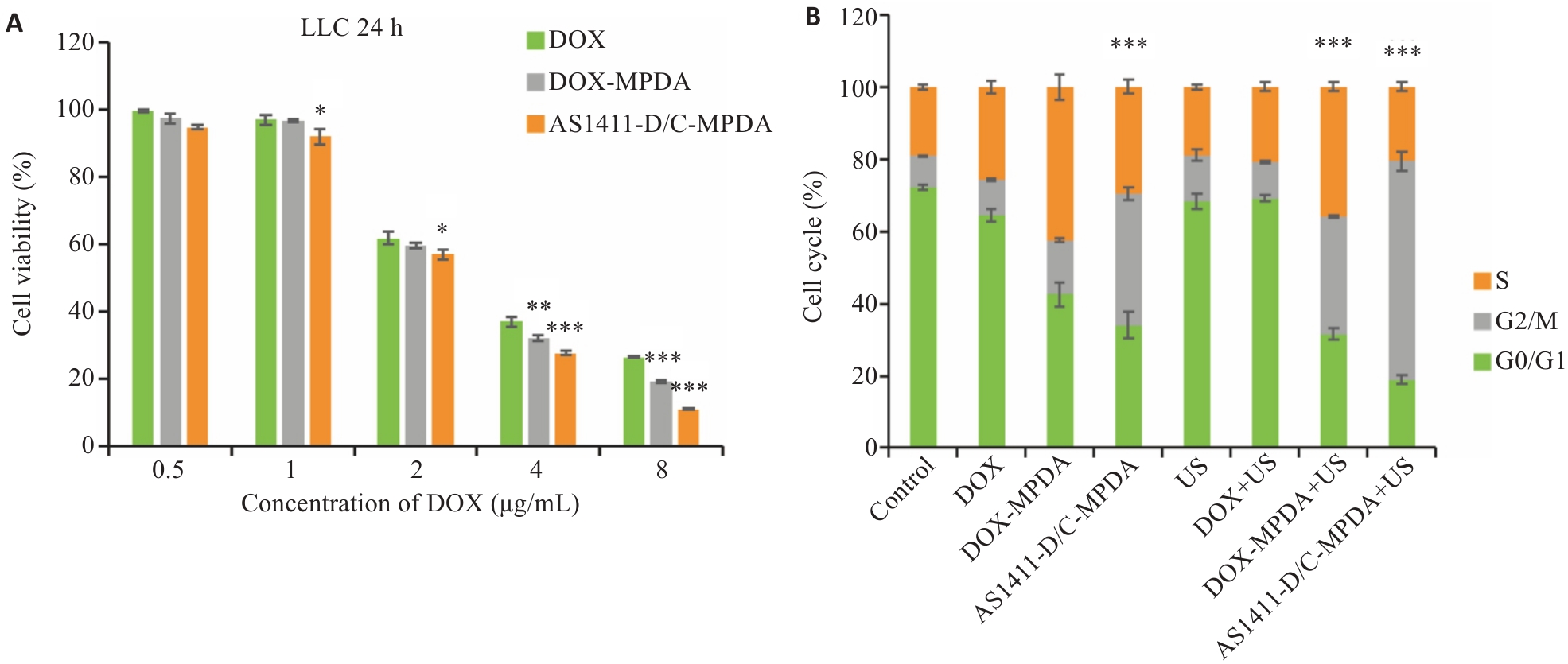
图8 CCK-8测定LLC细胞活性、流式检测LLC细胞周期分布
Fig.8 Assessment of viability and cell cycle distribution of LLC cells using CCK-8 assay and flow cytometry. A: Relative viability of LLC cells after 24 h of treatment with different formulations. B: Cell cycle distribution of LLC cells after 24 h of treatment with different formulations. *P<0.05, **P<0.01, ***P<0.001 (n=3).
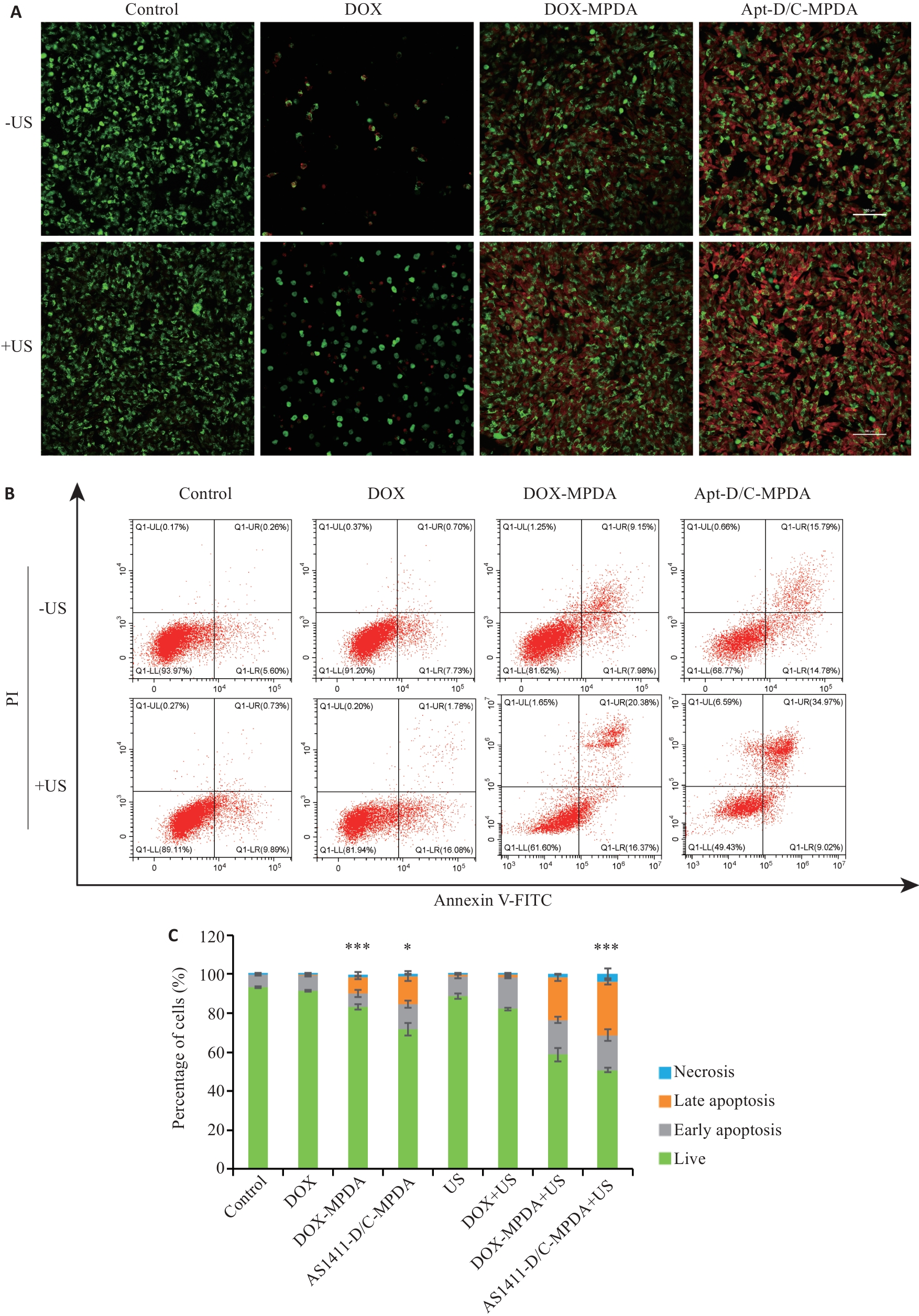
图9 CLSM分析AS1411-D/C-MPDA联合超声对LLC细胞活死状态的影响,流式细胞术检测各组LLC细胞的凋亡率
Fig.9 CLSM images showing effect of AS1411-D/C-MPDA nanoparticles combined with ultrasound on viability and apoptosis of LLC cells. A: Viability of LLC cells (×20). B: Apoptosis rates of LLC cells in different treatment groups detected by flow cytometry. C: Statistical results of apoptosis rates in each treatment group (n=3). *P<0.05, ***P<0.001.
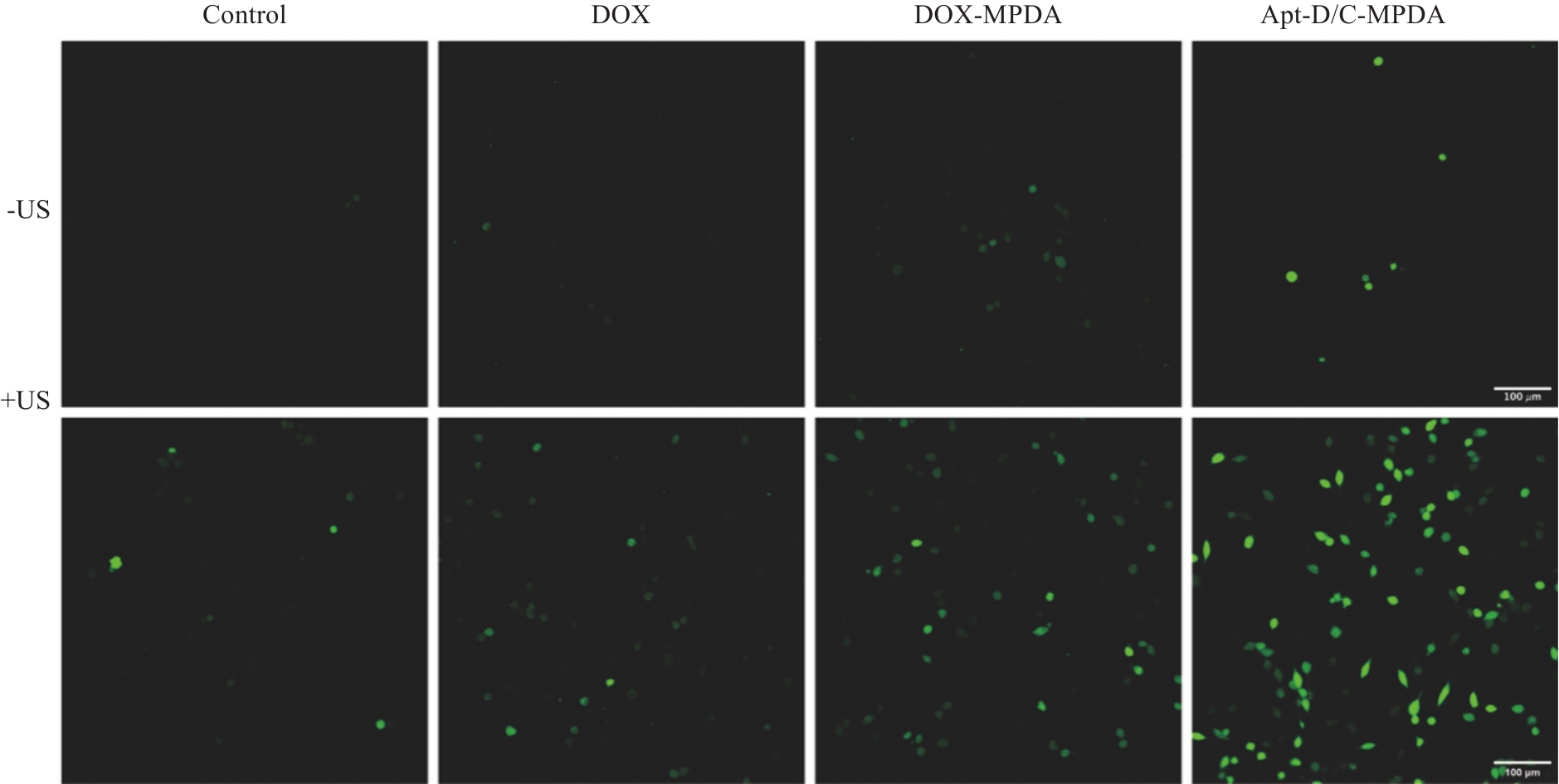
图10 CLSM显示各组LLC细胞内活性氧水平
Fig.10 CLSM images showing intracellular ROS levels in LLC cells in each group (×20).
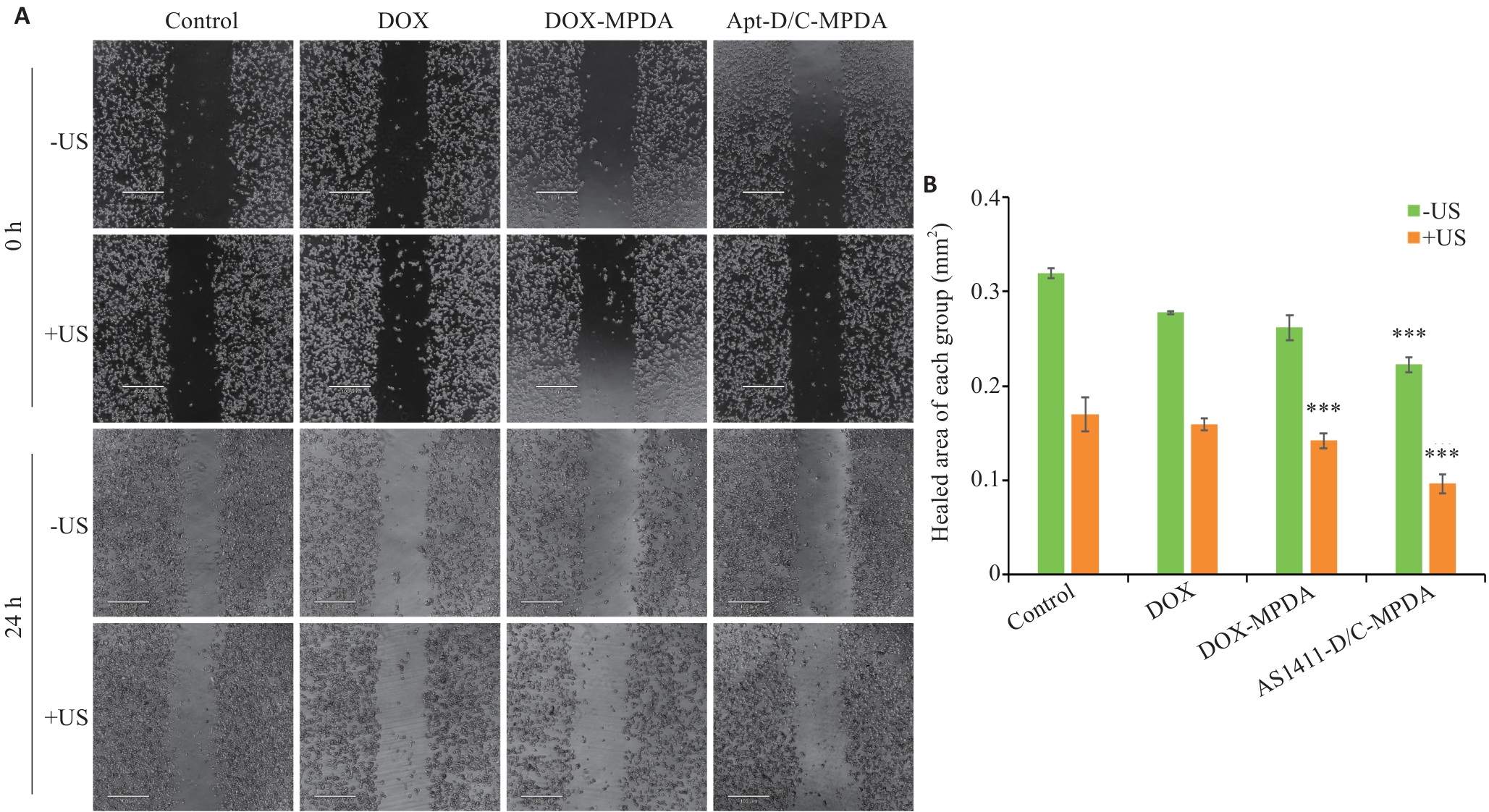
图11 划痕实验评价各组LLC细胞的迁移能力及其数据定量分析
Fig.11 Wound healing assay for evaluating migration ability of LLC cells in different treatment groups (×20). ***P<0.001 (n=3).
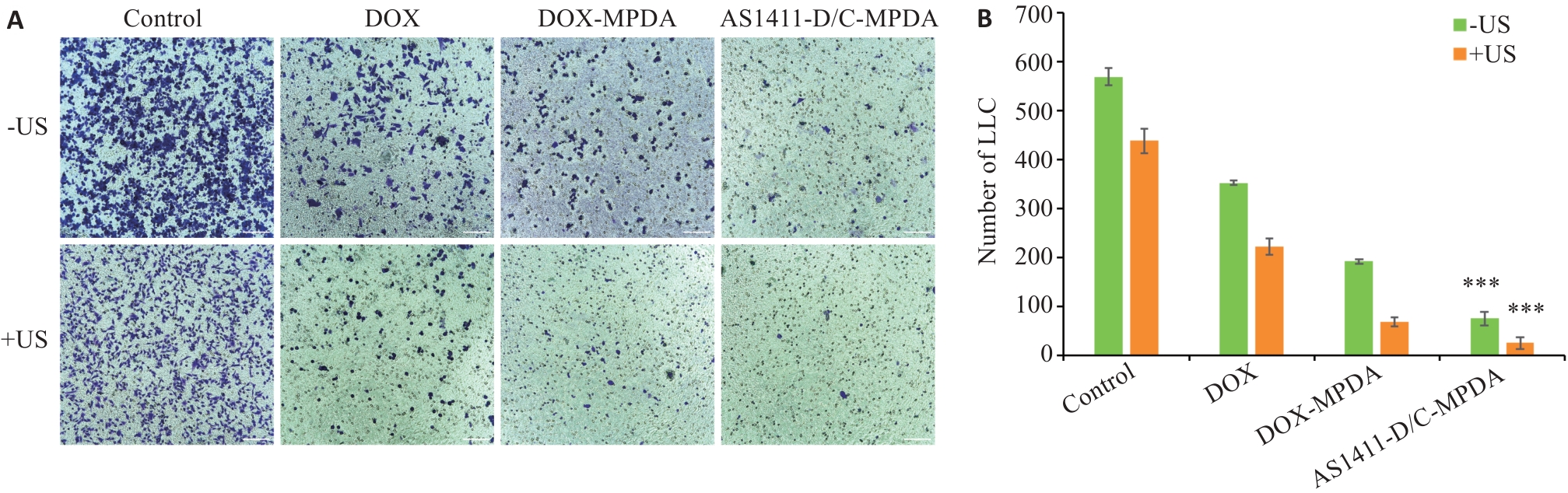
图12 Transwell小室实验评价各组LLC细胞的侵袭能力
Fig.12 Transwell chamber assay for evaluating invasion ability of LLC cells in different treatment groups (×20). ***P<0.001 vs DOX (n=3).
| [1] | Chen J, Luo HL, Liu Y, et al. Oxygen-self-produced nanoplatform for relieving hypoxia and breaking resistance to sonodynamic treatment of pancreatic cancer[J]. ACS Nano, 2017, 11(12): 12849-62. doi:10.1021/acsnano.7b08225 |
| [2] | Siegel RL, Kratzer TB, Giaquinto AN, et al. Cancer statistics, 2025[J]. CA Cancer J Clin, 2025, 75(1): 10-45. doi:10.3322/caac.21871 |
| [3] | Kuerban K, Gao XW, Zhang H, et al. Doxorubicin-loaded bacterial outer-membrane vesicles exert enhanced anti-tumor efficacy in non-small-cell lung cancer[J]. Acta Pharm Sin B, 2020, 10(8): 1534-48. doi:10.1016/j.apsb.2020.02.002 |
| [4] | Dai ZD, Song XZ, Cao JK, et al. Dual-stimuli-responsive TiOx/DOX nanodrug system for lung cancer synergistic therapy[J]. RSC Adv, 2018, 8(39): 21975-84. doi:10.1039/c8ra02899k |
| [5] | Bhatia SN, Chen XY, Dobrovolskaia MA, et al. Cancer nanomedicine[J]. Nat Rev Cancer, 2022, 22(10): 550-6. doi:10.1038/s41568-022-00496-9 |
| [6] | 赵雅洁. 几种用于化学动力学及其相关联合疗法抗肿瘤纳米催化剂的设计和应用[D].合肥:中国科学技术大学, 2023. |
| [7] | Liang S, Deng XR, Ma PA, et al. Recent advances in nanomaterial-assisted combinational sonodynamic cancer therapy[J]. Adv Mater, 2020, 32(47): 2003214. doi:10.1002/adma.202003214 |
| [8] | Jia L, Li X, Liu H, et al. Ultrasound-enhanced precision tumor theranostics using cell membrane-coated and pH-responsive nanoclusters assembled from ultrasmall iron oxide nanoparticles[J]. Nano Today, 2021, 36: 101022. doi:10.1016/j.nantod.2020.101022 |
| [9] | Wang JJ, Wang XY, Lu SY, et al. Integration of cascade delivery and tumor hypoxia modulating capacities in core-releasable satellite nanovehicles to enhance tumor chemotherapy[J]. Biomaterials, 2019, 223: 119465. doi:10.1016/j.biomaterials.2019.119465 |
| [10] | 何雨初.刺激响应性纳米药物系统强化体内传递与抗肿瘤研究[D]. 河北: 燕山大学, 2021. |
| [11] | He YC, Cong C, Liu ZW, et al. Stealth surface driven accumulation of "Trojan Horse" for tumor hypoxia relief in combination with targeted cancer therapy[J]. Chem Eng J, 2019, 378: 122252. doi:10.1016/j.cej.2019.122252 |
| [12] | Mei L, Zhu GZ, Qiu LP, et al. Self-assembled multifunctional DNA nanoflowers for the circumvention of multidrug resistance in targeted anticancer drug delivery[J]. Nano Res, 2015, 8(11): 3447-60. doi:10.1007/s12274-015-0841-8 |
| [13] | Peng L, Hung CT, Wang SW, et al. Versatile nanoemulsion assembly approach to synthesize functional mesoporous carbon nanospheres with tunable pore sizes and architectures[J]. J Am Chem Soc, 2019, 141(17): 7073-80. doi:10.1021/jacs.9b02091 |
| [14] | Rizvi SAA, Saleh AM. Applications of nanoparticle systems in drug delivery technology[J]. Saudi Pharm J, 2018, 26(1): 64-70. doi:10.1016/j.jsps.2017.10.012 |
| [15] | Ren DD, Williams GR, Zhang YY, et al. Mesoporous doxorubicin-loaded polydopamine nanoparticles coated with a platelet membrane suppress tumor growth in a murine model of human breast cancer[J]. ACS Appl Bio Mater, 2022, 5(1): 123-33. doi:10.1021/acsabm.1c00926 |
| [16] | Li L, Chen YS, Chen WJ, et al. Photodynamic therapy based on organic small molecular fluorescent dyes[J]. Chin Chemical Lett, 2019, 30(10): 1689-703. doi:10.1016/j.cclet.2019.04.017 |
| [17] | Gao YT, Zhou H, Liu GG, et al. Tumor microenvironment: lactic acid promotes tumor development[J]. J Immunol Res, 2022, 2022: 3119375. doi:10.1155/2022/3119375 |
| [18] | 王朝阳. 基于介孔聚多巴胺的肿瘤微环境响应型纳米平台构建及增强的肿瘤治疗[D].保定: 河北大学, 2023. |
| [19] | Bie LH, Wang Y, Jiang FZ, et al. Insights into the binding mode of AS1411 aptamer to nucleolin[J]. Front Mol Biosci, 2022, 9: 1025313. doi:10.3389/fmolb.2022.1025313 |
| [20] | Keizer HG, Pinedo HM, Schuurhuis GJ, et al. Doxorubicin (adriamycin): a critical review of free radical-dependent mechanisms of cytotoxicity[J]. Pharmacol Ther, 1990, 47(2): 219-31. doi:10.1016/0163-7258(90)90088-J |
| [21] | Cheng JJ, Zhu Y, Xing X, et al. Manganese-deposited iron oxide promotes tumor-responsive ferroptosis that synergizes the apoptosis of cisplatin[J]. Theranostics, 2021, 11(11): 5418-29. doi:10.7150/thno.53346 |
| [22] | He YX, Liu SH, Yin J, et al. Sonodynamic and chemodynamic therapy based on organic/organometallic sensitizers[J]. Coord Chem Rev, 2021, 429: 213610. doi:10.1016/j.ccr.2020.213610 |
| [23] | Cetindere T, Nambiar S, Santourlidis S, et al. Induction of indoleamine 2, 3-dioxygenase by death receptor activation contributes to apoptosis of melanoma cells via mitochondrial damage-dependent ROS accumulation[J]. Cell Signal, 2010, 22(2): 197-211. doi:10.1016/j.cellsig.2009.09.013 |
| [24] | Zorov DB, Juhaszova M, Sollott SJ. Mitochondrial reactive oxygen species (ROS) and ROS-induced ROS release[J]. Physiol Rev, 2014, 94(3): 909-50. doi:10.1152/physrev.00026.2013 |
| [25] | Liang CC, Park AY, Guan JL. In vitro scratch assay: a convenient and inexpensive method for analysis of cell migration in vitro [J]. Nat Protoc, 2007, 2(2): 329-33. doi:10.1038/nprot.2007.30 |
| [26] | Justus CR, Leffler N, Ruiz-Echevarria M, et al. In vitro cell migration and invasion assays[J]. JoVE, 2014(88): 51046. doi:10.3791/51046 |
| [27] | Zhou YF. Application of acoustic droplet vaporization in ultrasound therapy[J]. J Ther Ultrasound, 2015, 3(1): 20. doi:10.1186/s40349-015-0041-8 |
| [28] | Skandalis SS, Karalis TT, Chatzopoulos A, et al. Hyaluronan-CD44 axis orchestrates cancer stem cell functions[J]. Cell Signal, 2019, 63: 109377. doi:10.1016/j.cellsig.2019.109377 |
| [29] | Cao YC, Shen SF, Xiang JH, et al. Sonodynamic therapy-based DNA nanocarriers with hypoxia-inducible factor-1α silencing activation for precision lung cancer therapy[J]. Biomater Res, 2025, 29: 230. doi:10.34133/bmr.0230 |
| [30] | Pulley JM, Rhoads JP, Jerome RN, et al. Using what we already have: uncovering new drug repurposing strategies in existing omics data[J]. Annu Rev Pharmacol Toxicol, 2020, 60: 333-52. doi:10.1146/annurev-pharmtox-010919-023537 |
| [1] | 梁芷晴, 潘富珍, 邓利强, 麦哲芬, 马云, 施传坚, 付卫明. 生脉散通过调控乳酸/Wnt/β-catenin/LDHA通路改善非小细胞肺癌奥希替尼耐药的作用机制[J]. 南方医科大学学报, 2026, 46(3): 523-531. |
| [2] | 黄启智, 谢戴鹏, 姚霖彤, 李洽轩, 吴少伟, 周海榆. 肿瘤微环境特异性CT影像组学标签预测非小细胞肺癌免疫治疗疗效[J]. 南方医科大学学报, 2025, 45(9): 1903-1918. |
| [3] | 张晨, 许智, 李想, 何彭翼翔, 曲凯林, 宁奇, 金奕玏, 杨宿睿, 吴旭. 具有光热抗菌活性的聚多巴胺修饰藻蓝蛋白纳米颗粒促进小鼠伤口皮肤愈合[J]. 南方医科大学学报, 2025, 45(9): 1959-1966. |
| [4] | 何丽君, 陈晓菲, 闫陈昕, 师林. 扶正化积汤治疗非小细胞肺癌的分子机制:基于网络药理学及体外实验验证[J]. 南方医科大学学报, 2025, 45(6): 1143-1152. |
| [5] | 李丹丹, 楚佳鑫, 闫妍, 徐文隽, 朱行春, 孙韵, 丁浩峰, 任丽, 朱博. 姜黄素通过下调HIF-1α通路抑制非小细胞肺癌脂质代谢[J]. 南方医科大学学报, 2025, 45(5): 1039-1046. |
| [6] | 钟娜, 王会杰, 赵文英, 孙珍贵, 耿彪. 高表达RNF7增强非小细胞肺癌细胞的PD-1耐药:基于活化NF-kB通路促进CXCL1表达和髓源性抑制细胞的募集[J]. 南方医科大学学报, 2024, 44(9): 1704-1711. |
| [7] | 陈桂玲, 廖晓凤, 孙鹏涛, 岑欢, 舒盛春, 李碧晶, 黎金华. 澳洲茄碱通过调控Bcl-2/Bax/caspase-3信号通路促进非小细胞肺癌发生凋亡[J]. 南方医科大学学报, 2024, 44(6): 1109-1116. |
| [8] | 李菲凡, 向俊馨, 刘佳慧, 王效静, 江浩. LncRNA FEZF1-AS1通过miR-130a-5p/CCND1轴促进非小细胞肺癌发展的分子机制研究[J]. 南方医科大学学报, 2024, 44(5): 841-850. |
| [9] | 杨 杨, 刘 刚, 欧 毅, 鹿文琪. 艾司氯胺酮联合肢体远端缺血预处理对胸腔镜下肺癌根治术老年患者有肺保护作用:160例随机对照试验[J]. 南方医科大学学报, 2024, 44(3): 484-490. |
| [10] | 桂建军, 孙晓东, 温 舒, 刘 欣, 覃冰清, 桑 明. 白藜芦醇对帕金森病模型小鼠多巴胺能神经元的保护作用:基于抑制TLR4/MyD88/NF-κB通路[J]. 南方医科大学学报, 2024, 44(2): 270-279. |
| [11] | 韩齐齐, 叶梦然, 金齐力. 去甲泽拉木醛通过抑制 AKT/CREB 信号通路抑制非小细胞肺癌细胞的增殖、迁移和侵袭[J]. 南方医科大学学报, 2024, 44(2): 280-288. |
| [12] | 李洋洋, 徐佳佳, 姜诚诚, 陈子龙, 陈 颖, 应梦娇, 王 澳, 马彩云, 王春景, 郭 俣, 刘长青. Rho激酶抑制剂Y27632促进人诱导多能干细胞来源原始神经上皮细胞向多巴胺能神经前体细胞的转化[J]. 南方医科大学学报, 2024, 44(2): 236-243. |
| [13] | 刘雪柔, 杨玉梅, 刘伟, 张振, 周星琦, 谢文宇, 申林, 张梦晓, 李娴, 臧家兰, 李姗姗. 中药泽漆抑制非小细胞肺癌细胞增殖、侵袭、迁移以及促进细胞凋亡[J]. 南方医科大学学报, 2024, 44(10): 1918-1925. |
| [14] | 周智锋, 柳硕岩, 李洁羽, 陈明秋, 林辉, 陈宇杰, 陈伟杰, 林军鹏, 周航, 郑庆丰. IL-21和CCL19修饰可提高NKP30 CAR-T细胞对肺癌的杀伤效率并促进其肿瘤浸润[J]. 南方医科大学学报, 2024, 44(10): 1926-1936. |
| [15] | 杨玉梅, 刘雪柔, 刘伟, 周星琦, 张振, 胡妍, 刘培培, 李娴, 刘浩, 李姗姗. 阿美替尼联合安罗替尼通过下调PI3K/AKT通路抑制非小细胞肺癌细胞的增殖[J]. 南方医科大学学报, 2024, 44(10): 1965-1975. |
| 阅读次数 | ||||||
|
全文 |
|
|||||
|
摘要 |
|
|||||
