
Journal of Southern Medical University ›› 2026, Vol. 46 ›› Issue (9): 2149-2158.doi: 10.12122/j.issn.1673-4254.2026.09.14
Yinyu ZI( ), Zimiao LIU, Zhen DENG()
Received:2025-12-20
Online:2026-09-20
Published:2026-09-30
Contact:
Zhen DENG
E-mail:yinyuzi_cn@163.com;dengzhencn83@ smu.edu.cn
Supported by:Yinyu ZI, Zimiao LIU, Zhen DENG. Plasma metabolomics combined with machine learning for classifying ischemic stroke subtypes and predicting the etiology of cryptogenic stroke[J]. Journal of Southern Medical University, 2026, 46(9): 2149-2158.
Add to citation manager EndNote|Ris|BibTeX
URL: https://www.j-smu.com/EN/10.12122/j.issn.1673-4254.2026.09.14
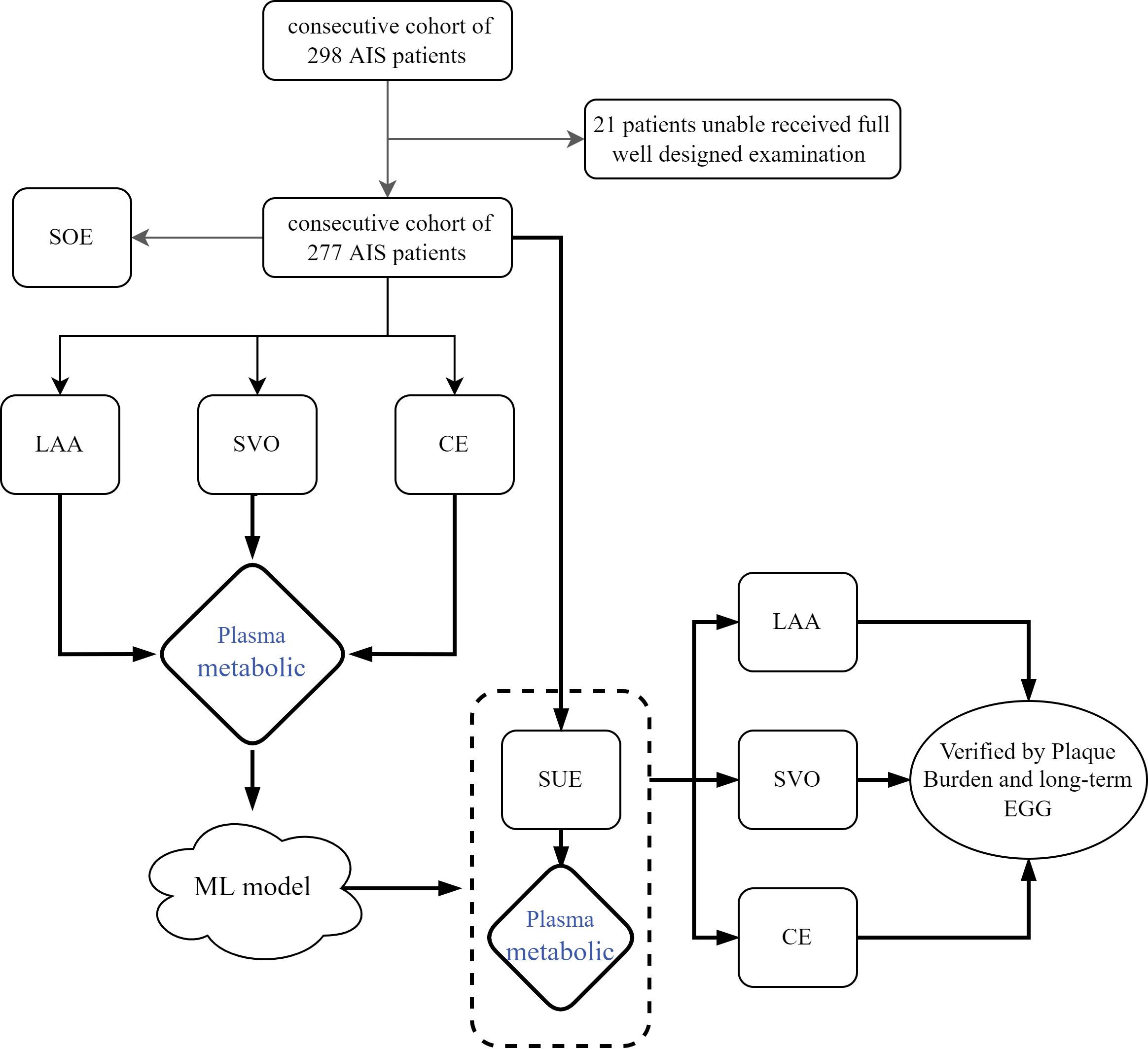
Fig.1 Flowchart of the trial. AIS: Acute ischemic stroke; LAA: Large artery atherosclerosis; SVO: Small vessel occlusion; CE: Cardioembolism; ML: Machine learning.
| Characteristic | LAA (142) | SVO (76) | SUE (27) | CE (22) | SOE (10) | Total (277) | P |
|---|---|---|---|---|---|---|---|
| Age (year) | 64.32±13.55 | 62.39±12.31 | 65.00±14.29 | 70.74±19.79 | 59.19±20.11 | 64.27±14.22 | NS |
| Gender | |||||||
| Male | 112 (78.87%) | 66 (86.84%) | 22 (81.48%) | 8 (36.36%) | 8 (80.00%) | 216 (77.98%) | <0.001 |
| Female | 30 (21.13%) | 10 (13.16%) | 5 (18.52%) | 14 (63.64%) | 2 (20.00%) | 61 (22.02%) | <0.001 |
| NIHSS | 5.22 (3.31-8.34) | 5.06 (4.00-8.00) | 5.00 (3.82-7.95) | 10.50 (5.00-17.58) | 6.28 (1.50-8.00) | 5.46 (3.72-8.59) | <0.001 |
| Medical history | |||||||
| Current smoker | 70 (49.30%) | 32 (42.11%) | 14 (51.85%) | 6 (27.27%) | 4 (40.00%) | 126 (45.49%) | NS |
| Former smoker | 6 (4.23%) | 4 (5.26%) | 0 (0.00%) | 0 | 0 (0.00%) | 10 (3.61%) | NS |
| Current drinker | 42 (29.58%) | 26 (34.21%) | 4 (14.81%) | 0 | 2 (20.00%) | 74 (26.71%) | <0.001 |
| Former drinker | 8 (5.63%) | 4 (5.26%) | 0 | 0 | 0 | 12 (4.33%) | NS |
| Stroke | 18 (12.68%) | 10 (13.16%) | 2 (7.41%) | 12 (54.55%) | 0 | 42 (15.16%) | <0.001 |
| Hypertension | 84 (59.15%) | 42 (55.26%) | 10 (37.04%) | 6 (27.27%) | 0 | 142 (51.26%) | <0.001 |
| Diabetes | 48 (33.80%) | 12 (15.79%) | 4 (14.81%) | 0 | 2 (20.00%) | 66 (23.83%) | <0.001 |
| Coronary Heart Disease (CHD) | 6 (4.23%) | 6 (7.89%) | 0 | 2 (9.09%) | 0 | 14 (5.05%) | NS |
Tab.1 Baseline characteristics of the patients
| Characteristic | LAA (142) | SVO (76) | SUE (27) | CE (22) | SOE (10) | Total (277) | P |
|---|---|---|---|---|---|---|---|
| Age (year) | 64.32±13.55 | 62.39±12.31 | 65.00±14.29 | 70.74±19.79 | 59.19±20.11 | 64.27±14.22 | NS |
| Gender | |||||||
| Male | 112 (78.87%) | 66 (86.84%) | 22 (81.48%) | 8 (36.36%) | 8 (80.00%) | 216 (77.98%) | <0.001 |
| Female | 30 (21.13%) | 10 (13.16%) | 5 (18.52%) | 14 (63.64%) | 2 (20.00%) | 61 (22.02%) | <0.001 |
| NIHSS | 5.22 (3.31-8.34) | 5.06 (4.00-8.00) | 5.00 (3.82-7.95) | 10.50 (5.00-17.58) | 6.28 (1.50-8.00) | 5.46 (3.72-8.59) | <0.001 |
| Medical history | |||||||
| Current smoker | 70 (49.30%) | 32 (42.11%) | 14 (51.85%) | 6 (27.27%) | 4 (40.00%) | 126 (45.49%) | NS |
| Former smoker | 6 (4.23%) | 4 (5.26%) | 0 (0.00%) | 0 | 0 (0.00%) | 10 (3.61%) | NS |
| Current drinker | 42 (29.58%) | 26 (34.21%) | 4 (14.81%) | 0 | 2 (20.00%) | 74 (26.71%) | <0.001 |
| Former drinker | 8 (5.63%) | 4 (5.26%) | 0 | 0 | 0 | 12 (4.33%) | NS |
| Stroke | 18 (12.68%) | 10 (13.16%) | 2 (7.41%) | 12 (54.55%) | 0 | 42 (15.16%) | <0.001 |
| Hypertension | 84 (59.15%) | 42 (55.26%) | 10 (37.04%) | 6 (27.27%) | 0 | 142 (51.26%) | <0.001 |
| Diabetes | 48 (33.80%) | 12 (15.79%) | 4 (14.81%) | 0 | 2 (20.00%) | 66 (23.83%) | <0.001 |
| Coronary Heart Disease (CHD) | 6 (4.23%) | 6 (7.89%) | 0 | 2 (9.09%) | 0 | 14 (5.05%) | NS |
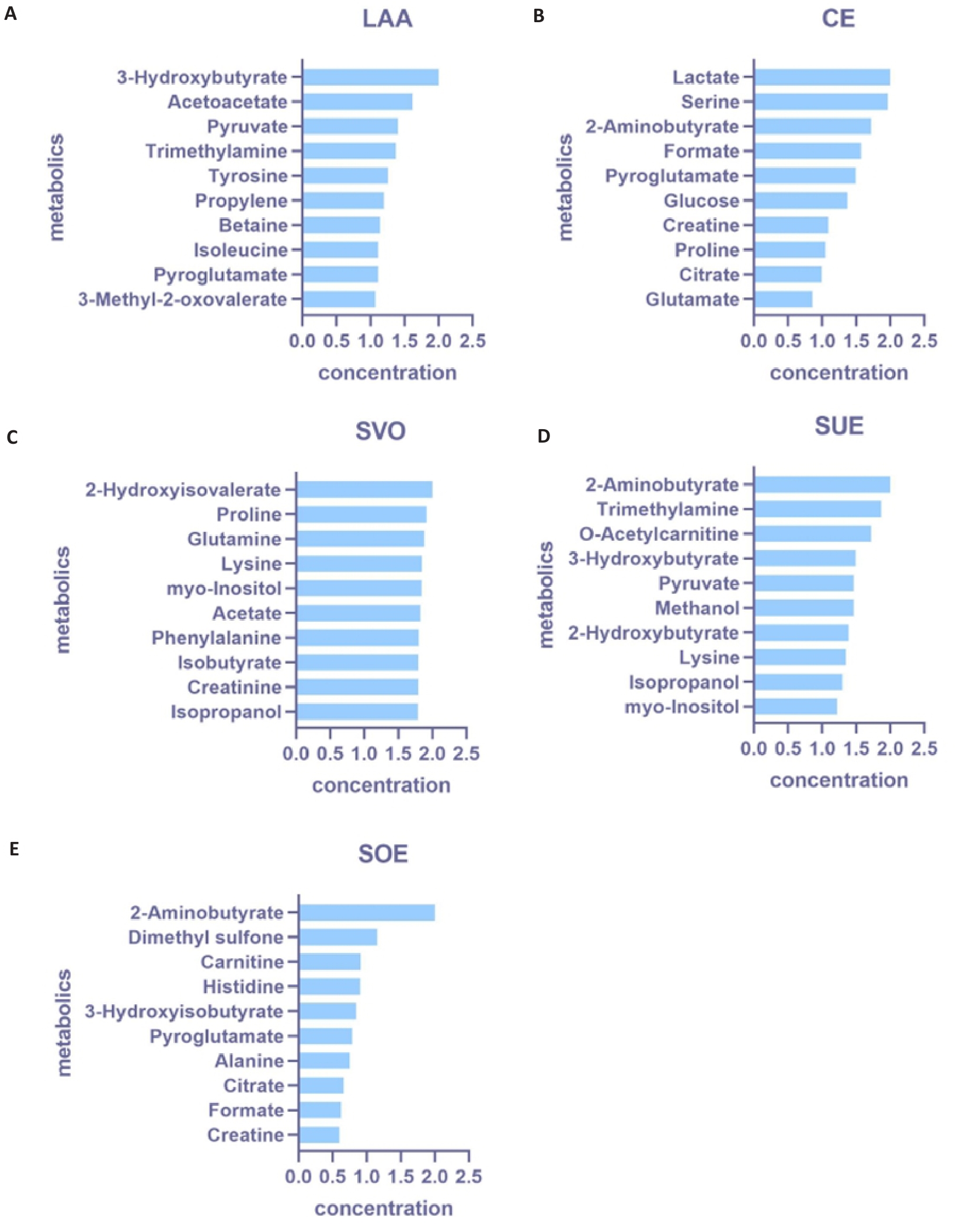
Fig.2 The top 10 plasma metabolites in the plasma metabolic profiles of 5 different stroke subtypes and their relative concentrations. A: 3-hydroxybutyrate, acetoacetate, and pyruvate show the highest plasma concentrations in LAA subtype. B: Lactate, serine, and 2-aminobutyrate show the highest plasma concentrations in CE subtype. C: 2-hydroxyisovalerate, proline, and glutamine show the highest plasma concentrations in SVO subtype. D: 2-aminobutyrate, trimethylamine, and O-acetylcarnitine show the highest plasma concentrations in SUE subtype. E: 2-aminobutyrate, dimethyl sulfone, and carnitine show the highest plasma concentrations in SOE subtype.
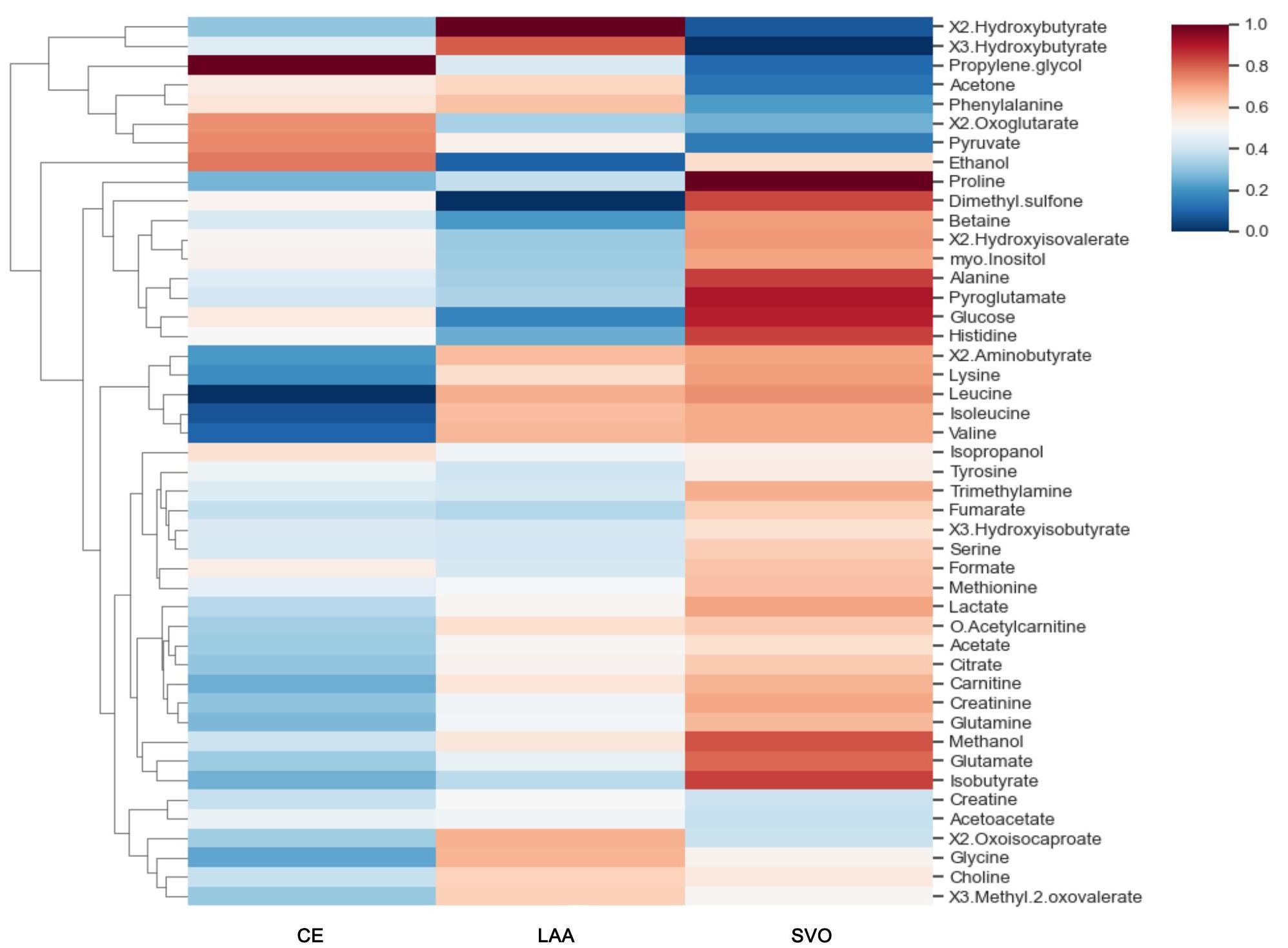
Fig.3 Distinct metabolic profiles of CE, LAA and SVO patients.
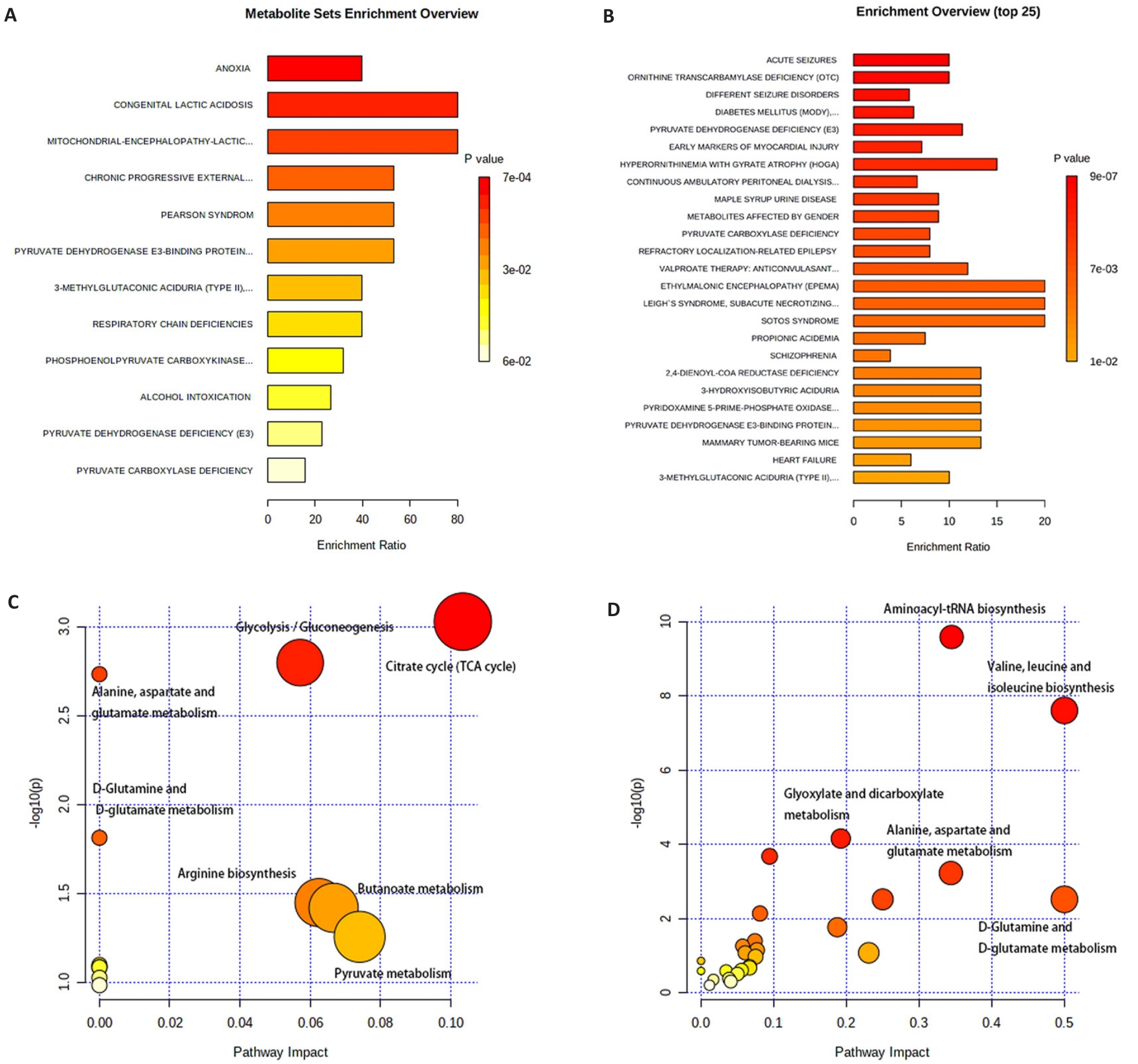
Fig.4 Differential enrichment and pathway analysis between CE and NCE patients. A, C: Metabolites with an upregulation trend in the CE group are primarily enriched in the Krebs cycle, glycolysis, and dysplasia-related metabolic pathways. B, D: Metabolites enriched in the NCE group are primarily involved in aminoacyl-tRNA biosynthesis, the glyoxylate pathway, and the dicarboxylate pathway. NCE=LAA+SVO.
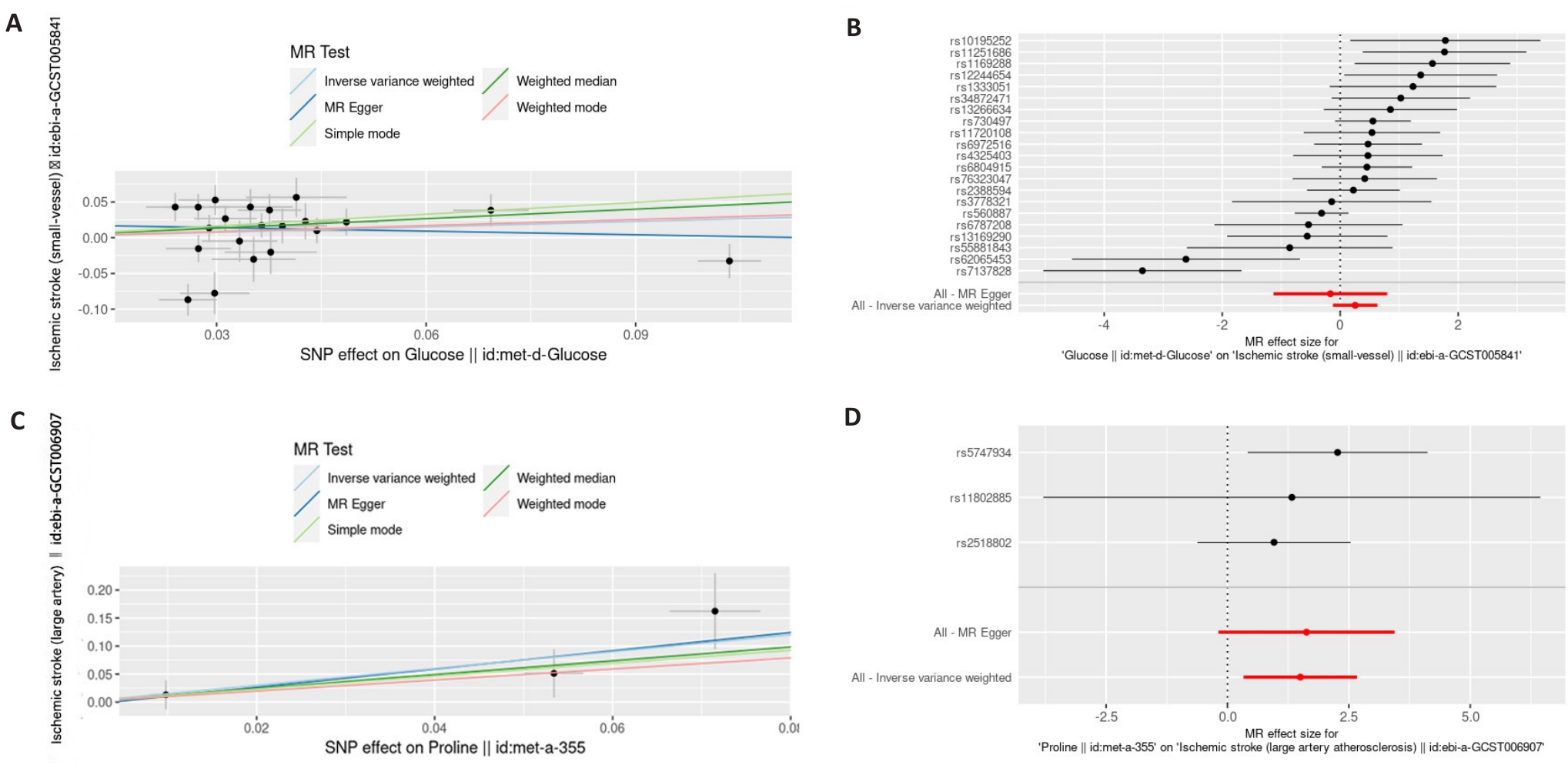
Fig.5 Mendelian randomization analysis of the effects of glucose on SVO and proline on LAA. A, B: Mendelian randomization analysis of glucose and SVO: regression lines and forest plots showing weighted median. C, D: Mendelian randomization analysis of proline and LAA: regression lines and forest plots showing weighted median.
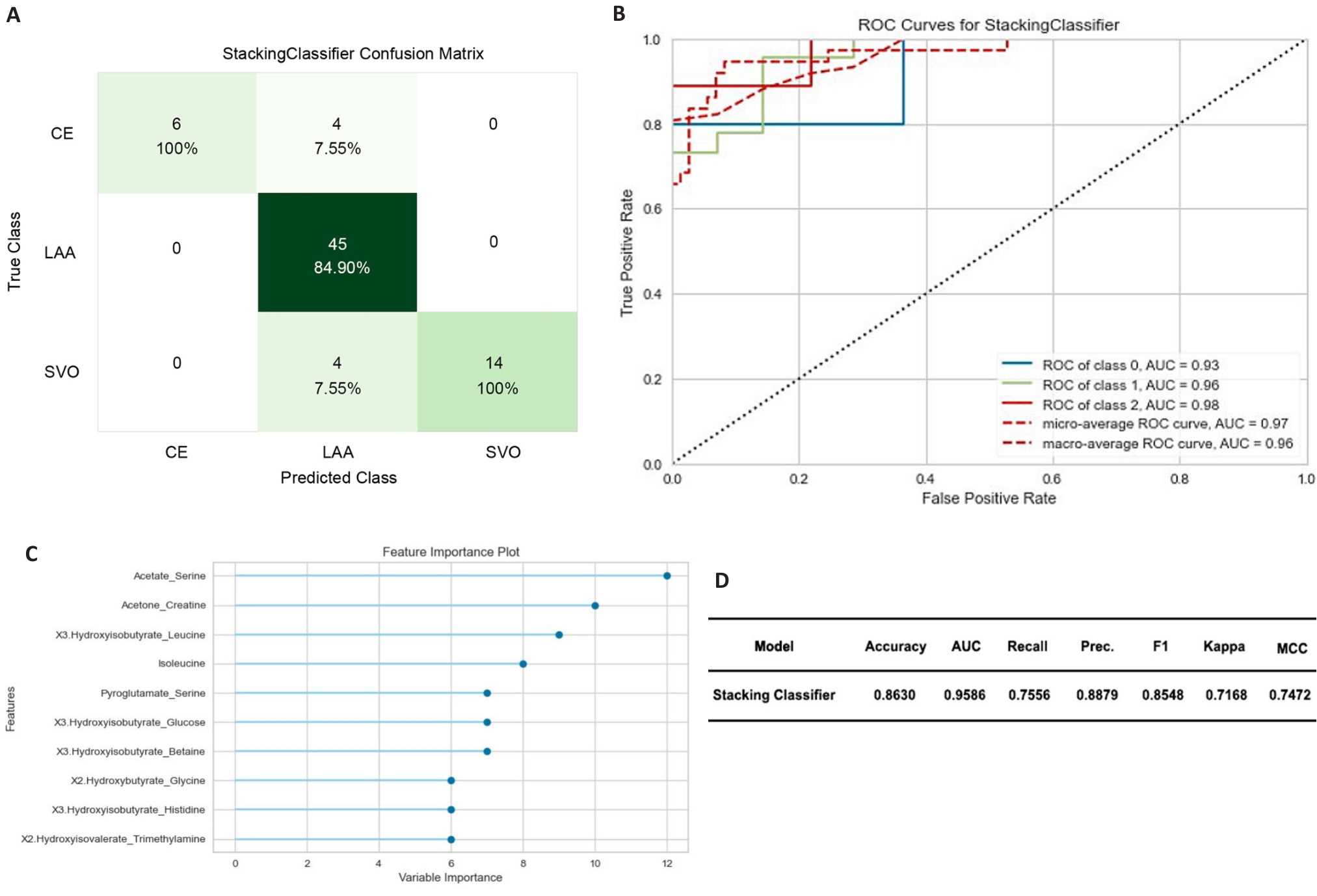
Fig. 6 The Plasma Metabolite Machine Learning (PMML) model and its predictive performance. A: Confusion matrix of the Stacking Classifier model. B: ROC curve of the Stacking Classifier model. C: Top 10 factors ranked based on their impact on the Stacking Classifier. D: Parameters indicating the prediction accuracy of the Stacking Classifier model.
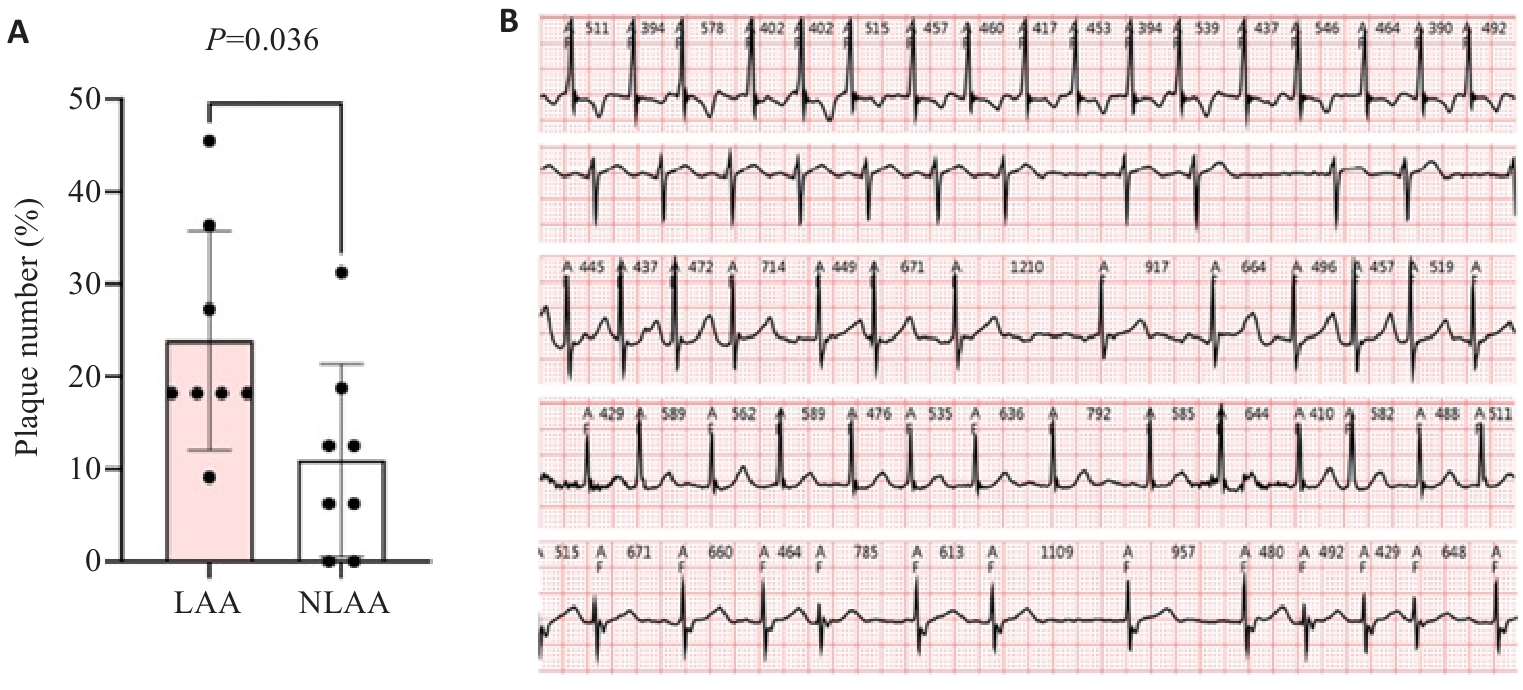
Fig.7 Validation of the PMML Model in SUE patients. A: A significantly higher plaque burden was observed in patients predicted to have LAA than in the non-LAA group. B: Five patients predicted to have CE had paroxysmal atrial fibrillation episodes captured by long-range ECG.
| [1] | Wang HD, Liddell CA, Coates MM, et al. Global, regional, and national levels of neonatal, infant, and under-5 mortality during 1990-2013: a systematic analysis for the Global Burden of Disease Study 2013[J]. Lancet, 2014, 384(9947): 957-79. |
| [2] | Campbell BCV, De Silva DA, MacLeod MR, et al. Ischaemic stroke[J]. Nat Rev Dis Primers, 2019, 5: 70. doi:10.1038/s41572-019-0118-8 |
| [3] | Adams HP Jr, Bendixen BH, Kappelle LJ, et al. Classification of subtype of acute ischemic stroke. Definitions for use in a multicenter clinical trial. TOAST. Trial of Org 10172 in Acute Stroke Treatment[J]. Stroke, 1993, 24(1): 35-41. doi:10.1161/01.str.24.1.35 |
| [4] | Powers WJ, Rabinstein AA, Ackerson T, et al. Guidelines for the early management of patients with acute ischemic stroke: 2019 update to the 2018 guidelines for the early management of acute ischemic stroke: a guideline for healthcare professionals from the American heart association/American stroke association[J]. Stroke, 2019, 50(12): e344-418. doi:10.1161/str.0000000000000215 |
| [5] | Kamarova M, Baig S, Patel H, et al. Antiplatelet use in ischemic stroke[J]. Ann Pharmacother, 2022, 56(10): 1159-73. doi:10.1177/10600280211073009 |
| [6] | Diener HC, Hankey GJ. Primary and secondary prevention of ischemic stroke and cerebral hemorrhage JACC focus seminar[J]. J Am Coll Cardiol, 2020, 75(15): 1804-18. doi:10.1016/j.jacc.2019.12.072 |
| [7] | Benz AP, Hohnloser SH, Eikelboom JW, et al. Outcomes of patients with atrial fibrillation and ischemic stroke while on oral anticoagulation[J]. Eur Heart J, 2023, 44(20): 1807-14. doi:10.1093/eurheartj/ehad200 |
| [8] | Kolmos M, Christoffersen L, Kruuse C. Recurrent ischemic stroke-a systematic review and meta-analysis[J]. J Stroke Cerebrovasc Dis, 2021, 30(8): 105935. doi:10.1016/j.jstrokecerebrovasdis.2021.105935 |
| [9] | Ritter MA, Kochhäuser S, Duning T, et al. Occult atrial fibrillation in cryptogenic stroke: detection by 7-day electrocardiogram versus implantable cardiac monitors[J]. Stroke, 2013, 44(5): 1449-52. doi:10.1161/strokeaha.111.676189 |
| [10] | Seet RCS, Friedman PA, Rabinstein AA. Prolonged rhythm monitoring for the detection of occult paroxysmal atrial fibrillation in ischemic stroke of unknown cause[J]. Circulation, 2011, 124(4): 477-86. doi:10.1161/circulationaha.111.029801 |
| [11] | Mendelson SJ, Prabhakaran S. Diagnosis and management of transient ischemic attack and acute ischemic stroke: a review[J]. JAMA, 2021, 325(11): 1088-98. doi:10.1001/jama.2020.26867 |
| [12] | Li WT, Shao CY, Li C, et al. Metabolomics: a useful tool for ischemic stroke research[J]. J Pharm Anal, 2023, 13(9): 968-83. doi:10.1016/j.jpha.2023.05.015 |
| [13] | German JB, Hammock BD, Watkins SM. Metabolomics: building on a century of biochemistry to guide human health[J]. Metabolomics, 2005, 1(1): 3-9. doi:10.1007/s11306-005-1102-8 |
| [14] | Jové M, Mauri-Capdevila G, Suárez I, et al. Metabolomics predicts stroke recurrence after transient ischemic attack[J]. Neurology, 2015, 84(1): 36-45. doi:10.1212/wnl.0000000000001093 |
| [15] | Sun JX, Xiao CX, Zhang JY, et al. Advances in metabolomics of biomarkers for ischemic stroke: From bench to clinic[J]. Neural Regen Res, 2026, 21(8): 3588-97. doi:10.4103/nrr.nrr-d-24-01384 |
| [16] | Sun DK, Tiedt S, Yu B, et al. A prospective study of serum metabolites and risk of ischemic stroke[J]. Neurology, 2019, 92(16): e1890-8. doi:10.1212/wnl.0000000000007279 |
| [17] | Isenegger J, Meier N, Lämmle B, et al. D-dimers predict stroke subtype when assessed early[J]. Cerebrovasc Dis, 2009, 29(1): 82-6. doi:10.1159/000256652 |
| [18] | Gąsiorek P, Sakowicz A, Banach M, et al. Arterial stiffness and indices of left ventricular diastolic dysfunction in patients with embolic stroke of undetermined etiology[J]. Dis Markers, 2019, 2019: 9636197. doi:10.1155/2019/9636197 |
| [19] | Guo MN, Hao XY, Tian J, et al. Human blood metabolites and lacunar stroke: a Mendelian randomization study[J]. Int J Stroke, 2023, 18(1): 109-16. doi:10.1177/17474930221140792 |
| [20] | Kumar P, Swarnkar P, Misra S, et al. Lipoprotein (a) level as a risk factor for stroke and its subtype: a systematic review and meta-analysis[J]. Sci Rep, 2021, 11: 15660. doi:10.1038/s41598-021-95141-0 |
| [21] | Arnold M, Schweizer J, Nakas CT, et al. Lipoprotein(a) is associated with large artery atherosclerosis stroke aetiology and stroke recurrence among patients below the age of 60 years: results from the BIOSIGNAL study[J]. Eur Heart J, 2021, 42(22): 2186-96. doi:10.1093/eurheartj/ehab081 |
| [22] | Baranovicova E, Kalenska D, Kaplan P, et al. Blood and brain metabolites after cerebral ischemia[J]. Int J Mol Sci, 2023, 24(24): 17302. doi:10.3390/ijms242417302 |
| [23] | Heo J, Yoon JG, Park H, et al. Machine learning-based model for prediction of outcomes in acute stroke[J]. Stroke, 2019, 50(5): 1263-5. doi:10.1161/strokeaha.118.024293 |
| [24] | Wang JN, Gong XX, Chen HF, et al. Causative classification of ischemic stroke by the machine learning algorithm random forests[J]. Front Aging Neurosci, 2022, 14: 788637. doi:10.3389/fnagi.2022.788637 |
| [25] | Kamel H, Navi BB, Parikh NS, et al. Machine learning prediction of stroke mechanism in embolic strokes of undetermined source[J]. Stroke, 2020, 51(9): e203-10. doi:10.1161/strokeaha.120.029305 |
| [26] | Pereira S, Kildegaard HF, Andersen MR. Impact of CHO metabolism on cell growth and protein production: an overview of toxic and inhibiting metabolites and nutrients[J]. Biotechnol J, 2018, 13(3): 1700499. doi:10.1002/biot.201700499 |
| [27] | Kolb H, Kempf K, Röhling M, et al. Ketone bodies: from enemy to friend and guardian angel[J]. BMC Med, 2021, 19(1): 313. doi:10.1186/s12916-021-02185-0 |
| [28] | Balestrino M, Sarocchi M, Adriano E, et al. Potential of creatine or phosphocreatine supplementation in cerebrovascular disease and in ischemic heart disease[J]. Amino Acids, 2016, 48(8): 1955-67. doi:10.1007/s00726-016-2173-8 |
| [29] | You R, McNeil JJ, O'Malley HM, et al. Risk factors for lacunar infarction syndromes[J]. Neurology, 1995, 45(8): 1483-7. doi:10.1212/wnl.45.8.1483 |
| [30] | Horowitz DR, Tuhrim S, Weinberger JM, et al. Mechanisms in lacunar infarction[J]. Stroke, 1992, 23(3): 325-7. doi:10.1161/01.str.23.3.325 |
| [31] | Caplan LR. Lacunar infarction and small vessel disease: pathology and pathophysiology[J]. J Stroke, 2015, 17(1): 2-6. doi:10.5853/jos.2015.17.1.2 |
| [32] | Kim MS, Krawczyk SA, Doridot L, et al. ChREBP regulates fructose-induced glucose production independently of insulin signaling[J]. J Clin Investig, 2016, 126(11): 4372-86. doi:10.1172/jci81993 |
| [33] | Goulart VAM, Sena MM, Mendes TO, et al. Amino acid biosignature in plasma among ischemic stroke subtypes[J]. BioMed Res Int, 2019, 2019(1): 8480468. doi:10.1155/2019/8480468 |
| [34] | Hermann DM, Matter CM. Tissue plasminogen activator–induced reperfusion injury after stroke revisited[J]. Circulation, 2007, 116(4): 363-5. doi:10.1161/circulationaha.107.712380 |
| [35] | Garg R, Oh E, Naidech A, et al. Automating ischemic stroke subtype classification using machine learning and natural language processing[J]. J Stroke Cerebrovasc Dis, 2019, 28(7): 2045-51. doi:10.1016/j.jstrokecerebrovasdis.2019.02.004 |
| [1] | Cuiyan CHEN, Wenxian ZHANG, Yilin CAI, Mei OUYANG, Ye LIANG, Mingbiao LIANG, Huiying LIANG. Development of a machine learning-based model for assessing pulmonary function in elderly patients [J]. Journal of Southern Medical University, 2026, 46(9): 2091-2100. |
| [2] | Zhuang LI, Huan SHI, Jieting CHEN, Yuqi LIANG, Yingchao WU, Qian ZUO, Qianjun CHEN. Paeoniflorin alleviates cancer-related fatigue during chemotherapy for breast cancer by targeting EZH2/CCNE1 to regulate cell cycle and inflammatory microenvironment [J]. Journal of Southern Medical University, 2026, 46(8): 1835-1849. |
| [3] | Shiheng SHI, Daiping HUA, Shang XIANG, Lanting SUN, Qiaoyu XUAN, Wenming YANG, Han WANG. Development and validation of a machine learning-based prediction model for fatty liver in Wilson disease [J]. Journal of Southern Medical University, 2026, 46(8): 1861-1869. |
| [4] | Dechen LI, Yanjie LI, Xinyu YANG, Yawen WANG, Yanfei QU. Association between 473 gut microbiota and Alzheimer's disease: a Mendelian randomization mediation analysis of 233 circulating metabolites [J]. Journal of Southern Medical University, 2026, 46(8): 1926-1935. |
| [5] | Hanxiang ZHONG, Yuanyu ZHAO, Hong FU, Jiayong DONG, Guoshan DING, Yao CHEN, Wenyuan GUO. Causal association between oral microbiota and hepatocellular carcinoma in East Asian populations: a Mendelian randomization study [J]. Journal of Southern Medical University, 2026, 46(7): 1467-1473. |
| [6] | Mengxin ZHU, Xiao LIU, Shan ZHAO, Xin ZHANG, Chao LIU, Xiankong LIU, Haochen QI, Tiesheng HAN, Dong MA. Interpretable machine learning models for preoperative precision prediction of perineural invasion in cervical cancer to support treatment decision: a multicenter retrospective study [J]. Journal of Southern Medical University, 2026, 46(7): 1509-1519. |
| [7] | Mengmeng CHEN, Runfang GUO, Wenjie ZHAO, Yongqi WANG, Lugen ZUO, Mulin LIU, Bin LI. Construction of an anxiety recognition model for patients with malignant gastrointestinal tumors based on multidimensional features and multiple interpretable machine learning [J]. Journal of Southern Medical University, 2026, 46(7): 1660-1670. |
| [8] | Lin YANG, Jiaxiang YU, Lei HAN, Jianyu DAI. Causal associations between immune cell phenotypes and Ménière's disease: a bidirectional two-sample Mendelian randomization study and validation in mice [J]. Journal of Southern Medical University, 2026, 46(7): 1671-1684. |
| [9] | Miao WANG, Bichao LU, Haoyang MENG, Shuhan ZHOU, Ningfeng MAO, Yang ZHANG, Wenliang LÜ. Overexpressing NDUFA13 and CRIP1 improves B cell injury and lung Lesions in COPD mouse models [J]. Journal of Southern Medical University, 2026, 46(6): 1349-1364. |
| [10] | Hao CHEN, Zhenhan LI, Mengjia JI, Xincheng WANG, Bofeng CHEN, Qian GUAN, Man WU, Linming LU. Key determinants of global burden of non-alcoholic fatty liver disease: machine learning combined with Mendelian randomization analysis based on GBD data [J]. Journal of Southern Medical University, 2026, 46(4): 770-784. |
| [11] | Hongcheng TAO, Fukai LIANG, Wenbo HUANG, Siqi FAN, Ping ZENG. Analysis of potential association of alcohol exposure with femoral head osteonecrosis and construction of a diagnostic model using machine learning [J]. Journal of Southern Medical University, 2026, 46(3): 559-569. |
| [12] | Kelin XIANG, Xiaoyu ZHANG, Zhengpeng LI, Zhiwei XU, Sujie LIU, Yuan CHAI. Identification of efferocytosis-related genes in osteoarthritis and prediction of traditional Chinese medicines based on bioinformatics and machine learning [J]. Journal of Southern Medical University, 2026, 46(3): 693-706. |
| [13] | Xiaoxiao LIANG, Huilin LUAN, Pengzhen MA, Wenzhu DENG, Jiaxin JIN, Chenyang QUAN, Tingting CHEN, Youcai YANG, Yingzhen XIE. Correlation between cardiovascular health score based on eight life factors and prognosis of ischemic stroke and mediating effect of clinical test indicators: a multicenter prospective cohort study [J]. Journal of Southern Medical University, 2026, 46(2): 239-246. |
| [14] | Meimei CHEN, Ruina HUANG, Zhaoyang YANG. Plasma metabolites mediates the causal effect of inflammatory proteins on Alzheimer's disease: a Mendelian randomization study [J]. Journal of Southern Medical University, 2026, 46(2): 278-285. |
| [15] | Junyao CHEN, Zeyu CHEN, Zhaojie LIN, Menghao FANG, Chaoying SHEN, Qi XU, Xiaoyi ZHANG, Lu LU. Dual role of tea consumption in gastrointestinal disease risks: analysis using a risk prediction model integrating interpretable machine learning and large language model [J]. Journal of Southern Medical University, 2026, 46(2): 353-361. |
| Viewed | ||||||
|
Full text |
|
|||||
|
Abstract |
|
|||||
