
Journal of Southern Medical University ›› 2026, Vol. 46 ›› Issue (2): 443-455.doi: 10.12122/j.issn.1673-4254.2026.02.22
Qiao XU1( ), Wenjie LI1, Xinyue ZHANG1, Yue CHEN1, Zitong JIANG1, Guangzhe LI1,2(), Mingming YAN1,2()
Received:2025-04-17
Online:2026-02-20
Published:2026-03-10
Contact:
Guangzhe LI, Mingming YAN
E-mail:xqsfsspaxl@163.com;ligz@nenu.edu.cn;386759102@qq.com
Qiao XU, Wenjie LI, Xinyue ZHANG, Yue CHEN, Zitong JIANG, Guangzhe LI, Mingming YAN. Optimized extraction of active components of Paeonia lactiflora and their antioxidant, anti-inflammatory and pigmentation-reducing effects for skin whitening[J]. Journal of Southern Medical University, 2026, 46(2): 443-455.
Add to citation manager EndNote|Ris|BibTeX
URL: https://www.j-smu.com/EN/10.12122/j.issn.1673-4254.2026.02.22
| Reagent | C0 | C | T0 | T |
|---|---|---|---|---|
| PBS | 2.5 | 2 | 2 | 1.5 |
| TYR | 0.5 | 0.5 | 0.5 | 0.5 |
| L-tyrosine | - | 0.5 | - | 0.5 |
| Sample | - | - | 0.5 | 0.5 |
Tab.1 Tyrosinase (TYR) catalytic reaction system
| Reagent | C0 | C | T0 | T |
|---|---|---|---|---|
| PBS | 2.5 | 2 | 2 | 1.5 |
| TYR | 0.5 | 0.5 | 0.5 | 0.5 |
| L-tyrosine | - | 0.5 | - | 0.5 |
| Sample | - | - | 0.5 | 0.5 |
| Serial number | Compound | Molecular weight (Da) | Binding site on TYR | Binding energy (kcal/mol) |
|---|---|---|---|---|
| 1 | Glycyrrhizin | 418.4 | ALA-127,MET-129,SER-77, GLN-78 | -8.5 |
| 2 | Paeoniflorin | 480.45 | LYS-35,PHE-93,ARG-90,PRO-91 | -6.6 |
| 3 | Gallic acid | 170.12 | GLU-97,GLY-126,SER-77 | -4.8 |
Tab.2 Binding energy of gallic acid, paeoniflorin, glycyrrhizic acid, ferulic acid, resveratrol, and quercetin with tyrosinase
| Serial number | Compound | Molecular weight (Da) | Binding site on TYR | Binding energy (kcal/mol) |
|---|---|---|---|---|
| 1 | Glycyrrhizin | 418.4 | ALA-127,MET-129,SER-77, GLN-78 | -8.5 |
| 2 | Paeoniflorin | 480.45 | LYS-35,PHE-93,ARG-90,PRO-91 | -6.6 |
| 3 | Gallic acid | 170.12 | GLU-97,GLY-126,SER-77 | -4.8 |
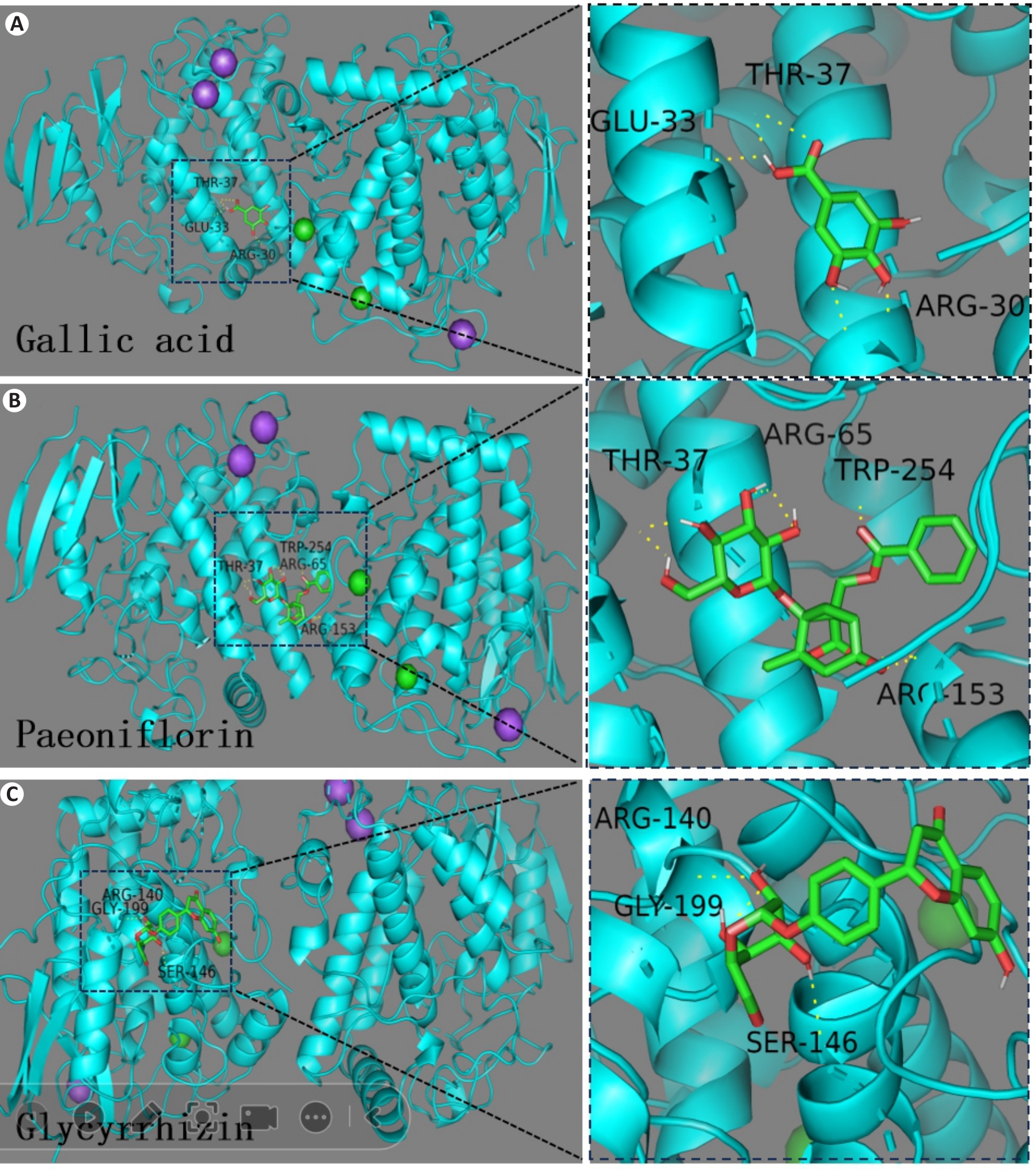
Fig.1 Molecular docking diagrams showing binding of gallic acid (A), paeoniflorin (B), and glycyrrhizin (C) with TYR.
| Result | Gallic acid | Glycyrrhizin | Paeoniflorin |
|---|---|---|---|
| Linear regression equation | y=12794x+31480 | y=19188x-22744 | y=8751.8x+15812 |
| Coefficient of linear correlation (R²) | 0.9987 | 0.9957 | 0.9959 |
| Precision RSD value (%) | 1.17 | 0.74 | 0.69% |
| Stability RSD value (%) | 0.99 | 0.24 | 1.05% |
| Repeatability RSD value (%) | 0.77 | 1.33 | 1.40% |
| Average sample recovery rate (%) | 101.6 | 102.4 | 100.9% |
| RSD value for sample recovery (%) | 0.67% | 1.20 | 0.23% |
Tab.3 Results of methodological evaluation
| Result | Gallic acid | Glycyrrhizin | Paeoniflorin |
|---|---|---|---|
| Linear regression equation | y=12794x+31480 | y=19188x-22744 | y=8751.8x+15812 |
| Coefficient of linear correlation (R²) | 0.9987 | 0.9957 | 0.9959 |
| Precision RSD value (%) | 1.17 | 0.74 | 0.69% |
| Stability RSD value (%) | 0.99 | 0.24 | 1.05% |
| Repeatability RSD value (%) | 0.77 | 1.33 | 1.40% |
| Average sample recovery rate (%) | 101.6 | 102.4 | 100.9% |
| RSD value for sample recovery (%) | 0.67% | 1.20 | 0.23% |
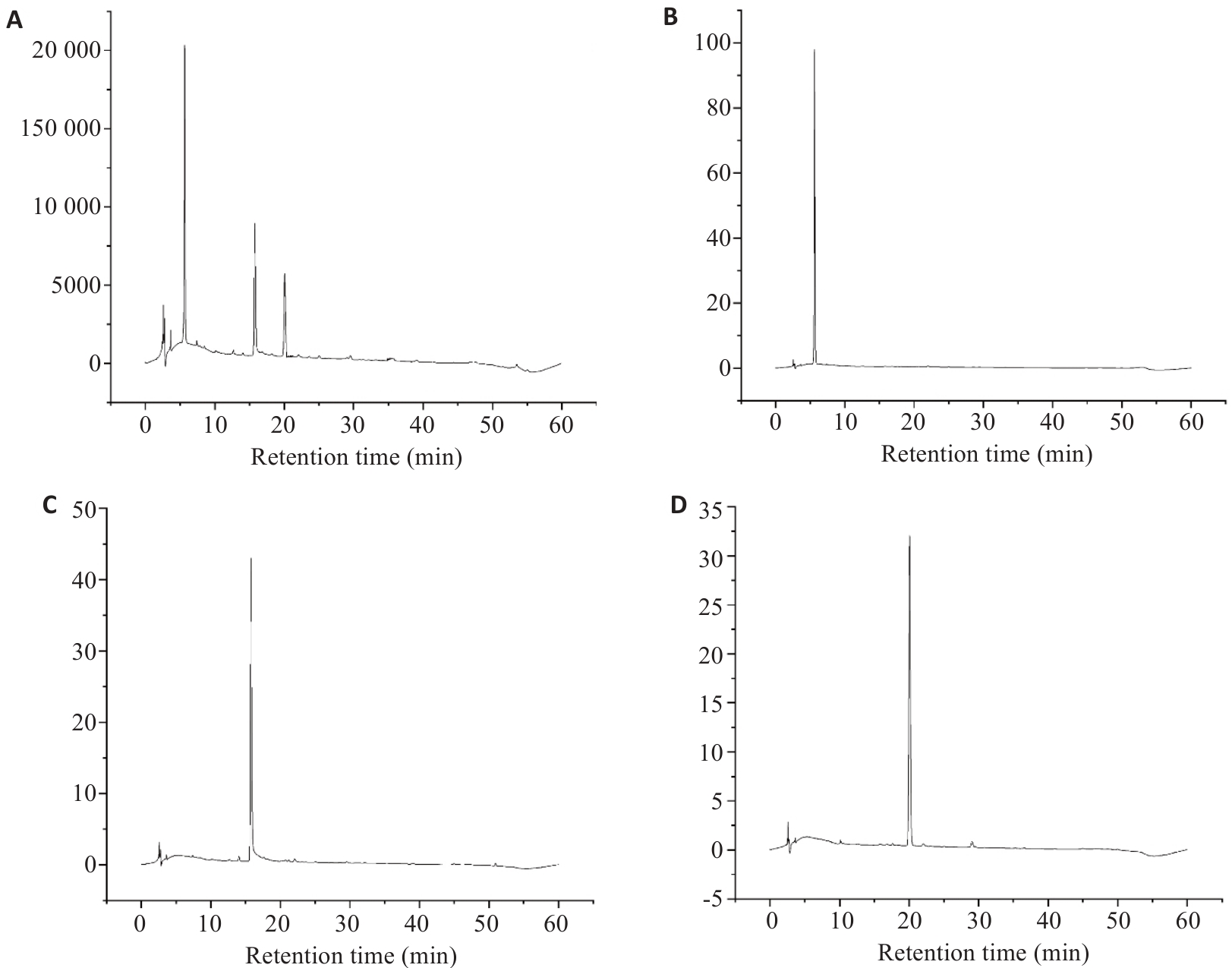
Fig.2 HPLC chromatograms of Paeonia lactiflora extract (A) and the standard samples of the 3 indicator components (B, C, D). S1: Extract of Paeonia lactiflora extract; S2: Gallic acid; S3: Paeoniflorin; S4: Liquiritin.
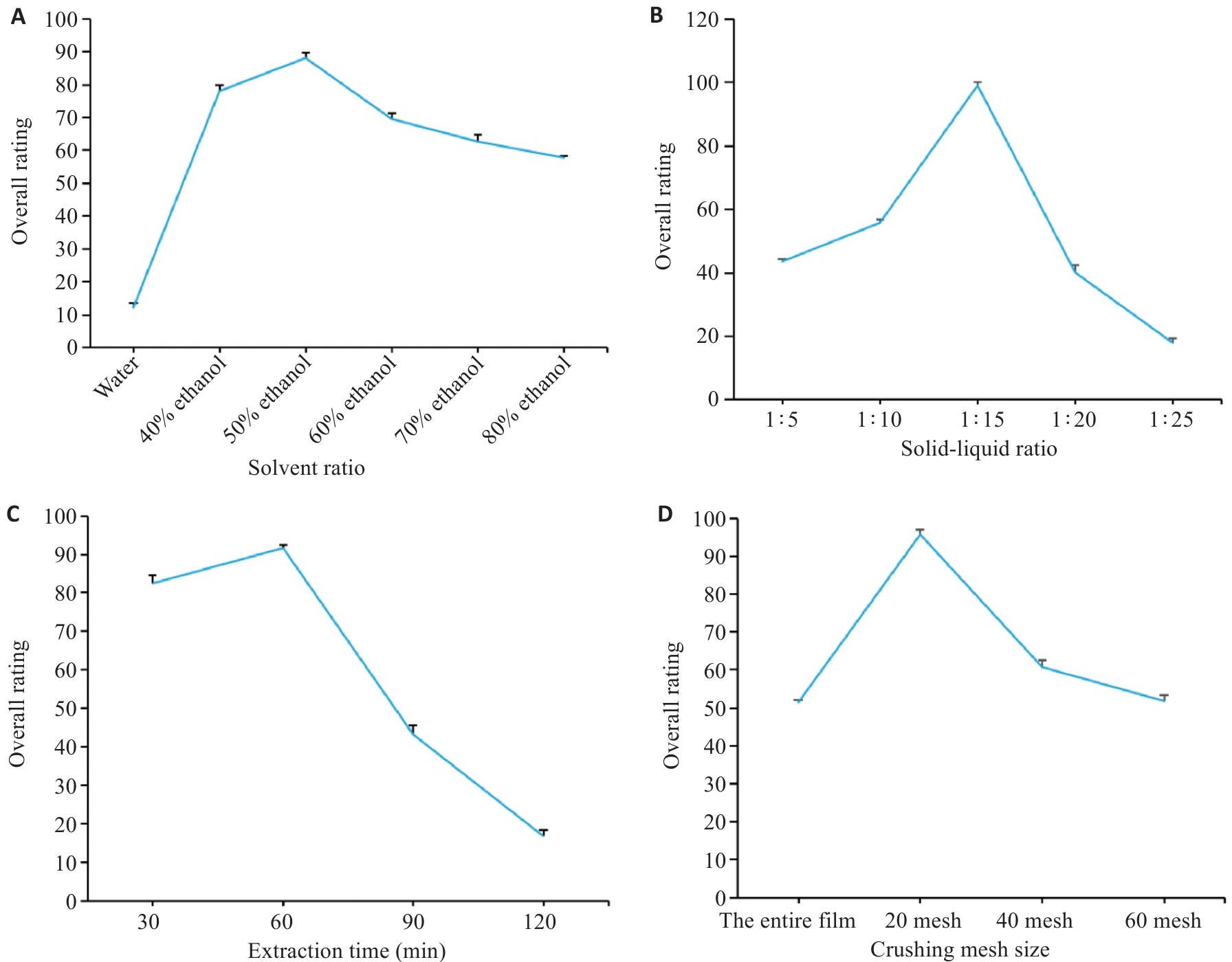
Fig.3 Impact of changes in various factors on the comprehensive score. A: Solvent ratio; B: Solid-liquid ratio; C: Extraction time; D: Crushing mesh size.
| Level | Factor | |||
|---|---|---|---|---|
| Solvent ratio (A) | Liquid-to-solid ratio (B) | Extraction time (C) | Crushing mesh size (D) | |
| -1 | 40% | 10 | 0.5 | The entire film |
| 0 | 50% | 15 | 1 | 20 mesh |
| 1 | 60% | 20 | 1.5 | 40 mesh |
Tab.4 Factor level table
| Level | Factor | |||
|---|---|---|---|---|
| Solvent ratio (A) | Liquid-to-solid ratio (B) | Extraction time (C) | Crushing mesh size (D) | |
| -1 | 40% | 10 | 0.5 | The entire film |
| 0 | 50% | 15 | 1 | 20 mesh |
| 1 | 60% | 20 | 1.5 | 40 mesh |
| Number unit | A | B | C | D | Overall rating |
|---|---|---|---|---|---|
| 1 | -1 | -1 | 0 | 0 | 79.4 |
| 2 | 1 | -1 | 0 | 0 | 69.6 |
| 3 | -1 | 1 | 0 | 0 | 56.7 |
| 4 | 1 | 1 | 0 | 0 | 49.7 |
| 5 | 0 | 0 | -1 | -1 | 49.0 |
| 6 | 0 | 0 | 1 | -1 | 9.0 |
| 7 | 0 | 0 | -1 | 1 | 52.0 |
| 8 | 0 | 0 | 1 | 1 | 9.6 |
| 9 | -1 | 0 | 0 | -1 | 54.4 |
| 10 | 1 | 0 | 0 | -1 | 36.8 |
| 11 | -1 | 0 | 0 | 1 | 57.9 |
| 12 | 1 | 0 | 0 | 1 | 50 |
| 13 | 0 | -1 | -1 | 0 | 81.5 |
| 14 | 0 | 1 | -1 | 0 | 58.6 |
| 15 | 0 | -1 | 1 | 0 | 15.3 |
| 16 | 0 | 1 | 1 | 0 | 6.0 |
| 17 | -1 | 0 | -1 | 0 | 77.1 |
| 18 | 1 | 0 | -1 | 0 | 66.6 |
| 19 | -1 | 0 | 1 | 0 | 14.3 |
| 20 | 1 | 0 | 1 | 0 | 12.3 |
| 21 | 0 | -1 | 0 | -1 | 54.4 |
| 22 | 0 | 1 | 0 | -1 | 27.4 |
| 23 | 0 | -1 | 0 | 1 | 58.7 |
| 24 | 0 | 1 | 0 | 1 | 41.9 |
| 25 | 0 | 0 | 0 | 0 | 100.0 |
| 26 | 0 | 0 | 0 | 0 | 100.0 |
| 27 | 0 | 0 | 0 | 0 | 100.0 |
Tab.5 Response surface design scheme and results
| Number unit | A | B | C | D | Overall rating |
|---|---|---|---|---|---|
| 1 | -1 | -1 | 0 | 0 | 79.4 |
| 2 | 1 | -1 | 0 | 0 | 69.6 |
| 3 | -1 | 1 | 0 | 0 | 56.7 |
| 4 | 1 | 1 | 0 | 0 | 49.7 |
| 5 | 0 | 0 | -1 | -1 | 49.0 |
| 6 | 0 | 0 | 1 | -1 | 9.0 |
| 7 | 0 | 0 | -1 | 1 | 52.0 |
| 8 | 0 | 0 | 1 | 1 | 9.6 |
| 9 | -1 | 0 | 0 | -1 | 54.4 |
| 10 | 1 | 0 | 0 | -1 | 36.8 |
| 11 | -1 | 0 | 0 | 1 | 57.9 |
| 12 | 1 | 0 | 0 | 1 | 50 |
| 13 | 0 | -1 | -1 | 0 | 81.5 |
| 14 | 0 | 1 | -1 | 0 | 58.6 |
| 15 | 0 | -1 | 1 | 0 | 15.3 |
| 16 | 0 | 1 | 1 | 0 | 6.0 |
| 17 | -1 | 0 | -1 | 0 | 77.1 |
| 18 | 1 | 0 | -1 | 0 | 66.6 |
| 19 | -1 | 0 | 1 | 0 | 14.3 |
| 20 | 1 | 0 | 1 | 0 | 12.3 |
| 21 | 0 | -1 | 0 | -1 | 54.4 |
| 22 | 0 | 1 | 0 | -1 | 27.4 |
| 23 | 0 | -1 | 0 | 1 | 58.7 |
| 24 | 0 | 1 | 0 | 1 | 41.9 |
| 25 | 0 | 0 | 0 | 0 | 100.0 |
| 26 | 0 | 0 | 0 | 0 | 100.0 |
| 27 | 0 | 0 | 0 | 0 | 100.0 |
| Sources of variance | Sum of squares | Degree of freedom | Mean square | F | P |
|---|---|---|---|---|---|
| Model | 20577.88 | 14 | 1469.85 | 55.26 | <0.0001 |
| A | 250.25 | 1 | 250.25 | 9.41 | 0.0098 |
| B | 1172.16 | 1 | 1172.16 | 44.06 | <0.0001 |
| C | 8442.91 | 1 | 8442.91 | 317.39 | <0.0001 |
| D | 127.4 | 1 | 127.4 | 4.79 | 0.0491 |
| AB | 1.96 | 1 | 1.96 | 0.0737 | 0.7907 |
| AC | 18.06 | 1 | 18.06 | 0.679 | 0.426 |
| AD | 23.52 | 1 | 23.52 | 0.8843 | 0.3656 |
| BC | 46.24 | 1 | 46.24 | 1.74 | 0.212 |
| BD | 26.01 | 1 | 26.01 | 0.9778 | 0.3423 |
| CD | 1.44 | 1 | 1.44 | 0.0541 | 0.8199 |
| A² | 1585.47 | 1 | 1585.47 | 59.6 | <0.0001 |
| B² | 2228.6 | 1 | 2228.6 | 83.78 | <0.0001 |
| C² | 8082.56 | 1 | 8082.56 | 303.85 | <0.0001 |
| D² | 5704.33 | 1 | 5704.33 | 214.44 | <0.0001 |
| Residual | 319.21 | 12 | 26.6 | ||
| Missing item | 319.21 | 10 | 31.92 | ||
| Pure error | 0 | 2 | 0 | ||
| Total deviation | 20897.09 | 26 |
Tab.6 Response surface analysis of variance
| Sources of variance | Sum of squares | Degree of freedom | Mean square | F | P |
|---|---|---|---|---|---|
| Model | 20577.88 | 14 | 1469.85 | 55.26 | <0.0001 |
| A | 250.25 | 1 | 250.25 | 9.41 | 0.0098 |
| B | 1172.16 | 1 | 1172.16 | 44.06 | <0.0001 |
| C | 8442.91 | 1 | 8442.91 | 317.39 | <0.0001 |
| D | 127.4 | 1 | 127.4 | 4.79 | 0.0491 |
| AB | 1.96 | 1 | 1.96 | 0.0737 | 0.7907 |
| AC | 18.06 | 1 | 18.06 | 0.679 | 0.426 |
| AD | 23.52 | 1 | 23.52 | 0.8843 | 0.3656 |
| BC | 46.24 | 1 | 46.24 | 1.74 | 0.212 |
| BD | 26.01 | 1 | 26.01 | 0.9778 | 0.3423 |
| CD | 1.44 | 1 | 1.44 | 0.0541 | 0.8199 |
| A² | 1585.47 | 1 | 1585.47 | 59.6 | <0.0001 |
| B² | 2228.6 | 1 | 2228.6 | 83.78 | <0.0001 |
| C² | 8082.56 | 1 | 8082.56 | 303.85 | <0.0001 |
| D² | 5704.33 | 1 | 5704.33 | 214.44 | <0.0001 |
| Residual | 319.21 | 12 | 26.6 | ||
| Missing item | 319.21 | 10 | 31.92 | ||
| Pure error | 0 | 2 | 0 | ||
| Total deviation | 20897.09 | 26 |
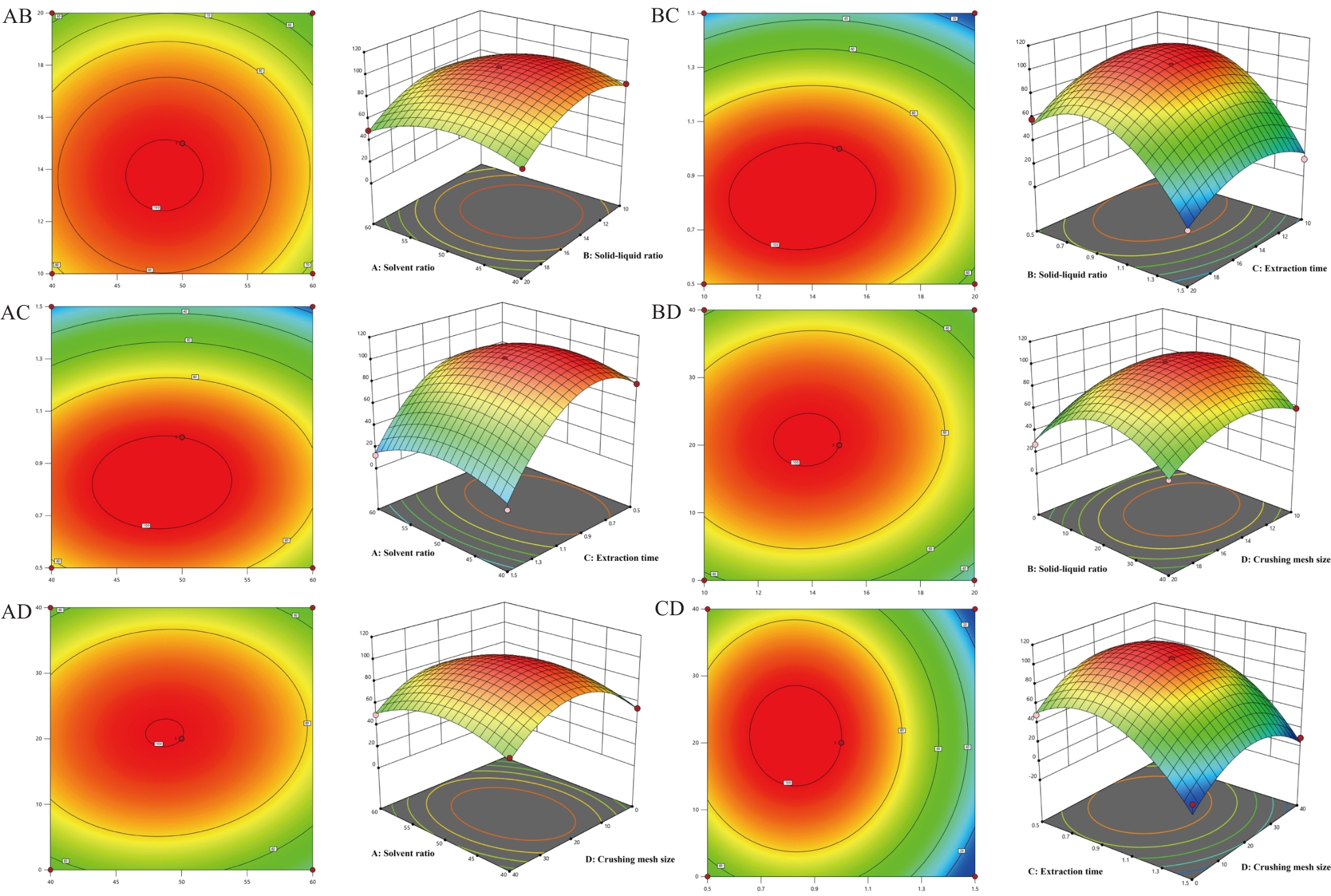
Fig.4 Contour maps and response surface maps. A: Solvent ratio; B: Solid-liquid ratio; C: Extraction time; D: Crushing mesh size.
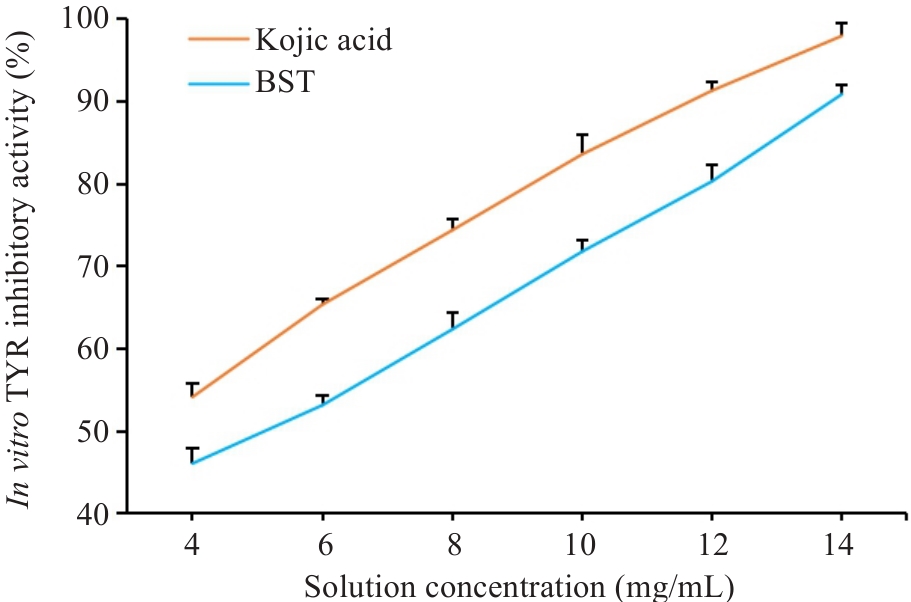
Fig.5 Comparison of TYR inhibitory activity of Paeonia lactiflora extract (BST) obtained using optimized extraction process.
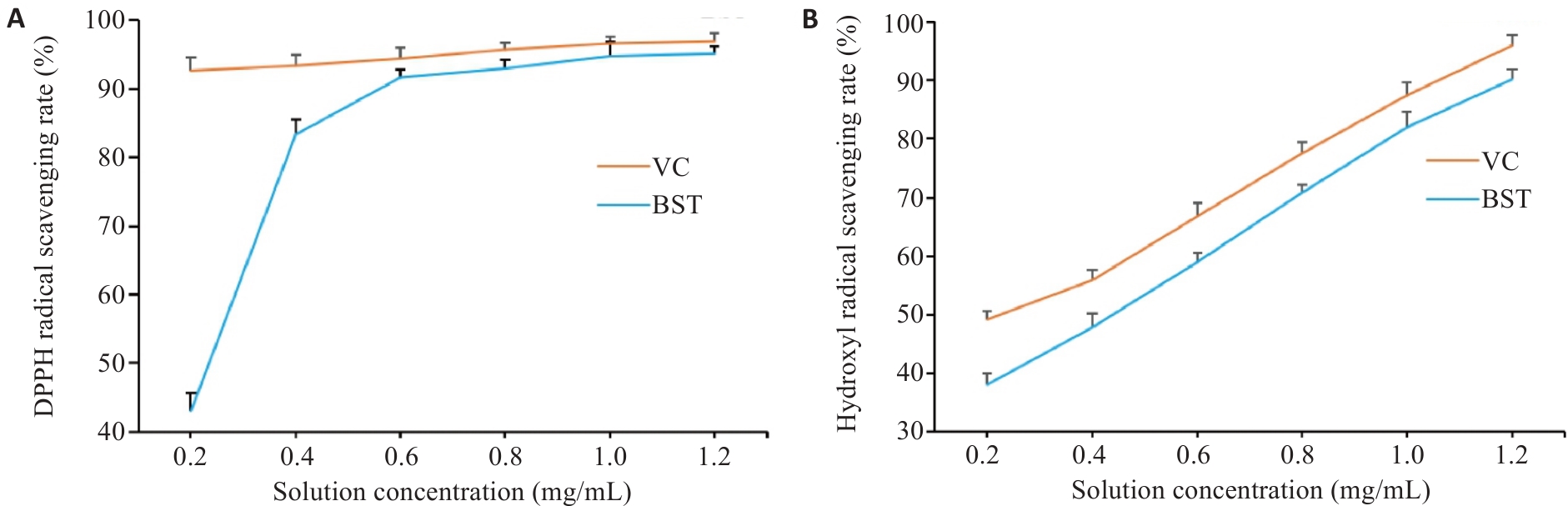
Fig.6 Free radical scavenging capacity of BST obtained using optimized extraction protocol. (A) Scavenging capacity for DPPH free radicals. (B) Scavenging capacity for hydroxyl free radicals.
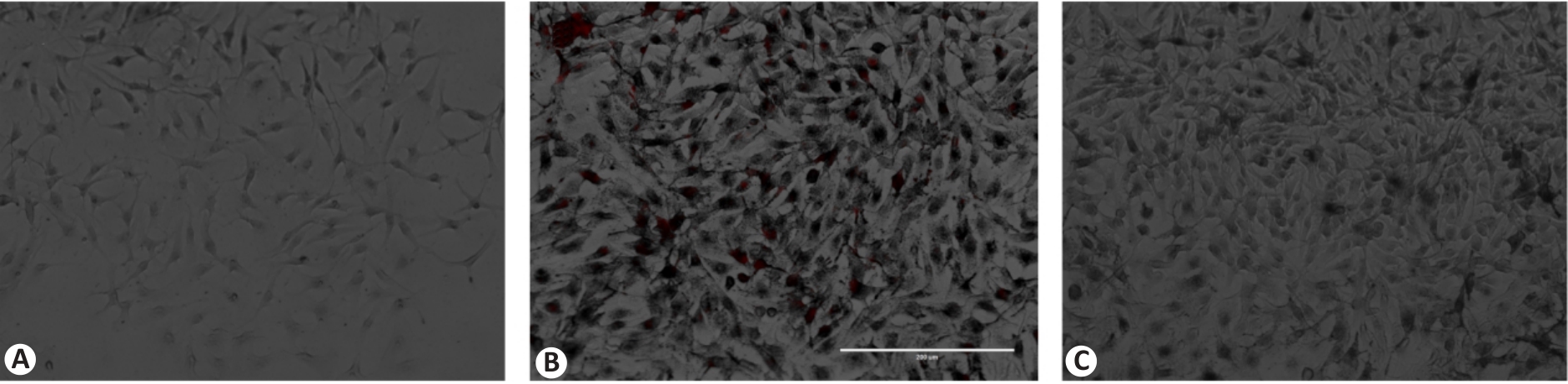
Fig.7 Effect of BST on melanin quantity in B16 cells (Scale bar=200 μm). A: Blank group cells; B: Model group cells; C: Cells in 50 μg/mL BST.
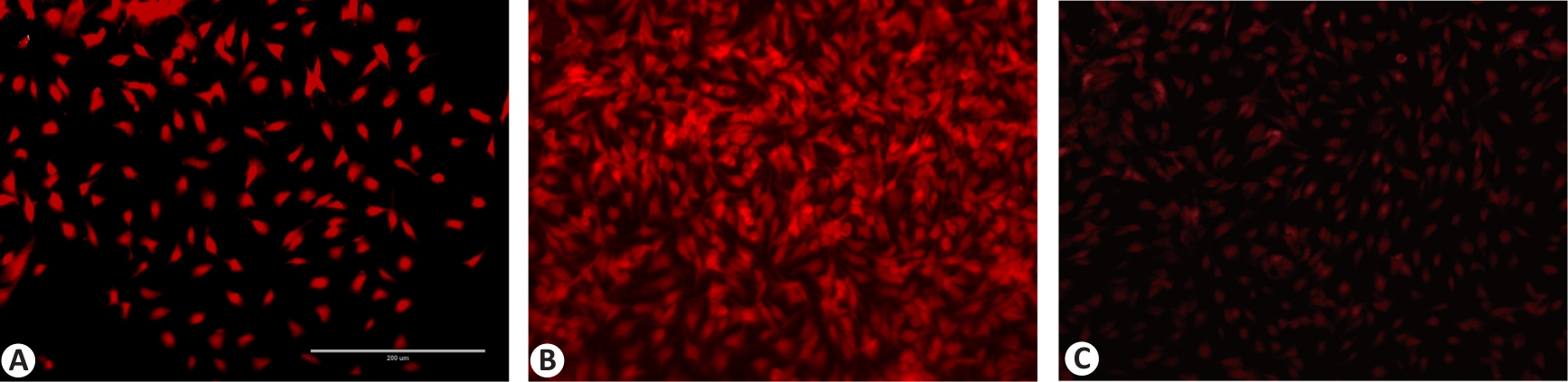
Fig.8 Fluorescent staining rfor melanin-tyrosinase in B16 cells (Scale bar=200 μm). A: Blank group cells; B: Model group cells; C: Cells in 50 μg/mL BST.
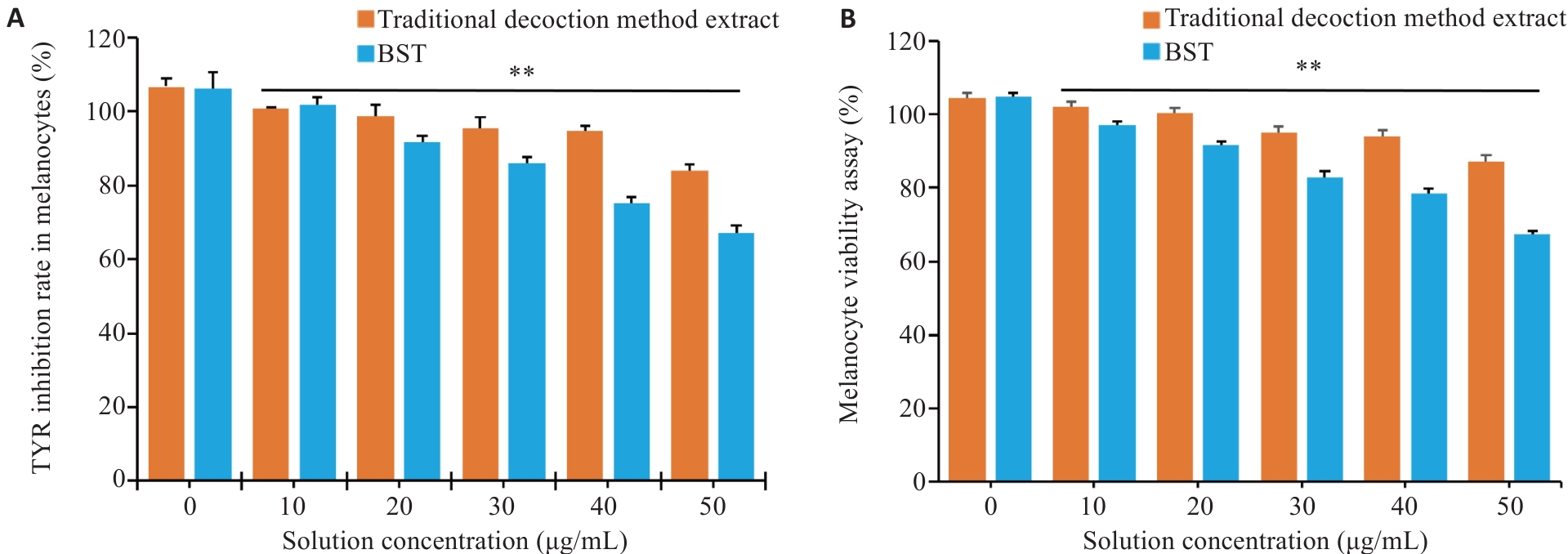
Fig.9 Comparison of the effects of traditional water-decocted BST extract and the optimized extract on α‑MSH-stimulated melanocytes. A: Inhibition rate of TYR. B: Cell viability. **P<0.01.
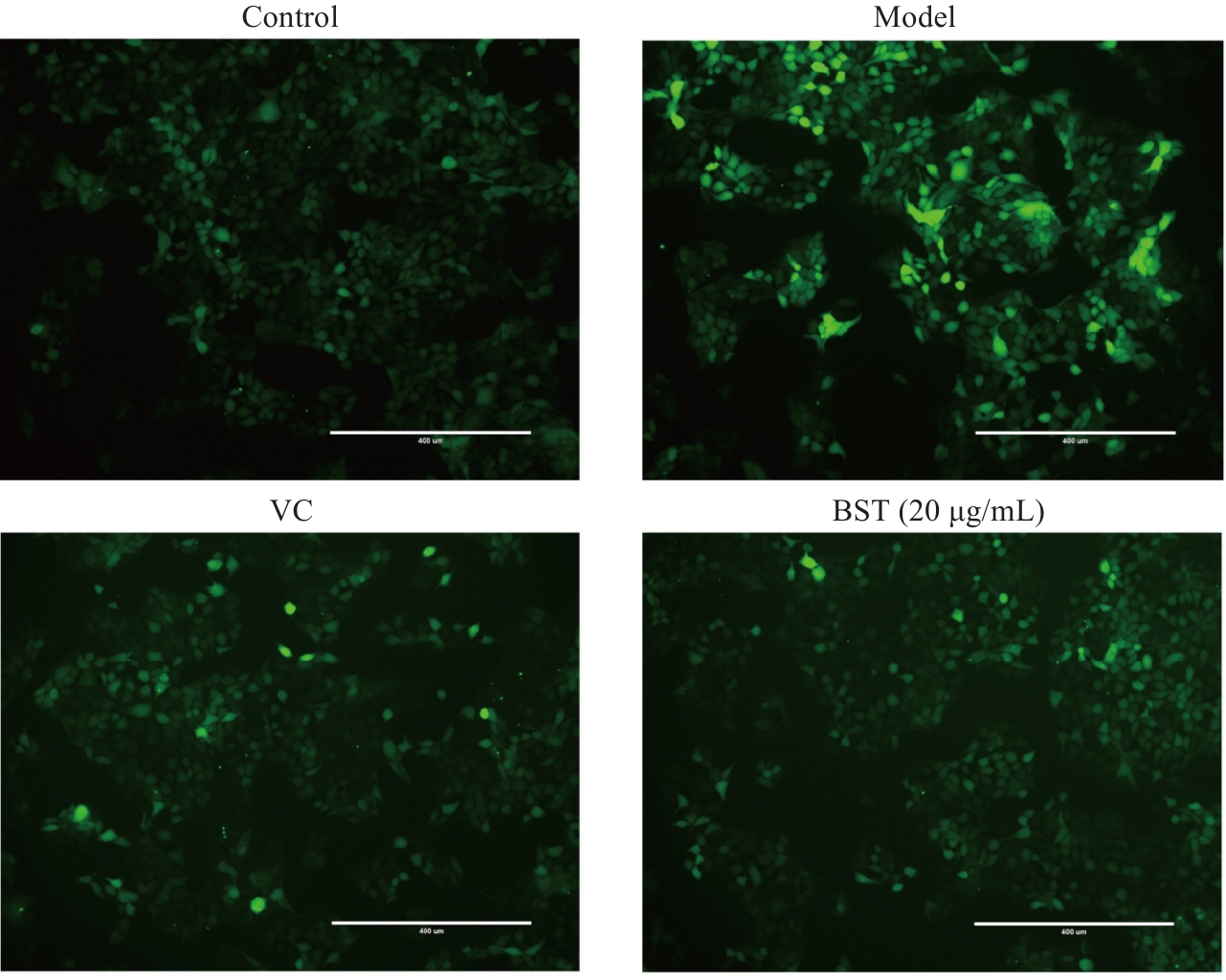
Fig.10 Effect of BST on ROS levels in HaCat cells in different groups (Scale bar=400 μm).
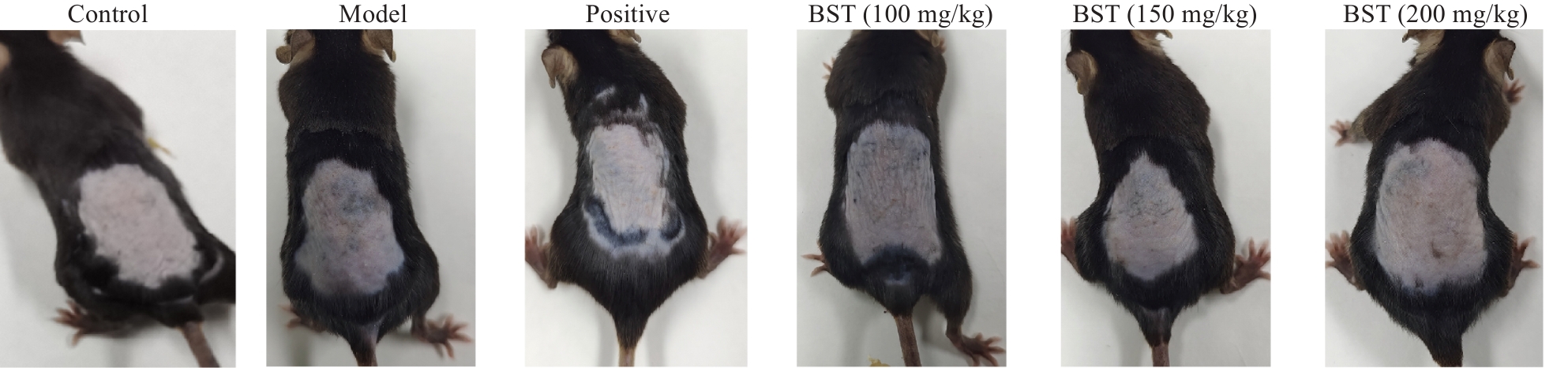
Fig.11 Morphological observation of dorsal skin of C57 mouse models in different groups.

Fig.12 Fontana-Masson silver staining of dorsal skin from C57 mouse models in each group (Scale bar=500 μm).
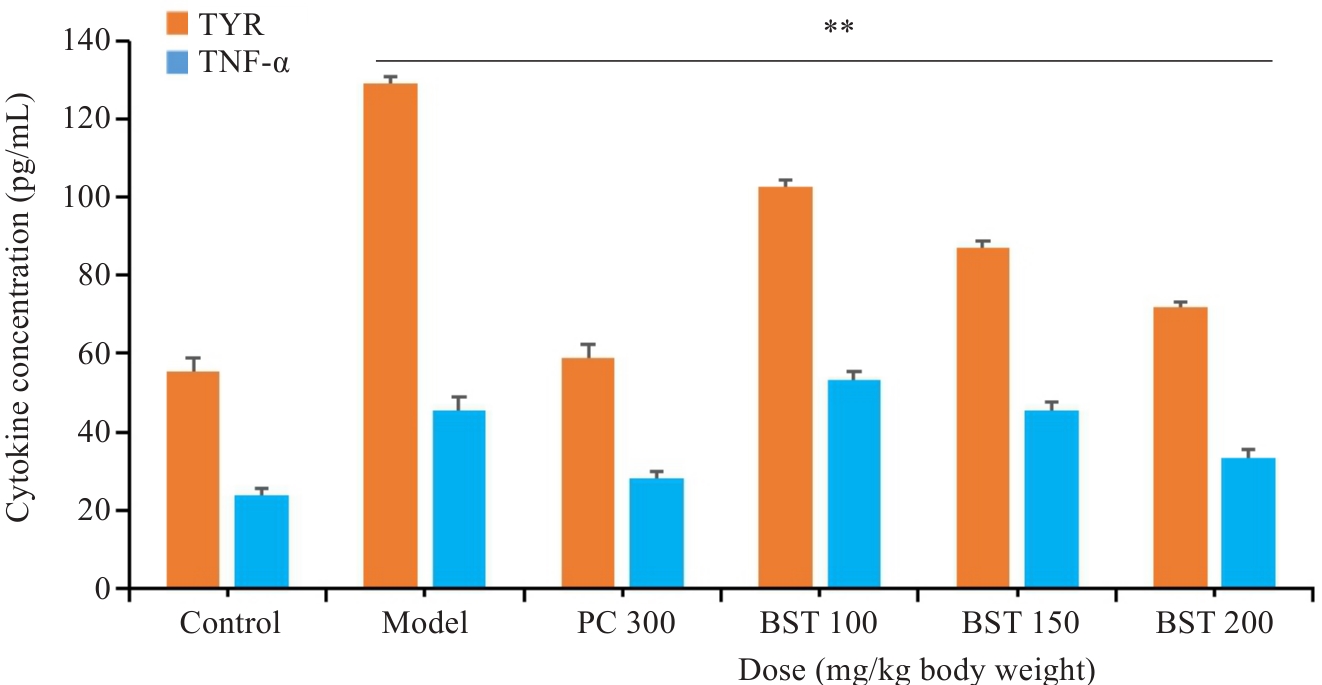
Fig.13 Serum levels of TRY and TNF-α in C57 mouse models in different groups. **P<0.01.
| [1] | 康 乐, 黎锦帮, 田 硕, 等. 中药养颜学的内涵与外延[J]. 时珍国医国药, 2024, 35(13): 3026-9. |
| [2] | 鄢 贵, 龚普阳, 张复中, 等. 基于CiteSpace和VOSviewer的白芍研究现状及研究热点可视化分析[J]. 中草药, 2024, 55(11): 3805-15. |
| [3] | 刁家鑫, 郑琪潼, 陈孟尧, 等. 白芍中鞣酸类成分的药理作用及作用机制[J]. 中国中药杂志, 2025, 50(6): 1471-83. |
| [4] | 张 艳, 孙菡阳, 廖小婷, 等. 甘草苷调节丙酮酸激酶M2改善过氧化氢诱导的人脐静脉内皮细胞功能障碍[J]. 微循环学杂志, 2024, 34(4): 19-23, 31. |
| [5] | 刘湘花, 李 姗, 赵方言, 等. 基于网络药理学、分子对接及实验验证探讨芍药苷治疗非酒精性脂肪肝病抗炎作用机制[J]. 天然产物研究与开发, 2025, 37(2): 337-45. |
| [6] | 汪 婕. 银杏叶中抑制黑色素合成活性成分及其部分抑制机制的研究[D]. 成都: 西南交通大学, 2023. |
| [7] | 彭海月, 汪 婷, 李国瑞, 等. 黑色素的合成及小分子对其功能的调控[J]. 高等学校化学学报, 2021, 42(11): 3357-66. |
| [8] | 付文才. 基于抗氧化剂清除活性氧自由基的生物体黑色素抑制机制研究[D]. 广州: 广州大学, 2022. |
| [9] | Cannizzo ES, Clement CC, Sahu R, et al. Oxidative stress, inflamm-aging and immunosenescence[J]. J Proteomics, 2011, 74(11): 2313-23. doi:10.1016/j.jprot.2011.06.005 |
| [10] | 崔 虹, 朱佳茜, 冯秋芳, 等. 中药白芍化学成分及生物活性研究进展[J]. 海峡药学, 2017, 29(9): 1-5. |
| [11] | 唐子溦, 王 艳, 叶小花, 等. “四白” 中药复方醇提液的安全性及护肤作用研究[J]. 中药新药与临床药理, 2023, 34(9): 1219-26. |
| [12] | 杨林芳, 赵肖灵, 江世宾, 等. 白芍总苷对H2O2诱导下黑色素细胞的保护及作用机制[J]. 天津师范大学学报: 自然科学版, 2024, 44(5): 30-5. |
| [13] | 刘 芬, 詹文红. 白芍总苷体外抗氧化活性研究[J]. 现代药物与临床, 2015, 30(2): 132-5. |
| [14] | 原梦瑶, 康淑荷, 崔璐娟, 等. 红芪多糖超声提取工艺优化及抗氧化、美白和吸湿保湿活性[J]. 精细化工, 2025, 42(3): 577-86. |
| [15] | 肖垚垚, 王 贝, 沈 宇, 等.经典美白复方“白芍提取物”质量标志物的预测分析[J]. 中国现代中药, 2023, 2: 447-54. |
| [16] | 王逸飞, 朱振宇, 吴志生, 等. QbD理念的中药缓控释制剂的设计与研发研究[J]. 中国中药杂志, 2019, 44(20): 4317-21. |
| [17] | 国家药典委员会. 中华人民共和国药典-一部: 2020年版[M]. 北京: 中国医药科技出版社, 2020. |
| [18] | 张喜利, 梁慧慧, 刘文龙. 新伤湿敷液醇提工艺优化[J]. 中成药, 2023, 45(12): 4071-5. |
| [19] | 栗焕焕, 毛营营, 张国琴, 等. 响应面分析法优化吴茱萸提取工艺及多指标定量指纹图谱研究[J]. 中华中医药杂志, 2020, 35(11): 5716-20. |
| [20] | 刘龙云, 王晓权, 孙 松, 等. Box-Behnken响应面法结合熵权法优化三黄洗剂提取工艺[J]. 长春师范大学学报, 2023(12): 76-86. |
| [21] | Sun SQ, Wang YJ, Xu W, et al. Optimizing ultrasound-assisted extraction of prodigiosin by response surface methodology[J]. Prep Biochem Biotechnol, 2015, 45(2): 101-8. doi:10.1080/10826068.2013.877029 |
| [22] | 张亚梅, 韩鸿萍, 宋道光. 响应面法优化暗紫贝母流浸膏提取工艺及其质量评价[J]. 天然产物研究与开发, 2024, 36(9): 1554-63. |
| [23] | 苏琪辉, 王 婧, 雒荣荣, 等. 基于代谢组学与网络药理学研究四黑方对斑马鱼黑色素的作用机制[J]. 中国临床药理学与治疗学, 2024, 29(9): 988-1001. |
| [24] | 贾俊芳, 孟德新, 李淑霞, 等. 古方三白汤不同溶剂提取物美白作用比较研究[J]. 2022(11): 234-6. |
| [25] | 马梓育, 陆 洋. 基于网络药理学与细胞实验的三白汤治疗皮肤色素沉着机制探究与初证[J]. 世界科学技术-中医药现代化, 2021, 23(7): 2153-69. |
| [26] | 方婧杰, 陈 建, 陈雅娟, 等. 曲酸提取工艺优化及其对酪氨酸酶抑制作用的分子机制[J]. 食品与机械, 2023, 39(12): 9-17. |
| [27] | Qu YW, Zhan Q, Du SB, et al. Catalysis-based specific detection and inhibition of tyrosinase and their application[J]. J Pharm Anal, 2020, 10(5): 414-25. doi:10.1016/j.jpha.2020.07.004 |
| [28] | Qian WH, Liu WY, Zhu D, et al. Natural skin-whitening compounds for the treatment of melanogenesis (Review)[J]. Exp Ther Med, 2020, 20(1): 173-85. doi:10.3892/etm.2020.8687 |
| [29] | 马馨桐. 桔梗美白活性物质研究[D]. 长春: 长春中医药大学, 2021. |
| [30] | 耿 莉, 张守亮, 王杰琼, 等. 中医药治疗皮肤色素沉着的研究进展[J]. 时珍国医国药, 2023, 34(7): 1711-4. |
| [31] | Zaid AN, Al Ramahi R. Depigmentation and anti-aging treatment by natural molecules[J]. Curr Pharm Des, 2019, 25(20): 2292-312. doi:10.2174/1381612825666190703153730 |
| [32] | 朱芷葳, 蓝吴涛, 马悦悦, 等. 大蒜素对小鼠黑色素瘤B16F10细胞体外增殖和迁移能力的影响[J]. 畜牧兽医学报, 2021, 52(3): 831-8. |
| [33] | 夏 颖, 殷志爽, 石 晨, 等. 白芍提取物及其有效成分抗氧化活性的研究[J]. 首都医科大学学报, 2013, 34(1): 120-5. |
| [34] | 秦亚东, 周娟娟, 汪荣斌. 白芍多糖抑制酪氨酸酶活性成分的筛选[J]. 中成药, 2018, 40(12): 2755-8. |
| [35] | 张建国, 马宁珠, 王振霖, 等. 白术与白芍美白面膜的制备及美白作用初步研究[J]. 中国美容医学, 2023, 32(7): 69-74. |
| [1] | SUN Mingxue, ZOU Chuncai, YAN Haiyan. Screening of effective antioxidant components from Trichosanthes extract and assessment of their antioxidant activity [J]. Journal of Southern Medical University, 2022, 42(3): 384-391. |
| Viewed | ||||||
|
Full text |
|
|||||
|
Abstract |
|
|||||
