
南方医科大学学报 ›› 2026, Vol. 46 ›› Issue (4): 794-802.doi: 10.12122/j.issn.1673-4254.2026.04.08
• • 上一篇
杨新梅1( ), 王咏琪3, 莫晓华1, 朱智航1, 洪丹萍1, 胡樱子1, 彭凯琪2, 徐艺轩1, 刘锦岚4, 郭文娟2, 林绮文1, 麦俊杰1, 麦思茗1, 卢京洁1, 杨婵娟1, 周燕玲1, 程道猛1, 余萌2(), 殷炜珍1()
收稿日期:2025-08-03
出版日期:2026-04-20
发布日期:2026-04-24
通讯作者:
余萌,殷炜珍
E-mail:yxm13167337991@163.com;yumengbnu@163.com;yinwz90@163.com
作者简介:杨新梅,硕士,E-mail: yxm13167337991@163.com
基金资助:
Xinmei YANG1(), Yongqi WANG3, Xiaohua MO1, Zhihang ZHU1, Danping HONG1, Yingzi HU1, Kaiqi PENG2, Yixuan XU1, Jinlan LIU4, Wenjuan GUO2, Qiwen LIN1, Junjie MAI1, Siming MAI1, Jingjie LU1, Chanjuan YANG1, Yanling ZHOU1, Daomeng CHENG1, Meng YU2(), Weizhen YIN1()
Received:2025-08-03
Online:2026-04-20
Published:2026-04-24
Contact:
Meng YU, Weizhen YIN
E-mail:yxm13167337991@163.com;yumengbnu@163.com;yinwz90@163.com
摘要:
目的 基于多维干预成效指标,初步探究可能影响注意缺陷/多动障碍(ADHD)儿童团体干预响应的个体与家庭特征。 方法 纳入2023年7月~2025年1月在广州医科大学附属脑科医院参与干预项目的62例6~9岁ADHD儿童,接受为期4~6周(共8次)的标准化团体干预,内容聚焦于注意力训练与情绪调节训练。通过一般情况量表、小学生情绪调节困难问卷(DERS)、易激惹量表(ARI)、马特森儿童社会技能评价量表(MESSY)与SNAP-Ⅳ评定量表-父母版收集前后测数据。鉴于两组干预在形式与结构上的一致,遂合并数据开展建模分析。以注意缺陷、情绪调节、社交技能等三方面变量的变化作为结局指标,通过LASSO回归对18项前测变量(涵盖8项心理特征和10项人口学与家庭背景变量)进行筛选,进而构建多元线性回归模型,识别稳定预测因子。 结果 在注意缺陷、易激惹、情绪调节困难和过于强势/过度自信为结局变量的模型中,结局指标自身的基线得分为显著正向预测因子(β=0.462~0.669,P_BH<0.05);敌对的前测得分对干预后情绪调节困难(β=-0.326,P_BH<0.01)、过于强势/过度自信(β=-0.543,P_BH<0.05)的改善表现出显著负向预测作用。 结论 本研究初步支持了基线症状、敌对特征对干预响应的预测作用。这些发现有助于在干预前对患儿的疗效进行初步预测,为实现ADHD的精准干预提供了可能的参考依据。
杨新梅, 王咏琪, 莫晓华, 朱智航, 洪丹萍, 胡樱子, 彭凯琪, 徐艺轩, 刘锦岚, 郭文娟, 林绮文, 麦俊杰, 麦思茗, 卢京洁, 杨婵娟, 周燕玲, 程道猛, 余萌, 殷炜珍. 患儿个体与家庭特征对注意缺陷/多动障碍团体干预效果的预测:基于多维模型构建与分析[J]. 南方医科大学学报, 2026, 46(4): 794-802.
Xinmei YANG, Yongqi WANG, Xiaohua MO, Zhihang ZHU, Danping HONG, Yingzi HU, Kaiqi PENG, Yixuan XU, Jinlan LIU, Wenjuan GUO, Qiwen LIN, Junjie MAI, Siming MAI, Jingjie LU, Chanjuan YANG, Yanling ZHOU, Daomeng CHENG, Meng YU, Weizhen YIN. Patient and family predictors of group intervention outcomes in children with attention-deficit/hyperactivity disorder: a multidimensional model analysis[J]. Journal of Southern Medical University, 2026, 46(4): 794-802.
| Index | Attention group (n=31) | Emotion group (n=31) | P |
|---|---|---|---|
| Age (year, Mean±SD) | 7.55±1.61 | 7.94±0.89 | 0.247 |
| Gender | 0.425 | ||
| Male | 29 (93.5) | 26 (83.9) | |
| Female | 2 (6.5) | 5 (16.1) | |
| Grade level | 0.602 | ||
| Grade 2 or below | 13 (41.9) | 11 (35.5) | |
| Grade 3 or above | 18 (58.1) | 20 (64.5) | |
| Residential area | >0.999 | ||
| Rural/town | 5 (16.1) | 4 (12.9) | |
| Urban | 26 (83.9) | 27 (87.1) | |
| Maternal education | >0.999 | ||
| Below college | 4 (12.9) | 3 (9.7) | |
| College or above | 27 (87.1) | 28 (90.3) | |
| Paternal education | 0.562 | ||
| Below college | 9 (29.0) | 7 (22.6) | |
| College or above | 22 (71.0) | 24 (77.4) | |
| Birth status | 0.288 | ||
| Cesarean delivery | 13 (41.9) | 9 (29.0) | |
| Vaginal delivery | 18 (58.1) | 22 (71.0) | |
| Allergy history | >0.999 | ||
| No | 26 (83.9) | 27 (87.1) | |
| Yes | 5 (16.1) | 4 (12.9) | |
| Medication history | 0.066 | ||
| No | 16 (51.6) | 23 (74.2) | |
| Yes | 15 (48.4) | 8 (25.8) | |
| Psychiatric family history | 0.104 | ||
| No | 30 (96.8) | 25 (80.6) | |
| Yes | 1 (3.2) | 6 (19.4) |
表1 两组患者人口学及家庭背景资料比较结果
Tab.1 Comparison of demographic and family background data between the two groups [n (%)]
| Index | Attention group (n=31) | Emotion group (n=31) | P |
|---|---|---|---|
| Age (year, Mean±SD) | 7.55±1.61 | 7.94±0.89 | 0.247 |
| Gender | 0.425 | ||
| Male | 29 (93.5) | 26 (83.9) | |
| Female | 2 (6.5) | 5 (16.1) | |
| Grade level | 0.602 | ||
| Grade 2 or below | 13 (41.9) | 11 (35.5) | |
| Grade 3 or above | 18 (58.1) | 20 (64.5) | |
| Residential area | >0.999 | ||
| Rural/town | 5 (16.1) | 4 (12.9) | |
| Urban | 26 (83.9) | 27 (87.1) | |
| Maternal education | >0.999 | ||
| Below college | 4 (12.9) | 3 (9.7) | |
| College or above | 27 (87.1) | 28 (90.3) | |
| Paternal education | 0.562 | ||
| Below college | 9 (29.0) | 7 (22.6) | |
| College or above | 22 (71.0) | 24 (77.4) | |
| Birth status | 0.288 | ||
| Cesarean delivery | 13 (41.9) | 9 (29.0) | |
| Vaginal delivery | 18 (58.1) | 22 (71.0) | |
| Allergy history | >0.999 | ||
| No | 26 (83.9) | 27 (87.1) | |
| Yes | 5 (16.1) | 4 (12.9) | |
| Medication history | 0.066 | ||
| No | 16 (51.6) | 23 (74.2) | |
| Yes | 15 (48.4) | 8 (25.8) | |
| Psychiatric family history | 0.104 | ||
| No | 30 (96.8) | 25 (80.6) | |
| Yes | 1 (3.2) | 6 (19.4) |
| Outcome | Pre-intervention | Post-intervention | t | P |
|---|---|---|---|---|
| Inattention | 1.86±0.60 | 1.59±0.60 | 4.741 | <0.001 |
| ARI | 4.91±3.61 | 3.60±3.63 | 2.391 | 0.017 |
| DERS | 69.00±11.29 | 64.10±14.82 | 2.096 | 0.036 |
| Inappropriately assertive/overconfident | 34.43±6.90 | 32.56±7.84 | 2.353 | 0.019 |
| Hostile | 19.85±6.38 | 19.53±6.68 | 0.534 | 0.594 |
| Adaptive/appropriate | 33.31±5.49 | 32.32±4.85 | 1.283 | 0.201 |
表2 合并干预组干预前后3方面指标得分变化情况
Tab.2 Pre-post intervention changes in scores across 3 outcome domains in the combined intervention group (n=62, Mean±SD)
| Outcome | Pre-intervention | Post-intervention | t | P |
|---|---|---|---|---|
| Inattention | 1.86±0.60 | 1.59±0.60 | 4.741 | <0.001 |
| ARI | 4.91±3.61 | 3.60±3.63 | 2.391 | 0.017 |
| DERS | 69.00±11.29 | 64.10±14.82 | 2.096 | 0.036 |
| Inappropriately assertive/overconfident | 34.43±6.90 | 32.56±7.84 | 2.353 | 0.019 |
| Hostile | 19.85±6.38 | 19.53±6.68 | 0.534 | 0.594 |
| Adaptive/appropriate | 33.31±5.49 | 32.32±4.85 | 1.283 | 0.201 |
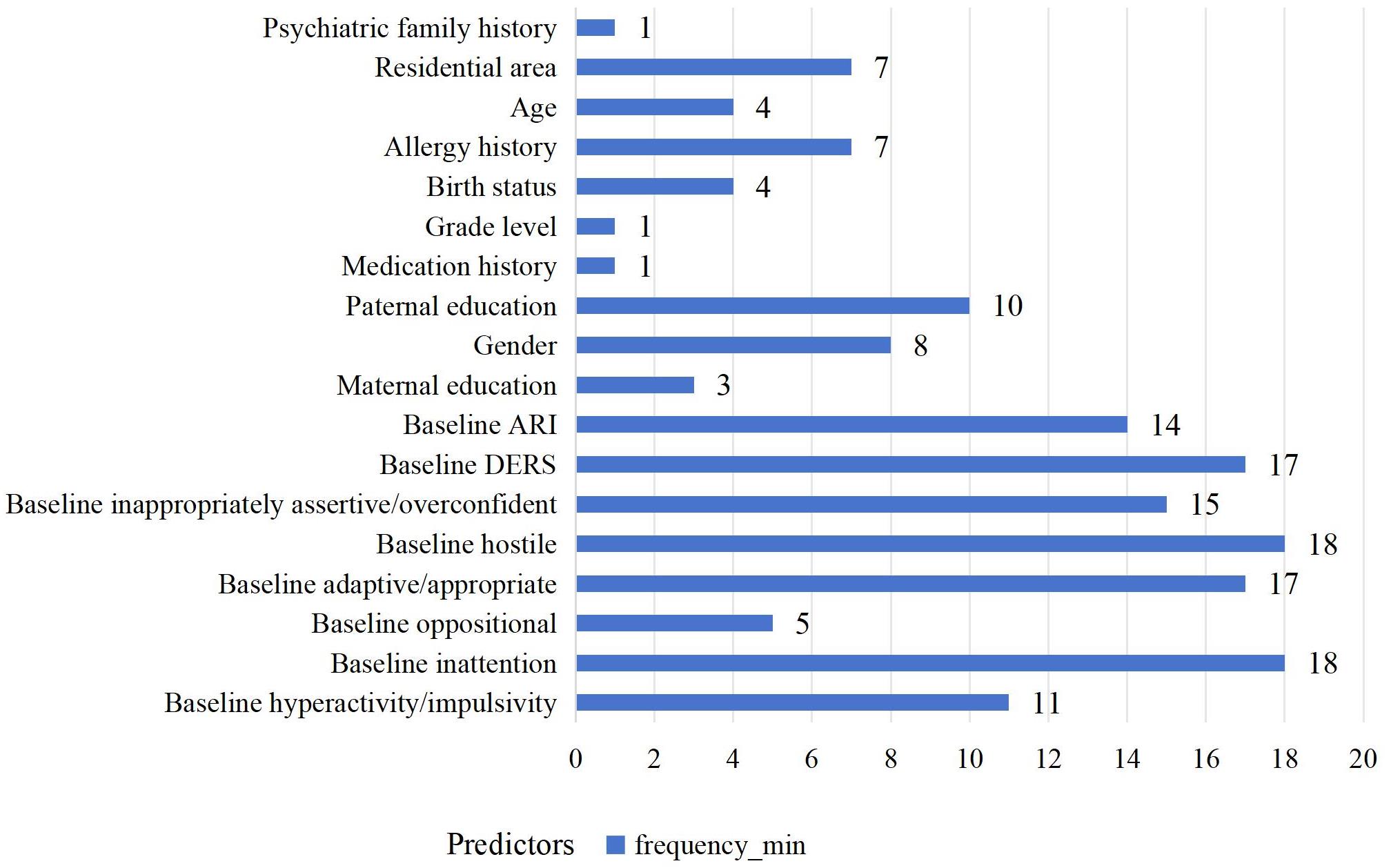
图1 以注意缺陷改善为结局变量的20次多重插补LASSO回归模型中变量的入选情况
Fig.1 Variable selection frequency across 20 multiply imputed LASSO regression models with inattention improvement as the outcome.
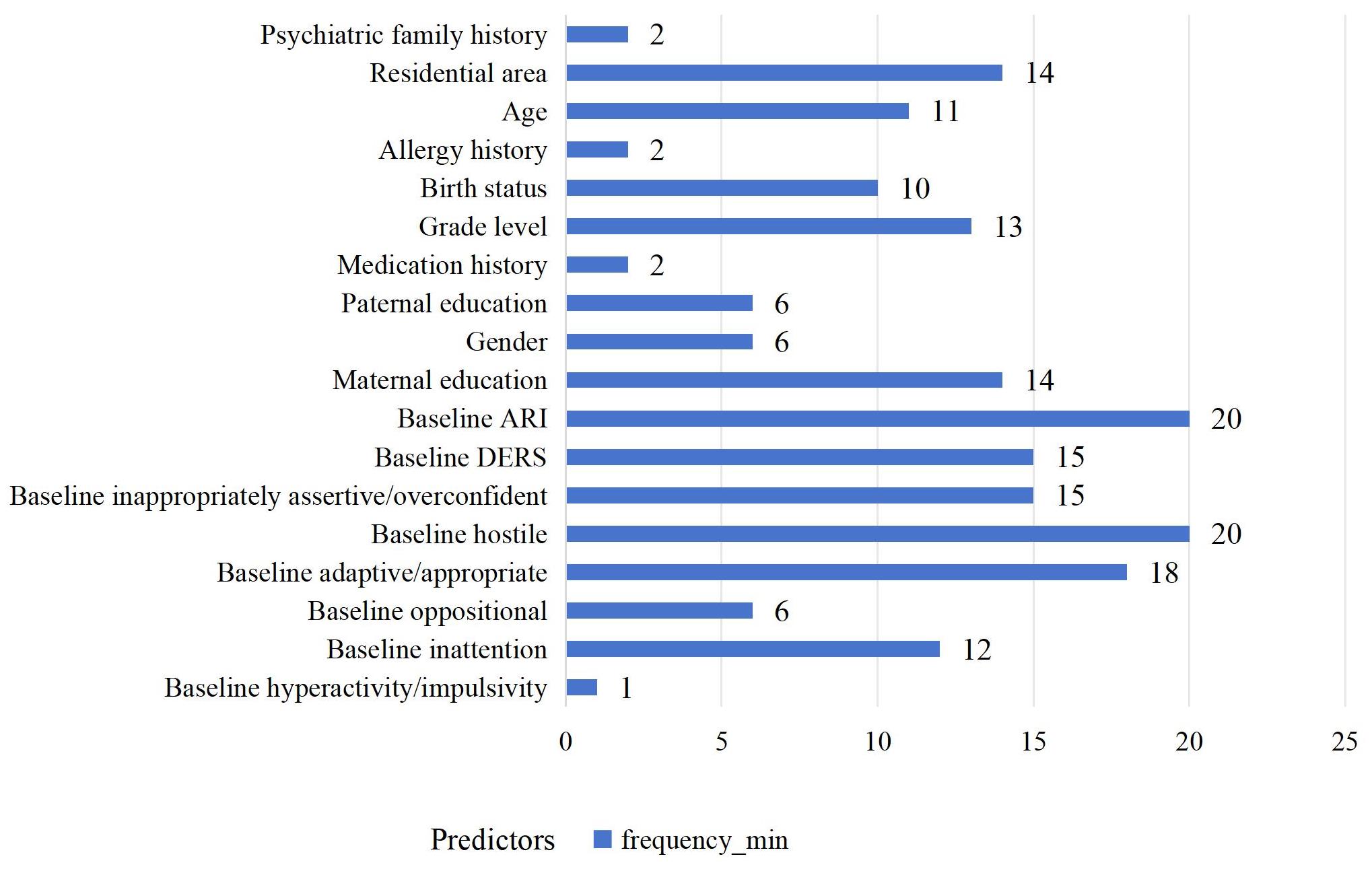
图2 以易激惹改善为结局变量的20次多重插补LASSO回归模型中变量的入选情况
Fig.2 Variable selection frequency across 20 multiply imputed LASSO regression models with ARI improvement as the outcome.
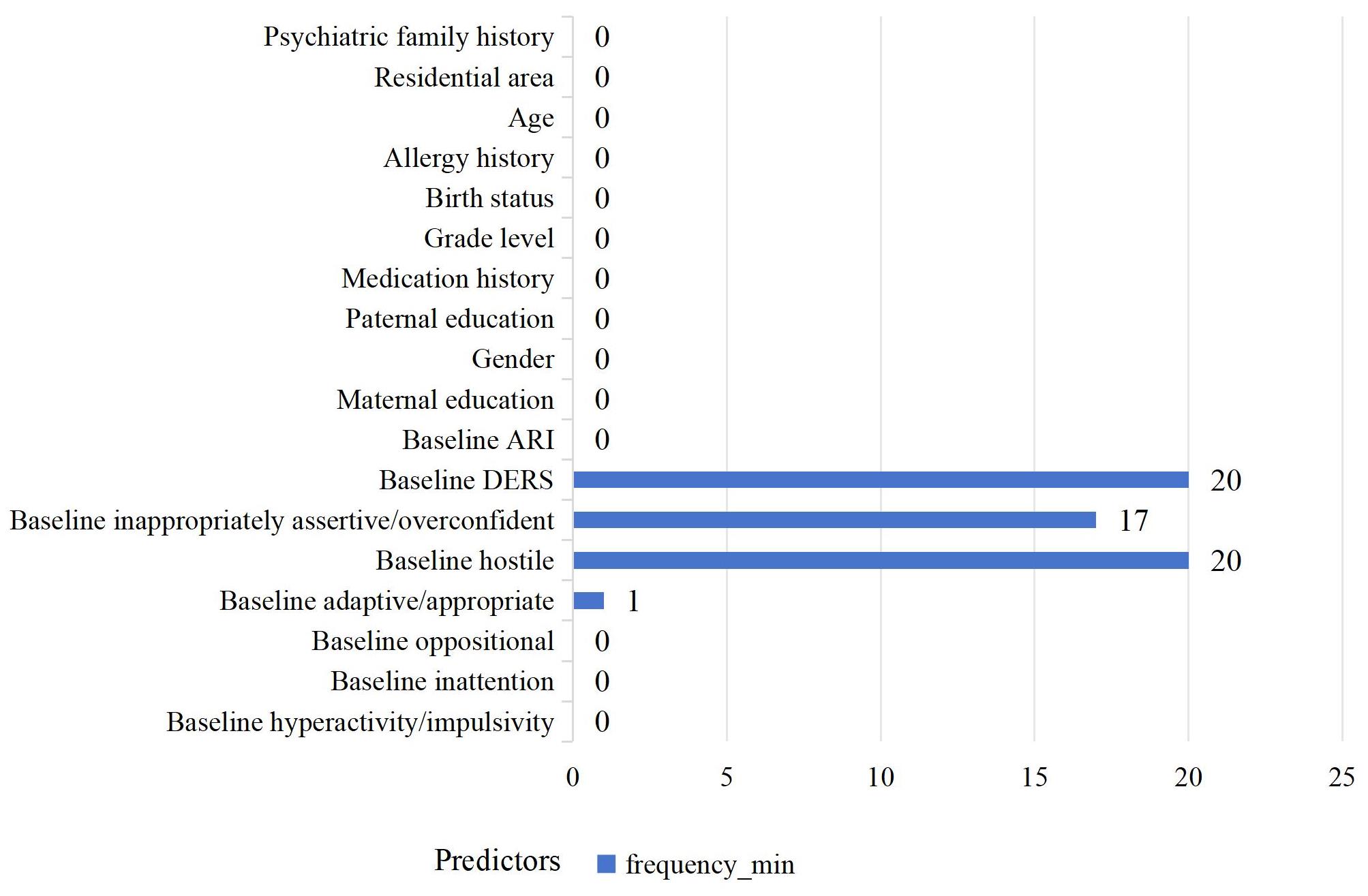
图3 以情绪调节困难改善为结局变量的20次多重插补LASSO回归模型中变量的入选情况
Fig.3 Variable selection frequency across 20 multiply imputed LASSO regression models with DERS improvement as the outcome.
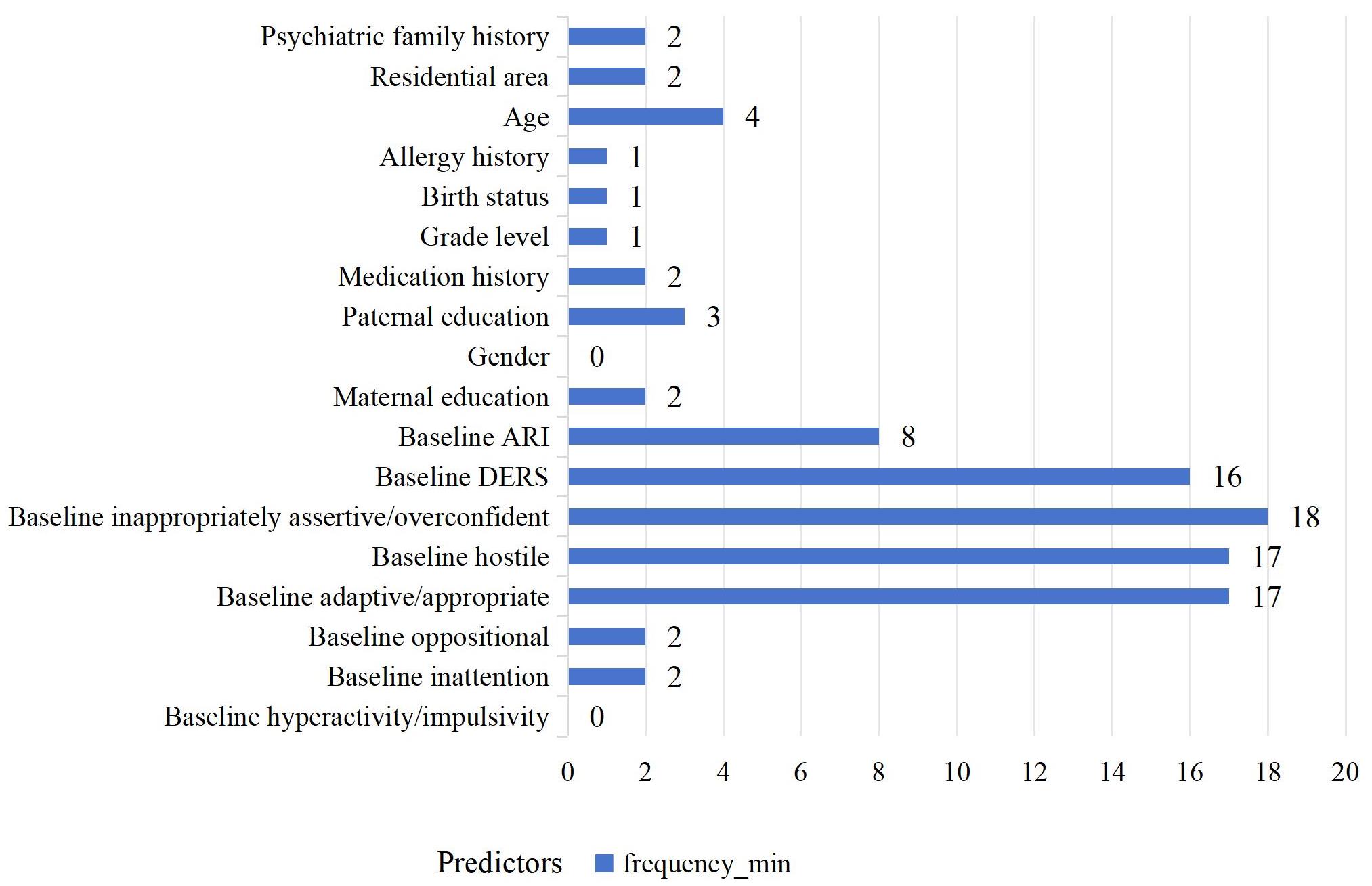
图4 以过于强势/过度自信改善为结局变量的20次多重插补LASSO回归模型中变量的入选情况
Fig.4 Variable selection frequency across 20 multiply imputed LASSO regression models with improvement of inappropriate assertiveness/overconfidence as the outcome.
| Outcomes | Predictors | b (95% CI) | β | P | P_BH | Adj_R2 |
|---|---|---|---|---|---|---|
| Inattention | (Constant) | -0.045 (-1.072, 0.981) | 0.930 | 0.930 | 0.180 | |
| Baseline inattention | 0.315 (0.126, 0.503) | 0.462 | 0.002 | 0.009 | ||
| Baseline hostile | -0.021 (-0.039, -0.003) | -0.327 | 0.023 | 0.070 | ||
| Baseline adaptive/appropriate | 0.004 (-0.019, 0.026) | 0.047 | 0.748 | 0.897 | ||
| Baseline ARI | 0.008 (-0.030, 0.046) | 0.072 | 0.659 | 0.897 | ||
| Baseline DERS | 0.003 (-0.009, 0.016) | 0.090 | 0.594 | 0.897 | ||
| ARI | (Constant) | 2.343 (-6.640, 11.327) | 0.601 | 0.601 | 0.476 | |
| Baseline ARI | 0.764 (0.485, 1.042) | 0.669 | <0.001 | <0.001 | ||
| Baseline DERS | -0.028 (-0.127, 0.071) | -0.078 | 0.562 | 0.601 | ||
| Baseline hostile | -0.147 (-0.293, 0.000) | -0.226 | 0.050 | 0.088 | ||
| Baseline adaptive/appropriate | 0.149 (-0.042, 0.340) | 0.197 | 0.121 | 0.170 | ||
| Residential area | 2.748 (0.358, 5.139) | 0.237 | 0.025 | 0.073 | ||
| Maternal education | 3.033 (0.286, 5.780) | 0.236 | 0.031 | 0.073 | ||
| DERS | (Constant) | -34.856 (-60.504, -9.208) | 0.009 | 0.009 | 0.357 | |
| Baseline DERS | 0.828 (0.467, 1.188) | 0.544 | <0.001 | <0.001 | ||
| Baseline hostile | -0.875 (-1.498, -0.252) | -0.326 | 0.007 | 0.009 | ||
Inappropriately assertive/overconfident | (Constant) | -3.214 (-17.691, 11.263) | 0.657 | 0.657 | 0.162 | |
Baseline inappropriately assertive/overconfident | 0.573 (0.171, 0.975) | 0.666 | 0.007 | 0.033 | ||
| Baseline hostile | -0.504 (-0.906, -0.101) | -0.543 | 0.016 | 0.039 | ||
| Baseline adaptive/appropriate | 0.215 (-0.107, 0.537) | 0.199 | 0.183 | 0.304 | ||
| Baseline DERS | 0.037 (-0.100, 0.174) | 0.071 | 0.593 | 0.657 |
表3 多元线性回归分析结果
Tab.3 Results of multiple linear regression analyses
| Outcomes | Predictors | b (95% CI) | β | P | P_BH | Adj_R2 |
|---|---|---|---|---|---|---|
| Inattention | (Constant) | -0.045 (-1.072, 0.981) | 0.930 | 0.930 | 0.180 | |
| Baseline inattention | 0.315 (0.126, 0.503) | 0.462 | 0.002 | 0.009 | ||
| Baseline hostile | -0.021 (-0.039, -0.003) | -0.327 | 0.023 | 0.070 | ||
| Baseline adaptive/appropriate | 0.004 (-0.019, 0.026) | 0.047 | 0.748 | 0.897 | ||
| Baseline ARI | 0.008 (-0.030, 0.046) | 0.072 | 0.659 | 0.897 | ||
| Baseline DERS | 0.003 (-0.009, 0.016) | 0.090 | 0.594 | 0.897 | ||
| ARI | (Constant) | 2.343 (-6.640, 11.327) | 0.601 | 0.601 | 0.476 | |
| Baseline ARI | 0.764 (0.485, 1.042) | 0.669 | <0.001 | <0.001 | ||
| Baseline DERS | -0.028 (-0.127, 0.071) | -0.078 | 0.562 | 0.601 | ||
| Baseline hostile | -0.147 (-0.293, 0.000) | -0.226 | 0.050 | 0.088 | ||
| Baseline adaptive/appropriate | 0.149 (-0.042, 0.340) | 0.197 | 0.121 | 0.170 | ||
| Residential area | 2.748 (0.358, 5.139) | 0.237 | 0.025 | 0.073 | ||
| Maternal education | 3.033 (0.286, 5.780) | 0.236 | 0.031 | 0.073 | ||
| DERS | (Constant) | -34.856 (-60.504, -9.208) | 0.009 | 0.009 | 0.357 | |
| Baseline DERS | 0.828 (0.467, 1.188) | 0.544 | <0.001 | <0.001 | ||
| Baseline hostile | -0.875 (-1.498, -0.252) | -0.326 | 0.007 | 0.009 | ||
Inappropriately assertive/overconfident | (Constant) | -3.214 (-17.691, 11.263) | 0.657 | 0.657 | 0.162 | |
Baseline inappropriately assertive/overconfident | 0.573 (0.171, 0.975) | 0.666 | 0.007 | 0.033 | ||
| Baseline hostile | -0.504 (-0.906, -0.101) | -0.543 | 0.016 | 0.039 | ||
| Baseline adaptive/appropriate | 0.215 (-0.107, 0.537) | 0.199 | 0.183 | 0.304 | ||
| Baseline DERS | 0.037 (-0.100, 0.174) | 0.071 | 0.593 | 0.657 |
| [1] | Thomas R, Sanders S, Doust J, et al. Prevalence of attention-deficit/hyperactivity disorder: a systematic review and meta-analysis[J]. Pediatrics, 2015, 135(4): e994-1001. doi:10.1542/peds.2014-3482 |
| [2] | Li FH, Cui YH, Li Y, et al. Prevalence of mental disorders in school children and adolescents in China: diagnostic data from detailed clinical assessments of 17, 524 individuals[J]. J Child Psychol Psychiatry, 2022, 63(1): 34-46. doi:10.1111/jcpp.13445 |
| [3] | Posner J, Polanczyk GV, Sonuga-Barke E. Attention-deficit hyperactivity disorder[J]. Lancet, 2020, 395(10222): 450-62. doi:10.1016/s0140-6736(19)33004-1 |
| [4] | Shaw M, Hodgkins P, Caci H, et al. A systematic review and analysis of long-term outcomes in attention deficit hyperactivity disorder: effects of treatment and non-treatment[J]. BMC Med, 2012, 10: 99. doi:10.1186/1741-7015-10-99 |
| [5] | Evans SW, Owens JS, Wymbs BT, et al. Evidence-based psychosocial treatments for children and adolescents with attention deficit/hyperactivity disorder[J]. J Clin Child Adolesc Psychol, 2018, 47(2): 157-98. doi:10.1080/15374416.2017.1390757 |
| [6] | 马姿宁. 对小学中高年级注意缺陷/多动障碍倾向儿童的团体心理干预[D]. 天津: 天津师范大学, 2021. |
| [7] | 杨乐天, 洪丹萍, 党彩萍, 等. 注意力和情绪调节训练对儿童注意缺陷多动障碍疗效的随机对照研究[J]. 新医学, 2024, 55(12): 1035-46. doi:10.3969/j.issn.0253-9802.2024.12.010 |
| [8] | Boyer BE, Doove LL, Geurts HM, et al. Qualitative treatment-subgroup interactions in a randomized clinical trial of treatments for adolescents with ADHD: exploring what cognitive-behavioral treatment works for whom[J]. PLoS One, 2016, 11(3): e0150698. doi:10.1371/journal.pone.0150698 |
| [9] | Sun SF, Pickover AM, Goldberg SB, et al. For whom does cognitively based compassion training (CBCT) work? an analysis of predictors and moderators among African American suicide attempters[J]. Mindfulness, 2019, 10(11): 2327-40. doi:10.1007/s12671-019-01207-6 |
| [10] | Moritz S, Menon M, Andersen D, et al. Moderators of symptomatic outcome in metacognitive training for psychosis (MCT). who benefits and who does not?[J]. Cogn Ther Res, 2018, 42(1): 80-91. doi:10.1007/s10608-017-9868-3 |
| [11] | Wergeland GJH, Haaland ÅT, Fjermestad KW, et al. Predictors of school-based cognitive behavior therapy outcome for youth with anxiety[J]. Behav Res Ther, 2023, 169: 104400. doi:10.1016/j.brat.2023.104400 |
| [12] | Nøvik TS, Haugan AJ, Lydersen S, et al. Cognitive-behavioural group therapy for adolescents with ADHD: study protocol for a randomised controlled trial[J]. BMJ Open, 2020, 10(3): e032839. doi:10.1136/bmjopen-2019-032839 |
| [13] | González-Blanch C, Birulés I, Pousa E, et al. Moderators of cognitive insight outcome in metacognitive training for first-episode psychosis[J]. J Psychiatr Res, 2021, 141: 104-10. doi:10.1016/j.jpsychires.2021.06.040 |
| [14] | Meyer J, Zetterqvist V, Unenge Hallerbäck M, et al. Moderators of long-term treatment outcome when comparing two group interventions for adolescents with ADHD: who benefits more from DBT-based skills training[J]? BMC Psychiatry, 2022, 22(1): 767. doi:10.1186/s12888-022-04435-8 |
| [15] | 潘美蓉, 邱孙伟, 刘 璐, 等. 成人注意缺陷多动障碍的团体辩证行为治疗[J]. 中国临床心理学杂志, 2024, 32(4): 928-34. |
| [16] | Strupf M, Wiechers M, Bajbouj M, et al. Predicting treatment outcomes of the Empowerment group intervention for refugees with affective disorders: Findings from the MEHIRA project[J]. J Affect Disord, 2023, 323: 241-50. doi:10.1016/j.jad.2022.11.050 |
| [17] | Cooperative GroupThe MTA. A 14-month randomized clinical trial of treatment strategies for attention-deficit/hyperactivity disorder. The MTA Cooperative Group. Multimodal Treatment Study of Children with ADHD[J]. Arch Gen Psychiatry, 1999, 56(12): 1073-86. doi:10.1001/archpsyc.56.12.1073 |
| [18] | Teimourian S, Mirzaei H, Pishyare E, et al. Effect of group play therapy on emotional/behavioral problems of children with attention deficit hyperactivity disorder aged 6-12 years[J]. J Rehabil, 2020, 21(3): 390-405. doi:10.32598/rj.21.3.3158.1 |
| [19] | Reinke AL, Stiles K, Lee SS. Childhood ADHD with and without co-occurring internalizing/externalizing problems: prospective predic-tions of change in adolescent academic and social functioning[J]. J Atten Disord, 2023, 27(13): 1520-31. doi:10.1177/10870547231187146 |
| [20] | Stringaris A, Goodman R. Mood lability and psychopathology in youth[J]. Psychol Med, 2009, 39(8): 1237-45. doi:10.1017/s0033291708004662 |
| [21] | Shaw P, Stringaris A, Nigg J, et al. Emotion dysregulation in attention deficit hyperactivity disorder[J]. Am J Psychiatry, 2014, 171(3): 276-93. doi:10.1176/appi.ajp.2013.13070966 |
| [22] | Hoza B. Peer functioning in children with ADHD[J]. J Pediatr Psychol, 2007, 32(6): 655-63. doi:10.1093/jpepsy/jsm024 |
| [23] | Mikami AY. The importance of friendship for youth with attention-deficit/hyperactivity disorder[J]. Clin Child Fam Psychol Rev, 2010, 13(2): 181-98. doi:10.1007/s10567-010-0067-y |
| [24] | 申 琳, 宋翠豪, 王聪敏, 等. 溃疡性结肠炎并发坏疽性脓皮病患者发生营养风险的因素及预测模型[J]. 南方医科大学学报, 2025, 45(3): 514-21. |
| [25] | Gau SS, Shang CY, Liu SK, et al. Psychometric properties of the Chinese version of the Swanson, Nolan, and Pelham, version IV scale-parent form[J]. Int J Methods Psychiatr Res, 2008, 17(1): 35-44. doi:10.1002/mpr.237 |
| [26] | 周晋波, 郭兰婷, 陈 颖. 中文版注意缺陷多动障碍SNAP-Ⅳ评定量表-父母版的信效度[J]. 中国心理卫生杂志, 2013, 27(6): 424-8. |
| [27] | Neumann A, van Lier PAC, Gratz KL, et al. Multidimensional assessment of emotion regulation difficulties in adolescents using the Difficulties in Emotion Regulation Scale[J]. Assessment, 2010, 17(1): 138-49. doi:10.1177/1073191109349579 |
| [28] | 邵景进. 小学语文教学中培养学生情绪调节能力的研究[D]. 重庆: 西南师范大学, 2005. |
| [29] | Matson JL, Wilkins J. Psychometric testing methods for children's social skills[J]. Res Dev Disabil, 2009, 30(2): 249-74. doi:10.1016/j.ridd.2008.04.002 |
| [30] | Matson JL, Neal D, Fodstad JC, et al. Reliability and validity of the matson evaluation of social skills with youngsters[J]. Behav Modif, 2010, 34(6): 539-58. doi:10.1177/0145445510384844 |
| [31] | 刘步云, 静 进, 戴美霞, 等. 马特森儿童社会技能评价量表中文版的初步修订[J]. 中国儿童保健杂志, 2014, 22(12): 1236-8. doi:10.11852/zgetbjzz2014-22-12-02 |
| [32] | Stringaris A, Goodman R, Ferdinando S, et al. The Affective Reactivity Index: a concise irritability scale for clinical and research settings[J]. J Child Psychol Psychiatry, 2012, 53(11): 1109-17. doi:10.1111/j.1469-7610.2012.02561.x |
| [33] | Gupta SK. Intention-to-treat concept: a review[J]. Perspect Clin Res, 2011, 2(3): 109-12. doi:10.4103/2229-3485.83221 |
| [34] | Azur MJ, Stuart EA, Frangakis C, et al. Multiple imputation by chained equations: what is it and how does it work[J]? Int J Methods Psychiatr Res, 2011, 20(1): 40-9. doi:10.1002/mpr.329 |
| [35] | Hastie T, Tibshirani R, Friedman JH. The Elements of Statistical Learning[M]. 2nd ed. New York: Springer, 2009. doi:10.1007/978-0-387-84858-7 |
| [36] | Zhao YZ, Long Q. Variable selection in the presence of missing data: imputation-based methods[J]. Wiley Interdiscip Rev Comput Stat, 2017, 9(5): e1402. doi:10.1002/wics.1402 |
| [37] | Tibshirani R. Regression shrinkage and selection via the lasso: a retrospective[J]. J R Stat Soc Ser B Stat Methodol, 2011, 73(3): 273-82. doi:10.1111/j.1467-9868.2011.00771.x |
| [38] | Benjamini Y, Hochberg Y. Controlling the false discovery rate: a practical and powerful approach to multiple testing[J]. J R Stat Soc Ser B Methodol, 1995, 57(1): 289-300. doi:10.1111/j.2517-6161.1995.tb02031.x |
| [39] | Nissen JB, Parner ET, Thomsen PH. Predictors of therapeutic treatment outcome in adolescent chronic tic disorders[J]. BJPsych Open, 2019, 5(5): e74. doi:10.1192/bjo.2019.56 |
| [40] | 张厚粲, 贺 娟. 心理与教育测量[M]. 北京: 北京师范大学出版社, 2014. |
| [41] | Barnett AG. Regression to the mean: what it is and how to deal with it[J]. Int J Epidemiol, 2004, 34(1): 215-20. doi:10.1093/ije/dyh299 |
| [42] | Dodge KA, Coie JD. Social-information-processing factors in reactive and proactive aggression in children's peer groups[J]. J Pers Soc Psychol, 1987, 53(6): 1146-58. doi:10.1037//0022-3514.53.6.1146 |
| [43] | Willoughby MT, Blair CB, Wirth RJ, et al. The measurement of executive function at age 3 years: Psychometric properties and criterion validity of a new battery of tasks[J]. Psychol Assess, 2010, 22(2): 306-17. doi:10.1037/a0018708 |
| [44] | Rosen PJ, Vaughn AJ, Epstein JN, et al. Social self control, externalizing behavior, and peer liking among children with ADHD-CT: a mediation model[J]. Soc Dev, 2014, 23(2): 288-305. doi:10.1111/sode.12046 |
| [45] | Lin S, Bai XJ, Cheng GL, et al. The relationship between trait anger and reactive aggressive behavior in middle school students: the mediating role and intervention of hostile attribution bias[J]. BMC Psychol, 2024, 12(1): 422. doi:10.1186/s40359-024-01918-z |
| [46] | Lochman JE, Dishion TJ, Powell NP, et al. Evidence-based preventive intervention for preadolescent aggressive children: One-year outcomes following randomization to group versus individual delivery[J]. J Consult Clin Psychol, 2015, 83(4): 728-35. doi:10.1037/ccp0000030 |
| [47] | Weis M, Trommsdorff G, Muñoz L, et al. Maternal education and children's school achievement: the roles of values, parenting, and behavior regulation[J]. J Child Fam Stud, 2023, 32(3): 691-703. doi:10.1007/s10826-022-02405-y |
| [48] | Schochet ON, Johnson AD, Ryan RM. The relationship between increases in low-income mothers' education and children's early outcomes: Variation by developmental stage and domain[J]. Child Youth Serv Rev, 2020, 109: 104705. doi:10.1016/j.childyouth.2019.104705 |
| [49] | 杨菊华, 何炤华. 社会转型过程中家庭的变迁与延续[J]. 人口研究, 2014, 38(2): 36-51. |
| [50] | 王佳佳, 谢福生, 郭振友. 我国卫生资源配置效率的研究进展[J]. 卫生经济研究, 2024, 41(12): 55-9. |
| [51] | 王彦冰. 我国省级医疗卫生服务系统运行效率分析[J]. 医学与社会, 2025, 38(2): 1-7. doi:10.13723/j.yxysh.2025.02.001 |
| [52] | Spencer NJ, Ludvigsson J, Bai GN, et al. Social gradients in ADHD by household income and maternal education exposure during early childhood: Findings from birth cohort studies across six countries[J]. PLoS One, 2022, 17(3): e0264709. doi:10.1371/journal.pone.0264709 |
| [53] | Rousseau JB, Cavenagh Y, Bender KK. Planning, implementation, and evaluation of a postpartum nurse home visit service to improve health equity[J]. J Obstet Gynecol Neonatal Nurs, 2024, 53(6): 679-88. doi:10.1016/j.jogn.2024.06.005 |
| [54] | Ault S, Herbell K, Helsabeck N, et al. Feasibility, acceptability, and effects of a web-delivered behavioral parent training intervention for rural parents of children with autism spectrum disorder: a protocol[J]. PLoS One, 2024, 19(8): e0307273. doi:10.1371/journal.pone.0307273 |
| [1] | 崔运能, 冯敏清, 姚亮凤, 严杰文, 李闻瀚, 黄燕平. 基于欠采样的影像组学机器学习模型术前预测子宫肌瘤高强度聚焦超声消融效果[J]. 南方医科大学学报, 2026, 46(1): 141-149. |
| [2] | 姜君, 封硕, 孙银贵, 安燕. 经尿道前列腺钬激光剜除术后低体温风险预测模型:基于逻辑回归、决策树和支持向量机[J]. 南方医科大学学报, 2025, 45(9): 2019-2025. |
| [3] | 申琳, 宋翠豪, 王聪敏, 高西, 安俊红, 李承新, 梁斌, 李霞. 溃疡性结肠炎并发坏疽性脓皮病患者发生营养风险的因素及预测模型[J]. 南方医科大学学报, 2025, 45(3): 514-521. |
| [4] | 王飞, 李蔚然, 尚祥, 李飞. 中国农村社区老年人认知障碍预测模型的构建与验证——基于中国健康与养老追踪调查数据库[J]. 南方医科大学学报, 2025, 45(12): 2639-2645. |
| [5] | 邓颖, 张敏怡, 汪诗奥, 范顺昌, 陈佳琪, 冼举贤, 陈清. 1990~2021年全球5岁以下腹泻患儿的疾病负担分析及趋势预测[J]. 南方医科大学学报, 2025, 45(10): 2171-2181. |
| [6] | 潘甚豪, 李炎坤, 伍哲维, 毛玉玲, 王春艳. 子宫内膜异位症患者新鲜胚胎移植临床妊娠率预测模型的建立与验证[J]. 南方医科大学学报, 2024, 44(7): 1407-1415. |
| [7] | 申采玉, 王帅, 周锐盈, 汪雨贺, 高琴, 陈兴智, 杨枢. 慢性心力衰竭合并肺部感染患者院内死亡风险预测:基于可解释性机器学习方法[J]. 南方医科大学学报, 2024, 44(6): 1141-1148. |
| [8] | 戈 悦, 李建伟, 梁宏开, 侯六生, 左六二, 陈 珍, 卢剑海, 赵 新, 梁静漪, 彭 岚, 包静娜, 段佳欣, 刘 俐, 毛可晴, 曾振华, 胡鸿彬, 陈仲清. VA-ECMO患者院内死亡风险预测模型的构建及验证:一项多中心、回顾性、病例对照研究[J]. 南方医科大学学报, 2024, 44(3): 491-498. |
| [9] | 金佳欣, 马鹏珍, 王尔玉, 谢颖桢. 急性缺血性卒中患者复发的独立影响因素及风险预测列线图模型构建:基于Lasso回归[J]. 南方医科大学学报, 2024, 44(12): 2375-2381. |
| [10] | 冯青波, 骆春梅, 刘向红, 许 婷, 杜 芹. 全麻与深度镇静下的儿童口腔治疗:家长接受度、口腔健康相关生活质量及疗效是否有差异?[J]. 南方医科大学学报, 2023, 43(4): 604-610. |
| [11] | 张浩轩, 陆 进, 蒋成义, 方美芳. 基于人工智能技术的鼻咽癌风险预测模型的构建与评价[J]. 南方医科大学学报, 2023, 43(2): 271-279. |
| [12] | 吴美潮, 杨芳芳, 马行军, 蔡 宁. 瑞马唑仑与艾司氯胺酮用于小儿术前镇静的临床效果与安全性对比[J]. 南方医科大学学报, 2023, 43(12): 2126-2131. |
| [13] | 孔 圳, 钟 华, 刘永强, 孙永建, 杨少铮, 纪悦伦, 吴伟平. DelbetⅡ、Ⅲ型儿童及青少年髋部骨折的手术效果及并发症分析[J]. 南方医科大学学报, 2023, 43(11): 1971-1976. |
| [14] | 吴飞凤, 田继东, 佘 周, 刘 瑛, 万伍卿, 文 川. 儿童小克银汉毛霉病的临床特征分析:1例报告并文献复习[J]. 南方医科大学学报, 2022, 42(5): 780-784. |
| [15] | 晏 琼, 陶 婷, 王利刚, 樊春雷, 高文斌. 儿童急性呼吸道感染与其气质类型、母亲情绪状态的关系[J]. 南方医科大学学报, 2022, 42(5): 747-751. |
| 阅读次数 | ||||||
|
全文 |
|
|||||
|
摘要 |
|
|||||
