
Journal of Southern Medical University ›› 2026, Vol. 46 ›› Issue (9): 2266-2275.doi: 10.12122/j.issn.1673-4254.2026.09.24
Taotao ZHAO( ), Yuehao JIAO, Ming NI(), Youlu LUO, Shunxing XIA, Yingying XU, Yating HE
Received:2026-02-13
Online:2026-09-20
Published:2026-09-30
Contact:
Ming NI
E-mail:1425067966@qq.com;nm@sicau.edu.cn
Taotao ZHAO, Yuehao JIAO, Ming NI, Youlu LUO, Shunxing XIA, Yingying XU, Yating HE. Efficient dental panoramic radiographic diagnosis under resource constraints via edge quantization and multi-modal synergy[J]. Journal of Southern Medical University, 2026, 46(9): 2266-2275.
Add to citation manager EndNote|Ris|BibTeX
URL: https://www.j-smu.com/EN/10.12122/j.issn.1673-4254.2026.09.24
| Species | Sample count |
|---|---|
| Decayed tooth | 30 |
| Impacted tooth | 41 |
| Ectopic Eruption | 32 |
| Root canal therapy | 25 |
| Dental crown | 63 |
| Dental implant root system | 39 |
| Dental implant | 26 |
| Dental filling | 11 |
Tab.1 Distribution of dental anomaly categories in the test dataset
| Species | Sample count |
|---|---|
| Decayed tooth | 30 |
| Impacted tooth | 41 |
| Ectopic Eruption | 32 |
| Root canal therapy | 25 |
| Dental crown | 63 |
| Dental implant root system | 39 |
| Dental implant | 26 |
| Dental filling | 11 |
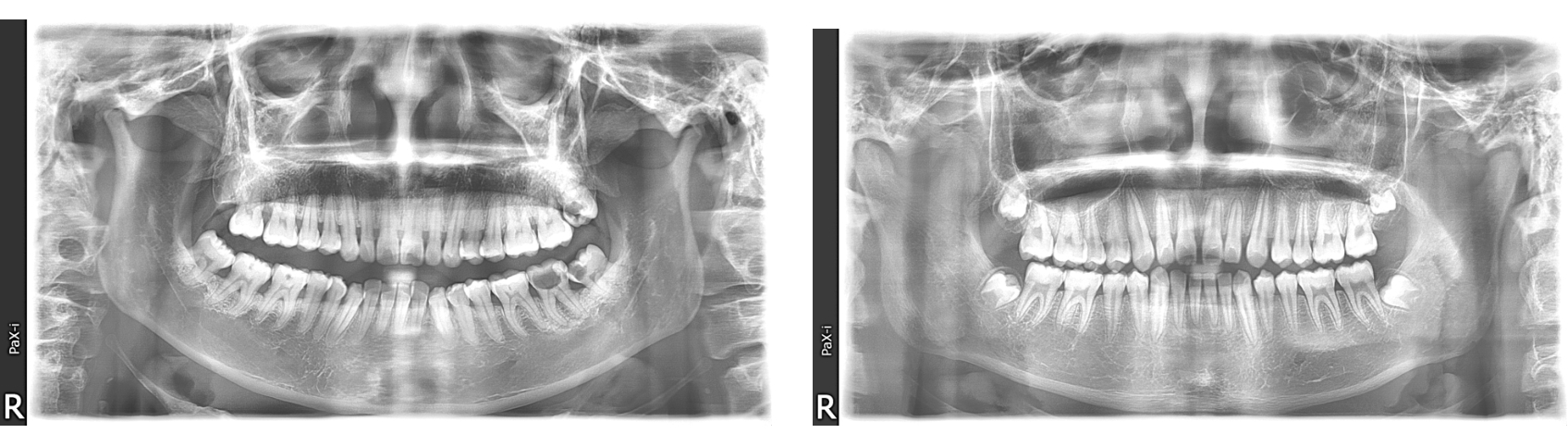
Fig.1 Example of panoramic dental radiograph.
| Component | Software/Library | Version | Role in system |
|---|---|---|---|
| Hardware platform | Rockchip RK3588 | NPU 6.0 TOPS | Edge inference device |
| Operating system | Linaro linux | Alip (Debian) | Host OS |
| Deep learning framework | PyTorch | 2.2.0 | Model training & pruning |
| Model conversion | RKNN-Toolkit2 | 2.3.2 | Quantization & export |
| Inference engine | RKNN-Toolkit-Lite2 | 2.3.2 | On-device inference |
| Intermediate format | ONNX | 1.16.1 | Model exchange |
| Computer vision | OpenCV-Python | 4.11.0 | Image preprocessing |
| Scientific computing | NumPy | 1.26.4 | Tensor operations |
Tab.2 Experimental environment and software configuration (Rockchip RK3588)
| Component | Software/Library | Version | Role in system |
|---|---|---|---|
| Hardware platform | Rockchip RK3588 | NPU 6.0 TOPS | Edge inference device |
| Operating system | Linaro linux | Alip (Debian) | Host OS |
| Deep learning framework | PyTorch | 2.2.0 | Model training & pruning |
| Model conversion | RKNN-Toolkit2 | 2.3.2 | Quantization & export |
| Inference engine | RKNN-Toolkit-Lite2 | 2.3.2 | On-device inference |
| Intermediate format | ONNX | 1.16.1 | Model exchange |
| Computer vision | OpenCV-Python | 4.11.0 | Image preprocessing |
| Scientific computing | NumPy | 1.26.4 | Tensor operations |
| Component | Software/Library | Version | Role in system |
|---|---|---|---|
| Hardware platform | Huawei Ascend server | Ascend 310P (NPU) | Ai inference accelerator |
| Operating system | openEuler | 22.03 (LTS-SP3) aarch64 | Host operating system |
| Deeplearning framework | PyTorch | 2.1.0/2.2.0 (compatible) | Model training & export |
| Development toolkit | Ascend CANN Toolkit | 8.0.0 | Npu driver & compiler stack |
| Model conversion | ATC (ascend tensor compiler) | 8.0.0 | ONNX to OM conversion |
| Inference engine | AscendCL (ACL) | 8.0.0 | On-device C++ inference |
| Intermediate format | ONNX | 1.14.0+ | Model exchange format |
| Video processing | FFmpeg & x264 | 4.1.3 / Latest | Video decoding & encoding |
| Computer vision | OpenCV | 4.x (C++) | Image preprocessing |
| Compiler | GCC/G++ | 7.3.0+ (system default) | Sample code compilation |
Tab.3 Experimental environment and software configuration (Huawei Ascend)
| Component | Software/Library | Version | Role in system |
|---|---|---|---|
| Hardware platform | Huawei Ascend server | Ascend 310P (NPU) | Ai inference accelerator |
| Operating system | openEuler | 22.03 (LTS-SP3) aarch64 | Host operating system |
| Deeplearning framework | PyTorch | 2.1.0/2.2.0 (compatible) | Model training & export |
| Development toolkit | Ascend CANN Toolkit | 8.0.0 | Npu driver & compiler stack |
| Model conversion | ATC (ascend tensor compiler) | 8.0.0 | ONNX to OM conversion |
| Inference engine | AscendCL (ACL) | 8.0.0 | On-device C++ inference |
| Intermediate format | ONNX | 1.14.0+ | Model exchange format |
| Video processing | FFmpeg & x264 | 4.1.3 / Latest | Video decoding & encoding |
| Computer vision | OpenCV | 4.x (C++) | Image preprocessing |
| Compiler | GCC/G++ | 7.3.0+ (system default) | Sample code compilation |
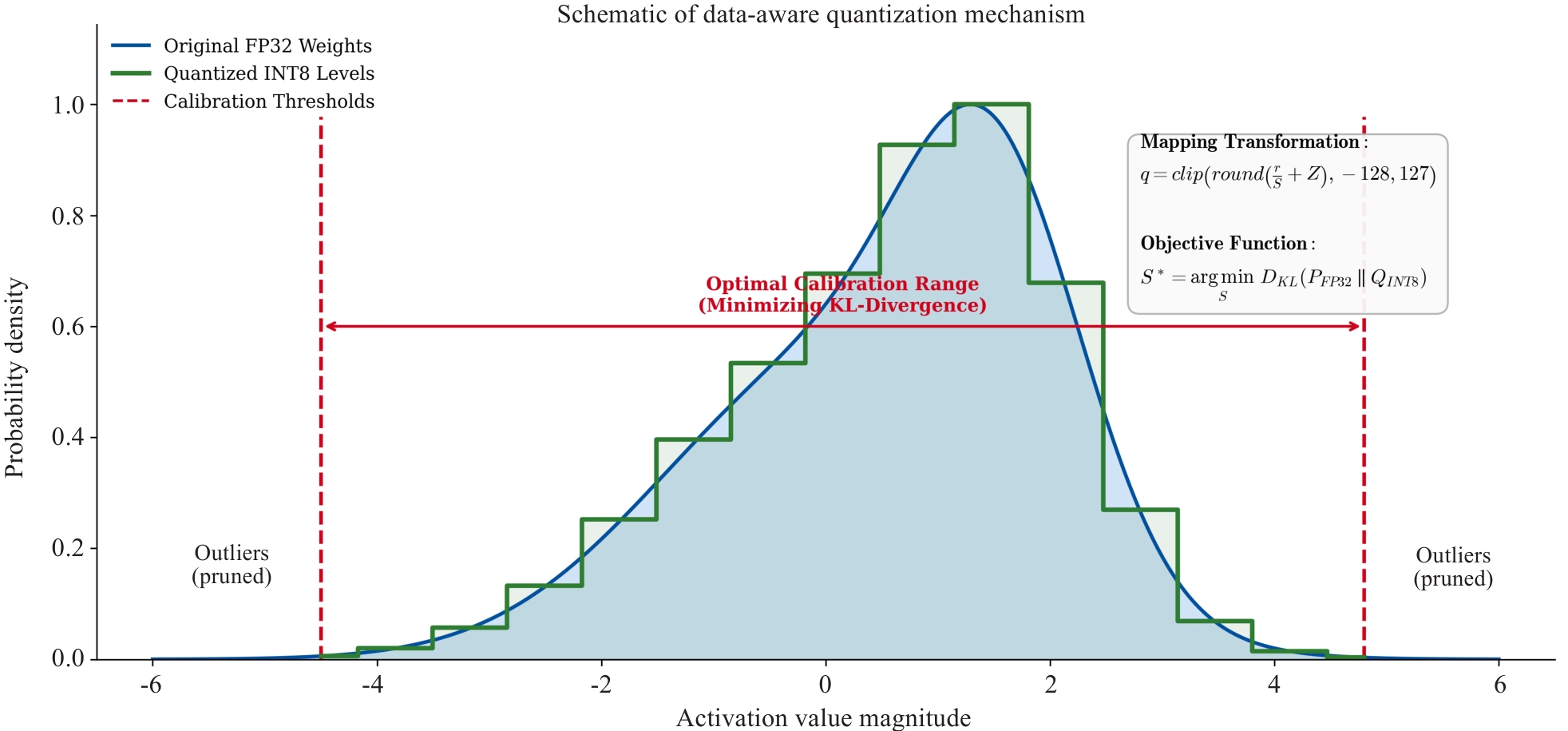
Fig.2 Schematic illustration of data-aware quantization mechanism based on KL divergence.
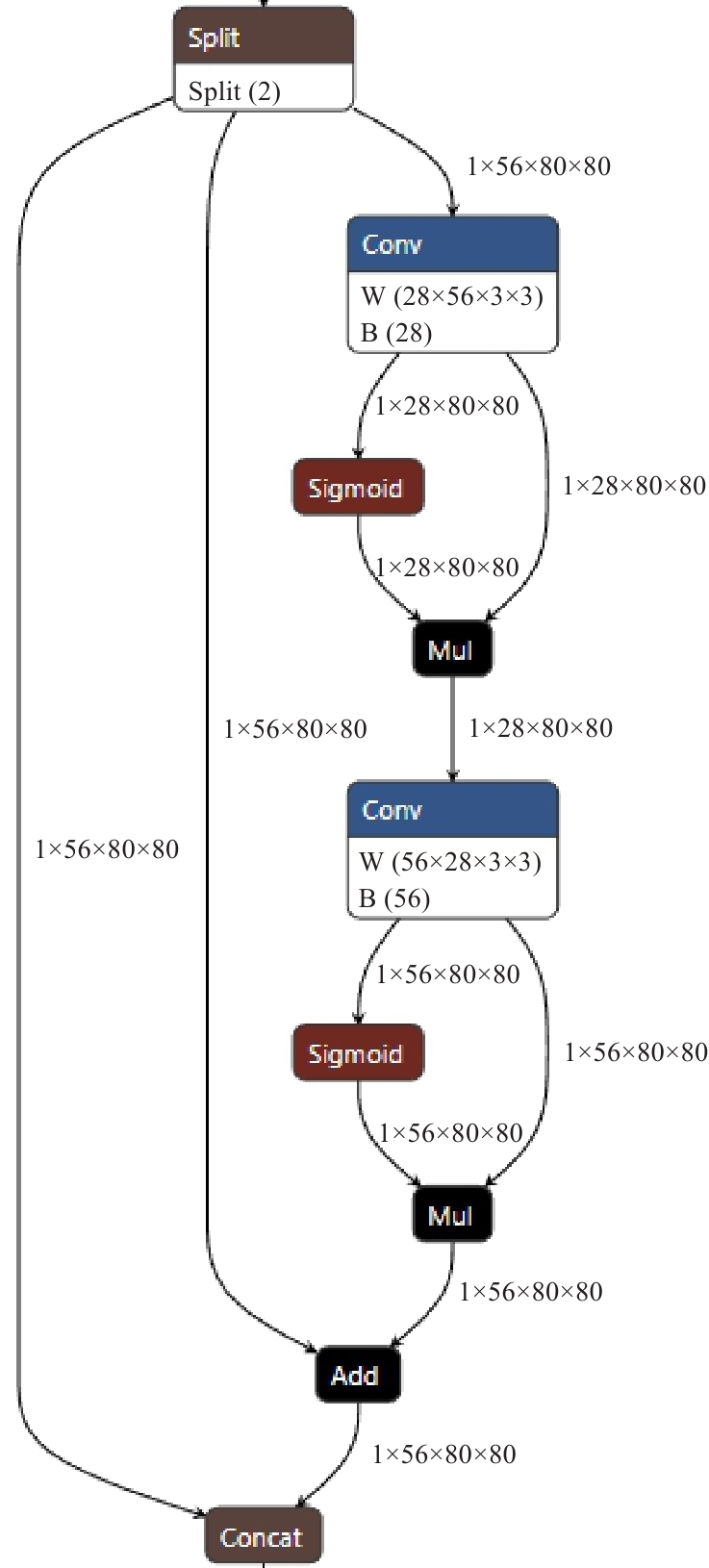
Fig.3 Operator restructuring diagram of the SHSA module adapted for Edge NPU.
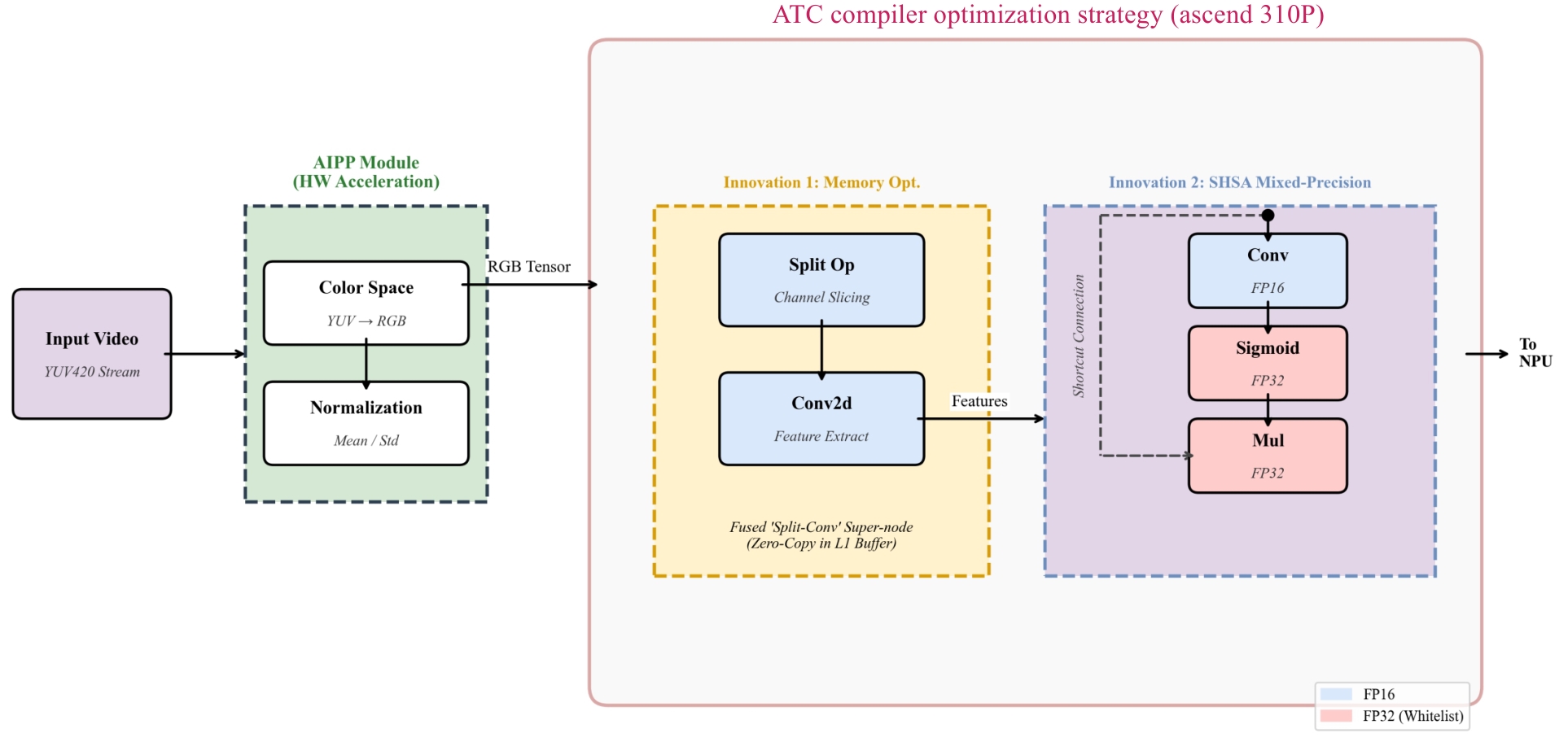
Fig.4 Optimized heterogeneous compilation pipeline for YOLOv11-TDSP.
| Deployment scenario | Hardware specification | Precision | Latency (ms) ↓ | Throughput (FPS) ↑ | Speedup |
|---|---|---|---|---|---|
| Research center (lab server) | Intel i7-12700 | FP32 | 72.50 | 13.79 | 1.00 |
| INT8 (Ours) | 38.15 | 26.21 | 1.9 | ||
| Doctor's office | Intel i5-12400 | FP32 | 98.6 | 10.14 | 1.00 |
| INT8 (Ours) | 56.34 | 17.75 | 1.75 | ||
| Mobile clinic | Intel i5-12450H | FP32 | 158.71 | 6.30 | 1.00 |
| INT8 (Ours) | 43.66 | 22.91 | 3.64 | ||
| Doctor's office | Intel i5-12600KF | FP32 | 79.04 | 12.65 | 1.00 |
| INT8 (Ours) | 43.12 | 23.19 | 1.83 | ||
| Mobile clinic | Intel i7-10750H | FP32 | 139.12 | 7.19 | 1.00 |
| INT8 (Ours) | 92.02 | 10.87 | 1.51 | ||
| Doctor's office | Intel i7-7700 | FP32 | 125.00 | 8.00 | 1.00 |
| INT8 (Ours) | 79.36 | 12.60 | 1.58 | ||
| Rural clinic | Intel i5-6500 | FP32 | 172.41 | 5.80 | 1.00 |
| INT8 (Ours) | 106.38 | 9.40 | 1.62 | ||
| Rural clinic | Intel i3-8100T | FP32 | 205.60 | 4.86 | 1.00 |
| INT8 (Ours) | 135.80 | 7.36 | 1.51 |
Tab.4 Performance comparison of FP32 and quantized INT8 models across various clinical scenarios
| Deployment scenario | Hardware specification | Precision | Latency (ms) ↓ | Throughput (FPS) ↑ | Speedup |
|---|---|---|---|---|---|
| Research center (lab server) | Intel i7-12700 | FP32 | 72.50 | 13.79 | 1.00 |
| INT8 (Ours) | 38.15 | 26.21 | 1.9 | ||
| Doctor's office | Intel i5-12400 | FP32 | 98.6 | 10.14 | 1.00 |
| INT8 (Ours) | 56.34 | 17.75 | 1.75 | ||
| Mobile clinic | Intel i5-12450H | FP32 | 158.71 | 6.30 | 1.00 |
| INT8 (Ours) | 43.66 | 22.91 | 3.64 | ||
| Doctor's office | Intel i5-12600KF | FP32 | 79.04 | 12.65 | 1.00 |
| INT8 (Ours) | 43.12 | 23.19 | 1.83 | ||
| Mobile clinic | Intel i7-10750H | FP32 | 139.12 | 7.19 | 1.00 |
| INT8 (Ours) | 92.02 | 10.87 | 1.51 | ||
| Doctor's office | Intel i7-7700 | FP32 | 125.00 | 8.00 | 1.00 |
| INT8 (Ours) | 79.36 | 12.60 | 1.58 | ||
| Rural clinic | Intel i5-6500 | FP32 | 172.41 | 5.80 | 1.00 |
| INT8 (Ours) | 106.38 | 9.40 | 1.62 | ||
| Rural clinic | Intel i3-8100T | FP32 | 205.60 | 4.86 | 1.00 |
| INT8 (Ours) | 135.80 | 7.36 | 1.51 |
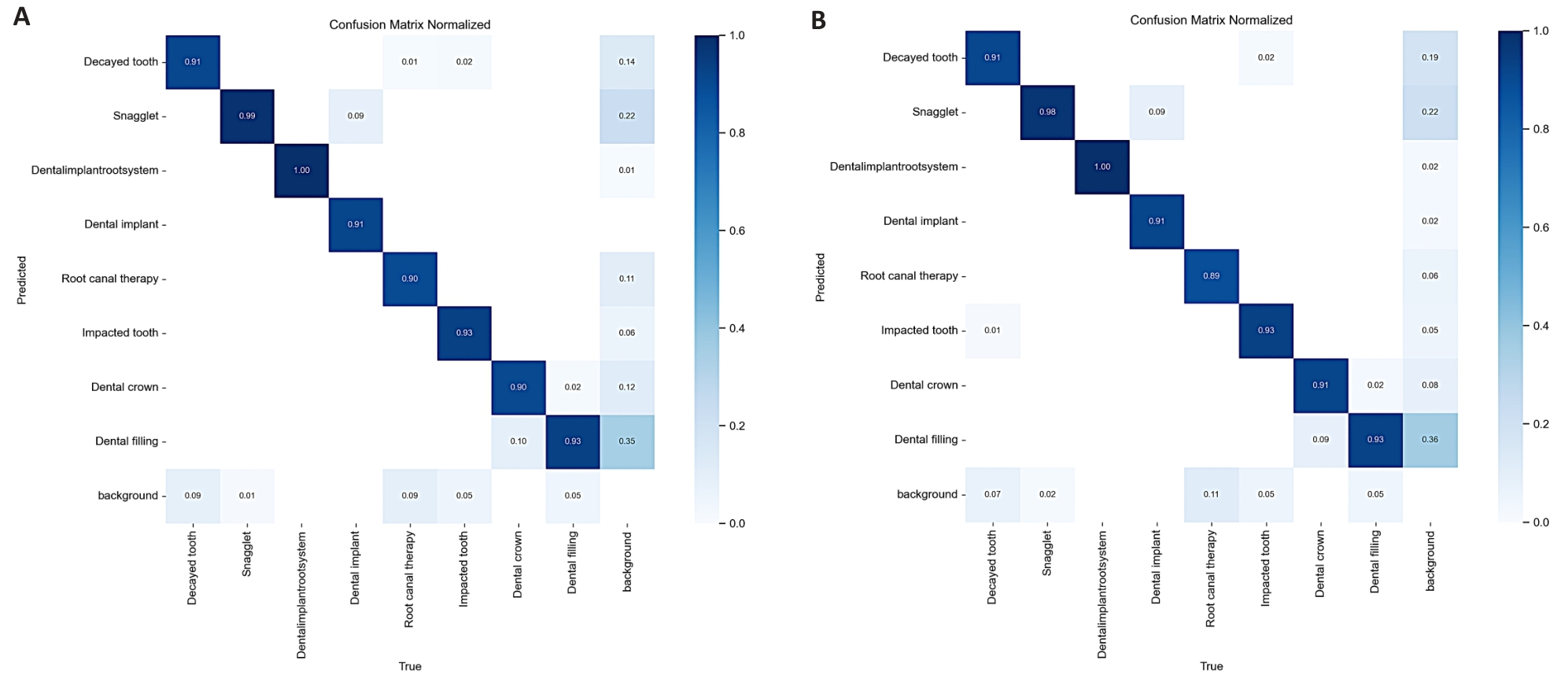
Fig.5 Confusion matrix comparison. A: Confusion Matrix of YOLOv11-TDSP. B: Confusion matrix of quantized YOLOv11-TDSP.
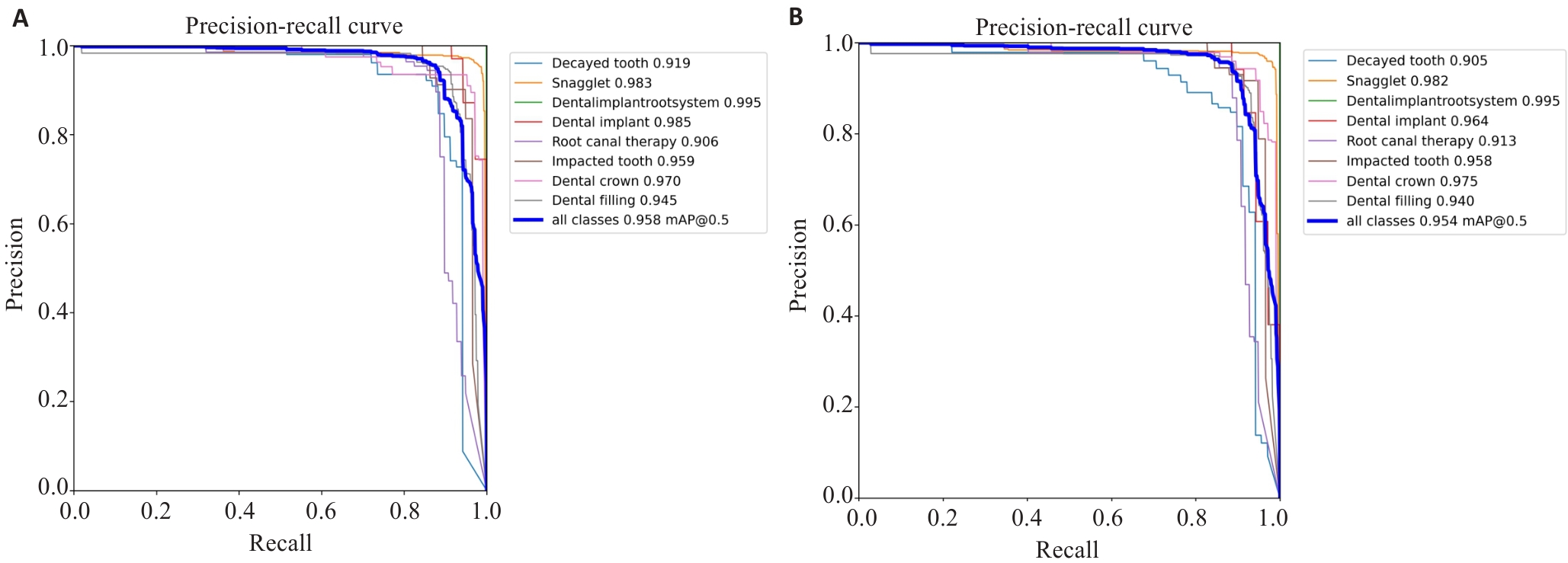
Fig.6 Comparison of P-R curves and class-wise AP values for YOLOv11-TDSP before and after quantization. A: FP32. B: INT8.
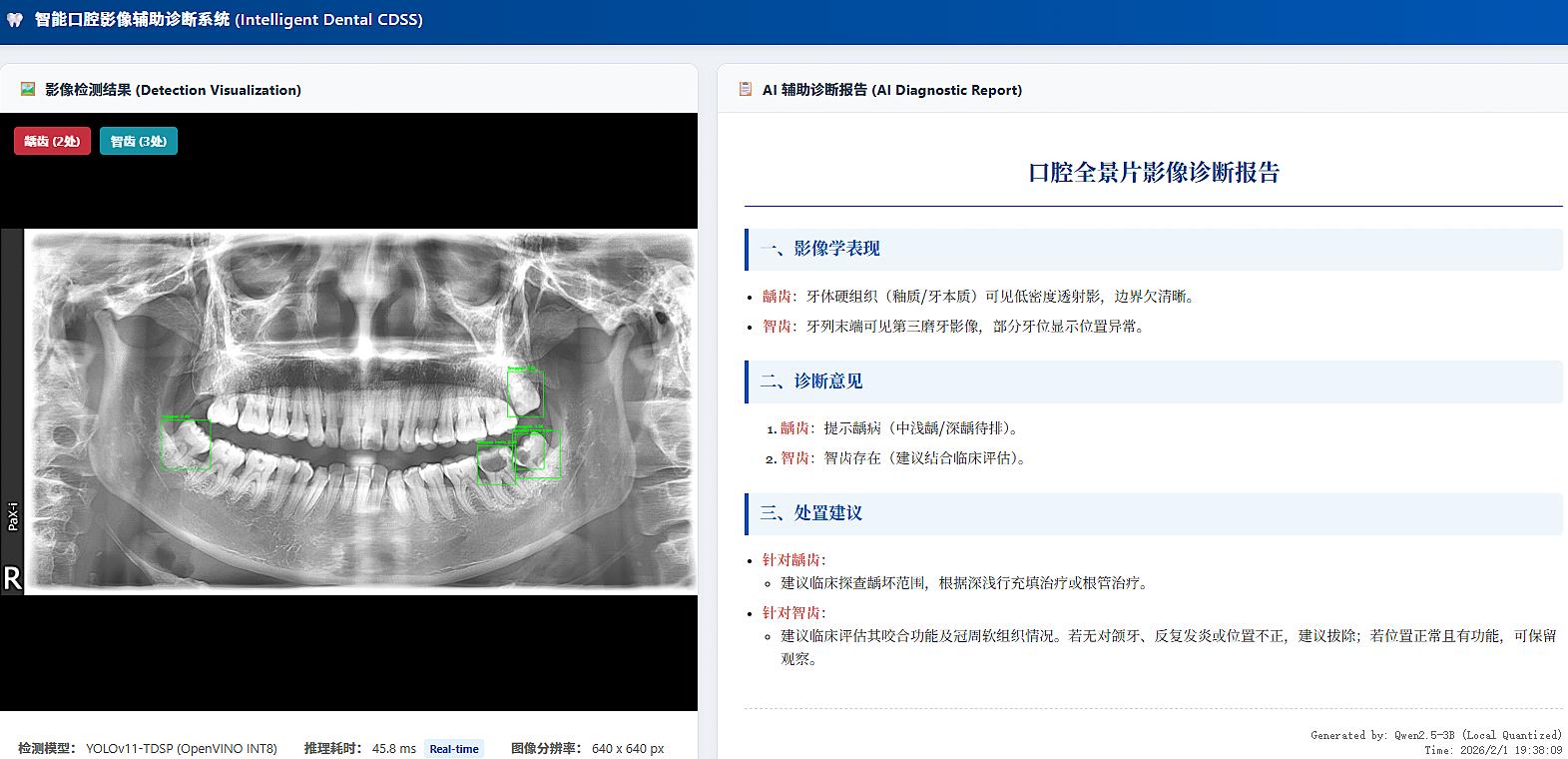
Fig.7 Interface demonstration of the private AI assistant in an offline edge environment.
| Evaluation metrics | Mean±SD | Score≥4 |
|---|---|---|
| Accuracy | 4.2±0.6 | 86.0% |
| Completeness | 4.8±0.5 | 93.0% |
| Standardization | 4.1±0.7 | 80.0% |
Tab.5 Quantitative results of clinical blind review for diagnostic reports generated by the edge-side lightweight LLM (5-point scale)
| Evaluation metrics | Mean±SD | Score≥4 |
|---|---|---|
| Accuracy | 4.2±0.6 | 86.0% |
| Completeness | 4.8±0.5 | 93.0% |
| Standardization | 4.1±0.7 | 80.0% |
| [1] | World Health Organization. Global oral health status report: towards universal health coverage for oral health by 2030[R]. Geneva: WHO, 2022. doi:10.1596/36724 |
| [2] | 陆海霞, 陶丹英, 卢展民, 等. 第四次全国口腔健康流行病学调查-背景和方法[C]//2018年中华口腔医学会第十八次口腔预防医学学术年会论文集. 西安, 2018: 23. |
| [3] | Ahmed N, Abbasi MS, Zuberi F, et al. Artificial intelligence techniques: analysis, application, and outcome in dentistry: a systematic review[J]. BioMed Res Int, 2021, 2021: 9751564. doi:10.1155/2021/9751564 |
| [4] | Tuzoff DV, Tuzova LN, Bornstein MM, et al. Tooth detection and numbering in panoramic radiographs using convolutional neural networks[J]. Dentomaxillofac Radiol, 2019, 48(4): 20180051. doi:10.1259/dmfr.20180051 |
| [5] | Ossowska A, Kusiak A, Świetlik D. Artificial intelligence in dentistry: narrative review[J]. Int J Environ Res Public Health, 2022, 19(6): 3449. doi:10.3390/ijerph19063449 |
| [6] | Zhao XT, Xu TK, Peng L, et al. Recognition and segmentation of teeth and mandibular nerve canals in panoramic dental X-rays by Mask RCNN[J]. Displays, 2023, 78: 102447. doi:10.1016/j.displa.2023.102447 |
| [7] | Esteva A, Chou K, Yeung S, et al. Deep learning-enabled medical computer vision[J]. NPJ Digit Med, 2021, 4(1): 5. doi:10.1038/s41746-020-00376-2 |
| [8] | Cui ZM, Li CJ, Wang WP. ToothNet: automatic tooth instance segmentation and identification from cone beam CT images[C]//2019 IEEE/CVF Conference on Computer Vision and Pattern Recognition (CVPR). June 15-20, 2019, Long Beach, CA, USA. IEEE, 2020: 6361-70. doi:10.1109/cvpr.2019.00653 |
| [9] | Sheng C, Wang L, Huang ZH, et al. Transformer-based deep learning network for tooth segmentation on panoramic radiographs[J]. J Syst Sci Complex, 2023, 36(1): 257-72. doi:10.1007/s11424-022-2057-9 |
| [10] | Ragab MG, Abdulkadir SJ, Qaid N, et al. Periodontitis bone loss detection in panoramic radiographs using modified YOLOv7[J]. PeerJ Comput Sci, 2025, 11: e3102. doi:10.7717/peerj-cs.3102 |
| [11] | 梁 洪, 邱定乾, 丁世宇, 等. 基于改进YOLOv8的异常牙齿和修复体X射线影像检测[J]. 中国激光, 2025, 52(3): 0307106. doi:10.3788/CJL241265 |
| [12] | 赵涛涛, 倪 铭, 夏顺兴, 等. YOLOv11-TDSP: 口腔全景片的轻量化高精度异常牙检测模型[J]. 南方医科大学学报, 2025, 45(8): 1791-9. |
| [13] | Rancea A, Anghel I, Cioara T. Edge computing in healthcare: innovations, opportunities, and challenges[J]. Future Internet, 2024, 16(9): 329. doi:10.3390/fi16090329 |
| [14] | Chen JS, Ran XK. Deep learning with edge computing: a review[J]. Proc IEEE, 2019, 107(8): 1655-74. doi:10.1109/jproc.2019.2921977 |
| [15] | Shi WS, Cao J, Zhang Q, et al. Edge computing: vision and challenges[J]. IEEE Internet Things J, 2016, 3(5): 637-46. doi:10.1109/jiot.2016.2579198 |
| [16] | Wang RJ, Lai JS, Zhang ZY, et al. Privacy-preserving federated learning for Internet of medical things under edge computing[J]. IEEE J Biomed Health Inform, 2023, 27(2): 854-65. doi:10.1109/jbhi.2022.3157725 |
| [17] | Rieke N, Hancox J, Li WQ, et al. The future of digital health with federated learning[J]. npj Digit Med, 2020, 3: 119. doi:10.1038/s41746-020-00323-1 |
| [18] | Yang Q, Liu Y, Chen TJ, et al. Federated machine learning: concept and applications[J]. ACM Trans Intell Syst Technol, 2019, 10(2): 1-19. doi:10.1145/3298981 |
| [19] | Singhal K, Azizi S, Tu T, et al. Large language models encode clinical knowledge[J]. Nature, 2023, 620(7972): 172-80. doi:10.1038/s41586-023-06291-2 |
| [20] | Sha YY, Pan HX, Meng WY, et al. Contrastive knowledge-guided large language models for medical report generation[M]//Medical Image Computing and Computer Assisted Intervention – MICCAI 2025. Cham: Springer Nature Switzerland, 2025: 111-20. doi:10.1007/978-3-032-04978-0_11 |
| [21] | Moor M, Banerjee O, Abad ZSH, et al. Foundation models for generalist medical artificial intelligence[J]. Nature, 2023, 616(7956): 259-65. doi:10.1038/s41586-023-05881-4 |
| [22] | Thirunavukarasu AJ, Ting DSJ, Elangovan K, et al. Large language models in medicine[J]. Nat Med, 2023, 29(8): 1930-40. doi:10.1038/s41591-023-02448-8 |
| [23] | Tu T, Azizi S, Driess D, et al. Towards generalist biomedical AI[J]. Nejm Ai, 2024, 1(3):14334. doi:10.1056/aioa2300138 |
| [24] | Qu CY, Zhao R, Yu Y, et al. Post-training quantization for 3D medical image segmentation: a practical study on real inference engines[EB/OL]. 2025: arXiv: 2501.17343. . doi:10.1117/1.jmi.13.1.014006 |
| [25] | Jacob B, Kligys S, Chen B, et al. Quantization and training of neural networks for efficient integer-arithmetic-only inference[C]//2018 IEEE/CVF Conference on Computer Vision and Pattern Recognition. June 18-23, 2018, Salt Lake City, UT, USA. IEEE, 2018: 2704-13. doi:10.1109/cvpr.2018.00286 |
| [26] | Cai H, Gan C, Wang TZ, et al. Once-for-all: train one network and specialize it for efficient deployment[EB/OL]. 2019: arXiv: 1908.09791. . |
| [27] | Yang A, Li AF, Yang BS, et al. Qwen3 technical report[EB/OL]. 2025: arXiv: 2505.09388. |
| [28] | 孙召飞, 俞经虎, 朱行飞, 等. 基于改进YOLOv5s的口腔全景片牙齿病症识别算法[J]. 中国激光, 2024, 51(15): 1507106. |
| [29] | Lin SY, Hao XJ, Liu Y, et al. Lightweight deep learning methods for panoramic dental X-ray image segmentation[J]. Neural Comput Appl, 2023, 35(11): 8295-306. doi:10.1007/s00521-022-08102-7 |
| [30] | 杨 春, 张睿尧, 黄 泷, 等. 深度神经网络模型量化方法综述[J]. 工程科学学报, 2023, 45(10): 1613-29. |
| [31] | Gholami A, Kim S, Dong Z, et al. A survey of quantization methods for efficient neural network inference[M]//Low-power computer vision. Chapman and Hall/CRC, 2022: 291-326. doi:10.1201/9781003162810-13 |
| [32] | 李 斌, 汪黎君, 曹厚德, 等. 基于上海市场十年调查数据看医疗设备“中国制造”的提升[J]. 中国医疗设备, 2018, 33(2): 23-6. doi:10.3969/j.issn.1674-1633.2018.02.007 |
| [33] | 林 岚, 武雨桐. 大型语言模型在医疗领域的应用现状与展望[J]. 医疗卫生装备, 2024, 45(8): 102-9. doi:10.19745/j.1003-8868.2024161 |
| [34] | Frantar E, Ashkboos S, Hoefler T, et al. GPTQ: Accurate post-training quantization for generative pre-trained transformers[C]// International Conference on Learning Representations (ICLR). 2023. |
| [35] | Lin J, Tang J, Tang H, et al. AWQ: Activation-aware weight quantization for LLM compression and acceleration[C]// Proceedings of Machine Learning and Systems (MLSys). 2024. doi:10.1145/3714983.3714987 |
| [36] | McMahan B, Moore E, Ramage D, et al. Communication-efficient learning of deep networks from decentralized data[C]// Artificial Intelligence and Statistics (AISTATS). PMLR, 2017: 1273-82. |
| No related articles found! |
| Viewed | ||||||
|
Full text |
|
|||||
|
Abstract |
|
|||||
