Journal of Southern Medical University ›› 2026, Vol. 46 ›› Issue (7): 1622-1633.doi: 10.12122/j.issn.1673-4254.2026.07.16
Natural bear bile powder attenuates lipopolysaccharide-induced acute lung injury in mice by regulating the NF-κB and Nrf-2/HO-1 signaling pathways
Yuhang SUN1,2( ), Xingzhen LU2, Xinyue ZHANG1,3, Jianpeng GUO1,2,3(), Xin JIN1,3()
- 1.Key Laboratory of Natural Medicines of Changbai Mountain (Ministry of Education), Yanbian University, Yanji 133002, China
2.College of Pharmacy, Yanbian University, Yanji 133002, China
3.Jilin Provincial Key Laboratory of Ginseng Research and Utilization, Yanji 133002, China
-
Received:2025-12-23Online:2026-07-20Published:2026-07-20 -
Contact:Jianpeng GUO, Xin JIN E-mail:m15543555820@163.com;gjp807@ybu.edu.cn;jinchenlcn@163.com

Cite this article
Yuhang SUN, Xingzhen LU, Xinyue ZHANG, Jianpeng GUO, Xin JIN. Natural bear bile powder attenuates lipopolysaccharide-induced acute lung injury in mice by regulating the NF-κB and Nrf-2/HO-1 signaling pathways[J]. Journal of Southern Medical University, 2026, 46(7): 1622-1633.
share this article
Add to citation manager EndNote|Ris|BibTeX
URL: https://www.j-smu.com/EN/10.12122/j.issn.1673-4254.2026.07.16
| Primer | Sequence |
|---|---|
| p65 | F: 5′ - TGCGATTCCGCTATAAATGCG-3′ R: 5′ - ACAAGTTCATGTGGATGAGGC-3′ |
| TNF-α | F: 5′- CAGGCGGTGCCTATGTCTC -3′ R: 5′- CGATCACCCCGAAGTTCAGTAG-3′ |
| IL-1β | F: 5′ - GAAATGCCACCTTTTGACAGTG-3′ R: 5′ - TGGATGCTCTCATCAGGACAG-3′ |
| IκBα | F: 5′ - CGGCACCGAGTACCTTGAC -3′ R: 5′ - CACCGGCTGCATACAACTTCT-3′ |
| Nrf-2 | F: 5′-CTTTAGTCAGCGACAGAAGGAC-3′ R: 5′ - AGGCATCTTGTTTGGGAATGTG-3′ |
| HO-1 | F: 5′ - GATAGAGCGCAACAAGCAGAA -3′ R: 5′ - CAGTGAGGCCCATACCAGAAG -3′ |
| Keap-1 | F: 5′ -CGGGGACGCAGTGATGTATG -3′ R: 5′ - TGTGTAGCTGAAGGTTCGGTTA-3′ |
| GAPDH | F: 5′ - AGGTCGGTGTGAACGGATTTG-3′ R: 5′ - GGGGTCGTTGATGGCAACA-3′ |
Tab.1 Primers for RT-PCR
| Primer | Sequence |
|---|---|
| p65 | F: 5′ - TGCGATTCCGCTATAAATGCG-3′ R: 5′ - ACAAGTTCATGTGGATGAGGC-3′ |
| TNF-α | F: 5′- CAGGCGGTGCCTATGTCTC -3′ R: 5′- CGATCACCCCGAAGTTCAGTAG-3′ |
| IL-1β | F: 5′ - GAAATGCCACCTTTTGACAGTG-3′ R: 5′ - TGGATGCTCTCATCAGGACAG-3′ |
| IκBα | F: 5′ - CGGCACCGAGTACCTTGAC -3′ R: 5′ - CACCGGCTGCATACAACTTCT-3′ |
| Nrf-2 | F: 5′-CTTTAGTCAGCGACAGAAGGAC-3′ R: 5′ - AGGCATCTTGTTTGGGAATGTG-3′ |
| HO-1 | F: 5′ - GATAGAGCGCAACAAGCAGAA -3′ R: 5′ - CAGTGAGGCCCATACCAGAAG -3′ |
| Keap-1 | F: 5′ -CGGGGACGCAGTGATGTATG -3′ R: 5′ - TGTGTAGCTGAAGGTTCGGTTA-3′ |
| GAPDH | F: 5′ - AGGTCGGTGTGAACGGATTTG-3′ R: 5′ - GGGGTCGTTGATGGCAACA-3′ |
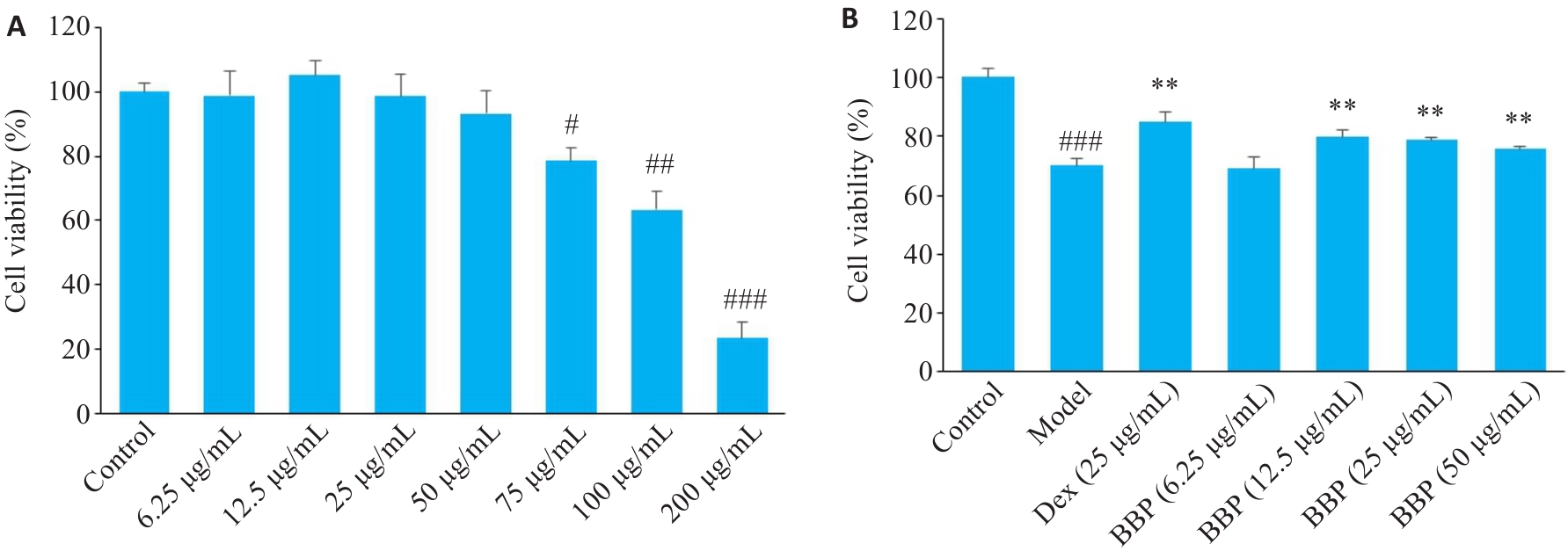
Fig.1 Results of CCK-8 assay. A: Cell viability assessed by CCK-8 assay in RAW 264.7 cells treated with different concentrations of BBP. B: Cell viability detected by CCK-8 assay of LPS-induced RAW 264.7 cells treated with different concentrations of BBP. Data are presented as Mean±SD (n=3). #P<0.05, ##P<0.01, ###P<0.001 vs Control group; **P<0.01 vs Model group.
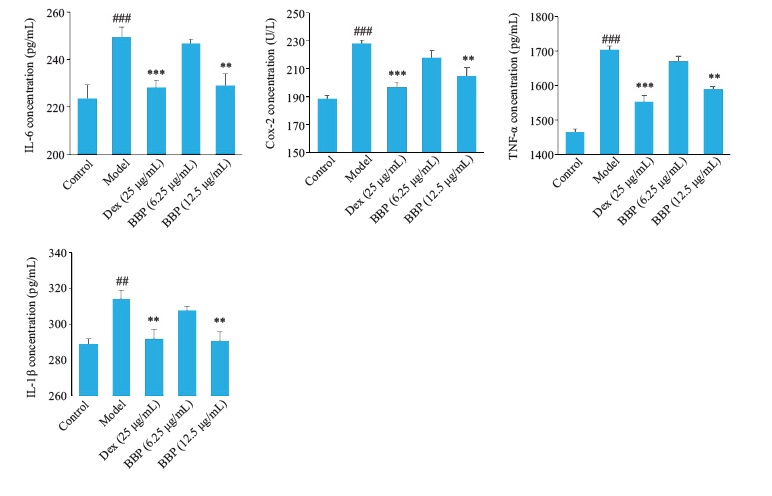
Fig.2 Effect of BBP on inflammatory cytokine levels in LPSinducedRAW264.7 cells Mean±SD, n=3). ##P<0.01, ###P<0.001 vs Control group; **P<0.010.01, ***P<0.010.001 vs Model group.
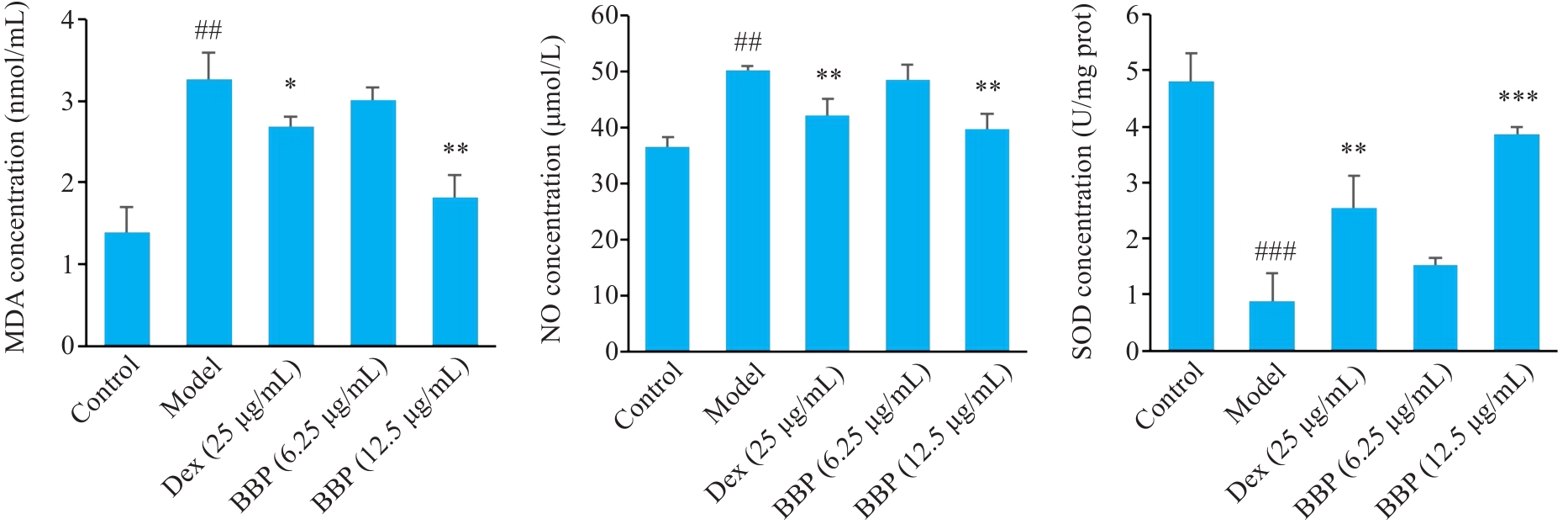
Fig.3 Effect of BBP on MDA, SOD and NO in LPS-induced RAW264.7 cells (Mean±SD, n=3). ##P<0.01, ###P<0.001 vs Control group; *P<0.05, **P<0.01, ***P<0.001 vs Model group.
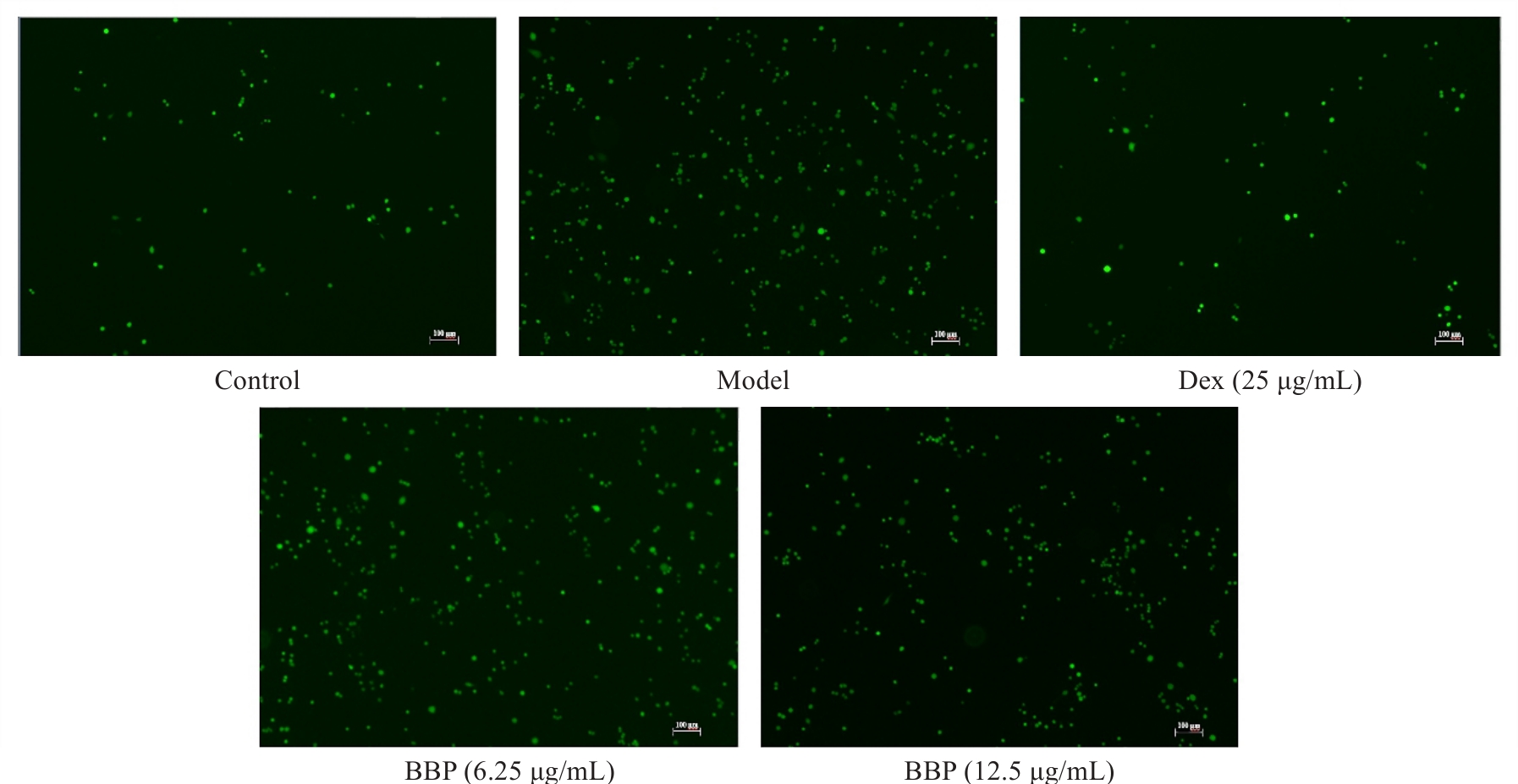
Fig.4 Effect of BBP pretreatment on ROS in RAW264.7 cells assessed using DCFH-DA fluorescent probe (Scale bar=100 μm).
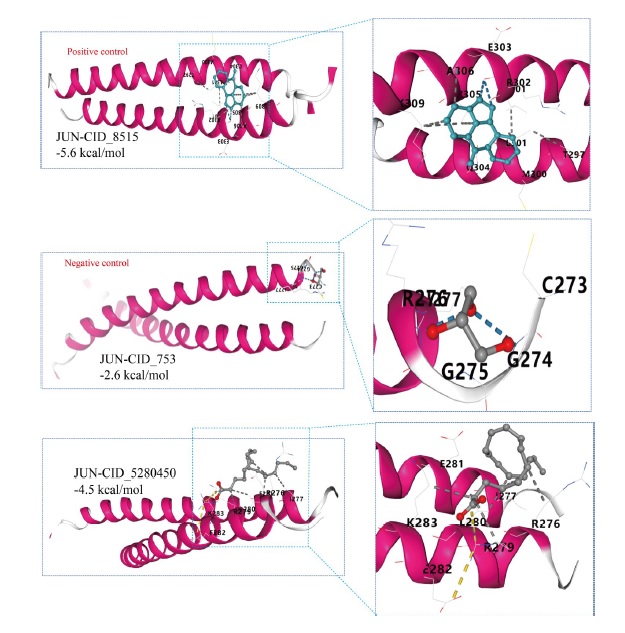
Fig.5 qPCR for detecting mRNA expressions of the Keap-1, HO-1, Nrf-2,NF-κB, TNF-α, IκB-α and IL-1β in LPS-induced RAW264.7 cells (Mean±SD, n=3). ##P<0.01, ###P<0.001 vs Control group; **P<0.010.01, ***P<0.010.001 vsModel group.
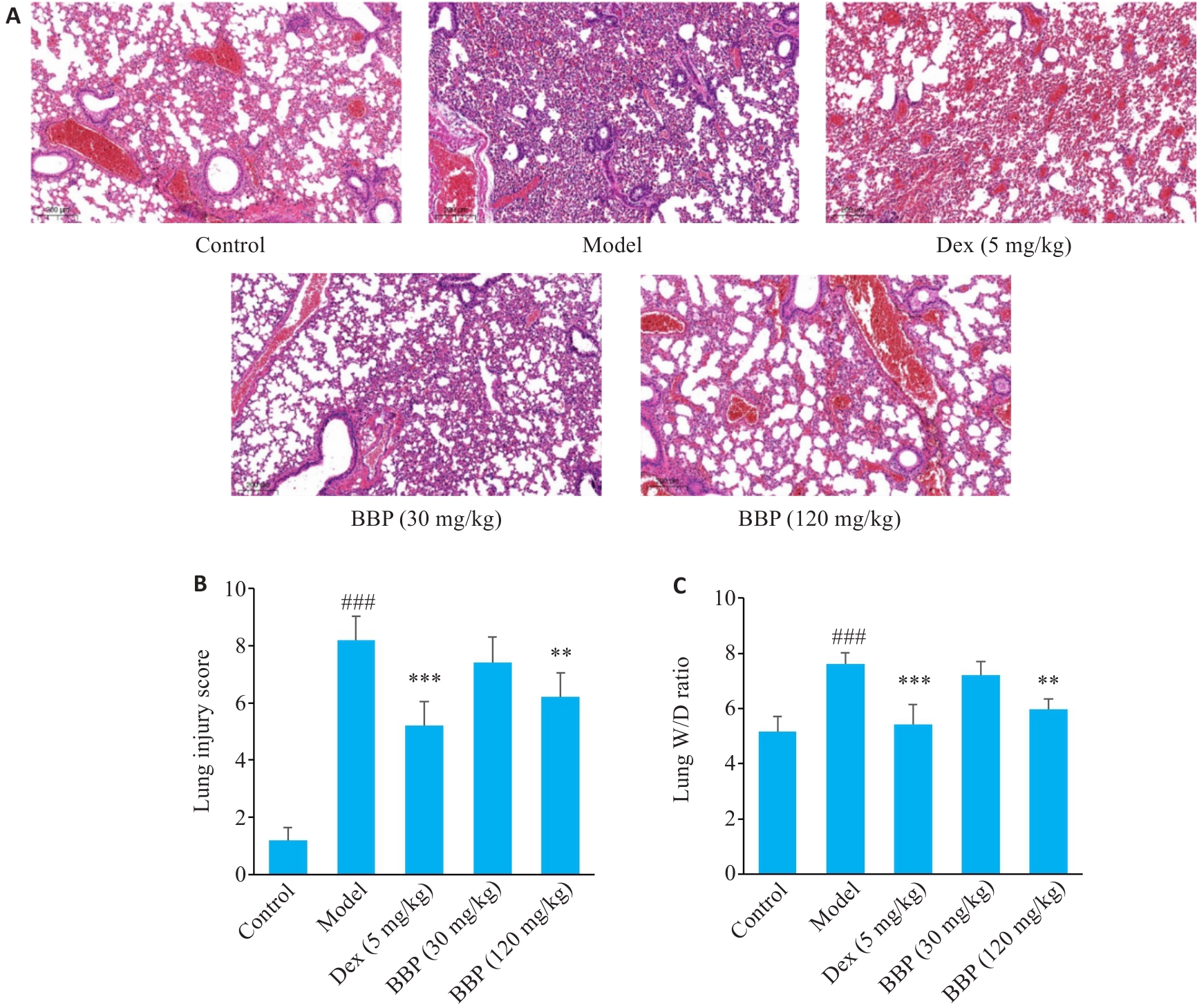
Fig.6 Effects of BBP on LPS-induced histopathological changes in lung tissues of ALI mice. A: HE staining for examining histological alterations in mouse lung tissues (Scale bar=200 μm). B: Lung injury score. C: Lung wet-to-dry ratio. Data are presented as Mean±SD (n=6). ###P<0.001 vs Control group; **P<0.01, ***P<0.001 vs Model group.
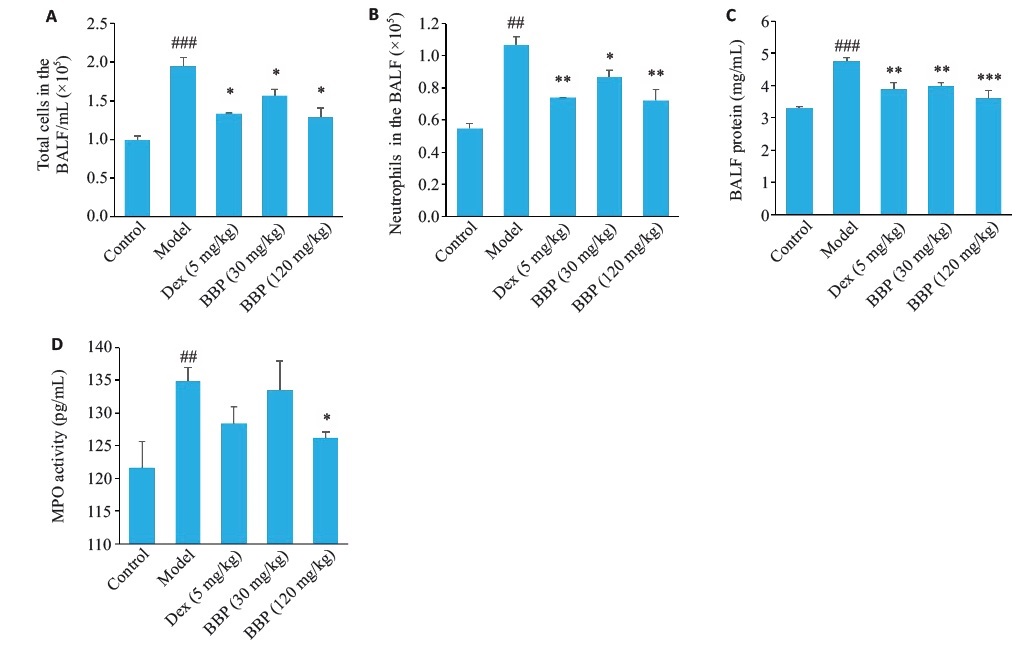
Fig.7 Effects of BBP on changes cell counts in BALF from LPSinducedALI mice. A: Number of total cells in the BALF. B: Number ofneutrophils in the BALF. C: Levels of BALF protein. D: MPO activitydetected using corresponding assay kits in the lung tissue. Data arepresented as Mean±SD, n=6). ##P<0.01, ###P<0.001 vs Control group; *P<0.05, **P<0.01, ***P<0.001 vs Model group.
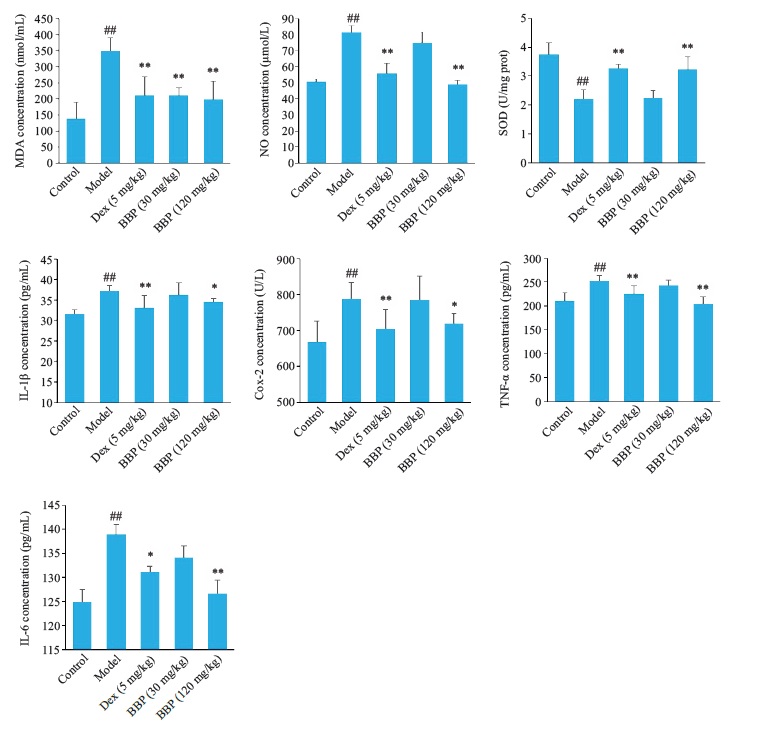
Fig.8 Effects of BBP on levels of inflammatory factors (IL-1β, COX-2,TNF‑α and IL-6) and oxidative stress indicators (NO, SOD andMDA) in lung tissues of LPS-induced ALI mice. Data are presentedas Mean±SD, n=6). ##P<0.01 vs control group; *P<0.05, **P<0.01 vsmodel group.
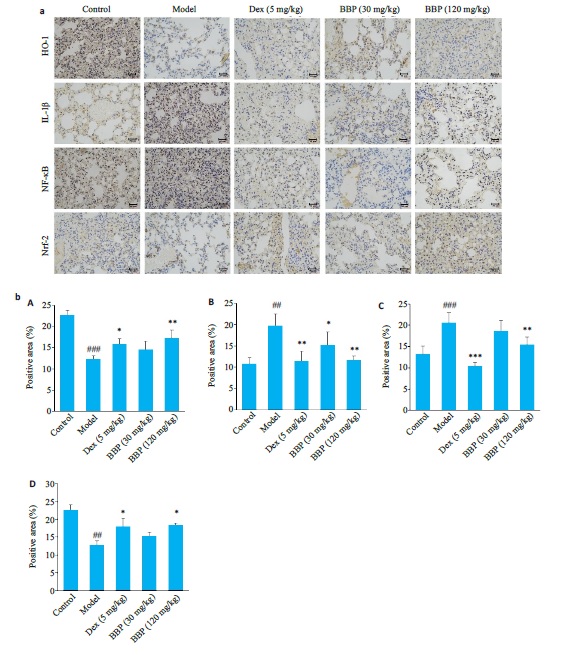
Fig.9 Effects of BBP on expression levels of Nrf-2, HO-1, IL-1β, and NF-κB (p65) in lung tissues of mice with ALI. (a) IHC results of Nrf-2, HO-1,IL-1β and NF-κB (p65) in lung tissues of mice in each group (Scale bar=50 μm). (b) Proportion of positive cells for (A) HO-1, (B) NF-κB (p65),(C) IL-1β, and (D) Nrf-2 in lung tissues of mice in each group (%). Dataare presented as Mean±SD (n=6). ##P<0.01, ###P<0.001 vs Control group; *P<0.05, **P<0.01 vs Model group.
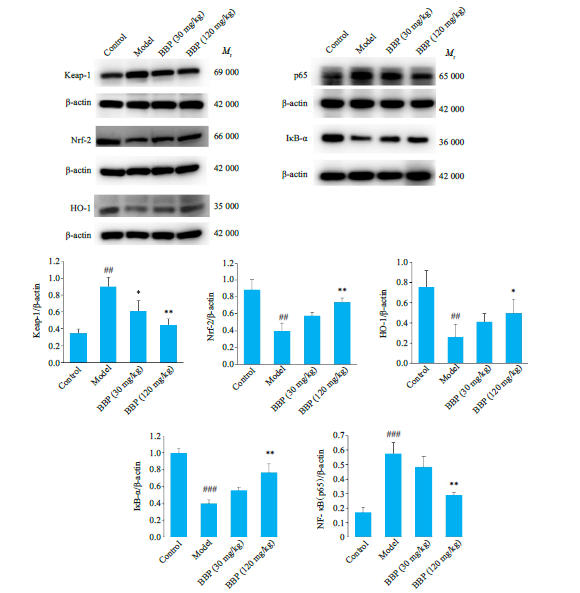
Fig.10 Effect of BBP on expressions of Keap-1, Nrf2, HO-1, IκB-α and NF‑κB (p65) in mouse lung tissues. Data are presented as Mean±SD (n=6). ##P<0.01, ###P<0.001 vs Control group; *P<0.05, **P<0.01 vs Model group.
| [1] | Zheng JJ, Li Y, Kong XB, et al. Exploring immune-related pathogenesis in lung injury: Providing new insights Into ALI/ARDS[J]. Biomed Pharmacother, 2024, 175: 116773. doi:10.1016/j.biopha.2024.116773 |
| [2] | Evans CE. Hypoxia-inducible factor signaling in inflammatory lung injury and repair[J]. Cells, 2022, 11(2): 183. doi:10.3390/cells11020183 |
| [3] | Su YC, Lucas R, Fulton DJR, et al. Mechanisms of pulmonary endothelial barrier dysfunction in acute lung injury and acute respiratory distress syndrome[J]. Chin Med J Pulm Crit Care Med, 2024, 2(2): 80-7. doi:10.1016/j.pccm.2024.04.002 |
| [4] | Yin ZH, Song RZ, Yu T, et al. Natural compounds regulate macrophage polarization and alleviate inflammation against ALI/ARDS[J]. Biomolecules, 2025, 15(2): 192. doi:10.3390/biom15020192 |
| [5] | Liu HQ, Dong JL, Xu CL, et al. Acute lung injury: pathogenesis and treatment[J]. J Transl Med, 2025, 23(1): 926. doi:10.1186/s12967-025-06994-2 |
| [6] | Cai YJ, Shang LR, Zhou FY, et al. Macrophage pyroptosis and its crucial role in ALI/ARDS[J]. Front Immunol, 2025, 16: 1530849. doi:10.3389/fimmu.2025.1530849 |
| [7] | Wang J, Peng XY, Yuan N, et al. Interplay between pulmonary epithelial stem cells and innate immune cells contribute to the repair and regeneration of ALI/ARDS[J]. Transl Res, 2024, 272. 111-25. doi:10.1016/j.trsl.2024.05.012 |
| [8] | Liu C, Xiao K, Xie LX. Progress in preclinical studies of macrophage autophagy in the regulation of ALI/ARDS[J]. Front Immunol, 2022, 13: 922702. doi:10.3389/fimmu.2022.922702 |
| [9] | Qian J, Liu KJ, Zhong CH, et al. Sivelestat sodium alleviated sepsis-induced acute lung injury by inhibiting TGF‑β/Smad signaling pathways through upregulating microRNA-744-5p[J]. J DisThorac, 2024, 16(10): 6616-33. doi:10.21037/jtd-24-65 |
| [10] | Peinado-Acevedo JS, Rivera-Bustamante T, Rivera J, et al. Balancing inflammation and adverse effects of glucocorticoids in clinical practice[J]. Rev Colomb De Reumatología, 2024, 31(4): 498-510. doi:10.1016/j.rcreu.2023.08.004 |
| [11] | 李新月, 苏芳芳, 蒋 超, 等.中药熊胆功效演进及成分研究概述[J]. 中国中药杂志, 2022, 47(18): 4846-53. |
| [12] | Wu JS, Fang S, Li WK, et al. Metabolomics research on the hepatoprotective effect of cultured bear bile powder in α-naphthylisothiocyanate-induced cholestatic mice[J]. J Chromatogr B, 2020, 1153: 122269. doi:10.1016/j.jchromb.2020.122269 |
| [13] | Zhu H, Wang GR, Bai YY, et al. Natural bear bile powder suppresses neuroinflammation in lipopolysaccharide-treated mice via regulating TGR5/AKT/NF-κB signaling pathway[J]. J Ethnopharmacol, 2022, 289: 115063. doi:10.1016/j.jep.2022.115193 |
| [14] | 贾贵阳, 倪元萍, 王梦茹, 等. 熊胆粉及熊去氧胆酸对肝癌癌前病变的作用[J].中国实验 动物学报, 2024, 32(11): 1424-32. doi:10.3969/j.issn.1005-4847.2024.11.007 |
| [15] | Chen HW, Shen AL, Liu LY, et al. Bear bile powder inhibits growth of hepatocellular carcinoma via suppressing STAT3 signaling pathway in mice[J]. Chin J Integr Med, 2020, 26(5): 370-4. doi:10.1007/s11655-019-3010-1 |
| [16] | Cui N, Zhang WS, Su FZ, et al. Metabolomics and lipidomics study unveils the impact of tauroursodeoxycholic acid on hyperlipidemic mice[J]. Molecules, 2023, 28: 6352-65. doi:10.3390/molecules28176352 |
| [17] | Chen XL, Cai K, Zhang W, et al. Bear bile powder ameliorates type 2 diabetes via modulation of metabolic profiles, gut microbiota, and metabolites[J]. Front Pharmacol, 2023, 13: 1090955. doi:10.3389/fphar.2022.1090955 |
| [18] | 朴仁范. 朝药学[M]. 延边大学出版社, 2013: 86-7. |
| [19] | 元持常. 东医四象新编:东医四象新编剂方[M]. 京城: 文友社, 1929: 17. |
| [20] | Hu CL, Li JL, Tan YS, et al. Tanreqing injection attenuates macrophage activation and the inflammatory response via the lncRNA-SNHG1/HMGB1 axis in lipopolysaccharide-induced acute lung injury[J]. Front Immunol, 2022, 13: 820718. doi:10.3389/fimmu.2022.820718 |
| [21] | 岳 斌, 张 明, 武可泗, 等. HPLC-ELSD测定蛇胆川贝口服液等药中西贝素的含量[J].中 成药, 2007, (3): 474-6. doi:10.3969/j.issn.1001-1528.2007.03.056 |
| [22] | Cheng L, Tian HL, Lei HY, et al. Bear bile powder ameliorates LPS-induced acute lung injury by inhibiting CD14 pathway and improving intestinal flora: exploration of "Fei (lung)-Dachang (large intestine) interaction" theory[J]. Chin J Integr Med, 2025, 31(9): 821-9. doi:10.1007/s11655-024-3556-4 |
| [23] | Yang SY, Chen KJ, Yu JK, et al. Inhibition of cathepsin L ameliorates inflammation through the A20/NF‑κB pathway in endotoxin-induced acute lung injury[J]. iScience, 2024, 27(11): 111024. doi:10.1016/j.isci.2024.111024 |
| [24] | Liu SX, Liu JC, Wang YH, et al. Oxidative stress: signaling pathways, biological functions, and disease[J]. MedComm, 2025, 6(7): e70268. doi:10.1002/mco2.70268 |
| [25] | Sharif O, Bolshakov VN, Raines S, et al. Transcriptional profiling of the LPS induced NF‑κB response in macrophages[J]. BMC Immunol, 2007, 8(1): 1. doi:10.1186/1471-2172-8-1 |
| [26] | Bellezza I, Giambanco I, Minelli A, et al. Nrf2-Keap1 signaling in oxidative and reductive stress[J]. Biochim Biophys Acta BBA Mol Cell Res, 2018, 1865(5): 721-33. doi:10.1016/j.bbamcr.2018.02.010 |
| [27] | Wardyn JD, Ponsford AH, Sanderson CM. Dissecting molecular cross-talk between Nrf2 and NF‑κB response pathways[J]. Biochem Soc Trans, 2015, 43(4): 621-6. doi:10.1042/bst20150014 |
| [28] | Ahmed SMU, Luo L, Namani A, et al. Nrf2 signaling pathway: Pivotal roles in inflammation[J]. Biochim Biophys Acta BBA Mol Basis Dis, 2017, 1863(2): 585-97. doi:10.1016/j.bbadis.2016.11.005 |
| [29] | Song LY, Li MJ, Li JY, et al. Synthesis and evaluation of lansiumamide B analogues to ameliorate acute lung injury by reducing oxidative stress and inflammation via Keap1/Nrf2/NF-κB pathway[J]. Eur J Med Chem, 2025, 299: 118052. doi:10.1016/j.ejmech.2025.118052 |
| [30] | Patangrao Renushe A, Kumar Banothu A, Kumar Bharani K, et al. Vincamine, an active constituent of Vinca rosea ameliorates experimentally induced acute lung injury in Swiss albino mice through modulation of Nrf-2/NF‑κB signaling cascade[J]. Int Immunopharmacol, 2022, 108: 108773. doi:10.1016/j.intimp.2022.108773 |
| [31] | Niri P, Saha A, Polopalli S, et al. β‑Caryophyllene attenuates oxidative stress and inflammatory response in LPS induced acute lung injury by targeting ACE2/MasR and Nrf2/HO-1/NF‑κB axis[J]. Biochem Biophys Res Commun, 2025, 746: 151286. doi:10.1016/j.bbrc.2024.151286 |
| [32] | González-Bosch C, Boorman E, Zunszain PA, et al. Short-chain fatty acids as modulators of redox signaling in health and disease[J]. Redox Biol, 2021, 47: 102165. doi:10.1016/j.redox.2021.102165 |
| [33] | Milivojac T, Grabež M, Amidžić L, et al. Ursodeoxycholic and chenodeoxycholic bile acids alleviate endotoxininduced acute lung injury in rats by modulating aquaporin expression and pathways associated with apoptosis and inflammation[J]. Frontiers Pharmacol, 2025, 16: 1484292-311. doi:10.3389/fphar.2025.1484292 |
| [34] | Gong ZG, Mao W, Ren PP, et al. Taurochenodeoxycholic acid ameliorates the Staphylococcus aureus infection-induced acute lung injury through toll-like receptor 2 in mice[J]. Int Immunopharmacol, 2024, 142: 113228. doi:10.1016/j.intimp.2024.113228 |
| [35] | He XD, Shi JY, Bu LN, et al. Ursodeoxycholic acid alleviates fat embolism syndrome-induced acute lung injury by inhibiting the p38 MAPK/NF‑κB signalling pathway through FXR[J]. Pharmacol Biochem, 2024, 230: 116574. doi:10.1016/j.bcp.2024.116574 |
| [36] | Sipos A, Kerekes É, Szeőcs D, et al. Ursodeoxycholic acid prompts glycolytic dominance,reductive stress and epithelial-to-mesenchymal transition in ovarian cancer cells through NRF2 activation[J]. Cell Death Discov, 2025, 11: 134. doi:10.1038/s41420-025-02398-9 |
| Viewed | ||||||
|
Full text |
|
|||||
|
Abstract |
|
|||||