Journal of Southern Medical University ›› 2026, Vol. 46 ›› Issue (7): 1576-1584.doi: 10.12122/j.issn.1673-4254.2026.07.11
Rapid detection of fluconazole resistance in Candida tropicalis using MALDI-TOF mass spectrometry
Jie HOU1,2( ), Weilin CHEN2(), Liang PENG2, Fu QIAO3, Mei KANG2(), Ying MA2()
- 1.Department of Laboratory Medicine, West China Tianfu Hospital of Sichuan University, Chengdu 610213, China
2.Department of Laboratory Medicine, Clinical Laboratory Medicine Research Center, Sichuan Clinical Research Center for Laboratory Medicine
3.Department of Infection Control, West China Hospital, Sichuan University, Chengdu 610041, China
-
Received:2025-11-07Online:2026-07-20Published:2026-07-20 -
Contact:Mei KANG, Ying MA E-mail:microbe_houjie@hotmail.com;wl1335058287@163.com;kangmei@sina.com;majiying72@hotmail.com

Cite this article
Jie HOU, Weilin CHEN, Liang PENG, Fu QIAO, Mei KANG, Ying MA. Rapid detection of fluconazole resistance in Candida tropicalis using MALDI-TOF mass spectrometry[J]. Journal of Southern Medical University, 2026, 46(7): 1576-1584.
share this article
Add to citation manager EndNote|Ris|BibTeX
URL: https://www.j-smu.com/EN/10.12122/j.issn.1673-4254.2026.07.11
| Isolates | Sensititre YeastOne | CLSI BMD | MS-AFST | |||
|---|---|---|---|---|---|---|
| MIC (µg/mL) | Phenotype | MIC (µg/mL) | Phenotype | MPCC (µg/mL) | Phenotype | |
| 20200253 | 1 | S | 1 | S | 0.25 | S |
| 19200247 | 1 | S | 1 | S | 1 | S |
| 19200191 | 1 | S | 1 | S | 1 | S |
| 19200153 | 1 | S | 2 | S | 1 | S |
| 19200102 | 1 | S | 1 | S | 1 | S |
| 19200098 | 1 | S | 1 | S | 1 | S |
| 18200156 | 1 | S | 1 | S | 1 | S |
| 18200150 | 1 | S | 1 | S | 1 | S |
| 18200142 | 1 | S | 1 | S | 1 | S |
| 18200115 | 1 | S | 1 | S | 1 | S |
| 18200018 | 1 | S | 1 | S | 1 | S |
| 22200035 | 1 | S | 1 | S | 1 | S |
| 21200152 | 2 | S | 2 | S | 2 | S |
| 20200269 | 2 | S | 2 | S | 1 | S |
| 20200161 | 2 | S | 2 | S | 2 | S |
| 19200195 | 2 | S | 2 | S | 0.5 | S |
| 19200050 | 2 | S | 2 | S | 2 | S |
| 18200200 | 2 | S | 2 | S | 1 | S |
| 18200199 | 2 | S | 2 | S | 1 | S |
| 21200090 | 4 | SDD | 4 | SDD | 2 | S |
| 19200042 | 8 | R | 8 | R | 2 | S |
| 22200070 | 16 | R | 32 | R | 16 | R |
| 21200118 | 32 | R | 32 | R | 16 | R |
| 18200162 | 32 | R | 32 | R | 32 | R |
| 19200145 | 64 | R | 64 | R | 8 | R |
| 21200116 | 128 | R | 128 | R | 256 | R |
| 20200204 | 128 | R | 128 | R | 256 | R |
| 19200169 | 128 | R | 128 | R | 256 | R |
| 18200183 | 128 | R | 128 | R | 32 | R |
| 18200053 | 128 | R | 128 | R | 16 | R |
| 21200146 | 256 | R | 256 | R | 128 | R |
| 20200248 | 256 | R | 256 | R | 4 | S |
| 21200261 | 256 | R | 256 | R | 256 | R |
| 21200282 | 256 | R | 512 | R | 256 | R |
| 22200005 | 256 | R | 512 | R | 256 | R |
| 21200112 | 256 | R | 256 | R | 256 | R |
| 20200186 | 256 | R | 256 | R | 256 | R |
| 20200111 | 256 | R | 256 | R | 256 | R |
| 20200037 | 256 | R | 256 | R | 128 | R |
| 19200199 | 256 | R | 256 | R | 256 | R |
| 18200179 | 256 | R | 256 | R | 16 | R |
Tab.1 Results for fluconazole resistance testing of clinical isolates of Candida tropicalis
| Isolates | Sensititre YeastOne | CLSI BMD | MS-AFST | |||
|---|---|---|---|---|---|---|
| MIC (µg/mL) | Phenotype | MIC (µg/mL) | Phenotype | MPCC (µg/mL) | Phenotype | |
| 20200253 | 1 | S | 1 | S | 0.25 | S |
| 19200247 | 1 | S | 1 | S | 1 | S |
| 19200191 | 1 | S | 1 | S | 1 | S |
| 19200153 | 1 | S | 2 | S | 1 | S |
| 19200102 | 1 | S | 1 | S | 1 | S |
| 19200098 | 1 | S | 1 | S | 1 | S |
| 18200156 | 1 | S | 1 | S | 1 | S |
| 18200150 | 1 | S | 1 | S | 1 | S |
| 18200142 | 1 | S | 1 | S | 1 | S |
| 18200115 | 1 | S | 1 | S | 1 | S |
| 18200018 | 1 | S | 1 | S | 1 | S |
| 22200035 | 1 | S | 1 | S | 1 | S |
| 21200152 | 2 | S | 2 | S | 2 | S |
| 20200269 | 2 | S | 2 | S | 1 | S |
| 20200161 | 2 | S | 2 | S | 2 | S |
| 19200195 | 2 | S | 2 | S | 0.5 | S |
| 19200050 | 2 | S | 2 | S | 2 | S |
| 18200200 | 2 | S | 2 | S | 1 | S |
| 18200199 | 2 | S | 2 | S | 1 | S |
| 21200090 | 4 | SDD | 4 | SDD | 2 | S |
| 19200042 | 8 | R | 8 | R | 2 | S |
| 22200070 | 16 | R | 32 | R | 16 | R |
| 21200118 | 32 | R | 32 | R | 16 | R |
| 18200162 | 32 | R | 32 | R | 32 | R |
| 19200145 | 64 | R | 64 | R | 8 | R |
| 21200116 | 128 | R | 128 | R | 256 | R |
| 20200204 | 128 | R | 128 | R | 256 | R |
| 19200169 | 128 | R | 128 | R | 256 | R |
| 18200183 | 128 | R | 128 | R | 32 | R |
| 18200053 | 128 | R | 128 | R | 16 | R |
| 21200146 | 256 | R | 256 | R | 128 | R |
| 20200248 | 256 | R | 256 | R | 4 | S |
| 21200261 | 256 | R | 256 | R | 256 | R |
| 21200282 | 256 | R | 512 | R | 256 | R |
| 22200005 | 256 | R | 512 | R | 256 | R |
| 21200112 | 256 | R | 256 | R | 256 | R |
| 20200186 | 256 | R | 256 | R | 256 | R |
| 20200111 | 256 | R | 256 | R | 256 | R |
| 20200037 | 256 | R | 256 | R | 128 | R |
| 19200199 | 256 | R | 256 | R | 256 | R |
| 18200179 | 256 | R | 256 | R | 16 | R |
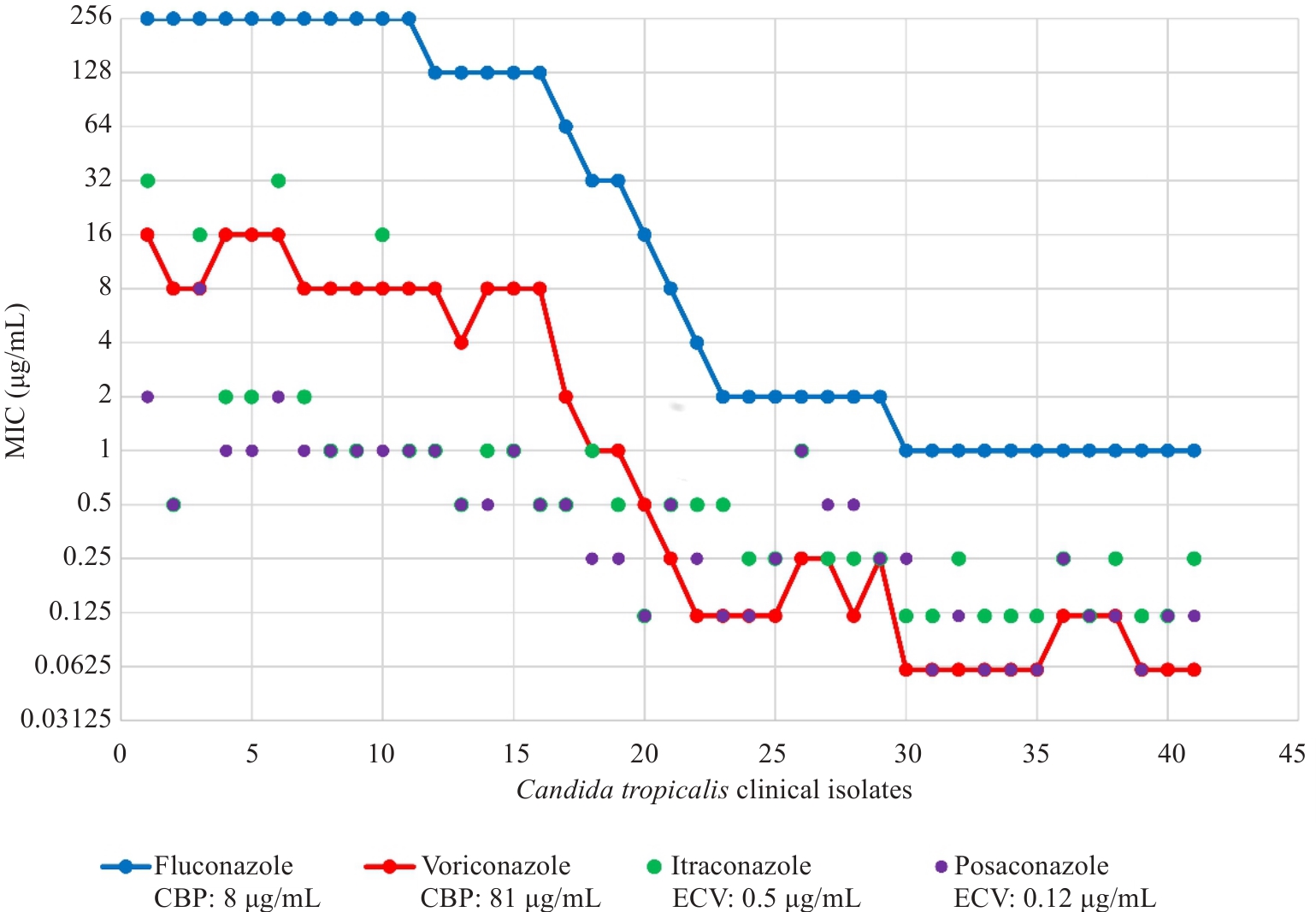
Fig.1 Results of Sensititre YeastOne chromogenic antifungal susceptibility testing of clinical isolates of Candida tropicalis. MIC: Minimum inhibitory concentration; CBP: Clinical breakpoint; ECV: Epidemiological cut-off.
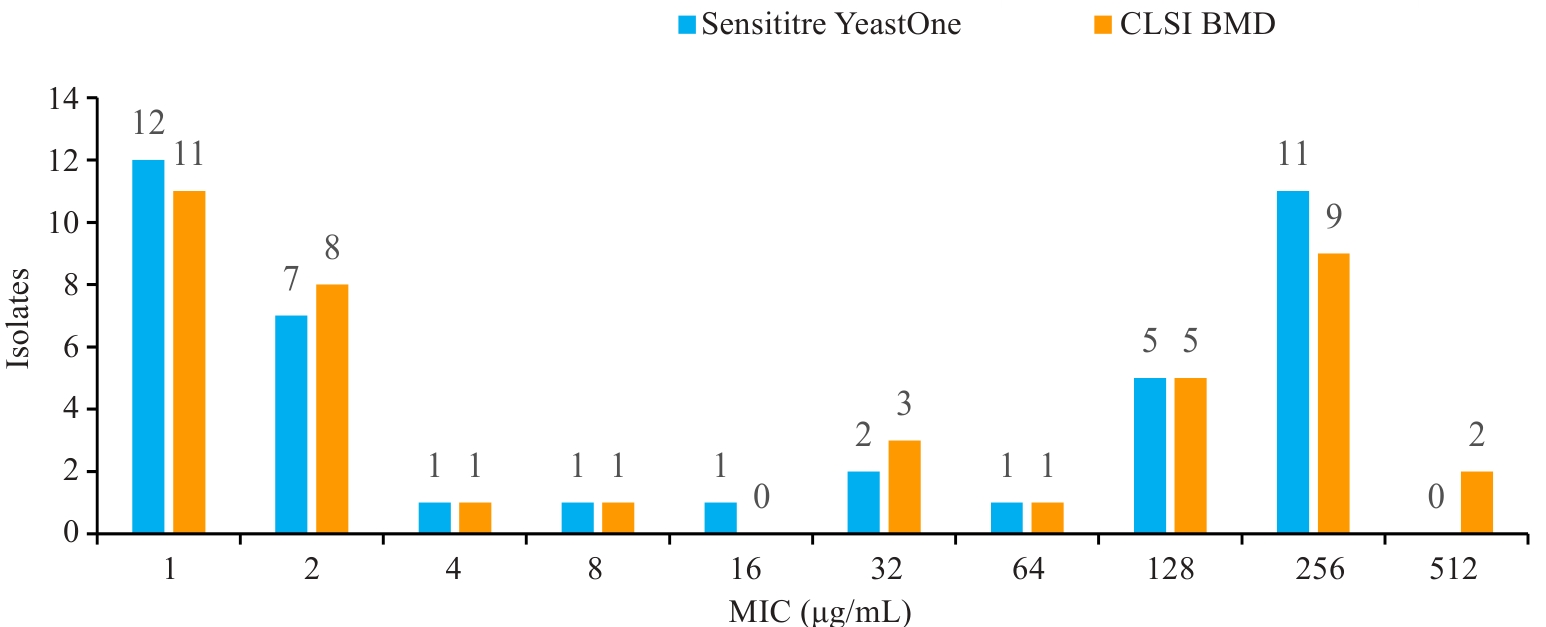
Fig.2 MIC distribution of fluconazole in clinical isolates of Candida tropicalis by broth microdilution. CLSI BMD: Clinical and laboratory standards institute broth microdilution; MIC: Minimum inhibitory concentration.
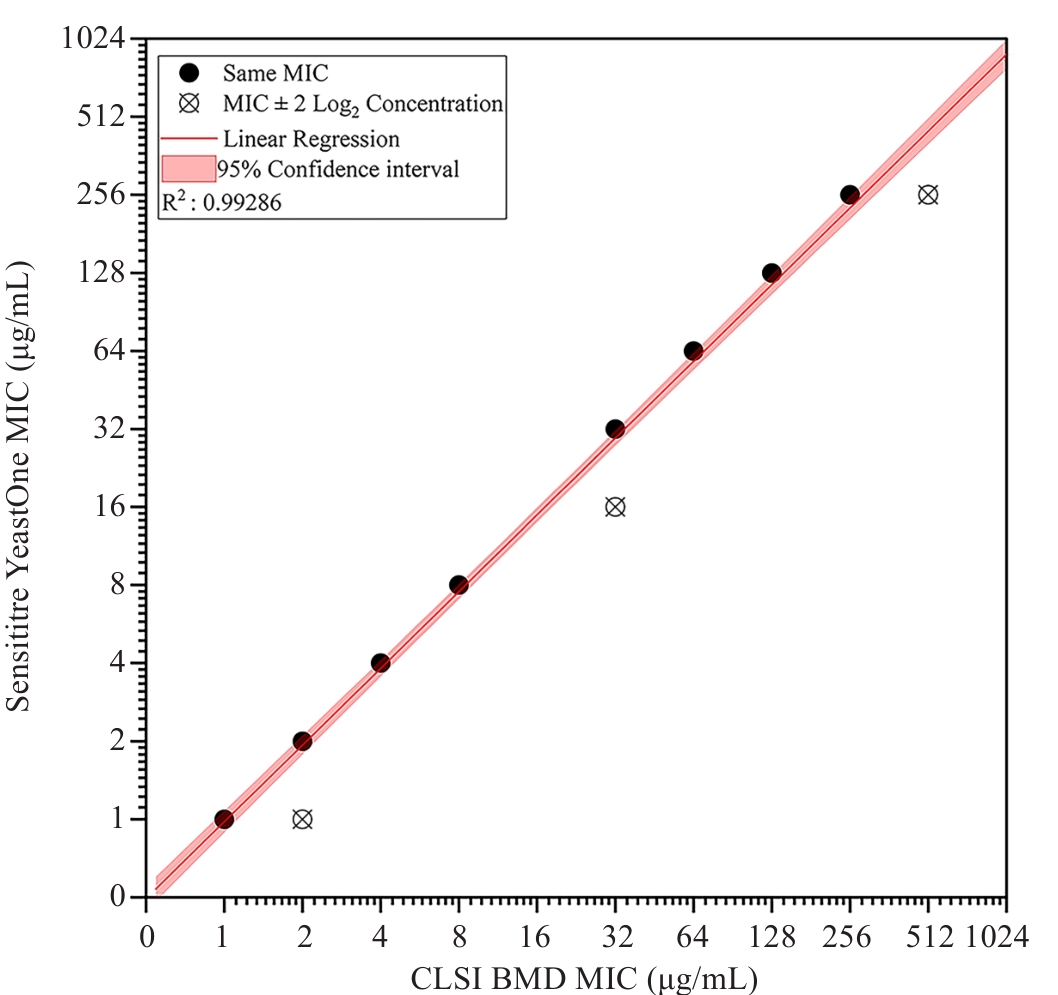
Fig.3 Linear regression of fluconazole MIC detected by two broth microdilution methods for Candida tropicalis clinical isolates.
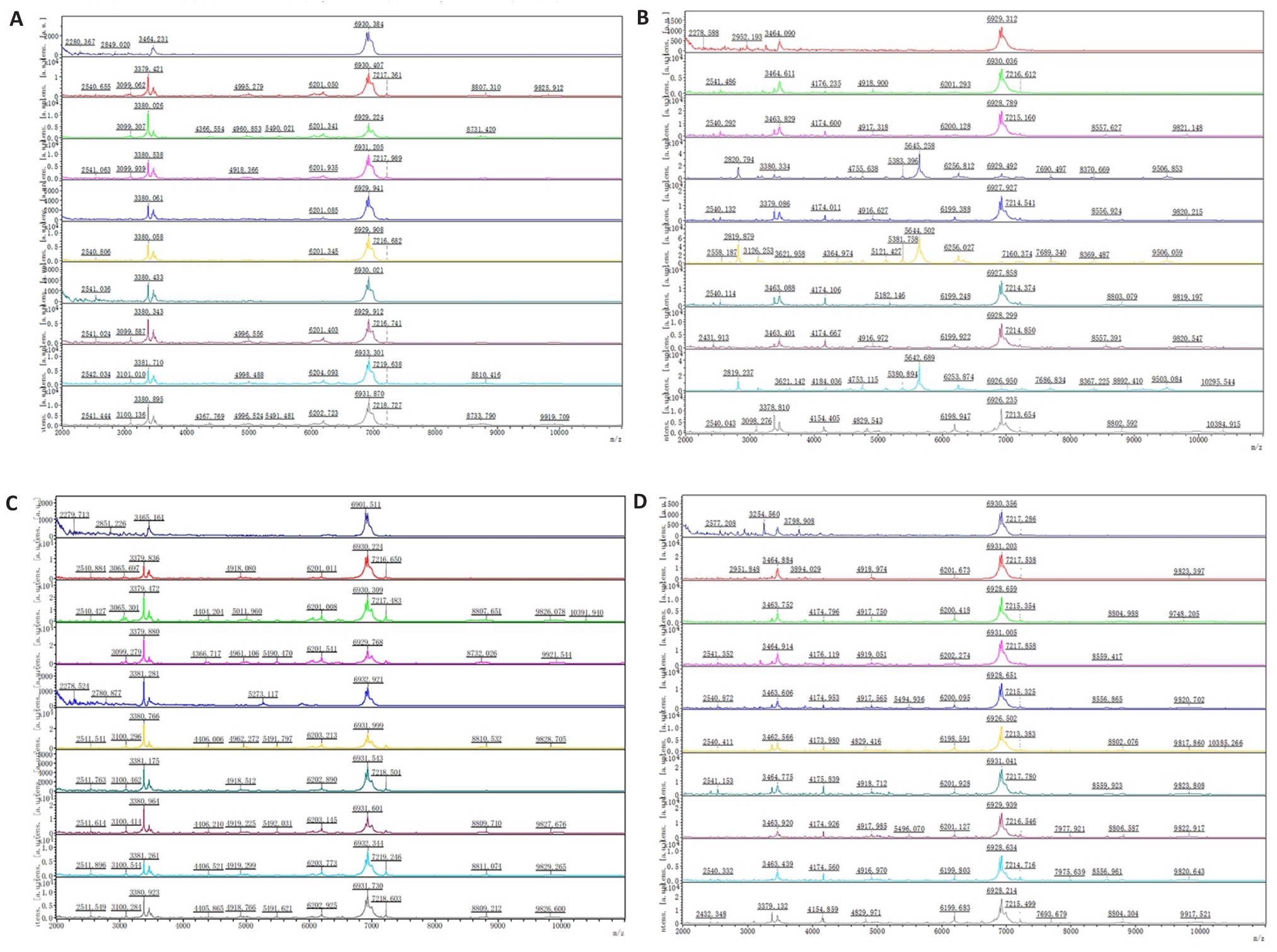
Fig.4 MALDI-TOF MS plots of 4 different sample pretreatment methods. A: First pretreatment protocol. B: Second pretreatment protocol. C: Third pre-treatment protocol. D: Fourth pretreatment protocol.
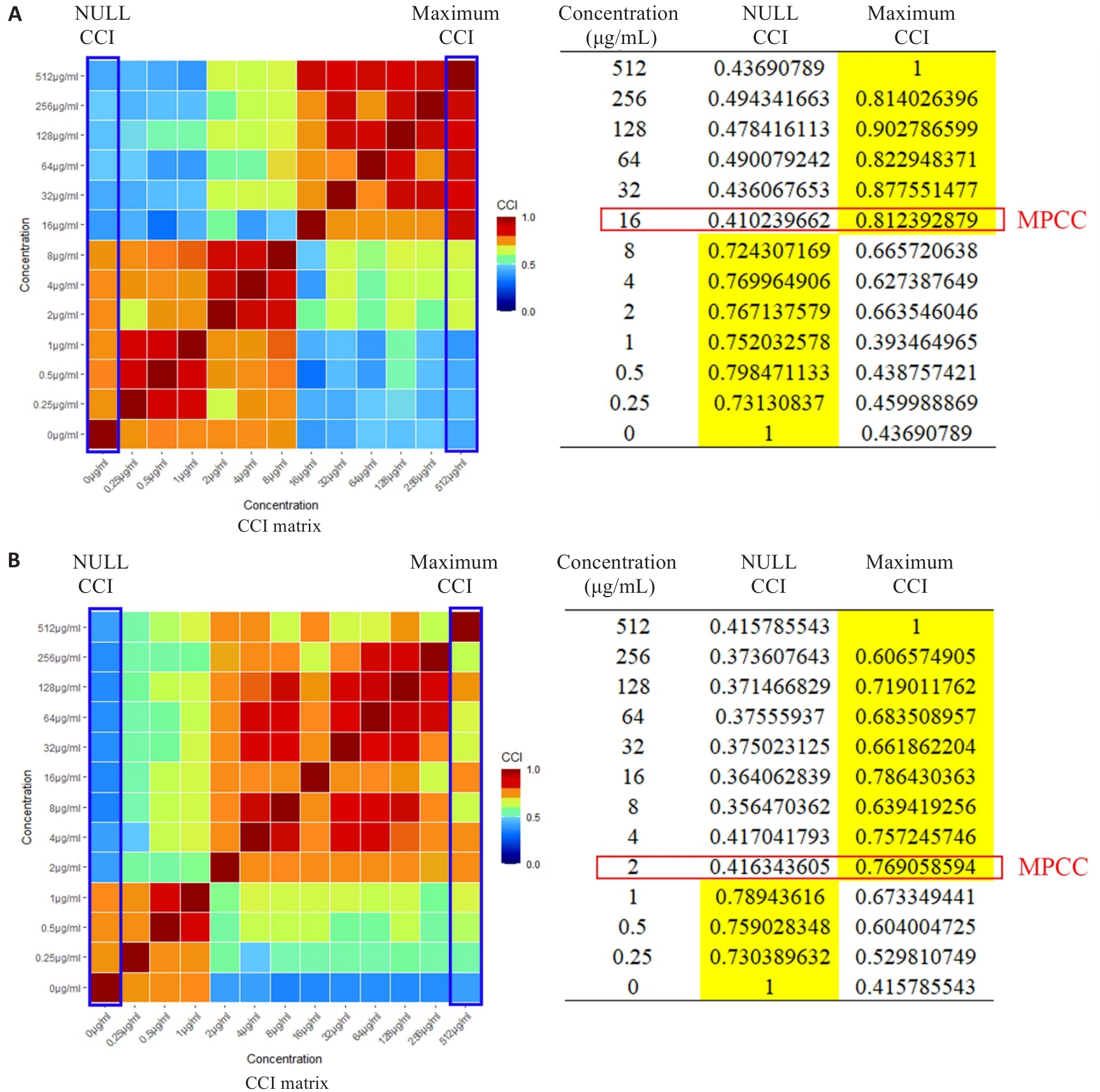
Fig.5 CCI matrix heatmap of fluconazole-resistant and fluconazole-susceptible strains of Candida tropicalis. A: Fluconazole resistant Candida tropicalis clinical isolate 22200070; B: Fluconazole susceptible Candida tropicalis clinical isolate 19200050. CCI: Composite correlation index; MPCC: Minimal profile change concentration.
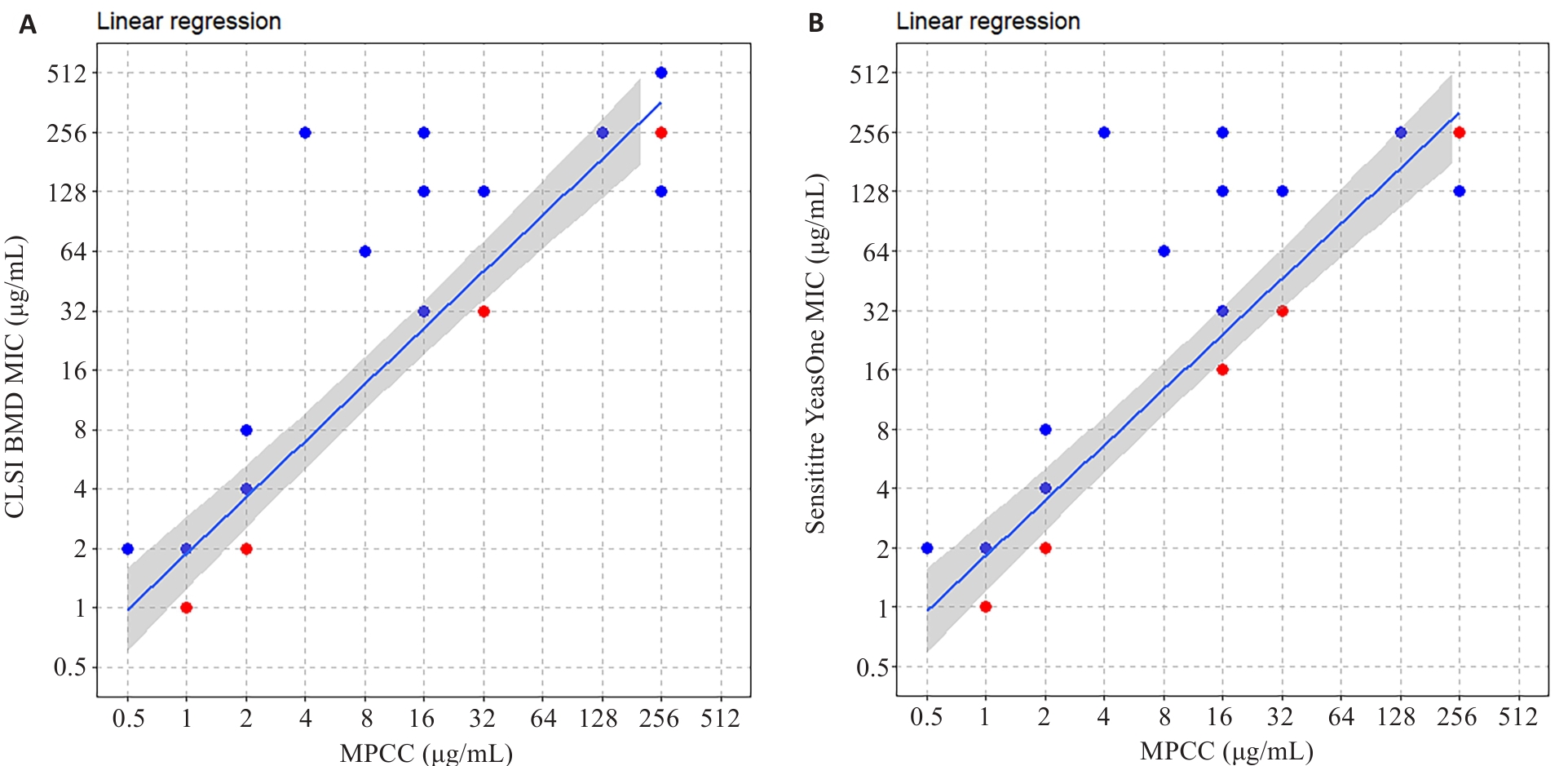
Fig.6 Linear regression between fluconazole MPCC and MIC. A: CLSI BMD MIC compared with MPCC;B: Sensititre YeastOne MIC compared with MPCC.
| [1] | Xiao M, Sun ZY, Kang M, et al. Five-year national surveillance of invasive candidiasis: species distribution and azole susceptibility from the China hospital invasive fungal surveillance net (CHIF-NET) study[J]. J Clin Microbiol, 2018, 56(7): e00577-18. doi:10.1128/jcm.00577-18 |
| [2] | Xiao M, Chen SC, Kong FR, et al. Distribution and antifungal susceptibility of Candida Species causing candidemia in China: an update from the CHIF-NET study[J]. J Infect Dis, 2020, 221(): S139-47. doi:10.1093/infdis/jiz573 |
| [3] | Fan X, Xiao M, Liao K, et al. Notable increasing trend in azole non-susceptible Candida tropicalis causing invasive candidiasis in China (August 2009 to July 2014): molecular epidemiology and clinical azole consumption[J]. Front Microbiol, 2017, 8: 464. doi:10.3389/fmicb.2017.00464 |
| [4] | Hou J, Deng J, Liu Y, et al. Epidemiology, clinical characteristics, risk factors, and outcomes of candidemia in a large tertiary teaching hospital in western China: a retrospective 5-year study from 2016 to 2020[J]. Antibiotics, 2022, 11(6): 788. doi:10.3390/antibiotics11060788 |
| [5] | Xu H, Yu SY, Zhou ML, et al. Epidemiology and antifungal susceptibility patterns of invasive fungal infections from 2012 to 2014 in a teaching hospital in Central China[J]. Infect Drug Resist, 2019, 12: 3641-51. doi:10.2147/idr.s227839 |
| [6] | Garey KW, Rege M, Pai MP, et al. Time to initiation of fluconazole therapy impacts mortality in patients with candidemia: a multi-institutional study[J]. Clin Infect Dis, 2006, 43(1): 25-31. doi:10.1086/504810 |
| [7] | Huang AM, Newton D, Kunapuli A, et al. Impact of rapid organism identification via matrix-assisted laser desorption/ionization time-of-flight combined with antimicrobial stewardship team intervention in adult patients with bacteremia and candidemia[J]. Clin Infect Dis, 2013, 57(9): 1237-45. doi:10.1093/cid/cit498 |
| [8] | Knabl L, Lass-Flörl C. Antifungal susceptibility testing in Candida species: current methods and promising new tools for shortening the turnaround time[J]. Expert Rev Anti Infect Ther, 2020, 18(8): 779-87. doi:10.1080/14787210.2020.1760841 |
| [9] | Durand C, Maubon D, Cornet M, et al. Can we improve antifungal susceptibility testing[J]? Front Cell Infect Microbiol, 2021, 11: 720609. doi:10.3389/fcimb.2021.720609 |
| [10] | Marinach C, Alanio A, Palous M, et al. MALDI-TOF MS-based drug susceptibility testing of pathogens: The example of Candida albicans and fluconazole[J]. PROTEOMICS, 2009, 9(20): 4627-31. doi:10.1002/pmic.200900152 |
| [11] | Delavy M, Cerutti L, Croxatto A, et al. Machine learning approach for Candida albicans fluconazole resistance detection using matrix-assisted laser desorption/ionization time-of-flight mass spectrometry[J]. Front Microbiol, 2020, 10: 3000. doi:10.3389/fmicb.2019.03000 |
| [12] | Vatanshenassan M, Arastehfar A, Boekhout T, et al. Anidulafungin susceptibility testing of Candida glabrata isolates from blood cultures by the MALDI biotyper antibiotic (antifungal) susceptibility test rapid assay[J]. Antimicrob Agents Chemother, 2019, 63(9): e00554-19. doi:10.1128/aac.00554-19 |
| [13] | Paul S, Singh S, Chakrabarti A, et al. Stable isotope labelling: an approach for MALDI-TOF MS-based rapid detection of fluconazole resistance in Candida tropicalis [J]. J Antimicrob Chemother, 2019, 74(5): 1269-76. doi:10.1093/jac/dkz019 |
| [14] | Vatanshenassan M, Boekhout T, Lass-Flörl C, et al. Proof of concept for MBT ASTRA, a rapid matrix-assisted laser desorption ionization-time of flight mass spectrometry (MALDI-TOF MS)-based method to detect caspofungin resistance in Candida albicans and Candida glabrata[J]. J Clin Microbiol, 2018, 56(9): e00420-18. doi:10.1128/jcm.00420-18 |
| [15] | Saracli MA, Fothergill AW, Sutton DA, et al. Detection of triazole resistance among Candida species by matrix-assisted laser desorption/ionization-time of flight mass spectrometry (MALDI-TOF MS)[J]. Med Mycol, 2015, 53(7): 736-42. doi:10.1093/mmy/myv046 |
| [16] | Paul S, Singh P, A S S, et al. Rapid detection of fluconazole resistance in Candida tropicalis by MALDI-TOF MS[J]. Med Mycol, 2018, 56(2): 234-41. doi:10.1093/mmy/myx042 |
| [17] | CLSI. Performance Standards for Antifungal Susceptibility Testing of Yeasts: CLSI supplement M 27M44S,3rd ed . Wayne, PA: Clinical and Laboratory Standards Institute, 2022: 1-40 |
| [18] | CLSI. Performance Standards for Antifungal Susceptibility Testing of Yeasts: CLSI supplement M60,1st ed . Wayne, PA: Clinical and Laboratory Standards Institute, 2017: 1-13. |
| [19] | Vella A, De Carolis E, Vaccaro L, et al. Rapid antifungal susceptibility testing by matrix-assisted laser desorption ionization-time of flight mass spectrometry analysis[J]. J Clin Microbiol, 2013, 51(9): 2964-9. doi:10.1128/jcm.00903-13 |
| [20] | De Carolis E, Vella A, Florio AR, et al. Use of matrix-assisted laser desorption ionization-time of flight mass spectrometry for caspofungin susceptibility testing of Candida and Aspergillus species[J]. J Clin Microbiol, 2012, 50(7): 2479-83. doi:10.1128/jcm.00224-12 |
| [21] | SENSITITRE YEASTONE For in vitro Diagnostic Use [Z]. 2012. |
| [22] | Cantón E, Pemán J, Hervás D, et al. Comparison of three statistical methods for establishing tentative wild-type population and epidemiological cutoff values for echinocandins, amphotericin B, flucytosine, and six Candida species as determined by the colorimetric sensititre YeastOne method[J]. J Clin Microbiol, 2012, 50(12): 3921-6. doi:10.1128/jcm.01730-12 |
| [23] | Bertout S, Dunyach C, Drakulovski P, et al. Comparison of the Sensititre YeastOne® dilution method with the Clinical Laboratory Standards Institute (CLSI) M27-A3 microbroth dilution reference method for determining MIC of eight antifungal agents on 102 yeast strains[J]. Pathol Biol, 2011, 59(1): 48-51. doi:10.1016/j.patbio.2010.07.020 |
| [24] | Alexander BD, Byrne TC, Smith KL, et al. Comparative evaluation of etest and sensititre YeastOne panels against the clinical and laboratory standards institute M27-A2 reference broth microdilution method for TestingCandidaSusceptibility to seven antifungal agents[J]. J Clin Microbiol, 2007, 45(3): 698-706. doi:10.1128/jcm.01840-06 |
| [25] | Pfaller MA, Espinel-Ingroff A, Jones RN. Clinical evaluation of the Sensititre YeastOne colorimetric antifungal plate for antifungal susceptibility testing of the new triazoles voriconazole, posaconazole, and ravuconazole[J]. J Clin Microbiol, 2004, 42(10): 4577-80. doi:10.1128/jcm.42.10.4577-4580.2004 |
| [26] | Lombardi G, Farina C, Andreoni S, et al. Comparative evaluation of Sensititre® YeastOne vs. the NCCLS M27A protocol and E-test for antifungal susceptibility testing of yeasts[J]. Mycoses, 2004, 47(9/10): 397-401. doi:10.1111/j.1439-0507.2004.01013.x |
| [27] | Linares MJ, Charriel G, Solís F, et al. Comparison of two microdilution methods for testing susceptibility ofCandidaspp. to voriconazole[J]. J Clin Microbiol, 2004, 42(2): 899-902. doi:10.1128/jcm.42.2.899-902.2004 |
| [28] | Espinel-Ingroff A, Pfaller M, Messer SA, et al. Multicenter comparison of the Sensititre YeastOne colorimetric antifungal panel with the NCCLS M27-A2 reference method for testing new antifungal agents against clinical isolates of Candida spp[J]. J Clin Microbiol, 2004, 42(2): 718-21. doi:10.1128/jcm.42.2.718-721.2004 |
| [29] | Espinel-Ingroff A, Pfaller M, Messer SA, et al. Multicenter comparison of the sensititre YeastOne colorimetric antifungal panel with the national committee for clinical laboratory standards M27-a reference method for testing clinical isolates of common and EmergingCandidaspp., Cryptococcusspp., and other yeasts and yeast-like organisms[J]. J Clin Microbiol, 1999, 37(3): 591-5. doi:10.1128/jcm.37.3.591-595.1999 |
| [30] | Pfaller MA, Diekema DJ. Progress in antifungal susceptibility testing of Candida spp. by use of Clinical and Laboratory Standards Institute broth microdilution methods, 2010 to 2012[J]. J Clin Microbiol, 2012, 50(9): 2846-56. doi:10.1128/jcm.00937-12 |
| [31] | Pfaller MA, Andes D, Diekema DJ, et al. Wild-type MIC distributions, epidemiological cutoff values and species-specific clinical breakpoints for fluconazole and Candida: Time for harmonization of CLSI and EUCAST broth microdilution methods[J]. Drug Resist Updat, 2010, 13(6): 180-95. doi:10.1016/j.drup.2010.09.002 |
| [32] | Pfaller MA, Andes D, Arendrup MC, et al. Clinical breakpoints for voriconazole and Candida spp. revisited: review of microbiologic, molecular, pharmacodynamic, and clinical data as they pertain to the development of species-specific interpretive criteria[J]. Diagn Microbiol Infect Dis, 2011, 70(3): 330-43. doi:10.1016/j.diagmicrobio.2011.03.002 |
| [33] | Pfaller MA, Diekema DJ, Andes D, et al. Clinical breakpoints for the echinocandins and Candida revisited: Integration of molecular, clinical, and microbiological data to arrive at species-specific interpretive criteria[J]. Drug Resist Updat, 2011, 14(3): 164-76. doi:10.1016/j.drup.2011.01.004 |
| [34] | Heuer C, Bahnemann J, Scheper T, et al. Paving the way to overcome antifungal drug resistance: current practices and novel developments for rapid and reliable antifungal susceptibility testing[J]. Small Meth, 2021, 5(11): 2100713. doi:10.1002/smtd.202100713 |
| [35] | Espinel-Ingroff A, Barchiesi F, Cuenca-Estrella M, et al. International and multicenter comparison of EUCAST and CLSI M27-A2 broth microdilution methods for testing susceptibilities ofCandidaspp. to fluconazole, itraconazole, posaconazole, and voriconazole[J]. J Clin Microbiol, 2005, 43(8): 3884-9. doi:10.1128/jcm.43.8.3884-3889.2005 |
| [36] | Vella A, De Carolis E, Mello E, et al. Potential use of MALDI-ToF mass spectrometry for rapid detection of antifungal resistance in the human pathogen Candida glabrata[J]. Sci Rep, 2017, 7: 9099. doi:10.1038/s41598-017-09329-4 |
| [37] | Roberto AEM, Xavier DE, Vidal EE, et al. Rapid detection of echinocandins resistance by MALDI-TOF MS in Candida parapsilosis complex[J]. Microorganisms, 2020, 8(1): 109. doi:10.3390/microorganisms8010109 |
| [38] | De Carolis E, Marchionni F, La Rosa M, et al. Are we ready for nosocomial Candida auris infections? rapid identification and antifungal resistance detection using MALDI-TOF mass spectrometry may be the answer[J]. Front Cell Infect Microbiol, 2021, 11: 645049. doi:10.3389/fcimb.2021.645049 |
| [1] | . 点击化学合成5-碘-(125/131I)-1,2,3-三唑化合物 [J]. Journal of Southern Medical University, 2013, 33(06): 779-. |
| [2] | WANG Ying-bin1,3, WANG Hong2, GUO Hui-yu3, ZHAO Yong-zhong2, LUO Shen-qiu2. Analysis of ERG11 gene mutation in Candida albicans [J]. Journal of Southern Medical University, 2005, 25(11): 1390-1393. |
| [3] | CHEN Man-tong. Association of reflux esophagitis with Helicobacter pylori [J]. Journal of Southern Medical University, 2004, 24(03): 332-333. |
| Viewed | ||||||
|
Full text |
|
|||||
|
Abstract |
|
|||||